
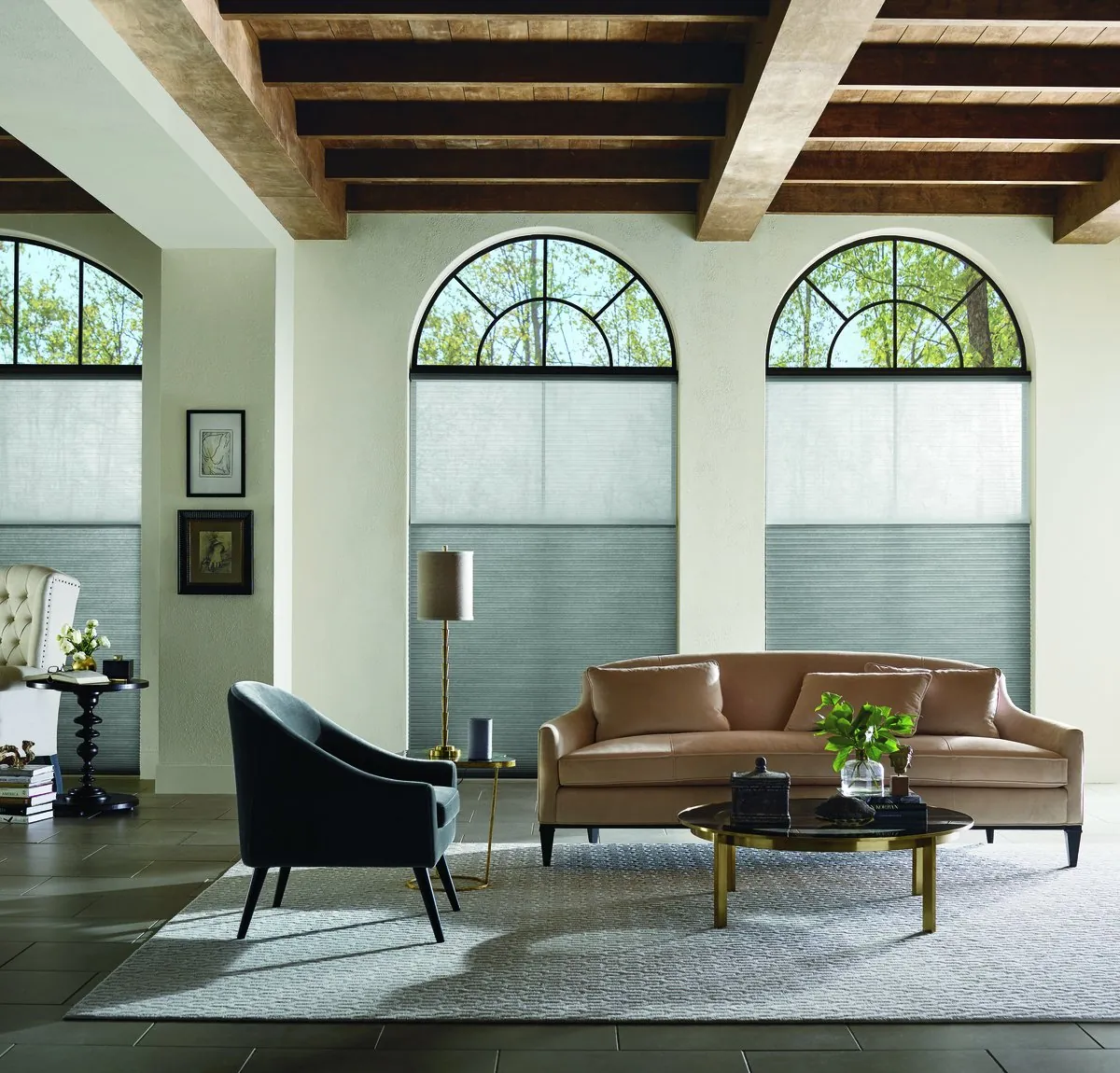
Historic sash on Main Street, big glass in the woods
Hingham asks two very different things of a window covering. Along Main Street and around the harbor stand antique colonials and Federal houses, with small, deep-set sash and a street face that is expected to look the way it always has. Inland, on wooded lots, are larger and newer houses with big windows, high ceilings and light that comes filtered through the trees. And wherever a house looks over the harbor, the rooms on that side are arranged around the view.
For the historic houses, the shade has to be almost invisible from outside and respectful of the window inside: tucked into the frame, quiet in color, leaving the old sash and trim as the thing you see. For the newer houses, it has to handle a lot of glass, some of it hard to reach, and keep big rooms comfortable. For the harbor rooms, it has to vanish when raised so nothing stands between you and the water.
Cellular shades in Hingham, MA, can do all of that, and they keep the rooms warmer too. The air held still inside each pocket of a honeycomb shade sits between the glass and the room, which is why Duette and Applause are the shades we bring for a cold room.
Cellular shades in Hingham, MA, for three kinds of room
Where the house stands in town usually decides where we begin.
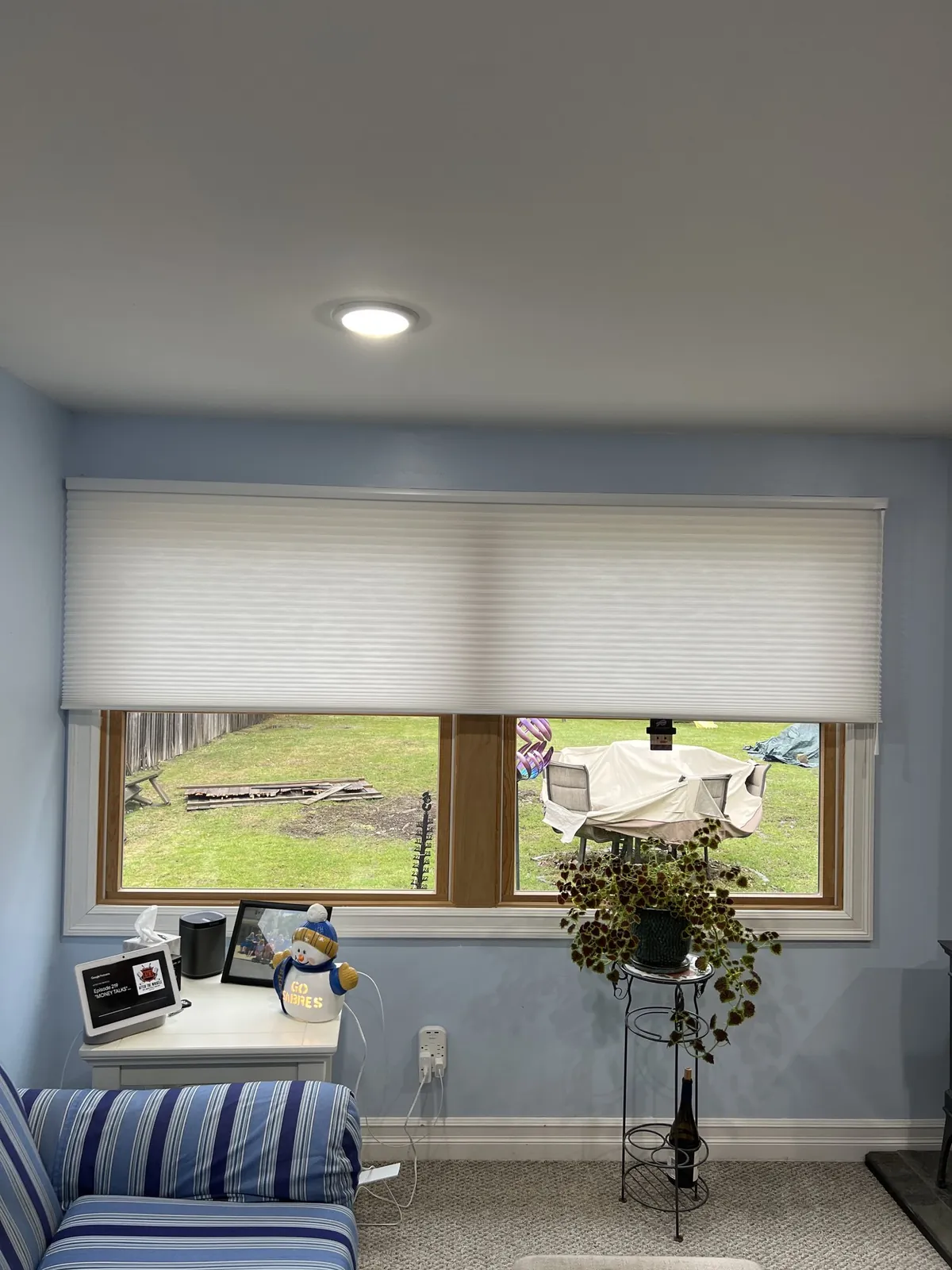
Inside-mounted shades for historic sash
Duette’s wide range of sizes suits small, deep-set openings, mounted within the frame so the trim stays on view.
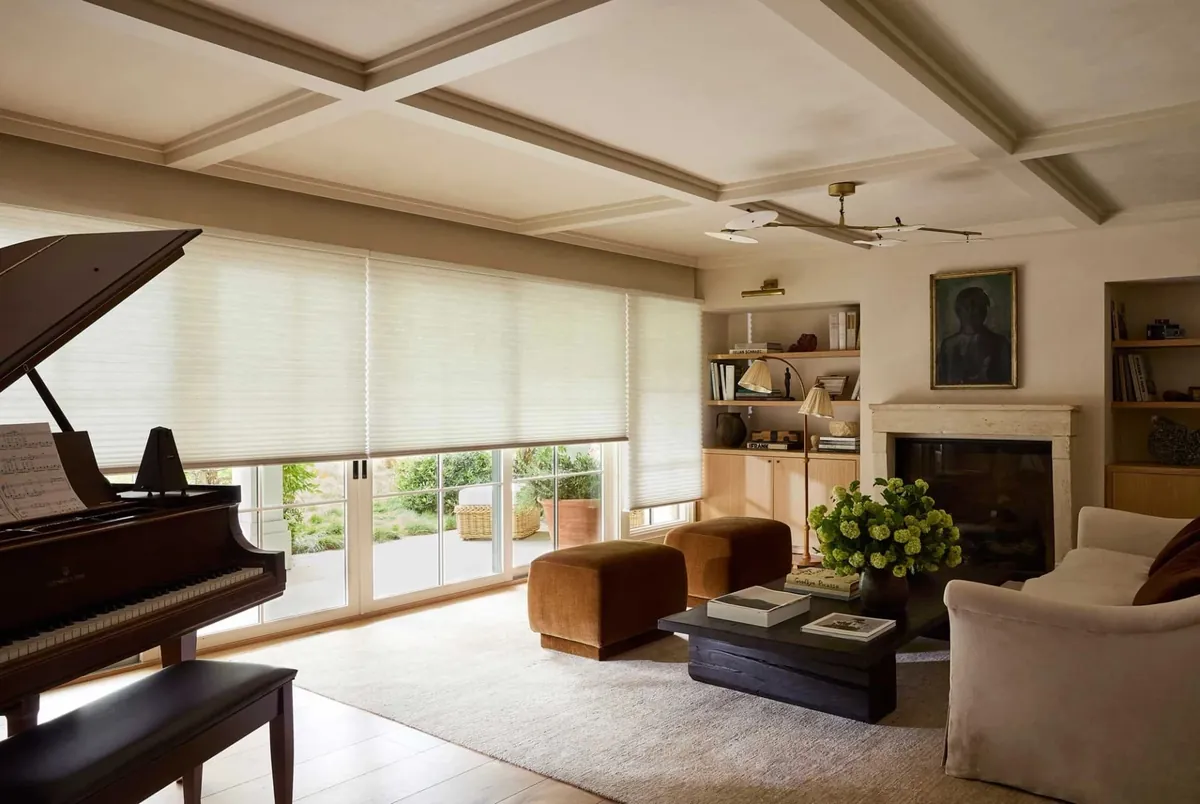
Large windows in newer houses
Wide openings and patio doors inland, covered with Applause or Duette in fabrics chosen for each room’s light.
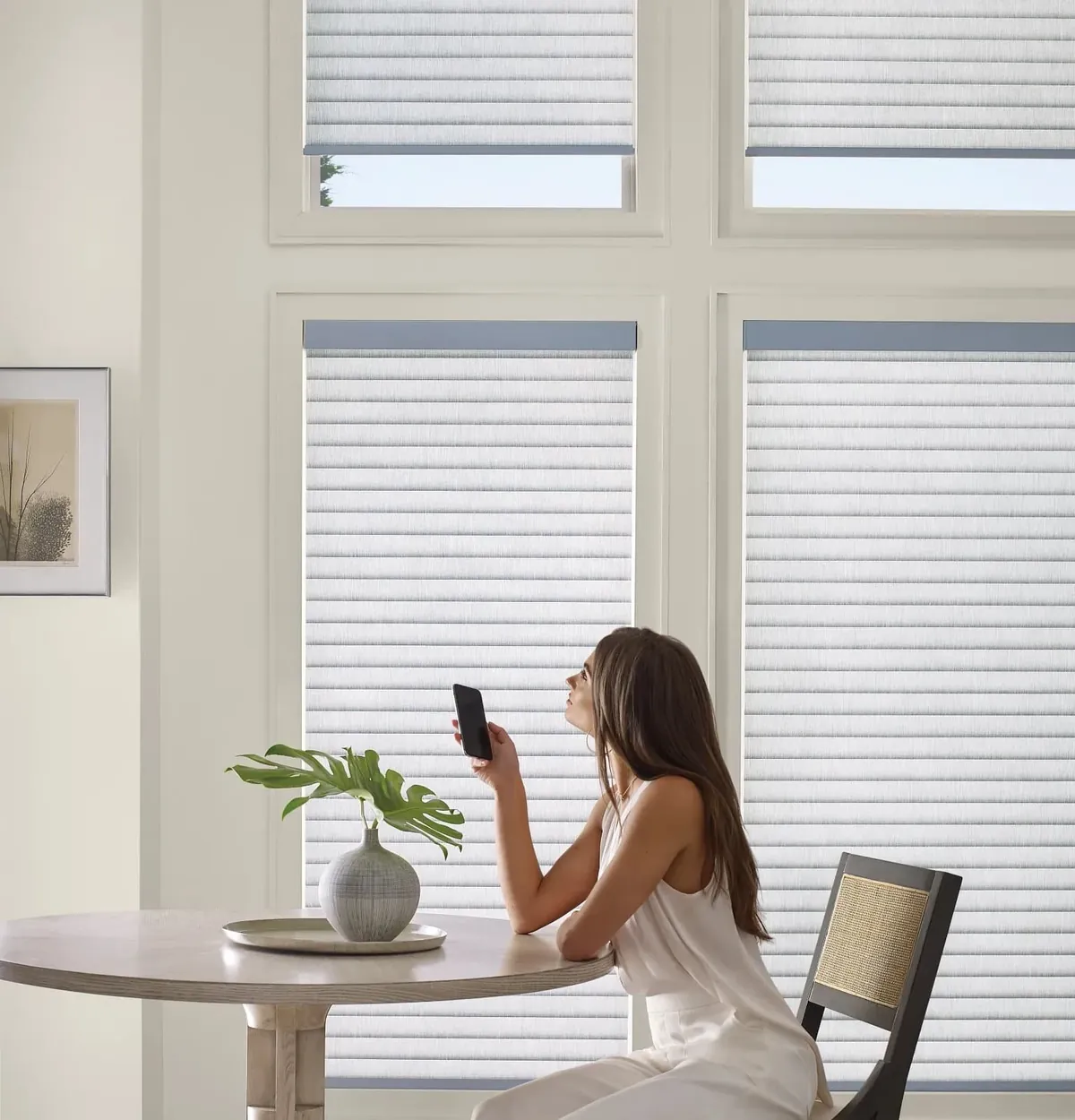
Motorized shades for high and harbor-side windows
Motorized honeycomb for upper sash and for rooms that catch the morning glare off the water, run by remote, app or timetable.
What the street sees
On Main Street and the older lanes around the harbor, the front of a house is part of a shared picture. Antique colonials and Federal houses were built with careful, regular facades, the windows set in even rows, and the look from the street carries real weight. Anything that goes on those windows has to sit quietly within that.
A honeycomb shade does. Mounted inside the frame, it is set back within the opening, and when raised it folds into a slim band at the top of the sash that is barely visible from the sidewalk. When lowered, the side that faces the street can be a white or soft neutral, so every window on the facade reads the same. Inside, you choose the color and weight that suit each room.
The aim is that someone walking past sees the house, its sash and its trim, not the shades. That is the standard we work to on the historic streets, and the reason we usually suggest the same quiet outward color on every front window, even when the rooms behind them are completely different. The side and rear windows, less on show, give you more freedom, and there we often match the fabric to the room rather than to the street.
Small, deep-set sash
The older houses along Main Street and near the harbor have small windows set deep in their walls. The reveal is wide, the sill often deep enough for a plant or a candle, and the sash itself small-paned and old. These are windows worth keeping exactly as they are, and a honeycomb shade lets you keep them while making the room more comfortable.
The depth is a help. There is usually ample room for a headrail inside the opening, so the shade sits within the reveal, close to the glass, with the casing and sill fully visible around it. Close to the glass is also where the shade’s pockets of still air do the most good, slowing the cold off old thin panes on a winter night.
Age leaves its mark, though. Centuries of settling mean an opening can taper, lean or dip, and two windows side by side on a facade may differ by more than you would guess. So the tape goes across the top, the middle and the sill of every one, and the reveal is checked left and right. Where a frame has wandered too far for a shade to hang straight inside it, we say so, and the alternative is a slim mount on the outer casing.
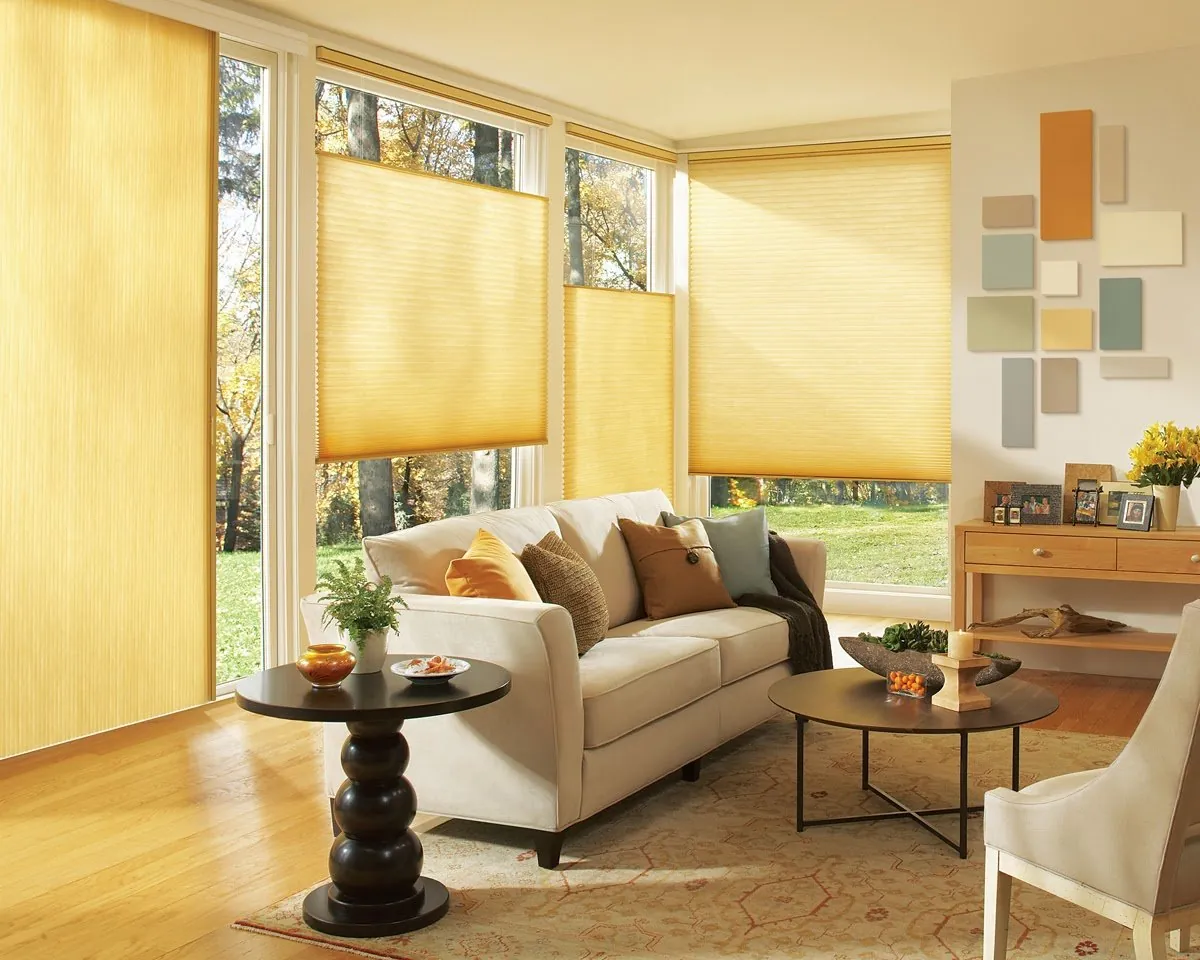
Federal houses and their tall front rooms
The Federal houses in the older part of town often have formal front rooms with taller windows than the antique colonials beside them, arranged symmetrically either side of a central door. Those rooms were built to be seen, from inside and out, and the windows are a large part of the effect.
For a room like that, matching matters more than anywhere. Every shade in the room should sit at the same height, in the same fabric, raised and lowered together. Honeycomb shades suit this well: they are clean-lined and calm, they fill the opening edge to edge, and they leave the window’s proportions as the thing you notice. A formal front room facing the street often takes a lighter fabric for daytime privacy, since the fabric glows in the sun and softens the view in, with the option of a heavier one for a room that is used after dark.
Some of these rooms have windows high enough that the top of the shade is a reach. PowerView motorization lets every shade in the room rise and fall together from a remote or a phone app, which keeps a formal room looking orderly with no effort.
Harbor rooms built around the view
Wherever a Hingham house faces the harbor, its rooms are usually arranged to make the most of the water: the sitting room, the kitchen, the main bedroom all lined up on that side. In those rooms, a window covering has one overriding job, which is to get out of the way.
A honeycomb shade raised fully folds into a slim stack, so the view is as open as the window allows. When you do lower it, a light-filtering fabric softens the hard glare that comes off the water on a bright morning, while keeping a sense of the light and the harbor beyond. Bedrooms on the water side often take a darker fabric, since the early light reflected off the harbor arrives with real force.
For a room where the light off the water is strongest at a particular time of day, a PowerView schedule can lower the shades just for those hours and raise them again afterward. We plan how each motor is powered at the visit. Our motorized blinds and shades in Hingham page has more on that side of things.
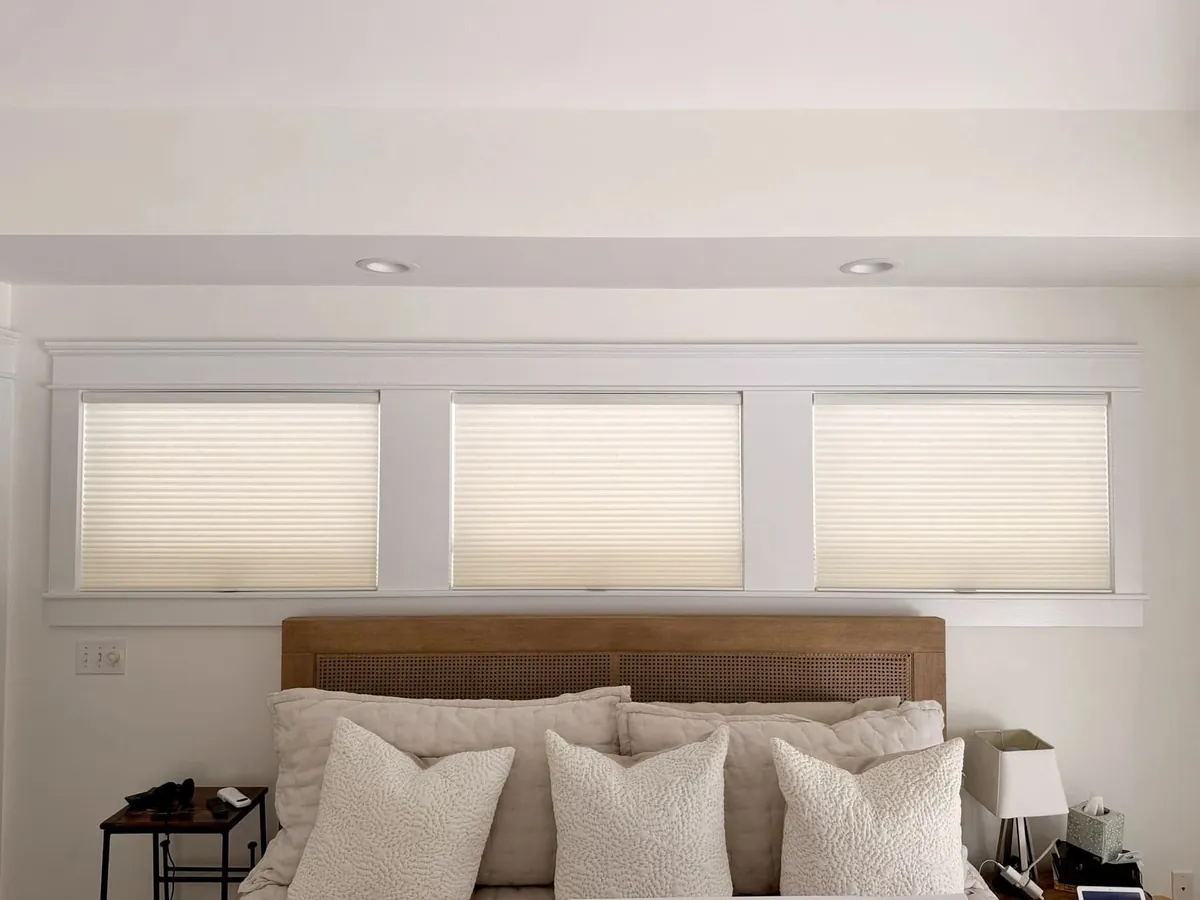
Larger newer houses on wooded lots
Inland, Hingham’s newer houses sit on wooded lots and are built on a larger scale. They tend to have big windows and more of them, family rooms with walls of glass or patio doors, high ceilings with upper windows, and a main staircase with a tall window on the landing.
The trees change the light. For much of the year it arrives dappled and moving, softer than the light on an open lot, but in winter, when the leaves are down, those same rooms can be flooded with low sun. The woods also give a sense of privacy by day that disappears at night, when a lit room is visible through the trunks from a long way off.
Those seasonal swings call for shades that can do two jobs. Between late spring and early fall, with the canopy full, many inland rooms need little more than a light fabric for evening privacy. Once the leaves drop, the same rooms take direct winter sun across the floor for hours, which is welcome warmth by day, and then lose it quickly through large panes after dark. Raising the shades to let that sun in and lowering them at dusk to hold its warmth is the simplest routine for a wooded lot, and a PowerView schedule can keep to it for you. A large inland house can have a great many windows, so a routine that runs itself is worth weighing when you plan the whole house.
This is the setting where cellular shades in Hingham, MA, pay their way in a newer house. Large windows lose a lot of heat on a winter night and gain a lot on a summer afternoon, and the pockets of air in a honeycomb shade help with both. In the family room, a pale, light-letting fabric holds on to whatever daylight a gray afternoon offers; upstairs, denser fabric keeps bedrooms dark and private once the lamps go on; and the patio doors get something that never gets in the way of stepping outside. High windows and stair landings are natural candidates for motorization, with every shade on a schedule so the house closes at dusk without anyone climbing a ladder.
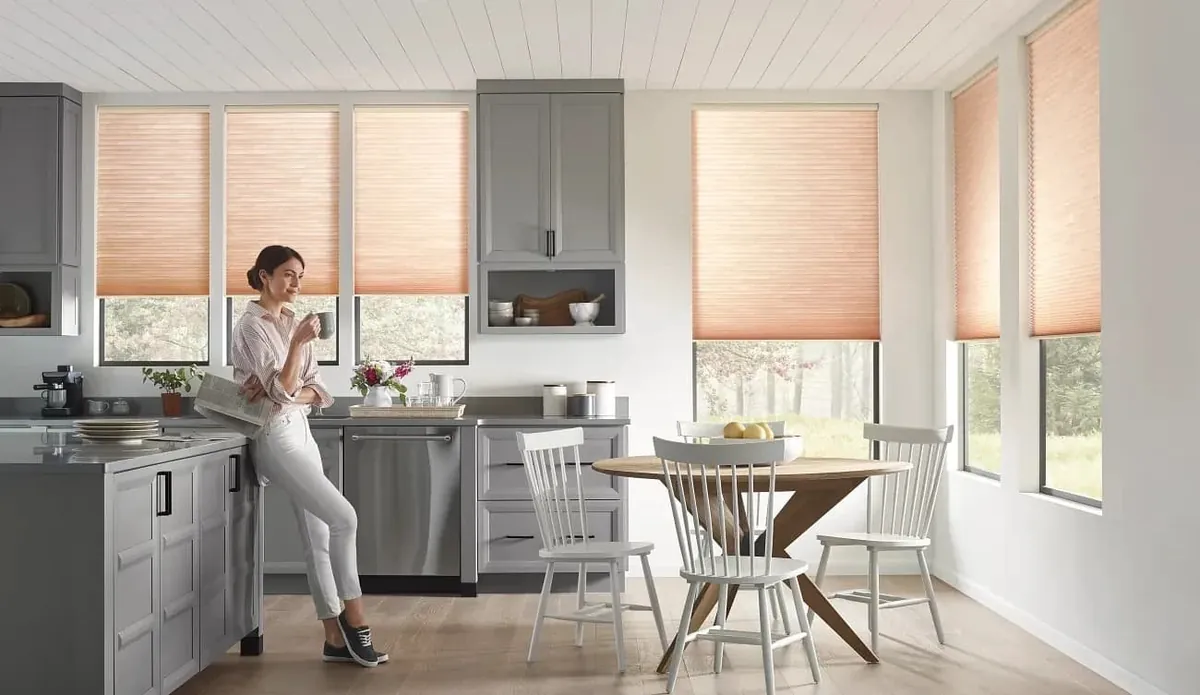
How a honeycomb keeps an old room warm
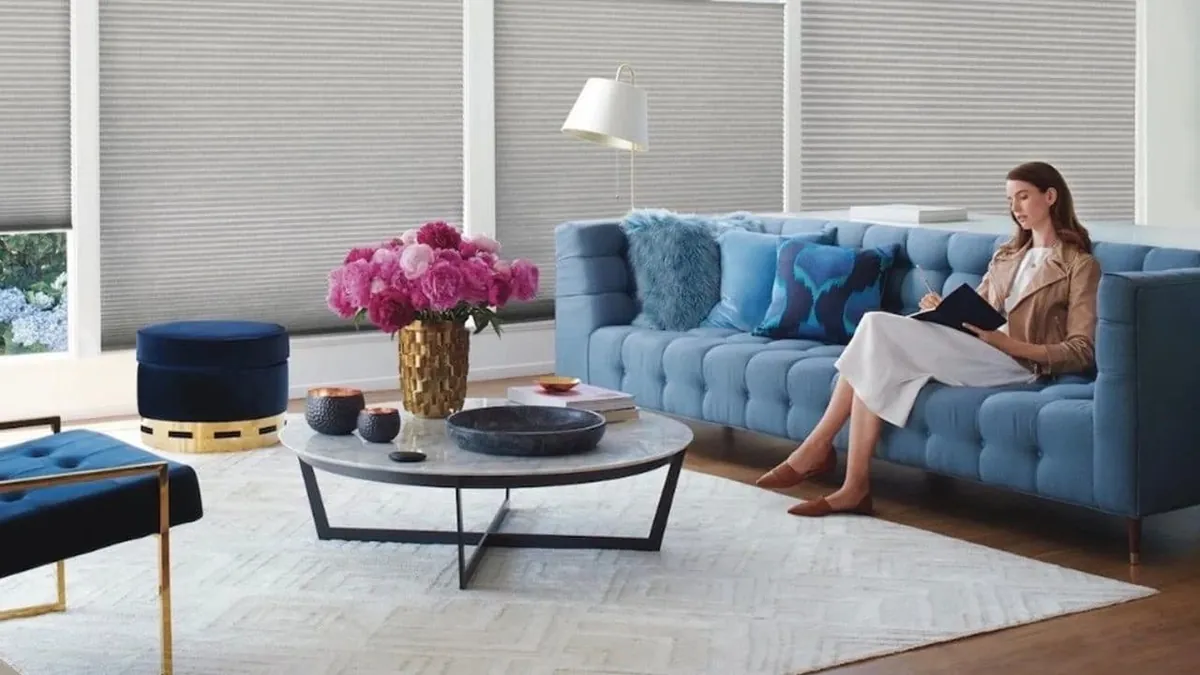
The name comes from the cross-section. Cut a honeycomb shade and its edge shows a line of hexagonal pockets, like the wax comb in a hive, spanning the window from one side to the other. Lowered, every pocket traps a little column of air.
Still air is a poor carrier of heat. So the shade sets a quiet layer of it between the glass and the room. Behind old, thin panes on a January night, that layer holds the room’s warmth back from the glass and keeps the chill of the pane from reaching your chair. In a newer house with large windows, it does the same on a bigger scale. In summer, lowered on the sunny side, it slows the heat coming in.
That is why, in a historic house, the room that feels coldest at the window is usually where we suggest starting.
Duette, Applause, and which goes where
Hunter Douglas offers its honeycomb in two collections. The cell is the same idea in each; the menu is not. Duette is the deeper catalog, and its size range is often what makes a small or irregular Federal-era sash possible to fit well. Applause brings a palette of its own and sits naturally on the square, regular glass of a house built in recent years.
An antique Hingham house with a later wing often ends up with Duette in the old rooms and Applause in the new ones, the street-facing side kept to one quiet color across both so the facade stays whole. You make the call with both collections in hand at your own sash. If you like to read ahead, our cellular shades page sets out the two.
Bedrooms under the eaves
Upstairs in an antique colonial, the bedrooms often sit partly under the roof, with low ceilings at the edges and small windows set close to the floor or tucked into the gable ends. Those rooms are some of the most charming in the house and some of the hardest to keep comfortable: hot under the roof in August, cold beside the small panes in February.
A honeycomb shade is well suited to these windows. Made to the exact size of a small opening and mounted within its frame, it closes off the glass completely at night and folds away to almost nothing in the morning, so a little window gives up none of its light. In a darker fabric it keeps the room dim at dawn, which on the harbor side, where the light comes off the water early, is a real help. Planning cellular shades in Hingham, MA, for the upstairs of an old house usually means looking at each of these windows one at a time, since in a house this age no two are quite the same.
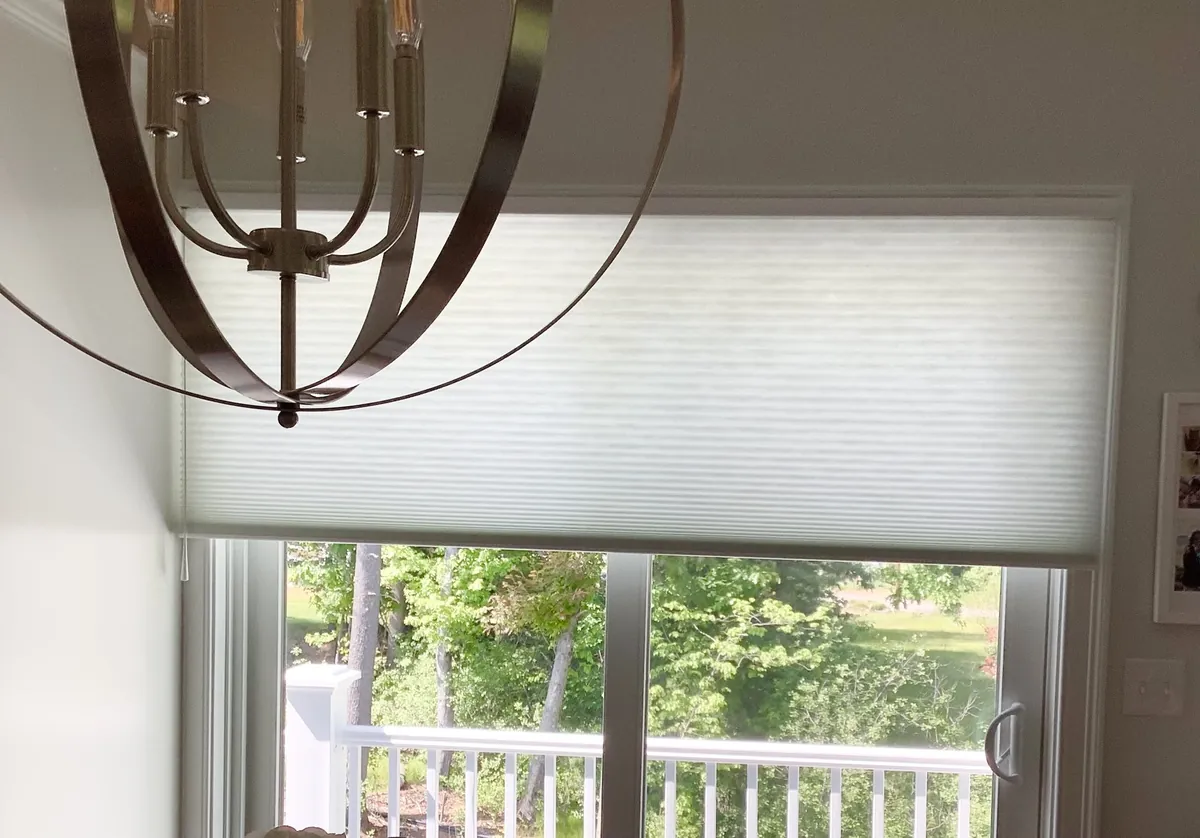
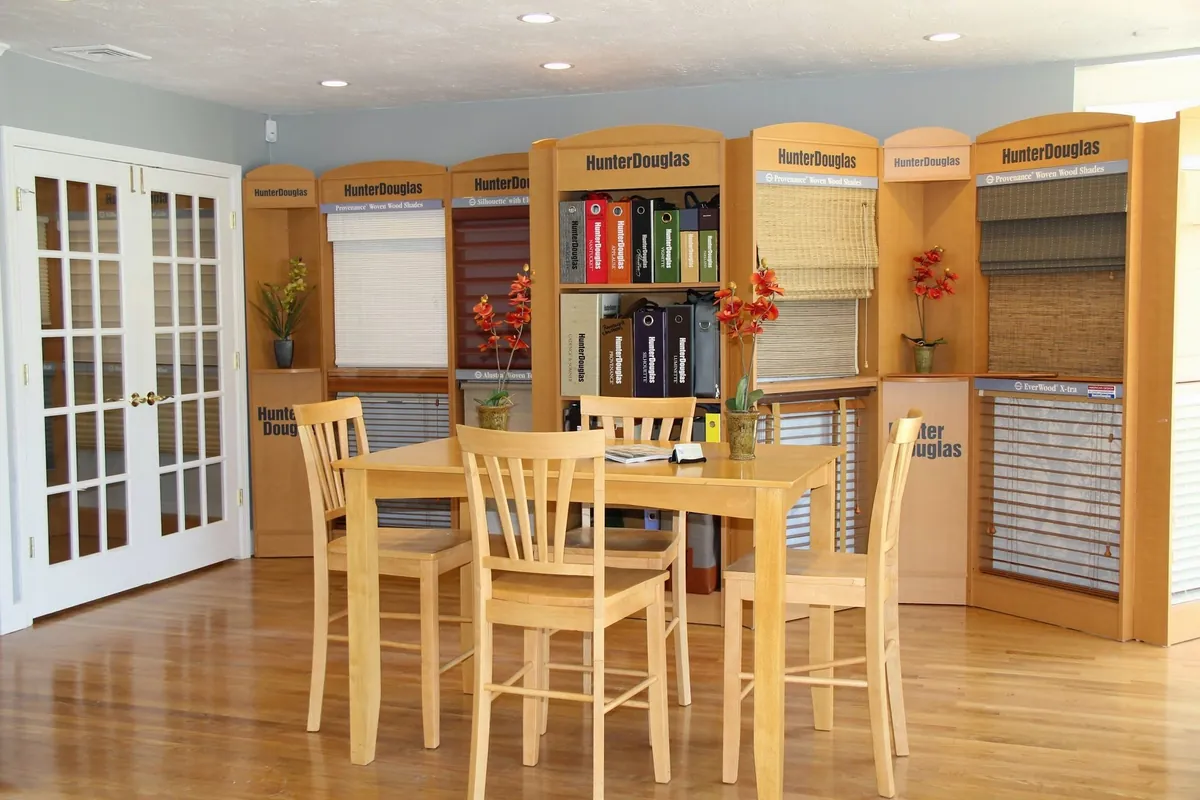
Hunter Douglas Gallery dealer, certified installation
Being a Hunter Douglas Gallery dealer means we can put any honeycomb fabric from either collection on your windows, with PowerView wherever there is high glass or a long harbor-facing wall to manage.
Hunter Douglas has certified the installers who hang them. In an antique house, where the frames are old and the trim is precious, that care counts. Each headrail is set level, each shade tested, and you are shown how everything works before they leave. We also repair blinds and shades you already own.
When a room calls for something else, we have that too: plantation shutters in Hingham for a formal front room, roman shades in Hingham for a softer look, or roller shades in Hingham for a sunroom facing the water. Everything we offer in town is on our Hingham page.
A visit to your house, in six steps
Hingham is looked after by the shop-at-home side of the business, run from Canton, so the choosing happens in your own rooms. Samples travel in the van, which is how we bring the showroom to you; read how it works on the Canton shop-at-home page.
- Arrange a time through Request a Consultation, or with the call button.
- Your consultant opens a case of honeycomb fabric, pale to dark, airy to dense.
- We start where you want to: the formal front rooms, the harbor side or the cold bedroom upstairs.
- You see each fabric at your own windows, against your own trim, in your own light.
- Each opening is measured, and the depth of every frame checked for an inside or outside mount.
- You get a free estimate, and the decision waits until you are ready.
If you want advice on color and fabric for the whole room, ask about our interior design consultations when you book. Of our showrooms, Franklin is the one closest to Hingham, if you would like to browse in a store as well.
Questions from Hingham
Will shades change how my historic house looks from the street?
Very little, if they are mounted inside the frame. Raised, a honeycomb shade folds into a slim band at the top of the sash, and lowered, a white or neutral facing out keeps every window on the facade looking the same.
Can you fit the small, deep-set windows in an antique colonial?
Yes. The deep reveals usually leave plenty of room for an inside mount. We measure each opening at several points, since old frames are rarely square, and make each shade to its own window.
My sitting room looks over the harbor. Will a shade block the view?
Not when it is raised. A honeycomb shade folds into a slim stack, and when lowered, a light-filtering fabric softens the glare off the water while keeping a sense of the light outside.
What about the high windows in our newer house?
PowerView motorization lets you move them from a remote, a phone app or a schedule, so upper windows and stair landings are as easy to use as any other.
Is there a showroom near Hingham?
The nearest is Franklin. Most Hingham choices are made at home, though, because that is where the swatches meet your own sash and light.
Bring the samples to your windows
On Main Street, by the harbor or in the woods inland, the best way to choose cellular shades in Hingham, MA, is to see them at your own windows. Book through Request a Consultation: the fabrics come to you, every opening is measured and you keep a free estimate to mull over. Anything to ask beforehand? Tap the call button.