
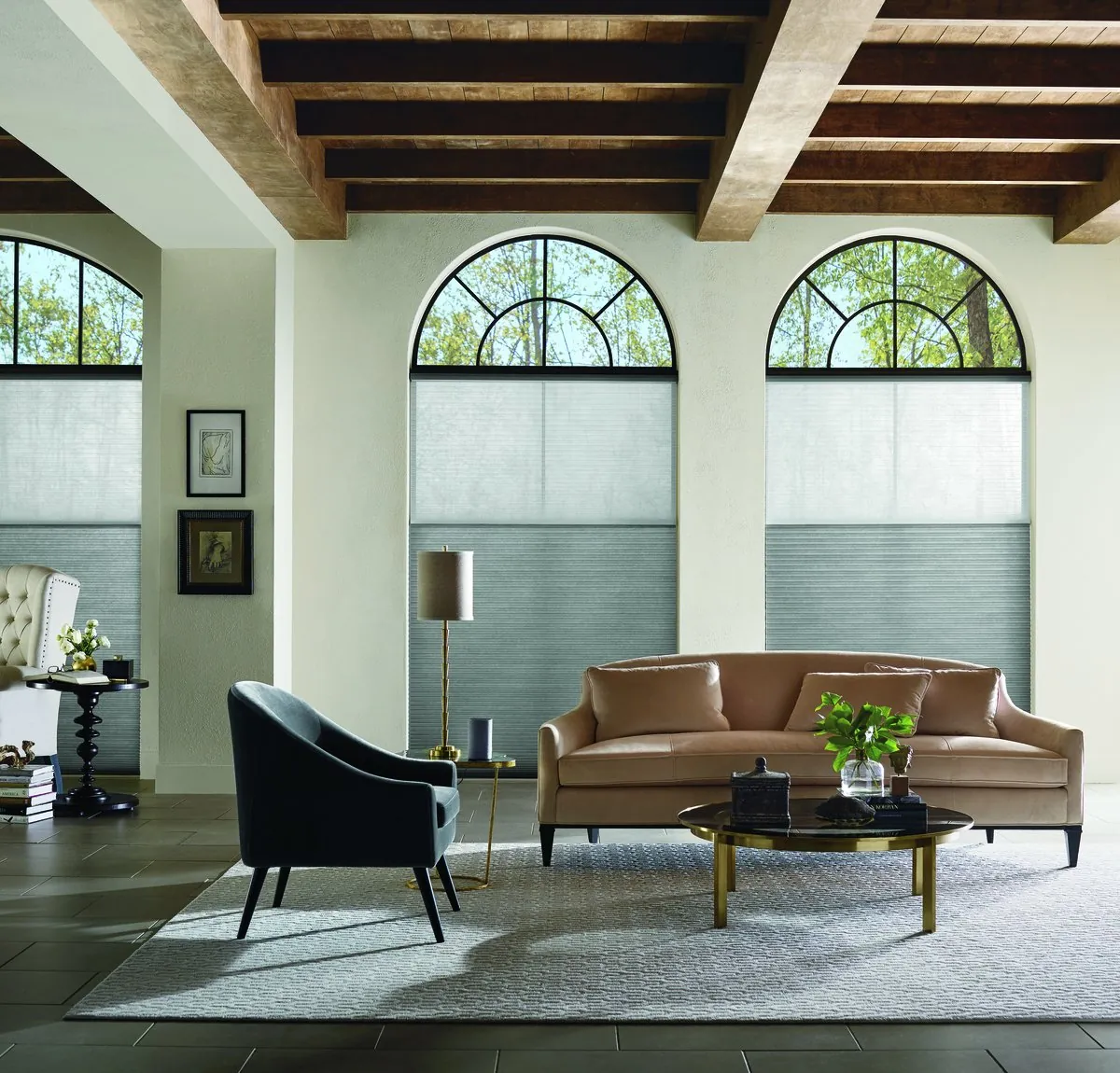
Big glass on the water side
Around the harbor and out along Ned’s Point, the shingled houses face the water with as much glass as their walls will hold. Many began as summer cottages and have since been winterised for year-round living, while the larger, newer houses inland were designed from the start around wide windows and open rooms. In both, the rooms that look toward the water are glazed heavily, and the salt air never really lets up. Those two facts shape every recommendation we make for cellular shades in Mattapoisett, MA.
Glass is the coldest surface in a winter room. When one wall of a living room is mostly window, you feel it as a chill on the side of the sofa nearest the harbor. A honeycomb shade puts a cushion of trapped air across that glass. The cells keep the air from circulating against the pane, so the room holds its heat after the sun goes down.
The same shade works the other way in summer. Lowered on a bright afternoon, it slows the heat coming in through all that glass while a light-filtering fabric keeps the room from going dark.
Honeycomb options for harbor and inland houses
These six come up again and again when we plan cellular shades in Mattapoisett. Our vans carry samples of each, so you can try them on your own windows.
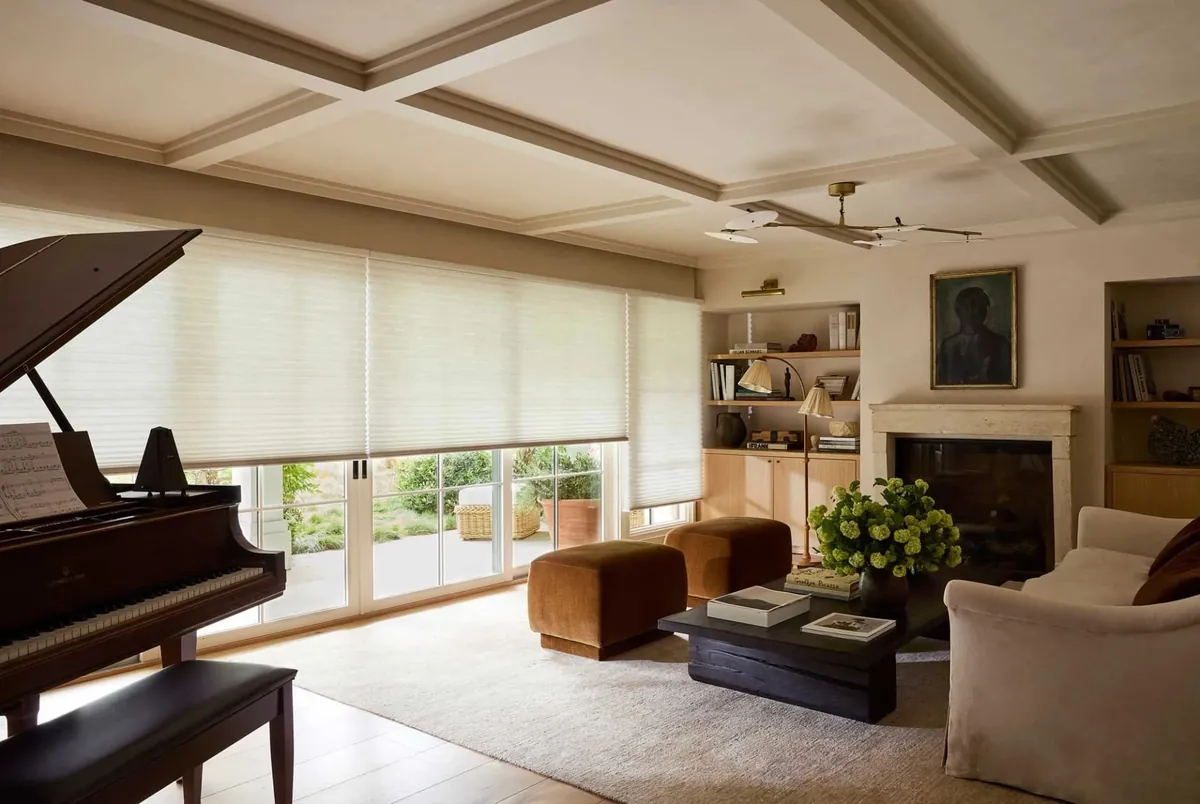
Duette for wide water views
The original Hunter Douglas honeycomb comes in very wide sizes and the broadest fabric list, which suits a living room that opens onto the harbor through a long run of glass.
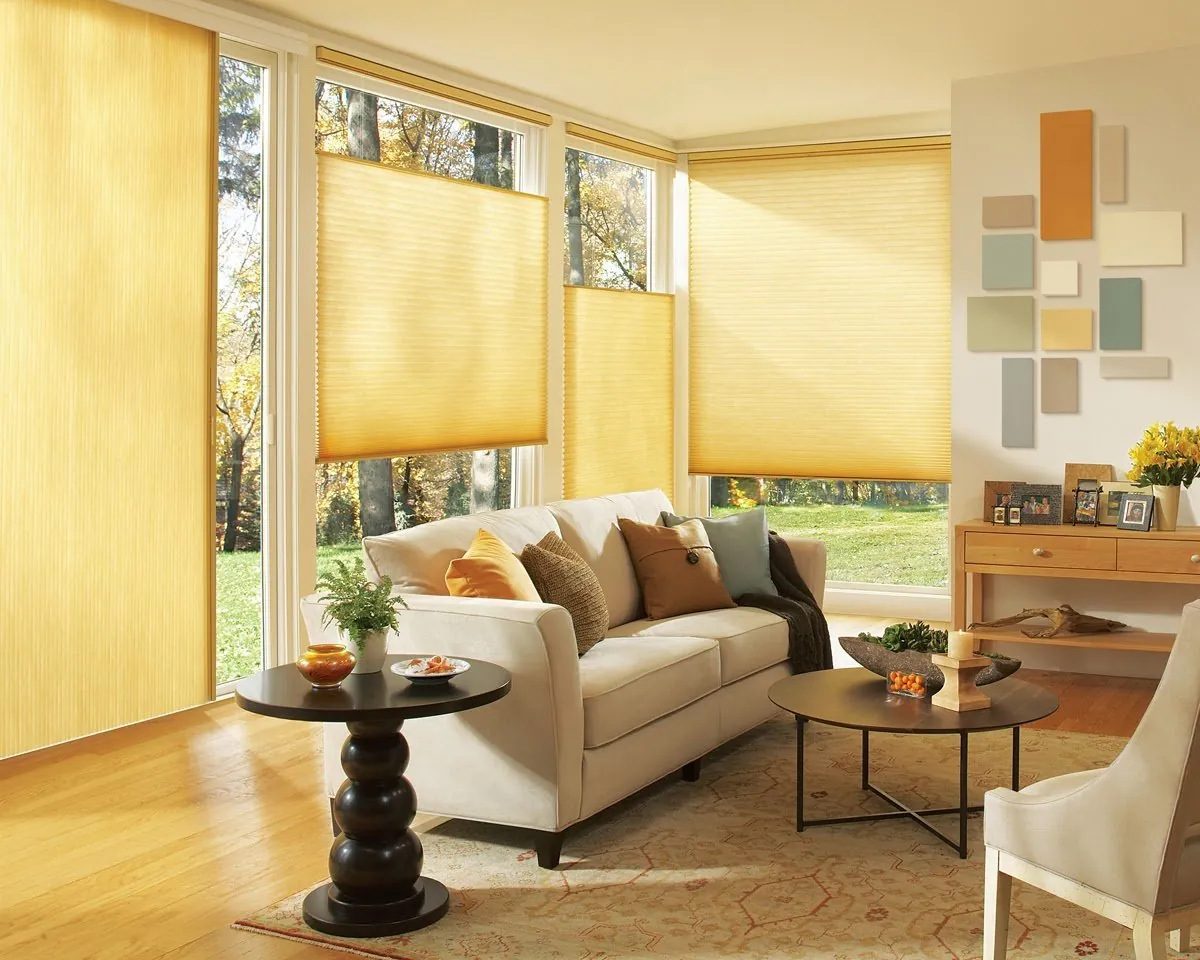
Top-down for the view
Drop the shade from the top to keep the sky and the water in sight while the lower glass stays covered from a neighbor’s deck or the road.
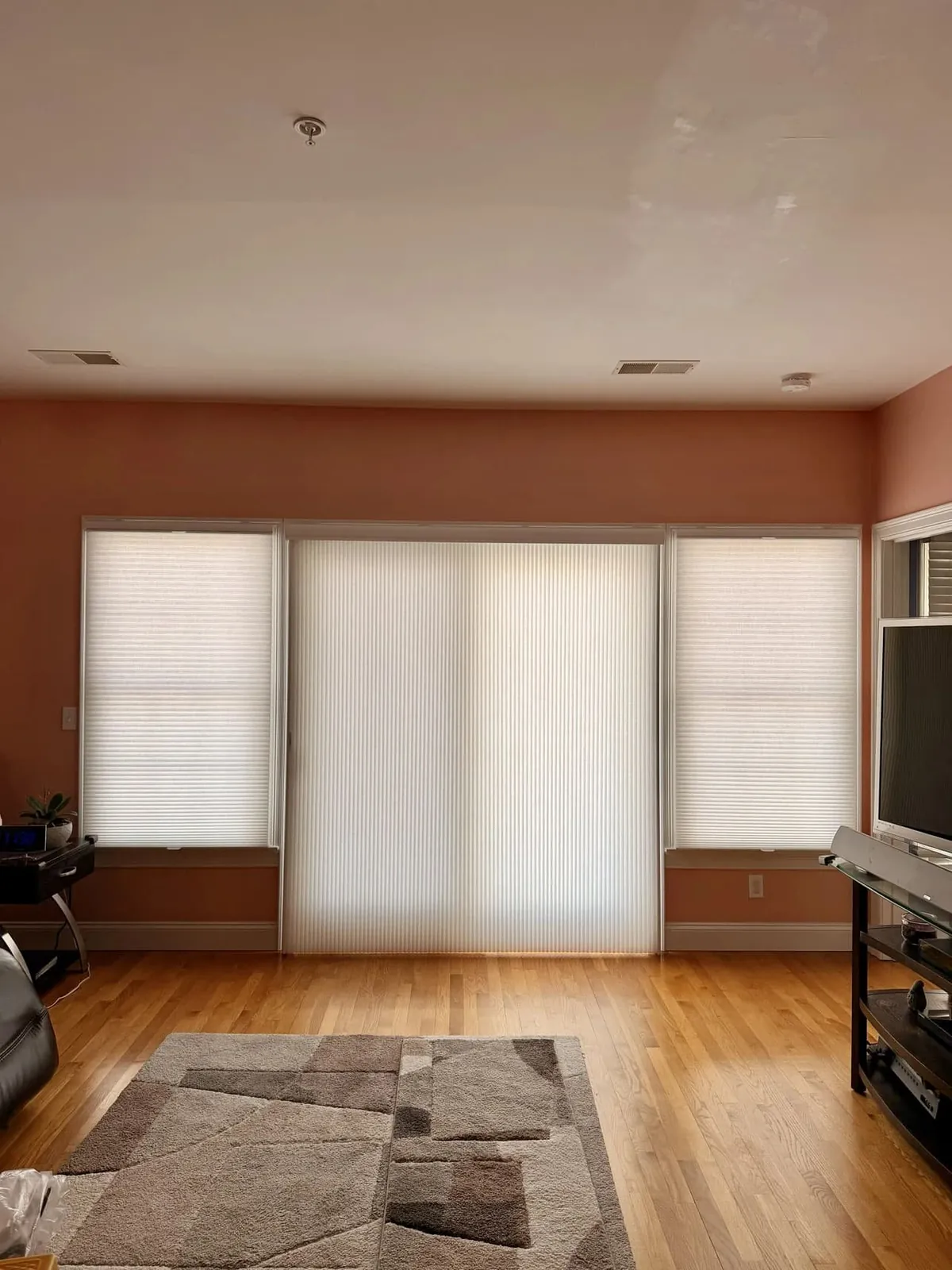
Vertical cells for doors
A honeycomb shade that slides sideways across a patio door and parks at one end, so the door to the deck gets the same insulation as the windows.
Applause for kitchens and bedrooms
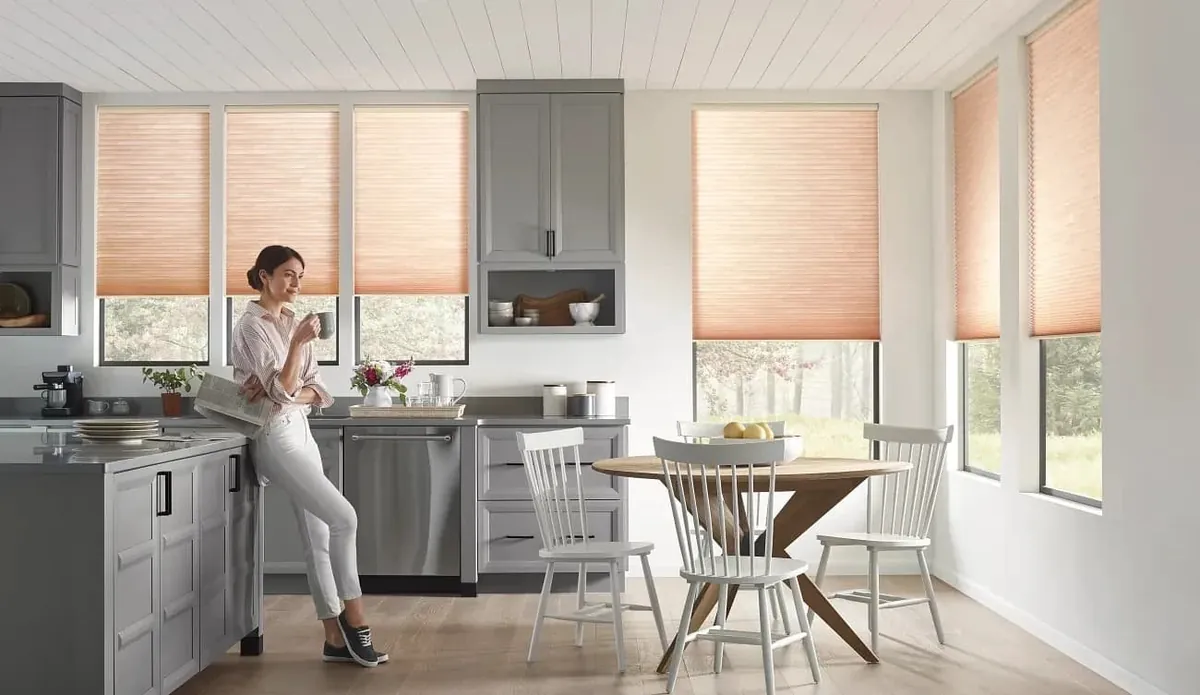
Hunter Douglas’s second honeycomb line, with its own colors and textures. A practical choice for the everyday rooms in a converted cottage.
PowerView for a house you leave
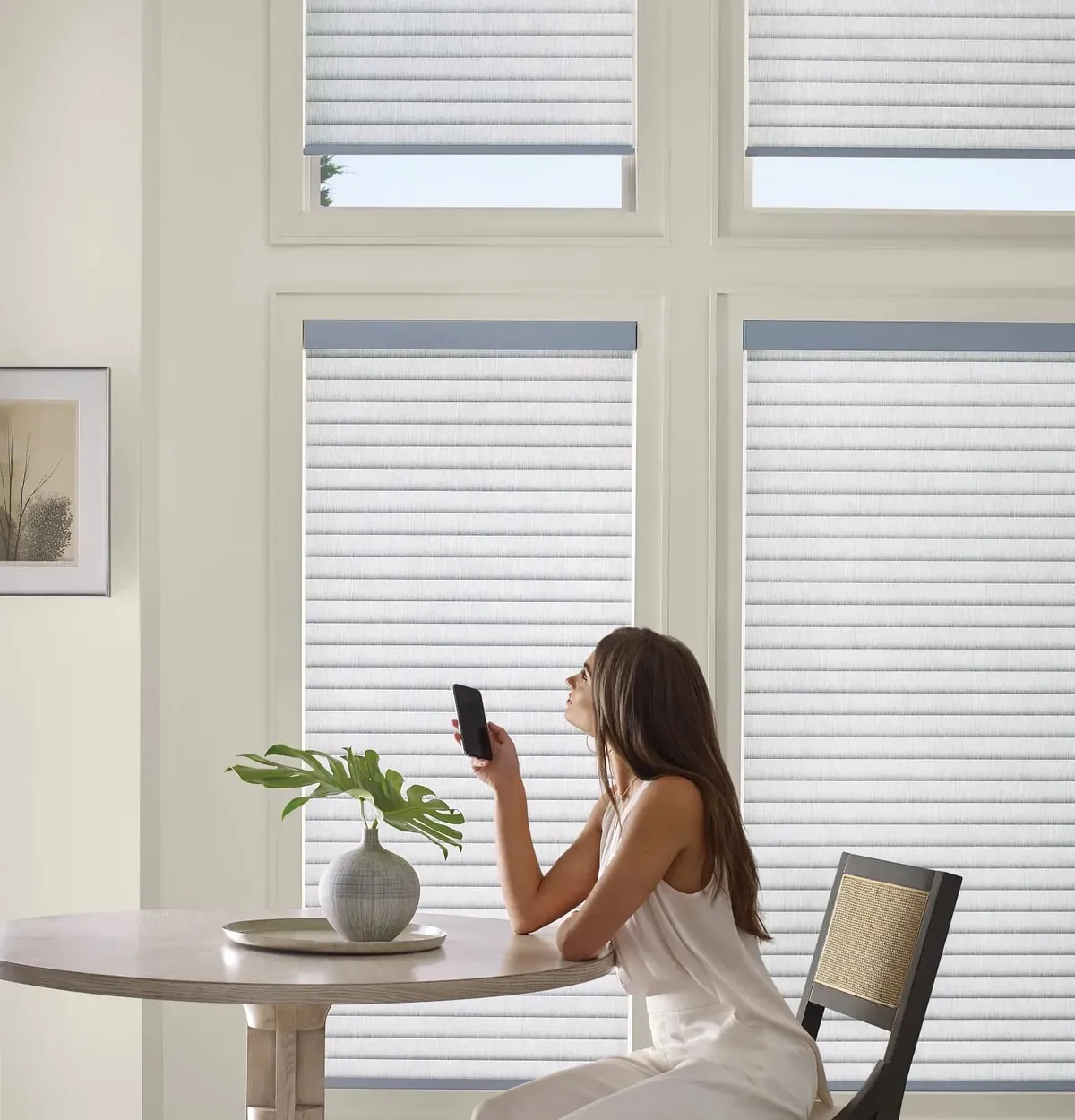
Motorized shades run on a schedule from the app, so a house that sits empty midweek still opens and closes at sensible times.
Cordless lifts near salt air
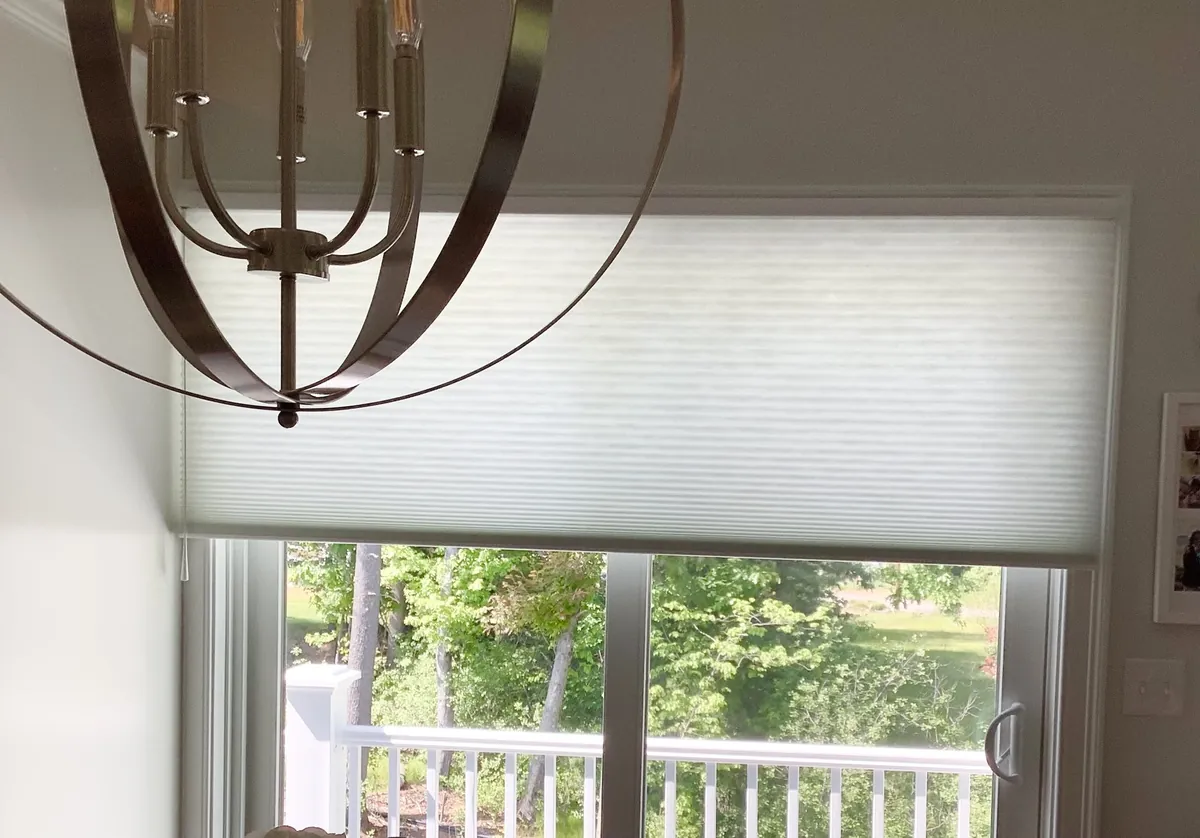
With no cord or cord lock at the side, there is less hardware to corrode and nothing to blow about when the windows are open.
Cottages that became year-round homes
A summer cottage was built to be opened in June and closed in September. When one of the harbor cottages is converted for year-round use, the walls and roof often get insulation and the windows get replaced or fitted with storms. Even then, the window is still the weakest part of the wall. Small cottages also have windows on every side, so in a compact living room there is rarely a seat far from cold glass.
That is where honeycomb shades earn their place. In a converted cottage they do something other coverings cannot: they add a layer of insulation right at the glass without taking up room, without heavy fabric and without changing the look of the shingled exterior. Raised, they fold into a narrow stack at the top of the window. Lowered at dusk, they help a small room stay comfortable through a January night.
Many conversions still have a few original cottage windows, especially in bedrooms tucked under the roof. These are often small, sometimes oddly proportioned, and rarely square after many years of sea weather and settling. Every shade is made to its own measurements, so we size each one for the window in front of us.
Out along Ned’s Point
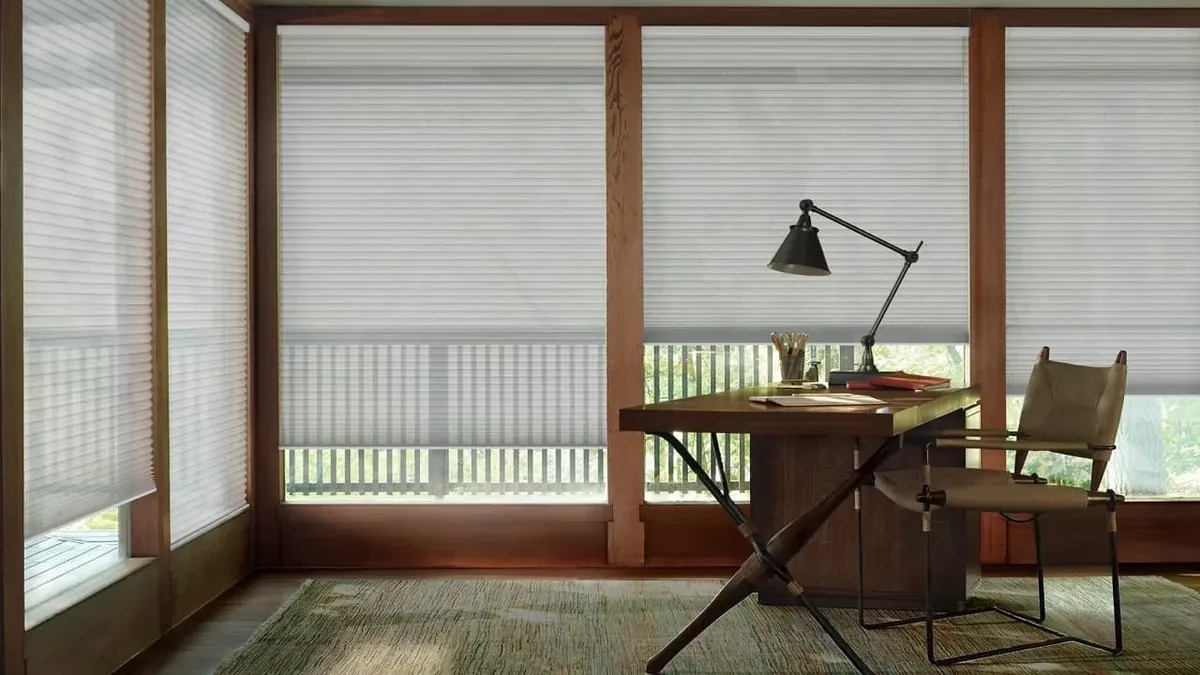
The houses near Ned’s Point take the weather head on. Wind off the bay drives cold against the glass in winter, and summer light bounces up off the water into the front rooms from morning to late afternoon. Rooms here are often laid out to catch the view in two directions, with windows on the corner and a slider or French doors to a deck.
For corner windows we make each side its own shade so the two meet cleanly and can be raised separately. For a deck door, a vertical honeycomb shade crosses the glass and stacks neatly at one side. And where the view is the whole point of the room, a top-down, bottom-up shade lets you lower the top edge just far enough to block the low sun while the horizon stays open.
Rooms glazed toward the harbor
Water-facing rooms in Mattapoisett often have more glass than wall. A picture window flanked by casements, a bank of transoms above, a pair of sliders below. Each of those openings needs a covering, and they all need to look like one design when they are lowered together.
Honeycomb shades handle that well. The fabric, color and pleat size can be matched across every window on the wall, so a mix of shapes and sizes reads as a single surface. Transoms and other high glass can take fixed shades or motorized ones. Wide picture windows can be split into two or three shades on one headrail, moving as one or separately.
The heaviest glazing also takes the strongest sun, and fabric choice matters more there than anywhere else in the house. Lighter, neutral colors hold their look better on a window that faces the water all day. A light-filtering fabric cuts the glare off the harbor without making the room feel shut in.
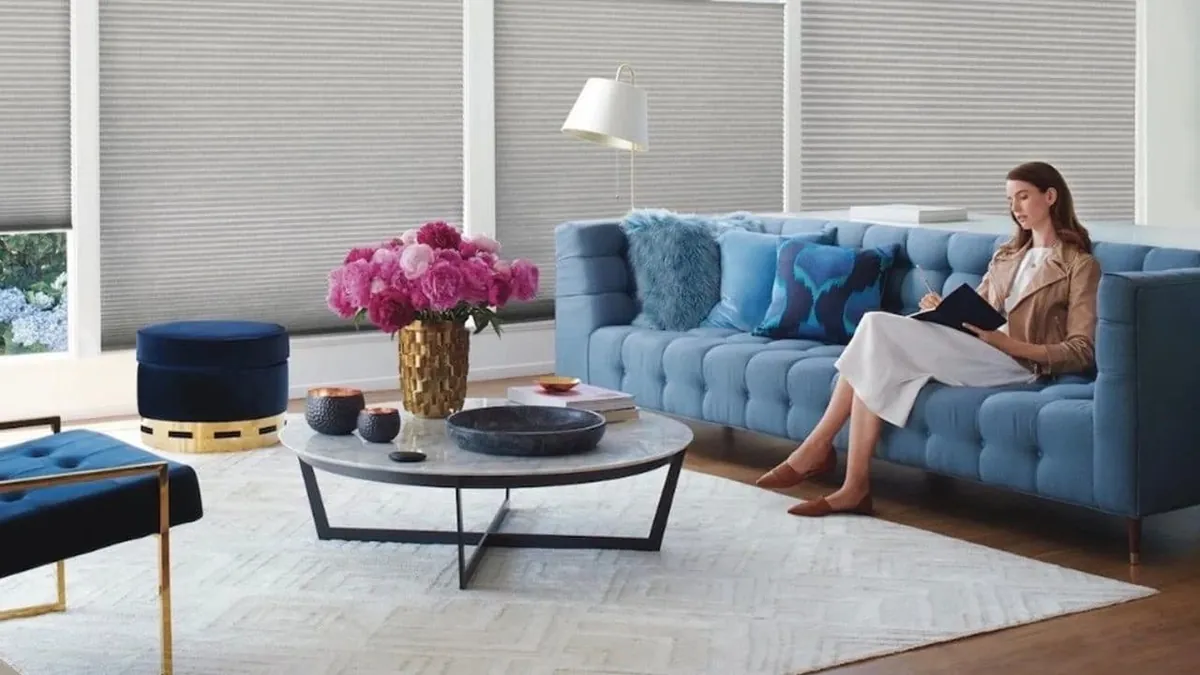
Salt in the air, all year round
Near the harbor, salt finds its way onto anything metal by an open window. Older corded blinds with exposed ladders and tilt mechanisms show it first. A cellular shade keeps nearly all its working parts inside the headrail, out of the air, which is one reason it suits a coastal house.
Cordless lifts help again here. There is no cord lock to stiffen and no cord to fray or tangle in a breeze. You raise the bottom rail by hand and it stays where you leave it. For high or hard-to-reach windows, PowerView motorization takes over, and we talk through where the motor’s power comes from and how it is handled on each window.
When the shades go up, our certified Hunter Douglas installers set the brackets into sound wood around the opening. In an older cottage that sometimes means finding solid framing behind trim that has been painted many times over, so each headrail sits level and secure.
Newer houses inland
Away from the water, the newer houses in Mattapoisett are larger, with open kitchens and family rooms, two-story entries and tall windows stacked one above another. Those rooms are bright and airy, and they can be hard to heat and hard to shade, because the top windows are out of reach and the sun moves across a lot of glass during the day.
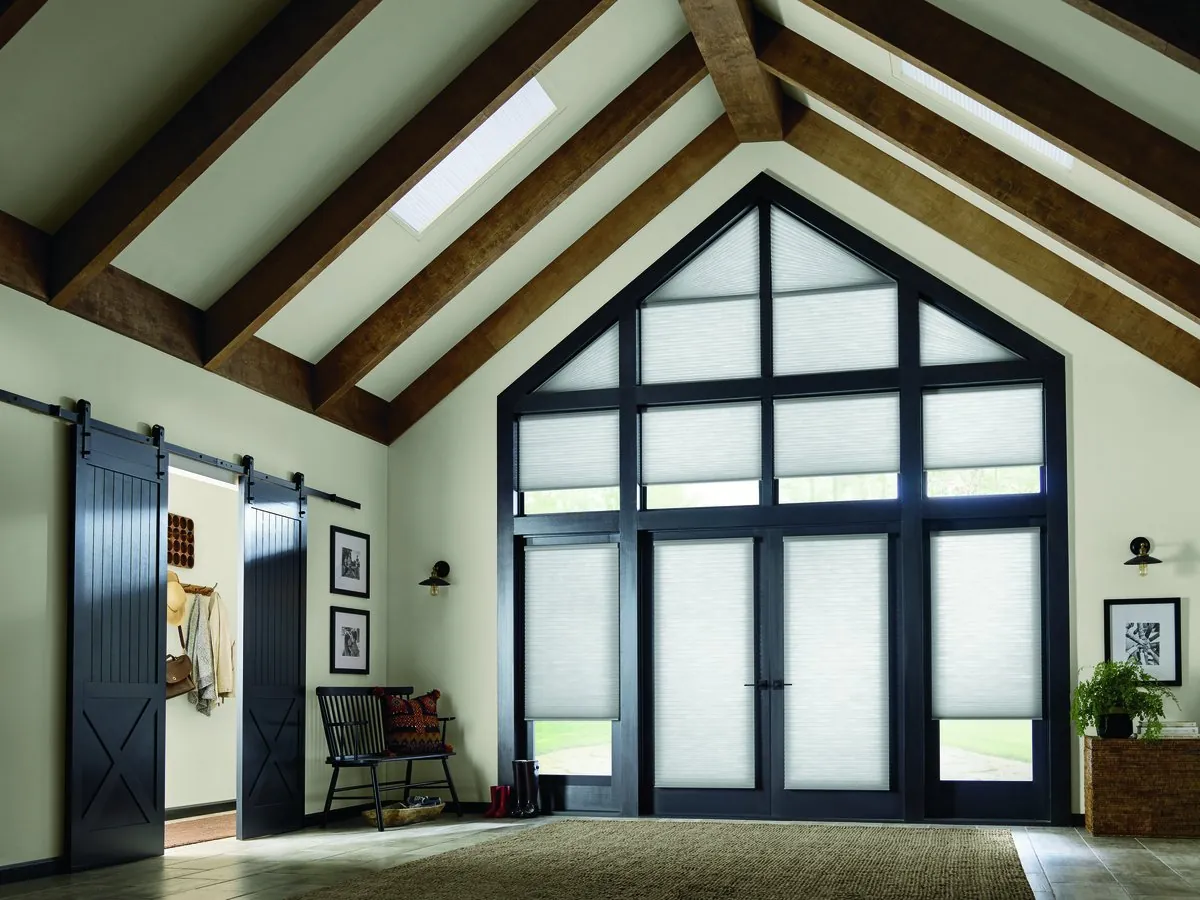
Cellular shades suit a large modern window well. They can be made very wide and very tall, and Duette offers specialty shapes for arched or angled tops. For windows above the reach of a step stool, PowerView lets you lower them from a remote or the app, and a schedule can close the upper shades on a summer afternoon before the room heats up. Our page on motorized blinds in Mattapoisett goes into the controls in more detail.
Bedrooms in these houses often face east or west, so a room-darkening honeycomb fabric is a common choice upstairs. It keeps the room dim at dawn and still holds air in its cells, which helps a bedroom over a garage or a cathedral ceiling stay comfortable.
A house that sits empty part of the week
A good share of Mattapoisett houses are not lived in every day of the year. Some are weekend homes, some are summer houses still waiting for a full conversion. An empty house with bare windows heats up in summer sun and loses heat in winter.
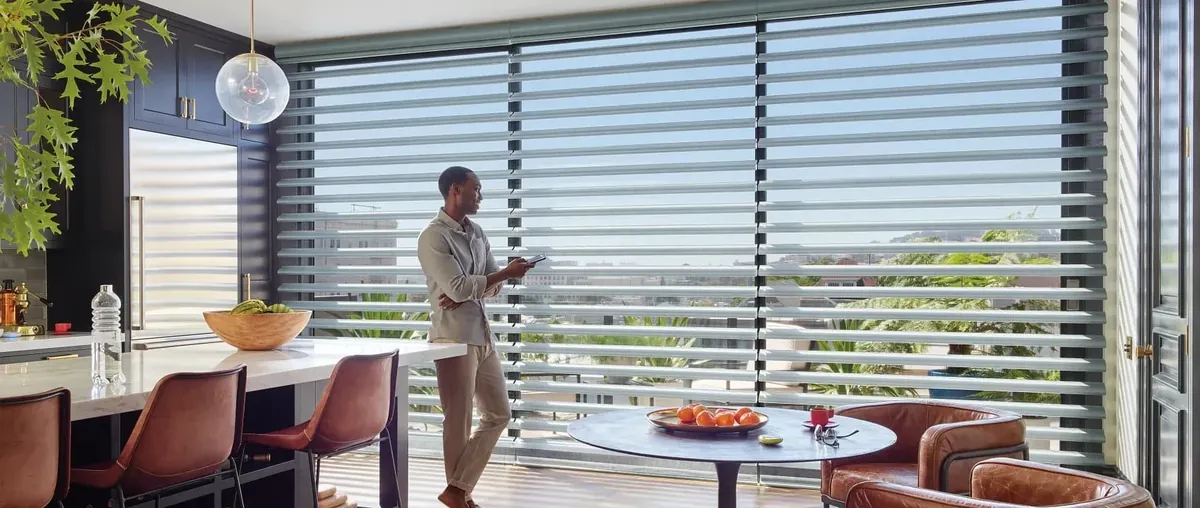
PowerView automation is useful in that situation. A schedule can lower the water-facing shades during the hottest hours and raise them again in the evening, or close every shade at dusk through the winter. You can adjust them from the app when you are away, so the house looks lived in and the rooms are not baking or freezing when you arrive.
Color against gray shingle and blue water
Weathered shingle, white trim and the color of the harbor behind it: the outside of a Mattapoisett cottage has a palette of its own, and the backs of your shades are part of it. Seen from the road or from a boat, a row of windows with mismatched linings looks untidy. Most owners choose a white or soft neutral backing for every shade on the water side, so the house looks calm from outside whatever colors face into each room.
Inside, the light off the water is cool and bright for much of the day. Crisp whites can look stark in it, while warm ivories and sand tones soften it. Grays pick up the color of the sea on an overcast day. We bring fabrics in several tones so you can see which one sits well with your walls and floors in that particular light, rather than guessing from a swatch card. Matching cellular shades in Mattapoisett to a shingled exterior is one of the easiest decisions to get right at the window and one of the hardest to get right from a catalog.
Measuring windows the weather has moved
Coastal houses move. Wind, damp and the freeze and thaw of each winter shift frames by small amounts, and an older cottage window can be wider at the top than the bottom or taller on one side than the other. A shade that ignores that hangs with a tapered gap, which looks wrong and lets cold air past the edges.
- We measure each opening’s width in three places and its height in three places.
- We check the depth where the headrail will sit and note any crank, lock or stop in the way.
- On casements we check the operator handle clears a lowered shade, since a cottage casement is often opened on a calm day.
- We decide inside or outside mount with you, window by window, and explain why.
Getting the measuring right is what makes cellular shades in Mattapoisett look as if they came with the house, and it is what lets the cells do their job edge to edge.

How our home visit works
Because the light on the water changes so much through the day, the only fair way to choose a fabric is at your own window. Our vans carry the honeycomb samples, so we can bring the showroom to you.
- You request a consultation on the website or with the call button, and we settle on a time.
- We start in the water-facing rooms, look at the glass and talk about view, glare and how warm each room stays.
- You hold fabrics up at the window, sheer to room-darkening, and see how each one handles the harbor light.
- We measure every opening, including transoms, sliders and corner windows, and check the depth for each mount.
- We go through lift options and motorization room by room.
- You receive a free estimate for the shades you are considering, and you take your time deciding.
If you would like help with colors, fabrics and the rest of the room, ask about our interior design consultations. More detail is on our page about what happens at an in-home consultation.
Duette, Applause, or both
Duette and Applause are both Hunter Douglas honeycomb shades. Each folds a fabric into rows of cells that hold air at the window. Duette gives you the longest list of fabrics and textures, the widest sizes, specialty shapes and the vertical shade for doors. Applause has its own range of colors and handles standard windows well.
A harbor house often takes Duette on the big water-facing windows and Applause in the bedrooms and bathrooms at the back. Read more on our Duette honeycomb shades and Applause honeycomb shades pages, or see the full cellular shades range.

The Hunter Douglas Gallery difference
Gallery dealer is the designation Hunter Douglas gives dealers who meet its standards, and Blinds & Designs holds it. In practice it means you choose from the complete honeycomb range: all of the Duette and Applause fabrics, the lift systems, vertical shades and PowerView motorization.
Our installers hold Hunter Douglas certification, so every shade is fitted as the maker intends. We also look after blind and shade repairs, whether the shade came from us or was already in the house when you bought it.
Plenty of harbor houses need more than one kind of covering. A screened porch may want a roller or solar screen; a dining room may suit shutters. Have a look at our roller shades in Mattapoisett and plantation shutters in Mattapoisett, or the full list of services on our Mattapoisett page.
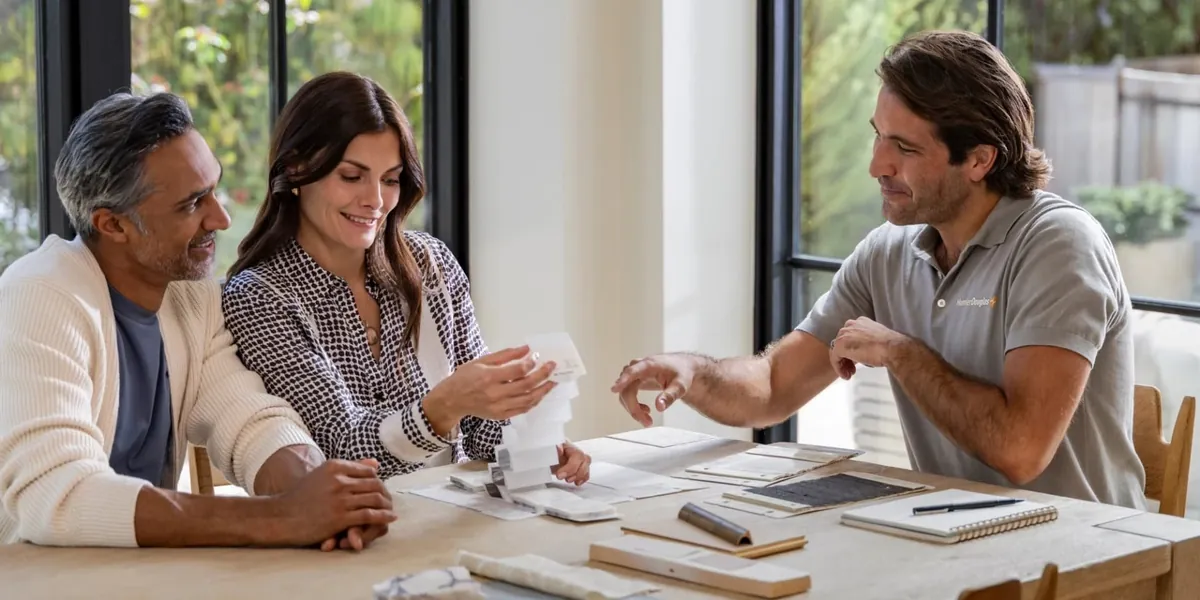
Samples at the cottage door
A cottage room facing the harbor can look completely different at breakfast and at supper. Bring a sample into that room and you see it straight away: a fabric that seems warm and soft in the morning can look cool and flat once the sun moves round. That is why we prefer to choose with you, at your windows.
The visit is the same whether you want one bedroom shaded before winter or the whole house planned at once. If you would like to see Hunter Douglas shades before we come, the North Dartmouth showroom is the closest of our locations to Mattapoisett.
Questions from Mattapoisett
Will honeycomb shades block my view of the harbor?
Only as much as you want. A top-down, bottom-up shade lowers from the top, so the water and sky stay in view while the lower glass is covered. Raised fully, a honeycomb shade folds into a slim stack and the whole window is clear.
How do cellular shades cope with constant salt air?
Almost all the working parts sit inside the headrail, away from the air. A cordless lift removes the cord lock and cord, the parts that usually suffer first. We also suggest fabrics that hold their color on a window facing the water.
My cottage was converted for year-round use. Will shades help with the cold?
Yes. A honeycomb shade adds a layer of trapped air at the glass, which is still the weakest part of a converted cottage wall. Lowered in the evening, it helps a small room keep its heat.
Can I control the shades when I am not at the house?
With PowerView motorization you can open and close them from the app wherever you are, or set schedules so they move on their own at set times of day.
Is there a charge for the estimate?
No. After we measure, the estimate is free. Request a consultation and we will bring samples to your house.
Plan your shades before the season turns
The clearest way to choose cellular shades in Mattapoisett is with the samples in your own water-facing rooms. Request a consultation and we will bring the honeycomb range to you, measure every window and give you a free estimate. You can also use the call button to talk it over, or visit the North Dartmouth showroom.