
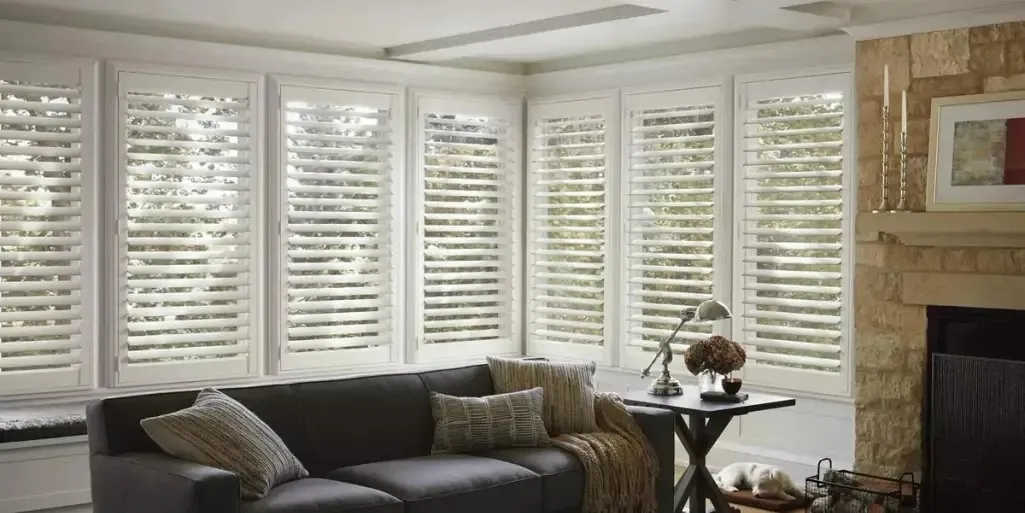
Antique sash and wooded lots
Easton is a town of two housing stories. Near the villages, antique colonials and Victorians keep their tall sash and the trim that goes with it. Off Route 123 and the roads that branch from it, newer colonials stand on wooded lots, well back from the pavement behind lawns and trees. Generous lots and deep setbacks run through most of town, and that space shapes how we approach plantation shutters in Easton, MA.
With the street a long way off, privacy from passers-by is rarely the first worry. Light is. Tall trees filter the sun for much of the year, so a room with plenty of glass can still feel dim, and the right shutter is one that gives every bit of daylight back when you want it.
We sort all of that out in your home. Our in-home consultations bring a van of shutter samples up the drive, so louver sizes and colors are judged against your own windows, under your own trees.
What shapes a shutter plan here
These three features of Easton housing come up in almost every conversation we have about shutters in town.
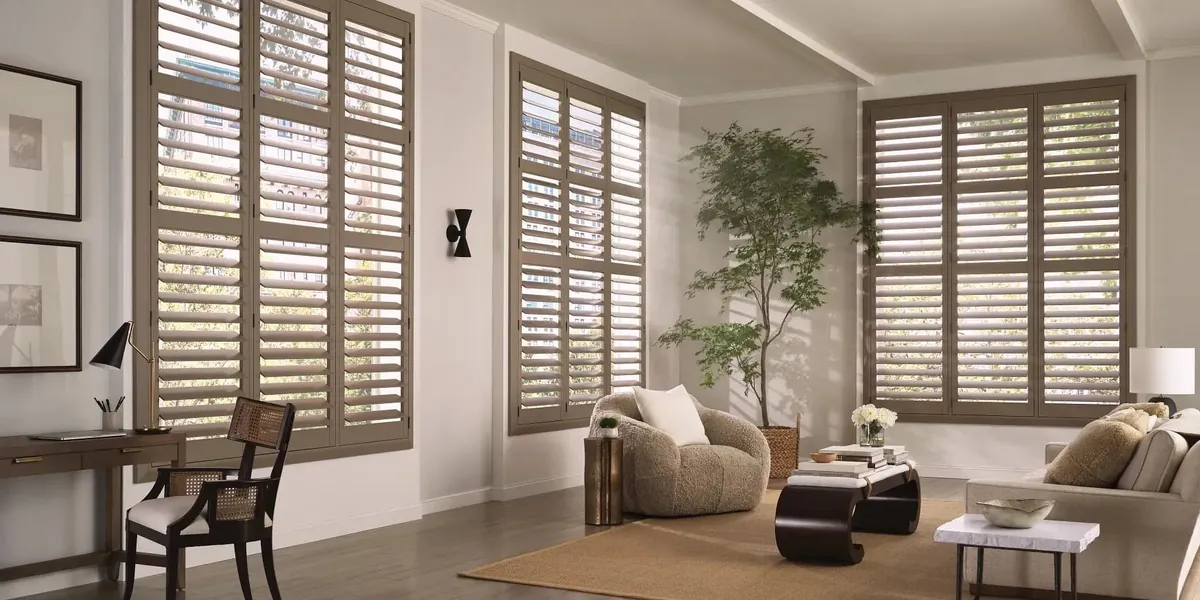
Village antiques
Tall, slim sash and cared-for casings. A louver in scale with the glass and a frame that keeps the old woodwork on view.
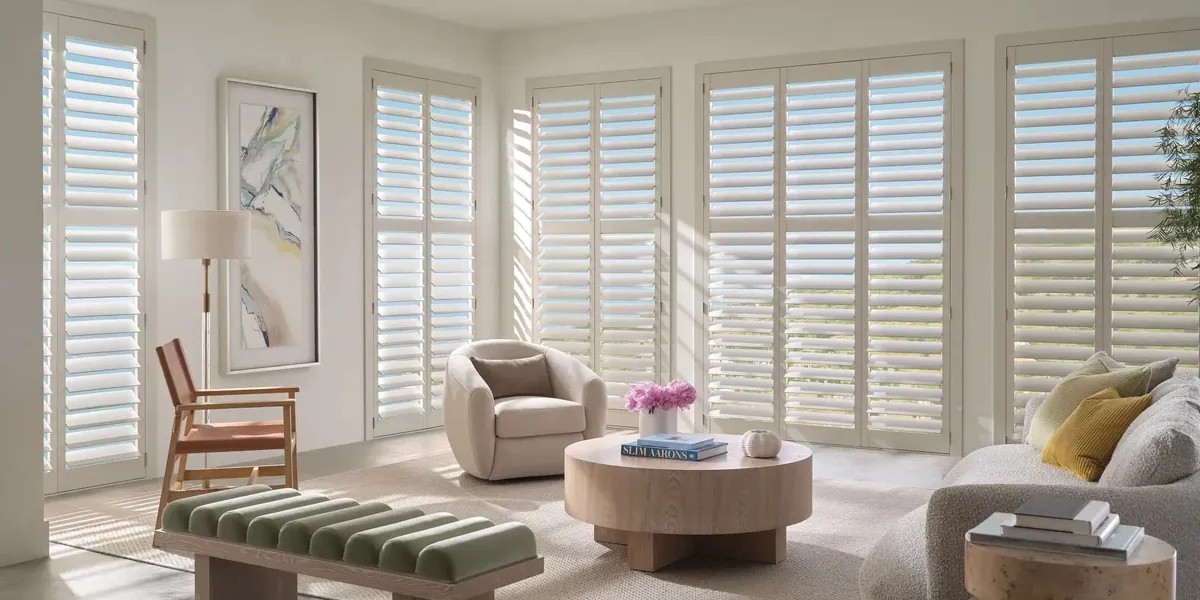
Newer colonials off Route 123
Bigger rooms and wider openings toward the backyard, where a larger louver and lined-up panels suit the scale.
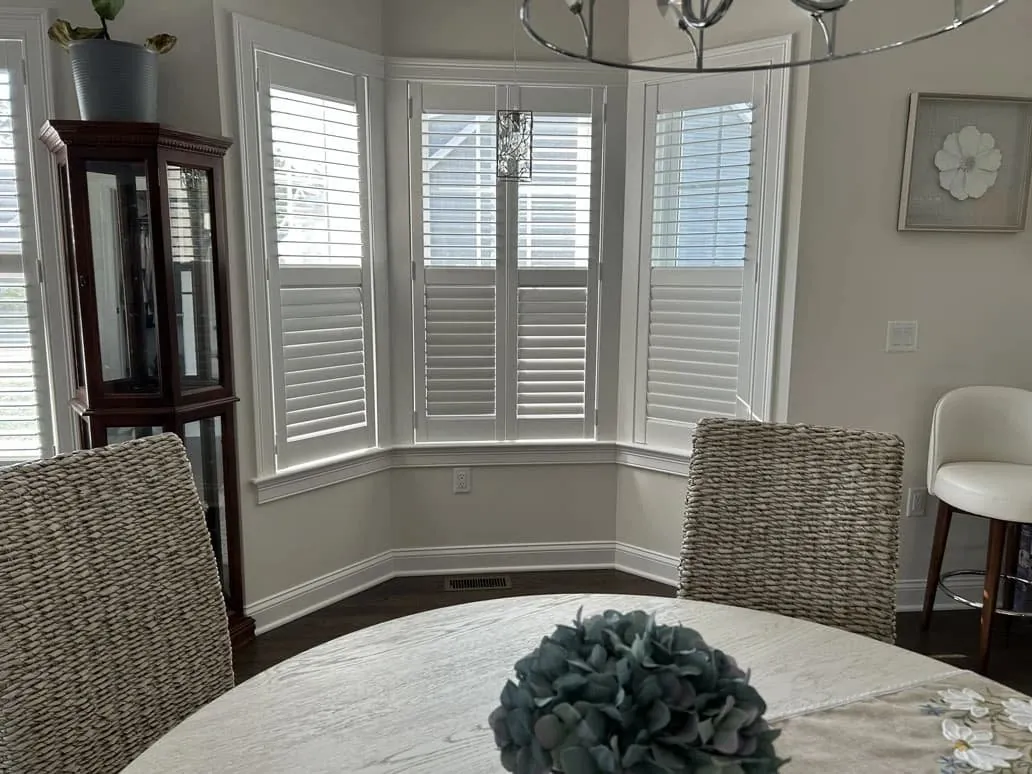
Rooms under tall trees
Where oaks and pines cut the daylight, shutters that swing right off the window give the room all the brightness there is.
How the home visit works
Easton is covered by the shop-at-home team we run out of Canton. There is no Canton storefront to drive to; everything is arranged around a visit to your house, and the Canton shop-at-home page explains how. Put simply, the showroom comes up your driveway.
For a house at the end of a long, tree-lined drive, that is the sensible order of things. The light in your living room at four in the afternoon, filtered through oaks and pines, is nothing like the light in a store. A white that looks crisp under shop lighting can look gray in a shaded room, and a louver that seems right on a sample board can look too heavy on a slender antique sash. Holding the samples up in the room settles it.
The appointment, step by step:
- Choose a time through the Request a Consultation form, or call us using the button above.
- Our consultant arrives with shutter samples in every Hunter Douglas collection.
- We look first at the room that matters most to you, often the living room or the room facing the woods.
- You compare louver sizes and colors in that room’s real light.
- We take measurements at each opening you want dressed.
- A free estimate follows, and the decision waits until you are ready.
There is more on our page about what happens at an in-home consultation. Ask about interior design consultations too, if you would like help with paint, fabric or the wider room.

Tall sash in the village houses
The antique colonials and Victorians near Easton’s villages were built with sash that is tall and comparatively narrow. Many still have their original casings, stools and aprons, painted many times over and looked after with real care. A shutter in one of these rooms should suit the window, not overpower it.
That starts with louver size. On a slender sash, a modest louver looks right: plenty of blades run up the panel, and the window keeps its tall, upright line. An oversized louver on the same window can look sparse and modern, with only a few slats on a long panel.
Panel layout comes next. A tall window can take a single panel or a pair, and either can be divided partway up so the top and bottom tilt separately. In a village house close to a busier road, that lets you close the lower blades and keep the upper ones open to the sky. Lining the division up with the sash’s own crossbar makes the shutter look as if it belongs to the window.
Keeping old trim on show
Owners of antique houses often worry that a shutter will hide the woodwork they have spent years restoring. It does not have to. Frame style is where that is decided. The frame is the part of the shutter that meets the casing, and choosing a profile that sits quietly within the opening leaves the original trim fully visible, so the shutter reads as a natural part of the window.
From outside, interior shutters suit an old colonial or Victorian well. Closed louvers behind old glass look right on a period facade in a way that many modern coverings do not. For the front of a village house, we usually suggest one louver size and one color on every street-facing window, upstairs and down, so the house looks composed from the road.
Our guide to shutters for older windows goes further into fitting old openings.
Newer colonials on wooded lots
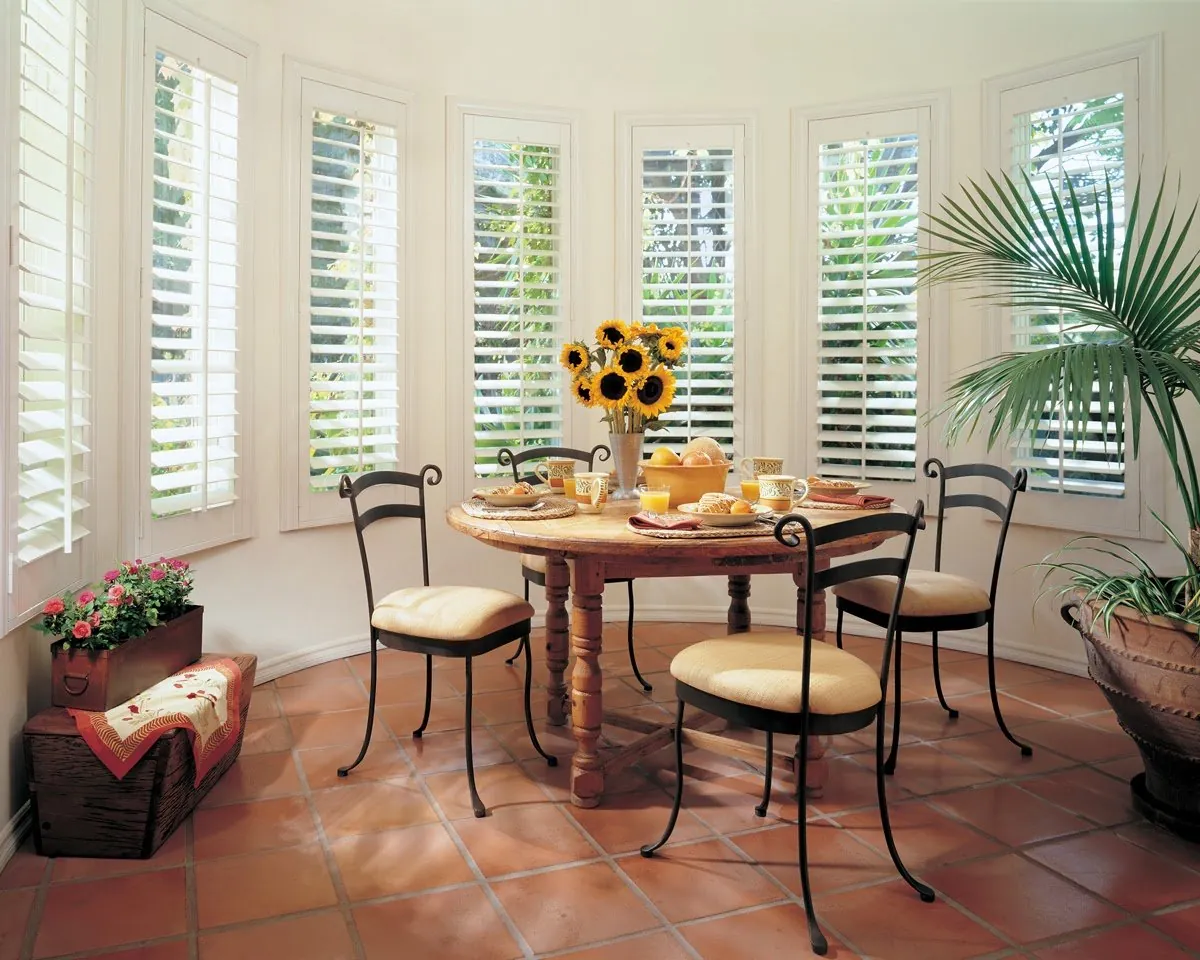
Off Route 123, the newer colonials are larger, with bigger rooms and more glass. A family room at the back may have a wide window or a group of windows looking into the trees. A kitchen opens to a breakfast area with windows on two sides. Upstairs, a primary bedroom has a wide pair or a triple.
These openings suit a larger louver. It looks in proportion on a wide window, and when the blades are tilted flat it leaves broad gaps to see the woods through. On a group of windows, each opening gets its own panels, and all of them line up so the louvers run in one level line across the whole wall. The result is calm and orderly, open or closed.
With the neighbors hidden behind a screen of trunks, plenty of these rooms leave the panels swung open from breakfast to supper. Plantation shutters in Easton, MA, in these houses earn their place as much for the finished look and the evening privacy as for daytime control.
Light under oaks and pines
A wooded lot is a pleasure to look out at and a challenge to light. On a gray February afternoon, a back room under tall pines can need a lamp by three o’clock, however much glass it has. A fabric shade that stacks at the top of the window, or a curtain that bunches at the sides, steals a slice of that scarce light every hour of the day.
A shutter steals none of it, because a hinged panel can swing all the way off the opening and rest against the wall. That is the first advantage. The second is the louver itself. Pointed upward, each blade acts like a small reflector: it catches the daylight coming through the trees and throws it onto the ceiling, so the whole room glows instead of one patch of floor by the window.
Shutter color plays into this more than people expect. A pale finish sends light back into the room; a deep one soaks it up. Under a heavy canopy, we nearly always steer toward white or an off-white for the main rooms and save stronger colors for spaces that get more sun.
After dark at the end of the drive
A house tucked among trees feels completely hidden at noon. Switch on the lamps after sunset, though, and a family room full of glass glows like a lantern through the trunks, visible from the road and from the next lot over. For many households, the evening, not the daytime, is when bare windows start to bother them.
Here a shutter is quick and tidy. Swing the panels in, turn the louvers flat, and the glass disappears behind a smooth white surface that keeps the lamplight in the room. Next morning, open them and the woods return. That simple routine is reason enough to choose plantation shutters in Easton, MA, for a house in the trees.
When the leaves fall
Every November an Easton house gets a new set of windows, in effect. The oaks drop their leaves, and rooms that lived in shade since May suddenly take long, low beams of sunshine across the floor, onto the dining table and into the eyes of whoever sits facing the glass.
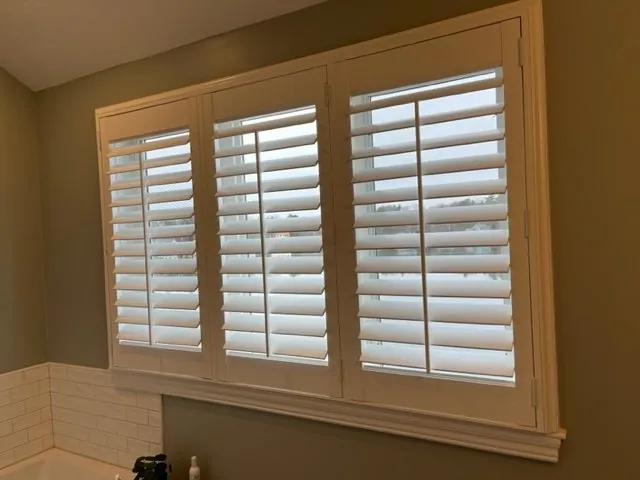
A shutter needs no swapping to cope. Through summer the panels mostly stand open. Once the branches are bare, the blades get turned a few degrees to break up the low sun, or pointed up so it lands on the ceiling instead of the sofa. In spring, as the canopy fills in again, the panels go back to standing open. Bear that annual cycle in mind when picking a blade: a bigger louver handles bright winter sun more easily and gives the widest view through the woods in July.
Kitchens and breakfast corners
The newer colonials off Route 123 usually put the kitchen at the back, opening into a breakfast area with windows on two sides and often a door to a deck. It is the room where the day starts, and on a wooded lot the morning light there arrives in shafts between the trunks, bright one minute and gone the next.
A shutter on each breakfast window, with its blades tilted to taste, smooths those shifts into an even light over the table. The window above the sink often suits a cafe style, leaving the top of the glass open to the treetops. The deck door is better with a covering that slides or lifts out of the way, in a color that matches the shutters beside it. Plan the room as one, and plantation shutters in Easton, MA, make the kitchen feel finished without fussing it up.
Village houses near a busier road
Not every antique sits on a quiet lane. Some of the older houses near the villages front onto a through road, closer to the traffic than the newer colonials ever are. For those front rooms, privacy comes back into the picture, along with headlights sweeping across the ceiling at night.
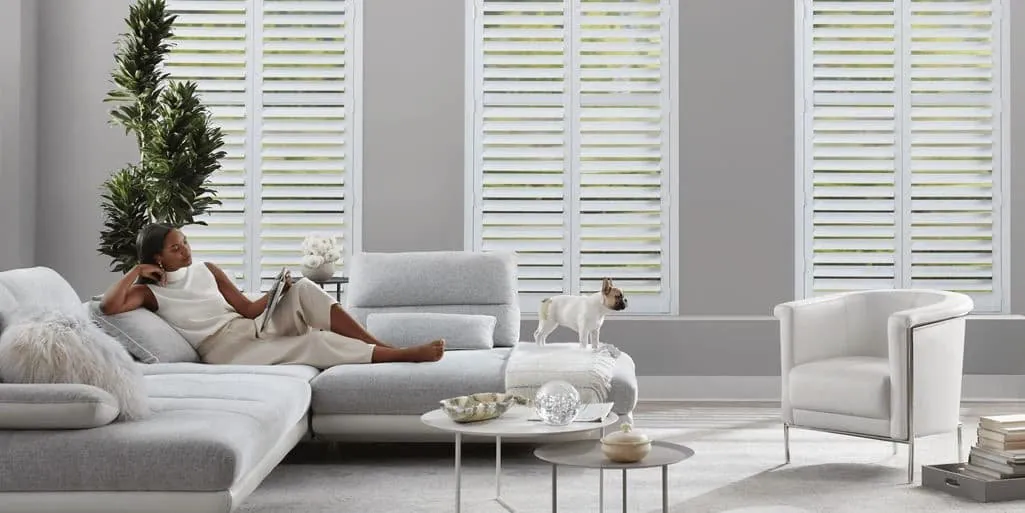
Splitting the tall panels into upper and lower sections helps here. Keep the lower blades shut against the road and the cars, open the upper ones for daylight, and the front parlor stays bright without feeling exposed. At night, close everything, and the sweep of headlights stops at the shutter. The rooms at the back of the same house, facing the yard and the trees, can then be planned purely for light.
It is a good example of why one house can need two approaches, and why we walk every room with you rather than quoting a single answer for the whole place. The same goes for an antique with a later addition at the back, where the old sash and the newer windows sit only a doorway apart and each deserves its own louver.
Bedrooms, baths and the smaller windows
Upstairs, bedrooms in both kinds of house are mostly standard double-hung windows. A medium louver in the same color as the rooms below ties the floors together. Closed shutters make a bedroom much calmer in the early morning, though a little light still comes around the edges; if one bedroom has to be truly dark, we will suggest a shade there instead.
Bathrooms and the window over the kitchen sink often suit a cafe style, covering only the lower glass for privacy and leaving the top open for daylight. A narrow side light beside a front door can take a single slim panel. All of these are planned in the same visit, so the small windows match the main rooms.
Choosing among Palm Beach, NewStyle and Heritance
All three Hunter Douglas collections, Palm Beach, NewStyle and Heritance, come with us to every Easton visit. Rather than list their features, we set each one against your trim so you can compare them for yourself.
Whichever you choose, two decisions shape the look:
- Louver. A modest louver for the tall, narrow sash in a village antique; a larger one for the wide family room glass in a newer colonial.
- Frame. A quiet profile on fine old casings, so the woodwork shows; one with more presence on plain modern trim, to give the window a finished outline.
The plantation shutters page explains each collection.
White, soft white or a color
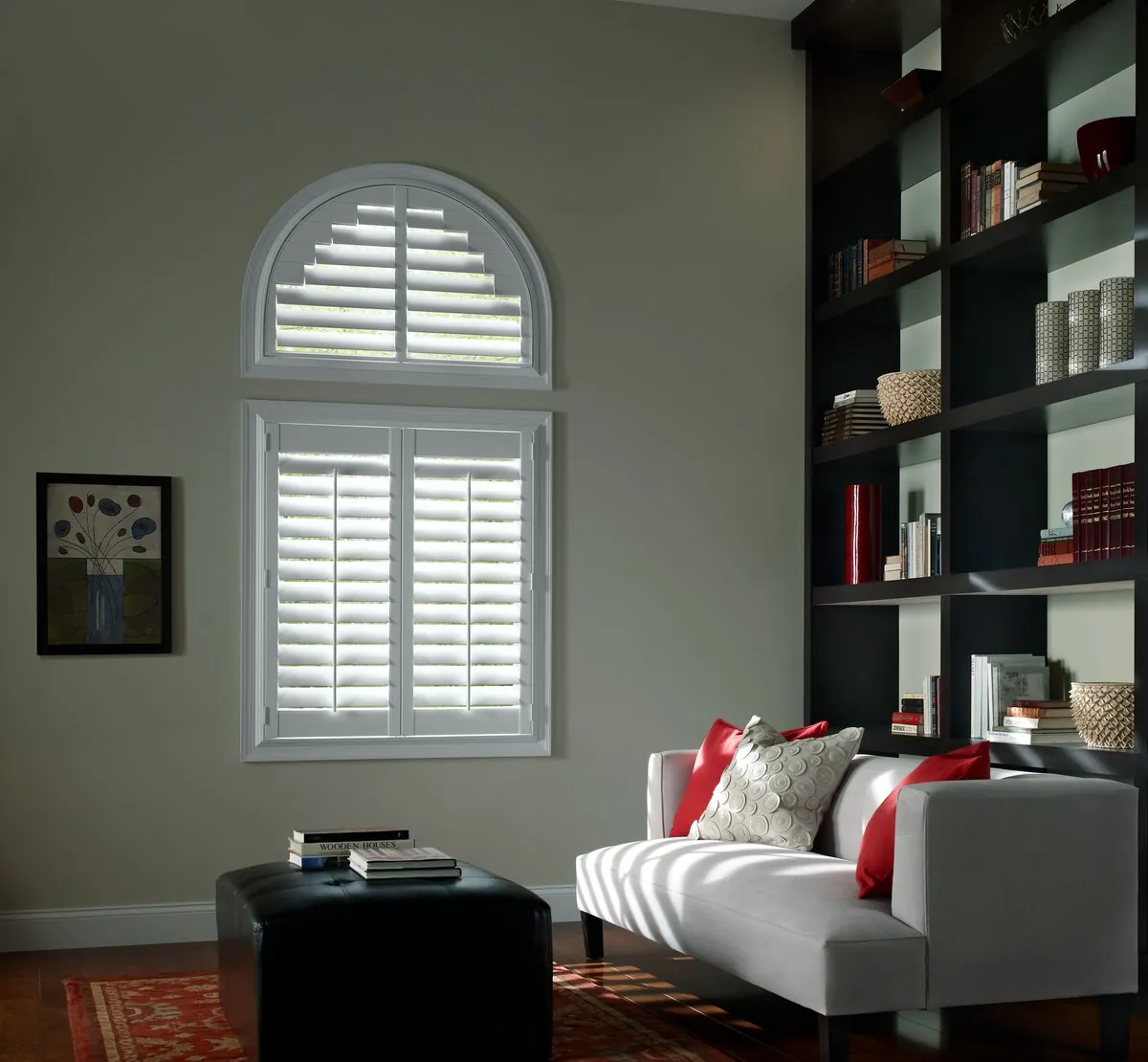
Under a canopy, a white or soft white generally wins, since it helps the room hold onto its light. Against aged cream paint on an antique casing, a warmer white blends better than a bright one. In a newer colonial with clean white trim, a crisp white matches.
A paneled study or a dining room with a deep wall color can take a gray or a taupe. Samples get looked at twice during the visit, once by a window in full shade and once where the sun breaks through, because a color can change surprisingly between the two. Choose the main color for the living room, apply it everywhere else, and plantation shutters in Easton, MA, will read as one tidy plan through the house and from the drive.
Certified fitting, and a showroom nearby
Our shutters go up with installers certified by Hunter Douglas, which is part of being a Hunter Douglas Gallery dealer. An antique opening that has shifted over the years and a broad new window both test a fitter; certification is how we make sure each panel sits square and every blade shuts flush.
Keen to browse a showroom as well as meeting us at home? Our Franklin showroom is the nearest to Easton. Repairs on coverings you already own, and automation for windows set too high to reach, are part of the service too.
Other choices for Easton homes
For a bedroom that needs to be dark, or a sliding door to the deck, shutters may not be the best fit. See cellular shades in Easton, roller shades or motorized blinds and shades, or everything we do on the Easton page.
Questions from Easton
My rooms are shaded by trees. Will shutters dim them further?
Not if they are planned well. Swing the panels open and the window is bare. Angle the blades up and the daylight lands on the ceiling. A white finish adds to the effect.
Can shutters keep my antique trim visible?
Yes. Choosing a frame profile that sits quietly within the opening leaves the original casing on show.
What louver suits a newer colonial’s family room?
A larger louver usually suits wide windows and gives a broad view of the woods when tilted open.
Do I have to go to a store to choose?
No. Easton is served from our Canton shop-at-home area, so we bring samples to you. The nearest showroom, if you want to see one, is Franklin.
Is there a charge for the estimate?
No. We measure the windows you want covered and give you a free estimate.
Book your visit
Send a request and we will drive the samples out to your Easton house, study each window where it stands and hand over a free estimate before leaving. Tell us whether you are in a village antique or a newer colonial when you book, and we will plan the visit around it. Prefer to talk first? The call button at the top reaches us.