
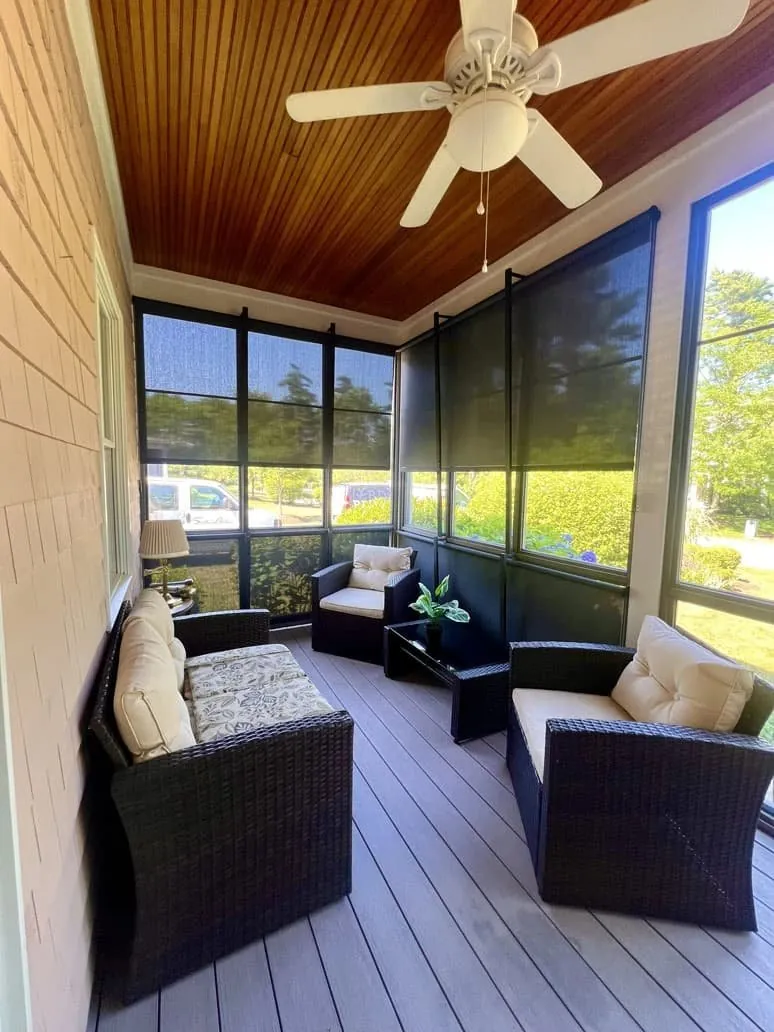
Roomy lots, open windows and a long day of light
Most houses in Norton sit well back from the road. The capes and ranches have generous lots around them, and the newer colonials off Route 140 and near Norton Reservoir are set on land of their own, with trees and lawn between one house and the next. That space changes the job a window covering does. With fewer neighbors looking in, the windows tend to stay open more of the day, and the question becomes how to handle the light as it moves around the house. That is the heart of motorized blinds in Norton, MA.
A house with open ground on every side catches sun on one face in the morning, another at midday and a third in the late afternoon. Moving every shade by hand to follow it is a chore nobody keeps up. A PowerView motor lets the house keep pace on its own: east-facing bedrooms lifting at the hour you wake, a south-facing living room lowering part way through the brightest stretch, the west side closing toward evening, all on schedules you set once.
The openings themselves are mostly standard modern sizes, which keeps the fitting clean and lets us spend the visit on the parts that matter: which rooms, which fabrics and which routine.
Motorized blinds for Norton rooms: four styles to start with
Because Norton windows are regular in size, nearly any Hunter Douglas style that offers PowerView will fit. These four are the ones we reach for most often in the capes, ranches and colonials here.
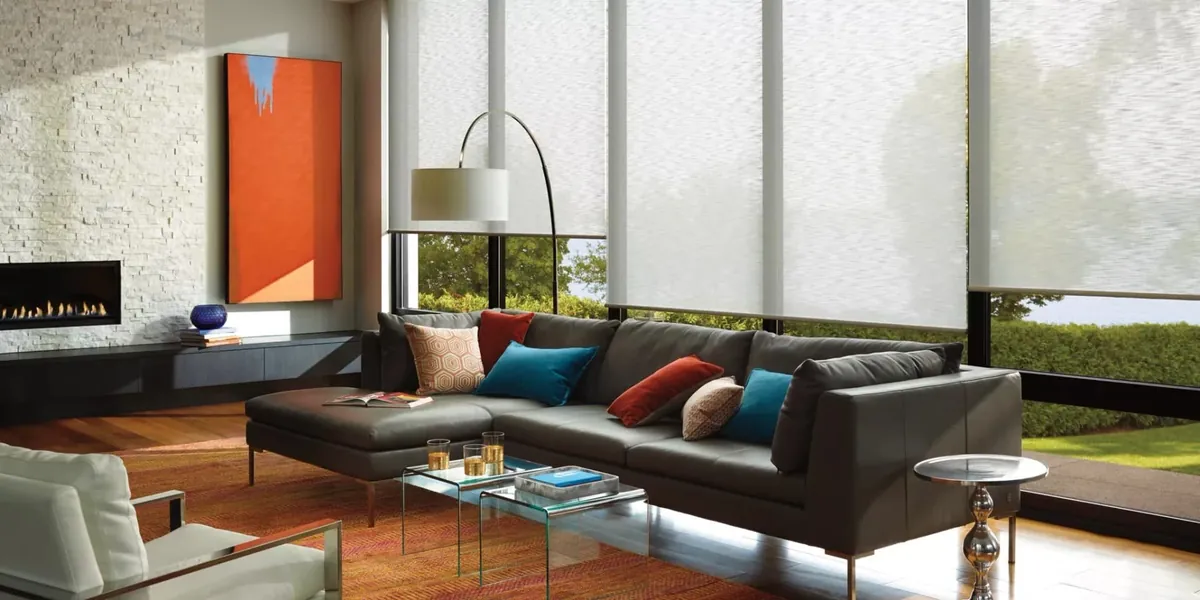
Roller shades
Clean, simple fabric from sheer to room-darkening, ideal for a long ranch front or a wide family room wall.
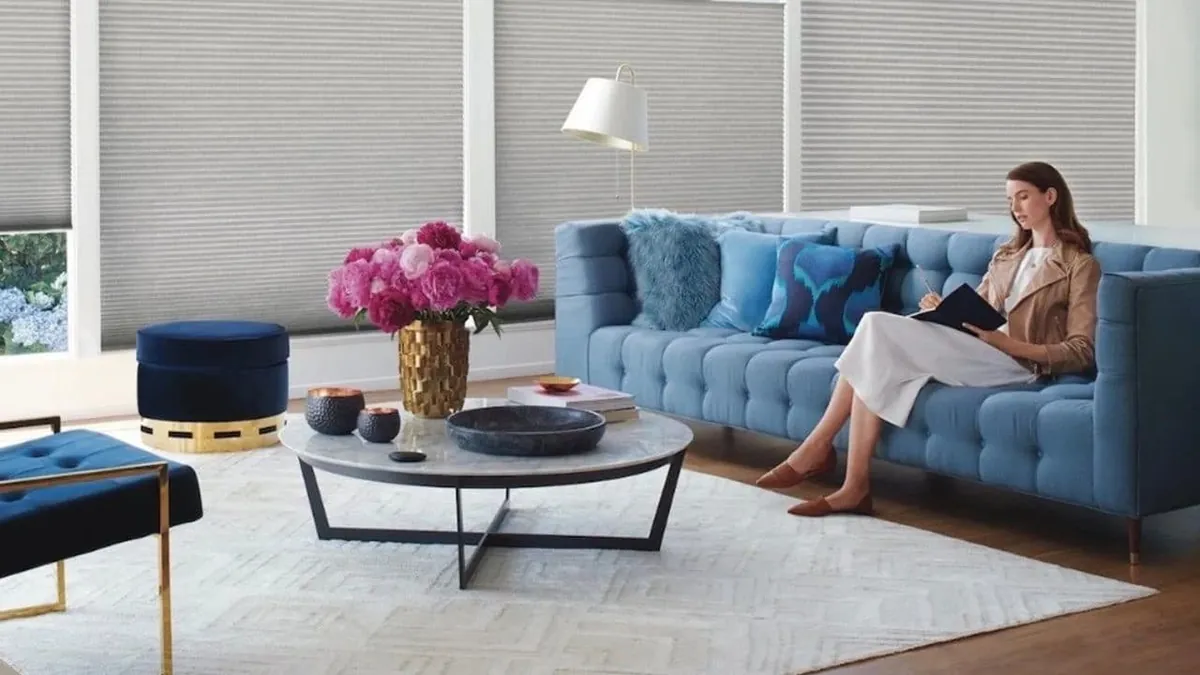
Cellular shades
Duette and Applause honeycomb fabrics, quiet and tidy in bedrooms and living rooms alike.
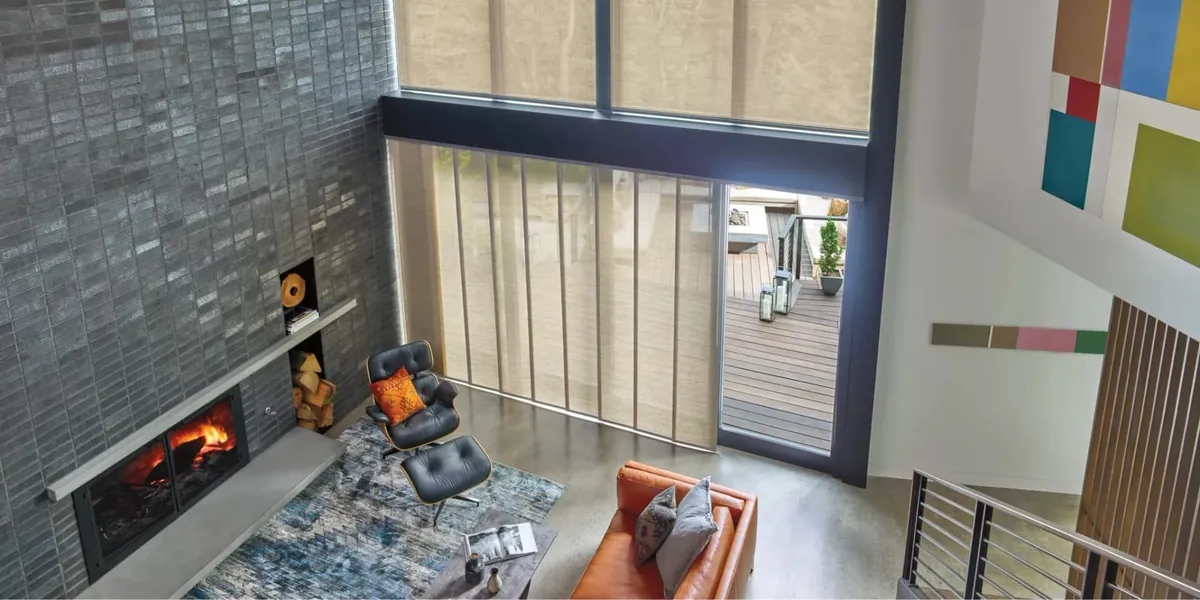
Vertical shades
Fabric that travels side to side, made for the slider out to a deck or back lawn.
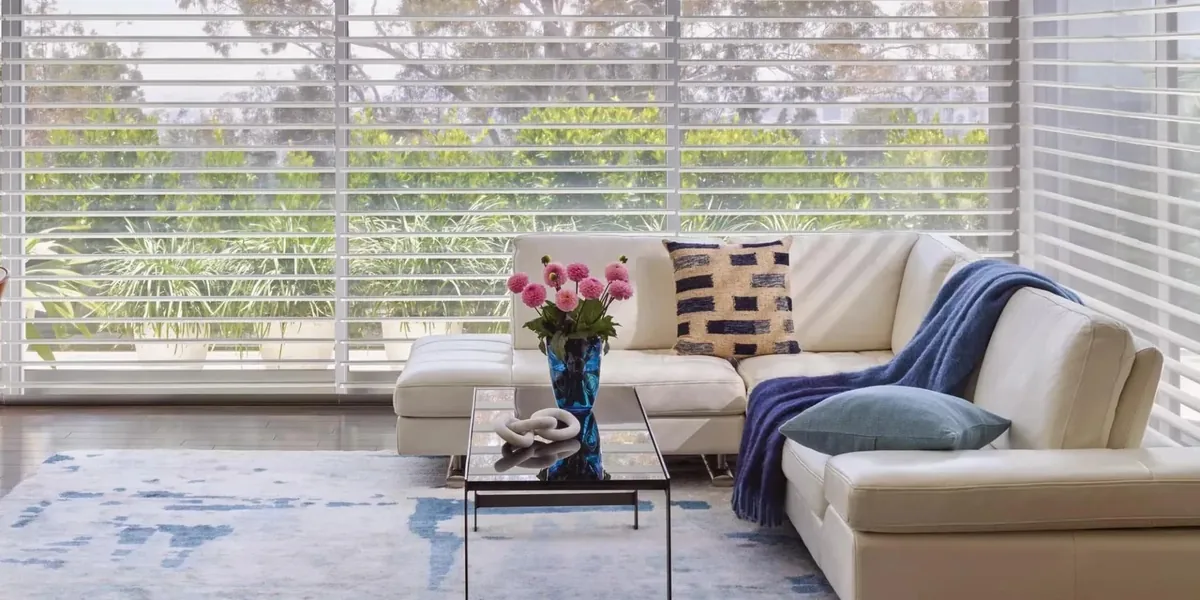
Sheer shades
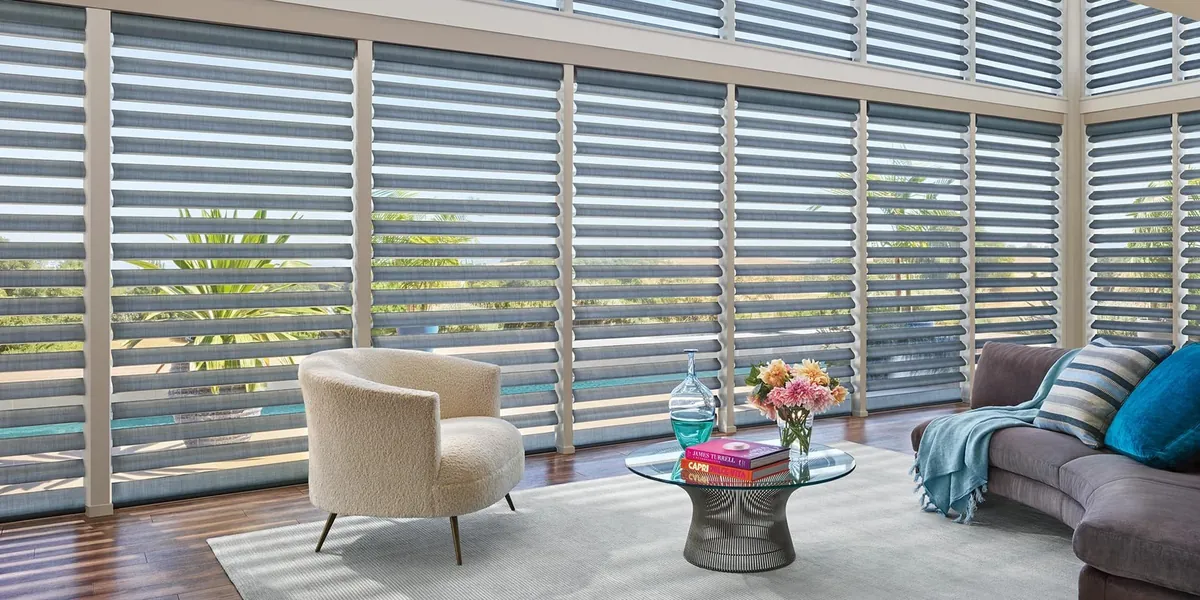
Soft vanes that tilt to filter daylight while keeping the yard and trees in view.
Standard openings make for an easy fit
A lot of the work on an older house goes into coping with odd frames. Norton’s housing stock mostly spares you that. The capes and ranches here were built with conventional windows, and the colonials off Route 140 and around the reservoir use the stock sizes that modern builders favor. Frames are usually square, depths are consistent, and an inside mount sits neatly in most openings.
That does not mean we skip the tape. We still measure every window, because a replacement unit in one room can be a touch different from its neighbors, and a shade made a fraction too wide will not seat properly. We still check depth at the head of each frame and note any crank handles, locks or trim that could catch the fabric. The difference is that the conversation moves quickly past the fitting and on to how you want the house to behave.
For motorized blinds in Norton homes, that conversation is mostly about routine. Which rooms should open first thing? Which ones take the strongest sun and when? Is there a room you want closed every evening without thinking about it? Those answers shape the groups and schedules more than the windows themselves do.
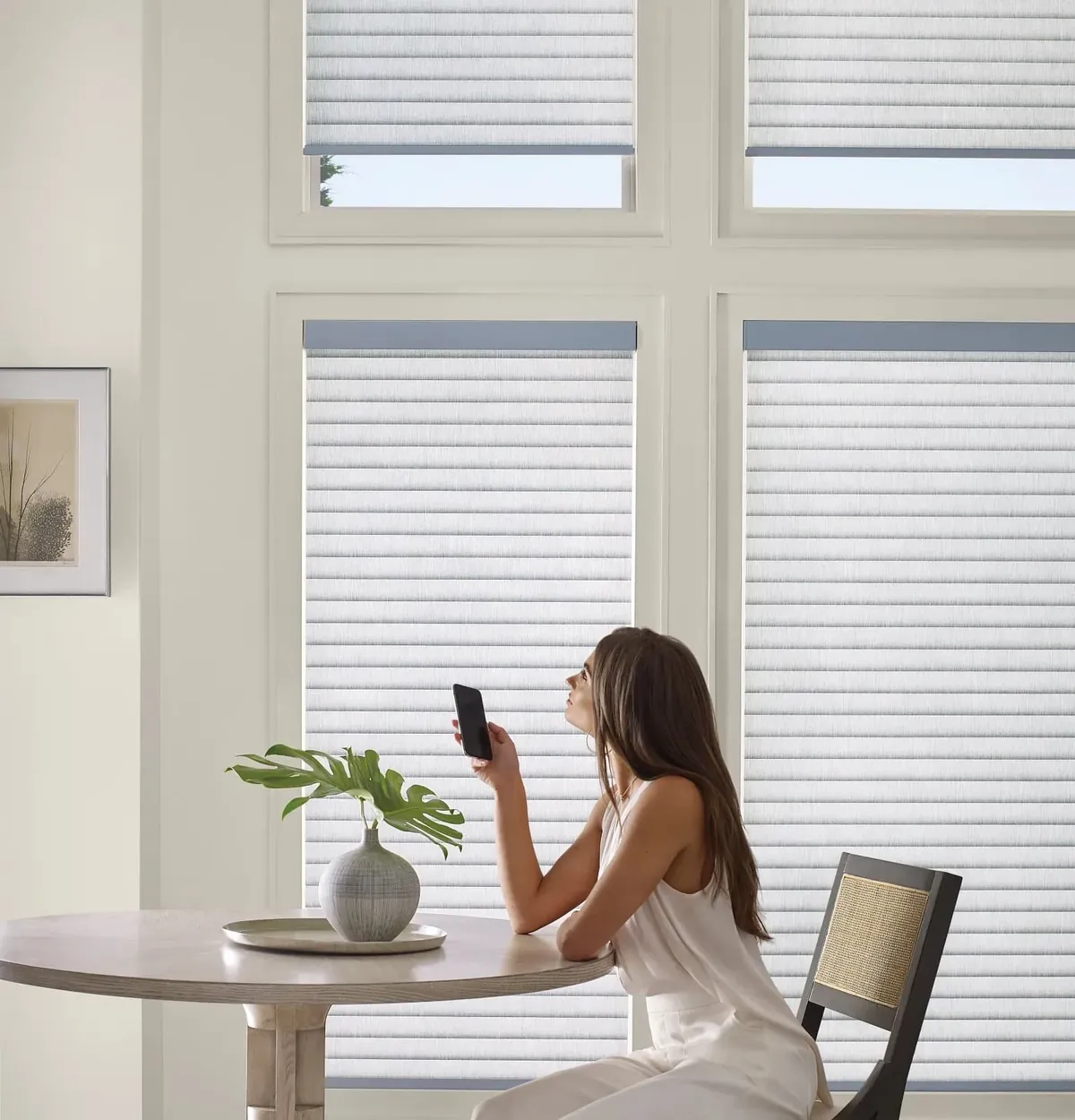
Capes with bedrooms under the roof
The cape is one of Norton’s most familiar shapes: a compact first floor and bedrooms tucked under a steep roof, lit by dormers. Those dormer windows tend to be small and set at the back of a short alcove, often with a bed or a dresser pushed up close. Reaching one means leaning or kneeling, which is why so many dormer shades are left in one spot all year.
A motorized shade in a dormer solves that without fuss. It rises and falls from a handset on the nightstand or on a morning schedule, so the alcove can stay furnished the way you like it. Room-darkening fabric keeps a bedroom dim on early summer mornings, and light-filtering fabric suits a dormer that serves as a reading nook or a small office.
Downstairs in a cape, the front windows usually flank a center door, two on each side, and they look best moving as a pair. Grouping does exactly that, so both sides of the front open and close together and finish at the same height.
Ranches with a long front
Norton ranches stretch out across their lots, with the living room, kitchen and bedrooms all on one floor and a row of windows down the front. On a big lot that front often faces the road from a good distance, so privacy matters less than how the light plays across the rooms through the day.
Grouping is the most useful thing a motor brings to a ranch. Every front window can move as one, so you are not walking the length of the house twice a day. Bedrooms can form their own group with their own morning time. A kitchen window over the sink, always slightly out of reach, can join whichever group suits it.
Roller shades in a single fabric give a ranch front a calm, even look, and a light-filtering weave lets daylight through without glare on the floors. For a ranch with a picture window, two or three shades on one wall can be grouped so the whole window behaves as one surface.
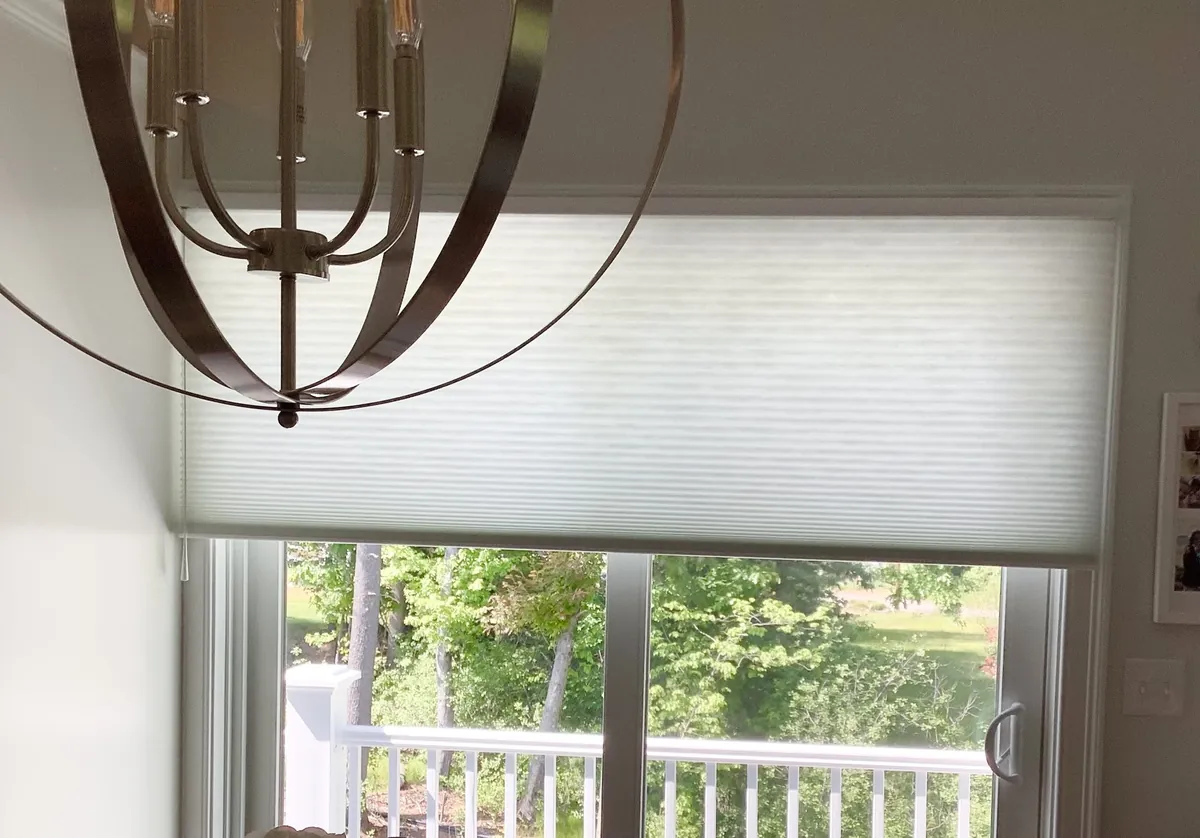
Newer colonials off Route 140 and near the reservoir
The newer colonials are the largest houses in town, and they bring the biggest windows. A typical one has a window over the front door that lights a tall entry, a stair landing with its own window, and a family room at the back with a wide run of glass or a slider to the yard. Many also have a sunroom or breakfast area with windows on three sides.
These are the houses where people often start with the high windows. The entry window can rise in the morning and lower at night on a schedule, with no ladder involved. The landing window, which sits over the steps, can join the same group. Then the family room comes next, because it is the room that takes the strongest afternoon light just when it is busiest.
In the houses around Norton Reservoir, the aim is usually to keep the outlook while cutting the brightness. Screen fabrics and sheer shades are the usual answer there: lowered, they soften the light and keep the trees and water in view. For a family room that doubles as a place to watch movies, a room-darkening group closes the whole wall in one press.
A day on schedules
Schedules are where PowerView earns its keep on a big lot. Here is the kind of routine many Norton houses settle into once the shades are in:
- Early morning, the east-facing bedrooms lift at the hour you set, later on the weekend.
- Mid-morning, the kitchen and breakfast area open fully for the day.
- Through the brightest part of the day, the south-facing living room shades lower part way to keep glare off the screen and floors.
- Late afternoon, the west side of the house comes down to a set height.
- Evening, a final schedule closes every shade on the ground floor.
Every one of those times is yours to choose and change in the app. If a day goes differently, a handset or a tap on the phone overrides the schedule for that room, and the routine carries on as normal after that.
How we work with you
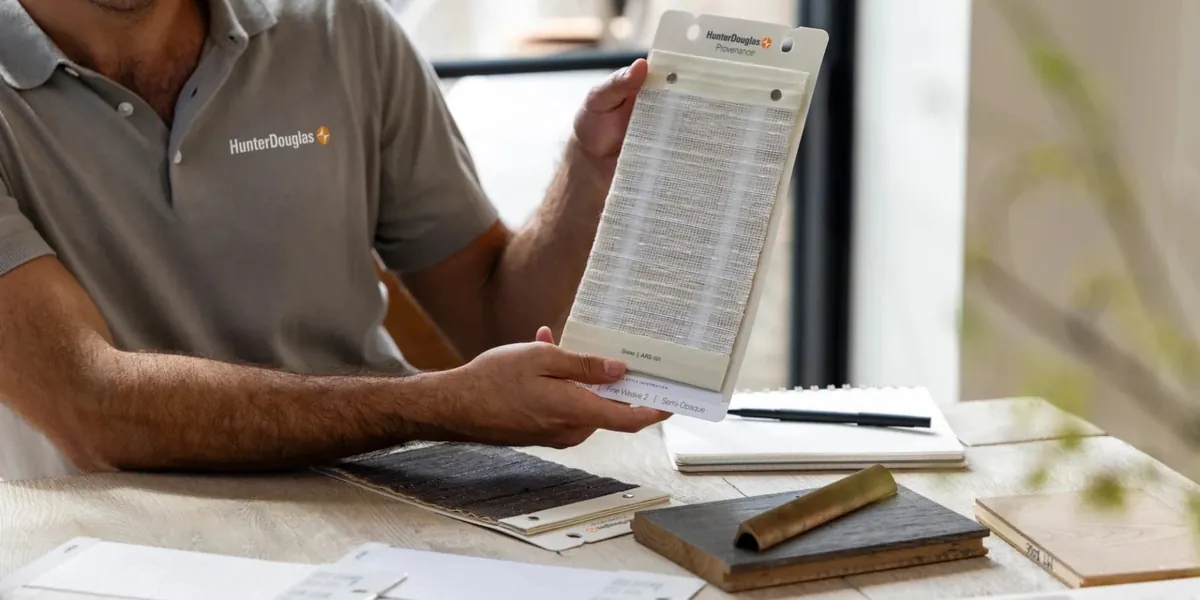
The process is the same from a cape to a big colonial, and the first step happens at your house. We can bring the showroom to you: our vans carry samples, so every fabric is judged in your own light and against your own walls.
- Request a consultation through the website, or tap the call button to reach our Franklin showroom.
- We walk the house with you, room by room, and talk through which windows bother you and when.
- Samples go up at the glass so you can see how each fabric handles sun on that side of the house.
- We map out groups and schedules together: which shades move as one, which keep their own hours.
- Every window is measured, depth included, and anything near the frame is noted.
- You get a free estimate that covers the shades and the installation.
- Hunter Douglas builds each shade to those measurements.
- A Hunter Douglas certified installer mounts the shades, pairs them with your handsets and app and sets up the first schedules alongside you.
To picture the day itself, read what happens on installation day. For the different ways of running the shades, our guide to how motorized shades are controlled covers handsets, the app and schedules, and the window covering automation page goes into scenes. How each motor is powered is settled with you at the visit, window by window.
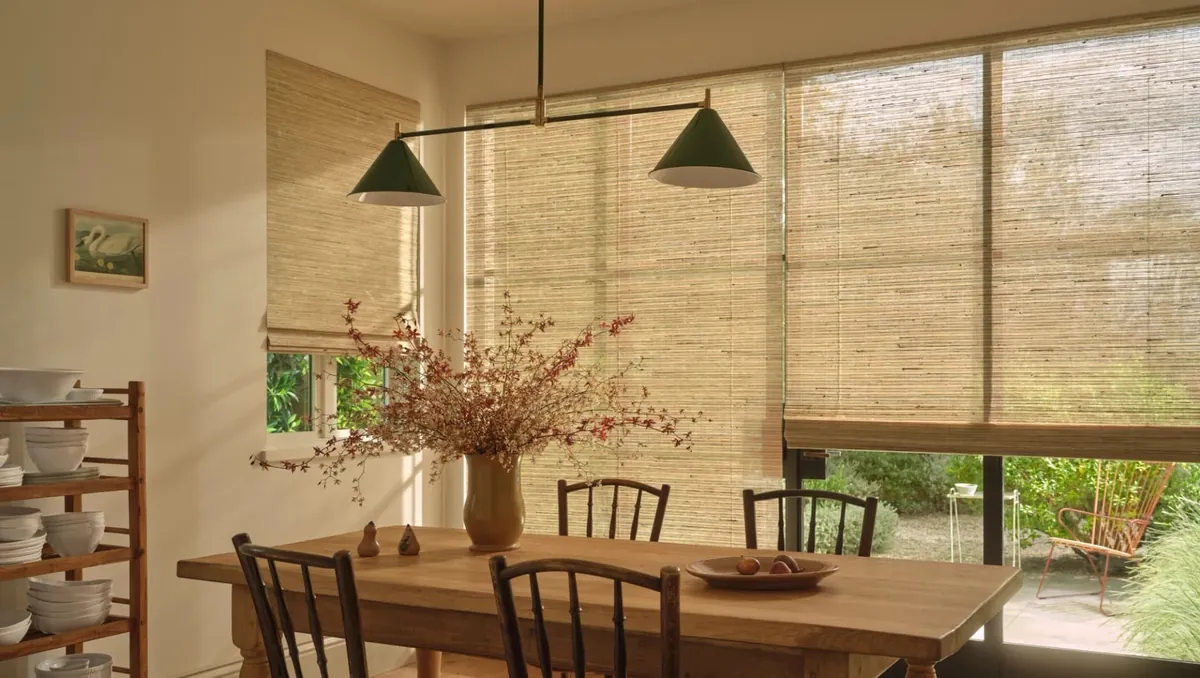
Setbacks and evenings
Sitting back from the road gives a Norton house a sense of space by day. After dark the picture changes. A lit room shows clearly across an open lawn, and from the road a whole ground floor can be on view through bare glass. The distance that makes daytime privacy easy does little once the lamps go on.
This is one of the simplest jobs for motorized blinds in Norton houses. An evening schedule, set to the time you usually draw the shades, closes the ground floor rooms in one movement. In summer you might push that time later and in winter bring it earlier, which takes a few seconds in the app. If you are away for the evening, the shades still close on time, so the house looks lived in rather than left open.
Upstairs, bedrooms can follow their own later schedule, or stay with handsets if you prefer to close them yourself. A cape’s dormers, a ranch’s bedroom wing and a colonial’s second floor can each be treated as their own group.
Sliders and doors to the yard
On a big lot, the back of the house is where life happens in good weather, and most Norton houses open onto the yard through a slider or a set of French doors. A vertical shade suits a slider well, gliding to one side so the door stays easy to use. A vertical honeycomb shade does the same job with a honeycomb fabric that matches the cellular shades on nearby windows.
Motorized, the slider joins the back-room group, so the whole wall of glass opens in the morning and closes in the evening together. On a sunny afternoon you can lower everything part way with one press and still step outside without moving a thing.
Sunrooms and three-sided rooms
Sunrooms and breakfast nooks with windows on three sides are common in the newer colonials. They are bright, pleasant rooms that can also be very hard to manage, because the light comes from a different direction every hour.
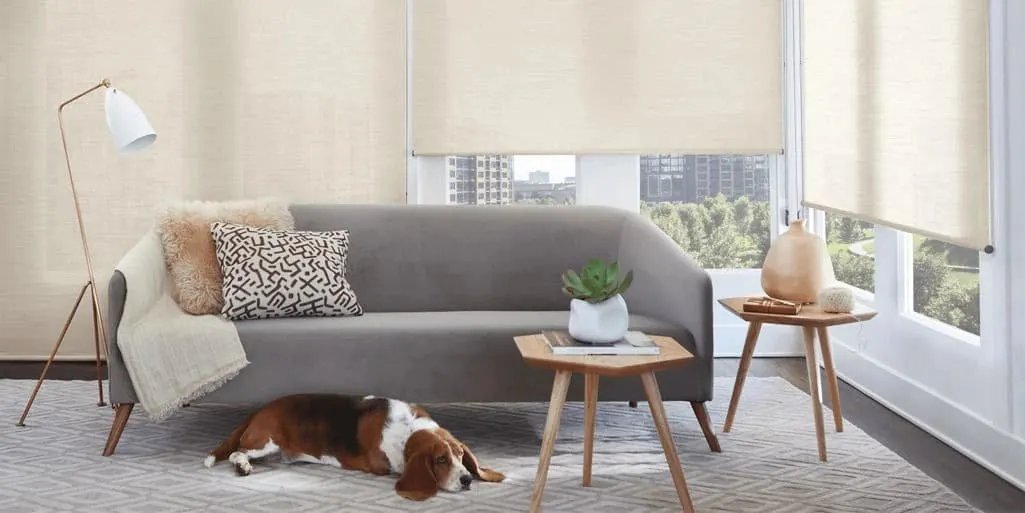
A group of roller or sheer shades turns that room into one surface you control at once. A scene in the app might lower only the west windows in late afternoon while leaving the others open, and another might close the whole room in the evening. Woven shades bring a natural texture to a sunroom if you prefer it, and they can run on PowerView too.
Home offices and spare rooms
Many Norton houses have a spare bedroom turned into a home office, and an office has its own lighting problems: a screen that washes out in direct sun and a video call that looks better with soft, even light. A motorized shade lets you set the room the way you want before you sit down, and a schedule can lower it part way at the hour the sun comes round to that side.
Sheer shades and light-filtering rollers are the common choices here, because they cut glare without plunging the room into gloom. If the office doubles as a guest room, a room-darkening fabric can be the better pick. In a cape, where the spare room is often upstairs under the roof, the same dormer approach applies: a small shade, run from a handset on the desk, so you never have to lean across the alcove in the middle of the working day.
Growing the system over time
Not every house is done at once. Many Norton projects begin with the high windows in a colonial, or the dormers in a cape, and add rooms later. New PowerView shades pair with what is already there, so nothing installed early needs to be replaced as the system grows.
See the full range on our motorized blinds and shades page, and find every service we offer in town on our Norton page. If you are weighing styles room by room, our pages on cellular shades in Norton and custom blinds in Norton are good next reads.
A Gallery dealer for the whole house
Blinds & Designs is a Hunter Douglas Gallery dealer. On a house with rooms facing every direction, that lets us plan rollers for the ranch front, honeycomb for the bedrooms and sheers for the family room, all running on the same PowerView system and all coming from one place.
Certified Hunter Douglas installers fit every shade. The estimate is free. Interior design consultations are on offer if you want a hand with a whole room, and we also handle blind and shade repairs on coverings you already own.
Franklin, or your own living room
Franklin is the closest of our showrooms to Norton, and you can stop in there first if you like. Many Norton households skip that step and have us bring the samples straight to the house, where every window gets measured anyway.
Questions from Norton
Our house sits far back from the road. Do we still need shades on every window?
Not always for privacy, but light is another matter. On an open lot the sun reaches each side of the house in turn, and motorized shades on schedules let each room handle its own share of it.
Can the shades follow the sun around the house?
They follow the times you set. You choose when each group opens and closes, and you can change those times in the app whenever the seasons shift.
Are standard windows quicker to plan?
Generally, yes. Square frames and stock sizes let us spend less time on the fitting and more on the groups, schedules and fabrics that suit each room.
What works for the dormers in a cape?
A small motorized shade that runs from a handset or a schedule, so nobody has to lean into the alcove. Room-darkening fabric suits a dormer bedroom; light-filtering suits a reading nook.
Is the estimate free?
Yes. After we measure your windows at the consultation, the estimate costs you nothing.
Pick the room that gets the most sun
The quickest way into motorized blinds in Norton is to start where the light gives you the most trouble, often a west-facing family room or a high entry window. Point us to it when you request a consultation, and we will bring fabrics chosen for that side of the house, measure it and sketch out a schedule with you. If you would rather ask something first, the call button connects you with our Franklin showroom.