
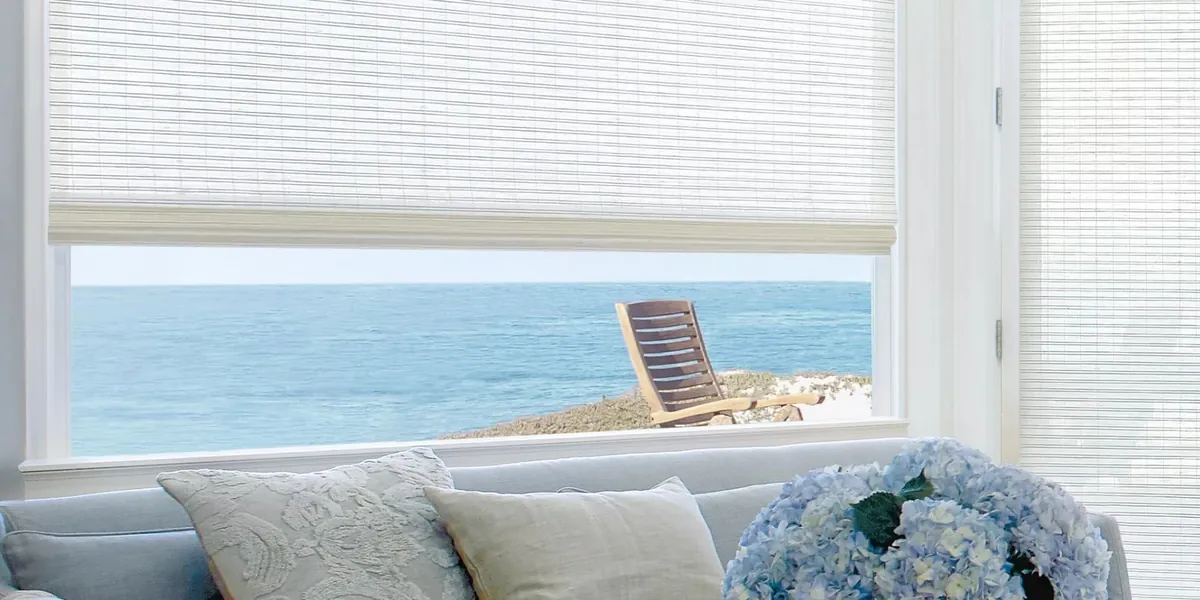
Glass on the water side, salt in the air
Around the harbor and out along Ned’s Point, the houses face the water and are built to look at it. The shingled summer cottages have windows on every wall that catches the view, and the ones that have been converted for year-round living usually gained more glass along the way: a wider window in the living room, French doors to a deck, a sunroom on the bay side. Inland, the larger and newer houses go further still, with tall windows and open rooms. When we plan roman shades in Mattapoisett, MA, that glass is the first thing we look at.
All that glazing brings two problems with it. On a bright day the light off the water is strong and low, and it fills a room with glare and heat by early afternoon. And the salt air is there in every season, settling on anything near a window that is opened in summer.
A roman shade answers both well. It is a single panel of fabric that folds up out of the way when you want the whole view, and lowers into a soft, even cover when the sun swings round. The fabric you pick decides how much of the harbor you still see with the shade down.
Fabric first: how much light, how much view
Roman shades in Mattapoisett are mostly a question of fabric. The fold sets the look, but the weave decides what happens to the light, so we start every conversation here.
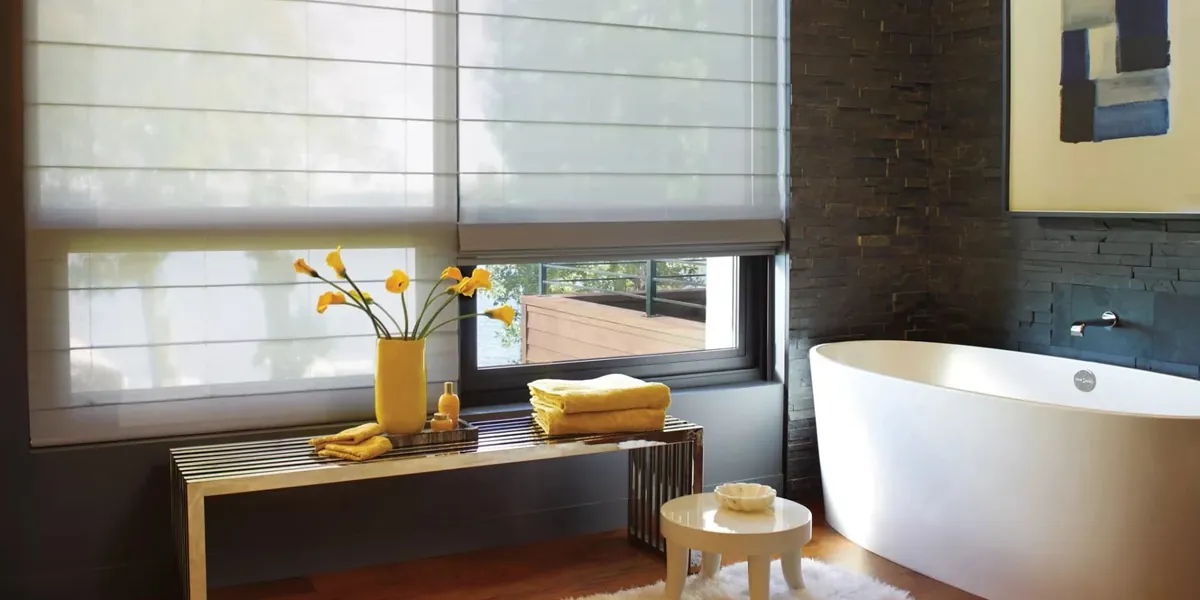
Sheer and light-filtering
Thin fabrics that cut the glare off the water and still let you make out the boats. The room stays bright, and you are not living with the lights on at midday.
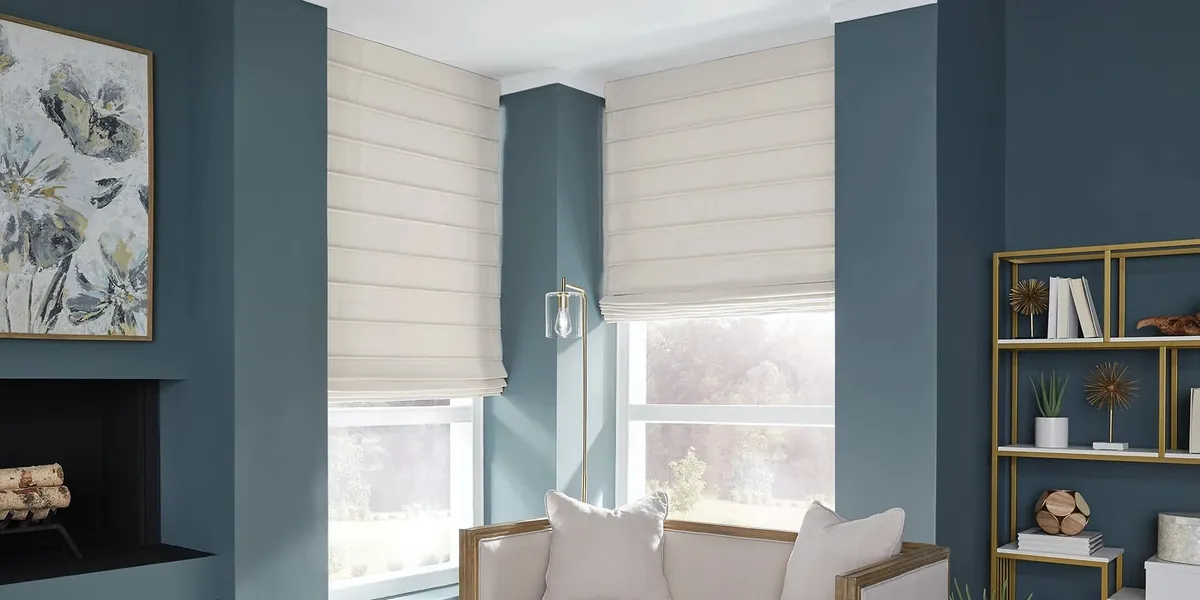
Lined and room-darkening
A lining adds body to the folds and blocks far more light. Right for bedrooms on the east side of a cottage, where the sun comes up over the water.
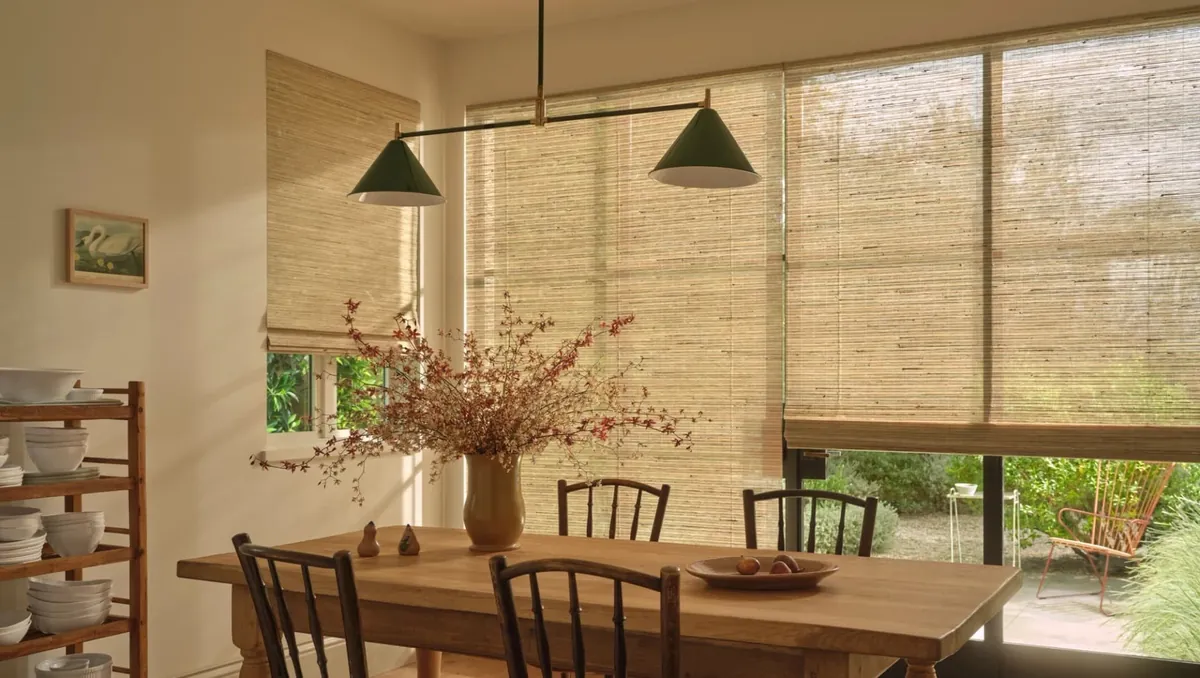
Woven textures
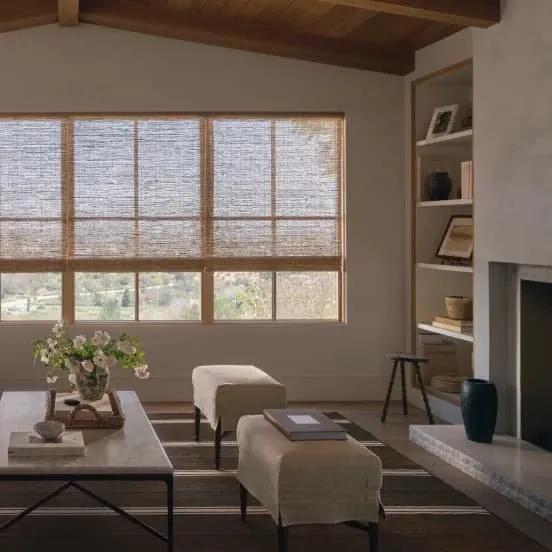
Hunter Douglas also makes a woven roman in its Alustra Woven Textures line. Natural fibers suit a shingled house and filter the light with a gentle pattern.
Summer cottages near the harbor
Many of the cottages close to the water started out as summer places. They tend to be modest in size, with small rooms, windows on three sides and a porch or sunroom on the side facing the harbor. Inside the main rooms, the window frames are often simple painted wood, and sometimes the original sash is still in place.
On a small cottage window, a roman shade is about as tidy a covering as you can choose. Raised, it gathers into a short stack at the top and leaves the glass almost clear. Lowered, it is one flat or softly folded panel with no slats to dust and nothing hanging into the room. An inside mount keeps the frame and trim visible, which matters when the windows are part of the cottage’s character.
Where a cottage room has windows on three walls, the sun comes in from one side or another for most of the day. We often suggest the same fabric throughout so the room looks consistent from inside and from the water, with a lighter or heavier version only where a bedroom needs it.
Out along Ned’s Point
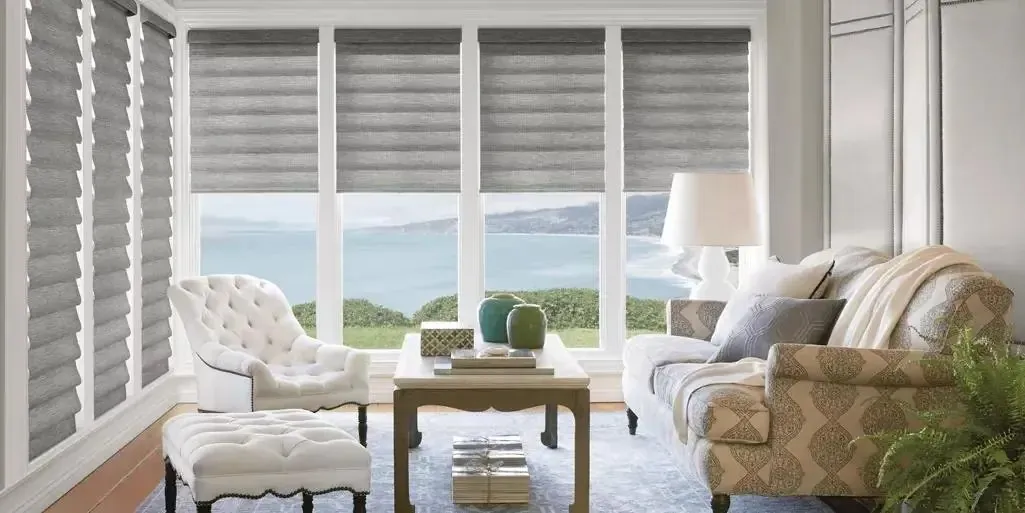
The houses toward Ned’s Point sit with water on more than one side, and their main rooms are glazed heavily on the bay side. A living room might have a run of four or five windows, or a pair of tall windows either side of French doors. These rooms are lovely in the morning and hard to sit in by mid-afternoon in summer.
For a run of windows, we usually make one shade per window on matching headrails, so every fold lines up when they are raised together. Each shade can still be lowered on its own, which lets you cover the panes taking direct sun while leaving the rest of the view open. A sheer or light-filtering fabric in a soft neutral keeps the room calm without hiding the water.
French doors need a little thought. A roman shade on a door has to clear the handle and stay put when the door swings. We mount door shades on the door itself, with hold-down brackets where needed, and choose a fold that stacks shallow enough to keep the top of the door glass clear.
Year-round conversions
When a summer cottage becomes a year-round house, the windows usually change. Owners add insulation, replace old sash, enlarge a window to bring in the view, or build a new room on the water side. The result is often a mix: original small windows in the older part of the house and larger modern windows in the newer part.
That mix is a good reason to plan the shades for the whole house at once rather than room by room. The old windows may need shallow mounts and narrow shades; the new ones may need wide shades or several shades on one headrail. Planning them together keeps the fabric, color and fold consistent across both parts of the house, so it reads as one home rather than a cottage with an addition.
Winter matters more in a converted cottage than it did when the house was shut up in October. A lined roman shade, lowered at night, adds a layer of fabric between the glass and the room. If warmth is the main concern in a bedroom, we may also suggest a honeycomb shade for that room and roman shades where the look matters most.
The newer houses inland
Away from the harbor, the newer houses are larger, with high ceilings, open kitchens and big windows on the garden side. Here the challenge is scale. A tall window in a two-story room needs a shade long enough to cover it and a lift system that can handle the weight of all that fabric.
Roman shades work well in these rooms because the folds give a large window some softness, where a bare blind can look stark. Flat folds keep a clean line in a modern kitchen; soft folds or Vignette’s rolled folds add warmth in a family room. For the highest windows, PowerView motorization means nobody needs a ladder or a long pole to open the shades in the morning.
Sunrooms and porches on the bay side
Plenty of houses near the water have a room that is almost all glass: a sunroom added on the bay side, or an old porch that was closed in with windows so it could be used in spring and autumn. These rooms are the reason many owners bought the house, and they are also the hardest rooms in it to keep comfortable. With glass on three sides and sometimes overhead, the sun reaches them from morning to evening.
A roman shade suits a sunroom better than you might expect. Because every window gets its own shade, you can lower only the panes the sun is on at that hour and keep the rest open. A light-filtering fabric in a pale neutral spreads the light evenly instead of leaving hard bright patches on the floor, and the room still feels connected to the garden or the water.
Sunroom windows are often set in a long row with narrow posts between them, and the posts are not always the same width. We measure each window on its own and make the shades so the folds sit at the same height across the whole row when they are raised. Where the windows run right up to the ceiling, a slim outside mount on the wall above can give the shades room to stack clear of the glass.
For a closed-in porch that is not heated in winter, we talk about fabrics that cope with big swings in temperature and humidity. Getting roman shades in Mattapoisett right for these rooms means thinking about how the space is used across the whole year, not only on a bright summer afternoon.
When we come to the house
Choosing a fabric for a water-facing room is much easier when you can see it in that room. A sample that looks pale gray in a catalog may look blue in harbor light, or nearly white against a sunny window. Our vans carry samples, so we can bring the showroom to you, and you can judge the fabrics where they will hang.
- Book a time online or with the call button.
- We arrive with roman fabrics in sheer, light-filtering, lined and room-darkening weights, plus working fold and lift samples.
- We start in the rooms that face the water, since those decide most of the order.
- You hold samples up to the glass at the time of day the sun bothers you most, if we can arrange the visit for then.
- We measure every window, including doors and any odd panes in the older part of the house.
- You get a free estimate and as much time as you like to think it over.
If you want help bringing the rest of the room together, ask about our interior design consultations at the same visit. You can also read what happens at an in-home consultation beforehand.
Sun, salt and choosing a fabric that lasts
A window facing the harbor takes more sun than most, and the light reflecting off the water adds to it. Over time, strong daily sun can fade a saturated color. Lighter neutrals, soft grays and natural tones keep their look longest in those rooms, and a lining behind the face fabric helps protect it. We point out which fabrics in the sample books suit a bright south or west window.
Salt air is the other consideration. With a roman shade, the working parts are mostly inside the headrail, with less hardware exposed than an older corded blind. A cordless lift removes the cord lock at the side altogether. Choosing roman shades in Mattapoisett with fewer exposed parts is a simple way to keep them working smoothly on windows you open all summer.
When we install, our certified Hunter Douglas installers fix the brackets into solid wood so each shade hangs level and stays secure, even on a door or a window that is opened and closed every day.
PowerView for a house you are not always in
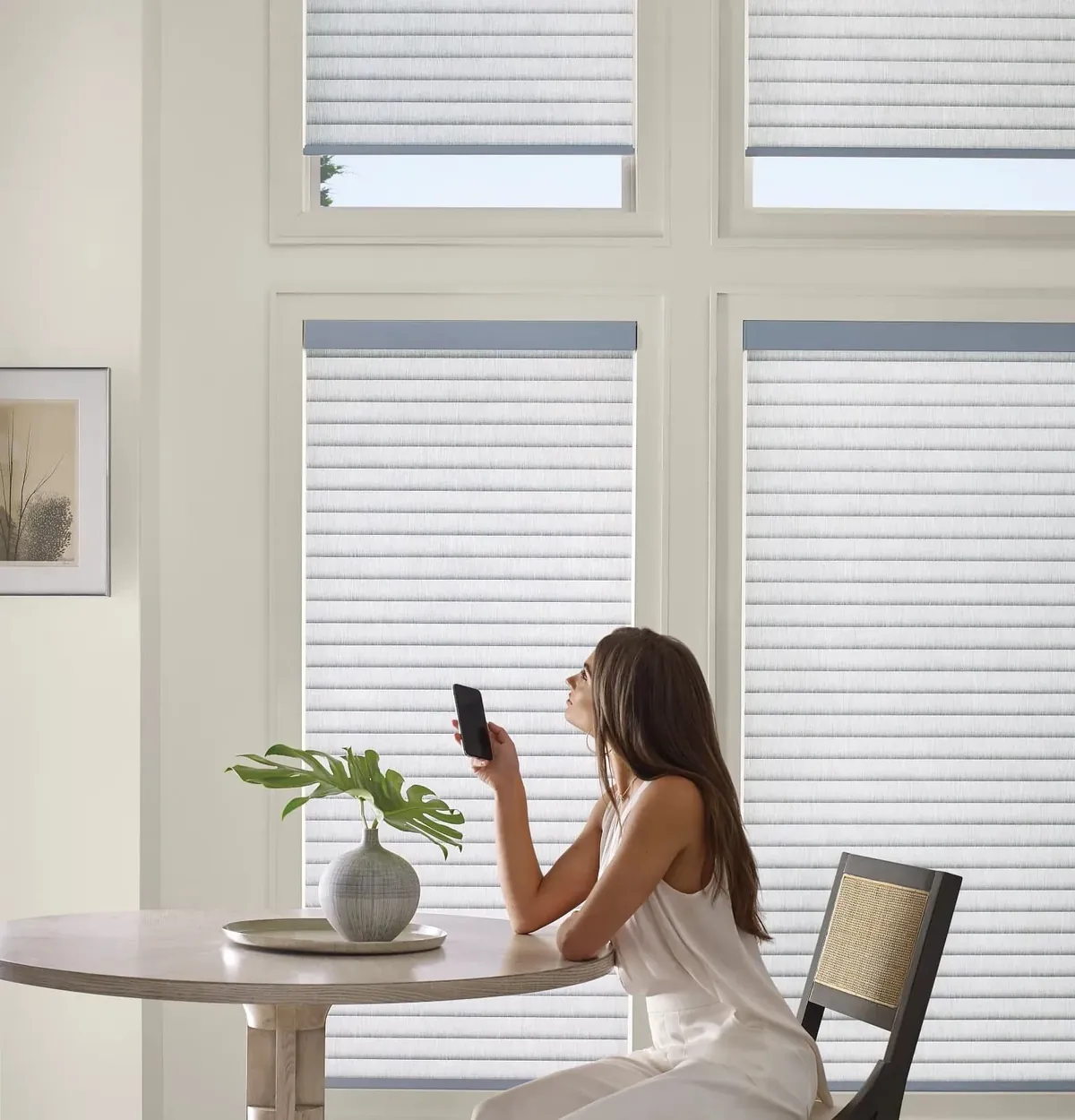
Some houses near the water are used for part of the year, or left empty for a week or two at a time. PowerView motorization lets you set the shades to raise and lower on a schedule, so the house looks lived in and the fabric is protected from the strongest afternoon sun while you are away. You can also move them from your phone.
In a full-time house, the same system is a convenience: the bedroom shades lower at dusk, the living room shades drop when the sun reaches the water side, and the tall windows inland open with a tap. We demonstrate the remote and the app on a working sample during the consultation.
Vignette, Carole Fabrics and woven romans
Hunter Douglas makes roman shades under two main names. Vignette rolls its fabric into soft folds and has no cords across the back, so the shade looks finished from outside, which suits a cottage seen from the harbor. Carole Fabrics offers the classic flat and soft folds in a large library of fabrics, useful when you want a specific color or a pattern. The Alustra Woven Textures roman adds natural materials.
You do not have to choose one line for the whole house. A converted cottage might have Vignette in the water-facing living room, Carole Fabrics flat folds in the kitchen and a woven roman in the sunroom. Our roman shades page covers the range, with more on Vignette modern roman shades and the Alustra Woven Textures roman.
Pairing roman shades with side panels
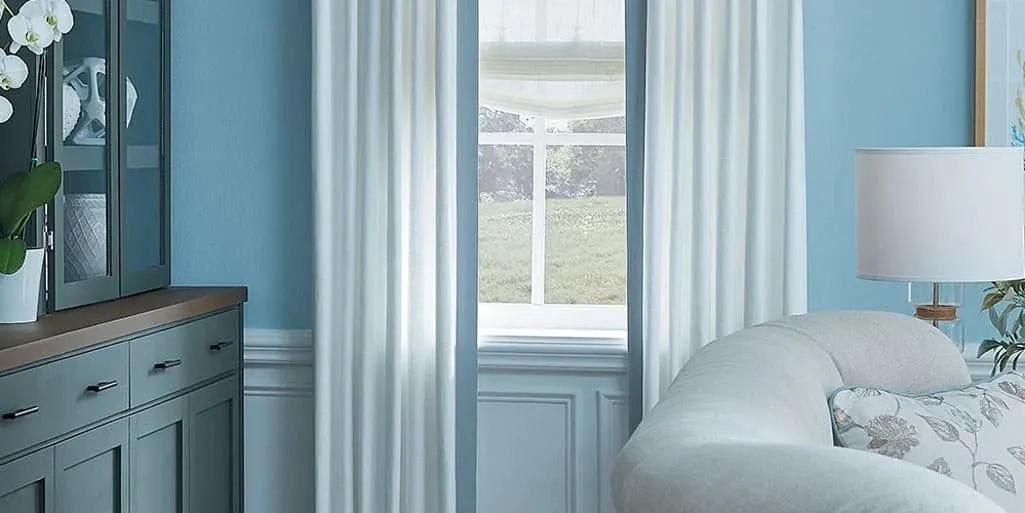
In a larger living room, a roman shade on the glass with fabric panels at the sides gives a finished look and adds color to a plain wall. The shade does the daily work of controlling the light, and the panels frame the window. It is a common combination in the newer inland houses, where the windows are tall and the walls are wide.
In a small cottage room, panels can crowd the window, so we usually leave the shade on its own. We will tell you honestly which rooms benefit from the extra layer and which look better without it. If you do add panels, we bring drapery samples to the same visit so the shade fabric and the panel fabric can be chosen side by side, in the light of the room they are going into.
Why a Hunter Douglas Gallery dealer
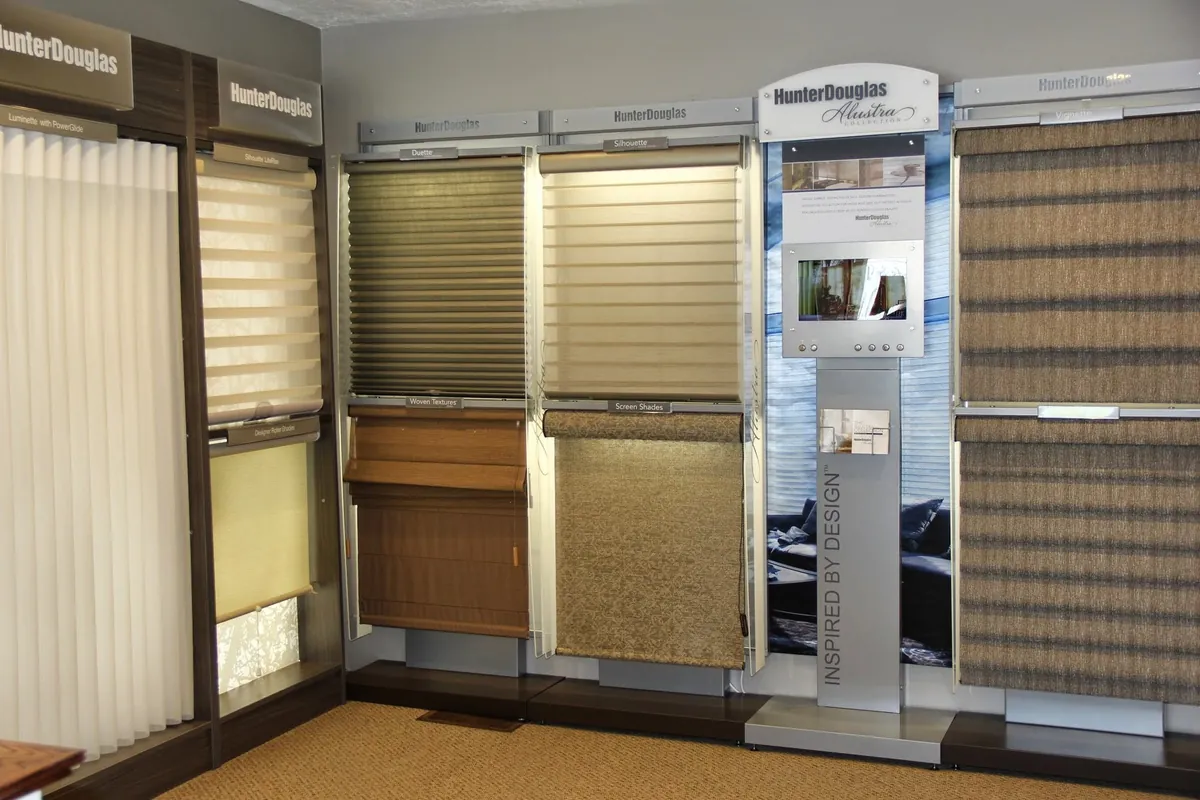
Blinds & Designs is a Hunter Douglas Gallery dealer, a designation Hunter Douglas reserves for dealers who meet its standards. For a Mattapoisett house it means you can choose from the complete roman range, with every Vignette and Carole Fabrics style, the woven textures, the lift systems and PowerView.
Our installers are certified by Hunter Douglas. They hang each shade the way it was designed to be hung and test every lift before they leave. If a shade ever needs adjusting, we handle blind and shade repairs as well.
The same consultation can cover the rest of the house, from cellular shades in Mattapoisett for a cold bedroom to roller shades in Mattapoisett for a sunroom. Everything we do in town is on our Mattapoisett page.

Samples at the harbor, or inland
The visit works the same whether you have one sunroom to cover or a whole converted cottage. We sit down with the sample books, walk the rooms, and look at each window in its own light.
If you would like to look at the range before we visit, our North Dartmouth showroom is the nearest to Mattapoisett, a short drive west along the coast.
Questions from Mattapoisett
Will a roman shade hide my view of the harbor?
Not if you choose the fabric for it. A sheer or light-filtering weave cuts the glare while you still see the water through it, and raised, the shade folds into a short stack at the top of the window.
How do roman shades cope with the salt air?
Most of the working parts sit inside the headrail, so less is exposed than with an older corded blind. A cordless lift removes the cord lock at the side, and we fix the brackets into solid wood.
Can you put a roman shade on French doors?
Yes. We mount the shade on the door itself, clear of the handle, with hold-down brackets where needed so it stays put when the door opens.
Which fabrics fade least in a sunny water-facing room?
Light neutrals, soft grays and natural tones hold their look best, and a lining helps protect the face fabric. We point out the fabrics that suit a bright window when you are choosing.
Is there a charge for the estimate?
No. The estimate is free. Request a consultation and we will come to your house with samples, measure every window and give you the estimate.
See the fabric against the water
The best way to choose is to hold the samples up at your own windows with the harbor behind them. Request a consultation and we will bring Vignette, Carole Fabrics and woven samples to your house, measure everything and leave you with a free estimate for roman shades in Mattapoisett, MA. If you would rather talk first, use the call button, or call in at the North Dartmouth showroom.