
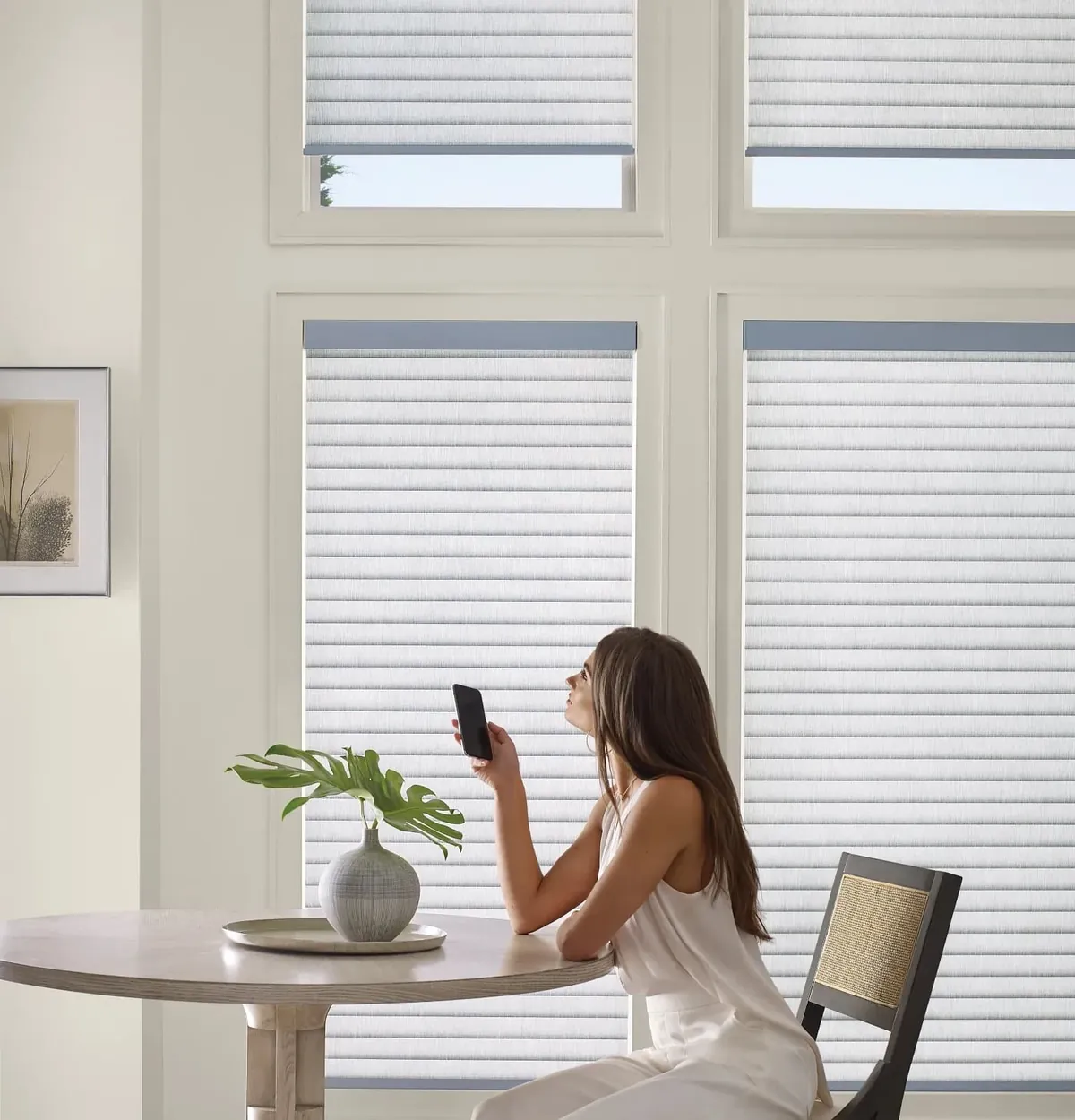
Hard light and tall glass in Orleans
Out here on the outer Cape the light has an edge to it. There is little to soften it: open sky, sand and water on every side, and a sun that comes in hard and direct, especially across the bays. Orleans houses feel that more than most, and it is the reason a lot of people start looking at motorized blinds in Orleans, MA.
The town has two kinds of house where that light lands. Near the village center are antique capes, low and compact, with small windows set into thick walls. Out toward Nauset and Pleasant Bay the houses are newer, many built or rebuilt to face the water, and their bay-facing rooms often run glass from the floor right up to the ceiling. Much of the housing in both places is seasonal, opened up for the warmer months and closed for the rest.
Hunter Douglas PowerView suits that mix. The shades are made to fit a tiny cape sash or a two-story glass wall, and they run from a remote, an app or a schedule, so they can keep working whether the house is full or empty.
What a motorized shade can do for you
These are the features people use most once their shades are on PowerView. All of them are available across the Hunter Douglas range we carry.
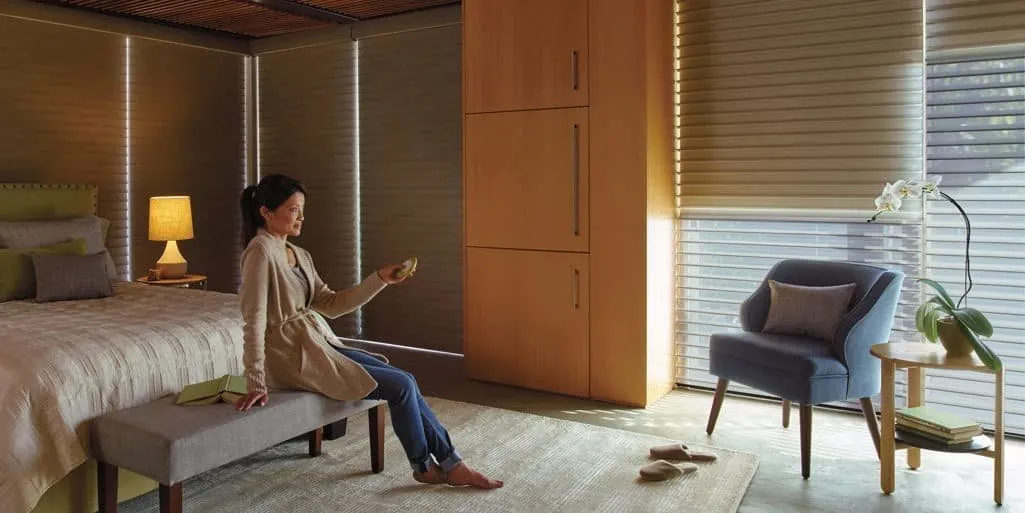
One remote, any group
Move one window, one room or the whole floor from a small remote that lives by the door.
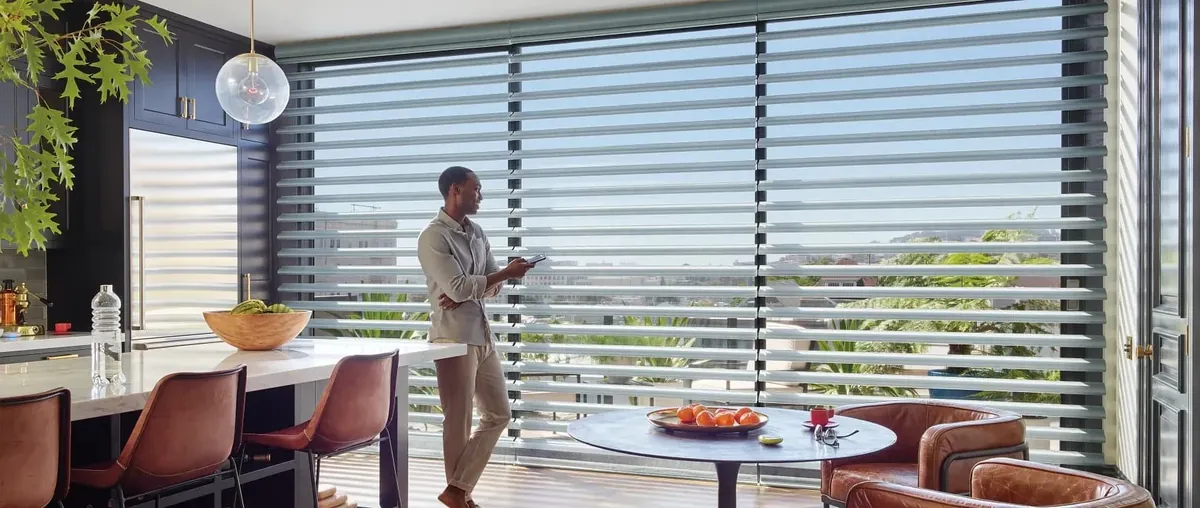
The app on your phone
Every shade in the house on one screen, at home or a long way from it.
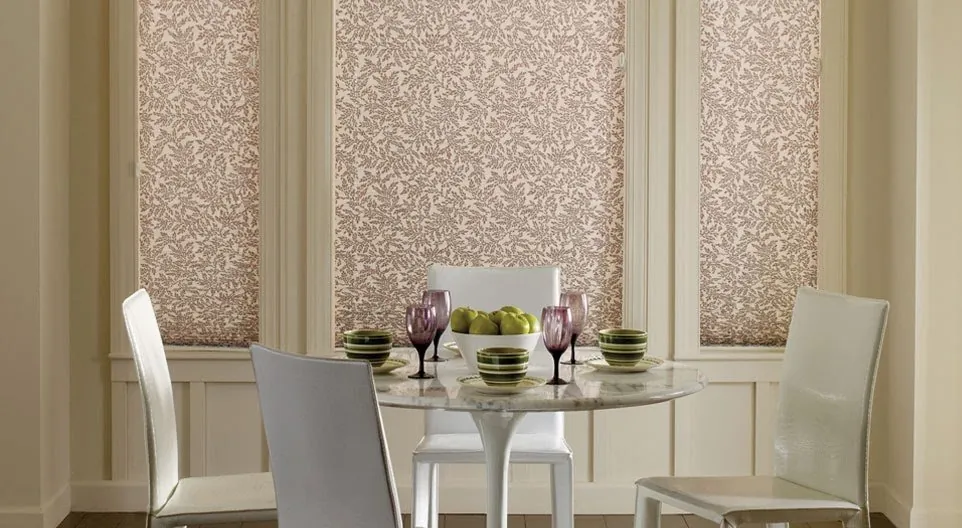
Schedules that keep time
Shades that lower through the strongest sun and rise again later, every day, with no one to remind them.
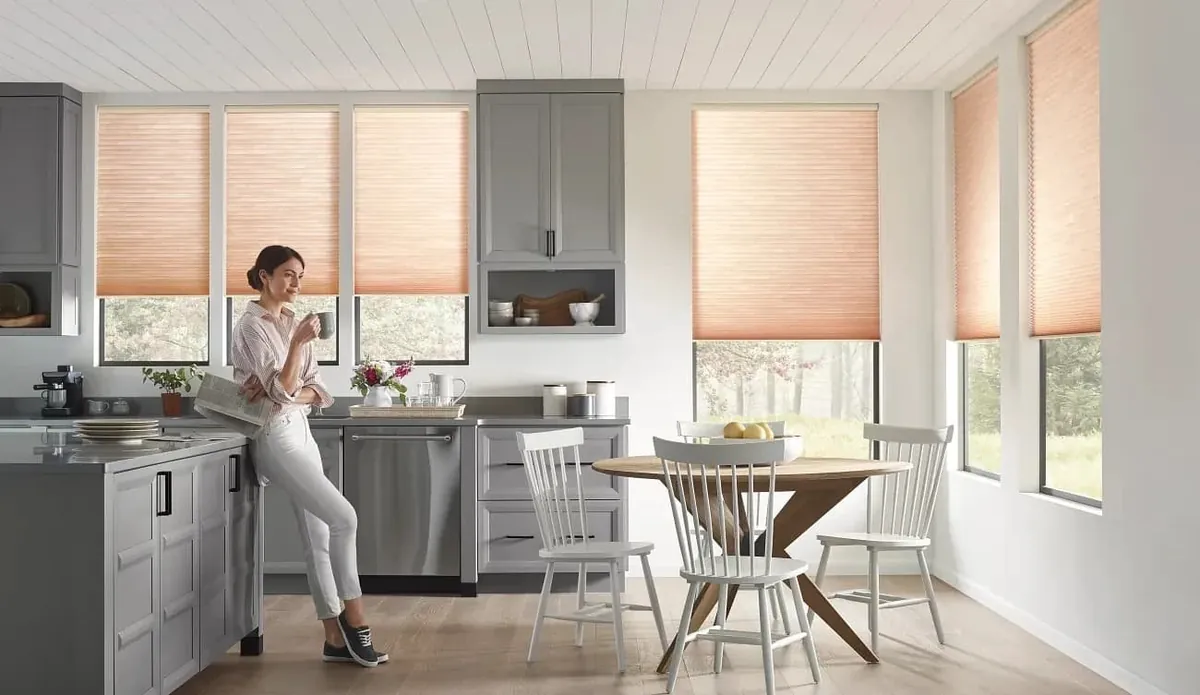
Top-down for the view
Honeycomb shades that can open from the top, so the bay stays in sight while the lower glass is covered.
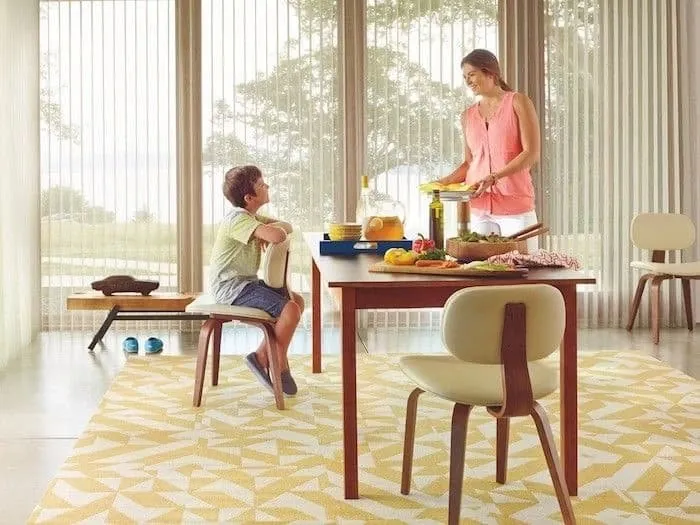
Sheers on tall glass
Luminette vertical sheers that draw across a wall of glass, softening the light without hiding the water.
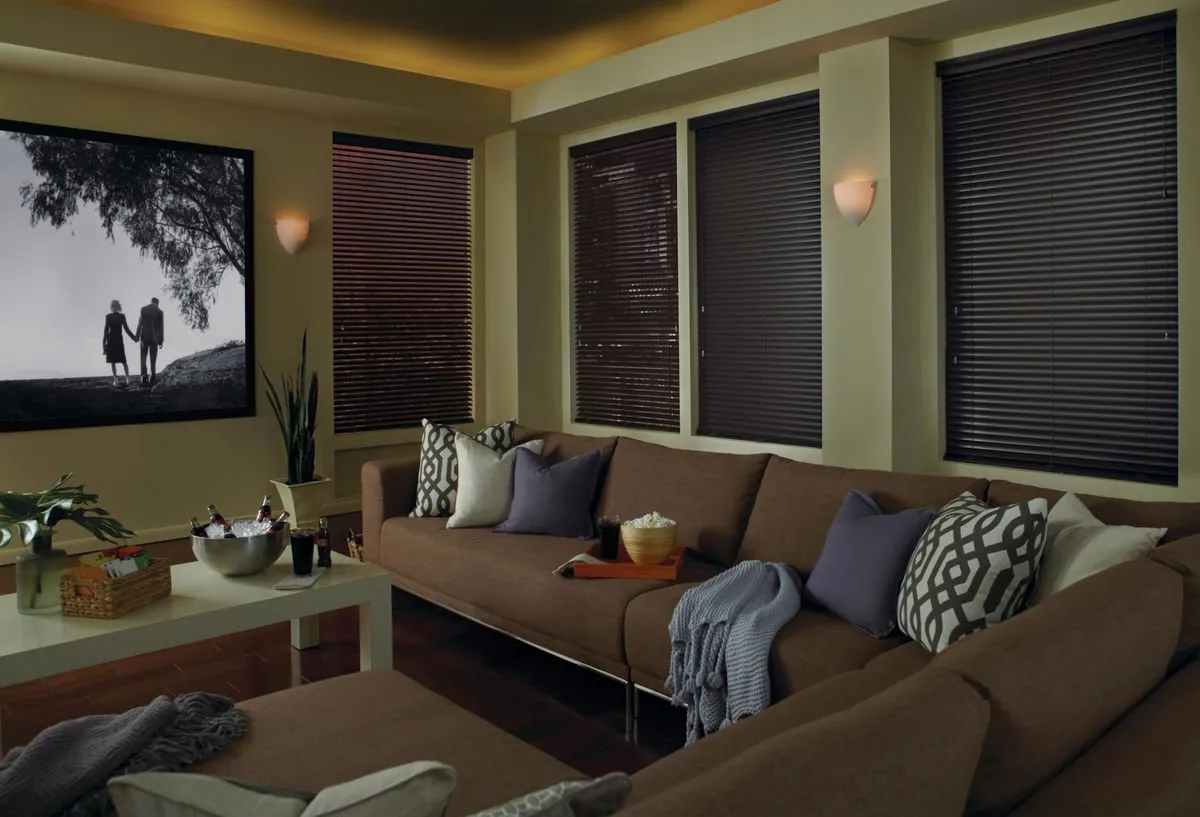
Darkness when you want it
Room-darkening fabrics, or dark blinds, for a bedroom or a media room facing the morning sun.
Antique capes near the village center
The capes closest to the center of town are the oldest houses in Orleans. They sit low under steep roofs, with a central chimney, small rooms, and windows sized for an age when glass was scarce. The sash is small, the walls are thick, and the sills are deep enough to hold a row of plants or a sleeping cat.
Motorizing a cape is rarely about the number of windows. It is about where they are. Upstairs, the bedroom windows sit low in the gable ends or out in dormers, often behind a bed or a chest. Downstairs, the deep reveal means leaning in to reach a cord. A motor takes away the lean, and the shade becomes something you adjust from your chair.
Those thick walls usually leave enough depth to fit the shade right inside the opening, so the motorized headrail disappears up into the frame and the old casing stays bare. We measure every sash at several points before we promise that, because an antique frame is seldom square and rarely the same size as its neighbor.
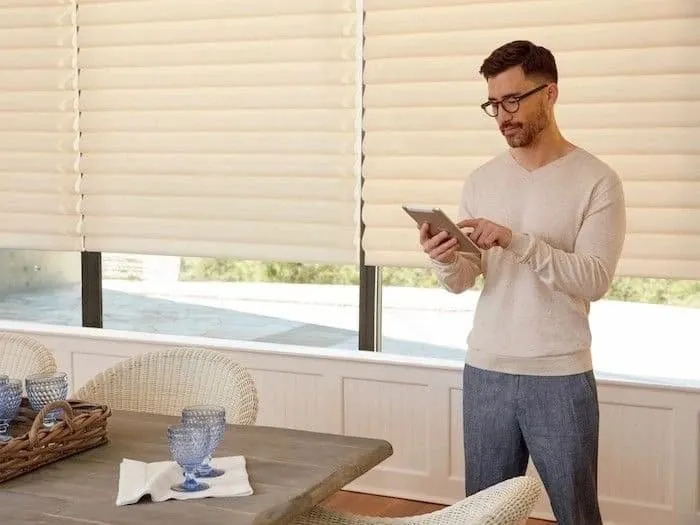
Toward Nauset and Pleasant Bay
Head out of the center toward the ocean side or down toward Pleasant Bay and the houses change completely. Many are newer, some are older cottages rebuilt around the view, and the rooms that face the water are made almost entirely of glass. Sliders open onto decks, and the main living space may have a wall of windows that rises the full height of the room.
Glass on that scale is close to impossible to manage by hand. A shade at the top of a tall window needs a pole or a ladder, a run of six or eight shades takes a long walk, and nobody gets them to stop at the same height twice. On PowerView, the entire wall moves as a group, every shade stopping in a perfect line, and a schedule can bring them down as the sun comes round.
Fabric matters as much as the motor. On the bay side, most people want to keep the view, so sheer shades and screen fabrics are the usual choice. In bedrooms facing east toward the ocean, a room-darkening fabric holds back the first light until you are ready for it.
What the outer Cape light does to a room
Light at the outer end of the Cape is clean and strong, and in a house with floor-to-ceiling glass it falls across nearly the whole room. In summer that means heat building up through the afternoon and glare on every screen. All year round it means fading: rugs, upholstery, wood floors and art all lose color on the side that faces the glass.
The fix is shading the glass while that light is on it, and only then. Down all the time, the house loses the view it was built for. Up all the time, the room bakes. A schedule finds the middle ground, lowering the sun-facing shades for the hours that matter and raising them when the light moves on. PowerView can follow sunrise and sunset as well as fixed times, so the pattern adjusts as the days lengthen and shorten.
Sheer and screen fabrics take the edge off the light while keeping the room bright. Lighter, neutral shade fabrics also keep their own color better on a window that takes direct sun, and we point those out when you choose.
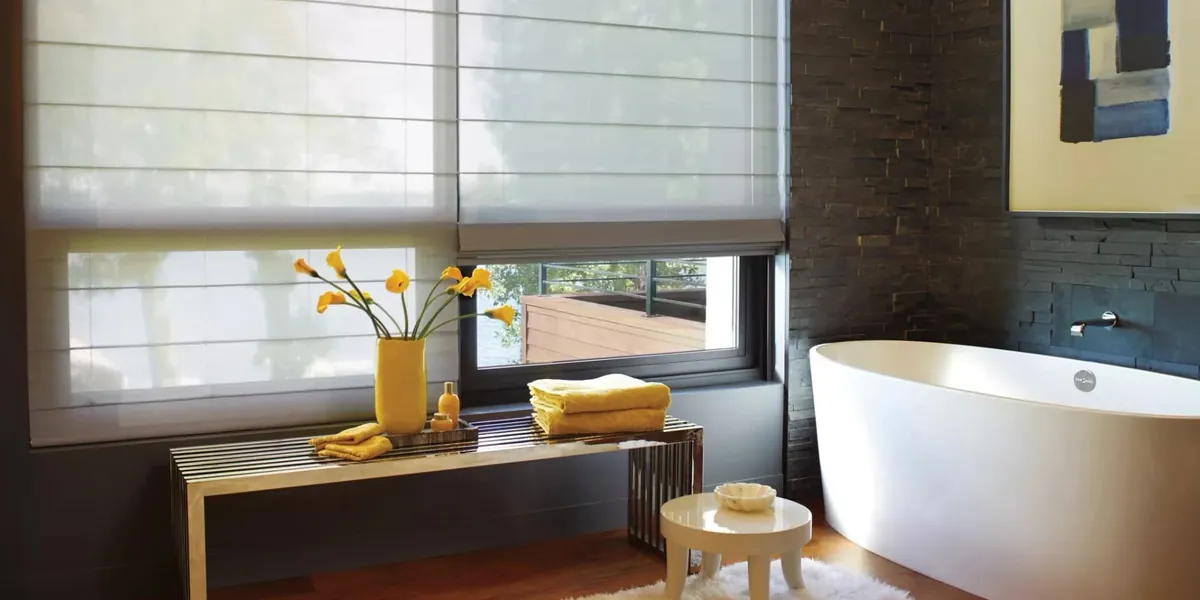
Sliders and decks on the water side
Almost every newer Orleans house opens onto a deck through a slider or a set of French doors, and those doors get used constantly in summer. A shade that has to be raised and lowered by hand every time someone steps out soon gets left open for good, and then it does nothing about the afternoon sun.
For a slider, we usually suggest a vertical shade that travels sideways, so you can walk through without raising anything. Luminette sheers and vertical honeycomb shades both work this way, and both can carry a motor, gathering to one side at a touch. Whether a particular door should be motorized depends on how it is used; a door that is opened all day may be better left manual while the windows beside it run on a schedule. We talk that through at each doorway rather than assuming.
Dormers and gable windows
Upstairs in the capes, and in many of the newer houses too, the bedrooms sit under the roof with windows in dormers or high in the gable walls. A dormer window is set at the back of a little alcove, so reaching it means kneeling on a bench or leaning over a desk. A gable window can be well above head height.
These are the windows that most often get left in one position for years. On a motor, they become as easy as any other: the shade closes for the night from a remote on the nightstand and opens again in the morning on a schedule. Plenty of owners start their motorized blinds in Orleans, MA, with just these upstairs windows and add the rest of the house later.
A house that sits empty half the year
Seasonal houses ask a lot of their shades in the months nobody is there. Fully raised, they let the sun work on everything inside all winter and leave the rooms on display. Fully lowered, they make the house look closed up to anyone going past.
With a schedule, the shades open in the morning and close in the evening as though someone were home. Rooms on the bay side can stay partly lowered through the brightest part of each day to protect the furniture. Before you leave in the autumn, we can help you set that pattern, and it runs on its own until you come back.
The app gives you a view of the house from wherever you are. You can see which shades are up, lower the bay windows ahead of a winter storm, or open a room for a visit from a contractor. When you arrive in spring, the house can be bright and open before you have taken your bags out of the car.
Heat in a summer glass room
On a clear July afternoon, a room with a wall of glass facing west over Pleasant Bay can become uncomfortable quickly. The sun is low enough to reach far into the room, and the water reflects even more light back up through the windows. Anyone sitting there squints, and the air conditioning works hard.
Lowering the shades for those few hours makes a real difference, and the motor makes it easy to do every day. A screen fabric blocks a good share of the heat and glare while you still see the water. A honeycomb shade adds a layer of trapped air between the glass and the room. With a schedule, the shades are down before the room heats up, not after you notice it has.
Mixing old and new in one house
Many Orleans properties are both at once: an antique cape at the front with a newer, glassier wing behind it facing the water. The old part has small sash and thick walls; the new part has sliders and floor-to-ceiling panes. The two halves need very different shades.
PowerView ties them together. A Roman shade on a cape window, a honeycomb shade on a dormer and a vertical sheer across a slider can all sit in the same room in the app and answer to the same remote. The shades do not have to be the same style to move together, so each window gets what suits it and the house still runs as one.
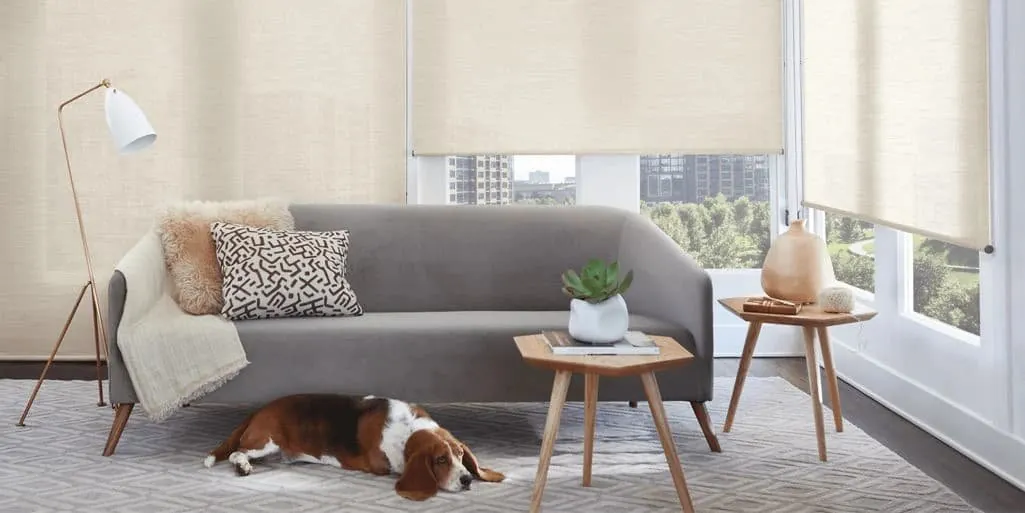
Telling the shades what to do
You have three ways to control a PowerView shade, and you can use whichever suits the moment.
A remote is the quickest. Press a button and a single shade, a room, or several rooms move together. It can mount on the wall like a light switch, and in a cape a remote in the main room and one upstairs is often plenty.
The app turns your phone or tablet into a map of every motorized window. Arrange the shades into rooms, nudge one by a few inches, and save scenes for the positions you use often, such as “bay wall halfway” or “bedrooms dark”. The app is also how you look after a seasonal house from somewhere else.
Schedules tie scenes to the clock, or to sunrise and sunset, and they keep running whether or not anyone is home. For a fuller explanation, read our guide to how motorized shades are controlled, and see window covering automation for scenes and timers.
Motorized blinds in Orleans, or shades
Many people ask first about motorized blinds in Orleans and then find that a shade suits a particular window better, or the other way round. Wood and faux wood blinds look right in a cape’s study or dining room and tilt to steer the light. Not every blind range or size takes a motor, so if a motorized blind matters for a certain window, we check that window at the visit rather than promising in advance.
On the big bay-facing glass, fabric shades are the more common choice because of how they handle the view and the glare. Most houses end up with a mix, and every motorized piece runs from the same app.
Planning each motor’s power
How a motor is powered depends on the shade, the window and the wall, and it can differ from one opening to the next. We plan it window by window during the visit, and you agree the plan before anything is ordered.
Your visit, from samples to schedules
- Get in touch through Request a Consultation or the call button and choose a time, including a time when you are down for the season.
- We drive the samples to you, so the fabrics are seen in the outer Cape light at your own glass.
- We walk the house together, the bay-facing rooms first.
- We measure each window carefully, with the oldest cape sash taking the most time.
- You decide which shades get a motor, how they group into rooms and scenes, and how each motor is powered.
- A free estimate follows for you to weigh up.
- Our certified Hunter Douglas installers fit the shades, set their limits, pair them with your remote and app, and program the first schedules before leaving.
There is more about that first visit in our guide to what happens at an in-home consultation.
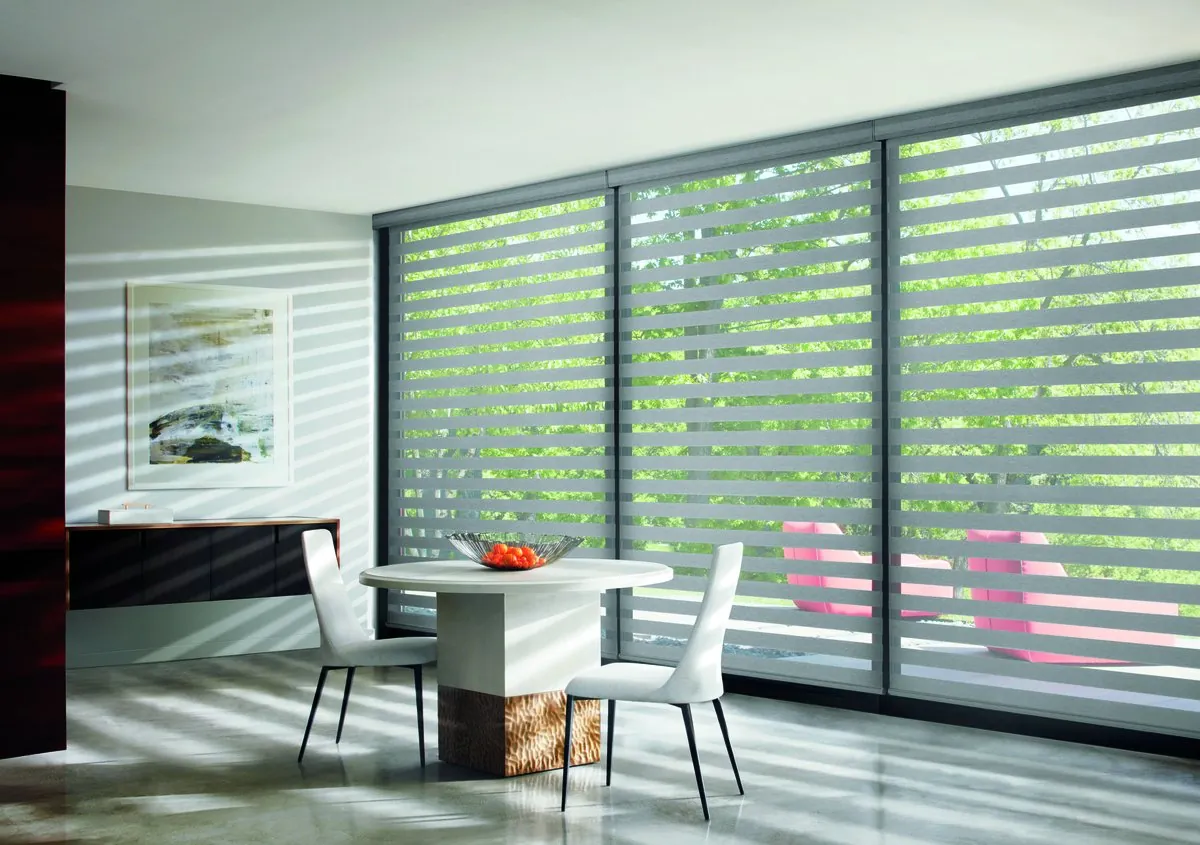
A Gallery dealer for glass walls and small sash
Hunter Douglas gives its Gallery dealer designation dealers who meet its standards, and Blinds & Designs holds it. That gives us the whole PowerView family to choose from: sheer, screen, roller, honeycomb, Roman and banded shades and a number of blinds. In a town where an antique cape and a glass-walled bay house can sit on the same lane, being able to pick the right product for each window matters.
Our installers are certified by Hunter Douglas and set up the motors and schedules as part of every fitting. We also offer interior design consultations when a room is being rethought as a whole.
For more in Orleans, see cellular shades in Orleans, roller shades in Orleans and custom blinds in Orleans, or everything on the Orleans page. Our main motorized blinds and shades page covers the full range.
The nearest showroom
Our closest location to Orleans is the Sagamore showroom, up the Cape near the canal, and you are welcome to call in. For motorized blinds in Orleans, MA, though, the windows themselves usually decide most of the plan, so we normally start at your house with the samples.
Questions from Orleans
Can motorized shades handle floor-to-ceiling glass facing the bay?
Yes. A wall of shades can move as one group, each stopping on the same line, and a schedule can lower them through the strongest sun. Sheer and screen fabrics keep the water in view.
Will a motor fit the small windows in my antique cape?
Usually. Each shade is made to its window’s own measurements, and thick cape walls often leave room for an inside mount. Where a frame is too shallow or far out of square, we suggest a slim outside mount.
Can the shades look after the house while I am away for the winter?
They can. Schedules open and close the shades every day whether anyone is home, and the PowerView app lets you check or move them from wherever you spend the off-season.
Do motorized shades help with summer heat?
Lowered during the hottest hours, they cut the heat and glare coming through big glass. A schedule makes sure that happens before the room warms up.
Is there a charge for the estimate?
There is not. We measure at your house and the estimate is free, listing each shade and motor we discussed.
Ready when you are
Request a consultation and we will bring the samples to Orleans, measure each window, the tall glass and the small sash alike, and leave a free estimate. If you would like to talk before booking, use the call button or stop by the Sagamore showroom.