
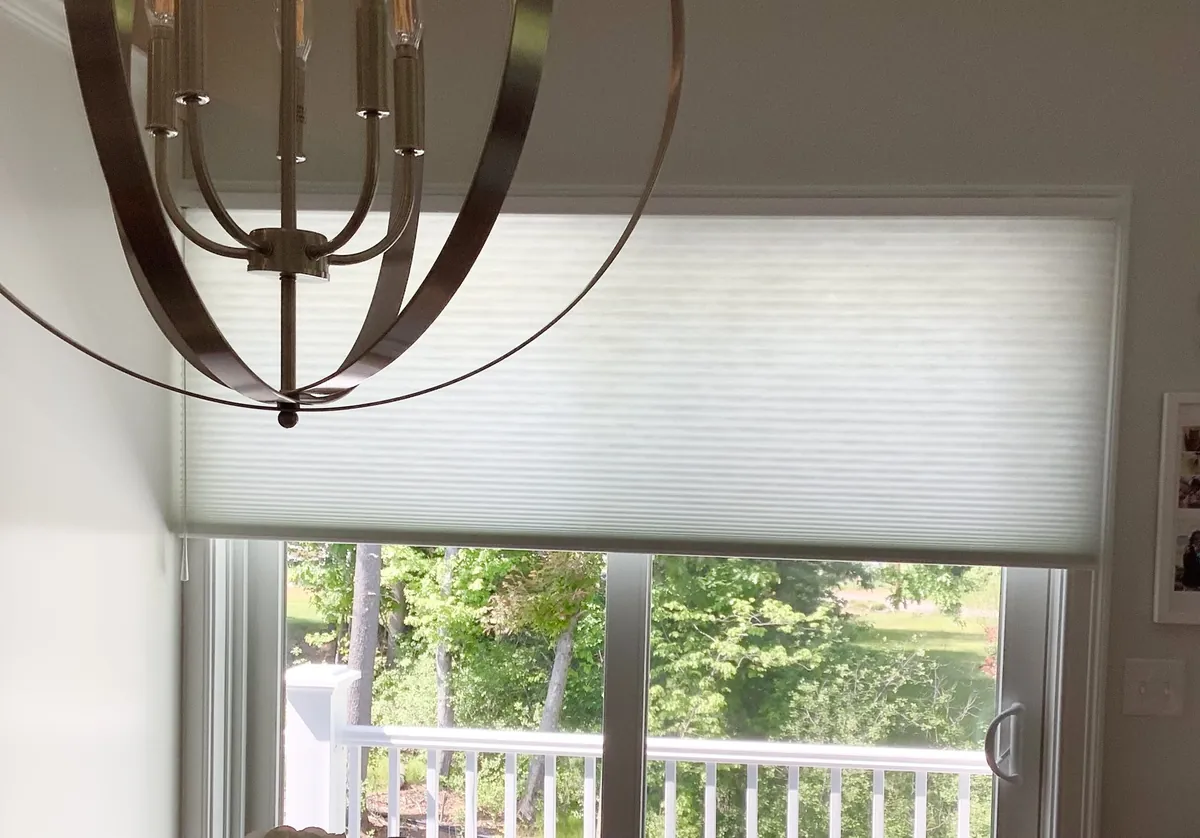
Two kinds of window in one town
Abington’s housing falls into two broad groups, and the windows follow them. Spreading out from the center, most streets are lined with post-war capes and ranches on modest lots, built with the standard modern openings of their time: square frames, familiar widths and sliders to the yard. Closer to the town center, older Victorians keep their tall sash windows, with taller ceilings and more trim around each opening.
That split is the first thing we think about as a Hunter Douglas dealer in Abington, MA. A ranch window and a Victorian sash may sit only a short drive apart, yet they ask for quite different answers on mounting, proportion and how a covering looks once it is raised.
Lots are modest across the board, so a neighbor is rarely far from a side window. Privacy and daylight come into nearly every room we plan. Since our vans carry the samples, you compare options at your own windows instead of guessing from a picture.
Six Hunter Douglas services for Abington
Every card opens its own Abington page. Together they cover what comes up most in the town’s capes, ranches and older houses.
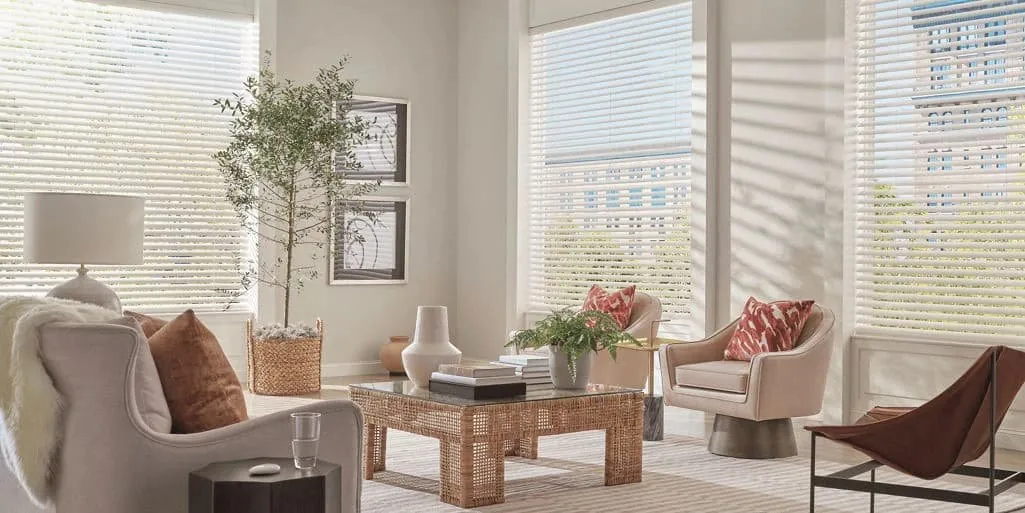
Custom blinds
Slatted blinds in real wood, faux wood, aluminum or vertical form, for square post-war frames and tall sash alike.
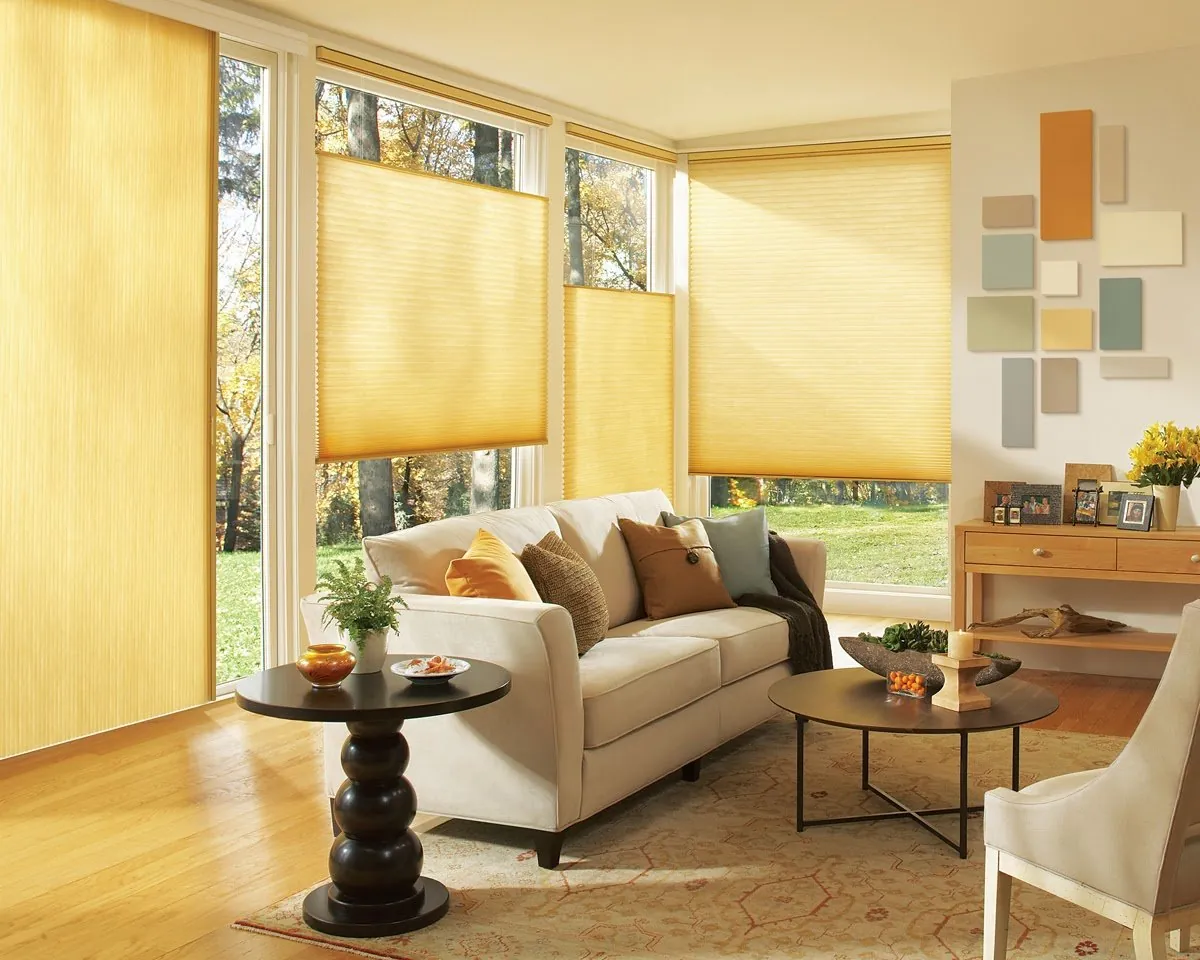
Cellular shades
Duette and Applause, including vertical honeycomb for a slider to the yard.
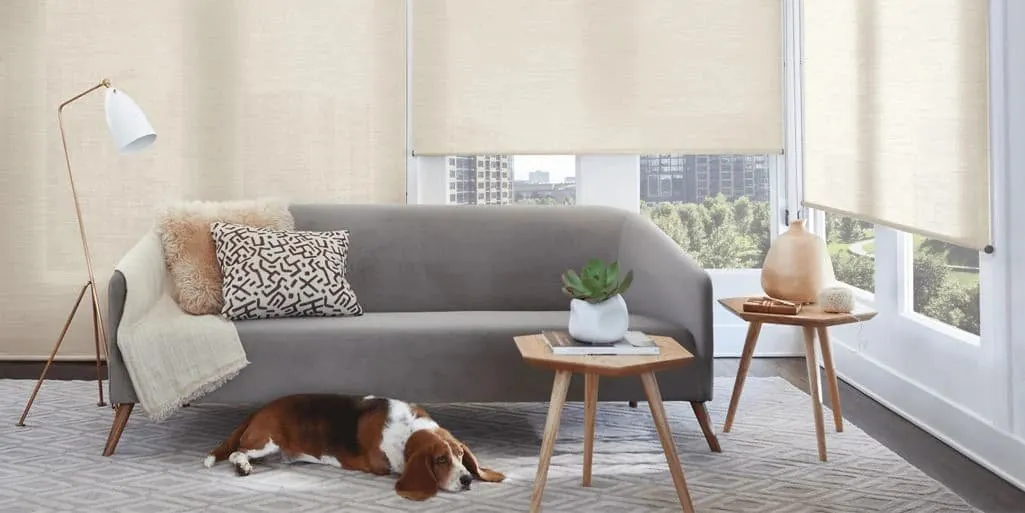
Roller shades
Designer rollers, screens and Alustra, matched to how much outlook a room should keep.
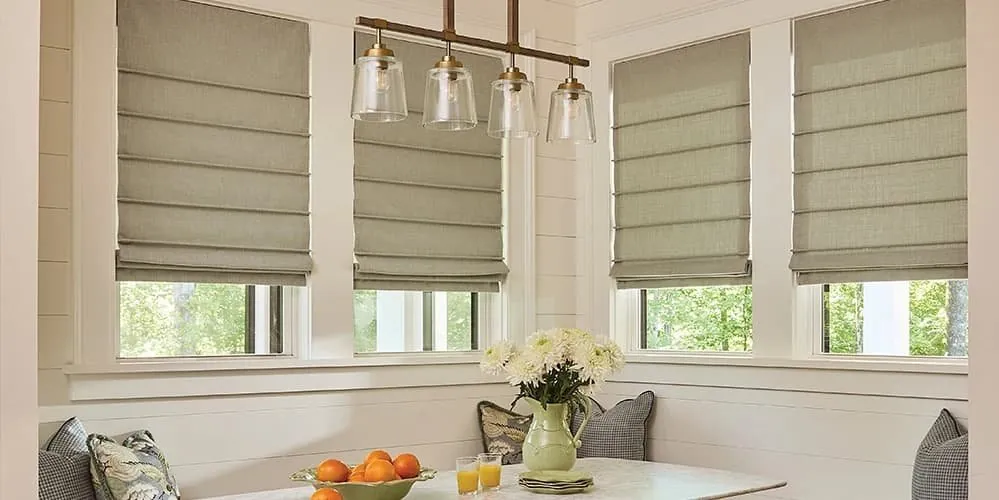
Roman shades
Soft fabric folds from Vignette and Carole Fabrics, flat or looped.
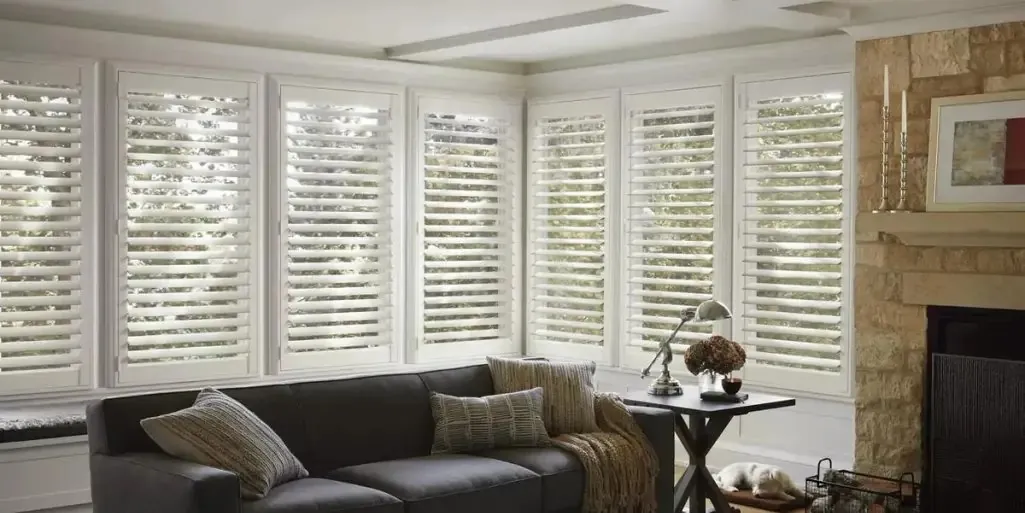
Plantation shutters
Palm Beach, NewStyle or Heritance panels, framed to suit each opening.
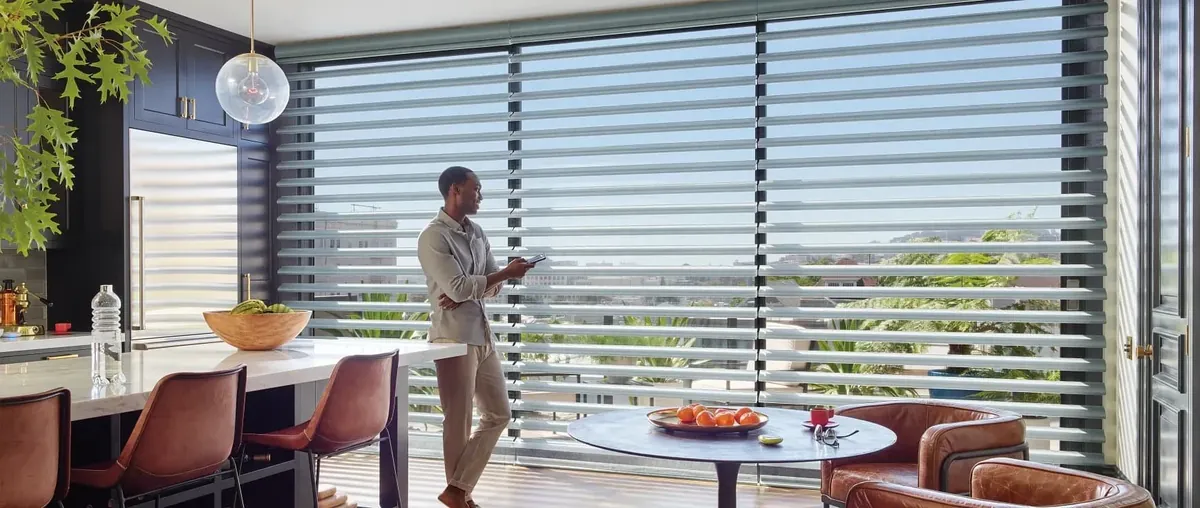
Motorized blinds
PowerView coverings you move with a handheld remote, your phone or a timetable.
Post-war capes away from the center
The cape is the most familiar shape on many Abington streets. Its ground floor usually holds the living room toward the road, the kitchen to the rear and sometimes a spare room used as a den or study. Upstairs, bedrooms are tucked under the roof slope, lit by dormers that push out through it.
Ground-floor openings are easy to work with. Their standard sizes accept nearly every Hunter Douglas product, so the decision rests on how each room gets used. A front living room facing the road might want a sheer that softens the outlook, while a den used for television in the evening might want something that dims the room further.
Dormers are where the thinking happens. They tend to be set back into the roof, with close side walls and a ceiling angling down toward the glass. Fitting the covering within the dormer opening usually looks tidiest, since it leaves those angled walls bare. Many households pick honeycomb here because it gathers into a thin band at the head and does not crowd a small window. If a dormer bedroom needs to settle down early on summer evenings, a darker fabric makes a real difference.
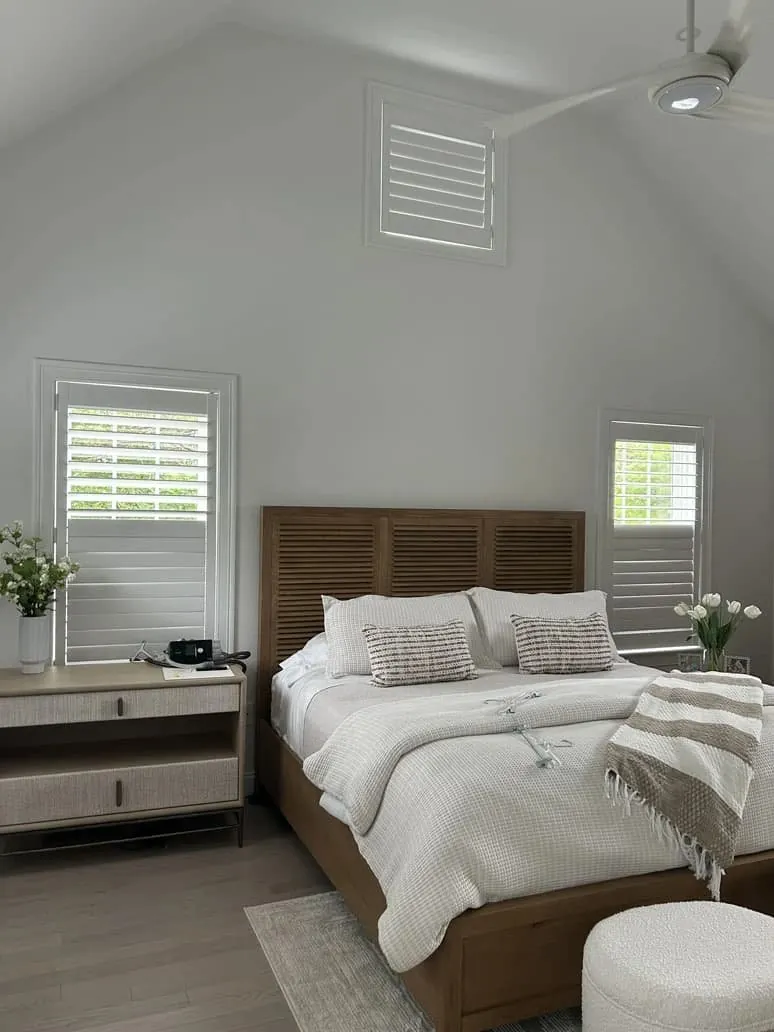
Ranches and the one-floor layout
Abington’s post-war ranches keep every room on one level. That is handy day to day, but it puts each bedroom, the kitchen and the living room at yard height. With a house next door on a modest lot, privacy turns into a whole-house matter rather than a front-room one.
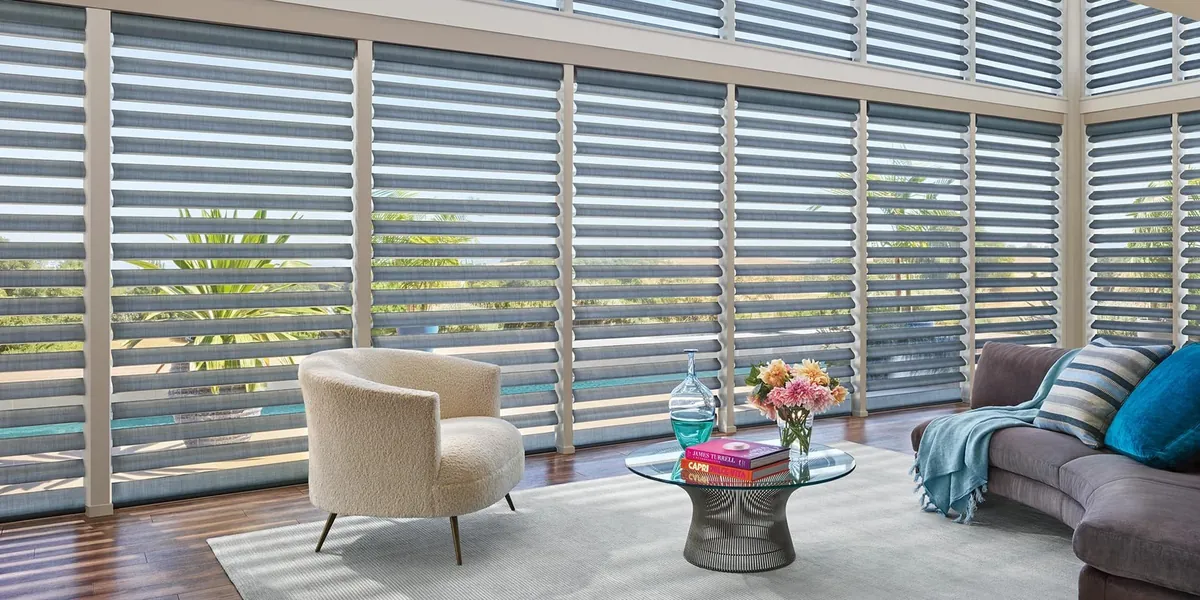
Many ranches have one broad window in the living room, either flanked by narrower sash or set alone in a long front wall. A single covering across a very wide opening can be heavy to lift, so we often suggest dividing it into two or three coordinated pieces. The middle can then stay closed for privacy while the outer sections open for daylight, or the other way round.
To the rear, a ranch usually opens onto the yard through a slider. It is the biggest opening in the house and gets used constantly, so it wants a covering that parks clear of the door. Vertical blinds, a vertical honeycomb shade or soft Luminette panels all draw to one side. If that door faces west, solar screen material takes the edge off late sun while you still see the lawn.
Victorians near the town center
Closer to the middle of town, the houses get older and the windows get taller. Victorian sash in Abington tends to be narrow and high, set in rooms with generous ceilings and wide, detailed casings. These are windows worth showing off, not hiding.
The best coverings here respect the height. A shade fitted within the frame keeps the casing visible and lets the sash read as tall and slim. Plantation shutters suit these rooms well, since each panel follows its window’s outline and the louvers tilt to block the street while sending light up toward the plaster. Roman shades fit a front parlor where a softer, period look is wanted.
Older frames are not always square. After many seasons a sash can drift slightly out of true, and two windows in one room may differ by a hair. We measure each one on its own, and where an opening is too irregular to fit within, we look at fixing the covering to the wall around it instead.
Getting the proportions right
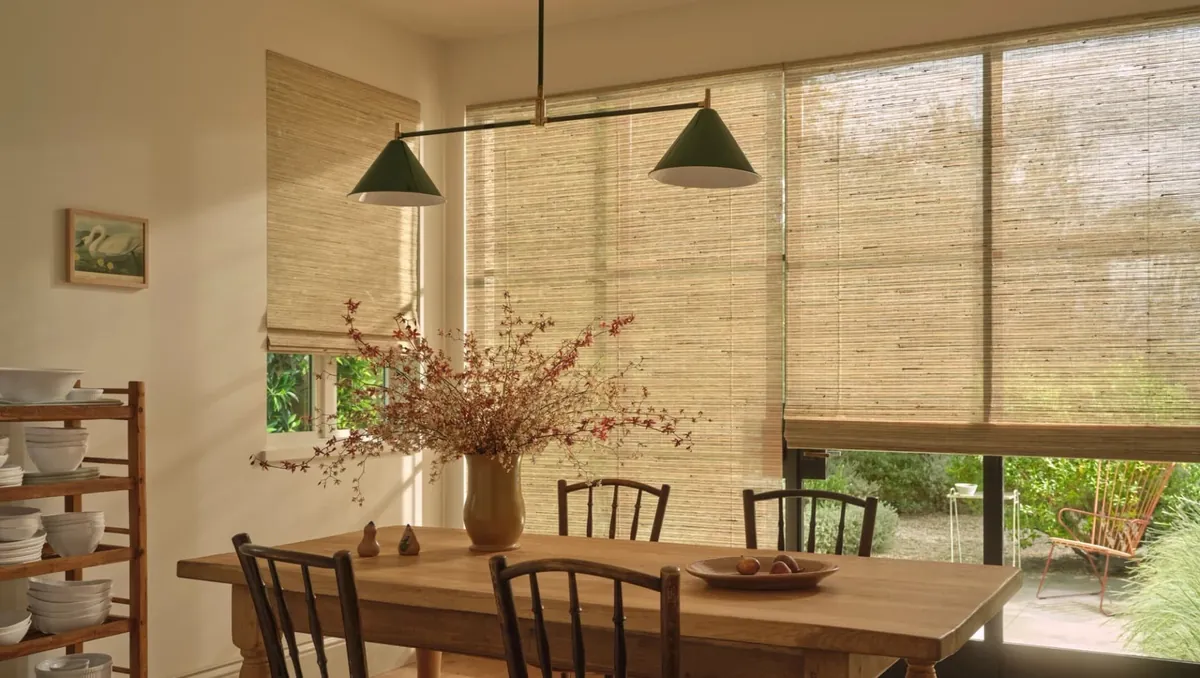
On a tall sash, how much of the window a raised covering hides matters more than on a short one. A bulky stack at the top cuts into the very part of the glass that lets light reach a high ceiling. When we visit as a Hunter Douglas dealer in Abington, we raise and lower samples at the window itself so you can see how much clear glass is left with the covering up. Slim honeycomb, rollers that disappear into a narrow tube and shutters that swing fully open all keep the height of the window intact. A deep Roman fold looks handsome in a parlor but is planned with that stack in mind.
Modest lots and the window next door
On many Abington streets, a side window looks across a short strip of grass to the clapboards next door. That affects both privacy and light. The view straight across can be very direct, and the daylight that reaches the room is often reflected off siding rather than coming straight from the sky.
In those rooms the trick is holding onto daylight while losing the view. A few approaches work well:
- Sheer shades such as Silhouette blur the outlook while letting soft light deep into the room.
- Pale honeycomb fabric reflects the available light back inward rather than soaking it up.
- Light-filtering roller shades give daytime privacy without making a small room feel dim.
- Shutters with angled louvers handle a kitchen or bath that faces the neighbor.
We would rather settle this with a swatch pressed to that exact pane than from a catalog, which is one more reason the samples travel with us.
Kitchens and baths in a post-war house
The kitchen in an Abington cape or ranch usually has one window over the sink and sometimes a second beside the table. The bathroom often has a single small window, frequently on the side of the house nearest the neighbor. These rooms see constant reaching across counters and tubs, so what goes on them needs to be simple to work.
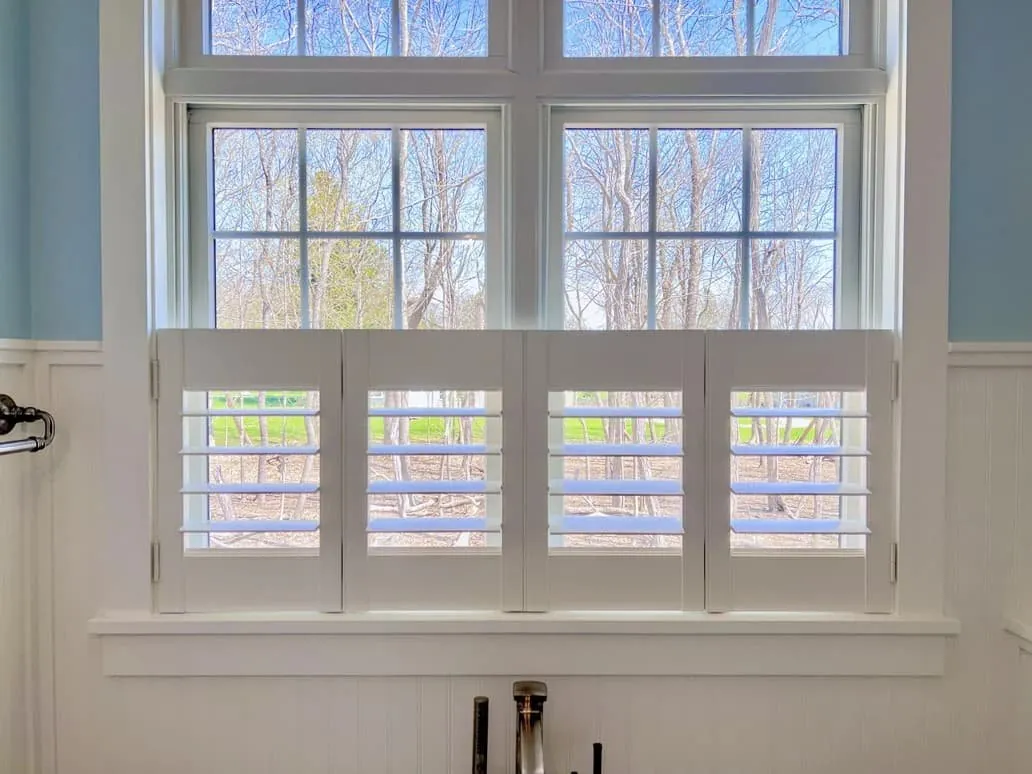
Faux wood blinds are a common answer: the slats tilt for privacy, and they give a crisp, simple look in a working room. Cafe-style shutters on the lower half of a kitchen window keep the sink area private while the top of the glass stays open to the sky. A roller shade in a light-filtering fabric gives a clean, plain look where the window is small and the counter is in the way. We look at how far you have to reach and what sits under the sill before suggesting anything.
Planning a whole house with one dealer
Plenty of Abington projects begin with one room and expand once the first windows are measured. That is where a Hunter Douglas dealer in Abington with the complete range earns its place. Shades, blinds and shutters all come through one consultation, from one maker, measured once and fitted by one installation team.
That continuity shows from the road. On a cape or ranch whose front windows are in plain view, keeping the headrail color and fabric tone the same across every street-facing window makes the house look finished. Inside, rooms can be entirely different: shutters by the sink, honeycomb upstairs, a roller where the slider meets the deck.
It also keeps the advice honest. Since we are not tied to any one product, we can say when slats will suit a room better than fabric, or when shutters make sense on the front of the house but not around back.
Older houses and newer houses side by side
Some Abington households live in one kind of house and plan to move to the other, or own a Victorian near the center while a parent lives in a ranch further out. We often hear the same question: will what worked in one house work in the next? Sometimes, but not always.
A honeycomb shade that sits neatly in a square ranch frame may look short and stubby on a tall Victorian sash unless it is planned for that height. A shutter that suits a Victorian parlor may feel heavy on a small ranch bedroom window. A roller shade that reads as crisp and modern in a newer room may feel out of place against old, detailed trim. The products are flexible, but the proportions of the house still lead.
That is why we look at each house on its own terms, even when the products end up being the same family. The Hunter Douglas range is broad enough to suit both kinds of house, but the size, mount and fabric weight change from one to the other.
PowerView in a cape or a ranch
Motorizing is not only for large modern houses. In an Abington cape, the dormer shades upstairs can be set to rise on a schedule each morning, which saves a walk around the bedrooms. In a ranch, the street-facing windows can close together in the evening from a single remote or the app, so the whole front of the house goes private at once. On a slider, a motorized covering moves at the press of a button instead of a tug across a wide door.
PowerView runs across many Hunter Douglas families, so a honeycomb in the bedroom and a roller in the kitchen can be grouped and worked together. Any Hunter Douglas dealer in Abington should be able to show you how the controls feel before you decide, and we bring that conversation to the visit. Our guide to how motorized shades are controlled covers remotes, the app and schedules in plain terms.

What happens when we arrive
Abington belongs to the shop-at-home area we cover from Canton, so the consultation takes place in your house. How that territory works is set out on our Canton shop-at-home page. A typical visit runs like this:
- Our van pulls up with sample books, fabric swatches, slats and louver pieces.
- We begin in whichever rooms matter most to you and ask what is bothering you there now.
- Together we try options at each window, in the light that room actually gets.
- We discuss mounting, operation and whether motorizing any window makes sense.
- Each opening is measured, older sash near the center included, and each is checked separately.
- A free estimate for products and certified installation follows, for you to think over at your own pace.
Our guide to what happens at an in-home consultation and the broader in-home consultations page fill in the rest.
When an existing shade needs fixing
Plenty of Abington houses come with Hunter Douglas coverings already hanging. If one has stopped working properly, point it out while we are there. We welcome blind and shade repair on coverings you own already, and we will be straight with you about whether fixing or replacing it is the better call.
From order to installation
After Hunter Douglas builds each covering to the sizes we took, our certified installers return to put everything up.
- Every piece is checked against the window it was made for before work begins.
- Brackets go up level and secure, whether the frame is a square post-war opening or an older sash that has settled.
- Each shade, blind or shutter is hung and fine-tuned in turn.
- Everything is raised, lowered and tilted fully, and PowerView motors are linked to your remote or app.
- We show you how each piece works and tidy up as we go.
For a closer look, see what happens on installation day.
Why Gallery dealer status matters
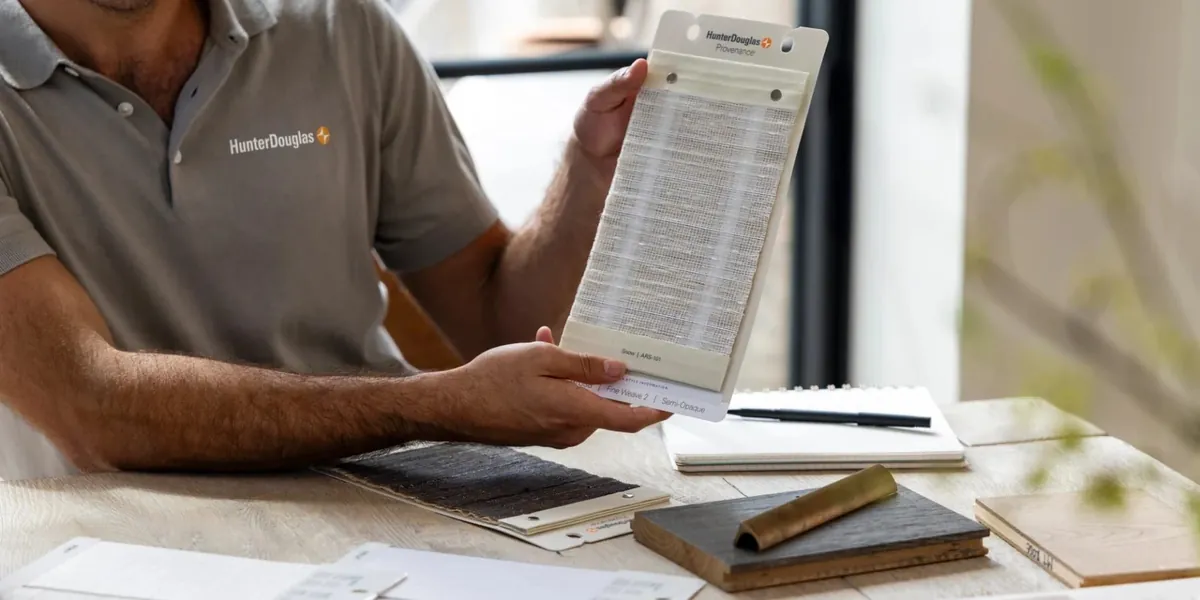
Blinds & Designs is a Hunter Douglas Gallery dealer, and our installation is certified by Hunter Douglas. Those are the two facts we lean on, because they shape the whole job, from what you can choose to how it is fitted.
For an Abington household, a single visit can cover a dormer bedroom, a ranch picture window and a tall Victorian sash, with Hunter Douglas products throughout and one crew doing the measuring. We also offer interior design consultations if you are reworking a room and want a second opinion on fabric and color.
Hiring a Hunter Douglas dealer in Abington whose installers are certified means made-to-order coverings are fitted as the maker intended. Look through the Hunter Douglas catalog for lines and colors, or read about our dealer work on the Hunter Douglas page.
Where to see products in person
Most Abington projects begin at home, with the samples brought to you. To see Hunter Douglas coverings in a showroom too, Franklin is the closest of our locations, and its page is here: Franklin showroom.
For PowerView, our motorized blinds and shades page covers the basics, and motor power is something we work out during the visit. Every service available locally is listed on our Abington page.
Questions from Abington
Will my cape’s dormer windows take a shade?
Yes. Dormers usually look best with the covering set inside the recess so the angled walls stay bare. Honeycomb is popular there because it gathers into a thin band at the top.
Our ranch has a very wide picture window. What works?
We often divide a broad window into two or three matching pieces, so one section opens for daylight while the others stay closed. Shutters, honeycomb and roller shades can all be split this way.
The sash in our older house is not quite square. Is that a problem?
Not usually. Each window is measured on its own, and if a frame is too far out of true to fit within, the covering can be fixed to the wall around it to hide the uneven edges.
Can you help with a slider to the backyard?
Yes. Vertical blinds, vertical honeycomb and Luminette all draw sideways to clear the door. Solar screen material is worth a look if the slider takes strong afternoon sun.
Do you charge for the estimate?
No. Abington estimates cost nothing, for one kitchen window or for every opening in a ranch.
Ready when you are
A dormer bedroom under a cape roof, a picture window in a ranch or a row of tall sash in an older house near the center: each starts with one easy step. Ask for a consultation and we will drive the samples to Abington, take the measurements and hand you a free estimate. Prefer a conversation first? Tap the call button near the top of the page.