
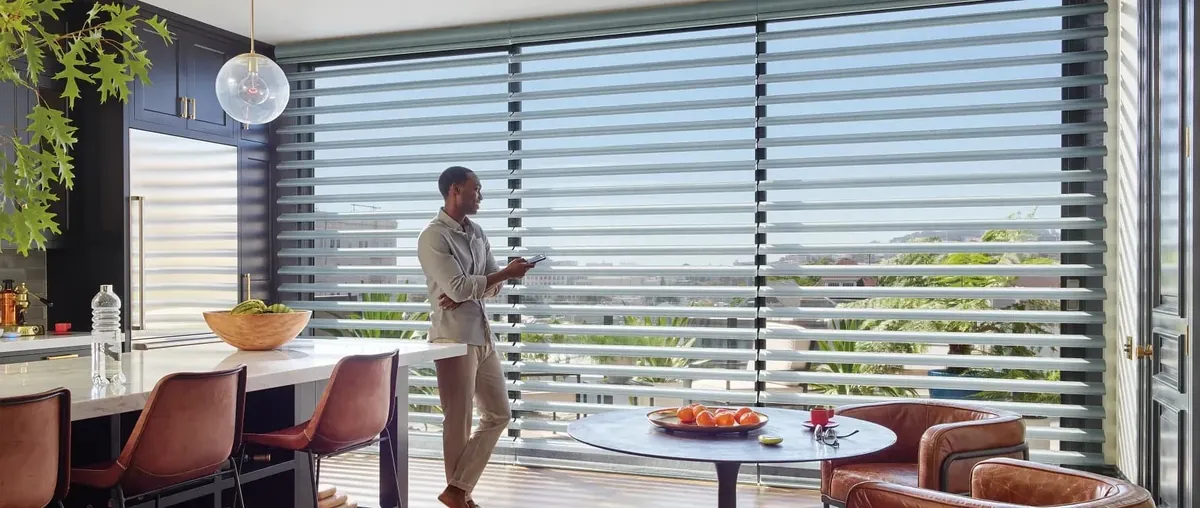
Open bogs, long views and sun from every side
Carver is a town of big lots and open ground. Capes and ranches sit well apart from one another among the cranberry bogs, and off Tremont Street the newer colonials have room around them too. There are few tall neighbors and often no stand of trees between a house and the horizon, so the sightlines run a long way. That openness is a large part of the appeal, and it is also why we get so many calls about motorized blinds in Carver, MA.
With nothing to screen them, the windows take the sun directly, and a typical room has glass on two or three walls. The light arrives on one side at breakfast, swings across another at midday and pours through a third in the evening. Keeping up with that by hand means a lot of walking from window to window, and most people simply give up and leave the shades in one position.
Hunter Douglas PowerView changes that. Motorized shades move on a schedule as the sun comes round, answer a remote when you want something different, and show up on the app on your phone so you can check or adjust them anywhere.
A shade for each side of the house
In an open setting, each face of the house has its own kind of light. Here is how we tend to match PowerView shades to them, all available with a motor.
The morning side
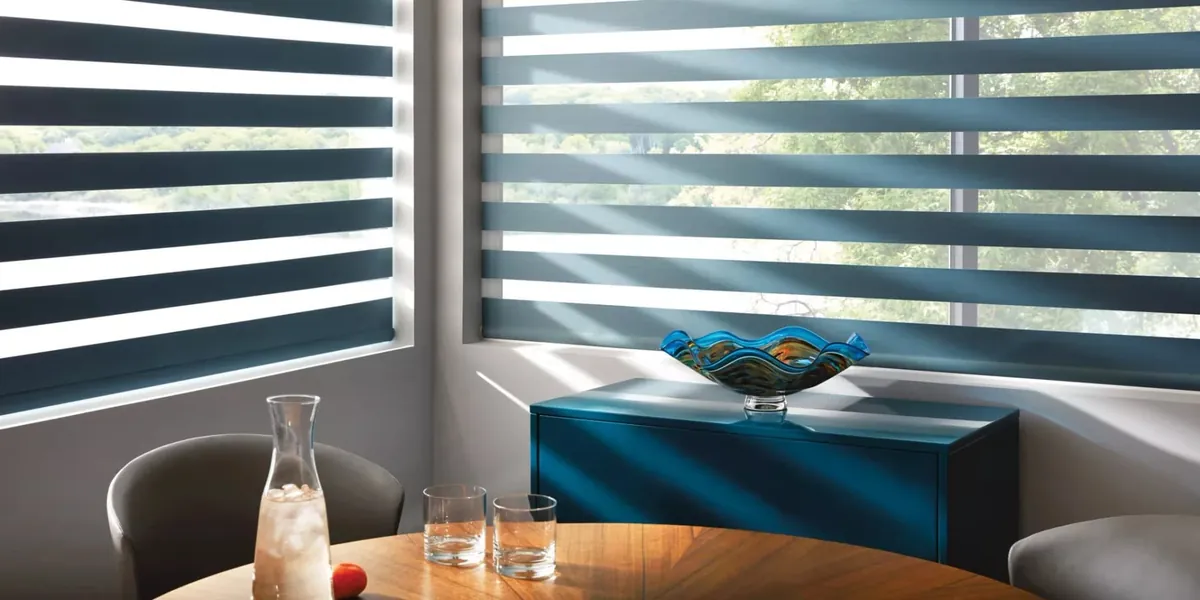
Designer Banded shades on east-facing kitchen windows. Shift the stripes to take the low sun off the table without closing the room.
The midday side
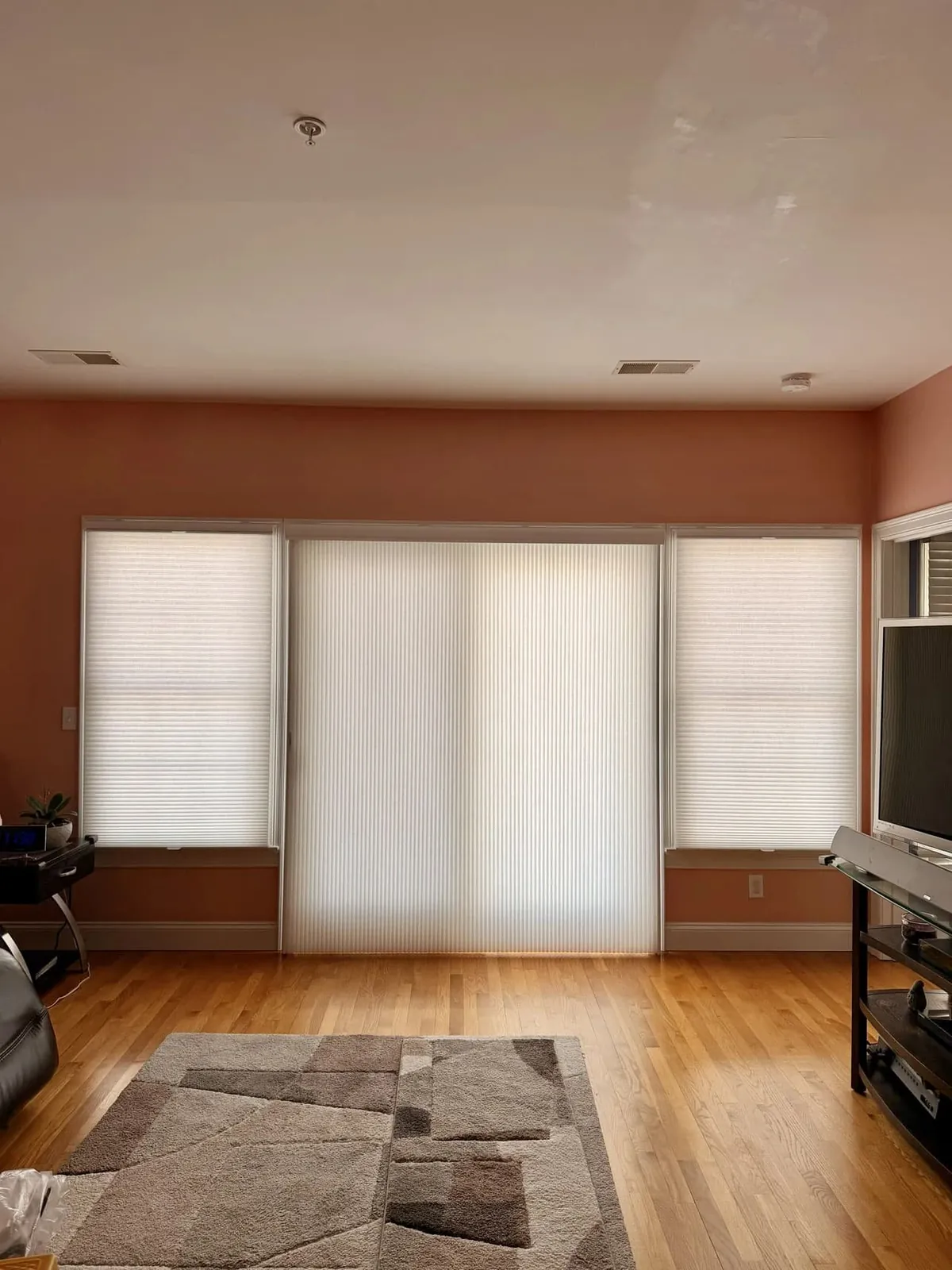
One of our own installs. Duette honeycomb shades, with a vertical shade across the slider, slow the heat from a south wall.
The evening side
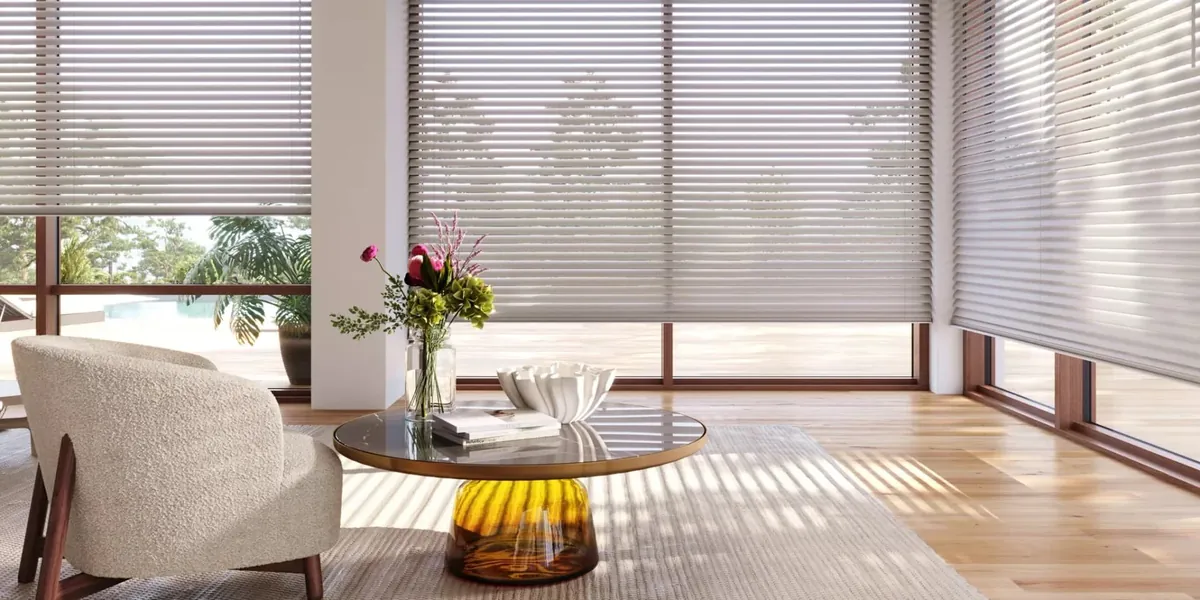
Blinds or screen shades on west windows, where the setting sun comes in flat across the room.
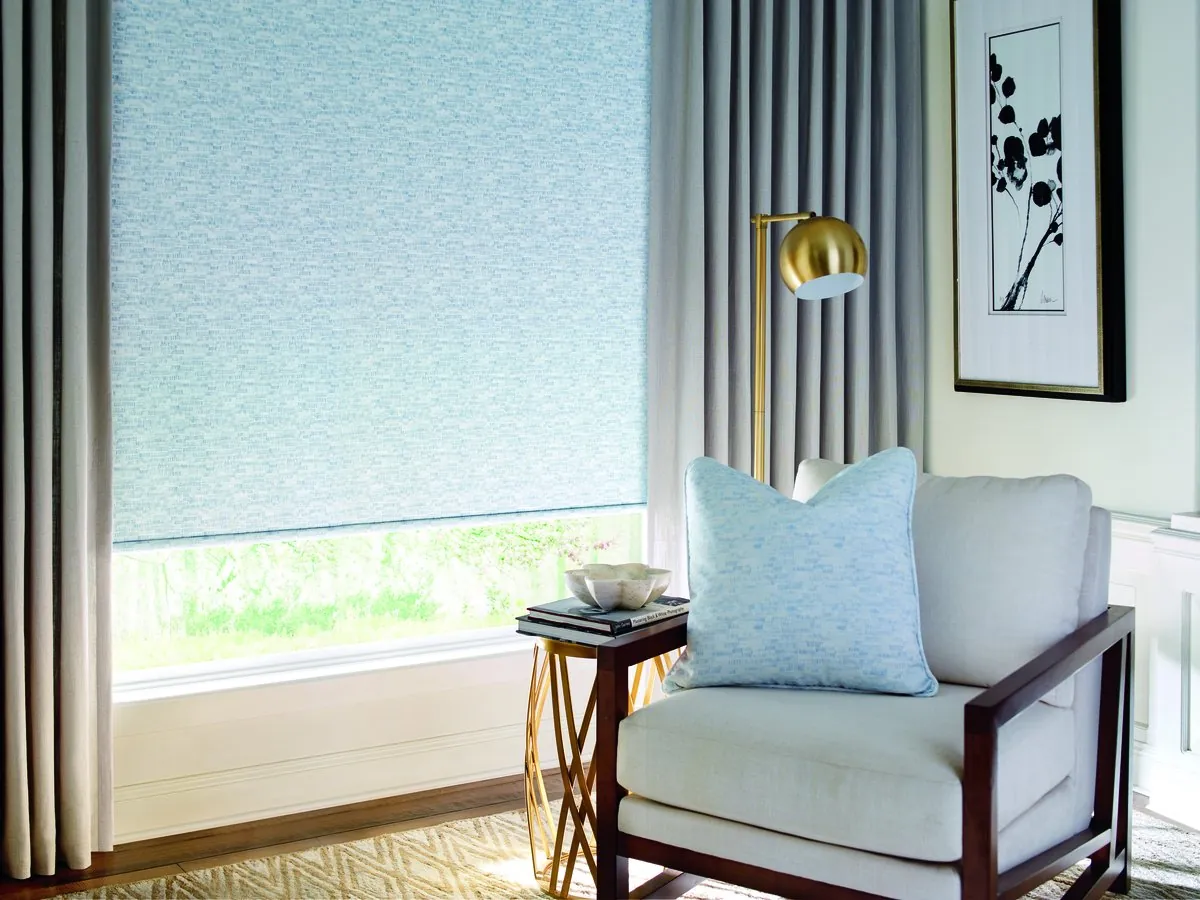
The bog-view picture window
Designer Roller shades split across a wide window, rising together so the view opens in one movement.
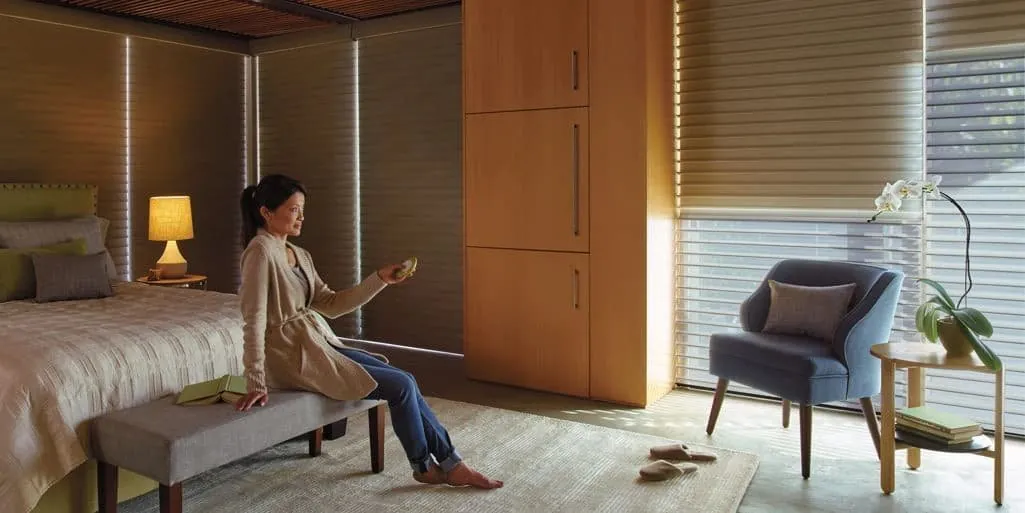
The bedrooms
Room-darkening fabrics that stay down at sunrise, controlled from a remote by the bed.
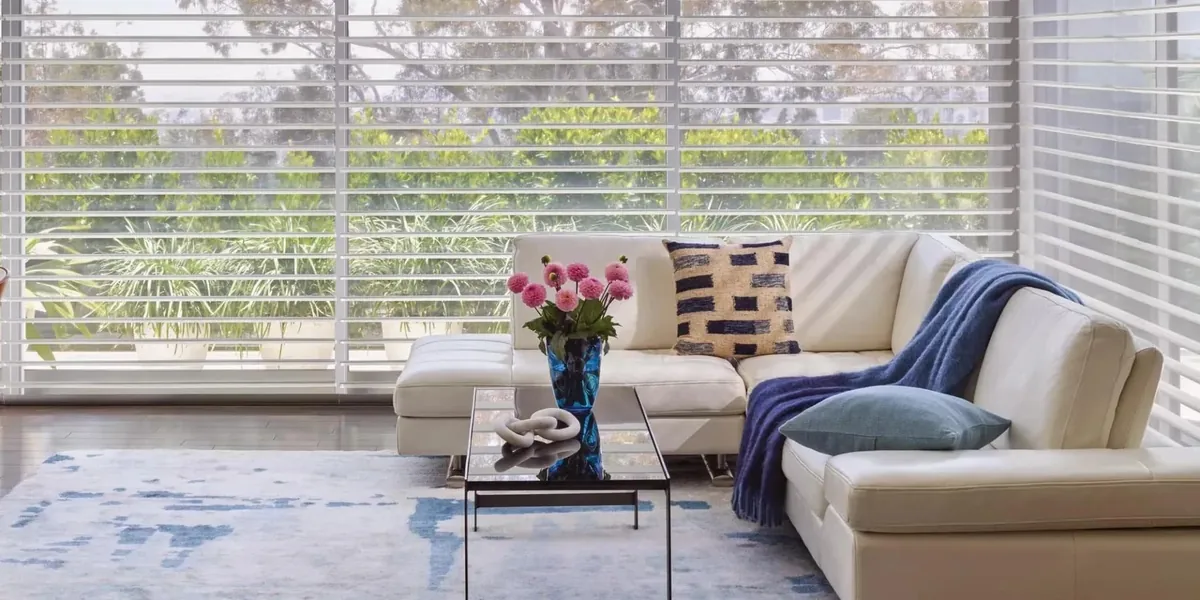
The tall foyer
Silhouette sheer shades high above a colonial’s front door, run from the same app as the rest of the house.
Capes among the bogs
The capes scattered along the bog roads are modest houses on generous land: a steep roof, a front door at the center, a pair of windows on either side and dormers above. Inside, the downstairs rooms usually have windows on at least two walls, and the bedrooms upstairs sit under the slope of the roof with windows in the dormers or the gable ends.
Because the house stands alone in the open, each of those rooms is lit from more than one direction, and none of them is shaded by anything nearby. In summer a cape’s upstairs can heat up fast under the roof, particularly when the sun is on the gable windows in the afternoon. Shades that lower on their own before the room warms, and lift again in the evening to let the air move, make those rooms far more comfortable.
Dormer windows are also hard to reach, set back in a small alcove, often over a desk or a bench. A motorized shade there is controlled from the doorway, and nobody has to kneel on a cushion to raise it.
Ranches with wide windows
The ranches on the bigger lots tend to be long and low, with the main rooms in a line along one side. The living room usually has a big picture window, the kitchen a window over the sink, and there may be a slider out to a deck or a patio facing the bogs or the woods. Bedrooms run down the hall with wide, horizontal windows.
A picture window is often too wide for one shade, so we split it into two or three that sit on one motor group. They lift and lower together, stopping level with each other, so the window looks like one piece. That matters when the view is the point of the room. Raise them in the morning and the whole sweep of the bog is there; lower them partway in the afternoon and the glare goes while the horizon stays in sight.
The kitchen window above the sink is the other favorite, because nobody enjoys leaning across a counter to reach a shade. On a motor it becomes a button by the door.
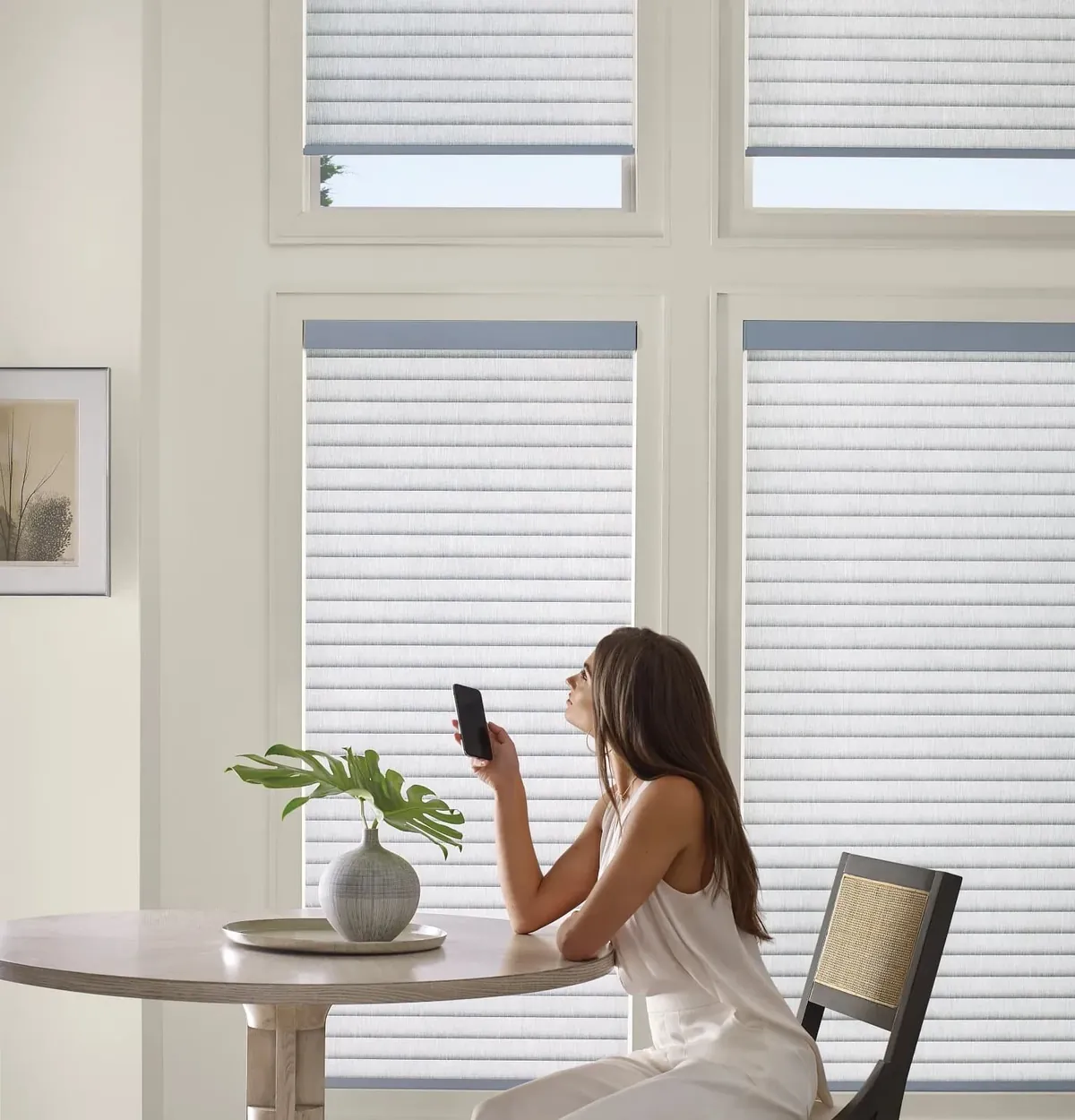
When nothing screens the glass
In a closely built neighborhood, the house next door, a row of trees or the building across the street blocks a good share of the low sun. In much of Carver there is nothing like that. Morning and evening sun reach the windows at full strength and at a low angle, which means they travel deep into the room and stay there.
That has a few consequences. Rooms get warm quickly in summer, particularly on the west side late in the day. Screens and televisions wash out. Rugs, wood floors and upholstery fade on the side nearest the glass. And the glare from a low sun straight in the eyes can make a room hard to use for an hour or two at each end of the day.
Shading the glass while that sun is on it handles all of these, and a motor is what makes it practical. With a schedule, the east shades dip in the early morning, the south ones come down partway through the middle of the day, and the west ones close in the late afternoon, then each set lifts again once the sun moves off it. PowerView can follow sunrise and sunset, so the timing drifts with the seasons on its own.
Newer colonials off Tremont Street
The colonials on the streets off Tremont Street are larger and more recent, with standard-sized windows throughout and, very often, a two-story foyer or a family room with windows set high above the fireplace or a run of doors. The lots are big here too, and the houses still stand in the open.
High windows are the obvious place to start. They cannot be adjusted by hand without a pole or a ladder, so in most houses they stay in one position for years, usually fully open, letting the full force of the sun into a tall room. On PowerView, a high window joins the same groups and schedules as the windows below it, and lowers with the rest of the room when the sun comes round.
From there, most families add the rooms they use most: the family room, the kitchen and the main bedroom first, the other bedrooms later. A colonial does not have to be done all at once, because new shades join the same app as the first ones.
Heat, cold and the open ground
Out in the open, a house feels the weather more. Summer sun bears down on unshaded glass, and winter wind blows across the bogs with nothing to slow it. Windows are where much of that comes in.
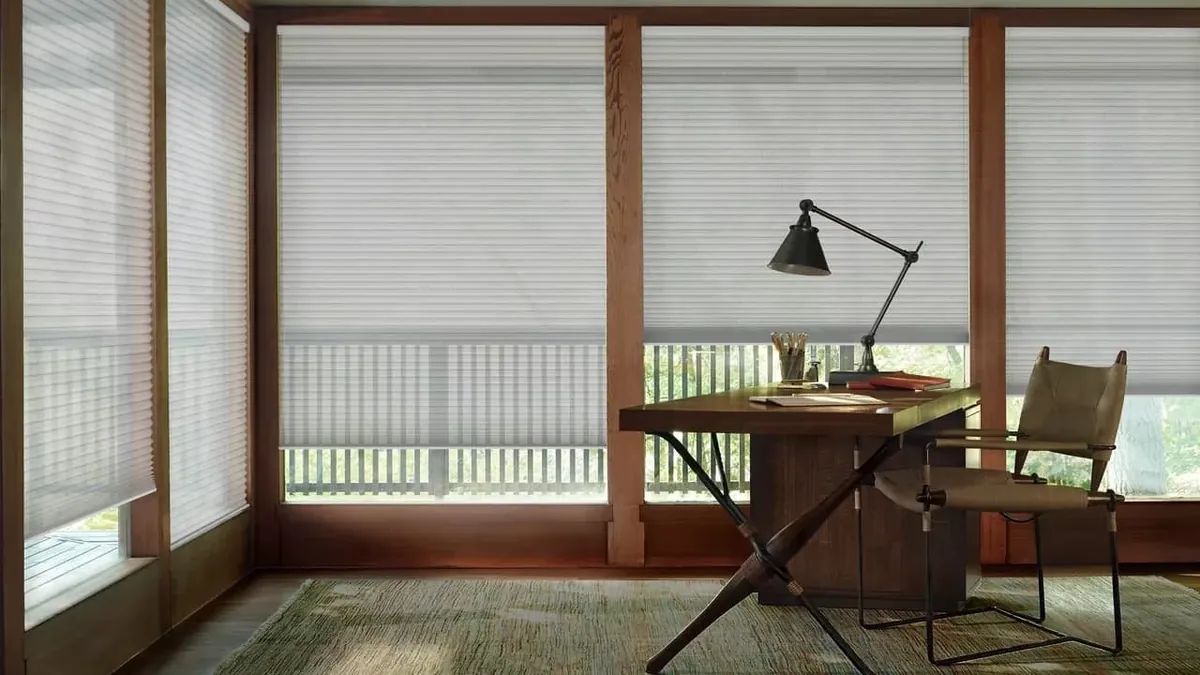
Honeycomb shades help in both seasons, because of the pocket of air held in each cell between the glass and the room. In summer, lowered on the sunny side through the hottest hours, they slow the heat coming through. In winter, closed at dusk, they help the room keep its warmth through the night, and on a bright winter morning the south shades can lift to let the low sun in. A schedule handles all of it without anyone going round the house.
Long views and keeping them
A house in an open setting was usually chosen for its view, and the last thing they want is a window covering that hides it. The way a shade behaves when raised matters as much as how it looks lowered.
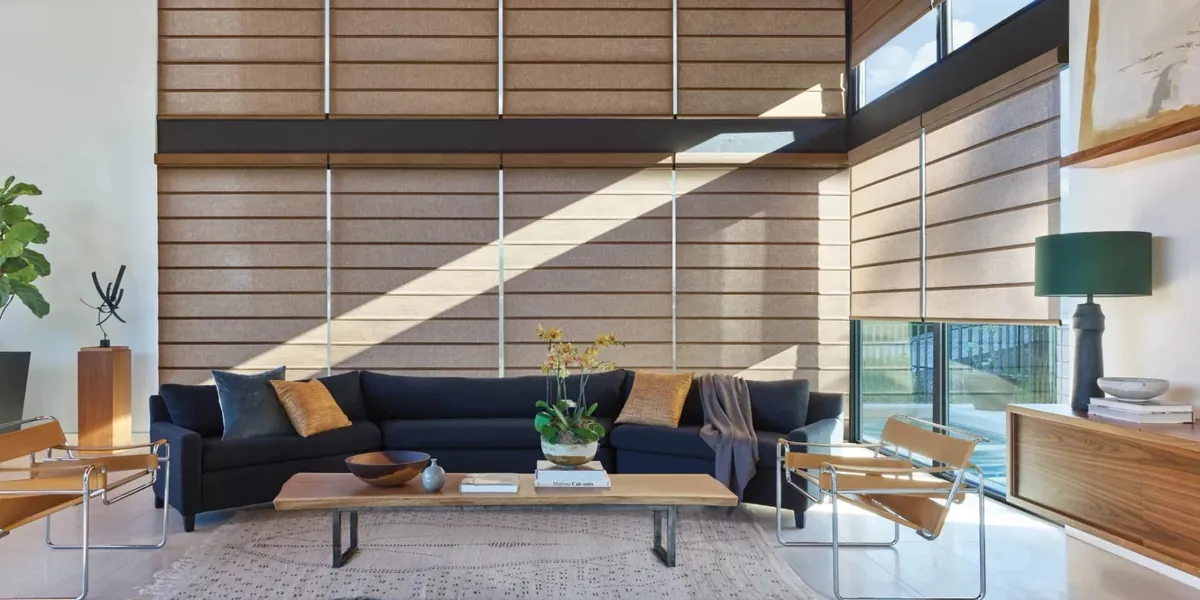
Roller and honeycomb shades stack into a slim band at the top of the window, so a raised shade leaves nearly all the glass clear. Sheer shades let you see out through the fabric even when they are down. Screen fabrics are made to block glare and heat while keeping the scene outside in focus, in a range of weaves from more open to more closed. And a top-down, bottom-up shade can drop from the top to cut a high sun while leaving the lower half of the window, and the view from your chair, completely open.
We hold samples up at your windows, at the time of day that gives you trouble if possible, so you can see exactly how much of the view each fabric keeps.
Privacy without neighbors
Privacy is less of a worry on a big lot, but it never goes away completely. A house set close to a back road, a bedroom facing the driveway, a bathroom window at the front: each still needs covering at the right times.
A dusk schedule closes the rooms that face the road as the lamps come on. A top-down shade gives a bedroom light from above with the lower glass covered. And because the shades move on their own, the house never sits lit up and open after dark simply because nobody got round to closing it.
Choosing blinds or shades
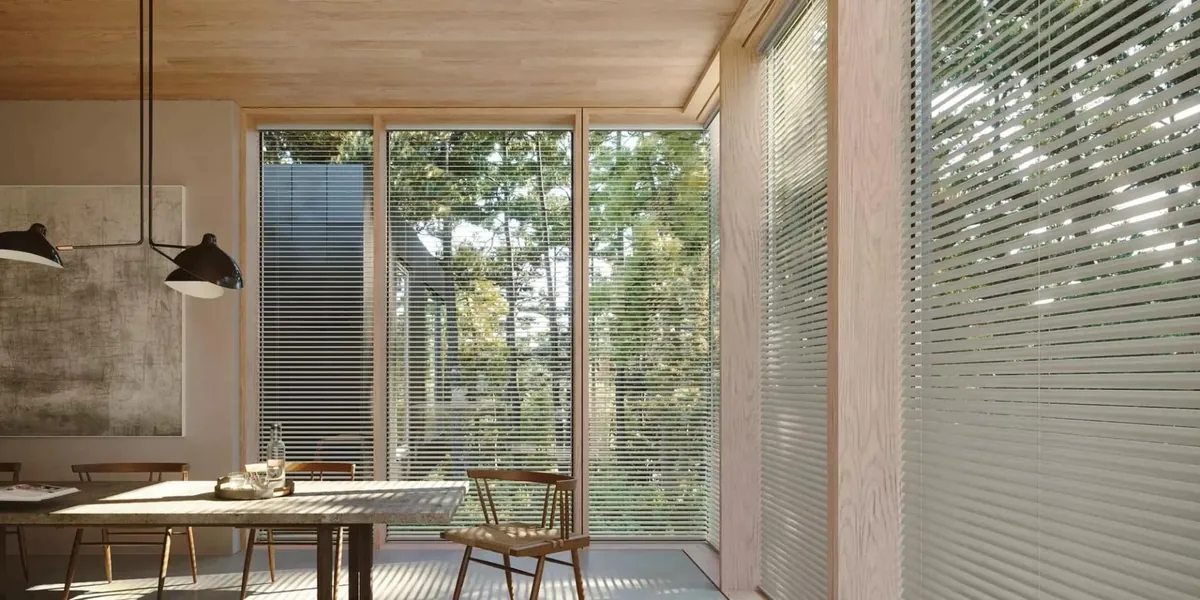
Requests for motorized blinds in Carver often turn into a mix of blinds and shades once we look at the windows together. Slatted blinds tilt to steer the light, sending it up toward the ceiling while blocking the direct sun, which is handy on a west window in the late afternoon. Wood and faux wood suit a den or a dining room, and metal blinds give a clean, modern line. Not every blind range takes a motor at every size, so if you want a motorized blind on a certain window, let us know early and we will check it in person.
Fabric shades handle the rest: honeycomb where a room needs warmth or darkness, rollers and screens on the big view windows, sheers where a living room wants soft daylight. All of it, blinds included, sits in one app.
Running the system day to day
Three tools control a PowerView shade, and you can mix them freely.
The remote is the one you reach for. It can move a single shade, a room or several rooms, and it mounts on the wall if you prefer it there. In a cape with a few motorized rooms, one remote downstairs and one upstairs is usually enough.
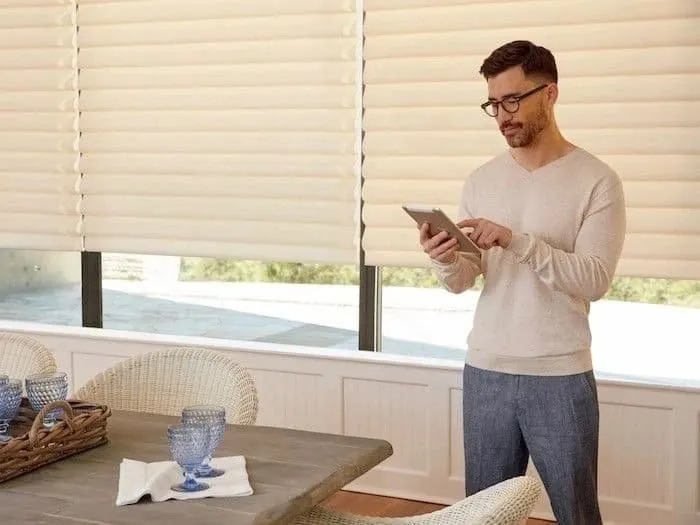
The app shows every motorized window on your phone or tablet. Group them by room or by side of the house, move one a little, and save scenes such as “west windows half down” or “bedrooms dark”. In a house with sun from several directions, grouping by side is often the most useful.
Schedules run those scenes by the clock or by sunrise and sunset. They are what keeps up with the moving sun for you. For the plain-English version, see how motorized shades are controlled; for timers and scenes in more depth, read about window covering automation.
Powering the motors
Every PowerView motor draws power from somewhere, and a cape dormer, a ranch picture window and a colonial foyer may each be handled differently. It comes down to the shade style, the frame and the construction behind the wall. Standing at each window with you, we work out how its motor will be powered, and you sign off on that plan before the order goes in.
What to expect, start to finish
- Ask for a visit using Request a Consultation or the call button, then choose a day.
- Fabric samples come with us in the van, and you try them at the windows that bother you most.
- Together we go round the outside walls in our heads: which side catches the sun at breakfast, at lunch, at supper.
- Each opening is measured across and down, and we note the frame depth for an inside fit.
- You pick the windows to motorize, decide whether they group by room or by side of the house, and agree how each motor is powered.
- A free estimate follows, with no rush to decide.
- Once the shades are made, certified Hunter Douglas installers hang them, set where each stops, link everything to remote and app, and program schedules that track the sun.
The guide to what happens at an in-home consultation goes into the first visit in more detail.
A note on motorized blinds in Carver for workshops and offices
Big lots often carry more than a house: a home office over the garage, a studio, a converted barn. Those buildings tend to have plain, practical windows and harsh light, and they are easy to forget when you are at the main house. Motorized blinds in Carver, MA, can cover them too, on the same app and schedules, so the studio closes up at dusk with the rest of the property and the office shades drop when the afternoon sun hits the screen.
Gallery dealer status and certified installers
Hunter Douglas recognises dealers who meet its standards as Gallery dealers, and Blinds & Designs is one of them. On a motorized order that opens up every PowerView shade: honeycomb, sheer, roller, screen, banded and Roman, along with a number of blinds. With sun hitting different walls at different hours, a Carver house rarely suits one product throughout, and we are free to choose.
Hunter Douglas certifies the people who fit our shades, and setting up motors and schedules is part of that fitting. If a room needs rethinking as a whole, our interior design consultations can help.
For other rooms, see cellular shades in Carver, roller shades in Carver and custom blinds in Carver, or everything we do on the Carver page. Every PowerView option is laid out on the motorized blinds and shades page.
Our nearest showroom
The Sagamore showroom is our closest location to Carver, toward the canal. You are welcome to call in and talk over your plans.
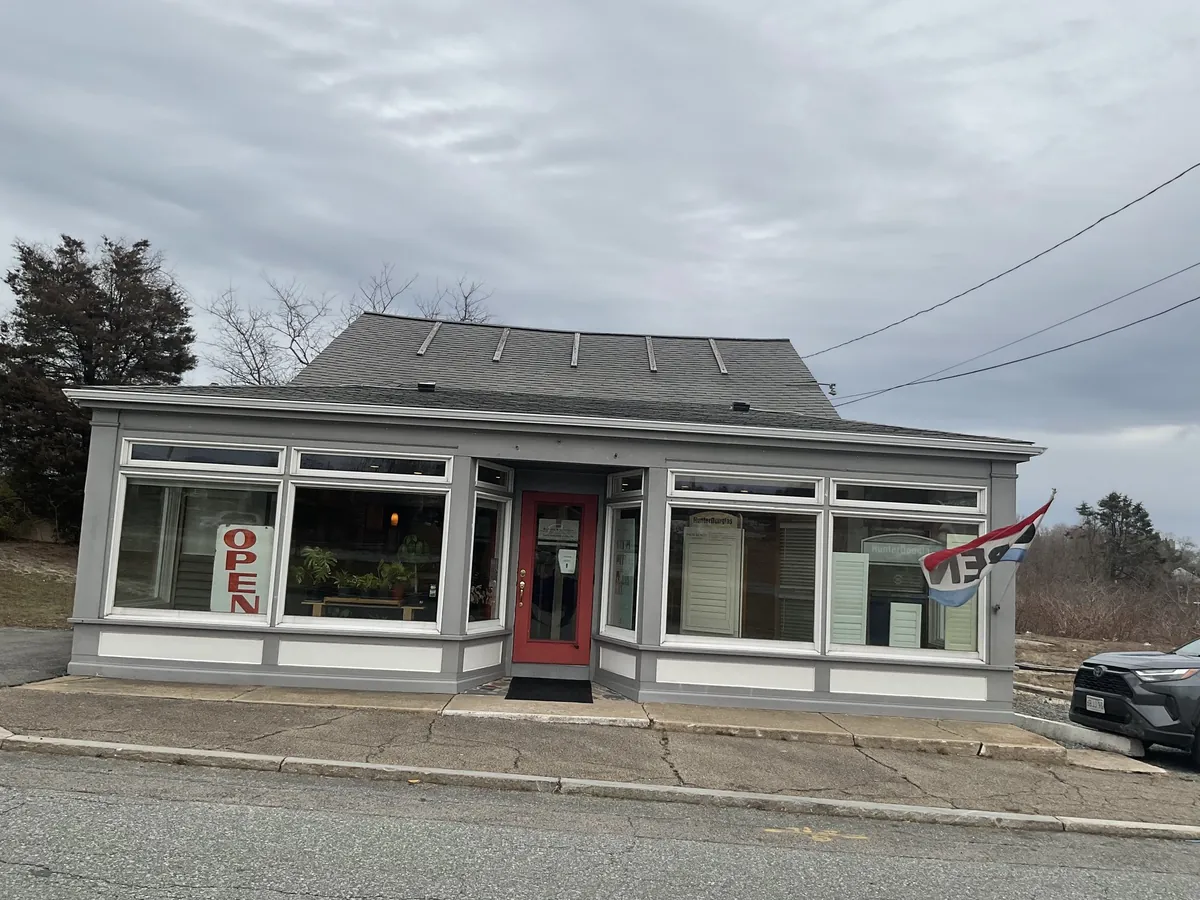
Still, motorized blinds in Carver, MA, are easiest to plan at the house itself, where we can see which way each room faces and how far the view runs. We bring the samples to you.
Questions from Carver
My rooms get sun from several sides. Can motorized shades keep up?
Yes. Each side of the house can have its own schedule, linked to the clock or to sunrise and sunset, so the shades follow the sun round without anyone touching them.
Will shades hide the view across the bogs?
Not if you choose well. Roller and honeycomb shades stack small when raised, sheers let you see out when lowered, and screen fabrics cut glare while keeping the view in focus.
Are motorized shades worth it for a ranch picture window?
Usually. Splitting a wide window into several shades on one motor group means they move together and stop level, and a schedule can shade the room through the brightest hours.
Can the tall windows in my colonial be motorized?
They can, and they are among the most common reasons to choose PowerView. High windows join the same groups and schedules as everything below them.
Does the estimate cost anything?
No. We take the measurements at your house, and the estimate we send afterward is free.
Let us come to you
Open land and sun from every side make each house a little different, so the plan begins at your windows. Request a consultation and we will arrive with fabrics, watch how the light falls in your rooms, measure each opening and send a free estimate. Want to ask a question first? Tap the call button, or stop by the Sagamore showroom.