
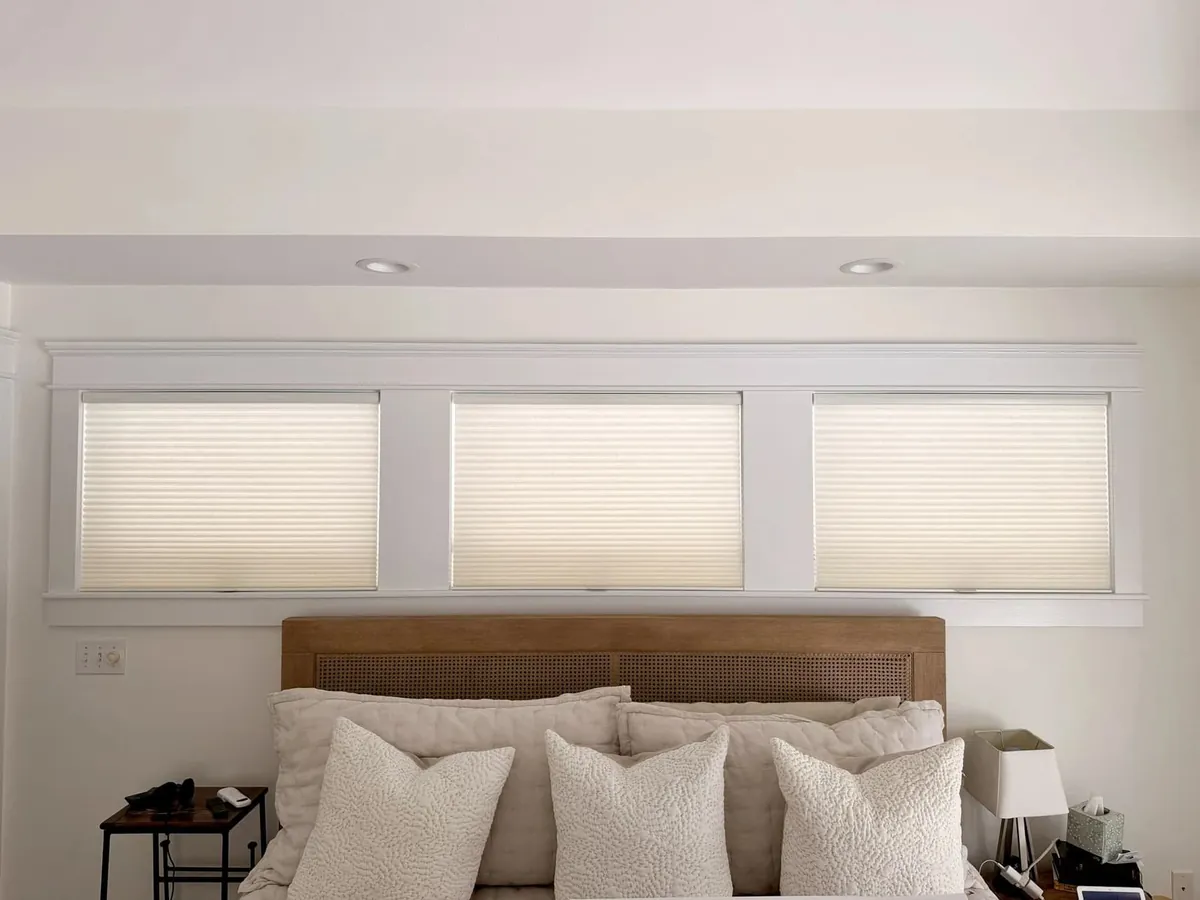
Three kinds of house, one town
Braintree’s housing comes in layers. Capes and colonials fill the streets around Braintree Highlands. Further out, newer subdivisions add larger colonials with more rooms and more glass. Close to the square, older two-families hold two households under one roof. Across all three, the openings are mostly standard modern sizes, and the houses sit back from the road on real setbacks.
That combination makes choosing window treatments in Braintree, MA, refreshingly practical. Square, standard frames mean almost every product fits well. Distance from the street means many front rooms can be planned for light and looks first, with privacy coming second. The real work is matching each room’s covering to what that room is for.
So that is how we approach it: one room at a time, with samples at the window, until the whole house has a plan.
Services available in Braintree
Here are the window treatments in Braintree we offer. Each card links to its own page for the town.
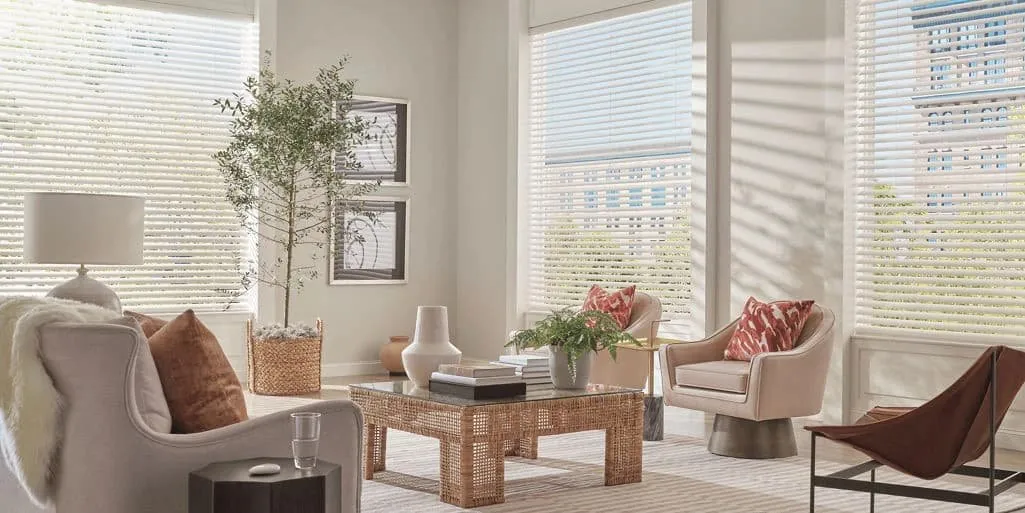
Custom Blinds in Braintree
Blinds made to measure in wood, faux wood and metal, with verticals for doors. Slats tilt for exact control of light.
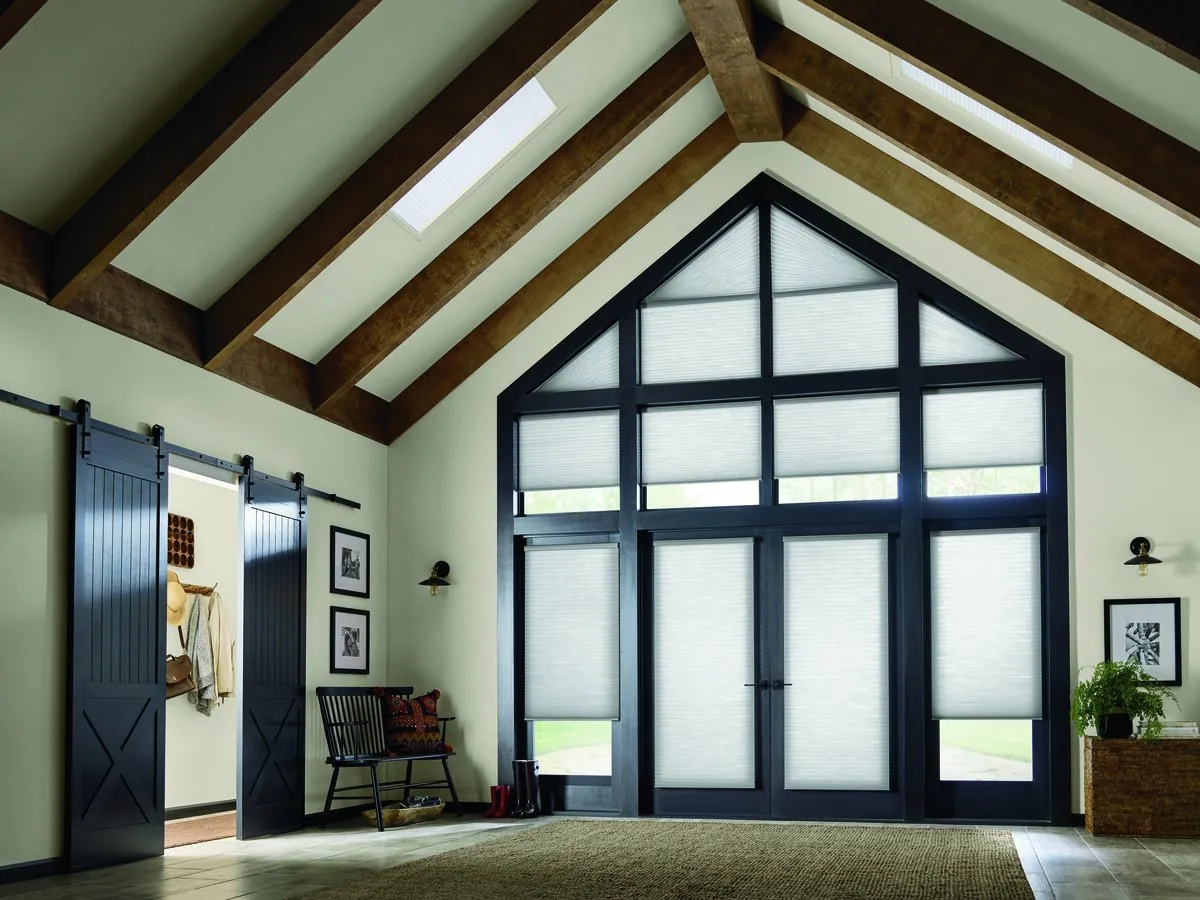
Cellular Shades in Braintree
Duette and Applause honeycomb fabrics, light-filtering or room-darkening, for every standard opening in the house.
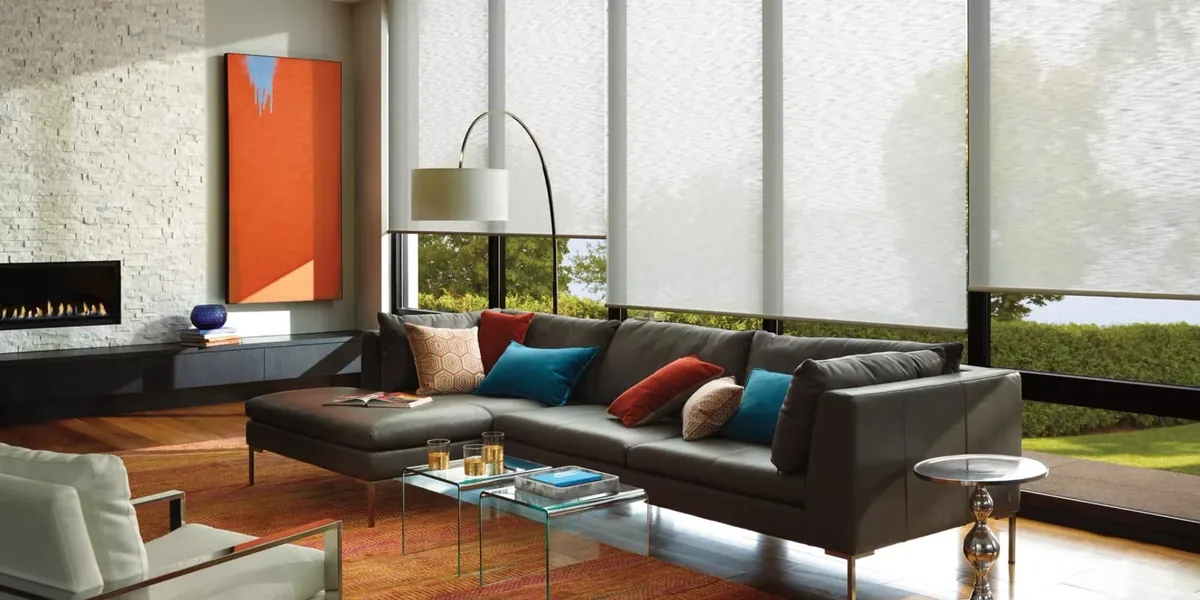
Roller Shades in Braintree
Designer and Alustra rollers plus solar screens, where the weave’s openness sets how much view and glare come through.
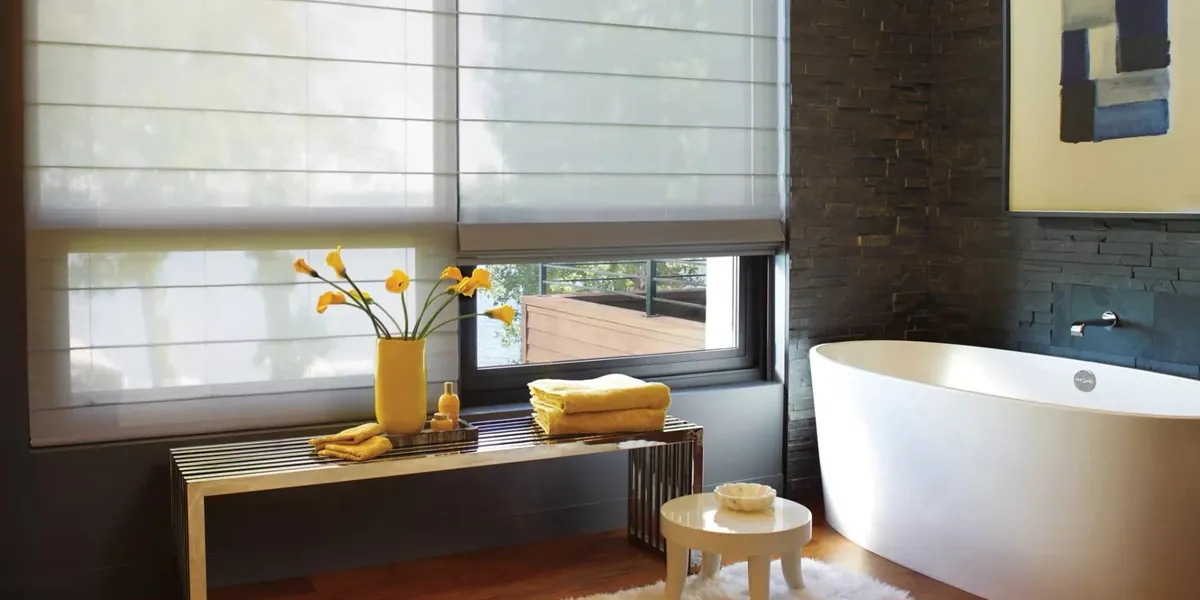
Roman Shades in Braintree
Vignette and Carole fabric shades with flat or soft folds, from a primary bath to a colonial’s front room.
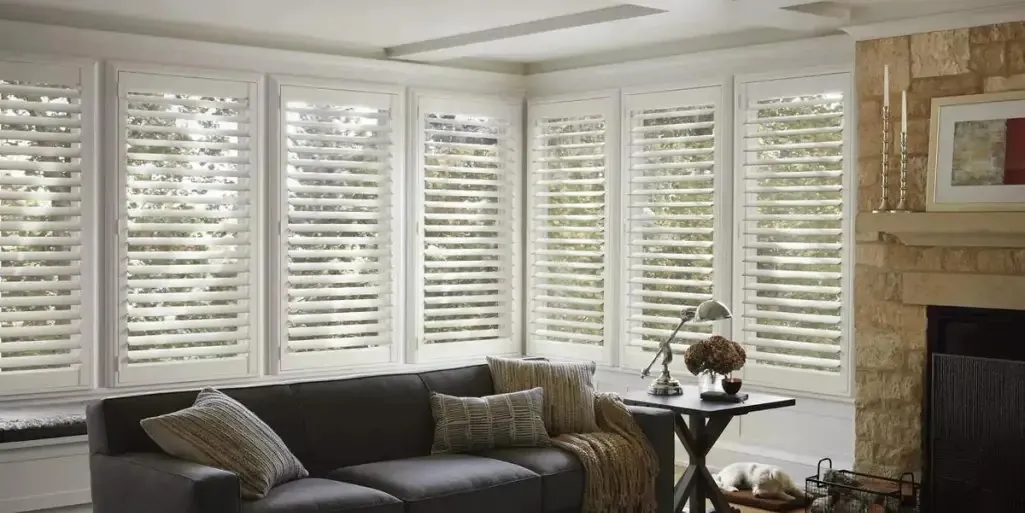
Plantation Shutters in Braintree
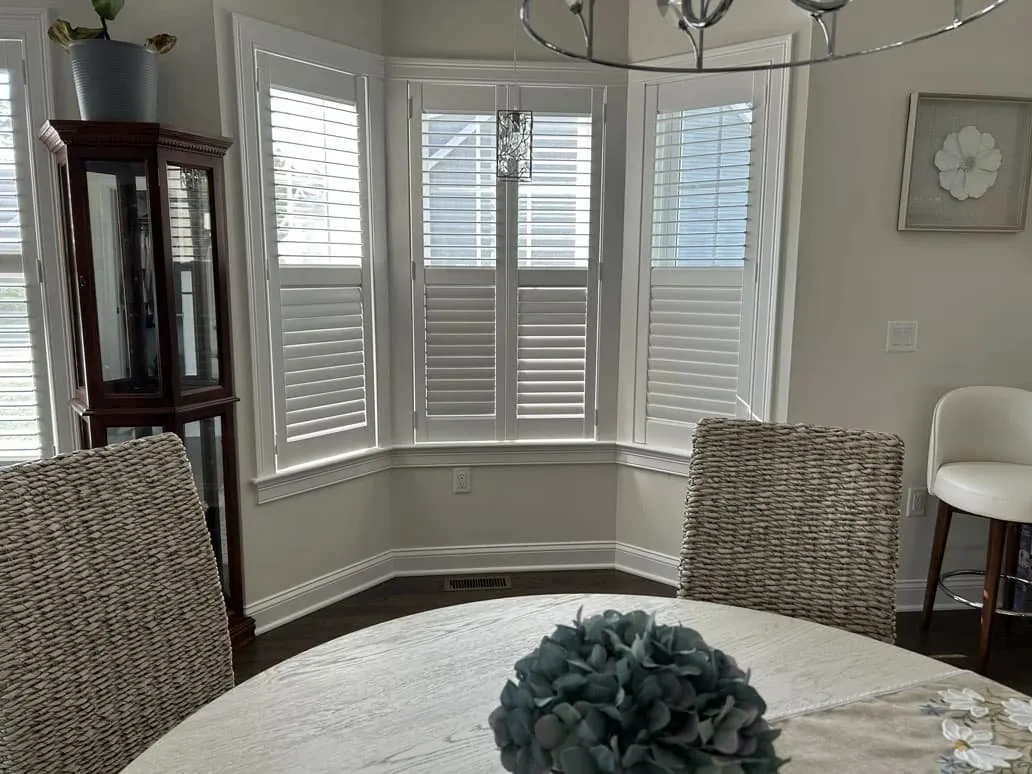
Palm Beach, NewStyle and Heritance shutters, chosen by louver width and frame for each room.
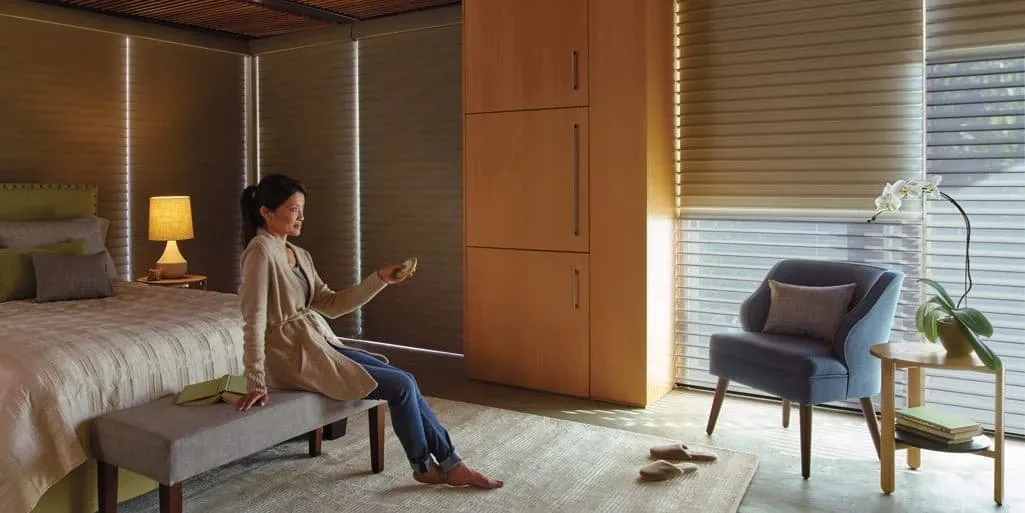
Motorized Blinds and Shades in Braintree
PowerView motorization with remote, app and scheduled control for a family room, a bedroom or the whole house.
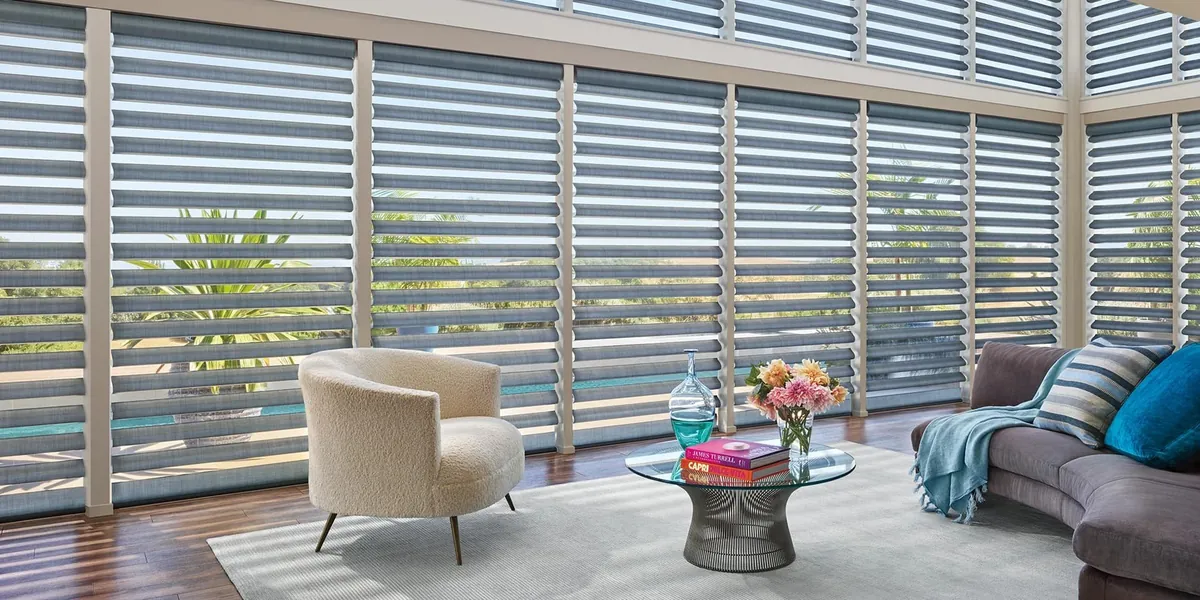
Hunter Douglas Dealer in Braintree
We are a Hunter Douglas Gallery dealer, so the entire line is open to you, installed by certified Hunter Douglas installers.
Setbacks change the question
When a house sits well back from the road, the front windows are not on show in the same way as a house near the sidewalk. Nobody is a few steps from your living room glass. That frees you to choose window treatments in Braintree front rooms for daylight, for the view out and for how they look inside, and to leave them open for most of the day.
It does not remove privacy altogether. Bedrooms and baths still need it, and so does any side window that faces the house next door. Evenings matter too: once the lamps are on, a lit room shows from the street even at a distance, so most front rooms want something that closes fully after dark.
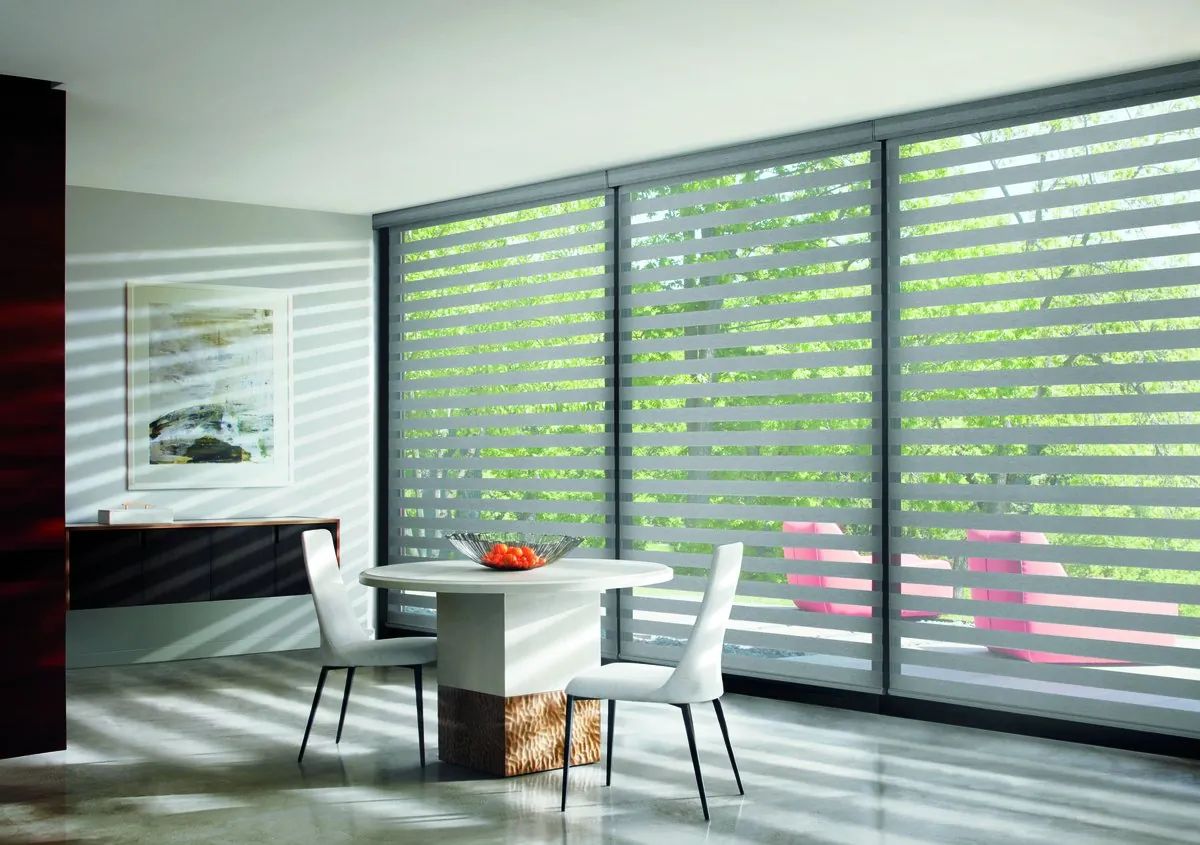
A useful way to think about it is daytime and nighttime coverings. In daytime, the front of a set-back house can be open or lightly filtered. At night, everything facing the road closes. Sheer shadings, light-filtering honeycomb shades and shutters all handle both jobs from one product, which keeps each window simple.
Room by room in a Braintree house
Because the openings are standard, choosing window treatments in Braintree houses comes down to what each room is used for. This is how we usually think it through.
Living room
The room you spend evenings in, often at the front. Shutters give a finished look from the road and close tight at night. Sheer shadings give the softest daylight. A honeycomb shade in a light-filtering fabric is the simplest choice that does both.
Dining room
Light at mealtimes and a sense of occasion. Roman shades in a fabric that picks up the room’s colors work well, as do shutters with wide louvers. Where the dining room opens to the kitchen, matching the two keeps the space calm.
Kitchen
Light, easy reach over a counter, and coverings that stay out of the way. Cafe shutters, faux wood blinds or a simple roller are common picks.
Bedrooms
Darkness for sleep. Room-darkening honeycomb shades or blackout rollers, with the street-facing side kept in the same tone as the rest of the front.
Bathrooms
Privacy with daylight. A top-down, bottom-up shade or cafe shutters cover the lower glass and leave the upper part open.
Family room
Often at the back, often with a television and often with the biggest windows. A roller or solar screen with the right openness keeps glare off the screen while keeping the yard in view.
Following the sun around the house
With trees and neighbors kept at a distance by the setbacks, many Braintree houses get the sun fairly directly, and which way a room faces matters more than anything else about it.
- East-facing rooms catch strong, low light early. Bedrooms on this side want room-darkening fabric; kitchens enjoy the morning sun and may need nothing more than a light filter.
- South-facing rooms have steady light through the middle of the day. A light-filtering honeycomb or a sheer shading keeps them bright without glare on a sofa or a desk.
- West-facing rooms get the hardest sun of the day in late afternoon, straight in at eye level. A solar screen or a light-filtering roller lowered partway is the usual answer, and top-down shades can block the low sun while keeping the upper glass open.
- North-facing rooms have soft, even light all day and can take almost anything, so they are a good place for a deeper color you love.
On a colonial with rooms on all four sides, that can mean three different fabrics in one product family, kept in a single outward color so the house still looks uniform from the road.
Children’s rooms and spare rooms
Bedrooms for younger children need two things above all: darkness for naps and early bedtimes on summer evenings, and nothing dangling. Motorized honeycomb shades and rollers in room-darkening fabric meet both needs, and shutters have no cords at all. Shutters are another sturdy choice that closes tight at night.
Spare bedrooms often double as home offices. There, the window beside or behind the desk is the one to think about: a light-filtering roller or honeycomb lowered just far enough to take the glare off a screen keeps the room bright for working, and a room-darkening fabric in the same color keeps it usable for guests. Choosing one fabric that does both jobs reasonably well is often the simplest route.
Highlands capes and colonials
The capes and colonials around Braintree Highlands are the classic shapes. A colonial has two full floors of matching double-hung windows, usually with a center hall; a cape has its main rooms downstairs and bedrooms under the roof, with windows in dormers or gable ends.
In a colonial, the two rows of matching front windows read as a single composition from the road, so keeping every covering on that face the same color pays off. Upstairs bedrooms then choose their own fabrics, as long as the outward backing matches. In a cape, the dormer windows are short and set into a recess, which suits an inside-mount honeycomb or roller with a slim stack. Kitchen and family room additions at the back, common on both styles, can follow their own plan, because they are not seen from the front.
The newer subdivisions
The subdivisions further out bring newer colonials with larger rooms and more windows: a family room open to the kitchen, a home office, a primary suite, often a slider or French doors to a deck. More rooms with different jobs means more variety in the plan.
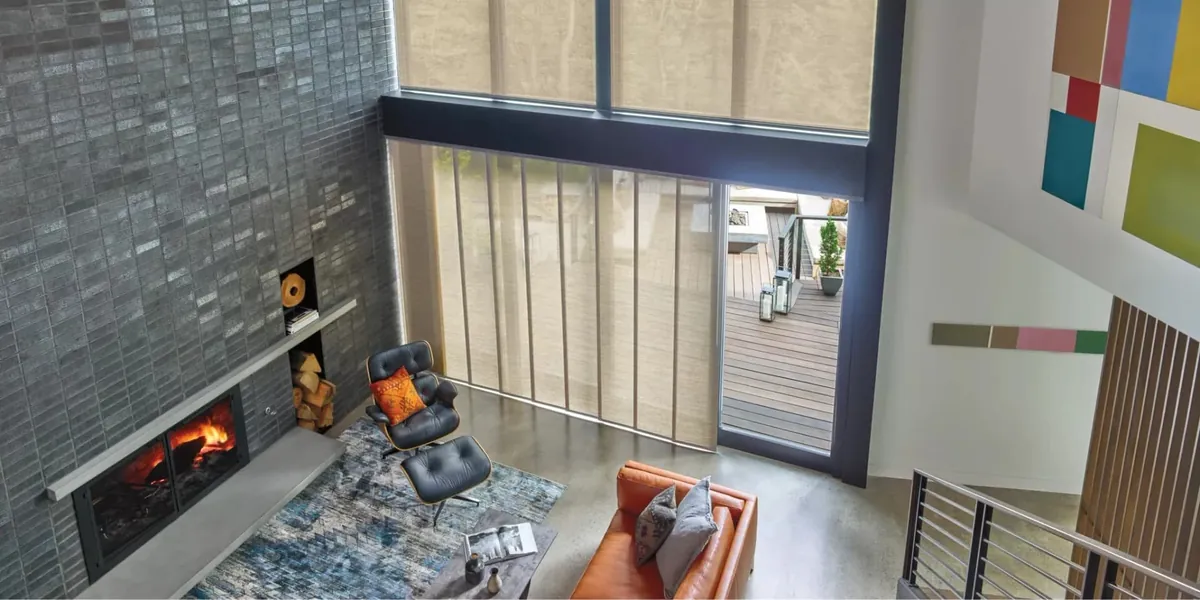
A family room open to the kitchen works best with one product across both spaces, so the big combined room does not look patchy. A home office wants glare control on the window behind or beside the screen, which a light-filtering roller or honeycomb lowered just far enough provides. A primary suite usually wants calm by day and full darkness at night, often from a room-darkening honeycomb or a blackout roller, sometimes with drapery. Doors to the deck take vertical honeycomb shades, vertical blinds or gliding panels that travel to one side.
These larger houses are also where PowerView earns its place, with many windows to manage and some of them hard to reach.
Shades, blinds or shutters?
With standard frames, the first big decision is often which family of product to start from, and each has a character of its own.
Shades, whether honeycomb, roller, roman or sheer, are fabric. They soften a room, come in the widest spread of colors and textures, and raise out of the way to a slim stack. Blinds are slatted, in wood, faux wood or metal, and their strength is control: tilt the slats and you direct light up, down or shut it out, without raising anything. Shutters are fixed to the frame and become part of the room’s trim; the louvers tilt like a blind’s, and the panels swing open to clear the glass entirely.
Many houses end up with a little of each, for good reasons room by room. Our guide on shades or blinds sets out the differences in more depth if you want to read before we visit.
Two-families near the square
Near the square, the older two-families have a different set of needs. Two households share one building, so there are two kitchens, two living rooms and two sets of bedrooms, and each unit may be fitted at a different time.
Window sizes in older buildings can vary more from opening to opening than in a newer house, so we measure each one individually rather than assuming a row matches. From the street the building still reads as one, so it helps to settle a single color for the outward side of every front-facing covering. Inside, each unit can then choose what suits it. Where one unit is rented, the same simple product in both, such as honeycomb shades or faux wood blinds, makes a later replacement easy to match.
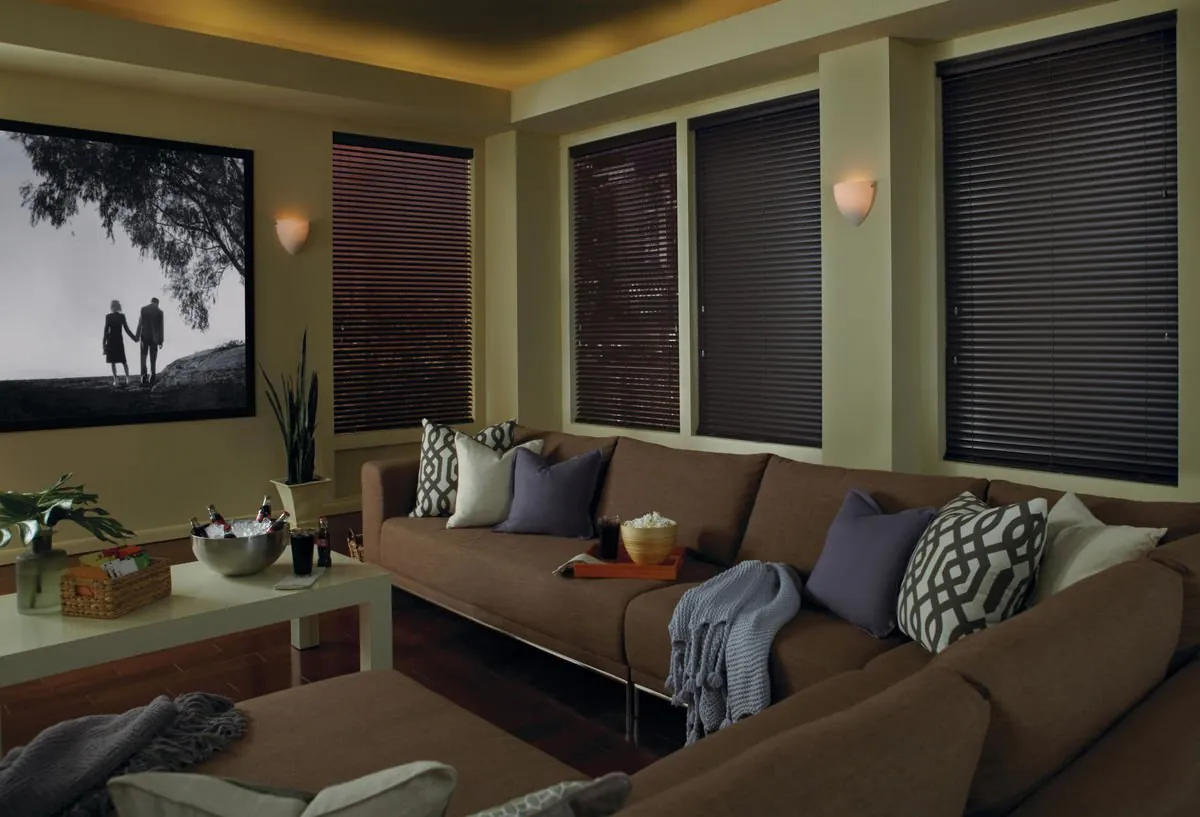
Media rooms and television glare
Many Braintree houses have a room set up around a screen, whether a family room, a finished basement or a den. Glare on the screen is the main complaint in those rooms, and darkness for evening viewing comes a close second.
A solar screen with a low openness factor cuts glare while still letting you see out in daytime. For real darkness, a blackout roller or room-darkening honeycomb does the job, and wood or faux wood blinds closed tight are another option. Where a room is used both for daytime living and evening films, shutters are worth a look: louvers tilted for daylight, then closed tight when the film starts.
Keeping the outside consistent
From the road, a house shows every front window at once. A mix of colors and styles across those windows looks untidy even when each room looks right from inside. The simple rule is one outward color across the front of the house: white, ivory or a soft neutral works with almost any siding. Shutters on the front windows give a strong, finished look, and honeycomb or roller shades with a neutral backing are almost invisible from the street.
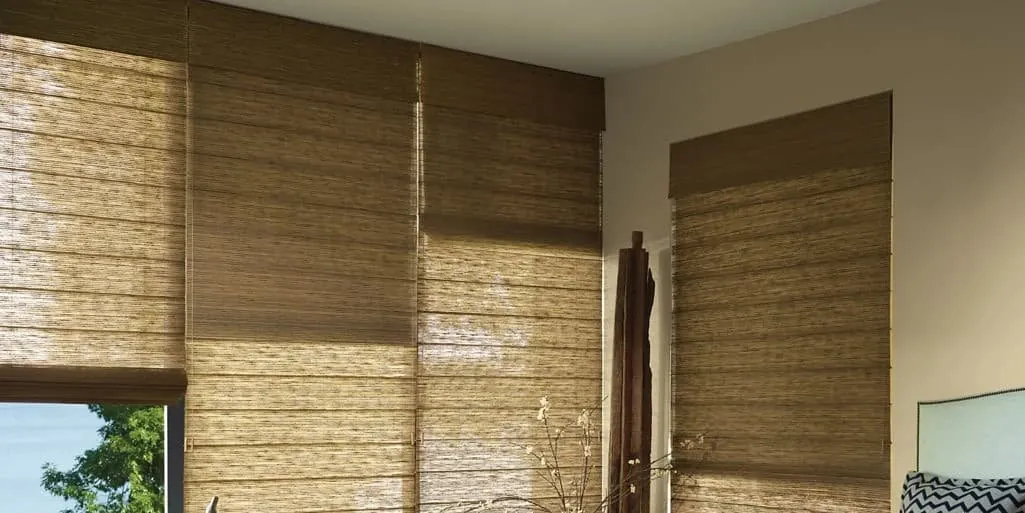
The sides and back are freer. A colorful roman shade in a back kitchen, a woven shade in a sunroom or a banded shade in a family room will never clash with the front.
The consultation, step by step
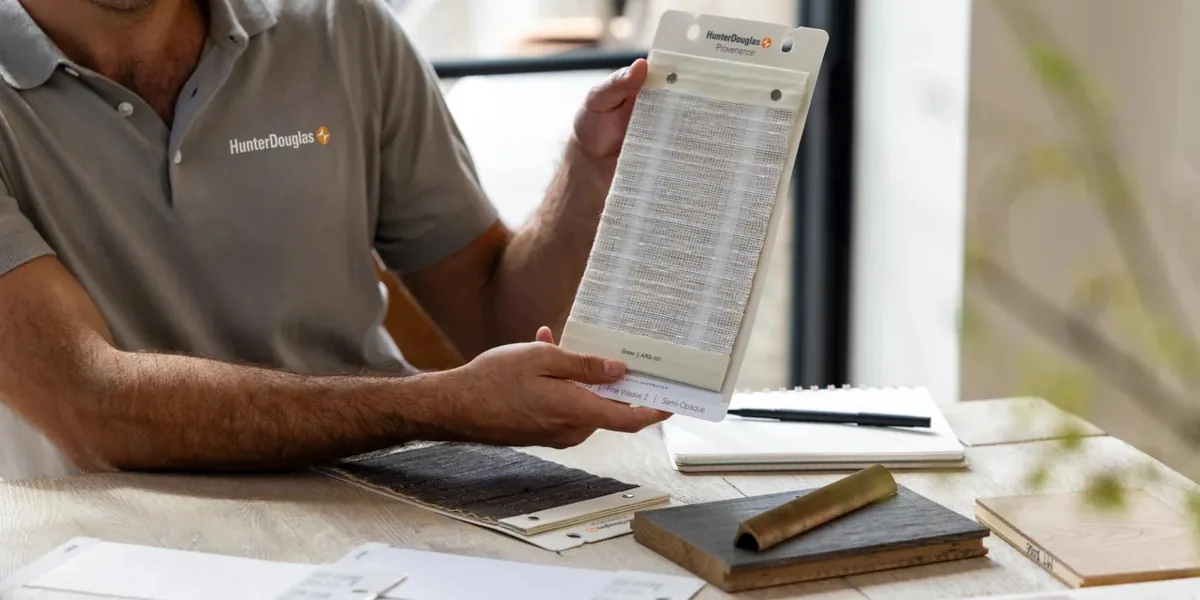
Standard openings make the measuring quick, but seeing fabrics in your own light still makes the decision. Our shop-at-home service is based in Canton, which has no store to visit, so the consultation always takes place in your house, with sample-laden vans that bring the showroom to you.
- Book online through Request a Consultation, or press the call button.
- The consultant brings the range in sample form: fabrics, slats, shutter pieces and a PowerView remote.
- We talk through each room’s purpose, using the room-by-room approach above.
- Fabrics are tried at the glass so you see each one in the light the room actually gets.
- Every opening is measured, including doors and any window that differs from the rest.
- You receive a free estimate, with no rush to decide.
More detail is on the Canton shop-at-home page, and the free estimates page explains what the estimate covers.
Automation for bigger houses
In a colonial with a dozen or more windows, PowerView saves a lot of walking. Shades are grouped by room, floor or side of the house and run from a remote, a phone app or schedules you set, so the bedrooms open together in the morning and the front of the house closes together in the evening. Tall family room windows and any shade behind furniture are natural candidates. Powering each motor is something we work out with you at the visit. The motorized blinds and shades in Braintree page has more.
When an existing blind just needs fixing
Not every problem needs new coverings. A blind with a snapped cord, a shade that will not stay up or a shutter louver that has come loose can often be mended. Bring it to our attention at the visit, or ask on its own; we are happy to look at window coverings you already own. See blind and shade repair.
Why a Gallery dealer matters here
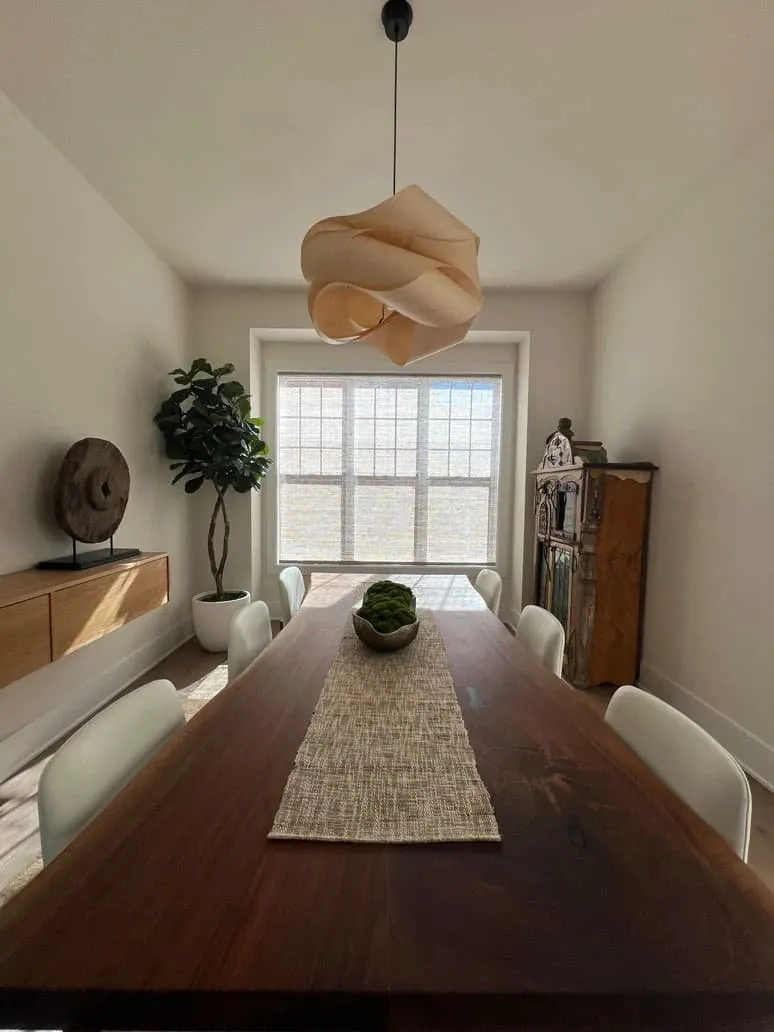
A Hunter Douglas Gallery dealer has access to the brand’s whole range, and Blinds & Designs holds that status. For a Highlands cape, a subdivision colonial or a two-family by the square, that means honeycomb, roller, roman, sheer and woven shades, blinds in several materials, shutters, drapery and PowerView, all from one place.
Installation is carried out by certified Hunter Douglas installers. Free estimates, interior design consultations, automation and repairs complete what we offer, and the window treatments in Braintree, MA, that we plan with you are fitted by the same people who measured them.
Questions from Braintree
My house is set well back from the road. Do I still need privacy coverings on the front?
Mostly for evenings and bedrooms. In daytime a set-back house can often leave its front rooms open or lightly filtered, but a lit room shows from the road after dark, so something that closes fully is still worth having.
What should go in a family room with a television?
A solar screen with a low openness factor cuts glare while keeping a view out. For evening viewing, a blackout roller, a room-darkening honeycomb or closed shutters give real darkness.
Should every room in my colonial have the same product?
Not necessarily. Many owners keep one product and color across the front for a consistent look from the road, then choose by room inside and at the back.
We own a two-family. Can the two units be done at different times?
Yes. Note the fabric and color chosen for the first unit, and the second can match it whenever it is done.
How much does an estimate cost?
It is free. We measure, put the estimate together and leave it with you to consider.
Ready to plan your rooms
Whether you live in the Highlands, out in a newer subdivision or near the square, the first step is the same, and it can cover one awkward room or every window in the house. Request a consultation and we will come to the house with samples, measure each opening and leave a free estimate. For a question first, the call button reaches us, and if you would like to see a showroom too, Franklin is our closest.
Every product line we offer is gathered on our window treatments page.