
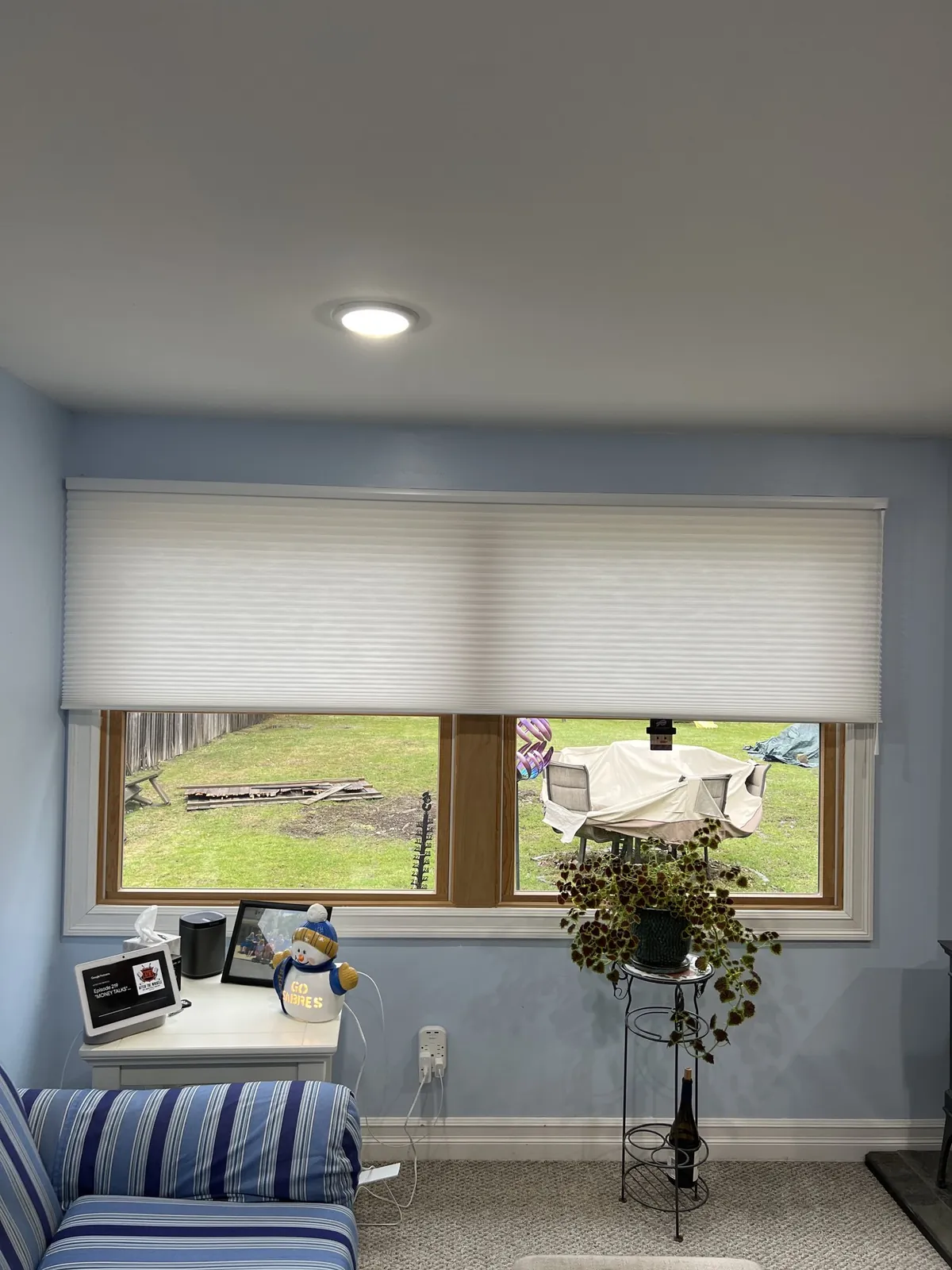
Close streets, tall windows and a cold pane of glass
Much of Brockton was built tight. Victorians and two- and three-family houses stand shoulder to shoulder along the older streets, with front windows a short walk from the sidewalk and side windows facing the house next door. Inside, the ceilings are high and the double-hung windows are tall and narrow. Out toward the edges of the city the picture changes to post-war ranches with lower rooflines and wider glass. When we plan cellular shades in Brockton, MA, those two kinds of house set almost every question we ask.
On the close-set streets, privacy at street level comes first. A front parlor on the first floor can feel like a shop window once the lamps go on, and a bedroom on the side of a three-family may sit level with a neighbor’s kitchen. Warmth is the second need. Tall old windows hold a lot of glass, and a lot of glass means a cold edge to the room every winter.
A honeycomb shade answers both at once. The fabric covers the opening from side to side, and the pockets inside it hold a layer of air between the pane and the room. Still air is slow to pass heat along, which is why Duette and Applause shades are the warmest choice we offer for a cold room.
Three ways we use cellular shades in Brockton, MA
These three come up again and again in Brockton houses. Samples of each ride along in the van.
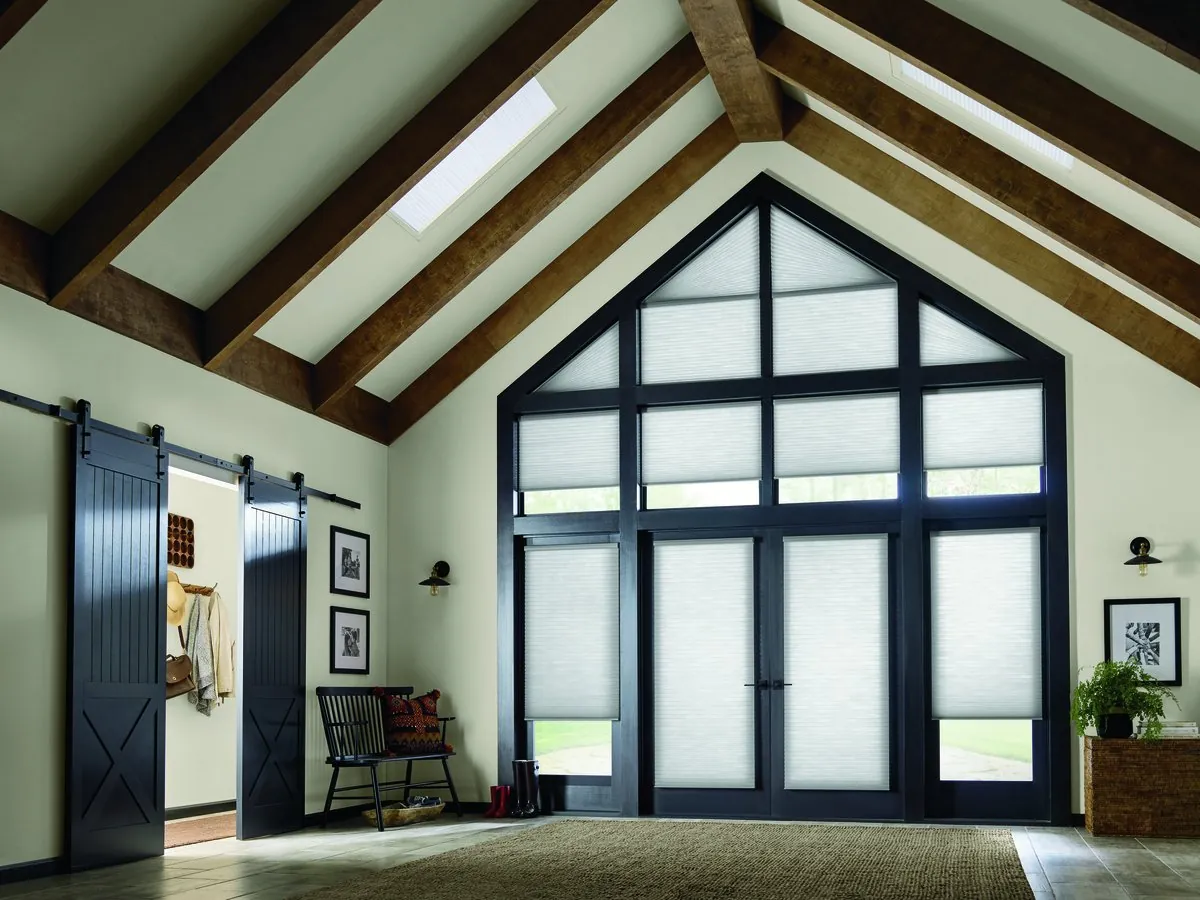
Duette honeycomb shades
The larger of the two Hunter Douglas honeycomb collections. Slim, tall sash under a high ceiling is exactly the kind of window it handles well.
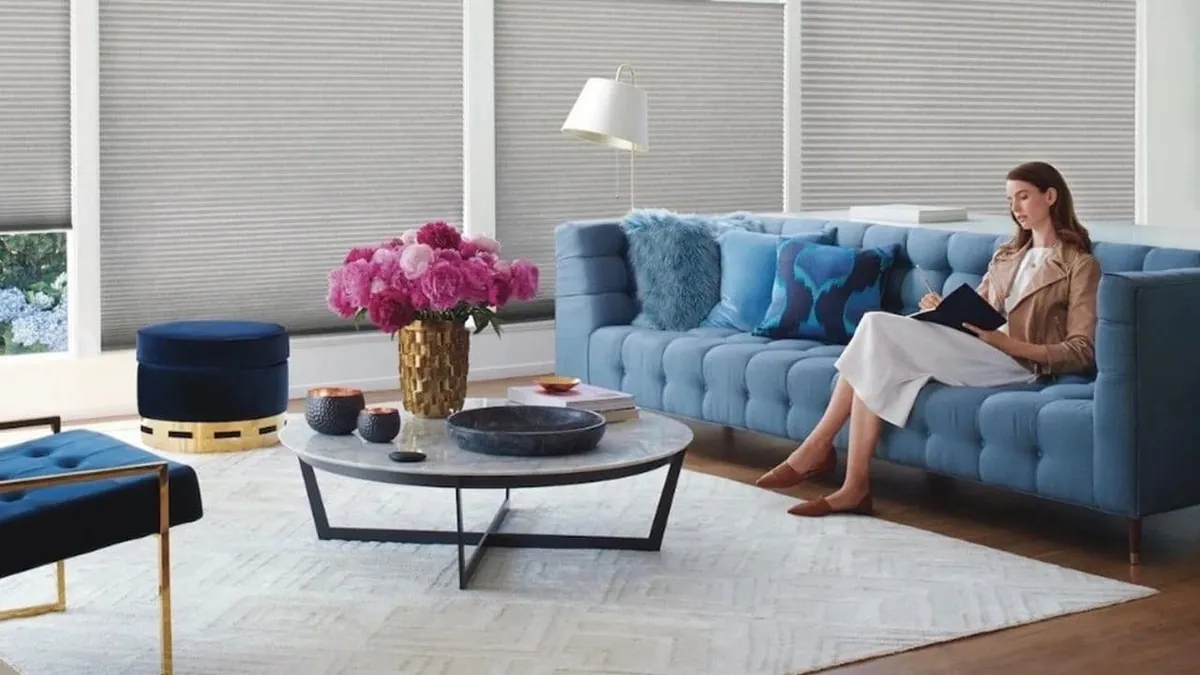
Applause honeycomb shades
A separate Hunter Douglas honeycomb family with a palette of its own. Handy when a whole floor of a two-family is being done in one go.
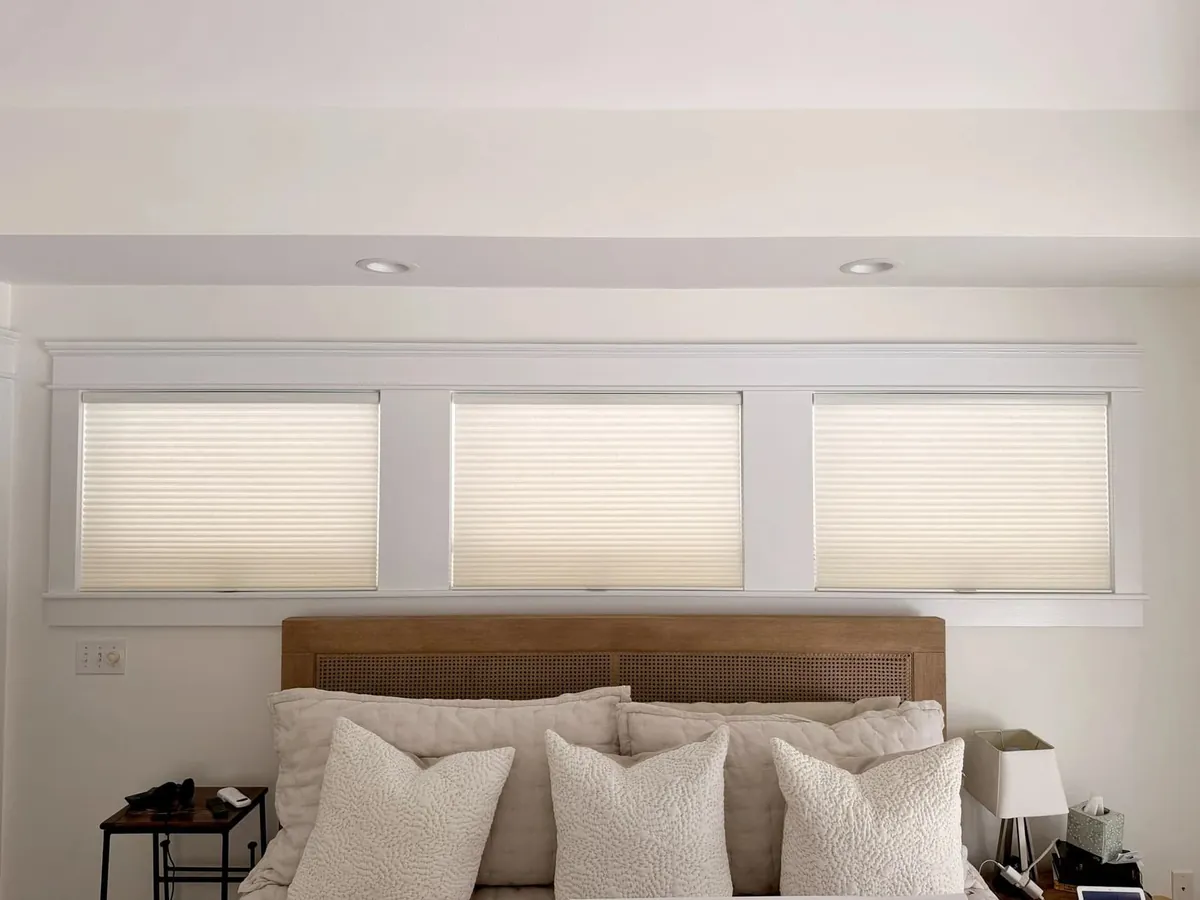
Darker fabrics for bedrooms
A bedroom facing a streetlight or a busy corner sleeps better behind a fabric that stops the glow. The pockets hold air just the same.
Privacy on a street where the houses almost touch
In a dense neighborhood the first thing to sort out is who can see in. On the older Brockton streets that question has three parts: the front windows that face the sidewalk, the side windows that face the next house across a narrow driveway, and the back windows that look onto other back windows over small yards.
During the day a lighter honeycomb fabric does most of the work. Sunlight hits the outside of the shade and the fabric glows, so what is inside turns to a soft blur from the street while daylight still fills the room. A first-floor parlor can keep its shades down from morning to dusk without feeling closed in.
Evening is different. Once the lights inside are brighter than the street outside, a lighter fabric shows more. Rooms that are used after dark, like a living room or a bedroom on the street side, often need a heavier fabric than the rooms you mostly use in daylight. We bring both kinds so you can judge the difference at the glass itself, not on a chart.
How the shade is mounted matters for privacy too. A shade that sits inside the opening leaves a thin line of light at each side. On most windows that is fine. On a bedroom window that faces a neighbor’s porch light, an outside mount that overlaps the trim closes that gap. We point out which windows need which during the walk-through.
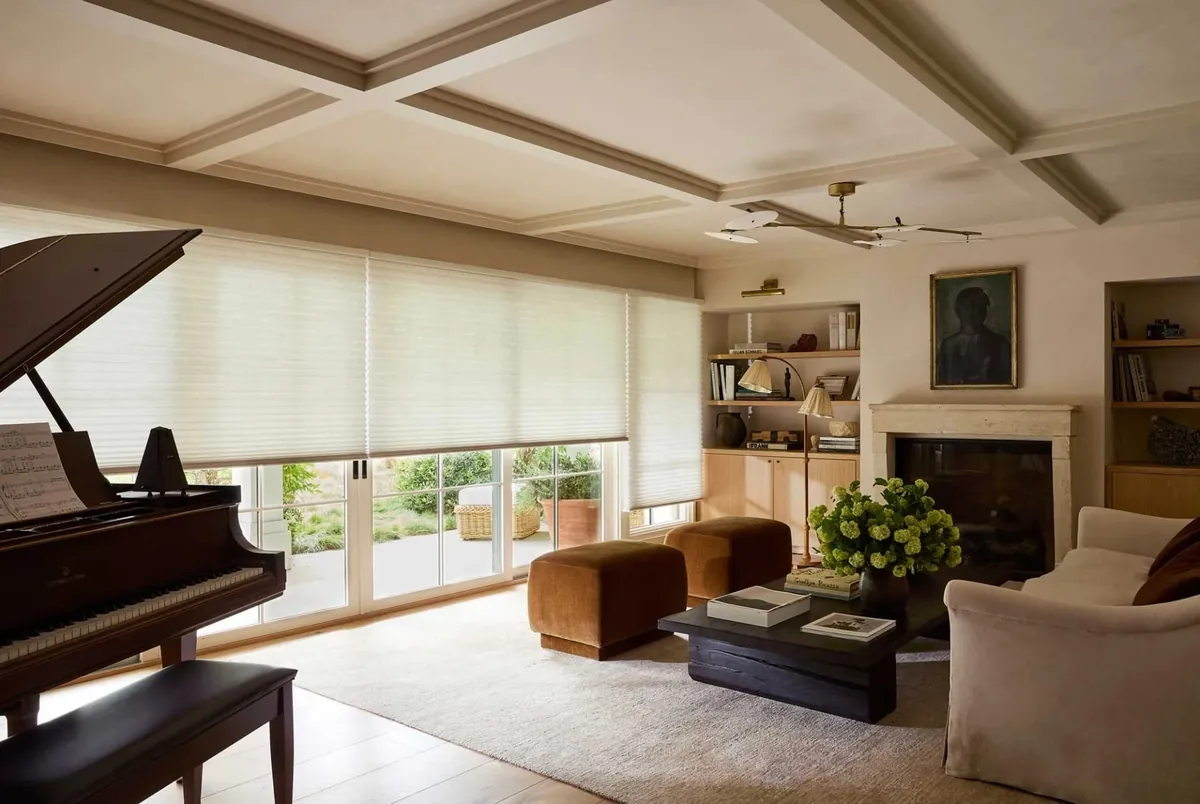
Two- and three-family houses, floor by floor
Brockton has a large share of two- and three-family houses, and they come with their own set of window questions. Each floor tends to repeat the one below: the same front bay, the same side windows, the same back porch. But each floor lives differently. The top unit gets more sky and less traffic noise. The first floor sits closest to the sidewalk and usually has the most to think about for privacy.
If you own the whole building, it often makes sense to keep the color that faces the street the same on every floor, usually a white or a light neutral, so the front of the house looks tidy from the road. The color that faces into each unit can still be whatever suits that floor. If you own or rent one unit, we simply plan your floor, and the other floors can match it later by choosing the same street-facing color.
Back porches are worth a mention. Many of these houses have stacked porches, and some have been closed in with glass on three sides. An enclosed porch like that is often the coldest room in the unit in January and the hottest in July. A honeycomb shade on each of those openings turns it into a room you can use for more of the year.
High ceilings and the tall sash that comes with them
The Victorians on the older streets were built with tall ceilings, and their windows were sized to match. A double-hung window that rises well above head height brings in plenty of light, but it also brings two problems: a lot of cold glass, and a top rail you cannot easily reach.
Honeycomb shades can be built long and slender, so they suit these openings. Set inside the frame, the shade leaves the original casing and trim on display, and once raised it folds into a compact stack at the head of the opening. Where the frame is too shallow for that, or out of square after a long life, we fix the shade to the face of the casing instead, a little wider than the opening so the edges are covered.
For the tallest windows, motorization is worth a look. PowerView lets you raise and lower a shade from a remote, from an app on your phone, or on a schedule, so a window you can barely reach is no harder to use than any other. We plan how each motor is powered at the visit. Our motorized blinds and shades in Brockton page goes into that side of things in more depth.
Why a honeycomb beats a cold draft
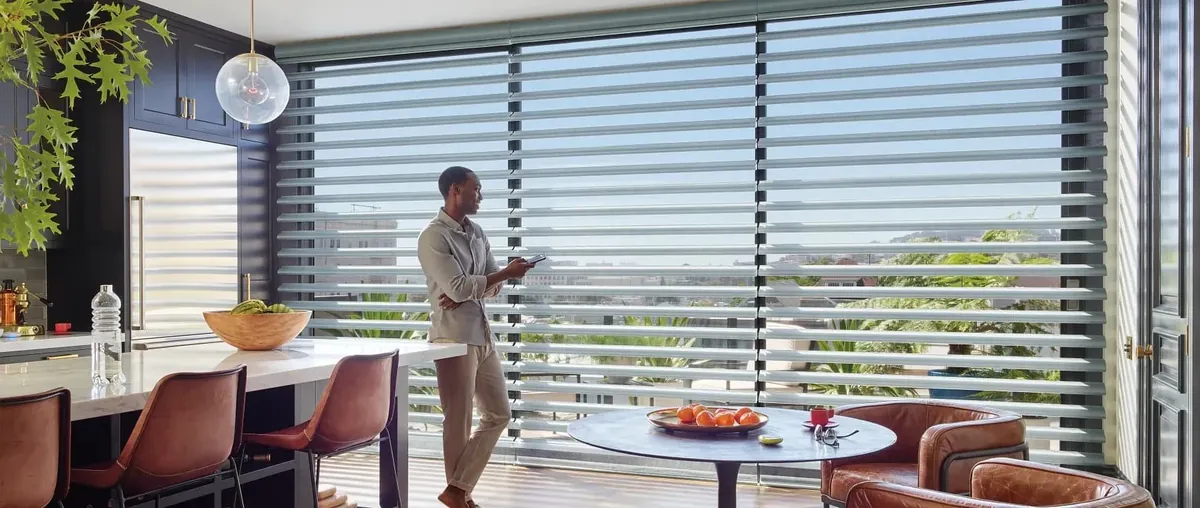
Pinch the bottom rail of a honeycomb shade and look at its edge. Instead of a single layer of cloth, you find a row of six-sided pockets, joined side by side like the comb inside a hive. With the shade down, each pocket is a sealed tube of air stretched across the opening.
Air that cannot circulate is slow to carry heat. So that band of pockets acts as a buffer: warmth from the radiator under the window stays on the room side longer, and the cold that gathers on a single pane through a Brockton January stays on the glass side. Upper floors of a three-family, where the wind catches the house first, are often where the change is most obvious.
Summer runs the same way in reverse. On the sunny side of the house, drop the shades through the hot part of the afternoon and the pockets slow the heat that the glass lets in. Pick a lighter fabric for those rooms and the daylight keeps coming, which matters in a narrow house where the side windows are the only source of light for the middle rooms.
That is why we suggest cellular shades in Brockton, MA, for the coldest rooms first: the bedroom over the porch, the corner living room with glass on two walls, the stair landing with one tall window and no radiator nearby.
Ranches on the outskirts
Away from the dense center, Brockton’s outer neighborhoods hold a lot of post-war ranches. The windows here are lower and wider: a big picture window in the living room, a slider to the back yard, horizontal bedroom windows set high on the wall.
Wide glass loses heat quickly, so a honeycomb shade earns its place here as much as in a Victorian, but the planning is different. A living room window too broad for one shade can be divided into a pair or a trio sharing one headrail, so one end can go up for light while the rest stays down. A slider needs a shade that leaves the door easy to use, and we look at how you come and go through it before suggesting one.
Ranches also tend to sit a little further back from the road, so privacy is less pressing at the front. That frees you to choose lighter fabrics in the main rooms and save the heavier ones for bedrooms.
The high, horizontal bedroom windows common in these ranches are easy to overlook. They sit above the bed or a dresser, they are awkward to reach, and they catch the early light. A honeycomb shade sized to that strip of glass, in a fabric dark enough for sleep, is a small job with cellular shades in Brockton, MA, that changes how the room feels in both January and July.
Picking a line: Duette, Applause or a mix
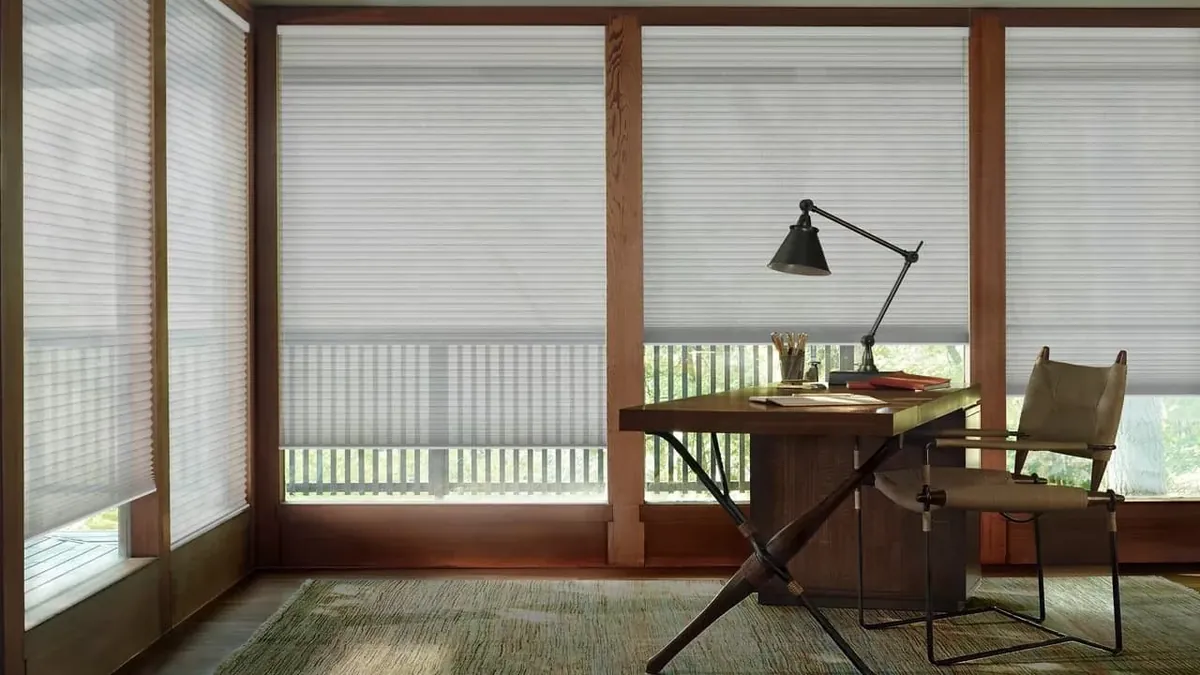
Hunter Douglas makes two honeycomb families, and in a Brockton house the choice between them usually comes down to the room. Duette is the larger collection, with the most fabrics, colors and textures to pick from. Applause is a separate line with a palette all its own. Both rely on the same idea, air held in a cell, so neither is the warmer one by design.
In practice the split often follows the house. The tall parlor windows of a Victorian, where the shade is part of how the room looks, may get Duette in a fabric chosen to sit well against old trim. A kitchen at the back may get Applause. Anyone with a two-family who wants one simple answer for every floor can use one line throughout, and that is perfectly sensible too.
Rather than choose from a brochure, you choose at the window. The swatches go up against the glass in daylight, and you compare them where they will hang. For a wider look at both families, see our main cellular shades page.
The in-home visit, from first call to free estimate
Brockton is served by our shop-at-home team out of Canton, so the consultation happens in your house rather than at a counter. The vans are stocked with samples; in our own words, we can bring the showroom to you. There is more on how that works on our shop-at-home from Canton page. Here is the usual order of things:
- Book through Request a Consultation, or tap the call button, and pick a time that works for your household.
- A consultant comes to the door with a case of honeycomb swatches, light and heavy, pale and deep.
- Together you go room by room, front windows first, since those face the sidewalk, then the cold corners.
- Swatches go up against the glass so you see how each one looks from inside, and how much of the room it hides from outside.
- Every window on your list is measured, and the frame depth is noted for an inside or outside mount.
- A free estimate follows for what you picked. Nobody expects a decision on the doorstep.
Want a hand with the whole room, not just the window? Our interior design consultations cover color, fabric and the furnishings around the glass, and can happen during the same appointment.

Measured for your windows, fitted by certified installers
No two windows in an older Brockton house are quite the same size, even when they match from the sidewalk. Frames settle, sash get replaced one at a time, and trim gets painted over again and again. So every shade is made to the measurements we take at each opening during the visit.
Fitting day is handled by installers who hold Hunter Douglas certification. Each headrail goes up square to the window, each shade is run up and down a few times, and you get a short walk-through so everyone in the house knows how to work them. A shade built to the opening leaves little room for air to slip around its sides, and that tight fit is part of the warmth.
Behind all of it, Blinds & Designs is a Hunter Douglas Gallery dealer, so nothing in the honeycomb collection is out of reach, and neither are the brand’s blinds, shutters, roller and roman shades for the rest of the house. Our page on what happens at an in-home consultation answers the questions people ask before the first visit.
Other rooms, other window coverings
Honeycomb is not right for every opening in the house, and we say so when something else fits better. A kitchen over the sink may suit custom blinds in Brockton. A family room where you want a softer, tailored look may suit roman shades in Brockton. For the tall front windows of a Victorian, plantation shutters in Brockton are another way to handle privacy from the street. Everything we offer in the city is on our Brockton page.
Got an old shade or blind that has stopped behaving? We do blind and shade repairs as well, so mention it while we are there.
Where to see the shades in person
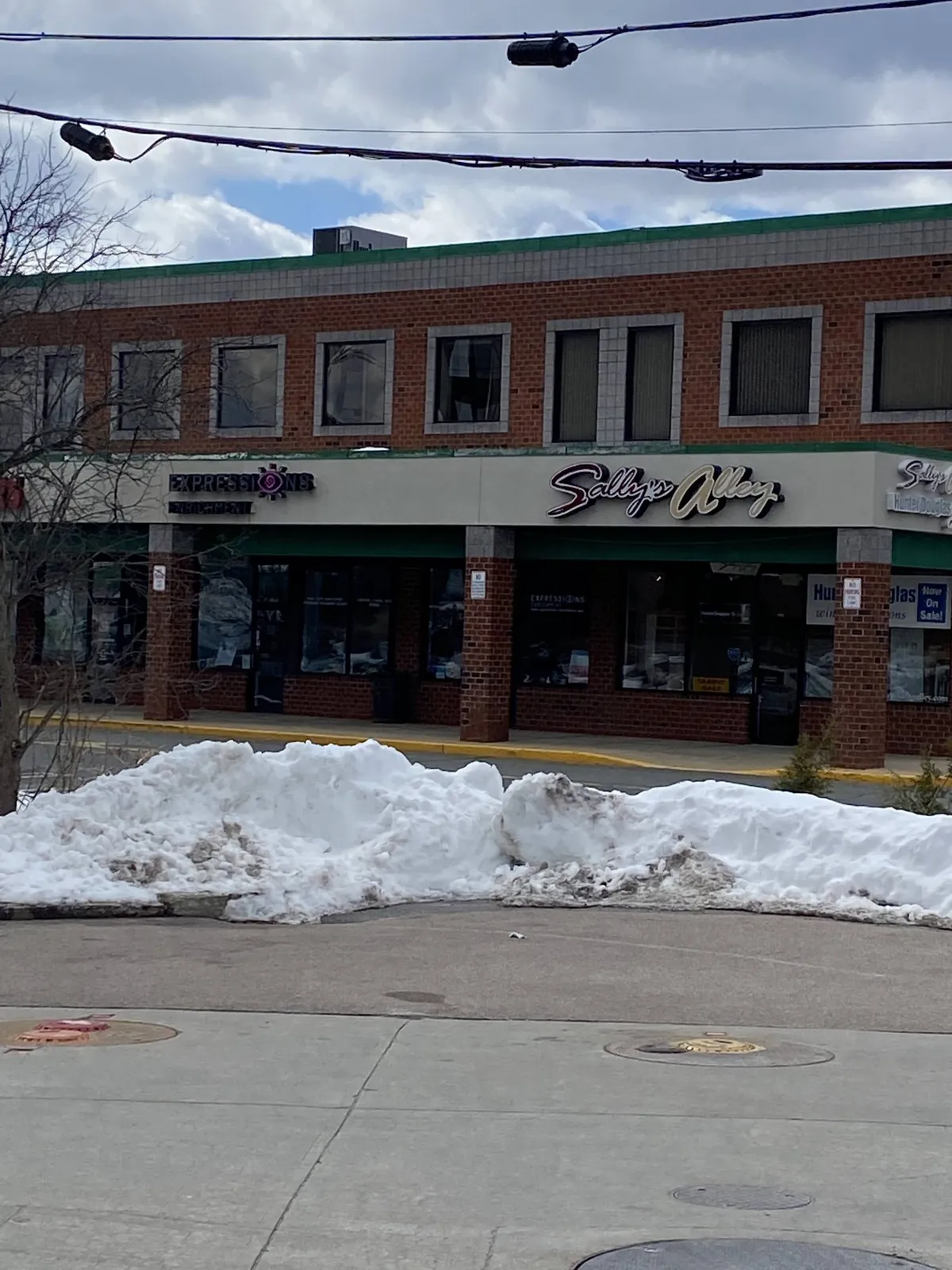
For most Brockton customers the right place to choose a honeycomb shade is at home, in the light of their own rooms. That is the whole point of the in-home visit.
Prefer to look in a store before anyone comes out? The Franklin showroom is the closest of our showrooms. Plenty of people start there and then book the home visit for measuring.
Questions from Brockton
My first-floor windows face the sidewalk. Which fabric keeps the room private?
For daytime, a lighter honeycomb fabric glows in the sun and blurs the view in while daylight still comes through. For rooms you use after dark, a heavier fabric does more. We bring both so you can compare them at your own front window.
We own a three-family. Do all the floors need the same shades?
No. Many people keep the street-facing color the same on every floor so the front of the house looks consistent, and let each unit choose what faces into its rooms. Another floor can match later simply by choosing the same outward color.
Can cellular shades reach the top of my tall Victorian windows?
Yes. They can be made tall and narrow and mounted inside the frame where the depth allows. For windows that are hard to reach, PowerView motorization lets you move them from a remote, an app or a schedule.
Will a honeycomb shade help with a closed-in back porch?
It is one of the best uses for one. Porches with glass on several sides get cold in winter and hot in summer, and the air held in the pockets helps with both.
Where do I go to see samples?
Most people start at home: request a consultation and we bring the samples to your door. If you prefer a store, the Franklin showroom is the nearest one to Brockton.
Book a visit for your windows
The surest test of cellular shades in Brockton, MA, is a swatch held against your own glass with your own street on the other side. Ask for a consultation and a consultant arrives with the samples, measures every window you want covered and leaves a free estimate behind. Questions before then? The call button reaches us, and the Franklin showroom is there if you would like to look in a store as well.