
Canton houses and the coverings that wear in them
Canton is our shop-at-home territory, so blind and shade repair in Canton, MA, begins at your house rather than at a counter. You describe the problem, and when it makes sense to look at it, we come to you.
The town gives us three quite different kinds of window to deal with. Around Canton Center, Victorians and older colonials have tall sash, much taller than wide, with long blinds and shades that travel a great distance every time they are raised. Through the middle of town, post-war capes and ranches have simpler openings and coverings that are used hard, every single day. And on the Blue Hills side, larger newer houses sit on lots that climb steeply from the road, with bigger rooms and more glass than the older streets.
Each kind of house wears its blinds in its own way, and that tells us a lot before we even see the broken part.
The repairs we look at in Canton
Blind and shade repair in Canton, MA, covers restringing, cord and wand replacement, headrails and tilt mechanisms. Here is what each one tends to look like in practice.
Restringing
A shade or blind that lifts lopsided, or has a lift cord that has given way. Fresh cord along the whole path brings it back to level.

Cords and cord locks
A frayed cord, or a blind that drops back to the sill when you let go because the lock no longer grips.
Wands
A cracked, loose or missing wand on a horizontal blind or a vertical treatment, replaced so it turns the slats or vanes again.
Headrails
A headrail that has come out of its brackets, bowed across a wide window or jammed so the shade will not move.
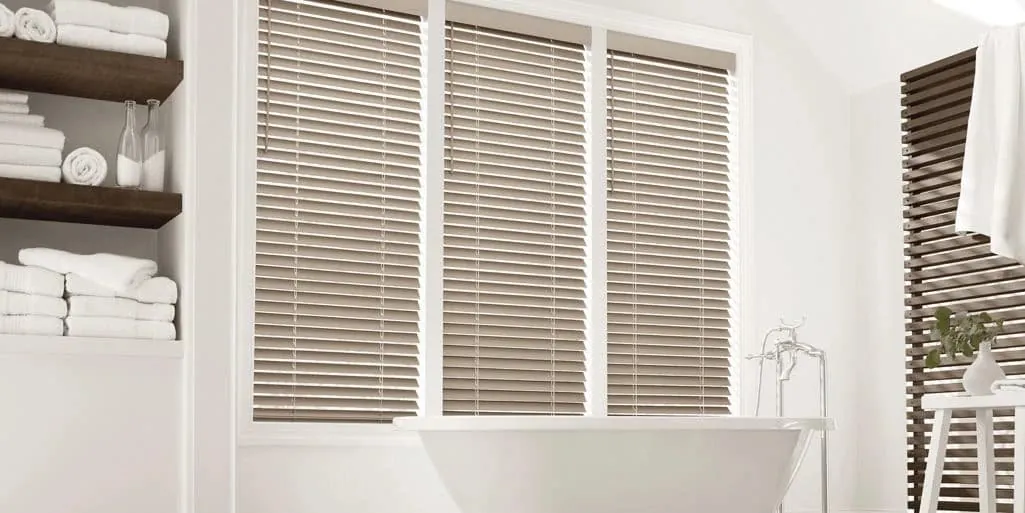
Tilt mechanisms
Slats that no longer tilt, tilt only partway, or turn at one end of the blind while the other end stays put.
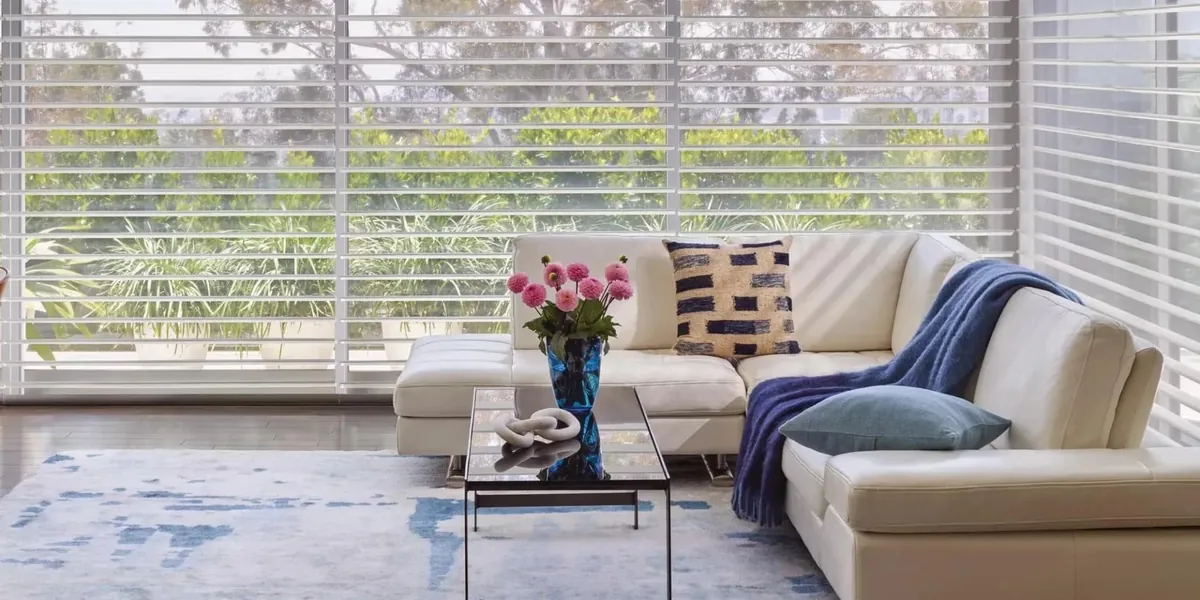
Big glass on the hillside
Wide and tall coverings in the newer houses, where the parts carry more weight and the high windows are hardest to reach.
Tall sash around Canton Center
Near Canton Center, the Victorians and older colonials keep their tall sash, and a covering hung in one of those openings covers a lot of height. Raising it means hauling a long stack of slats or fabric up to the head of the window, and the cord takes that load at the one spot where it turns over a pulley. Do that every morning for years and that spot thins.
So restringing heads the list for blind and shade repair in Canton Center houses. Usually the first sign is a bottom rail that rises at a slant. If the shade keeps being used like that, the low side starts catching on the sill and the high side jams under the headrail. A new set of cords at the first sign of a slant saves the fabric and the headrail from the extra strain.
Older houses have also had a long time to settle, and a tall frame that has shifted slightly is no longer quite true. A headrail fitted snugly inside it will follow that lean. We look at the brackets while we are restringing, and reset them level if the frame has moved, because a fresh cord on a leaning headrail will soon wear unevenly again.
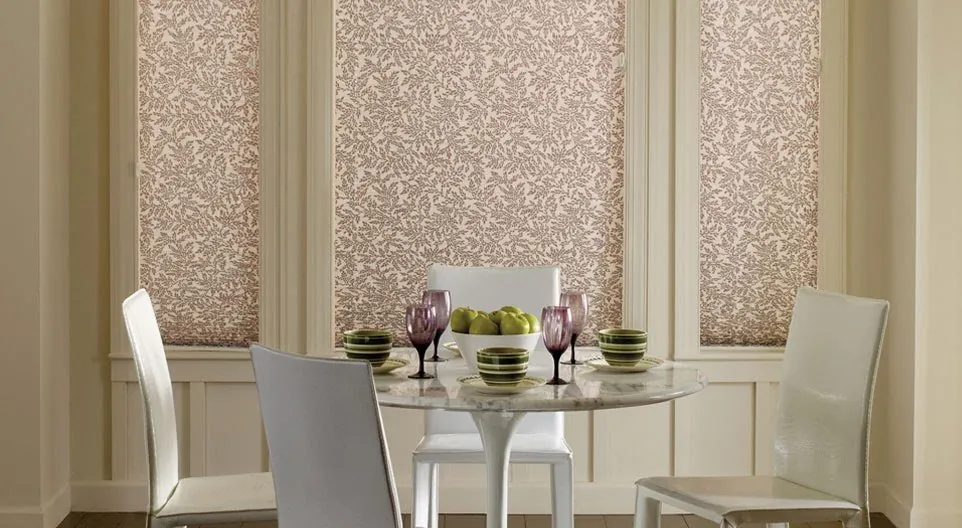
Capes and ranches through the middle of town
The post-war capes and ranches that fill the middle of Canton are practical houses, and their window coverings lead busy lives. The kitchen blind is tilted every time someone wants more light over the sink. The bedroom shade goes down every night and up every morning. The front room blind is closed in the evening and opened again first thing.
That daily handling wears the parts people touch: the cord, the wand and the tilt gear. A cord thins where it passes through the lock. A wand works loose at its hook or cracks after being caught by a door. A tilt gear that is turned past the closed position, again and again, eventually strips.
These are usually small repairs on coverings that are otherwise sound. The openings in a cape or ranch are mostly simple and regular, so a repaired blind goes back up exactly where it was. Blind and shade repair in Canton through these streets is about keeping well-used coverings working, not about replacing them.
Upstairs in a cape, under the roof, the windows are often smaller and set into deep recesses or gable ends. A shade there is easy to pull at an angle because you are reaching into the recess, and that angled pull wears one side of the lift faster. Plenty of the cape shades we restring have worn on one side only.
Hillside houses on the Blue Hills side
On the Blue Hills side of town the houses are larger and newer, and many sit well above the road on steep lots, with driveways climbing up from the street. Inside, those houses usually have big rooms, wide runs of windows and at least one tall window by the stairs or in a two-story family room.
Bigger windows mean bigger coverings. A blind across a wide family room window carries a long row of slats on one headrail, so the headrail and the tilt gear work harder than they would on a bedroom window. A shade on tall glass hangs a lot of fabric from long cords that stretch over the years. And the highest coverings are rarely touched, so when one finally fails, it tends to be out of reach.
Because these houses look down over the road rather than across it, their shades are often set for light and view more than privacy, and some are left in one position for long stretches. Coverings that sit still can stiffen. If you have a high shade that feels stiff, it is better to have it looked at than to give it a hard tug.

Two-story rooms and stair windows
Many of the newer hillside houses have a family room or entry that rises through both floors, with a tall window or a stack of windows reaching toward the ceiling. Shades up there are operated with long cords or long wands, or are simply set once and left. Their fabric often looks nearly new, because it has hardly been handled, yet a long cord carrying a tall shade stretches all the same.
When one of those high shades fails, it tends to do so in plain sight: one corner of the bottom rail drops, or the whole shade sits crooked across the most visible window in the house. Getting to it means working from a tall ladder, often above furniture or a staircase. Let us know roughly how high the window is when you get in touch, so we arrive equipped for it.
A quick check before you get in touch
You can learn a lot about a faulty covering in a minute, and it helps us give you a clearer first answer.
- Does it move at all? A shade that will not budge points to a jam in the headrail; one that moves but sits crooked points to the cords.
- Does it stay where you leave it? If it slides back down, the catch in the headrail is the likely culprit.
- Do the slats turn? If the wand turns but nothing happens, the wand or the gear behind it has gone.
- Is the fabric still sound? Press it gently. Fabric that crackles or splits suggests the covering may be near the end.
Pass on whatever you find, together with a photo, and we can usually give you a first view on whether it is worth a visit.
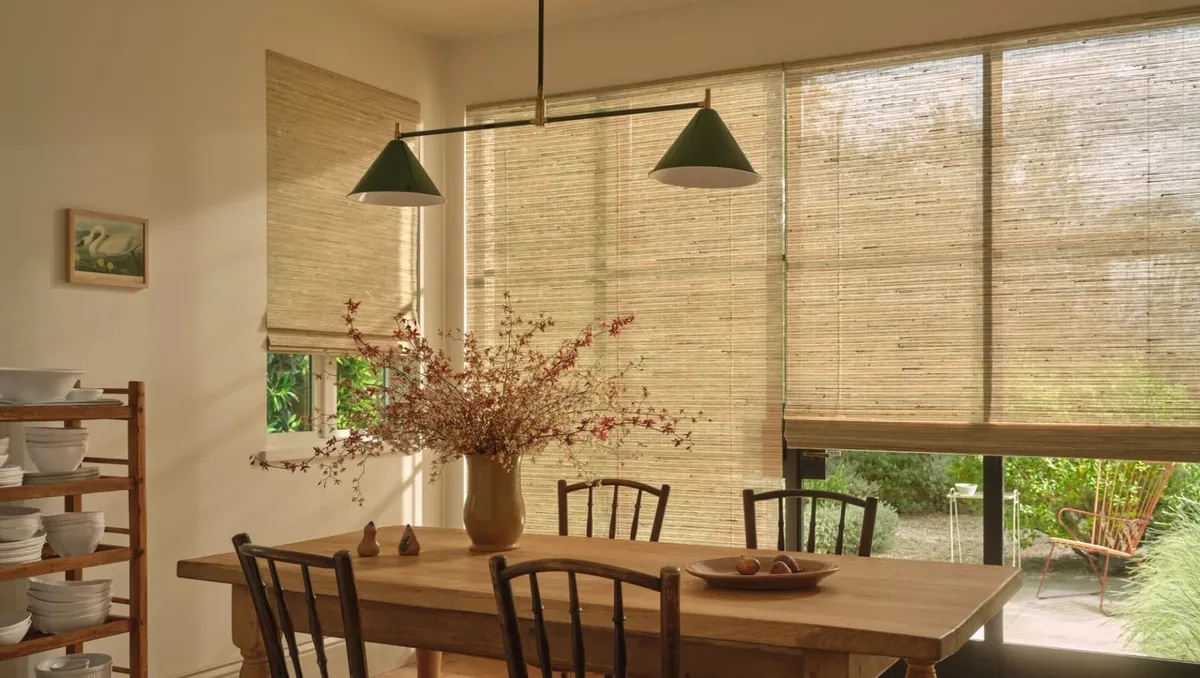
Repairs, the shop-at-home way
Canton is a shop-at-home territory: rather than asking you to bring a blind to a store, we deal with it at the house. Here is how a repair usually goes.
- Get in touch through Request a Consultation or the call button and explain what the covering does wrong. Photos of the covering and of any sticker on its headrail are a big help.
- We give you a first view on whether it sounds repairable.
- If it does, we arrange a time to come to the house and look properly.
- We show you what has failed and explain what the fix involves before anything is done.
- Once it is fixed, the covering is rehung and you try it yourself before we leave.
- If a repair does not make sense, we tell you plainly, and the decision stays with you.
You can read more about how we work in town on our Canton shop-at-home page.
Restringing, step by step
Restringing replaces the lift cords that raise and lower a blind or shade. It is the most common repair on Canton Center’s tall sash and on the high windows of the hillside houses.
The covering is taken down and laid out. The old cord is pulled out along its whole route, through the headrail, down the slats or fabric and into the bottom rail, because cord that has broken in one place is usually worn all along. New cord is threaded through the same path and fixed at the bottom. Back at the top, it runs through the cord lock, and the two sides are evened up so the bottom rail hangs level at any height. Then the covering is rehung and run up and down to check it stops where it is left.
On a horizontal blind we also look at the ladder tapes, the woven rungs that hold each slat. If those have stretched or frayed, new lift cords alone will not make the blind look right.
Cords, locks and wands
Inside the headrail of a corded blind sits a small toothed catch. Swing the cord sideways and the teeth bite; let it hang straight and they release. Years of that wear the teeth down, or wear the cord thin, and the blind no longer stays up. We usually replace both catch and cord together, since one worn part tends to have worn the other.
A wand is simpler. It clips to a hook on the gear that tilts the slats, and on a cape kitchen blind or a long hillside stair blind it takes knocks from doors, elbows and furniture. Once the clip wears or the stem splits, it either drops off or turns without moving anything. Swapping in a new wand is about as straightforward as repairs get.
On vertical treatments across a slider or a wide window, the wand turns every vane at once. If the vanes stop rotating together, the cause may be the wand, the mechanism in the track or a broken carrier holding one vane. Each is a separate small repair.

Headrails and tilt gears
Every horizontal blind has a long rod inside its headrail, turned by a little gearbox at one end. Turn the wand, the gearbox turns the rod, and the rod rotates each slat through the ladder tapes. On a broad hillside family room blind that gearbox is moving a lot of weight. When its teeth strip, the blind stays stuck at whatever angle it was left, or the far end refuses to follow.
Brackets give trouble too. Old Canton Center trim can be dry and soft, and a screw that once held firm may now turn loosely, letting one end of the headrail sag out of place. Across a wide newer window, a headrail without enough support in the middle can bow. Either way, fixing the brackets into good wood is part of putting the blind right.
Sometimes a part inside the headrail jams, so the shade sticks halfway or refuses to come down. Most of those faults come down to a single component that can be replaced.
When a repair is worth it
The best candidate for repair is a covering with one fault and nothing else wrong: good fabric, flat slats, a sound headrail. Fixing a single cord or gear on a covering like that keeps a good product in service with far less upheaval than replacing it.
The poor candidates are easy to spot too: sun-rotted fabric that tears when touched, a run of split slats, a headrail kinked along its length or three faults at once. We will be straight with you about those. Should you decide to look at new coverings instead, see custom blinds in Canton and roman shades in Canton are a good start, and our Canton page lists every service we bring to town.
Making a repair last
Most of what breaks a blind is how it gets handled, so a little care keeps a repair going. In a cape dormer, step close enough to the window that the cord drops straight rather than angling across the recess. Ease a raised shade down onto its catch instead of letting it fall. When the slats are shut, stop turning; the gearbox has nothing left to give.
High coverings in the Blue Hills houses are the opposite case: they suffer from neglect, not use. Running them through their full travel once in a while keeps cords flexible. Wipe the dust off the top of headrails when you can reach them, because grit that works into a pulley chews through cord. There are more everyday tips in our guide to caring for fabric shades.
We bring the knowledge to your house
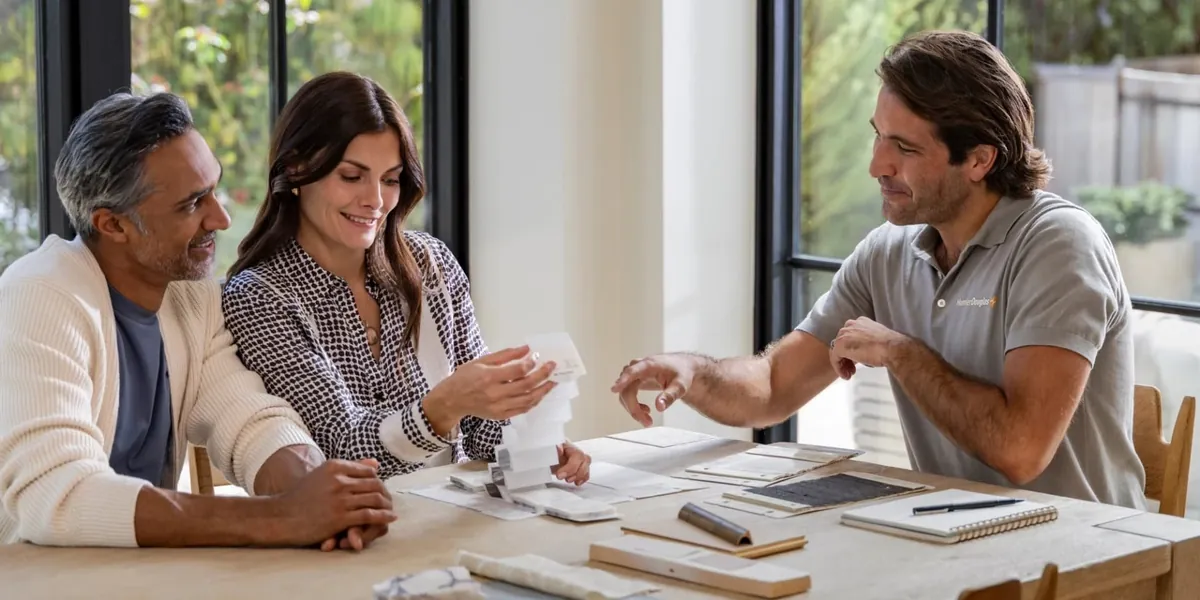
In Canton, everything we do comes to you. Our vans carry samples, so if a repair ever leads to a conversation about new window coverings, we can bring the showroom to your house rather than asking you to go anywhere.
For a repair, that means a visit to look at the covering where it hangs, in the window it lives in. If you would also like to see Hunter Douglas products in person at some point, the nearest showroom to Canton is in Franklin.
Why a Gallery dealer for a repair
As a Hunter Douglas Gallery dealer whose installers hold Hunter Douglas certification, we work on these coverings with a clear picture of how they were assembled at the factory and fitted at the window.
A repair done with that picture in mind puts the covering back the way its maker intended, rather than just getting it moving again. That is the difference between blind and shade repair in Canton, MA, that lasts and a patch that gives out at the next pull. The blind and shade repair page covers repairs across all our areas.
Questions from Canton
Do I need to bring my blind anywhere?
No. Canton is a shop-at-home territory. Describe the problem first, and if it sounds repairable we arrange to come and look at it at the house.
The shade on my tall Canton Center window lifts crooked. What is wrong?
Most often a cord has stretched on one side. New cords bring the rail back to level, and in a settled old frame we also check whether the headrail itself is leaning.
My hillside house has a high shade that has not moved in ages. Is it safe to pull it?
Better to ask first. Coverings that sit in one position can stiffen, and a hard pull after a long rest is when cords snap. Tell us about it and we will take a look.
My blind drops back down when I let go of the cord. Can that be fixed?
Usually. The catch that holds the cord has worn, or the cord has gone thin. Replacing them sorts it out.
Will you try to sell me something new?
No. We fix what you asked us to fix. Should new coverings ever interest you, an in-home consultation brings samples to the house and ends with a free estimate.
What to do today
Start by letting us know which covering is giving trouble. Fill in Request a Consultation with a line or two and a picture, or ring through on the call button. For blind and shade repair in Canton, MA, we come to the house; there is nowhere you need to go.