
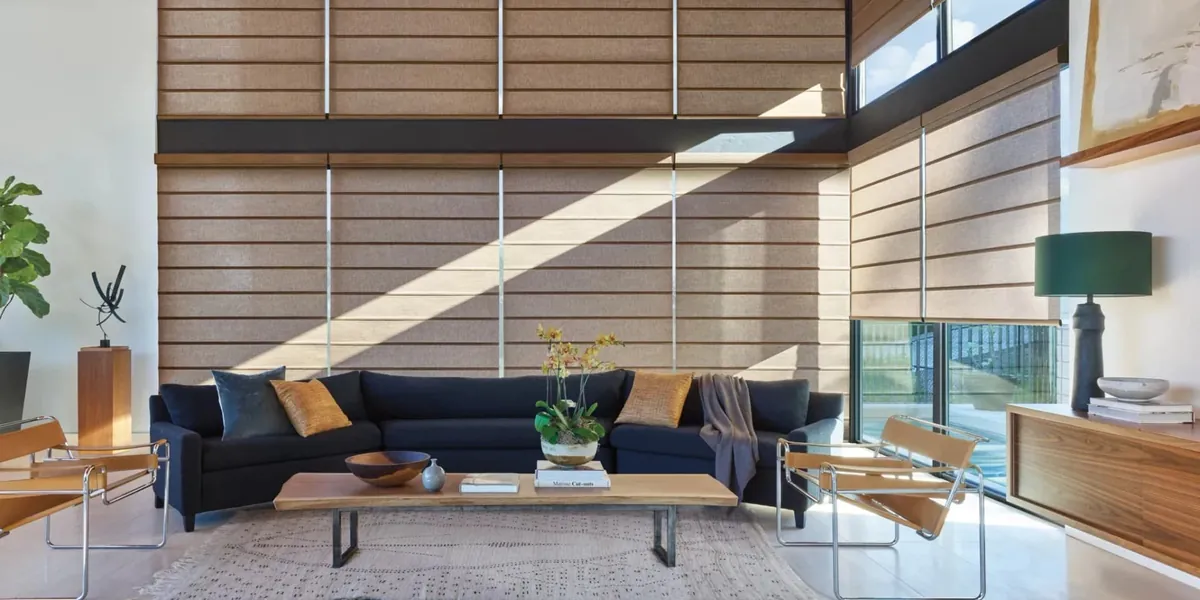
From narrow Victorian sash to two-story foyers
Few towns of this size put such different windows within a short drive of each other. Close to the center, Victorian houses keep their tall, narrow sash, often in pairs, rising most of the way from floor to ceiling in the front rooms. Out across the subdivisions, post-war ranches spread their windows wide and low, and the large newer colonials bring big family rooms and, in the most recent builds, a two-story foyer with a sheet of glass high above the front door.
Every one of those openings can take a roller, which is part of why roller shades in Mansfield, MA are such a common request. A roller is about as simple as a window covering gets: a single panel of fabric that lowers over the glass and rolls up out of the way. What makes it work in such different houses is that every shade is made for its own window, and the fabric is chosen for the room.
We plan each house as a whole. The narrow front sash of a Victorian, the picture window of a ranch and the high foyer glass of a colonial all need different thinking, and this page walks through how we approach each.
Roller shades in Mansfield, MA: what we bring
These are the lines we show most often in town, and every one of them is in our sample vans.
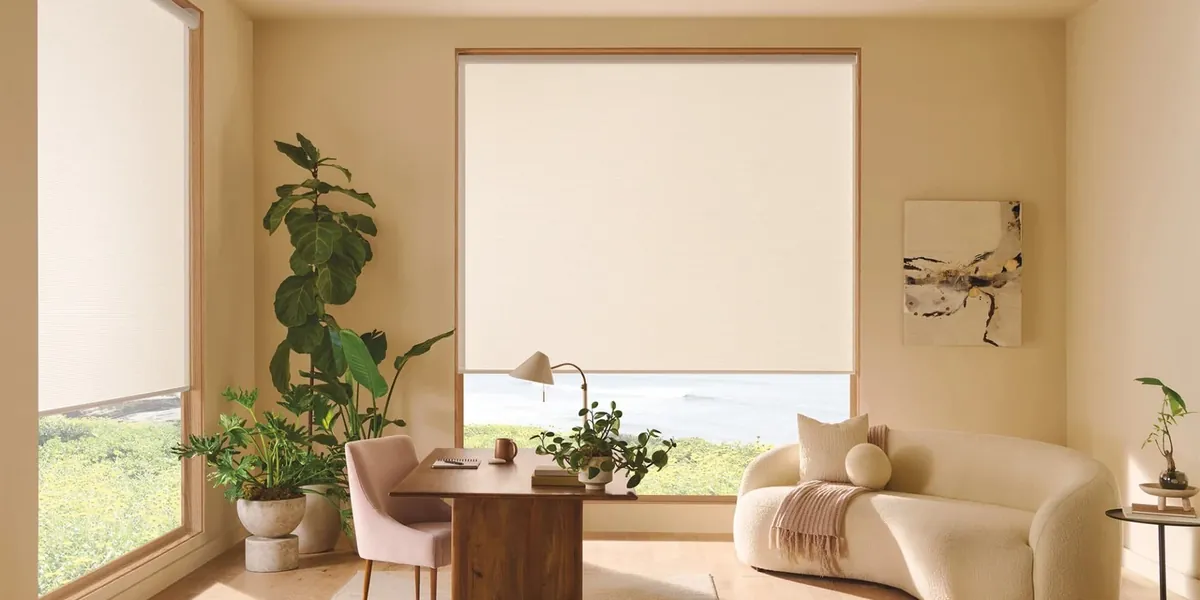
Designer Roller
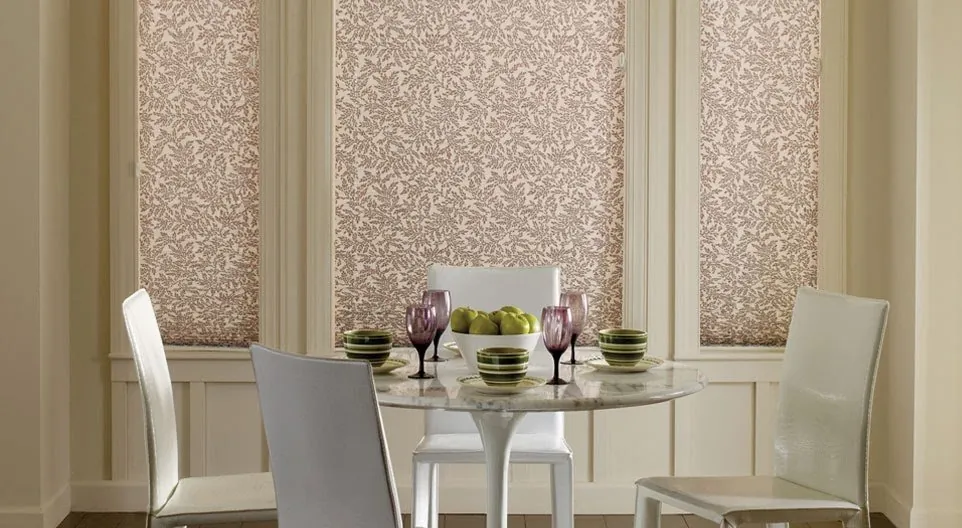
Plain, textured and patterned fabrics from light filtering to blackout. Slim enough to sit neatly in a narrow Victorian window.
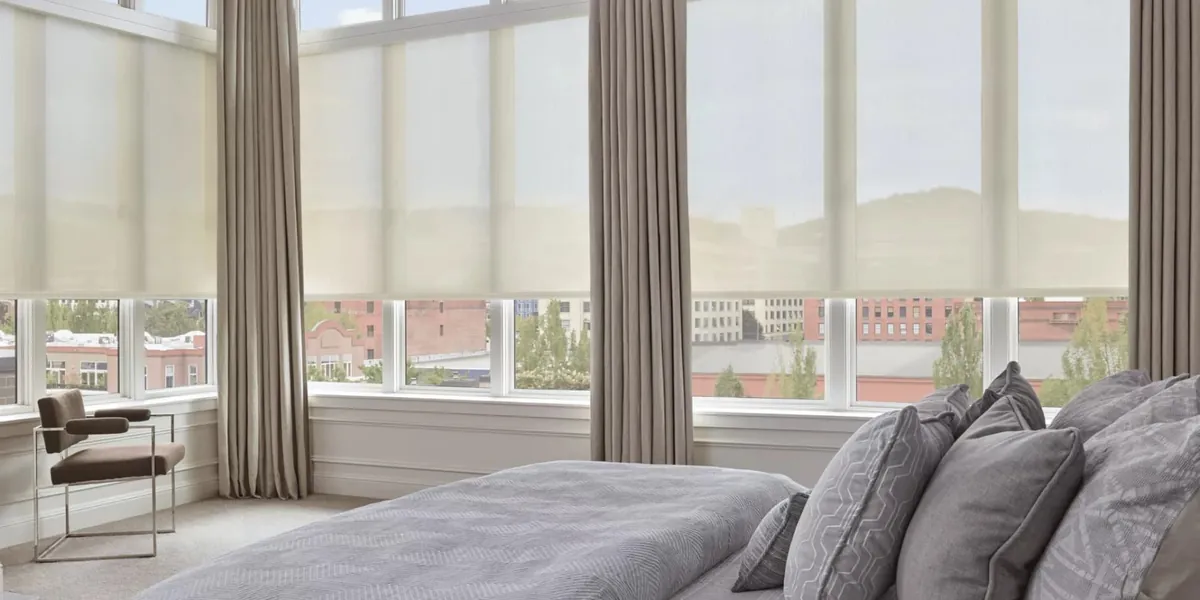
Designer Screen
Solar screen fabrics that soften glare while keeping the view. A frequent choice for the family room of a newer colonial.
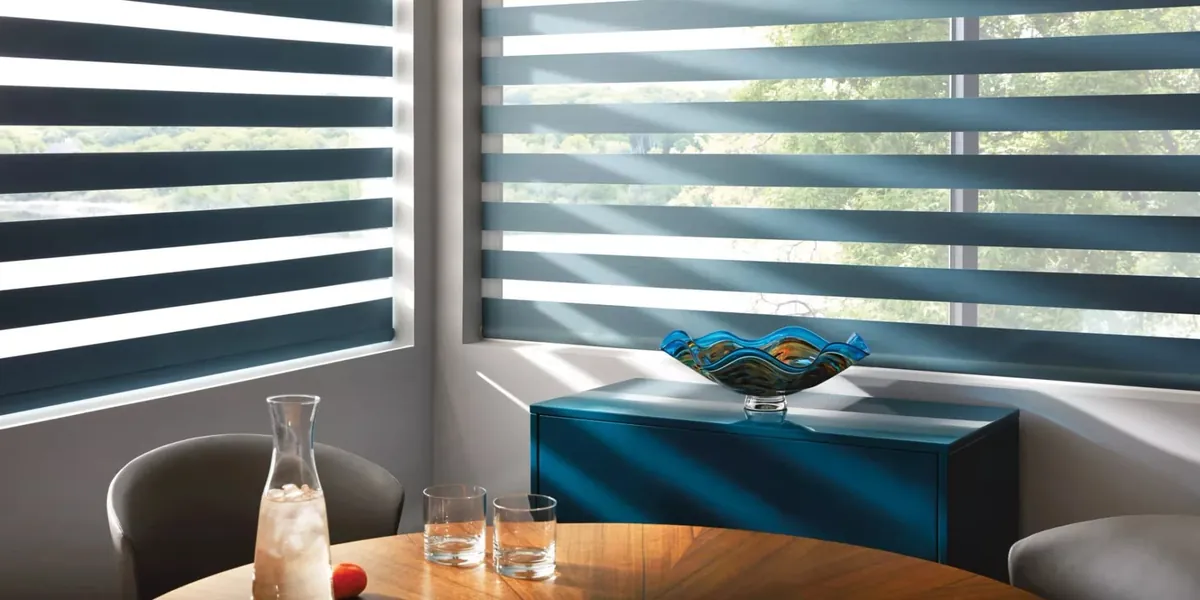
Designer Banded
Sheer and solid bands that you line up to see out or offset to close. Useful in a ranch living room close to the street.
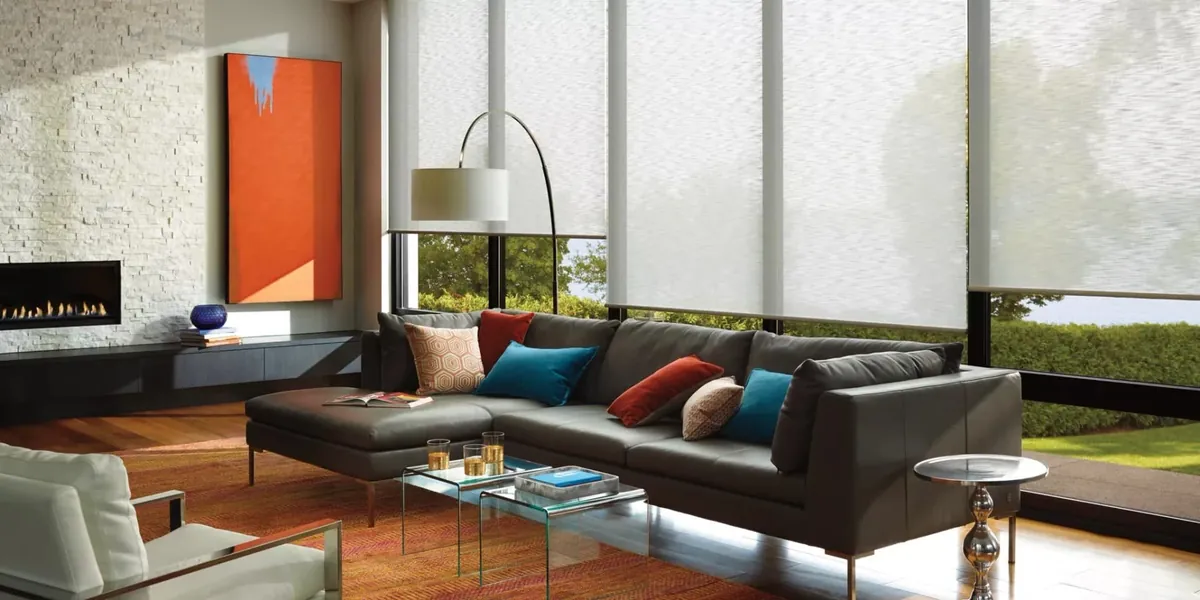
Alustra Architectural
Hunter Douglas’s top roller collection, worth a look for the big family room of a newer colonial where the shades are on show.
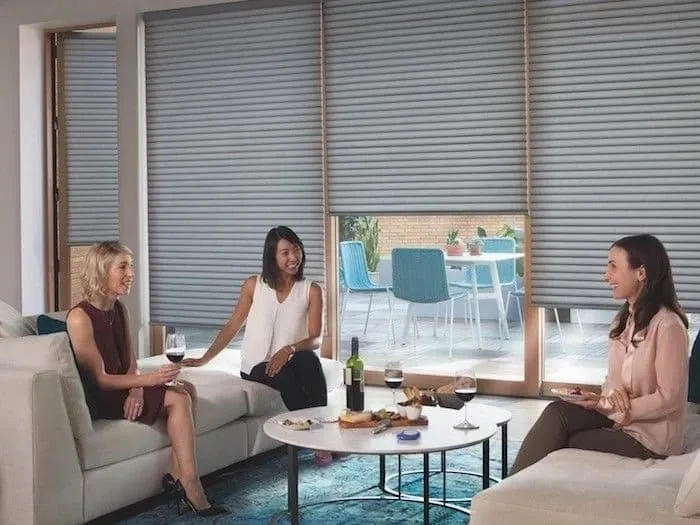
Sonnette Cellular
Honeycomb cloth on a roller, so a ranch slider or back room keeps the flat look with a layered fabric.
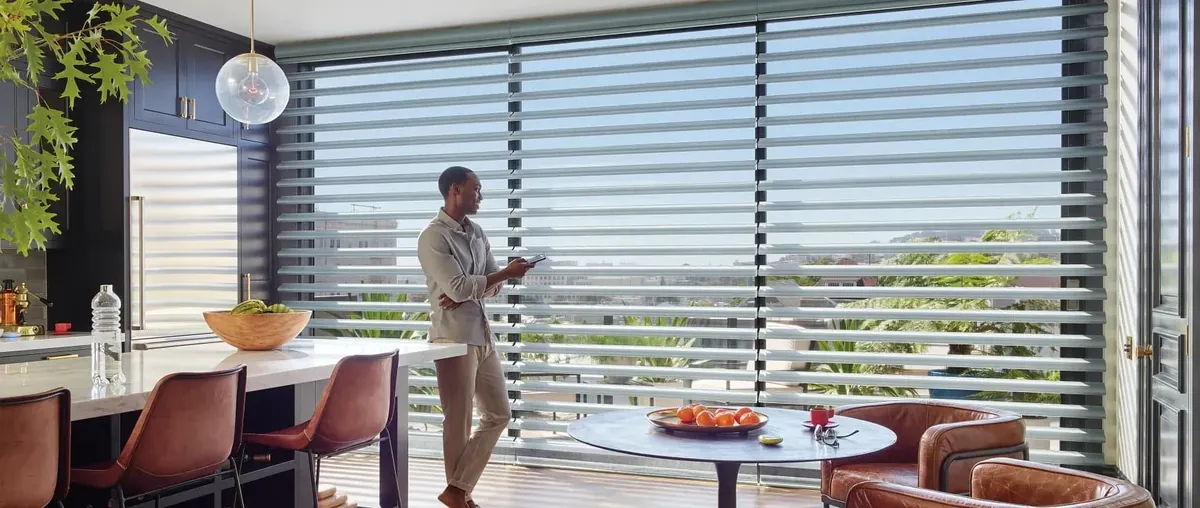
Motorized Blinds in Mansfield
PowerView puts high foyer glass and long runs of shades on a remote, an app or a schedule.
The tall, narrow sash near the center
The Victorians near the town center were built with windows that are tall for their width. In a front parlor or dining room they often come in pairs or threes, separated by narrow strips of wall and framed by trim that was meant to be seen. The proportion is the whole character of the room, and the shades should respect it rather than fight it.
An inside mount usually does that best. The shade sits within the opening, the casing stays fully visible, and when the shade is raised it almost vanishes at the top of the frame. A narrow shade has less fabric to roll, so it stays slim at the head, which suits a delicate old window. Where a pair of windows sits close together, we make two separate shades and set them at exactly the same height, so they read as a matched pair whether up or down.
Older frames bring their own surprises. Sash weights, pulleys, old locks and a century of paint can narrow the space at the top of a window, and frames that have settled are rarely square. We measure each one at several points across and down before suggesting a mount, and where an inside mount would be too tight we mount the shade on the casing face and explain the reason.
Light and privacy in the old front rooms
Many of the houses near the center sit fairly close to the road. Their tall front windows give the rooms wonderful light, and at night they also give anyone walking past a clear view in. The usual answer is a light-filtering fabric. During the day it lets soft, even light through and hides the room from outside; after dark it still screens the room, though lamps inside will show shapes behind it.
If you want the front room completely private at night, a room-darkening cloth does it. Some owners split the difference: light filtering on the front windows, where daytime light matters most, and room darkening on the side windows that face a neighbor’s drive. Because tall sash are so tall, many owners also leave the shade halfway, covering the lower panes and leaving the upper ones open to the sky. Since the shade can be left at any height, the room keeps its sky without giving the sidewalk a view.
Ranches across the subdivisions
The post-war ranches in town spread their rooms along one floor, with the living room at the front behind a wide, low window, bedrooms down a hall, and the kitchen at the back. Their windows are lower and broader than a Victorian’s, and the rooms behind them sit at eye level with the yard.
A wide ranch window can take one long shade or be divided into two or three shades sized to sections of the glass. Dividing it gives you control: you can lower the end that catches the afternoon sun and leave the rest open to the street. For bedrooms at ground level, room-darkening and blackout fabrics are the usual choice, both for privacy at night and to keep summer mornings dim.
Where a ranch living room faces the road, Designer Banded is worth seeing. Its sheer and solid stripes let you open a view in daylight and close the room in a moment, with a single shade.
Two-story foyer glass in the newest houses
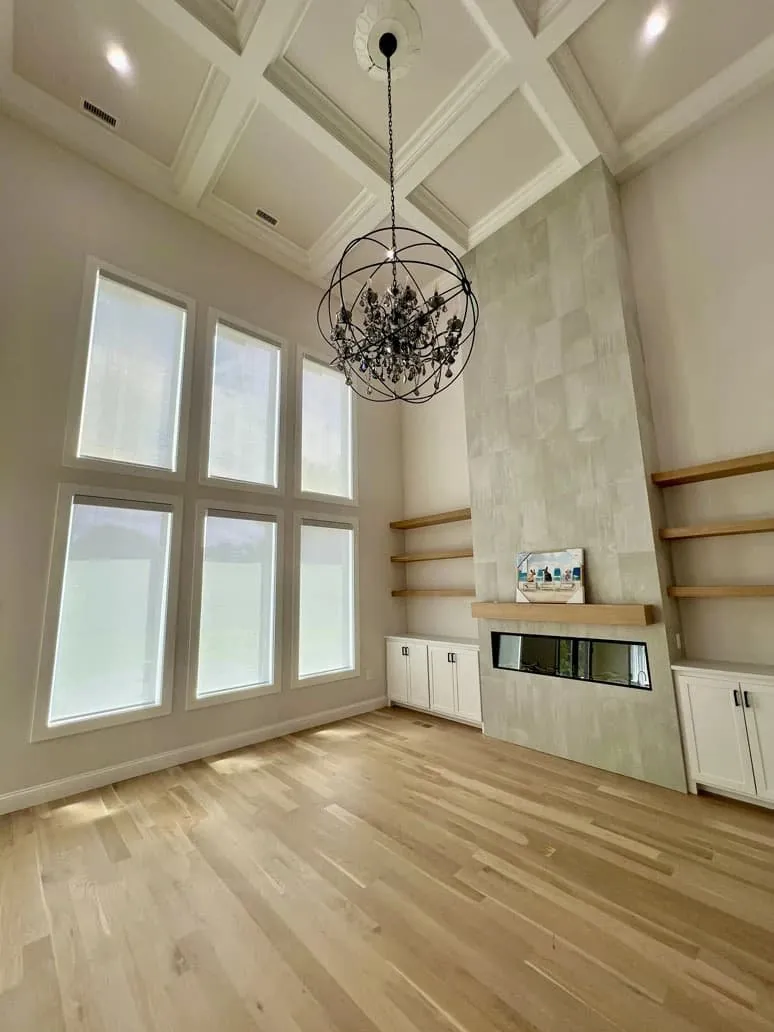
The most recent colonials often open with a two-story foyer: a front door, sidelights beside it, and a large window or a group of windows high above, lighting the stairs and the landing. That high glass brings the house a lot of light, and it also brings some problems. At certain times of day it throws a hard patch of sun across the stairs and floor, it can make the upstairs landing warm on a summer afternoon, and at night it shows the lit hall to the street.
Roller shades are a tidy answer for rectangular foyer windows. A light-filtering fabric softens the sun without darkening the hall; a solar screen keeps the outside visible while cutting glare. Because the window is so high, the shade is usually set at one height and left, or motorized so it can move without a ladder. When we plan roller shades in Mansfield for a foyer, motorization is almost always part of the conversation.
Some foyer windows have arched or angled tops. A roller is made for a rectangle, so for a shaped top we look at covering the rectangular part below and leaving the shape open, or at another Hunter Douglas product that suits the shape better. We will tell you honestly what will look right.
Large family rooms in the newer colonials
Behind the foyer, the newer colonials usually have a family room with a long run of windows, often onto the back yard, and sometimes a vaulted ceiling with more glass above. It is the room where the family spends most of its time, and it is often the brightest room in the house.
For a long run of windows, matching shades in one fabric keep the room calm. A solar screen is a common choice: it takes the glare off the television and the floor and keeps the yard in view. Screens are sold by openness, the share of the weave left open. Pick an open weave and the yard stays crisp through it; pick a closed one and the glare drops further while the yard turns softer and the room gains some privacy by day. We hold different openness levels side by side at your window so you can judge.
If the room has a window facing the television directly, that one often gets a tighter weave than the rest, and you would not notice the difference from across the room.
Sidelights and the front door
Most of the newer colonials, and plenty of the older houses near the center, have narrow sidelights on one or both sides of the front door. They are a small detail, but they matter: at night a lit hall shows straight through them to the street, and on a bright morning they can throw a stripe of sun across the entry.
A slim roller made for each sidelight covers that glass neatly. Because sidelights are usually fixed panes, the shade on them tends to be set at one height and left there, so we choose a light-filtering fabric that lets daylight into the hall while hiding it from the doorstep. Where the foyer above has a roller too, we match the fabric so the whole entrance reads as one.
Bedrooms that need to be dark
Bedrooms in every kind of house in town share one need: darkness on summer mornings, when the sun is up early. Room-darkening fabrics turn a room dim. Blackout fabrics stop the light through the cloth completely. The thing that usually lets light in around a blackout shade is the edge, the slim gap each side that lets the shade move. An outside mount, made a little wider than the window, covers more of that edge light than an inside mount. In a Victorian bedroom where the trim is worth showing, many owners accept a thin line of light and keep the inside mount. We show you both before you decide.
PowerView for the windows out of reach
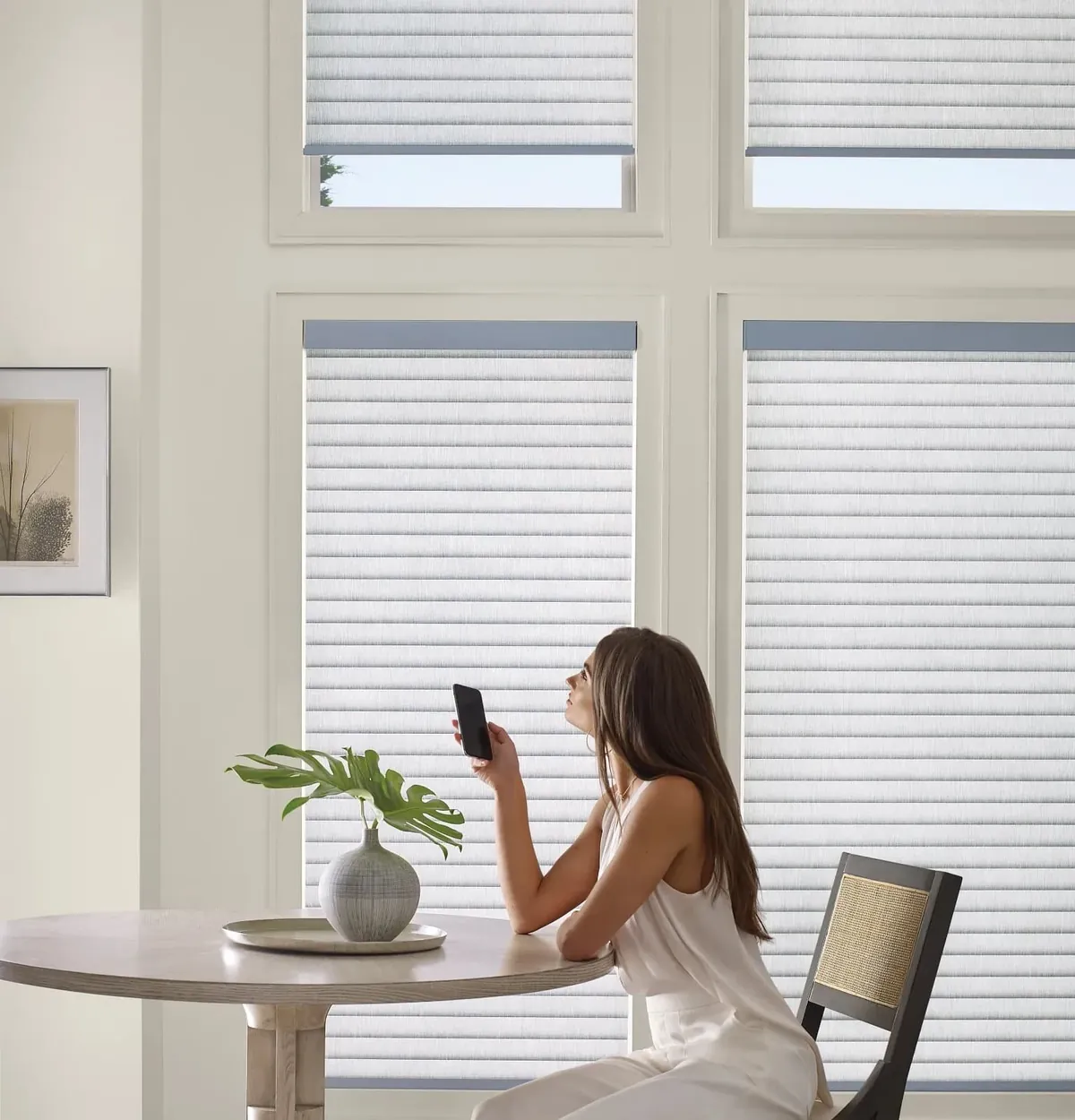
PowerView turns each shade into something you control from a handheld remote or an app, with schedules if you want them: the foyer shade lowering as the afternoon sun swings round, the family room shades closing at dusk, the bedroom shades rising at a set time. Shades can be grouped so a whole room or floor moves at once. How each motor gets its power is worked out window by window at the visit, before anything is ordered. Our motorized blinds in Mansfield page explains more.
A morning at your house with the sample van
The fabric that looks right in a catalog under bright lights can look quite different on a north-facing Victorian window on a gray afternoon. That is the reason we do most of our work in your house: our vans carry the samples, so we can bring the showroom to you.
A typical visit in town follows a simple order:
- We agree a day and time, booked online through Request a Consultation or by tapping the call button.
- On arrival we ask which windows bother you most. In Mansfield that is often the foyer, the family room or a front parlor on a busy road.
- We lay out cloths in each opacity group and the screen weaves, and you hold them up at the glass, ideally at the hour that window gives trouble.
- Each opening is measured at several points, and we look at the frame depth and any old hardware before agreeing a mount.
- Before we leave, we go through what you have chosen room by room, and a free estimate follows for exactly those shades.
There is no pressure to settle anything that day. If color and fabric choices across several rooms feel like a lot, our interior design consultations can take that on at the same appointment. A short guide, what happens at an in-home consultation, sets out the visit in more detail.

Color across a mixed street
Mansfield streets often mix eras: a Victorian next to a ranch, a newer colonial at the end of the road. Each house still looks best when its own front windows agree with each other. For roller shades in Mansfield we usually settle the front color first, often a soft white or warm cream that sits well behind painted trim and most siding, and then choose more freely for the back rooms. Screen fabrics come in their own colors, and a darker screen in a back family room, chosen for a clearer view out, sits happily behind a pale front.

The Gallery dealer difference
Gallery is the designation Hunter Douglas gives dealers who meet its standards, and Blinds & Designs holds it. What that means in a Mansfield house is choice: if a narrow sash suits one cloth and the foyer suits another, every roller collection is open to you in a single order, with PowerView as an option on any of them.
Installation is carried out by installers certified by Hunter Douglas, which matters most on the awkward jobs: an old frame out of square, or a shade set high over a stairwell. If a blind or shade you bought years ago has stopped working, bring it to our attention; repairs are part of what we do, and so is commercial work for offices and shops.
For rooms where a roller is not the best fit, see our cellular shades in Mansfield, roman shades in Mansfield or plantation shutters in Mansfield, or everything we offer locally on our Mansfield page. The whole range is on the main roller shades page.
Franklin is our nearest showroom
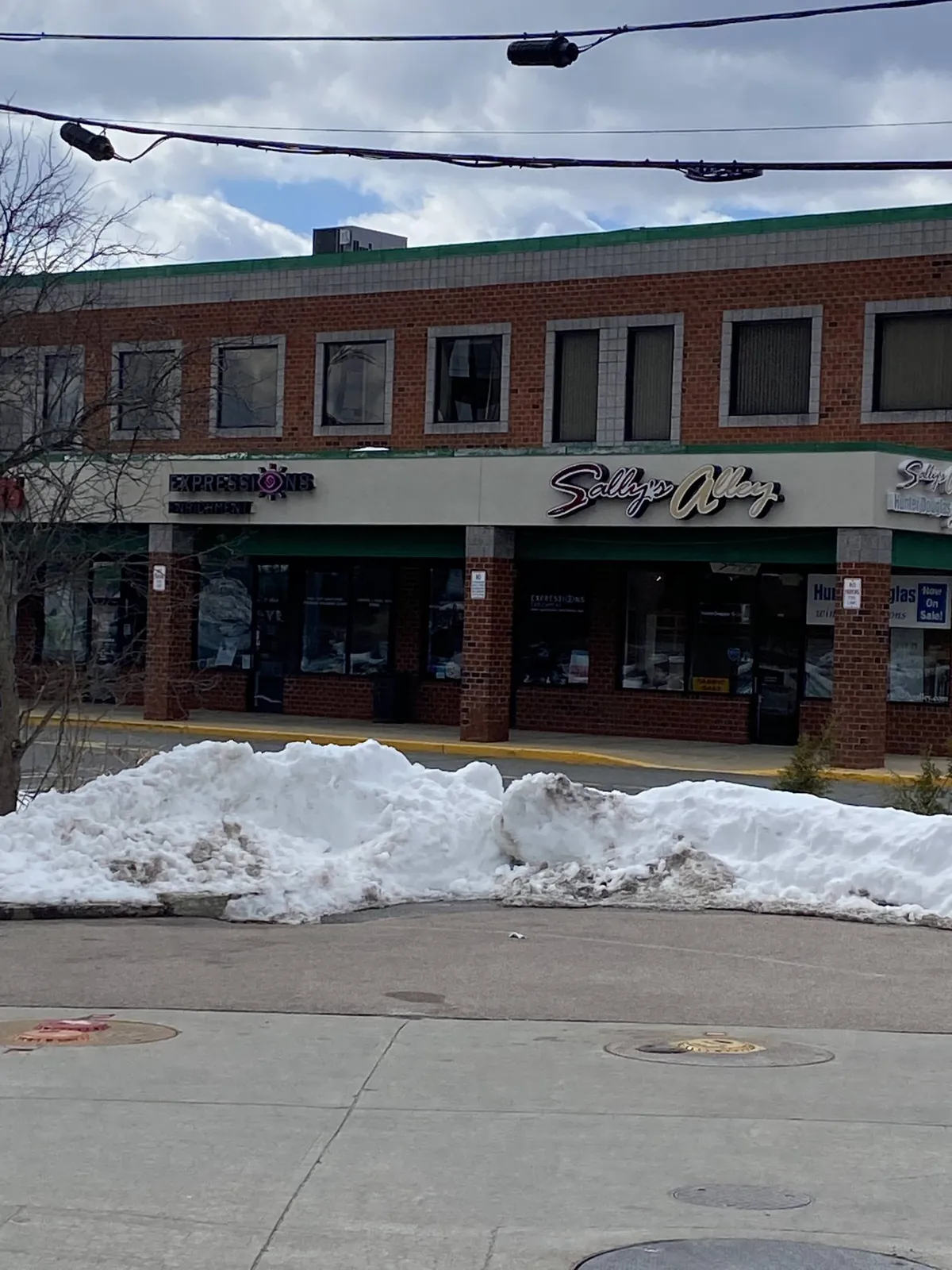
If you would like to see roller shades before anyone comes to the house, the Franklin showroom is the closest to Mansfield. Many customers look there first, then have us bring the fabrics they liked to their own windows, where the light decides. Others skip the trip altogether and start with a visit to the house, which suits a busy week just as well, since the measuring has to happen there in any case.
Questions from Mansfield
Can a roller sit inside a narrow Victorian window?
Usually, yes. Narrow shades stay slim at the top and look tidy inside the frame. We measure the depth in several places first, because old sash hardware and settled frames can leave less room than you expect.
What should I put on the high window in my foyer?
A light-filtering roller or a solar screen, made to the window’s size. Because it is so high, most owners either set it and leave it or motorize it with PowerView. A shaped top may be left open, and we will show you what looks right.
How do I stop glare on the family room television?
A solar screen on the windows facing the screen usually does it. A tighter weave cuts more glare, and you can use a tighter one on that window alone while the rest stay more open.
Will blackout shades make my bedroom completely dark?
The fabric blocks the light, but a thin line can show at the edges. An outside mount, made a little wider than the window, covers more of it. We show you both options before you choose.
What does it cost to get an estimate?
Nothing. We measure and give you a free estimate for the shades you are considering.
Book a visit
The surest way to pick roller shades in Mansfield, MA, is with the samples at your own windows, from the narrowest sash to the highest foyer glass. Request a consultation and we will come with the fabrics, measure each opening and leave you with a free estimate. You can also talk to us through the call button, or call in at the Franklin showroom.