
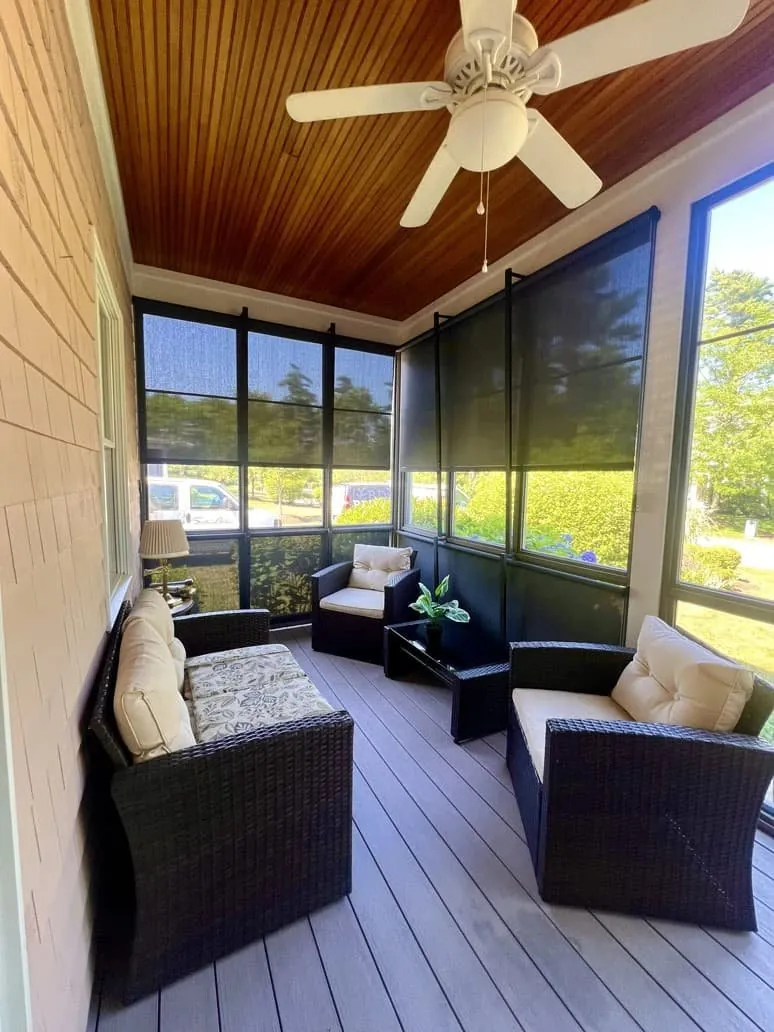
For the rooms that face the sun and the water
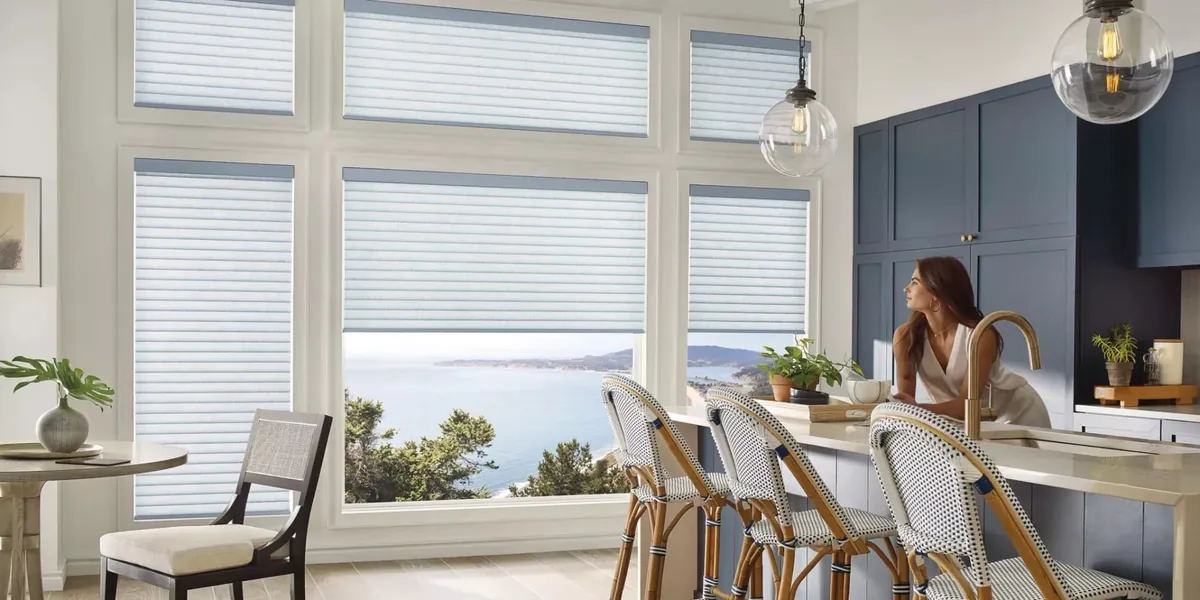
Designer screen shades are built for one job: taking the glare out of a bright room without taking the view away. Around North Dartmouth, there is no shortage of rooms that need it.
The clearest case is South Dartmouth, where water-facing rooms take hard afternoon glare off Apponagansett Bay. The sun comes in low, bounces off the water and lands on every screen and tabletop in the room. Pull an ordinary shade and you lose the view you bought the house for. A solar screen softens the light and keeps the bay in sight.
The same goes for the picture windows of the mid-century ranches off Slocum Road, for porches and sunrooms added onto older capes in Padanaram, and for any home office where afternoon sun washes out a monitor.
Three things screen fabric does
A screen is a woven roller fabric with tiny openings. Those openings are what make it different from every other shade.
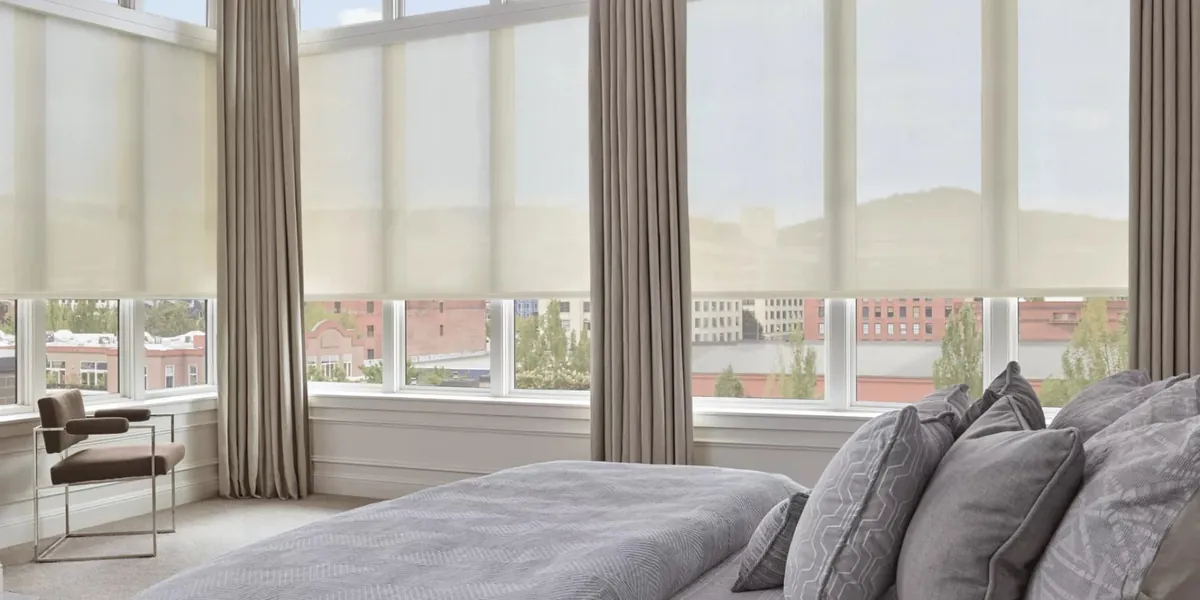
Keeps the view
From inside you still see the trees, the street or the water, softened rather than hidden.

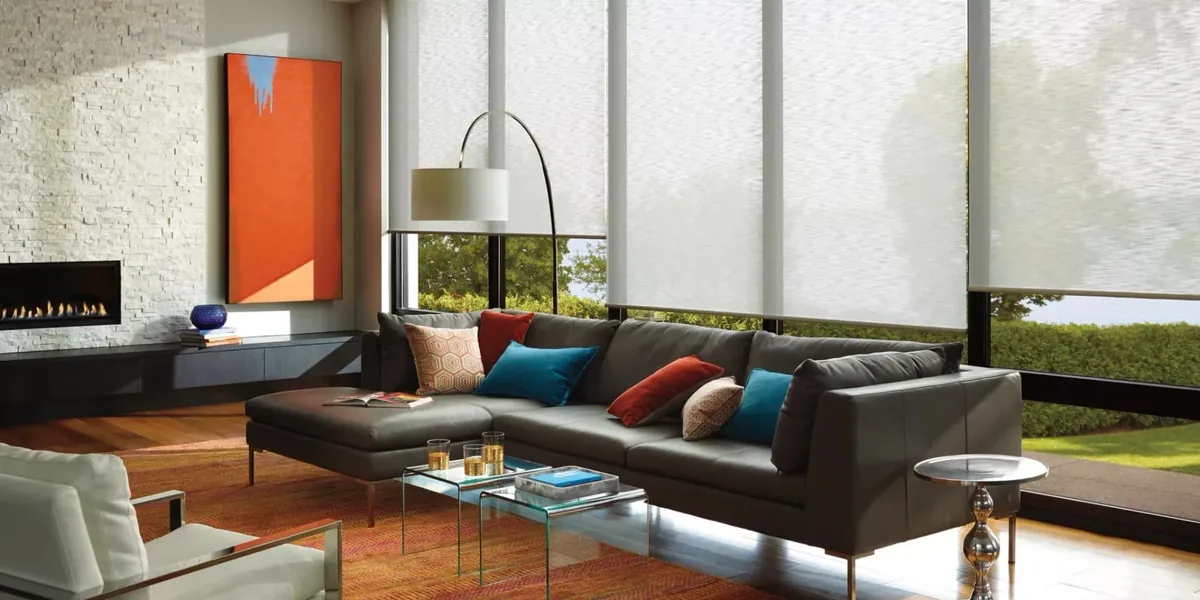
Tames the glare
The weave scatters bright light before it reaches you, so screens and tabletops stop shining back. It works as well in an office as at home.
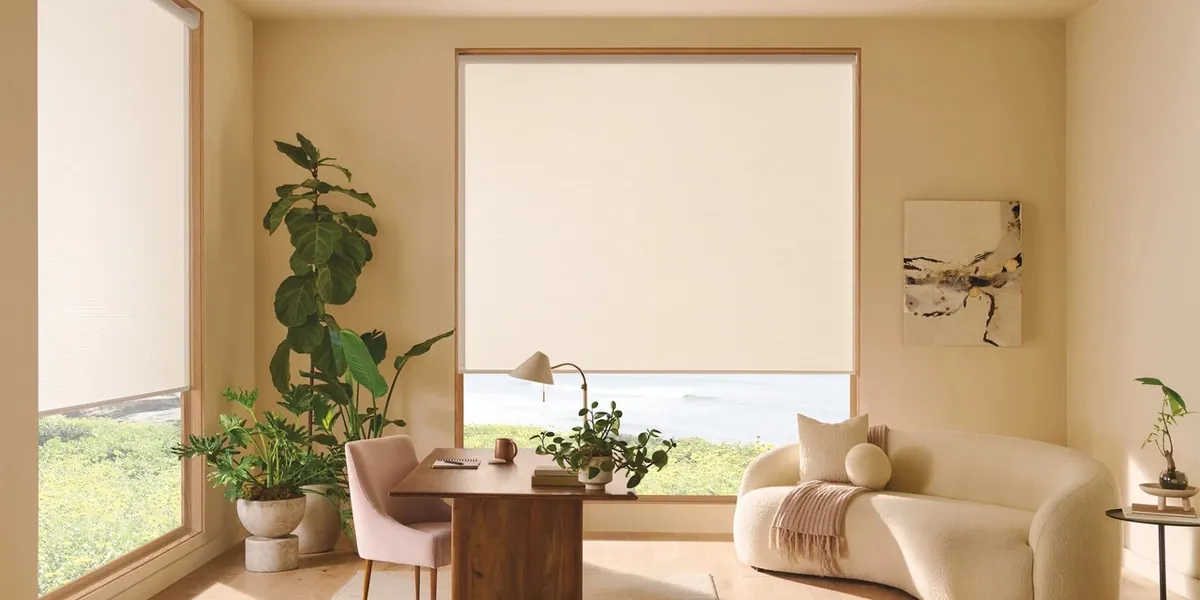
Shields the room
Screen fabric filters much of the sun that fades floors, rugs and upholstery. We do not quote figures, but on a sun-struck porch it makes a visible difference over time.
Openness is about view and glare
The single most important choice on designer screen shades is their openness: how loose or tight the weave is. It is a trade between view and glare.
- A more open weave shows more of the outside and lets in more light. It suits rooms where the view is the point and the sun is moderate.
- A tighter weave controls glare better and makes the room calmer, but the view becomes softer.
- Fabric color matters too. Darker screens usually give a clearer view out, because they bounce less light back at your eyes. Lighter screens brighten the room but can look a little hazy from inside.
We never pick openness from a sample book alone. At the consultation we hold two or three levels up at your windows, ideally at the time of day the glare is worst, and you choose the one that feels right.
What a screen will not do
It is worth being straight about the limits of designer screen shades. A solar screen works because it is brighter outside than in. At night, with your lamps on, the balance flips and people outside can see in. So screens are rarely the only shade in a bedroom or a street-facing room.
The usual answers are to pair the screen with drapery, to choose a Designer Banded shade that can close for privacy, or to use a dual roller with a screen at the front and room-darkening fabric behind. We will suggest whichever fits the room.
Motorized screens
Glare comes and goes with the sun, which makes designer screen shades a natural fit for PowerView motorization. Your shades can lower themselves as the afternoon sun swings round to the bay side of the house and rise again at dusk, on a schedule you set or from an app or remote. On tall glass or a porch with a run of openings, it saves a lot of walking. Our motorized blinds and shades page explains how the controls work.
How a screen project goes
- Request a consultation with the form or the call button, and tell us which rooms get the glare.
- We bring openness samples in several colors, so you can judge them in your own light.
- We measure each opening, including porches and wide glass, and plan where shades meet.
- You get a free estimate for the fabric, finishes and controls.
- Certified Hunter Douglas installation, with every shade checked for a straight roll.
Browse the screen fabrics in the Hunter Douglas Designer Screen catalog before we visit.
From a Hunter Douglas Gallery dealer
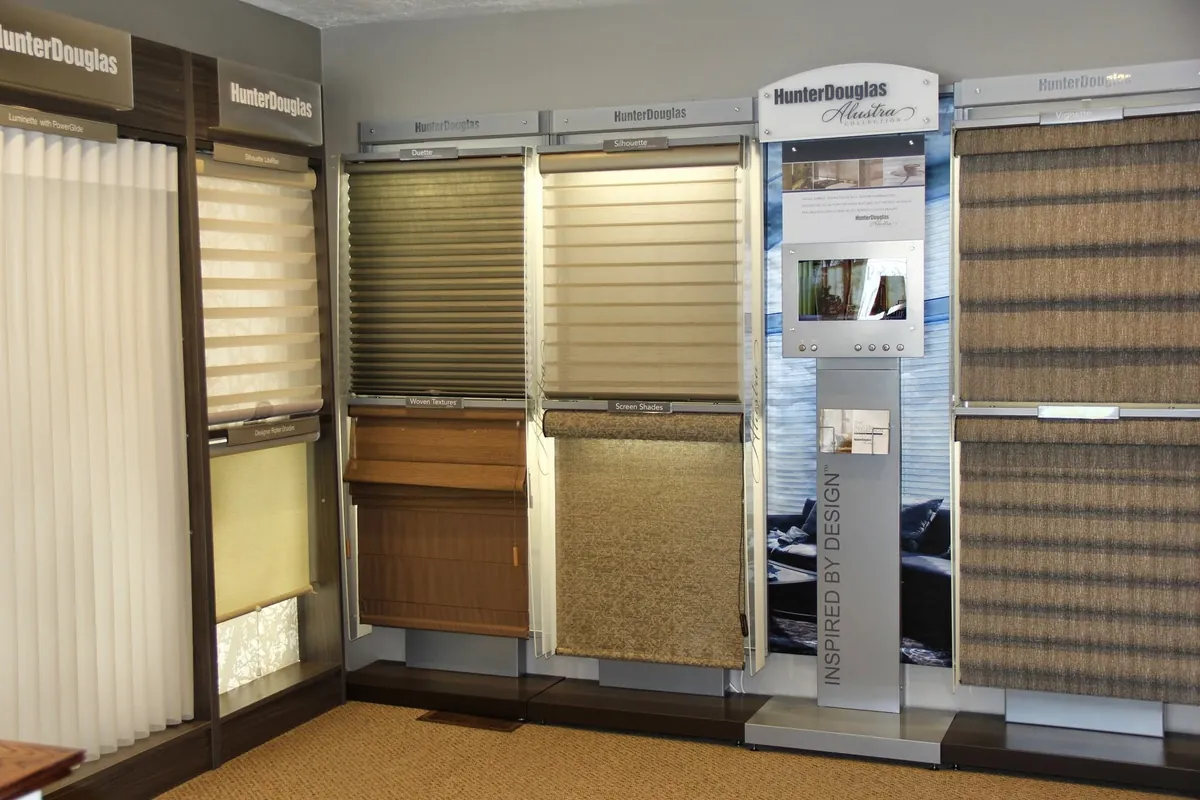
Blinds & Designs is a Hunter Douglas Gallery dealer. Our vans carry screen fabrics in several openness levels, so you can look through them at your own windows before you choose.
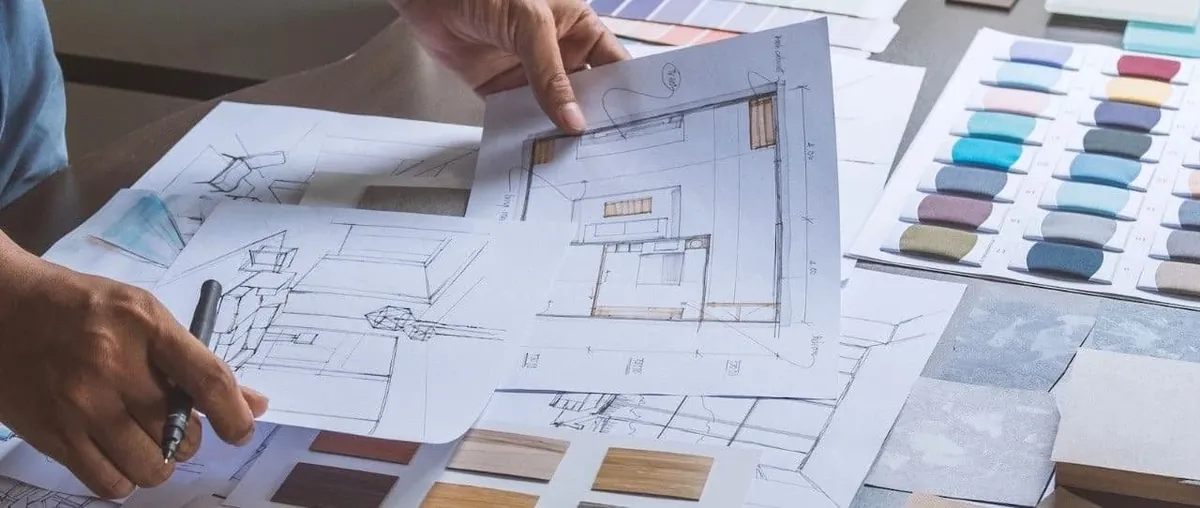
We also bring the samples to you on an in-home consultation, give free estimates, offer interior design consultations and repair the shades you already own.
Designer Screen questions
Can I see out through designer screen shades?
Yes. That is the point of them. How clearly depends on the openness and color you choose, which is why we bring several to compare.
Will people see in at night?
They can when your lights are on and it is dark outside. Pair the screen with drapery or a darkening layer for privacy after dark.
Are screen shades good on a porch?
They are a common choice for porches and sunrooms, where glare and fading are the main problems. We measure each opening and plan the shades so they line up.
Which openness should I choose for a water view?
It depends on how strong the glare is and how much view you want. More open keeps more view; tighter controls more glare. Our guide to the best shades for sun and glare has more.
Do screens keep a room cooler?
They block some of the sun before it reaches the room, so a sunny room often feels more comfortable. If winter warmth is the main goal, a cellular shade does more.
Do you repair solar screens?
Yes. We welcome repairs on window coverings you already own, through our blind and shade repair service.
Try the openness at your own glass
Screens are the shade where seeing the sample in your own light matters most. Request a consultation and we will bring the openness levels to you, measure and give you a free estimate. Or visit the North Dartmouth showroom, and compare all our roller shades.
Every Hunter Douglas line we carry is on our Hunter Douglas Gallery dealer page.