
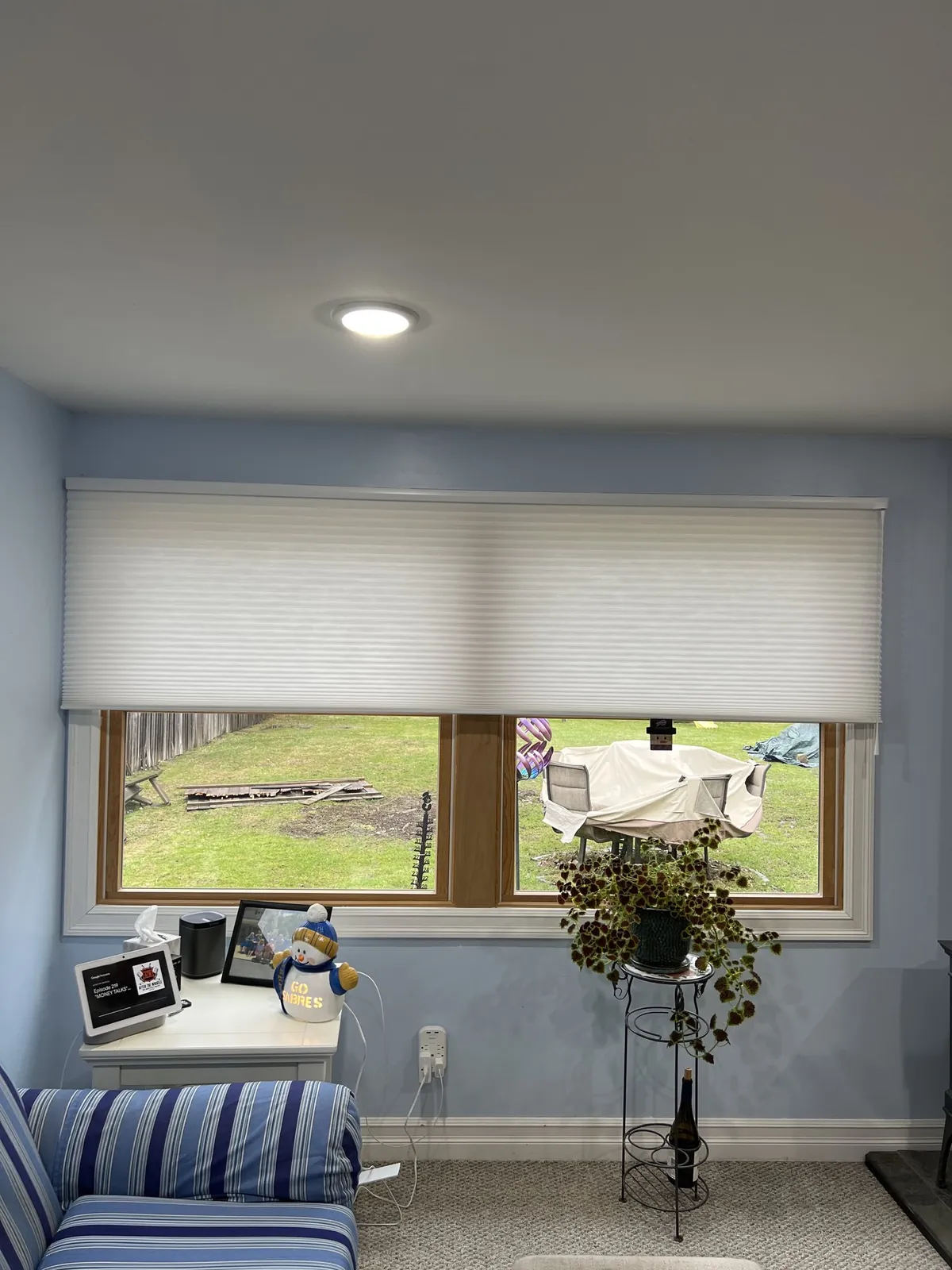
From the Landing to the Back River
Weymouth covers a lot of ground. Post-war capes and ranches fill the streets of North and South Weymouth. Older two-families cluster near Weymouth Landing, close to one another and close to the street. Newer condominiums line the land near the Back River. And along the river and harbor side, homes face open water.
Each part of town has its own window problem. Near the Landing it is privacy between close-set houses. In the capes and ranches it is everyday routine. By the water it is brightness: light off the river and harbor that pours into rooms built to face it. Motorized blinds in Weymouth, MA, handle all three with one system. A PowerView motor in each headrail lets you raise, lower and fine-tune every shade from a handset, from your phone or on a weekly timetable.
The shades are built for the windows you have. Nothing about the frame changes.
A few styles to start the conversation
Every option gets a look at your windows, but these come up often across Weymouth, and each one leads to its own Weymouth page.
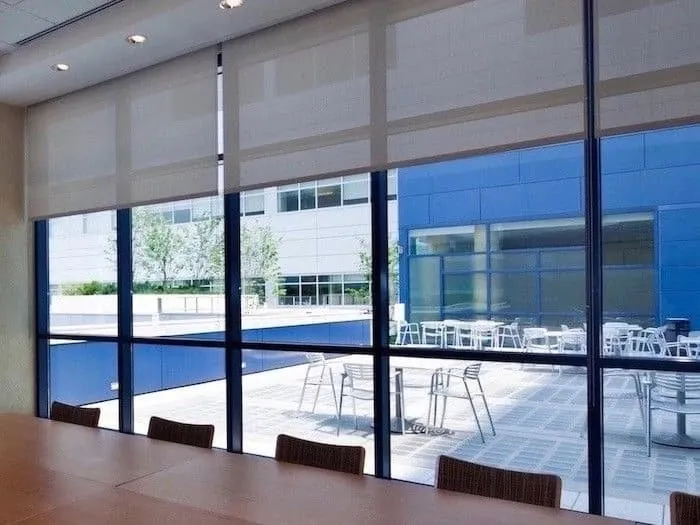
Roller shades
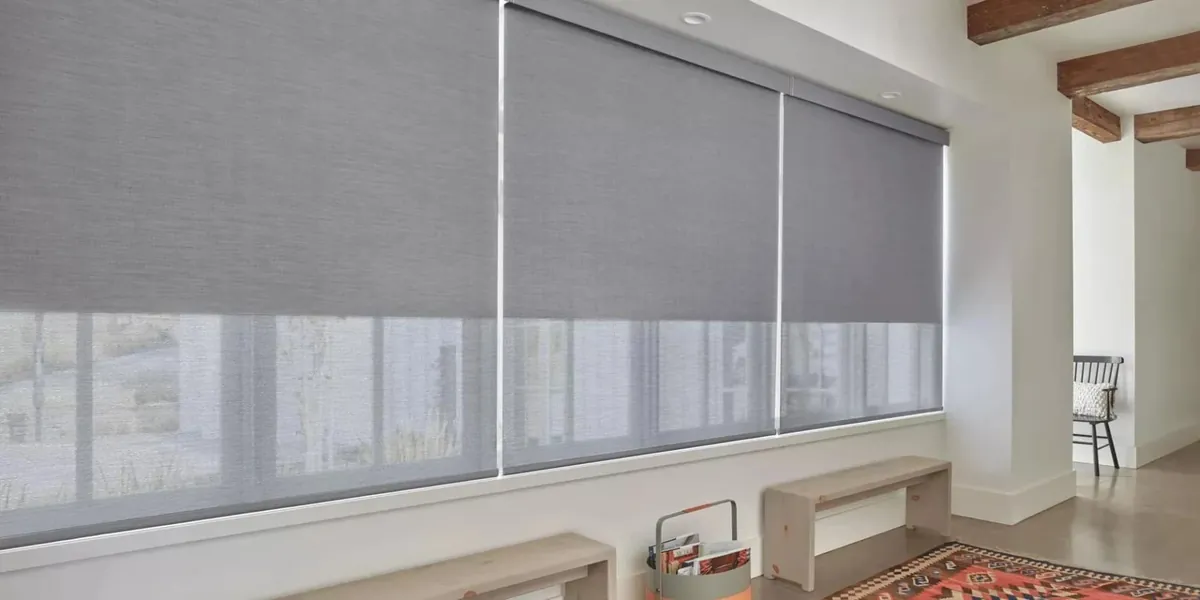
Screen fabrics that take the glare off the water while leaving the view in place. A natural fit for river and harbor rooms.
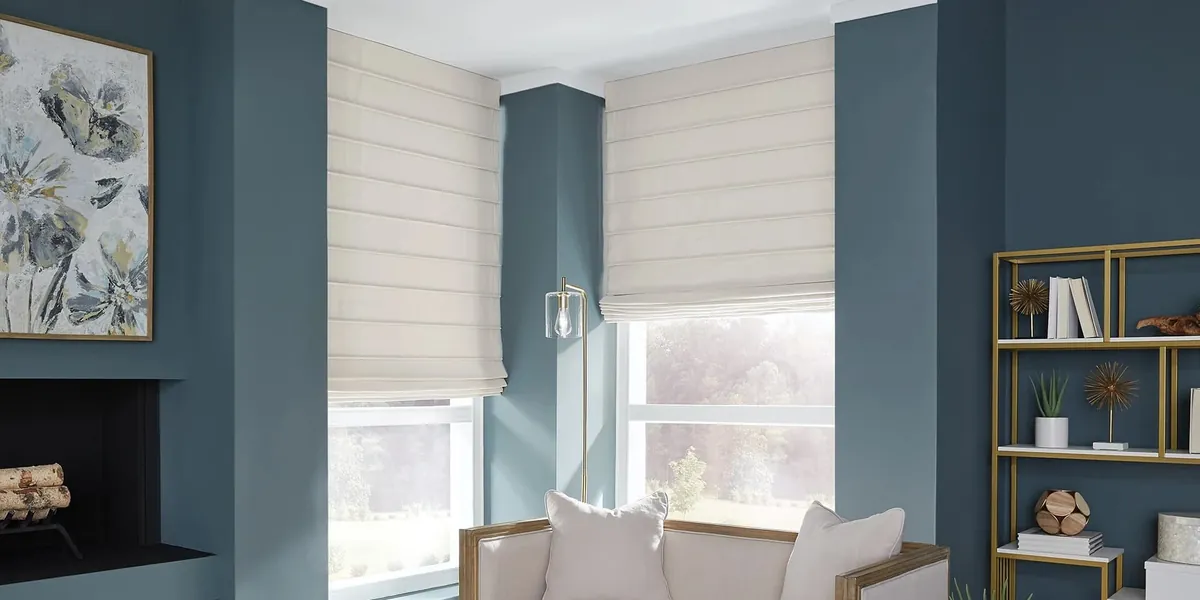
Roman shades
Soft folds for living rooms and bedrooms, raised and lowered evenly from a handset, with no cords hanging at the sill.
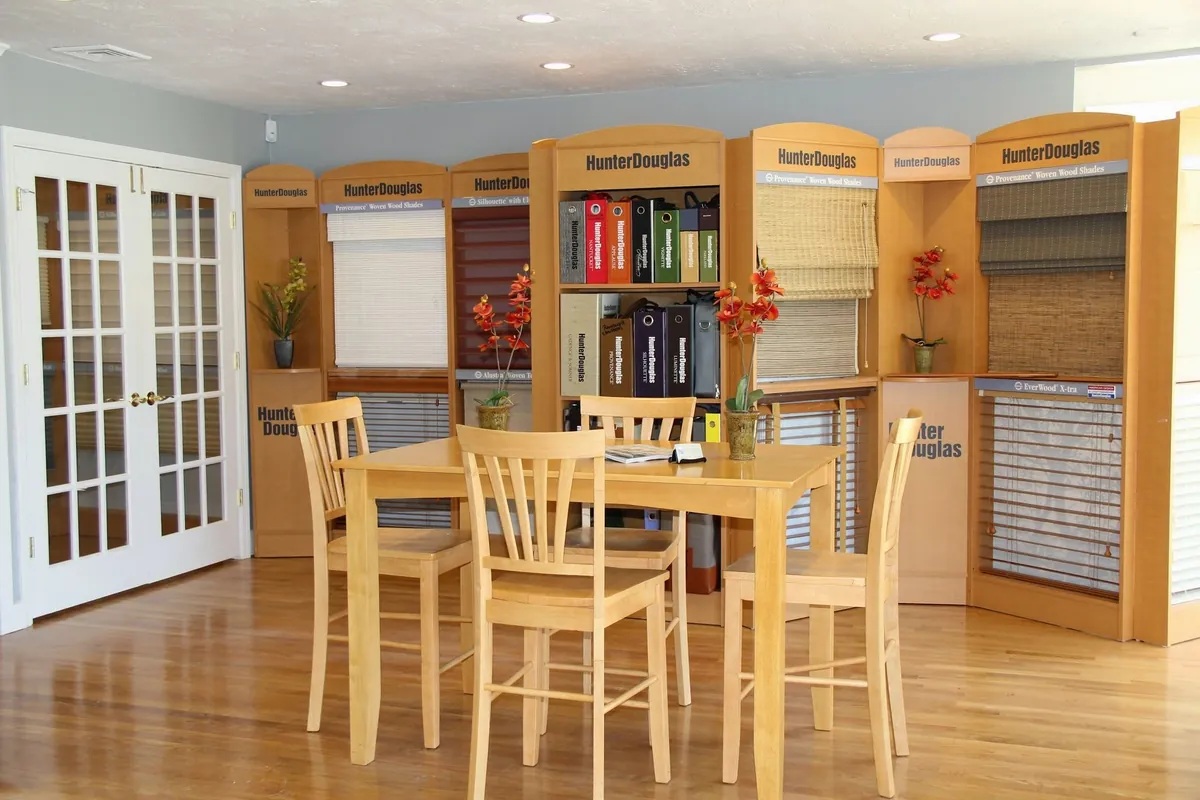
Hunter Douglas dealer
Why it helps that your Weymouth shades come from a Hunter Douglas Gallery dealer.
Water-side rooms and the brightest light in town
Homes on Weymouth’s river and harbor side are built to look at the water, which means their main rooms face it with as much glass as possible. That is wonderful most of the time. But open water reflects light, and on a bright day it bounces back up into a room from below as well as streaming in from above. It reaches screens, faces and furniture in a way that light over a lawn does not.
The usual hand-operated answer is a heavy shade pulled most of the way down, which solves the brightness and loses the view, the whole reason the room faces that way.
Motorization gives you a finer tool. A screen roller lowered to a stored height can cut the glare off the water while you still see the river or harbor through the weave. When the light eases, one press lifts it clear. A timetable can bring it down at the time of day the reflection usually peaks, and send it back up later, so the view is there for most of the day and the glare is managed without anyone getting up.
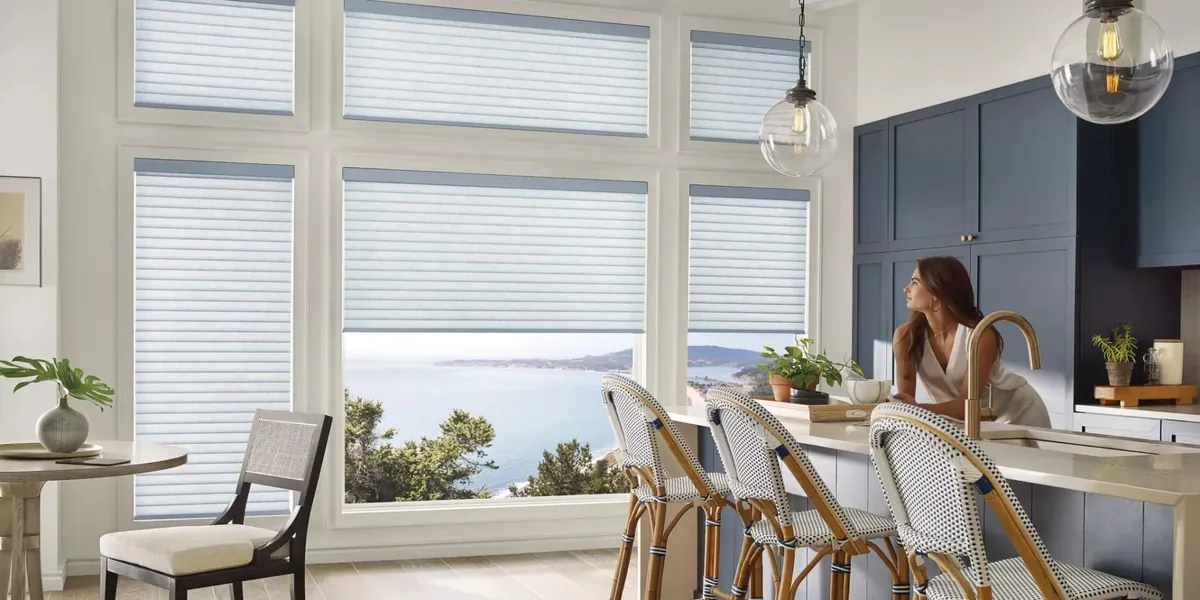
Condominiums near the Back River
The newer condominiums near the Back River tend to have big openings: sliders to a balcony or patio, wide living room windows and sometimes a corner of glass. Many face the river, and several share the same aspect along a building, so their light arrives at the same time every day.
Big glass and a regular pattern of light are exactly what motorized blinds in Weymouth handle best. The slider and the windows beside it can be linked so they move as one and finish at the same line. A stored “afternoon” height takes the edge off the river glare. An evening timetable closes the living room at a chosen hour. For anyone who travels, the same timetable keeps the unit’s shades moving on a normal pattern while they are away.
In a condo, the handset matters too. It works without a phone, so guests and family can use it without setting anything up, and it can sit in a wall cradle by the slider.
Two-families near Weymouth Landing
The older two-families around Weymouth Landing are a different story. They stand close together and close to the street, with front windows facing the sidewalk and side windows facing the next house a short distance away. Here the first problem is privacy, not glare.
On close-set houses, a motor makes it practical to adjust shades often enough to keep both daylight and privacy. Light-filtering honeycomb lets the sun through while hiding the room. A tilting blind blocks the line of sight across the gap and still sends light up to the ceiling. Because each change is a single press, you can open the side window when the house next door is quiet and close it again when it is not.
Each unit in a two-family can have its own complete setup, with its own shades, handsets, app and timetables, entirely separate from the other household. That suits owners who live upstairs and let the downstairs unit, or the other way round: either side can add shades, change timetables or replace a handset without the other noticing. Older openings near the Landing can also be less regular than modern ones, so each frame is measured on its own.
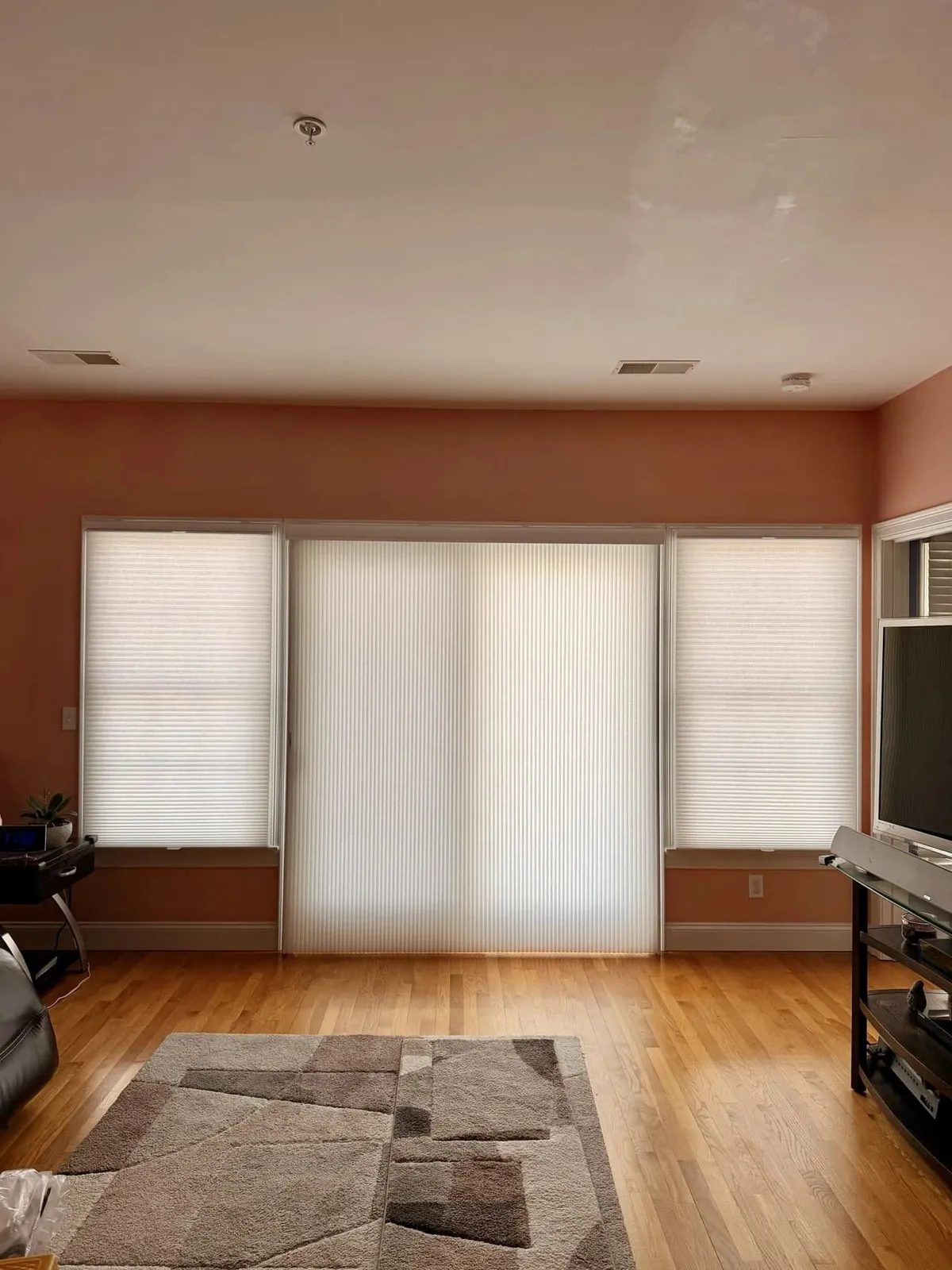
Capes in North and South Weymouth
Weymouth’s post-war capes put the living room, kitchen and often a bedroom downstairs, with more bedrooms tucked under the roof in dormers. Downstairs, furniture crowds the windows; upstairs, the dormer windows sit in narrow alcoves behind beds and dressers.
The dormers are the windows people most often want motorized. Reaching them by hand is awkward, so their shades tend to stay where they were left. On a motor, they answer a handset by the bed or open on a morning timetable. Room-darkening honeycomb keeps those bedrooms dim on early summer mornings until the hour you choose.
Downstairs, the front window and the window over the kitchen sink are the usual candidates: the ones adjusted most and reached with the most stretching. A light-filtering fabric on those two keeps the ground floor bright without showing the room to the street.
Ranches on one level
The ranches of North and South Weymouth spread every room along a single floor, with the living room facing the street and bedrooms down a hallway. Their openings are standard and square, so shades usually tuck neatly inside the frame.
On a ranch, the advantage is running the whole house as one. An evening timetable can close every shade at once; a morning timetable can open the living spaces while leaving bedrooms dark a little longer. The broad front window, often covered by two or three shades, can be linked so every panel stops at the same height. That simple routine is the reason many ranch owners first ask about motorized blinds in Weymouth.
Gray days and bright days on the water
Coastal exposure cuts both ways. On a clear afternoon, a river-facing room in Weymouth can be almost too bright to sit in. On a gray, overcast day, the same room wants every bit of light it can get, and any shade left halfway down makes it feel gloomy.
Hand-operated shades tend to get set for the bright days and left there. Motorized shades can follow the weather. On a dull morning, one tap lifts every shade on the water side fully clear; on a sharp afternoon, a stored scene brings them down to a screen height that holds back the glare. The timetable handles the usual pattern, and the handset or app covers the days that break it. That flexibility is a big part of why motorized blinds in Weymouth make so much sense on the river and harbor side.
Street-facing living rooms in North Weymouth
Away from the water, many North Weymouth capes and ranches have a living room that looks straight out at the street, with a broad front window and perhaps a smaller one on the side. Through the day it is the room most visible from the sidewalk, and at night, with the lamps on, it is fully on display.
A light-filtering shade on a stored daytime height lets light in over the top while keeping the room out of view from passers-by. At dusk, a timetable lowers the front shades together at the hour you choose. The front of the house looks tidy from the road at every point in the day, and nobody has to cross the room to manage it.
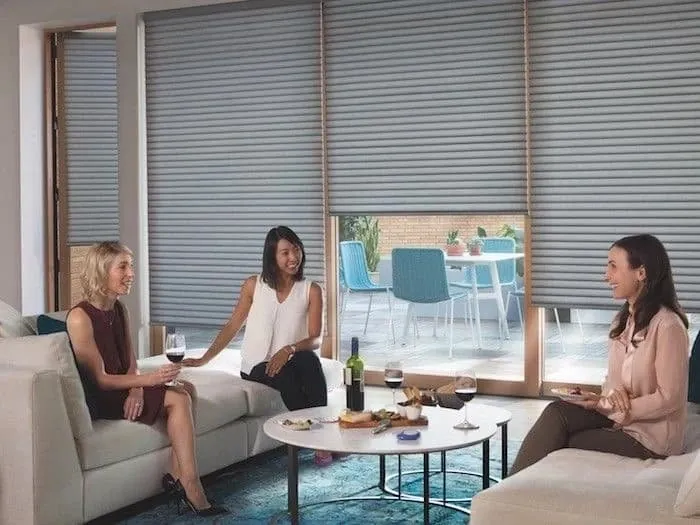
Working from a room with a view
A spare bedroom or a corner of the living room with a view of the river is a pleasant place to work, until the light off the water lands on the screen. In the condominiums near the Back River especially, the desk often ends up facing away from the window just to make the monitor readable.
A motorized screen roller lets the desk face the view. Lower the shade to a stored height when the reflection starts, raise it when it passes. A working-day timetable can manage the usual routine and leave days off alone, and the handset sits on the desk for everything else.
How you control it
A PowerView system offers three controls. Use one, two or all three.
Handset. Up, down and stop for a single shade, a room or any group you set up. No phone required, and easy for anyone in the house to use.
App. Your shades listed by room. Move one to an exact height, or save a set of positions as a named scene, such as “river glare”, and bring it back with a tap.
Timetables. Weekly plans that open and close chosen shades at set times. They repeat by themselves, and the handset can override them at any moment.
There is more on how motorized shades are controlled, and on whole-house timetables at window covering automation.
A day in a river-facing condo
Here is one way a Back River condominium might run.
- In the morning, the bedroom shade lifts on a timetable at the time the household wakes.
- Before work, one tap opens the living room and slider to the view.
- In the brightest part of the afternoon, the living room group drops to a stored screen height that cuts the glare off the water.
- Later, once the reflection eases, the same group lifts again so the view is clear for the evening.
- At a chosen hour, everything closes for the night.
The handset covers anything the plan does not, and the timetable can be changed in the app whenever the routine changes.
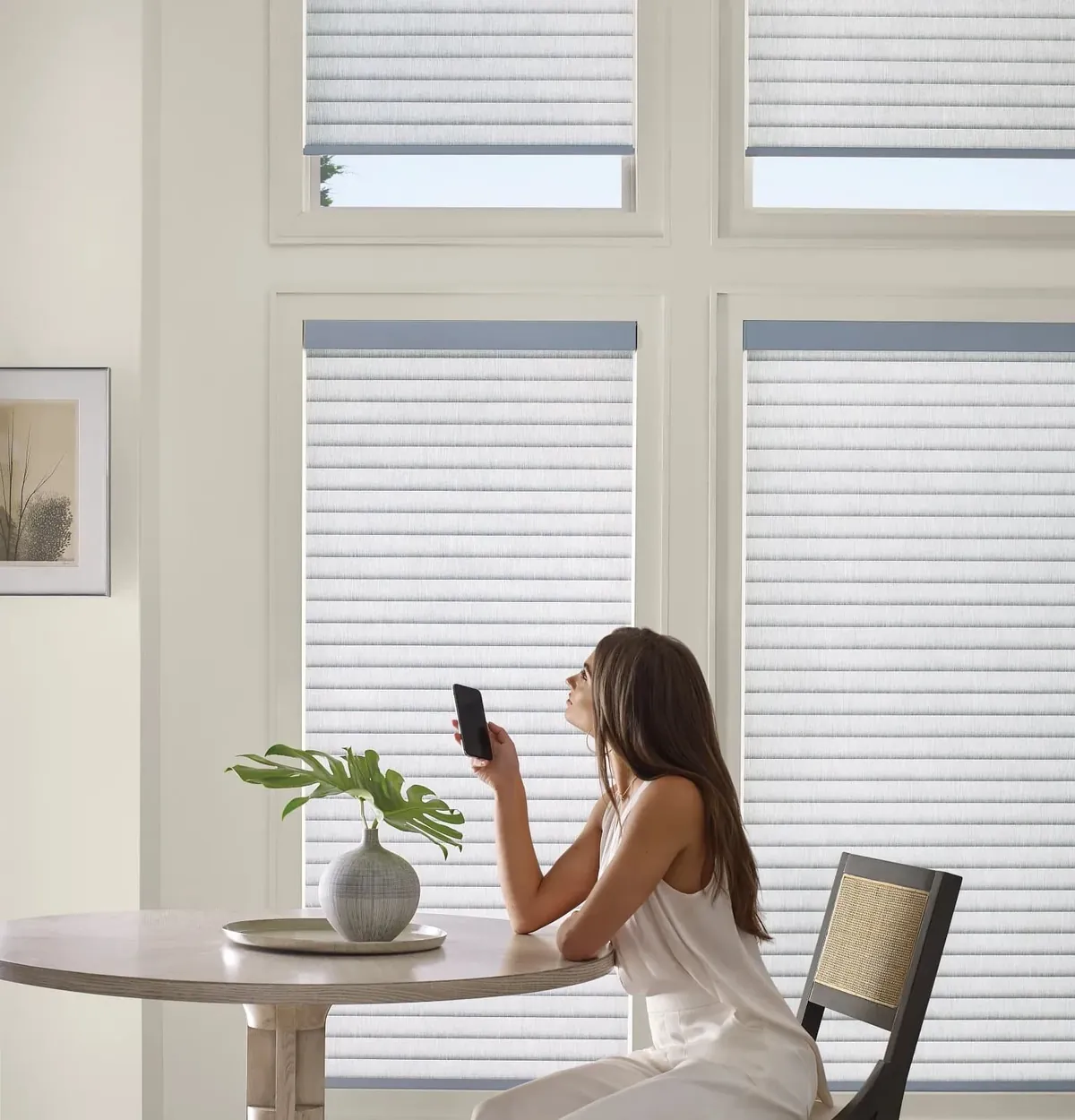
Harbor-side bedrooms
A bedroom facing the water gets the morning light twice: once from the sky and once off the surface. Even a light-filtering shade can feel bright on those mornings.
Room-darkening honeycomb on a motor keeps the room dim until a time you choose, then opens on its own. If you would rather wake to the view, the timetable can lift it at the hour you pick on some days and leave it closed on others. A handset on the nightstand covers everything in between.
Kitchens that look toward the water
In many Weymouth homes on the river and harbor side, the kitchen is placed to catch the view, often with a run of windows over the counter or a slider to a deck. That brings beautiful light and, at certain times of day, glare straight into the eyes of whoever is at the stove or sink.
A screen roller on a motor can drop just far enough to cut that light and keep the view, from a handset on the counter. Linked with the slider and any other window on that wall, the whole kitchen moves together.
Matching shades across a building or a street
Near the Landing, a row of close-set two-families is seen together from the sidewalk. By the Back River, condominium windows line up across a building. In both places, a single window with its shade at a different height from its neighbors stands out.
Linking shades fixes that inside your own home. Front windows, or every window on one wall, can be grouped to finish at one height every time they move. From outside, your windows look orderly; from inside, the room looks calmer.
Choosing what to motorize first
You do not need to motorize every window at once. In Weymouth, common first choices depend on the house:
- By the water: the living room or kitchen wall that faces the river or harbor.
- In a Back River condo: the slider and the windows beside it.
- Near the Landing: the side windows that face the next house.
- In a cape: the dormer bedrooms upstairs.
- In a ranch: the front room and the hallway of bedrooms.
Later shades join the same handsets, app and timetables, so the system can grow at your own pace. Plenty of households find that motorized blinds in Weymouth, MA, start with one difficult room and spread from there.

We bring the showroom to Weymouth
Weymouth is covered by our Canton shop-at-home service, so the choosing happens at your house. A van full of Hunter Douglas samples comes to you, and every fabric is held up to your own windows. Read about the service on our Canton shop-at-home page.
That is especially important by the water. Only your own windows can show how much glare a screen fabric cuts, and how much of the river or harbor you still see through it. During the visit we also work out the links, timetables and handsets, and where each motor gets its power. Each window is measured, and a free estimate follows for you to consider.
Interior design consultations are also available if you would like help with color and fabric. For a showroom visit as well, the nearest to Weymouth is Franklin; see the Franklin showroom page.
The dealer and the installers
Blinds & Designs is a Hunter Douglas Gallery dealer, so a Weymouth home can choose from the whole range, from screen rollers for a river room to honeycomb for a bedroom and roman shades for a living room, and run all of it on one PowerView system.
Installation is by certified Hunter Douglas installers, who fit each shade, test every motor and set up the links and timetables agreed at the visit. We also repair blinds and shades you already own. Browse motorized blinds and shades, or see every service we offer in town on our Weymouth page.
Questions from Weymouth
Our living room faces the harbor. Can we cut the glare and keep the view?
Yes. Screen roller fabrics are made for that. Stored at the right height on a motor, they take the edge off the light while you still see the water through them.
We live in a condo by the Back River. Can the slider be motorized?
Yes. A slider can take a motorized shade, and it can be linked with the windows beside it so they all move together.
Our two-family is close to the next house. How do we keep privacy without a dark room?
Light-filtering honeycomb and tilting blinds both let daylight in while hiding the room. On a motor they are easy to adjust as often as you like.
Can we add more shades later?
Yes. New PowerView shades join the same handsets, app and timetables.
Is there a showroom near Weymouth?
The closest is Franklin. Most Weymouth customers choose at home, because our van brings the samples to the house.
Begin with the room that faces the light
In Weymouth that might be a harbor-side living room, a Back River condo’s slider, or a side window near the Landing. Request a consultation and we will come to the house with samples, measure and leave a free estimate.
If you would rather ask a question first, use the call button, or read about our in-home consultations.