
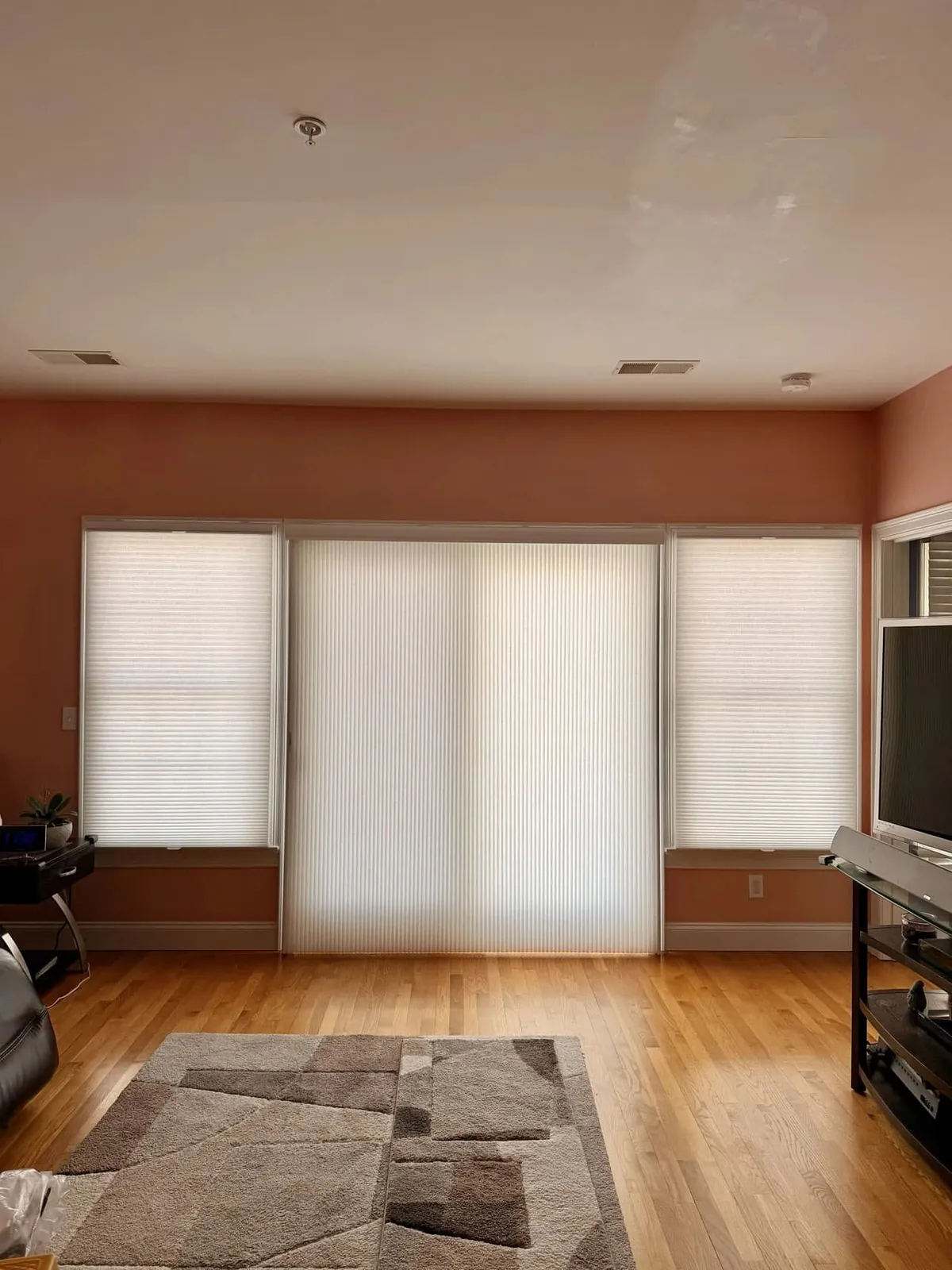
Pond light and windows that fit
Pembroke’s housing grew up around its ponds. Post-war ranches and capes sit near the shorelines, many of them with a living room or a back porch turned to face the water, and newer colonials have filled in the land off Route 14 and Center Street. Almost all of it was built with standard modern window sizes: double-hung units, picture windows, sliders and the occasional bay.
That is good news for anyone choosing window coverings. With regular openings, nearly the whole catalog can sit neatly within the frame, so the decision is less about what will fit and more about what each room should do. For a pond-facing room, that usually means protecting the view first and handling the glare second. For a bedroom on the road side, it means privacy and a dark morning.
As a Hunter Douglas dealer in Pembroke, MA, Blinds & Designs brings the full Hunter Douglas range to the house. Gallery status with Hunter Douglas means nothing in the range is off limits, and installers certified by Hunter Douglas hang every piece.
Six Hunter Douglas families for Pembroke rooms
A ranch, a cape and a colonial will each use these differently, and a good Hunter Douglas dealer in Pembroke will mix them within one house rather than push a single product. Each card links to our page for that product in town.
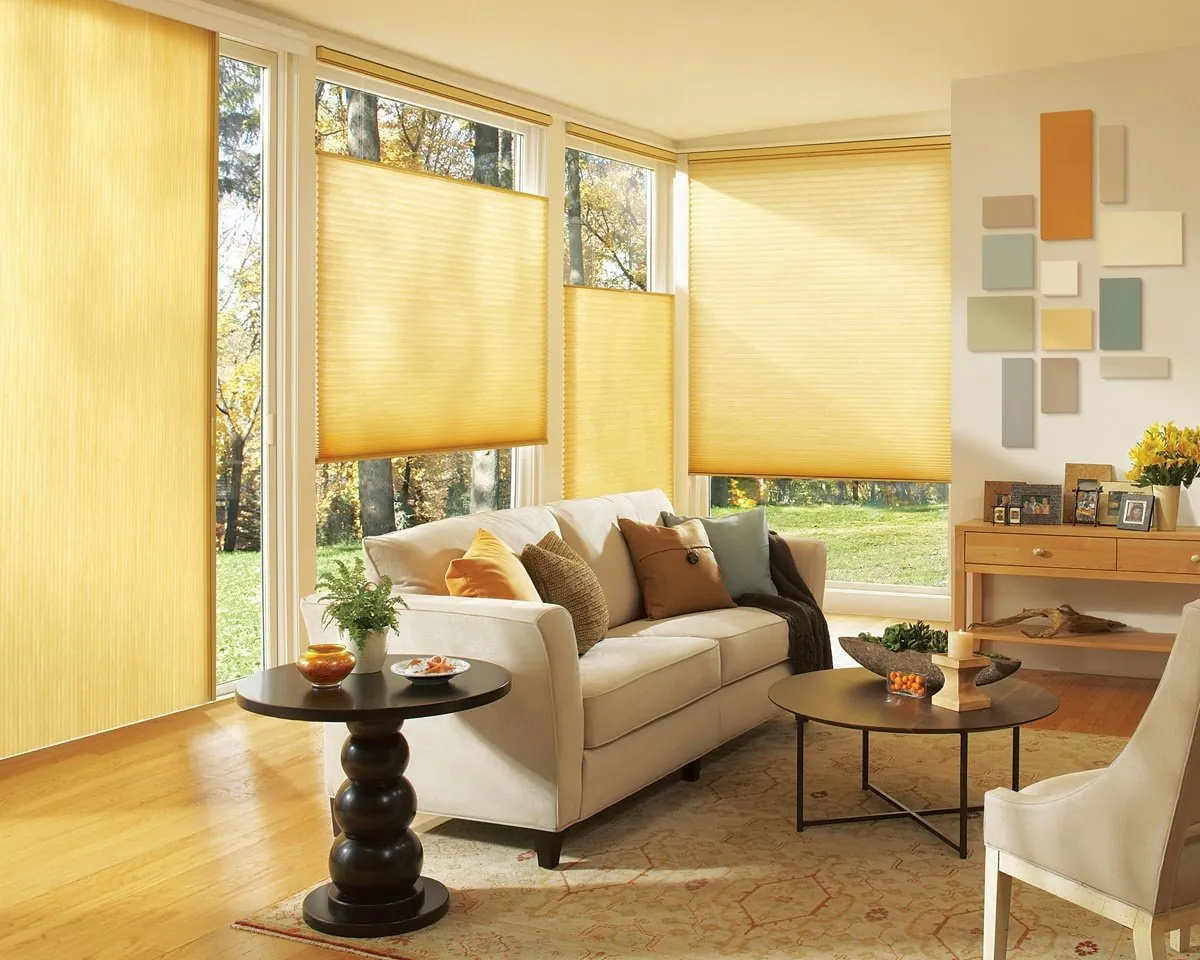
Duette and Applause honeycomb
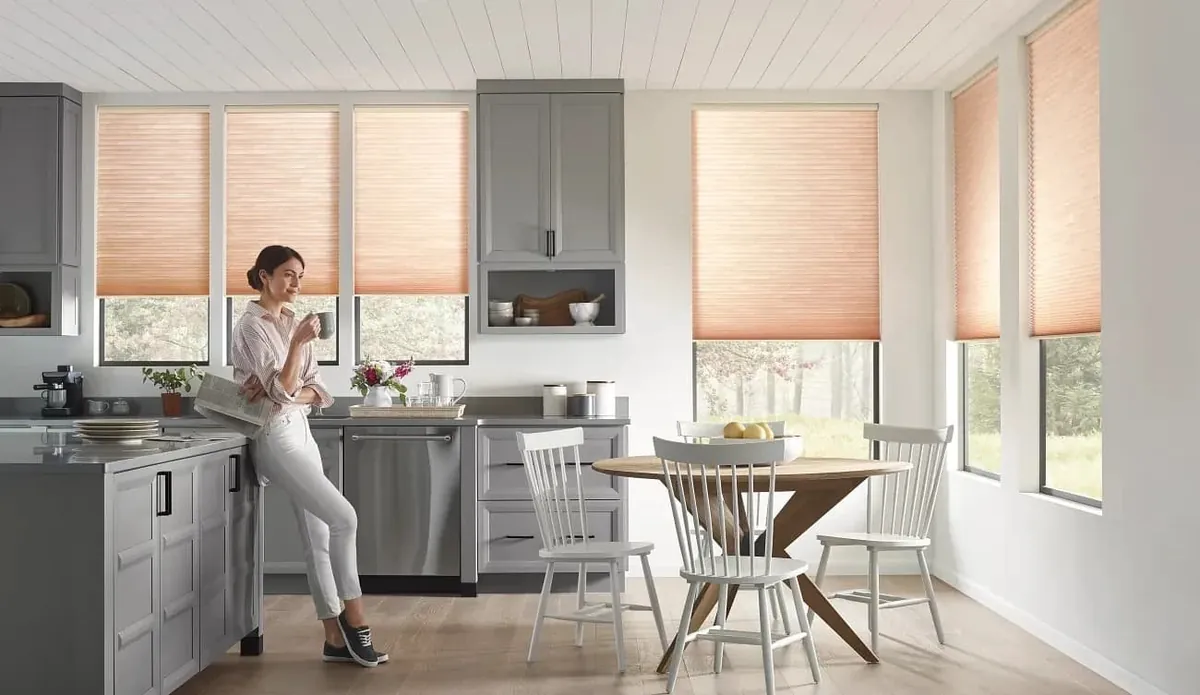
Cells of still air against the glass make a cape bedroom warmer and a ranch living room calmer in summer sun.
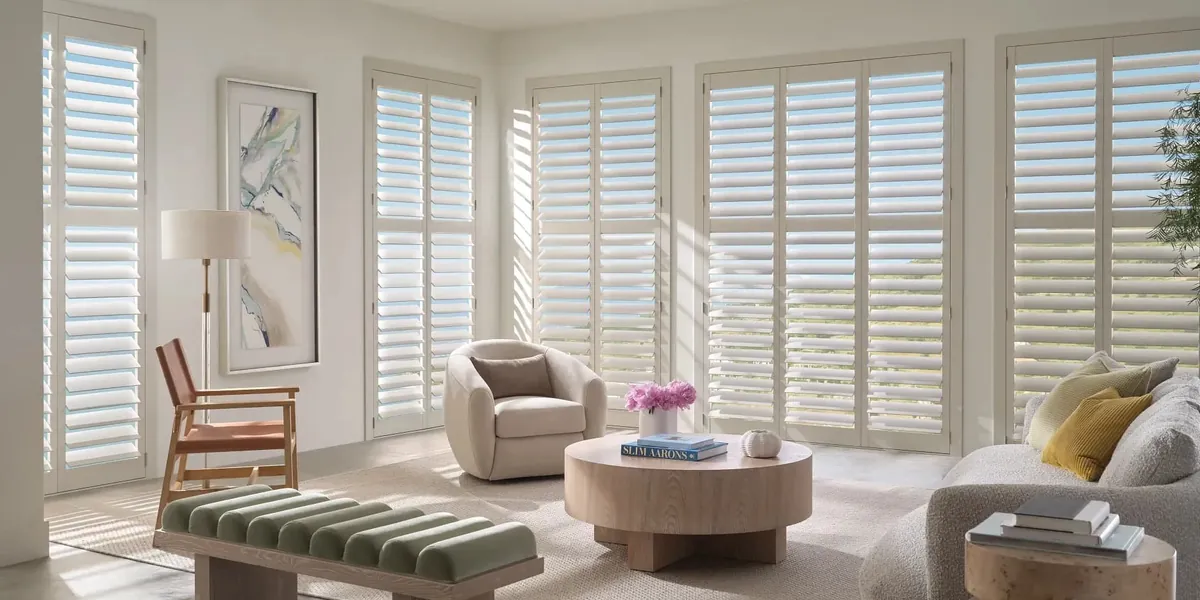
Plantation shutters
Polysatin Palm Beach, hybrid NewStyle or hardwood Heritance. Tilting louvers steer the light and dress up a plain modern window.
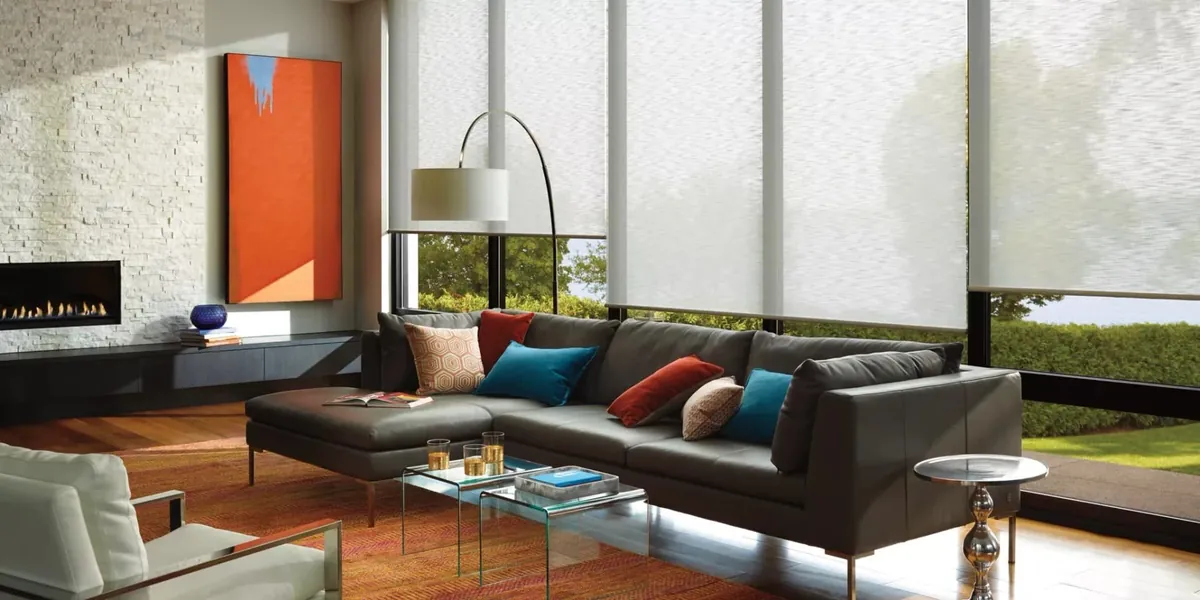
Roller and screen shades
Plain Designer rollers, Designer Screen and the richer Alustra fabrics. Screens leave the pond visible and blunt the glare.
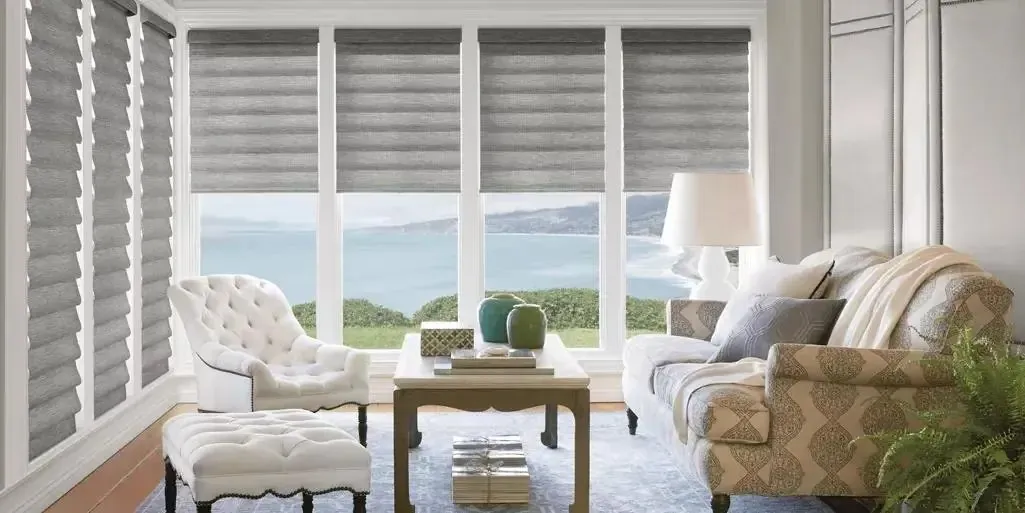
Roman shades
Vignette and Carole Roman folds bring softness to a sunroom or a dining room, flat or relaxed.
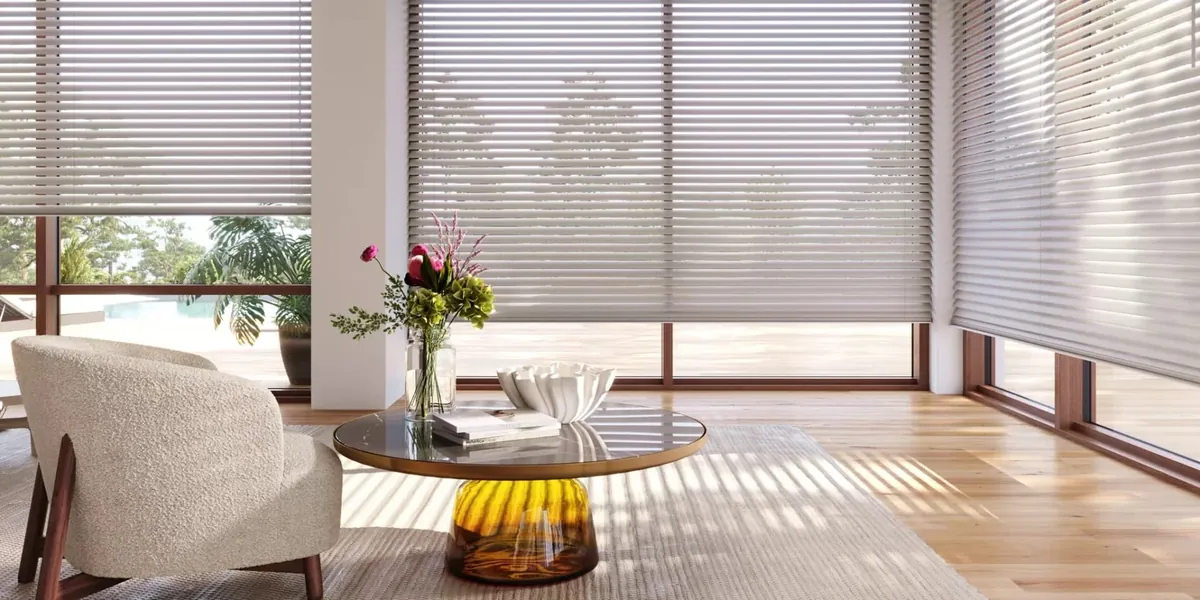
Blinds in wood, faux wood and metal
Parkland, EverWood and metal blinds, for kitchens, baths and any room where you want to angle the light exactly.
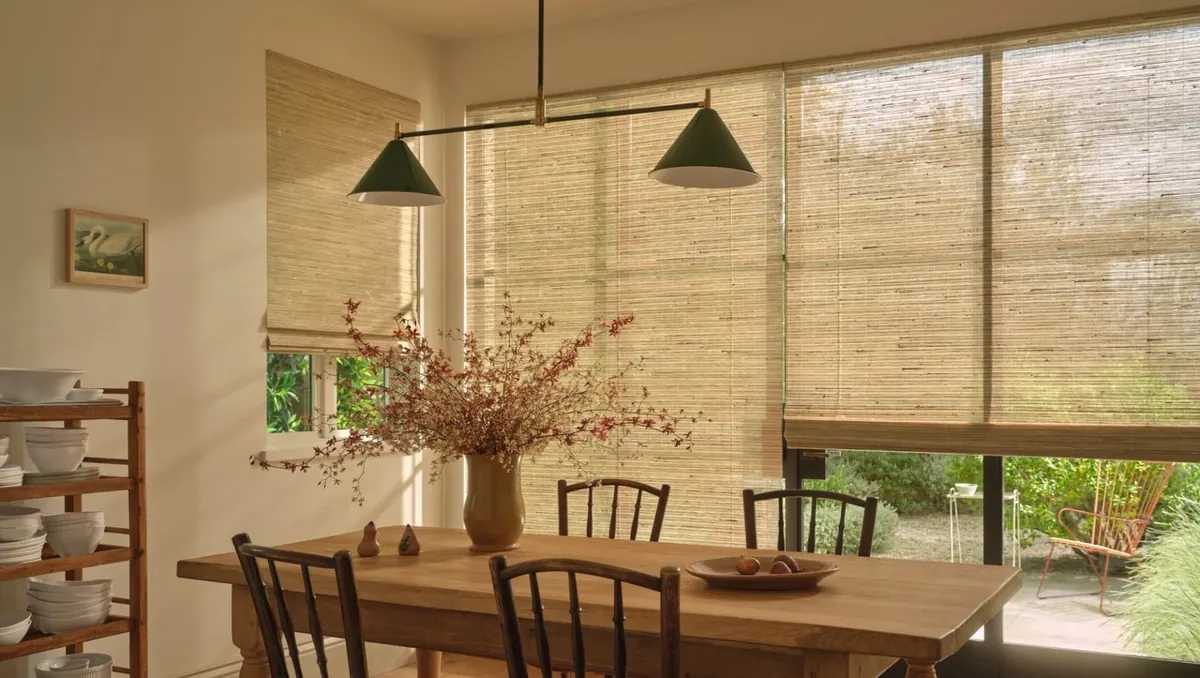
Woven wood and drapery
Natural woven shades and Carole drapery add texture to a room by the water without hiding it.
Why standard sizes make the choice easier
In an older town the first hour of a consultation can go on fit: shallow frames, crooked heads, sash hardware in the way. In most Pembroke houses that hour is free for the more interesting questions. Modern double-hung units have square frames and enough depth for an inside mount, which means the shade sits within the opening, the trim stays on show, and the window looks tidy from both sides.
It also means a whole house can be done consistently. A lot of Pembroke houses settle on a single product in a single shade for the road-facing windows, so the house reads as one from the road, then choose different fabrics and opacities inside. A ranch can carry light-filtering honeycomb in the living room and room-darkening honeycomb in the bedrooms, both in the same shade of white, and nobody outside can tell the difference.
Where standard sizes do not quite apply, it is usually a later change: a picture window added to a cape, a sunroom built on the back, a slider cut into a ranch wall. Those get measured on their own and matched in height to their neighbors.
The ranch, front to back
A post-war ranch near the water usually runs in a predictable order, and each room asks for something a little different.
The front room. Often the largest window in the house, a picture window or a pair of double-hung units facing the road. Privacy matters here in the evening, light matters during the day. A top-down, bottom-up honeycomb shade lets you cover the lower half and leave the sky open. Shutters do the same job with tilting louvers and look good from the street.
The kitchen. Steam and splashes rule out delicate fabrics over the sink. EverWood faux wood blinds or a Palm Beach shutter cope with moisture and wipe clean. A Roman shade suits the window over the table, away from the sink.
The back room or porch. This is the room that faces the pond, and it gets the next section to itself.
The bedrooms. Usually wide, low windows along the side or back. Room-darkening honeycomb keeps them dark in the early hours and warmer on cold nights.
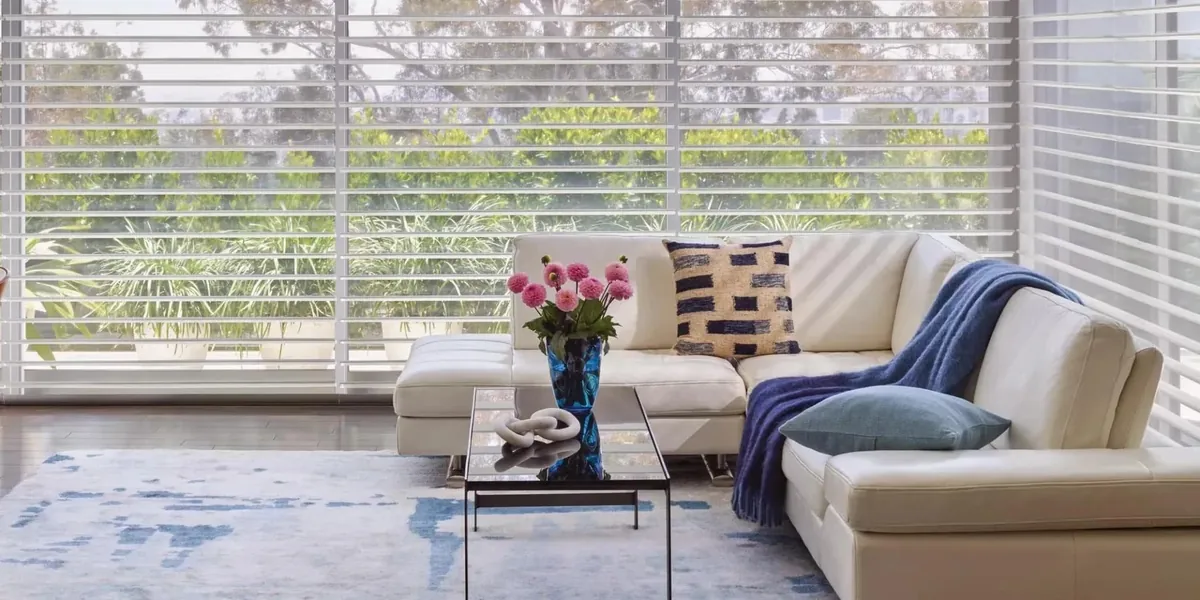
Capes with dormers and knee walls
The capes near the ponds have their own pattern. Downstairs is much like a ranch, with regular double-hung windows. Upstairs, the bedrooms sit under the roof, with dormer windows set into the slope and knee walls that bring the window close to the bed or the desk.
Dormers are usually narrow and deep, which suits an inside-mounted honeycomb shade or a small shutter very well. A honeycomb shade stacks into a slim band when it is raised, so a narrow dormer keeps nearly all its daylight. Because the window sits close to where you sleep, a room-darkening fabric is the usual choice, and the cells hold a band of still air against the glass on the coldest nights.
Some capes have had their upstairs opened up, with a shed dormer running most of the width of the house. That gives you a row of matching windows rather than two small ones, and it often looks best with one product across the whole row, set to the same height.
Pond-facing rooms come first
The rooms that face the water are where most Pembroke decisions are made. Many were built, or later rebuilt, around the view: a wide picture window, a slider to a deck, a sunroom with glass on three sides. The light off the water is strong in the afternoon and bounces into the room at angles that a curtain alone will not catch.
The aim is to keep the pond in sight and still sit comfortably by the glass. Several Hunter Douglas lines do that in different ways.
- Screen shades. A Designer Screen or Alustra screen fabric cuts glare and heat at the window. The more open the weave, the more of the pond you see, so we bring a range to compare.
- Sheer shades. Silhouette and Pirouette hold soft fabric vanes between sheer layers. Tilt the vanes and the room dims while the shoreline stays visible through the facing.
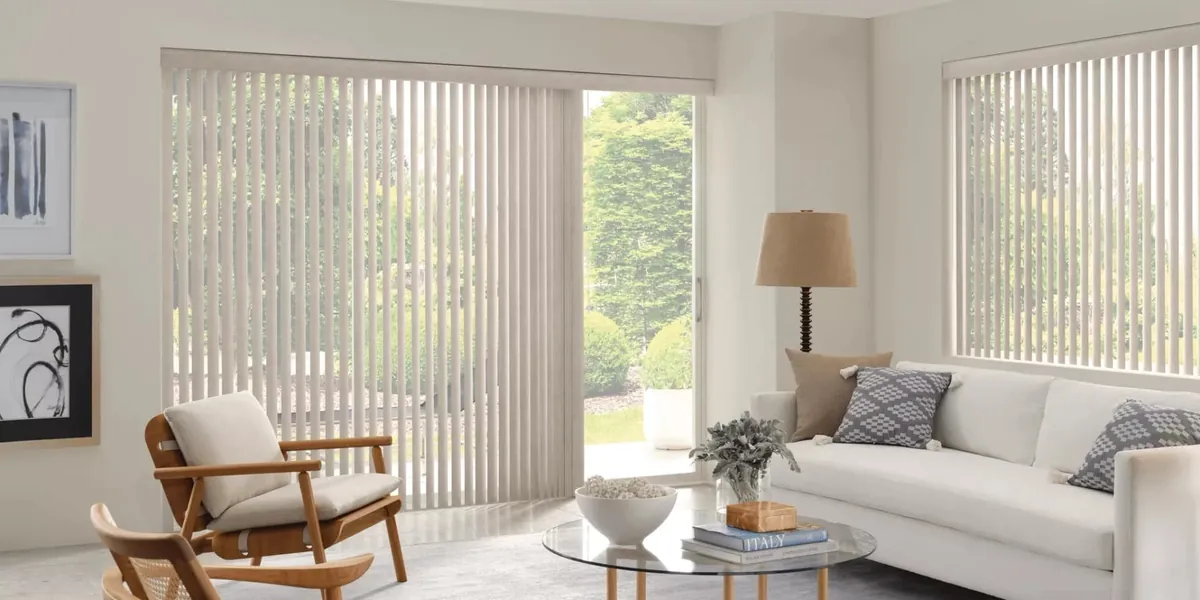
- Vertical sheers. Luminette hangs in soft vertical panels and slides aside for a slider, so the door to the deck stays easy to use.
- Light-filtering honeycomb. Spreads the light evenly through the room and slows the heat coming through the glass on a summer afternoon.
We also think about reflection. Glare off a pond can arrive from below the line of the sun, so a shade that drops from the top may not catch it. Top-down, bottom-up operation and screen fabrics are useful for exactly that.
Colonials off Route 14 and Center Street
The newer colonials have more rooms and more windows, and they are spread over two floors. The front elevation usually carries a row of matching double-hung windows, with a family room at the back that opens through a slider or French doors to the yard. Above the front door there may be a window on the stair landing, and some houses have a two-story foyer with a tall window that is hard to reach.
A Hunter Douglas dealer in Pembroke sees a lot of these houses, and the plan tends to come together the same way. The front windows get one consistent product. The family room gets something that handles light and the slider, such as a vertical honeycomb or a Luminette. The bedrooms get room-darkening fabrics. The high foyer window gets PowerView, so it moves from a remote or a wall switch instead of a pole.
Sunrooms and three-season rooms
A lot of pond houses have gained a sunroom at some point, often on the side that faces the water. These rooms are glass on two or three sides, sometimes with a sloped or high ceiling, and they swing hard between seasons: hot and bright on a July afternoon, cool by the glass in October.
They usually need a product that can be lowered most of the day without making the room feel closed. A light-filtering honeycomb shade does that and also slows the heat coming in. A screen shade keeps more of the view. For a sunroom with many narrow windows side by side, we plan the shades so every bottom rail sits at the same height when lowered, which keeps a busy wall of glass looking calm. Where windows run high under a sloped ceiling, motorized shades save a lot of reaching.
Color and fabric for a bright room
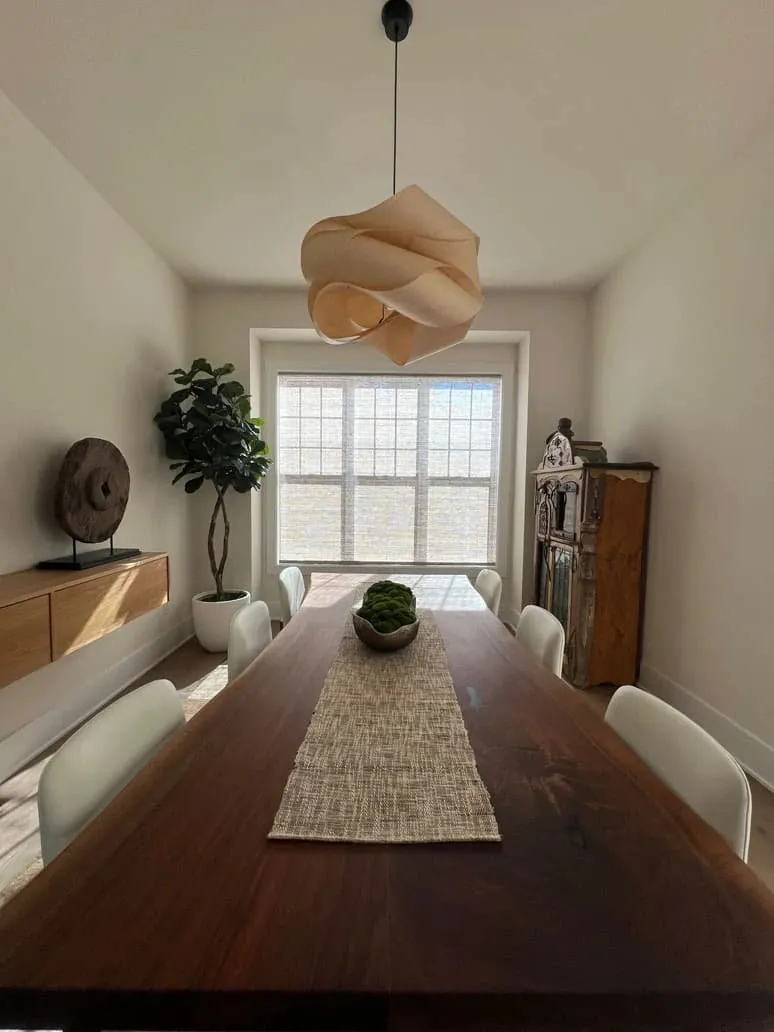
Rooms that take strong daily light, and especially light reflected off water, are hard on color. Darker and stronger fabrics can soften over time on a window that faces the afternoon sun. Lighter, neutral fabrics tend to hold their look longest there, and they also keep a pond room feeling open. We point out the fabrics that suit a bright window when you are choosing, and our guide to choosing fabric for a sunny room covers the same ground.
Inside the house, away from the water, you have more freedom. A deep color in a cape bedroom or a pattern on a Roman shade in the dining room will live a quieter life.
Choosing by what the window has to do
It helps to ask what each window needs before you think about products. Most needs fall into a few groups.
- Light without glare. Screen shades, sheer shades and light-filtering honeycomb.
- Privacy by day and night. Shutters, top-down, bottom-up honeycomb, or a sheer shade with vanes that close.
- Darkness for sleep. Room-darkening honeycomb, room-darkening roller shades, or shutters with tight-closing louvers.
- Warmth by the glass. Honeycomb, especially a double-cell fabric.
- Reach. PowerView motorization for anything high, wide or behind furniture.
- Moisture. Palm Beach shutters and EverWood faux wood blinds.
Most houses use three or four of these. Our guides on shades or blinds: how to choose and the best shades for sun and glare go into more depth.
Children’s rooms and cord-free windows
Family houses near the ponds often have a child’s bedroom or a playroom on the ground floor, with a low window that small hands can reach. For those rooms we steer toward cordless lift systems, where you raise and lower the shade by its bottom rail and there is no cord hanging at the side. Honeycomb, Roman and roller shades all come that way, and motorized shades have no cord to begin with.
A cordless shade is tidier in any room, too. With nothing dangling beside the window, a row of shades along a ranch bedroom wall looks cleaner, and there is no cord lock to wear out on a window that is opened every morning. We point out which lift suits each window as we go, so you can choose room by room rather than all at once.
What happens when we visit
We bring the showroom to you. Our vans carry samples, so you see each fabric at your own window, in the light it will live in. A visit usually runs in five parts.
- You request a consultation online or with the call button, and we settle on a time.
- We start in the rooms you care about most, often the one that faces the pond.
- You hold samples against the glass and compare fabrics, opacities and finishes side by side.
- We measure every window and note how each one should mount and operate.
- You receive a free estimate and decide when you are ready.
If you would like help with color and fabric across a whole room, our interior design consultations cover that. Our guide to what happens at an in-home consultation explains the visit in full.
PowerView for a house on the water
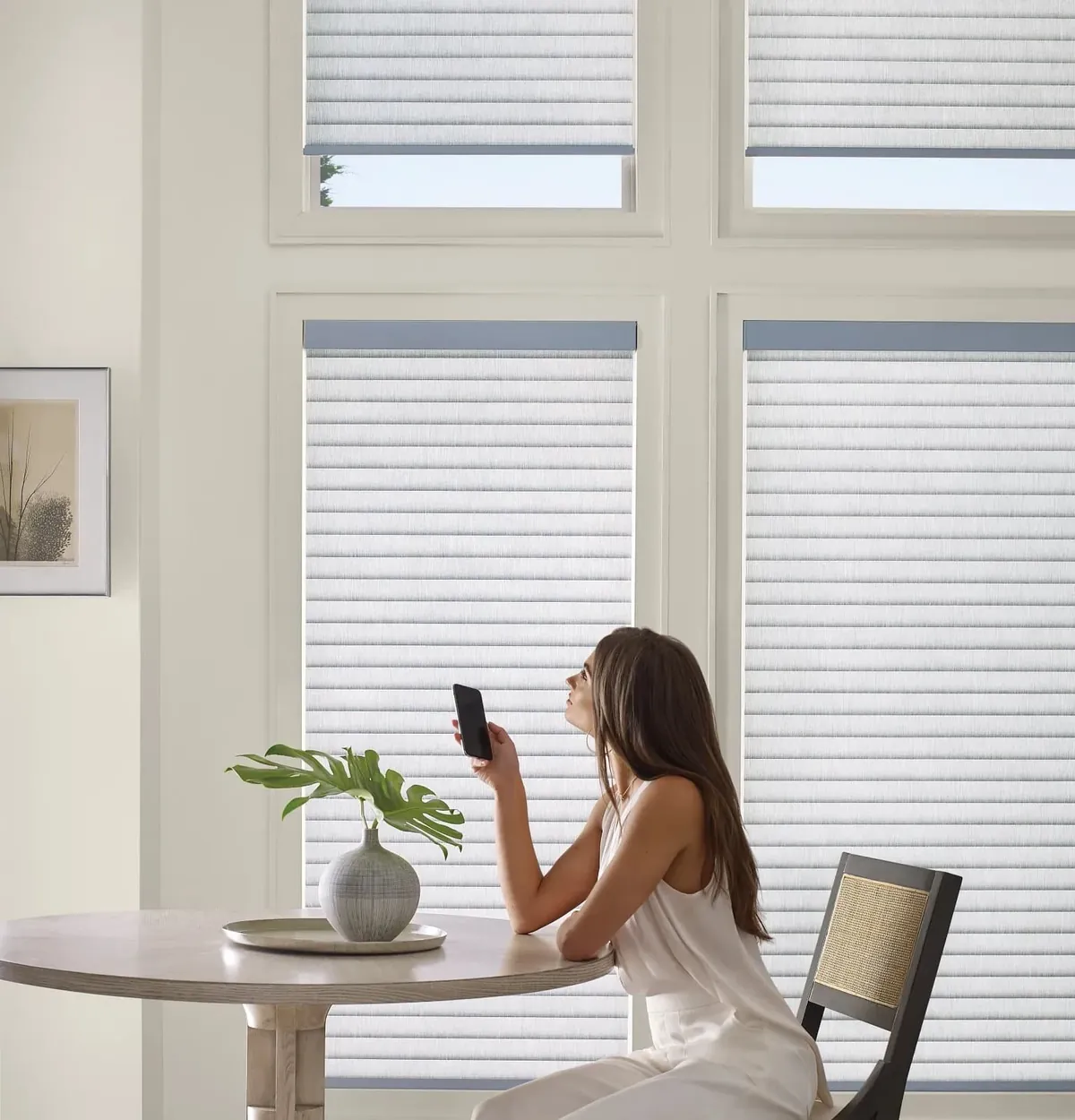
A pond-facing room changes through the day. Morning is easy, midday is bright, and the hour before sunset can be blinding. PowerView lets the shades follow that pattern for you: set a schedule, and the screen shades drop when the afternoon light hits the water and rise again at dusk.
It also helps with the windows people stop using. A shade behind a sofa, a tall foyer window or a row of sunroom windows is easy to leave in one position for months. With a motor fitted, each answers to the app, a handheld remote or a wall switch, alone or in a group.
Any Hunter Douglas dealer in Pembroke can sell a motor; what matters is planning it. Switch positions and the power plan for every motor are decided with you at the visit. Our page for motorized blinds in Pembroke has more detail.
Certified fitting, start to finish
When the order arrives, our installers fit each piece. They are certified by Hunter Douglas, and on a Pembroke house that care is mostly about consistency: every headrail at the same height across a row of windows, every bottom rail landing in the same place, a group of shades on a picture window lined up so they read as one.
Sliders and French doors get particular attention, because a door is opened far more often than a window. Vertical shades are set so they stack cleanly clear of the handle, and shades on French doors are fixed so they stay put when the door swings. Every lift is tested and every motorized shade paired before we leave, and we walk you through how each one works.
And if a shade falters years from now, our blind and shade repair service will look at it.

The Gallery difference, plainly
Hunter Douglas hands the Gallery title to a limited circle of dealers. For a Pembroke house, the practical result is choice. A pond room that needs a screen shade, a cape bedroom that wants honeycomb and a front room that suits shutters can all be planned together, from one dealer, in one visit.
Fitting is done by Hunter Douglas certified installers, estimates cost nothing and we offer interior design consultations for anyone who wants a hand with color and fabric. You can explore the brand on our Hunter Douglas page, or see everything we do in town on our Pembroke page.
The Sagamore showroom is our nearest, and you are welcome there if you would like to see products before we visit.
Pembroke window questions
Will shades mount inside my ranch windows?
Almost always. Most Pembroke houses have standard modern frames with enough depth for an inside mount, which keeps the trim visible. We confirm the depth of each window when we measure.
How do I cut the glare off the pond without blocking the view?
A screen shade or a sheer shade with tilting vanes keeps the water in sight while softening the light. Glare off water can come from below, so top-down, bottom-up shades and screen fabrics are often the most useful choices.
What goes on a slider to the deck?
Anything that travels sideways: a vertical Duette, Luminette sheers or vertical blinds, parked beside the frame so the door is free.
Can my front windows match while the rooms behind them differ?
Yes. Pick the street-side color first, then vary the fabric and opacity inside. The neighbors see one even face.
Do you charge for the estimate?
No. The estimate is free, and it comes after we have measured, so it reflects your actual windows.
Ready to see samples at your windows
Use Request a Consultation to book a visit: samples of the whole range at your glass, each opening measured, and a free estimate afterward. Your Hunter Douglas dealer in Pembroke, MA is a call away through the call button, or you can see the Sagamore showroom first.