
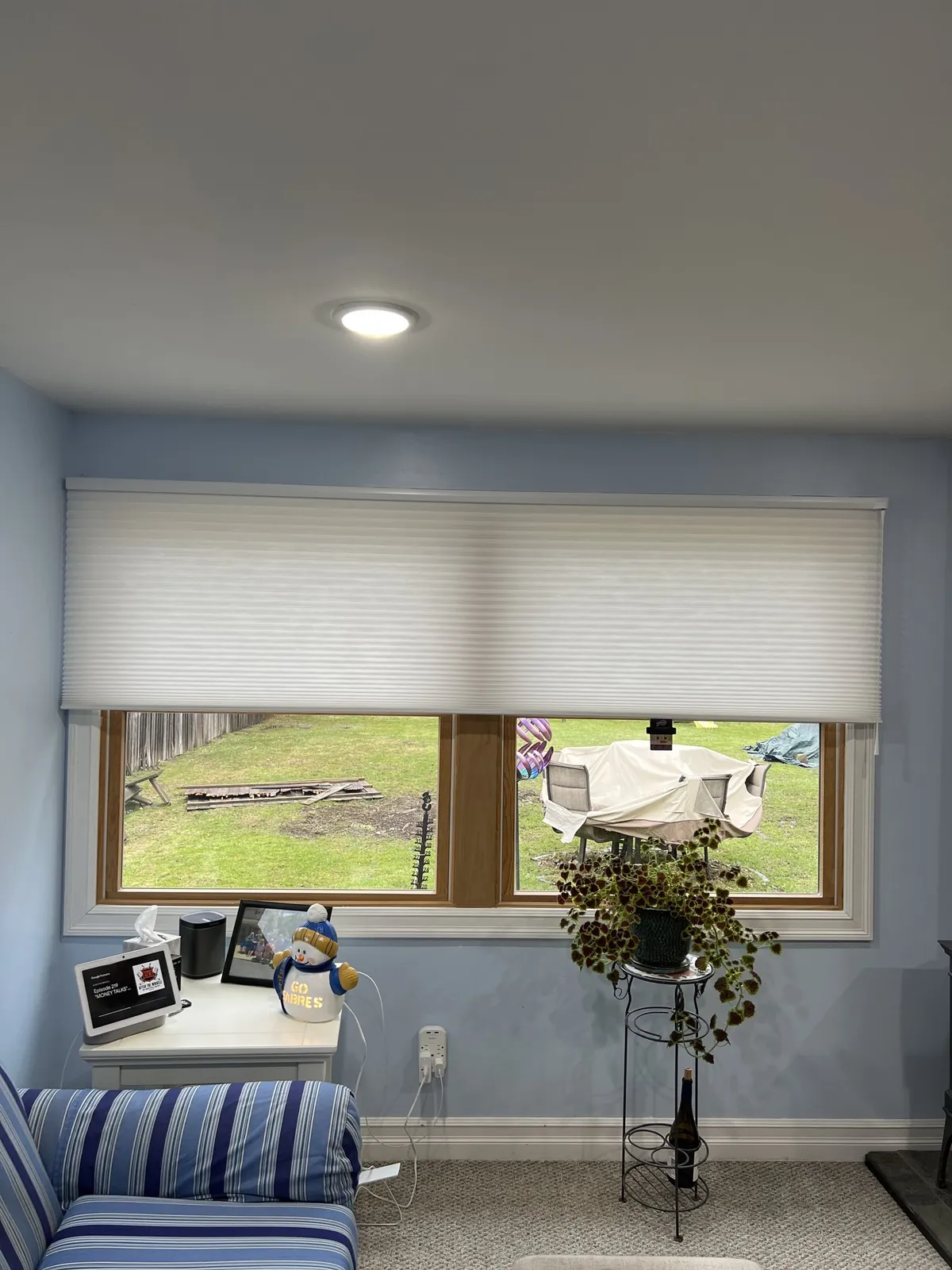
Small old windows and the reach problem in Acushnet
Drive Main Street from the village toward the Acushnet River and the houses tell their own story. Old farmhouses sit close to the road with their original openings still in place, capes tuck dormers into steep roofs, and between them the post-war ranches fill in the lots with wider living room windows and long bedroom wings. None of these windows came in a standard size, and plenty of them sit where a hand does not easily go. That pairing is exactly where motorized blinds in Acushnet, MA, earn their keep.
A farmhouse window that is a little narrower at the top than at the sill, or a cape dormer tucked behind a bed, is awkward enough to measure, let alone reach twice a day. A shade made to the exact size of that opening, with a quiet Hunter Douglas PowerView motor in the headrail, takes the reaching out of it. You press a button on a remote, tap the app on your phone, or let a schedule move it for you.
Because nothing in these houses is off the shelf, every shade we suggest is ordered to the measurements we take at your windows. The motor does not change that. It simply means the shade that fits the opening perfectly also moves without anyone climbing over furniture to reach it.
What we motorize in Acushnet houses
Almost every Hunter Douglas shade we carry can be ordered with a PowerView motor. When we plan motorized blinds in Acushnet, these are the shades that suit the farmhouse, cape and ranch windows along the river best. Samples of each come with us to your door.
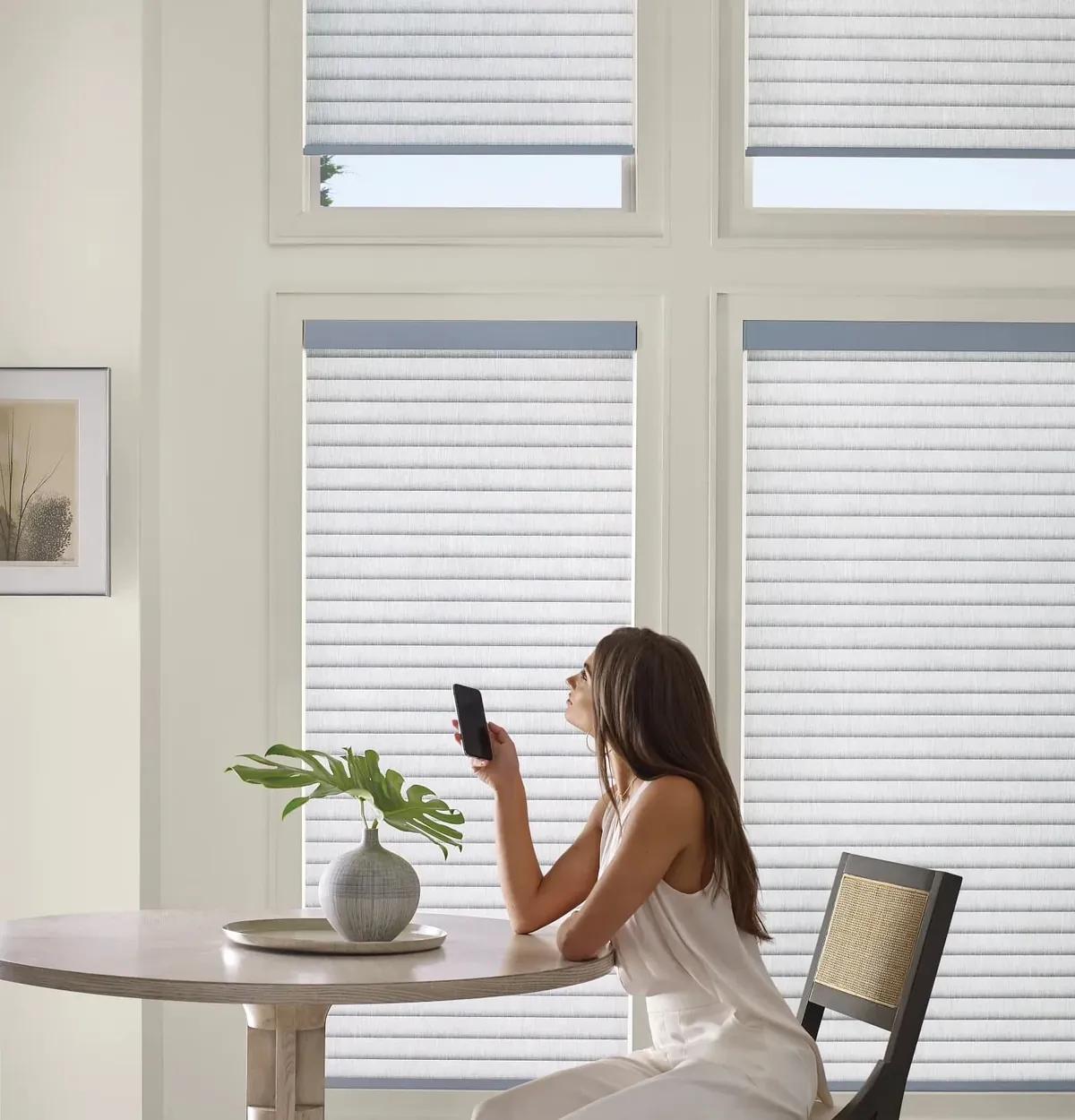
Phone and app control
Every motorized shade in the house appears in the PowerView app. Lower the bedroom wing from the kitchen, or check the front room from the back porch.
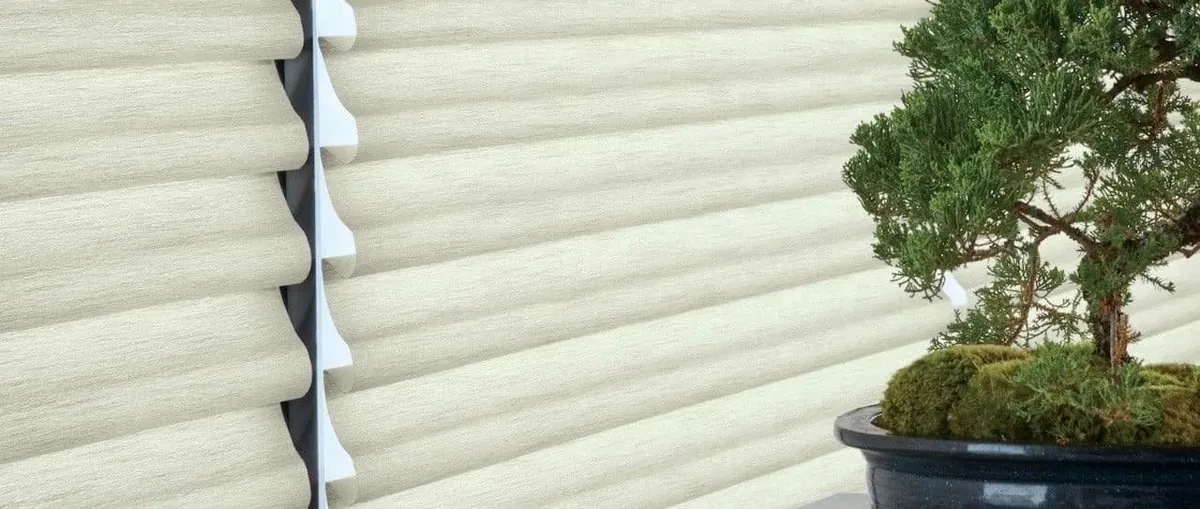
Sheer shades with soft vanes
Fabric vanes float between two sheer layers. Tilt them to control light, close them for privacy. A good match for a ranch living room window.
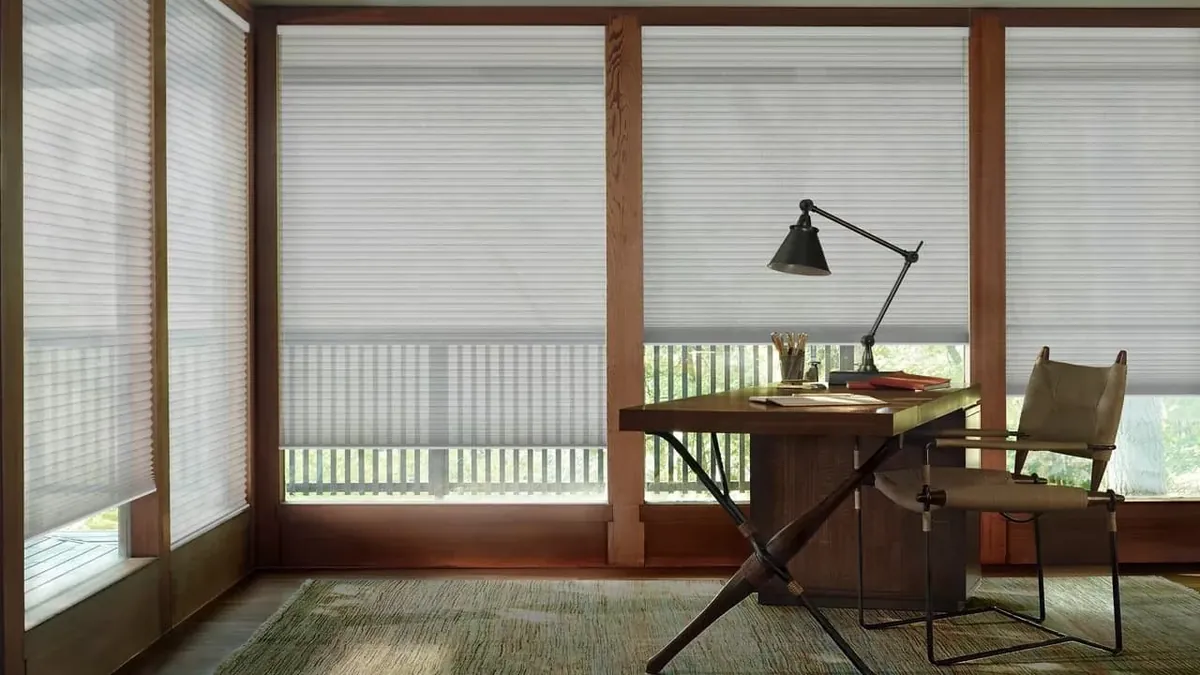
Honeycomb shades for older sash
The cells trap still air against cold glass, which helps in a farmhouse room where the original sash runs cool through the winter.
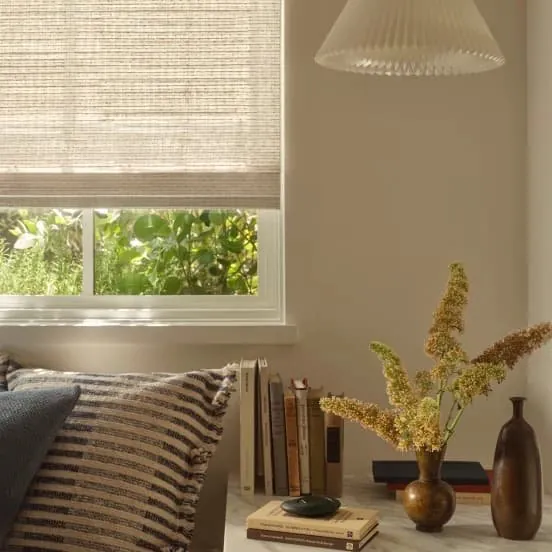
Woven shades in small openings
Natural texture suits a cape or farmhouse well, and woven shades can be made for the small, slightly out-of-square openings these houses tend to have.
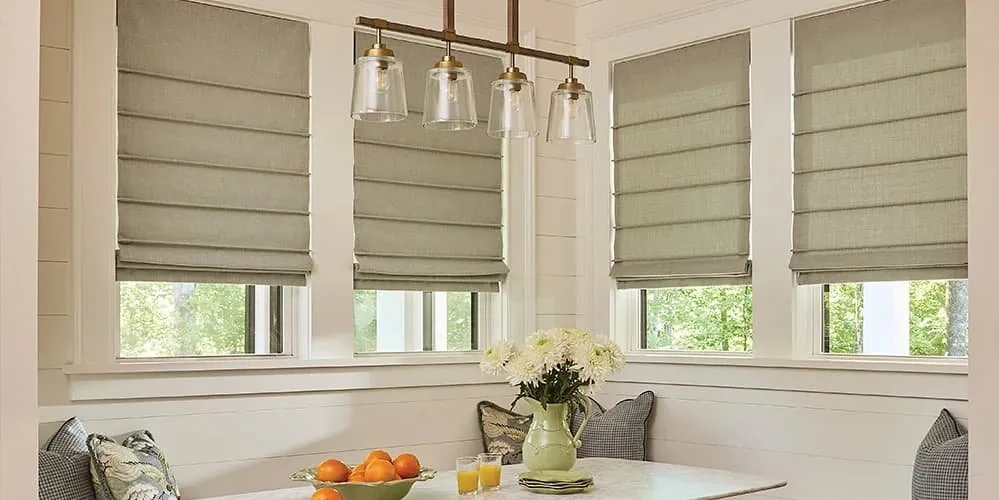
Roman folds for a kitchen nook
A flat Roman fold looks tailored on a short window over a banquette or a sink, and a motor keeps each fold even every time it rises.
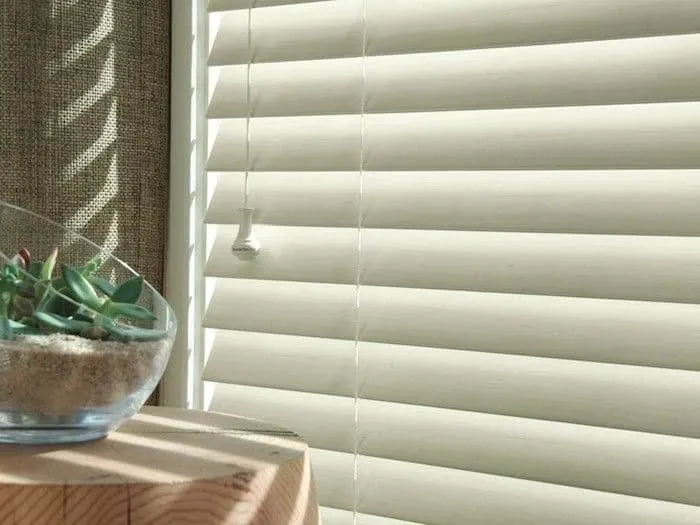
Blinds with a tilt
If slats are what a room calls for, tell us at the visit. We confirm which blind lines and operating choices suit each window before anything is ordered.
Made to size, then motorized
The phrase you hear most during a consultation in Acushnet is some version of “none of these windows are the same.” That is not a complaint, just the nature of the houses. An antique farmhouse may have been altered several times over its life, with a newer window cut into one wall and the old sash left in another. A cape that was expanded in stages has dormers of different widths. A post-war ranch might have a picture window, a pair of casements and a run of short bedroom windows all on one side.
A stock blind from a store comes in set widths, and the gap it leaves at each side of an old window is the first thing you notice from across the room. Custom shades are built to the opening. We measure each window at the top, middle and bottom and at more than one point for height, and the shade is made to fit that particular frame. On a window that has settled out of square, that is the only way to avoid a shade that looks crooked against the trim.
Adding a motor does not change how a shade fits, but it does change what you can choose. A heavier Roman shade on a wide farmhouse window, or a tall honeycomb in a ranch living room, can be awkward to lift by hand. With PowerView, weight and size stop being a reason to pick something else. The motor lifts it evenly from both sides, every time.
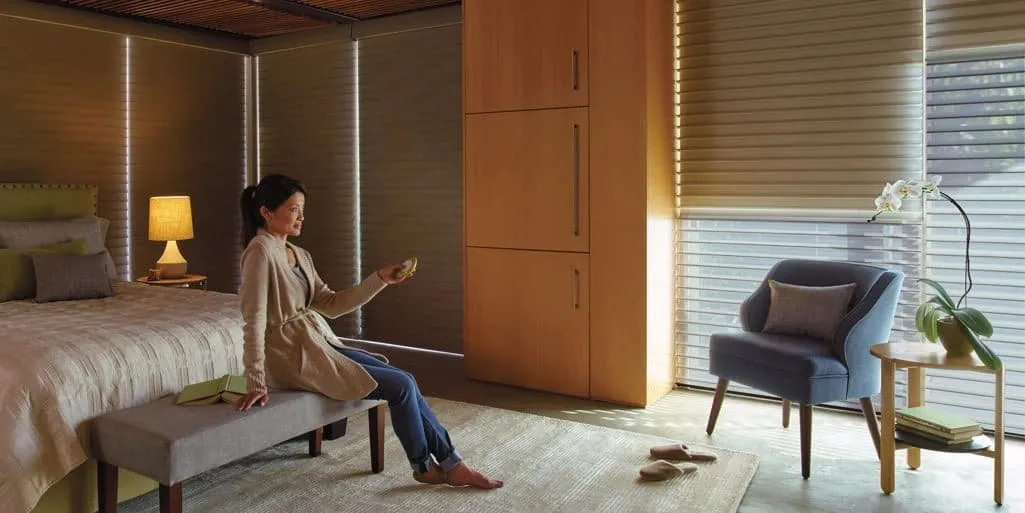
Farmhouses near the river
The older farmhouses along the Acushnet River and out toward the town line were built with smaller windows set deep into thick walls. Inside, the sills are wide enough to hold a row of plants or a stack of books, which looks lovely but puts the window itself an arm’s length away. Reaching across a deep sill to find a cord or a lift rail, often with something in the way, is the kind of small annoyance you stop noticing until it is gone.
An inside-mounted shade sits back in that depth, close to the glass, and leaves the wood casing in full view. With a motor, the deep reveal stops being a problem: the shade rises and lowers on its own, and the sill can stay exactly as it is. It is one of the simplest ways to make an antique room easier to live in without changing how it looks from the road.
Some of these houses also have windows that open onto the river side and catch the morning sun across the water and the marsh. A schedule can lower those shades a little before sunrise so a bedroom stays dim, and raise them again once you are up.
Capes with dormers and low ceilings
The Cape-style houses along Main Street and the side roads have their own quirks. Upstairs bedrooms sit under the roof, so the dormer windows are often set into a recess with sloping walls on either side. Getting to a dormer window means leaning over a bed or a dresser. A small bathroom window under the eaves can be just as hard to reach.
These are the windows where a remote or a wall switch makes the biggest daily difference. You lower the dormer shade from the doorway at night and raise it from the bed in the morning. If the house has several dormers on the same side, they can be grouped so that one press moves them all.
Capes are also close to the ground, with first-floor windows near eye level from the road or the driveway. A light-filtering fabric gives privacy in the daytime while still letting light in, and a top-down, bottom-up shade lets you open the upper part of a window for sky while the lower part stays covered.
Ranches between the older houses
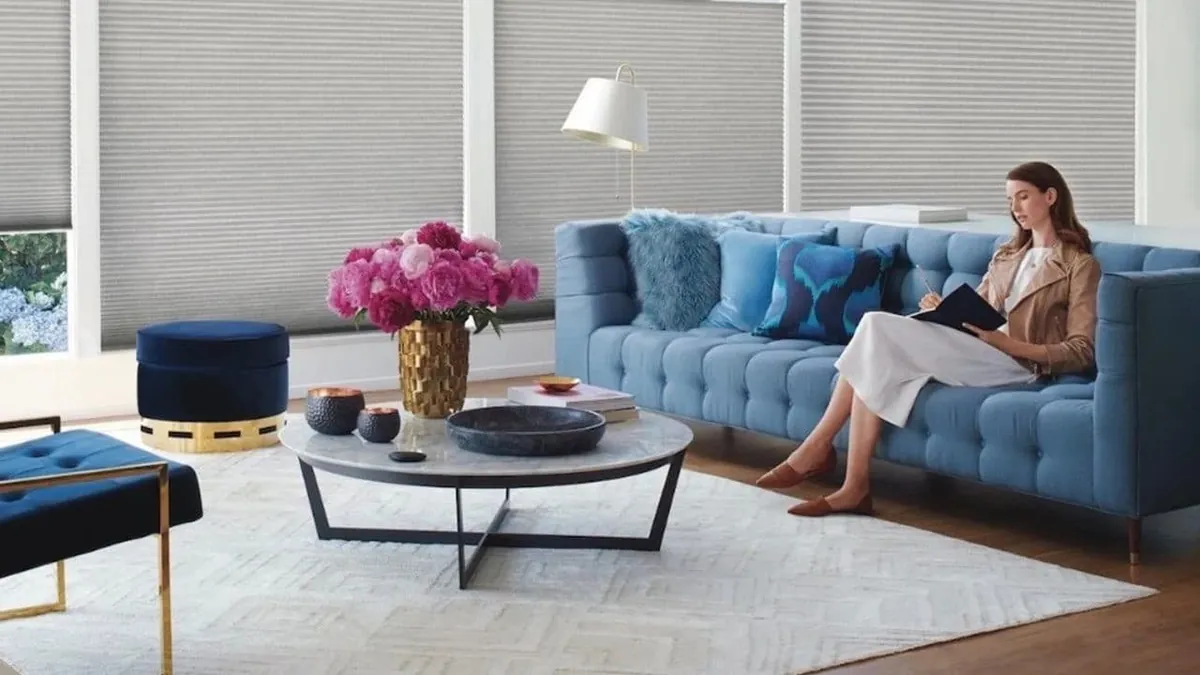
The ranches that filled the lots after the war were built for a different way of living. Picture windows face the front yard, sliders open to a back patio, and the bedroom wing stretches along one side of the house with a row of matching windows. The glass is larger and lower than in the farmhouses, and the sun tracks across it through the day.
Motorized blinds for Acushnet ranches make sense because the windows come in groups. All the bedroom windows on one side can move together on a single command. The living room picture window, often too wide for one shade, can be split into two or three shades on one headrail that lower in step. And because the house is on one level, a single remote can reach every room.
In summer the west side of a ranch heats up in the late afternoon. A schedule that lowers those shades partway through the warmest hours keeps the rooms cooler and protects floors and furniture from the low sun, then lifts them again as the light fades. You set it once and adjust it a couple of times a year as the days change length.
Three ways to control your shades
PowerView gives you more than one way to move your shades, and most households end up using all of them.
A remote. A small handheld remote, or one mounted on the wall like a light switch, moves a single shade or a group. It is the simplest option, and it works for every member of the family without anyone needing a phone.
The PowerView app. On a phone or tablet, the app shows every shade in the house. You can stop a shade at any height, set up rooms and groups, and move shades in another part of the house without walking there.
Schedules and scenes. A scene saves an arrangement of shades: bedroom wing closed, living room half open, kitchen up. A schedule runs a scene at the time you choose. It is the part of automation that makes the house feel looked after even on busy days.
Our guide on how motorized shades are controlled goes through each option, and our window covering automation page covers scenes and schedules in more depth.
Schedules that fit a farmhouse day
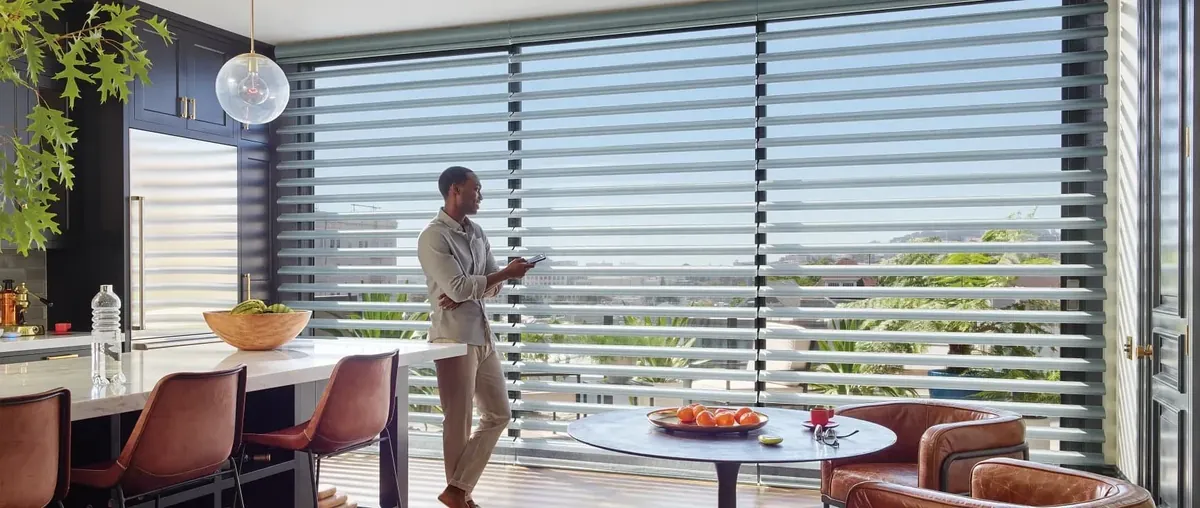
Older houses tend to be lived in around the light. The kitchen is where the morning sun lands, the front parlor is used in the evening, and the upstairs rooms are dark by choice. A schedule simply matches the shades to that pattern.
A typical set-up for motorized blinds in Acushnet looks something like this:
- Bedroom shades on the east side stay closed until a set time in the morning, then rise.
- Kitchen and breakfast room shades open early so the room is bright when you come down.
- West-facing shades lower partway in the late afternoon in summer to hold back the heat.
- Front room shades close at dusk so the lamps are not on show to the road.
- Everything returns to the night position at bedtime with a single scene.
You can override any step with the remote whenever you like, and change the times as the seasons shift. During the visit we talk through how you use each room, and the installer can set the first schedules up with you once the shades are in.
Privacy without a cord
With no lift cord hanging at the side of the window, there is nothing for a small child or a pet to pull or catch. Many families choose motorization for that reason alone, especially in bedrooms and playrooms. It also makes the window look cleaner: no cord, no tassel, no cleat screwed to the trim of an antique casing.
For a farmhouse with original woodwork, that last point matters. Nobody wants holes in a casing that has come through many coats of paint. A motorized shade mounts inside the frame or on the casing with brackets only, and nothing else needs to be fixed to the wood.
Honeycomb, sheer or Roman: choosing by room
Each type of shade does something different, and in houses this varied, the right choice can change from room to room.
Honeycomb shades are the warmest. In a farmhouse with original sash, they help a cold front room hold its heat into the evening, and they come in light-filtering and room-darkening fabrics. Our cellular shades in Acushnet page covers them in detail.
Sheer shades soften the light and keep the outside visible. They suit a ranch living room or a sunny kitchen where you want brightness without glare.
Roman shades bring fabric and folds to a room. A cape bedroom or a farmhouse dining room often wants that softer look, and a motor makes a wide or heavy Roman easy to raise. See our roman shades in Acushnet for the styles.
Roller and screen shades are clean and simple, and a screen fabric cuts glare while keeping the view. Our roller shades in Acushnet page explains how the openness of the weave affects what you see.
Measuring, installation and setup
Once you have chosen, the work follows a routine our certified Hunter Douglas installers know well.
- We take final measurements at each window, checking depth for an inside mount and noting any sash hardware or trim in the way.
- The shades are made to those measurements.
- Brackets are fixed into solid wood so each headrail sits level, even on an old frame that is slightly out of true.
- Each shade is hung and its upper and lower stopping points are set for that window.
- The shades are connected to the control you have chosen, grouped into rooms, and the first schedules are set up with you.
- You are shown how everything works before the installer leaves.
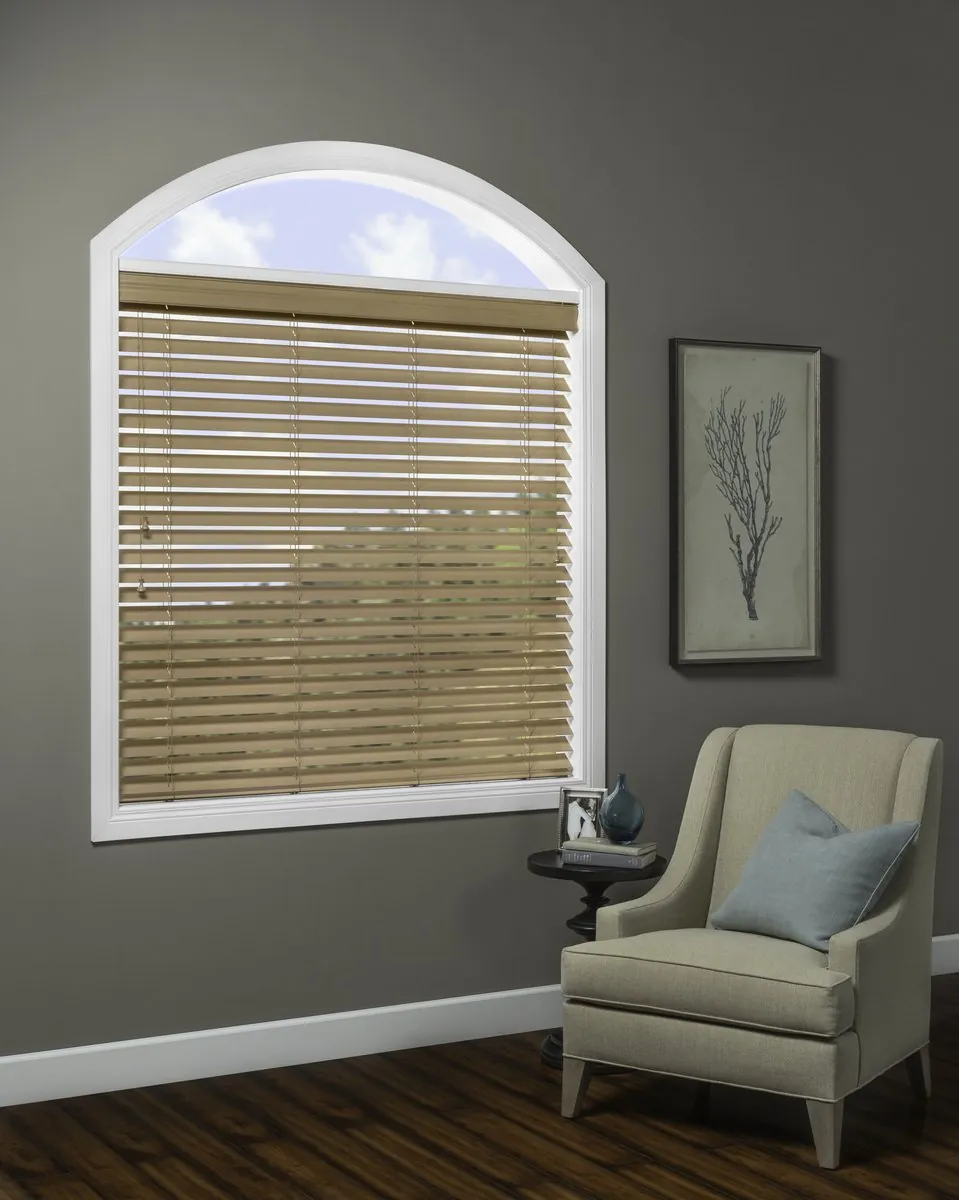
If a window needs a different mount from the one you expected, we explain why. On old sash with shallow stops, an outside mount on the casing is sometimes the better answer, and we would rather tell you that than fit a shade that does not sit right.

Why choose a Hunter Douglas Gallery dealer
Blinds & Designs is a Hunter Douglas Gallery dealer. Hunter Douglas reserves that designation for dealers who meet its standards, and for you it means the whole range is available in one consultation: honeycomb, sheer, roller, Roman and woven shades, blinds, shutters and drapery, and PowerView motorization across all of them.
Our installation is certified by Hunter Douglas, so each shade goes up the way the maker intends. We also offer interior design consultations if you want help with fabric and color across a room, and we repair blinds and shades you already own.
Looking at other rooms too? See our plantation shutters in Acushnet, custom blinds in Acushnet or everything we offer on the Acushnet page. The main motorized blinds and shades page covers the whole range.
North Dartmouth or your own living room
Our nearest showroom to Acushnet is in North Dartmouth, a short drive south and west. You are welcome to stop in and talk through your windows.
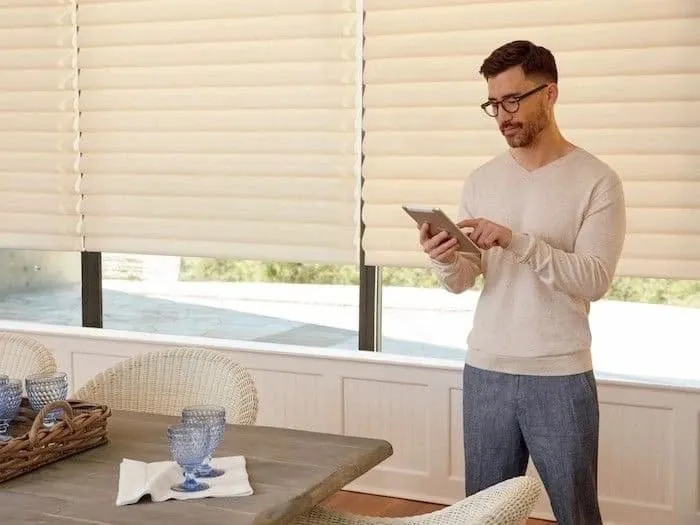
For most Acushnet houses, though, the home visit is the place to start. Our vans carry samples, so we bring the showroom to you. Holding a fabric up to your own farmhouse sash, or watching a sample shade move at your own ranch window, tells you far more than a catalog can. Read about what happens at an in-home consultation if you would like to know more first.
Questions from Acushnet
Can you motorize a window that is not a standard size?
Yes. Every shade we order is made to the measurements we take at your window, and the motor goes into that custom headrail. Small, narrow and slightly out-of-square farmhouse openings are routine.
Will a motorized shade fit inside a deep farmhouse window?
Usually, yes. A deep reveal is often ideal for an inside mount. We check the depth at several points and look for sash hardware before we recommend how the shade should be mounted.
Can the shades in my ranch bedroom wing move together?
Yes. Shades can be grouped so that one press of the remote, or one tap in the app, moves every window on that side of the house at once.
Do I need a phone to use them?
No. A remote or a wall-mounted control works on its own. The app is there if you want it for schedules and for moving shades from another room.
Is the estimate free?
Yes. We measure at your house and give you a free estimate for the shades and motors you are considering, with no pressure to decide on the day.
Start with a visit
The easiest way to see what a motor can do for your windows is to watch a sample move in your own room. Request a consultation and we will bring samples for motorized blinds in Acushnet to your house, measure each window and give you a free estimate. You can also use the call button, or visit our North Dartmouth showroom.