
Old sash in the historic village
Sandwich holds some of the oldest houses on the Cape. Around the Grist Mill and through the historic village, antique capes and Federal houses still line the streets, many with their original windows, small panes in small sash set into thick old frames. Further out, along Route 6A and toward Forestdale, the town fills with post-war ranches and newer colonials whose windows are larger and more regular. Fitting custom blinds in Sandwich, MA means working with both.
The oldest houses ask the most of a blind. Their sash can be very small, sometimes only a little wider than a hand span per pane, so every part of the blind, from headrail to stack, has to be neat enough not to crowd the opening. Their frames have moved over the centuries, and few are square.
The historic village adds its own expectations. A street of antique houses is looked at as a whole, and what shows in the windows is part of the view. Blinds that are calm and consistent from the street, in colors that sit quietly behind old glass, respect that setting while making the rooms inside comfortable to live in.
Custom blinds in Sandwich, MA, from the Hunter Douglas range
We bring samples of every blind we sell to your door. These three materials do most of the work in Sandwich houses, with vertical blinds for any slider.
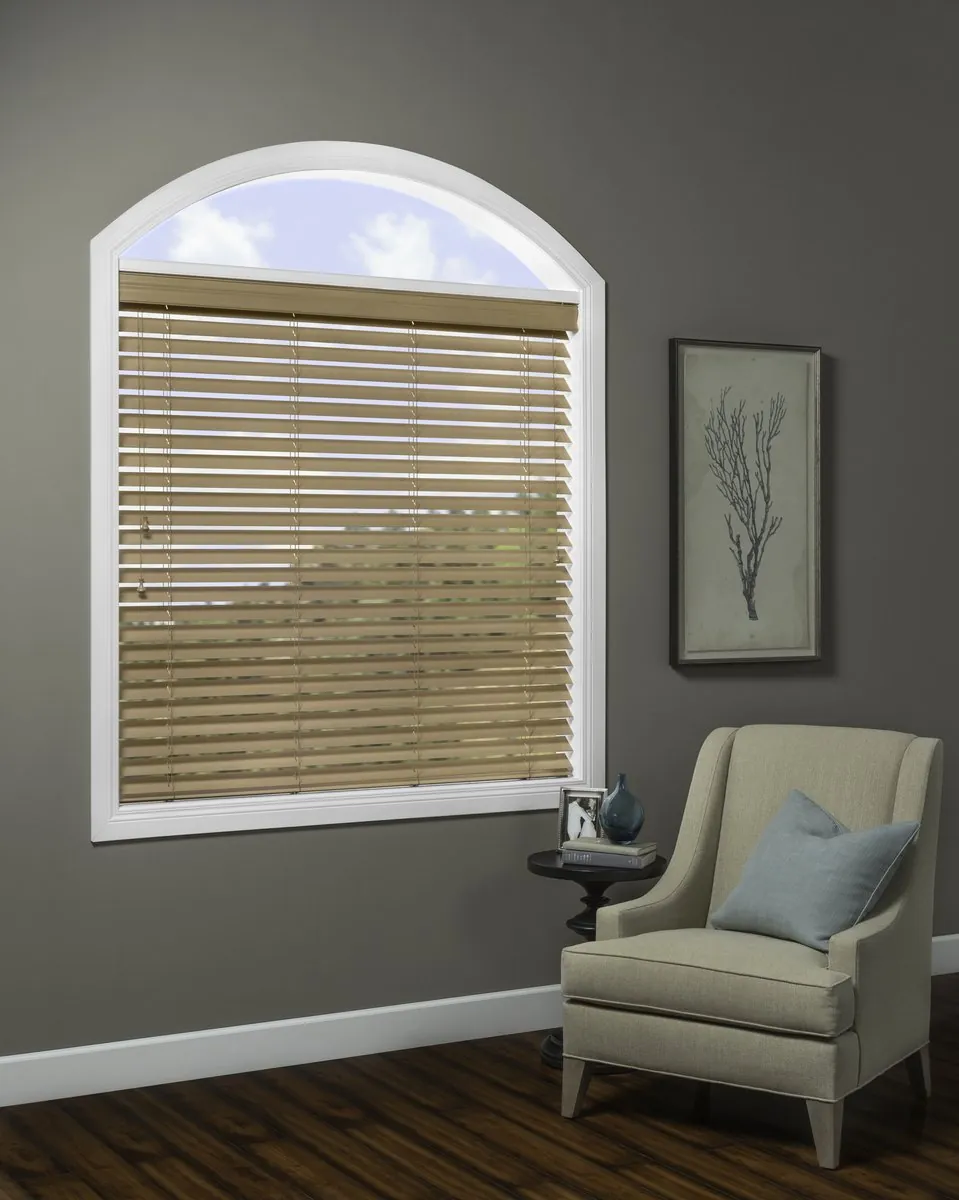
Real wood
Stained or painted wood slats look right in an antique room with wide floorboards and old trim. They have the weight and warmth a period house calls for.
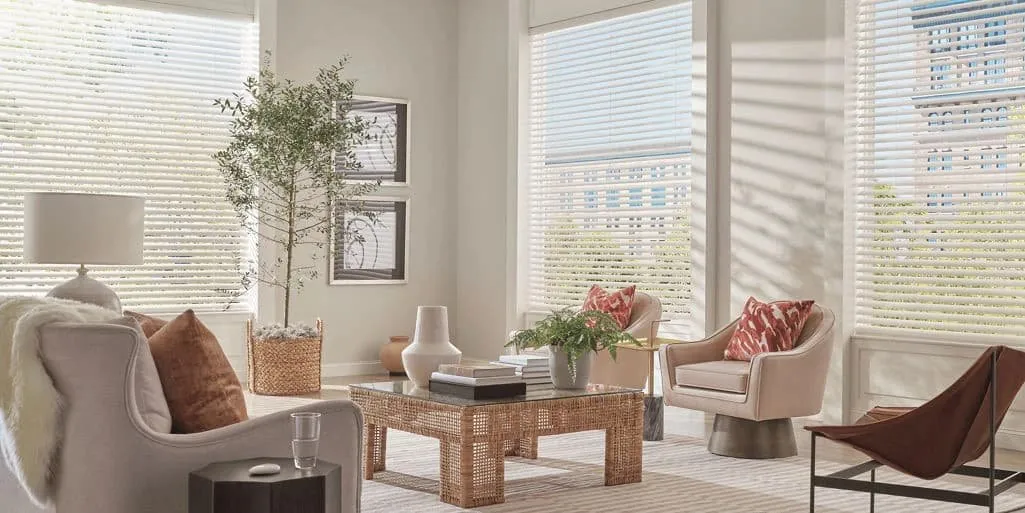
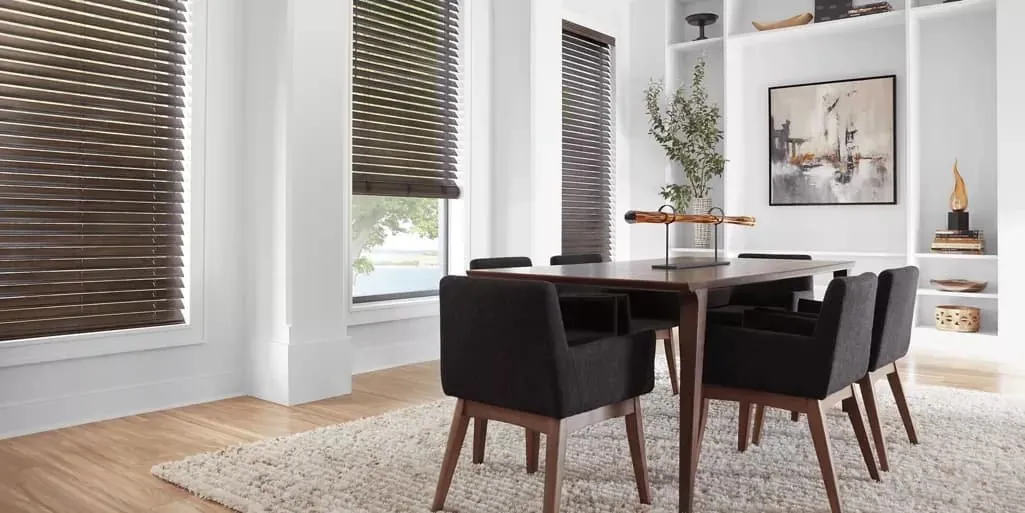
Faux wood
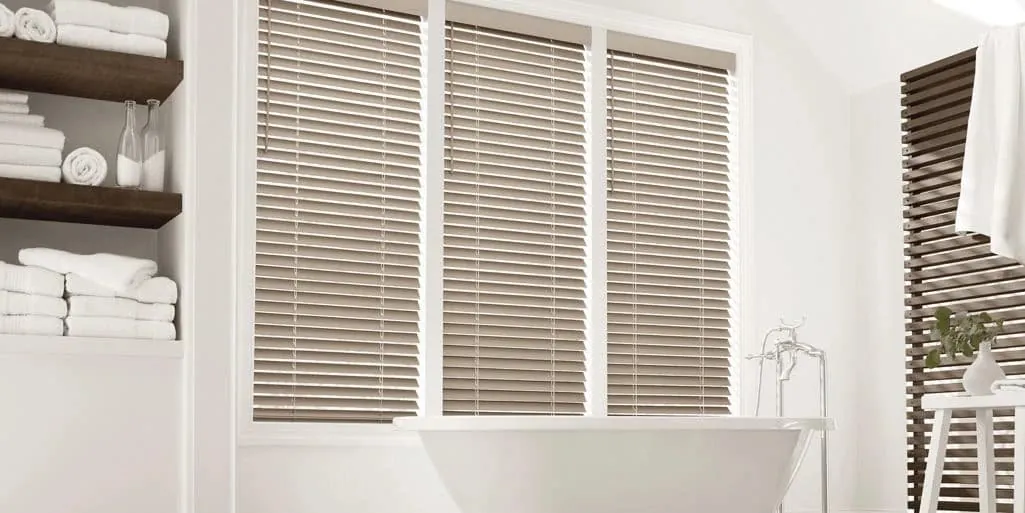
The look of painted wood in a material that does not mind steam or damp. For kitchens, baths and the back rooms of an old house that can run cool and humid.
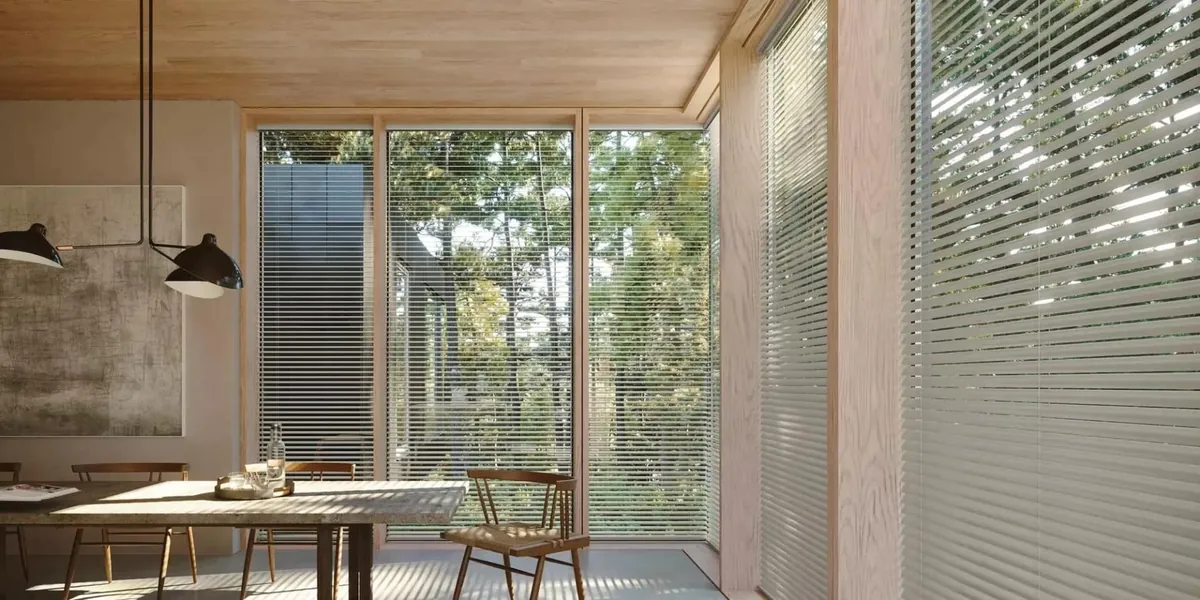
Metal
The slimmest slats and headrails, useful for very small antique sash where a heavier blind would fill the opening, and for the clean lines of a newer colonial.
Very small original sash
In the oldest houses near the village center, original sash can be tiny by modern standards. Small panes were what glass makers could produce when these houses were built, and many homeowners keep them because they are part of what makes the house what it is. A blind on a window like that has to be thoughtful.
Start with the headrail. On an inside mount it sits within the top of the opening, and in a short window a deep headrail takes up a noticeable share of the glass. A low-profile headrail keeps more of the window clear. Next comes the stack. When the blind is raised the slats gather at the top, and on a short window that bundle can cover a slice of the upper sash. Wider slats mean fewer of them and a shallower stack, though on a very narrow window a wide slat can look out of scale. We hold both sizes up at your window so you can see the balance.
Some owners prefer to mount the blind outside the opening altogether, on the wall or the casing just above it. That way the raised blind clears the glass entirely and the full sash shows when the blind is up. It can also make a small window look a little larger. On a house with plain, narrow casings this often works well; on one with fine original trim, an inside mount keeps the woodwork in view. We show you both before you decide.
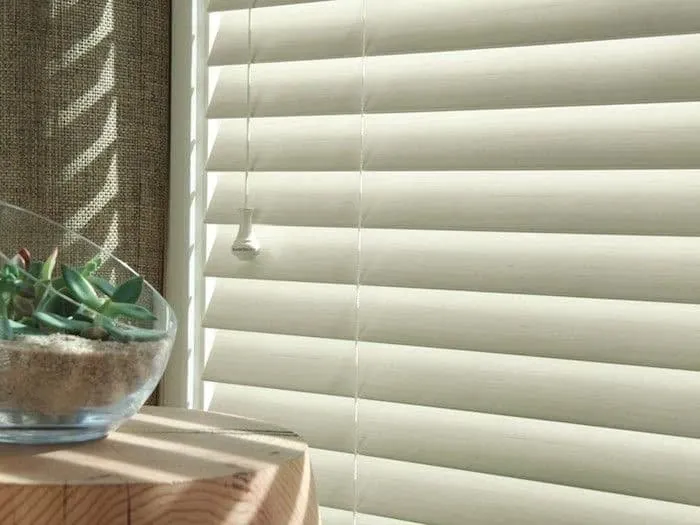
Frames that have settled for centuries
An antique cape or a Federal house has moved a great deal since it was built. Floors slope, door frames lean, and window openings drift out of square. A frame may be wider at the top than at the bottom, or the sill may run downhill from one side to the other. An inside-mounted blind made to a single measurement can bind in the narrow part of such a frame or leave a visible wedge of light where it is wider.
That is why we take several measurements on every window rather than one, and order an inside-mounted blind to the narrowest width. Where the frame is too far out for an inside mount to look right, an outside mount on the casing covers the irregularity and hangs straight, even if the window behind it does not. We will tell you plainly which option suits each window.
Old frames also hide surprises: sash weights in their pockets, pulleys at the head, interior storm windows, and stops that have been painted over many times. All of these affect how deep a headrail can sit and whether the slats will tilt without striking anything. We check for them during the visit.
The historic district and the view from the street
Sandwich’s historic village is admired for how its houses look together, and the windows are part of that. Bright colors or mismatched coverings from window to window can jar against a row of antique façades.
The simplest approach is consistency. On the windows that face the street, choose one slat color and one slat size, and hang every blind at the same height when it is raised. Whites, creams and soft neutrals sit most quietly behind old glass. Behind the front rooms, where nobody sees the windows from the road, you are free to choose stained wood, darker colors or whatever suits each room.
If your house falls under the rules of the historic district, check what is expected for changes that show from outside before you choose. We are glad to leave samples so the conversation is easy.
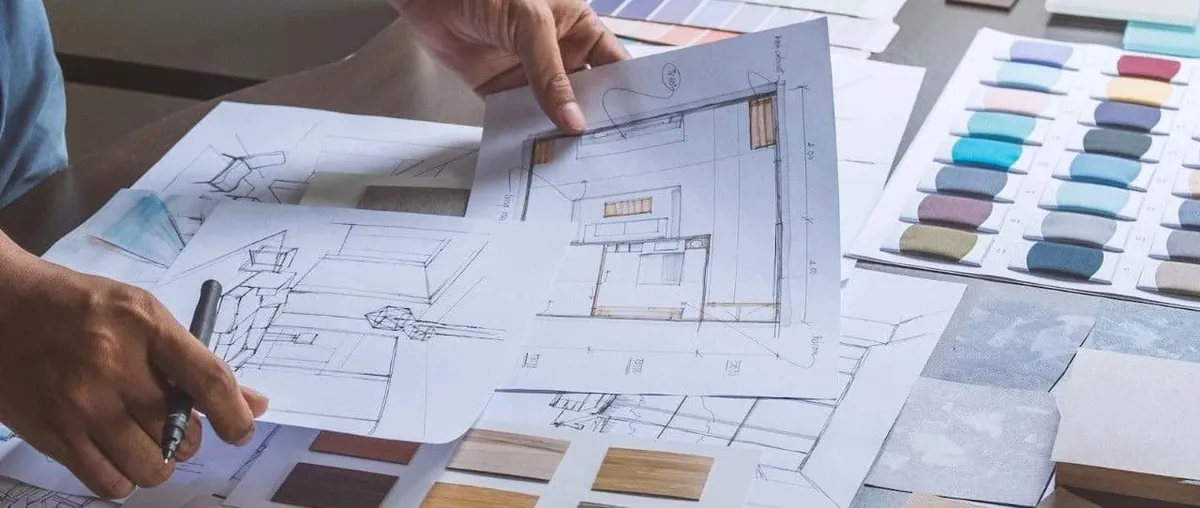
Federal houses near the Grist Mill
The Federal houses in the village are a little grander than the capes, with taller windows arranged symmetrically across the front and generous rooms behind them. Their sash is still old, but larger, and the casings are often finely moulded.
Wood blinds are a natural match. A painted wood blind in a soft white blends with the trim, and a stained one can echo old floors or a fireplace surround. An inside mount keeps the moulded casing fully visible, provided the frame has the depth and is square enough. A valance across the top gives an outside-mounted blind a tidy, period-appropriate finish where the frame will not take an inside mount.
These houses often have a formal front parlor and dining room facing the street, where privacy and appearance matter most, and more casual rooms at the back. That makes them well suited to the mix described above: consistent, quiet blinds in front, more personal choices behind.
Post-war ranches and newer colonials
Away from the village, along Route 6A and out toward Forestdale, the houses change. Post-war ranches have wide living room windows, a kitchen window over the sink and often a slider to a patio. Newer colonials have regular double-hung windows, sometimes French doors, and in many cases a family room with a large window looking at the back yard.
These houses are easier to fit. The frames are square, the openings repeat from room to room, and there is usually enough depth for a clean inside mount. The choice comes down to the look you want and how each room is used.
- Living rooms with wide windows: two or three blinds side by side, each lifting separately, so you can open one end and keep the sun off the other.
- Sliders and patio doors: vertical blinds or gliding panels that draw aside so the door can be used.
- Kitchens and bathrooms: faux wood, which handles steam and cleaning.
- Bedrooms: darker slats in wood or faux wood that dim the room in the morning.
Many of these houses take a whole-house order, with the same slat color on every street-facing window so the front reads as one.
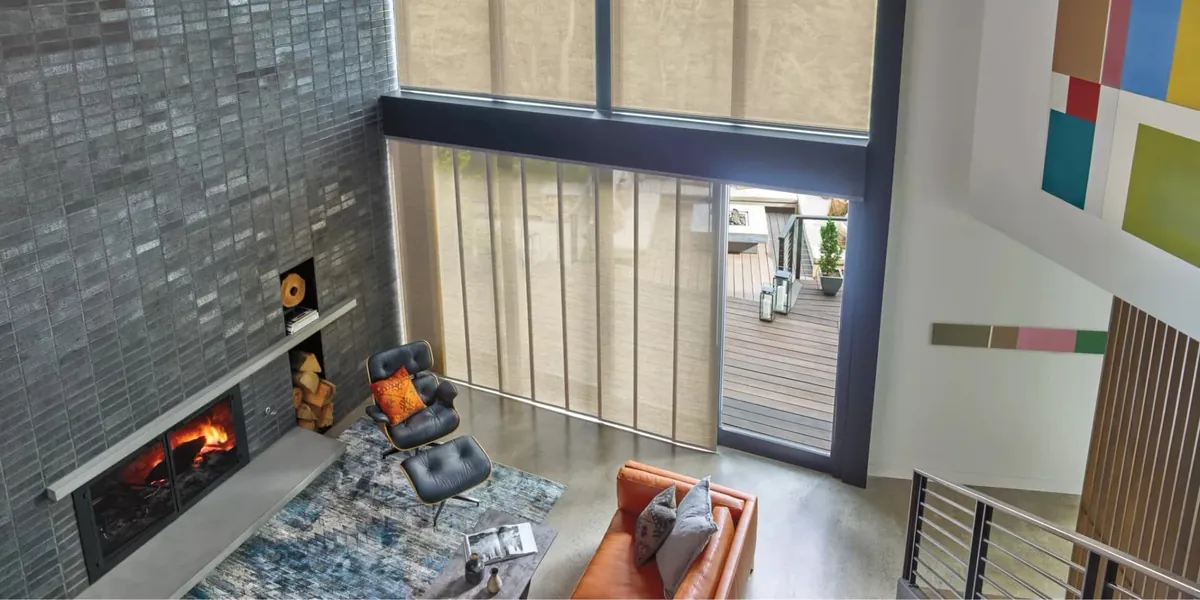
Matching old and new parts of a house
Plenty of Sandwich houses combine an antique core with later additions: an original cape with a newer kitchen wing, a Federal house with a modern family room built on behind. The windows in each part differ in size, age and style.
Made-to-measure blinds can bring those parts together. Each blind is built for its own window, yet they can share a color and slat size so the house looks unified. In the antique rooms, wood blinds suit the period; in the addition, faux wood or metal may be more practical. From the outside, the windows still read as one house. Planning custom blinds in Sandwich this way lets the old rooms keep their character while the new ones work hard.
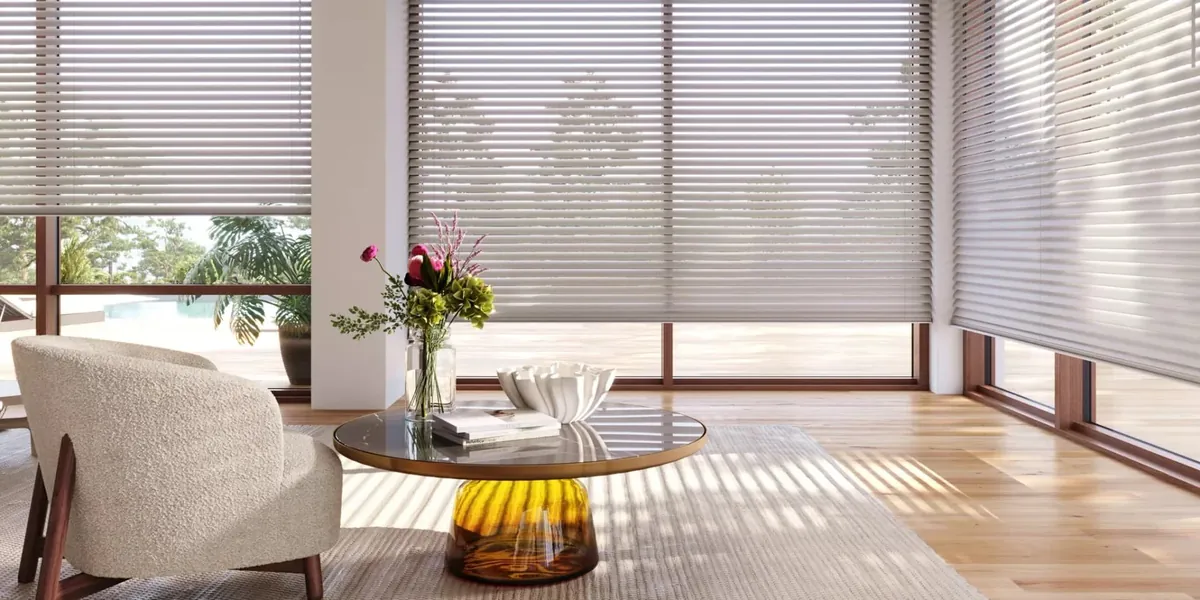
Controlling light in old rooms
Antique houses were built with small windows partly to hold heat, and their rooms can be dim. In those rooms a blind usually stays open during the day, so how it looks raised matters as much as how it looks closed. A slim stack and a neat headrail let the most light in when the blind is up.
When the sun does come in strongly, through a south-facing window or one facing west along 6A in the late afternoon, tilting the slats upward sends the light to the ceiling and spreads it across the room without glare. On the newer houses with larger glass, the same tilt control lets you keep a bright room comfortable through a summer afternoon.
At night, closing the blinds adds a layer between the room and the old single glass that many antique houses still have, which takes the chill off the window on a cold evening.
Kitchens and baths in an antique house
The kitchens and bathrooms of the oldest houses were mostly fitted long after the houses were built, often in a back ell or a former pantry, and they tend to be the dampest rooms in the house. Old walls hold moisture, steam has fewer places to go, and the window over the sink or the tub takes the worst of it.
Faux wood is the material we suggest for those windows. It keeps the painted-wood look that suits an old house but does not swell, warp or stain when the room steams up, and it wipes clean. In a bathroom facing a neighbor or the road, slats closed with the rounded side facing in give full privacy while still letting some light reach the ceiling. Keeping the same color as the wood blinds in the front rooms means the custom blinds in Sandwich, MA houses look consistent from room to room, even when the material changes.
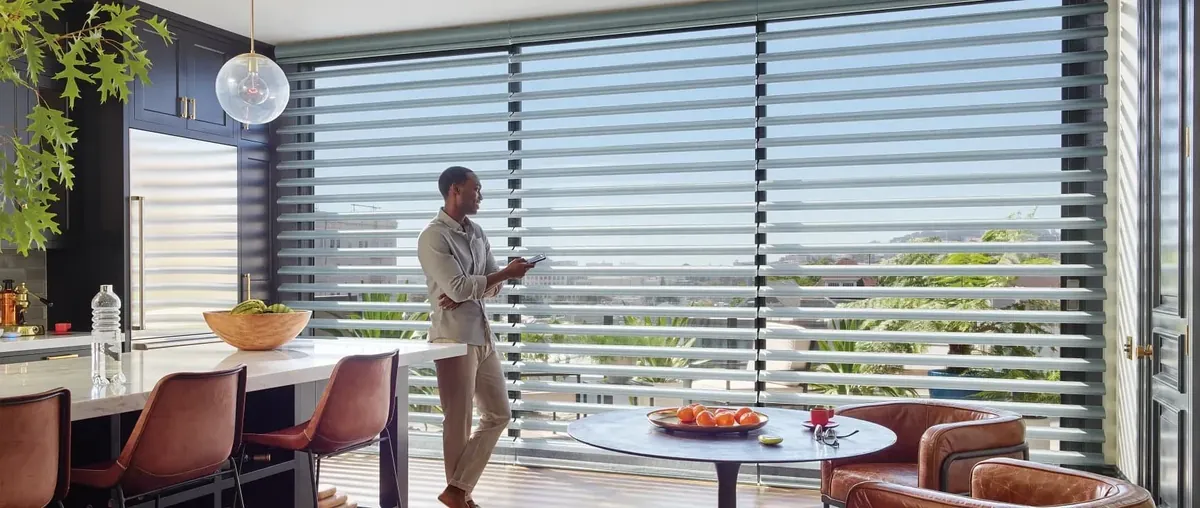
Motorized blinds
Some windows are hard to reach in any house: a high window over a stair, a window behind a deep kitchen counter, the tall glass in a newer colonial’s two-story entry. Hunter Douglas PowerView lets blinds tilt and lift from a remote or the app, and you can set them on a schedule to open in the morning and close at dusk. We go through how they are powered and controlled when we visit. See motorized blinds in Sandwich for more.
The consultation, at your house
Old houses are particular, and the only way to judge a blind in one is in place. Our vans carry samples of every material, so we can bring the showroom to you. We hold slats up against your casings, try a low-profile headrail in a small sash, and see how a raised stack looks on your windows rather than on a display.
We go through the house with you room by room. In the front rooms we talk about consistency from the street and about the historic district. In the back rooms and the newer parts of the house, we talk about how each room is used and which material suits it. Every window is measured, its depth checked, and anything that might interfere, from sash weights to an interior storm, is noted.
Before we go you have a free estimate for the blinds you are considering, and you can take your time over it. If you would like help with color or with how the blinds work beside drapery or shutters, our interior design consultations can be part of the same visit. Our page on what happens at an in-home consultation explains more. Request a consultation online or with the call button to arrange one.
Our measuring routine
- Every opening is measured for width at its head, its middle and its sill, and an inside-mounted blind is made to the narrowest.
- Height is measured on the left, the right and the center, so a sloping sill shows up before the order, not after.
- Depth at the head of the frame is checked against the headrail, with any sash weights, pulleys or storms noted.
- Mount, material, color, slat size and control are all agreed with you.
- When the blinds arrive, our Hunter Douglas certified installers fix them into sound wood, level each one, test every tilt and lift and show you how they work.
That routine is what lets custom blinds in Sandwich, MA hang straight in frames that are anything but.
For each type in more depth, see our wood blinds, EverWood, metal blinds and vertical blinds pages, or the main custom blinds page.
See them at our Sagamore showroom
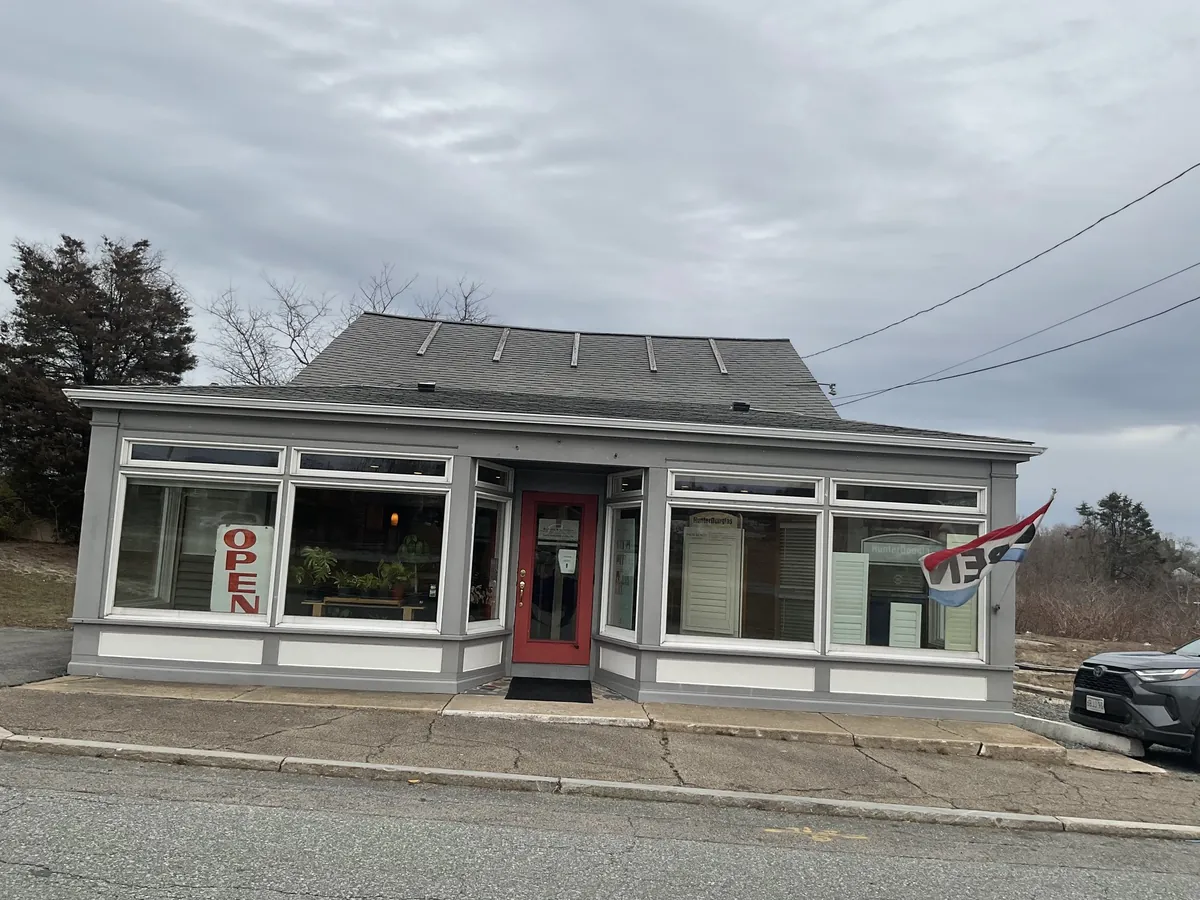
Our Sagamore showroom is the nearest to Sandwich, a short drive west along the canal, if you would like to see the blinds in person.
Blinds & Designs is a Hunter Douglas Gallery dealer, the designation Hunter Douglas gives dealers who meet its standards. That gives you the whole blind range, and our installers hold Hunter Douglas certification. For blinds you already own, we also repair blinds and shades.
We carry Hunter Douglas shades, shutters and drapery as well. For other rooms in an old house, see plantation shutters in Sandwich or roman shades in Sandwich, or everything we offer in town on our Sandwich page.
Questions from Sandwich
My antique windows are very small. Will a blind crowd them?
It does not have to. A low-profile headrail and the right slat width keep the raised blind compact. On some windows, mounting just above the opening lets the blind clear the glass entirely when it is up.
My window frames are out of square. Can blinds still fit inside them?
Often, yes, if we measure in several places and order to the narrowest width. Where a frame is too far out, an outside mount on the casing hangs straight and hides the irregularity.
What colors suit a house in the historic village?
Whites, creams and soft neutrals usually sit most quietly behind old glass, and one color across the street-facing windows looks tidy. Check the historic district’s expectations for anything that shows from outside.
Do blinds work on a ranch slider out toward Forestdale?
For a slider we suggest vertical blinds or gliding panels, which draw aside so the door can be used and turn to control light.
Is the estimate free?
Yes. Once we have measured, you receive a free estimate for the blinds you are considering.
When you are ready
Old windows reward a careful look. Request a consultation and we will bring samples of every blind to your house, measure each opening at several points and leave you with a free estimate. Or use the call button to reach our Sagamore showroom and arrange a time to visit.