
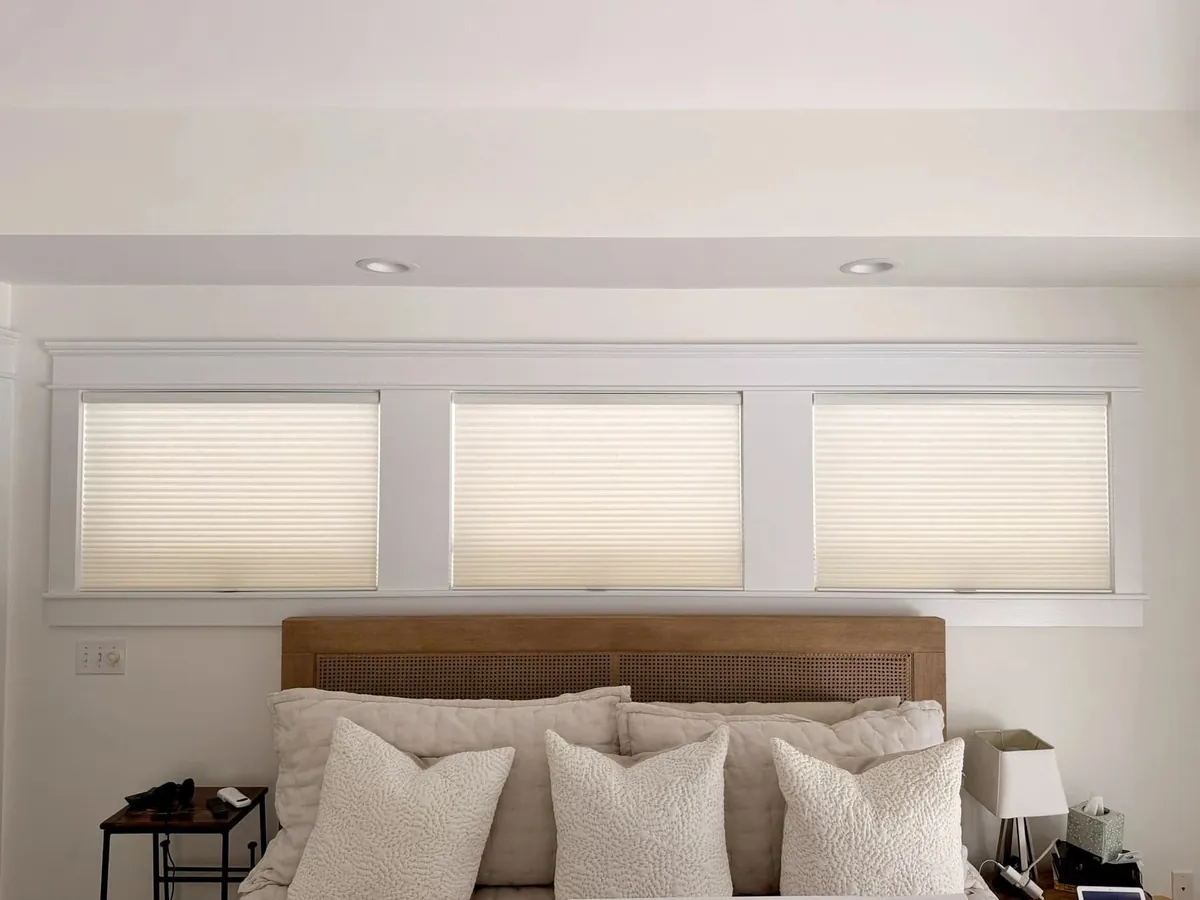
Close neighbors and plain, practical windows
Most of Randolph was built in the years after the war: capes, ranches and two-families on modest lots, with standard single-hung windows and sliders throughout and not much room between one house and the next. Nothing about those windows is fussy, which is good news. What they ask for is warmth in winter, a bit of privacy from the house next door and a covering that works every day without thought. Those three things are what we plan around when we fit cellular shades in Randolph, MA.
A honeycomb shade answers all three. Its pleats are closed cells, and when the shade is lowered each cell holds a pocket of still air against the glass. That air slows the cold coming off the window, so a bedroom on the north side or a living room with a big window holds its warmth for longer on a January night.
The fabric covers the privacy side. Short setbacks mean a side window can look straight into a neighbor’s kitchen a few steps away, and a honeycomb shade lets daylight in while keeping the room to yourself.
What we bring to a Randolph house
Three honeycomb choices cover nearly every window in a Randolph cape, ranch or two-family. Samples of each come with us in the van.
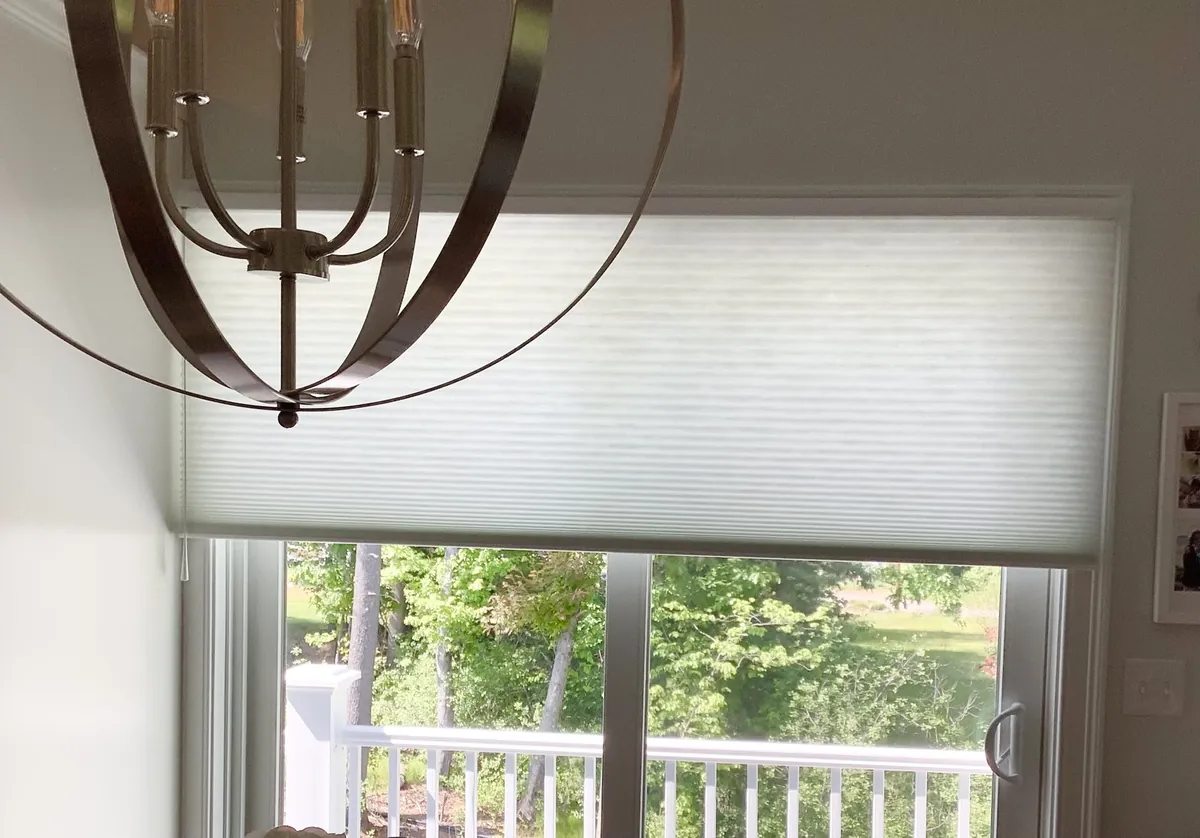
Shades for sliders and back doors
Many post-war houses open onto the back yard through a sliding glass door. A honeycomb shade there keeps the door warmer and gives the room privacy from the yard next door.
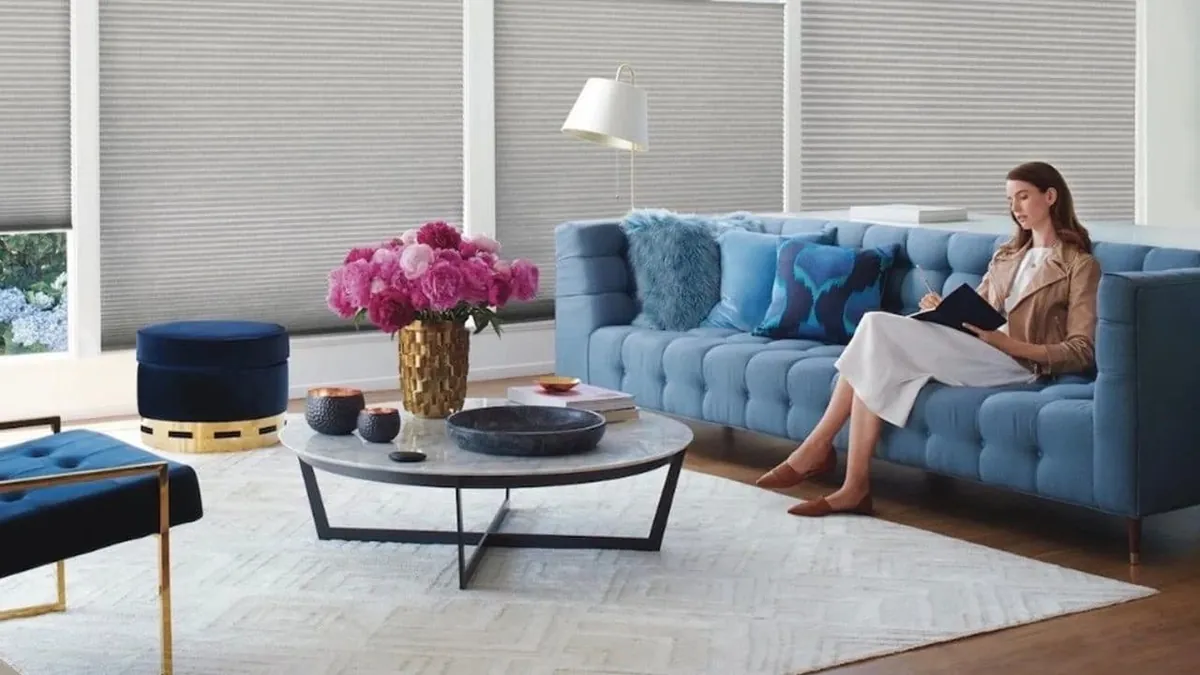
Living rooms and front windows
The front window of a ranch or cape is usually the largest in the house. A shade on it, or two shades on one headrail, holds the room’s warmth and softens the view from the street.
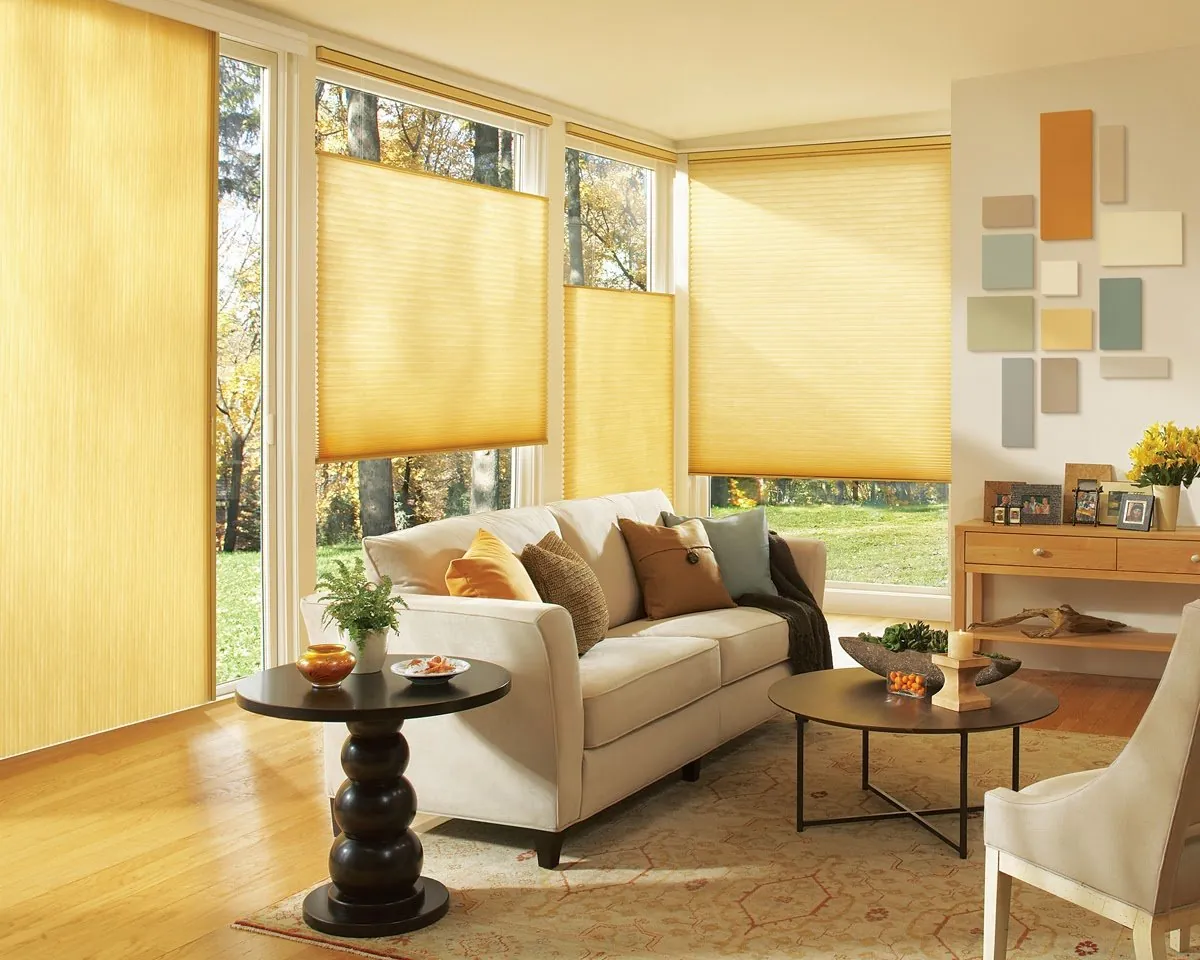
Corner rooms and bedrooms
Corner bedrooms with windows on two walls feel the cold first. Matching honeycomb shades on both walls make the room feel finished and keep it warmer.
Single-hung windows, one after another
The standard single-hung window is the backbone of a Randolph house. The bottom sash slides up, the top stays put, and the openings repeat from room to room in a few familiar sizes. For a window covering that is ideal.
Because the openings repeat, the decisions repeat too. Once you have chosen a fabric for the living spaces and one for the bedrooms, most of the house is done. We still measure every window, because two openings that look the same in a post-war house can differ slightly after many coats of paint and some settling, but the order stays simple and the finished rooms look consistent.
Single-hung frames from this era are often replacement windows by now, and replacement frames can be shallow, with locks and tilt latches near the front. We check the depth of each one. If the headrail fits inside the frame, the shade tucks neatly into the opening and the trim stays visible. If it does not, we mount the shade on the trim just above the opening and make it slightly wider, which also stops light slipping down the sides.
Sliders: windows that open sideways
Randolph houses of this age use sliders in places where a single-hung would not suit: over a kitchen sink, in a basement or a back bedroom, and along the long wall of a ranch. A slider opens sideways, so the shade above it never gets in the way of the sash, and a honeycomb shade sits over it as easily as over any other window.
The thing to watch with a slider is the shape. Many are wider than they are tall, which means a single wide shade or a pair of shades side by side. A pair lets you lower one half for privacy and leave the other half open, which is handy over a kitchen sink that faces the neighbor’s drive.
Sliding glass doors are a different matter, because the shade has to clear the doorway. We look at how you use the door, how often it opens and where the furniture sits, and suggest the honeycomb arrangement that keeps the door easy to walk through.
Two-families: upstairs, downstairs and the shared hall
Randolph has plenty of two-families from the same post-war years, either up-and-down flats or side-by-side halves. Each unit has its own rooms and often its own way of living in them, but the house is seen from the street as one building.
If you live in one unit and rent the other, matching cellular shades in Randolph on every street-facing window gives the house a tidy, consistent face, while the fabric inside each unit can differ. For two households who each own their half, a shared consultation can still make sense: we measure both units at one visit and you each choose for yourselves.
The shared front hall and stair are easy to forget, but they usually have a window or two of their own, and they are often the coldest part of the building. A honeycomb shade there is a small change that both households feel.
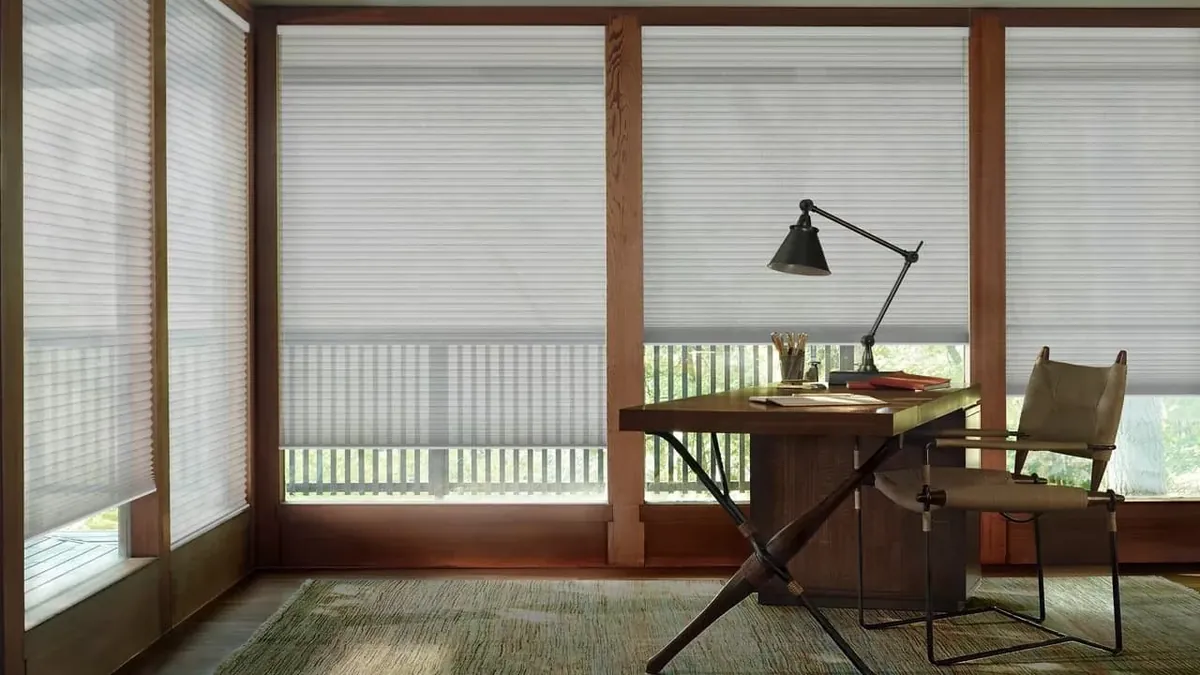
Where a two-family has an enclosed back porch on one or both floors, turned into a sunroom or a mudroom with a row of small windows, that room swings from cold to hot faster than any other part of the house. Each window in the row can take its own honeycomb shade, in one fabric, so the porch can be closed up against the cold in winter or the afternoon sun in summer and opened again when the weather is kind.
Privacy across a short side yard
With short setbacks between houses, the side windows of a Randolph home often face a neighbor’s side windows only a short distance away. In daytime that can mean looking straight into each other’s kitchens. At night, with the lights on, it is worse.
A honeycomb shade handles daytime privacy well. A fabric that lets light through glows softly when lowered, so the room stays bright while the view in is blurred. For bedrooms and bathrooms on the side of the house, a denser fabric gives full privacy after dark. We bring both kinds of sample so you can stand in your own room, look toward the house next door and decide what feels right.
The front windows are a different case. A ranch or cape set close to the sidewalk shows its living room to anyone walking by, and the same thinking applies: a light-filtering fabric by day and a little more coverage once the lamps are on.
Kitchens over the sink and by the back door
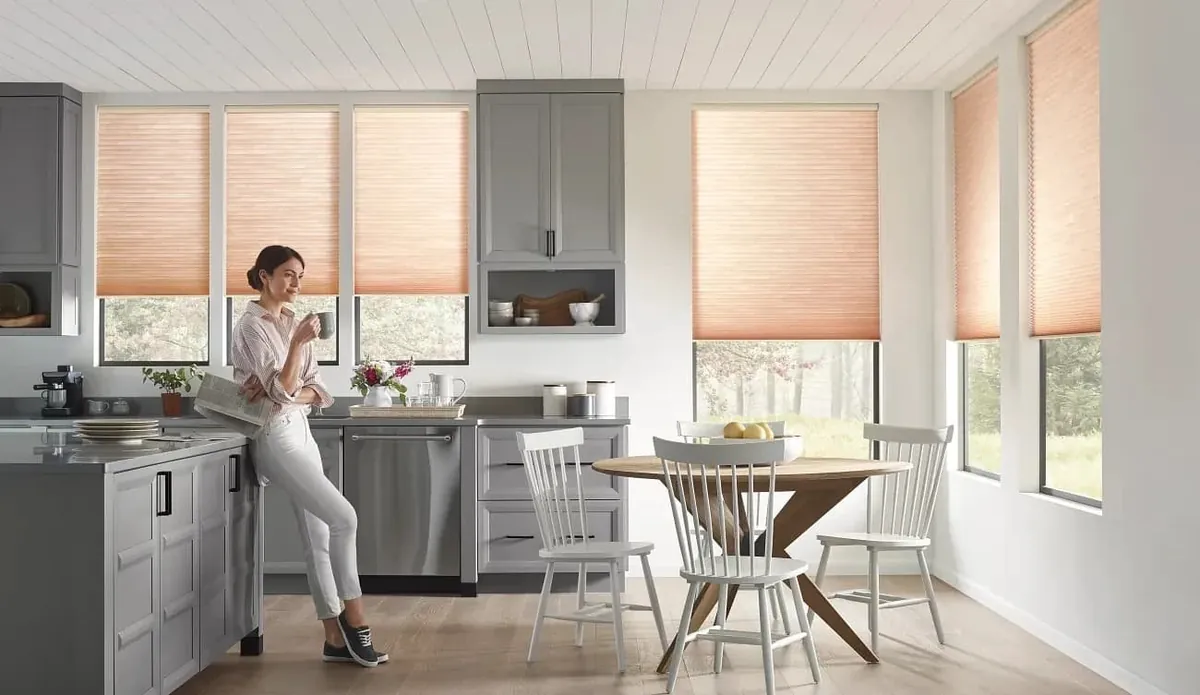
The kitchen in a Randolph ranch or cape is usually at the back, with a window over the sink and often a door or slider out to the yard. It is the busiest room in the house and the one where a window covering has to be the least fussy. A shade over the sink should rise well clear of the faucet, and nothing should hang where it will get splashed or caught.
Honeycomb shades are a sensible choice here because they stack up tightly when raised, leaving most of the glass clear for light and a view of the yard. Lowered, they take the glare off the counter in the late afternoon and keep the kitchen from feeling cold on a winter morning. When choosing cellular shades for Randolph kitchens, we usually suggest a fabric that lets light through, so the room stays bright while you cook, in a color that sits easily with the cabinets.
If the kitchen window faces the neighbor’s drive or kitchen across a short side yard, a pair of shades on a wide slider lets you cover the half that looks across and leave the other half open.
How the cells keep a post-war house warmer
The honeycomb is not a gimmick. Seen from the side, a cellular shade is a row of hollow tubes running the width of the window. When the shade is lowered, those tubes hold still air, and still air is slow to carry heat. That makes the shade a buffer between the glass and the room.
In a cape, the upstairs bedrooms under the roof run cold in winter and warm in summer, and the dormer windows sit right in the middle of that. In a ranch, the big living room window is where you feel the cold most. A honeycomb shade lowered at dusk keeps more of the heat in the room; lowered through the hottest part of a summer afternoon, it slows the sun’s heat coming in. For a fuller explanation, see our guide on cellular shades and winter heat.
The visit, step by step
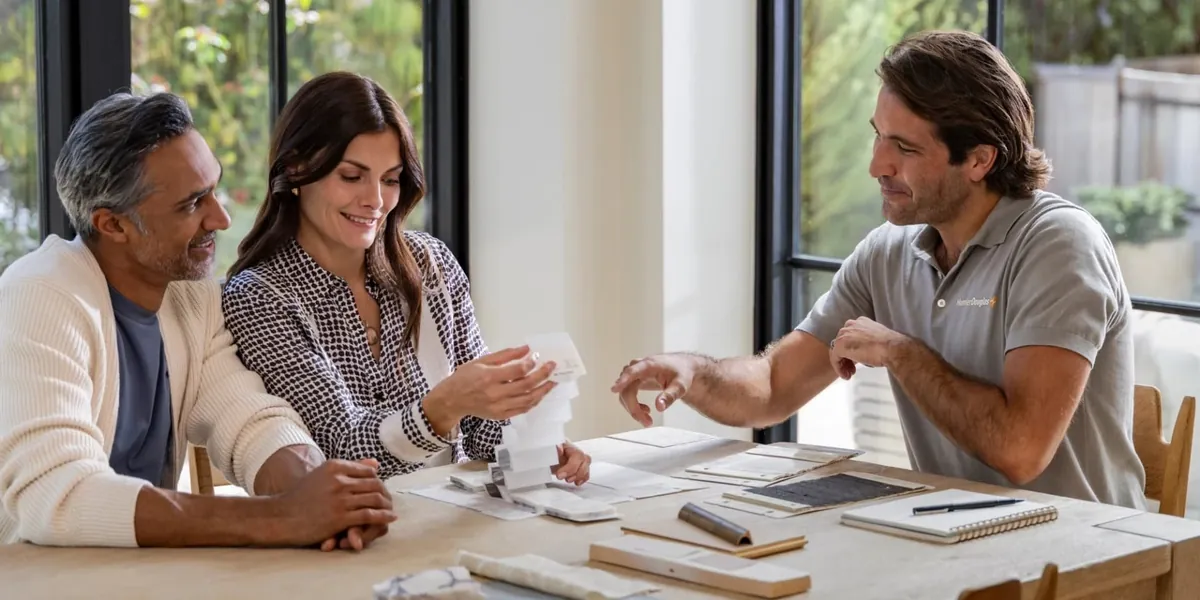
Randolph is served from our Canton shop-at-home service, so every consultation starts in your house. Our vans carry samples, which means we can bring the showroom to you and let you choose in your own rooms.
- Book through Request a Consultation or the call button, at a time that suits your household.
- We arrive with Duette and Applause samples in several colors and fabric weights.
- Together we walk the rooms, beginning with the coldest one or the one that feels most overlooked.
- You hold samples up at the window, facing the street and facing the side yard, and see how each one looks.
- We measure every window you want covered and check each frame for an inside mount.
- You receive a free estimate and the time to decide, with nothing to sign on the day.
For a two-family, tell us when you book and we will plan the visit so both units can be measured in one trip. If you would like help with color and fabric across the whole house, ask about our interior design consultations.
PowerView on a busy household’s windows
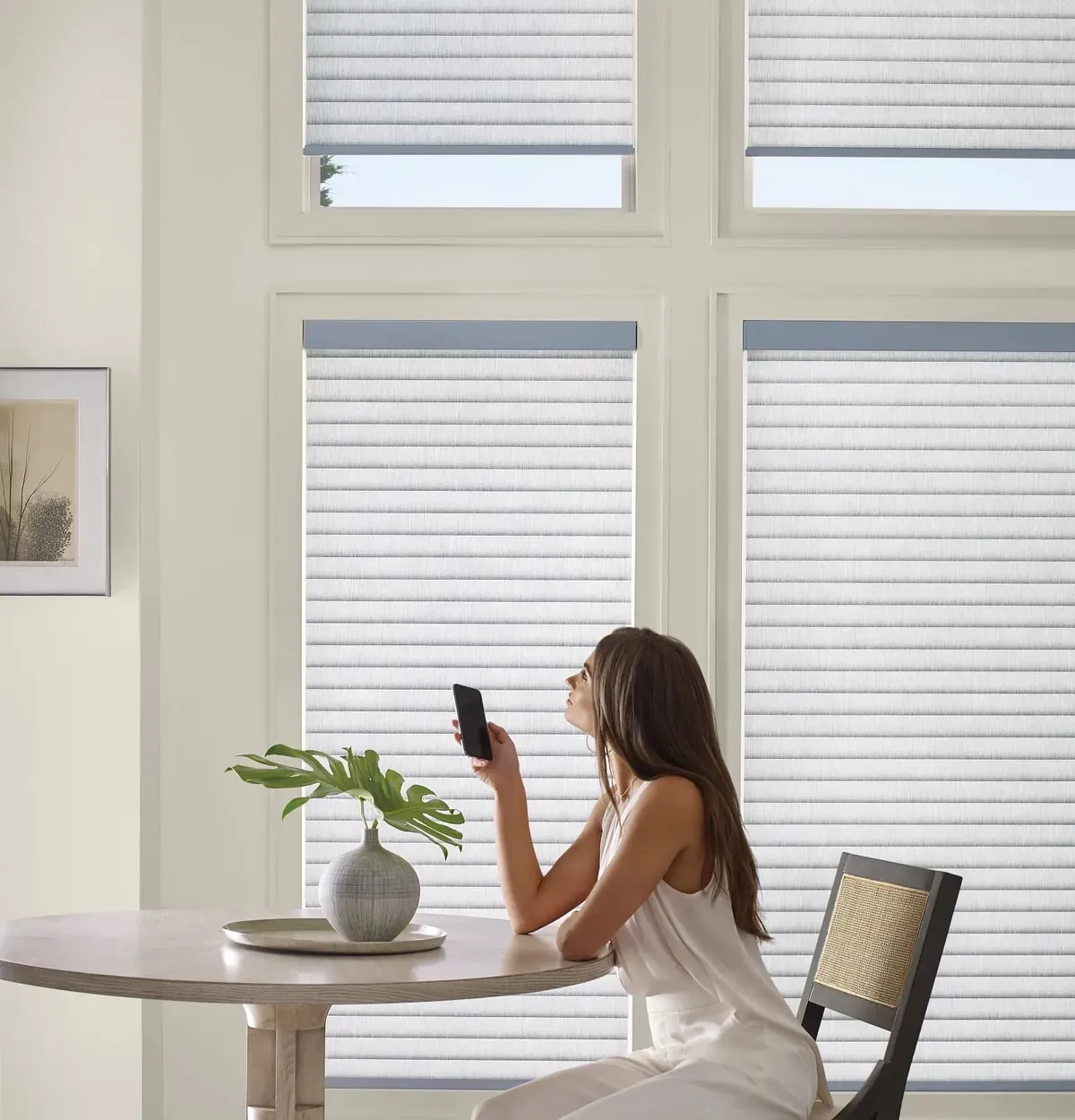
Motorization is not only for big houses. In a Randolph ranch, PowerView can lower every shade on the street side at sunset without anyone walking round the house, and raise the bedroom shades at the time you choose in the morning. Shades can be moved from a remote or from the app on your phone, or left to run on a schedule.
It is worth thinking about where a motor helps most: a shade behind a couch that nobody can reach, a window over a deep kitchen counter, or a room used by someone who finds reaching awkward. You do not need to motorize every window at once, and if you think you may add motors later, mention it at the visit so the shades you choose now will suit. We plan how each motor is powered at the consultation. Our page on motorized blinds in Randolph has more on what PowerView can do.
Duette or Applause for a Randolph house
Both lines are Hunter Douglas honeycomb shades, and both hold air in their cells the same way. The choice comes down to fabric, color and feel. Duette is the larger collection, and its range often wins for a living room where the shade is the main feature. Applause has its own palette and is a natural fit for the repeating single-hung windows in bedrooms and kitchens.
Plenty of orders for cellular shades in Randolph, MA, use both lines, one for the front rooms and one for the rest of the house. We lay them side by side at your window so you can compare them in the light you live with. Read more on our Duette honeycomb shades and Applause honeycomb shades pages, or see the full cellular shades range.
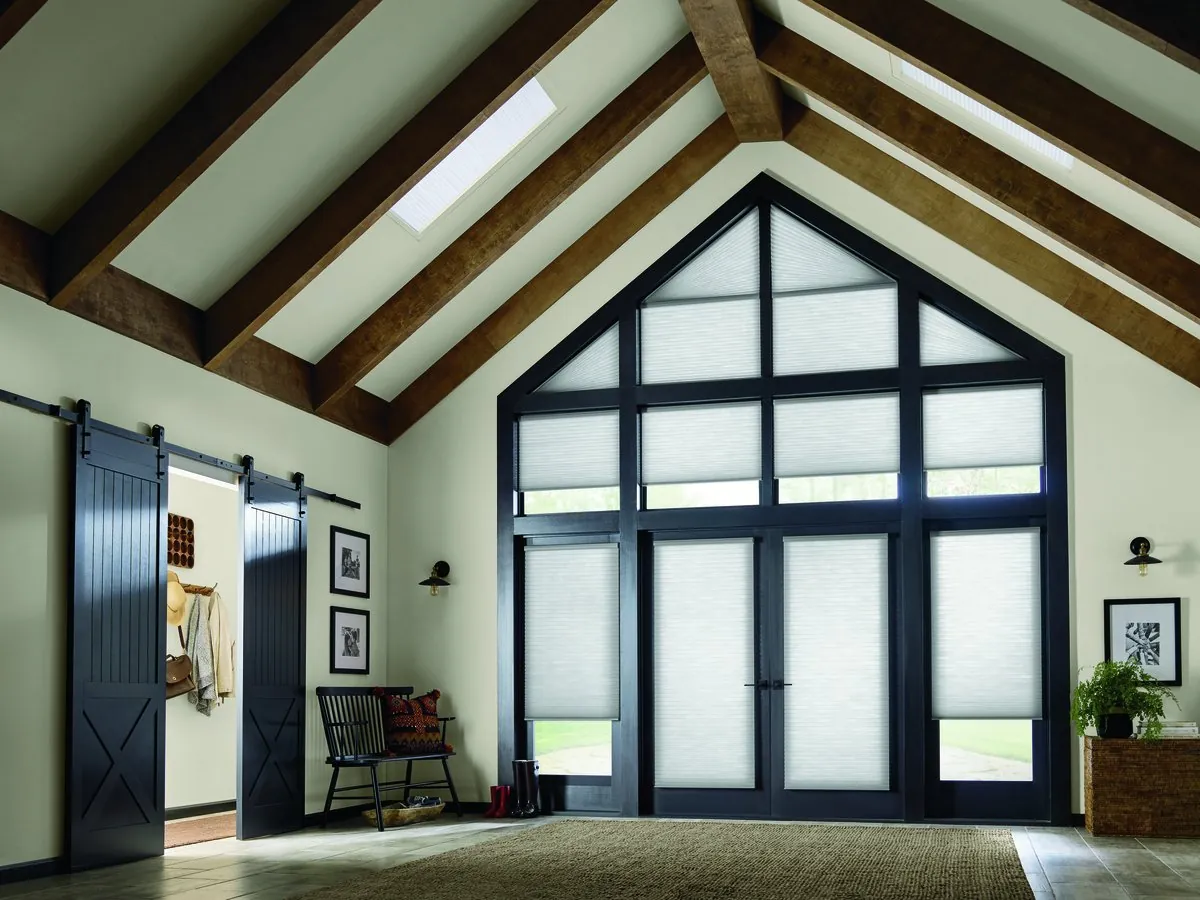
Finished basements and bonus rooms
Where a post-war house has a finished basement or a converted attic serving as a playroom, an office or a spare bedroom, the room often has small sliders set high in the wall, or a single dormer, and it tends to be the hardest room in the house to keep at a steady temperature.
Honeycomb shades suit them well. Each small window gets a shade made to its exact size, in the same fabric as the rest of the house if you want continuity. A shade on a basement slider takes the chill off the room in winter, and in a converted attic it helps against the heat that builds under the roof in summer. Where a high basement window is hard to reach from the floor, a PowerView motor saves a step stool.
Measuring and certified installation
The measuring for a post-war house is simple, but we take the same care as on any other.
- We measure each opening across the top, middle and bottom, and the height at both sides and the center.
- We check the frame depth and note locks, latches or cranks close to the front.
- We confirm an inside or outside mount for every window before ordering.
- When the shades arrive, our certified Hunter Douglas installers fix each bracket firmly, level each headrail and test every shade.
- They show you how the shades work, and set up any PowerView remotes and schedules, before they go.
Shades made to the window fill the opening closely, which looks neater and leaves less of a gap at the sides for cold air.

Why Randolph households choose a Gallery dealer
Blinds & Designs is a Hunter Douglas Gallery dealer, with installation by installers certified by Hunter Douglas. That gives a Randolph house access to the whole honeycomb range, every Duette and Applause fabric and PowerView motors, from one company that measures, orders and fits.
We also carry Hunter Douglas blinds, shutters, roller and roman shades and drapery, so a house can be planned room by room in one visit. A kitchen might suit custom blinds in Randolph, and a back bedroom might want roman shades in Randolph. Our Randolph page lists everything we do in town.
If you would like to see Hunter Douglas products in person, the Franklin showroom is our nearest.
Questions from Randolph
Do honeycomb shades work on sliding windows?
Yes. A slider opens sideways, so the shade above it never interferes with the sash. Wide sliders often take two shades side by side, so you can cover one half and leave the other open.
Can both units of our two-family be measured at one visit?
They can. Let us know when you book and we will plan the visit around both units. Each household can choose its own fabric, and the street-facing windows can match if you want the house to look consistent.
My side windows face the neighbor’s house. What do you suggest?
A fabric that lets light through keeps the room bright by day while blurring the view in. For bedrooms and bathrooms on that side, a denser fabric gives privacy after dark. We bring both so you can judge from inside your own room.
Will cellular shades fit my replacement windows?
Usually. Replacement frames can be shallow, so we check each one. Where the headrail will not fit inside, we mount the shade on the trim above the window, slightly wider than the opening.
Is there a charge for the estimate?
No. After measuring, you get a free estimate for the shades you are considering.
Your Randolph consultation
The best way to see what cellular shades in Randolph, MA, will do for a cape, ranch or two-family is to hold the samples at your own windows, with the neighbor’s house or the street right there in view. Request a consultation and we will come to Randolph with the samples, measure each window and leave a free estimate behind. If you want to ask something first, the call button gets you straight through.