
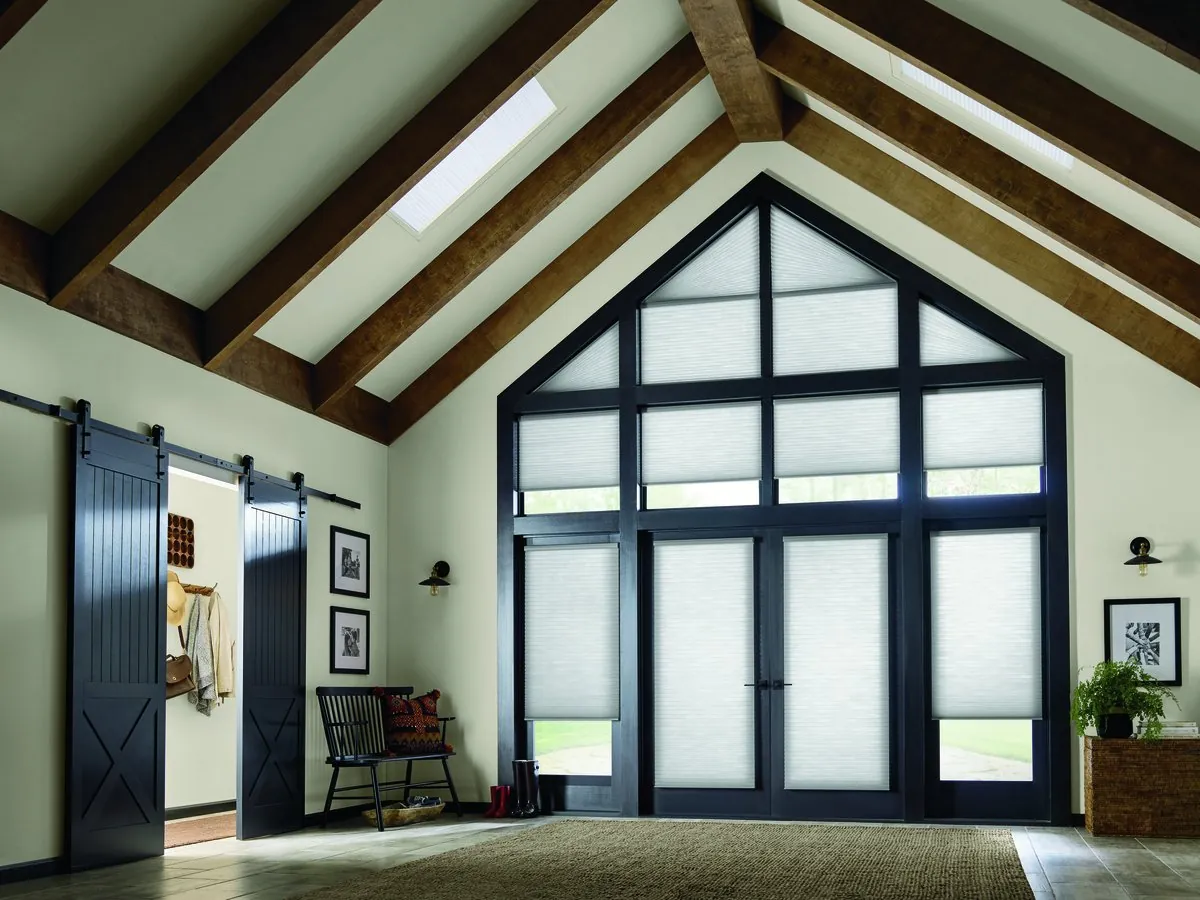
From the post-war colonial to the two-story foyer
Drive across Needham and the houses tell the story of the town’s growth. Post-war colonials line the older subdivisions, with their tidy rows of double-hung windows. Large newer houses sit back on wooded lots, some with a foyer that rises two stories behind a tall sweep of glass. Close to Needham Center, older Victorians keep their tall sash and their trim. Each brings its own set of windows, and we plan cellular shades in Needham, MA, around whichever one you live in.
What makes a honeycomb shade the right answer in so many of these rooms is its shape. Seen from the side, the fabric forms a row of closed cells. Lower the shade and each cell holds still air against the window, a quiet buffer between a cold pane and the room. That buffer is the reason a room with honeycomb shades keeps its heat, and it is why we suggest Duette or Applause first for any room that feels cold in winter.
The newer houses add one more consideration: a great deal of glass, some of it far out of reach.
Honeycomb choices for every kind of Needham house
Here are the directions cellular shades in Needham, MA, usually take, and we bring samples of each to your home so you can choose at your own windows.
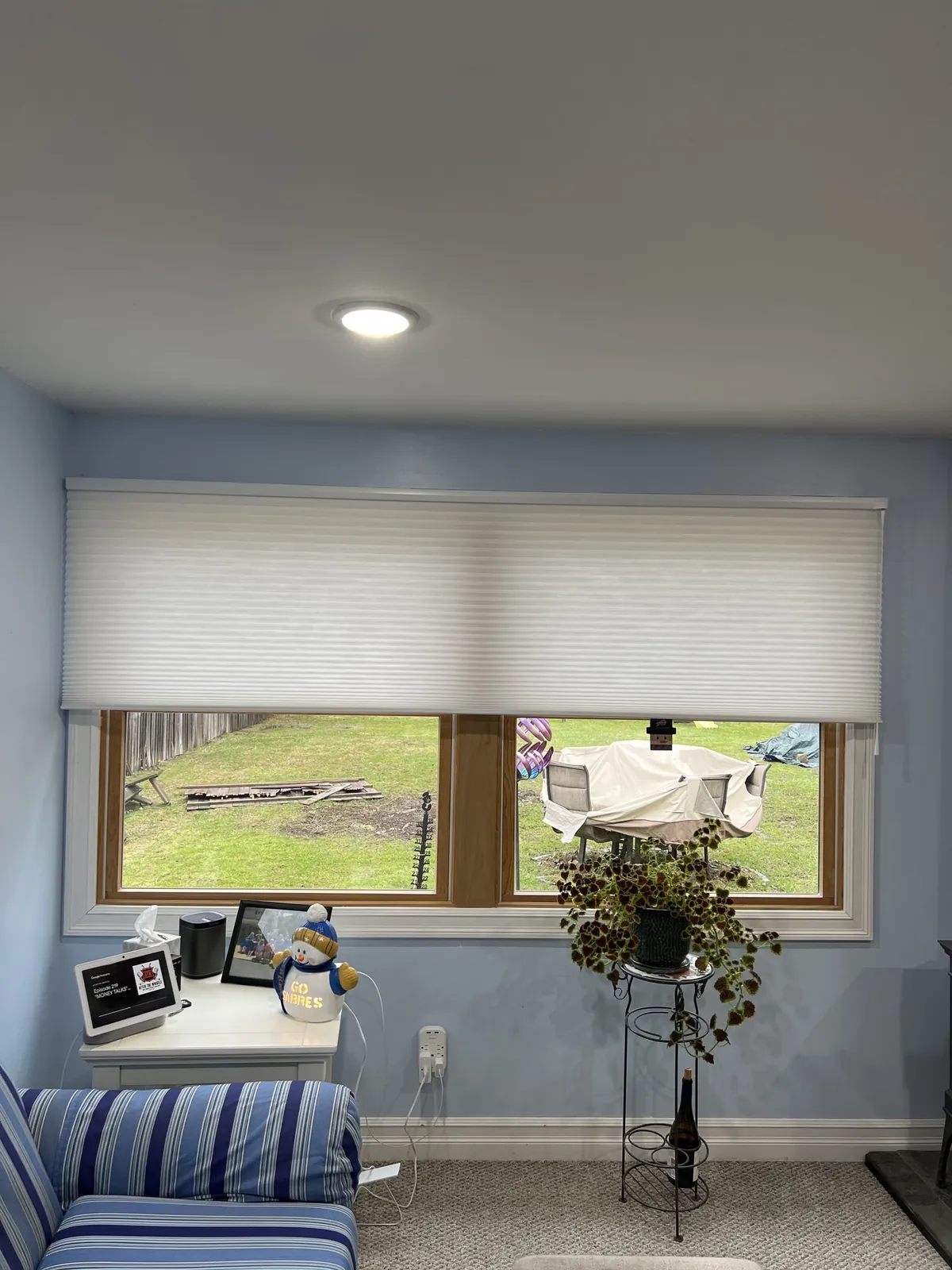
Duette Honeycomb Shades
The broadest Hunter Douglas honeycomb line, with the most fabrics and pleat sizes and the reach for tall and unusual openings like foyer glass.
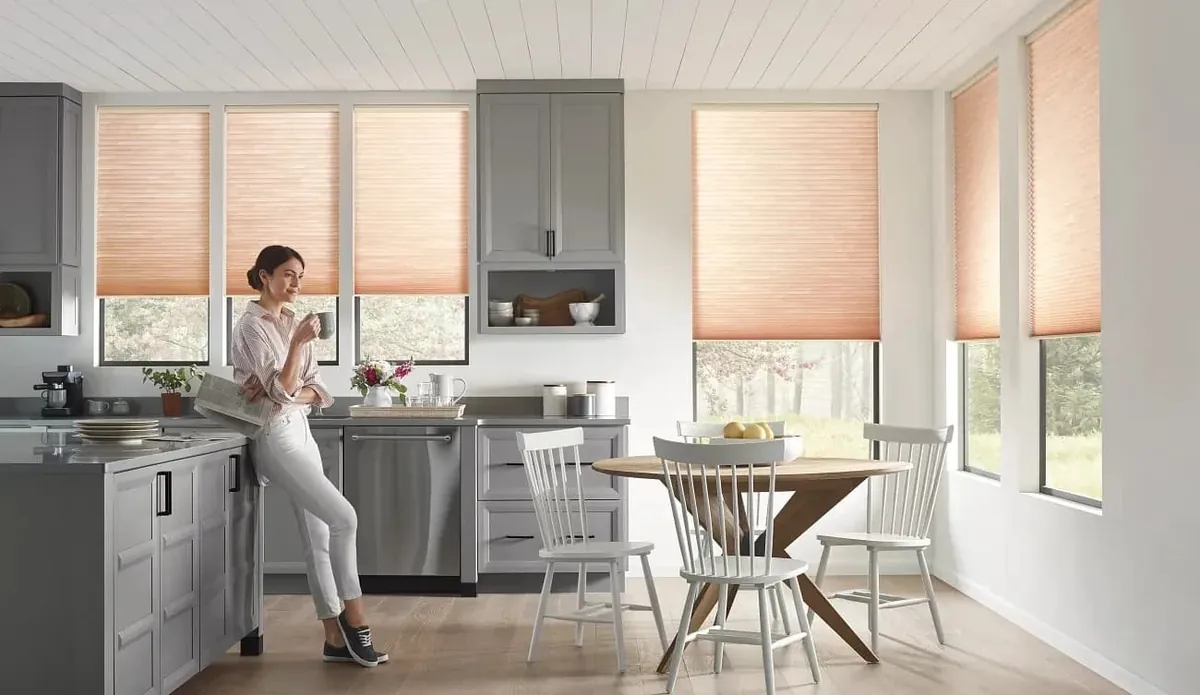
Applause Honeycomb Shades
A honeycomb line with a palette of its own, well suited to the standard openings found throughout a post-war colonial or a newer house.
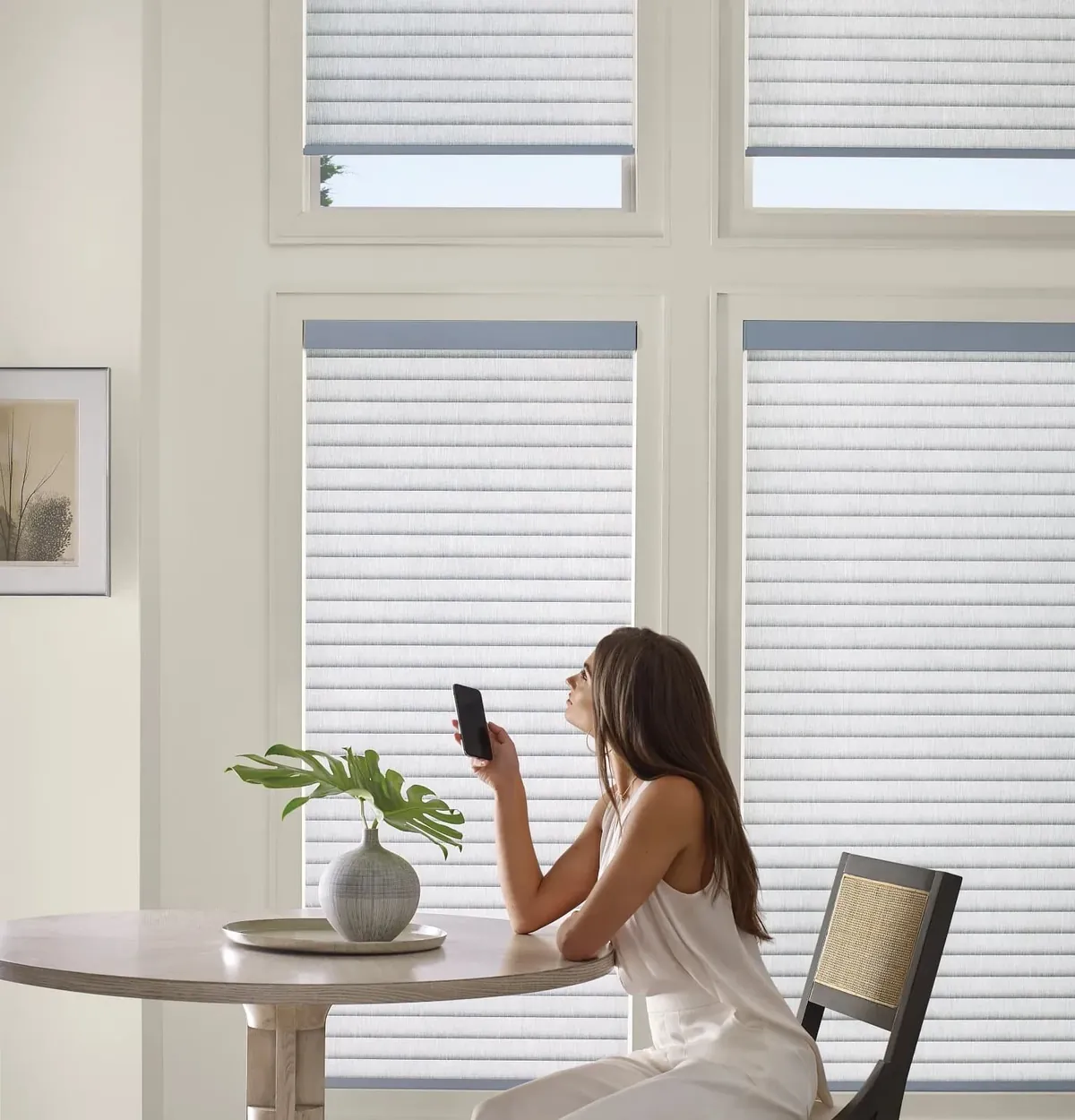
Motorized Blinds in Needham
PowerView raises and lowers shades through an app, a remote or a schedule. The practical way to manage glass high above a foyer floor.
Glass that climbs two stories
The largest houses on the wooded lots often open with a foyer the full height of the house, lit by a tall window or a stack of windows over the front door. It is a striking way to enter a home, and it also makes the foyer the hardest space in the house to keep warm. Heat rises up the open height, and the tall glass at the top gives it a cold surface to meet.
Honeycomb shades can be made for windows of that size and shape. The catch is reach. Nobody wants a ladder in the front hall each evening, and a shade that is never lowered does nothing for the room. PowerView motorization solves that. The shades in the foyer rise and fall from a phone or a remote, or follow a timetable you set, so the tallest glass in the house is the easiest to manage.
We look at the foyer as part of the whole house at the consultation. Where the upper windows are motorized and the lower ones are worked by hand, the fabrics can match, so the stair hall looks like one design. We plan how each motor is powered at the visit.
Post-war colonials and their double-hung windows
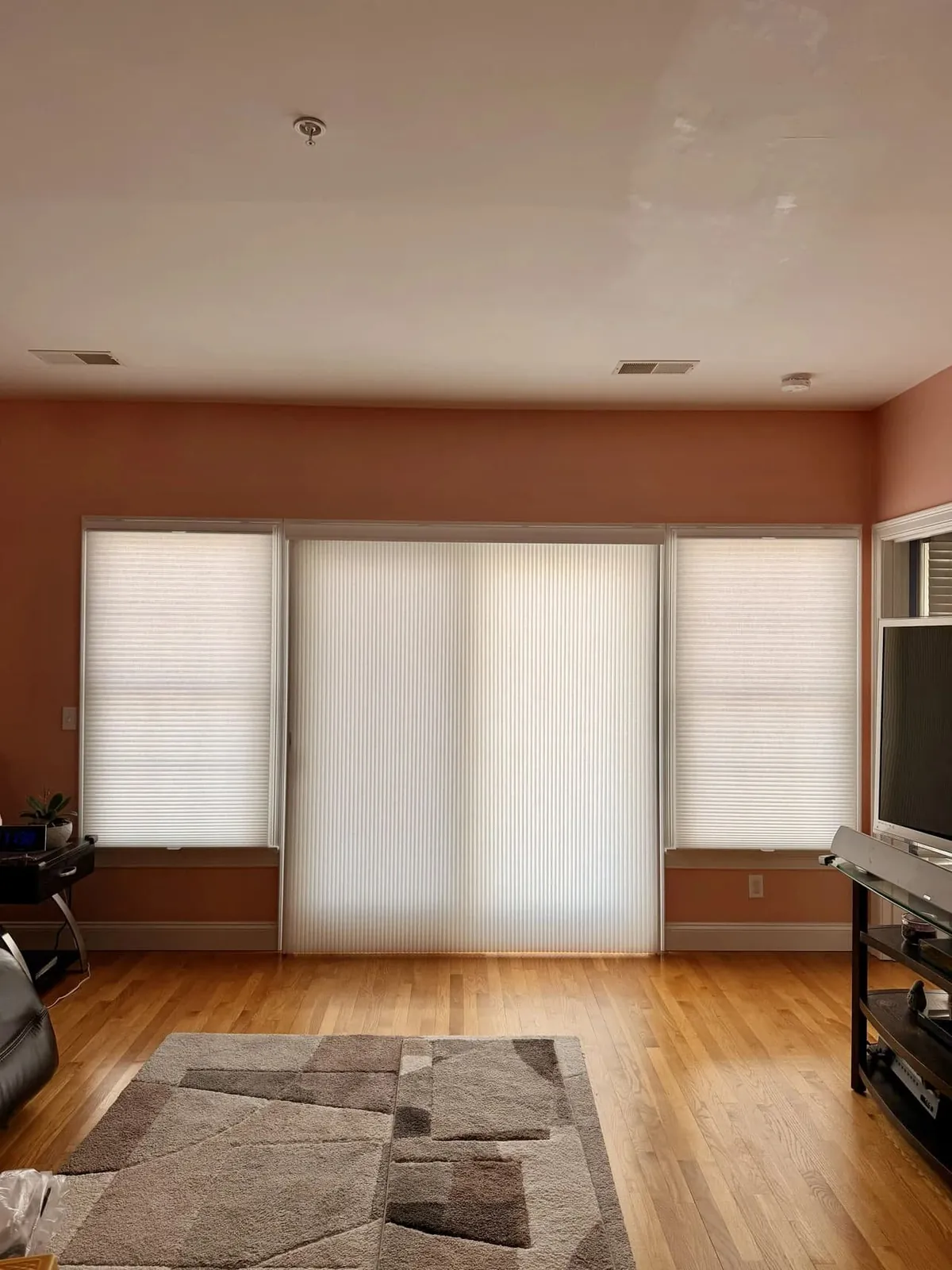
The post-war colonials that fill much of Needham were built with sensible, regular windows: double-hung sash, much the same size from room to room, placed evenly along the front of the house. That regularity is good news for honeycomb shades. Openings of a standard size suit both Duette and Applause, and a run of shades across the front of the house looks orderly from the street when every window matches.
These houses have often been updated over the years, with new windows in some rooms and the originals in others. Even so, the shapes stay simple. The main decisions are about fabric, color and how much light each room should keep. A front living room might take a light-filtering fabric that keeps the room bright and screened from the street, while the bedrooms upstairs take a heavier fabric for darker mornings.
Many colonials also gained a family room or a kitchen addition at the back, often with a wider window or a door to the yard. Those rooms are used most of the day, and their larger glass is where a honeycomb shade does the most good against the winter cold.
Victorians near Needham Center
The older Victorians close to the center bring a different set of windows: tall sash, sometimes with shaped tops, bays on the front of the house, and wood casings that are part of the character of the rooms. These windows were not made to a standard size, and openings that look alike from the street often differ from one another once measured.
A honeycomb shade can sit inside the window opening on many of these houses, so the casing stays fully visible and the shade nearly disappears when it is raised. Where an old frame is too shallow or out of square for that, the shade can be mounted on the casing instead. We measure each opening and show you both ways where the choice is open, so you decide how the window should look.
In a bay, each window takes its own shade, and the set is made so the shades line up and look like one treatment when lowered together. The narrow side windows of a bay, and the tall sash beside a Victorian front door, can take honeycomb shades of their own, so no window in the room is left out of the plan.
Rooms among the trees
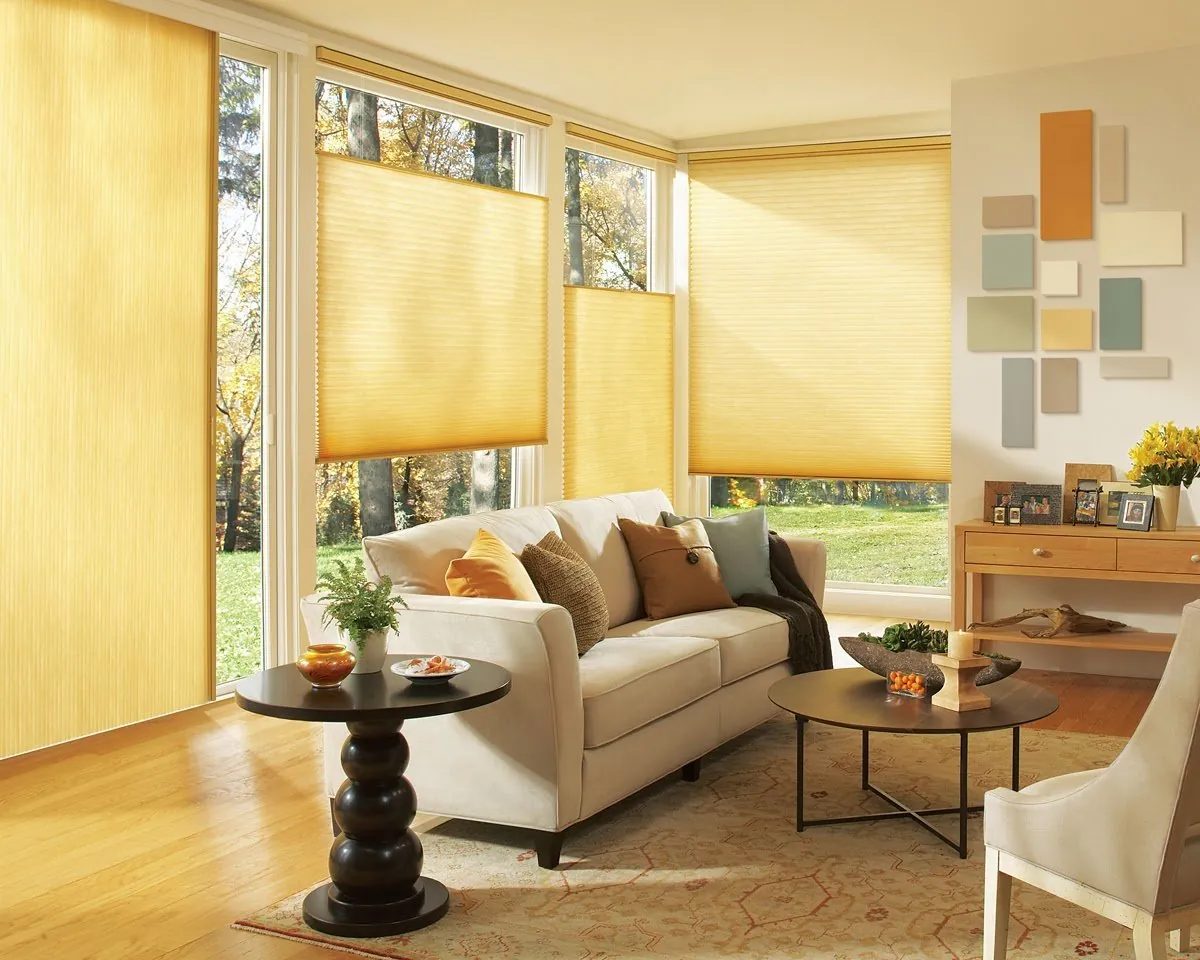
On the wooded lots, the trees shape the light. In summer the leaves shade the house and the rooms are dappled and soft. In winter the trees are bare, the sun comes lower, and rooms that were dim in July can be bright and glary in January. The same window may need very different things from season to season.
A light-filtering honeycomb fabric deals with that change well. It softens strong winter sun without shutting the room off, and in summer it still lets the green light through. For a home office or a family room with a screen, a more opaque fabric keeps glare off the screen when the sun is low. We bring both kinds so you can see each one at the windows that face the trees.
Wooded lots also mean the house can feel private from the road, yet rooms at the back may look straight across at a neighbor through the trunks once the leaves fall. A honeycomb shade gives privacy in every season without needing a heavy treatment.
Bedrooms, home offices and the upstairs
Upstairs is where many Needham houses ask the most of a shade. In a post-war colonial the bedrooms sit along the front and back under the roof, with windows that catch the early sun on one side and the late sun on the other. In a large newer house the main bedroom may have a wide window, a pair of windows or a small sitting area of its own. Either way, the people sleeping there usually want the room to stay dark well past dawn and to stay warm through a winter night.
A heavier honeycomb fabric answers both at once. The cells keep their air against the glass, and the fabric keeps the room dim until you choose to raise the shade. In a child’s room or a nursery, that can make the difference between an early start and a full night.
Home offices are the other room that often needs particular care. A desk set beside a window gets glare on the screen whenever the sun is low, which on a wooded lot can change with the season. A light-filtering fabric softens that glare while keeping the room bright enough to work in. Planning cellular shades in Needham, MA, room by room means each of these upstairs spaces gets the fabric that suits how it is used.
Duette or Applause in a Needham home
Both lines are true Hunter Douglas honeycomb, and in each the cells hold air in the same way. The difference lies in the range. Duette is wider, with more fabrics, textures and pleat sizes, and it covers the tall, wide and unusual openings found in the larger newer houses. Applause has its own palette and fits standard openings well, which suits many rooms in a post-war colonial.
It is common to use both. A large newer house might put Duette on the foyer glass and the great room, and Applause in the bedrooms and the kitchen. A Victorian might take Duette in the formal front rooms and Applause at the back. Laying swatches from both lines out together, room by room, is how cellular shades in Needham, MA, get chosen for a whole house. For more on the range, the cellular shades page brings every option together.
Whole-house orders in the newer stock
Large newer houses have a lot of windows, and most of them are standard modern openings, much alike from room to room. That makes a whole-house plan straightforward. One fabric family can carry through the main floor, with darker fabrics in the bedrooms, so the house looks considered from the street and inside.
A whole-house order is also the natural time to decide which windows are worth motorizing. The foyer glass is an obvious one. So is a wide window behind a kitchen sink, or a bank of windows in a great room. Everything else can stay hand-operated. We go through the house with you and mark each window, so the plan is settled before anything is ordered.
If you would like help with the rooms beyond the windows, our interior design consultations look at fabric, color and the other treatments in each room at the same visit.
A visit to your Needham house
The only fair test of a honeycomb fabric is your own window in your own light. So the swatches travel to you.
- Choose a time through Request a Consultation, or reach us with the call button.
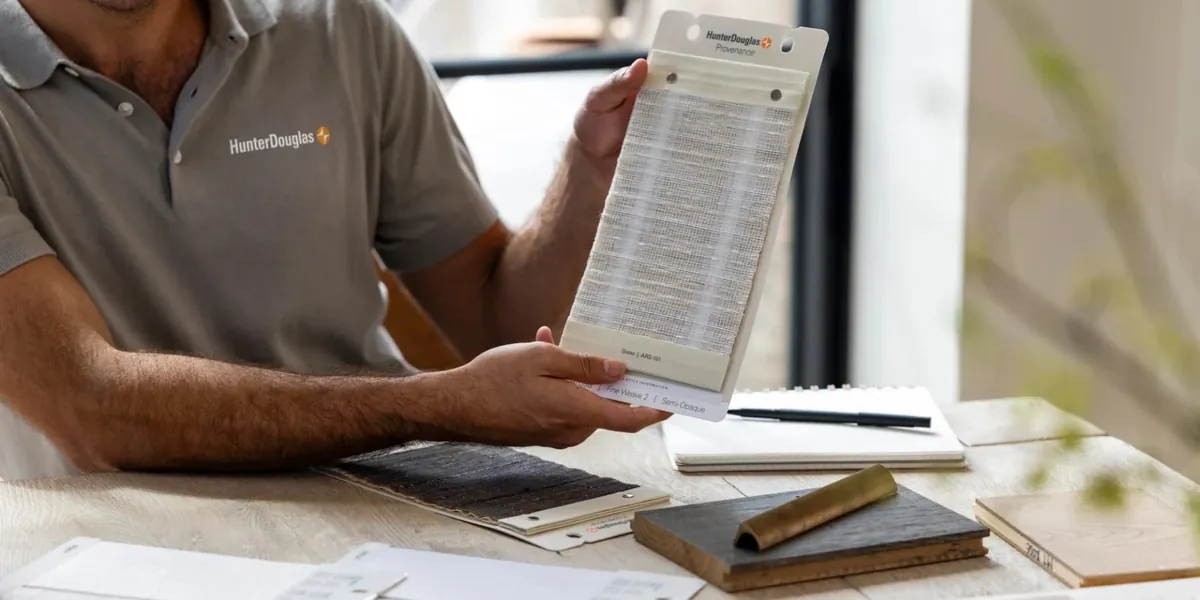
- A consultant brings Duette and Applause swatches in many colors and textures.
- You walk the house together, starting with the coldest rooms and the foyer or great room glass.
- Each swatch goes up against your own windows, so you see it in the light that room gets.
- Every opening on your list is measured, with notes on how each shade would mount.
- You receive a free estimate for the shades you are considering, and decide when you are ready.
Our page on what happens at an in-home consultation goes into the visit in more detail.
The great room under a high ceiling
Many of the larger newer houses are built around a great room: a family room open to the kitchen, with a high ceiling and a wall of windows facing the back of the lot. Sometimes there are windows stacked above windows, or a run of glass across the back with transoms above. These rooms are bright and generous, and they are also where most of the day’s living happens, from breakfast to the evening.
All that glass is the room’s best feature in daylight and its coldest surface after dark. Honeycomb shades across the lower windows bring the warmth in close where you sit. The upper windows can be left bare to keep the sense of height, or covered too, with PowerView doing the work of reaching them.
Because great rooms are open to the kitchen and often to a dining area as well, we plan their shades as one space. A single fabric across every window in the room keeps it calm, while the kitchen window above the sink can take a fabric that suits a working spot. We look at the whole room with you before suggesting how many shades it needs and which ones should move by motor.
Fitting by certified installers
Installation is handled by installers certified by Hunter Douglas, so the shades go up as the maker intends, whether on the regular sash of a colonial, the old frames of a Victorian or the tall glass of a foyer.
Each shade is made to the figures taken at your home, so it fills its own opening closely. That snug fit is part of what lets the cells hold their air against the glass, whether in a small upstairs bedroom or across a wall of glass in a great room.
When a shade you already own needs attention, our blind and shade repair service is there for that as well.
Gallery dealer range, certified fitting
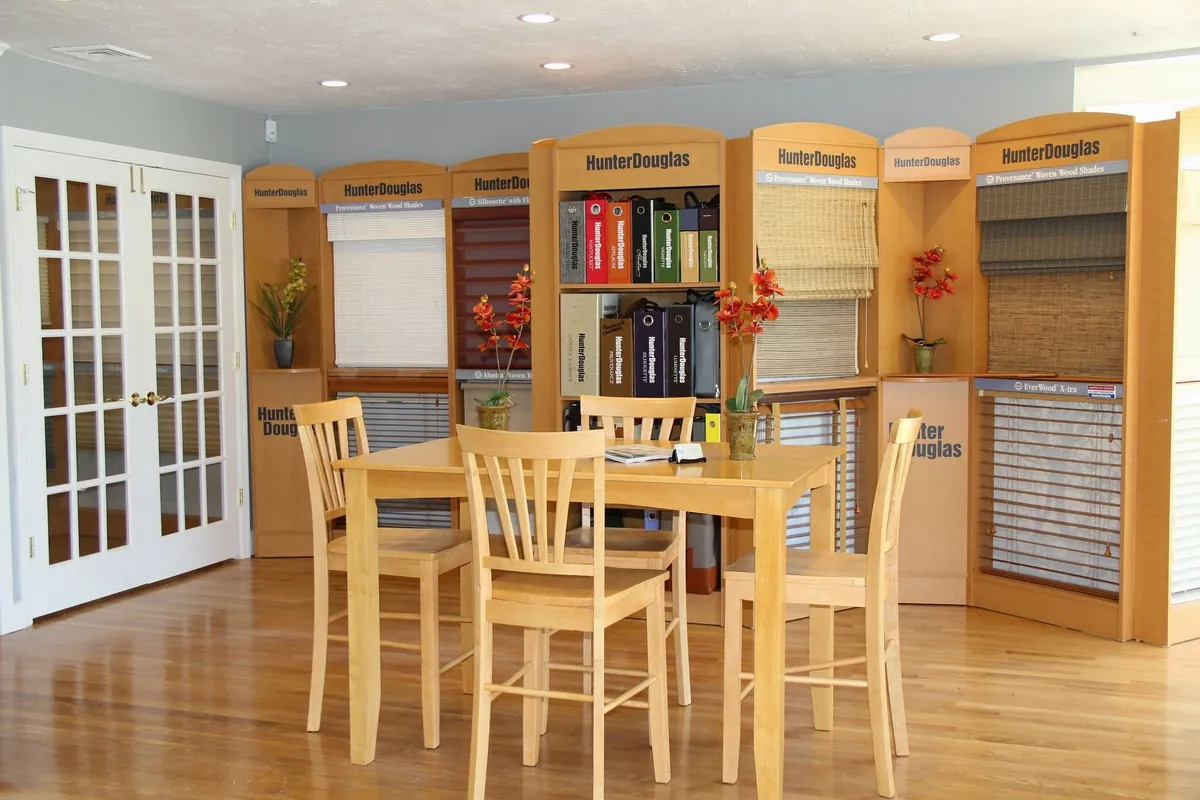
Blinds & Designs is a Hunter Douglas Gallery dealer. For a Needham house that puts the whole honeycomb range within reach, every Duette and Applause fabric, along with PowerView motorization and the rest of the Hunter Douglas collection of shades, blinds and shutters.
The company that helps you choose is the one that fits the shades, with installers certified by Hunter Douglas. If other rooms are on your list, see roman shades in Needham, plantation shutters in Needham, roller shades or custom blinds, or learn about us as your Hunter Douglas dealer in Needham. All our services in town are gathered on the Needham page.

Choosing at home, with Franklin close by
Needham is served by our shop-at-home service, so the selection happens in your rooms rather than in a store. The van carries the honeycomb swatches, and you judge each one against your own trim, your own walls and the light through your own trees. The Canton shop-at-home page explains how the service works.
The visit suits a single cold bedroom as well as a whole house with a two-story foyer. We look at what each room needs, whether warmth, softer light, privacy or a mix, and suggest a shade for each.
To see shades in a showroom as well, Franklin is the nearest to Needham. The Franklin showroom page gives its address and hours.
Questions from Needham
Can you cover the tall windows above our two-story foyer?
Yes. Honeycomb shades can be made for tall and shaped windows, and PowerView motorization lets you raise and lower them from a phone or a remote, or on a schedule, so there is no need to reach them by hand.
Our post-war colonial has standard double-hung windows. Is honeycomb a good fit?
Very much so. Regular, standard openings suit both Duette and Applause, and a matching set across the front of the house looks tidy from the street. Most of the choice comes down to fabric, color and how much light each room should keep.
Will a shade work in the older windows of a Victorian near the center?
Usually. Where the frame is deep and square enough, the shade sits inside the opening and the casing stays on show. Where it is not, the shade mounts on the casing instead. We measure each window and show you the options.
Is there a showroom near Needham?
The nearest showroom is in Franklin. You can also choose entirely at home, because our shop-at-home service brings the swatches to the house.
Is the estimate free?
Yes. After we measure the windows you are interested in, you get a free estimate, and you decide in your own time.
Your first step
Think of the room you avoid on a January evening, or the foyer glass that stays bare because it is out of reach. That is the place to begin. Request a consultation and a consultant will bring both honeycomb lines to your door, measure, and leave a free estimate for cellular shades in Needham, MA. If a quick question comes first, the call button reaches us.