
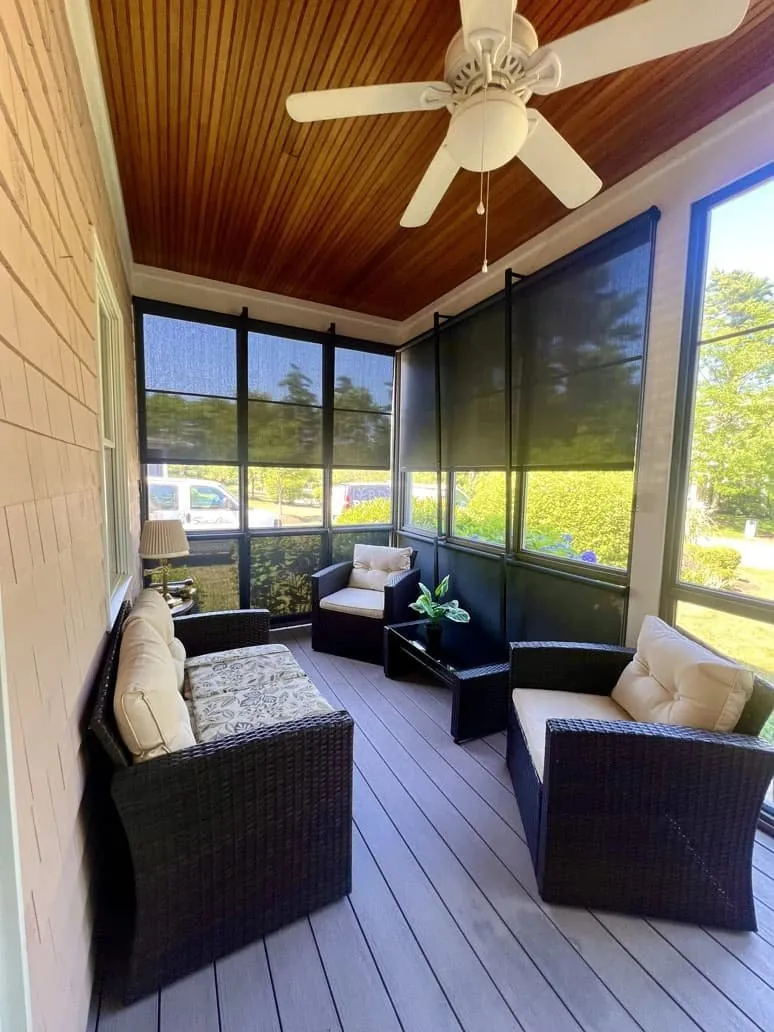
Salt air and the long afternoon
Rooms that face the Sound live with two things every summer: salt in the air whenever the windows are open, and a sun that hangs low over the water for hours before it sets. By late afternoon a living room on that side can be too bright to read in and too warm to sit in, and the glare off the water makes it hard to see the view you bought the house for. Most of the roller shades in Falmouth, MA, that we plan start with exactly that problem.
The houses vary a great deal across town. Along Main Street and around the village green stand the shingled captains’ houses, tall and formal, with rows of big sash windows. Falmouth Heights and Woods Hole are packed with cottages on small lots, many of them on slopes with a peek of the water. Out toward Sippewissett the houses are newer, larger and built with much more glass.
Each kind of house asks for its own fabric and mount, but the roller shade suits them all. It is a single flat panel, it rolls away to almost nothing, and it can be anything from a soft light filtering cloth to a fully dark blackout or an open solar screen you look straight through.
Three ways we cover a Falmouth window
When we bring roller shades in Falmouth to the door, most rooms end up with one of these three. All of them ride in the van as full samples.
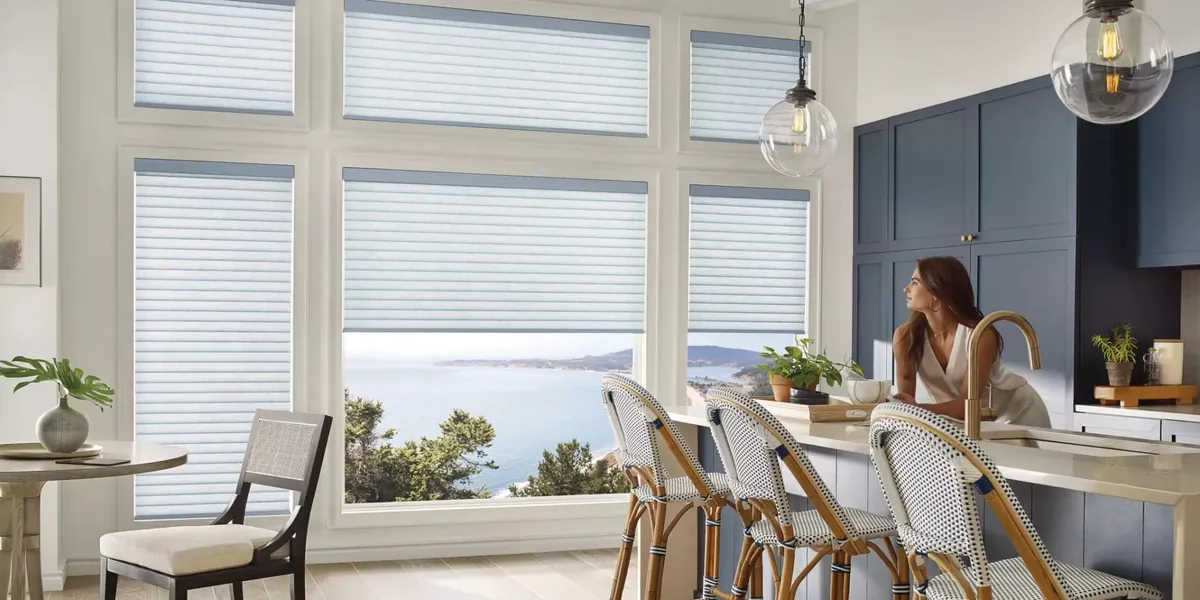
Screen shades for the Sound side
A Designer Screen weave cuts the glare off the water and keeps the horizon in view. The first thing we suggest for a west-facing living room.
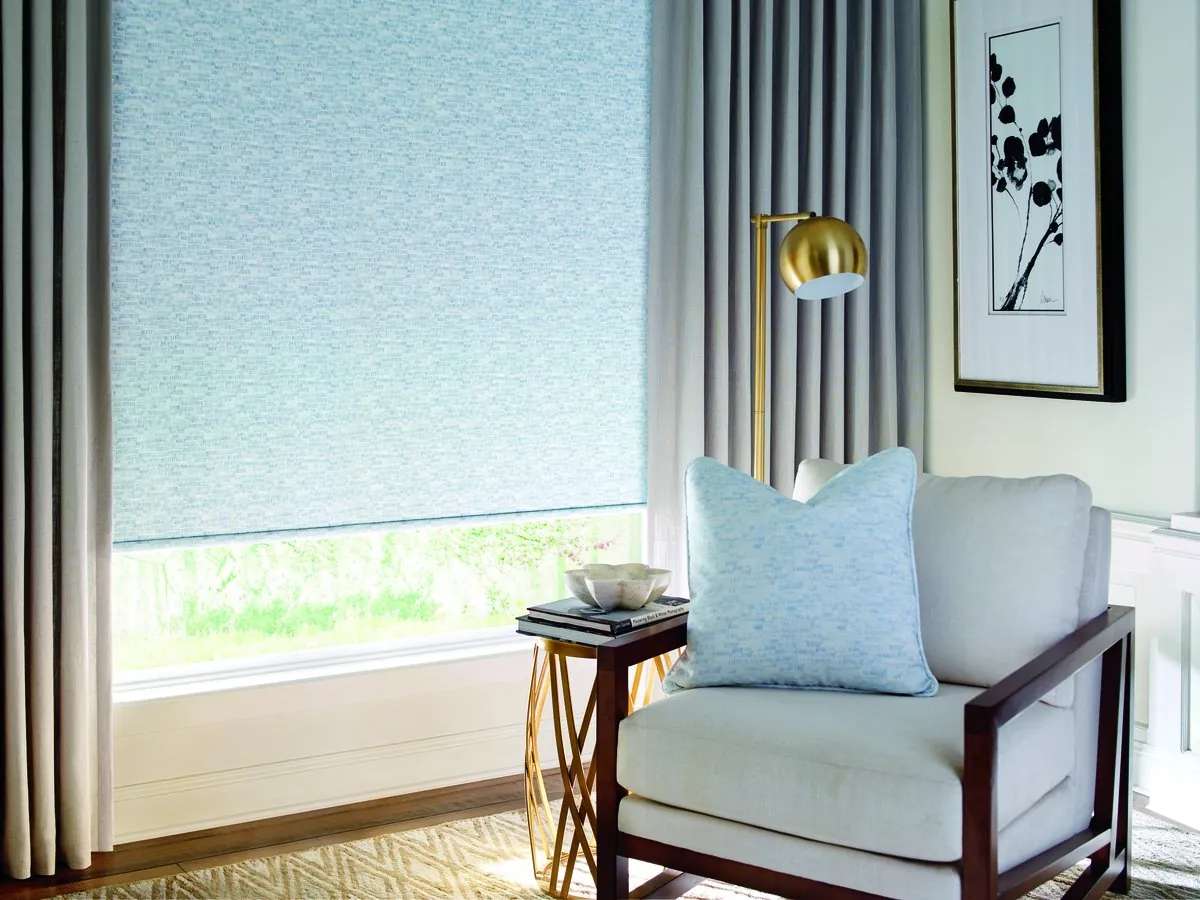
Light filtering for the village houses
A soft Designer Roller fabric that glows rather than shows, often paired with side panels in the formal rooms of a captain’s house.
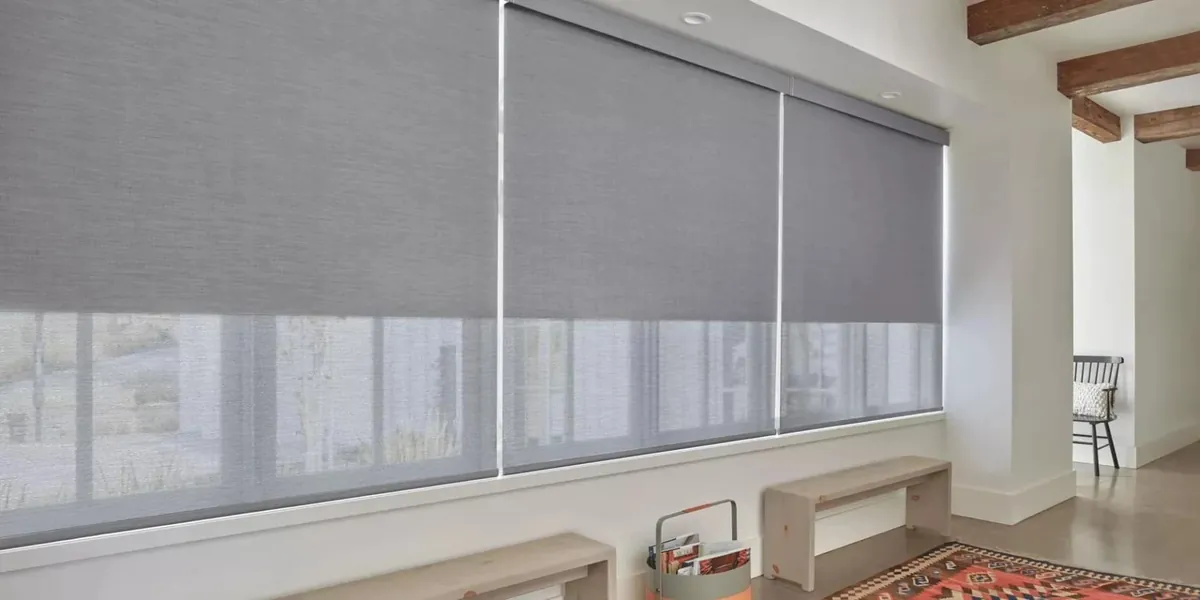
Blackout for cottage bedrooms
An opaque fabric for bedrooms that catch first light or sit under a street lamp. Dark when you want it, gone when you raise it.
Captains’ houses on Main Street and the green
The captains’ houses near the village green were built to impress. They stand two and a half stories, sheathed in shingles, with evenly spaced sash windows, generous ceilings and wide interior trim. Many have original or restored windows with old glass, and the trim around them is often the best woodwork in the house.
A roller shade is a quiet partner for windows like those. Mounted inside the frame, it leaves the casing completely visible, and when it is raised it sits as a slim roll at the head of the window. In rooms where the owners prefer the window to read as a bare, traditional opening, that restraint is the whole point.
Formal rooms in these houses often have drapery too, or would look right with it. A light filtering roller behind side panels works well: the panels frame the window and soften the room, while the roller quietly handles privacy and sun. Because the roller is flat and thin, it tucks behind the panels without fighting them for space.
From the street, these houses are part of what makes the village look the way it does. We usually suggest a white or light neutral outward color on the front elevation so every window reads the same from the sidewalk, and the room-side fabric can be anything you like.
Rooms that face the Sound
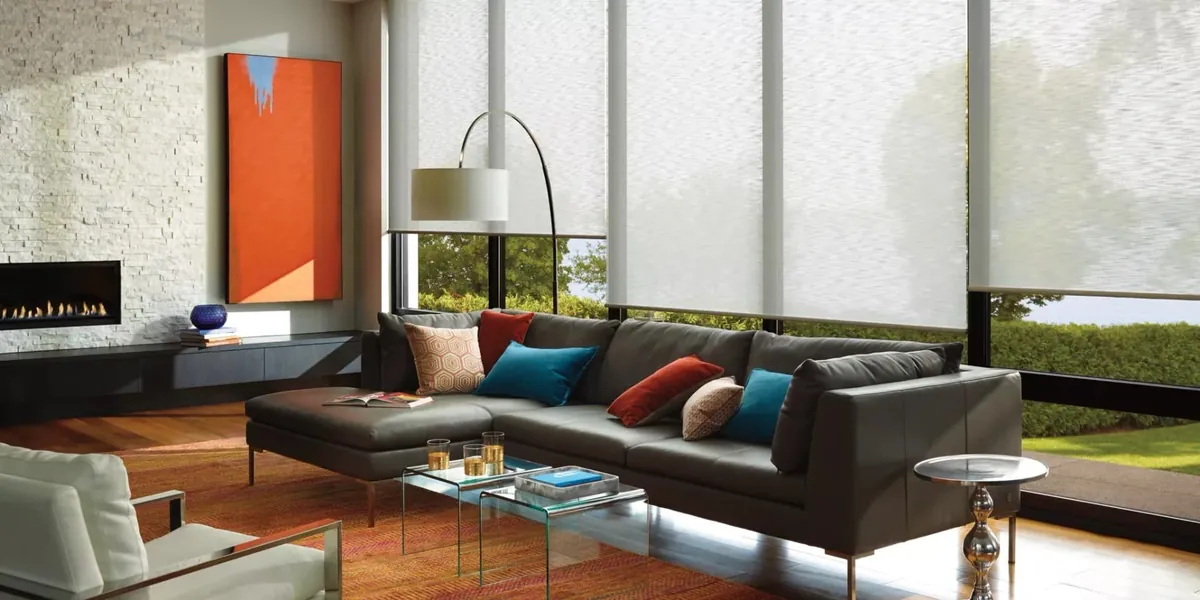
The Sound side of town takes its sun late and long. In midsummer the afternoon light comes in low over the water, hits the glass almost head on and keeps coming until evening. Glare off the water doubles it. Those are the rooms where a solar screen roller earns its place.
A screen fabric is woven with small openings. How open the weave is, called the openness, decides how much of the view you see through the shade and how much glare it holds back. A more open screen leaves the water and the boats clear, with the harsh light softened. A tighter screen gives more glare control and more daytime privacy, and the view becomes a soft impression. Darker screen colors are usually easier to see through, because they do not light up in the sun the way pale fabrics do.
Screens are a daytime tool. Once the sun goes down and the lamps go on, a screen lets people outside see in. For rooms where that matters, we add a second shade behind the screen, on the same bracket, so you have a light filtering or blackout layer for the evening.
Cottages in Falmouth Heights and Woods Hole
The cottages up in the Heights and down in Woods Hole are a different scale altogether. Lots are small, houses sit close together, and many are on slopes, so a window on one side may look into the neighbor’s deck while a window on the other catches a slice of harbor or Sound. Rooms are compact, and the windows are a jumble of sizes from years of additions and repairs.
A single roller fabric across all those windows pulls the house together. The windows may not match, but the shades will. Because a roller can be made narrow as well as wide, it suits the small bathroom window, the attic gable and the big picture window someone added for the view.
Close neighbors make privacy the daily question. In a cottage we usually answer it with a light filtering fabric that keeps daylight in while blurring the view, or with banded shades that let you shift between see-through and solid stripes without raising the shade at all.
Many cottages have a sunroom or an enclosed porch, often with glass on three sides. Those rooms overheat fast. A solar screen on each window takes the edge off and keeps the room usable on a bright afternoon.
Choosing color for a bright window
Color on a roller shade works in two directions. Inside, it sets the mood of the room: a warm white feels soft in a cottage bedroom, a gray or taupe sits quietly in a modern great room, and a pattern can wake up a dining room. Outside, it is what the neighbors and the street see. On the Sound side there is a third consideration, because a window that takes hours of strong sun every day is tough on any fabric over the years.
For those windows we usually steer toward fabrics and shades that hold their look well in steady light, and we keep the strongest colors for rooms on the shaded side of the house. Choosing roller shades in Falmouth, MA, for a sun-baked west wall is as much about the fabric that will still look right in a few summers as the one that looks best on the day.
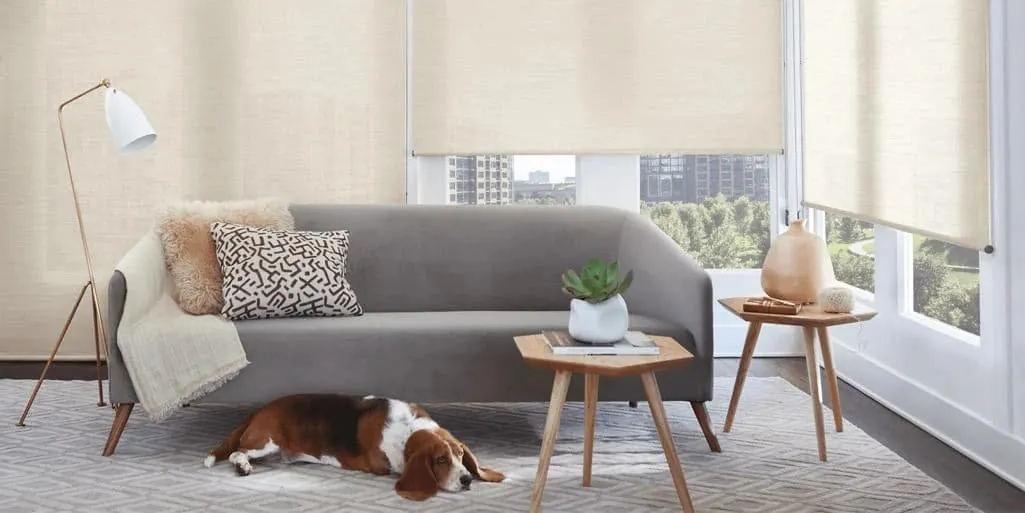
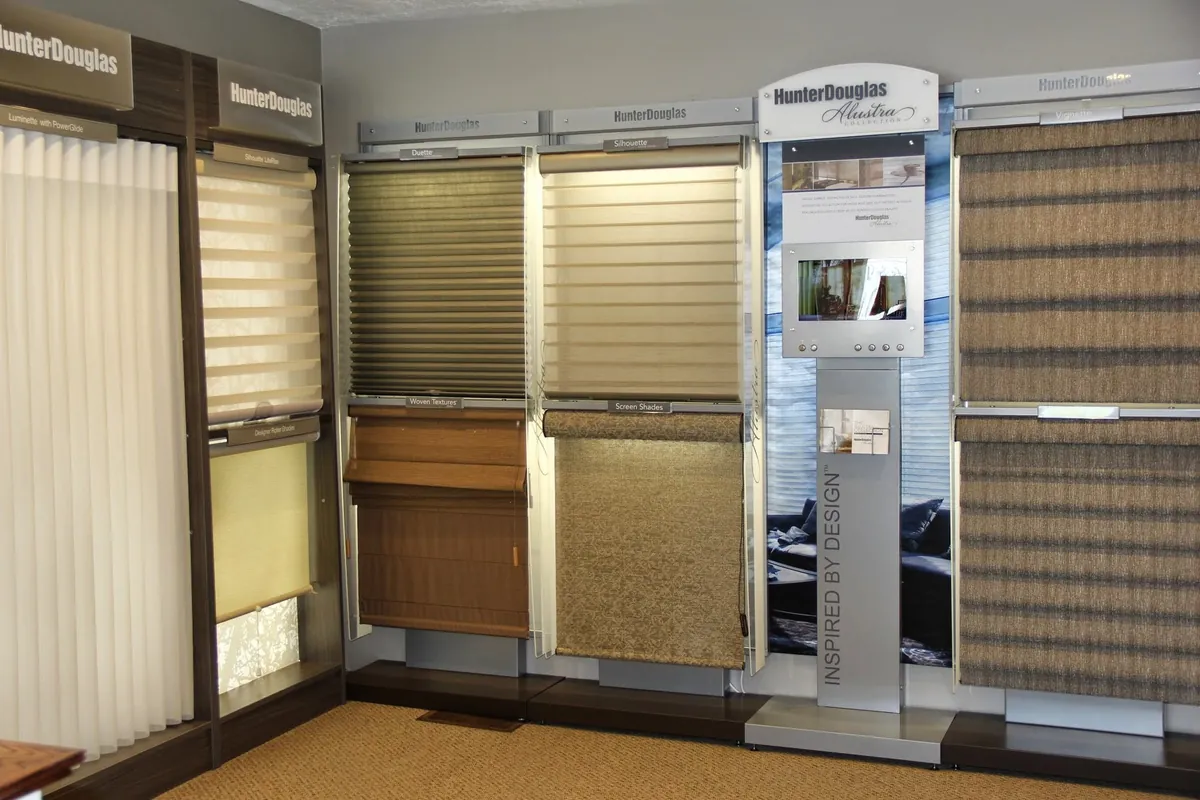
Texture adds another layer. The Alustra Woven Textures fabrics bring a relaxed, natural weave to a roller, a good match for a shingled cottage or a beach house sitting room, while a smooth flat fabric suits the clean lines of a newer house. We bring both so you can see them side by side, and hold each one against your own walls and floors, which change how a fabric reads more than most people expect.
Salt, damp and the parts that move
A house near the water lives with salt and damp. Both find their way onto anything exposed near an open window, and over a summer they can make cords stiff and hardware dull. With a roller shade, most of the mechanism sits tucked away at the head of the window, which helps.
The lift system makes a difference too. A cordless roller has nothing hanging at the side to tangle, fray or corrode. A motorized PowerView roller has no cord at all and is controlled from your phone, a remote or a wall switch. For a window behind a kitchen sink, on a stair landing or high in a gable, either option is simpler than reaching for a chain.
Roller fabrics are also among the easiest window coverings to look after. A flat surface is simple to dust, and many fabrics can be gently wiped. We point out the ones best suited to a damp seaside room when you are choosing.
How a visit to your house goes
We plan almost every Falmouth job in the house itself. Fabric looks different in sun off the water than it does anywhere else, and we can bring the showroom to you, because our vans carry the samples.
- Choose Request a Consultation or use the call button, and we will find a time.
- We arrive with screen, light filtering, banded and blackout fabrics, plus the lift and motor options.
- Together we walk the rooms, Sound side first, and talk about when each room is used.
- You look through the samples at your windows, ideally at the hour the sun bothers you most.
- We measure every window and check the frame depth for an inside mount.
- A free estimate follows for the shades you liked, and you can take as long as you need with it.
If you want a fresh eye on the whole room, our interior design consultations cover color, fabric and layering at the same visit. You can read ahead about what happens at an in-home consultation.
Newer houses toward Sippewissett
Out toward Sippewissett the houses are newer and the windows grow. Open-plan living spaces with walls of glass, sliders onto decks, corner windows, transoms over doors and the occasional double-height great room are all common. Big glass means big sun, and it also means windows nobody can comfortably reach.
PowerView motorization takes care of the reach. Shades move from your phone, a remote or a wall control, and you can group them so a whole wall rises or falls together with every hem level. Schedules lower the screens on the Sound side as the afternoon sun comes around and raise them again for the sunset. We plan how each motor is powered during the visit.
Very wide openings sometimes exceed the width of a single piece of fabric. When they do, we divide the window into two or three shades, putting the breaks over the mullions so they line up with the frame and nearly disappear. A fascia across the top gives the run a clean finish and hides the rolled fabric.
Banded shades, a middle path
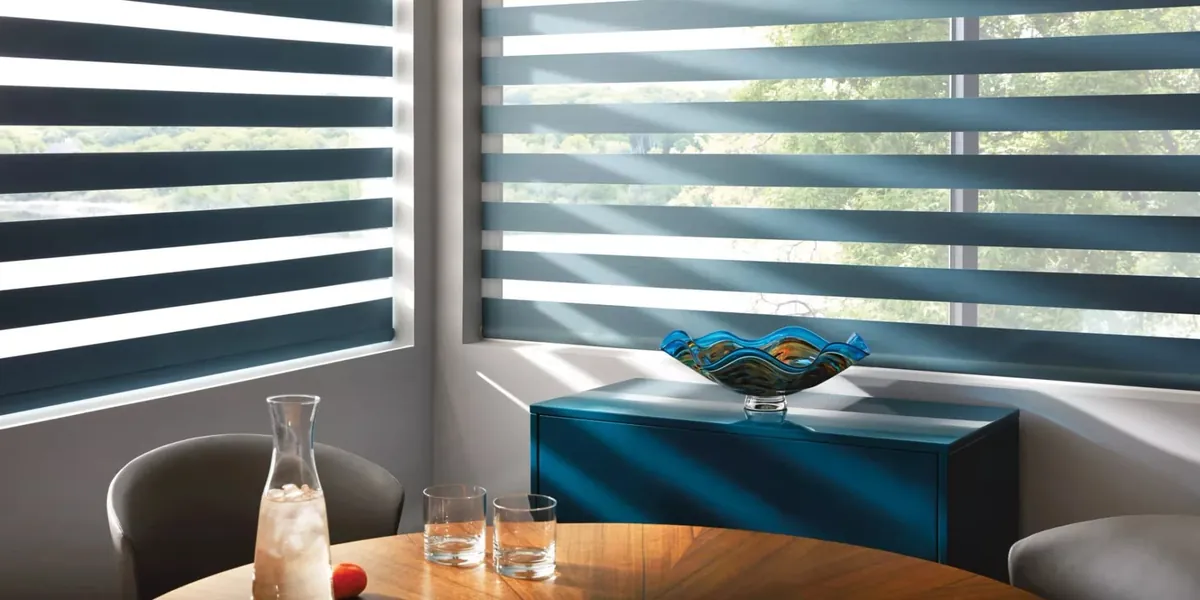
Designer Banded shades are a roller with a twist. The fabric is a continuous loop of alternating sheer and solid stripes. Move the shade a little and the stripes line up so you look through the sheer bands; move it a little more and the solid bands overlap for privacy. You get a range of settings without raising the shade at all.
They suit rooms that need to switch often between view and privacy, such as a front room on a busy street in the village, or a cottage bedroom that faces a neighbor but also catches a water view. Banded shades also give a striped play of light on a sunny afternoon that many people enjoy.
Two shades on one window
The single most useful setup for a Sound-facing room is a dual roller: two shades on one bracket, a screen in front and a light filtering or blackout behind. In the day you lower the screen and keep the view without the glare. At night you lower the back shade for privacy or sleep. Both share one neat headrail, and with PowerView they can be scheduled separately.
In a bedroom that also gets strong afternoon sun, dual roller shades in Falmouth are often the answer that ends the argument between keeping the view and getting a good night’s sleep.
Measuring and fitting with care
The older houses in the village rarely have perfectly square windows. Frames have settled and been repainted many times, and two windows that look the same from outside can differ noticeably inside. A roller shows every flaw in a measurement, because it is a single flat panel: a frame that tapers leaves a gap down one side, and a shade that is too tight rubs as it rolls.
So we measure each opening across the top, middle and bottom, take the height on both sides and check the depth along the head of the frame. Where an inside mount would be too tight, we say so and recommend a mount on the face of the trim.
When the shades come in, our certified Hunter Douglas installers put each bracket into solid wood, level the headrail, roll every shade up and down to make sure it tracks true, and walk you through the controls. If the shades are motorized, they pair them and set your schedules with you before they go.
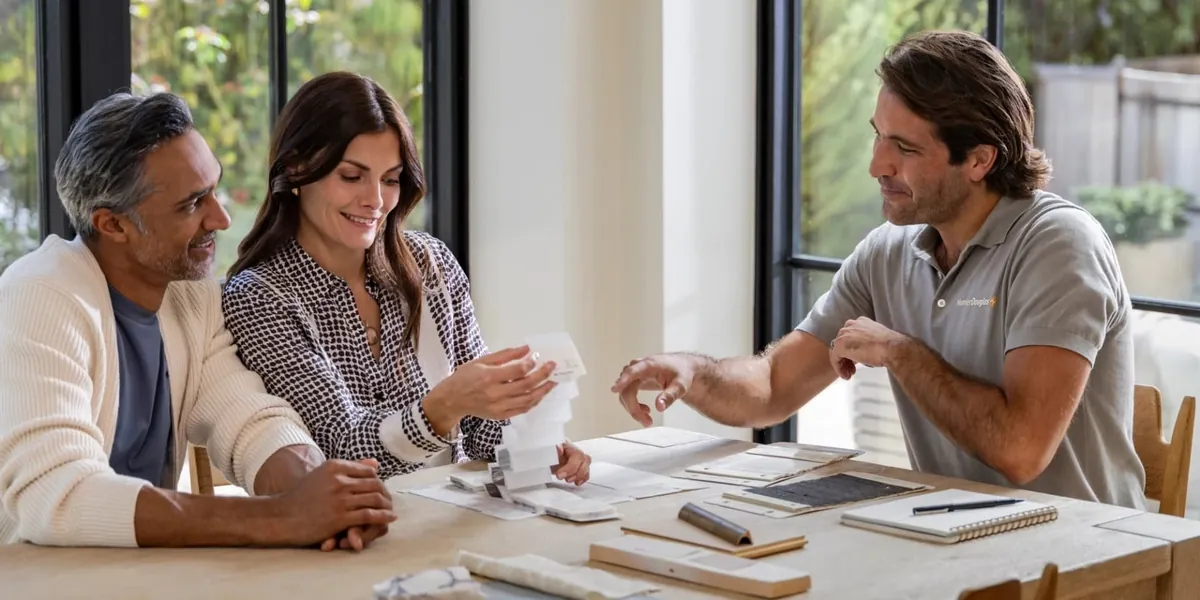
Why choose a Hunter Douglas Gallery dealer
Hunter Douglas gives the Gallery dealer designation to dealers who meet its standards, and Blinds & Designs carries it. For a Falmouth house that means the complete roller family in one place: Designer Roller, Designer Screen, Designer Banded, Sonnette and the Alustra collection, with every fabric, openness and PowerView option.
The people who fit your shades are certified by Hunter Douglas. We also welcome blind and shade repairs on coverings you already own, and we carry cellular and roman shades, blinds, shutters and drapery for the rest of the house. See our plantation shutters in Falmouth, roman shades in Falmouth or the whole list on our Falmouth page, and the full roller shades collection.
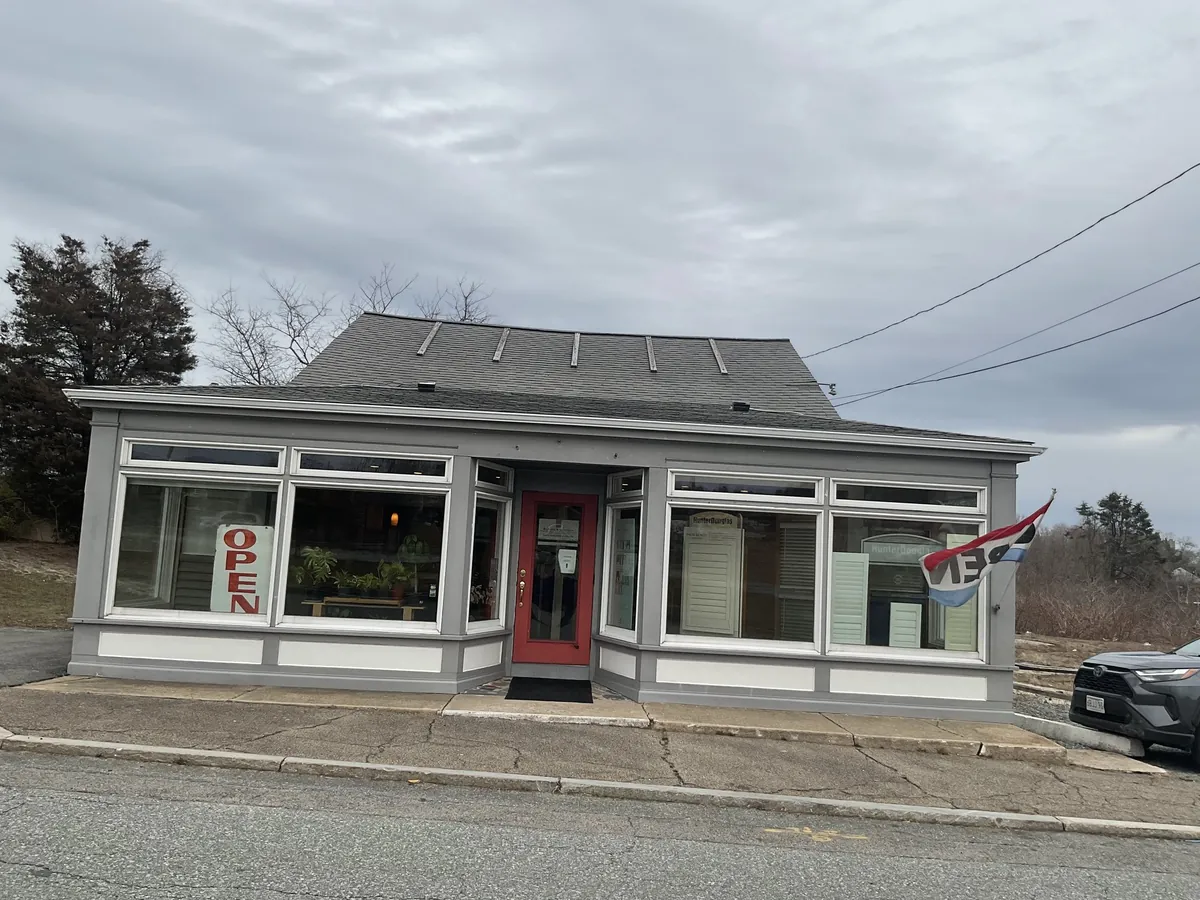
The Sagamore showroom, just up Route 28
Our nearest showroom to Falmouth is in Sagamore, by the canal. If you would like to talk a project through before we visit, it is the showroom to call.
Most of our Falmouth customers, though, start with a home visit. Seeing a screen fabric against the Sound at five in the afternoon tells you more than any showroom can.
Falmouth questions
Will a screen shade block my view of the water?
Not if you choose the right openness. A more open screen keeps the view clear while softening the glare; a tighter one controls more glare and softens the view. Darker colors are usually easier to see through. We bring several to compare at your own window.
Do roller shades suit an old captain’s house?
Very well. An inside-mounted roller leaves the trim on show and almost vanishes when raised. In formal rooms it pairs nicely with drapery panels. We check each frame’s depth and squareness before recommending a mount.
How do roller shades cope with salt air?
Most of the mechanism sits at the head of the window, so little is exposed. A cordless or motorized lift removes the cord altogether, which is simpler near the water.
Can I have privacy at night and a view by day on the same window?
Yes. A dual roller puts a screen and a light filtering or blackout shade on one bracket, so you lower whichever one you need.
Do you charge for the estimate?
No. Estimates are free. We measure, talk through the options and then give you a written estimate to consider at your own pace.
Take the next step
Start with your own windows. Request a consultation and we will bring the full collection of roller shades in Falmouth to your house, measure every window and give you a free estimate. If you would rather ask a question first, use the call button, or head to the Sagamore showroom.