
A motor for every awkward window in Fairhaven
Fairhaven’s houses were not built with window shades in mind. A Victorian near Oxford Village stacks tall sash one above the other, sometimes with a transom over the top that nobody has touched in years. A shingled cottage at Poverty Point squeezes windows into gables, over built-in benches and behind kitchen counters. Out on Sconticut Neck, a mid-century ranch spreads a long run of glass across the living room toward the water. Every one of those layouts has a window you have to stretch for, lean across or walk the length of the room to deal with, and that is exactly where motorized blinds in Fairhaven, MA, change the daily routine.
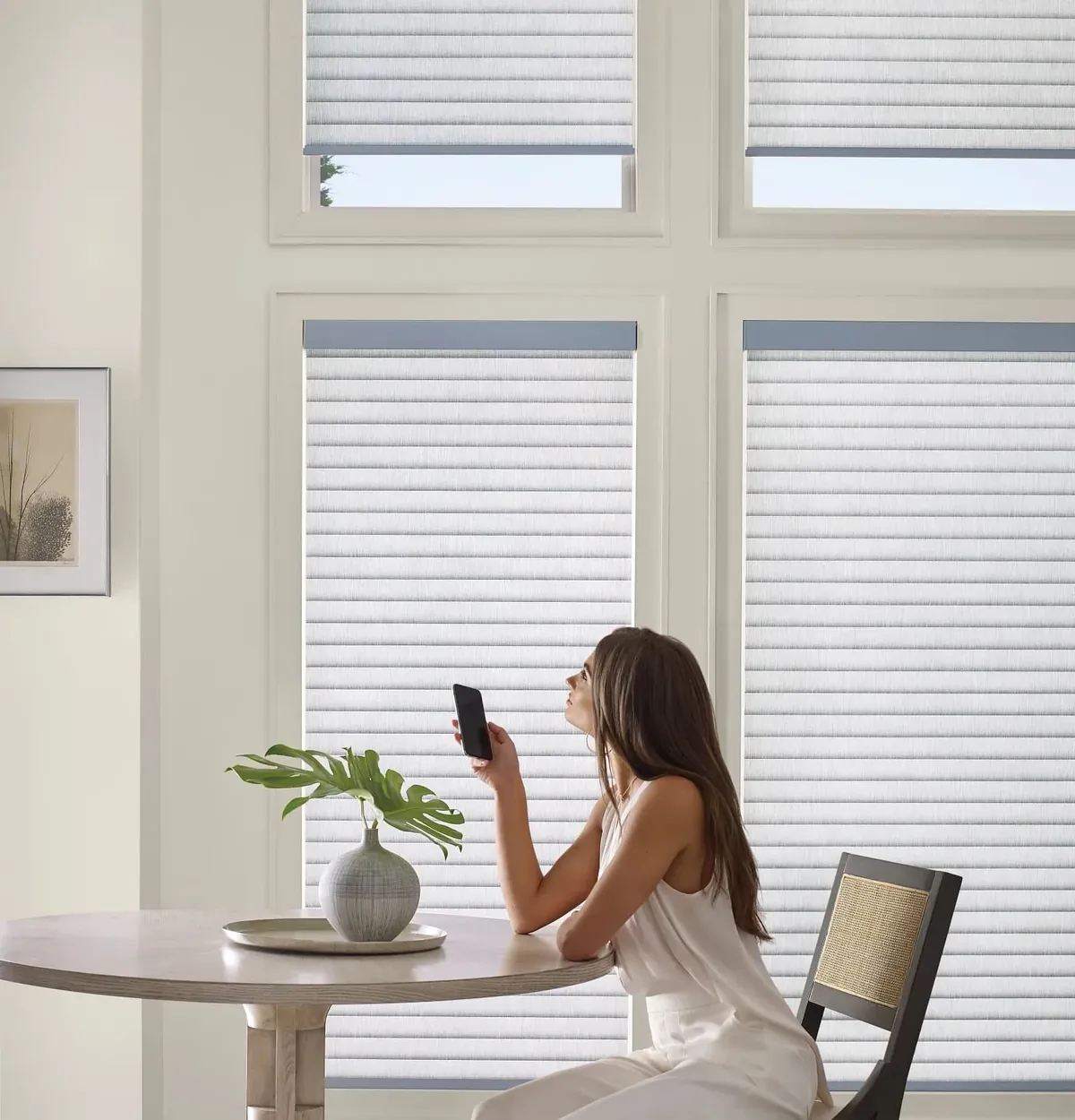
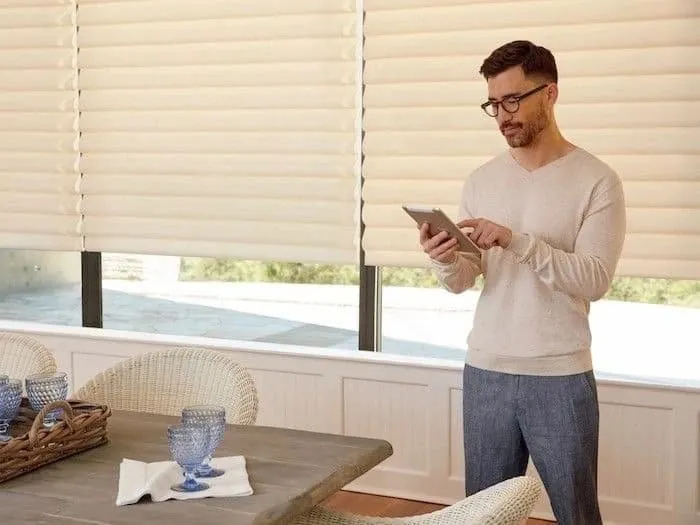
With Hunter Douglas PowerView, each shade or blind carries a quiet motor in its headrail. You raise or lower it from a handheld remote, from the PowerView app on your phone or tablet, or by letting a schedule do it for you. Nothing hangs down the side of the window, and no one has to climb onto a chair to reach the top sash in a stairwell.
The harbor gives the town two more reasons to think about it. Salt air works its way onto any hardware that is handled and left exposed, and the rooms on the east side of town take hard, early sun straight off the water. A motorized shade keeps its working parts tucked away, and it can drop on its own before that low light ever reaches the breakfast table.
What we motorize for Fairhaven houses
PowerView is not a single product. It is the control system that runs across much of the Hunter Douglas range, so you pick the shade that suits the room first and add the motor to it. These three come up most often on our visits to town.
Honeycomb shades with PowerView
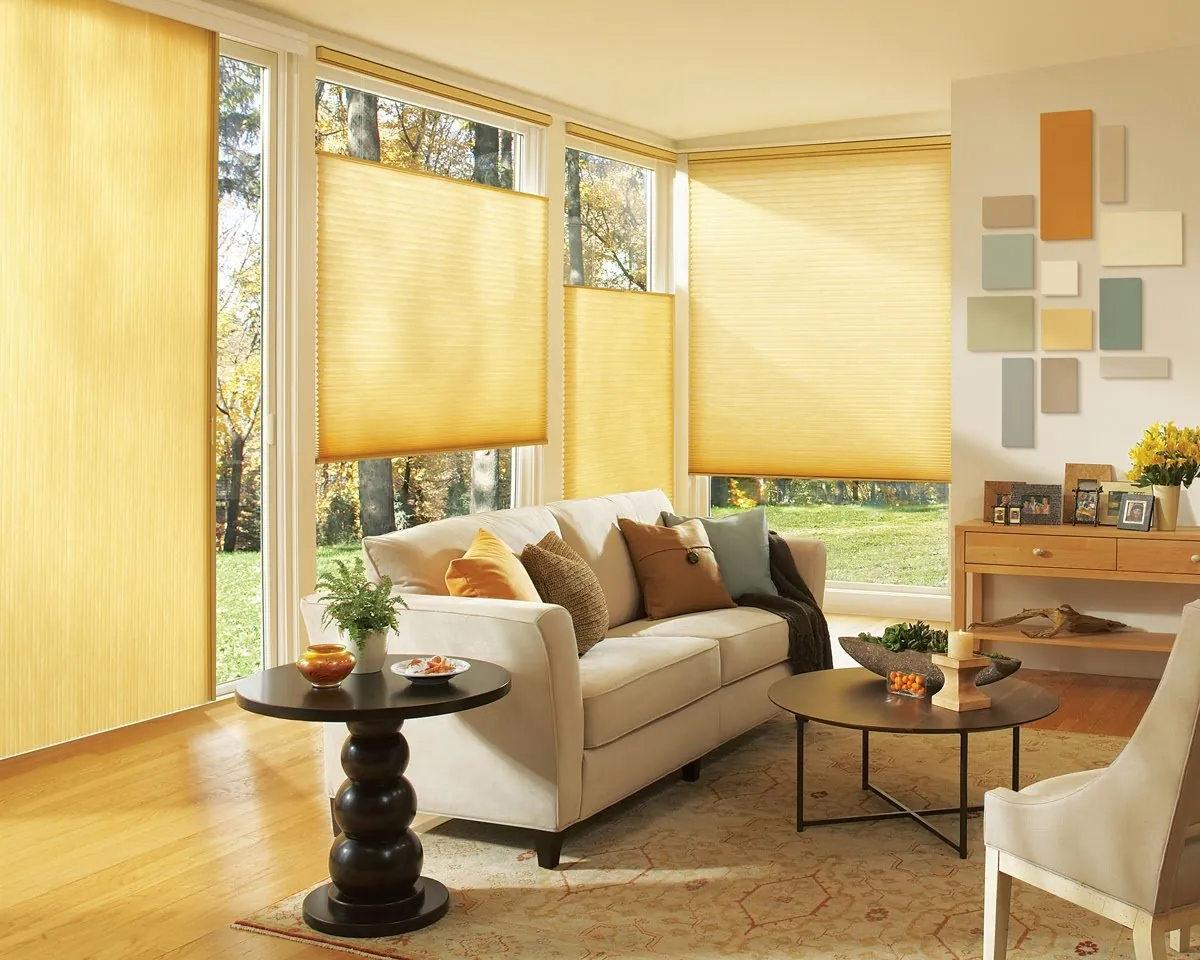
Duette and Applause cellular shades hold a layer of air in every cell, which helps a draughty Victorian room hold its warmth. With a motor, the whole bay moves together and stays perfectly level.
Sheer shades for harbor light
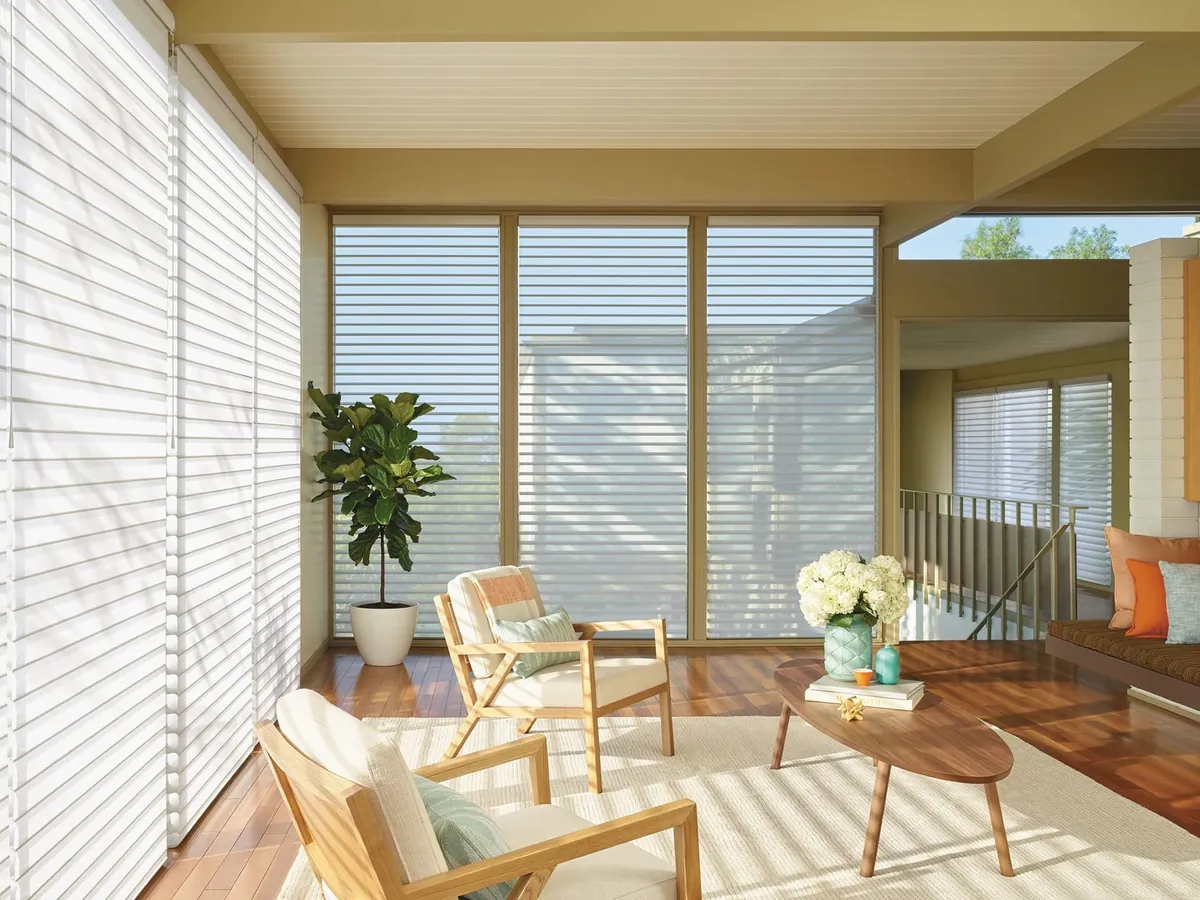
Silhouette and Pirouette soften the glare off the water while the view stays readable through the sheer. PowerView tilts the vanes and lifts the shade from the same remote.
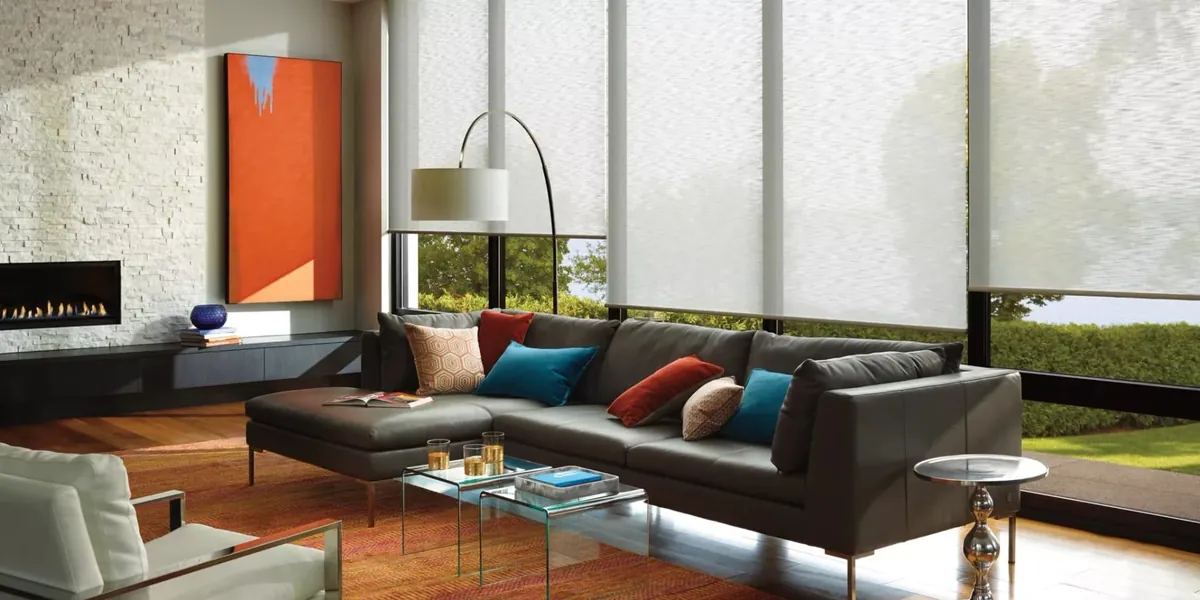
Screen shades for the big ranch glass
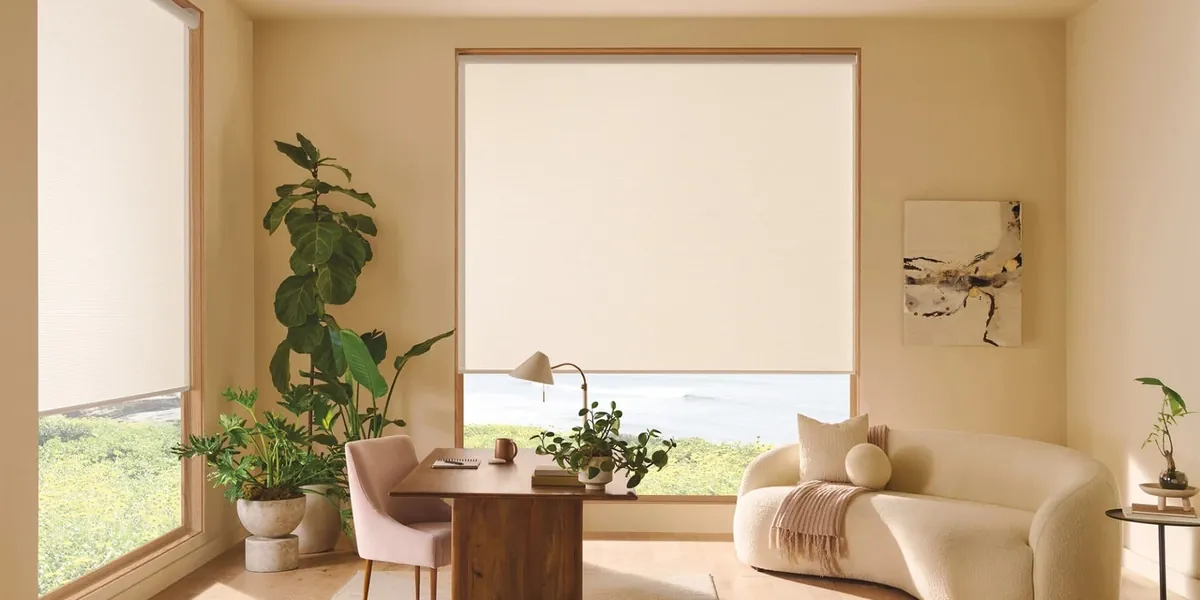
Designer roller and screen shades cover wide picture windows cleanly. Several can share one schedule, so a whole wall of glass lowers at once on a bright afternoon.
How PowerView is controlled day to day
There are three ways to move a PowerView shade, and most households end up using all of them.
The remote. A small handheld remote lives on the side table or mounts on the wall like a light switch. You choose a shade, a group of shades or a whole room and press up or down. For anyone who does not want a phone involved, the remote alone does the job.
The app. The PowerView app puts every motorized shade in the house on your phone or tablet. You can set a shade to sit at any height, not just fully up or fully down, and you can move the upstairs bedroom shades from the kitchen without climbing the stairs.
Schedules and scenes. This is where motorized blinds in Fairhaven earn their keep on a house near the water. A scene is a saved arrangement, such as every shade on the harbor side half lowered. A schedule tells that scene to run at a set time each day. Our guide to how motorized shades are controlled walks through all three in more detail, and the window covering automation page goes further into schedules.
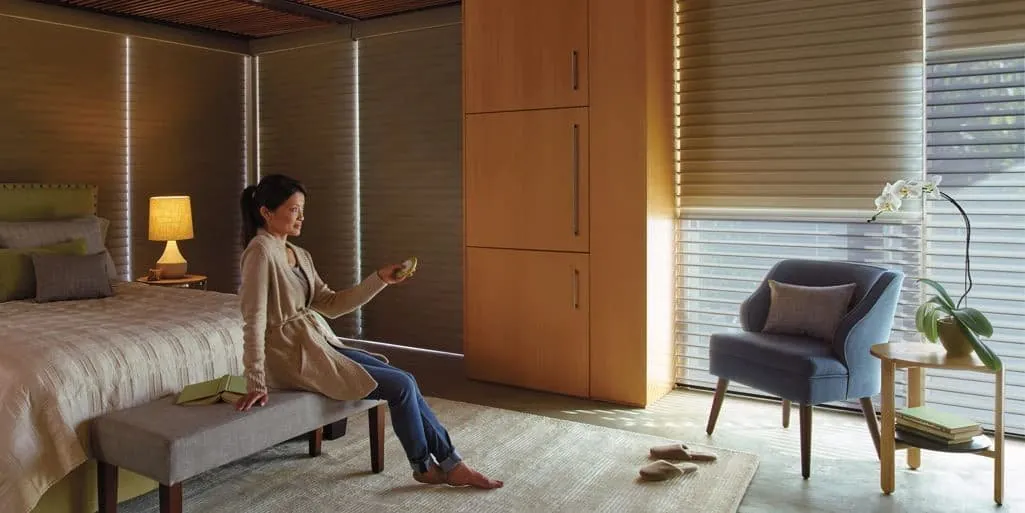
East light off the harbor
The east side of Fairhaven looks back across the harbor, and in the first hours of the day the sun comes in low and reflected. A kitchen or a sunroom on that side can be bright enough to make you squint, and an east-facing bedroom gets light at dawn whether you are ready for it or not.
A schedule handles this without anyone remembering to do it. Set the bedroom shades to stay closed until you choose to wake, then rise slowly. Set the kitchen sheers to sit half lowered through the early morning and lift once the sun has climbed past the water. On a weekend you can override any of it from the remote, and the schedule picks up again the following morning.
Fabric choice matters as much as timing here. A light-filtering honeycomb or a sheer spreads the glare across the room rather than throwing a hot patch on the floor. In a bedroom, a room-darkening fabric keeps things dim until the motor lifts it. We bring both kinds so you can hold them against your own east window during the visit.
Victorians around Oxford Village
The older streets near the village center hold tall double-hung windows with deep casings and restored trim. Those windows are often too tall to reach comfortably, and in a front parlor with three or four of them side by side, raising each shade by hand is a small chore repeated every morning and every evening.
A motorized honeycomb or Roman shade mounted inside the frame keeps the casing on show and hides the headrail when the shade is up. Because there is no cord, nothing loops down across the trim. The shades in a bay move as one, so the bottom rails line up when you lower them together, which is hard to manage by hand on a window that has settled over the years.
Inside mounts depend on depth. Sash weights, pulleys and stops can leave less room than a motorized headrail needs. We measure the depth at more than one point on every opening and tell you plainly where an outside mount on the casing is the better choice.
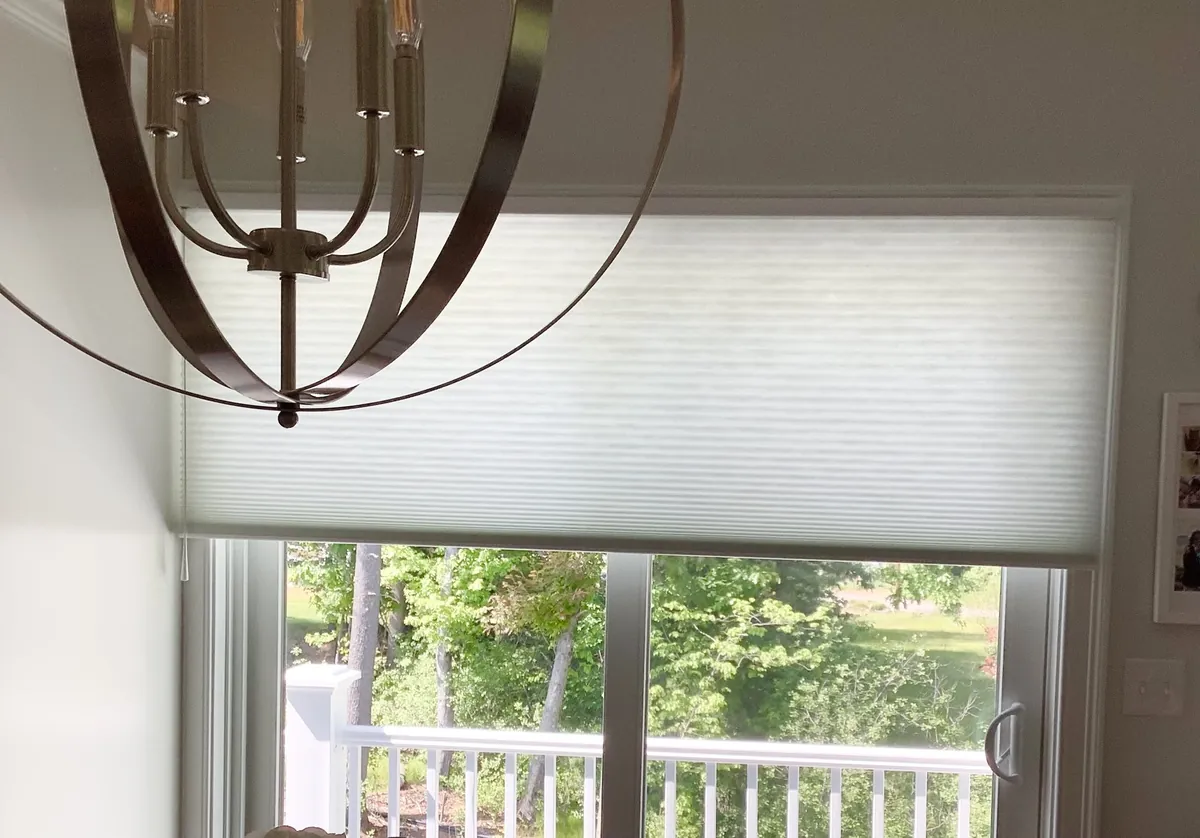
Cottages at Poverty Point
The shingled cottages near the point were often built small and added to, so window sizes change from room to room and some sit in places that are hard to get at: high in a gable, tucked behind a woodstove, over a tub or a deep sink. Those are the windows that tend to stay in one position all year because adjusting them is a nuisance.
Putting a motor on just those few windows is often where a cottage starts. You do not have to motorize every shade in the house. A single remote can run the gable window and the kitchen window, while the easy windows keep a cordless lift you raise by hand. Many Fairhaven orders begin this way and add more motorized rooms later.
Choosing motorized blinds in Fairhaven or a motorized shade
Slats or fabric is the first real decision, and the motor does not change it. Blinds give the finest control of light. Tilt the slats partly open in a home office on the harbor side and you keep a strip of the view while the direct sun stays off the screen. Wood and faux wood slats also suit the painted trim of an older house, and they read as a traditional window from the street.
Shades are softer. A honeycomb adds the pocket of still air that helps a cold room, a sheer turns harsh light into a glow, and a roller or screen shade disappears into a slim headrail when it is up. If you are set on motorized blinds in Fairhaven for a particular room, tell us which one and we will confirm which blind lines and operating options suit it, then put a shade alternative beside it so you can compare the two at the same window.
Many houses end up with a mix: blinds in the kitchen and office, where tilting matters, and motorized shades in the bedrooms and living room, where the softer fabric and the darker options count for more. All of them can sit in the same app and answer to the same schedules.
Grouping rooms so the house moves together
Once more than a few windows carry a motor, grouping is what keeps it simple. In the app you put shades into rooms, and rooms into larger sets: the harbor side, the street side, upstairs, downstairs. One press then moves the whole set, which is a real help in a Victorian with a dozen tall windows across two floors.
A common arrangement in town is a street-side scene for the evening, with every front window closed once the lamps go on, and a harbor-side scene for the morning glare. A ranch on the Neck might add a summer afternoon scene for the west windows. You can change these whenever you like, and we set up the first few with you on the day of installation so you are not starting from a blank screen.
Ranches along Sconticut Neck
Further down the Neck the houses are lower and the windows are wider. A ranch from the middle of the last century usually has a picture window facing the water, a slider to the back deck and a row of bedroom windows. That much glass gains heat on a summer afternoon and loses it on a winter night.
Here the value of a motor is in moving several shades together. A living room picture window split into three shades on one headrail lifts and lowers as a set. On a summer schedule, the west-facing shades can come down during the hottest part of the day and go back up in the evening when you want the view. In winter, a honeycomb shade lowered at dusk holds more of the warmth in the room, and the schedule takes care of that as the days get shorter.
For the slider, a vertical honeycomb or a sheer vertical shade travels side to side so you can still step out onto the deck. We talk through which of these can carry a motor and which work better by hand on a door you use many times a day.
Salt air and fewer moving parts
A house close to the water lives with salt in the air, and it settles on hardware near a window left open through the summer. On a motorized shade, the motor and the lifting parts sit inside the headrail. There is no cord lock to stiffen, no tilt wand to grip and no loop of cord to fray.
Less handling also means less wear. A shade pulled unevenly by hand day after day can drift out of level. A motor lifts both sides together, so the fabric hangs straight and the bottom rail stays square to the sill.
When our certified Hunter Douglas installers fit the brackets, they fix them into solid framing rather than plaster, so a shade on a window that is opened often in warm weather stays firmly in place.
Is it safer for children and pets?
Yes, and this is one of the main reasons families ask about motorization. With no lift cord or loop hanging at the window, there is nothing for a child or a pet to catch. In a bedroom or a playroom, a cordless motorized shade is the tidiest answer, and it keeps the window looking clean as well.
Stairwells, gables and the windows nobody touches
Every older house in town seems to have one: the half-round window over the landing, the gable light in the attic bedroom, the narrow window above a built-in bookcase. These are often left bare or covered with something that never moves, because getting to them means a stepladder. A motorized shade on those windows finally gives you a say in the light they let in.
The same goes for windows behind furniture you would rather not shift, such as a sofa pushed against a picture window or a dresser under a bedroom sash. With the shade on the remote, the furniture stays put. Mention these windows at the consultation even if they seem minor, because they are usually the ones where a motor feels most worthwhile once it is in.
From the first visit to the first schedule
The steps are straightforward, and most of the decisions happen at your own windows.
- Request a consultation online or with the call button and tell us which rooms you have in mind.
- We come to the house with samples in the van, so you see fabrics in your own light rather than under store lighting.
- Together we decide which windows get a motor, which stay manual and how you want to control each room.
- We measure every opening, check the mounting depth and give you a free estimate.
- Hunter Douglas makes the shades to those measurements.
- Our installer fits each shade, sets its upper and lower limits, pairs it with your remote and the app, and sets up any schedules you want before leaving.
You can read more about what happens at an in-home consultation before we arrive.
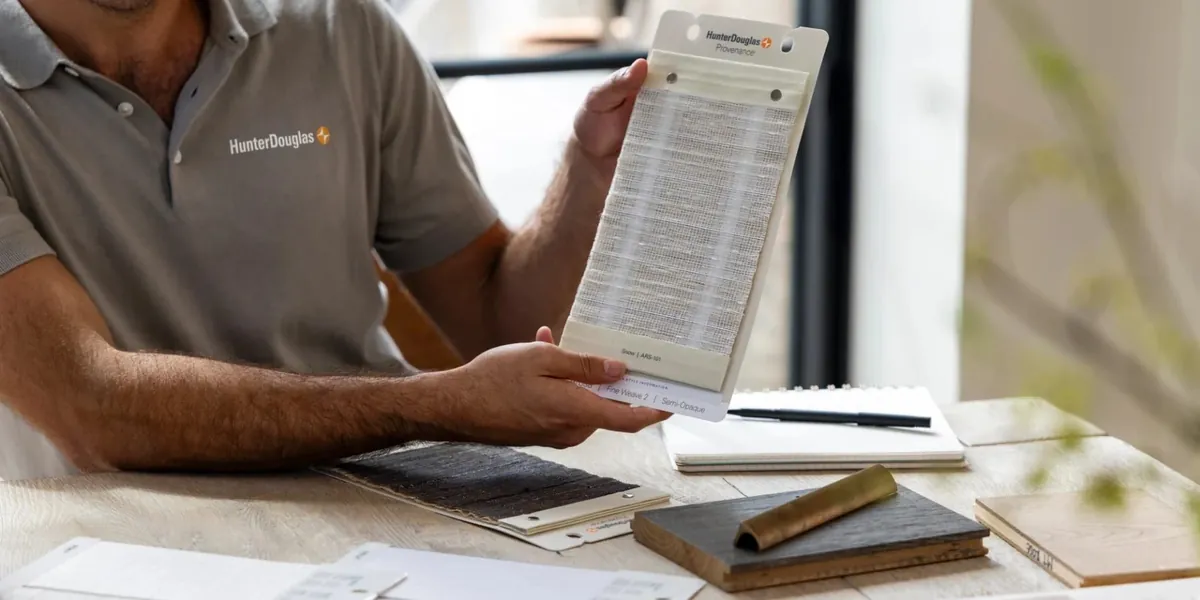
Why buy PowerView from a Gallery dealer
Hunter Douglas gives the Gallery dealer designation dealers who meet its standards, and Blinds & Designs is one of them. That matters for motorization because PowerView reaches across so many product lines: honeycomb, sheer, roller, screen and Roman shades, plus motorized blinds. We can show you all of them and match the right one to each window instead of steering every room toward one product.
Installation is certified by Hunter Douglas, and the person who fits the shades also sets up the controls, so you are not left to pair motors yourself. If a motorized shade you already own stops responding, we handle blind and shade repair in Fairhaven as well.
When you want to treat other rooms differently, see our cellular shades in Fairhaven, roller shades in Fairhaven or the full list of what we do in town on the Fairhaven page. The main motorized blinds and shades page covers the range as a whole.
Across the river from North Dartmouth
Most Fairhaven customers start with a visit at home, since a motorized shade makes the most sense when you are standing at the window that gives you trouble. If you would rather come to us first, the North Dartmouth showroom is the closest of our locations, a short drive over the Acushnet River.
Either way, bring a list of the windows that bother you most. The high ones, the wide ones and the ones that catch the morning sun are usually where motorized blinds in Fairhaven, MA, make the biggest difference, and we can plan the rest of the house around them.
Questions from Fairhaven
Can I motorize the shades on my Victorian’s tall windows?
In most cases, yes. Honeycomb, Roman and sheer shades can all be made for tall sash and fitted with PowerView. The question is depth inside the frame, so we measure each window and suggest an outside mount on the casing where the frame is too shallow.
Do I need to use a phone to run them?
No. A handheld or wall-mounted remote runs every shade on its own. The PowerView app is there if you want it, for setting exact heights, moving shades in another room or building schedules.
Will the motors cope with salt air near the harbor?
The motor and the lifting parts sit inside the headrail rather than out in the open, so far less is exposed than on a corded blind. We also suggest fabrics that suit a window taking strong sun off the water.
Can the shades close by themselves before sunrise?
Yes. A schedule can keep the bedroom shades down until a time you choose, then raise them. Kitchen and sunroom shades on the harbor side can sit partly lowered through the early glare and lift later in the morning.
What do I pay for the visit?
The estimate is free. We measure your windows at the consultation and give you a free estimate for the shades and motors you are considering, with no pressure to decide that day.
Start with the window that bothers you most
Pick the one window in the house you are tired of reaching for, and we will start there. Request a consultation and we will bring samples to your door, look at how each room is used and set out a free estimate. To talk it over first, use the call button, or stop in at the North Dartmouth showroom.