
One town, very different windows
Plymouth is the largest town in Massachusetts by area, and its housing covers just as much ground. In the historic center, antique colonials keep their small, deep-set sash. Out in the Pinehills, large newer houses open their rooms with modern two-story glass. In between, across the many villages and neighborhoods that make up the town, post-war ranches line street after street. There is no single answer for custom blinds in Plymouth, MA, because there is no single kind of Plymouth window.
That is the reason we start every visit by looking at the house itself. A blind that is perfect for a ranch’s living room picture window would be wrong in an antique keeping room, and neither would suit a wall of glass rising through two floors of a Pinehills great room. The material, the slat size, the mount and the way the blind is worked all change from one house to the next.
What does stay the same is the range. Hunter Douglas wood, faux wood, metal and vertical blinds cover every one of these houses, and each one is built to the exact opening it will hang in.
Every kind of blind, for every kind of house
Samples of the full Hunter Douglas blind range travel to your home with us. When we plan custom blinds in Plymouth, MA, these six come up most.
Wood blinds
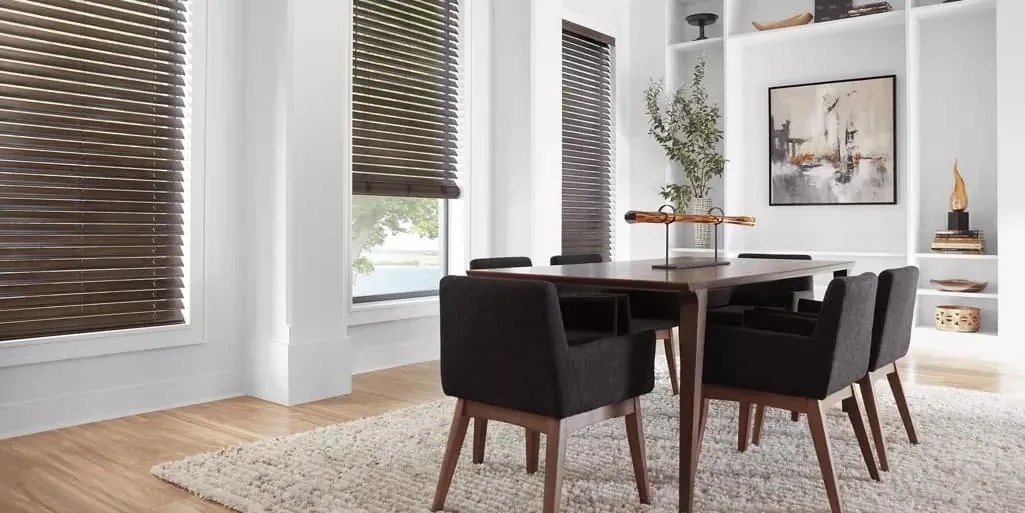
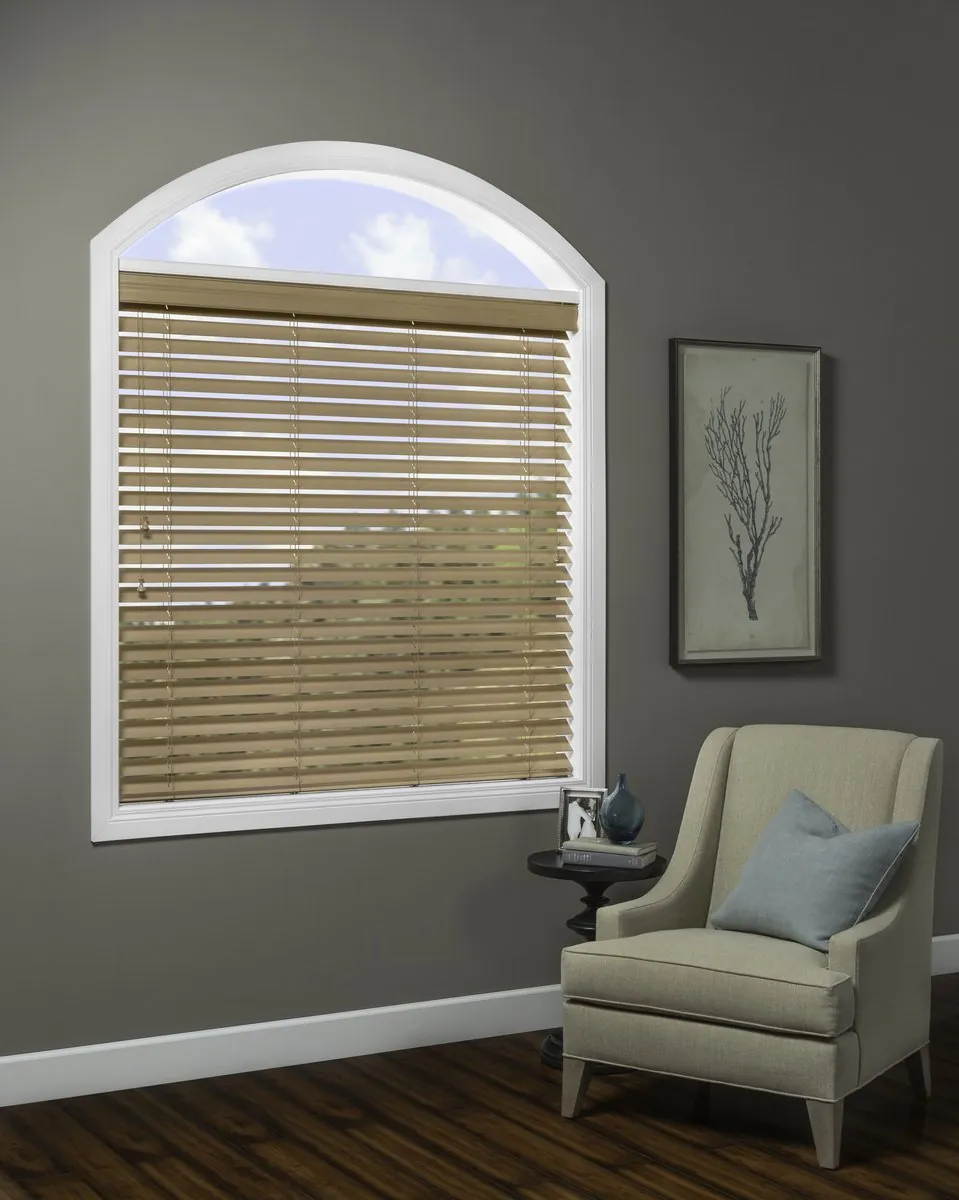
Real wood slats with natural grain, stained or painted. Right at home in an antique colonial, and warm in a newer house’s study or dining room.
Faux wood blinds
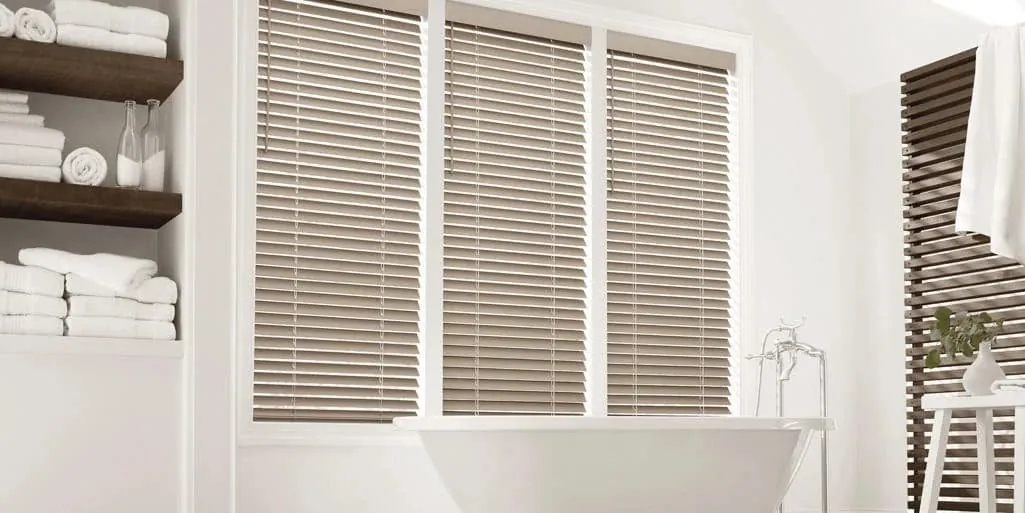
Painted-wood looks that stand up to steam and damp. The standard choice for kitchens and baths in every type of house.
Metal blinds
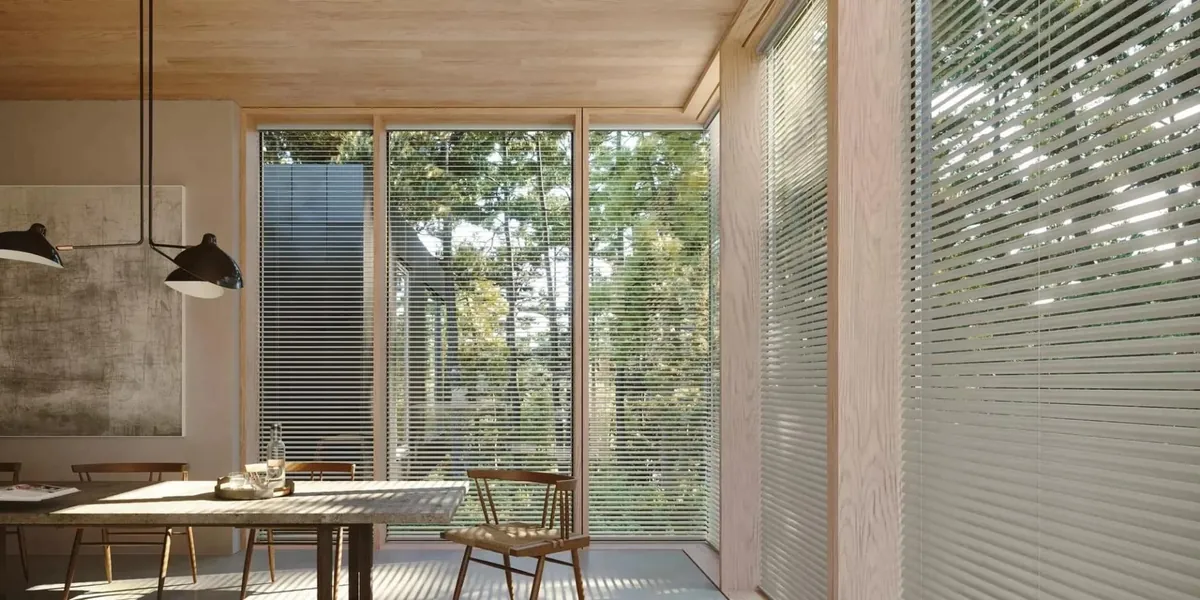
Slim slats with a clean line that suits modern glass, and a slim headrail that keeps a small antique sash from feeling crowded.
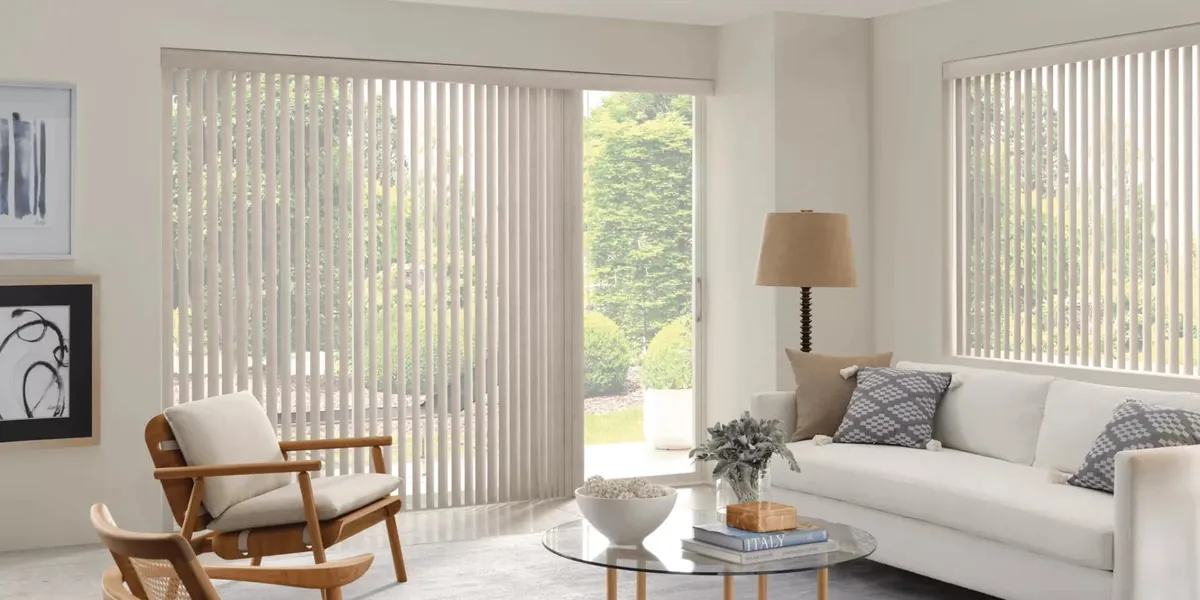
Vertical blinds
For sliders and wide glass doors in ranches and newer homes. The vanes turn to manage light and draw aside to open the door.
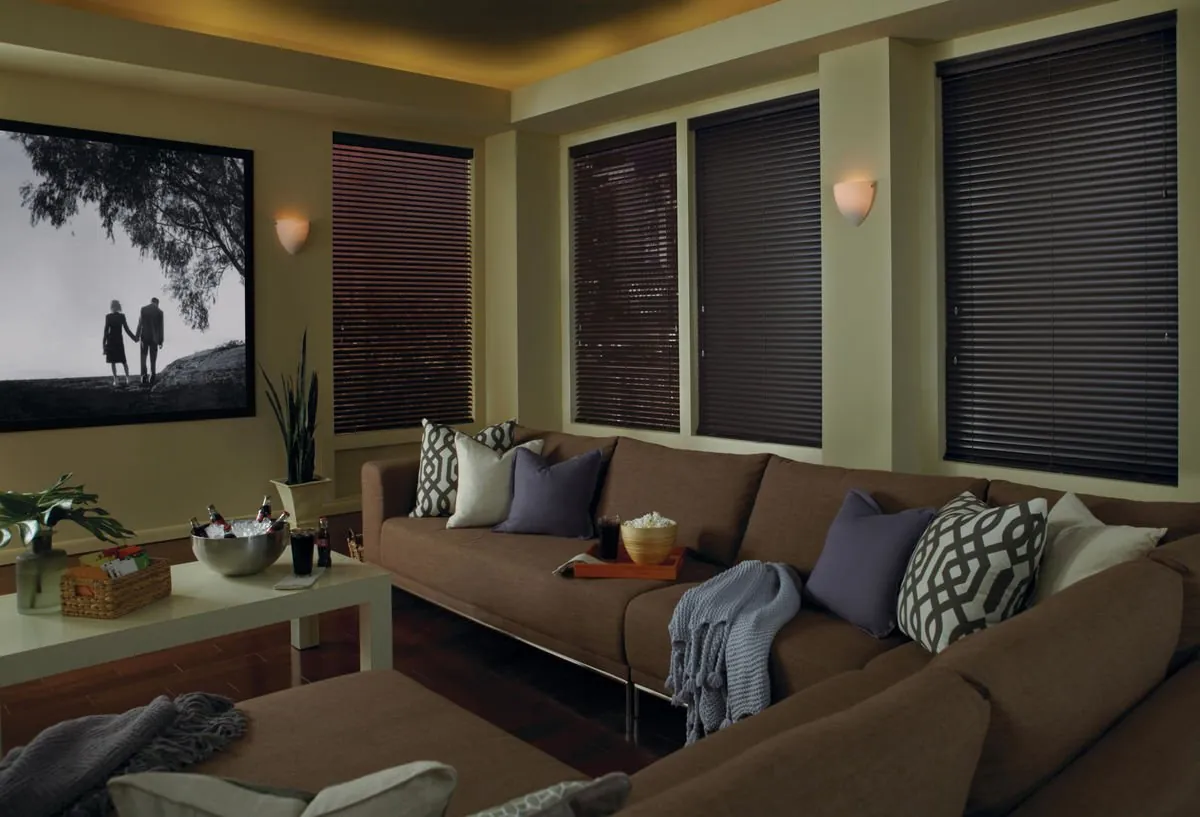
Media rooms and bedrooms
Deep-colored slats closed tight make a bonus room or bedroom much dimmer, without heavy curtains over every window.
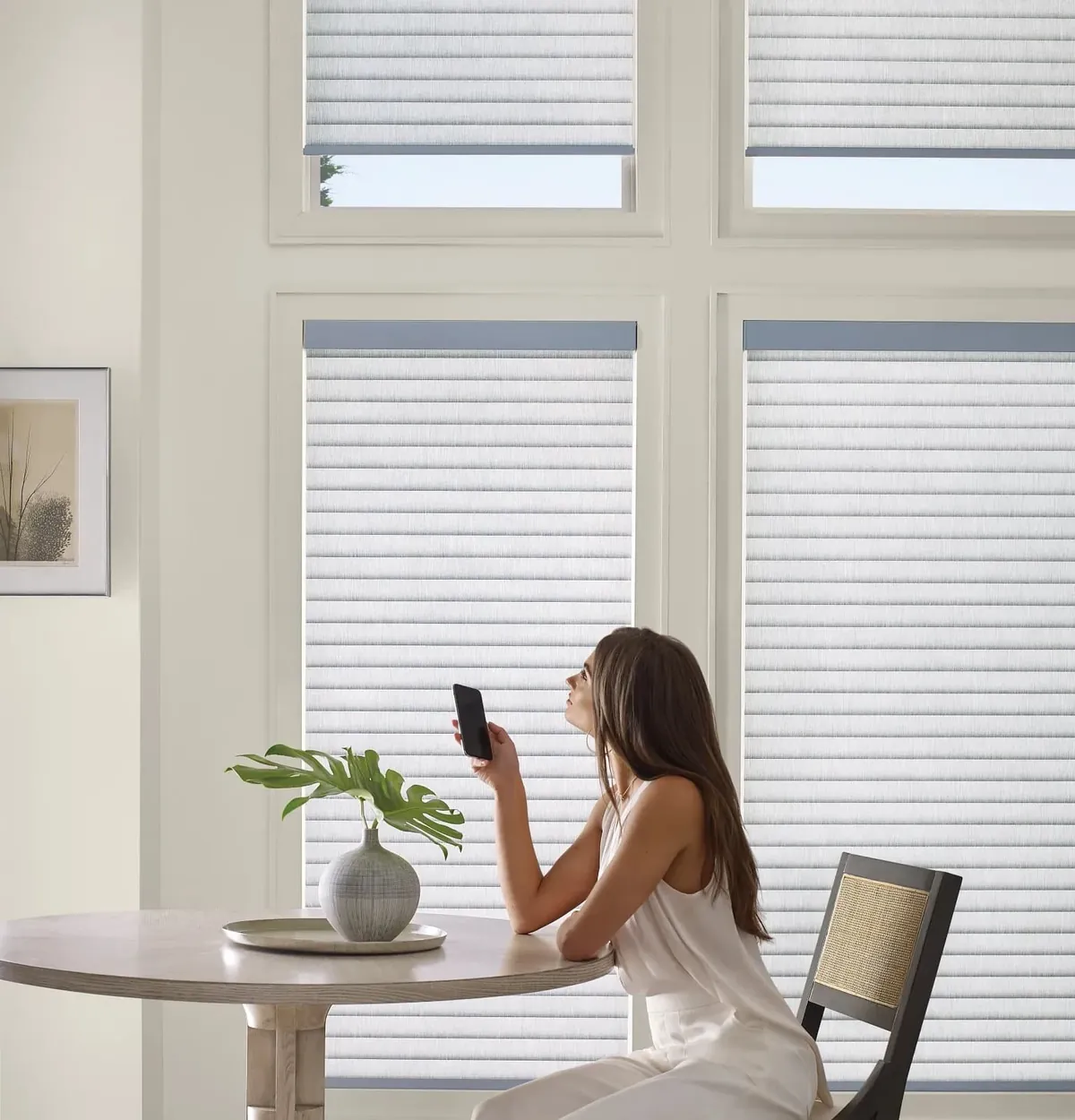
PowerView motorization
Motors raise, lower and angle the slats on command or by the clock. The practical answer for upper windows in two-story glass that nobody can reach.
Antique colonials in the historic center
The oldest houses in Plymouth sit close to the waterfront and the streets around it. They are colonials with steep roofs, central chimneys and small windows set deep into heavy frames. The sash is often original or close to it, and the panes are small.
Deep-set sash is good news for an inside mount. There is usually room within the frame for a headrail, so the blind sits inside the opening and the wide sill and the casing stay on show. When the blind is raised it tucks up out of the way, and the old window looks just as it did.
Two things need watching. With panes this small, a chunky headrail and a thick bundle of raised slats eat into the daylight, so we favour slim hardware and pick the slat width with the window’s proportions in mind. And three centuries of settling leave few antique openings true: one side may stand taller than the other, or the frame may pinch in at the middle. Readings taken at several heights and widths show us whether a blind can sit inside the frame or should be fixed to the trim in front of it.
In the front rooms, real wood looks most at home, stained to sit with wide pine floors or painted to disappear into the trim. A house on a historic street is seen as part of that street, so a single quiet color across the façade usually serves it well, and any local rules about visible changes are worth checking first.
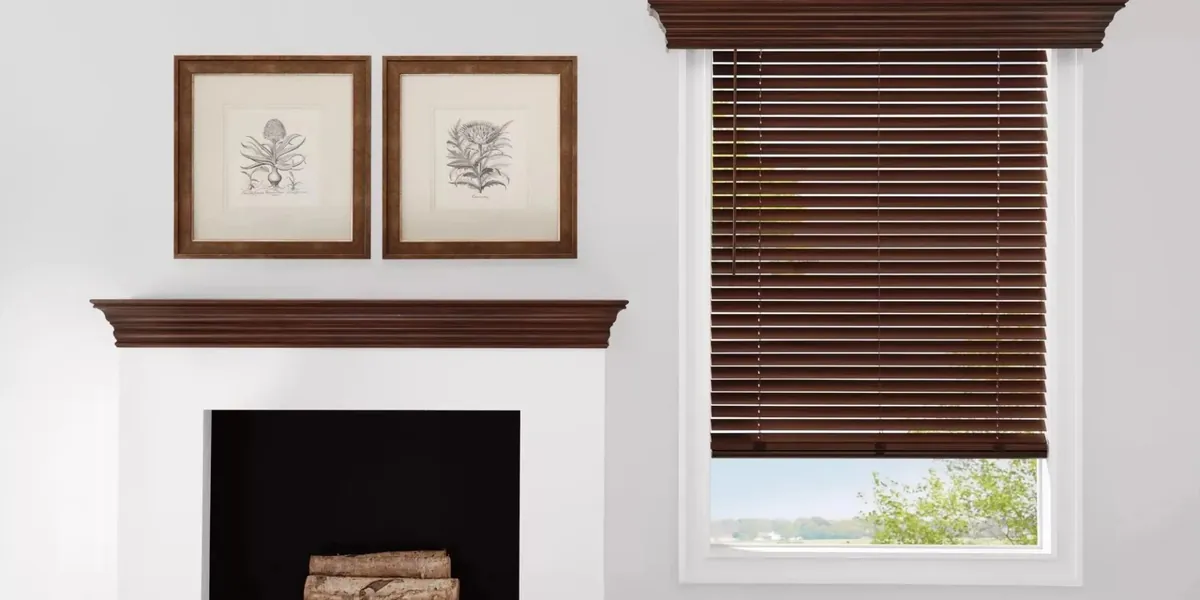
Two-story glass in the Pinehills
The Pinehills is a different world. The houses are large and newer, built with open plans and big windows, and many have a great room or entry where glass rises through two full stories. That glass is the point of the room, and it is also the hardest part of the house to cover.
Size is the first issue. Across a very wide expanse, a row of separate blinds beats one enormous one: each is easier to raise and its slats will not bow over a long span. We place each break behind a mullion, where it vanishes.
Height is the second. Blinds on upper windows in a two-story room are out of reach, so they need to work without anyone climbing a ladder. Hunter Douglas PowerView motorization lifts and tilts them from a remote, a wall control or the app, and a schedule can close the sunny side of the house through the hottest hours and open it again in the evening.
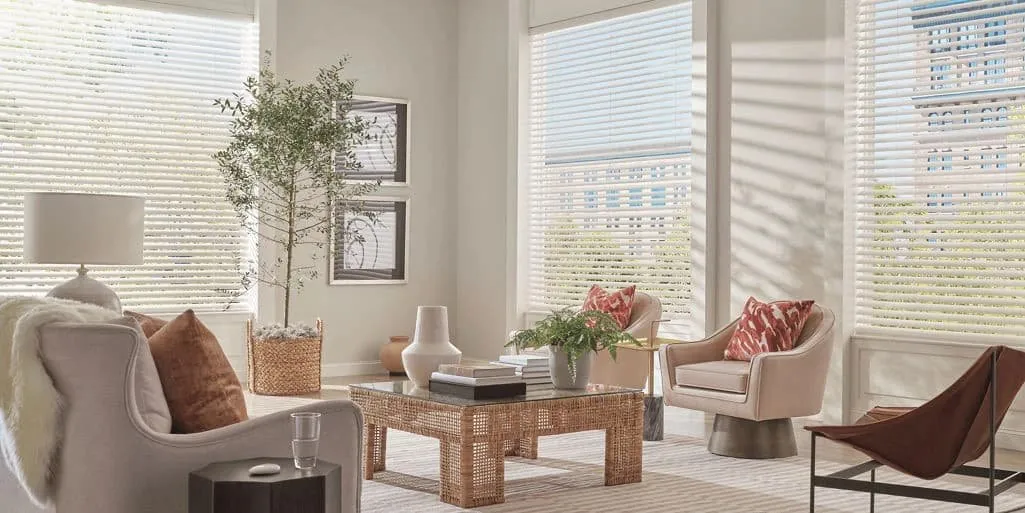
Light is the third. Big glass brings a lot of sun into a room, and the tilt of a horizontal blind is one of the most precise ways to control it. Angle the slats upward and sunlight is thrown to the ceiling, brightening the room without glare. Close them and the room cools down. Pale metal or faux wood slats match the crisp architecture and keep a big room feeling airy.
Open plans and long sightlines
Newer Pinehills houses are often built around one large open space, with kitchen, dining and living areas flowing into each other and windows on two or three sides. Stand at the kitchen island and you may see a dozen windows at once. In a room like that, blinds stop being individual choices and start acting as one surface.
That changes how we plan them. Every blind in the open space should share a color and slat size, so the eye moves across the room without catching on a mismatch. Headrails line up at the same height even where the windows themselves vary, and the raised stacks sit level along the top of the glass. Where a kitchen window over the sink needs faux wood for the steam, we match its color to the metal or wood blinds elsewhere so it does not stand out.
Control matters too. A dozen blinds worked by hand, one at a time, becomes a chore twice a day. PowerView lets you group them, so one press of a remote, or a schedule, tilts every blind on the sunny side together while the shaded side stays open. Scenes can be changed whenever you like from the app, so the routine can follow the seasons as the sun moves around the house.
Post-war ranches across town
Between the historic center and the newest developments, much of Plymouth is made up of post-war ranches. They are practical one-story houses: a picture window at the front, a window over the kitchen sink, two or three bedrooms down a short hall and often a slider to a patio or deck out back.
After an antique colonial, a ranch is a relief to fit. Its windows were built square and in standard sizes, and the walls usually leave room for the headrail to sit neatly inside the frame. So the conversation turns quickly to looks and daily use.
The picture window is the room’s focal point. Split into a pair or a trio of blinds, it lets you raise the half facing the yard while the half beside the television stays tilted shut. The slider gets vertical blinds, since nobody wants to haul a horizontal blind up every time the dog needs out. Faux wood goes over the kitchen sink and in the bathroom, where it shrugs off steam. In the bedrooms, a darker slat makes mornings dimmer, and an outside mount over the casing trims the bright edges where light would otherwise creep round.
Plenty of ranches have grown over the years, with a family room built on the back or the kitchen opened into the dining room. Whatever the changes inside, blinds in the same shade along the front give the house a calm face to the street. Custom blinds in Plymouth ranches tend to be a mix of two or three materials, chosen room by room.
Choosing custom blinds in Plymouth by house type
Because the town is so varied, it helps to see the choices side by side.
- Antique colonial: real wood in the formal rooms, faux wood in the kitchen and back rooms, inside mounts where the deep frames allow, low-profile headrails on small sash.
- Pinehills house: metal or faux wood in pale colors, several blinds across wide glass, PowerView on anything out of reach.
- Post-war ranch: a mix of wood and faux wood, split blinds on the picture window, vertical blinds on the slider.
Mixing is normal. Our wood blinds, EverWood faux wood, metal blinds and vertical blinds pages explain each family in turn, and the custom blinds overview gathers them all. The point of custom blinds in Plymouth, MA is that each window gets the material that suits it, not one compromise across the whole house.
Light near the water
Plymouth has a long shoreline, and houses near the harbor and along the coast take sun reflected off the water as well as from the sky. That light comes in low and bright and can make a waterfront room hard to sit in at certain times of day.
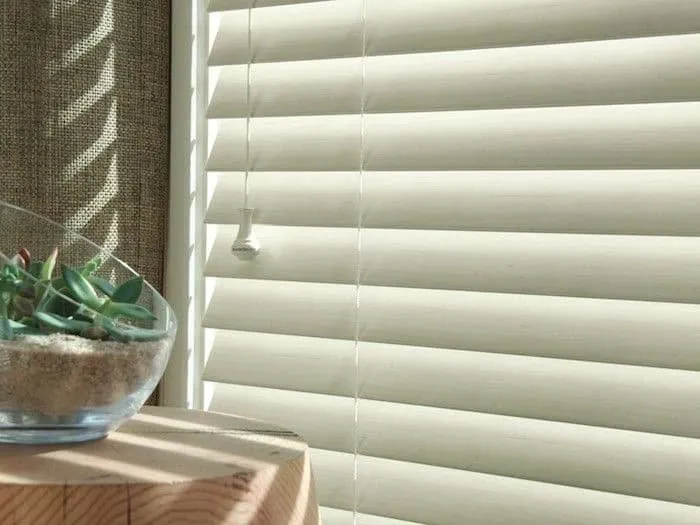
Slats that tilt are well suited to it. With the room side angled upward, light from below is caught and sent to the ceiling. As the sun moves, you change the angle, by hand with a wand or automatically with motorized tilt. Near salt water, faux wood and metal also stand up to damp air better than real wood, and cordless lift leaves less exposed hardware at the side of the window.
Bonus rooms, studies and bedrooms
Larger houses in particular tend to have rooms with special jobs: a bonus room over the garage used for films, a study where the sun lands on a screen at the wrong moment, bedrooms where some members of the household sleep late.
Blinds suit all of these. A deep-colored slat closed tight dims a media room far more than a pale one. In a study, a blind tilted to the right angle keeps the sun off a monitor while leaving the view to the garden. In a bedroom, an outside mount that overlaps the casing reduces the light that leaks around the edges of an inside-mounted blind, and a darker color helps further.
Your in-home consultation
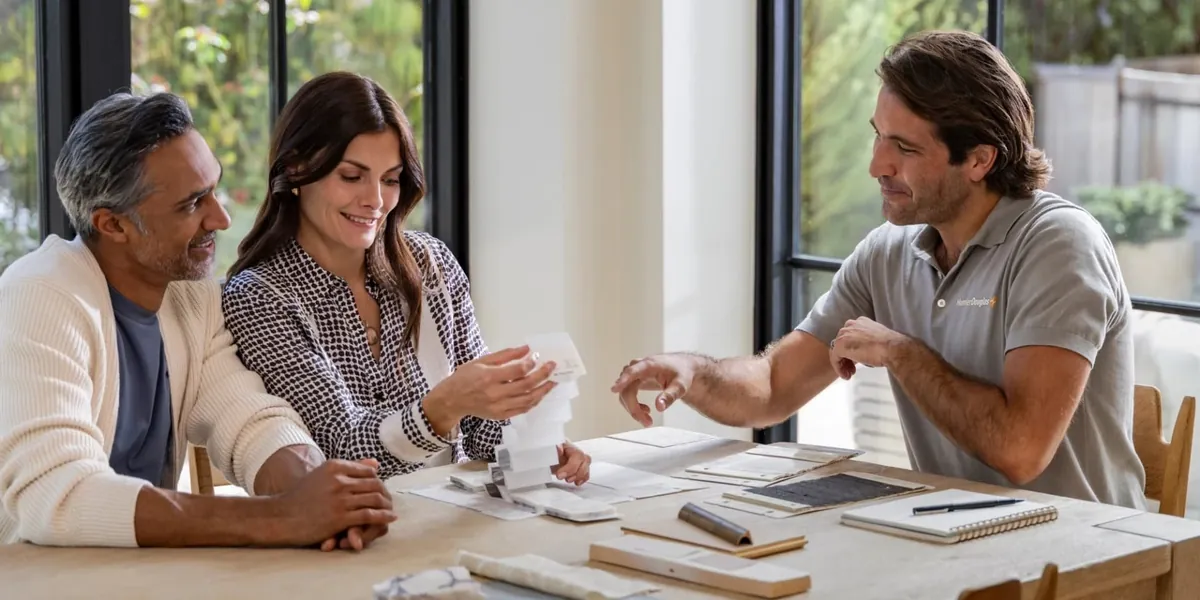
Plymouth is a big place to cross for a showroom visit, so most people here let the showroom come to them. Our vans are stocked with every blind material and style, and seeing a sample in your own room tells you far more than seeing it under shop lights.
- Book through the Request a Consultation form or the call button, picking a day that works.
- A consultant arrives with wood, faux wood and metal slats, vertical vanes, valances and the full set of controls.
- You point us to the window that bothers you most, whether that is glare on the great room glass, a draughty antique sash or a slider that faces the neighbors, and we start there.
- At each window you angle real slats and compare materials in the light that room actually gets.
- Openings are measured and checked for depth, and anything that could interfere is written down.
- A free estimate follows for the blinds you are weighing up, and the decision stays yours, in your own time.
Interior design consultations are available on the same visit for anyone who wants a second eye on color or on how the blinds sit with drapery and shutters. The what happens at an in-home consultation page walks through it.
Measuring and certified installation
A Pinehills window is usually as square as the day it was set; a colonial window near the waterfront almost never is. We treat every opening as if it might be out, taking width at the head, middle and sill and height at both jambs and the center, and checking the depth available for the headrail. Nothing is ordered until you have agreed the mount, the slat, the color and the controls.
Hanging the blinds is the job of our Hunter Douglas certified installers. Brackets go into solid framing, headrails are levelled, PowerView remotes and schedules are set up, and each blind is run up, down and through its tilt before you are shown how to use it. Across a two-story wall they also line every blind up to a common height, so the glass reads as one composed surface. That finish is what separates custom blinds in Plymouth, MA from ready-made ones.
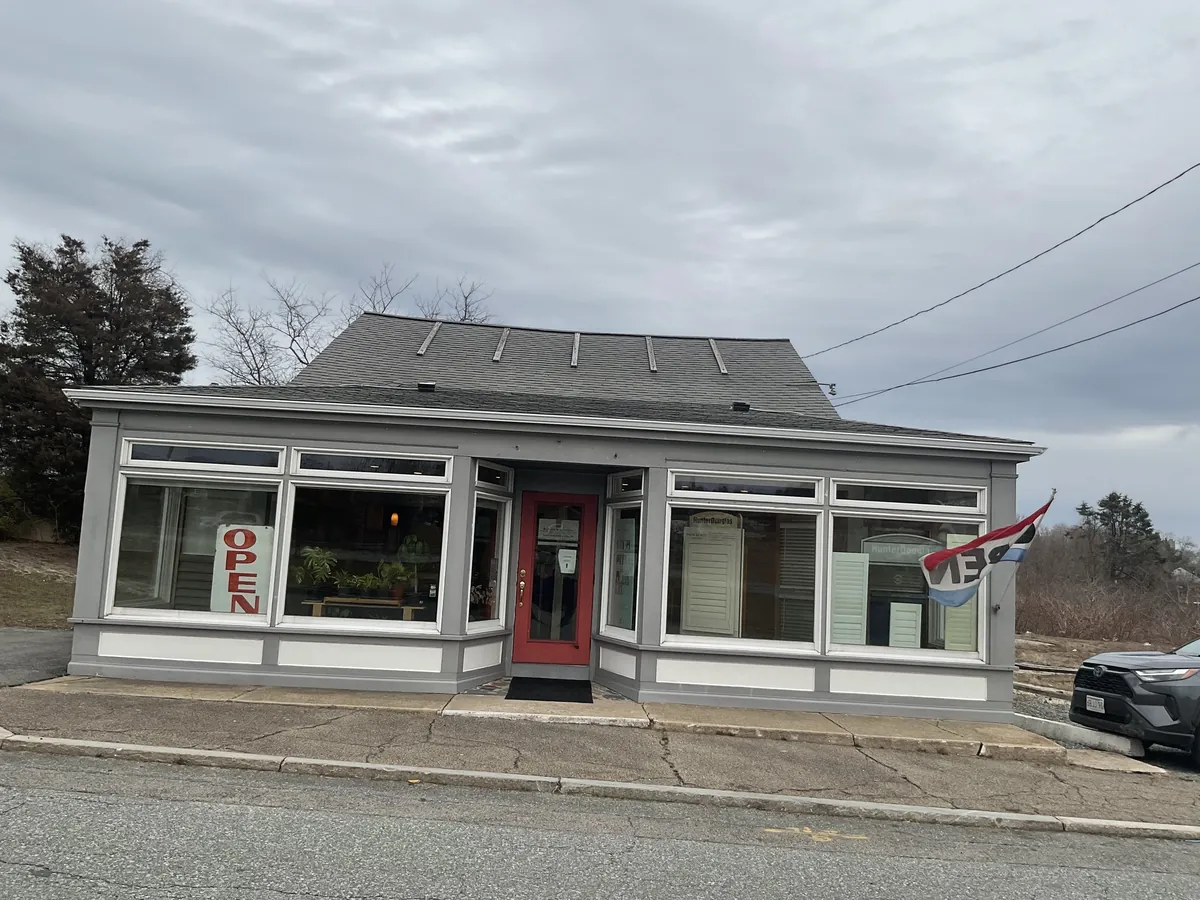
The nearest showroom: Sagamore
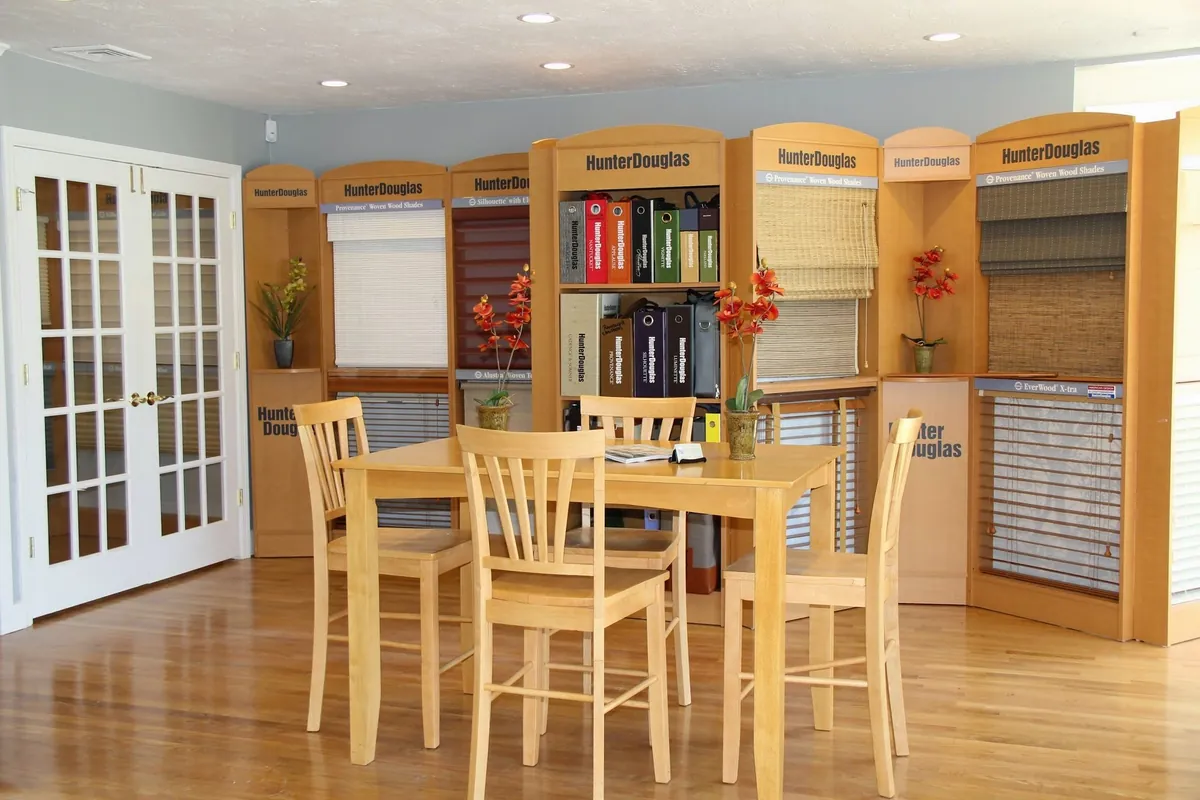
Sagamore, beside the canal, is where our closest showroom to Plymouth stands. The Sagamore showroom page has the details if you want to look at blinds there before or after a home visit.
Hunter Douglas reserves the Gallery title for dealers who meet its standards, and Blinds & Designs carries it, so nothing in the blind line is out of reach. The installers hold Hunter Douglas certification. Should an older blind in the house need a new cord or tilt gear, we take on repairs to blinds and shades as well.
Hunter Douglas shades, shutters, drapery and window covering automation round out what we offer. Other rooms might suit roller shades in Plymouth or motorized blinds in Plymouth, and the Plymouth page lists every service we bring to town.
Questions from Plymouth
Will blinds fit the small, deep-set windows in my antique colonial?
Usually. Deep frames leave room for an inside mount, and a low-profile headrail keeps a small sash from feeling crowded. We measure in several places because old frames are rarely square, and suggest an outside mount where that hangs better.
How do you handle two-story glass in the Pinehills?
Wide windows get several blinds side by side, lined up with the mullions. Upper windows get PowerView motorization so they can be worked from a remote, a wall control or the app, on a schedule if you like.
What goes on the slider in my ranch?
Vertical blinds suit it best. You pull the vanes to the side to walk out, and with the door shut you angle them against sun or a neighbor’s view.
Can I mix materials in one house?
Yes, and most people do: wood in the formal rooms, faux wood in kitchens and baths, metal or vertical blinds where they suit. One color on the street-facing windows keeps the house consistent from outside.
Is there a fee for an estimate?
None. Every estimate is free, written up once your windows have been measured.
Plan your windows
Antique sash, ranch picture window or two stories of glass, the answer is clearest with samples at the window. Fill in the Request a Consultation form and we will bring the full blind range, measure every opening and leave a free estimate. The call button reaches our Sagamore showroom if you would like to book a time there instead.