
Small sash, tall glass and a lot of trees
Drive the length of Main Street and then turn off onto Route 123, and you pass two completely different ideas of a window. The antique colonials near the center were framed when glass came in small, costly panes, so their original sash is short and narrow, set in casings that carry coat after coat of old paint. A few minutes away, the larger newer houses sit back on wooded lots with modern glass that can climb two stories at the back of a family room. Fitting roller shades in Norwell, MA, means getting both of those right, sometimes in the same week.
The setbacks change the job as well. With a long front lawn or a screen of oaks between the house and the road, the front windows rarely face anyone. The question becomes how you want the light, not who might see in. Morning sun slanting through the trunks, a hot west wall in July, and the bright, bare months after the leaves drop all ask something different of the fabric.
A roller shade is a simple thing: one flat piece of cloth wrapped around a tube in a slim headrail. That simplicity is exactly why it suits both kinds of house. It stays out of the way on a tiny colonial window and scales up cleanly on a wall of glass.
Roller shades in Norwell, MA: four lines worth seeing
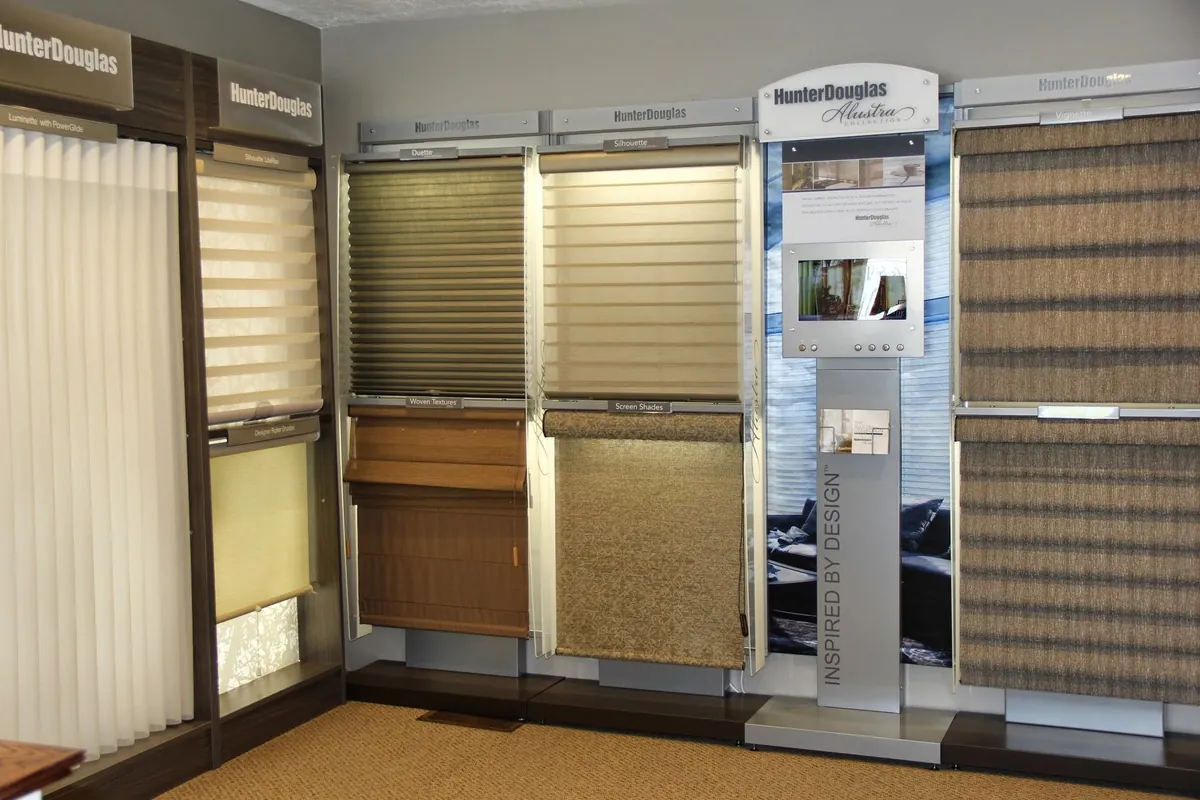
Every Hunter Douglas roller line travels in our vans. These four are the ones that most often end up on Norwell windows, and each has its own page if you want to read ahead.
Designer Roller
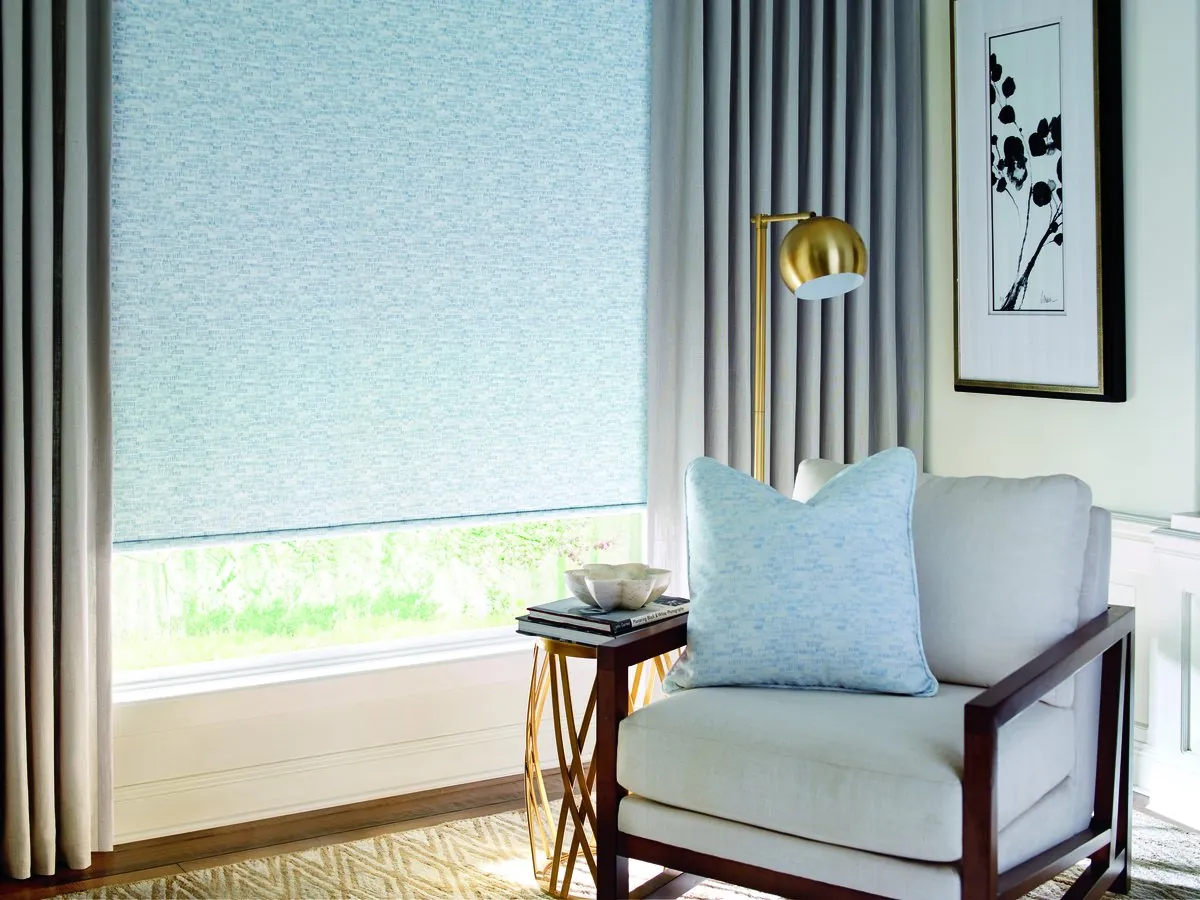
The everyday roller, in light filtering, room darkening and blackout cloths, plain or patterned. Our usual starting point for bedrooms and the small sash on Main Street.
Designer Screen
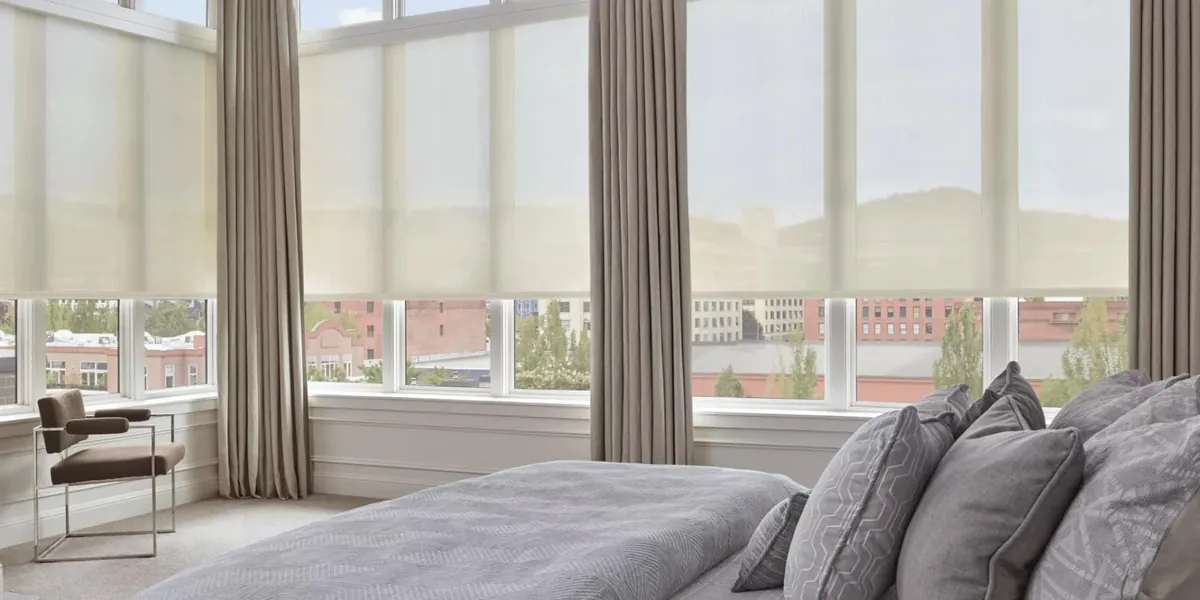
Solar screen fabric with a measured openness, so you cut glare and heat while still looking out at the oaks and pines.
Sonnette Cellular Roller
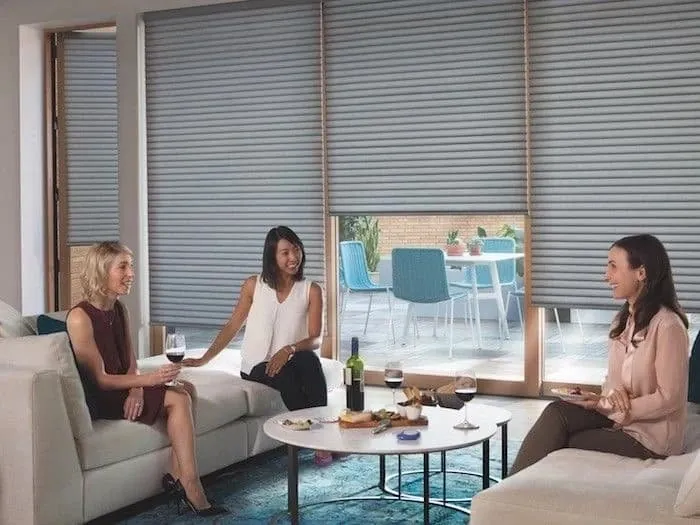
A roller whose fabric forms a soft curved cell, for a fuller outline in a period room that still winds up small.
Alustra Architectural
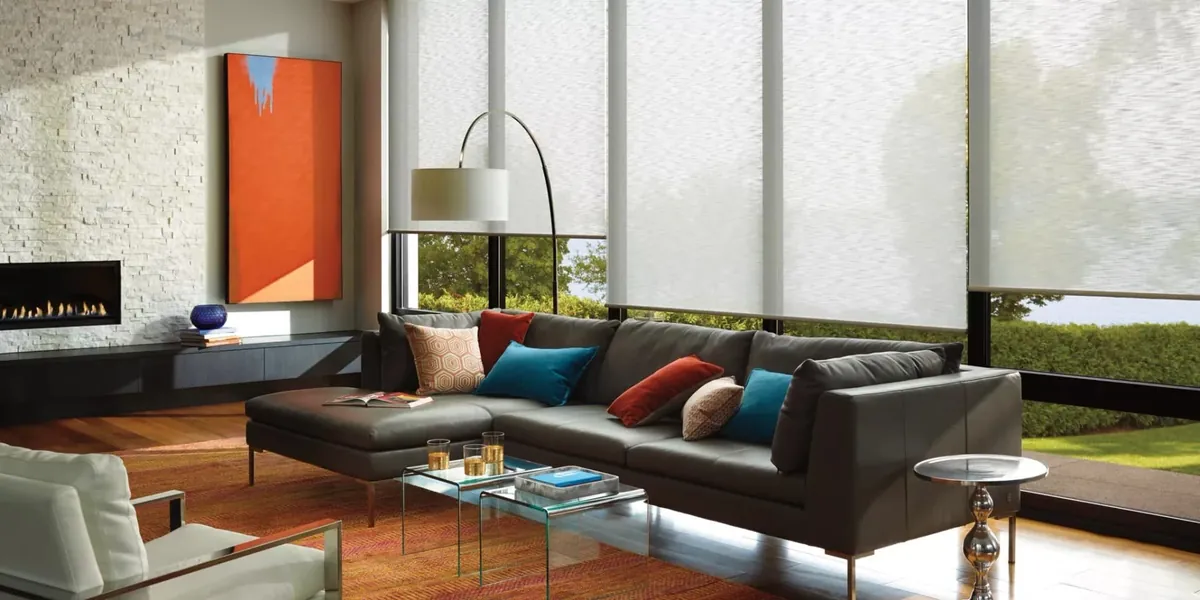
Designer fabrics in the top Hunter Douglas tier, made for large modern openings like a two-story great room.
Fitting a roller into a Main Street colonial
The oldest houses in the center of town tend to have windows that were never meant to be covered by anything more than an interior shutter or a curtain. The sash is small, the stops are thin, and two windows that look like twins from the sidewalk can differ by a noticeable amount once a tape goes across them. Old frames shift, and a window that has been reglazed a few times is rarely square.
A roller can still sit beautifully in one of these openings. Its compact headrail tucks just under the top of the frame, and once the shade is raised the cloth is out of sight, so the original trim stays on show. The detail that matters on a very small window is the light gap. Every roller leaves a sliver of open space at each side, where the fabric stops short of the bracket. On a broad modern window you barely notice it. On a narrow colonial sash that same sliver is a bigger share of the opening, so in a bedroom where you want true darkness we often put the shade on the face of the casing instead, overlapping the opening a little on each side.
Interior storm panels, sash locks and old pulley hardware all take up depth. We check each window at more than one point before we recommend an inside mount, and if a particular frame is simply too shallow, we tell you plainly and show you what would work there.
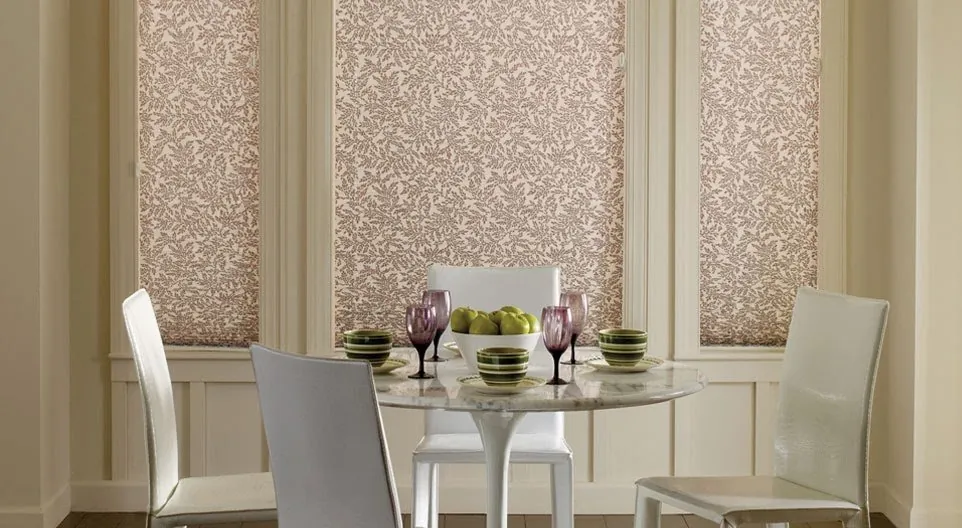
Fabric is half the decision in a room like this. A crisp, glossy screen can look out of place against wide pine boards and hand-planed panelling. A textured weave, a linen look or a soft solid usually feels more at home, and Sonnette’s curved cell gives a gentler profile than any flat cloth.
Openness, explained at your own window
A solar screen looks solid from a few feet away, but up close the cloth is full of tiny gaps between the threads. How much of the fabric is open space is called the openness, and it is the most useful idea to understand when you pick a screen. More openness keeps the view sharp and lets in more daylight. Less openness blocks more glare and heat, at the cost of a softer picture outside.
Color plays its part too, in a way most people do not expect. A dark screen soaks up light, so looking out through it from the sofa feels clearer. A pale screen reflects light back into the room and reads more like a glowing panel. Neither is wrong. Charcoal in a family room keeps the trunks and branches crisp; ivory in a sunroom keeps the space airy and soft.
We judge it in the real conditions. Bring the samples down during the hour when the sun annoys you most, and the right weave usually picks itself. On a wooded lot that may be late afternoon in a west-facing kitchen, or early morning in an east bedroom once the oaks are bare.
Great rooms built around the glass
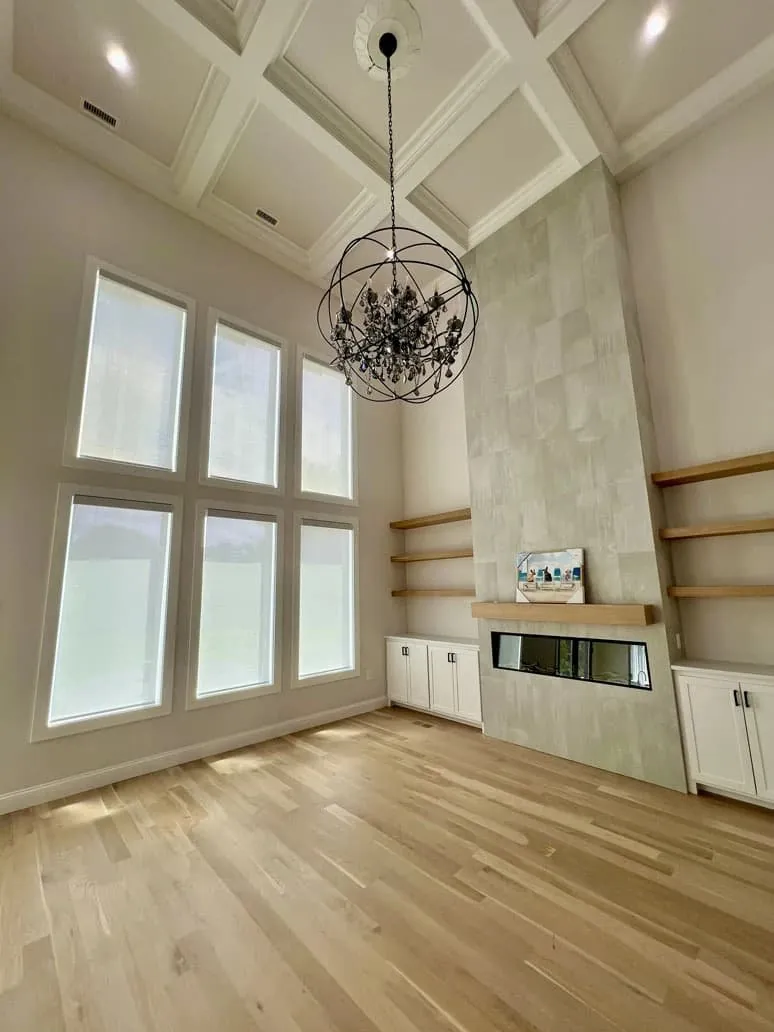
Plenty of the bigger houses off Route 123 were designed around one showpiece: a family room with doors and windows at floor level and another band of glass high above them, sometimes reaching into a peaked gable. Standing in it is a pleasure. Shading it takes planning, because the high panes cannot be reached from the floor, the sheer amount of fabric is considerable, and a west-facing wall can heat the room hard on a summer afternoon.
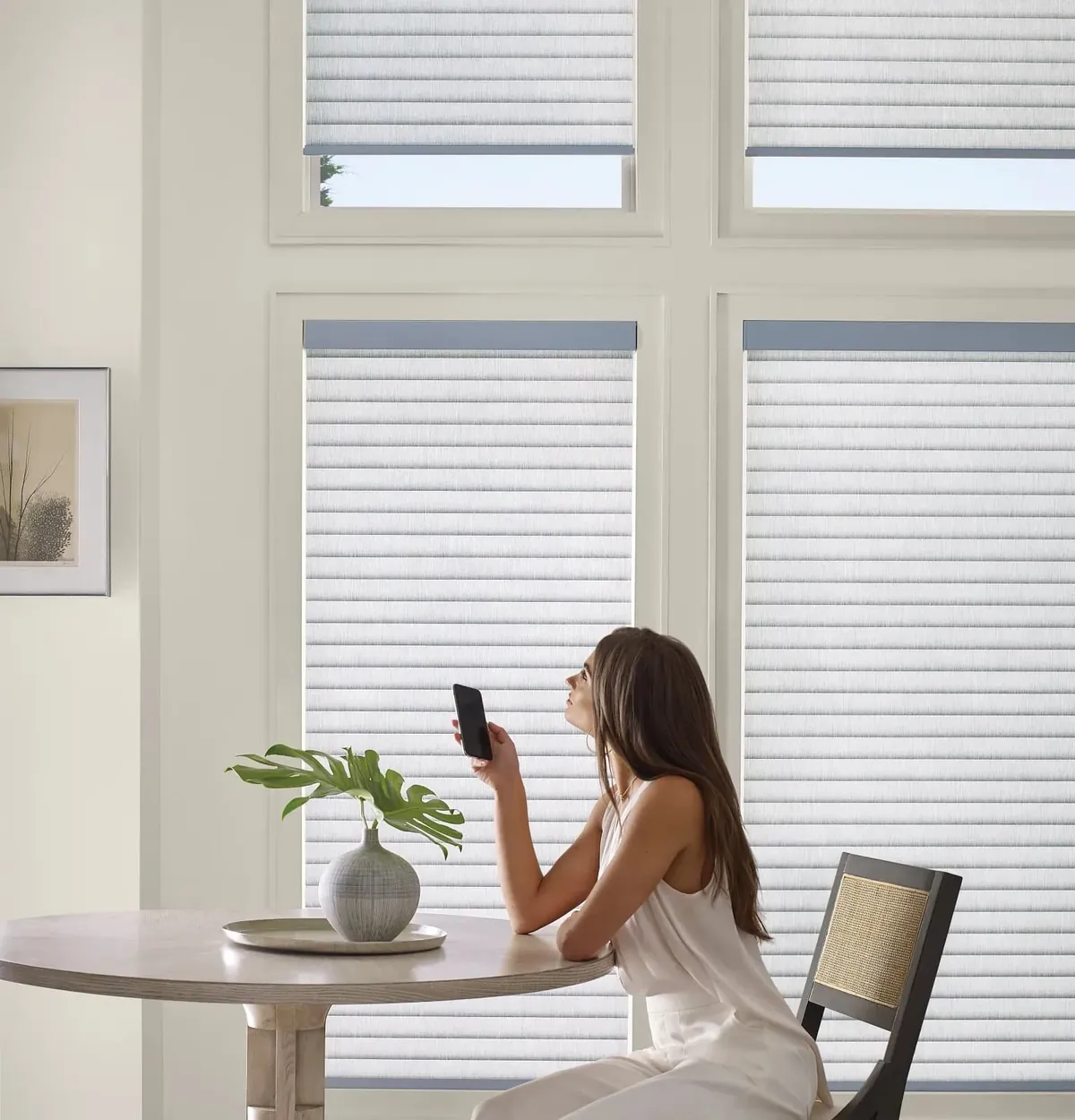
We generally give every pane its own shade, cut from one cloth so the wall still looks like a single surface. Down low, the shades can be raised and lowered by hand. Up high, PowerView motors take over, controlled from your phone, a small remote or a daily timetable, and the app can tie every shade on that wall into one scene. How each motor gets its power is something we work out at the visit, window by window.
For fabric, this kind of room rarely wants blackout. A screen or a light filtering cloth takes the heat out of the late day and still lets you see the woods. Alustra Architectural widens the choice of designer fabrics for large rooms, and we pack those samples whenever we know the house has a wall of glass.
Sometimes an opening is wider than a single roller can span. If so, we show you at the measuring visit exactly where each join will land, so the finished wall looks the way you pictured it.
Light filtering, room darkening or blackout
Every roller fabric sits somewhere on a scale from sheer to fully opaque, and choosing the right point on that scale is mostly about how a room is used.
- Light filtering cloth glows when the sun hits it. The room stays bright and private in daylight, and the fabric spreads the light evenly instead of throwing a hard patch across the floor. Living rooms and dens usually land here.
- Room darkening cloth dims a room well for a nap or a film without making it pitch black. Many guest rooms and children’s rooms suit it.
- Blackout cloth stops light passing through the fabric itself. Paired with an outside mount or side channels to deal with the light gap, it is the choice for anyone who sleeps late or works nights.
The calendar matters on a lot full of trees. Oaks and maples that keep a bedroom in green shade until October let the low sun straight in once they are bare. When we walk the house we ask which side the deciduous trees stand on, and we choose a cloth that still makes sense in February.
How a visit to your house runs
Windows this varied are best judged in person, with the actual cloth in front of the actual glass. Our vans carry the samples, so we can bring the showroom to you.
- You choose a time on the Request a Consultation page, or by the call button.
- A consultant pulls up with roller, screen, banded, Sonnette and Alustra samples and the lift options.
- You show us the rooms that bother you most first, and we talk about how each one is used.
- Samples go up against the glass, and where we can we try them when the light is at its worst.
- Every opening is measured, the depth is checked for an inside mount and any hardware in the way is noted.
- A free estimate follows for the shades you are considering, and the decision stays with you.
If color and fabric for a whole room are on your mind, ask about our interior design consultations at the same appointment. Our page on what happens at an in-home consultation walks through the visit step by step.

Stair landings, bonus rooms and other awkward glass
The newer houses on the wooded lots tend to have a few windows nobody thinks about until moving day: a tall window halfway up the stairs, a half-round over the front door, a pair of small windows in a room over the garage, a skinny pane beside a fireplace. Each needs its own answer.
A stair landing window is often too high to reach comfortably from the steps. A motorized roller solves that, or a cordless shade with a lift pole if you would rather keep it simple. A room over the garage usually has a sloped ceiling and dormer windows that sit in deep recesses; rollers fit neatly inside a dormer because the whole mechanism lives in that slim headrail. The narrow panes beside a chimney or a front door can take a roller of their own, matched to the larger window next to them.
Arched and half-round tops are the exception. A flat roller cannot follow a curve, so we usually shade the rectangle below and leave the arch open to the sky, which most people prefer anyway.
Banded shades for rooms that want both
Some rooms need privacy at night and an open view by day, and switching between two shades is a nuisance. Designer Banded shades handle both with one piece of cloth. The fabric alternates sheer stripes with solid ones on two layers that slide past each other. Line the sheers up and you look out through a soft gauze; offset them and the solid stripes close the gaps.
On Main Street, where an antique house can sit fairly near the sidewalk, a banded shade in a front parlor gives you daylight and a sense of the street without feeling exposed. In the newer houses it often suits a family room that faces a neighbor across the side yard. When we talk about roller shades in Norwell, MA, for a front room, we usually hold up a banded sample next to a plain roller so you can see the difference. Our Designer Banded page explains the fabric further.
Choosing how each shade is lifted
How a shade goes up and down matters more than people expect in a house with many windows spread over two floors, and it is fine to mix methods room by room.
On windows you can reach easily, a cordless roller is the tidy answer: you lift or lower the bottom bar by hand, with nothing hanging at the side. On a wide or heavy shade, such as a big family room window, a continuous loop makes the work lighter. For tall glass, stairwells and any room you want to set on a timer, PowerView motors do the lifting and can run one shade, a group or every shade in the house together.
Our pages on motorized blinds and shades in Norwell and how motorized shades are controlled go into the motorized side in more depth.
Rollers alongside other window treatments
Not every window in a house wants the same thing, and roller shades for Norwell homes often work best as part of a mix. In a formal front room on Main Street, a slim light filtering roller can sit inside the frame for daytime glare while a pair of drapery panels frames the window for warmth and softness. In a bathroom, a moisture-friendly roller is easy to keep clean. Where a bedroom needs both privacy and warmth on a cold north wall, you may prefer a honeycomb shade instead, and we will say so.
If you are weighing options for other rooms, see our cellular shades in Norwell and roman shades in Norwell pages, or the full list of what we do in town on our Norwell page. The main roller shades page compares every Hunter Douglas roller line side by side.
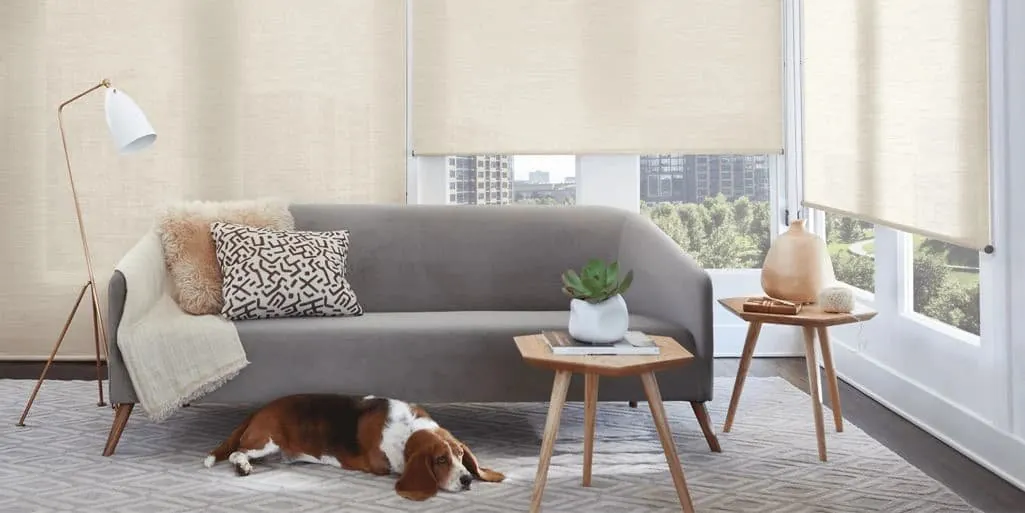
What a Gallery dealer brings to the job
Blinds & Designs is a Hunter Douglas Gallery dealer, a title the maker gives only to some of its retailers. For a Norwell house it means the full roller family comes to one appointment, along with every way to lift it and the PowerView system to automate it.
Installation is done by installers certified by Hunter Douglas. In a modern great room they anchor every bracket so long headrails stay straight; in a colonial frame that has moved over the years they shim and level until the shade hangs true even though the window does not.
When something needs fixing later, the same company handles blind and shade repairs, so you already know who to ask.
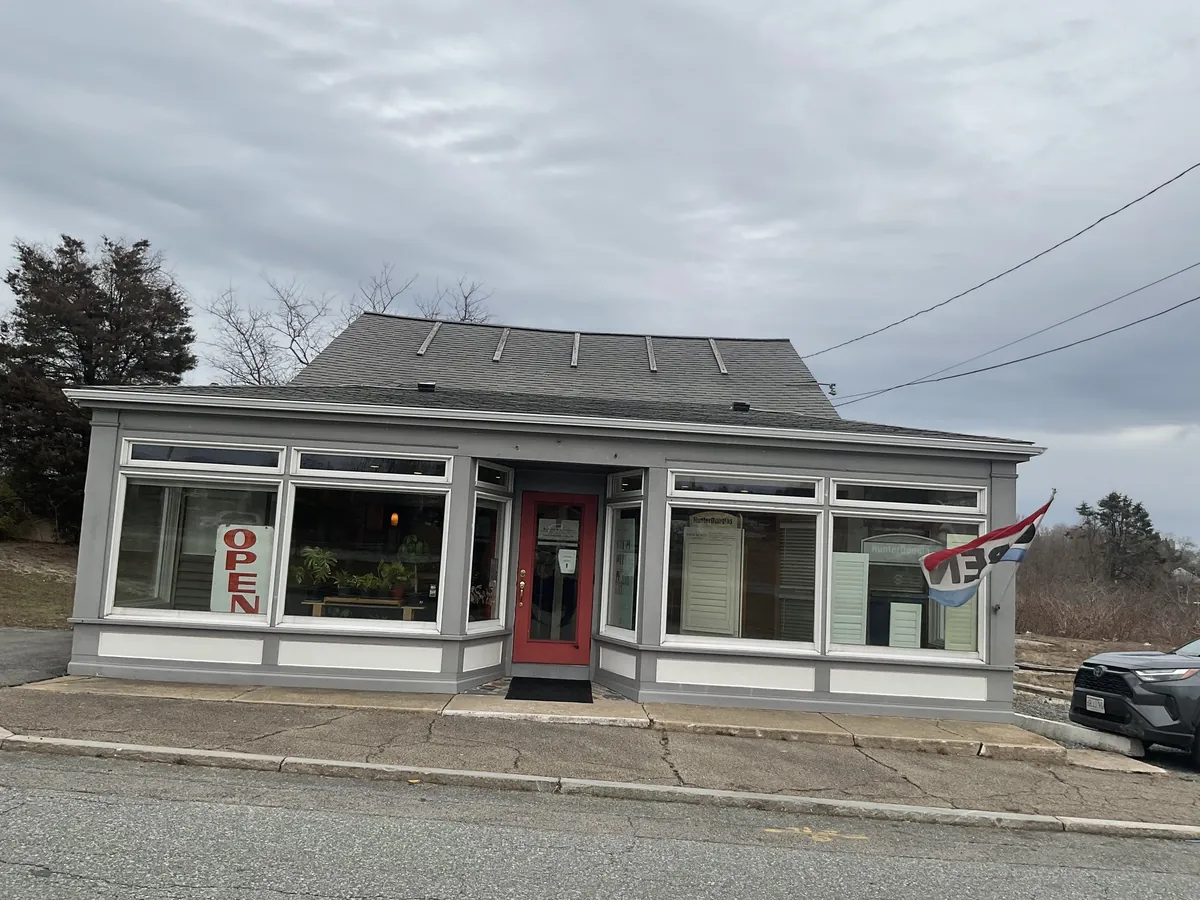
Our closest showroom to Norwell
Sagamore is the nearest of our showrooms to Norwell. If seeing a shade in person first helps you decide, start there.
After that, a home visit lets you check the fabric you liked against your own windows, trim and light.
Questions from Norwell
Will a roller fit the small original windows in my antique colonial?
Usually. The headrail is compact enough for most old frames, and raised, the fabric is out of sight. On the narrowest sash some light shows at each side, so for a dark bedroom we often mount the shade on the casing instead.
What do you do with windows high up in a great room?
Each pane gets its own roller in a matching cloth, and the high ones are motorized with PowerView. You can move the whole wall at once from the app or a remote, or let a schedule do it.
What is openness on a solar screen?
It is how much of the weave is open space. More openness means a clearer view and more light; less means more glare control. Darker colors are easier to see through from inside.
Can a roller go on a half-round window over my door?
Not on the curve itself. We shade the rectangular window below and leave the arch open, or suggest another Hunter Douglas product if the arch needs covering.
How do I get an estimate?
Request a consultation. We come to the house with samples, measure each window and give you a free estimate, with no obligation to order.
Your next step
Holding the cloth up at your own glass is the quickest way to choose roller shades in Norwell, MA. Request a consultation and we will bring the roller range to the house, measure every opening and leave you a free estimate. If you have a question first, use the call button, or call in at the Sagamore showroom.