
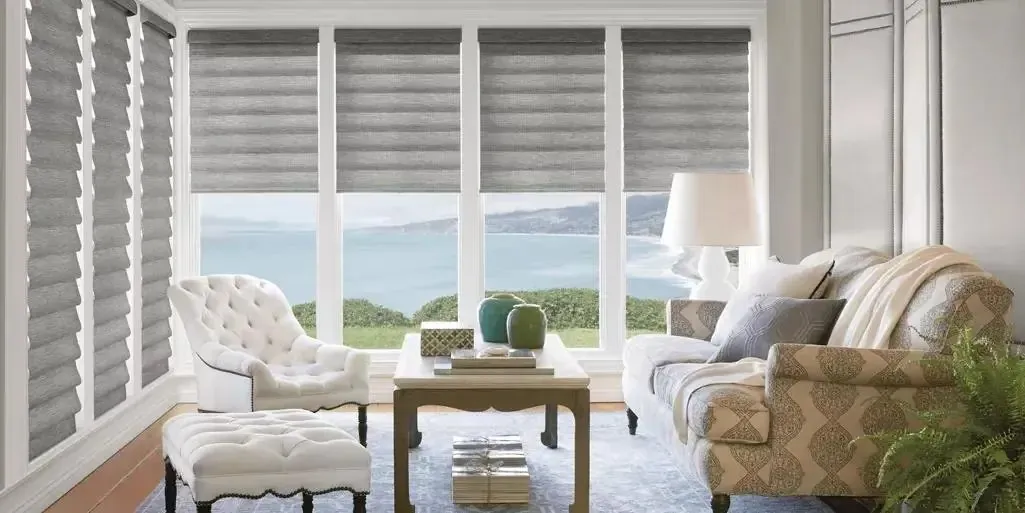
No single answer for a town this size
Plymouth covers more ground than any other town in Massachusetts, and its houses vary as much as its landscape. In the historic center, antique colonials have small sash set deep into thick walls. In the Pinehills, large newer houses rise around walls of modern glass two stories high. Between the two, post-war ranches fill neighborhood after neighborhood with picture windows and long bedroom glass. There is no one way to do roman shades in Plymouth, MA, because no one window describes the town.
What a folded fabric shade does offer is range. The same basic idea, a fabric panel that rises in folds, can be tailored and traditional in an antique parlor, clean and modern across a tall Pinehills window, or soft and relaxed in a ranch living room. The fabric, the fold, the lining and the lift change from one house to the next, and that is what we work out with you.
So rather than offering a package, we start with your house: how deep the sash is, how high the glass goes, which way the rooms face and how you use them.
Three corners of Plymouth, three starting points
Every house is different, but these are the places we usually begin when planning roman shades in Plymouth homes.
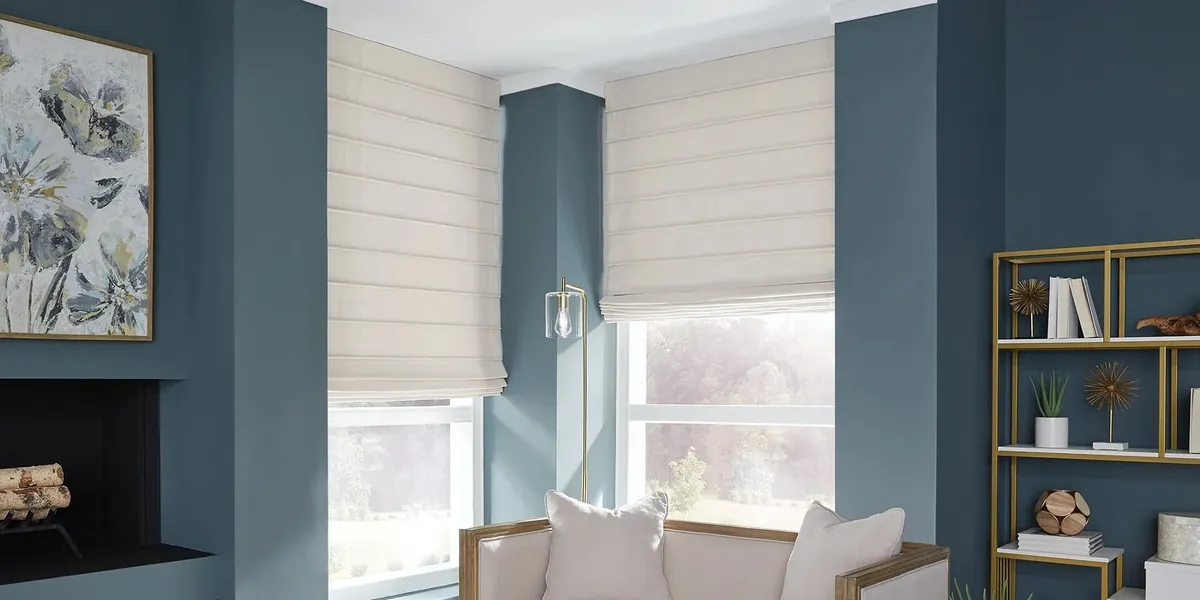
The historic center
Small, deep-set sash in antique colonials. An inside mount set back in the reveal, with a fabric and fold chosen to keep the stack compact.
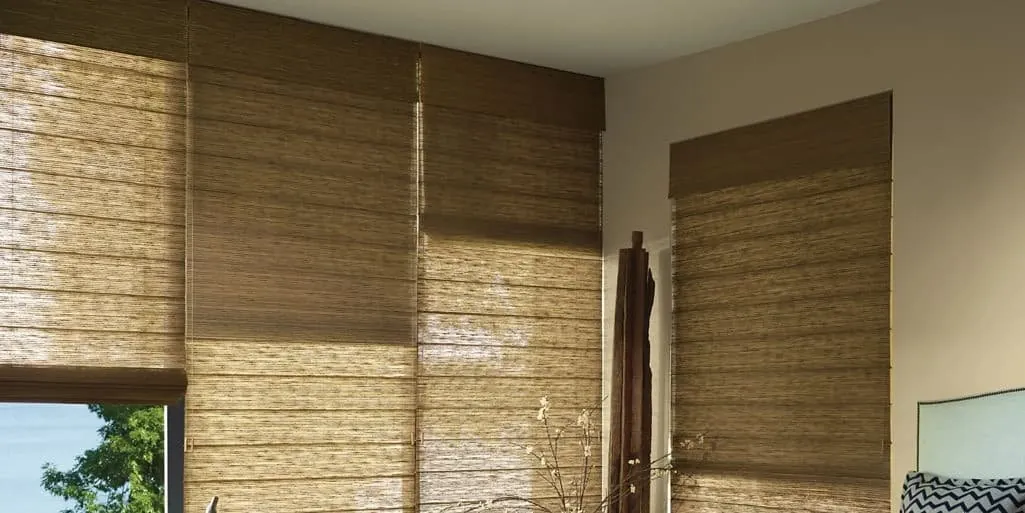
The Pinehills
Large windows and two-story glass. Wide shades split into matching runs, often motorized for the high windows.
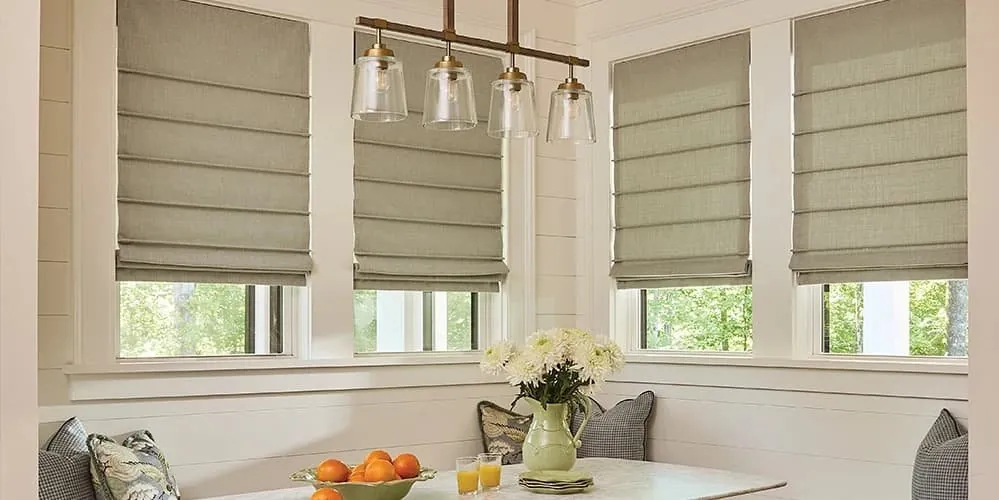
Post-war ranches
Picture windows, kitchens and long bedroom windows. A soft fold or Vignette, depending on the room.
Antique colonials and deep-set sash
The oldest houses in the historic center were built with heavy timber frames and thick walls, and their windows sit well back from the room in a deep reveal. The sash itself is often small, divided into many panes, and the trim around it is plain, painted and old. Deep reveals are good news for a folded shade, because there is plenty of room to set a headrail inside the opening.
Mounted inside, the shade sits back within the window, the trim stays completely clear, and the window keeps its old proportions. From the room, the shade looks like part of the house rather than something added to it. From the street, the window looks almost unchanged.
The challenge is the size of the sash. A small window does not leave much glass, and a sewn shade gathers its folds at the top when raised. We plan the stack carefully on every antique window, sometimes setting the headrail as high as the reveal allows so the gathered fabric sits over the top rail of the sash. A thinner fabric folds into a smaller stack, and Vignette, which winds its fabric up into the headrail, leaves even more glass clear.
These frames have usually settled over a long life, so we measure each one at several points across its width and height. A window that is wider at the top than at the bottom gets a shade sized to its narrowest point.
Deep sills and window seats
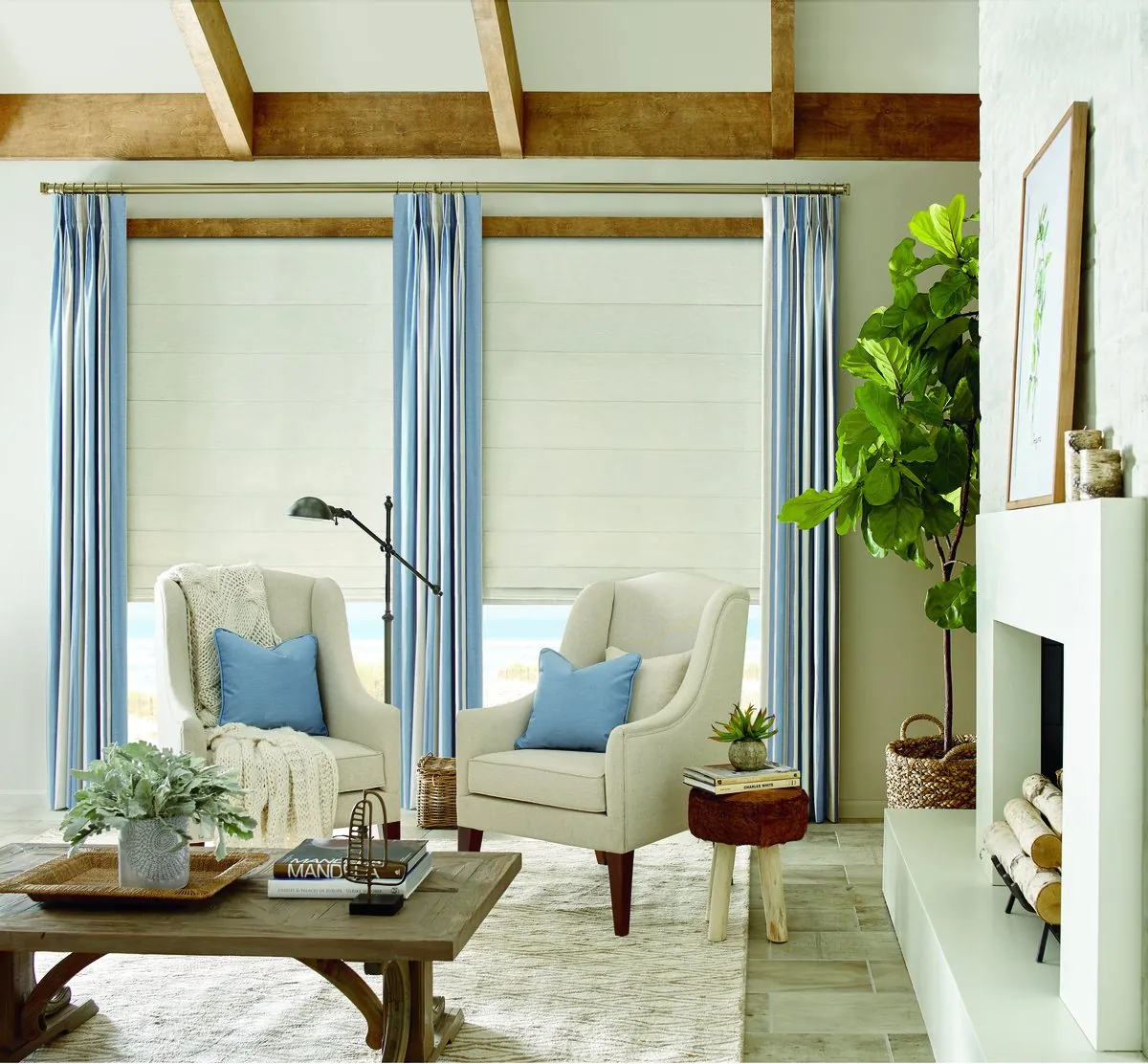
A deep reveal brings a bonus: a wide sill. In many antique colonials the sill is deep enough to hold plants, books or a cushion, and some rooms have a window seat built into the depth of the wall. A folded shade works well with both, because it hangs straight down inside the opening and stops just above the sill, leaving the ledge free.
On a window seat, the shade becomes part of a small, cosy corner of the room, and the fabric can pick up the color of the cushion. A lined shade lowered at dusk keeps the seat comfortable on a winter evening, when cold comes off old single glass. We set the length of each shade so that it clears whatever you keep on the sill, and choose a lift you can reach easily from a seated position. Planning roman shades for Plymouth antiques often comes down to details like these, which never arise on a modern window.
Two-story glass in the Pinehills
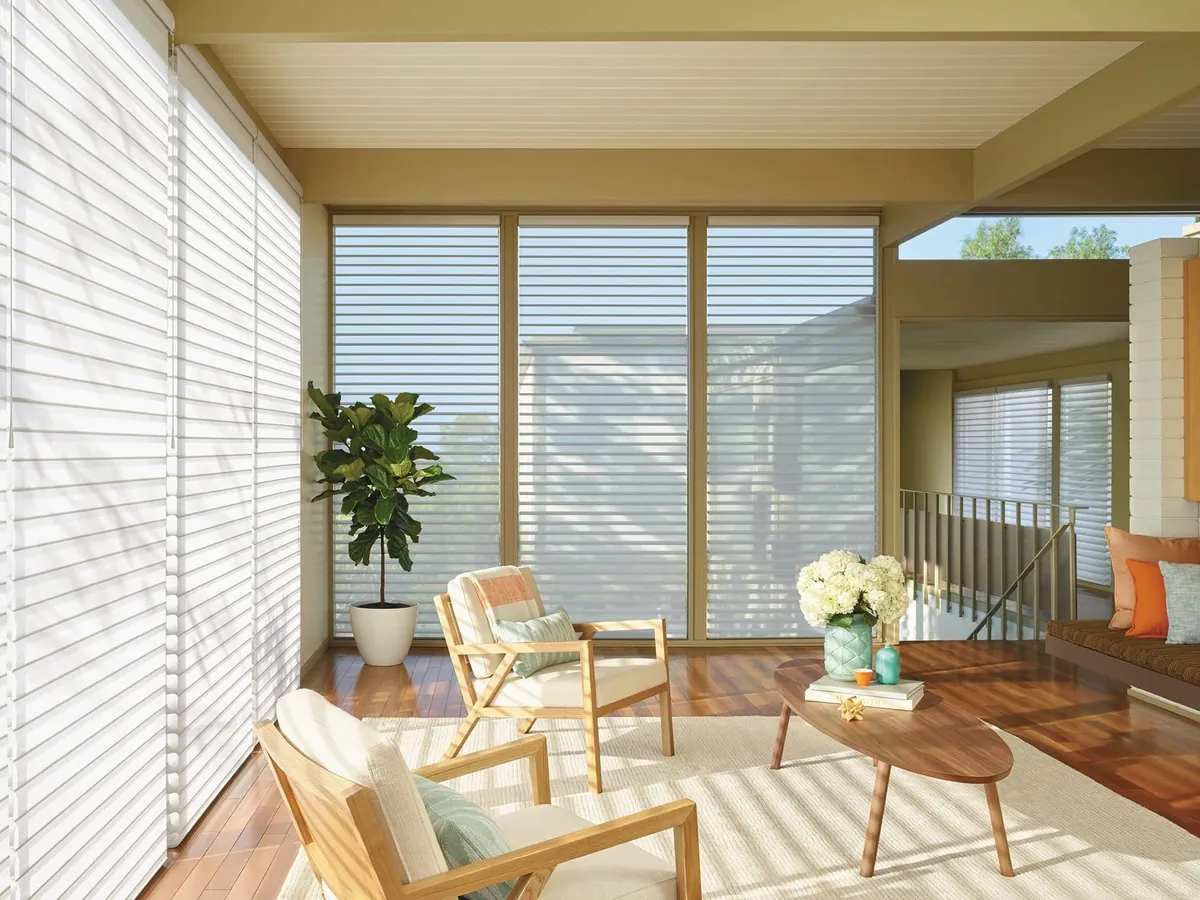
The houses in the Pinehills are a different world. Great rooms rise two stories with walls of glass facing the woods, transoms and upper windows sit far above head height, and kitchens and main bedrooms have wide windows of their own. These rooms are full of light, which is the point of them, but they also take a lot of sun and can be hard to make private at night.
A folded shade can handle these windows, but it needs planning. Very wide openings are split into runs of shades that line up along the top and share one fold spacing, so the whole wall reads as one treatment. Lower and upper windows can be treated together, with matching fabrics, or the lower tier can be shaded while the upper windows are left open to the sky.
High windows need motorization. With PowerView, shades well out of reach rise and fall from a remote or an app, a whole wall moves with one button, and schedules can lower the shades as the afternoon sun comes round and raise them again in the evening. Our motorized blinds and shades page explains how it works.
Style matters too. Vignette’s even, rounded folds and slim headrail suit the clean lines of a modern interior, and its lack of cords down the back keeps tall glass looking tidy from outside. In a more traditional Pinehills room, a Carole Fabrics flat fold in a textured linen brings warmth to a big space.
Great rooms after dark
Two-story glass is wonderful by day and very exposed at night. With the lights on inside, a Pinehills great room becomes a lit stage visible from the woods and the road. Even on a wooded lot, most people want to close at least the lower tier of windows in the evening.
A lined folded shade on the lower windows gives that privacy, while the upper windows can stay open to the night sky if no one can see in from that height. Where they can, a matching shade on the upper tier, motorized so it closes on a schedule at dusk, completes the room. When we plan roman shades in Plymouth, MA, great rooms, we think about the evening as much as the afternoon sun.
If a folded shade is not the right fit for the very tallest panes, we will say so and show you other Hunter Douglas options, such as sheer shades, that can sit alongside roman shades in the same room and share a color so the wall still looks like one design.
Post-war ranches in between
Much of Plymouth’s housing sits between those two extremes: post-war ranches and capes in neighborhoods spread right across the town. They usually have a living room picture window, a kitchen window over the sink, and bedrooms with wide windows set fairly high on the wall.
These are straightforward windows to fit, and the choice comes down to how each room is used. A soft fold softens the long horizontal line of a picture window and adds texture to a plain room. A kitchen window over the sink is easiest with a cordless lift you can push from the bottom rail, or with a motorized shade. Bedrooms facing east take a room-darkening lining.
A wide picture window can be one shade or several. Splitting it into two or three lets you lower one end against the sun while leaving the other open, and keeps each shade light enough to raise easily.
Light, glare and privacy across the town
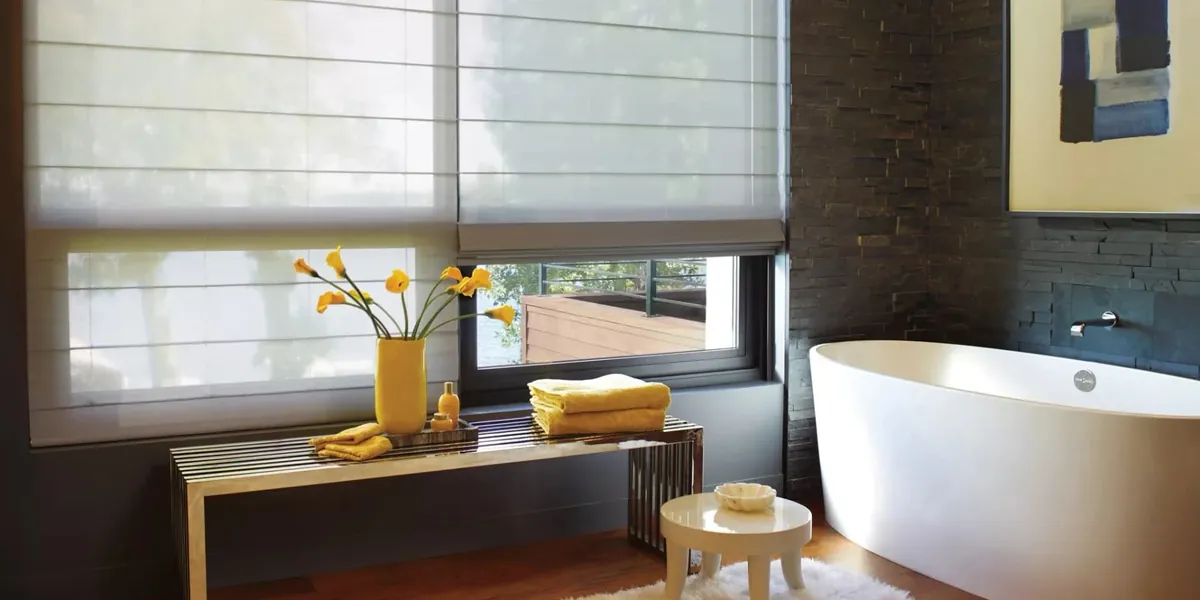
With so many kinds of houses, the light questions vary too. In the historic center, small windows and deep reveals mean many rooms are already fairly dim, so a light-filtering fabric that keeps the room bright is often the right choice. In the Pinehills, the opposite problem applies: big glass lets in a great deal of sun, and a lined fabric or a room-darkening lining helps control heat and glare in the brightest rooms.
Privacy depends on setting. A house on a wooded Pinehills lot may need privacy only at night, while a colonial close to a street in the historic center needs it all day. A light-filtering fabric gives daytime privacy by glowing rather than showing the room; at night, with lamps on, a lining does the job.
Sun is hard on fabric over time. Strong colors on a south- or west-facing wall of glass will fade faster than the same fabric on a north window. A lining protects the face fabric, and lighter, neutral colors hold up best where the sun is strongest.
One house, more than one shade
Because Plymouth houses vary so much inside as well as out, many end up with more than one kind of roman shade. That is normal, and it often gives the best result.
Vignette is the engineered option. Its folds are formed into the fabric so they stay the same depth all the way down, there are no lift cords on the back, and it winds up into a compact headrail. It suits modern rooms, tall glass, small antique sash where every inch counts, and rooms where the shades go up and down several times a day.
Carole Fabrics shades are sewn to order from a decorator fabric you choose, in a flat, soft or relaxed fold. They give you the most freedom with pattern, texture and color, and they can be coordinated with drapery, upholstery or wallpaper. They suit formal rooms, traditional houses and any room where the shade is part of the decoration.
A typical mix might be Carole Fabrics in the living and dining rooms of an antique colonial and Vignette in the kitchen and bedrooms, or Vignette across the great room of a Pinehills house with a Carole fabric in a cosier study. There is more on our Vignette and Carole Fabrics pages, and the full range is on the roman shades page.
Choosing fabric for big glass and small sash
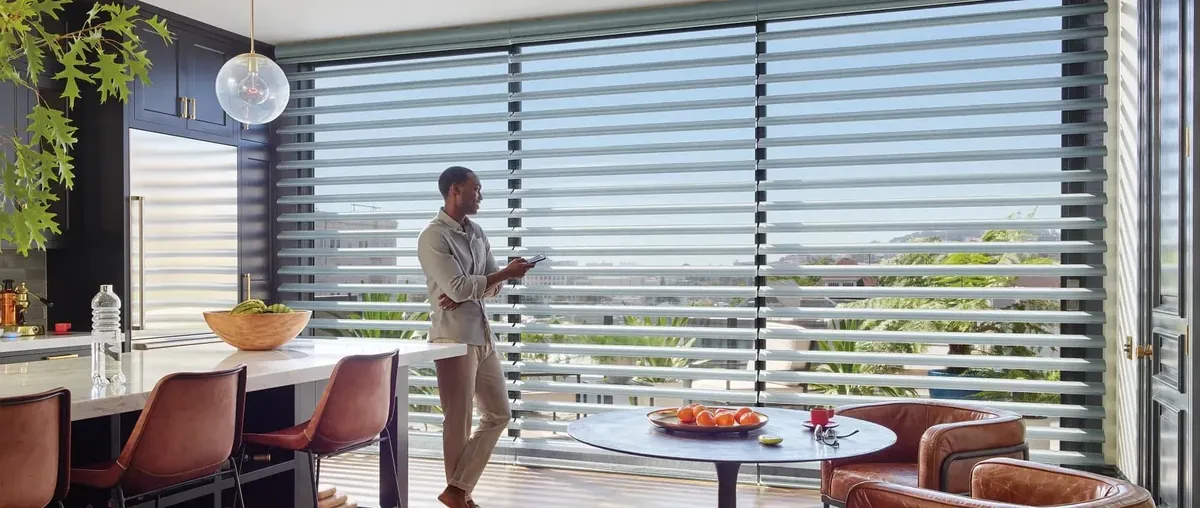
Fabric behaves differently at different sizes. On a tall Pinehills window, a big shade shows a lot of fabric, so a strong pattern can dominate the room; a textured plain or a subtle stripe often works better. Weight matters on a large shade, too, because a heavy fabric adds to what the lift has to carry.
On a small antique sash, the opposite applies. A large print shows only a fragment on a little window, and a heavy fabric makes a big stack. A lighter cotton or linen in a small repeat or a plain texture reads well and folds into a neat, compact band.
Color connects the rooms. In an open-plan house, choosing fabrics from the same family of colors for every shade on one floor makes the space feel calm. In a house with separate rooms, each room can have its own character. If you would like help pulling it together, our interior design consultations can cover color and pattern at the same visit.
What happens when we visit
With a town this varied, there is no substitute for seeing your windows. Our vans carry samples, so we can bring the showroom to you.
- Request a consultation online or with the call button, and choose a time.
- We arrive with Vignette and Carole Fabrics samples, in flat and soft folds and in sheer, light-filtering and room-darkening fabrics.
- We tour the house with you, from the deepest antique sash to the tallest window, and hear what each room needs.
- You try the fabrics against your own windows, in the light each room gets.
- We measure every opening, check reveal depths, and plan stacks on small windows and runs on wide ones.
- A free estimate follows for the shades you are considering, and there is no pressure to decide that day.
Our page on what happens at an in-home consultation explains the visit in more detail.
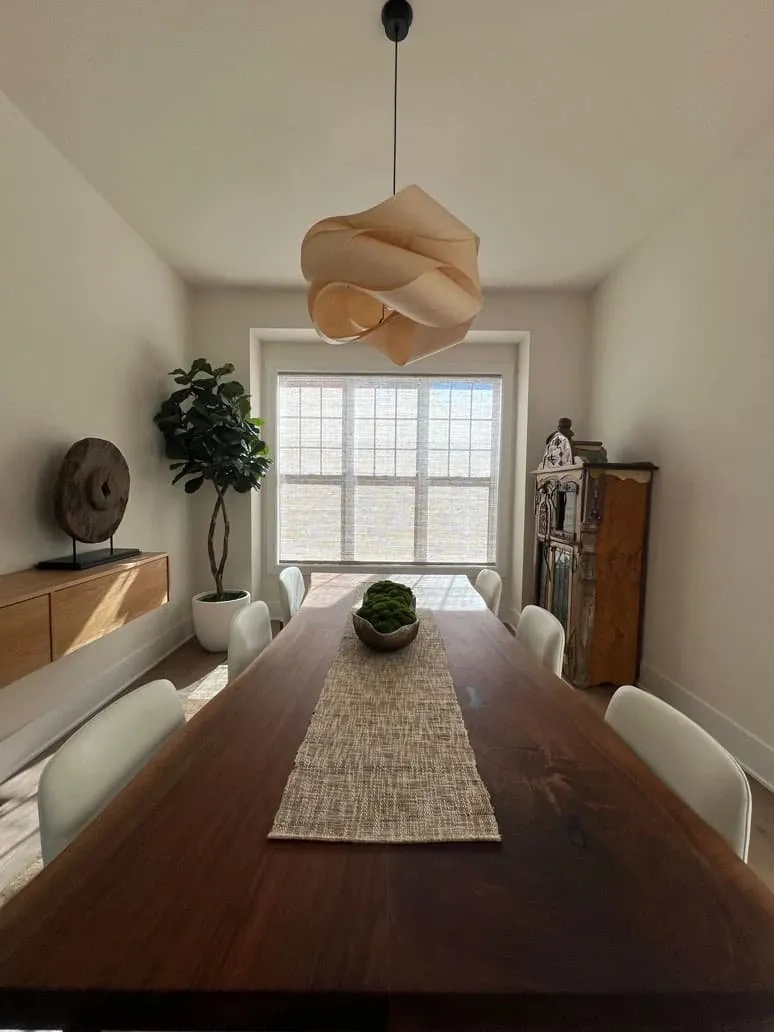
Fitting the shades
Installation in an antique house and in a Pinehills great room are very different jobs, and our certified Hunter Douglas installers handle both. In the historic center, brackets go inside the deep reveal wherever possible so the old trim is left alone, and each shade is levelled even where the frame has settled. In a Pinehills house, runs of shades are lined up across a wall of glass, high shades are fitted from proper ladders or staging, and motors are set up and paired with your remote or app.
Either way, fixings go into solid wood, every lift is tested, and you are shown how each shade works before the installer leaves.
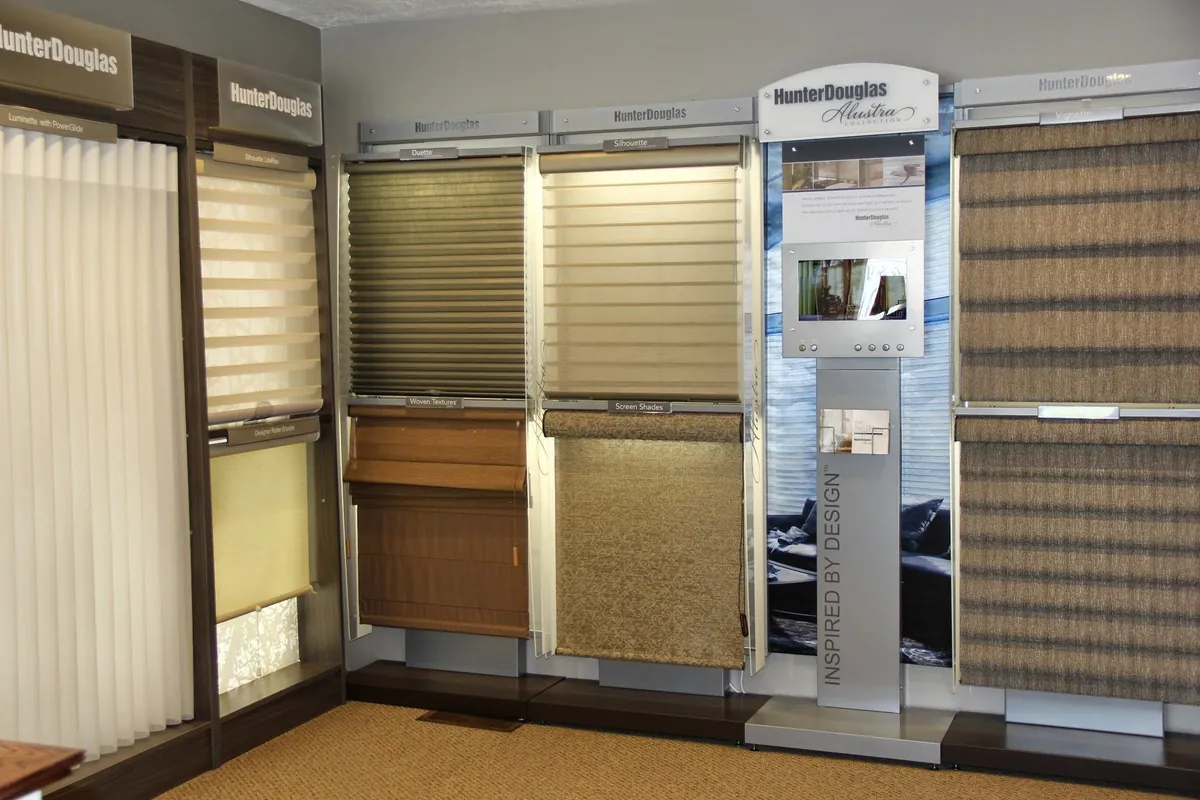
Why a Hunter Douglas Gallery dealer
Blinds & Designs is a Hunter Douglas Gallery dealer, a status Hunter Douglas gives only to some of its dealers. You can compare the whole folded-shade range in one visit, Vignette next to the full Carole Fabrics library, along with every lift and motor.
Hunter Douglas has certified our installers, and we repair the blinds and shades you already own. Looking at other rooms too? See cellular shades in Plymouth, plantation shutters in Plymouth, or all our services on the Plymouth page.
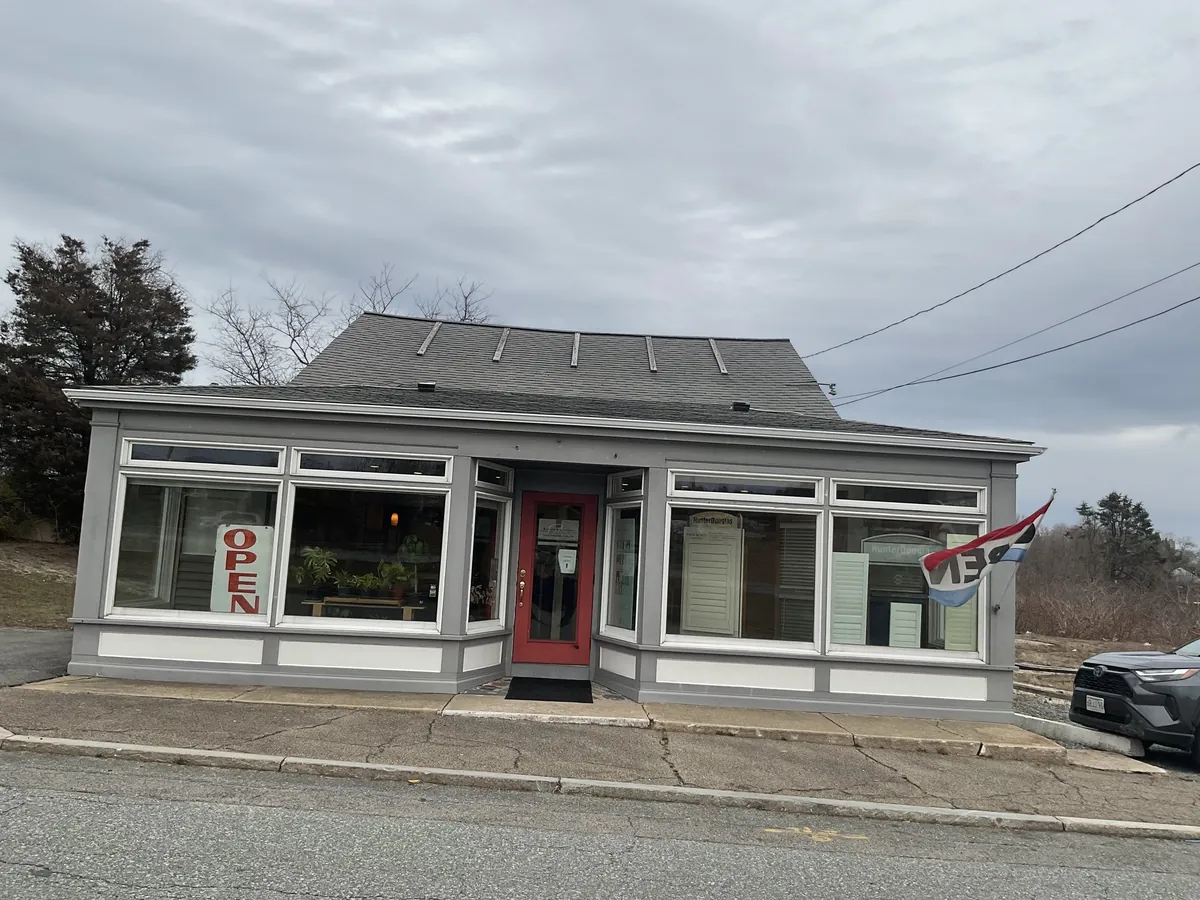
Our nearest showroom
The Sagamore showroom is our nearest location to Plymouth, on Cranberry Highway. Come in to see folded shades raised and lowered and to handle the fabrics.
If you would rather choose at home, we will come to you. Whether your house is in the historic center, the Pinehills or anywhere in between, seeing the samples against your own windows is the best way to decide.
Questions from Plymouth
Can roman shades work on the two-story windows in my Pinehills house?
Yes. Wide openings are split into matching runs of shades, and the upper windows are usually motorized with PowerView so you can raise and lower them from a remote, an app or a schedule.
My antique colonial has small, deep-set windows. Will a roman shade fit?
Deep reveals suit an inside mount well. The challenge is the small sash, so we plan the stack carefully, and Vignette or a thinner Carole fabric keeps more of the glass clear when raised.
Should every room have the same kind of shade?
Not necessarily. Many houses use Carole Fabrics in formal rooms and Vignette in kitchens, bedrooms and modern spaces. Keeping fabrics within one color family ties the house together.
How do I stop a big glass room from overheating in the afternoon?
A lined fabric or a room-darkening lining cuts heat and glare, and PowerView schedules can lower the shades as the sun comes round, even when you are out.
Is the estimate free?
Yes. Once we have measured, you get a free estimate for the shades you are considering.
See it at your own windows
The quickest way to find the right roman shades in Plymouth, MA, is to try the fabrics in your own rooms. Request a consultation and we will bring the samples to your house, measure every window and follow up with a free estimate. You can also use the call button, or visit our Sagamore showroom.