
A town center and a lot of country
Middleborough covers a very large land area, and its houses split along that line. Around the town center stand Victorians and Federal houses with tall, narrow sash, high ceilings and trim worth showing off. Spread across the rest of town, often far apart, are post-war ranches and newer colonials with modern windows in ordinary sizes. Window treatments in Middleborough, MA, need different answers for those two kinds of house, and we rarely suggest the same thing for both.
In the center, the challenge is proportion and fit: a window much taller than it is wide, in a frame that may no longer be perfectly square. Out in the subdivisions and along the country roads, fit is easy, and the questions turn to sun exposure, privacy from the road and how the shades are operated.
The sections below walk through each kind of house in turn, so you can skip to the one that sounds like yours.
Middleborough services, card by card
Every card opens that service’s Middleborough page. These are the window treatments in Middleborough, MA, that we measure, supply and install, from one tall parlor window to a whole colonial.
Custom blinds
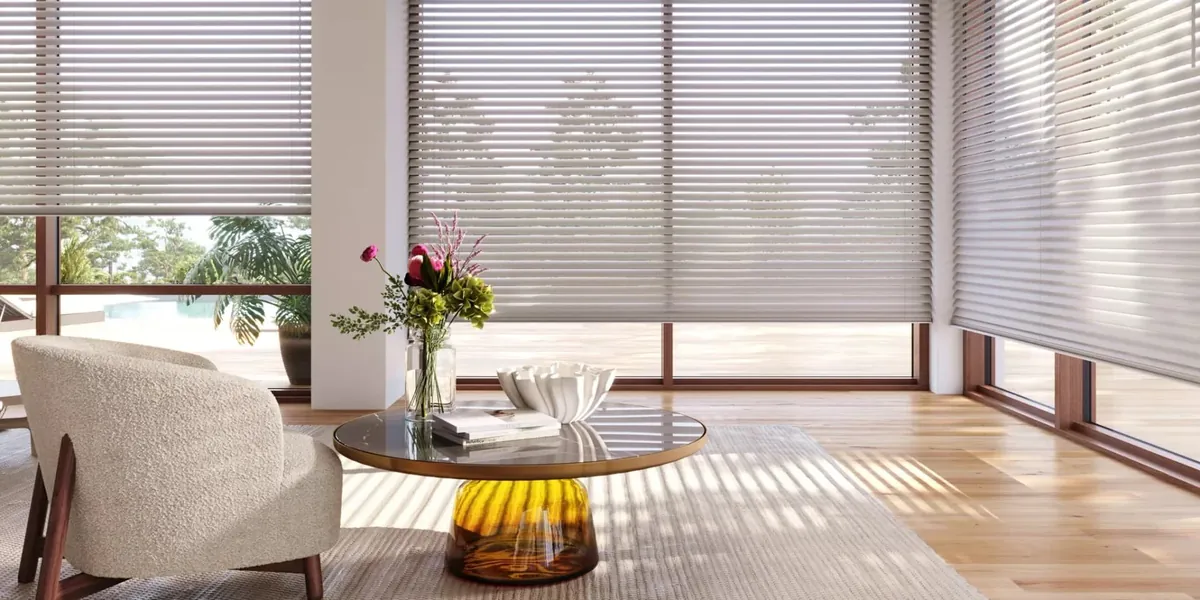
Wood, faux wood, metal and vertical blinds, with slat sizes chosen to suit tall narrow sash or a wide ranch window.
Cellular shades
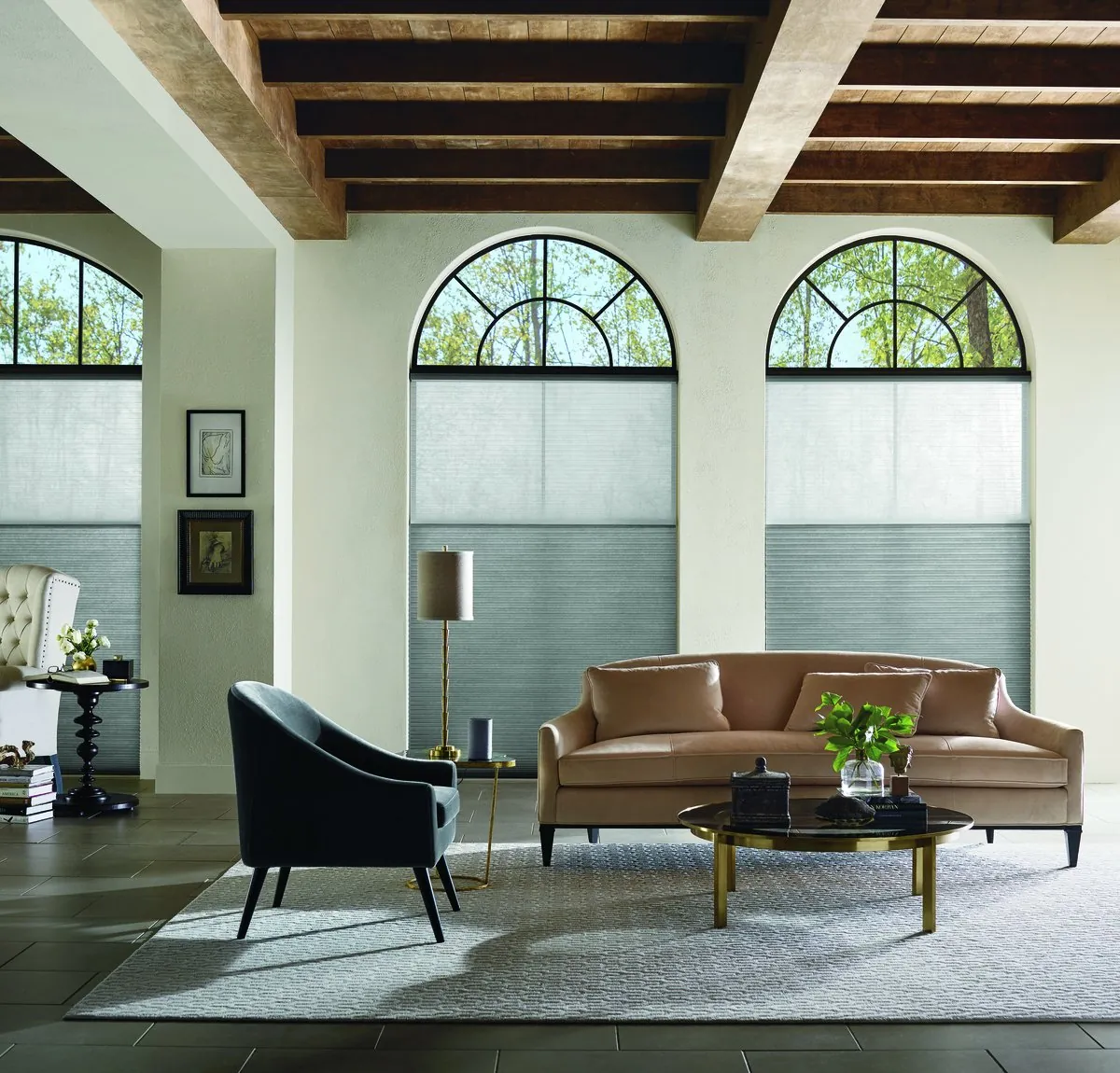
Duette and Applause honeycombs that stack small at the head of a tall window and keep an old room warmer in winter.
Roller shades
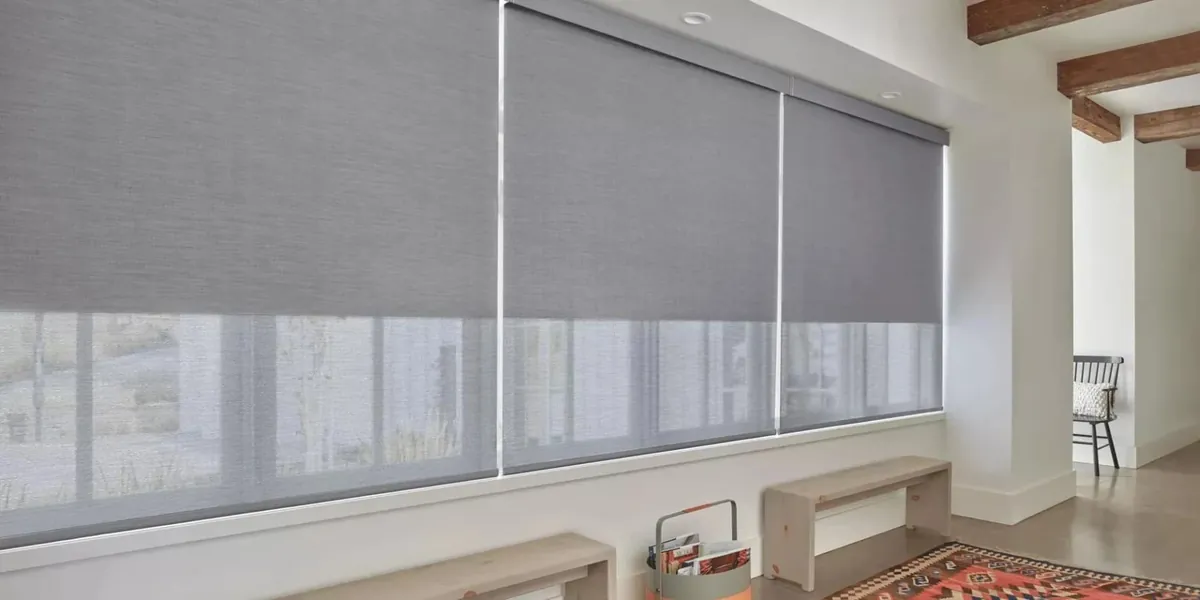
Designer rollers and screen fabrics for open-plan rooms and sunny back walls in the newer houses.
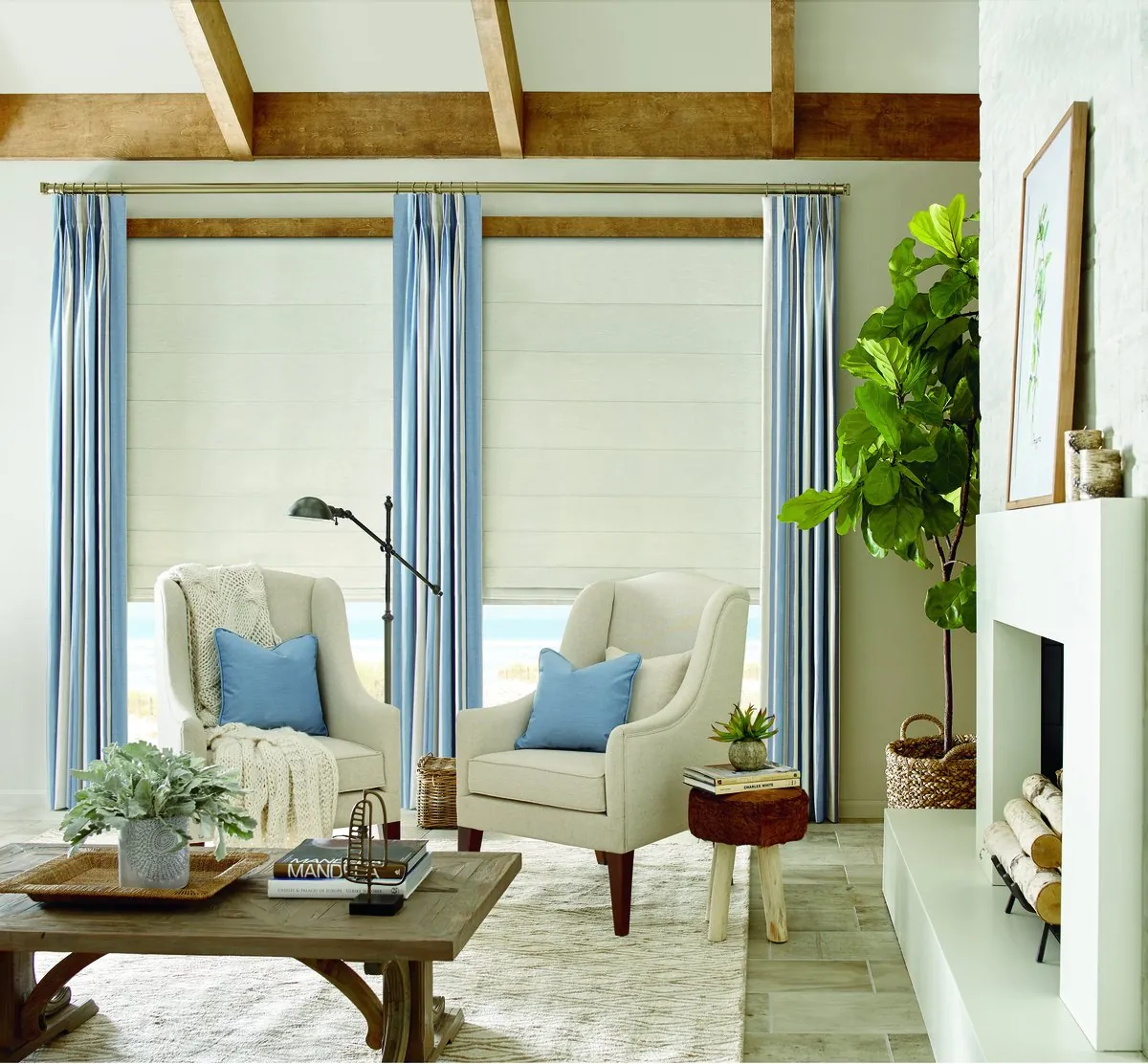
Roman shades
Vignette and Carole Fabrics folds, a natural match for the high-ceilinged front rooms of a Victorian.
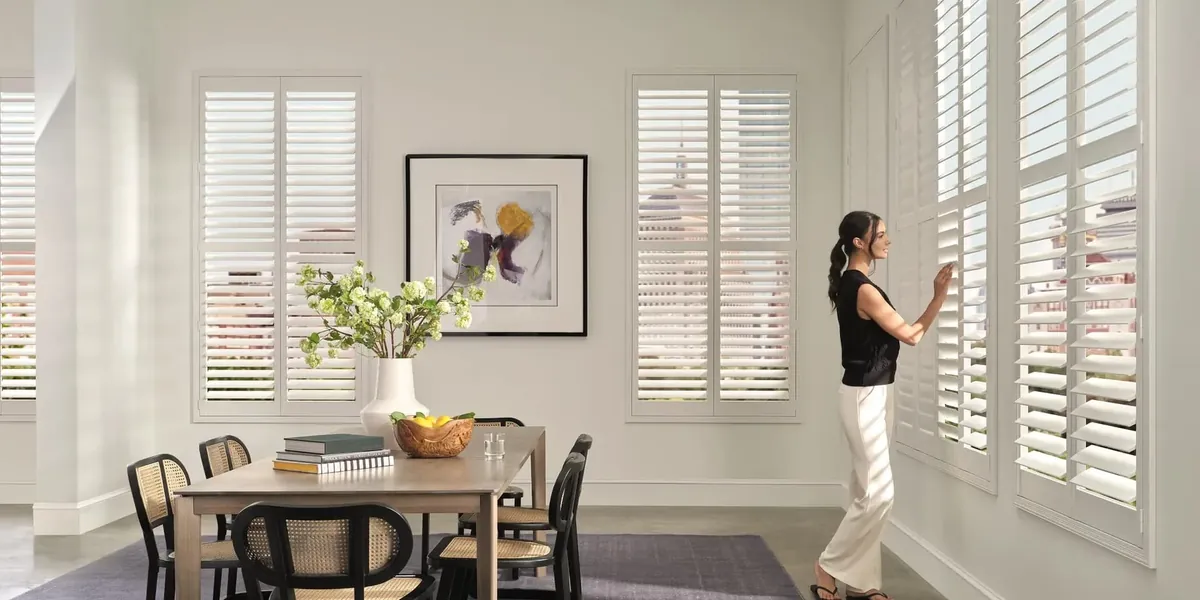
Plantation shutters
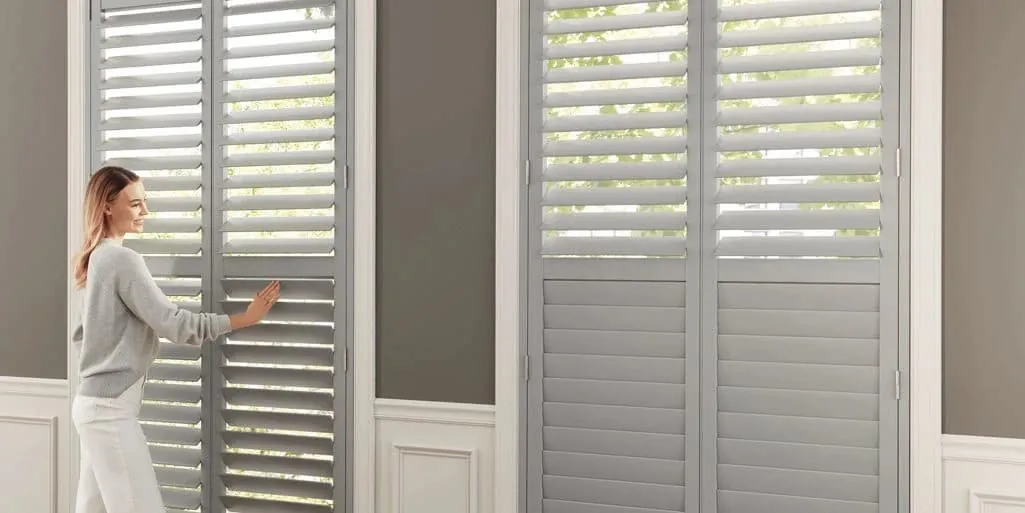
Palm Beach, NewStyle and Heritance shutters, with divider rails placed to suit a tall narrow opening.
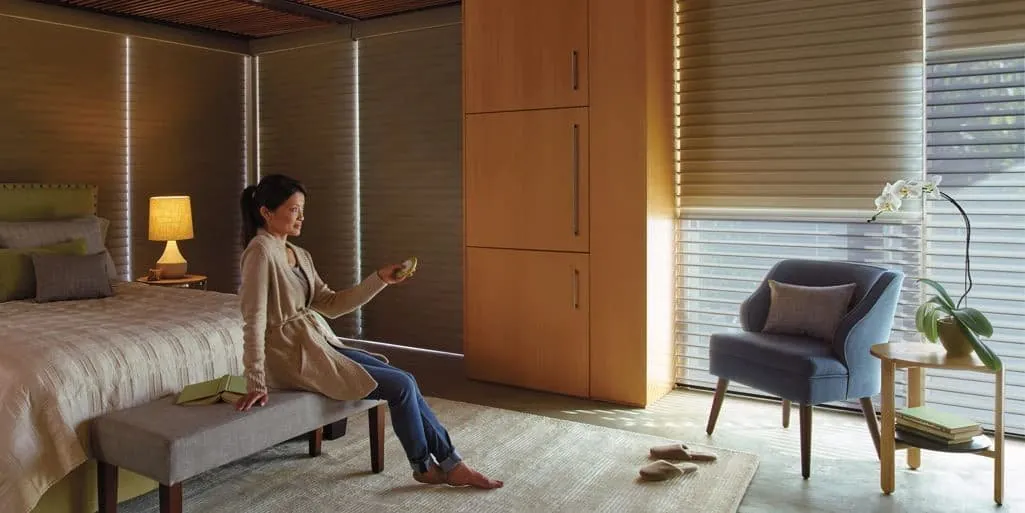
Motorized blinds and shades
PowerView control for tall windows that are awkward to reach and for houses that sit empty through the working day.

Hunter Douglas dealer
Gallery dealer access to the Hunter Douglas range, with every order put up by certified Hunter Douglas installers.
Tall, narrow sash around the center
The Victorians and Federal houses near the center were built with windows that stretch up toward high ceilings. A typical parlor window might be twice as tall as it is wide, set in a deep casing with original trim. Those proportions are beautiful, and the wrong treatment ruins them.
What we look for on these windows:
- A small stack. When a shade is raised, it gathers at the top of the frame. On a tall window, a bulky stack eats into the glass you most want to see. Honeycombs and flat romans stack neatly; heavy fabrics and wide slats stack deep.
- Easy reach. The top of a tall sash can be well above head height. Cordless lift works for most, a continuous loop helps on the biggest, and PowerView removes the reach problem altogether.
- Respect for the trim. An inside mount leaves the original casing in view. If the opening is shallow or out of square, we look at a face mount that sits neatly on the trim instead.
Older frames are rarely perfectly true. We measure the width at the top, middle and bottom, and the height on both sides, so the shade is made to the narrowest point and does not rub or gap.
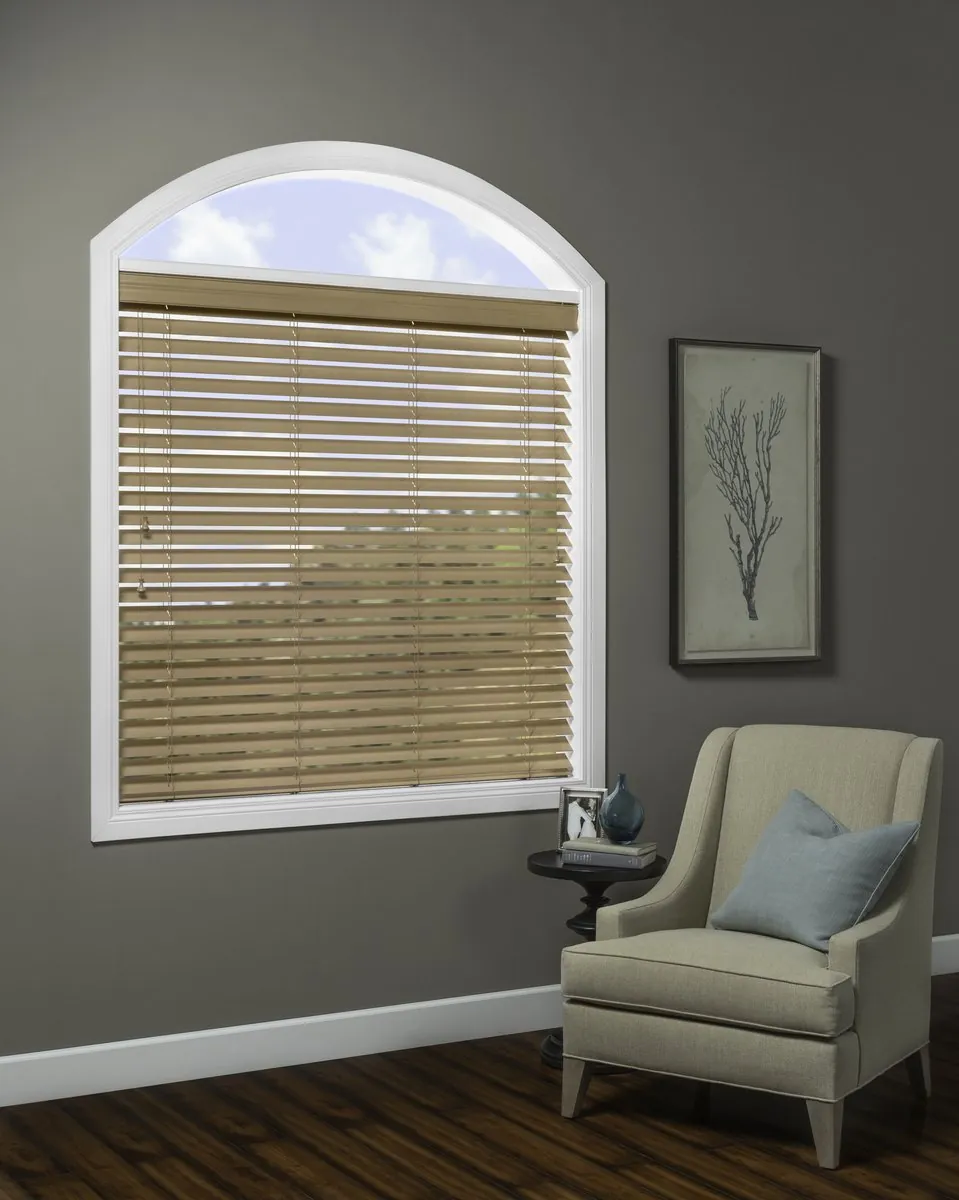
Victorian bays, turrets and odd shapes
Many Victorians in the center have a bay window in the front parlor, sometimes a rounded turret room, and a scatter of unusual openings: a small window on a stair landing, an arched top over a front door, a narrow pair flanking a fireplace.
Bays are best handled as a set of separate shades, one per window, mounted so they meet cleanly at the angles. Shutters suit a bay well and can be made with a divider rail lined up across every panel. Arched tops can be covered with a shape that follows the curve or left open while the rectangle below gets a shade. A narrow window beside a fireplace usually suits a simple honeycomb or a small-louver shutter, matched to the main window in color.
Federal houses and their formal rooms
The Federal houses near the center are more orderly than the Victorians: windows in straight rows, front rooms that mirror each other across a center hall, and tall sash in deep casings. From outside, it is the regular rhythm of the windows that gives the house its character.
Keeping that rhythm means a single outward color on every front window. A neutral back on all the street-facing shades lets you choose different fabrics inside, a warm roman in the dining room and a light honeycomb in the sitting room, without the front of the house looking patched.
Inside, the formal rooms suit soft fabric. A roman shade inside the frame with lined drapery panels hung above the trim is a classic layered look, and hanging the rod high makes a tall window look taller still.
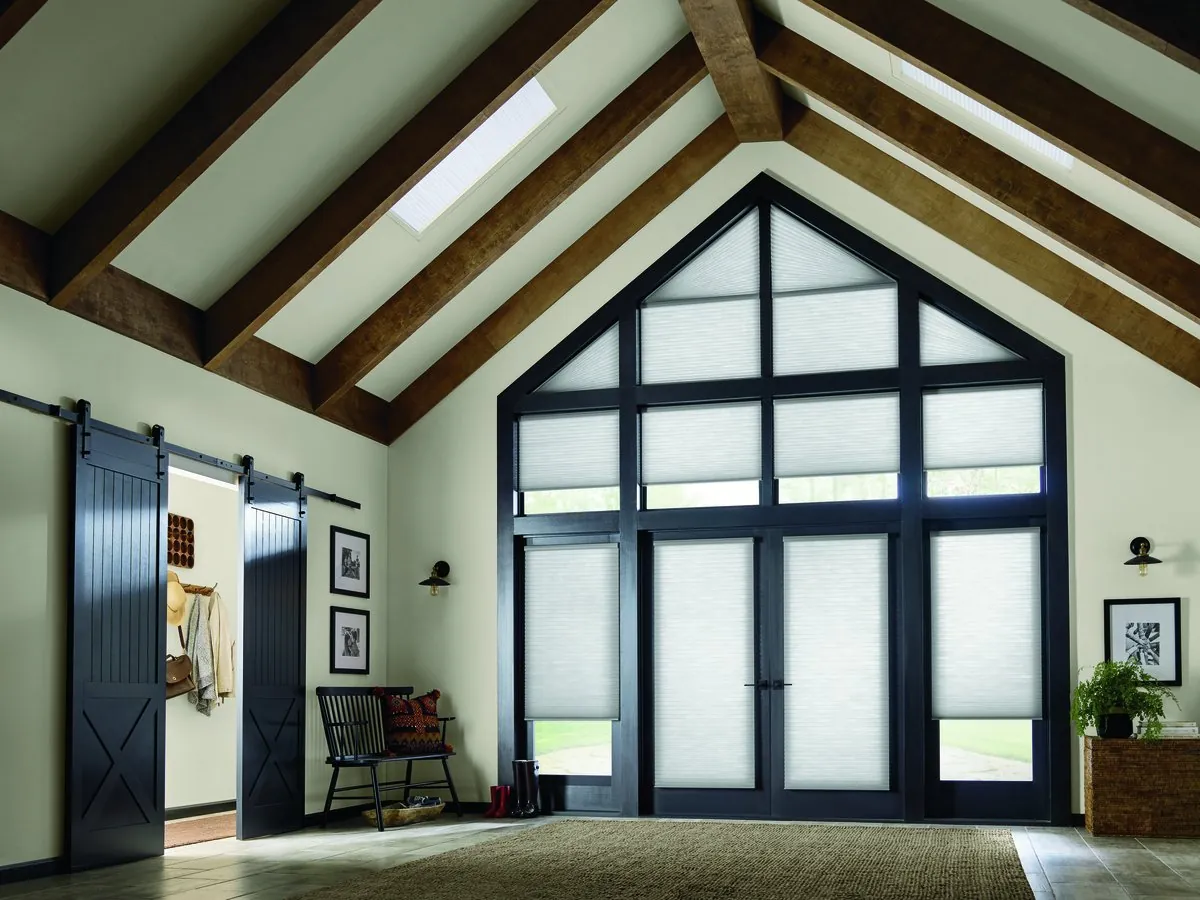
Keeping an older house warm
Tall windows in an old house lose a lot of heat in a Middleborough winter, especially if the sash are original. A window covering does not replace storm windows or weatherstripping, but it helps.
Honeycomb shades hold a layer of air in their cells, which is why a room with them down feels warmer on a cold night. Fitted closely inside the frame, they cut the draught you feel standing near the glass. Lined roman shades and drapery panels add another layer. Our guide to cellular shades and winter heat explains the idea in plain terms.
What happens when we visit
Middleborough is a big town, so we come to you. Our vans carry the samples, and every decision is made at your own windows.
- Request a Consultation online, or use the call button, and choose a day.
- A consultant arrives with fabric books, slat and louver samples and working shades you can try.
- You show us the rooms, and we talk about light, privacy and how each room is used.
- In an older house, we look closely at the trim, the depth of each casing and whether the frames are square.
- Every window is measured, along with anything in the way, such as sash locks, radiators or cranks.
- We leave you with a free estimate, and you decide in your own time.
The page on what happens at an in-home consultation covers the visit in more detail. For older openings, see shutters for older windows.
Ranches out along the country roads
Away from the center, Middleborough’s post-war ranches often sit on open lots with fields or woods around them. With few neighbors and little shade, the sun reaches these houses on every side, and a south- or west-facing living room can get very bright in the afternoon.
The windows are standard sizes, so fit is simple. Light control is the real question. Light-filtering honeycombs soften the afternoon sun while keeping the room bright. Screen rollers cut glare and heat and keep the view of the yard. In bedrooms, room-darkening fabrics hold out the early sunrise on an open lot.
Ranch picture windows are usually too wide for one shade, so we split them into two or three on a shared headrail. Shutters across a ranch front give a clean, finished look from the road.
Open lots also mean wind and weather on every wall. A ranch with no trees to break the winter wind feels it at the windows, and a honeycomb shade lowered on a cold evening makes the living room noticeably cosier. In summer, the same shades drawn on the west side keep the late sun from heating the house.
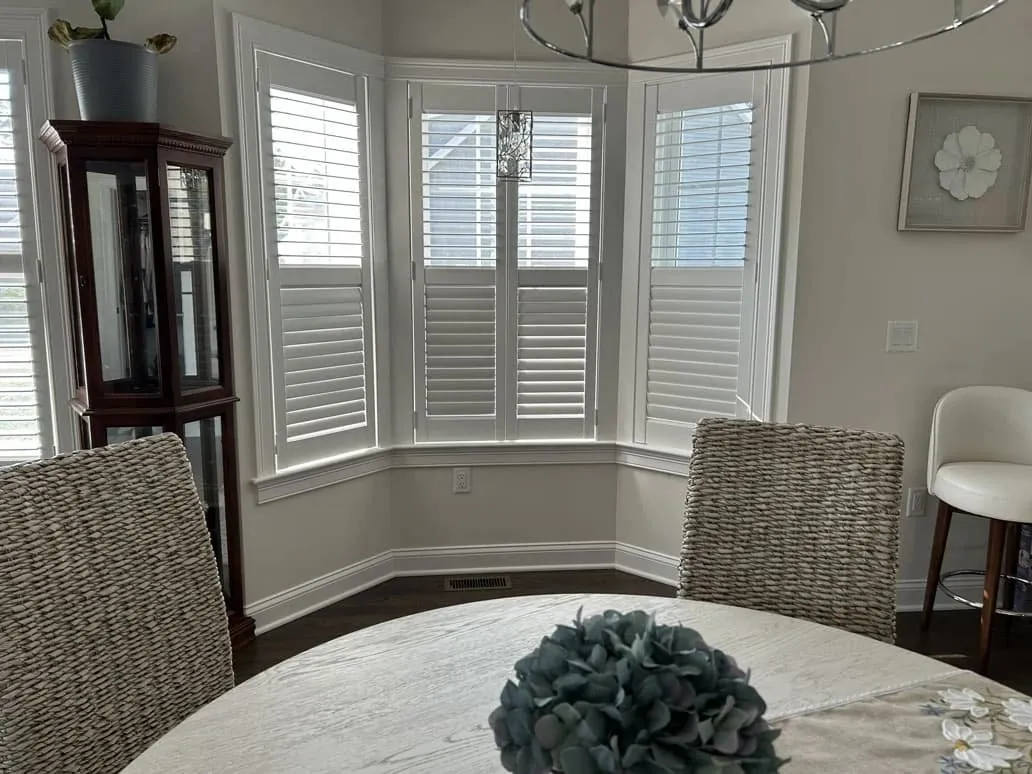
Newer colonials in the outer subdivisions
The newer colonials in the outer subdivisions have standard double-hung windows upstairs and down, a family room opening to a deck, and often a bonus room above the garage. Matching sizes across the front make it easy to keep one look from the street.
For these houses we often plan one product family for the front, then choose by room inside. A slider to the deck might get a vertical honeycomb or gliding panels. Bedrooms might get room-darkening honeycombs. A kitchen might get faux wood blinds that stand up to steam. A bonus room with a gable window might get a light-filtering shade to keep summer heat down.
Planning window treatments in Middleborough, MA, for a colonial is mostly about consistency outside and comfort inside, and the standard openings make both straightforward.
PowerView for tall windows and long days
Motorized shades help in both kinds of Middleborough house. In a Victorian, they solve the reach problem on tall sash and stair windows. In a colonial or ranch where everyone is out all day, they keep the house looking lived-in and the furniture out of the sun.
PowerView shades work from a remote, the app on your phone or a schedule. They can open at sunrise, lower in the hottest part of the afternoon on the sunny side and close at dusk without anyone touching them. Scenes set a whole room with one tap. At the visit we plan where each motor goes and how each one is powered. Motorized shades have no cords, which also keeps them safe in children’s rooms.
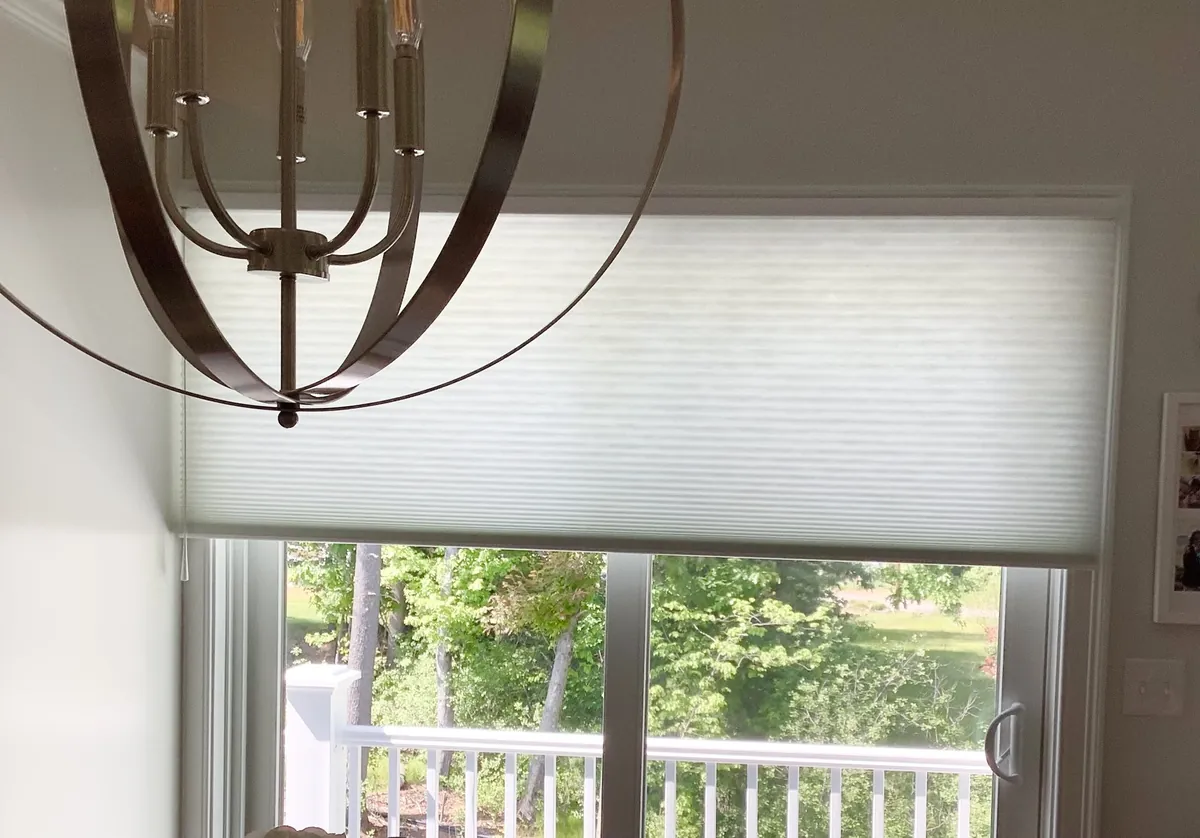
Kitchens, baths and busy rooms
In older houses, kitchens and baths have often been remodelled, sometimes with new windows and sometimes keeping the old sash. In newer houses they are standard. Either way, these rooms need a covering that copes with damp and daily use.
Faux wood blinds are the usual choice for bathrooms, because they resist humidity. Cafe shutters on the lower half of a kitchen window give privacy at the counter and keep the top clear for light. A wipeable roller fabric works well over a sink. In a mudroom or back entry, a simple metal blind takes knocks without complaint.
Media rooms and dens
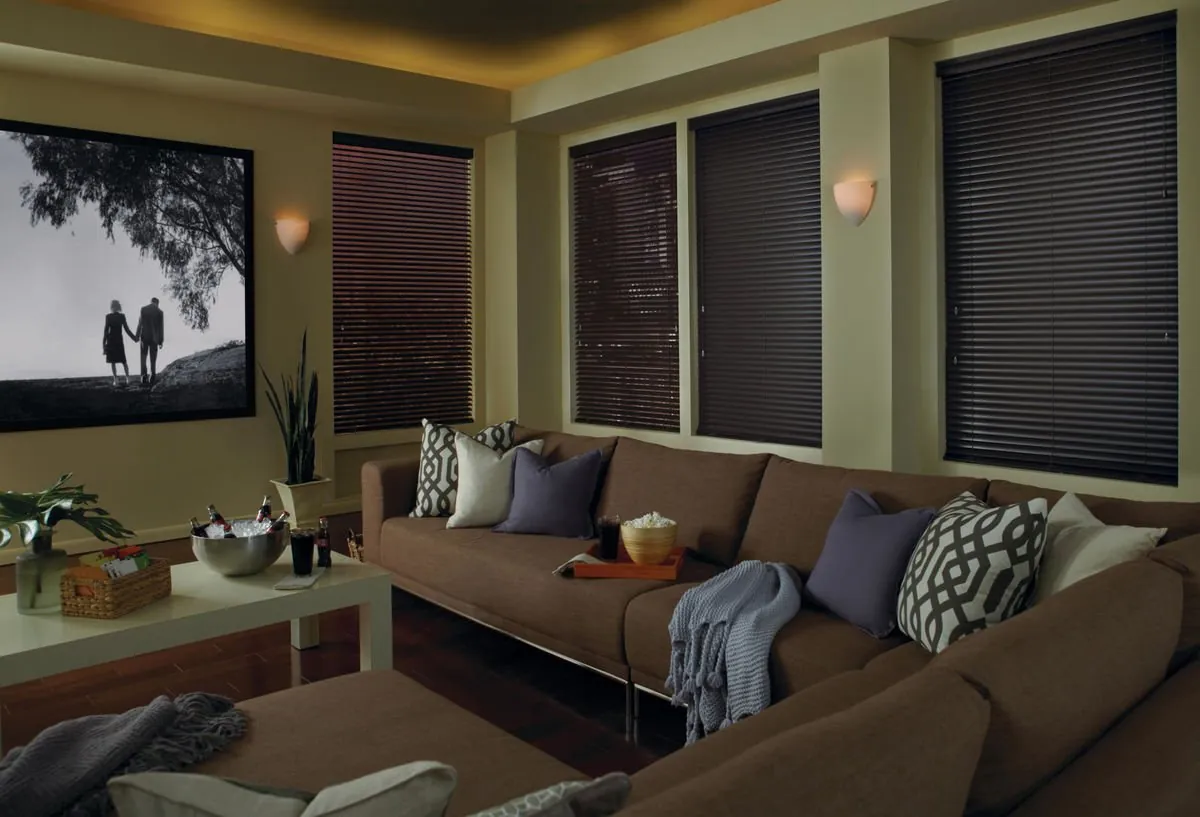
A den or media room in a newer house, or a back parlor turned into a TV room in an old one, needs darkness on demand. Dark wood or faux wood blinds closed tight, room-darkening honeycombs or blackout rollers all make a screen easier to watch in the afternoon. In a Victorian back parlor, a room-darkening roman shade keeps the room looking period while still blocking the light.
Sitting close to the street in the center
The older houses around the center were built near the sidewalk, with front parlors only a few steps from passing cars and pedestrians. After dark, a lit room with bare glass is on full view. In the daytime, a closed shade turns a handsome front room gloomy.
The trick is a treatment that gives privacy from the street while still letting daylight in. Several ways to get there:
- Top-down, bottom-up shades. Lower the top for sky light and keep the bottom half covered at eye level from the sidewalk.
- Sheer shades. Tilt the fabric vanes to soften the view in from outside while light still fills the room.
- Cafe shutters. Panels across the lower half only, a traditional look that suits a Federal front window.
- Light-filtering honeycombs. Lowered fully, they glow with daylight but hide the room from outside.
For evenings, a room-darkening or lined fabric gives full privacy, and drapery panels drawn across add a second layer and a finished look to a formal room.
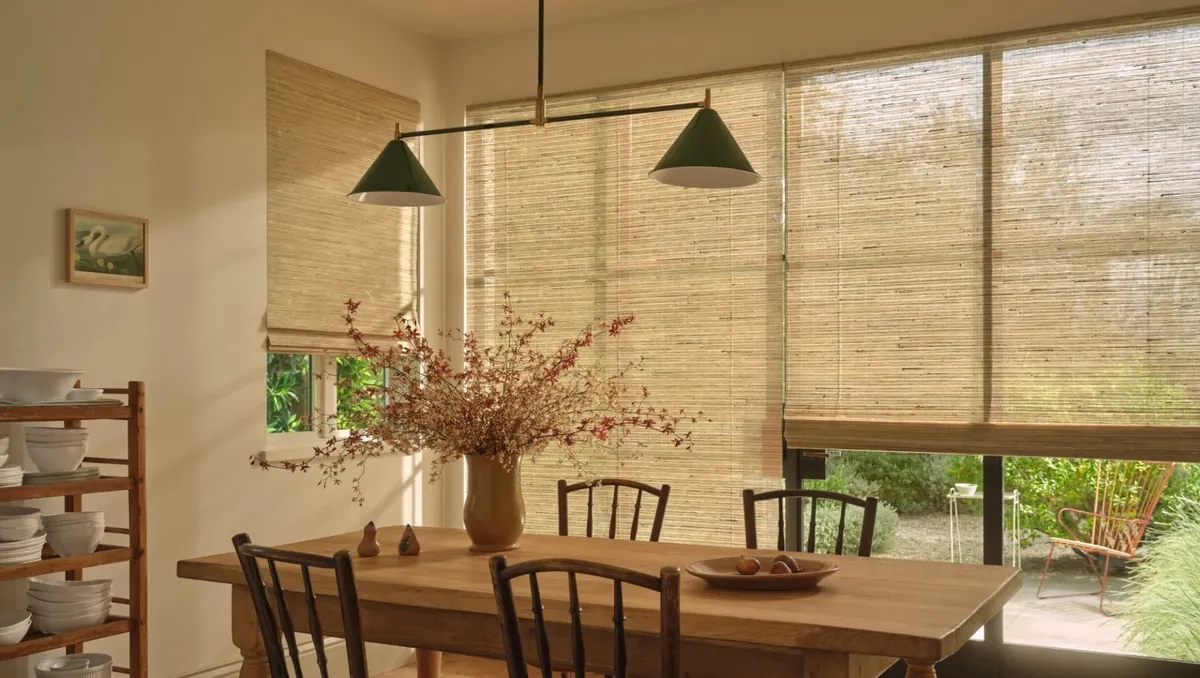
Natural textures and woven shades
Not every room needs a crisp fabric. Woven wood shades bring warmth and texture that suits both the wood floors of an old house and the casual family room of a newer one. In a Victorian dining room with dark trim, a natural weave picks up the tones of the woodwork. In a colonial’s breakfast room, a lighter weave keeps the space bright and relaxed.
Woven shades filter light through their natural gaps, so they are usually paired with a privacy liner in rooms facing the road. We bring samples of the weaves to the consultation so you can see how they look against your trim and floors.
Children’s rooms and playrooms
In the newer colonials and ranches, children’s bedrooms and playrooms come up at nearly every visit. Cordless lift is the safe default for any room a child uses, and motorized shades are cord-free too. A room-darkening honeycomb or blackout roller helps with naps and early summer mornings. In a playroom, faux wood blinds or shutters handle everyday knocks better than fabric, and wipe clean.
In an older house in the center, a child’s room with tall sash still gets the same choices, just made a little taller. We plan the mount so the shade stays out of the way of radiators or window seats, which old houses often have beneath their windows. Child safety is one of the first things we raise when planning window treatments in Middleborough, MA, for a family house.
One plan for the whole house
A Middleborough house of either kind usually ends up with several products. A Victorian might take romans in the parlor, honeycombs upstairs, a shutter on the bay and faux wood in the bath. A colonial might take shutters on the front, honeycombs in the bedrooms and a motorized roller on the sunny back wall. Treating window treatments in Middleborough, MA, as one plan keeps the outside consistent and lets all the motorized shades share one app and one set of schedules. The full range is on our window treatments page.
The value of a Gallery dealer
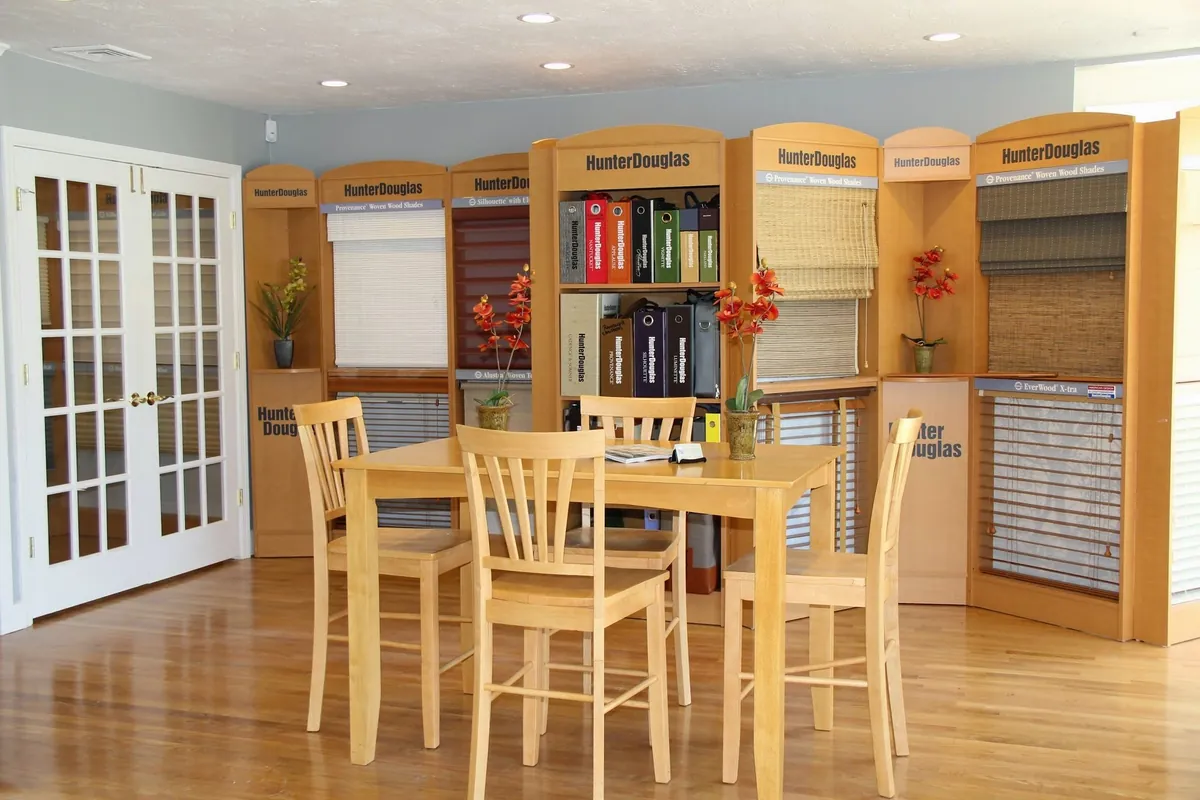
Blinds & Designs is a Hunter Douglas Gallery dealer, so the entire Hunter Douglas range is available to you: honeycomb, roller, roman, sheer and woven shades, wood and metal blinds, shutters, drapery and PowerView motorization.
Each order is installed by certified Hunter Douglas installers. We offer interior design consultations for choosing fabrics and colors across a whole house, we repair blinds and shades you already own, and every estimate is free. Read more on our Hunter Douglas page.
Our closest showroom to Middleborough
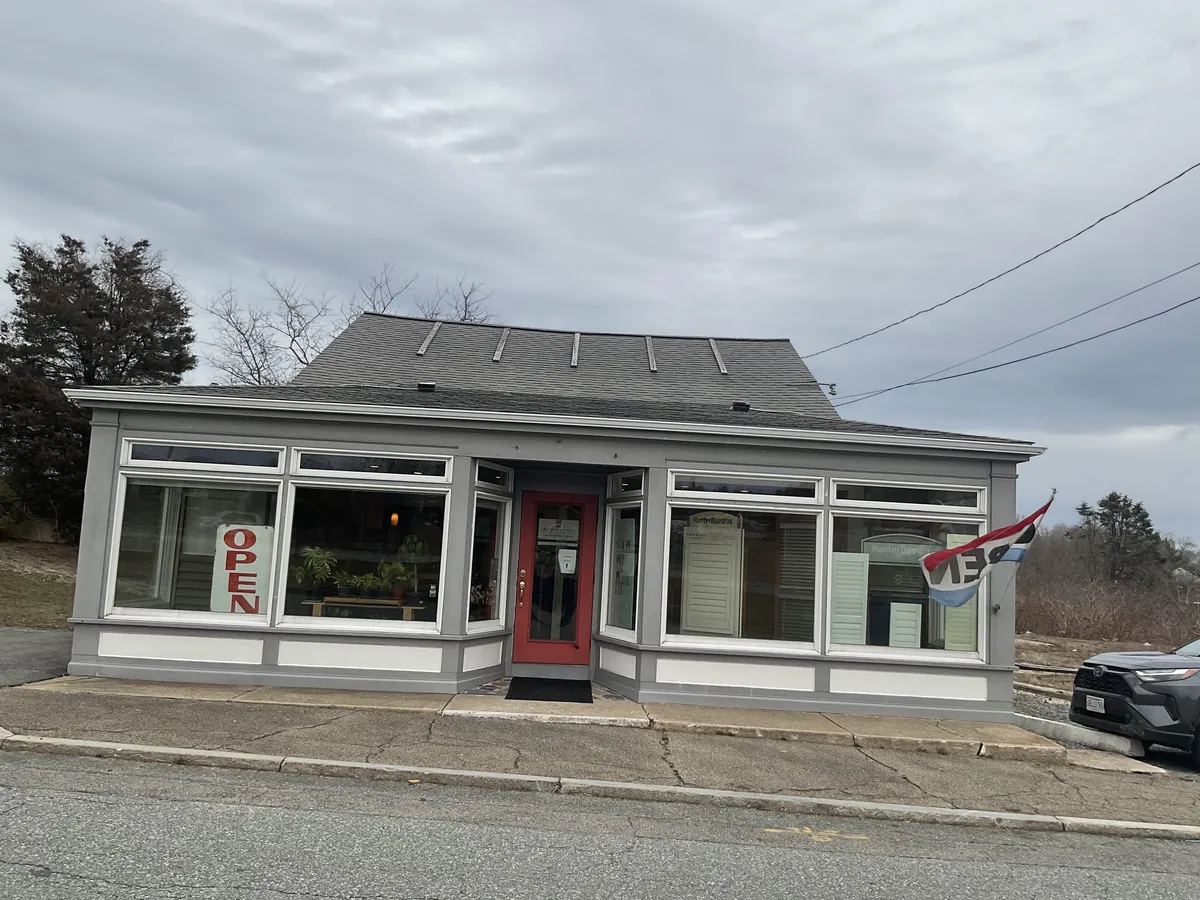
Sagamore is the nearest of our showrooms to Middleborough. Most of our Middleborough work begins with a consultation at home, though, because the light in your own rooms is the best guide to the right fabric.
Questions from Middleborough
Can you cover very tall, narrow windows in a Victorian?
Yes. We choose shades with a small stack so they do not block the top of the glass, and we measure the opening at several points because old frames are often out of square. PowerView helps where the top is hard to reach.
What should go on a Victorian bay window?
Usually a separate shade or shutter panel on each window of the bay, mounted to meet cleanly at the angles. Shutters with a divider rail lined up across the bay are a popular choice.
Our ranch gets strong afternoon sun. What helps?
Light-filtering honeycombs soften it while keeping the room bright. Screen rollers cut glare and heat and keep the view. On a wide picture window, we split the treatment into sections.
Will a honeycomb shade help with a draughty old window?
It helps. The cells hold a layer of air, so the room feels warmer with the shade down. It works best alongside storm windows and weatherstripping.
Is the estimate free?
Yes. The estimate after the consultation is free and covers every window we discuss.
Take the next step
If your house is in the center with tall sash, or out in the country with standard windows and plenty of sun, the first step is the same. Request a consultation, and we will bring the samples, measure the windows and leave a free estimate. The call button is there if you want to ask something first.