
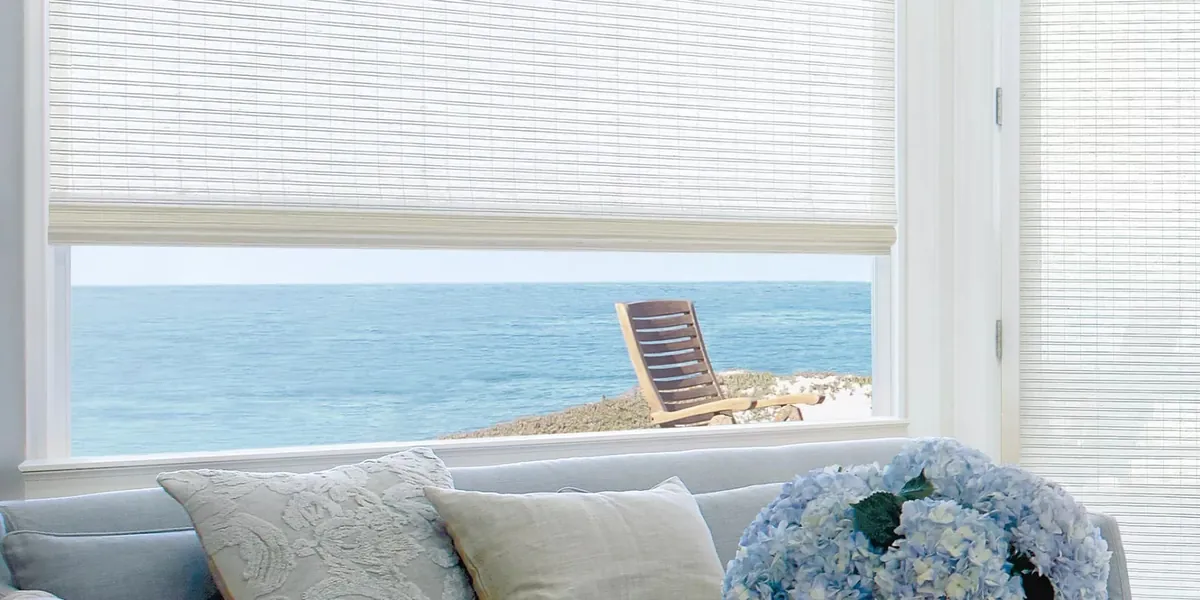
Salt, wind and a view worth keeping
Westport’s houses grew up along the water and the farmland. Shingled capes and old farmhouses line Main Road and spread out toward Horseneck and the banks of the Westport River, while the harbor has larger, newer houses with walls of glass. Whatever the age of the house, the coast sets the terms. Salt air reaches every window that opens in summer, and the rooms that face the water are built around the view. Those two facts shape nearly every decision about window treatments in Westport, MA.
A treatment that blocks the view in a harbor living room has missed the point, however handsome it is. One with exposed metal parts by an open window will show the salt sooner than one with its workings tucked away. And a farmhouse on Main Road, set back from the shore, has quite different needs again: warmth, privacy from the road, and a look that suits plain old trim.
We bring the showroom to you, so every sample is judged against your own glass, your own light and your own view.
Window treatments in Westport, MA, service by service
Each of these has a Westport page with more on the product and how it suits the houses here.
Blinds
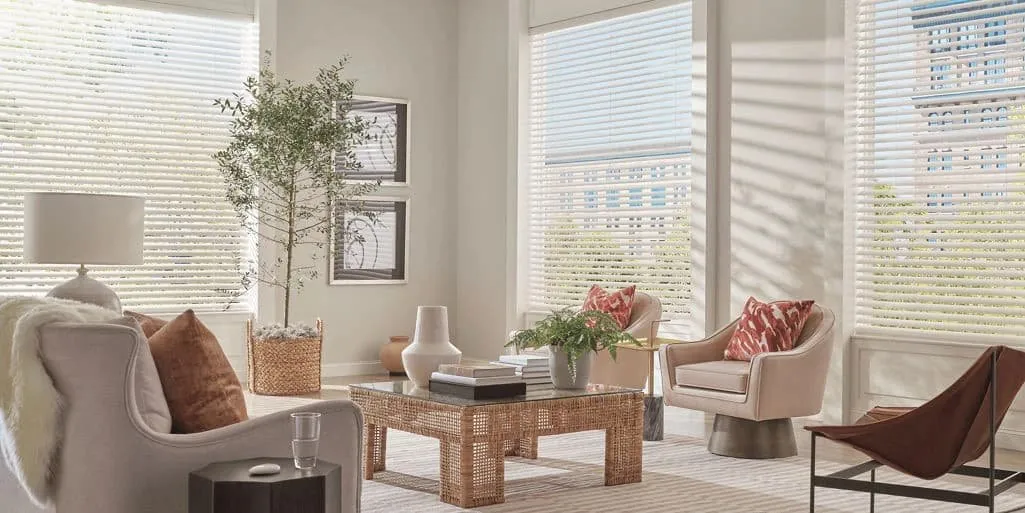
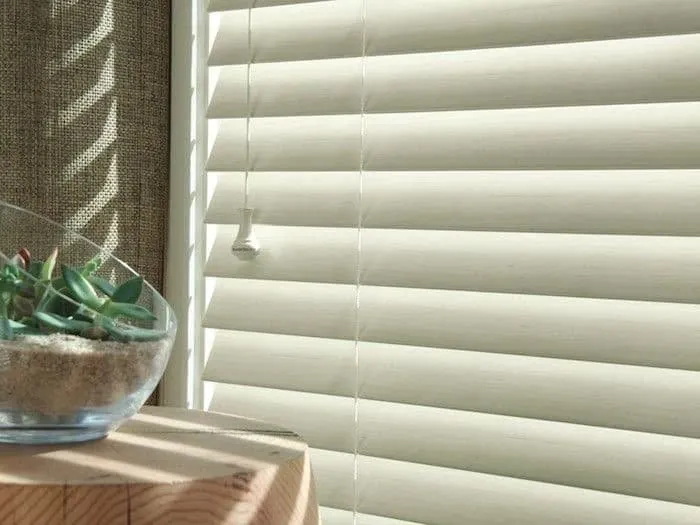
Slatted blinds in real wood, faux wood, metal or vertical vanes. Tilt them to keep the view across the river and cut the glare off the water.
Cellular shades
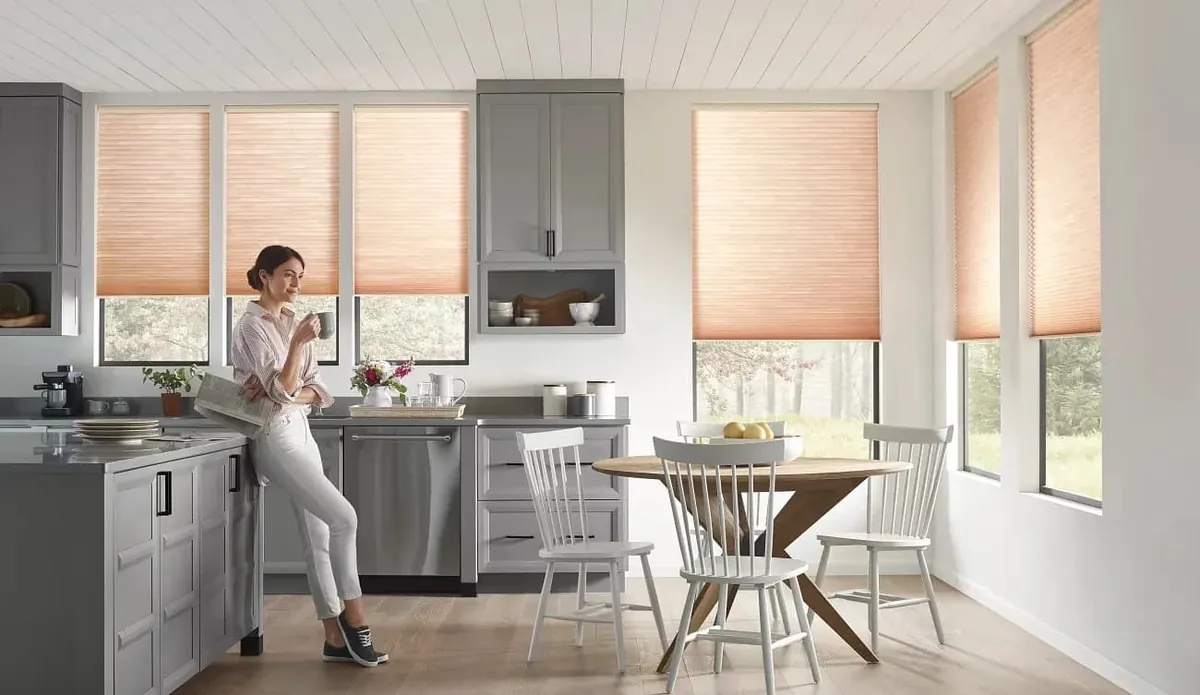
Honeycomb shades from the Duette and Applause lines, lift hidden in the headrail, to warm a farmhouse room or a breezy cape.
Roller and screen shades
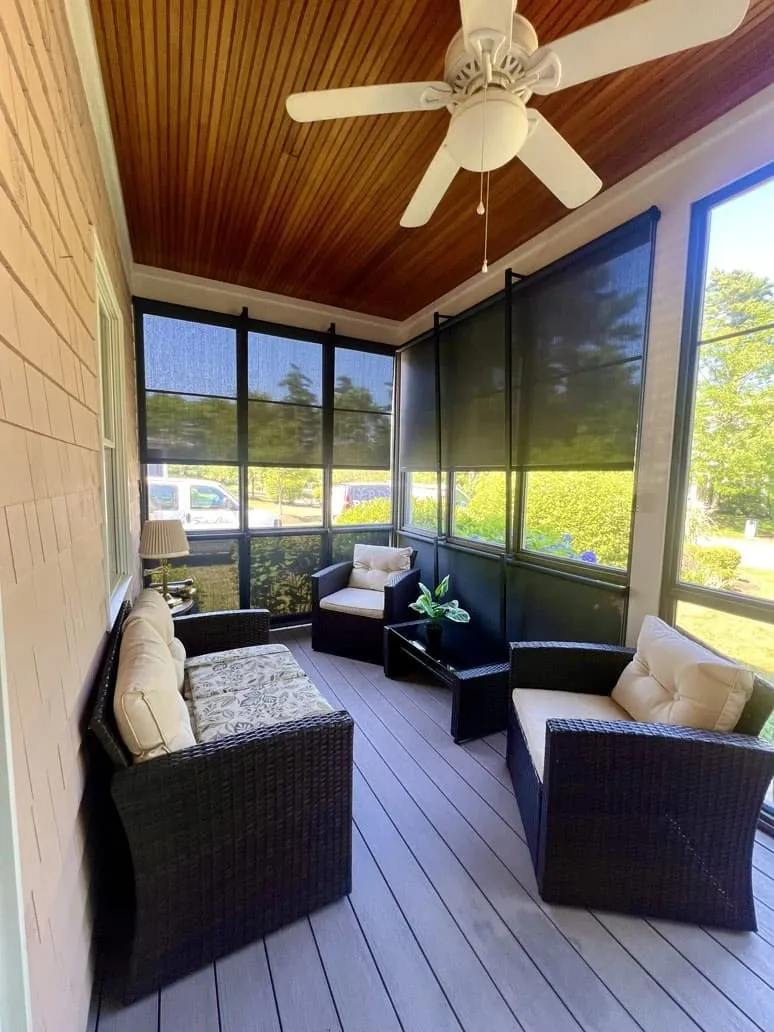
Rollers from the Designer and Alustra ranges. Solar screens are the usual choice for a harbor room, cutting glare while the water stays in sight.
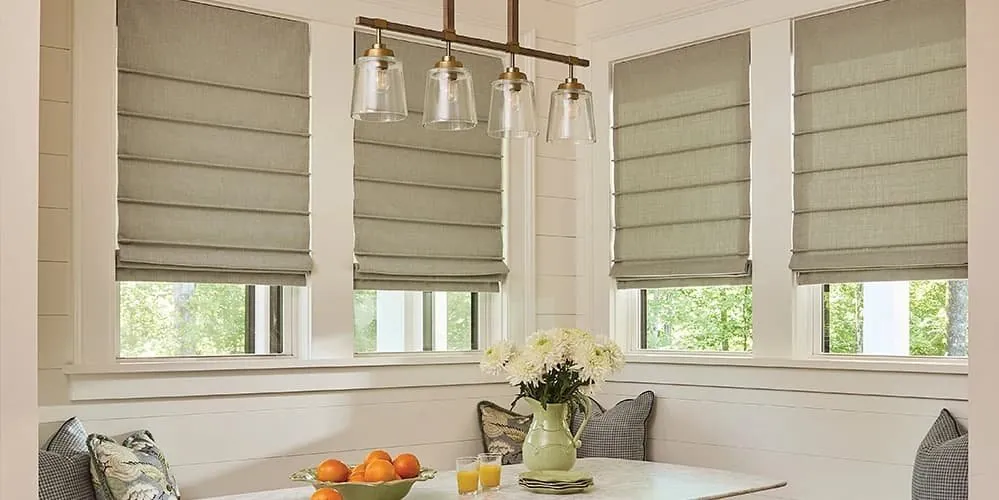
Roman shades
Romans from Vignette or Carole Fabrics, flat or relaxed, a soft finish for a cape bedroom or a farmhouse kitchen.
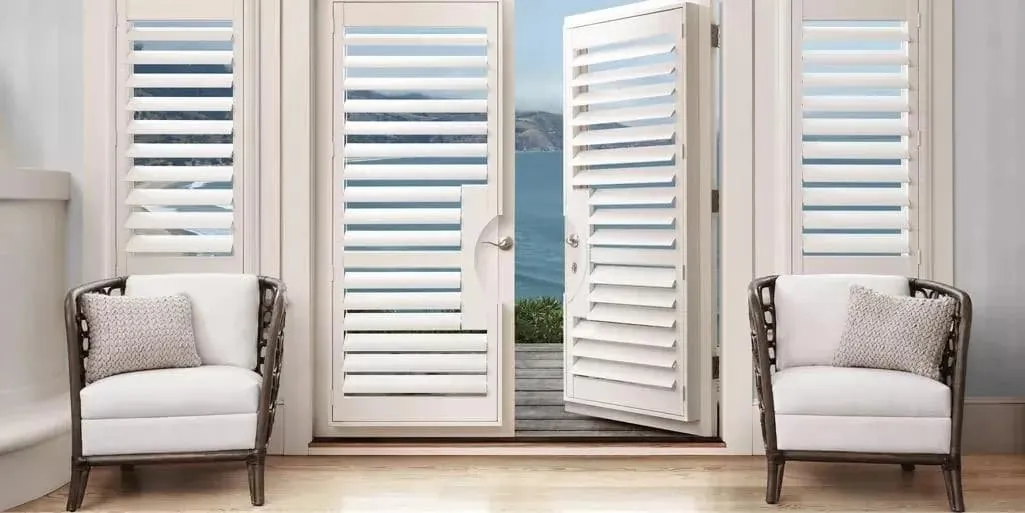
Plantation shutters
Shutters from Palm Beach, NewStyle or Heritance, with hardly any exposed hardware, which suits a house that breathes salt air.
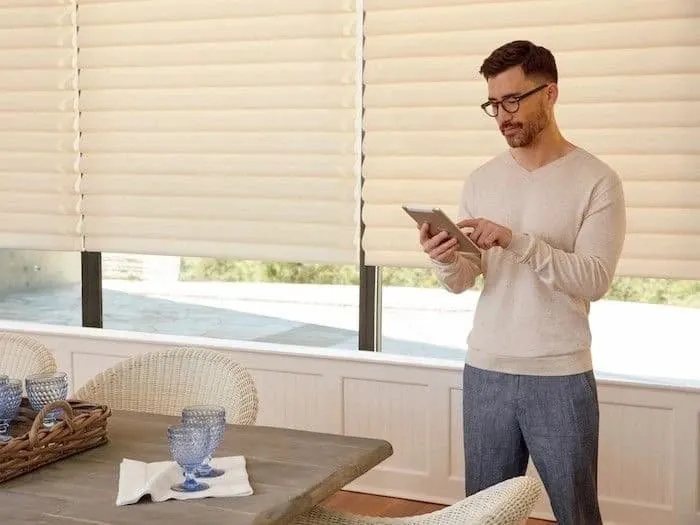
Motorized shades
PowerView control for the high and wide glass in newer harbor houses, by remote, app or a schedule you set.
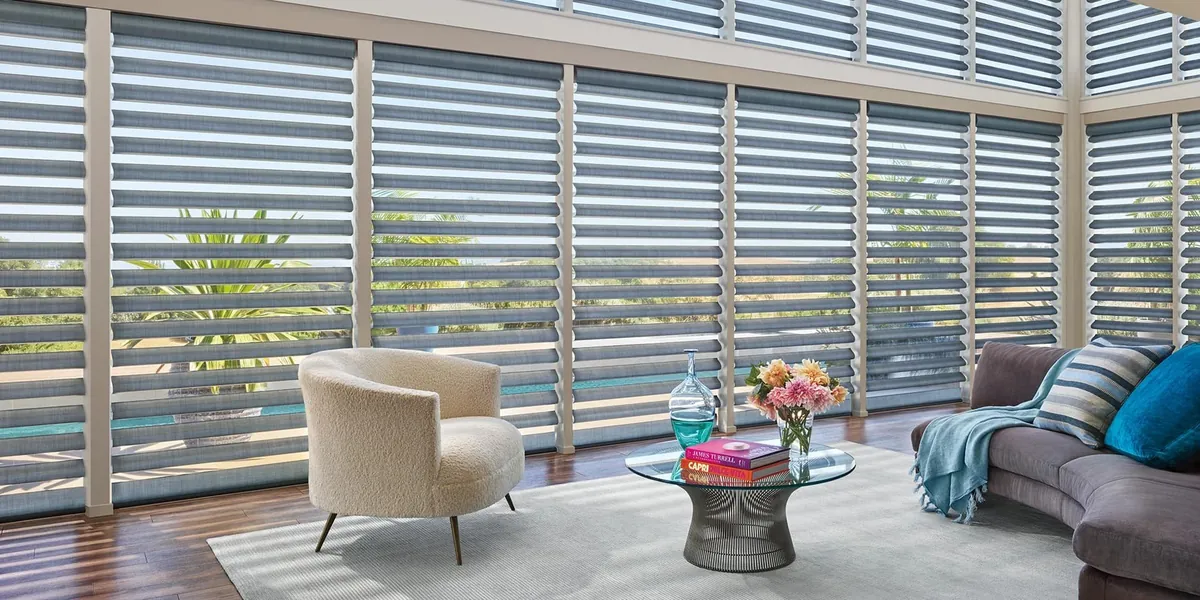
Hunter Douglas Gallery dealer
Every Hunter Douglas collection under one roof, with installation by certified Hunter Douglas installers.
Drapery
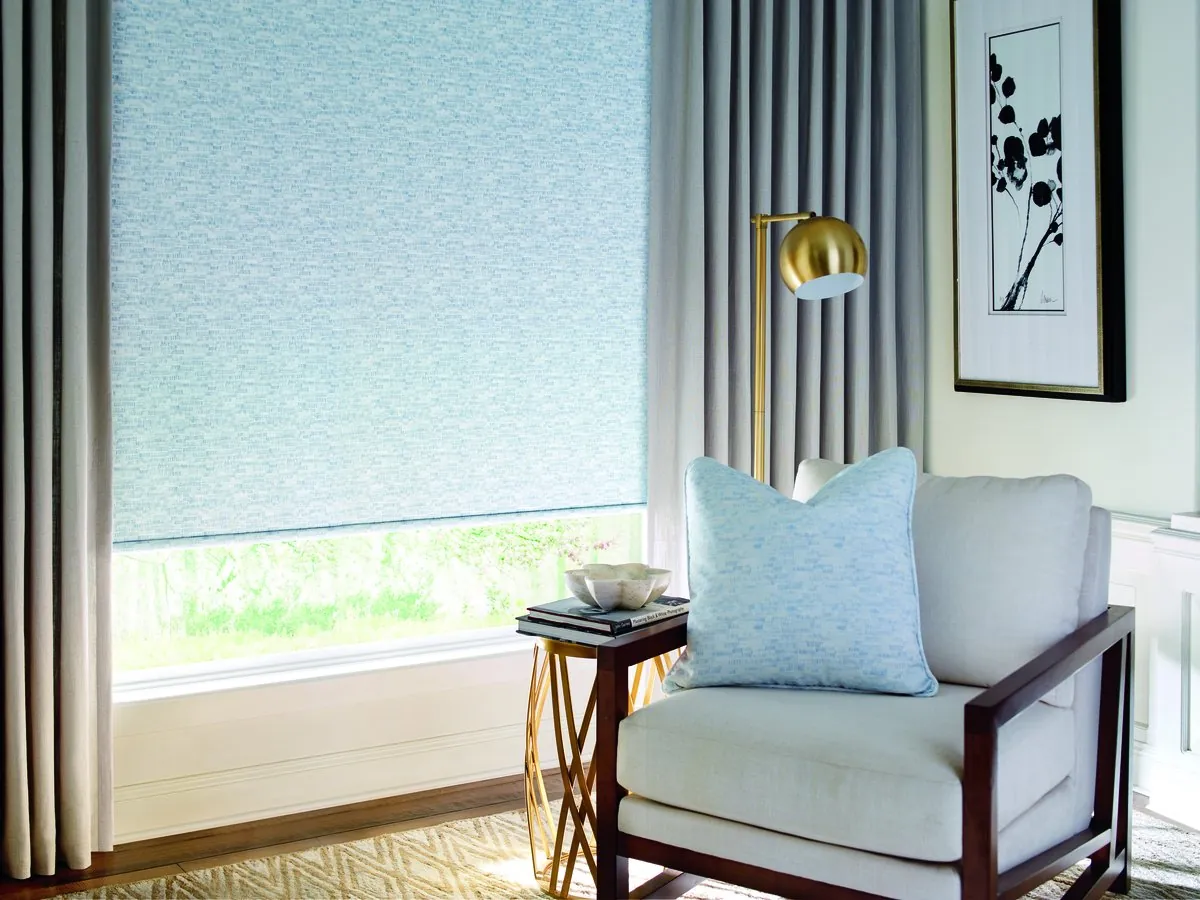
Made-to-measure Hunter Douglas panels that frame a big window and close in a room on a raw winter night.
Repair
When a cord, lift or bracket gives out on a covering you already have, we can take a look.
How much of the view do you want to keep?
In a harbor room, this is the first question, and it has a range of answers rather than a yes or no. It helps to think of treatments along a line from fully open to fully closed.
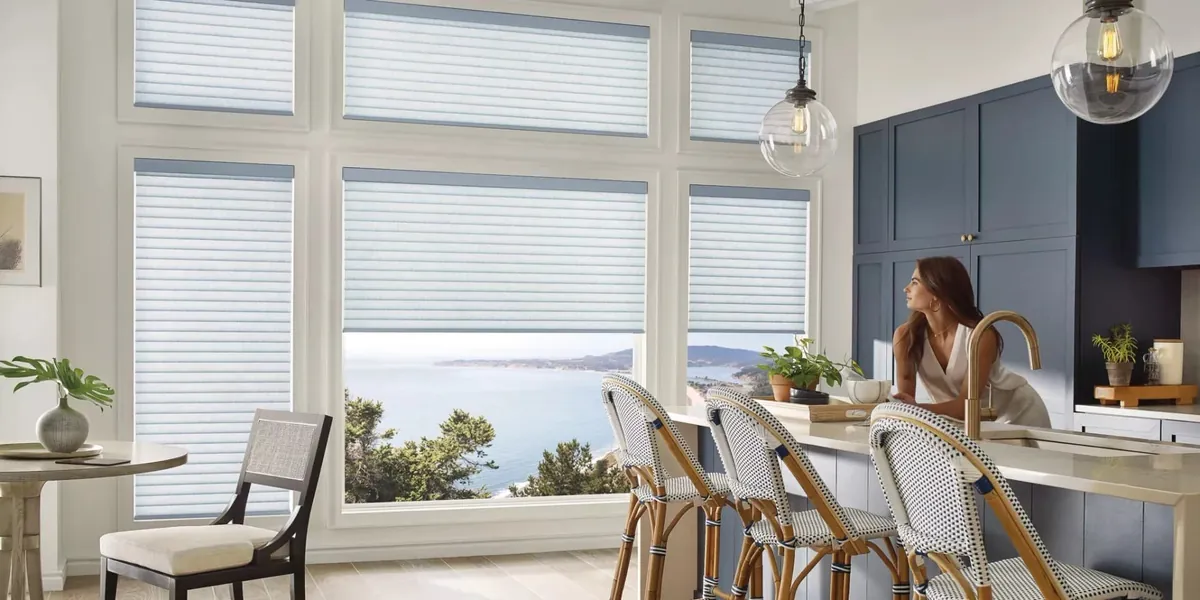
At the open end, a solar screen roller shade is a fabric woven with small gaps. Lowered, it cuts the glare and the heat from the sun while you still see the water, the boats and the far shore through it. The more open the weave, the clearer the view and the less glare it stops. A tighter weave blocks more and shows less. Darker screen colors tend to give a clearer view out than lighter ones, which can glow in strong sun. We bring a set of openness levels and colors so you can hold them up on a bright day and pick by eye.
A step along, sheer shades such as Silhouette soften the light and give a hazy, gentle view, with vanes you can tilt for more privacy. Further along still, light-filtering fabrics give privacy and an even glow but no view. At the closed end, room-darkening fabrics shut the light out altogether, which is what a bedroom on the water usually needs at night.
Many harbor rooms use two. A screen shade for the day and a darkening shade behind it on a double bracket, or a screen shade with drapery panels that draw across at night, give you the whole range on one window.
What the salt does, and what to choose because of it
Westport sits right on the coast, and in summer, with windows open to the breeze, salt air settles on everything near the glass. Over time it marks exposed metal: brackets, cord locks, bare screws and the slats of cheaper metal blinds. It does not rule any product out, but it does tip the balance.
Shades whose working parts sit inside a closed headrail, like honeycomb and roller shades, keep almost all their metal out of the air. Going cordless takes away the cord lock, one of the first parts to show salt. Shutters, once hung, have few moving metal parts beyond the hinges, and the louvers tilt on the panel itself. Palm Beach shutters are polysatin and NewStyle shutters are composite, so the panels themselves shrug off damp air; Heritance shutters are hardwood, lovely in a sheltered room, and we talk through which rooms suit each.
Installation matters as much as the product. Our certified Hunter Douglas installers fix brackets into solid wood, which keeps a shade or shutter firm on a window that is opened and closed every day in the warm months. A loose bracket on a breezy window works itself looser.
Capes and farmhouses along Main Road
Away from the shore, the older houses along Main Road and the roads off it are shingled capes and farmhouses, some of them very old. They have smaller, simpler windows than the harbor houses: double-hung sash with plain casings, dormers upstairs, and in the farmhouses, often a deeper reveal set into thicker walls.
These houses tend to want warmth and privacy before view. A house set close to the road needs its front rooms screened from passing traffic, and an old farmhouse can be cold by the window on a winter night. Honeycomb shades help with both: they hold still air against the glass and give daytime privacy with a light-filtering fabric. Shutters in the front rooms give privacy at road level with the louvers angled, and they suit the plain character of an old cape.
Wood blinds also look at home against painted farmhouse trim, and a cafe shutter over the lower sash of a kitchen window keeps the room bright while covering the part that faces the drive.
Dormers in a cape are small, often oddly sized and set into sloping ceilings. Each one is measured on its own, and honeycomb or roller shades can be made narrow enough to fit, with a cordless lift so nothing dangles over a bed.
Toward Horseneck and the river
The houses out toward Horseneck and along the Westport River sit in open, low land with wide skies, and the light there is big and bright, bouncing off water and sand. Rooms facing south and west can be glaring in the afternoon, and a lot of these houses have been opened up with bigger windows and sliders to make the most of it.
Screen shades and sheers handle the glare in the living rooms. A slider to the deck or the yard can take a vertical honeycomb shade, gliding panels or vertical blinds, all of which stack to one side so the door is easy to use. For a slider that faces the water, a vertical sheer like Luminette gives a soft, drapery-like look with vanes you can rotate for privacy.
In the bedrooms, room-darkening honeycomb shades keep the long summer evenings and the early mornings out, and a top-down, bottom-up option lets a bathroom or a room close to the road stay private while the sky stays in view.
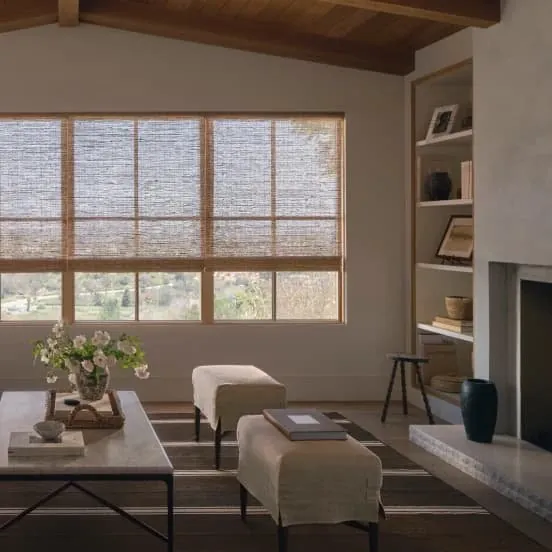
Woven wood shades are worth a look out here too. Their natural texture suits a house among marsh and dune, and a lining can be added for privacy.
Porches, sunrooms and screened rooms
Plenty of Westport houses have a room that is half indoors: a screened porch facing the river, a sunroom on the back of a cape, a glassed-in breezeway between house and barn. These rooms get the most sun and the most weather, and they are often where the family spends the summer.
For a screened porch, solar screen shades hung around the sides cut the low sun and the glare off the water while keeping the breeze and the view. Inside a glass sunroom, honeycomb shades make the room usable in spring and autumn by holding warmth in, and screen shades take the heat off in July. Sunrooms with glass overhead or very tall panels are a good case for motorization, because the shades are hard to reach and need moving every day.
Fabric choice matters in these rooms more than anywhere. Strong daily sun fades color over time, so lighter, neutral fabrics tend to hold up best. Woven wood shades and shutters, which have no dyed fabric to fade, are worth considering where a porch takes sun all day. Choosing the right window treatments in Westport, MA, sunrooms usually means pairing two products: one for light, one for warmth or privacy.
Seeing samples against the water
You cannot judge a screen shade in a showroom the way you can at your own window, with the sun on the water and your own view behind it. That is why most Westport projects begin with an in-home visit. Here is what to expect.
- Book online or with the call button, choosing a time when the light in your problem rooms is at its strongest if you can.
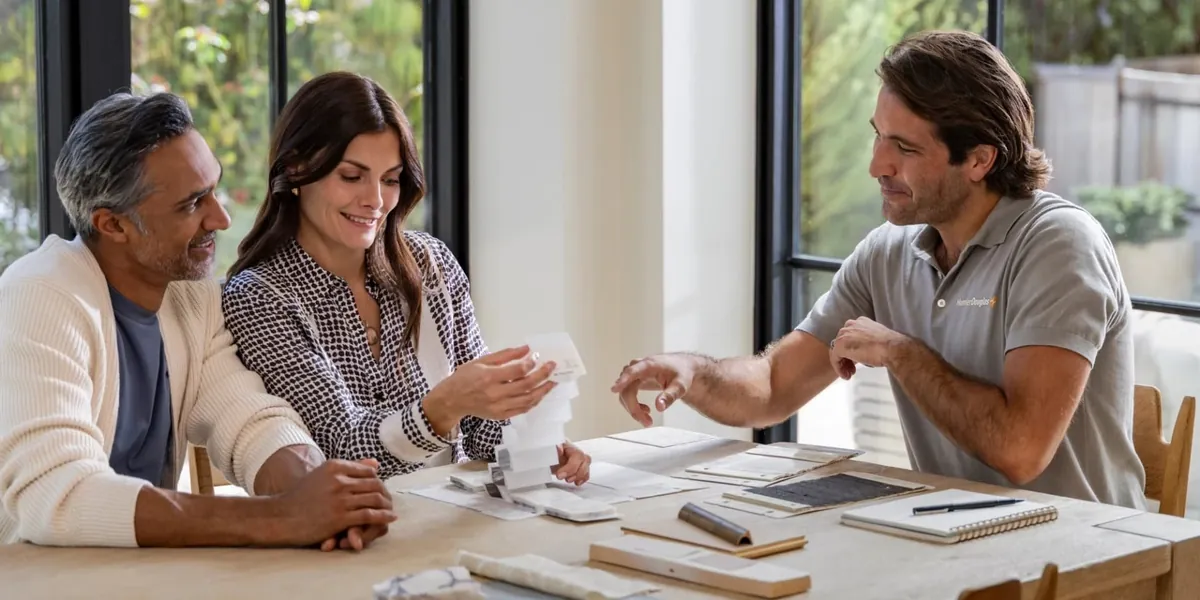
- We arrive with screen fabrics in several openness levels, honeycomb and roman fabrics, shutter samples and drapery swatches.
- We go through the house with you, starting with the rooms that face the water or the road.
- You compare samples at the glass and see how each one changes the view and the glare.
- We measure every window and slider, note any cranks, handles and trim, and check the depth for an inside mount.
- A free estimate is left with you to weigh up.
- When you go ahead, our certified installers fit everything and show you how each piece works.
Our page on in-home consultations has more detail, and you can pair the visit with an interior design consultation if you would like help with color and fabric.
Newer houses on the harbor
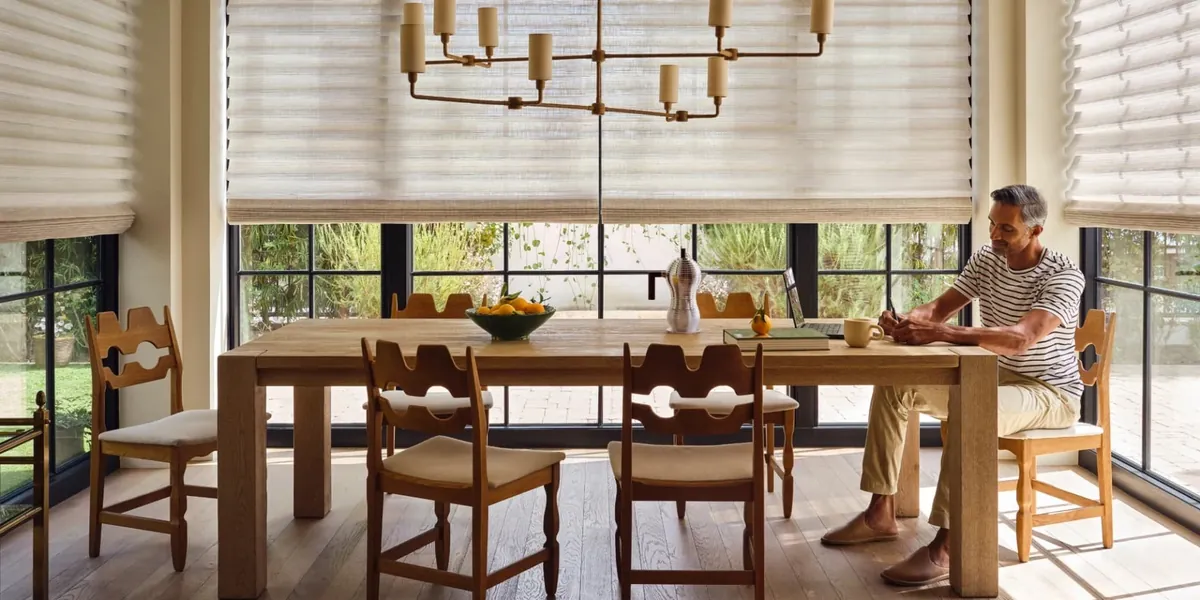
The larger, newer houses on the harbor were designed around what is outside: tall living room glass, corner windows, clerestories, and sometimes a wall of sliders onto a terrace. The treatments here have to disappear when they are open and do their job when they are closed, without breaking up the architecture.
Rollers are the natural fit, with slim cassettes at the head that hide the rolled fabric, and screen fabrics that keep the view. For large windows, several shades can share one headrail and move together. Banded shades, with alternating sheer and solid stripes, give a modern look and quick control between view and privacy.
High glass is where motorization becomes almost necessary. A clerestory or a two-story window is out of reach, and PowerView shades can be raised and lowered by remote or app, grouped by room, or set on schedules that follow the sun. Lowering the west-facing shades every afternoon in summer protects floors and furniture from fading, whether anyone is home or not. More on the controls is on the motorized blinds and shades page.
Planning these window treatments in Westport, MA, harbor houses all at once means the shades in every room can share the same fabric facing the glass, so the house looks calm and consistent from the water.
Bedrooms that look out over the water
A bedroom with a water view is a pleasure in the evening and a problem at dawn. On the coast the light comes early in summer and it is bright, reflected off the river or the harbor into a room that faces it. Those same rooms are often exposed to the weather, with wind finding its way around old sash in a cape or a farmhouse.
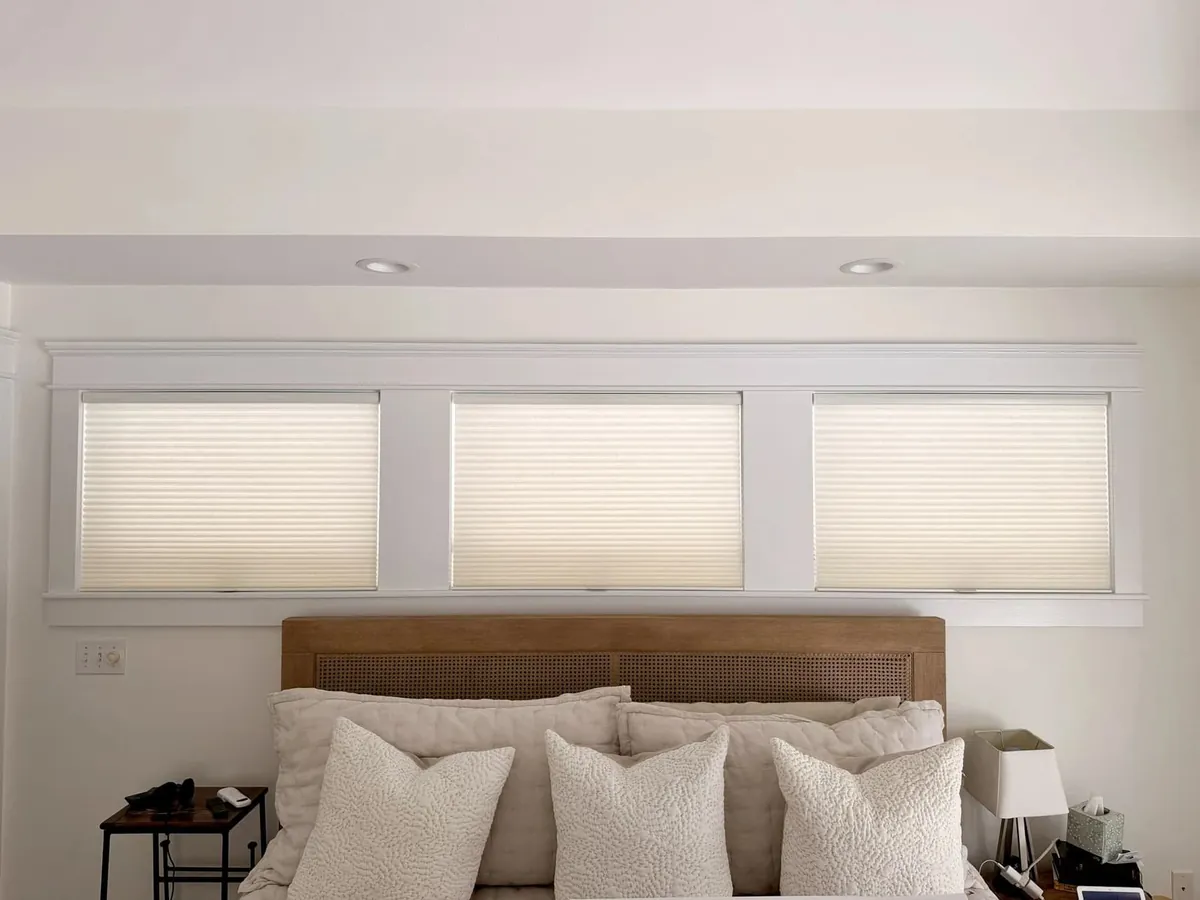
Most people want the view when they are awake and darkness when they are not. The tidy way to get both is two layers on one window. A screen or light-filtering shade in front handles the day, and a room-darkening honeycomb shade behind it closes the room at night and holds warmth against the glass. Both can sit on a single double headrail, so the window looks no busier than it would with one.
Drapery is the other route. Lined panels drawn across a shade at night block the last of the light around the edges and add a soft, finished look to a guest room or a main bedroom. In a room with a view you love, a top-down, bottom-up shade lets you keep the sky and the water in sight from the bed while covering the lower part of the window from a neighbor’s deck.
Keeping a house consistent
Even a modest Westport house may mix old and new: an original cape with a modern addition, a farmhouse with a glassed-in porch. The windows change size and style from one part of the house to another, and the risk is a patchwork.
A few simple choices keep things together. Use one color facing the glass across the whole house, typically a white or a soft neutral, so it looks tidy from outside. Match the headrail color and mount style within each floor. Let the room side of each treatment change to suit the room: shutters in the old front rooms, rollers in the new addition, honeycomb shades in the bedrooms. Planned together, it reads as one house.
Our guides on shades for sun and glare and choosing fabric for a sunny room are useful reading before your visit.
Why work with a Hunter Douglas Gallery dealer
As a Hunter Douglas Gallery dealer, Blinds & Designs can supply anything in the Hunter Douglas catalog for a Westport house, from screen and woven shades for the harbor rooms to Heritance hardwood shutters for a farmhouse parlor, along with drapery and PowerView.
Every order is fitted by installers Hunter Douglas has certified. Interior design help is on offer too, and so is repair work on coverings already in the house.
See more on our Hunter Douglas page or the window treatments overview.

Our nearest showroom
Just east of town, North Dartmouth is where our closest showroom sits. Some customers like to start there and see the range in person; most go straight to an in-home visit, where the view and the light are.
Questions from Westport
Will a screen shade really let me see the harbor?
Yes. Solar screen fabric is woven with small gaps, so you see out while the glare and heat drop. The more open the weave, the clearer the view. We bring several openness levels so you can compare them at your window.
Which products cope with salt air?
Closed headrails keep the workings out of the breeze, a cordless lift has no cord lock to mark, and a shutter has little metal beyond its hinges. Palm Beach and NewStyle shutter panels also cope well with damp. We suggest what suits each room.
Which treatment suits an old farmhouse window on Main Road?
Honeycomb shades for warmth, shutters or wood blinds for a look that fits plain trim, and cafe shutters over a kitchen sink. Deep reveals in older walls often allow a neat inside mount.
Can the tall windows in a harbor house be motorized?
Yes. PowerView shades on high or wide glass can be run by remote, by app or on schedules, so they lower themselves in the afternoon sun and rise again in the morning.
Is the estimate free?
It is. We measure your windows, talk through the options and leave you a free estimate.
Take the first step
Choose your window treatments in Westport, MA, with samples held up against your own view. Book a consultation and we will bring the van to your door, take every measurement and leave a free estimate. The call button and the North Dartmouth showroom are there too.