
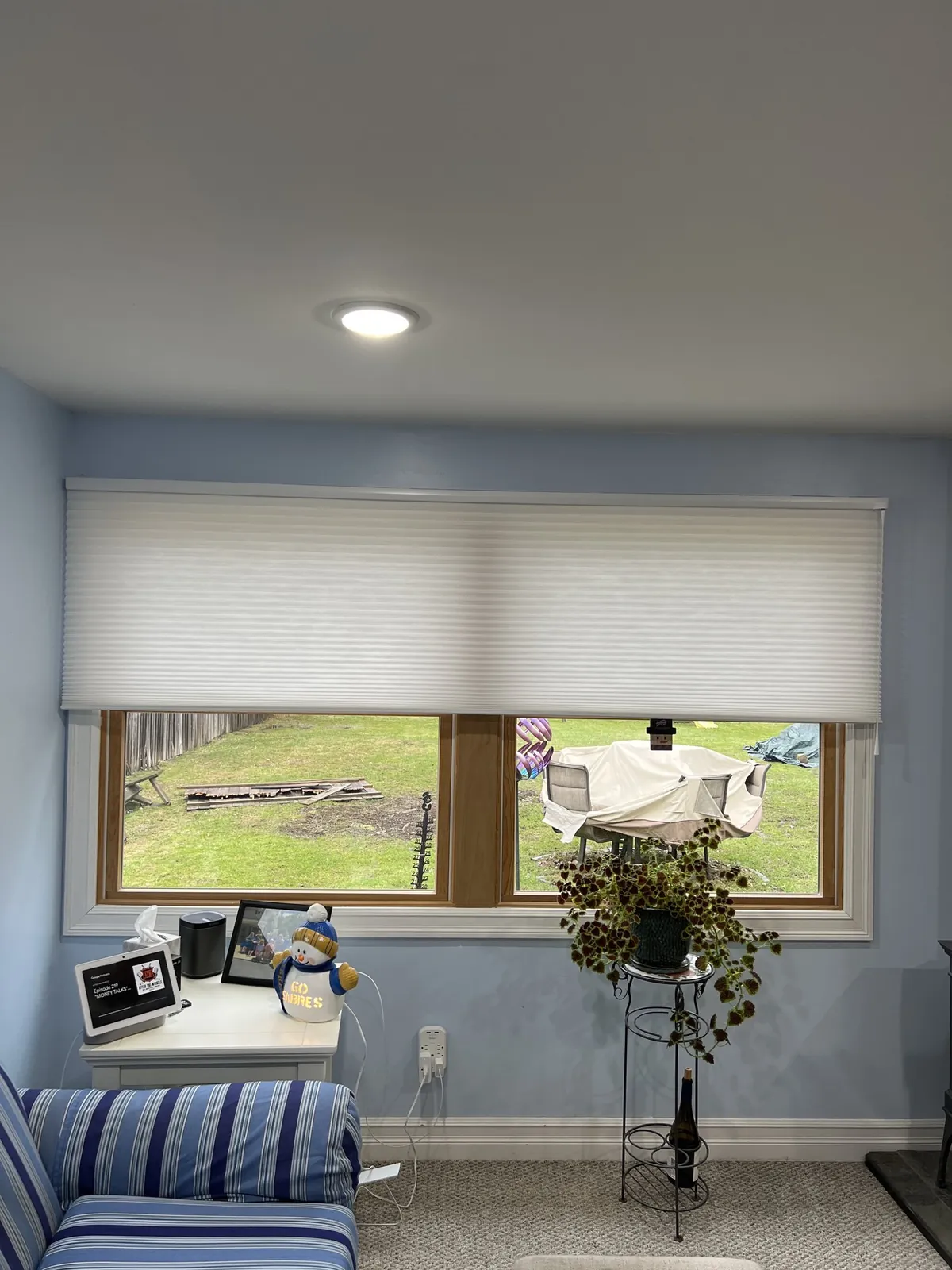
Thick walls, small panes and a lot of trees
Follow 6A through Brewster and the houses come in a slow string, each set back on a deep wooded lot. The old ones are capes and Federal houses with small original sash, set into walls thick enough to leave a real ledge inside every window. Closer to the bay flats the houses get newer and the windows get bigger. Choosing window treatments in Brewster, MA, means working with both: small, deep-set openings in the old houses and wide glass in the new.
The trees change the light in a way the open coast does not. Under oaks and pines a room can be dim at noon in summer and bright in winter once the leaves drop. That makes how much light a fabric lets through as important as how it looks.
And a lot of Brewster houses are second homes, closed for months at a stretch. Whatever goes on the windows has to look after the house while nobody is in it.
Window treatments in Brewster, MA: the full list
Here are the window treatments in Brewster, MA, that we design, supply and install. There is a Brewster page behind each card with more detail on that service. Start with the room you care about most, or have us look at every window in one visit.
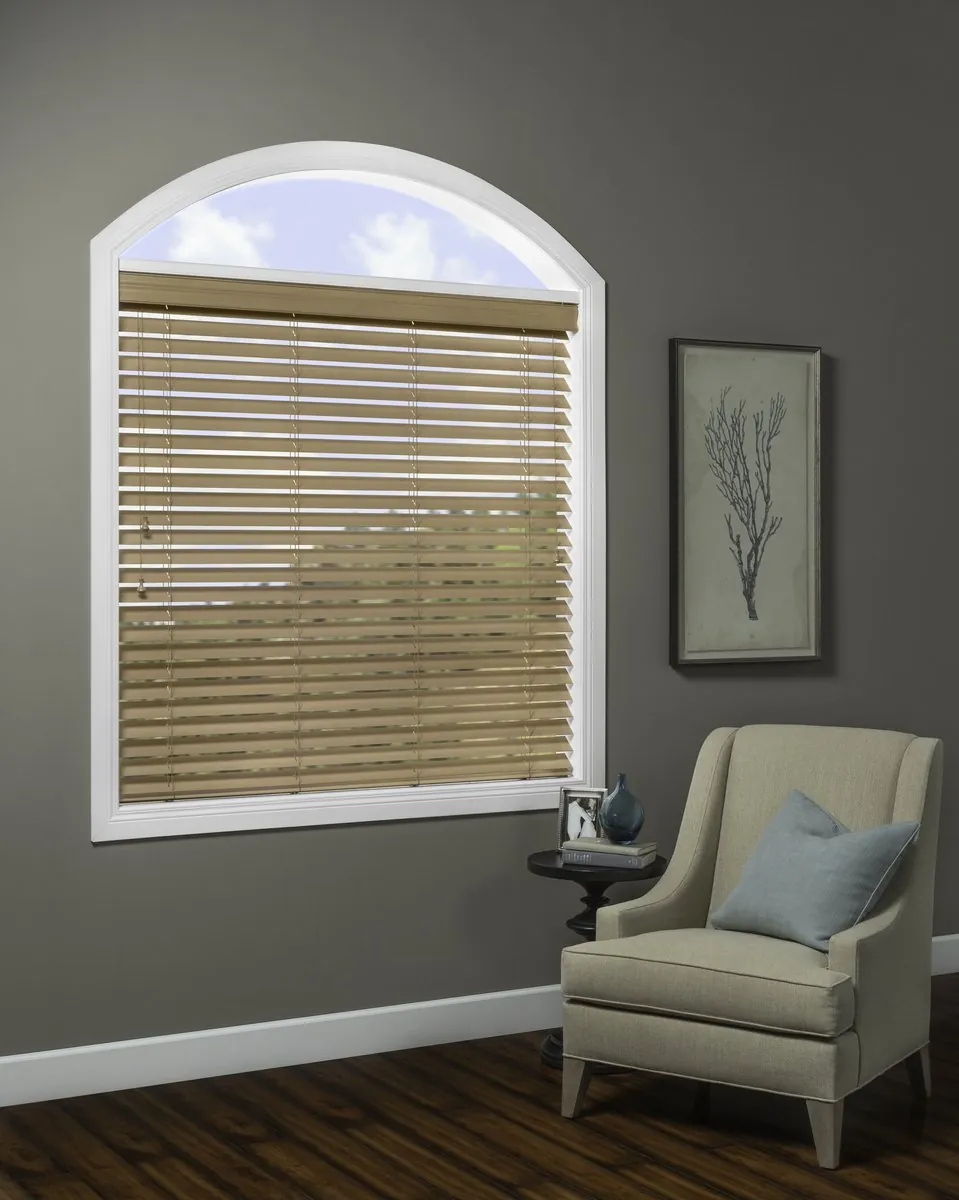
Blinds for small sash
Wood, faux wood and metal slats cut to a narrow antique opening, so nothing hangs past the casing.
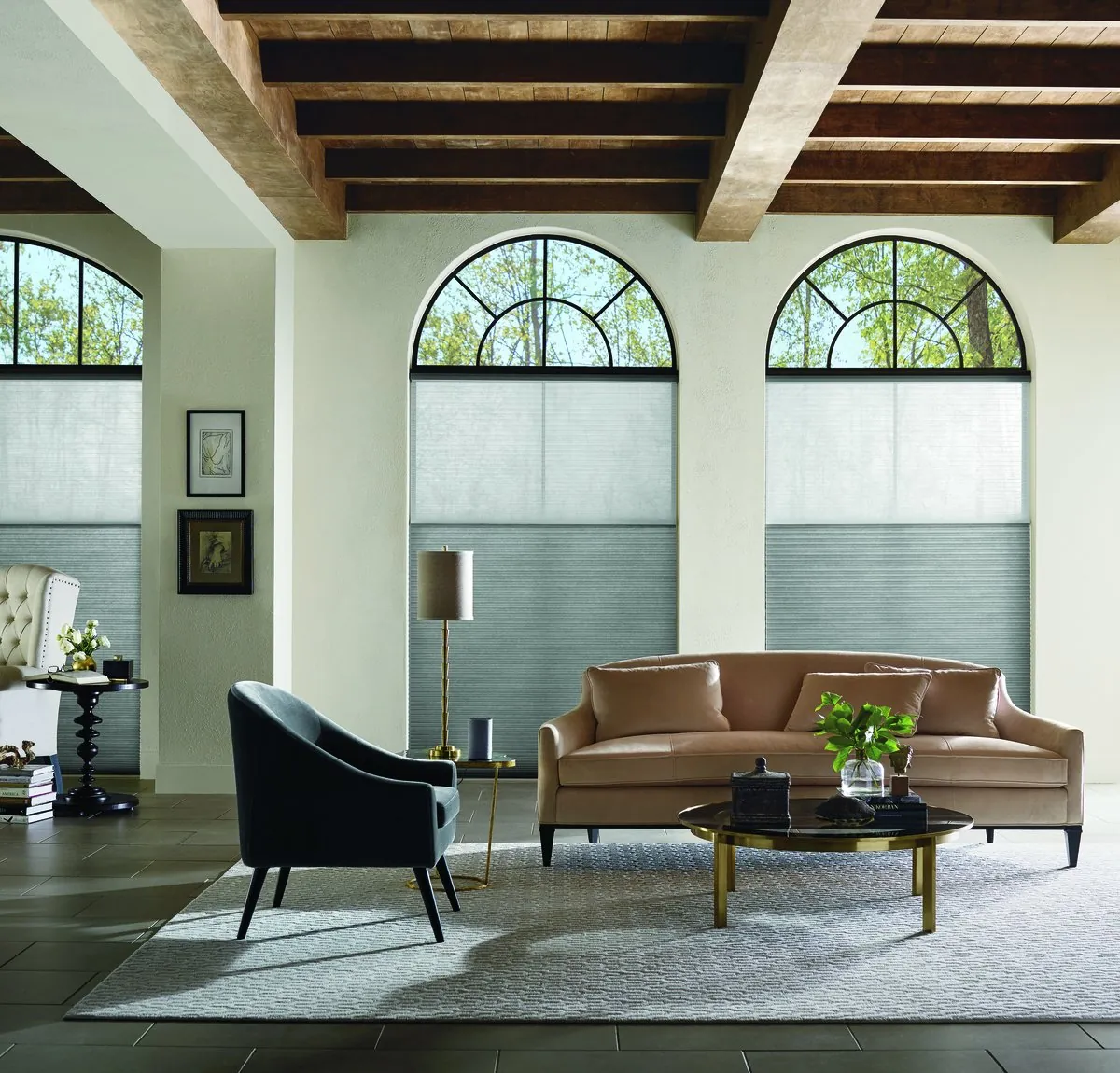
Honeycomb shades
Duette and Applause cells sit snugly in a deep reveal and hold still air against old single glass.
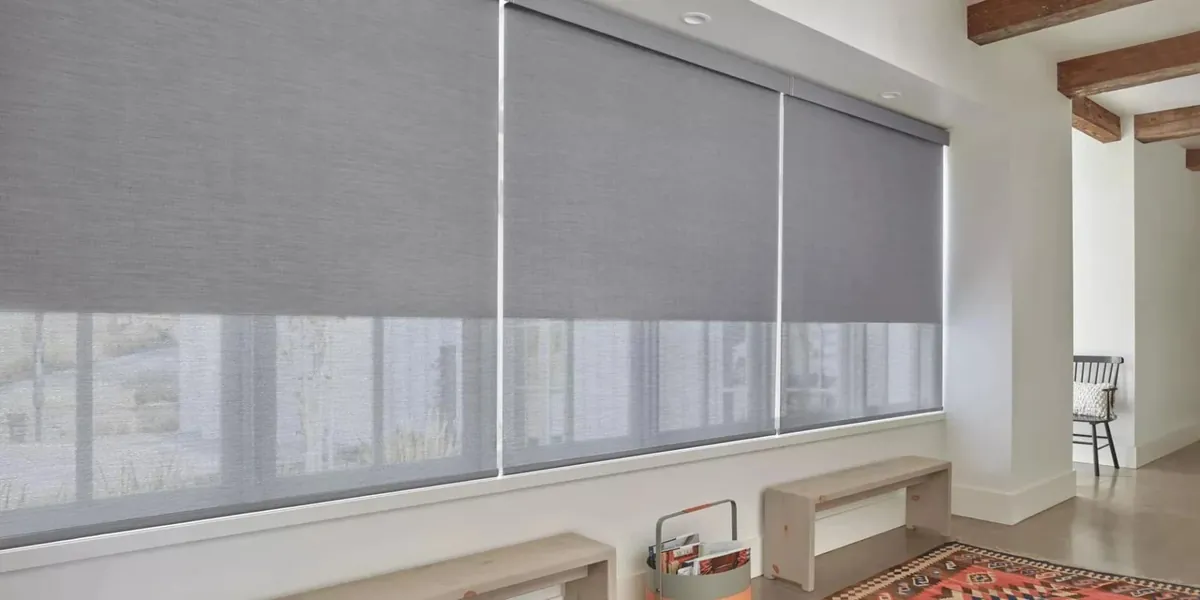
Roller and screen shades
Clean, simple rollers for the bigger glass near the bay, and screen weaves that keep the view of the flats.
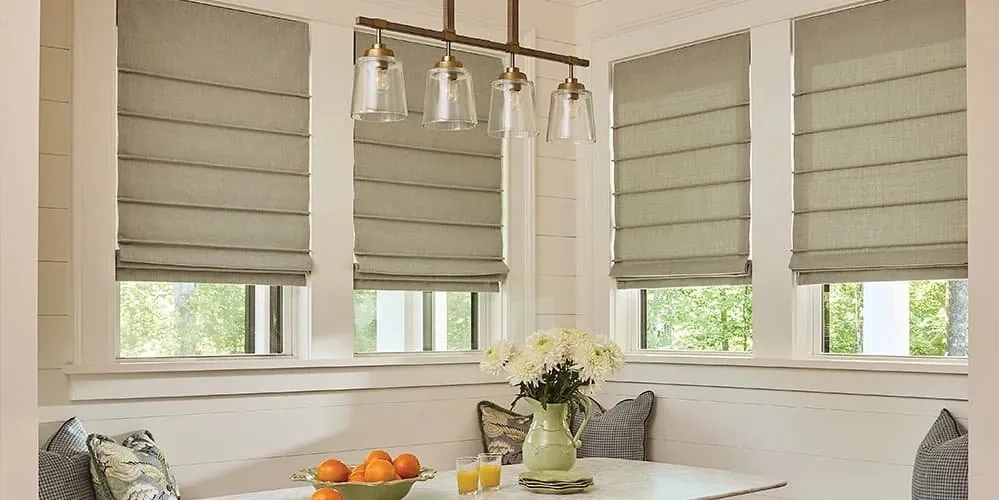
Roman shades
Soft Vignette or Carole Fabrics folds that lift clear of a short cape window and suit a Federal front room.
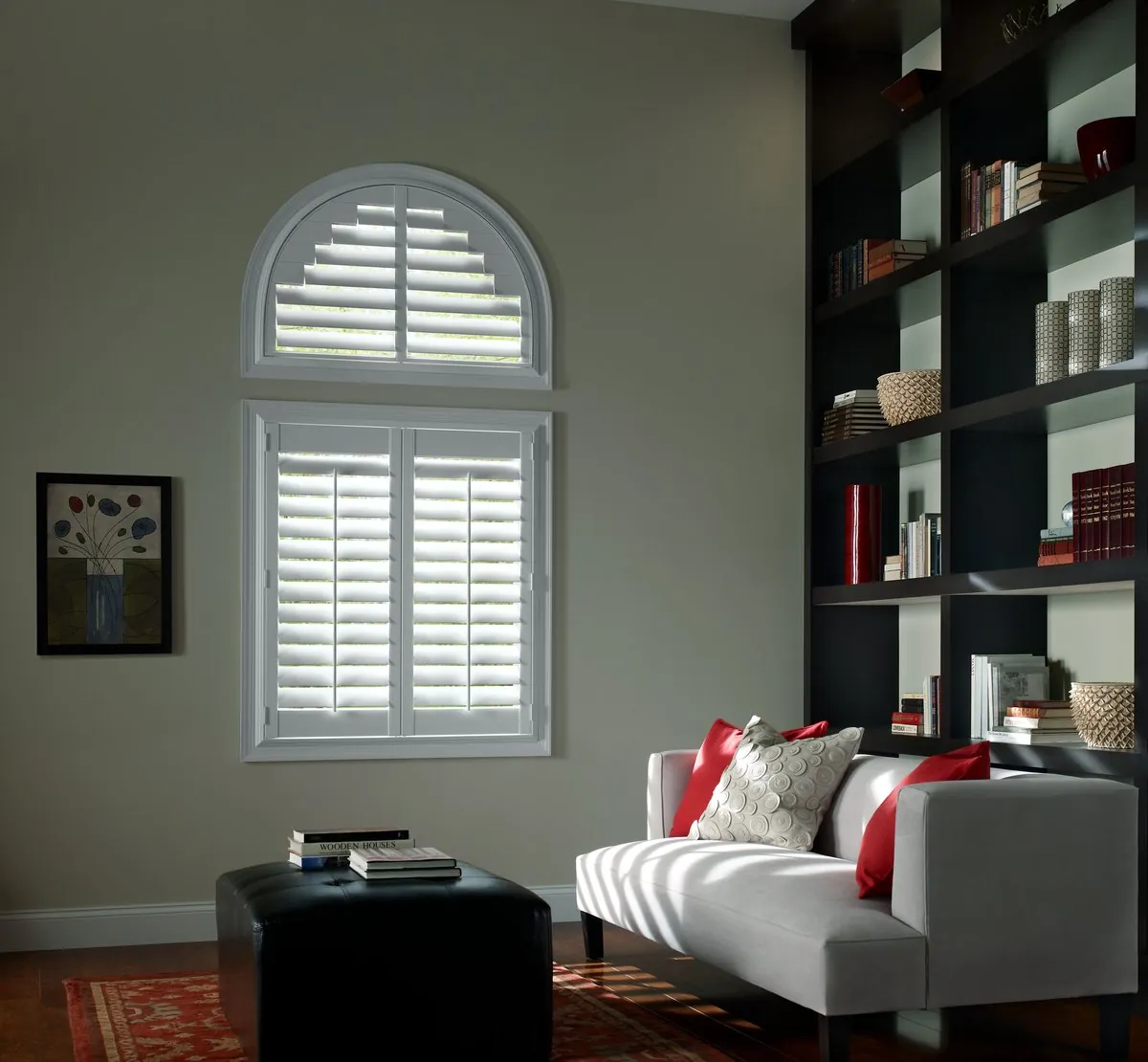
Plantation shutters
Palm Beach, NewStyle and Heritance panels that sit inside a thick wall and tilt to steer the light from the trees.
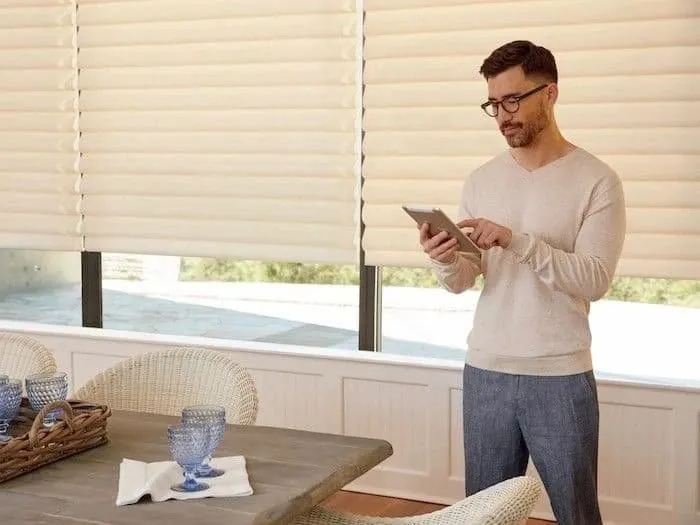
Motorized blinds and shades
PowerView lets a closed house raise and lower its own shades on a schedule, and you can check them from the app.
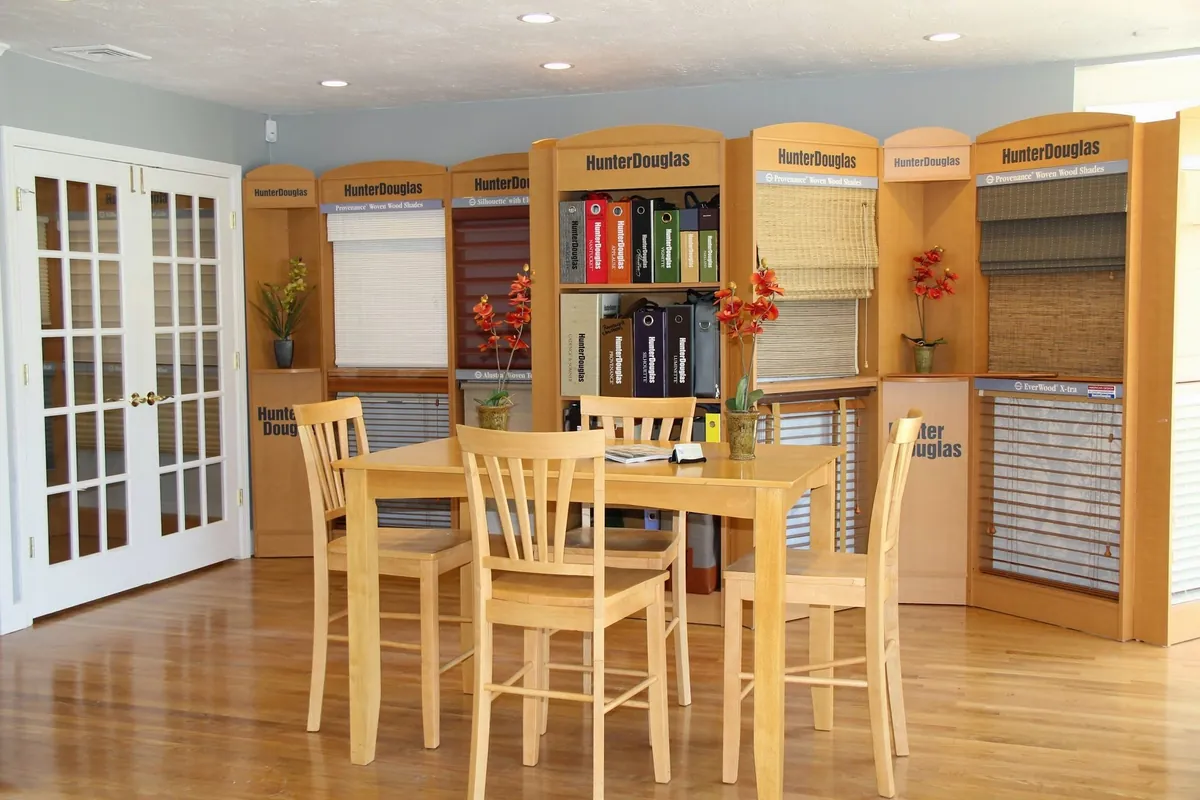
Hunter Douglas dealer
Every Hunter Douglas line from a Gallery dealer, with certified Hunter Douglas installation.
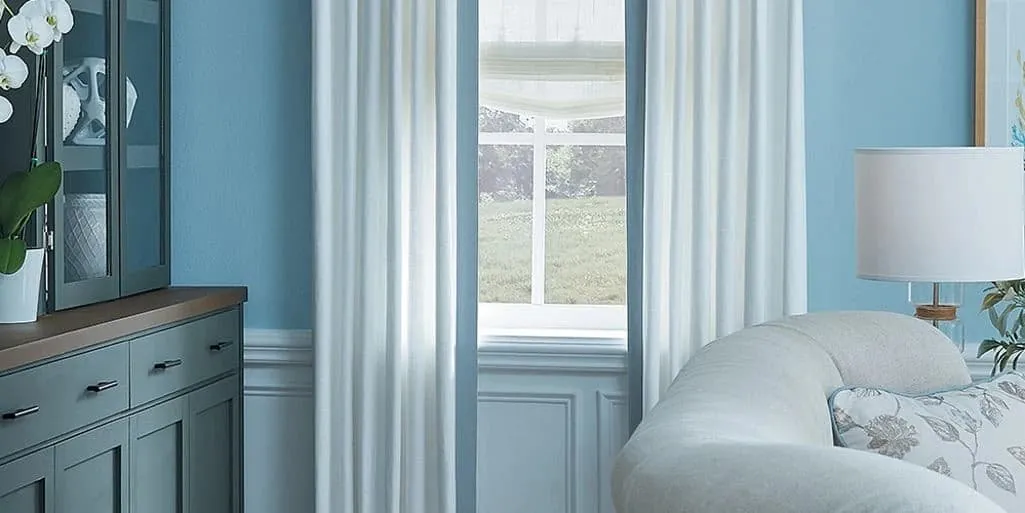
Custom drapery
Hunter Douglas drapery hung high over a small window to make it look taller and warm the room at night.
What a deep reveal makes possible
The thick walls of an antique Brewster house are a gift for anyone fitting a shade. Where a modern wall leaves a shallow frame, the old houses often leave a good deep pocket between the face of the casing and the glass. That is room enough to tuck a shade, a blind or a shutter right inside the opening.
An inside mount in a deep reveal looks as though it came with the house. The headrail disappears into the top of the frame, the trim stays fully visible, and the window keeps its proportions from both inside and out. Honeycomb shades are especially happy here, because the deeper the pocket, the closer the shade sits to the glass and the better it holds the still air between them.
Depth is not the same everywhere, though. Some old sash has interior storm panels, some has hardware that juts out, and some reveals are deeper at the sill than at the head. We measure each one before suggesting a mount, and where a window has been altered, we work with what is actually there.
The ledge also invites a different look. Shutters set into a deep opening read almost like part of the wall, and a roman shade can sit back from the room so that its folds catch the light from the side.
Small panes and how much glass to keep
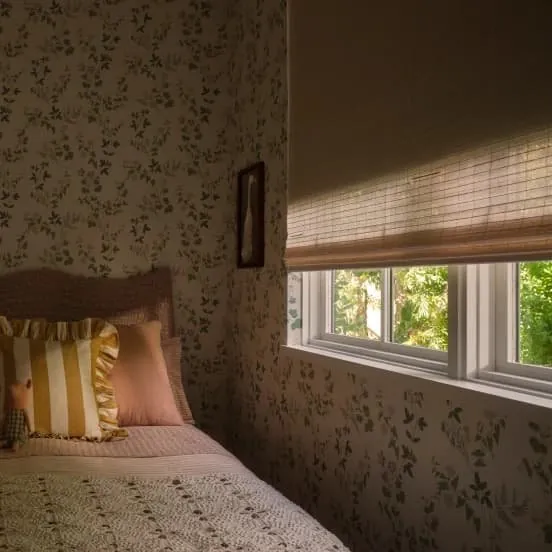
An original cape window is small, and every inch of glass counts. The worst thing a shade can do is sit in a fat bundle at the top and hide a third of the view when it is meant to be open.
That is why the stack matters as much as the fabric. Honeycomb and roller shades fold or roll into a slim band at the head of the window. A roman with flat folds stacks more neatly than one with looped folds. Shutters swing fully open and clear the glass altogether. On the smallest windows, a top-down, bottom-up honeycomb gives you the option of opening from the top, so the light comes in high and the shade still covers the lower panes.
Muntins and small panes also shape the look. A blind with narrow slats suits a window divided into small lights better than a wide louver, and a plain fabric reads better against a busy grid than a strong pattern does.
Federal fronts and what the street sees
A Federal house is all about order: windows in even rows, the door in the middle, everything lined up. Mixed colors and uneven heights at the front windows break that up faster than anything else.
Keeping one color toward the glass across the whole front, even where the fabric facing the room changes, holds the facade together. So does lining up the bottom rails when the shades are part way down. Shutters are a natural fit on a Federal front, because a row of white panels with the louvers tilted the same way looks calm from the road. Inside, each room can still take whatever it needs.
Rooms under the trees
A wooded lot gives you privacy and shade, and it also takes away light. Many Brewster rooms on the shaded side are dim from May to October, then suddenly bright once the leaves fall. A treatment that darkens a room is rarely what they need.
Light-filtering fabrics are usually the answer: they keep the view of the trees soft while letting the room stay as bright as the canopy allows. Sheer shades with fabric vanes can be tilted open to let the dappled light through and closed for privacy at night. Shutters with wide louvers open almost fully, then close tight on a winter evening.
The bright side of the house is a different story. On a south wall clear of trees, the sun in a closed house works on floors and furniture all day, and a denser fabric or a screen shade earns its keep. Most houses need both answers on different sides.
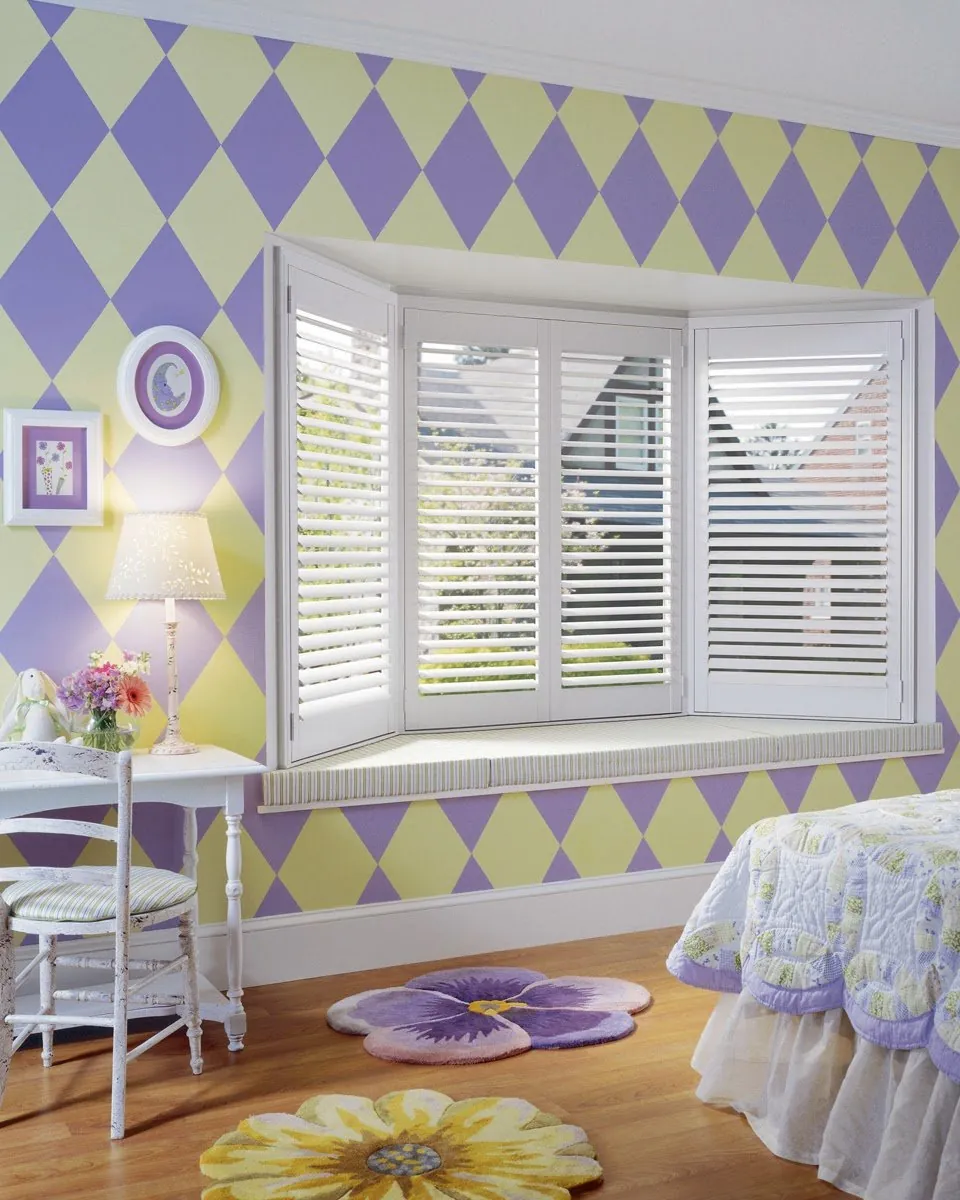
Arranging a consultation around a second home
If the house is only used now and then, it is worth planning the visit around the time you are there. We bring the samples in the van, so nothing has to be collected or delivered beforehand.
- Use the Request a Consultation form or the call button, and tell us which days you will be at the house.
- A consultant arrives with shade fabrics, blind slats, shutter louvers and drapery samples.
- You walk the rooms together, starting with the ones that bother you most, whether that is a cold front room, a faded rug or a guest room that is too bright.
- Samples are held against your own windows in the light each room really gets.
- Every opening is measured, including the depth of each reveal.
- You receive a free estimate, and you can decide once you have had time to think, even after you have gone home.
Our page on what happens at an in-home consultation goes through the visit step by step.
Closing a house for months at a time
When a Brewster house closes for the season, the windows keep working. The sun keeps reaching the same rugs and chairs, and an empty house with every shade at the same height for weeks looks it from the road.
A few choices make that easier. Shades on the sunny side can be lowered and left, with a fabric dense enough to shield the furniture behind it. Shutters can be closed with the louvers turned to keep direct sun off the floors. Cordless lifts leave nothing hanging near the sill, which matters in a house nobody is checking. And PowerView shades can follow a schedule, rising in the morning and lowering at dusk, so the house looks lived in and the sun stops at the fabric.
The app also lets you change those times from anywhere. If a storm is coming, or you are arriving early, you can open or close the house before you get there. Our motorized blinds and shades page explains how it all fits together.
Newer houses toward the bay flats
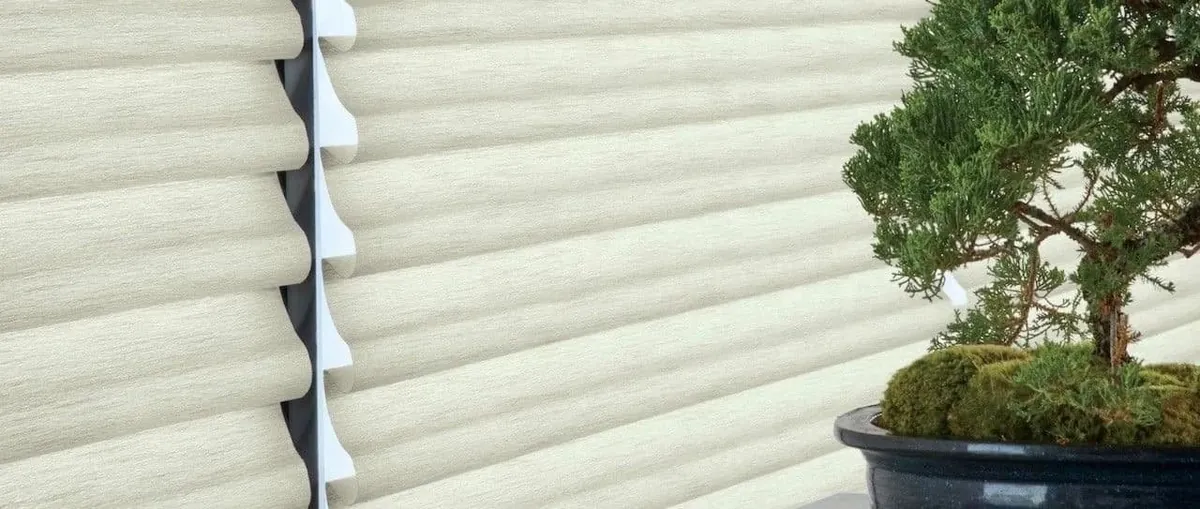
The houses built closer to the bay are a different shape altogether. Big windows, sliders onto decks and rooms built to look out across the flats at low tide. The challenge here is glare and heat on wide glass rather than fitting into a small old opening.
A wide picture window is usually split into two or three shades on a shared headrail, raised together or one at a time. Solar screen rollers cut the glare off wet sand and water while keeping the view, and the weave can be chosen by how much of the view you want to keep. Honeycomb shades are the warmer choice for a room used in the shoulder seasons. Sliders take a vertical honeycomb shade or gliding fabric panels that stack aside so you can walk straight out.
If you are doing both an old house and a new addition, the two can share colors and headrail finishes so the rooms flow, even when the products differ.
Kitchens, baths and the back of the house
Old capes often have their kitchen and bath in a later ell at the back, with windows that do not match the front of the house at all. These rooms need treatments that cope with steam and splashes and still give privacy.
Faux wood blinds wipe clean and stand up to humidity. Shutters suit a bath well, with louvers tilted up to let light in and keep the view out. In a kitchen, a cafe shutter over the lower sash keeps the window above the sink open to the light, and a roller in a wipeable fabric is easy to live with. A top-down, bottom-up honeycomb in a bathroom covers the lower glass and leaves the sky open above the tub.
Bedrooms under the eaves
Upstairs in a Brewster cape, the bedrooms tuck under the roof. The windows are small, often set low in a knee wall or high in a gable end, and the ceilings slope. Summer guests want these rooms dark in the morning, and in a house where the trees have dropped their leaves, a gable window can let the winter sun straight onto a bed.
Room-darkening honeycomb shades fitted tight inside a deep reveal leave very little light around the edges, because the wall itself closes the gap. Blackout rollers do the same with a plain, simple look. For a gable window that is hard to reach, a PowerView shade can run from a remote on the nightstand, so nobody stands on a chair to close it.
Dormer windows are their own small puzzle. The opening is usually narrow and deep, with walls close on both sides, so a shade that stacks slim and mounts inside is almost always the right call. Light-filtering fabric in a child’s room or a reading nook keeps the space bright through the day.
Halls, stairs and the windows nobody covers
Every old house has a few openings left bare for years: a narrow light beside the front door, a stair window above the landing, a small pane in a back hall. They often go uncovered simply because nothing off a shelf fits.
Because every Hunter Douglas product is made to the opening, these windows are no harder than any other. A slim honeycomb or sheer shade suits a side light, a shutter panel can match the front rooms, and a motorized shade solves the stair window you cannot reach. Covering them finishes the house, inside and from the road.
Drapery in a low-ceilinged room
Antique Brewster houses often have low ceilings, and drapery can make a room feel either cosy or cramped depending on how it is hung. Mounting the rod close to the ceiling and extending it past the frame on both sides makes a small window look larger and lets the panels clear the glass when drawn back.
A shade inside the deep reveal does the daily work, and the drapery frames the window and closes on a cold night. Lighter fabrics keep a small room airy; heavier lined panels add warmth in a front room that faces the road.
Measuring and fitting an old window
An antique opening is measured more carefully than a new one, because it has had a long time to move.
- The width is taken at the top, middle and bottom, and the narrowest measurement decides an inside mount.
- The height is taken on both sides to catch a sloping sill or a sagging head.
- The reveal depth is checked at several points, and any storm panel or hardware is noted.
- Mount, lift, color and fabric are settled window by window before ordering.
- On installation day each piece is fitted, levelled, tested and shown to you.
When you plan window treatments in Brewster, MA, around those measurements, the finished shades sit straight in frames that are not. You can read about what happens on installation day before the fitting.

Why work with a Hunter Douglas Gallery dealer
As a Hunter Douglas Gallery dealer, Blinds & Designs can offer the full Hunter Douglas range in one visit: honeycomb, roller, roman, sheer and woven shades, wood and metal blinds, three shutter collections, drapery and PowerView motorization.
Our own Hunter Douglas certified installers do the work. Interior design consultations are there for help with color and fabric across a whole house, and we repair blinds and shades you already own.
See our Hunter Douglas page, or the window treatments overview.
Our closest showroom to Brewster
Many Brewster projects never need a showroom visit, because the samples come to the house. If you would like to see the products first, the Sagamore showroom is our nearest.
Whichever way you start, the estimate is free and the same people measure, order and install.
Questions from Brewster
Will a shade fit inside the deep reveal of my antique cape?
Very often, yes, and it usually looks best that way. We measure the depth at several points first, because storm panels and old hardware can get in the way, and suggest a mount on the trim where an inside mount will not work.
My windows are small. What will hide the least glass when it is open?
Honeycomb and roller shades stack into a slim band at the head. Shutters swing fully clear. A flat-fold roman stacks more neatly than a looped one. Top-down, bottom-up honeycombs also let you open from the top.
Our house sits under trees. How do I keep it from feeling dark?
Use light-filtering fabrics or tilting shutters and sheer shades on the shaded side, and save the denser fabrics for the sunny side of the house, which still needs protecting.
Can my shades look after the house while it is closed?
Yes. Lower the sunny side before you leave, choose cordless lifts, or use PowerView to raise and lower the shades on a schedule you can change from the app.
Do you charge for an estimate?
No. The estimate is free, and it covers every window you ask about.
Where to start
The simplest way to settle on window treatments in Brewster, MA, is to see samples in your own rooms. Request a consultation, tell us the days you will be at the house, and a consultant will bring the van, measure every opening and leave a free estimate. The call button reaches us if you would like to talk first, and the Sagamore showroom is our nearest.