
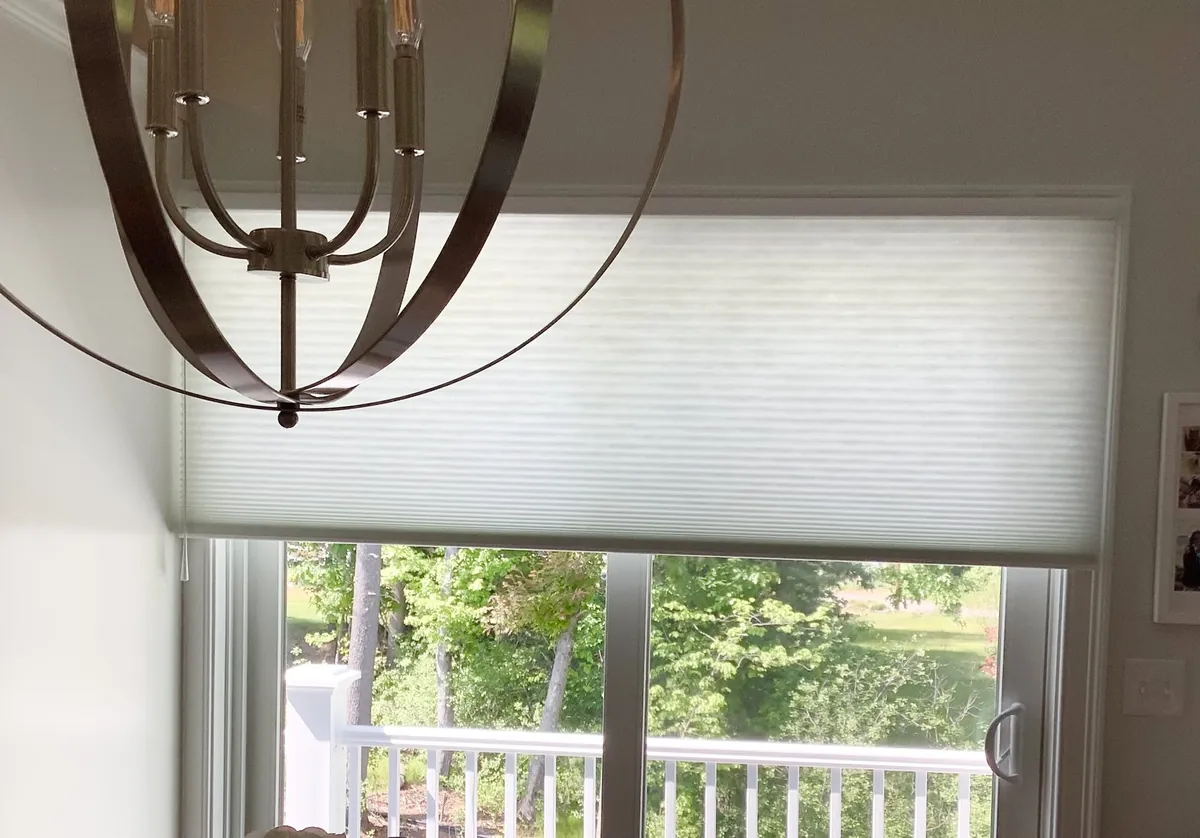
Privacy first on a close-set street
Woonsocket’s streets are lined with mill-era triple-deckers and Victorians standing shoulder to shoulder, with tall, narrow double-hung windows and high ceilings inside. On streets that tight, the first thing a window covering has to do is keep a room private at street level, and only then worry about warmth and light. That order of priorities runs through every plan we make for cellular shades in Woonsocket, RI.
A honeycomb shade is well suited to it. A light-filtering fabric lets daylight in while stopping the view from the sidewalk, and the hollow cells hold a layer of still air against the glass, so the same shade that gives privacy also keeps a tall, draughty window from chilling the room on a winter night.
High ceilings mean tall glass, and tall glass means a lot of window to cover in each room. Getting the proportions, the lift and the light right on those windows is the main work, floor by floor.
Six honeycomb options for tall city windows
Ground-floor flat, top-floor flat or a whole Victorian, these are the choices we find ourselves bringing out again and again.
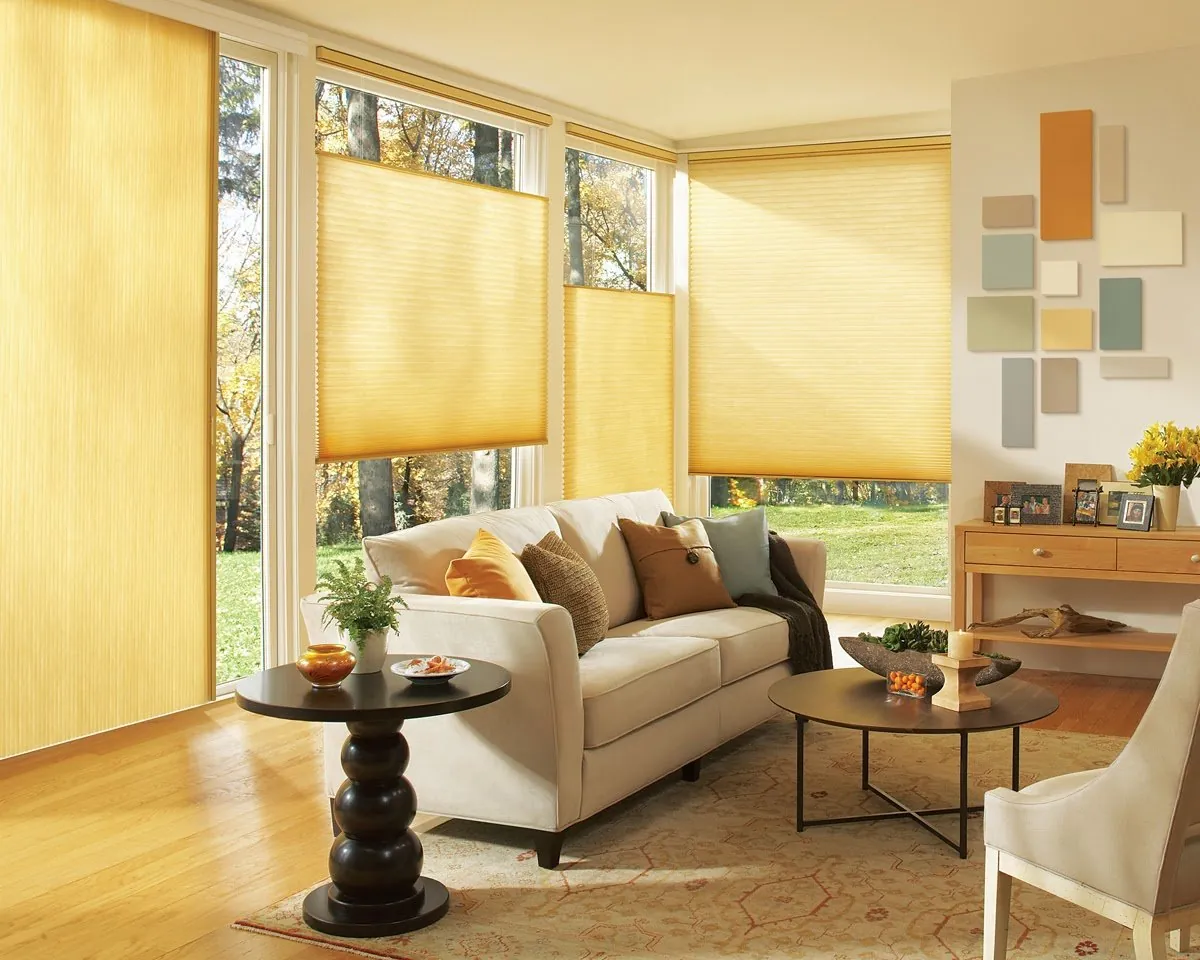
Top-down, bottom-up
Open the upper glass to the sky and keep the lower glass covered from the street. The first feature we suggest on a ground floor.
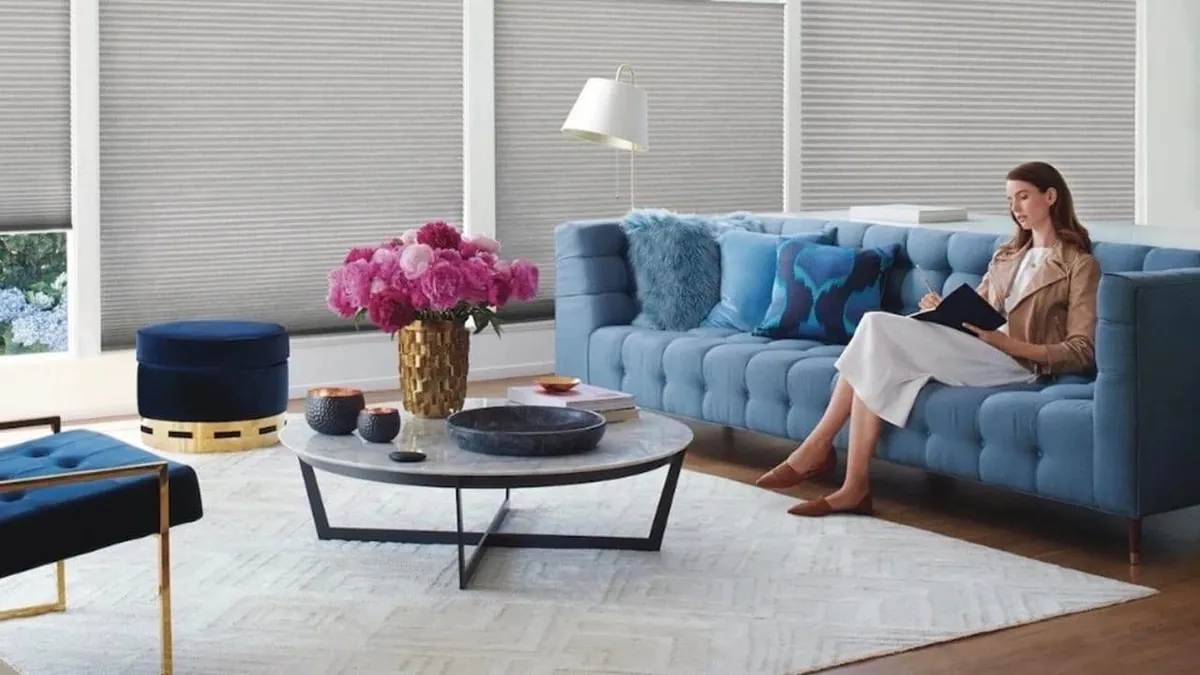
Light-filtering fabrics
Daylight comes through softly while the room stays hidden, so a front room stays bright without feeling on show.
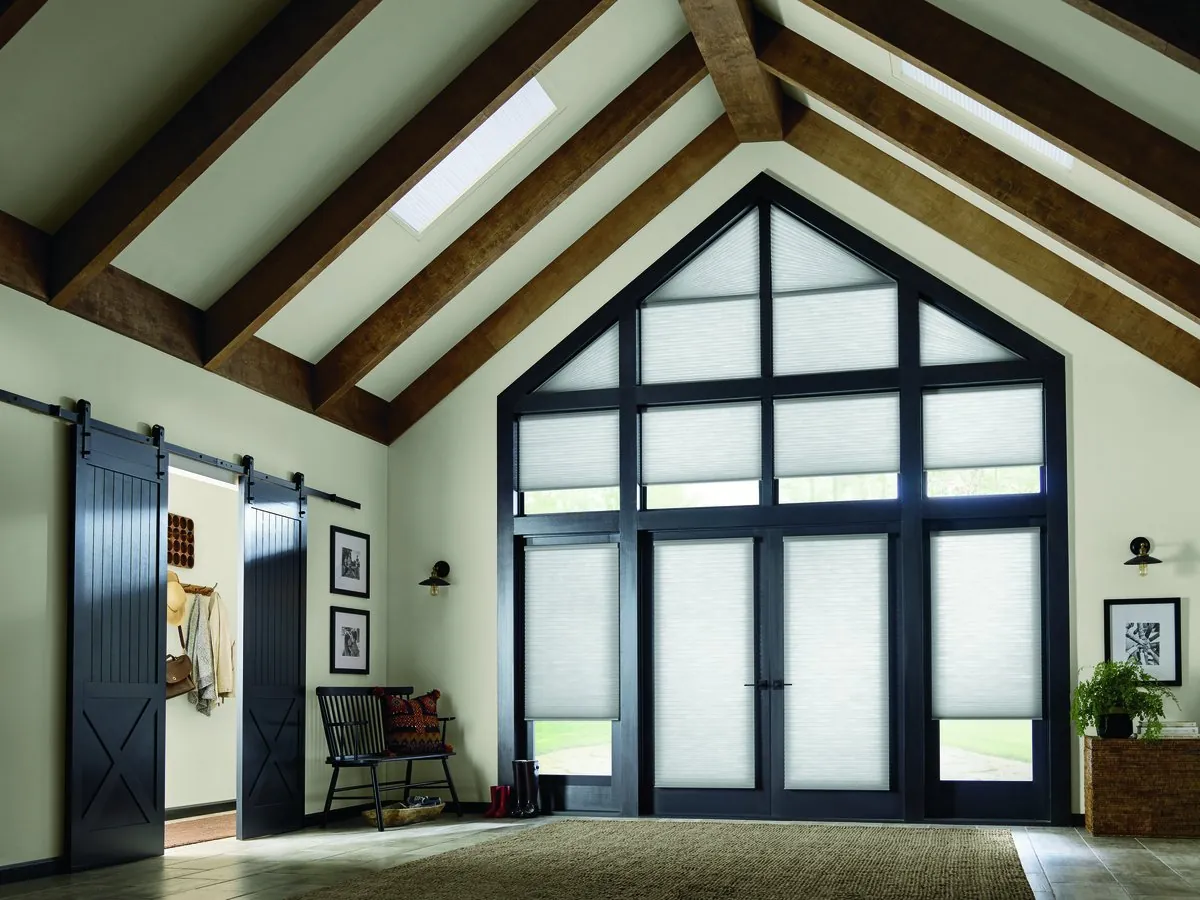
Long drops for high ceilings
Duette in slim widths and long drops, proportioned to the tall double-hungs of a Victorian or triple-decker.
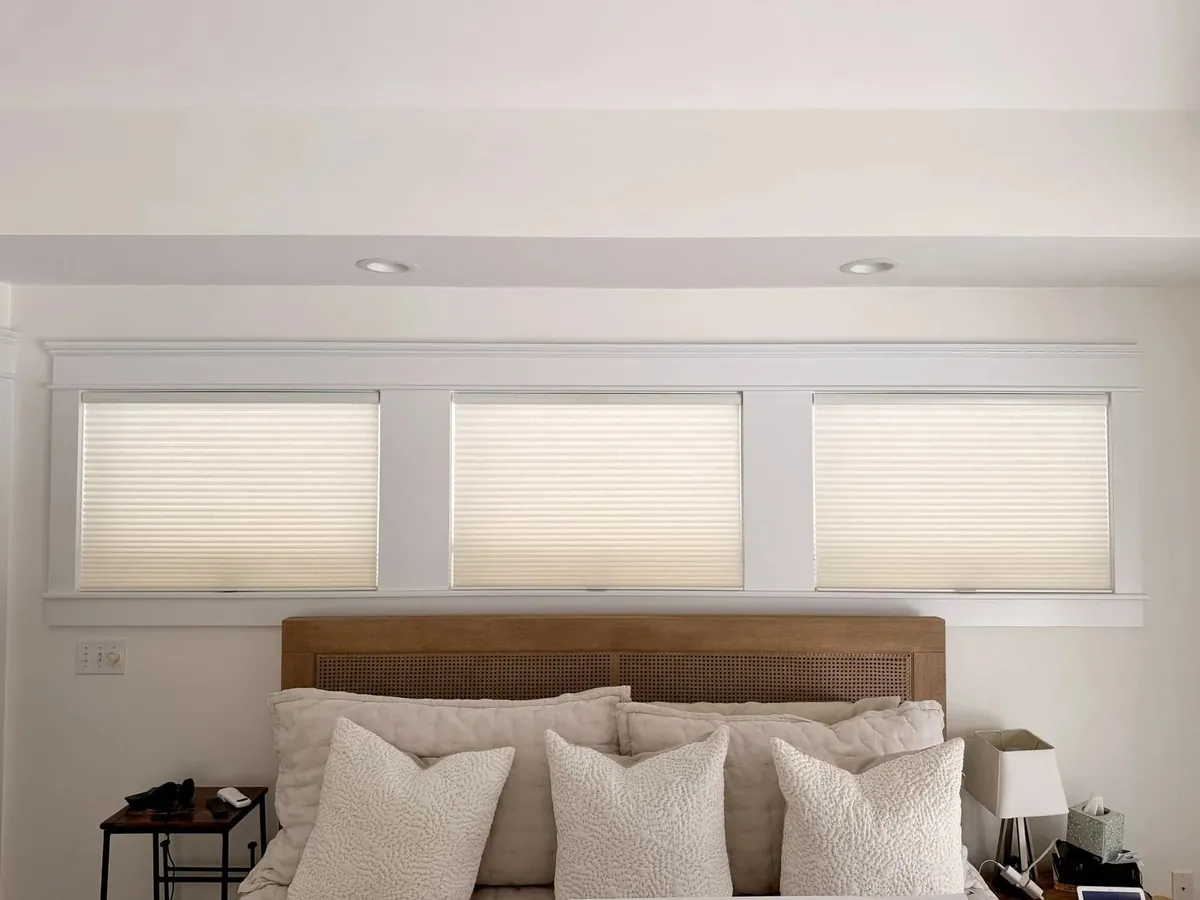
Room-darkening for bedrooms
For a bedroom that faces a streetlight, a neighbor’s window a few steps away, or the early sun.
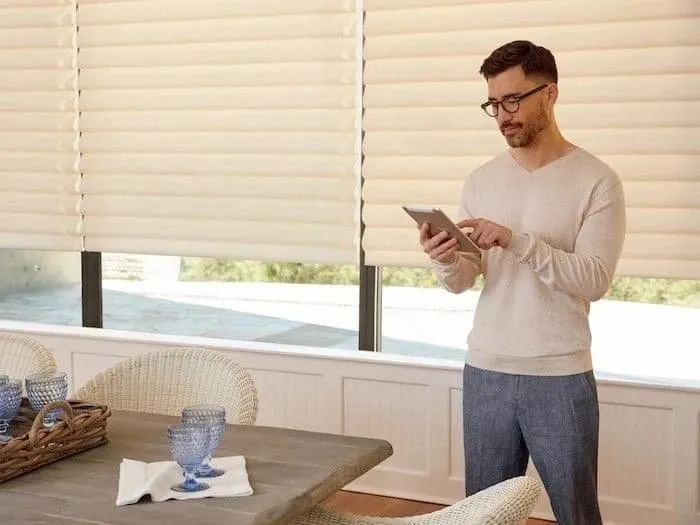
PowerView for the tallest glass
When the top rail is out of reach, motorized shades move from a tablet, a phone, a remote or a schedule.
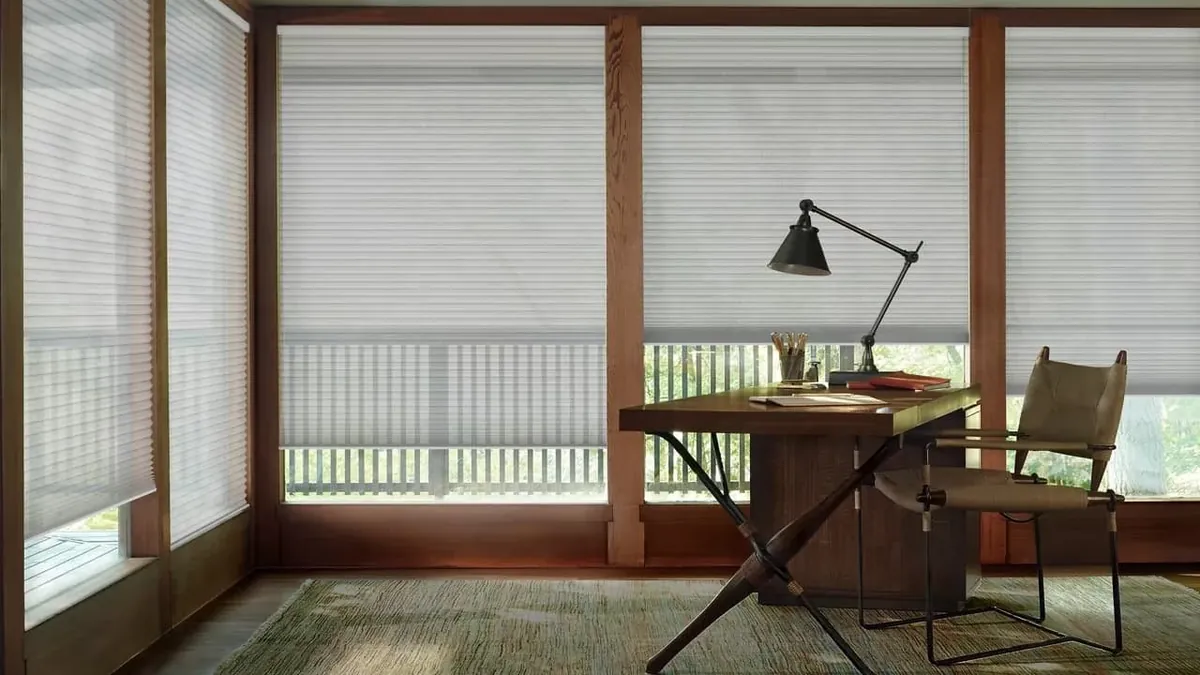
Applause for a whole flat
Hunter Douglas’s other honeycomb line, often used to give every room in a flat a matching look.
What privacy means on a dense street
In a close-set neighborhood, the view into a room comes from several directions at once. The sidewalk runs a few steps from the front windows. The house next door may be close enough that side windows face each other across a narrow alley. And on a triple-decker, the flats above and below look out onto the same street and the same neighbors.
Each of those sight lines can be handled with a honeycomb shade, but not always in the same way. For the street-facing windows of a ground-floor flat, the lower glass is what needs covering, so a top-down, bottom-up shade with the top lowered for daylight is often ideal. For a side window facing a neighbor across an alley, the whole window may need screening, and a heavier fabric does that better. Upstairs, where the street is below eye level, a light-filtering fabric is often enough by day.
Night is where people are most often caught out. A light-filtering fabric that gives good privacy in daylight shows more of the room after dark when the lamps are on inside. For windows that face a neighbor or the street closely, we usually suggest a heavier fabric or, in bedrooms, a room-darkening one. Many honeycomb colors come in both weights, so the house can still look uniform from outside.
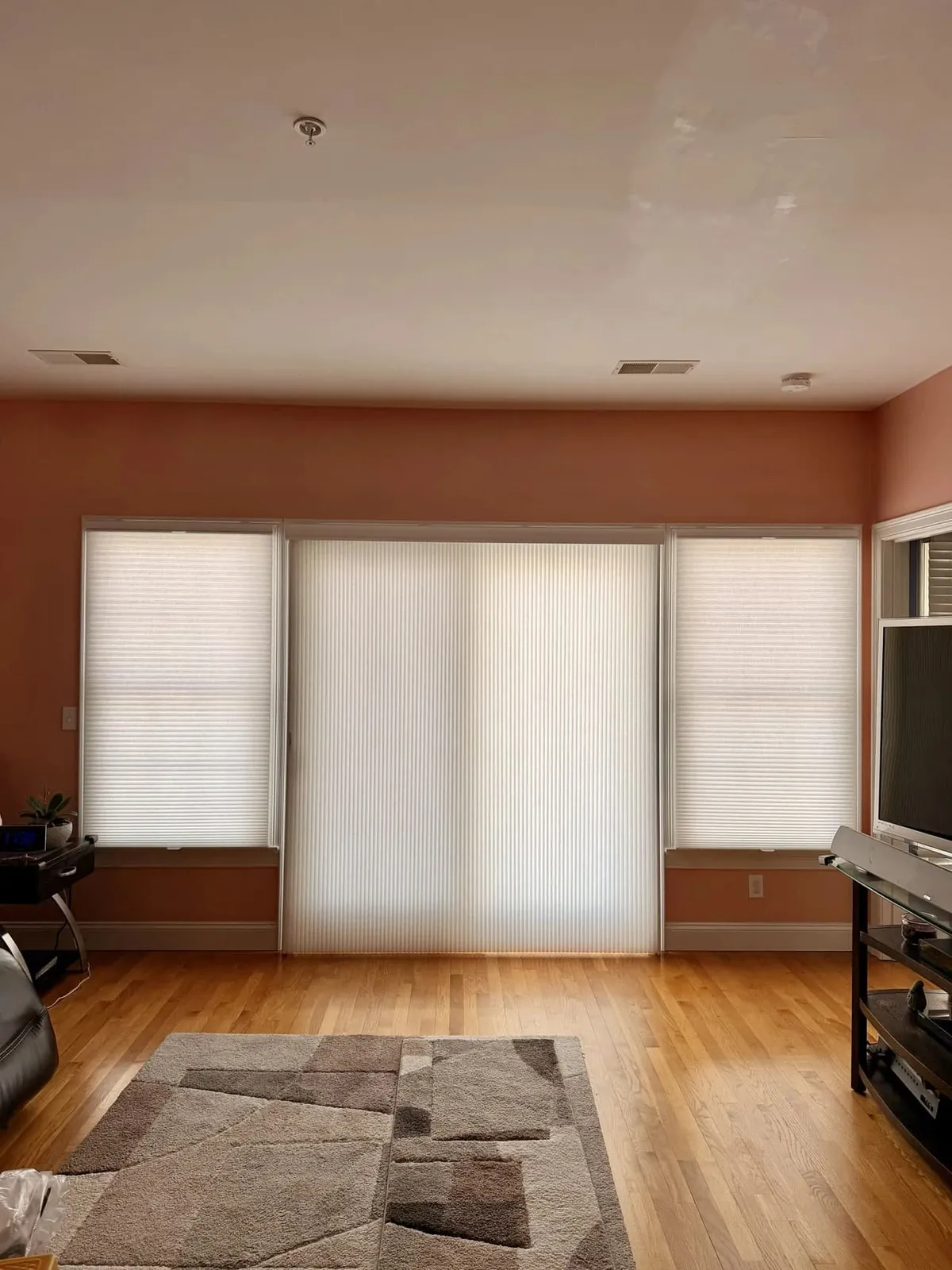
Triple-deckers, floor by floor
A triple-decker stacks three flats, one on each floor, usually with the same layout repeated: a front room facing the street, often with a bay, a run of rooms down one side, and a kitchen at the back opening onto a porch. The windows are tall double-hungs, and with high ceilings in each flat there is a good deal of glass in every room.
Each floor asks something slightly different of a shade. The first floor is closest to the sidewalk and needs the most privacy. The middle floor looks across at the neighbors’ middle floors. The top floor has the most sky and the least street-level exposure, but sits under the roof, so its rooms can run warm in summer and cold in winter. A honeycomb shade helps on every floor, and we adjust the fabric and lift to suit each one.
Owners who live in one flat and rent the others sometimes want the whole building done in one go, with the same fabric and color on every floor so the building looks tidy from the street. Others start with their own flat. Either way, we keep a record of each window and the fabric chosen, so cellular shades in Woonsocket, RI, ordered for a second or third floor later on match the first flat exactly.
Victorians and their tall double-hungs
The Victorians share the high ceilings and tall windows of the triple-deckers but often with more decoration: wide moulded casings, bays, and sometimes stained or patterned glass in an upper sash. Many keep their original sash, with old glass, wooden stops and weights in the frame.
Moulded casings like these deserve to stay visible. Hung inside the opening, a honeycomb shade leaves every bit of trim showing and, pulled up, shrinks into a short band under the head jamb so the tall glass is nearly all clear. The snag is that an old Victorian frame may be shallow at the top, where the parting beads and pulleys sit, or may have leaned a little as the house settled. If so, we fix the shade to the casing face instead, and it overlaps the cracks round the sash that let winter in.
Bays are common on both Victorians and triple-deckers. Each window in a bay gets its own shade, sized so the bottom rails line up when they are all at the same height. With top-down lifts, the whole bay can be opened at the top for light and kept covered below for privacy.

Cellular shades in Woonsocket, RI, on high-ceilinged rooms
High ceilings are one of the pleasures of an older city house, but they put the tops of the windows well above head height. That affects how you live with a shade. A corded blind on a tall window means a long cord hanging at the side; a shade whose bottom rail ends up high when raised can be hard to reach.
Honeycomb shades handle this better than most. The cells are light, so even a long shade lifts easily. Cordless lifts remove the hanging cord altogether, which also makes the room safer for children and pets. Top-down, bottom-up shades tend to spend much of the day in a comfortable middle position, so the rails stay within reach. And on the very tallest glass, PowerView hands the job to a phone, a remote or a timetable. How each motor draws its power is planned with you on the day, while how motorized shades are controlled covers the controls themselves.
High rooms also hold heat near the ceiling and lose it through tall glass. A lowered honeycomb shade across a tall window slows that loss, so the warmth stays in the room rather than sliding down the cold pane to the floor.
Your visit, step by step
Privacy can only be judged from the inside looking out, so a Woonsocket job almost always starts in your own front room. The sample van parks on your street and the fabrics come upstairs. On the day it tends to go like this.
- Book through Request a Consultation, or tap the call button and set a day by phone.
- Fabric books and working samples come up the stairs: whites to deep tones, sheer-feeling weaves to blackout.
- You point out the windows that feel most exposed, usually the street side of the flat or the alley side facing next door.
- One of us steps outside, if you like, while you hold a sample at the glass, so you know exactly what a passer-by would see.
- Every tall double-hung is measured, with its head depth and any weights, stops or colored glass noted.
- You are left a free estimate, flat by flat if the whole building is involved, to think over at your own pace.
There is more on the visit in what to expect at an in-home consultation. Paint colors, rugs and furniture can be part of the conversation too, through an interior design consultation folded into the same appointment.
How the honeycomb holds warmth
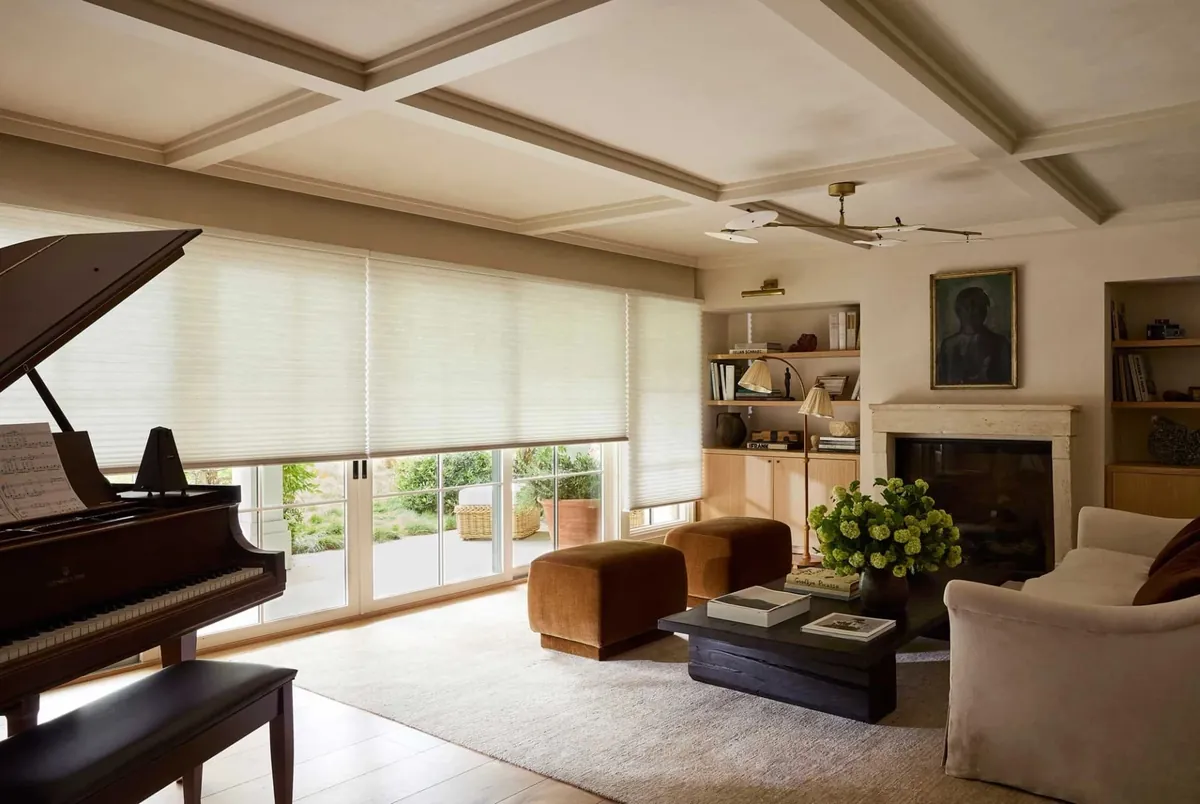
Turn a honeycomb shade sideways and it looks like a stack of drinking straws flattened together. Lowered, those straws open across the window and each one closes in a sleeve of air. Boxed-in air hardly stirs, and air that hardly stirs is slow to pass heat from one side to the other, so the fabric becomes a cushion between a tall cold pane and a warm, high room.
Old single glass in a triple-decker shows the difference quickly. Bare, the window sends a slide of chilly air down to the floorboards; covered, that chill stays at the pane. On the top floor in July, the same cushion holds back some of the sun’s heat under the roof.
Single-cell, double-cell and, in some Duette fabrics, a tube nested inside a tube: three strengths of the same idea. Choosing cellular shades in Woonsocket, RI, is often a trade between that extra warmth and how much daylight a dense fabric lets through, and the samples make the trade easy to see.
Duette or Applause
Duette and Applause are the two names Hunter Douglas uses for honeycomb shades. The trapped-air idea is identical; what changes is the menu of fabrics, textures, cell builds and lifts. Duette’s menu is longer, with slim widths and extra-long drops for tall sash, shapes for an arched transom, and a sideways shade for a patio door. Applause keeps to a shorter list that dresses a flat of similar windows neatly.
On a Victorian’s tall original sash we tend to open with Duette. In a triple-decker flat where every window is a near-twin, Applause can do most of the work. Plenty of buildings end up with some of each; the whole family of shades is on our cellular shades page.
Back porches and kitchens
Triple-deckers usually have porches at the back, one per floor, with a door from the kitchen and sometimes a window beside it. The back of the building often faces another row of back porches across a yard, so privacy matters here as well as at the front.
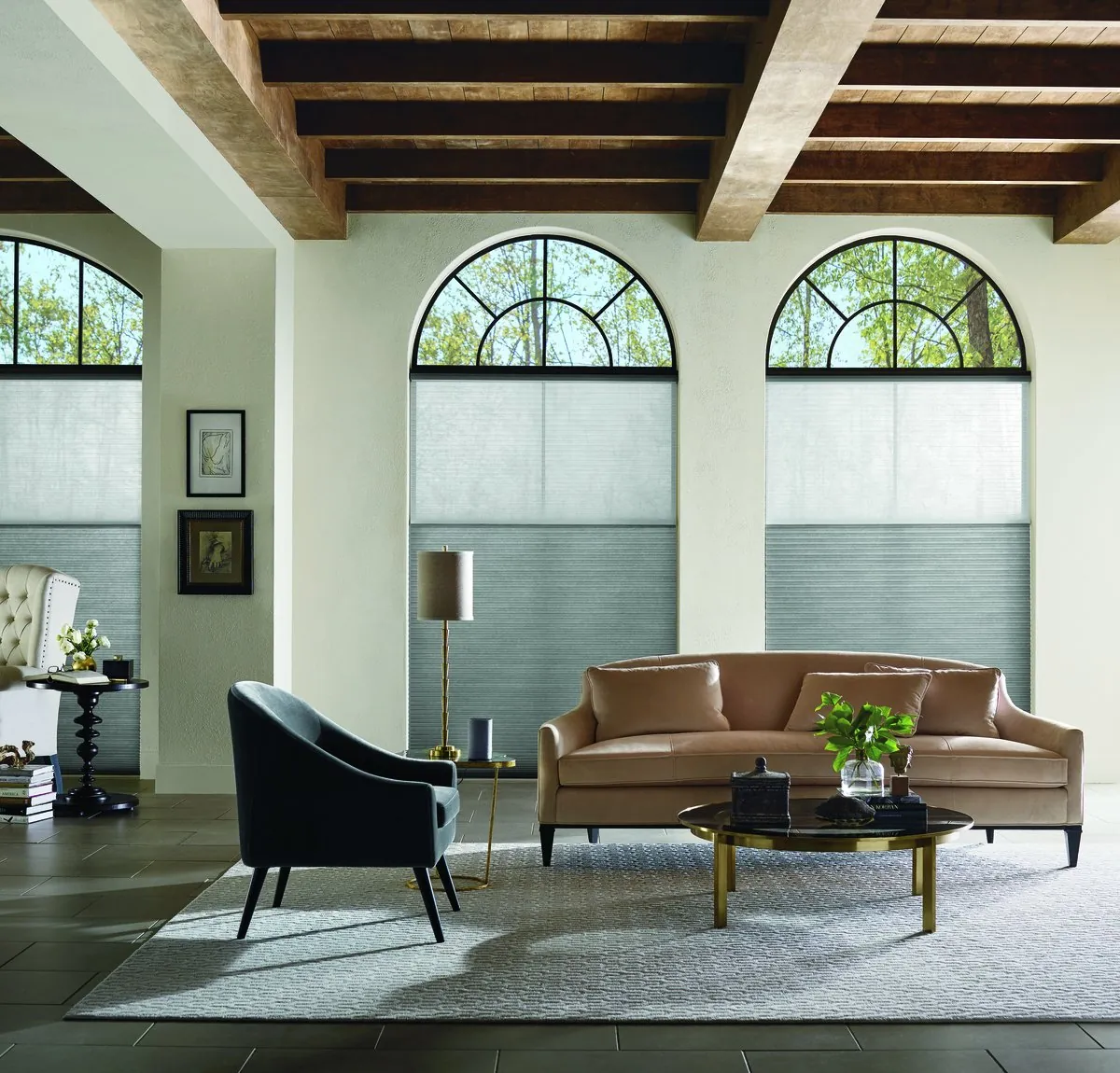
A kitchen window over the sink suits a top-down, bottom-up honeycomb shade, opened at the top for daylight while you work and covered below. A porch door with glass can take a honeycomb shade fitted to the door itself, and where there is a slider, a vertical honeycomb shade draws across it and gathers at one side. Keeping the same fabric at the back as at the front makes each flat feel finished, room to room.
Back bedrooms deserve a thought as well. Facing the rear yards, they are often quieter than the front rooms but just as overlooked, since the porches of the next row sit within plain sight. A room-darkening honeycomb fabric keeps a back bedroom private at night and dim on a summer morning, and because the cells hold air, it also takes the edge off the cold that collects in a rear room with tall glass and no sun on it in winter. Where a bedroom window opens onto a porch, a cordless lift keeps the rail clear of anything stored or hung outside.
Measuring and installation
Careful measurements are what make cellular shades in Woonsocket, RI, look as though they belong to the house. A tall city sash gets more attention than most.
- Widths are read near the head, at mid-height and near the sill; the tightest becomes the size of a shade that hangs inside the frame.
- Heights are read at the left jamb, the right jamb and the middle, because a long opening in an old building can differ by more than you would guess.
- Head depth is checked, and weights, stops or a colored upper pane are written down.
- Mount, fabric, color and lift are agreed window by window before the order goes off.
- At fitting, certified Hunter Douglas installers anchor each bracket in wood, set every headrail level, cycle each shade top to bottom and walk you through the controls.
A snug edge does three jobs on a city window: it looks sharp, it closes the sliver a neighbor might see through, and it keeps cold air from curling round the fabric.
Franklin is the nearest showroom
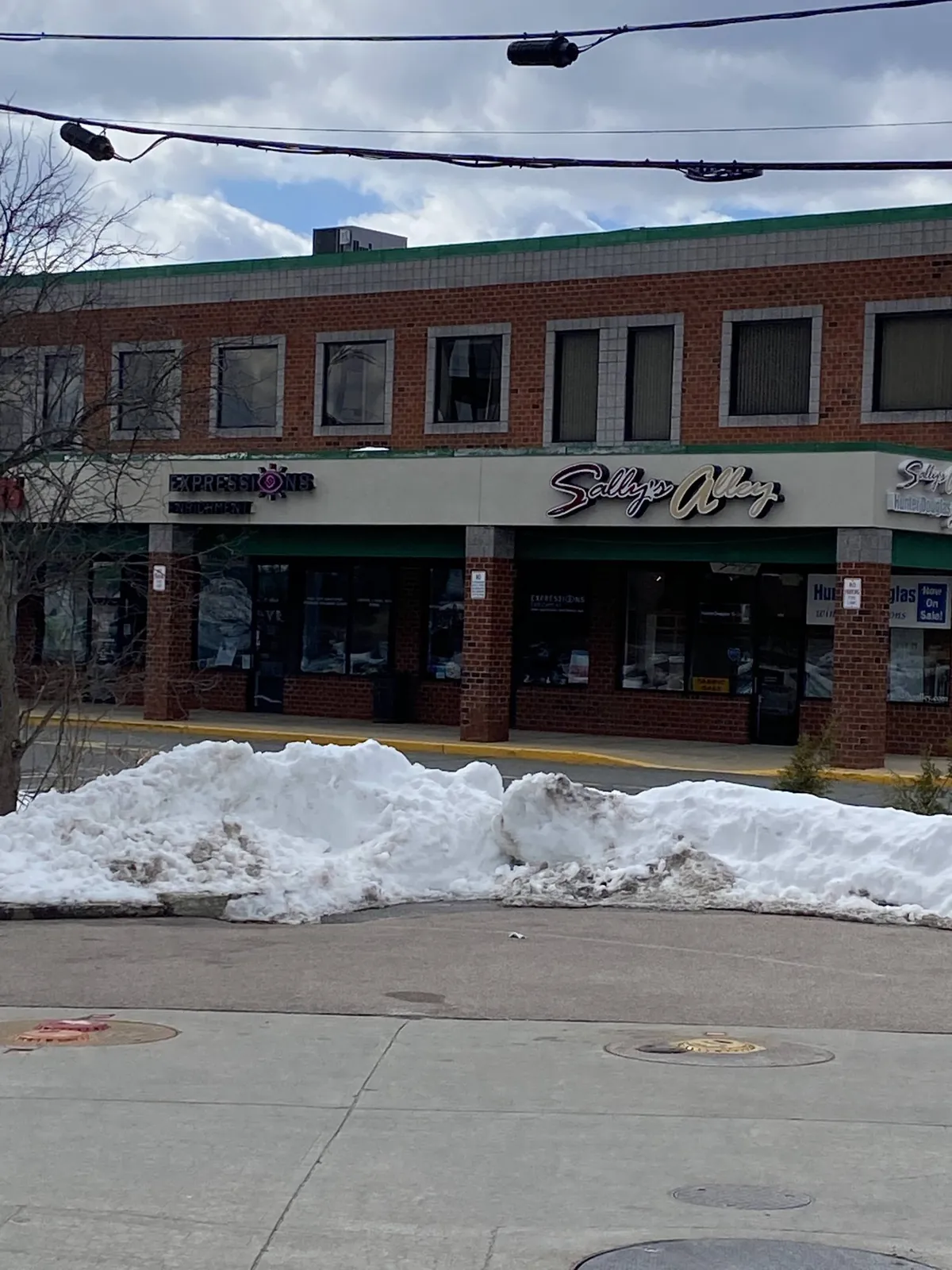
Our nearest location to Woonsocket is the Franklin showroom. Stop there if you would like to see honeycomb shades in person first, and bring a few phone pictures of your windows and what they look out on.
On city streets, though, the home visit tends to decide things. Whether a fabric hides a room from the sidewalk is something you can only check from your own side of the glass, and measuring plus the free estimate come with that visit.
A Gallery dealer with certified installers
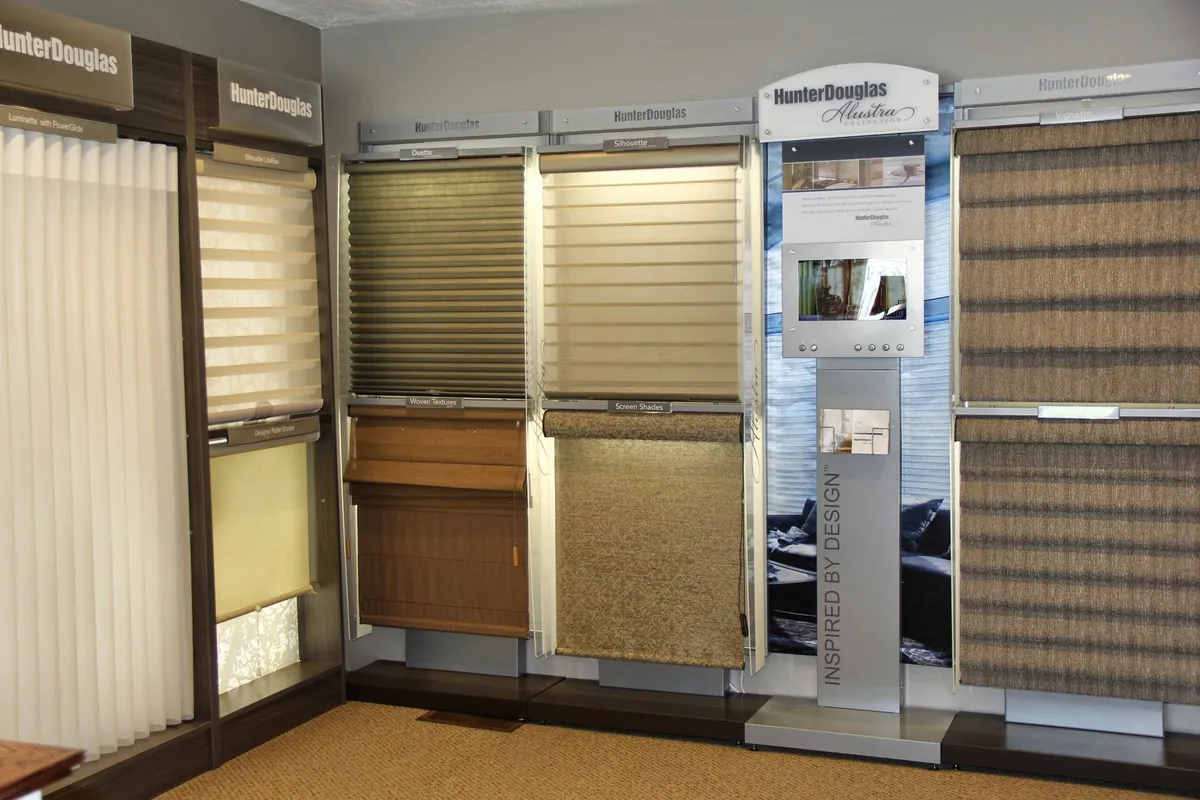
The Gallery dealer title is one Hunter Douglas grants sparingly, and Blinds & Designs carries it. For a triple-decker or a Victorian, that means the long Duette drops for tall sash, Applause for whole flats, sideways shades for back-porch sliders and PowerView for the windows nobody can reach, all from one dealer.
Every shade is hung by installers holding Hunter Douglas certification. Older blinds or shades around the building that have stopped behaving are welcome too, through our blind and shade repair service.
Shutters and roman shades suit some rooms better than honeycomb, and we supply those as well. Look at plantation shutters in Woonsocket and roman shades in Woonsocket, or every service for the city on our Woonsocket page.
Questions from Woonsocket
My ground-floor front room is right on the sidewalk. What gives the most privacy?
A top-down, bottom-up honeycomb shade keeps the lower glass covered while the top opens for daylight. For evenings, a heavier or room-darkening fabric stops the room showing through when the lamps are on.
Can you match shades across all three flats of a triple-decker?
Yes. We can use the same fabric and color on every floor, with lighter or darker versions where each flat needs them, so the building looks uniform from the street.
Will honeycomb shades fit my tall original Victorian windows?
In most cases. Duette is made slim and long enough for tall original sash. The deciding factor is the frame: a shallow head or a racked opening means the shade is fixed to the face of the casing rather than inside.
How do I reach the top of a shade on a very tall window?
Top-down, bottom-up shades often rest at a comfortable middle height, and PowerView motorization lets you move the tallest shades from a phone, a remote or a schedule.
Do you charge for the estimate?
There is no charge. Measuring happens during the consultation and the estimate that follows is free; Request a Consultation is the way to book.
Book a visit
Street-side privacy and a warmer high-ceilinged room are both easiest to judge with a sample pressed to your own glass. Book through Request a Consultation and the honeycomb range comes to the flat; every window is measured, and the estimate is free. Prefer to talk it through? Use the call button, or begin at the Franklin showroom, our closest location.