
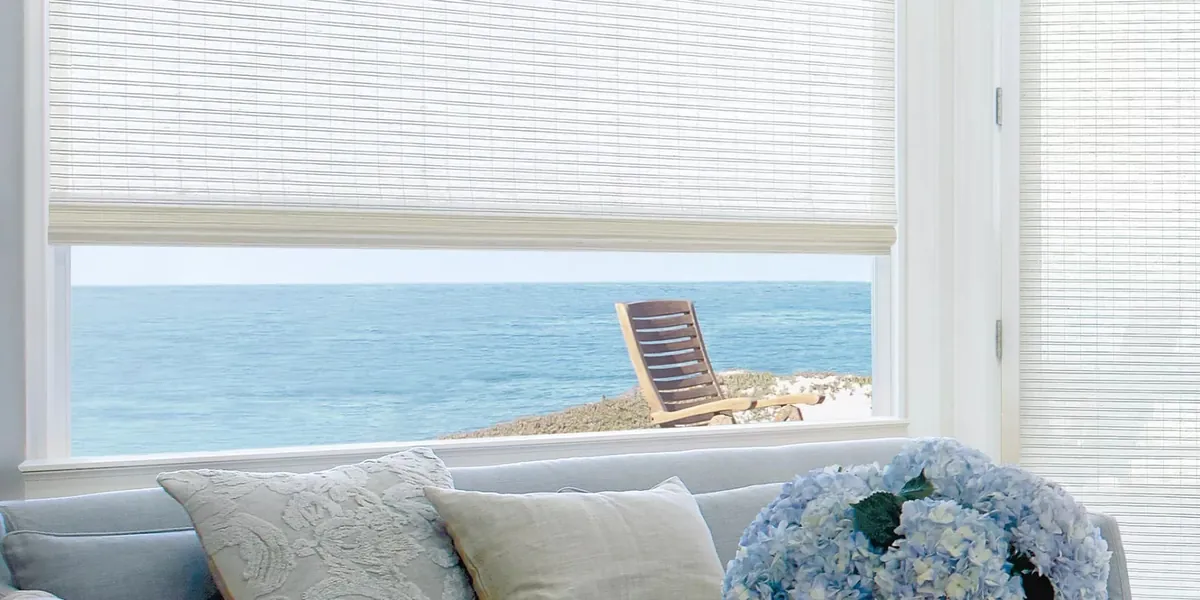
Pond rooms built around the view
Much of Pembroke’s housing sits near water. The post-war ranches and capes gathered around the ponds were placed to look out at them, and their living rooms, kitchens and back bedrooms are arranged so the pond fills the windows. Nobody who chose a house like that wants a window covering that blocks the reason they bought it. That is the starting point for nearly every conversation we have about motorized blinds in Pembroke, MA: how to manage sun, glare and privacy without losing the water.
A motor helps because the right position for a pond-facing shade changes through the day. Sun on still water is bright in the morning on one shore and in the late afternoon on the other. A shade that drops partway for an hour and lifts again is useful only if someone remembers to do it. PowerView does the remembering.
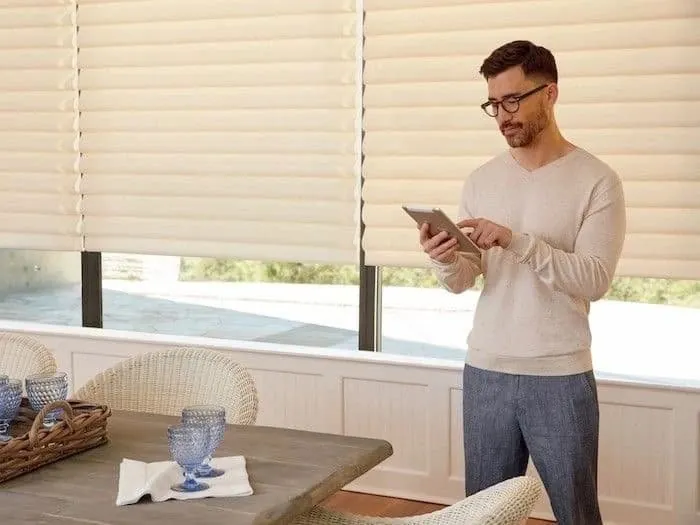
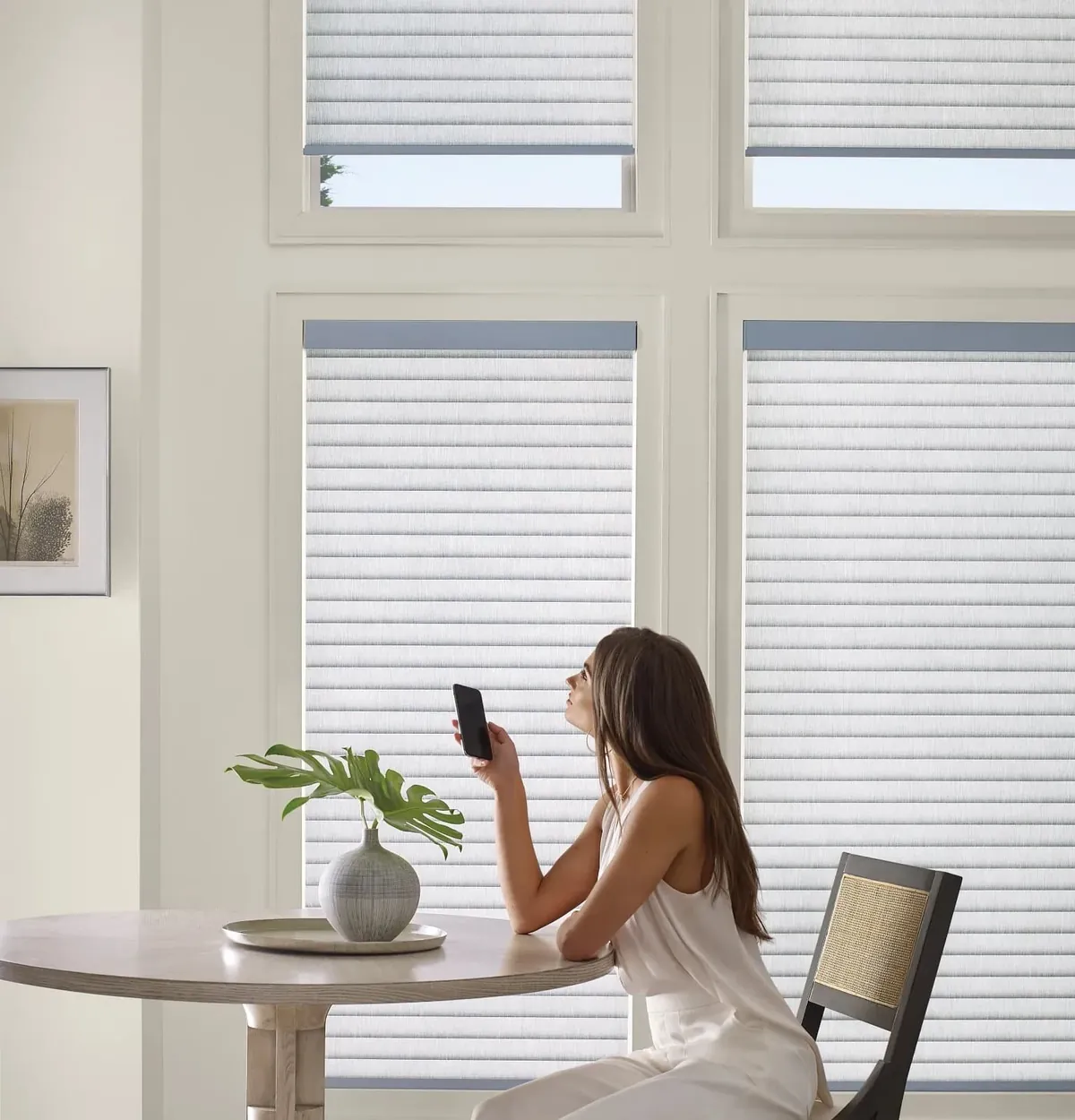
Each shade runs from a small remote, from the app on your phone or tablet, or on schedules you set once and leave alone.
Three Pembroke rooms that suit a motor
These are the rooms where we plan motorized blinds in Pembroke most often. The buttons lead to the matching service in town.
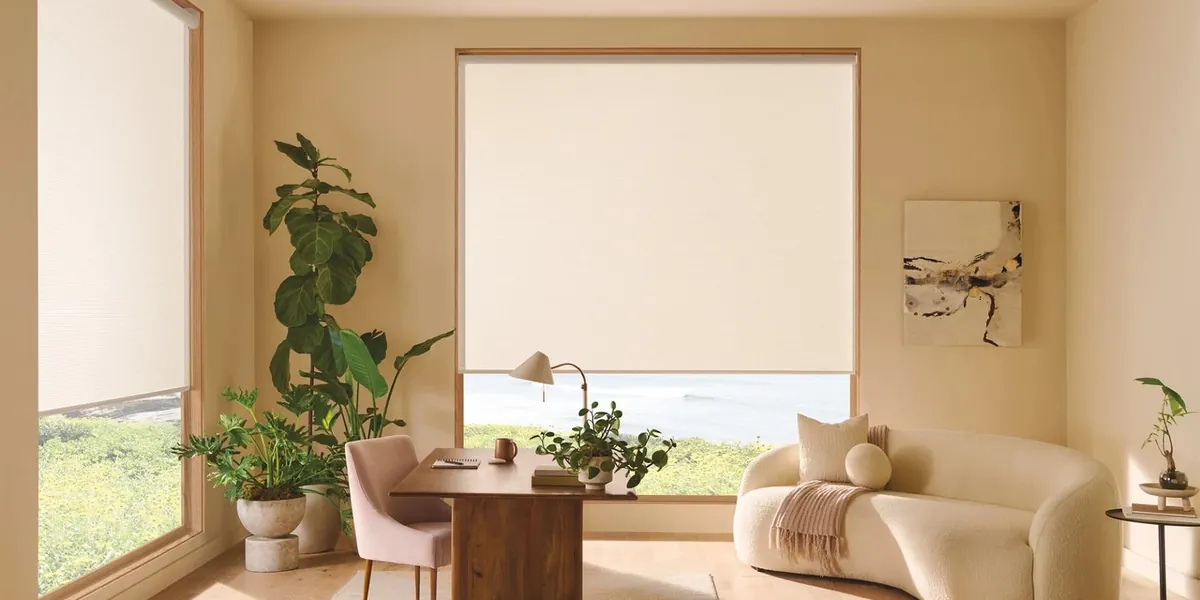
The pond-side living room
Screen or roller shades that cut the glare off the water while the view stays visible through the weave.
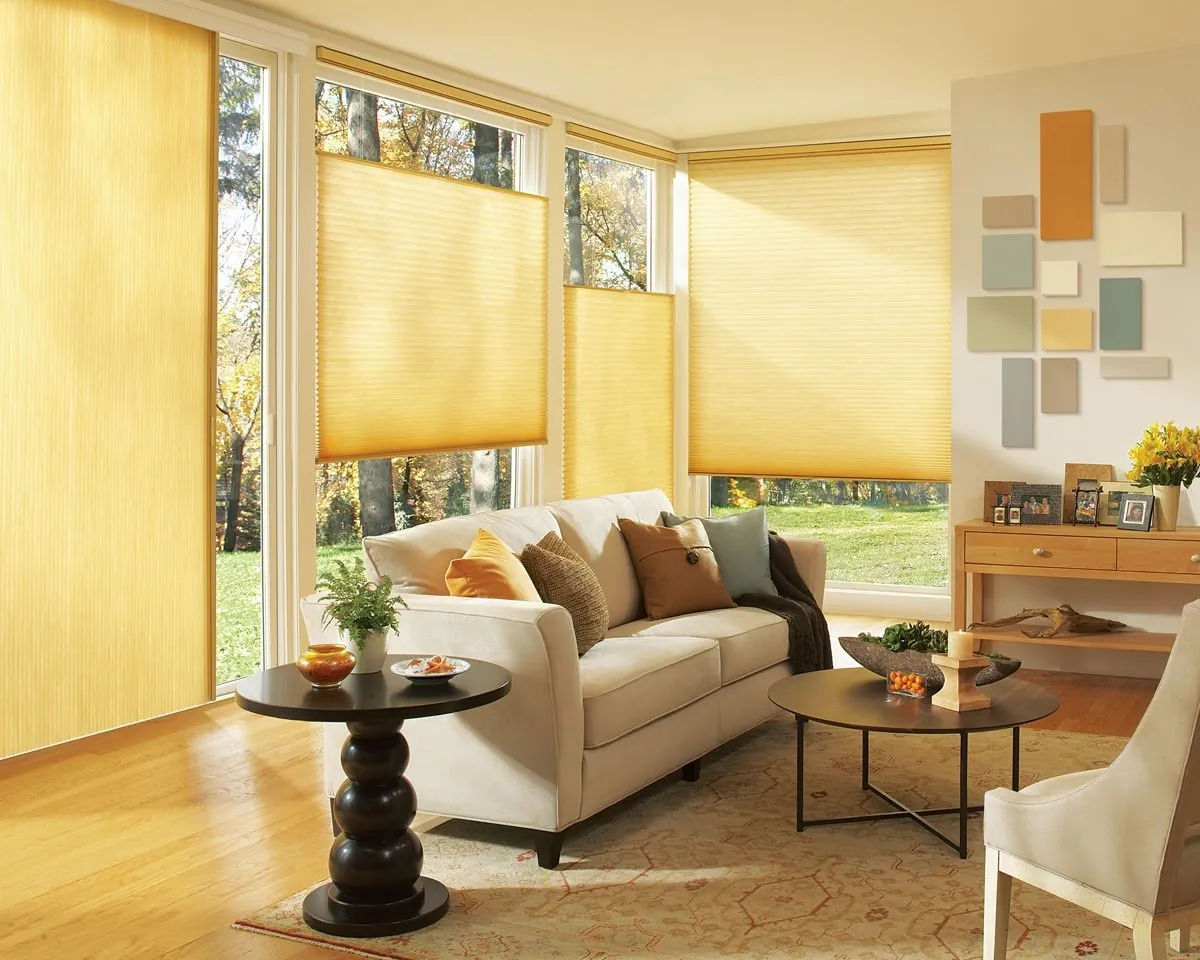
Half-story bedrooms in a cape
Honeycomb shades in dormers and gable windows that are awkward to reach over a bed or a chest.
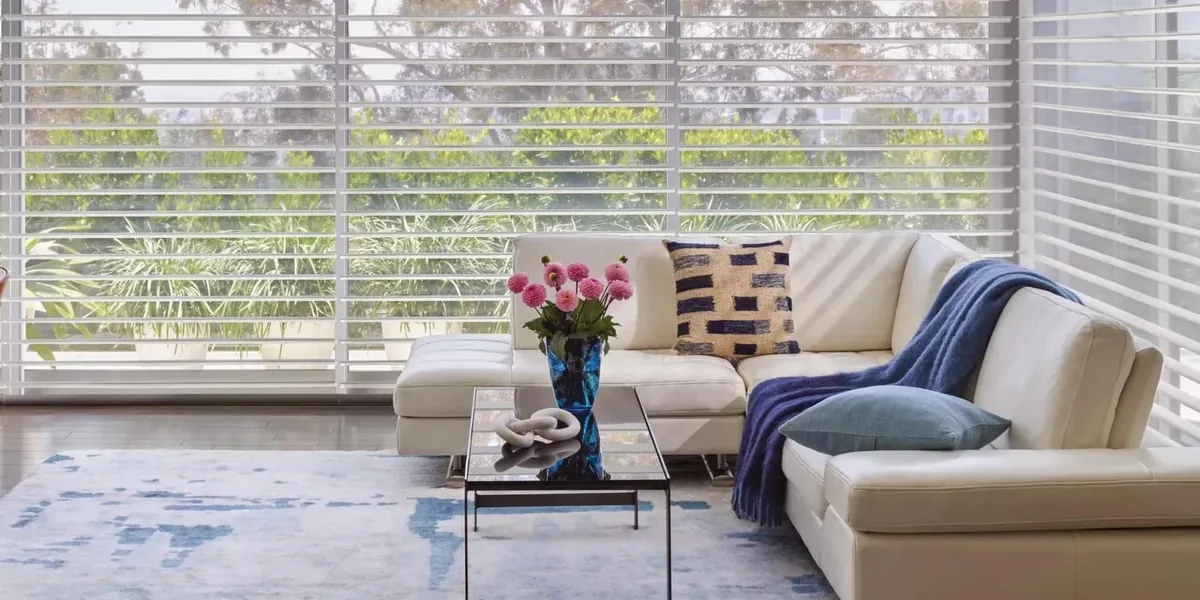
The colonial’s family room
Sheer shades across a run of tall windows, grouped so they move together at one touch.
Keeping the water in sight
There are two ways to control light without hiding a view, and we usually show both side by side at the window.
The first is a screen shade. Its fabric is a fine weave with a chosen openness. A more open weave lets you see more of the pond and the far shore, and softens the glare rather than stopping it. A tighter weave blocks more of the sun and gives more daytime privacy, at the cost of some of the view. In a pond-facing room most people land somewhere in the middle, and seeing the samples against the real water is the only reliable way to choose.
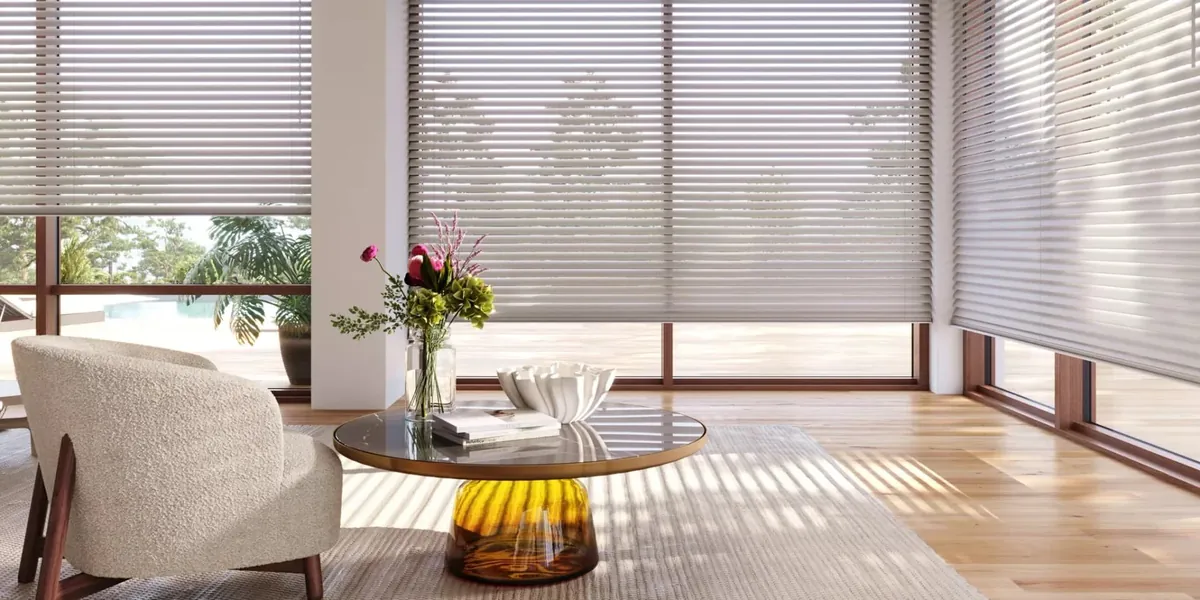
The second is a sheer shade with fabric vanes, such as Silhouette. With the vanes open you look through a soft sheer to the water. Tilt them and the light is diffused across the room. Close them and the room becomes private. On a motor you can save each of those positions and move between them with a single press.
Top-down, bottom-up honeycomb shades are a third option for a bedroom by the water: the top lowers to let in sky and light while the lower half stays covered for privacy from the shore path or a passing boat.
Post-war ranches near the ponds
A post-war ranch is one of the easiest houses there is to motorize. Everything is on one floor, the windows are standard sizes, and most frames leave enough depth for a motorized headrail to sit inside the opening. The typical layout puts a picture window at the front, a kitchen window over the sink, a slider to the back yard and a hallway of bedrooms.
On the pond side, the picture window or the slider is usually the star. A wide window is split into two or three shades on one headrail group so it opens and closes in one movement, and the shades all stop on the same line. The window over the kitchen sink is the second favorite. Reaching over the faucet and a counter full of dishes to find a cord is an everyday nuisance, and a small wall control by the kitchen door ends it.
Many ranch projects start with just those two openings and the main bedroom. Because the windows repeat from room to room, adding more later is simple, and new shades join the same app.
Capes and their upstairs rooms
The capes around the ponds bring a different set of windows. Downstairs, the rooms are much like a ranch. Upstairs, the bedrooms sit under the roof with sloping ceilings, and the windows are in dormers or the gable ends. A dormer window is often at the back of a short recess, and reaching it to raise or lower a shade means kneeling on a bed or leaning over a dresser.
A motorized honeycomb shade is a neat answer. It can stay closed until a set hour and lift by itself, or wait for the remote on the nightstand. In summer, a schedule that lowers the upstairs shades during the hottest hours keeps a room under the roof more comfortable by evening, because the cells in a honeycomb shade slow the heat coming through the glass.
Gable windows facing the pond are sometimes the best view in the house. A top-down shade there lets you keep the water in sight from bed while the lower glass stays covered.
Newer colonials off Route 14 and Center Street
Further from the water, the newer colonials have their own patterns. They are two full stories, with a front entry that often rises to a tall foyer, a family room at the back that may open to a kitchen, and a primary suite upstairs with windows on two walls. The windows are modern and regular, and many of these houses have a window set high above the front door or over a fireplace.
That high window is usually where motorized blinds in Pembroke, MA, start in a colonial. Out of reach without a ladder, it is generally left uncovered, and in summer it pours heat into a two-story space. On a motor it lowers with the windows beneath it and follows the same schedule.
The family room is the second step. A run of tall windows, often with a slider among them, works well as one group of sheer or honeycomb shades, so the whole wall closes at dusk with one press. Upstairs, the primary suite with windows on two walls is a natural third group, with room-darkening fabric that stays down on weekend mornings and lifts at the usual hour during the week.
Why standard sizes make a whole-house plan practical
Most Pembroke houses have standard modern window sizes. That is good news for a motorized project. The openings are square, the frames are deep enough, and the same sizes repeat across the house, so there are fewer surprises and the shades fit cleanly.
It also means a whole-house plan is easy to stage. You can motorize the rooms that matter most now and match the rest later with the same fabrics and the same controls. Every shade added later joins the existing groups and scenes in the app, so the house grows into the system without starting over.
Wood and faux wood blinds can also suit these houses, particularly in a kitchen or a den. Not every blind range or size can take a motor, so if you have a blind in mind for a particular window, tell us at the start and we will check it at the visit.
A summer day by the pond, in scenes
Here is how a set of PowerView scenes might run in a house that faces the water.
- At first light the bedroom shades stay down, so the sun off the pond does not wake anyone early.
- At the time you choose, they lift partway, then fully a few minutes later.
- When the sun reaches the water on your side, the living room screen shades lower to their glare position, the pond still visible through the weave.
- Once the sun moves round, they rise again and the room opens to the view.
- At sunset the shades on the shore side close for the evening, so lit rooms are not on show across the water.
Steps three and five can be tied to sunrise and sunset rather than a clock time, so the routine shifts with the seasons by itself. Any shade can still be moved by remote or app at any time, and tomorrow’s schedule carries on as normal.
Floors, furniture and the afternoon sun
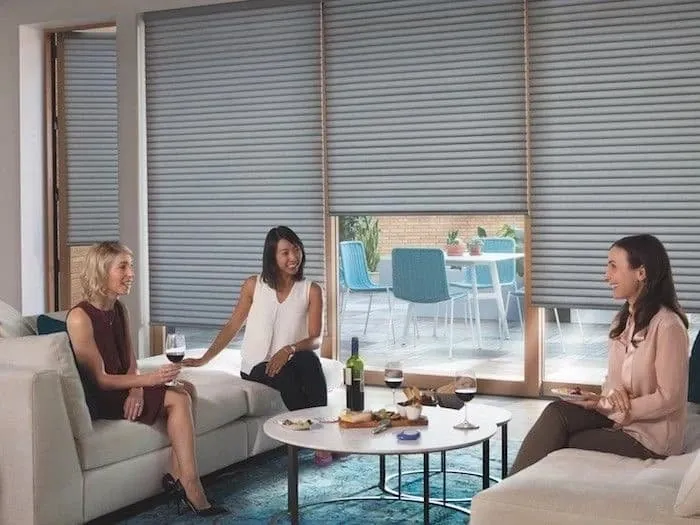
Light reflected off a pond does more than dazzle. In a room that takes it every day, the sun lands in the same places on the floor and the upholstery, and over a few summers a rug or a sofa arm shows a pale patch where it sits. Hardwood near a glass door can do the same. Closing the shades all day would stop it, but that defeats the point of a room built around the water.
This is where a motor pays its way. Instead of choosing between a faded floor and a dark room, you set the shades to lower only for the hours when the sun lies directly on the pond side, and lift as soon as it has moved off. A screen or sheer fabric in that position still keeps the room bright and the view open. Many people who ask about motorized blinds in Pembroke, MA, first notice the problem on a favorite chair.
Fabric color is part of the decision too. Lighter, neutral shade fabrics generally cope best with a window that takes strong daily sun, and we will point out the ones that suit a bright water-facing room when you are choosing.
Lit rooms after dark
A view across water works in both directions. Once the lamps are on in the evening, a pond-facing living room is easy to see into from the far shore, from a boat or from the road that runs round the pond. Few people want to walk round the house closing every shade at dusk, and in late autumn dusk arrives before many households are even home.
A sunset schedule takes care of it. The shades on the water side close as the light goes, at whatever time that happens to be that week, and open again in the morning. If you are away for a few days, the shades carry on opening and closing as usual, so the house keeps its everyday look.
Sliders and decks
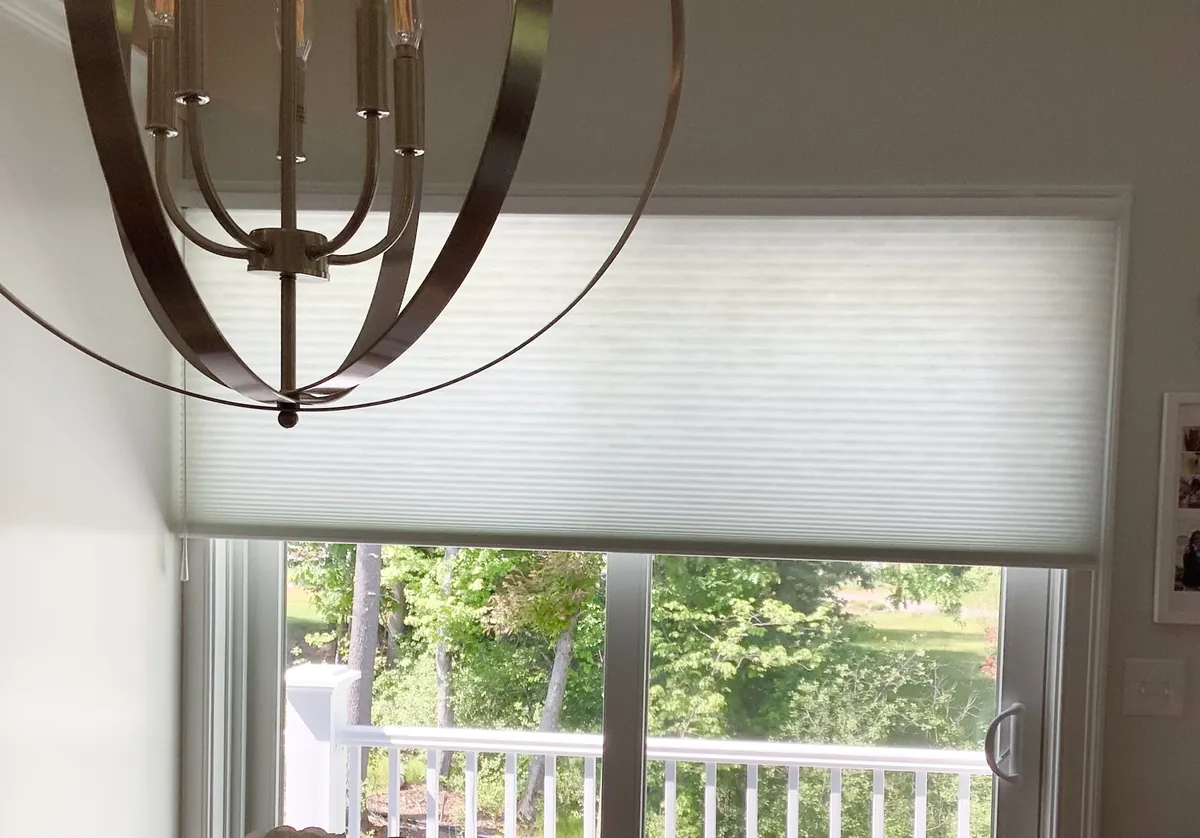
Almost every pond-side house in town has a slider to a deck or patio, and it is often the busiest door in the house. A vertical honeycomb shade or a vertical sheer that travels sideways lets you step straight out without lifting anything. Whether that shade gets a motor depends on how you use the door. If it is opened many times a day, a manual traverse is often more convenient. If the slider is one of a wall of glass that you want to close at dusk, a motor that groups it with its neighbors makes more sense. We talk it through at the house rather than assume.
Three ways to run the shades
A remote or wall control handles a single shade, a room or a group, and is the simplest choice for guests and for anyone who prefers a button. The PowerView app shows every motorized shade in the house on your phone or tablet, arranged by room, with the scenes you have saved. Schedules run those scenes at set times or at sunrise and sunset, on every day or only the days you pick. Most houses use all three.
Our guide to how motorized shades are controlled explains each in plain terms, and the window covering automation page covers scenes and timing in more depth. We also have a guide to the best shades for sun and glare if a bright pond-facing room is your main concern.
How each motor gets its power
Every motor needs a power source, and the right choice depends on the shade, the window and the wall behind it. We plan how each motor is powered at the visit and agree it with you before anything is ordered.

From the first visit to the last shade
Our vans carry samples, so we can bring the showroom to you. That matters on a pond-side house, because how a screen fabric handles glare off the water only shows at your own window.
- Request a consultation online or by the call button, and pick a time.
- We look at each room with you, noting which face the water and when the sun hits it.
- You compare screen, sheer and honeycomb samples at the glass.
- We measure each window and confirm there is depth for the motorized headrail.
- You choose the motorized windows, the groups and the scenes, and we agree how each motor is powered.
- A free estimate follows for you to consider.
- Our certified Hunter Douglas installers fit the shades, set their stopping points, pair the remotes and app and program the schedules.
More about the first meeting is in what happens at an in-home consultation.
A Gallery dealer on the South Shore
Hunter Douglas names dealers who meet its standards as Gallery dealers, and Blinds & Designs is one. For a Pembroke project that means the full PowerView range: screen, roller, sheer, honeycomb and Roman shades, plus a number of blinds, all on the same app. A ranch on the water and a colonial off Center Street can each get what suits them.
Our installers are certified by Hunter Douglas, and programming the motors is part of their job. Interior design consultations are available if you want help pulling a room together, and we repair blinds and shades you already own.
For other services in town see custom blinds in Pembroke, roman shades in Pembroke and plantation shutters in Pembroke, or everything on our Pembroke page. The whole motorized range is on the motorized blinds and shades page.
Questions from Pembroke
Can I cut the glare off the pond and still see the water?
Yes. A screen shade with a fairly open weave, or a sheer shade with its vanes tilted, softens the glare while the water stays in view. On a schedule they lower only while the sun is on your side of the pond.
Are dormer windows in a cape hard to motorize?
Not usually. The motor sits inside the headrail, so the shade fits a dormer like any other window. We check the depth and width at the visit, and the shade then runs from a remote instead of a stretch across the bed.
Can I start with a few windows and add more later?
Yes. Most Pembroke houses have standard sizes that repeat, so it is easy to match later shades to the first ones. New shades join the same app, groups and scenes.
Should the slider to my deck have a motor?
It depends on how often you use it. A busy door is often easier with a shade you slide by hand. If the slider is part of a wall of glass you close at dusk, a motor that groups it with the windows beside it can make sense.
How much is the estimate?
It is free. We measure at the house and leave you a written estimate to consider.
Start with your own windows
The best way to judge motorized blinds in Pembroke, MA, is to hold the fabrics up against your own pond view. Request a consultation and we will bring samples, measure each window and leave a free estimate. If you have a question first, use the call button, or stop in at the Sagamore showroom, our nearest location.