
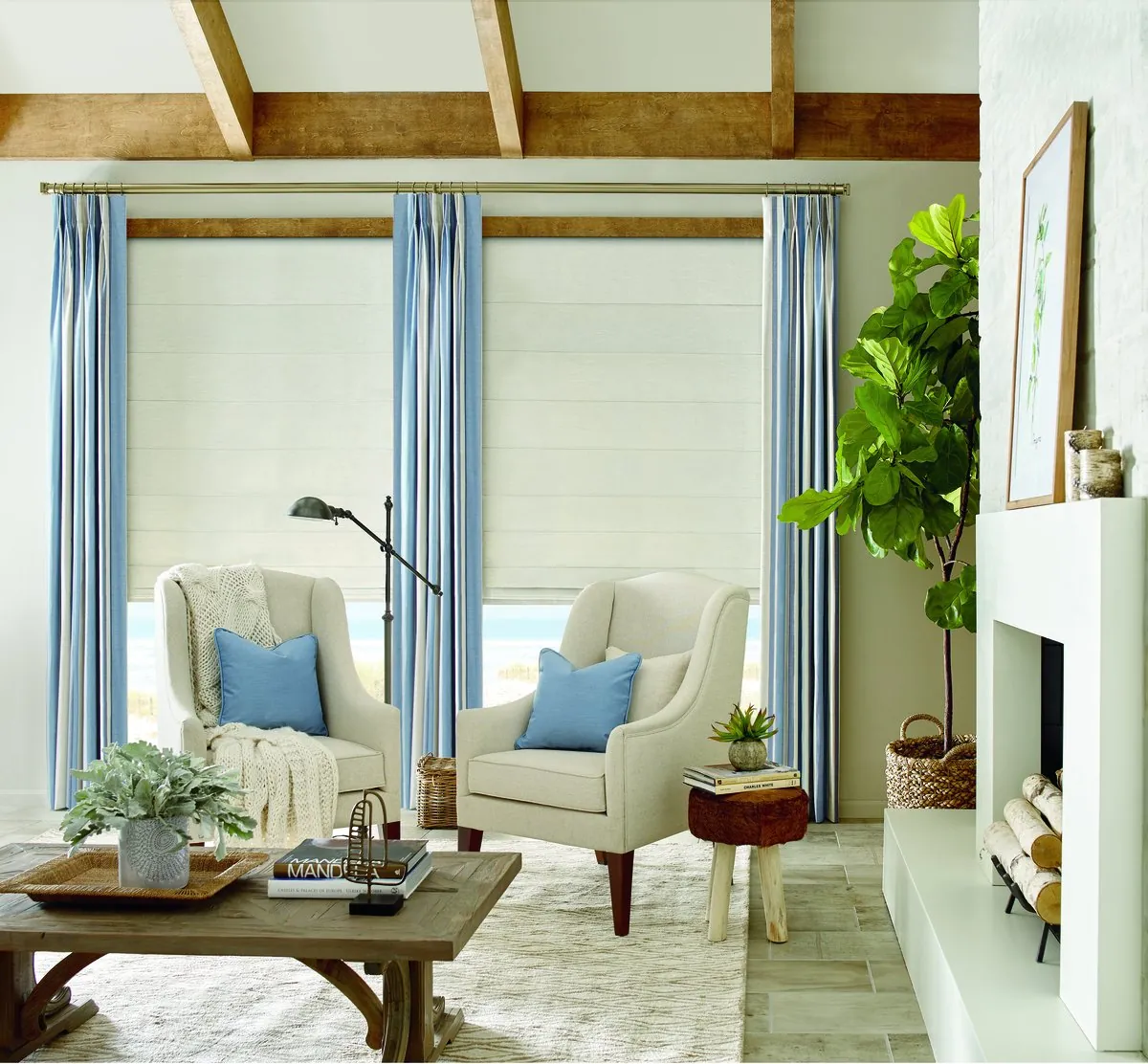
Main Street, the harbor and the woods inland
Hingham’s houses fall into two broad groups. Along Main Street and around the harbor stand antique colonials and Federal houses, with small sash set deep in their walls and a long history that owners are keen to respect. Inland, larger newer houses sit on wooded lots, with bigger windows and a very different kind of light. Choosing roman shades in Hingham, MA, depends a great deal on which of those houses you live in.
In the older houses, the brief is to dress a small, deep window in a way that suits the period and looks right from the street. In the harbor rooms, the view is the reason the room exists, and the shade must protect it rather than hide it. In the newer houses inland, the windows are larger and the trees outside soften the light, so the shade has a different job again.
Our consultant arrives with the Hunter Douglas Vignette range and the Carole Fabrics library, in flat and folded versions, and tries them against the windows you actually have.
How Hingham homes use fabric shades
Three starting points cover most of the houses we see in town. All of them can be held up at your windows during the visit.
Carole Fabrics for older houses
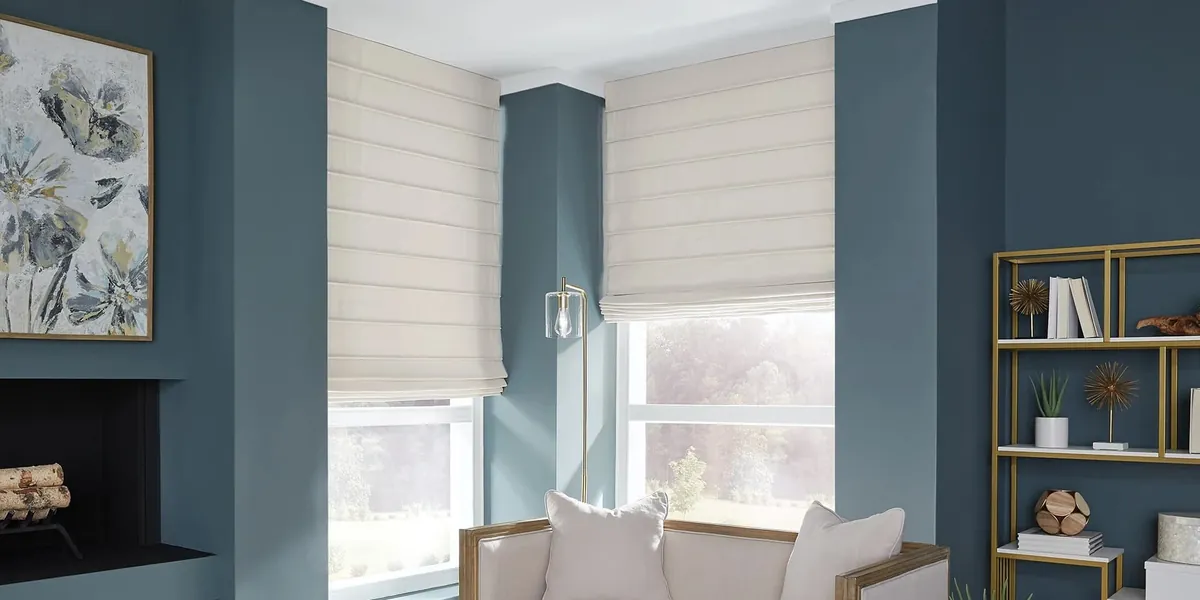
A broad choice of weaves and tones, made up smooth or looped, including quiet textures and colors that sit well beside old paneling and painted trim.
Vignette for the newer houses
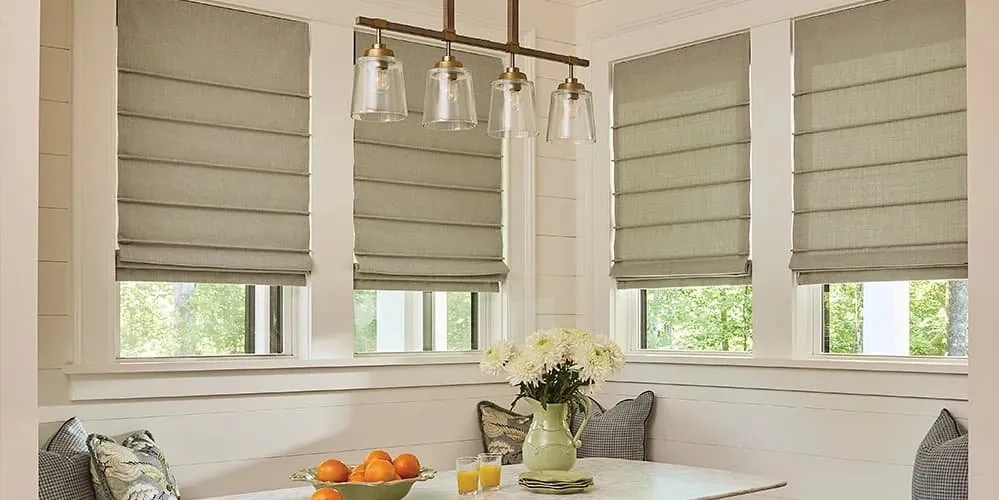
A tailored roman shade with even folds, well matched to the larger windows and cleaner lines of a newer house inland.
A light cloth for harbor rooms
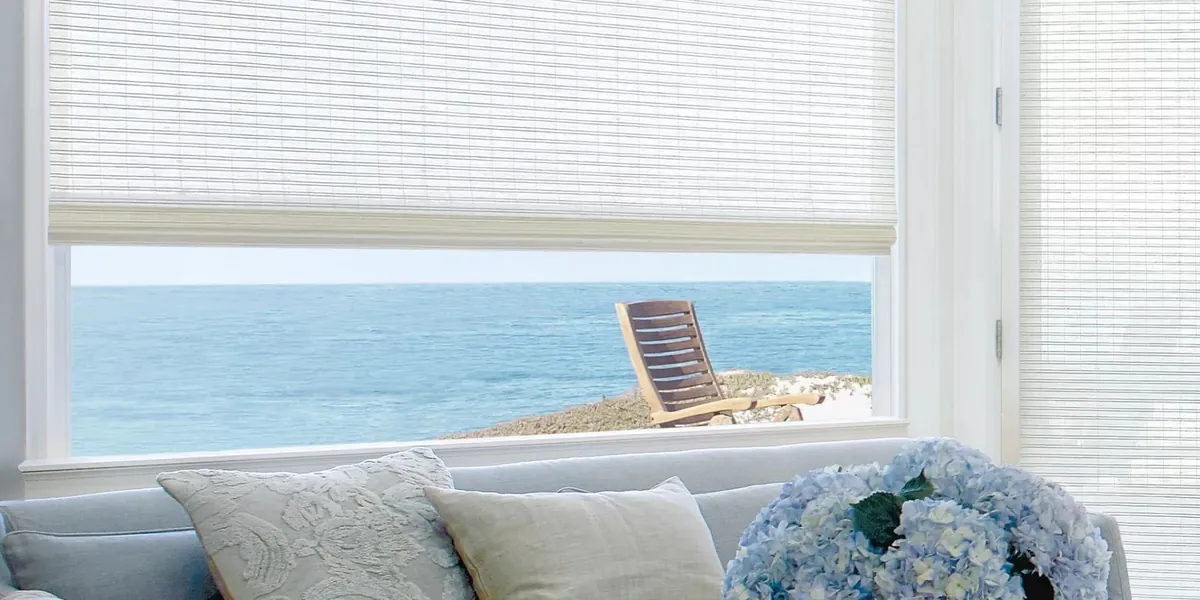
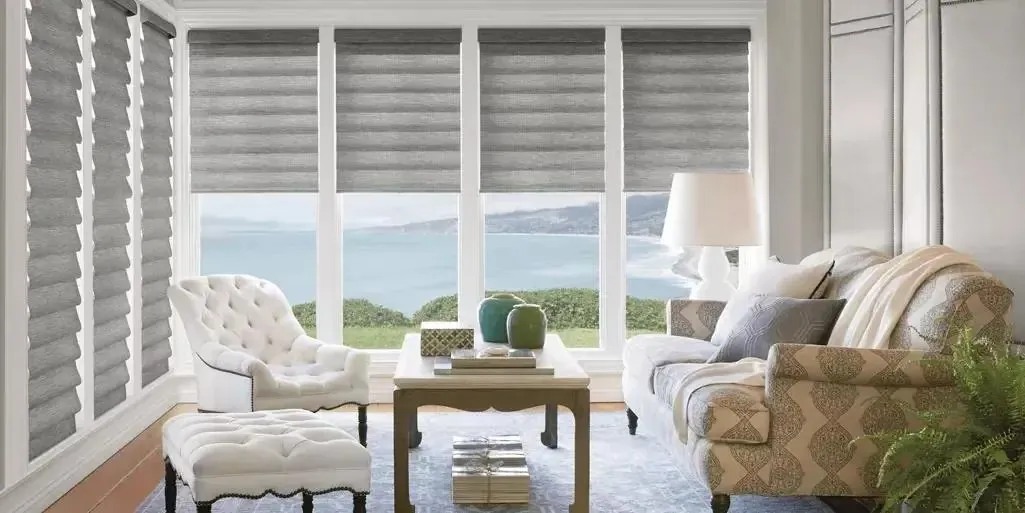
In a room built around the water, a pale, open weave takes the edge off the brightness and lifts away to give back the view.
Historic expectations along Main Street
An antique colonial or Federal house on Main Street is seen by everyone who walks or drives past, and many owners feel a responsibility to keep its face to the street in character. Window shades are part of that face. A bright modern color in one window can look out of place on a house with that much history behind it.
The usual approach is to keep the outward side of every street-facing shade in a quiet, consistent tone, often an off-white, cream or soft natural color, and to fit the shade inside the window opening so the old trim and sash remain the main thing you see. Inside, the room can carry whatever color or pattern you like. If your house is subject to any local historic guidance, bring it to the consultation and we will choose with it in mind.
Small, deep-set sash
The older houses in Hingham have windows set well into thick walls, leaving a deep recess around each small sash. That recess is a gift for a fabric shade. Most are deep enough to hold the headrail out of sight within the opening, which leaves the paneling, trim and plaster around it untouched.
The size of the sash calls for some care. When a roman shade goes up, its folds collect at the head of the window, and on a short sash those folds can hide more glass than you might expect. Smooth panels in a fine cloth pack down tighter than looped folds in a heavy one. Setting the headrail forward, near the room side of the recess, lets the gathered fabric hang a little in front of the glass. Every opening gets its own tape measure, because in a house of this age no two are quite the same. Fitting roman shades in Hingham, MA, into these windows is careful work, so the consultant demonstrates how high your chosen cloth will sit when raised before anything is ordered.

Federal houses
Hingham’s Federal houses have a formal, balanced look: symmetrical fronts, windows spaced evenly on each side of a central door, and refined trim inside. In these rooms, the shades should support that balance rather than disturb it.
Matching shades on each pair of windows, set to the same height, keep the symmetry intact both inside and from the street. A soft fold in a fine Carole fabric suits the more formal front rooms, while a flat style can work well in a library, a kitchen or a bedroom where a plainer look is wanted. Because the trim in a Federal house is often worth showing off, fitting the shade inside the opening is usually the better choice.
Bedrooms upstairs in an antique house
Upstairs in Hingham’s older houses, bedrooms tend to be modest rooms with small windows, sometimes set low under the eaves or tucked into a gable. Wide floorboards, sloping ceilings and plain plaster give them a quiet charm, and the shade should keep that mood.
Here the main concern is usually how dark the room gets. A small window under the roof can still let in a sharp beam of early light, so a fabric with more body is often the right choice, even though the window is small. Because these openings are compact, a flat fold makes most sense, keeping the raised shade from eating into the glass. A soft natural color, close to the plaster, lets the shade blend in by day.
Where a bedroom faces the harbor, the brief changes again: a lighter cloth that lifts clear for the view in the morning, with enough density to give privacy once the lamps are on.
Doing an old house room by room
Antique houses are rarely done all at once. Owners often start with the rooms the street sees, the front parlor and dining room, then move to the bedrooms and the kitchen over time. That works well with roman shades, since every choice from the first visit is written down: fabric, color, fold and the way each shade is mounted. A later order can repeat the first exactly, so the front of the house stays consistent even if the back rooms come a year later.
Rooms built around the harbor view
Around the harbor, many rooms were designed for one thing: the view across the water. Living rooms, dining rooms and bedrooms are arranged to face it, and the windows are where everything in the room points. A shade in a room like that has a delicate job. It must manage bright light reflected off the water and offer privacy at night, but it must not compete with the view by day.
A roman shade suits this well because it can disappear. Raised, it gathers neatly at the top of the window and the whole outlook is back. Lowered partway on a bright afternoon, a light cloth softens the glare from the water while still showing the harbor through the open part of the window. A pale color keeps the shade quiet against the view rather than drawing the eye. After dark the situation reverses: the harbor goes black, the lit room becomes the brightest thing on the waterfront, and boats or walkers along the shore can see straight in. That is when the same shade comes fully down, so a harbor room usually wants a cloth light enough for the day and dense enough for the evening. When owners in the older harbor houses ask about roman shades in Hingham, MA, the first thing we look at is how much glass the raised shade will leave clear.
Larger houses on wooded lots inland
Away from Main Street and the harbor, Hingham’s newer houses are larger and often set on wooded lots. Their windows are bigger and more modern, and the trees around them change the light completely. Instead of strong direct sun or bright reflection off water, many rooms get filtered, dappled light that moves with the leaves.
That shifts the decision. Privacy is rarely a pressing concern on a wooded lot, and the light is often softer than in town, so a heavy fabric can make a room feel dim. A lighter cloth usually suits the living spaces, keeping what light comes through the trees. Bedrooms may still want something heavier, especially those facing east where the morning sun breaks through. The larger windows also suit Vignette’s clean profile, and a smooth Carole panel in a linen-like weave looks equally at home.
In winter, when the leaves are down, the same rooms can be much brighter than in summer. Being able to stop the shade at any height makes it easy to follow the seasons: higher under a full summer canopy, lower once the branches are bare.
Kitchens and family rooms in the newer houses
The newer houses inland often have a large kitchen opening onto a family room, with generous windows looking into the woods behind. In a space that size, the shades are seen together, so a single color and fold across every window keeps the room calm. Over the sink, a light flat style that is easy to raise suits daily use. By the sofa, where a television competes with the light, a slightly denser cloth on the brightest window helps.
Wooded lots also mean fewer sightlines from neighbors, so many of these rooms can leave their shades raised for most of the day. The shades earn their keep in the evening, when the lit room becomes visible through the trees from the road, and on the occasional bright morning when low sun breaks through the trunks.
Booking a home consultation
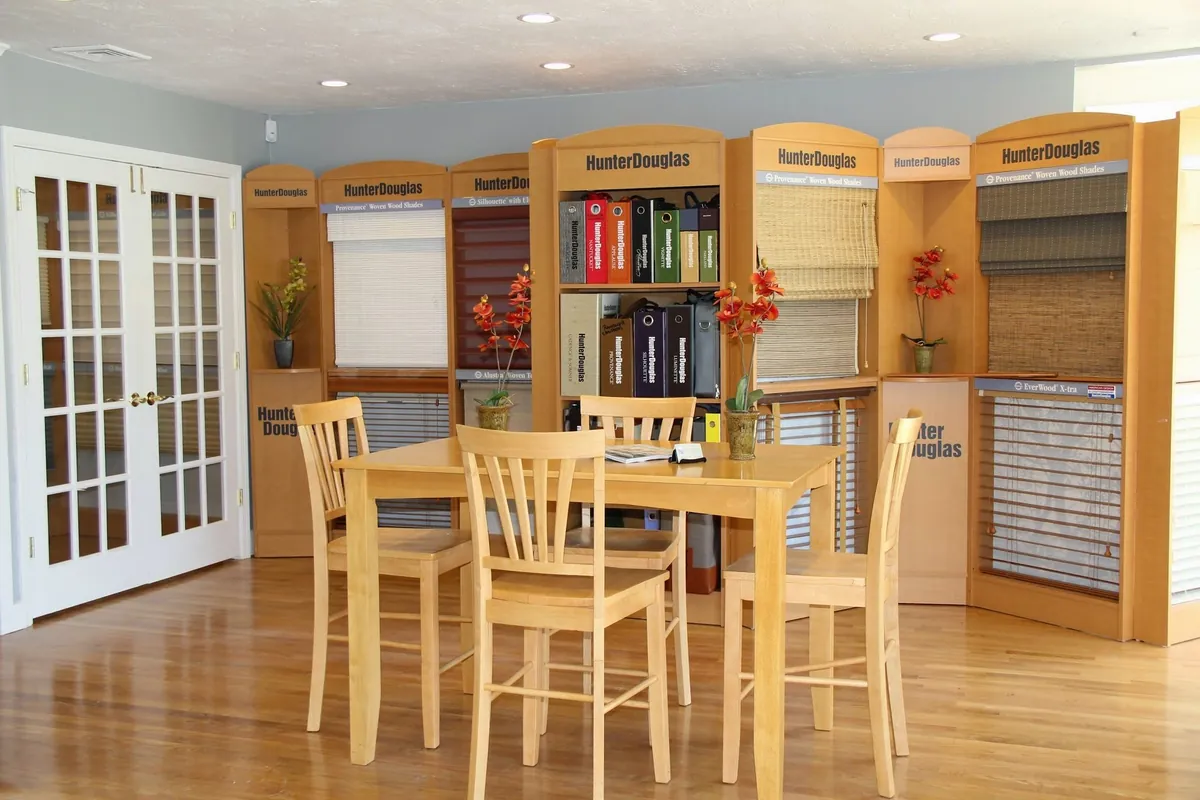
Our shop-at-home service, based in Canton, reaches Hingham, which means the fabric comes to your rooms and you never need to visit a store. How it runs is set out on the Canton shop-at-home page.
- Choose a day on the Request a Consultation form; the call button works if you would rather phone.
- Describe what you are working with, such as a Federal front on Main Street, a harbor living room or a newer house among the trees.
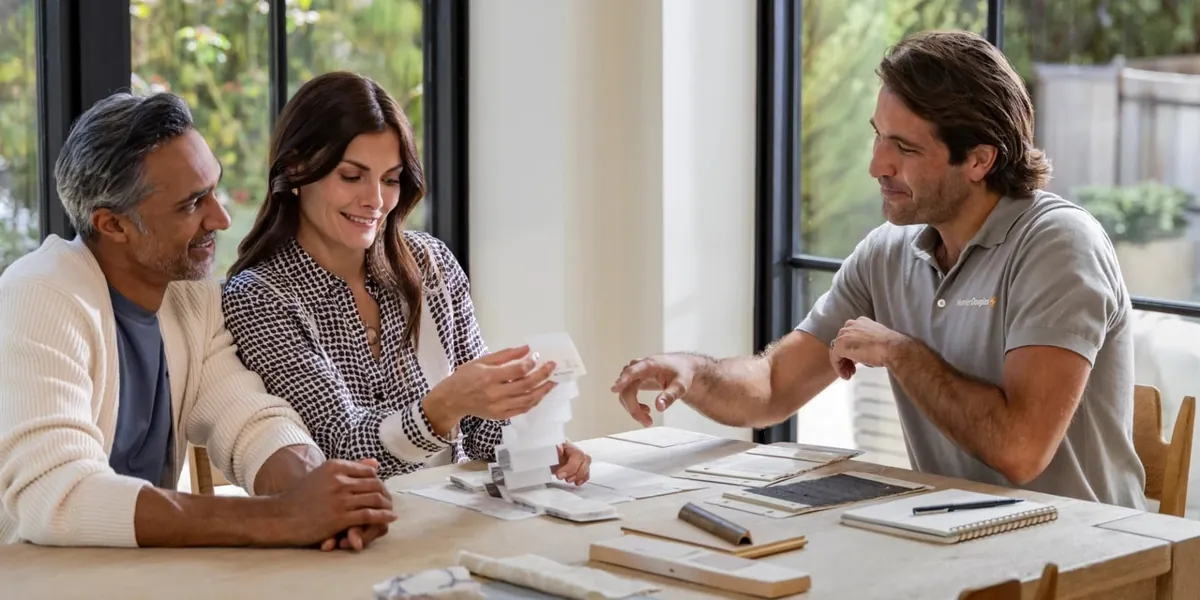
- On the day, swatch books from both lines are opened beside the windows in question.
- Cloths are compared in the brightest room, often the one facing the water, and in a dimmer one.
- Every window is measured, with the depth of each recess written down.
- Before going, the consultant hands over a free estimate covering each room.
Read what happens at an in-home consultation for the common questions.

Light from the water, light through the trees
The two halves of Hingham get very different light, and that is the biggest single factor in choosing a fabric. In a harbor room, the light is bright and comes from above and below, reflected off the water. A light-to-medium cloth lowered partway is usually the best answer, cutting the glare while keeping the room luminous. In a room under the trees inland, the light is softer and greener, and a pale, translucent fabric keeps as much of it as possible.
Most households end up choosing roman shades in Hingham, MA, with two or three fabric weights in one color: lighter in the living spaces, heavier in the bedrooms. From outside, the house looks consistent; inside, each room gets the light it needs. Our guide to choosing fabric for a sunny room is useful for the harbor side.
Color for old rooms and new
Along Main Street, the most successful colors usually come from the house itself: the cream of old plaster, the honey of wide pine boards, the muted greens, blues and grays of traditional paint. A stark optical white tends to jump out in these rooms, while a warmer ivory blends in. A cloth with a gentle slub suits walls and woodwork that were never meant to be perfectly smooth.
Inland, the newer houses leave more room to play. Saturated colors, bigger prints and crisp whites all look at home in a modern room, and a striped cloth hung vertically adds apparent height. For help pulling cloth, paint and furniture into one scheme, book one of our interior design consultations.
Motorized fabric shades
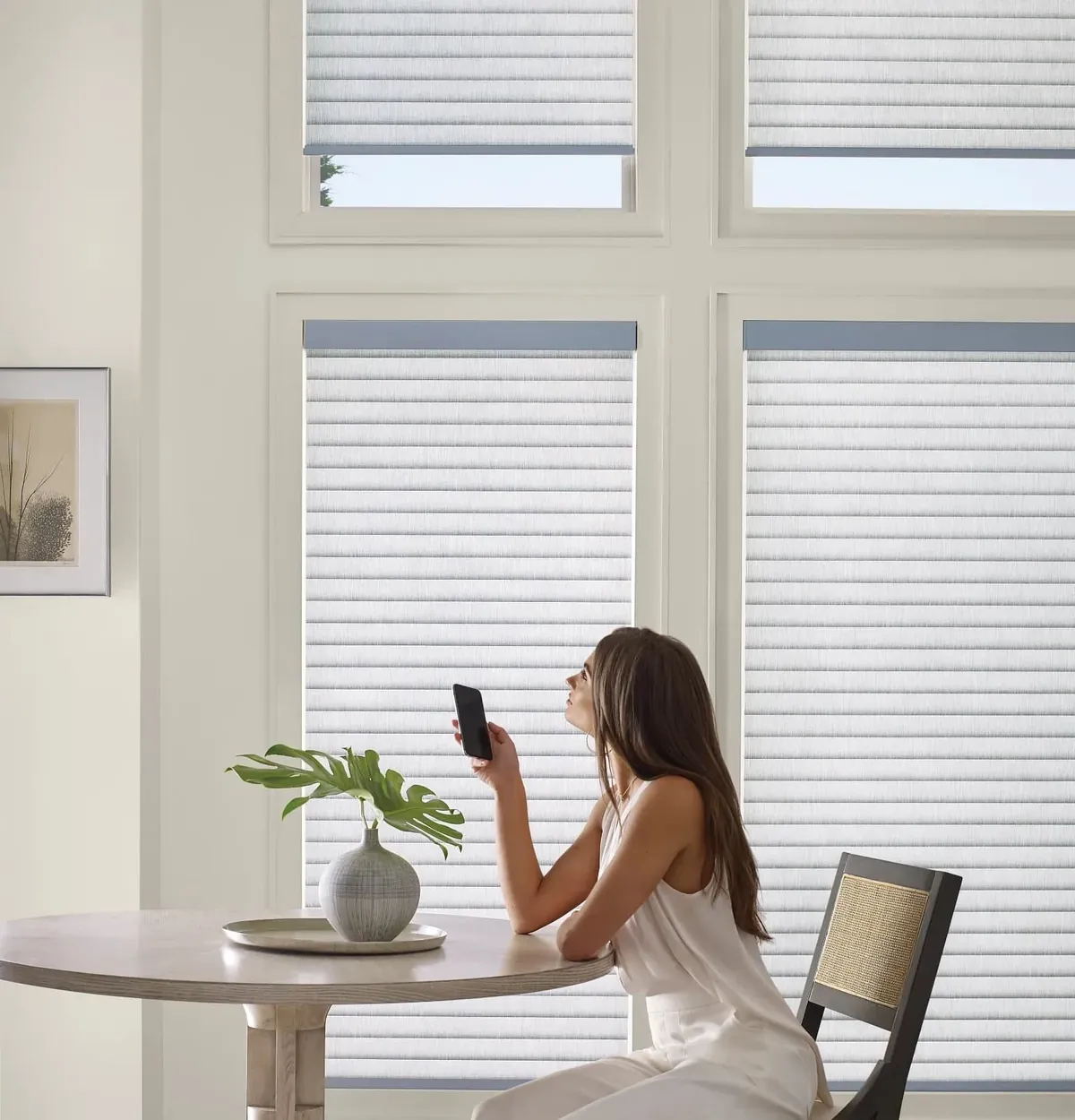
In a large house inland, or a harbor house with a wall of windows facing the water, raising and lowering every shade by hand takes time. PowerView puts each fabric shade on a motor you can run from a small remote, from your phone, or from a timetable. A harbor living room can be told to dip its shades halfway at the hour the water glare peaks, then rise later on. Every bedroom shade on the upper floor can lift at the same moment each morning. Powering the motors is something we settle with you at the consultation. See motorized blinds in Hingham for the wider picture.
Fitting an old house with care
An antique colonial or Federal interior asks for a light touch: old plaster that crumbles if rushed, painted trim with many coats on it, openings that have settled over a long life. Headrails are set dead level even inside a recess that is not, and the installer works around woodwork rather than through it. The newer houses inland are simpler, with each wall’s headrails lined up neatly. Hunter Douglas certifies our installers, and each shade is cycled fully before they go. What happens on installation day has more.
Why a Hunter Douglas Gallery dealer
Hunter Douglas counts Blinds & Designs among its Gallery dealers. In Hingham that means a Federal parlor, a harbor bedroom and a family room in the woods can all draw on both fabric collections without restriction, and should a window be better off with a shutter, a blind or another style of shade, those swatches are with the consultant already. Our installers hold Hunter Douglas certification.
Estimates come free of charge. You can also book an interior design consultation, and we repair existing blinds and shades. Owners of the older houses often weigh up plantation shutters in Hingham too, and the Hingham page covers our full range in town. The roman shades page goes deeper into Vignette and Carole Fabrics.
A home visit is where almost every Hingham order starts. For those who like to walk into a showroom, Franklin is closest.
Questions from Hingham
Our house is an antique on Main Street. Will roman shades look right?
They can. A quiet color facing the street and a shade fitted inside the deep window recess keep the old trim and sash as the main thing you see.
We do not want to lose the harbor view. What do you suggest?
A flat fold in a light cloth, which stacks slim when raised. Lowered partway, it softens the glare from the water and still shows the view.
Our newer house is on a wooded lot and the rooms are not very bright. Which fabric?
Usually a pale, translucent cloth in the living spaces, keeping what light comes through the trees, with heavier fabrics saved for the bedrooms.
Do you measure every window in an old house?
Every one. Antique openings rarely match, so each gets its own measurement and note of depth.
Is the estimate free?
It is, and it comes in writing for each room at the end of the appointment.
Bring the samples to your windows
A deep Federal sash, a harbor room or a big window under the trees: each looks different with fabric in front of it. Book through Request a Consultation, and one visit covers swatches from both lines, a measurement of every opening and a free estimate to keep. Planning roman shades in Hingham, MA, starts there. For anything you want to ask first, press the call button.