
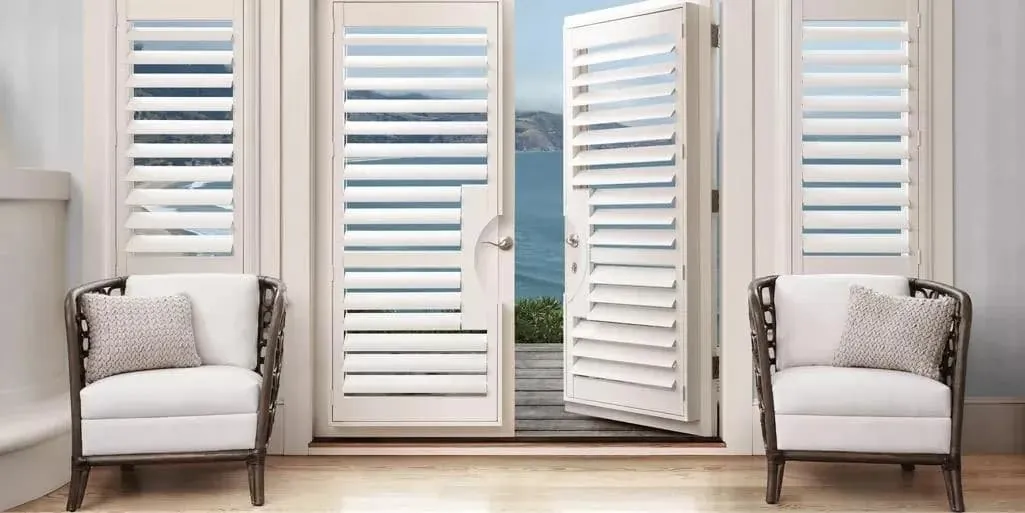
Shingled houses built around the water
Osterville’s houses are some of the largest on the Cape. Around the village and out along the roads to Wianno and Oyster Harbors, big shingled houses sit on generous lots, many of them built or rebuilt to a high specification and used mainly in the summer. Their rooms face the water through walls of glass, French doors and tall windows, and their formal rooms are finished to a standard where drapery is expected. That is the setting for plantation shutters in Osterville, MA.
Those houses ask a lot of a window treatment. The water side takes strong salt exposure and bright reflected light for much of the day. The formal rooms need a treatment that sits quietly under drapery without competing with it. And because so many of these houses are seasonal, the treatment has to look after itself while the house is closed.
Shutters answer all three. They are solid, so salt and damp have little to work on. They are architectural rather than decorative, so they pair easily with fabric. And they need no attention between visits beyond closing them when you leave. The skill is in specifying them well: the right collection in each room, louvers scaled to the glass, and frames and details that match the quality of the house.
Plantation shutters in Osterville, MA, room by room
Every room in a large house has its own conditions. These are the choices we suggest most often, and we bring samples of each to the house.
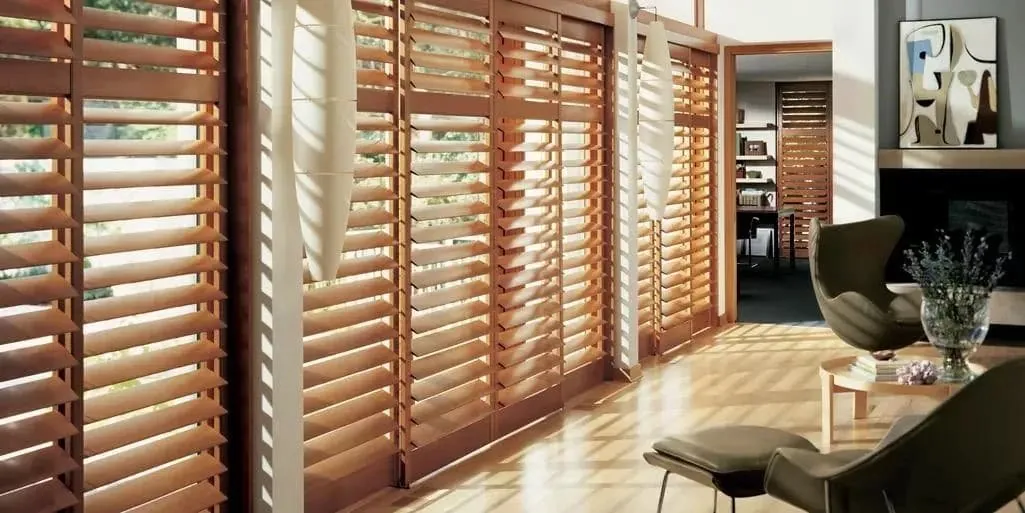
Great room facing the water
Wide louvers across a long run of glass, in painted or stained hardwood, so the view stays open and the late sun is turned to the ceiling.
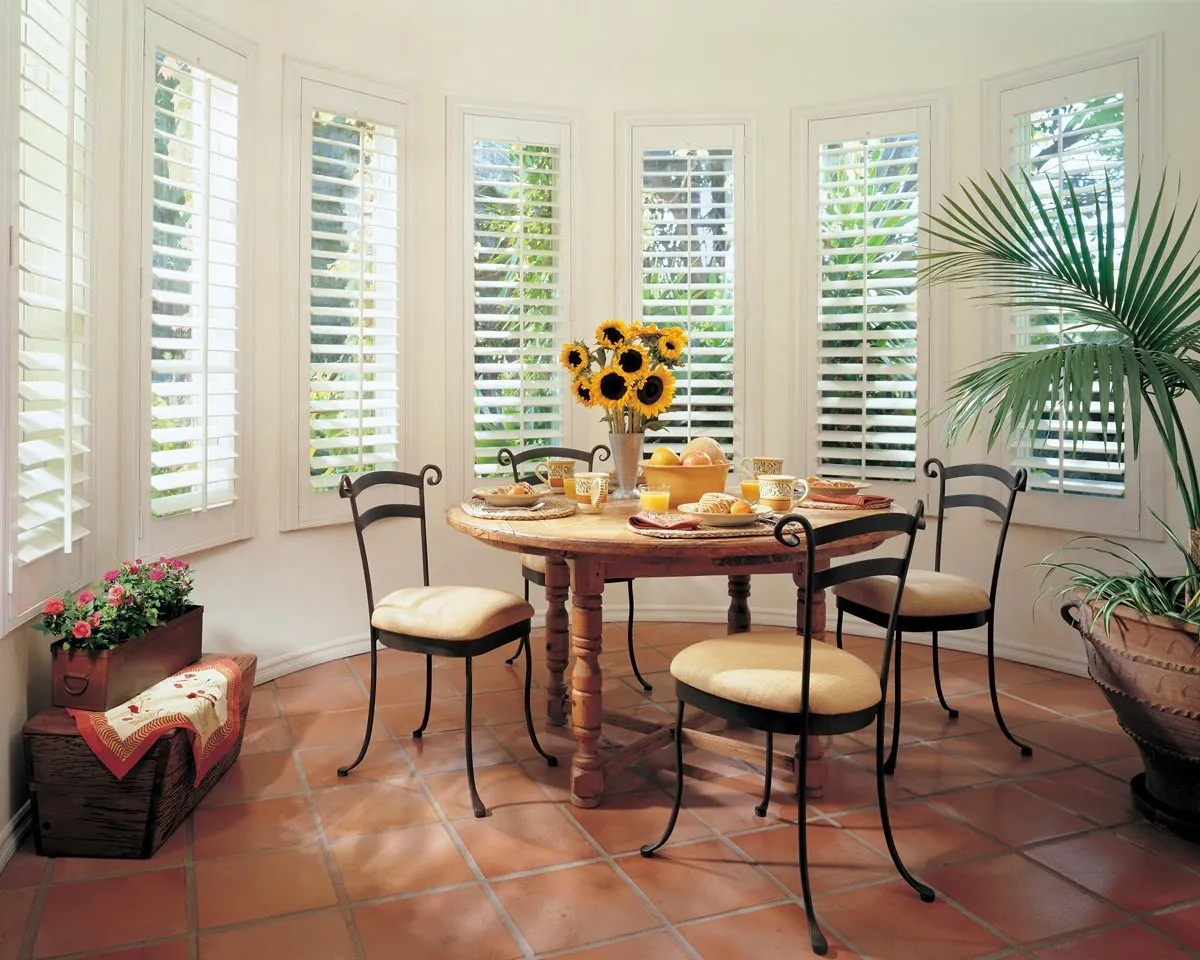
Breakfast room and bays
Each face of a bay gets its own panels, aligned so the louvers run level around the curve.
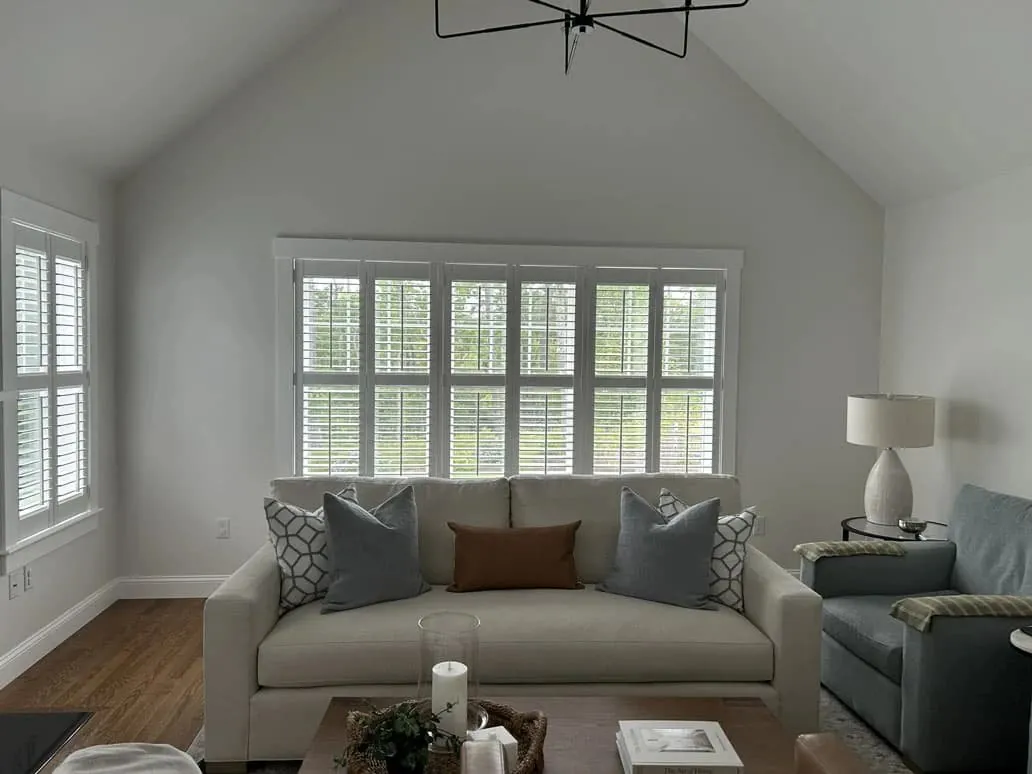
Vaulted rooms
Tall windows under a high ceiling take multi-panel shutters, with fixed shaped panels where the glass follows the roofline.
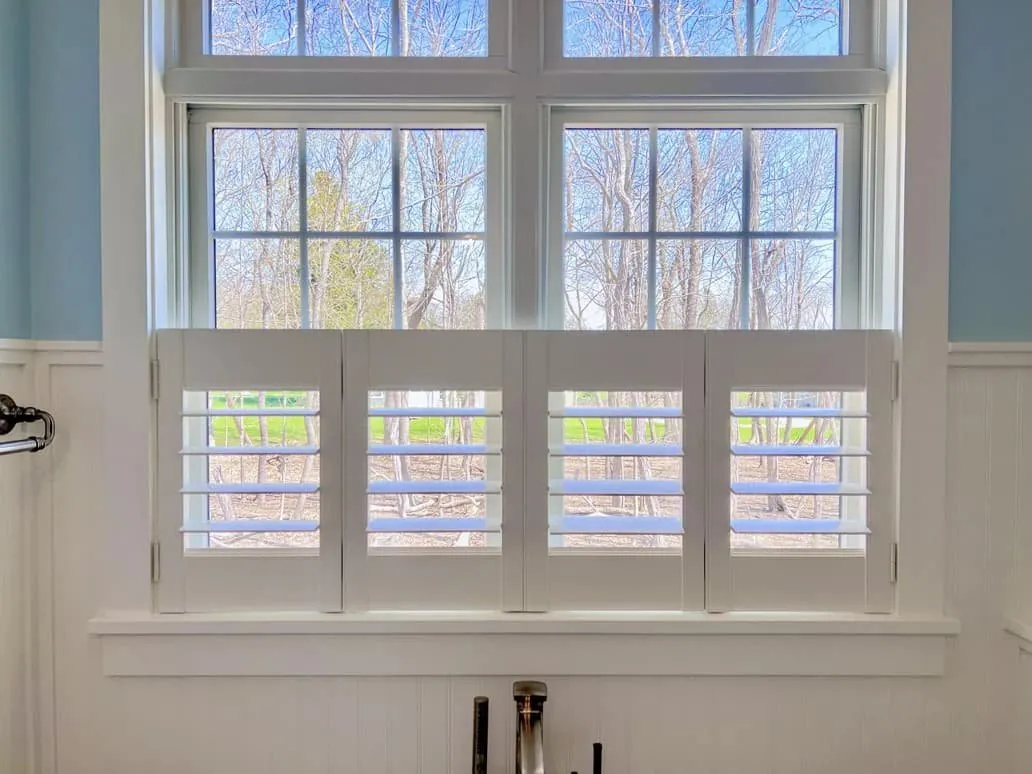
Kitchens
Polysatin above a sink, where splashes and steam would trouble wood, often as cafe panels on the lower half.
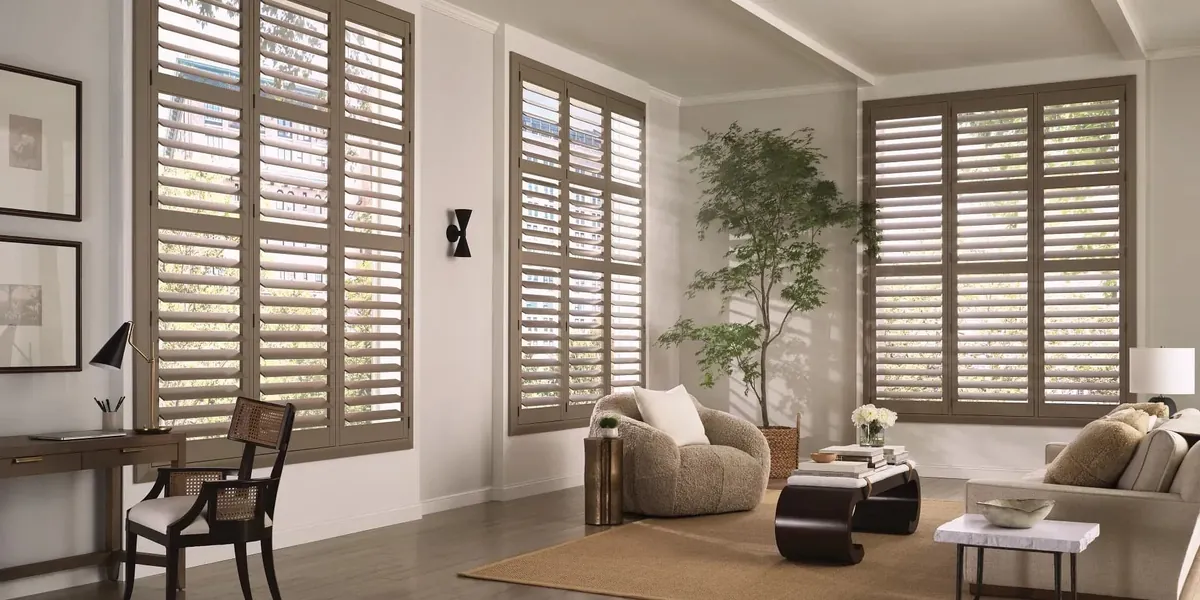
Painted color in formal rooms
A soft painted color instead of white can tie the shutters to the walls and the drapery in a dining room or library.
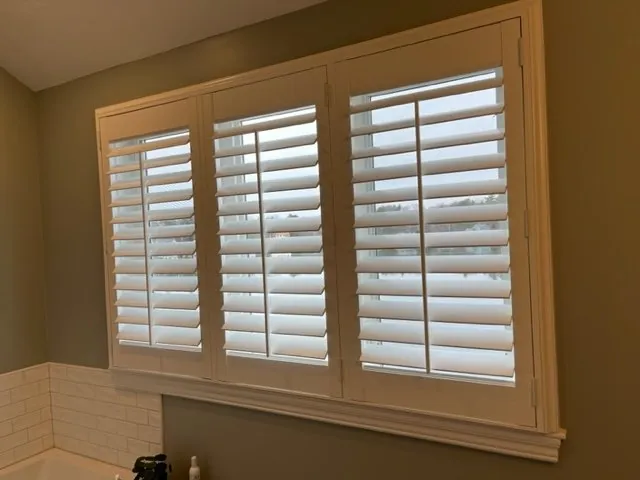
Primary baths
A moisture-proof shutter for the bath, set up so the lower louvers close for privacy while the upper ones let in light.
Walls of glass facing the water
The defining room in many Osterville houses is the one that faces the water: a great room, a family room or a sunroom with glass from floor to ceiling, often with French doors leading out to a terrace or lawn. These rooms are wonderful in the morning and can be hard to sit in on a summer afternoon, when the sun comes in low across the water and reflects off every surface.
Shutters manage that light by degrees. With the louvers tilted up, the sun is redirected toward the ceiling, so the room stays bright but the glare lifts off the floor and the furniture. Close the lower section of a tall panel with a divider rail and the seating is shaded while the upper glass still shows the sky. Fold the panels fully back to the wall and the view is almost entirely clear.
For a long wall of glass, the panel layout matters a great deal. We plan panel widths so the stiles line up with the window mullions wherever possible, so that from inside the room the shutters and the windows read as one structure. French doors take panels mounted to the doors themselves, with a cutout around the handle, so they swing open with the door.
Shutters beneath drapery in formal rooms
The formal rooms in these houses, the living room, dining room and library, are often dressed with drapery. Owners and their designers want the fabric to be the focus, framing the window with color and texture. The question is what goes behind it to handle light and privacy day to day.
Shutters are a classic answer. Set inside the window opening, they sit back from the drapery and leave room for the panels to hang and draw in front of them. With the drapery open, the shutters control the light. With the drapery closed in the evening, the shutters disappear behind it. Because a shutter is crisp and architectural, it gives the soft fabric something clean to sit against.
To make the pairing work, the shutter needs to sit within the opening rather than on the casing, so the drapery hardware has room above and to the sides. A slim frame helps, as does a finish chosen with the drapery in mind. White or off-white suits most rooms; a painted color drawn from the fabric or the walls can be lovely in a dining room or study. Heritance hardwood also comes in stains, which can match a paneled library. We are happy to work alongside your designer, or our own interior design consultations can help pull the room together.
Around the village center
Closer to the village center, the houses are still generous but the lots are tighter, and many front rooms face the street rather than the water. Here the brief changes from glare to privacy. A front parlor or study a short walk from the shops wants daylight without a clear view in from the sidewalk.
A divider rail is the simple answer: lower louvers closed, upper louvers open to the sky. Tier-on-tier panels go a step further, letting you fold the top panels fully open while the bottom ones stay shut. Seen from the street, a set of white shutters behind the glass of a shingled house looks right at home, and it keeps the front of the house consistent from window to window.
Wianno and Oyster Harbors
Out toward Wianno and on Oyster Harbors, the houses face open water on more than one side, and the salt exposure is as strong as anywhere in town. Windows that are opened on a warm day let in a fine film of salt, and over a season it settles on anything near the glass. Damp air off the water reaches every room.
That is a good reason to be thoughtful about material. Palm Beach polysatin has no wood in it to swell or check, so it is the natural choice for the most exposed windows, for the rooms that open straight onto the water and for every bathroom. NewStyle composite holds up well in the bedrooms and other main rooms. Heritance hardwood is ideal for the formal interior rooms and anywhere you want real grain, away from the direct spray and steam.
All three come in matching finishes, so a house can use Palm Beach on the water side and Heritance in the library without anyone seeing the difference. A shutter’s working parts are simple, and occasional wiping with a soft, damp cloth is all it takes to keep salt from building up on the louvers.
Specifying for a finished interior
In a house built to a high standard, the details of a shutter are noticed. These are the choices that make the difference.
The tilt can be a rod down the face of the louvers, the traditional look, or a hidden mechanism at the edge of the panel that leaves the louvers uninterrupted. In a contemporary room the hidden tilt usually looks cleaner; in a traditional one many owners prefer the rod.
Frames come in several profiles, from a flat, slim edge that shows the most glass to a moulded frame that echoes classic casings. Hinges can be finished to blend with the shutter or chosen to suit the door hardware in the room. Divider rails can be placed to match the window’s own meeting rail.
Color is the last detail. Whites and off-whites are the classic choice, but painted colors and stained hardwood both suit formal rooms. We bring finish samples so you can see them against your trim, floors and fabric.
Seasonal houses and long closed spells
Many Osterville houses are lived in for the summer and closed for much of the rest of the year, sometimes looked after by a caretaker. While a house is empty, nobody is there to adjust the windows, and the sun falls on the same floors and furniture day after day.
Shutters suit that pattern well. Close every panel and tilt the louvers shut before you leave, and the strongest light is kept off rugs, upholstery and art. The house is harder to see into from the water or the road. There is no fabric to fade at a sunlit edge, no cords to tangle and nothing that needs regular adjustment. A caretaker opening the house in spring simply folds the panels back.
The material choice matters here too. Rooms that will sit without climate control, especially baths and any room on the water side, are better in Palm Beach. When we plan plantation shutters in Osterville, MA, for a seasonal house, we ask how the house is run in the off season and choose the collection for each room with that in mind.
Louver widths for tall glass
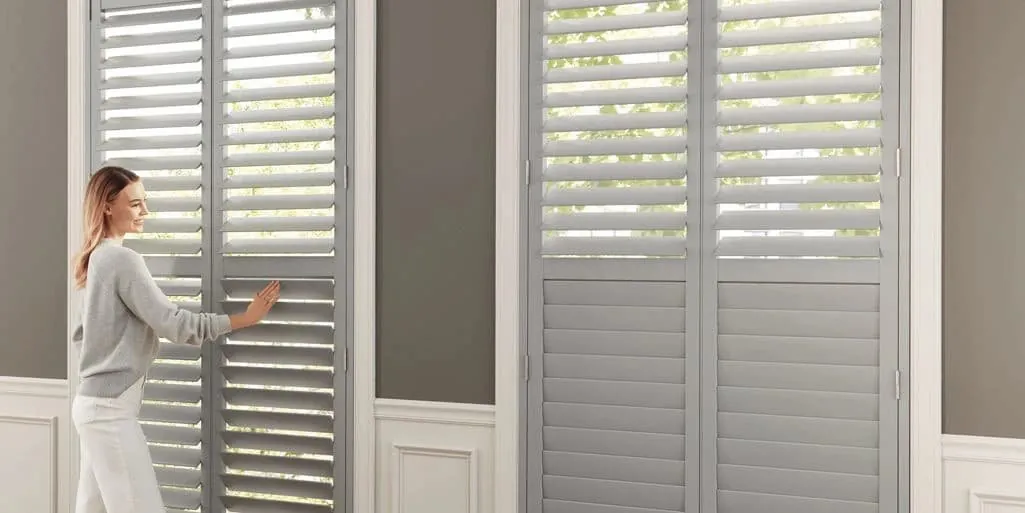
Louver width is the decision that most shapes a shutter’s look. Narrow louvers look fine and traditional. Medium louvers are the all-round size. Wide louvers look clean and modern, and when open they leave the fewest slats across the view.
In Osterville’s larger houses we usually recommend wide louvers for the water-facing rooms, where the windows are tallest and the view matters most. Formal rooms may suit a medium louver, which looks a little more traditional behind drapery. Bedrooms often follow the main rooms for consistency.
Wider louvers also project further into the room when tilted, so we check the clearance at each window, especially around casement cranks, handles and deep sills. Once you have settled on a size, keeping it the same across the house gives the most finished look from outside.
Gables, dormers and shaped windows
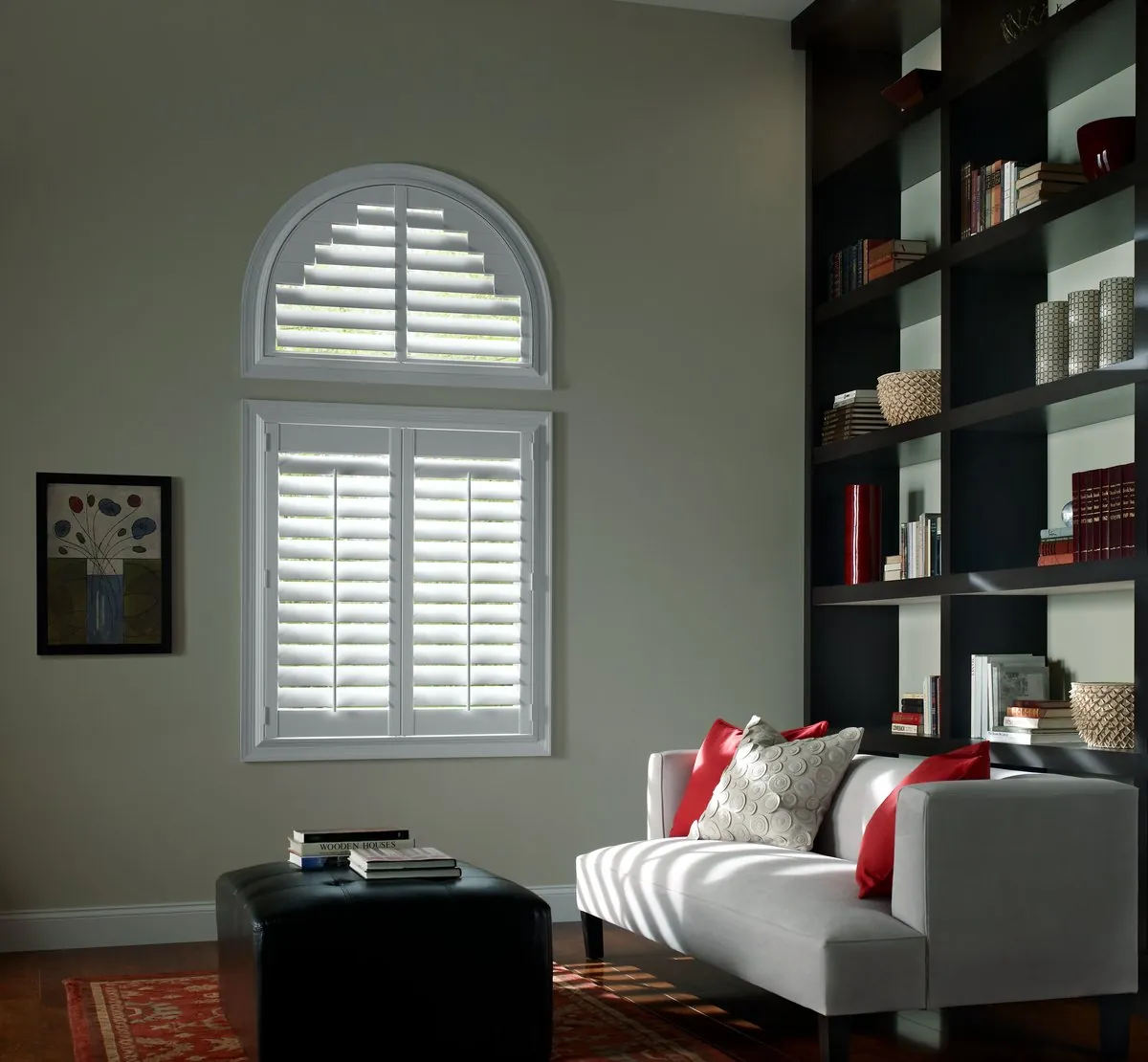
Big shingled houses have plenty of interesting windows above the main floor: half-rounds in the gables, angled windows that follow the roofline in a vaulted room, and small windows set into dormers. They are easy to leave bare, but a room looks unfinished when the main windows have shutters and the shaped ones do not.
Shutters can be made to fit arches, angles and circles. A shaped shutter can be fixed in place or have working louvers, and it can sit directly above a rectangular shutter so the louver lines continue to the top of the window. On a stair landing lit by a tall arched window, that continuous line is often the detail visitors notice first, and it saves the landing from looking bare when the rest of the house is finished. Dormer windows, often set deep into the roof, usually take an inside mount with a narrow or medium louver so the small opening does not feel crowded.

Bedrooms and guest wings
Large summer houses often have a run of guest bedrooms, sometimes in a separate wing or over a garage, filled with family and friends in July and August and then empty for months. Those rooms want a treatment that guests can work without instruction, that darkens a room on a bright summer morning and that copes with being shut up for long spells.
NewStyle is usually the right collection for them. Its composite build keeps a smooth painted finish, it handles ordinary changes in temperature and humidity well, and it matches the Heritance or Palm Beach used elsewhere in the house. Closed, the louvers overlap and the room stays dim well past sunrise. For many owners planning plantation shutters in Osterville, MA, the guest rooms are where a whole-house order starts to make sense, because every bedroom then looks the same from the lawn.
Planning a whole house
A large house is often fitted in one project, sometimes alongside a renovation or before the summer season. We make that as simple as we can. Our vans carry samples of every collection and finish, so the showroom comes to you.
- You request a consultation online or with the call button, and we agree a time at the house.
- We walk every room with you or your designer, noting exposure, drapery plans and how the house is used in each season.
- You compare Palm Beach, NewStyle and Heritance samples in your own light, along with louver sizes, frames and finishes.
- We measure every opening, check depth, square and clearance, and agree each mount.
- You get a free estimate, with no pressure to decide on the day.
- When the shutters are ready, our certified Hunter Douglas installers fit them, adjust every panel and show you how they work.
Our page on what happens at an in-home consultation covers the visit in more detail.
A Gallery dealer for high-specification houses
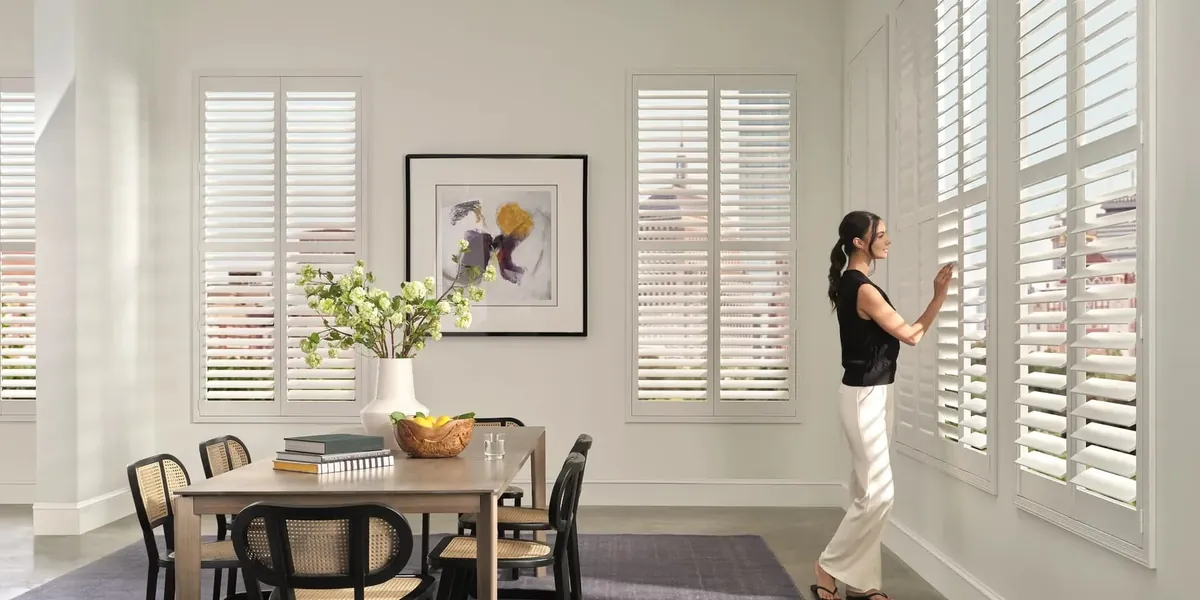
Blinds & Designs is a Hunter Douglas Gallery dealer, so the full shutter line is open to you: every collection, louver size, frame, color and detail. In a house where each room has its own demands, that lets us specify each window properly rather than compromise.
Installation is by certified Hunter Douglas installers. On tall glass and long multi-panel layouts, a frame set perfectly square and panels hung true are what make a shutter look right, and that comes down to the fitting.
If other rooms call for something softer, see roman shades in Osterville or motorized blinds in Osterville, or every service on our Osterville page. The whole collection is on our plantation shutters page.

Our nearest showroom
The Sagamore showroom is our nearest location to Osterville, at the Cape end of the Sagamore Bridge.
For a house of this size, though, most projects start with a visit to the house, because every shutter is made for its own opening and the light in each room is what decides the details.
Questions from Osterville
Can shutters go behind drapery in a formal room?
Yes. Mounted inside the window opening, shutters sit back from the drapery so the panels can hang and draw in front of them. The shutters handle light during the day and disappear behind the fabric at night.
Which shutters suit a house right on the water?
Palm Beach polysatin for the most exposed rooms and every bathroom, because damp, salty air does not make it swell or warp. NewStyle and Heritance suit the rooms further from the spray.
Are painted colors or stains available?
Yes. Whites and off-whites are the most common, but painted colors and stained hardwood both suit formal rooms. We bring samples so you can compare them against your trim and fabric.
What happens to shutters while the house is closed?
Very little. Close the panels before you leave to keep sun off the floors and furniture. There is no fabric to fade and nothing that needs adjusting.
Is the estimate free?
Yes. After we measure, you receive a free estimate. Request a consultation to arrange a visit to the house.
Begin with the water side
Most projects begin with the great room or the sunroom that faces the water, where the light is strongest and the view matters most. Request a consultation and we will bring samples to the house, measure your windows and give you a free estimate for plantation shutters in Osterville, MA. You can also use the call button with a question first, or visit the Sagamore showroom.