
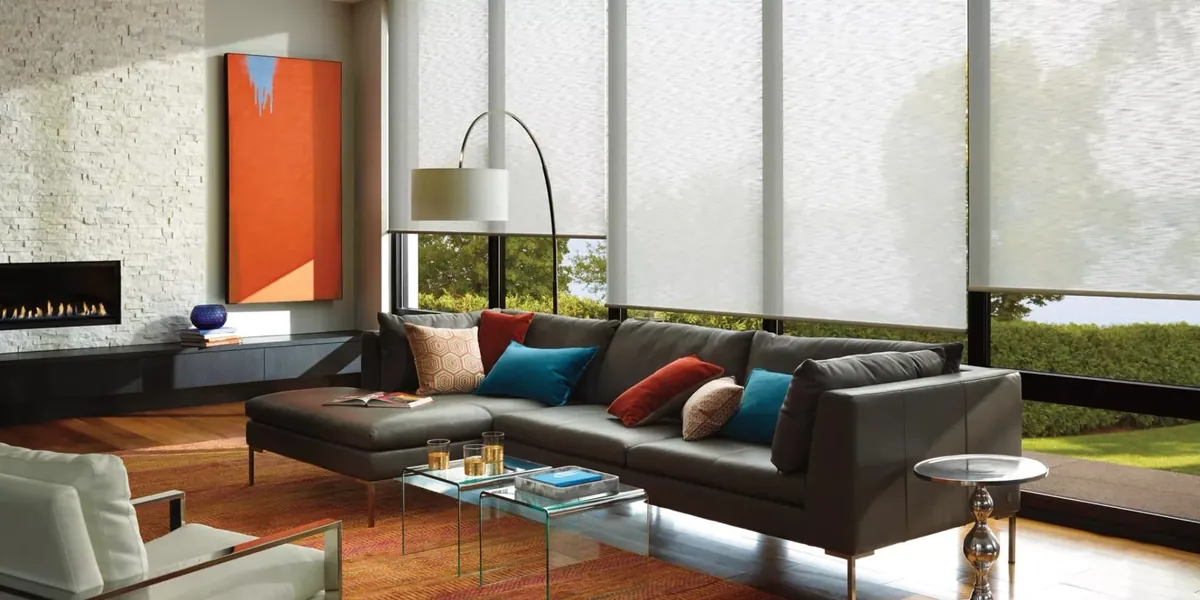
Wooded lots and rooms darker than their glass
Many of the houses around Lake Massapoag were built to look out at the woods. Colonials and mid-century contemporaries sit well back on wooded lots, and the contemporaries in particular were designed with long runs of glass and low sills, so the trees and the light come right down to floor level. Yet step inside on a summer afternoon and plenty of these rooms feel dimmer than you would expect from all that glass. Deep setbacks and a heavy canopy filter the daylight long before it reaches the window.
That turns the usual brief upside down. In most towns, a shade is chosen to cut light. Here the first job of roller shades in Sharon, MA is often to keep as much light as possible while still giving the room privacy at night, some control on the brightest days and darkness in the bedrooms. Choosing a fabric that is too heavy can make a shaded room gloomy.
A roller suits these houses well. It is a single, flat panel of fabric that lowers over the glass and rolls up out of the way, so on a long run of windows it keeps clean, even lines, and on a low sill it covers the glass without bulk. The fabric, chosen with the light in mind, does the rest.
Roller shades in Sharon, MA, and related pages
These are the Hunter Douglas lines and local pages that come up most in Sharon houses. We bring the samples to you.
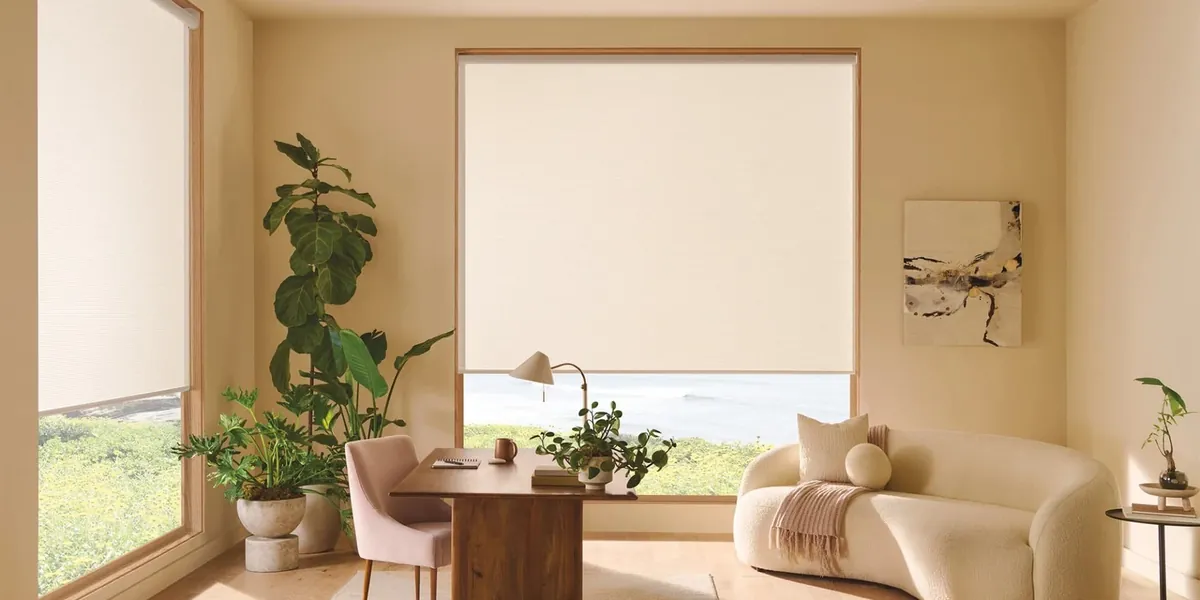
Designer Roller
Plain, textured and patterned cloths, light filtering through blackout. Pale light-filtering fabrics keep a shaded room bright.
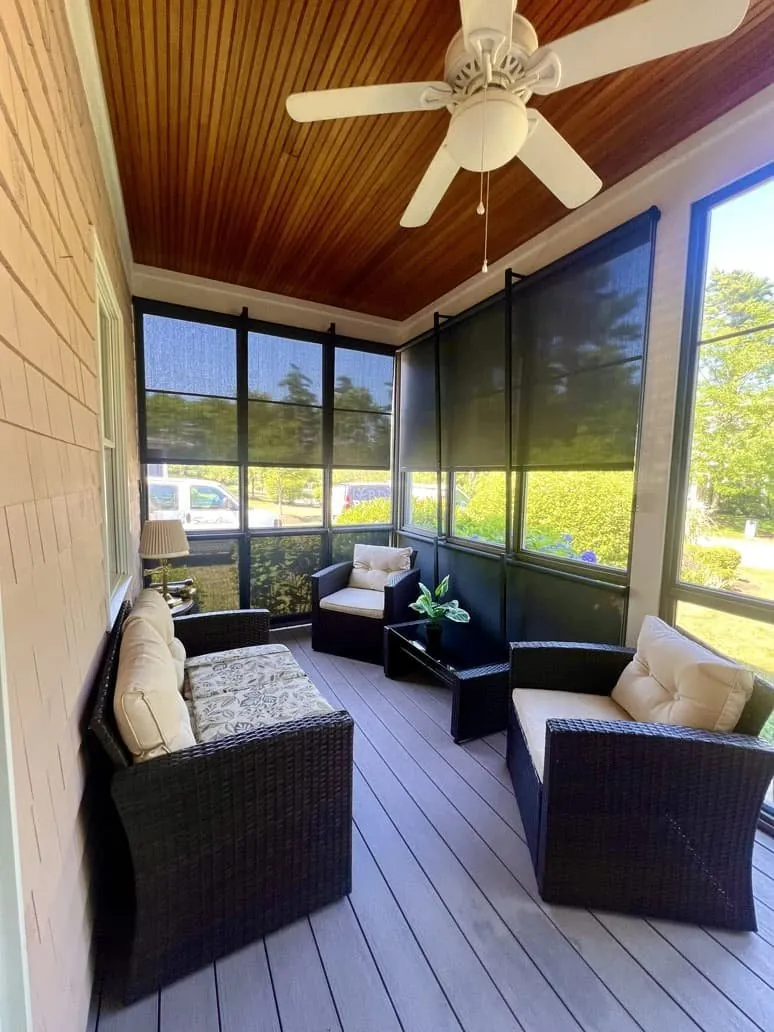
Designer Screen
Solar screens graded by openness, for the lake-facing rooms and the few windows that do get strong sun.
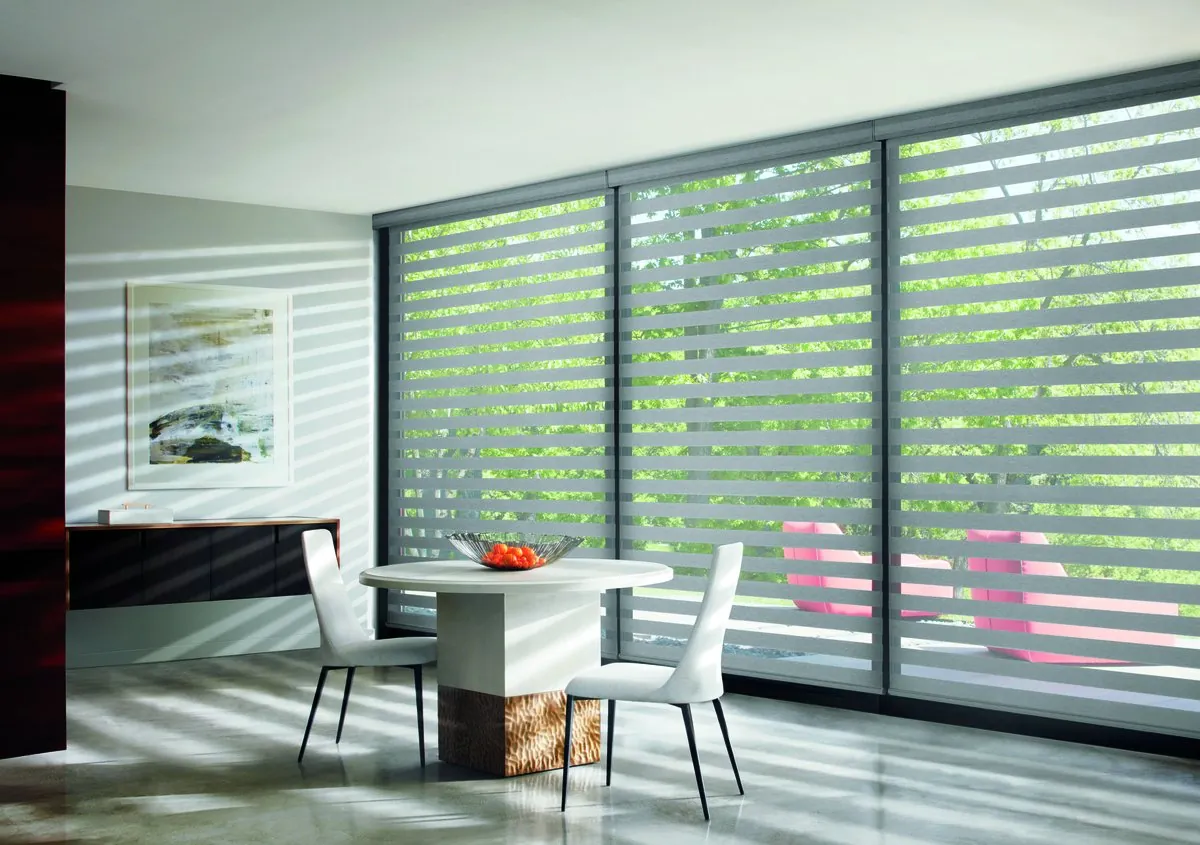
Designer Banded
Sheer and solid stripes in one shade, to keep the woods in view or close the room in a moment.
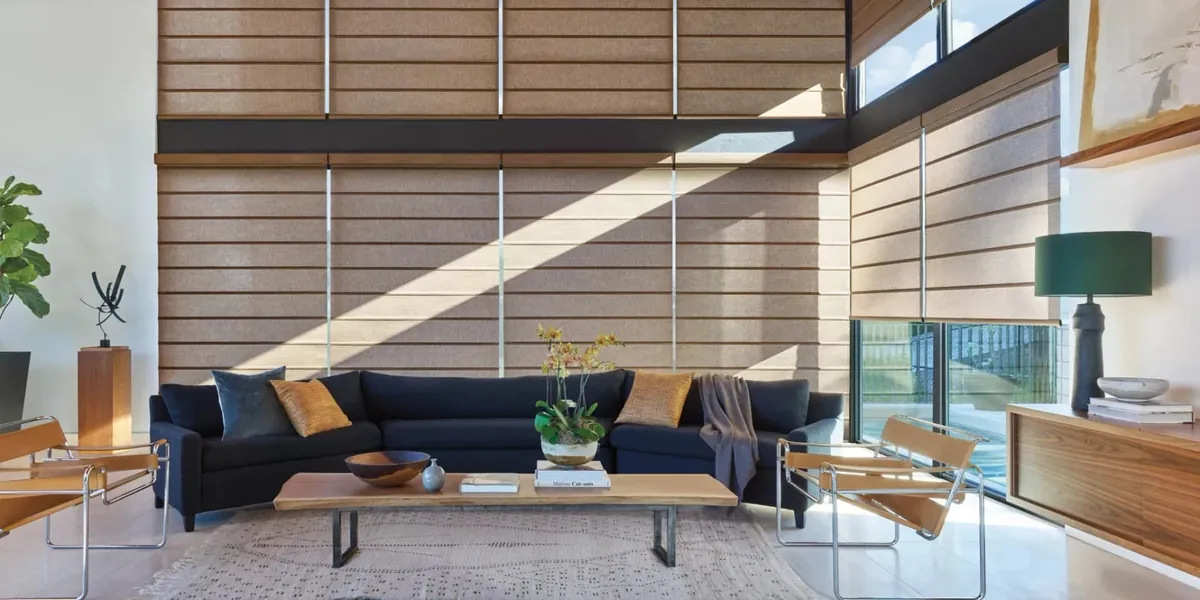
Alustra Architectural
Hunter Douglas’s premium roller collection, a natural partner for the long glass walls of a mid-century contemporary.
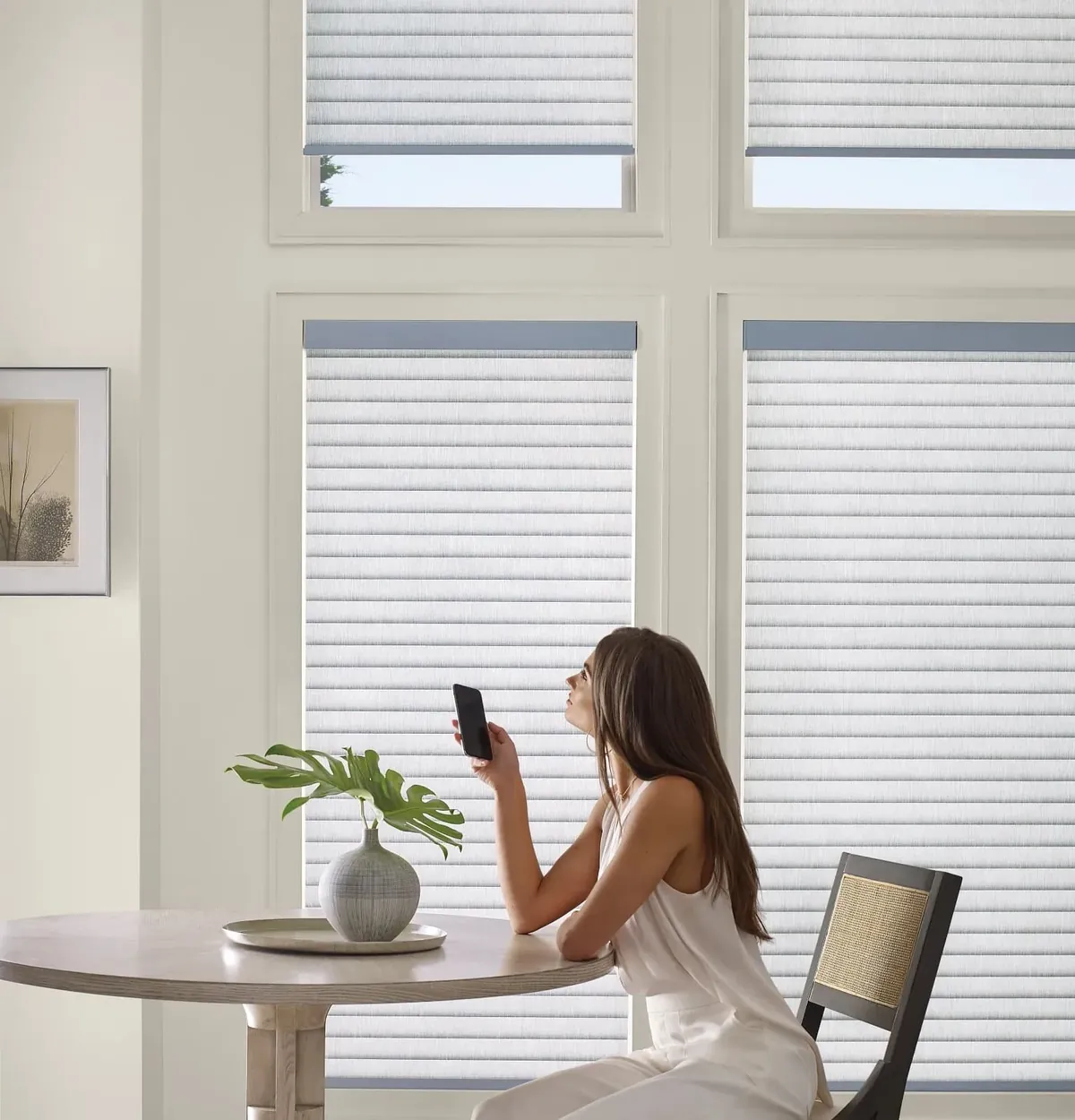
Motorized Blinds in Sharon
PowerView moves a whole run of shades together from a remote, an app or a schedule.

Hunter Douglas Dealer in Sharon
What it means to buy from a Hunter Douglas Gallery dealer, and the full range we can bring to a Sharon house.
Keeping a shaded room bright
When the trees already take much of the light, every bit of daylight that reaches the glass counts. The fabric choice follows from that. Light-filtering cloths let light pass through softly and evenly, so a room with a shade down still feels lit. They also hide the room from outside in daylight, which on a deep lot is often all the privacy you need.
Color matters as much as opacity. Pale cloths in white, ivory and soft natural tones pass more light and reflect it back into the room. Darker cloths absorb it, and in a room under a canopy that can be the difference between a bright space and a dim one. For the rooms where you sit and read during the day, we usually start with the lightest colors and work from there.
For many Sharon rooms, the shade spends most of the day raised and comes down only in the evening, for privacy when the lamps are on. In that case the right fabric is the one that looks good lowered at night and stays out of the way by day. A roller, rolled up tight at the top of the window, is about as unobtrusive as a covering gets.
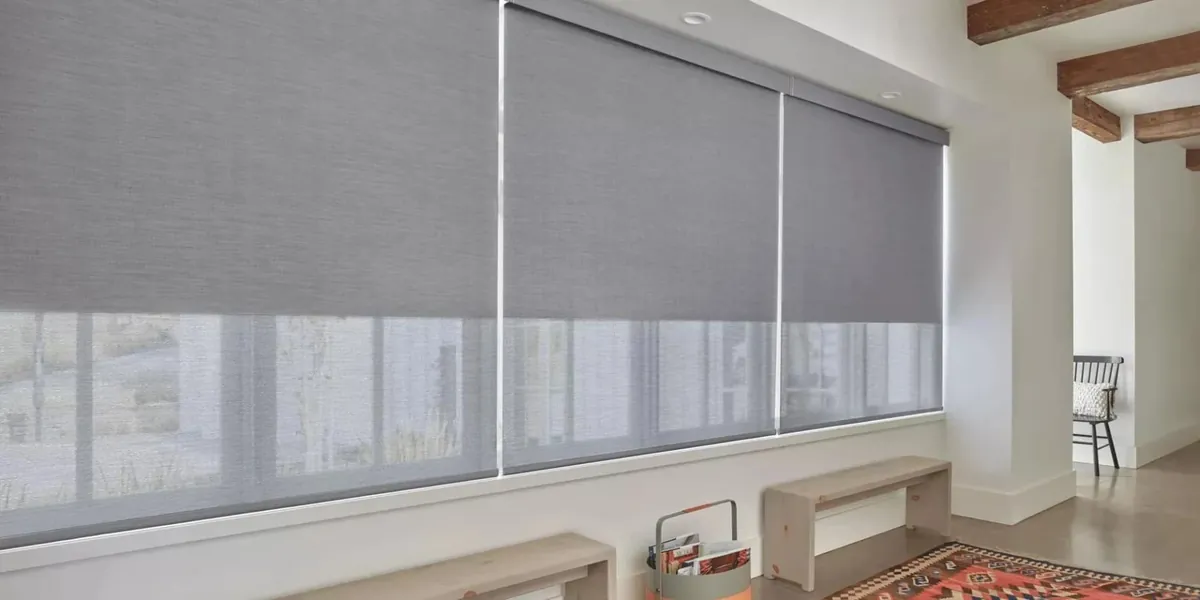
Long runs of glass in the contemporaries
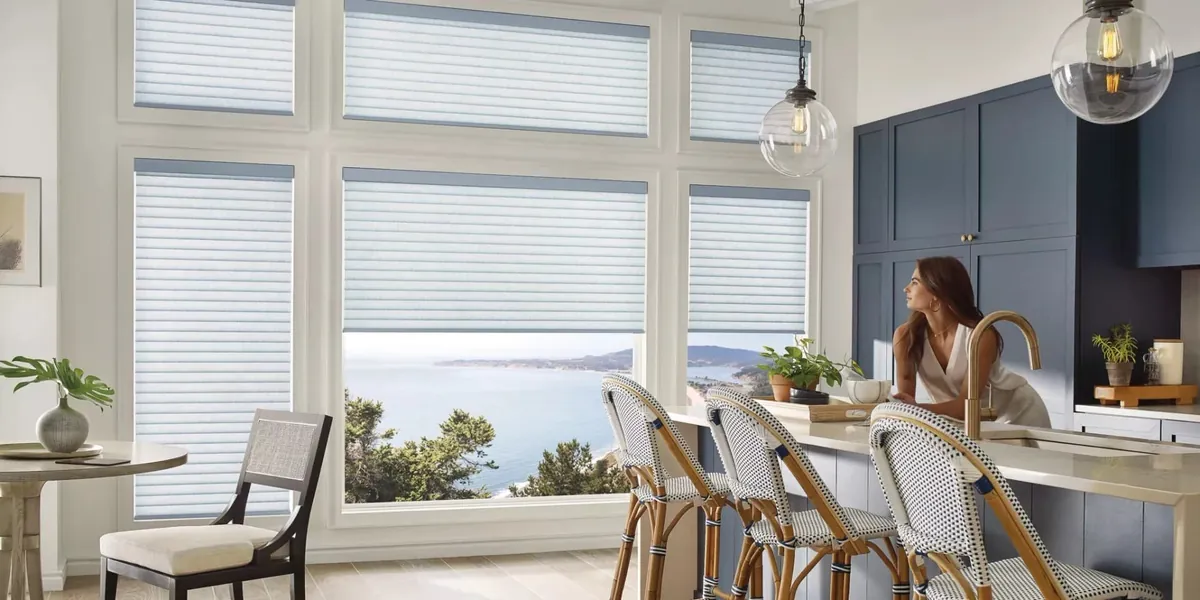
The mid-century contemporaries near the lake were often built with whole walls of windows: a living room with glass across one side, a dining area with a continuous band of panes, sometimes a corridor with windows the length of the house. Covering one of those runs with a single enormous shade rarely works. Instead, each section of glass gets its own shade, sized to that section, and the shades line up along the run.
The details make it look right. We set every head at the same height so the tops form one continuous line, and size each shade so the edges meet neatly at the mullions. When the shades are lowered together, the wall reads as one smooth surface; raised, the glass is completely clear. Separate shades also let you lower only the sections that need it, for example the end that catches late afternoon sun through a gap in the trees.
On the longest runs, moving every shade by hand gets tedious, and motorization is worth a serious look. We cover that further down.
Low sills and glass near the floor
Low sills are part of what makes the contemporaries feel open to the woods: the glass starts close to the floor, so the view runs right down to the ground. A shade on such a window comes down very low, and that brings a few practical points.
Furniture often sits in front of low windows: a sofa back, a bench, a radiator cover or a reading chair. We note where each piece sits so the shade clears it, and so the bottom of the shade stops where you want it. Where furniture stands in front of the glass, many owners like the shade to stop just above it. Low glass also shows more of the room to the outside after dark, so a light-filtering cloth that still screens the room at night is usually the right choice for rooms facing the drive or a path.
Inside mounts suit most low windows well, leaving the frame clear and keeping the shade tucked in close to the glass. Where a low window sits beside a door to the deck, we size and align its shade with the door’s so the two read as one opening from inside the room.
Colonials among the trees
The colonials on Sharon’s wooded lots have more conventional windows: double-hung units, evenly spaced, set into rooms that are often shaded on at least one side by the woods. Their front rooms face long driveways, their family rooms look into the trees at the back, and their upstairs bedrooms are often the brightest rooms in the house, sitting higher than much of the canopy.
That pattern guides the fabric. Downstairs, pale light-filtering cloths keep shaded rooms bright. Upstairs, where morning light gets in over the trees, room-darkening or blackout cloths are welcome in the bedrooms. Front windows share one color so the house looks consistent from the drive, and the back rooms can vary.
Most colonials have standard openings that take an inside mount easily, which keeps the trim on show and leaves the windows tidy. The family room at the back of a colonial is often the room that feels darkest, looking straight into the woods with the house itself blocking the sun for half the day. There, we usually suggest the palest light-filtering cloth you are happy with, kept raised through the day, so that the shade adds privacy in the evening without taking anything away from the daylight the trees allow.
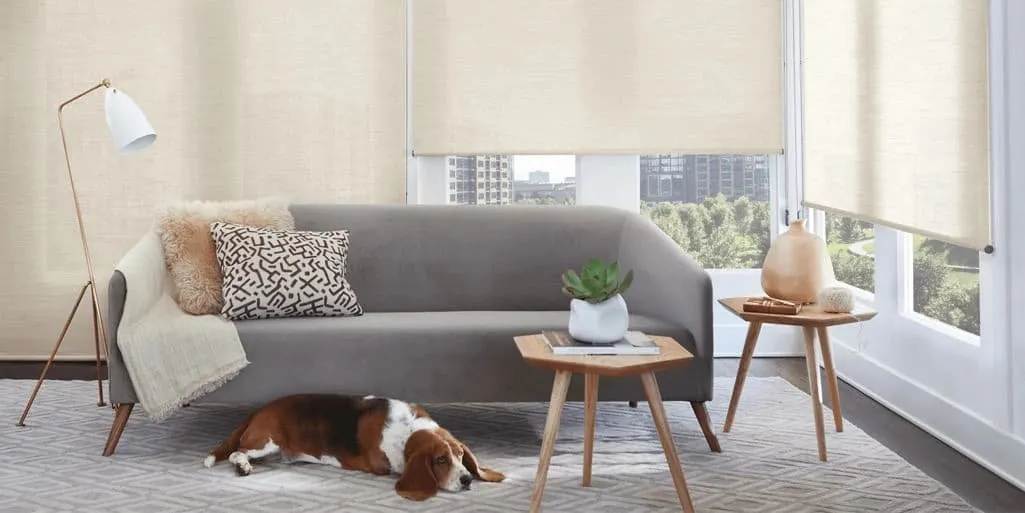
Rooms facing Lake Massapoag
Houses with a view of the lake get a different light from those deep in the trees. Where the canopy opens out over the water, the sun can reflect up off the surface and come in low and bright, especially late in the day. Those rooms are the exception in Sharon: they may need glare control more than help with brightness.
A solar screen is the natural answer for a lake-facing room. Screens are graded by openness, the amount of the weave left open, which sets how clearly you see the water and how much glare is taken off the glass. A more open weave keeps the lake sharp in view; a tighter weave calms more of the reflected brightness. Darker screen colors are usually easier to see through than pale ones. We hold a few at the window so you can see which balance suits the room. Many owners lower the screen only part way, just enough to cover the band of glass the reflection comes through.
When a screen is too much
In a room that is already shaded, even a fairly open solar screen can take away more light than you want. If the room only gets direct sun for an hour or so a day, a light-filtering roller that stays up most of the time, or Designer Banded, which can be opened to a sheer view, may serve better than a screen that is down all afternoon. Planning roller shades in Sharon often means saying no to the darker fabric for a room that cannot spare the light.
Fabrics that suit a mid-century room
The contemporaries around the lake were built with simple lines, plenty of wood and a close relationship with the landscape outside. Fussy window coverings sit awkwardly in rooms like that, and a flat roller, rolled tight at the head of each section of glass, fits the spirit of the house. Fabric texture adds warmth without clutter: a softly woven cloth in an oatmeal or pale stone tone can sit beautifully against wood panelling and a stone fireplace.
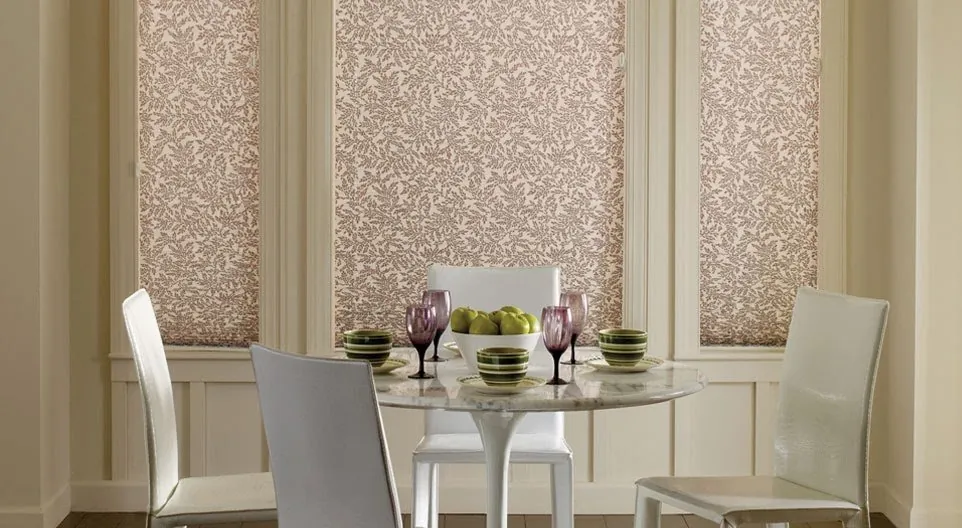
When we plan roller shades in Sharon for a contemporary, we usually look at the room’s wood and stone first, then bring cloths that sit quietly beside them. Strong patterns can work in a smaller room such as a study, but on a wall of glass a calm, even fabric tends to look best, lowered or raised.
Kitchens and corridors looking into the trees
Kitchens in both the colonials and the contemporaries often face the back of the lot, into the woods. With the canopy close, a kitchen window may need very little covering by day. A light-filtering roller that stays up until evening is usually enough, and over a sink it is easy to reach across. Where a kitchen opens onto a deck through a slider, one shade across the full door lets you raise it completely when you go out.
Some contemporaries have a glazed corridor or gallery running along one side of the house. Those runs are seen from inside as one long view, so we treat them like the living room walls: separate shades sized to each section, heads aligned, one fabric throughout.
Bedrooms above the canopy
Upstairs bedrooms often sit high enough to catch the first light over the trees. Room-darkening cloth turns them dim; blackout cloth stops daylight through the fabric. What lets light in round a blackout shade is usually the side clearance it needs to move. Mounting the shade on the wall around the opening, a little wider than the glass, closes most of that gap, while an inside fit keeps the trim visible and lets a fine line of light through. We show you the difference at the window.
PowerView for walls of glass
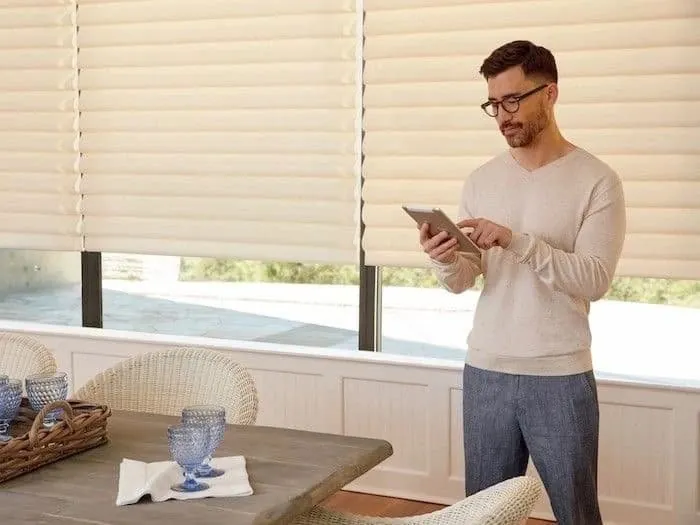
On a long run of contemporary windows, PowerView motorization makes daily use simple. The shades move from a remote or an app, singly or as a group, so a whole wall can lower at once. Schedules help too: the lake-facing screens can come down as the evening reflection arrives, and the living room shades can close at dusk for privacy. We plan how each motor is powered at the visit, so you know what is involved before ordering. More on our motorized blinds in Sharon page.
We come to you
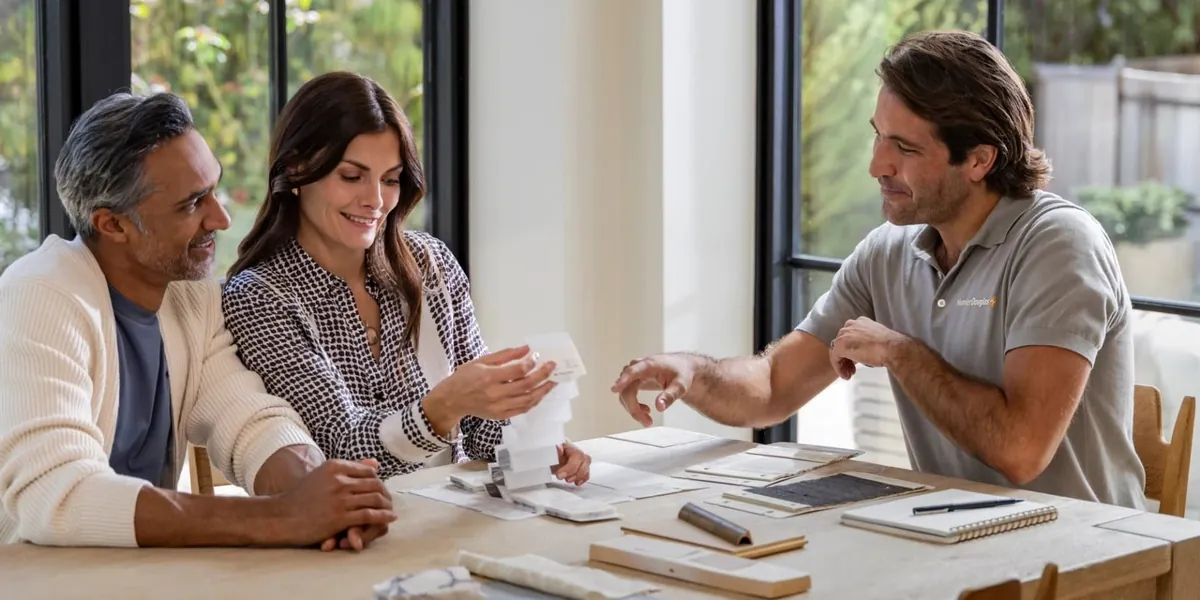
For Sharon, the usual way to start is an in-home consultation. Our Canton territory works entirely as shop at home: our vans carry the samples, so we can bring the showroom to you, and in a shaded house that matters more than anywhere, because only your own rooms show how much light a fabric will keep.
- Ask for a visit through Request a Consultation, or use the call button.
- We look at the darkest rooms and the brightest ones together, so the fabrics are chosen for the light each actually gets.
- You hold pale and darker cloths, and screens of different openness, against your own glass.
- We measure each window and each section of a long run, noting low sills and any furniture in front of them.
- A free estimate follows for the shades you would like, with no rush to decide.
If you want help with color and fabric through the house, ask about an interior design consultation at the same visit. Our guide to what happens at an in-home consultation explains the visit.
Gallery dealer status and certified fitting
Blinds & Designs is a Hunter Douglas Gallery dealer, the title the brand gives dealers who meet its standards. That puts every roller line within reach for a Sharon house, from Designer Roller, Screen and Banded to Sonnette and the Alustra collections, along with PowerView. The shades are fitted by installers certified by Hunter Douglas, who set each one level along a run and check it moves cleanly. We repair blinds and shades you already own, too, and supply commercial blinds and shades.
For other rooms, see our cellular shades in Sharon, roman shades in Sharon and custom blinds in Sharon, or the Sharon page for everything we do locally. All the roller lines are on our main roller shades page.
If you want to see shades in a showroom
Our nearest showroom to Sharon is the one in Franklin; our North Dartmouth showroom is further south. Franklin is a good stop if you like to see the roller family before a visit, and anything you liked there can come with us when we measure at your house. Just remember that any fabric seen away from home will look a little different in a room under a canopy of trees, which is why the final choice is always made at your windows.
Questions from Sharon
My rooms are shaded by trees. Which fabric keeps them bright?
A pale light-filtering cloth. It passes soft light into the room and screens it from outside in daylight. Darker cloths and tight screens take away light a shaded room can rarely spare.
How do you cover a long wall of windows?
Each section of glass gets its own shade, with the tops set at one height so the run reads as a single line. You can lower the whole wall or only the sections that need it, and PowerView can move them together.
Will shades work on windows with very low sills?
Yes. We note any furniture in front of the glass so each shade clears it and stops where you want. An inside mount keeps the shade close to the glass and the frame clear.
What suits a room facing the lake?
A solar screen. A tighter weave calms the reflected glare off the water; a more open one keeps the view clearer. Many owners lower it only part way.
Is there a charge for the estimate?
No. After we measure, you get a free estimate for the shades you are considering.
Start with a visit
The simplest way to find roller shades in Sharon that keep your rooms bright is to try the fabrics in your own light. Request a consultation and we will come to the house with samples, measure every window and run, and follow up with a free estimate. The call button is there if you would like to talk first, and our Franklin showroom is the nearest place to see shades in person.