
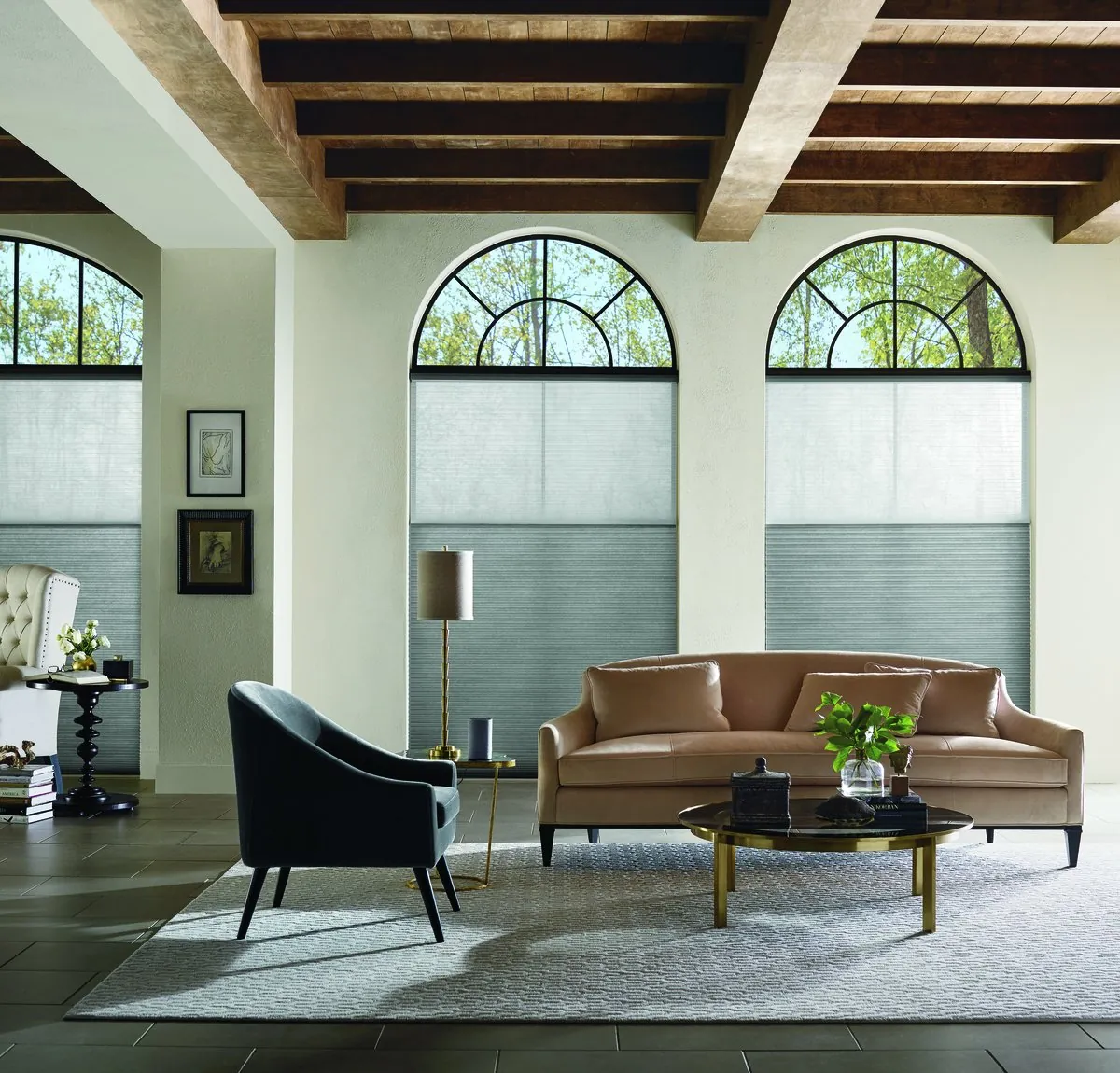
Tall sash in old brick, walls of glass in the towers
Boston asks two very different things of a window shade. In the Back Bay, on Beacon Hill and through the South End, brownstones and row houses keep their tall, narrow sash set into thick masonry walls, with deep reveals and trim that many owners have restored with care. A short walk away, new high-rise condominiums are glazed from floor to ceiling, with whole walls of glass and very little wall in between. When we talk about cellular shades in Boston, MA, the first question is which of those two worlds the home belongs to.
Honeycomb shades serve both because of the way they are made. Each pleat closes into a hollow pocket, and with the shade down those pockets keep a sheet of motionless air pressed across the glass. Whether the glass is an old sash in a bow front or modern glazing on a high floor, that trapped air is why the room keeps its warmth once the shade comes down.
So in an old row house or a new tower alike, Duette and Applause honeycomb are what we reach for first when a room runs cold.
Honeycomb for brownstones, row houses and high floors
Each kind of city home leans toward a different set of choices for cellular shades in Boston, MA. We bring samples of all of them to your rooms.
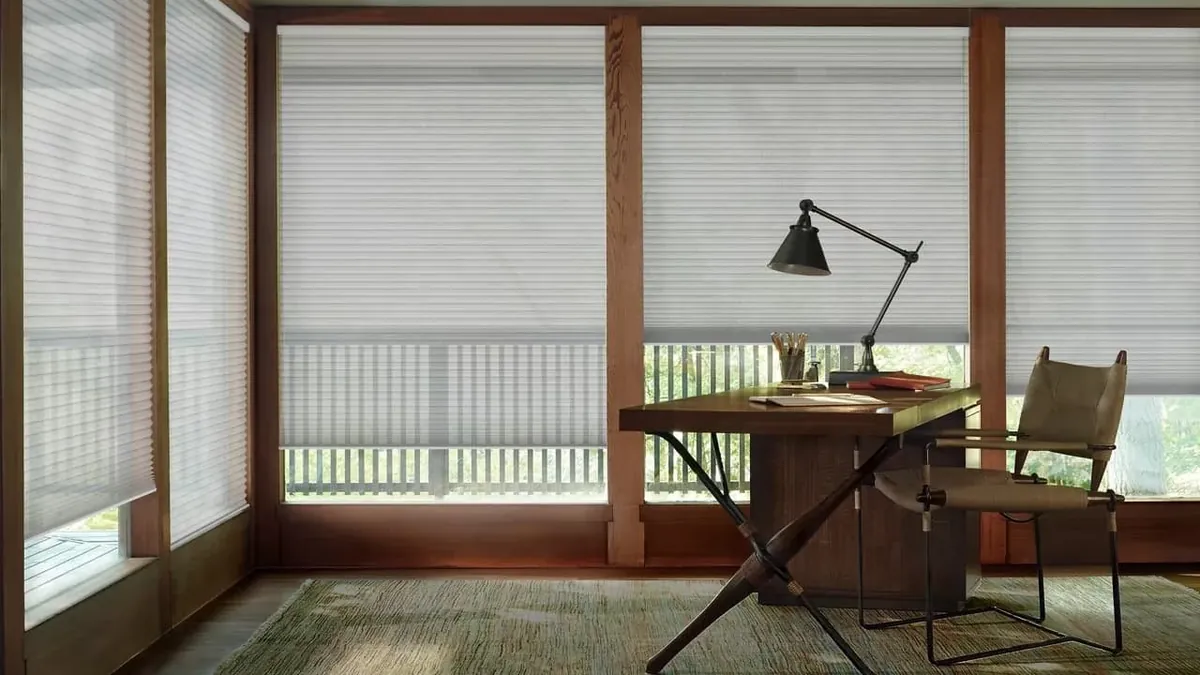
Inside the deep reveal
A thick masonry wall leaves room for the shade to sit within the window opening, so the restored trim stays on show and the shade all but vanishes when raised.
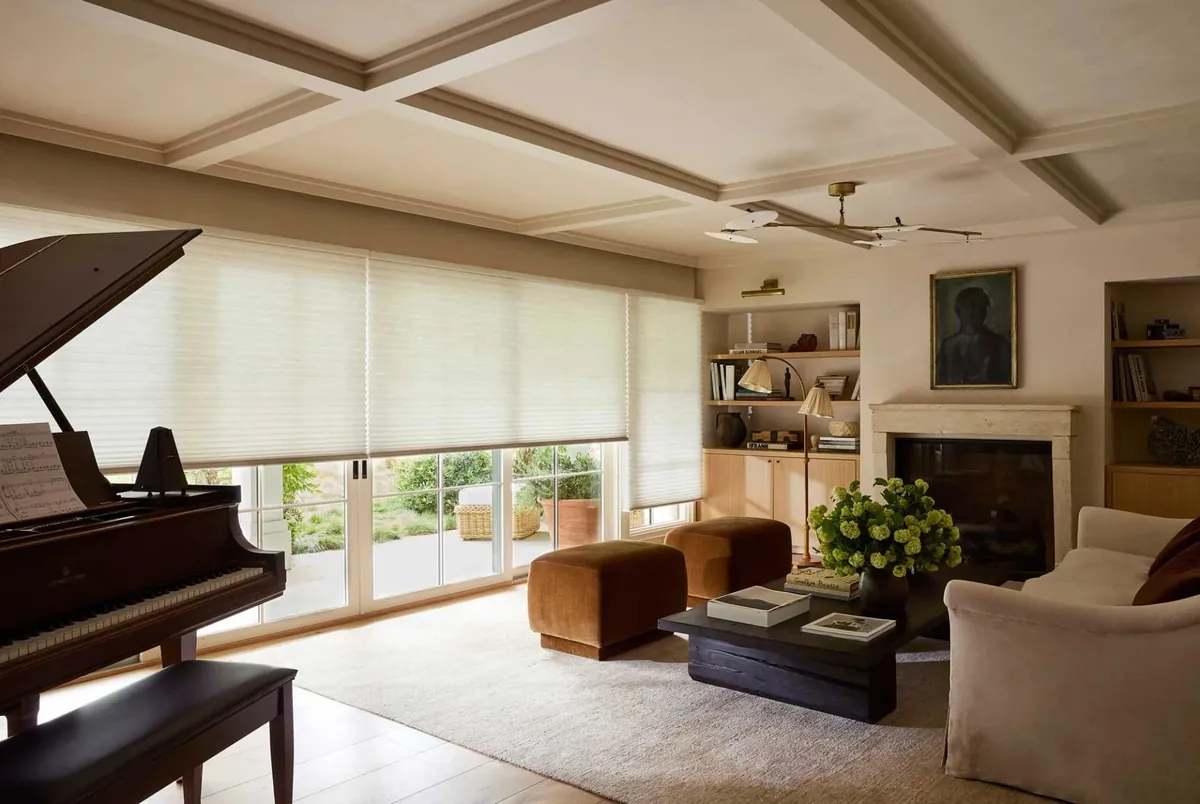
Floor-to-ceiling glass
A long wall of glazing in a condominium is divided into a series of shades, matched panel to panel, that behave as one set.
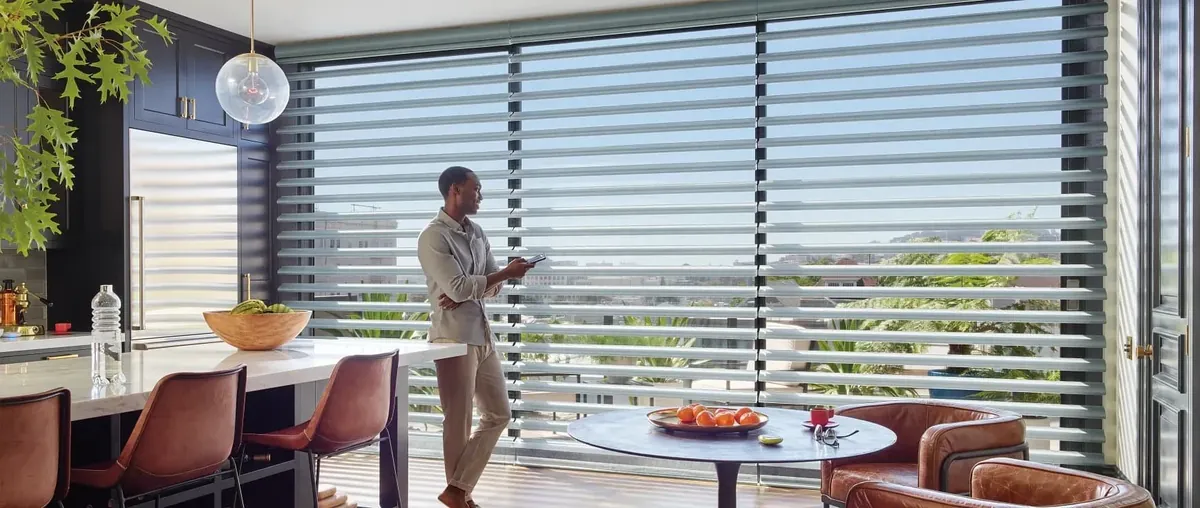
Motorized Blinds in Boston
PowerView moves honeycomb shades by app, by remote control or on a timetable you choose, which suits tall sash and wide glass walls alike.
The bow front and its tall, narrow sash
The classic Boston row house turns a curved or angled bay to the street, with three or more tall windows packed into it. Each sash is narrow and long, and the bay is often the brightest and coldest part of the parlor floor at the same time. Honeycomb shades suit a bay like this because each window gets its own shade, made to the width and height of that opening, and the set is planned so the pleats and the bottom rails sit level around the curve.
Tall sash also means tall shades. Raised, a honeycomb shade folds down to very little, so even a long shade leaves nearly all the glass clear. That keeps the proportions of a tall parlor window, which is much of what makes those rooms feel as they do.
Upstairs, row houses often step down in ceiling height and window size floor by floor. A bedroom under the roof may have shorter sash or a dormer, and the top floor of a South End house can have windows set in odd places. We plan each floor on its own terms, so the house reads as one from bottom to top while every window gets the shade it actually needs.
Deep reveals and masonry walls
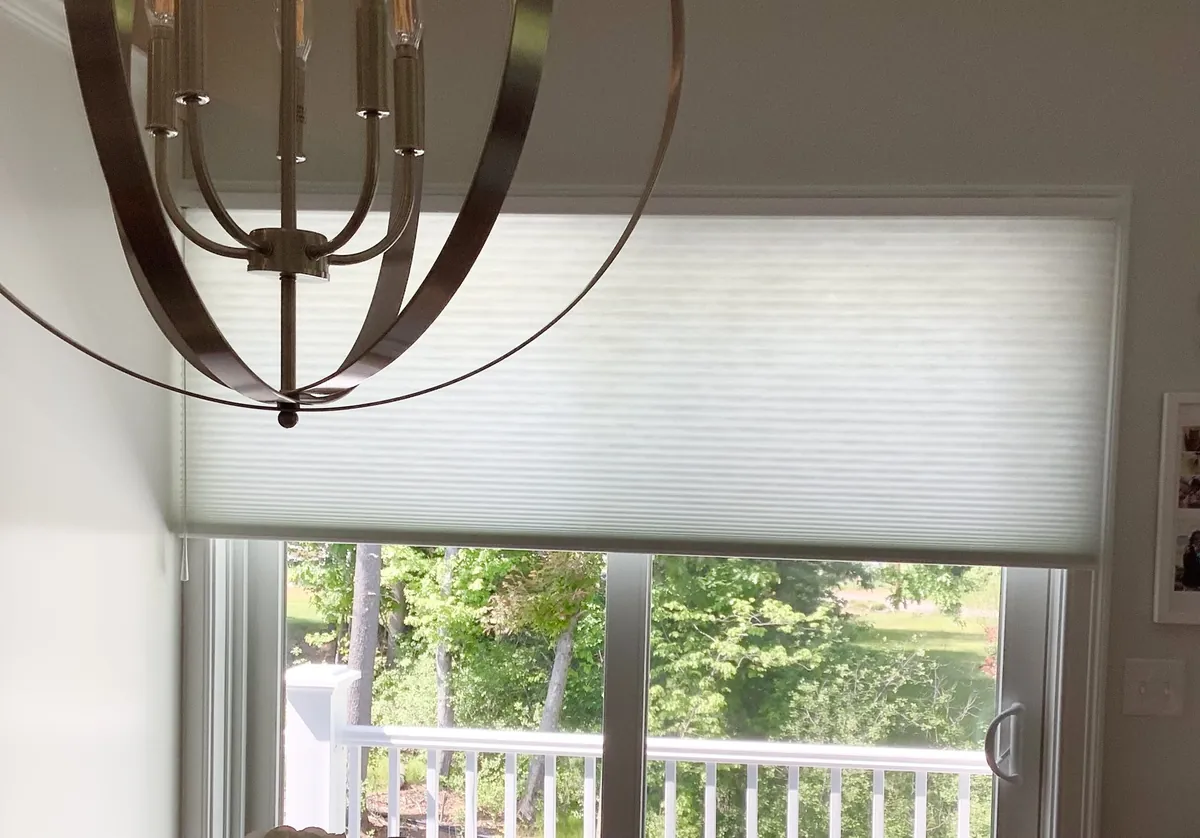
One gift of an old brick or brownstone house is depth. The walls are thick, so the window sits back in a deep reveal, and that gives a shade a natural home inside the opening. A honeycomb shade mounted within the reveal leaves the casing and any interior paneling free, and it stays close to the glass, which is where it does its best work against the cold.
Depth also brings its own puzzles. Old openings have settled over the years, so a window may be wider at the top than the bottom, or the jambs may not be quite parallel. A reveal that has been plastered and repainted many times may also hide what is underneath. We measure each opening at the visit and talk through how the shade will sit before anything is ordered. Where an opening turns out shallower than it looks, we show you the alternative so you can choose.
Old brick, divided into flats
Plenty of the city’s brownstones and row houses no longer hold one household. Many have been divided into flats, a floor or two each, so the tall parlor sash may belong to one home and the shorter upper windows to another. Each flat has its own mix: one may get the bow front and the high ceilings, another the dormers and the slope of the roof, another the garden level with windows close to the ground.
That mix shapes the plan. A garden-level flat often needs privacy above all, because passers-by are at the same height as the glass. A top-floor flat may need warmth most, with windows tucked under the roof that run cold in winter. The parlor floor usually needs both, plus a fabric worth looking at in a formal room. Planning cellular shades in Boston, MA, for a single flat means starting from how that flat sits in the building, not from a standard set of choices.
Where neighbors in one building are planning shades around the same time, each flat still gets its own appointment and its own plan, built around its own windows.
What the street sees from Beacon Hill and the Back Bay
In historic districts the face of a building matters, and anything at the window is seen from the sidewalk. A honeycomb shade shows the street a plain, even panel of fabric rather than slats or hardware, which keeps a row of tall windows looking calm from outside.
If your house sits in a district with design review, or your building has its own rules about what shows at the glass, bring them to the consultation. We can look at fabric samples from the outside as well as the inside, so you see how the windows will read from the street before you decide. The shade itself sits inside the room, within the window opening.
High-rise condominiums glazed from floor to ceiling
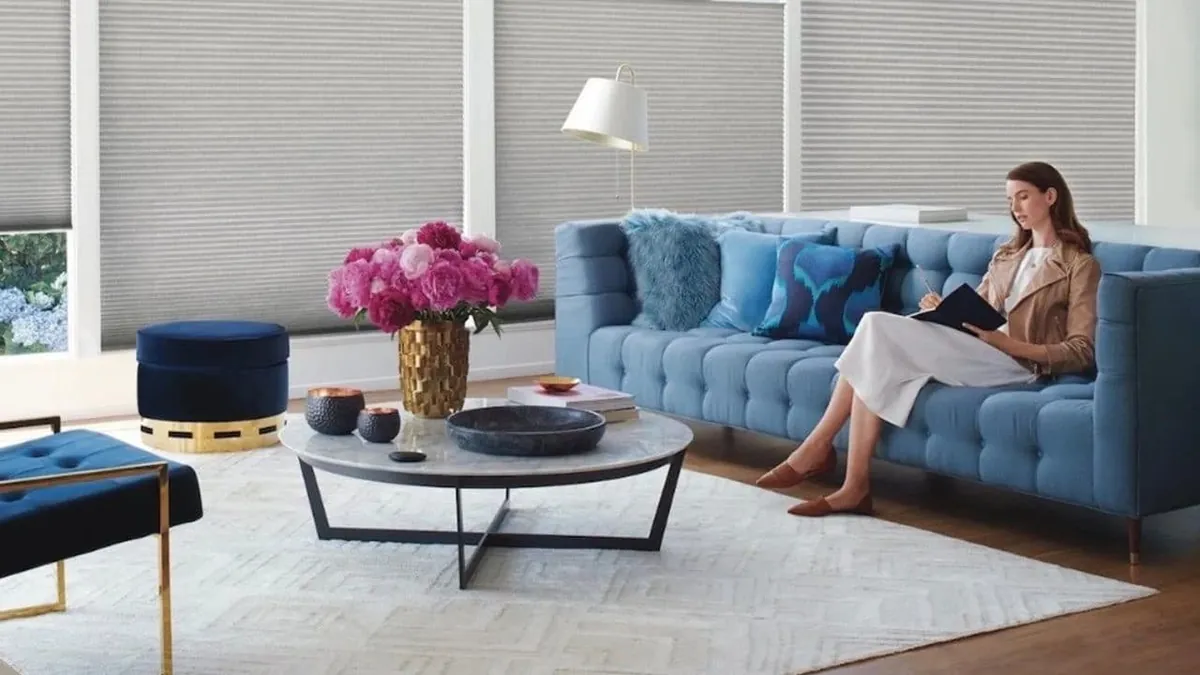
A new condominium tower puts you in a different kind of room. The glass runs from the floor to the ceiling and often wraps a corner, and on a high floor there is nothing outside to block the sun or the wind. In winter that glass wall is the coldest surface in the room. In summer, with the sun on it, it is the warmest. A honeycomb shade lowered over it keeps its pocket of quiet air between you and that surface in both seasons.
Covering a wall of glass is a matter of planning the whole span. The glazing is usually divided by mullions into panels, and each panel can take its own shade, matched to the next so the wall reads as one surface. With PowerView the whole span can rise together at a tap, or you can open one end for the skyline and keep the other closed. In a corner unit we plan the two walls together, so the shades meet cleanly where the glass turns.
Condominiums often have a ceiling pocket or a short soffit above the glass. We look at what is there during the visit and plan where each headrail goes from what we find.
Light and privacy, city style
Boston light comes at you from many directions: low winter sun down a narrow street, reflections off the tower next door, the glow of the city at night. A light-filtering honeycomb fabric softens all of it, so the room stays bright and even rather than streaked with glare. For a bedroom that faces a busy street or a lit window across the way, a heavier, more opaque fabric is the better match.
Privacy works differently in each kind of home. In a row house the parlor windows are at eye level with the sidewalk, or just above it. In a tower, the neighbors are across the way at the same height. Either way, a light-filtering shade keeps the room screened through the day while letting light in, because from outside it simply glows. Once evening comes and the room is lit, the denser fabric is what keeps it your own.
Studio, parlor floor or penthouse: matching the line to the home
Duette and Applause are both genuine Hunter Douglas honeycomb, and the cells in each work in just the same way. Where they part company is breadth. Duette has the larger range of fabrics, textures and pleat sizes, and it reaches more unusual shapes and very wide openings. Applause brings its own palette and fits a great many ordinary windows well.
In practice the home decides. A Back Bay parlor with restored trim might take Duette, chosen for its fabric. A condominium with long spans of glass might use Duette for the widest panels. Bedrooms, kitchens and the upper floors of a row house often take Applause. A small studio might use one line throughout for simplicity. Our Duette honeycomb shades and Applause honeycomb shades pages go further into each, and the main cellular shades page sets out every option.

Kitchens, baths and the rooms at the back
Not every Boston window faces the street. The back of a row house often looks onto a small yard, a fire escape or the backs of the next street, and the kitchen and bath windows there can be small, set high, or tucked beside cabinets. Those rooms still lose heat through the glass, and a bathroom window close to a neighbor needs privacy at all hours.
Honeycomb shades handle these smaller openings well. A shade can be made for a narrow window beside a range hood or a short one above a tub, in a fabric that keeps the room private while still letting in daylight. In a condominium, the kitchen often opens straight onto the main glass wall, so its shades are planned as part of that wall rather than on their own.
Choosing cellular shades in Boston, MA, for the back of the house as well as the front means the whole home is warmer, not just the parlor.
Your consultation, step by step
A small chip tells you almost nothing about a honeycomb fabric, least of all in a city where every room gets its own sort of light. So the choosing takes place where the shades will hang, whether that is a row house on a narrow street or a unit many floors up.
- Book through the Request a Consultation page, or tap the call button, and pick a time.
- Our consultant comes with a case of Duette and Applause swatches covering many textures and tones.
- Together we go room by room, beginning wherever the cold or the glare is worst.
- You hold each swatch against your own sash or glazing and judge it in that room’s real light.
- Each opening is measured, with notes on the depth of the reveal or what sits above the glass.
- A free estimate follows for the shades you have in mind, and the decision stays with you, in your own time.
When the whole room needs thinking through, our interior design consultations can cover fabric, color and the other window treatments during that same appointment. For a fuller picture of the visit, read what happens at an in-home consultation.
Certified installation in brick, brownstone and glass
The fitting is done by installers certified by Hunter Douglas. In an old house their work means care with masonry, plaster and openings that have settled out of true. In a tower it means working neatly around finished ceilings and long spans of glass.
Because every shade is built to the figures taken in your home, it sits snugly within its own opening, and that close fit is what allows the honeycomb to keep its air against the glass, whether in a slim parlor sash or along a glass wall. Hand-operated and motorized shades can be mixed in one home and planned in a single visit.
Already have shades that are not working as they should? We also offer blind and shade repair for window coverings you own.

Samples at your door, from the South End to the high floors
The city is covered by our shop-at-home service. Instead of a drive out to a store and a guess about how a fabric will look back home, the van comes to you, and each swatch is judged against your walls, your woodwork and the light off the street or the harbor. Our Canton shop-at-home page tells you more.
One chilly bedroom or every window in a tall row house, the appointment runs the same way. We look at what each room asks for, whether warmth, softer light, privacy or a mix of them, and suggest a shade to suit.
Prefer to see shades in a showroom too? The closest one to the city is Franklin, and the Franklin showroom page lists where it is and when it is open.
The Gallery dealer advantage
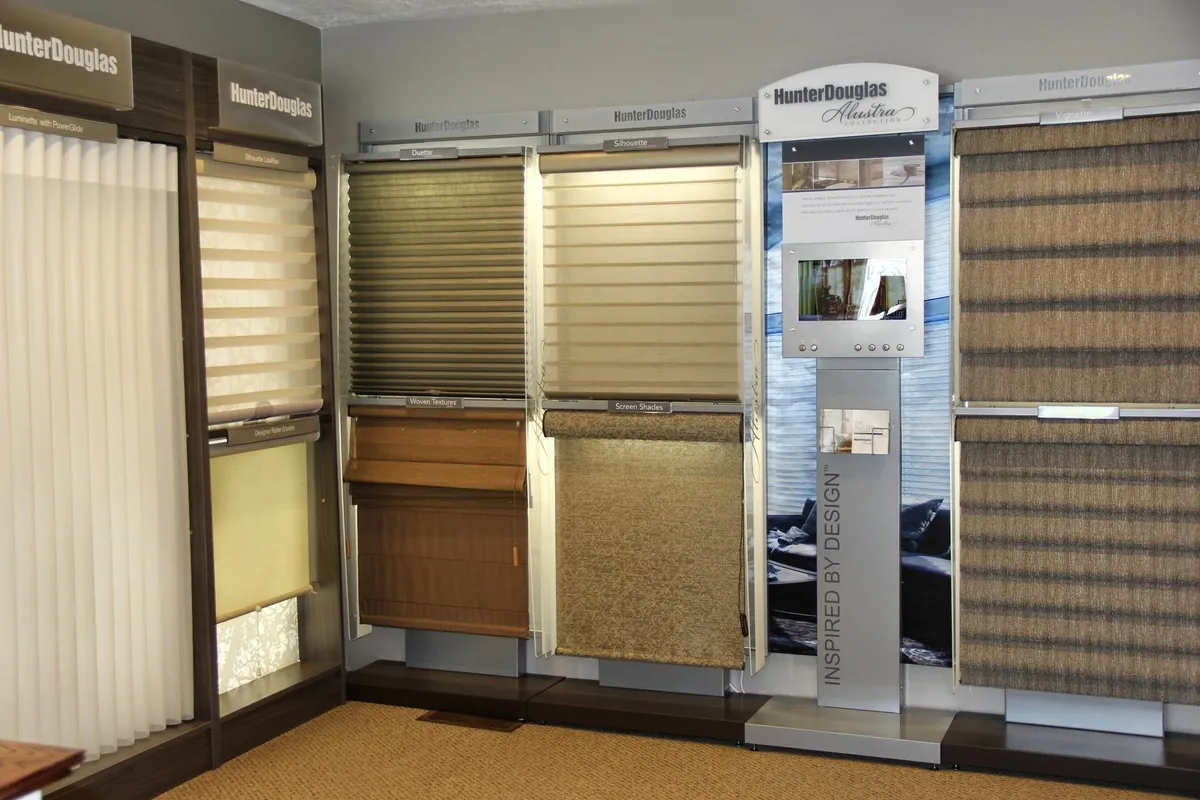
Blinds & Designs is a Hunter Douglas Gallery dealer. In a city home, that gives you every Duette and Applause fabric to choose from, PowerView motorization, and the wider Hunter Douglas family of shades, blinds and shutters, all through one company.
The people who help you choose are the same company that puts the shades up, with Hunter Douglas certified installers. Thinking about other rooms? Look at roman shades in Boston, plantation shutters in Boston, roller shades or custom blinds, or read about us as your Hunter Douglas dealer in Boston. The full list of what we do in the city is on our Boston page.
Questions from Boston
Will honeycomb shades fit the tall, narrow windows in a brownstone?
Yes. Every honeycomb shade is built for its own opening, so a slim, tall sash gets a slim, tall shade. Thick masonry walls usually leave space for it to sit inside the reveal, keeping the woodwork visible. The depth of each window is checked when we visit.
How do you cover a floor-to-ceiling wall of glass in a condominium?
The wall is split into a series of shades that follow the mullions and match from panel to panel, so it reads as one surface. Add PowerView and the series can rise as one, or a single end can open while the rest stays down.
What will my windows look like from the street?
From the sidewalk a honeycomb shade reads as a plain panel of fabric. Any district or building rules about the window can come to the appointment with you, and we can check the swatches from outside the glass too.
Do I have to visit a store to choose?
No. The city is covered by our shop-at-home service, and your swatches arrive at your door. For a showroom visit as well, Franklin is the closest.
Is the estimate free?
It is. Once the windows on your list are measured, a free estimate follows, and you can take as long as you like over it.
Begin with the coldest window
Most Boston homes have one window that sets the tone: the drafty bow front on the parlor floor, or the glass wall that turns icy after dark. Start there. Use Request a Consultation to book, and a consultant will arrive with swatches from both honeycomb lines, take measurements and leave you with a free estimate for cellular shades in Boston, MA. Questions first? The call button is at the top of every page.