
Tiny cottage sash beside brand-new glass
Centerville is a village of contrasts, sometimes inside a single house. Along Main Street, older village houses keep their original windows. Down at Craigville, beach cottages stand close together with small, simple openings. Inland, post-war ranches fill the lots between. And all across the village, houses have been extended, so a cottage with tiny original sash may now have a family room addition with a wide slider and a wall of new glass. Motorized blinds in Centerville, MA have to make sense of both at once.
That mix is exactly where a single PowerView system helps. A tiny bedroom window and a huge addition slider can both carry a motor, each shade made to its own opening, and both answer to the same remote and the same app. The old part of the house and the new part stop feeling like two different buildings, at least at the windows.
You control everything from a remote, from the PowerView app on a phone or tablet, or on schedules that move the shades at set times every day. There are no cords at the glass, which suits small cottage rooms where every window is within arm’s reach of a bed or a chair.
Six shades, one system
All six can carry a PowerView motor, and each suits a different kind of Centerville window. Our vans bring the samples to you.
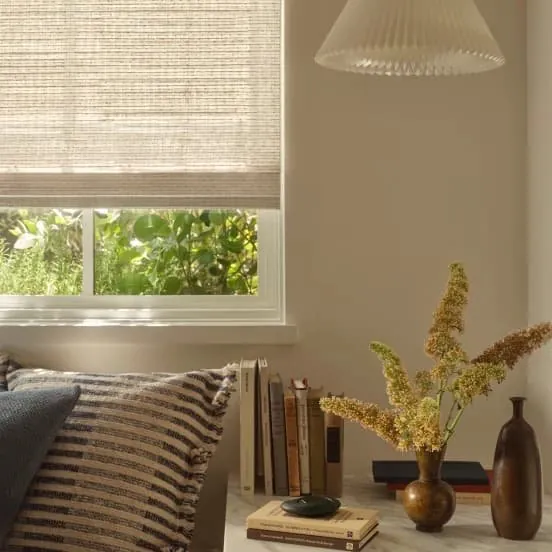
Woven shades for cottage rooms
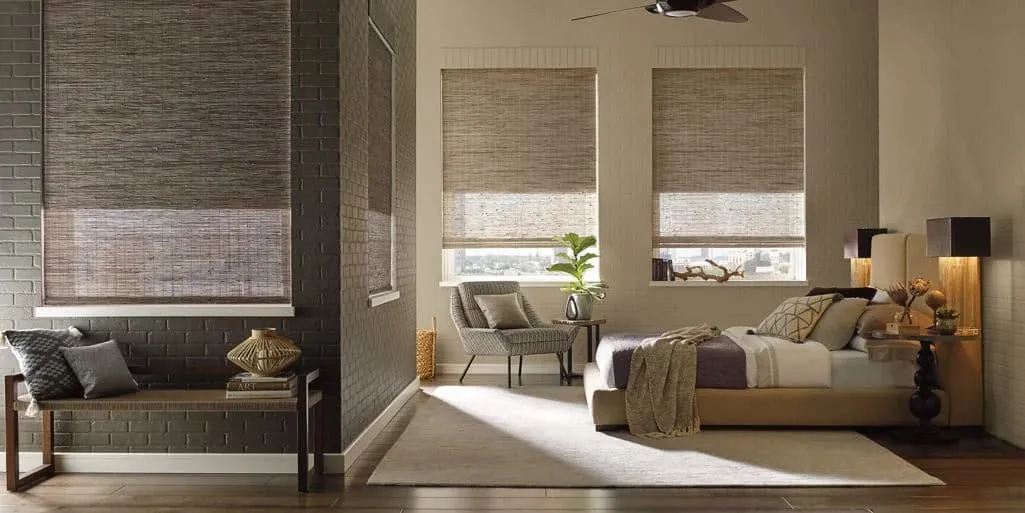
Natural texture that suits a shingled beach cottage, with soft daylight through the weave.
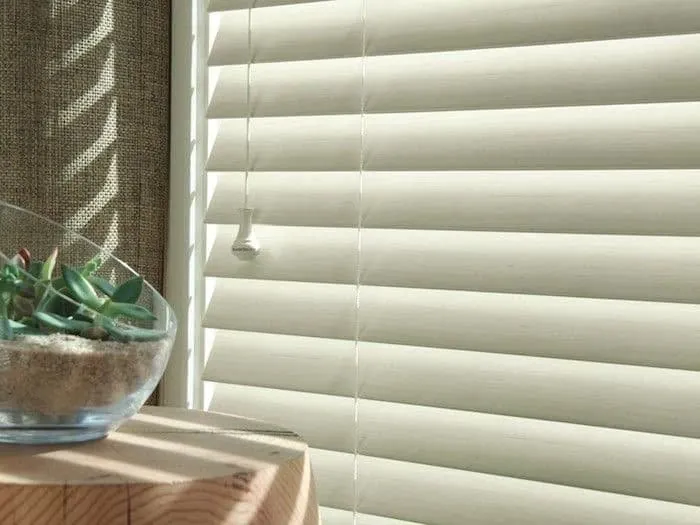
Faux wood blinds for kitchens
Slats that wipe clean and tilt to direct light. Which sizes take a motor is confirmed at your windows.
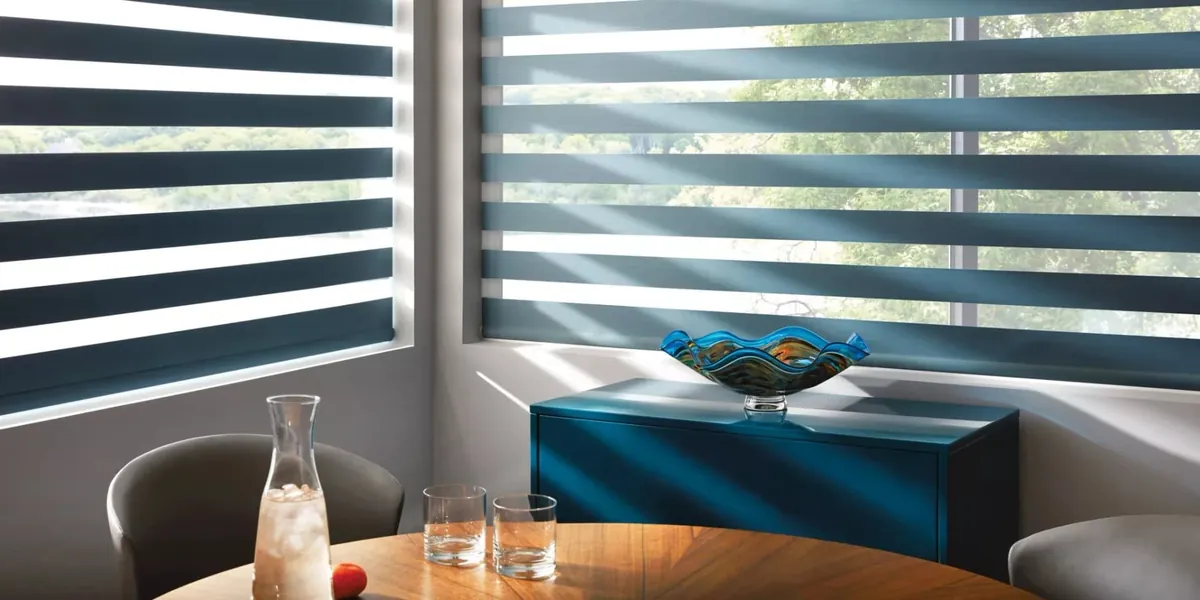
Banded shades for additions
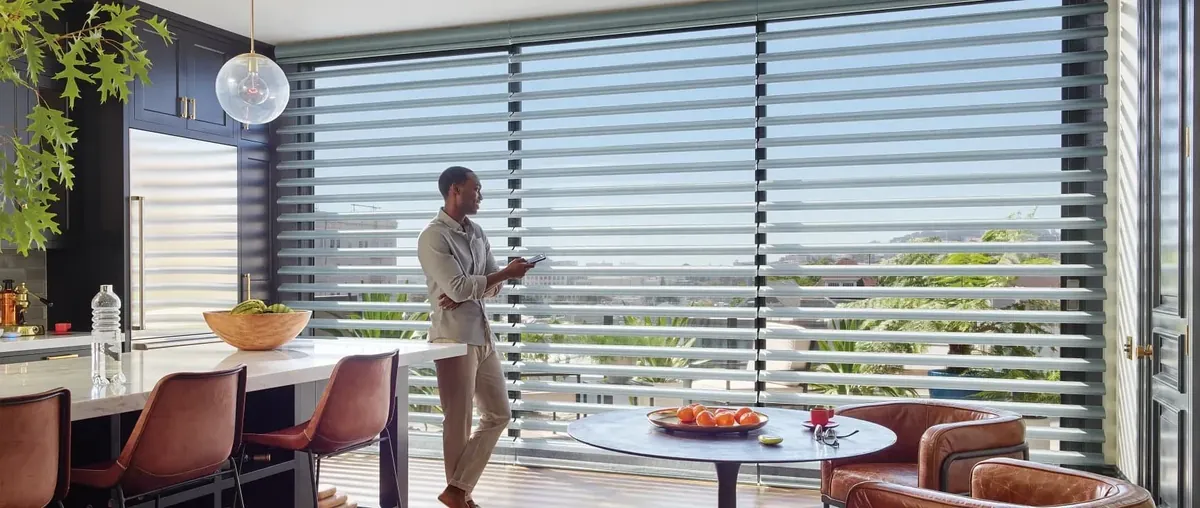
Sheer and solid bands that slide past each other, for the bigger, modern glass in a newer family room.
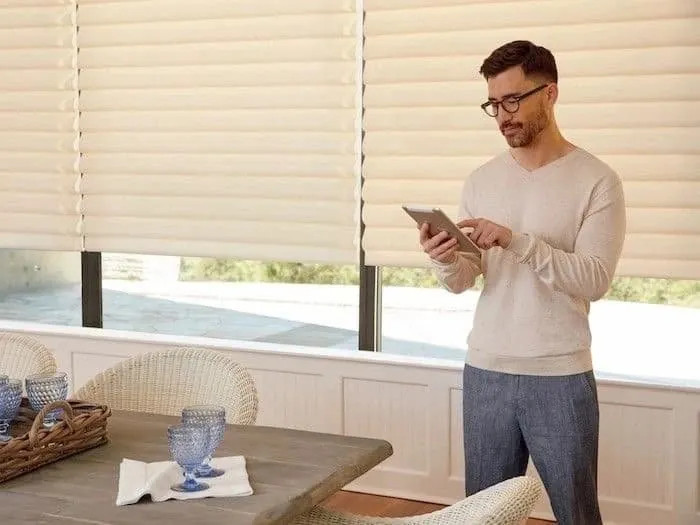
Control from your phone
The PowerView app brings old rooms and new rooms together on one screen, with groups and schedules for each.
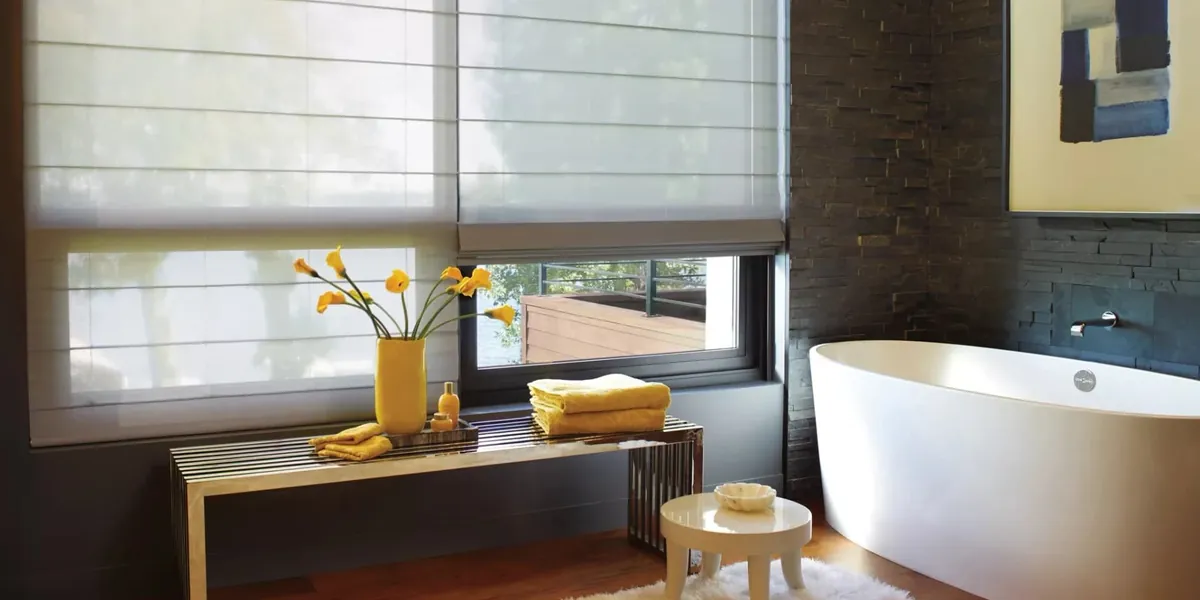
Sheer Roman shades for bathrooms
Soft folds with light through the fabric. A schedule closes them in the evening for privacy.
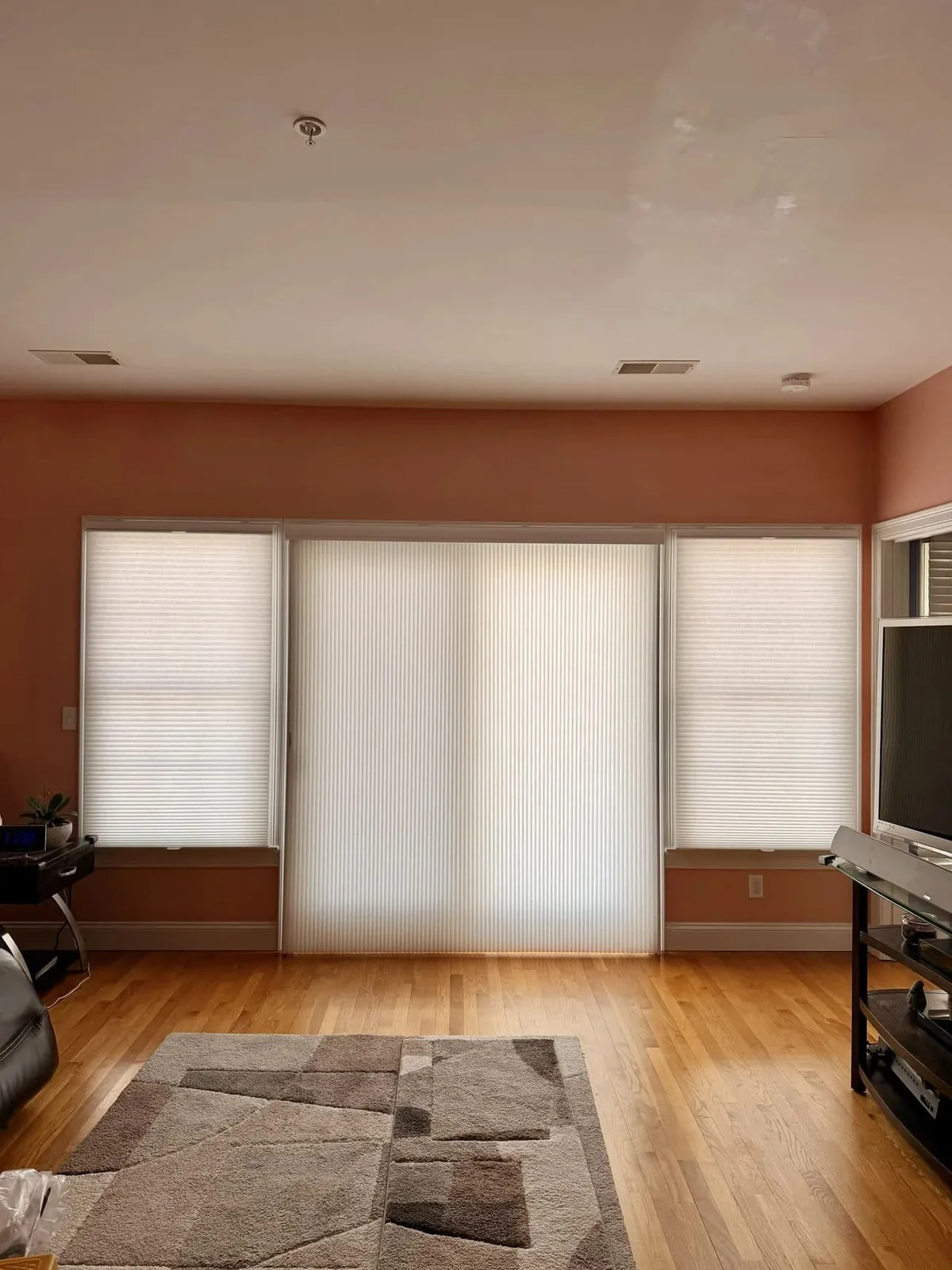
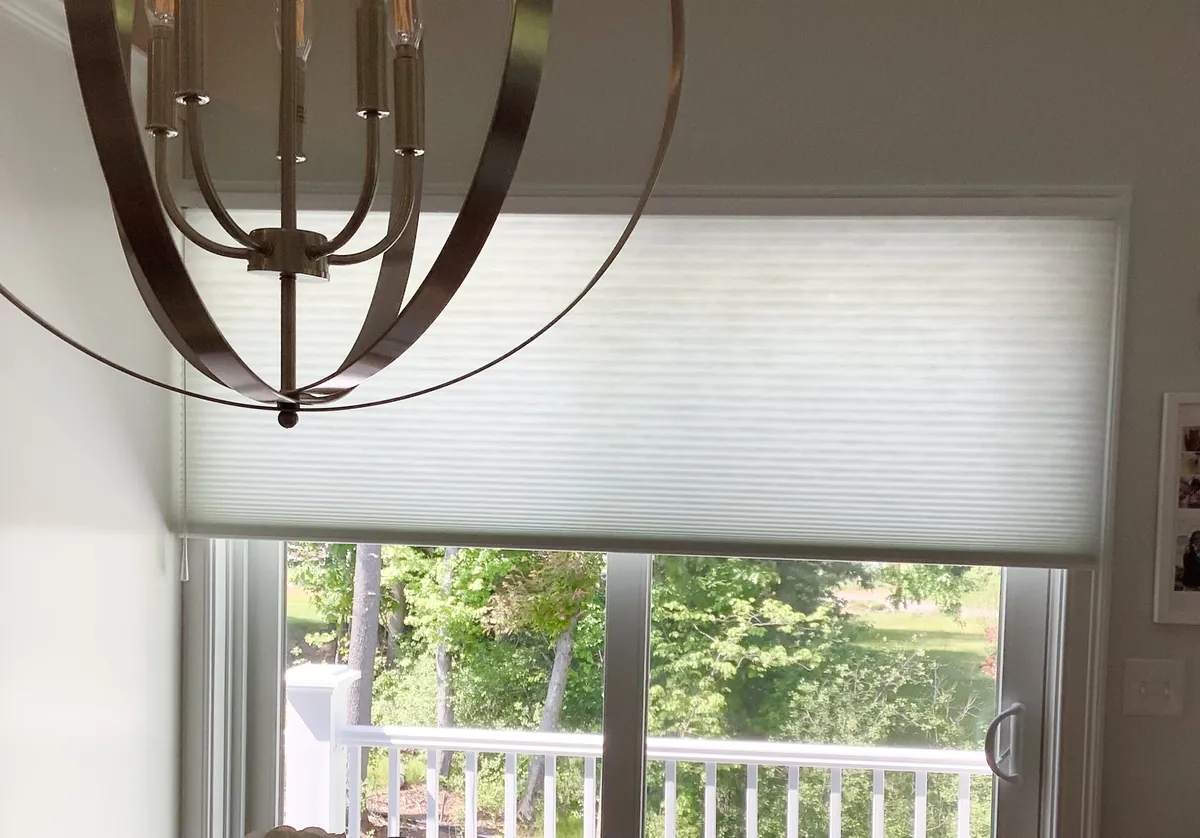
Honeycomb shades for sliders
From our own installs: a vertical honeycomb shade across a slider, with matching shades on the windows beside it.
Village houses along Main Street
The older houses lining Main Street were built when windows were smaller and glass was precious. Many have double-hung sash with narrow panes, deep trim and frames that have settled over a long life. Inside, rooms are modest and the windows sit where the builder needed them, which is not always where you would put a chair or a bed today.
Motorized shades take the reaching out of these rooms. A bedroom window tucked behind a dresser, a stair landing window above the treads, or a kitchen window over a deep sink all move at a button. With the shades on the front of the house grouped, they rise and fall together, which keeps the street face of an old house looking orderly.
On older frames, measuring is the main job. Widths vary from top to bottom, and the depth available for a headrail changes from one window to the next. We check every opening at several points before recommending an inside or outside fit.
Craigville’s close-set beach cottages
Craigville’s cottages sit near the beach on small lots, often just a few strides from each other. Most are simple, single-story or a story and a half, with plain small windows on every wall. Many are summer places, and some have been winterised over the years and used much more.
In a cottage this close to its neighbors, privacy is the daily question. With windows facing the cottage next door on two sides, an evening schedule that closes those shades as the light goes saves a walk around every room. During the day, a light-filtering fabric or a woven shade keeps the room bright while hiding what is inside.
The cottages are small enough that many customers motorize every window. One remote then opens the whole place in the morning, closes it at night and puts it into an away pattern when the cottage is empty. Because the shades keep moving on their schedule, a closed cottage never looks shut up.
When an addition meets the original house
Additions are everywhere in Centerville: a family room off the back of a cottage, a primary suite over a garage, a sunroom across the rear of a ranch. They bring modern windows, often much larger than the originals, and sliders or French doors onto a deck. The result is a house where one room has tiny sash and the next has a wall of glass.
Treating both parts of the house with the same family of shades ties them together. A honeycomb shade can be made very small for a cottage bedroom and very wide for an addition window, in the same fabric, so the house reads as one from inside and out. Motorizing both means the old rooms and the new rooms answer to the same remote, groups and schedules.
The addition usually gets the bigger benefit. Wide new glass takes a lot of sun, and a schedule that lowers those shades through the hottest hours keeps the new room comfortable. For many households, motorized blinds in Centerville, MA begin in the addition and spread to the original rooms once they see how easy it is.
Very small openings
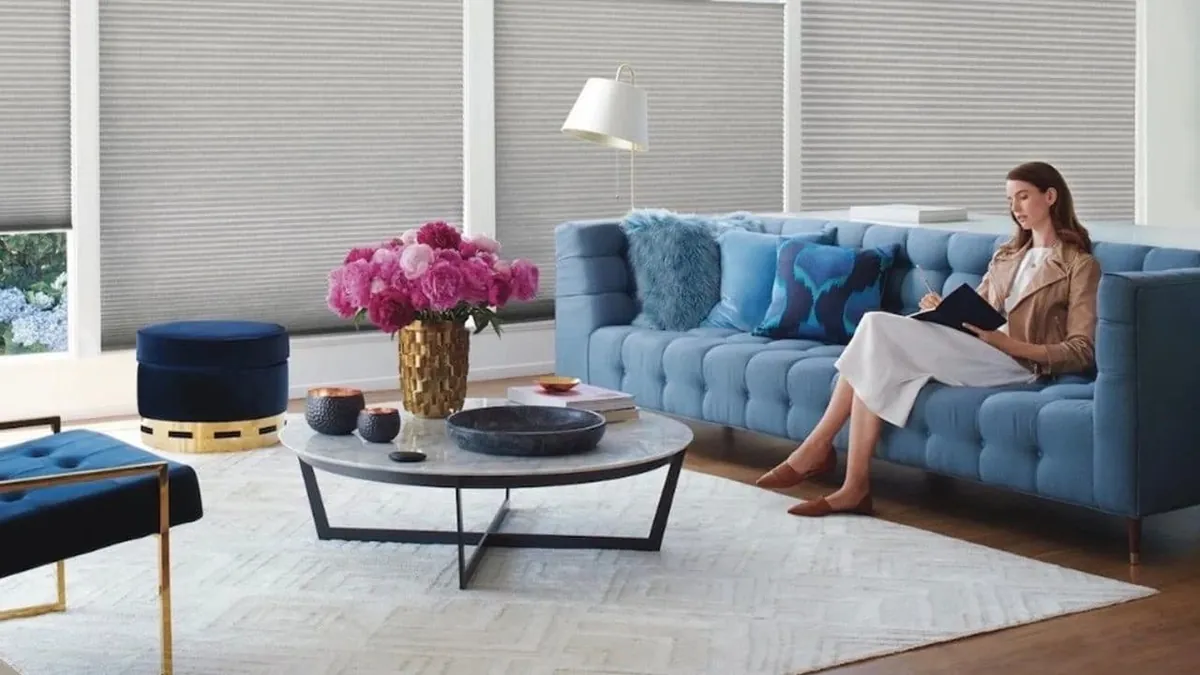
The smallest windows in a Centerville cottage can be very small indeed: a narrow window beside a chimney, a little square in a bathroom, a low window in a half-story bedroom under the roof. Small windows show every mistake, because a gap at each side is a bigger share of the glass.
We measure these with particular care, at several points across and down, and check how much depth the frame offers. Hunter Douglas makes each shade to those figures, and many shade families can be made quite narrow. Honeycomb shades are especially good here, because they fold up so compactly that a raised shade leaves almost the whole of a tiny sash clear.
Not every product goes down to every size with a motor, so we confirm each one at your windows. Where a very small window is better with a fixed or manual shade, we will say so rather than force a motor onto it.
Ranches on the inland lots
Away from Main Street and the beach, Centerville’s inland streets are full of post-war ranches. Their layout is familiar: a living room picture window, a kitchen window over the sink, a slider to the yard and bedrooms along a hall. The picture window is the big one, often several sections wide, and it takes the afternoon sun on many lots.
Motorizing a picture window lets its shades move together, all stopping level whether they are fully raised or halfway. A schedule can lower them on summer afternoons and open them in the evening. In winter, honeycomb shades lowered at dusk keep the room warmer, because the cells hold air between the glass and the room.
Sliders take a vertical honeycomb shade that travels to one side so you can still use the door. For ranches, motorized blinds in Centerville, MA often cover just the picture window, the slider and the bedrooms, which is where the daily work is.
Sunrooms across the back
A favorite Centerville addition is the sunroom: a run of glass across the back of a ranch or cottage, sometimes on three sides, often with a slider out to the yard. It is the brightest room in the house and, on a July afternoon, the warmest. Without shades it can be too hot to use for half the day; with manual shades on every pane, it becomes a chore.
A sunroom is one of the easiest rooms to motorize well. Every shade in the room joins one group, so the whole room lowers together when the sun comes round and rises again for the evening. A light-filtering or screen fabric keeps the garden in view while taking the heat and glare out of the light. Because the room is used most in the evenings, a schedule that opens it in late afternoon has it ready when you are.
On a sunroom with a sloped or very high top row of glass, we look carefully at which panes can take a moving shade and which are better left open.
Making schedules work through the year
Schedules are simple: a time, a group of shades and a position. The trick is setting them to suit Centerville’s seasons.
In summer, the long afternoon sun is the main thing to manage, so the west and south shades lower in the early afternoon and rise again in the evening. Bedrooms facing east close before sunrise so the early light does not wake anyone. At the beach cottages, an evening privacy schedule closes the windows facing next door.
In winter, the priority shifts to warmth. South-facing shades can rise around midday to let the low sun in, and every shade on the north side can close at dusk. As the days lengthen and shorten, you shift the times to match. Changing the whole set takes a minute in the app.
The controls at a glance
- The remote is a small handheld control. Keep one by the bed and one in the kitchen. Press a button to move one shade, a room or a stored position.
- The PowerView app on a phone or tablet shows every shade in the house. Use it to set up rooms, groups, scenes and schedules, or to move any shade from anywhere in the house.
- Scenes are saved positions for a group of shades, such as morning, with everything open, or night, with every bedroom and street-facing shade closed.
- Schedules call those positions at set times every day, so the shades move on their own.
For a fuller explanation, read our guide to how motorized shades are controlled, and see window covering automation for more on timers and scenes.
Summer weeks at the cottages
Many Craigville cottages are busy for a few weeks and quiet for the rest. When they are full, every bedroom needs to be dark in the morning and every room needs privacy at night. When they are empty, the shades should keep moving so the cottage does not bake in the sun or look shut from the lane.
Motorized shades handle both. A guest arriving for a week gets a remote by the bed and full control of the room. When the cottage is closed, the schedules take over again. Nobody has to visit to adjust a cord, and the cottage looks lived in from outside even when it is not.
Salt air from the beach is part of life here too. On a PowerView shade, the lifting parts sit inside the headrail rather than out at the side of the window, so less is left exposed to the breeze through an open window.
Cords, children and pets
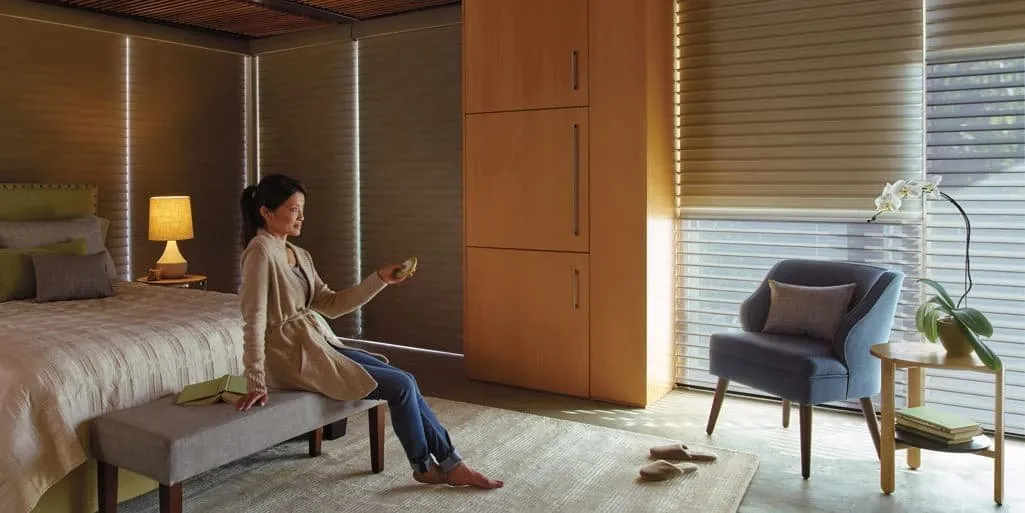
A motorized shade has no lift cord and no loop at the window. In a small cottage bedroom, where a crib or a bed is often right beside the window, that makes a real difference, and it means nothing for a cat or a puppy to tangle in either.
The motor also lifts both sides of the shade evenly, so the fabric stays straight and the bottom rail stays level. On a small, old window, where any tilt is easy to see, that keeps things neat. We sort out how every motor will be powered while we are there measuring, window by window.
Which room to start with
You do not have to motorize every window at once. Most Centerville customers start with the room that gives them the most trouble and add more over time, since every new shade joins the same app and schedules.
Good places to start are the addition with the big sunny glass, the bedroom with a window behind the furniture, the picture window in a ranch, or every window in a small beach cottage. We look at the house with you and suggest where motorized blinds in Centerville, MA would make the biggest difference first, then plan the rest so it can follow when you are ready.
Our home visit
- Book through Request a Consultation or the call button.
- We come with samples in our van, so you see each fabric in your own rooms.
- We walk the original house and any additions with you.
- We measure each window, from the tiniest cottage sash to the widest new slider.
- We plan groups and schedules, and agree where to start.
- A free estimate follows for you to look over in your own time.
- Our certified installers fit the shades, program the remote and app, and set your schedules.
Our page on what happens at an in-home consultation explains that first visit in more detail.

A Gallery dealer for old houses and new
Blinds & Designs is a Hunter Douglas Gallery dealer, which gives you the whole Hunter Douglas range from one consultation. In a village where a tiny cottage window and a wide new addition may sit side by side, that range is what lets us match the shade to each opening while keeping the house consistent.
Our installers hold Hunter Douglas certification. They fit every shade, set its stopping points, connect it to the remote and app, and program your schedules. We also offer interior design consultations, and repairs on blinds and shades you already have.
For everything else we offer in the village, visit the Centerville page, or look at cellular shades in Centerville and custom blinds in Centerville. All PowerView options are on our motorized blinds and shades page.
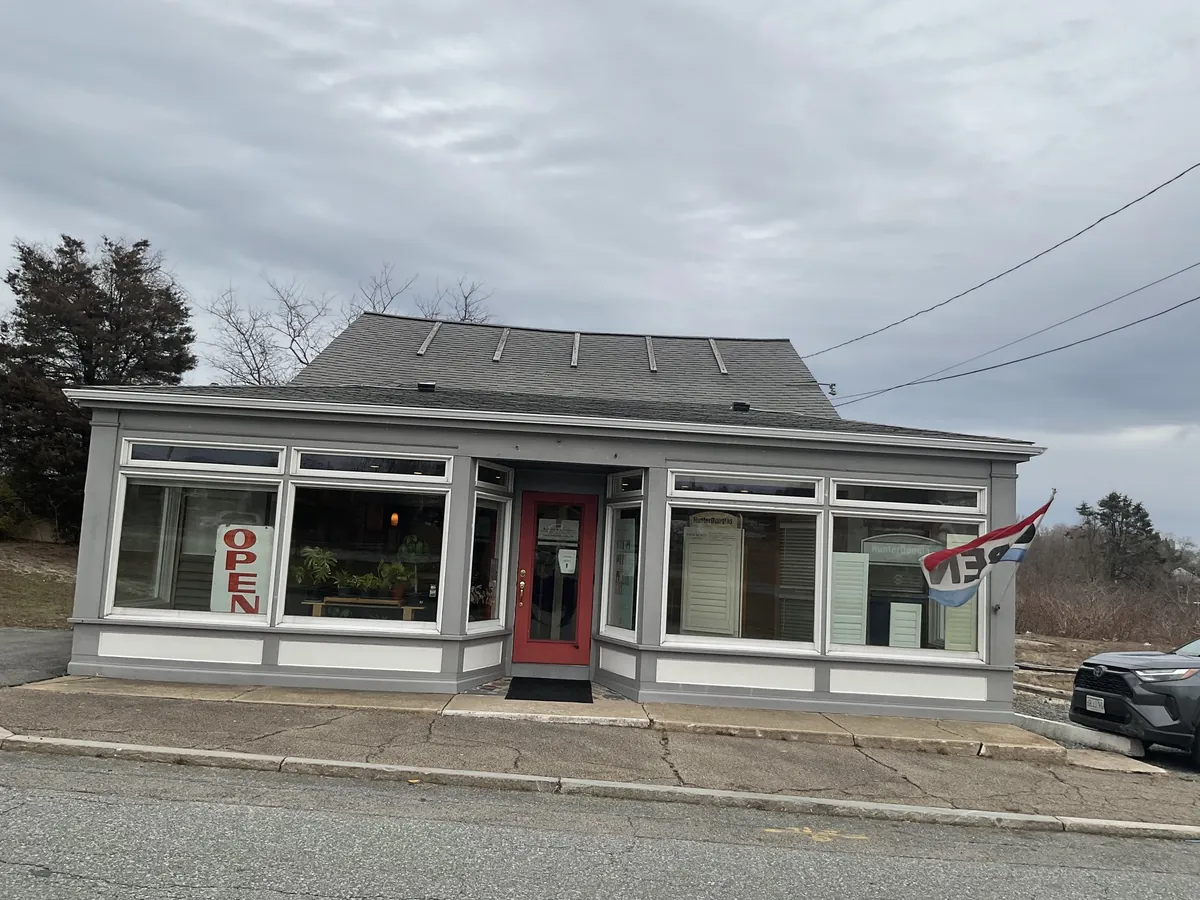
The Sagamore showroom is our nearest
From Centerville, our nearest location is the Sagamore showroom, by the bridge at the start of the Cape. Stop in whenever it suits you.
Most Centerville projects begin at home, though, because the mix of old and new windows is easiest to plan in the house itself. Our vans bring the samples, and we plan motorized blinds in Centerville, MA with you at every opening.
Questions from Centerville
Can the tiny windows in our cottage take a motorized shade?
Often, yes. Many shades can be made quite narrow, and honeycomb shades fold up very compactly. Not every product goes down to every size with a motor, so we confirm each window when we measure.
Our addition has a big slider. Can it match the rest of the house?
Yes. A vertical honeycomb shade on the slider can share a fabric with the honeycomb shades on the windows, so the addition and the original house look consistent and run from the same remote.
Our beach cottage is very close to the next one. Can the shades close on their own at night?
Yes. An evening schedule closes the shades facing your neighbors as the light fades, every day, and opens them again in the morning.
Do we have to motorize every window at once?
No. Many customers start with one room and add more later. Each new shade joins the same app, groups and schedules.
What does the estimate cost?
Nothing. We measure at the house and give you a free estimate for every shade and motor we talked about.
See it at your own windows
Request a consultation and we will bring samples to the house, measure every window from the oldest to the newest, and give you a free estimate. If you would rather talk first, use the call button, or stop in at the Sagamore showroom.