
Three eras of house, one town
Walpole does not have one kind of house. Near the center, Victorians and colonials keep their tall older sash. Through East Walpole, rows of post-war capes sit on modest lots with tidy, regular windows. Farther out, larger newer houses stand on wooded lots with big modern openings. A single street can cross two of those eras, and a single house that has been added to over the years can hold all three. Planning motorized blinds in Walpole, MA, starts with working out which era each window belongs to.
That matters because each era asks the motor to do something different. On tall older sash, the motor saves the long reach to the top of the shade and lets a row of windows rise together. In a cape, it handles the dormer bedrooms upstairs and keeps the front windows in step. In a newer house on a wooded lot, it runs the high windows nobody can reach and follows a daily routine across big rooms of glass.
The good news is that one PowerView system can handle all of it. Shades of different styles, on windows of different ages, all answer to the same app and the same schedules.
Motorized blinds for Walpole houses: six styles on PowerView
With so many eras in town, we bring a wide spread of samples to Walpole consultations. Each of these can be motorized, and each tends to suit a particular kind of room.
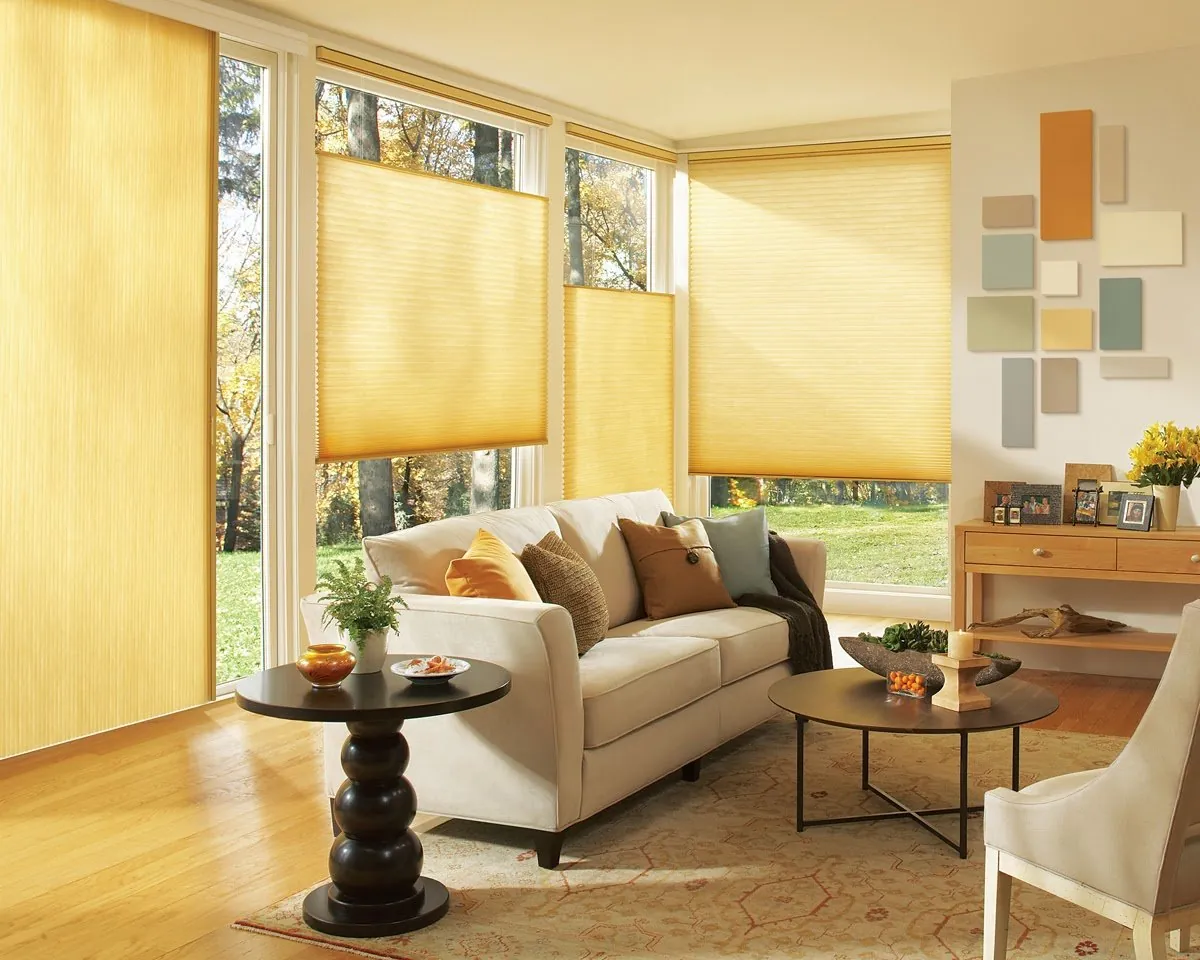
Cellular shades
Honeycomb fabric with a neat stack, at home in a cape bedroom or a colonial sitting room.
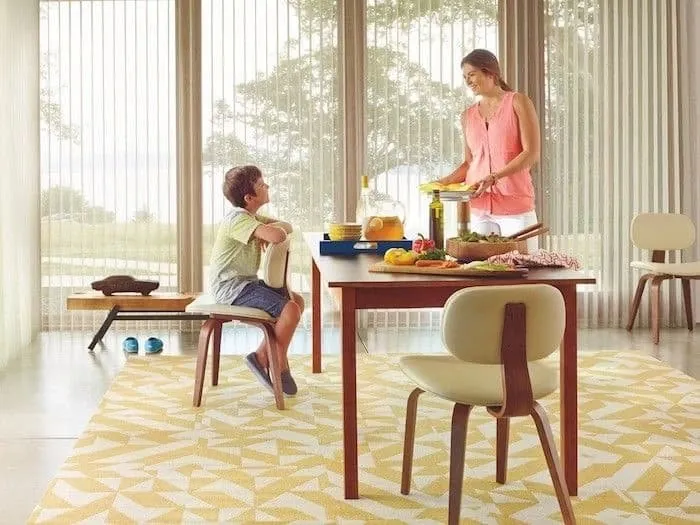
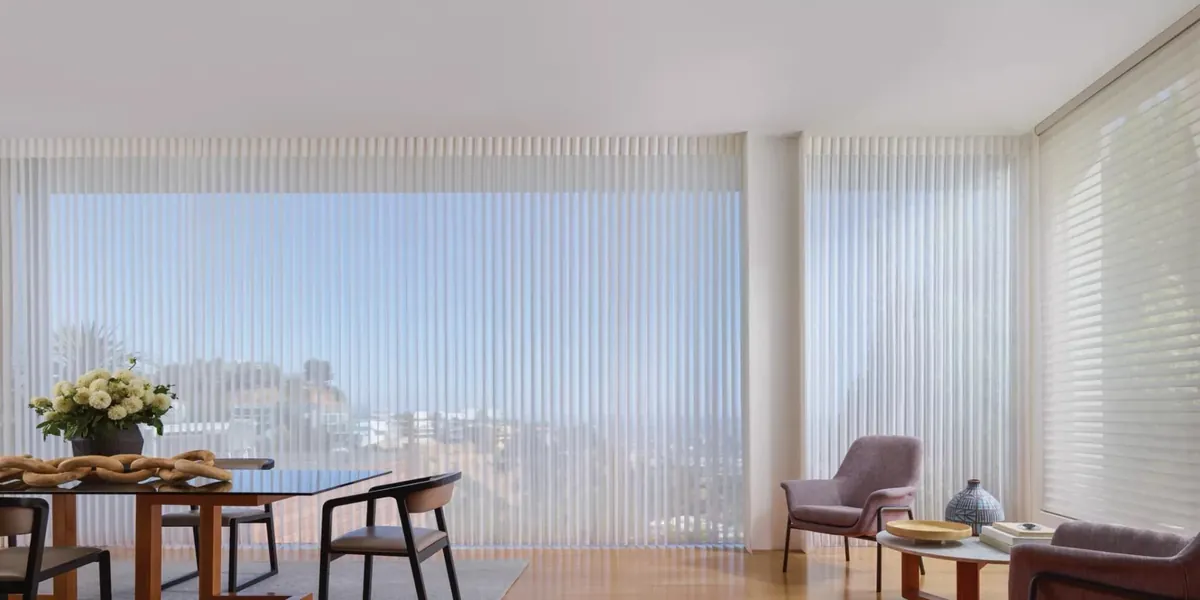
Sheer shades
Soft vanes for tall glass and family room walls, filtering light while keeping the view.
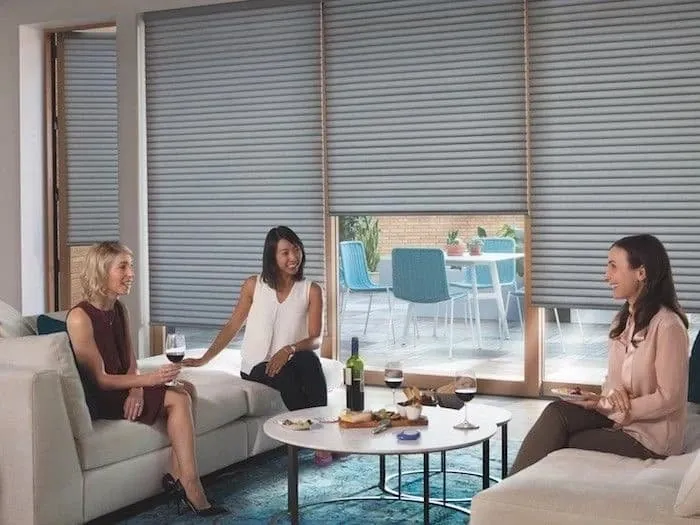
Roller shades
Clean lines for the regular openings of a cape or the wide windows of a newer house.
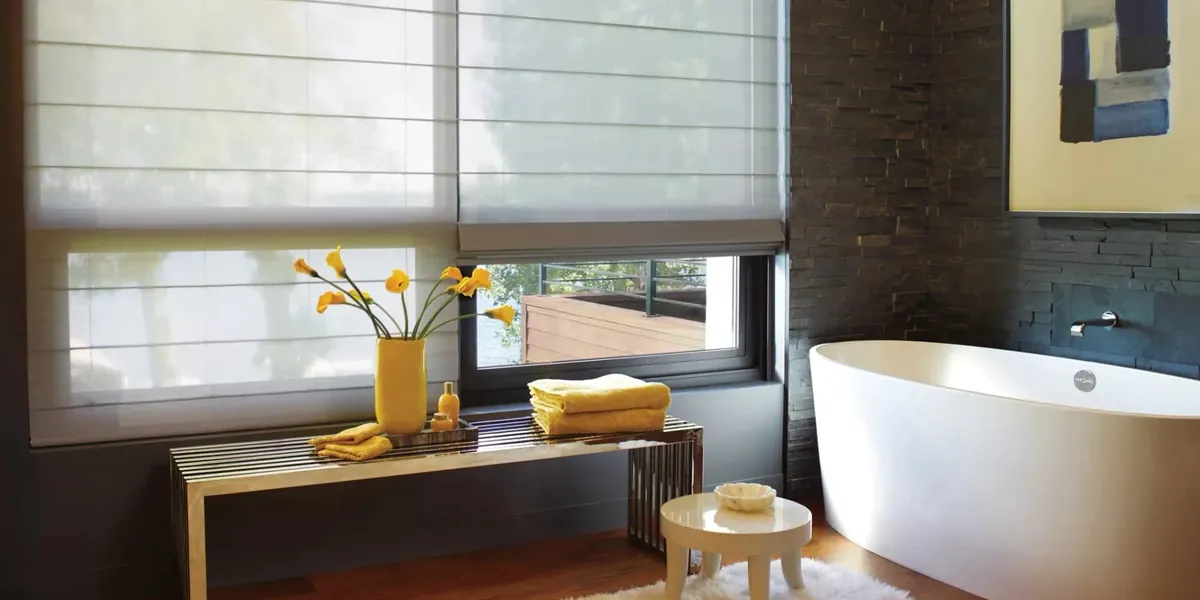
Roman shades
Folded fabric that suits the formal rooms of a Victorian or colonial near the center.
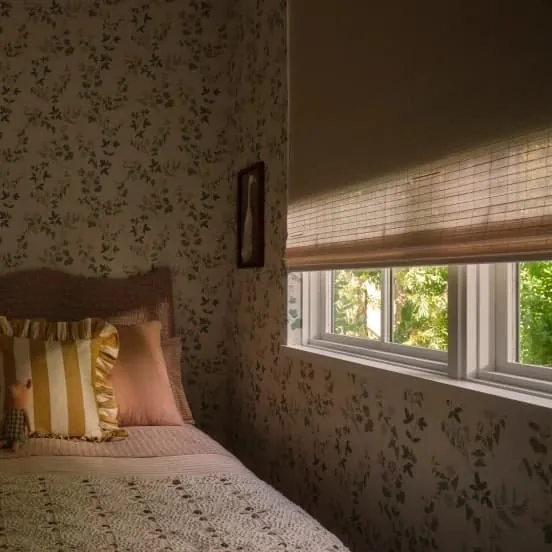
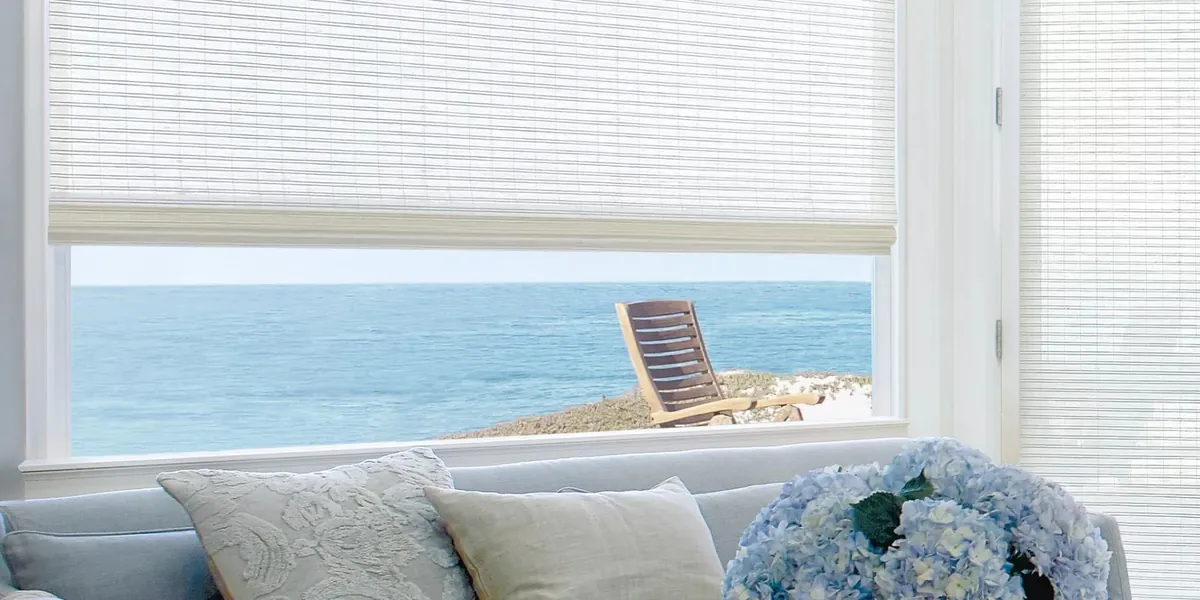
Woven shades
Natural texture that sits easily in older rooms and warm, wood-toned newer ones.
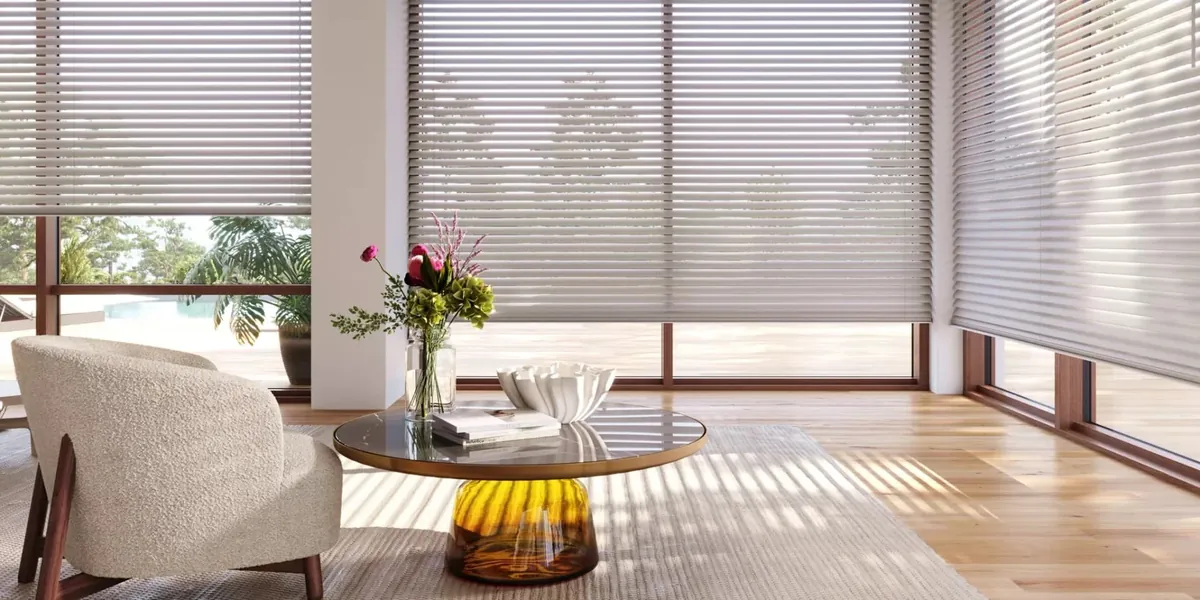
Blinds
Slats that tilt on the motor, steering daylight up and away from the street.
Tall older sash near the center
The Victorians and colonials near Walpole’s center were built with tall sash, often in pairs or rows along the front rooms. Those windows make a parlor feel generous and bring light well into the house. They also put the top of the shade a long way up, and a manual shade on a window like that usually ends up parked at one height because adjusting it is a stretch.
A motor gives the whole height of the window back to you. The shade moves from top to bottom at a press and stops anywhere in between, so you can screen the lower glass from the sidewalk while the upper panes stay open to the sky. Pairs and rows of tall windows can be grouped, so the whole front of the room rises together and finishes on one line.
Older frames need care. Over the years sash gets replaced, frames shift and paint builds up on the stops, so two windows side by side can measure differently. We take each one at the top, middle and bottom, check the depth at several points and note any latches or storm panels. Then we decide with you whether the shade sits inside the frame, keeping the casing on show, or on the casing itself, which is often the tidier answer on a shallow or uneven frame.
Post-war capes through East Walpole
Head into East Walpole and the streets fill with post-war capes. Their windows are modern in the sense that matters to us: regular sizes, square frames, enough depth for a headrail. A cape here rarely throws up a fitting surprise, so the planning time goes on how the house is used rather than on coaxing a shade into an odd frame.
The upstairs is where a motor pays off. Cape bedrooms sit under the slope of the roof, and the dormer glass is set back in its own little nook, frequently with furniture parked right in front of it. Most people give up adjusting those shades within a month. Put them on PowerView and the problem disappears: a remote beside the bed, or a wake-up timetable, and the nook can hold a desk or a headboard without anyone climbing over it. Room-darkening fabric is the usual pick for a sleeping room, and a lighter weave for a nook used for reading.
On the ground floor, a cape’s front is symmetrical, with matching windows flanking the door. Shades that rise and fall as one keep that symmetry intact from the street. Because the house is compact, the whole place often ends up on one simple plan: a morning timetable, an evening timetable and a handset in each bedroom.
Larger newer houses on wooded lots
On the wooded lots farther out, Walpole’s newer houses are larger, set back from the road, with standard modern openings and plenty of glass. Expect a tall pane over the entry, more glass where the stairs turn, a family room facing the trees through a broad sweep of windows, and generous bedroom windows above.
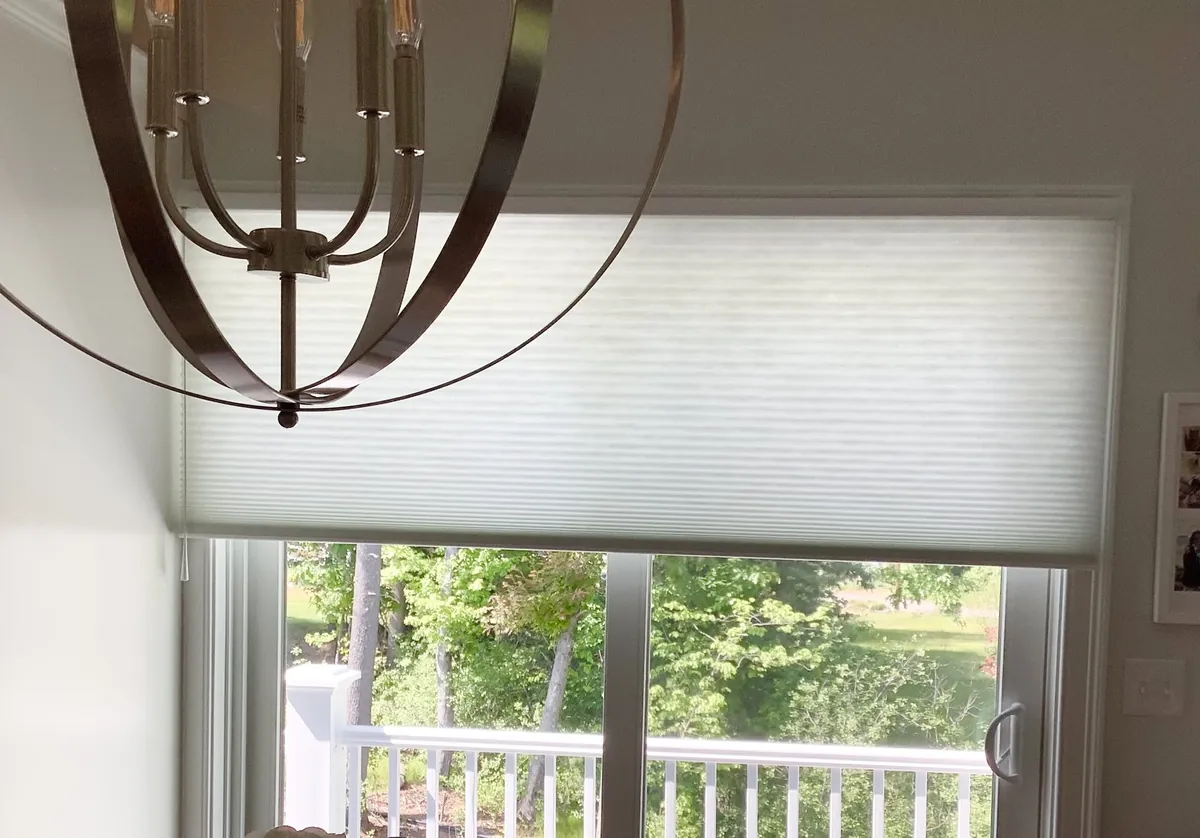
Out here, motorized blinds in Walpole come down to routine and reach. The entry glass and the landing window go on the motor first, because nobody can get to them otherwise. After those, the family room: afternoon sun filters through the trees onto the television and the floor, and a group of shades dropping part way at a set hour tames it while the woods stay in sight.
The trees change the light through the year. In summer they shade the house; in winter, with the leaves gone, low sun comes straight in. The app makes it easy to shift a schedule as the seasons turn, so the shades keep pace without anyone walking from room to room.
One system for a house of mixed ages
Plenty of Walpole houses are not one era at all. A colonial near the center may have a newer family room added at the back. A cape may have had a dormer widened or a wing built on. That leaves one house with tall older sash at the front and standard modern openings at the back, sometimes in the same room.
Made-to-measure shades handle that easily, because each window gets a shade built to its own size. The bigger question is how to make the house feel consistent. We often suggest the same fabric, or fabrics from the same family, running through the old and new parts so the rooms tie together, even though the windows do not match.
On the control side, PowerView treats every shade the same, whatever its style or the age of the window. The front parlor’s roman shades and the family room’s rollers can sit in one app, follow one evening schedule and be grouped however suits the way you live.
What changes from the center outward
Driving out from the center tells you a lot about what a Walpole house will need. Near the center, the windows are tall and the frames old, so the visit spends longest on measuring and on the choice between an inside and an outside mount. In East Walpole, the capes are quick to measure, and the discussion moves to dormers and to keeping the front symmetrical. On the wooded lots, the openings are standard but the glass is bigger and higher, and the focus shifts to entry windows, family room walls and timetables that follow the seasons.
That pattern shapes which styles we bring. For the older rooms near the center, roman shades, wood blinds and honeycomb shades with a slim stack are common. In the capes, honeycomb and roller shades in light-filtering or room-darkening fabrics cover most rooms. In the newer houses, sheer shades and screen rollers are popular for the big glass, with room-darkening fabric upstairs.
None of that is a rule. Motorized blinds in Walpole are planned window by window, and a Victorian can have rollers in its kitchen just as a new house can have romans in its dining room. The point is that we arrive with samples that suit the era of your house, so the choice is made at your own windows.
Ways to run the shades
You have three ways to control PowerView shades, and Walpole houses tend to mix them.
- A handset in the room is the simplest: up, down, stop. It suits bedrooms, guest rooms and anyone who prefers a button to an app.
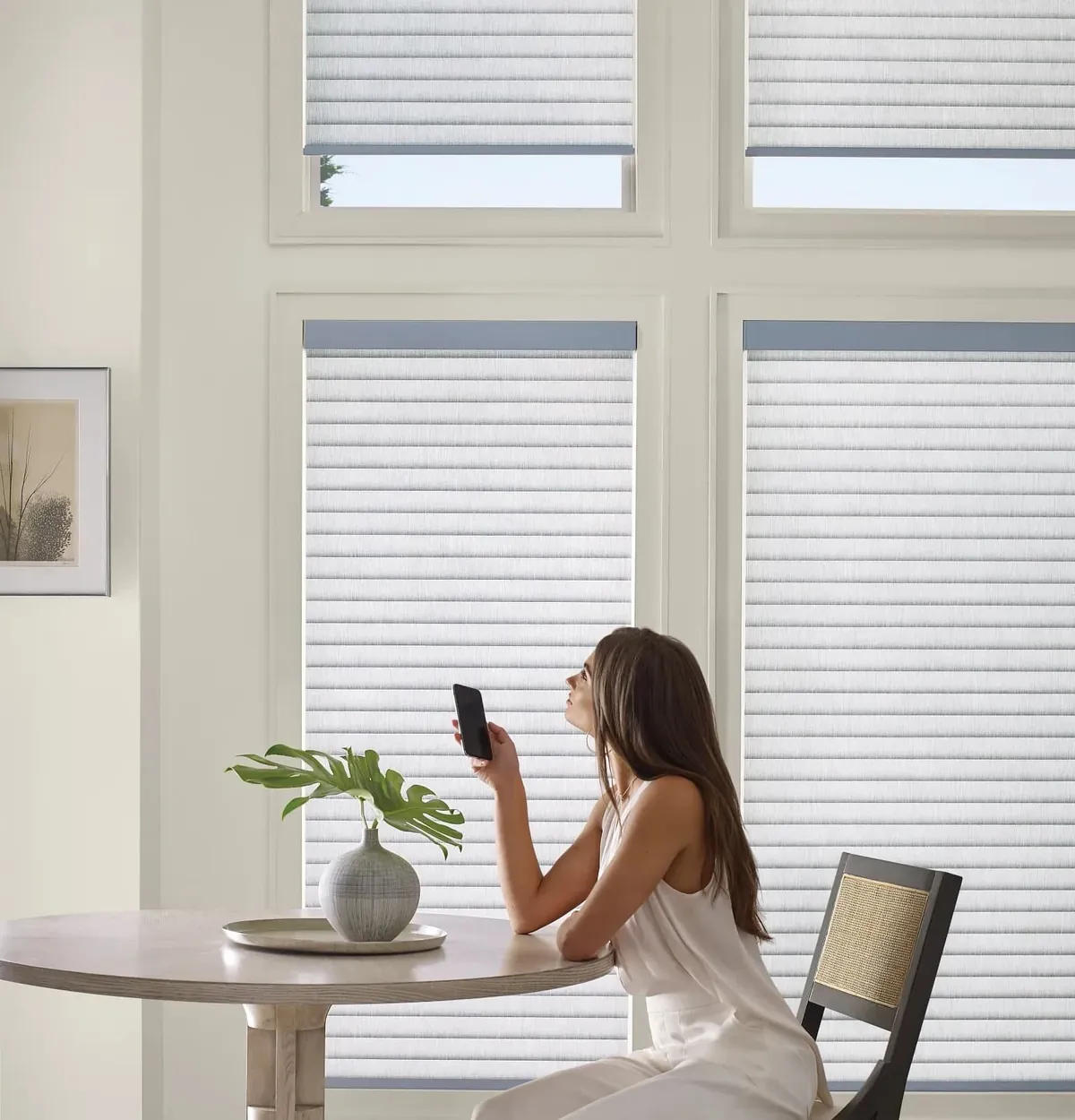
- The app sets any shade or group to any height and saves scenes, such as one that lowers the family room halfway or one that closes the whole ground floor.
- Timetables move shades at times you set, on the days you choose, so mornings and evenings take care of themselves.
Read how motorized shades are controlled for a simple comparison, or window covering automation for scenes and timetables. Powering each motor is decided in person at the consultation, opening by opening.
From your first call to the fitting
Mixed eras mean mixed windows, and none of that can be judged from a photograph. Our consultations take place at the house, with samples carried in the van, so you see each fabric at your own glass.
- Book online, or press the call button and Franklin will answer.
- Room by room, we sort the windows by era, from tall older sash to standard modern openings.
- Samples go up against each kind of window so you can compare them in your own light.
- We agree on groups and timetables, and on which rooms get handsets, the app or both.
- Every window is measured for width, height and depth, with latches and trim noted.
- You get a free estimate, shades and fitting included.
- Every shade is then made to order at Hunter Douglas.
- Hunter Douglas certified installers hang the shades, pair them with the controls and program the first timetables with you.
Our page on what happens on installation day explains the fitting itself.
A few things to think about before we arrive
You do not need to prepare anything for a consultation, but a little thought beforehand helps the visit go further.
- The window you like least. Most projects start with one: a tall sash nobody can reach, a dormer behind a bed, an entry window two stories up.
- When the light bothers you. Morning glare in a bedroom, afternoon sun on the family room screen, a front room on show after dark.
- How you like to control things. Some households want everything in the app; others prefer a button on the wall or a handset on the table.
- Rooms you may add later. Knowing what might come next helps us plan groups that will still make sense when the system grows.
Bedrooms in every era
Bedrooms bring the same request in every kind of house: keep the early light out, then let the day in at a sensible hour. Room-darkening fabric made to the exact opening handles the first part, and a morning timetable handles the second, a little later on weekends if you like.
In a Victorian near the center, tall bedroom sash can be grouped so the room brightens evenly. In an East Walpole cape, the dormer shades can share one timetable. In a newer house, larger bedroom windows can take a roller or honeycomb fabric that matches the rest of the floor.
Children’s rooms and guest rooms are worth a mention. A shade on a motor has no lift cord dangling beside the window, and a handset on the nightstand lets a visitor manage the room without learning an app. If a guest room is used only now and then, it can simply join the house’s evening timetable so it never sits open to the street at night.
Front rooms on show after dark
Near the center, many houses sit close to the sidewalk, and tall front windows show a lot of the room once the lamps are on. An evening timetable closes the front shades at the time you choose, every night, so the parlor is private without anyone remembering to do it. In the morning, the shades rise again to whatever height you prefer.
On the wooded lots, the setback does most of the privacy work, but a lit room still shows a long way through bare winter trees. The same evening timetable works there too.
Growing the system
Many Walpole projects begin with the hardest windows and add the rest over time. A common pattern is to motorize the tall front sash or the dormers first, then add the family room or the bedrooms later. Later shades link into the same PowerView setup, and the early ones stay exactly where they are.
For the full collection, see motorized blinds and shades. Our Walpole page gathers all of our local services, and if you are weighing options for the older rooms, take a look at roman shades in Walpole and plantation shutters in Walpole.
Why a Gallery dealer suits a mixed-era house
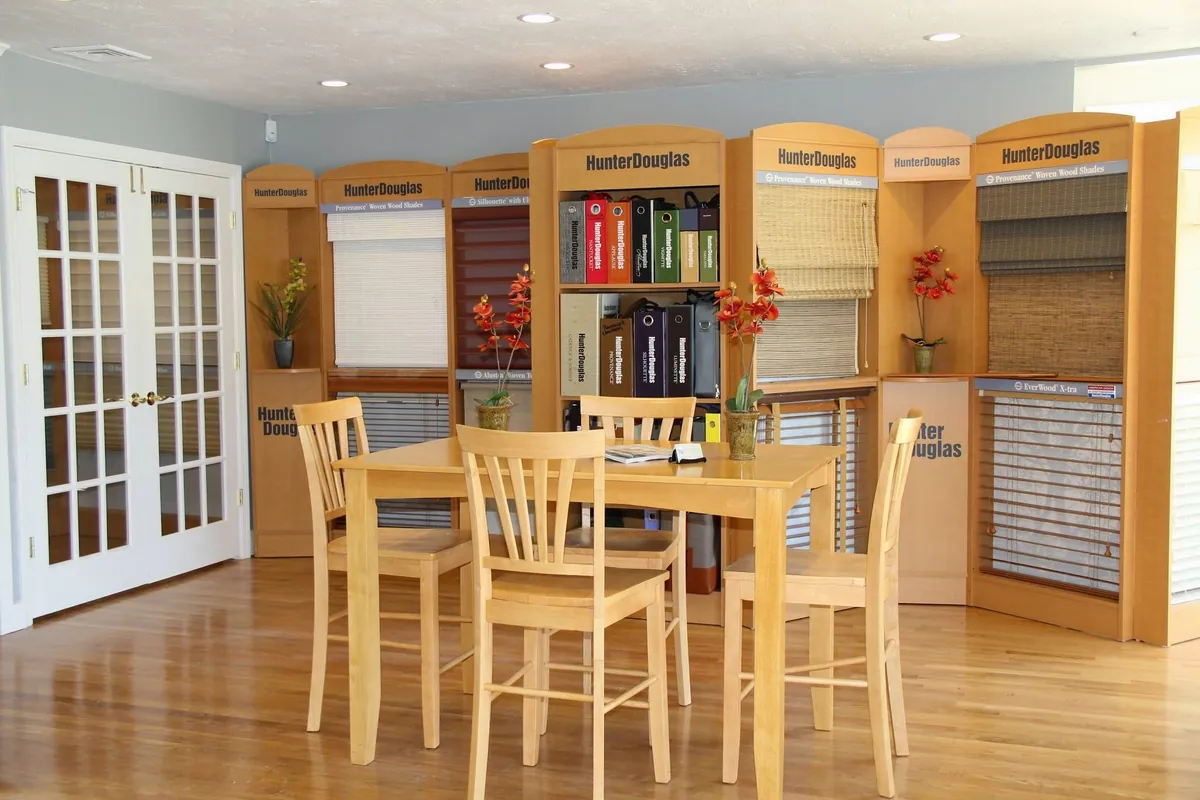
We are a Hunter Douglas Gallery dealer, and in a town where one house can hold tall older sash and modern openings under the same roof, that breadth is the point. Roman folds for the parlor, rollers for the family room and honeycomb for the dormers can all be chosen together and all run on PowerView.
Our installers are certified by Hunter Douglas. Estimates are free. When a room needs more than new shades, ask about our interior design consultations, and if an older blind or shade in the house has stopped working, we take on repairs too.
Our nearest showroom: Franklin
Franklin is our closest showroom to Walpole, and you are welcome to call in before the visit. Even so, nearly every Walpole plan is finished at home, where old and new windows alike get measured in place.
Questions from Walpole
Our house has old windows at the front and new ones at the back. Can one system run both?
Yes. Each window gets a shade made to its own size, and every shade, whatever its style, runs on the same PowerView app, handsets and timetables.
What suits the dormers in an East Walpole cape?
A compact PowerView shade worked from a remote or a wake-up timetable, which keeps you from climbing into the nook. Dormer bedrooms usually get a room-darkening fabric.
Do tall older sash need special shades?
They need careful measuring more than special shades. We check each frame at several points and choose an inside or outside mount to suit it.
Can the shades keep up with the light through the trees?
Timetables handle the daily routine, and the app lets you shift them as the seasons change, so the shades follow the light without anyone moving them by hand.
Is there a fee for the estimate?
No. Your estimate is free, worked out once we have measured the windows at your house.
Tell us which window is oldest
Every Walpole house has a window that sets the tone: the tallest sash in the parlor, the smallest dormer upstairs, the entry glass nobody can reach. Name it when you ask for a consultation on motorized blinds in Walpole, and we will bring samples that suit its era and show you what a motor would change. Prefer to ask something first? Press the call button to talk with Franklin.