
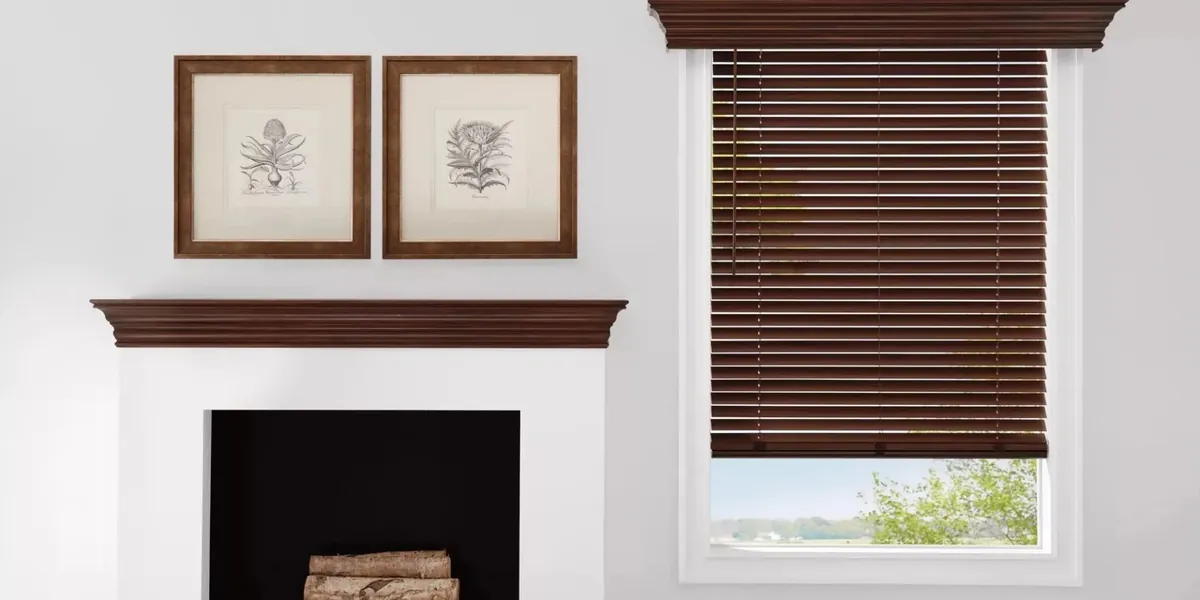
Deep-set sash in old walls
The oldest houses in East Bridgewater are antique colonials and farmhouses standing on generous lots, many of them well back from the road with fields, stone walls or old trees between them and the next house. Their windows are small sash set deep into thick walls, so each one sits at the back of a recess with a wide sill in front of it. Around Route 18 and Central Street the picture is newer: post-war capes and more recent colonials with standard openings and closer neighbors.
That spread of housing is why custom blinds in East Bridgewater, MA, are rarely a one-size job. A deep, old recess and a modern replacement window ask completely different things of a blind, and both look best when the blind is made to the frame it hangs in. In the antique houses, it also matters that the window covering respects the age of the room rather than fighting it.
With so much space between houses in much of town, privacy from neighbors is often a smaller concern than light, glare and the look of the window itself. We plan for all of that at the window, with Hunter Douglas samples in hand.
Custom blinds in East Bridgewater, MA, for old houses and new
Each of these families is made to measure for the frames we find at your house. The antique houses often lean toward wood; the newer ones use the full range.
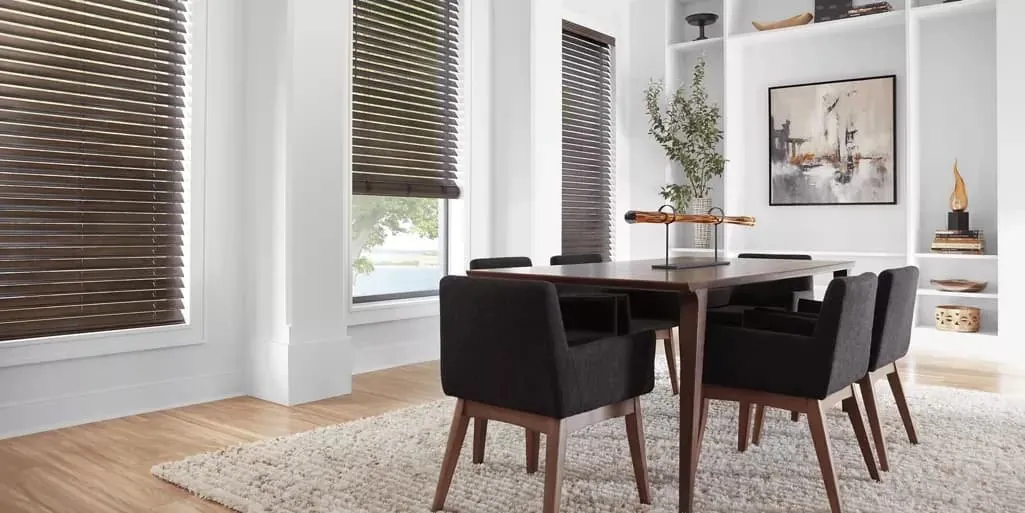
Parkland Wood Blinds
Wood slats that sit naturally beside old floorboards, beams and painted paneling in an antique colonial.
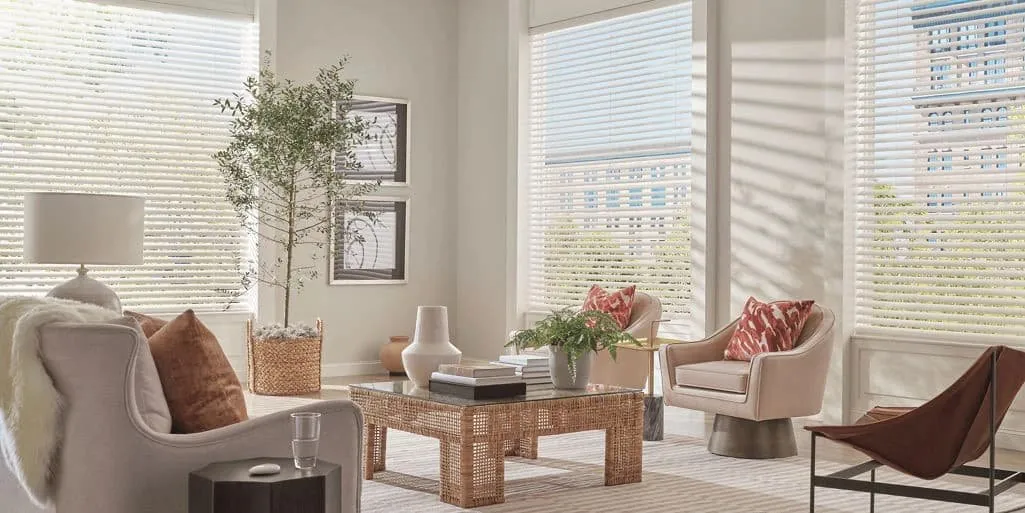
EverWood Alternative Wood Blinds
A faux wood slat in the same colors as the wood range, for kitchens, baths and whole houses off Central Street.
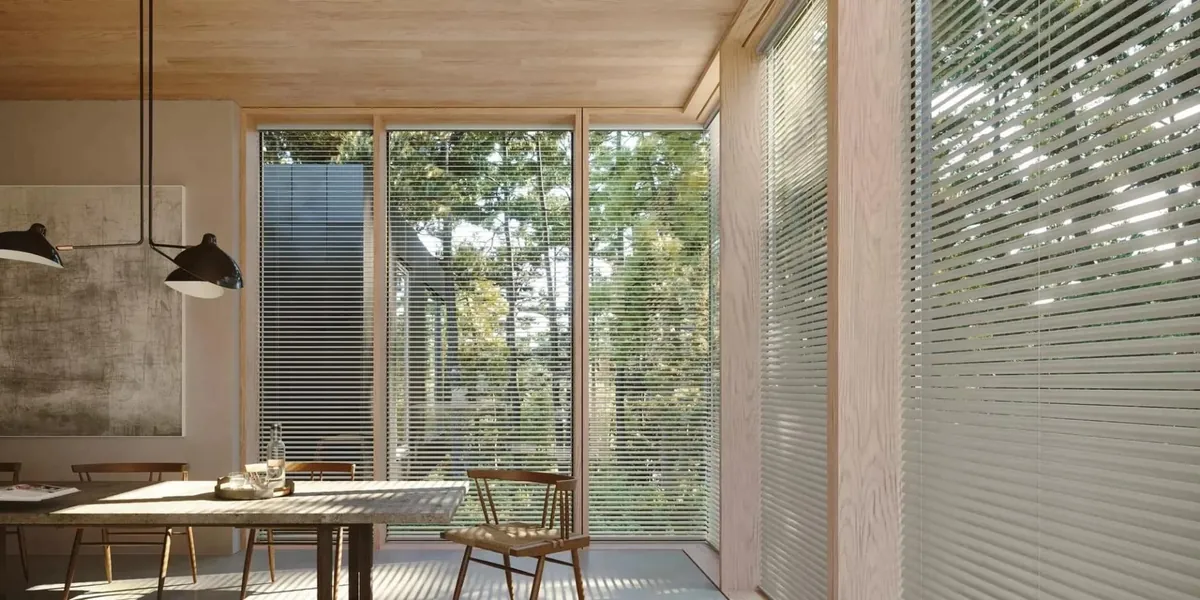
Metal Blinds
Fine aluminum slats and a slim headrail, for door glass, a shallow replacement frame or a narrow window by the chimney.
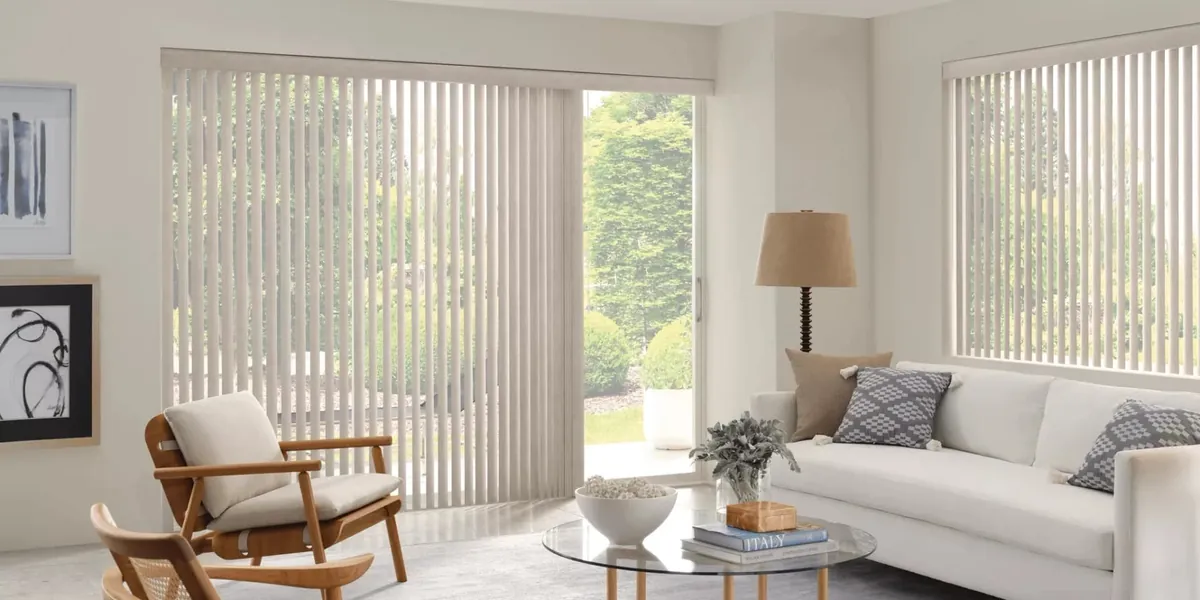
Vertical Blinds
Hanging vanes that draw aside, for the slider out to the deck from a newer colonial’s family room.
A deep jamb makes an inside mount easy
In a modern house, the hardest part of an inside-mounted blind is often finding enough depth in the frame for the headrail and the tilting slats. In an antique East Bridgewater colonial the problem tends to be the reverse. The walls are thick, the sash is set well back, and the recess in front of it can hold a blind with room to spare.
That depth is a real advantage. A blind tucked inside a deep recess sits back from the room, almost part of the window rather than an object hung in front of it. The casing and the deep sill stay fully visible, and when the blind is raised, its stacked slats hide up inside the recess where they are hardly noticed. In a room with original trim, that is usually the most respectful way to add a blind.
What old frames rarely are is square. A recess that has been there for a very long time can be a touch wider at the top than the bottom, or slightly out of level across its head. We measure at several points rather than one, so the blind clears the narrowest spot and still looks even across the opening.
Small sash and the width of the slat
The sash in the older houses are small, and often divided into many little panes by wooden muntins. A blind on a window like that has a lot of visual competition: the muntins already make a pattern of lines across the glass, and the slats add another.
A narrower slat usually works best. It gives a finer, quieter pattern that sits comfortably behind the muntins rather than clashing with them, and it stacks shorter when raised, which keeps more of a small window clear. A wide slat on a small sash can look heavy and leave only a few slats across the glass. Color helps as well: a slat close to the trim color lets the window’s own lines stay the feature.
We hold different widths and colors up to your actual sash, so you can see how they sit against the muntins before anything is decided.
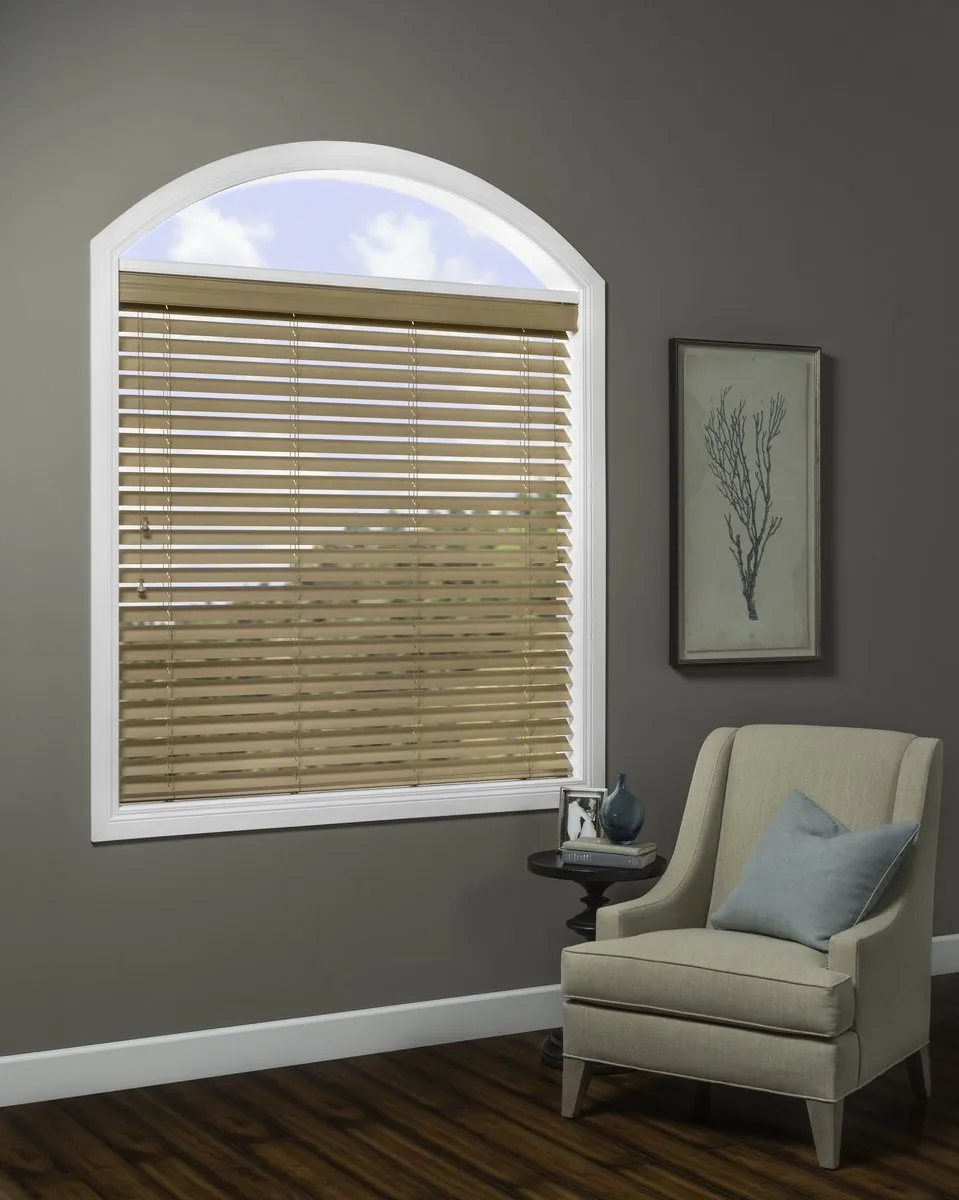
Antique colonials: woodwork worth keeping in view
Many antique houses in town still have their original trim, paneling, wide floorboards and, in some rooms, exposed beams. A window covering in a room like that should support the woodwork rather than cover it up.
Wood blinds are the natural partner. A wood tone chosen to sit beside the floor or the beams looks as though it has been there for a long time. In a room where the paneling and trim are painted, a white or cream slat matched to the paint lets the window architecture lead. Either way, mounted inside the deep recess, the blind leaves the casing and the sill fully on show.
The rooms in these houses were often built around a fireplace, with windows on one or two walls. Light can be precious in winter and strong in summer, and a blind lets you choose exactly how much comes in by tilting the slats rather than raising or lowering a whole covering.
Farmhouses and their many rooms
A farmhouse tends to ramble. A main block with its front rooms, a kitchen ell behind, perhaps a porch along one side and rooms that were added as the household grew. Each part has its own windows, and very often they do not match each other in size or style.
That is exactly where blinds made to measure come into their own. Every opening, however odd, gets a blind built to its frame, so the small window in the back hall fits as well as the front parlor sash. To keep the house feeling like one place, we suggest a single color across the windows you see from the road, and a consistent slat width within each room, even where the frames themselves differ.
Kitchens in an ell often have windows on more than one side. A blind on each, tilted to suit the time of day, lets you keep the morning sun off the table and the afternoon glare off the counter without losing the view of the yard.
Porch windows and the rooms behind them
Where a farmhouse or an antique colonial has a porch along the front or side, the windows behind it live in partial shade for much of the day. Those rooms can be dim, and closing a blind fully there often takes away more light than it should. A lighter slat color reflects what daylight does arrive back into the room, and a tilt that blocks the view from the porch steps without shutting out the sky is the usual setting.
An enclosed porch is a separate case, often with a long row of small windows close together. Fitting custom blinds in East Bridgewater, MA, on a porch like that usually means a run of slim metal or faux wood blinds, each made to its own opening and all in one color, so the porch looks finished from the yard.

When neighbors are not the problem
Across much of East Bridgewater, the nearest house is a field or a long driveway away. Daytime privacy from neighbors is often a minor point. What remains is light, glare, the road at night, and how the window looks.
Light is the big one. With open land around a house, the sun reaches windows on every side at different times, and low winter sun can stream straight across a room. Slats tilted against the angle of the sun cut glare while keeping the room bright. At night, the picture changes: a lit window in a dark landscape is very visible from the road, even at a distance, so closing the slats after dark still matters. And because there is less need for screening in daytime, many people choose blinds as much for how they look on an old window as for what they do.
The visit to your house
East Bridgewater is part of our shop-at-home area served from Canton. For houses with deep old recesses and windows of many sizes, seeing the samples at the actual window helps more than anything.
- Let us know through Request a Consultation, or phone first using the call button.
- A van carrying Hunter Douglas samples comes out to your house.
- We go from room to room with you, looking at the depth and squareness of each frame.
- Slats in different woods, colors and widths are held up against your sash and trim.
- Together we settle mounts, tilt control and any window that should be motorized.
- Every opening is measured, and a free estimate is left with you to think over.
Interior design consultations are available as well, if you would like help pulling a room together.
Capes and newer colonials off Route 18 and Central Street
The post-war capes and newer colonials around Route 18 and Central Street are a different job altogether. Their windows are standard modern sizes, often replacement units, with shallower frames than the antique recesses and neighbors a good deal closer.
Here, privacy is back on the list. Side windows may face the house next door, and the front rooms face the street. A blind tilted with the room-side edge of the slats raised blocks the view in while sending light up to the ceiling. Kitchens and baths often go to faux wood, front rooms to wood or faux wood in a single street color, and a slider to the back deck to a vertical blind that draws clear of the door.
Because the openings repeat, ordering custom blinds in East Bridgewater, MA, for one of these houses tends to be straightforward. We still measure each frame individually, because replacement windows in older openings are rarely as uniform as they look.
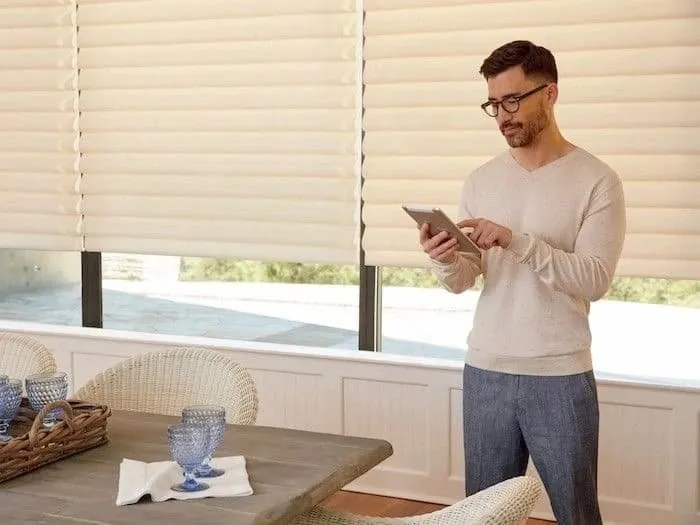
Motorized control in a house with many windows
A large old house can have a great many windows, spread over several rooms and floors, and walking round tilting every blind morning and evening is a chore. Hunter Douglas PowerView motorization lets each blind be raised, lowered and tilted from a remote, a tablet or a phone, and grouped so a whole room or a whole side of the house moves together.
Schedules are where it earns its keep. The road-facing blinds can close at dusk on their own, the bedroom blinds can open at a set time in the morning, and the rooms that catch the low afternoon sun can tilt against it while you are out. Motorization does not have to be all or nothing; many people start with a few awkward or high windows. Power for each motor is planned room by room at the visit. Our guide on how motorized shades are controlled has the details.
Bedrooms and the early sun
With open land to the east, morning sun can reach a bedroom window very early in summer, with nothing in the way to soften it. A blind in a deeper color closes darker than a pale one, and the overlapping slats stop most of the light at the glass.
In an antique house, a blind mounted deep in the recess leaves only a thin line of light at its edges. In a newer house with a shallower frame, a blind mounted on the face of the casing overlaps the opening on each side and cuts that line further. Either way, the slats can be tilted open later in the morning to let the day in gently.
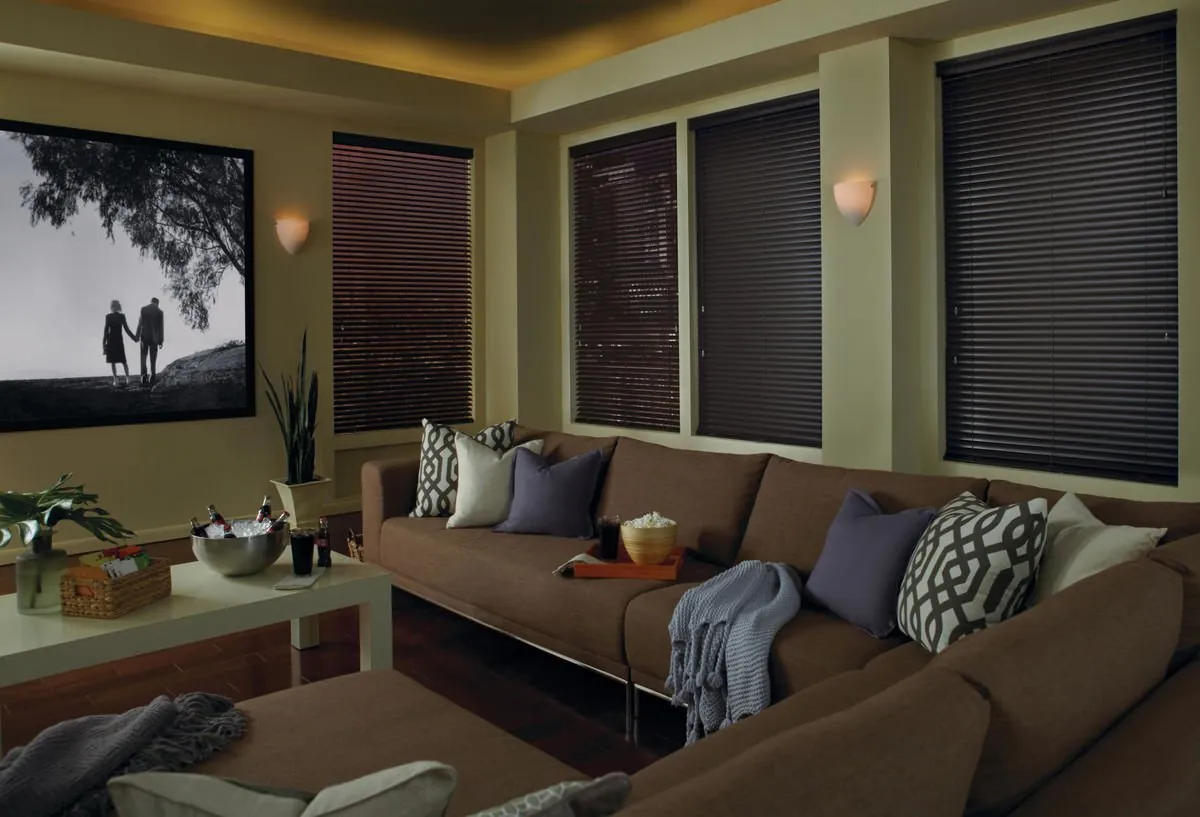
A room with a screen
Whether it is a family room with a television in a newer colonial or a study in a farmhouse, a screen and a sunny window rarely get along. Slats tilted partway take the glare off the screen while leaving enough light in the room. Closed, a darker blind turns a bright room dim enough for an afternoon film.
With motorized blinds, a single scene in the app can close every blind in the room together and open them again afterward. In a house where that room has windows on two or three walls, that one button saves a lot of walking.
Mixing materials in an old house
Most houses end up with more than one material, and an antique house is no exception. Wood tends to go in the front rooms with the best woodwork, where its warmth suits the age of the house. Faux wood fits the kitchen ell, the baths and the back hall. Metal suits door glass and any shallow frame, and a vertical blind handles a slider if the house has one.
Wood and faux wood come in matching colors, so from the road the house still looks consistent. If you are deciding between blinds and shades for some rooms, our guide on shades or blinds sets out the differences.
Colors on an antique facade
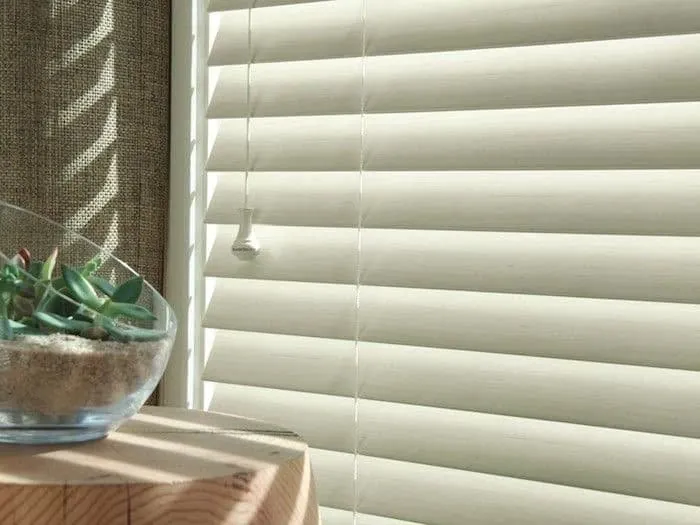
An antique colonial is often seen from a distance across its lawn, with its windows set in a regular pattern across the front. A matched set of blinds keeps that pattern calm. White or cream usually disappears behind old glass and painted sash. On a house with dark trim or unpainted shingles, a warm wood tone can look more at home.
Settle the street color first and let each room choose after that. With custom blinds in East Bridgewater, MA, on an older house, holding the samples against the outside of the glass as well as the inside is worth a minute, because the view from the road is the one the house is known by.
Why order through a Gallery dealer
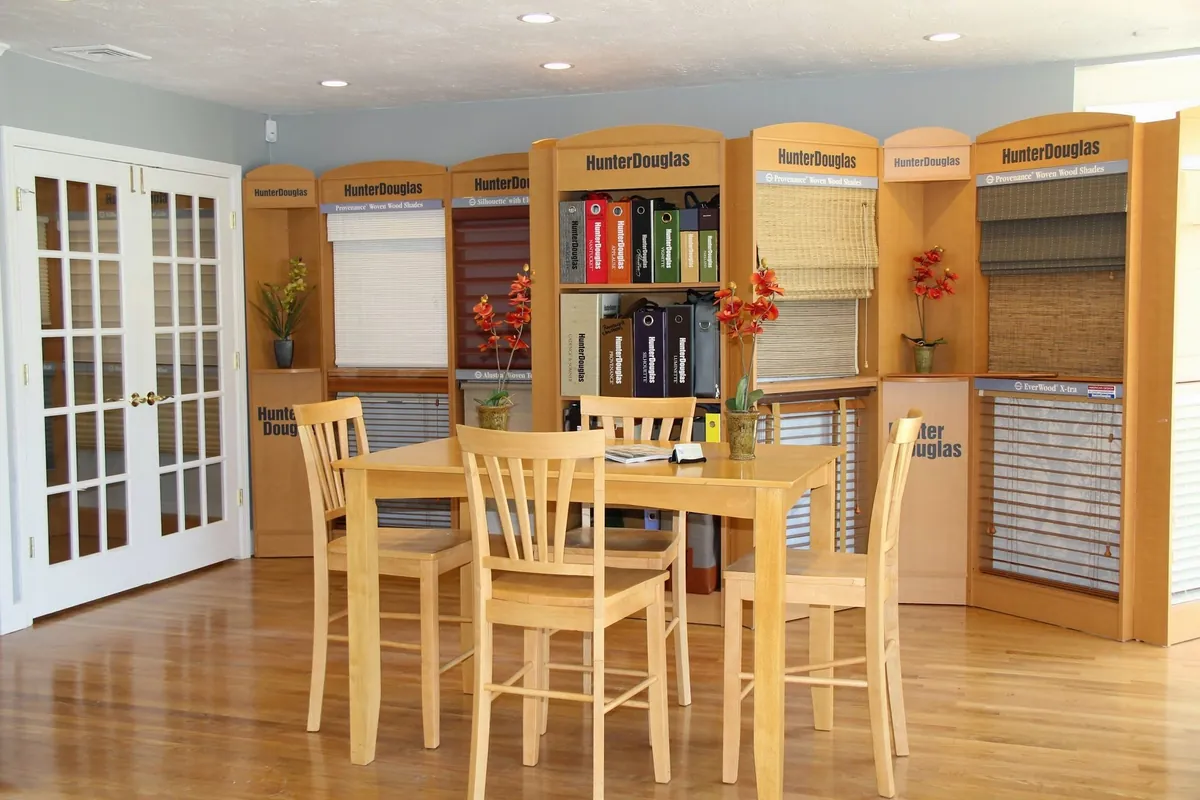
Blinds & Designs is a Hunter Douglas Gallery dealer, with installation by Hunter Douglas certified installers. In a house where every frame is a little different, having the same business measure, order and install the blind keeps the details consistent.
The estimate is free. We also offer interior design consultations, window covering automation and repairs to blinds and shades you already own. See every blind family on our custom blinds page, and every service in town on our East Bridgewater page, including cellular shades in East Bridgewater and roman shades in East Bridgewater.
Questions from East Bridgewater
My antique house has very deep window recesses. Is that a problem for blinds?
It is usually an advantage. A deep recess holds an inside-mounted blind easily, keeps the casing and sill on show, and hides the raised slats up inside the opening.
The windows in my old house are not square. Can a blind still fit well?
Yes. We measure each frame at several points, so the blind clears the narrowest part and still looks even across the opening.
Which slat width suits small sash with many panes?
Usually a narrower slat. It sits quietly behind the muntins, stacks shorter when raised and keeps more of the small window clear.
Can I control the blinds in a big house from one place?
With PowerView, blinds can be grouped by room or side of the house and run from a remote, tablet or phone, on schedules if you like. We plan the power for each motor at the visit.
How much is the estimate?
There is no charge. The estimate is free after we measure.
Begin with your oldest window
The deep-set sash in the front parlor, the odd little window in the kitchen ell or the slider off a newer colonial’s family room: whichever one has been bothering you, start there. Request a consultation and we will bring the samples, measure every opening and leave you a free estimate. If you would also like to see Hunter Douglas products on a showroom floor, our nearest showroom is in Franklin, and the call button reaches us for anything quick.