
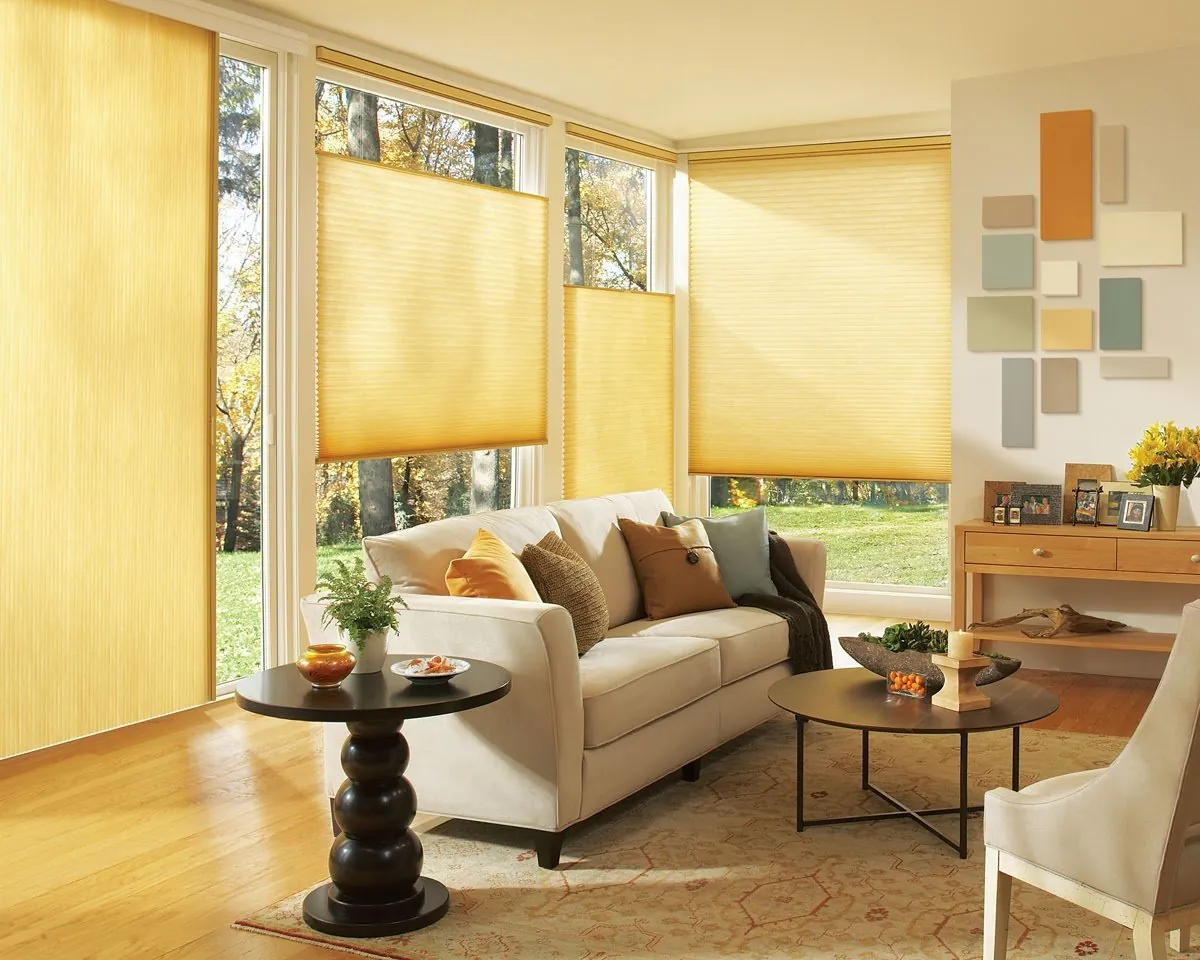
Three kinds of Dartmouth house, three window problems
Dartmouth is our home town, and few places on the South Coast pack so many window types into one map. Down in Padanaram the older colonials and shingled capes have small, closely spaced sash under steep rooflines. Up off Faunce Corner and Slocum Road the ranches built in the sixties and seventies have wide picture windows and sliding doors. Out toward Russells Mills the old farm properties have deep-set nineteenth-century sash in thick walls. Each one asks something different of a shade, and cellular shades in Dartmouth, MA, answer all three.
The common thread is heat. A honeycomb shade holds still air in its cells, and that air slows warmth escaping through the glass on a winter night. In a farmhouse with original windows, or a ranch living room where the picture window takes up most of a wall, that difference is easy to feel from your chair.
South Dartmouth adds a fourth problem. Rooms facing Apponagansett Bay take hard afternoon glare off the water, the kind that bleaches a sofa and makes a screen impossible to read after lunch. The right honeycomb fabric tames that too.
What we fit most in Dartmouth
Duette and Applause are the two Hunter Douglas honeycomb lines, and most cellular shades in Dartmouth, MA, come from one or the other. Here is how they tend to divide across a house.
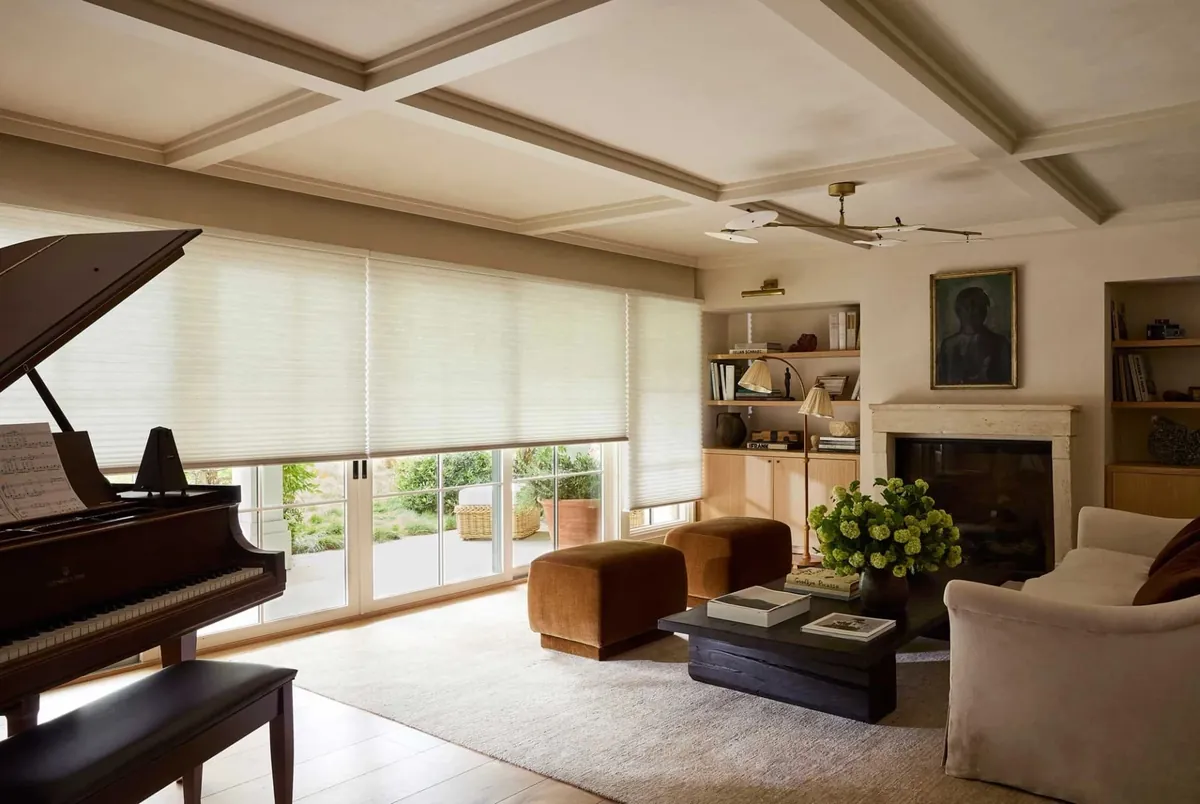
Duette for the rooms on show
The deepest fabric library, specialty shapes, extra-wide shades and the Vertiglide shade for sliders. Our first suggestion for a bay-facing living room or a ranch with a long run of patio doors.
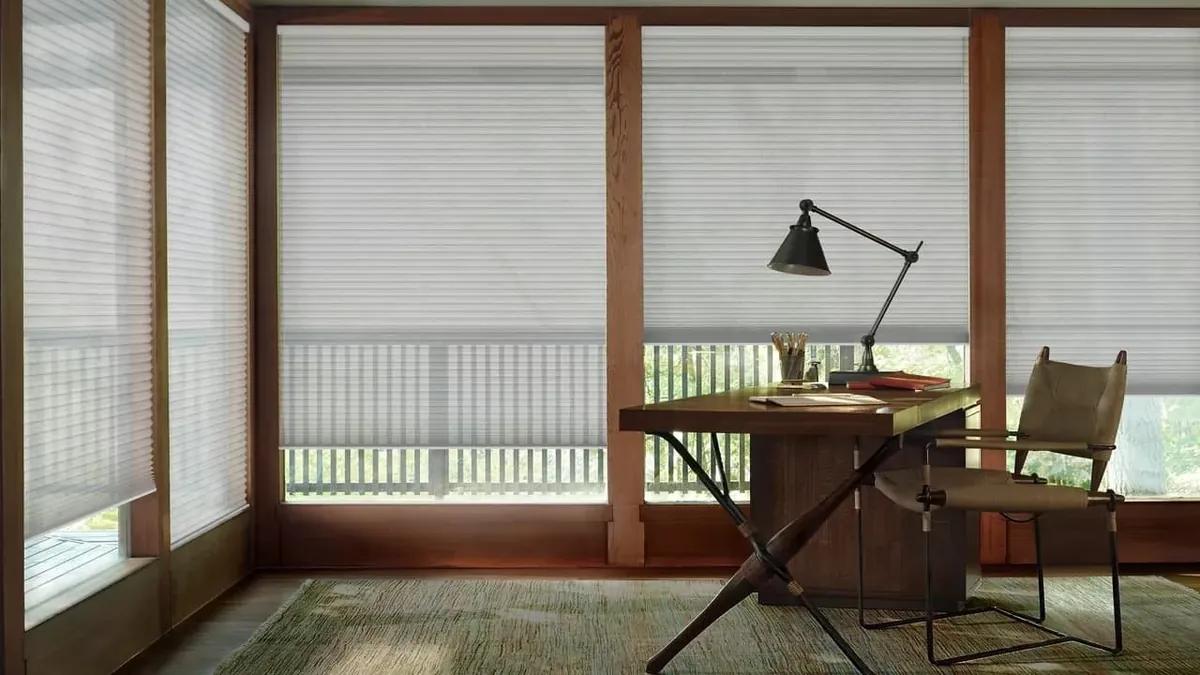
Applause for everyday rooms
A true honeycomb with its own palette. It suits the standard double-hung windows in studies, kitchens and upstairs bedrooms of a Padanaram colonial.
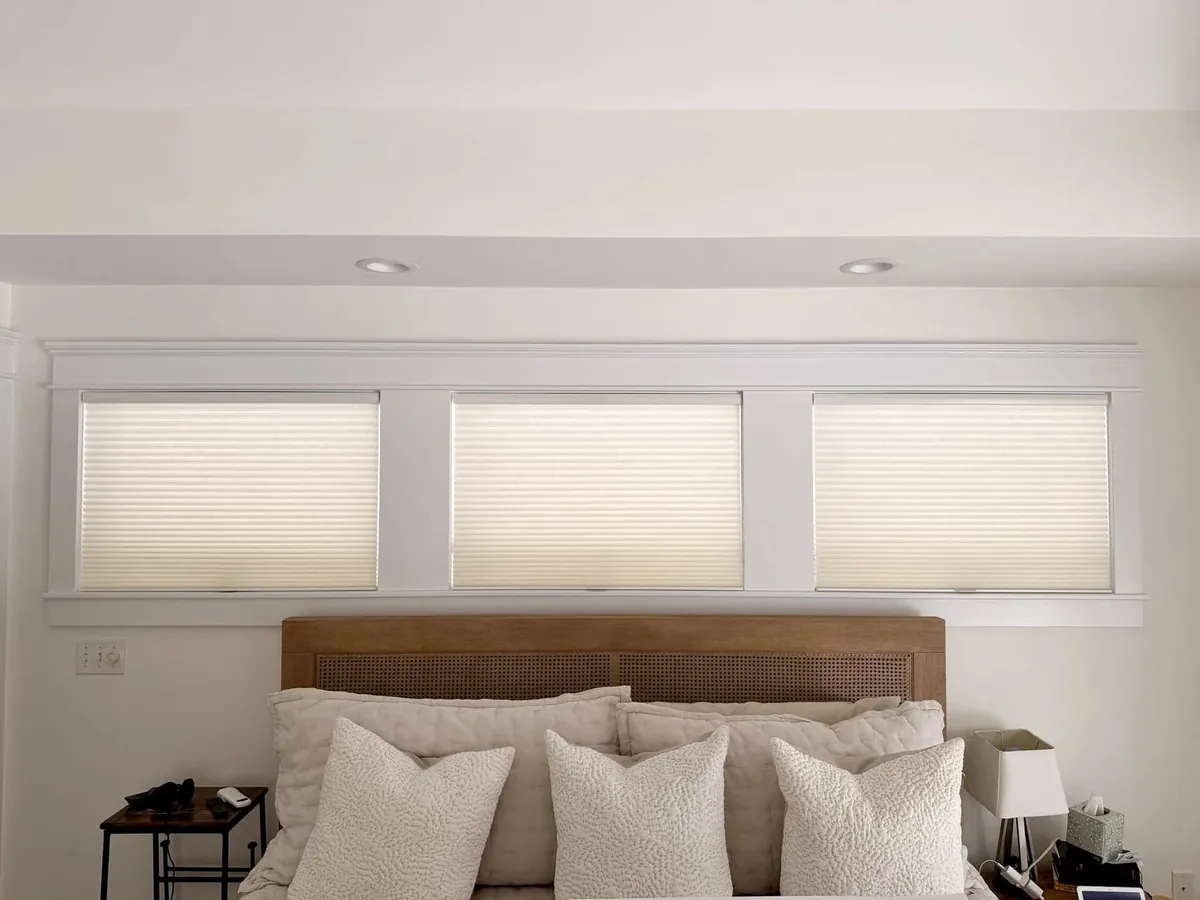
Darkening cells for bedrooms
Room-darkening honeycomb fabrics keep bedrooms dim and still hold air in each cell, a good pairing for a cold upstairs room under a cape roof.
Afternoon glare across Apponagansett Bay
Sun reflected off open water behaves differently from sun through a garden. It arrives from below as well as above, it moves across the room as the tide and the angle change, and by mid-afternoon in summer it can make a water-facing room in South Dartmouth almost unusable. Closing a solid blind solves the glare and throws away the view, which is the reason you bought the house.
Honeycomb shades give you a middle path. A light-filtering fabric diffuses the glare into an even glow while the bay is still a soft shape beyond the glass. A top-down, bottom-up shade lets you cover just the band of window where the reflection hits and keep the rest open. On the brightest windows we often suggest a Duolite design, which carries a sheer layer and a darkening layer on one headrail, so you can drop the sheer in the afternoon and the darker layer at night.
Fabric color matters on these windows. Lighter neutrals hold up better under daily sun off the water than deep, saturated colors, and from outside every honeycomb shows a consistent white or neutral backing, so the house looks tidy from the harbor whatever color you choose for the inside.
Deep-set sash out toward Russells Mills
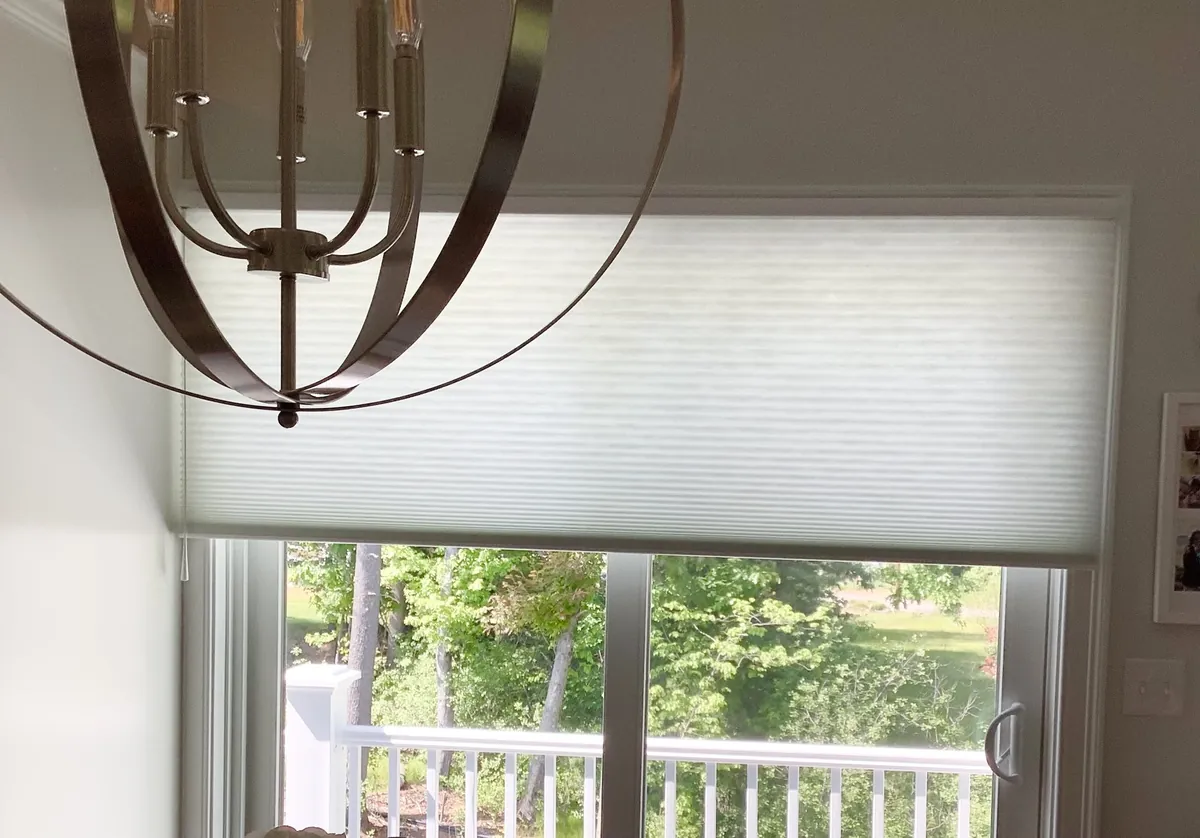
The farmhouses along the roads toward Russells Mills were built with thick walls, so their window openings are deep. That is good news for an inside mount. With plenty of jamb depth, the headrail tucks right into the opening, the shade sits flush with the inner face of the frame, and the old casings and sills stay fully visible.
Old farm windows have their own quirks, though. Frames settle, sills slope and two windows side by side can differ in width by more than you would guess. We measure every opening on its own, at several points across and down, and order each shade to its own window rather than to a standard size. Where a frame is badly out of square, we may suggest a slightly different mount so the shade hangs straight even if the window does not.
These houses can be cold in a way newer homes are not, with single glazing, loose sash and rooms that face open fields to the north. A double-cell honeycomb, or a Duette Architella fabric with a cell inside the cell, gives the most trapped air for the coldest rooms. Our guide to cellular shades and winter heat explains why the extra layer helps.
Ranches off Faunce Corner and Slocum Road
The neighborhoods closest to the North Dartmouth showroom are full of single-story homes from the sixties and seventies. Their windows are generous and low: a big living room picture window, a slider to the patio, and wide bedroom windows that sit high on the wall. Plenty of light, and plenty of glass to lose heat through.
For the picture window, a set of shades on one headrail keeps the run looking like a single treatment while letting you raise one section at a time. For the slider, a vertical honeycomb shade glides across the opening and stacks compactly at one side, so you are not ducking under a raised shade every time you let the dog out. For the high bedroom windows, cordless lift keeps the window clean of cords and easy to operate.
Many of these ranches have been updated over the years with replacement windows. Vinyl replacements often have a shallower frame than the originals, so an inside mount may not be possible. We check that at the consultation and suggest an outside mount, fitted just above the window, when it gives a better result.
Shades that move on their own
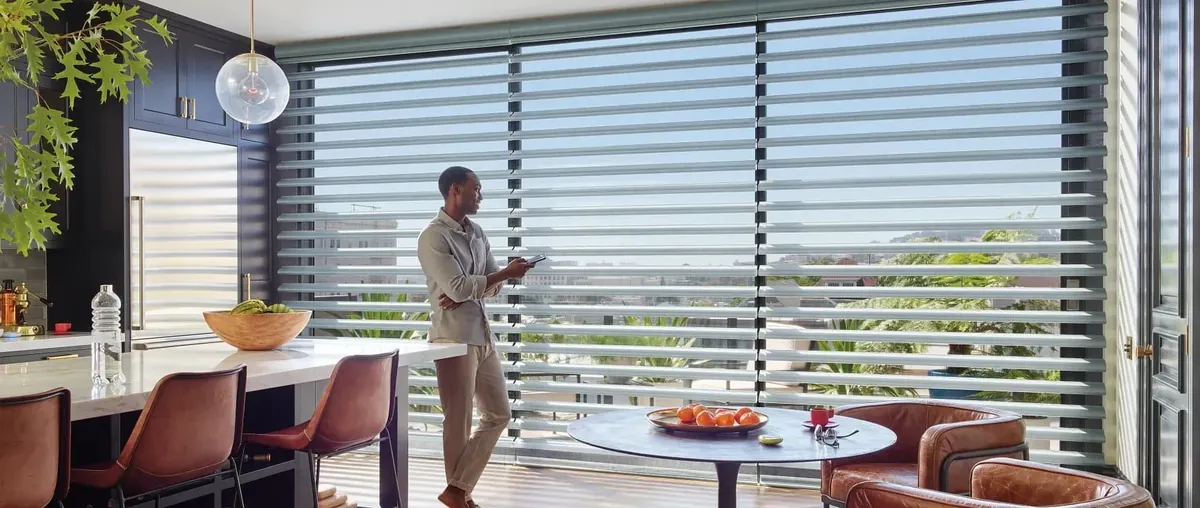
PowerView motorization is where honeycomb shades become really convenient. Every shade in a room, or across the house, can be opened and closed from a phone app, a handheld remote or a wall control. You can group the shades on the bay side so they close together, and set a schedule so they lower before the afternoon glare arrives and rise again at dusk.
Motorization makes the most sense on windows that are hard to reach, such as a transom above a door, a window behind a deep kitchen counter, or the tall glass in a vaulted addition. It also helps if you are away for part of the year, since the shades can keep to a daily routine while the house is empty.
How the motors are powered, and where any power connection goes, depends on each window. We plan that with you at the consultation. Our motorized blinds and shades page has more on the controls.
Padanaram colonials and shingled capes
The village streets near the harbor are lined with older colonials and capes, many with painted trim, divided-light sash and dormers upstairs. These windows tend to be modest in size but numerous, and the upstairs rooms under the roof can be the coldest and the brightest in the house.
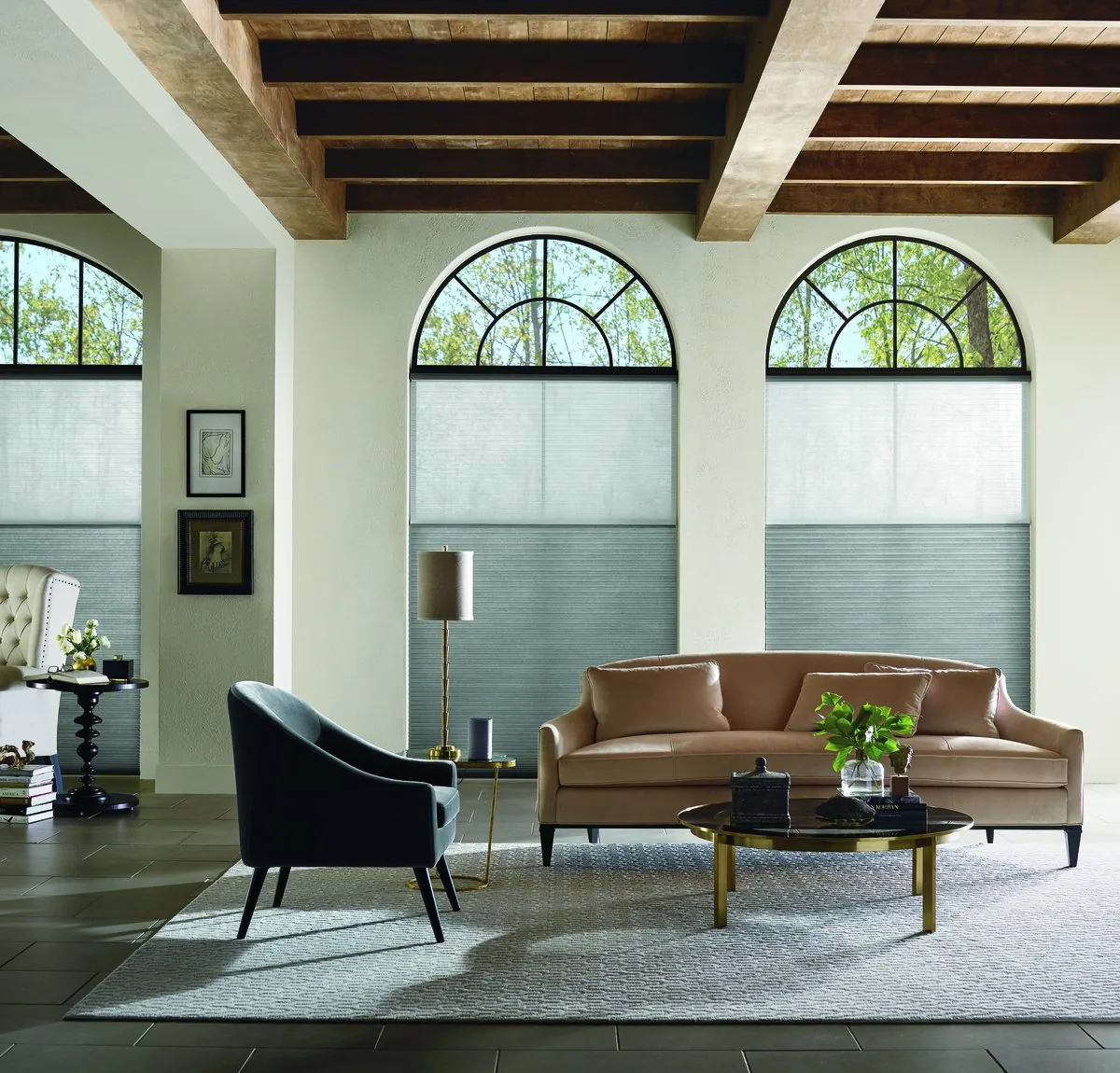
Dormer windows are a natural fit for honeycomb shades. The compact stack means a raised shade takes up very little of an already small window, and an inside mount keeps the deep dormer opening clean. On the main floor, a top-down, bottom-up shade gives street-side privacy on the village lanes while the upper sash lets in daylight.
If a house has a mix of window sizes, as most older capes do, we keep the fabric and pleat size consistent from room to room so the house reads as one from outside. That is where Duette and Applause can work side by side, sharing a look while each suits the windows it covers.
How we measure an old opening
Measuring is the step that decides whether a shade looks custom or looks like it came off a shelf. In the older parts of town it takes a little longer.
- We check whether the frame has the depth for an inside mount, and look for sash locks, pulleys or trim that would get in the way.
- We take three widths and three heights for each window, because old openings are rarely the same at the top and the bottom.
- We note which way each window faces and how the room is used, since that affects fabric and lift choice.
- We go over every measurement and mount choice with you before anything is ordered.
Each shade is then made to its own window. When the order is ready, our certified Hunter Douglas installers fit every shade, check that it lifts smoothly and sits level, and walk you through how it works.
Choosing how each shade lifts
The lift system is the part of a honeycomb shade you touch every day, so it is worth choosing room by room rather than once for the whole house.
Cordless lift is the simplest. You raise the shade by pushing up the bottom rail and lower it by pulling down, and it stays wherever you leave it. With nothing hanging at the side, it suits bedrooms, rooms where children play and any window a pet can reach. It is our usual starting point for the dormers and smaller sash in a Padanaram cape.
A retractable cord suits a window where the bottom rail ends up out of reach once the shade is raised, such as a tall living room window in a farmhouse with high ceilings. The cord draws back into the headrail as you lift, so it never dangles.
PowerView motorization, covered above, takes over where hands cannot reach or where you want the shades to follow a routine. Many Dartmouth projects mix all three: cordless upstairs, a cord on the tall front windows, and motors on the bay side where the glare arrives on a schedule of its own.
Covering a whole house, room by room
Some customers start with one cold room and come back for the rest of the house later. Others want every window done at once. Either way, a little planning keeps the result consistent.
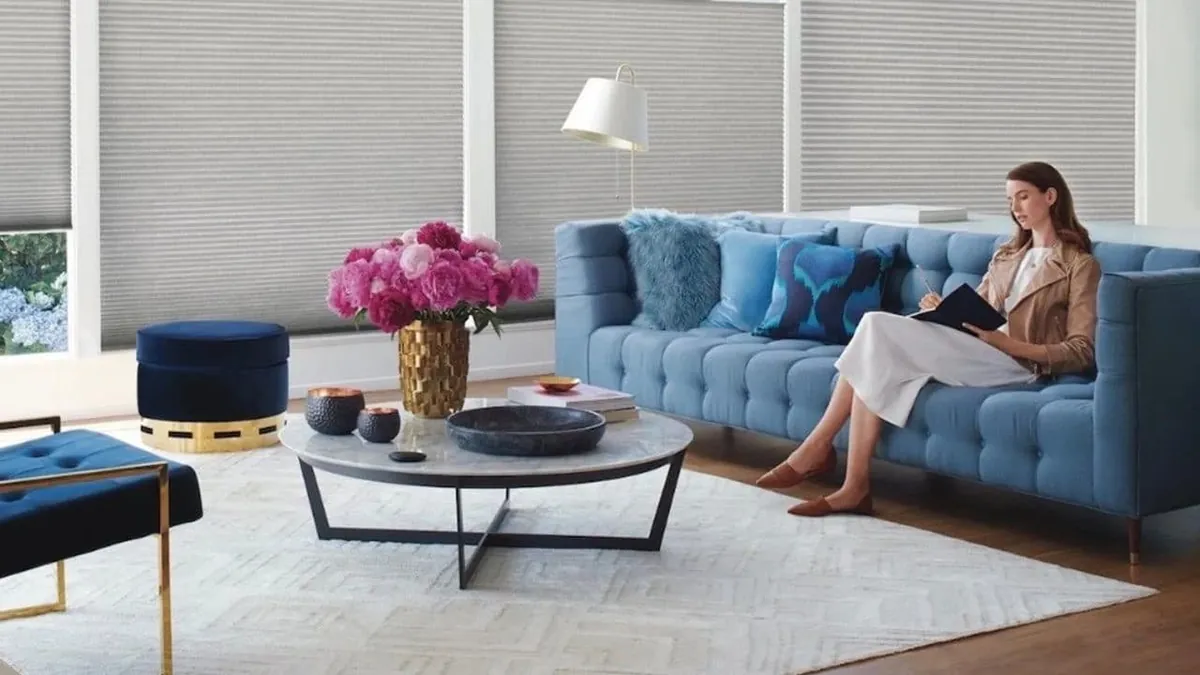
From the street, honeycomb shades show a uniform neutral backing whatever color faces the room, so you can choose a warm fabric for the living room and a cooler one for a bedroom without the front of the house looking patchy. Inside, we usually keep the pleat size the same through the main rooms so the windows read as a set.
Different rooms then get what they need. A study that takes morning light may want a light-filtering fabric. The bedroom over the garage in a ranch, which tends to run cold, might take double cells. A bathroom gets a fabric that gives full privacy with the shade down. When we plan cellular shades in Dartmouth room by room like this, the house ends up with one look and the right shade on every window.
The main cellular shades page covers the whole range, and our Duette honeycomb shades and Applause honeycomb shades pages go deeper into each line.
Picking a fabric for a glare room
Most of the decision on a honeycomb shade comes down to fabric, and the best way to choose it is at the window. There are three broad families.
- Sheer and semi-sheer fabrics keep a room bright and a view visible, while taking the hard edge off the sun.
- Light-filtering fabrics give daytime privacy and spread the light evenly. They suit most living rooms and kitchens.
- Room-darkening fabrics block most of the light and are the usual choice for bedrooms and media rooms.
On a bay-facing window in South Dartmouth, light-filtering or Duolite is often the right call. In a Russells Mills farmhouse bedroom, room-darkening double cells. In a ranch kitchen off Slocum Road, a lighter fabric that keeps the room cheerful. Our guide to the best shades for sun and glare goes further.

From the first visit to the finished window
Most cellular shades in Dartmouth start with a home visit, even with the showroom nearby, because your own light is what matters. We bring the showroom to you. Our vans carry Duette and Applause samples in every opacity, and the visit happens in your own rooms, in your own light.
- Request a consultation and pick a time that suits you.
- We look at each room with you and talk about what is bothering you, whether that is cold, glare or privacy.
- You try samples at the actual windows, on the bay side and the street side.
- We measure, check mounting depth and talk through lift options, including PowerView.
- You receive a free estimate, and take as long as you need to decide.
- Once you order, our certified installers fit the shades and show you how they work.
If you want help with color and fabric across a whole room, ask about our interior design consultations at the same visit.
A Gallery dealer in your own town
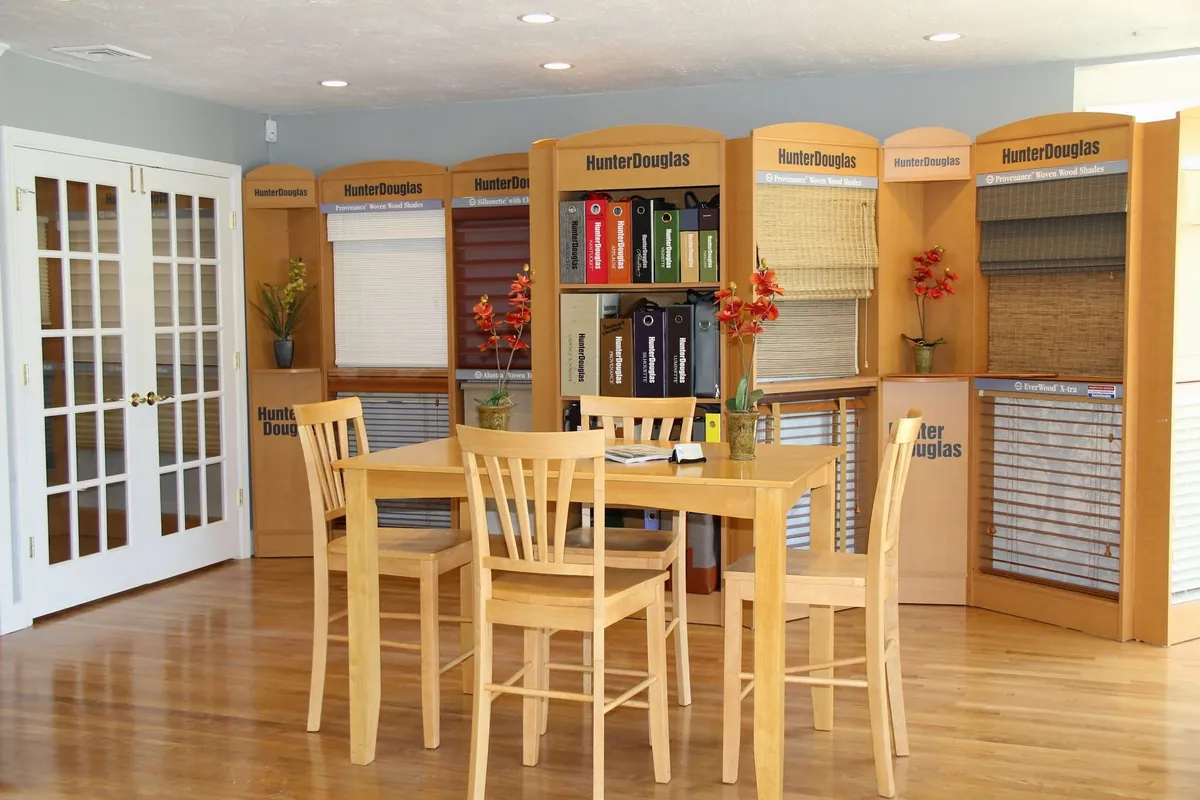
Blinds & Designs is a Hunter Douglas Gallery dealer, and Dartmouth is where our main showroom is. Being a Gallery dealer means access to the full Hunter Douglas honeycomb range, from every Duette fabric and specialty shape to the Applause palette and PowerView motorization.
Our installers hold Hunter Douglas certification, so each shade is fitted the way it was designed to be. If a shade you already own needs work, we welcome blind and shade repairs as well, whether or not we sold it.
When you are ready to look at other rooms, we can show you plantation shutters, roller shades, roman shades and more at the same consultation. See everything we offer here on our Dartmouth page, or explore our plantation shutters in Dartmouth.
Questions from Dartmouth
Can I see honeycomb shades in person before anyone comes to the house?
Yes. Our North Dartmouth showroom is in town, so you can stop in during opening hours and compare Duette and Applause before booking a home visit. Or skip that step and have us bring the samples to you.
My farmhouse windows are deep but uneven. Will a shade hang straight?
Deep frames usually suit an inside mount well. We measure each window at several points and order the shade to that window, so small differences are taken care of. If a frame is badly out of square, we will explain the options before you order.
What works best against glare off the bay?
A light-filtering honeycomb, a top-down, bottom-up shade or a Duolite design. Each softens the reflected sun while letting you keep some of the view. PowerView can lower them on a schedule each afternoon.
My ranch has replacement windows. Can I still inside mount?
Sometimes. Replacement frames can be shallow, so we check the depth first. If there is not enough room, an outside mount above the window gives a clean look and covers the whole opening.
How do I find out what my shades will cost?
After we measure your windows you receive a free estimate for the shades you are considering. Request a consultation to get started.
Start with a visit
Choosing cellular shades in Dartmouth, MA, is easiest with the samples in your hand and your own windows in front of you. Request a consultation and we will bring the honeycomb range to your home, measure every window and give you a free estimate. Or use the call button, or stop in at our North Dartmouth showroom and see the shades in person.