
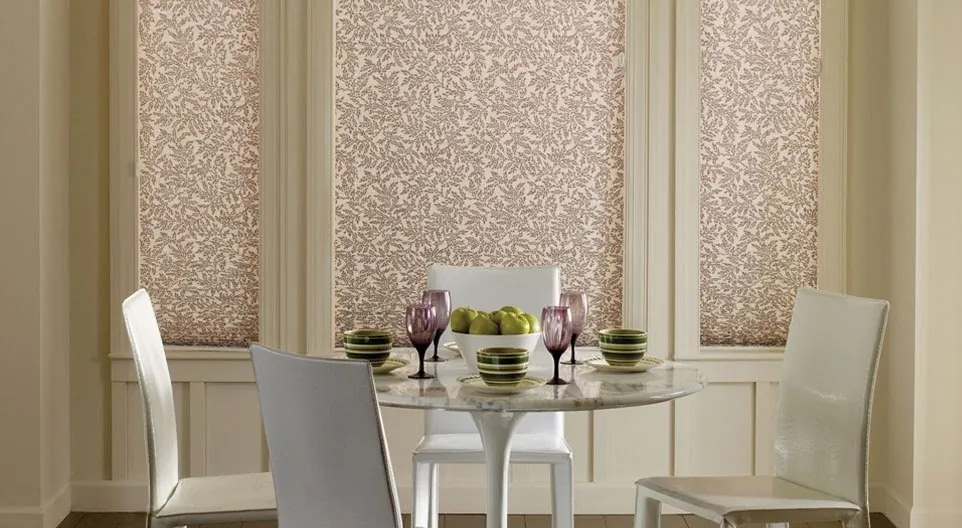
From the common outward
Norwood’s houses change as you move out from the center. Close to the common, Victorians and two-families stand shoulder to shoulder, many with tall sash, high ceilings and side walls only a short gap from the next building. A few streets further out, post-war capes and ranches take over, with standard window sizes and a simpler layout.
For a Hunter Douglas dealer in Norwood, MA, those two rings ask for different thinking. In the older center, the height of the windows and the closeness of the houses decide most things: how much daylight reaches a side room, how a tall shade stacks, how a louver suits a narrow sash. On the newer streets, the windows are easy to fit and the conversation turns to comfort, glare and convenience.
We cover both with the full Hunter Douglas range, starting with a visit to your house so every choice is made at the window it is meant for.
Hunter Douglas families for Norwood rooms
Six product families that come up in almost every Norwood consultation, each one shown at your windows on the day.
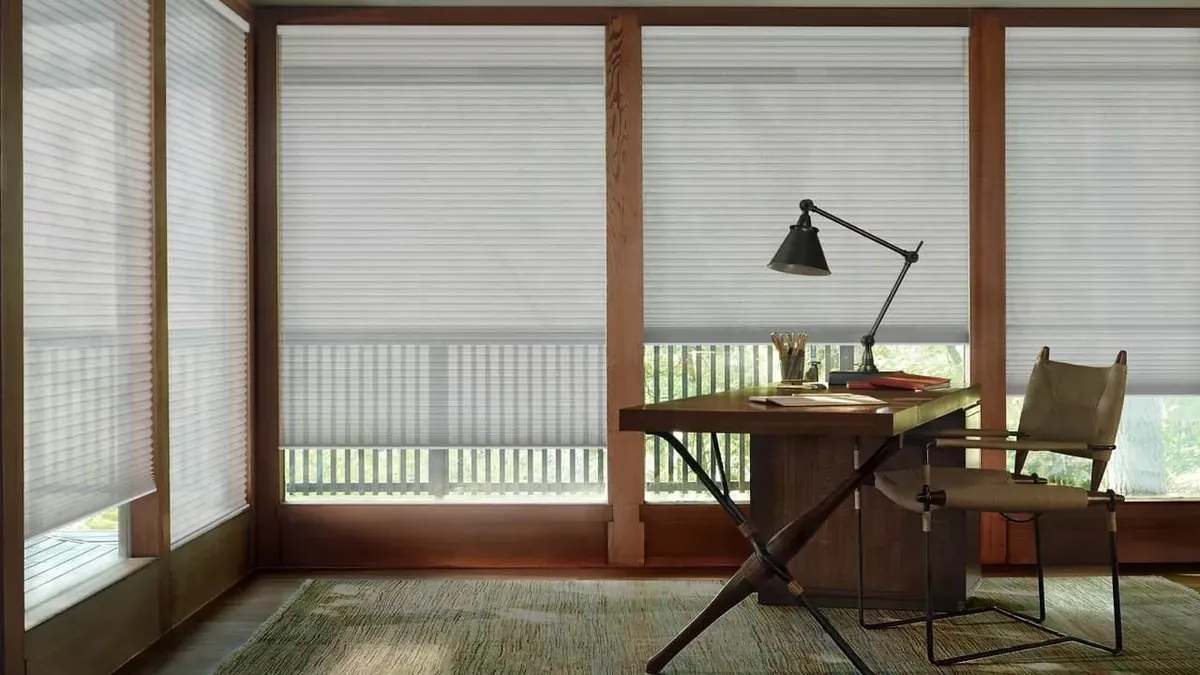
Duette and Applause honeycomb
Comfort beside tall old glass and quiet bedrooms on the newer streets.
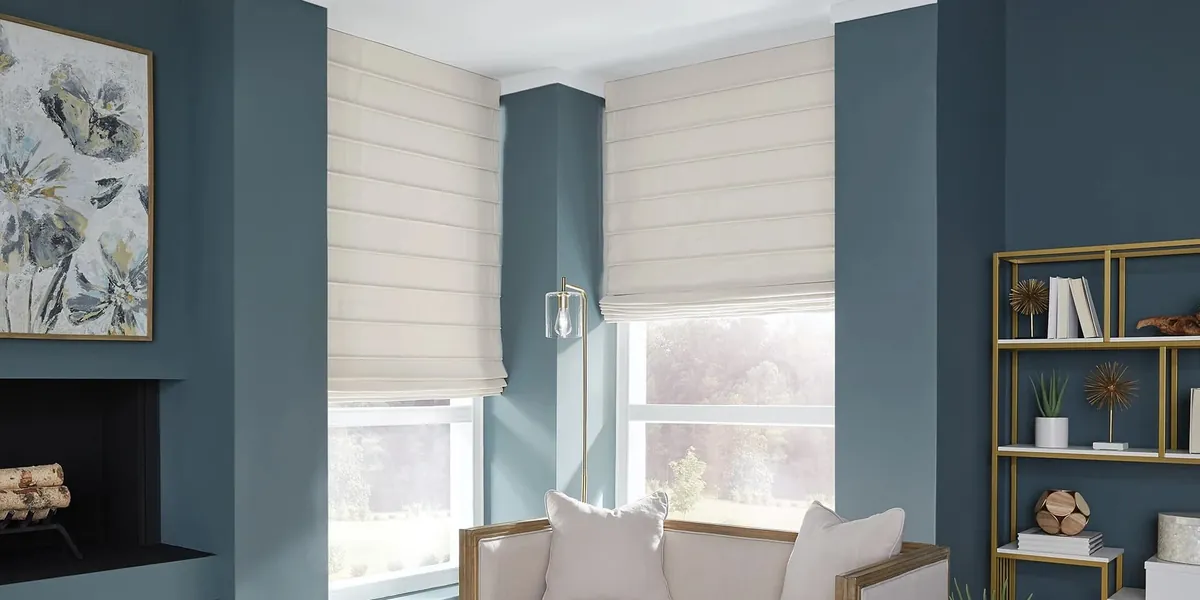
Vignette Roman shades
Soft folds for a Victorian bay or a cape living room, with a modest stack.
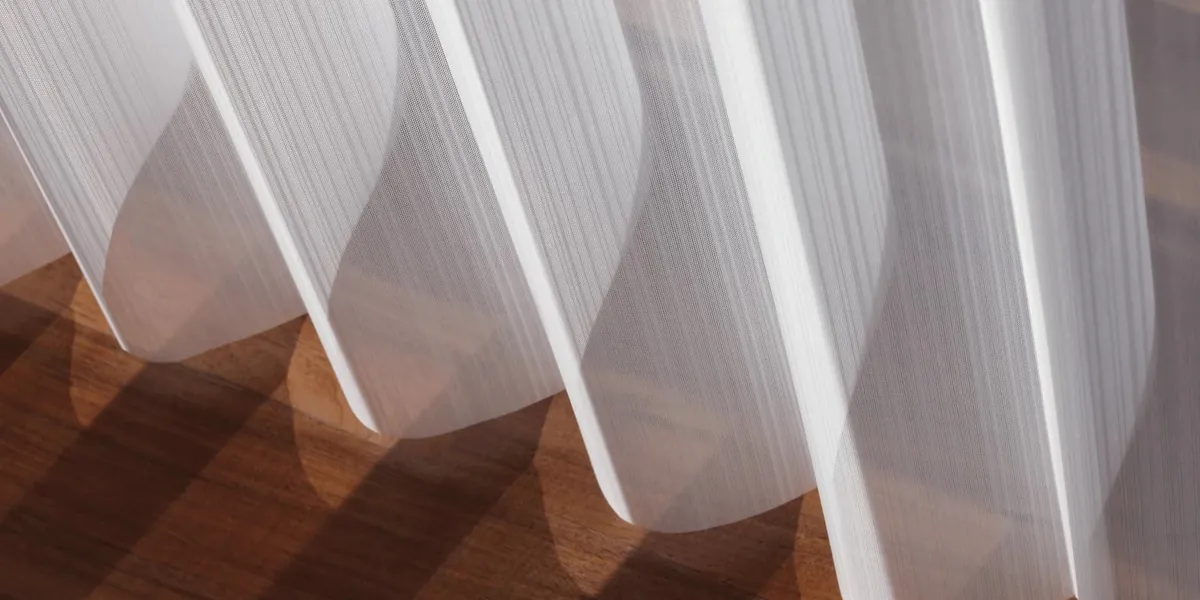
Luminette and Silhouette sheers
Diffused daylight for rooms that sit close to the house next door.
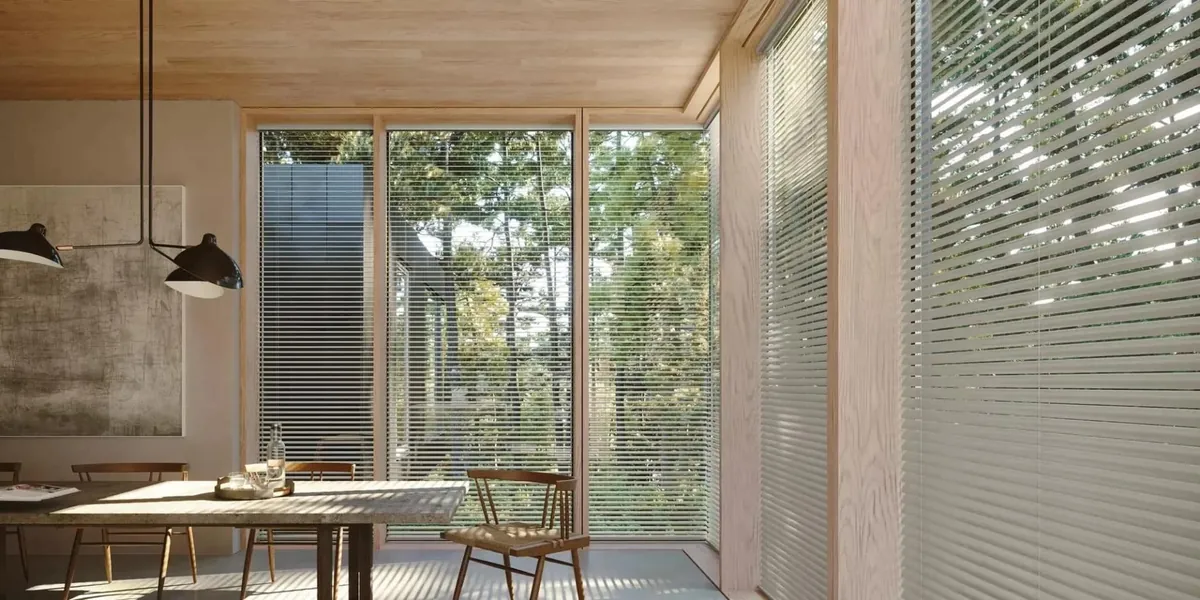
Metal and wood blinds
Fine slats for tall narrow sash, and Parkland wood for a dining room with character.
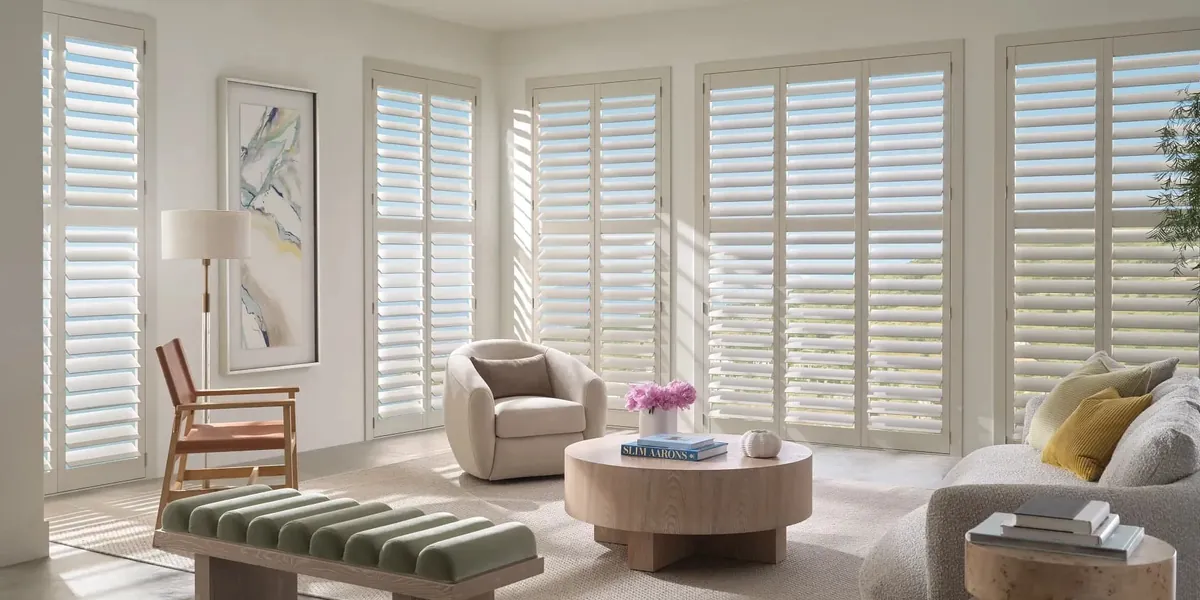
Shutters
Palm Beach, NewStyle and Heritance, sized to old openings or standard ones.
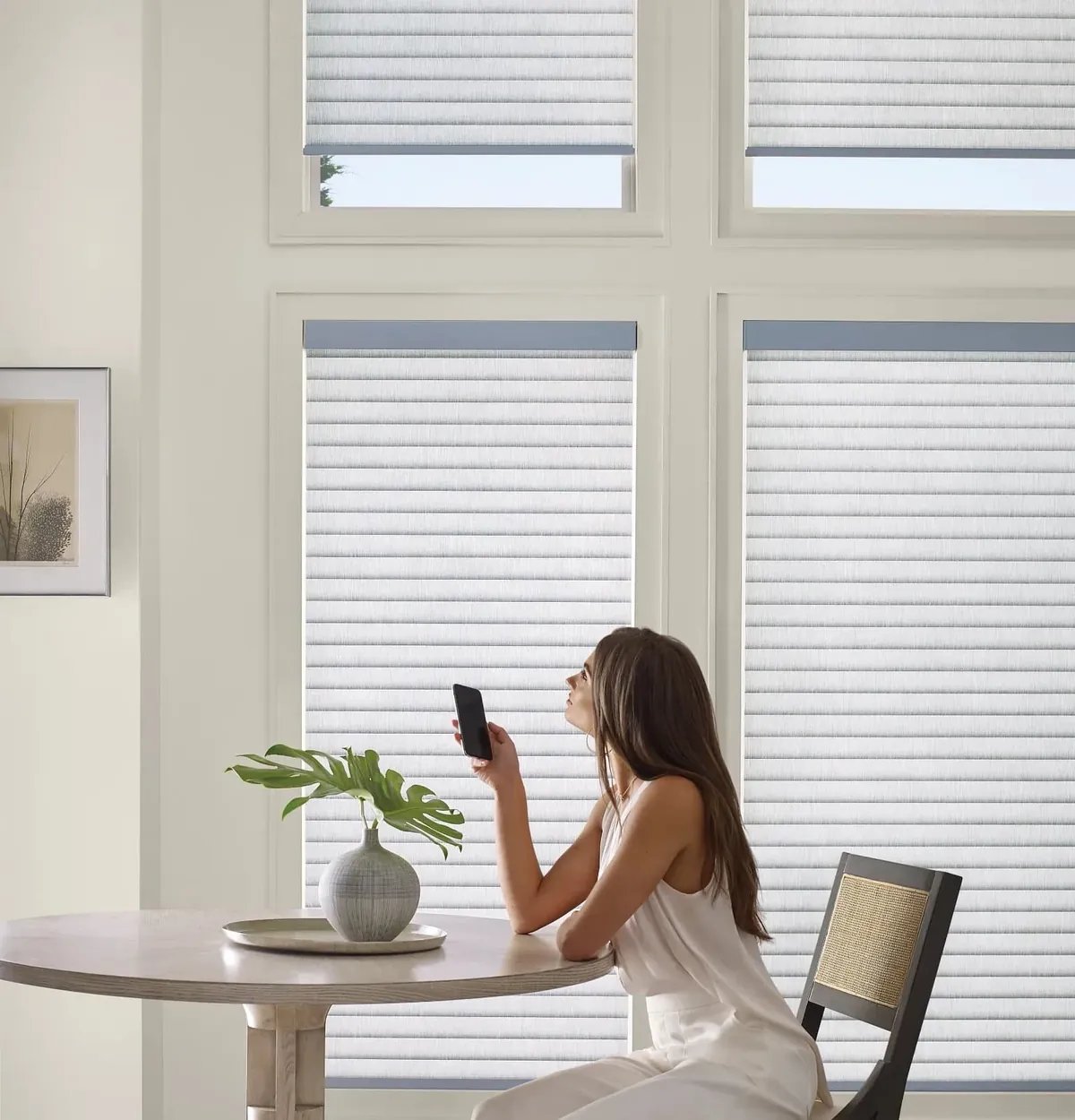
PowerView
Motorized shades on tall windows and in rooms you want to run on a schedule.
Tall sash and how a covering stacks
The Victorians and older two-families near the center often have windows that run from just above the floor to close to the ceiling. Tall, narrow and elegant, they also raise a question people rarely think about until a shade is up: when you raise it, where does it go?
Every covering has a stack, the depth of material gathered at the top when it is fully open. On a short window a deep stack can cover much of the glass; on a tall Norwood sash it barely matters, which is good news. Honeycomb shades have a slim stack, so the window looks almost bare when raised. Roman shades stack more deeply but look generous on a tall window. Wood blinds stack more than metal ones, so on a narrow sash a fine metal slat or a honeycomb often keeps the most glass in view.
Proportion matters too. A tall window looks best with a covering that reads as tall and slim: narrow slats or louvers, a light fabric, a headrail tucked inside the frame. Heavy, wide elements can make an elegant window look squat. That is something you see instantly when the samples are held up, and one reason a visit beats a catalog.
Then there is mounting. An inside mount keeps the casing clear, but old frames have parting beads, pulleys and stops in the way, and they are rarely square after many years. Each opening gets measured at the head, the middle and the sill, and we use the smallest width. When the depth will not take a headrail, a neat outside mount on the casing is the right call.
Close-set houses and daylight
Around the common the houses are set close together, and that changes the light. Side windows look across a narrow gap at the neighboring wall, so a dining room or bedroom on that side may only get daylight bounced off siding. Front rooms get more, but they sit nearer the sidewalk.
In those side rooms, the goal is to keep every bit of daylight while blocking the view across the gap. Sheers are made for this. Silhouette suspends soft vanes between two sheer layers, so the room glows while the outlook is blurred. Luminette does the same vertically, which suits a pair of tall narrow windows or a door. Light-filtering honeycomb in a pale color bounces light back into the room instead of soaking it up.
Top-down, bottom-up operation helps here too. With the top lowered, light comes in from the sky above the neighboring roof line, while the lower glass stays covered.
For the front rooms, the balance tips toward privacy. Shutters with the louvers angled up block the view from the sidewalk while sending light onto the ceiling, and a light-filtering shade gives daytime privacy without darkening the room.
Bays and corner rooms in the Victorians
Many of the Victorians near the common have a bay on the front or side, three or more tall windows set at angles, and some have a corner room with windows on two walls. They are the brightest spots in the house and often the most awkward to dress.
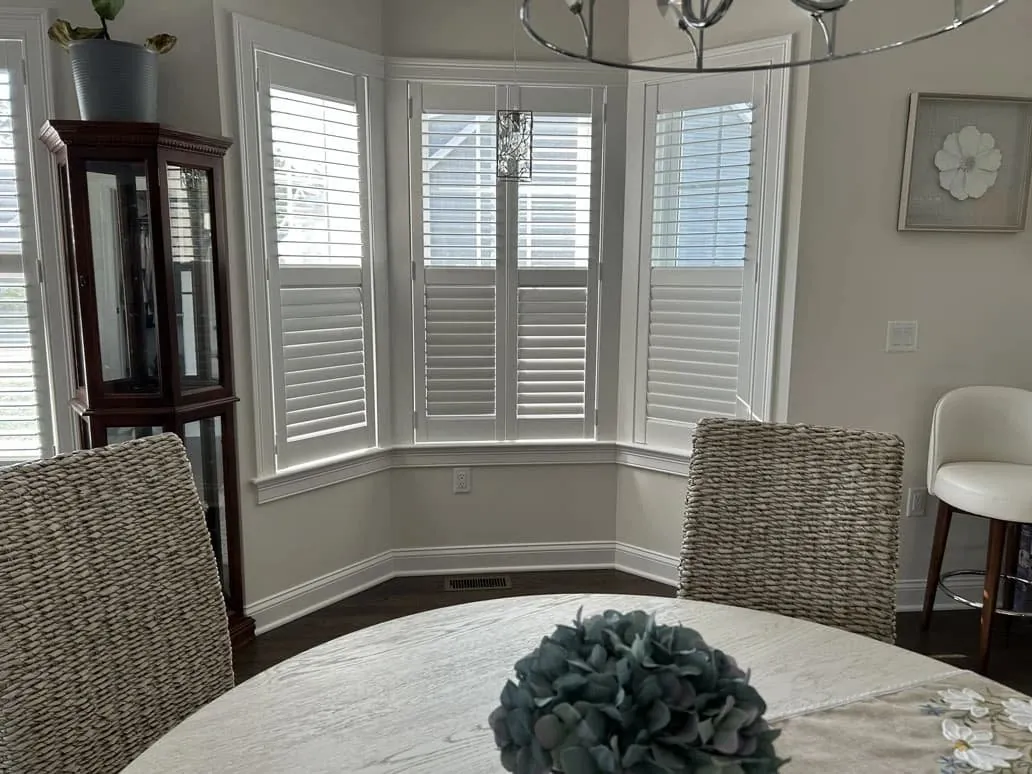
The answer is usually one product per window, sized individually and set to line up so the bay reads as a single piece when every shade is at the same height. Honeycomb and Roman shades both work well this way. Shutters are a favorite in a bay, with each window getting its own panels on a frame that follows the angles, so the louvers line up across the whole curve. Where the bay has a window seat, the shutter or shade has to clear the cushion when lowered, something we measure on the day.
A Hunter Douglas dealer in Norwood who fits plenty of Victorian bays will also check that the angled corners leave room for each headrail, since the side windows of a bay can be narrower than the center one.
Two-families near the center
The older two-families near the common stack one household above another, usually with a front porch on each floor and a side stair. They share the same tall windows, but the floors often live differently. The lower floor feels the sidewalk and the porch more; the upper floor gets more light and more sky.
When we fit a two-family, we usually think about the front of the building first, because both floors are seen together from the street. Matching headrail colors and a consistent outside face on every street window keep the building looking cared for. Inside, each floor gets the products that suit it. Porch doors with glass take a slim roller or a sheer that moves out of the way; the upstairs bedrooms usually want room-darkening fabric.
Capes and ranches on the outer streets
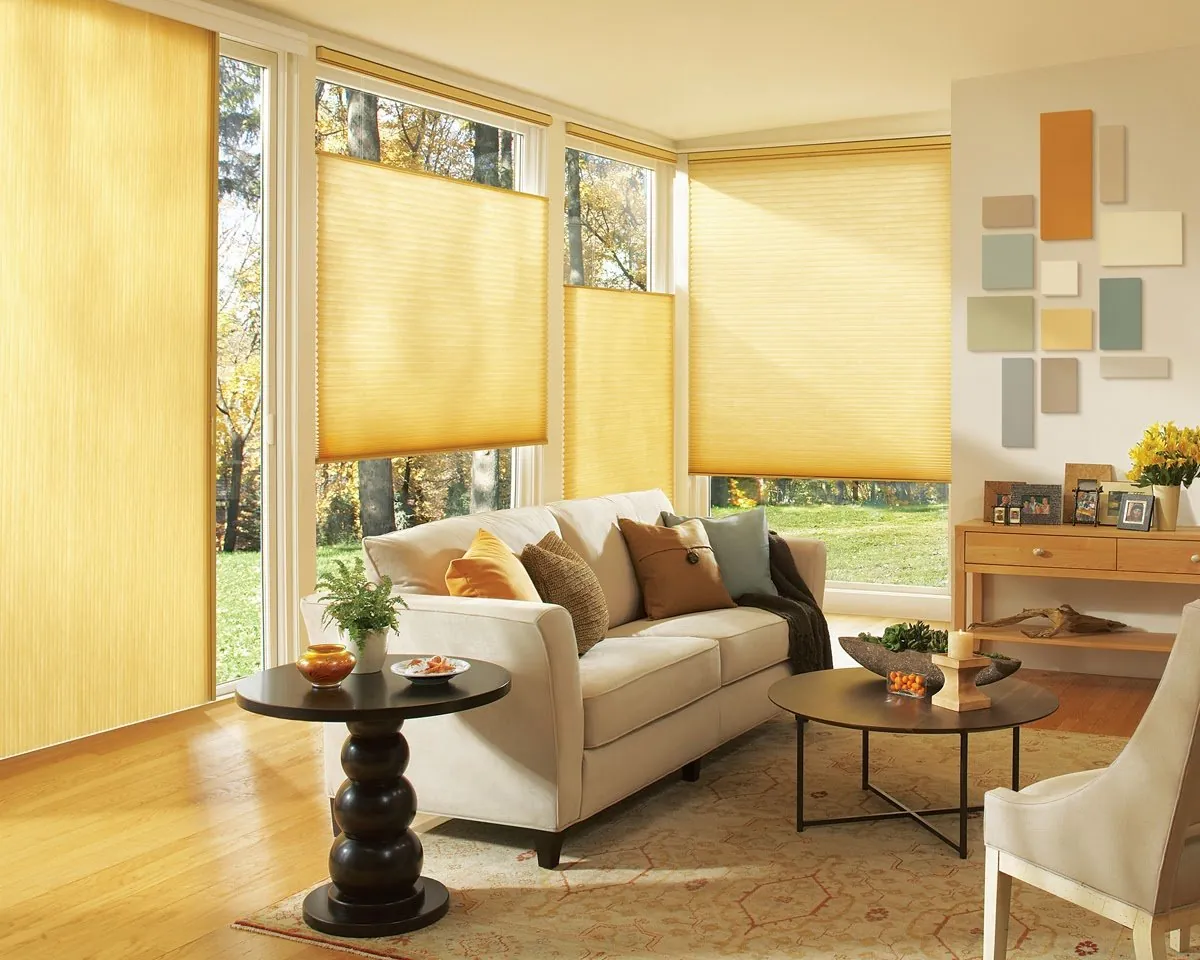
Further from the center, Norwood’s post-war capes and ranches sit on their own lots with standard window sizes. Here a Hunter Douglas dealer in Norwood has the whole range to choose from, because nearly every product fits a square, standard opening.
The cape’s upstairs dormers are the main exception, with their deep recesses and sloping ceilings. An inside-mounted honeycomb shade usually suits them best, and a room-darkening fabric makes them good bedrooms. The ranch’s picture window and back slider are the other common pairing: a light-filtering shade or sheer on the front window for privacy with light, and a sideways covering on the slider, such as Luminette, a vertical honeycomb or vertical blinds.
On these streets the conversation tends to be about how you live. Is the family room bright in the afternoon? Do the kids’ rooms need to be dark early? Would PowerView save a daily chore? The answers decide the product.
Glare, heat and the afternoon sun
The family rooms and kitchens on the outer streets often face the back yard, and when the back faces west, the late sun comes straight in. A television becomes hard to watch, the room warms up, and furniture near the window fades.
Different families handle that differently. Designer Screen fabrics cut glare while keeping the yard in view, and the openness can be tighter on the brightest window. Banded shades let you slide sheer and solid stripes to set the light. Honeycomb shades slow heat coming through the glass. PowerView can lower them all on a schedule as the sun comes round.
In the older houses near the center, close neighbors shade many windows, so glare matters less, and warmth beside the tall single panes matters more. Honeycomb shades are the strongest choice for that.
Getting to know your house
The visit is where everything above turns into a plan for your rooms. We arrive with the van full of samples, because we can bring the showroom to you, and we start by listening. Which rooms bother you? Which windows face the neighbors, the sidewalk or the afternoon sun? Who uses each room, and when?
Then we walk the house together. In a Victorian we look closely at the frames and the trim; in a cape we check the dormers; in a two-family we look at both floors if you are fitting both. You hold honeycomb fabrics against the tall sash, tilt a shutter louver in a side window, and compare a sheer and a screen in the family room. We measure as we go and leave a free estimate before we go.
For a fuller description of the first visit, see what happens at an in-home consultation or our in-home consultations page.
What happens on installation day
Once you have ordered and Hunter Douglas has made everything to our measurements, our certified installers come back to fit it. The day usually runs like this.
- We confirm each window and product with you before anything goes up.
- Brackets go into solid wood, set level even when an old frame is not.
- Each product is mounted, checked for an even gap and adjusted.
- Every lift, tilt and louver is tested, and any PowerView motors are paired and set up on your phone or remote.
- We show you how everything works and leave the windows clean and tidy.
Plaster, lath and old wood
Fitting window coverings in an older Norwood house is not quite the same as fitting them in a newer one. Walls are often plaster on wood lath rather than drywall, casings are solid wood that may have many coats of paint, and the framing behind them was cut by hand. A bracket that would hold in a newer wall can pull out of crumbly plaster.
That is part of what certified installation is for. Brackets go into solid wood, either the casing itself or the framing behind it, rather than relying on plaster alone. Paint build-up is cleared where a bracket sits, so the product hangs level and stays there. On an inside mount, we check that nothing will rub the sash or the stops as the shade moves. These are small details, but they decide whether a shade looks right years later.
It also helps to know what not to do. Where original trim is precious, we look for mounting points that keep holes to a minimum or sit where they will not show, and we talk you through those choices before anything is fixed.
Home offices and spare rooms
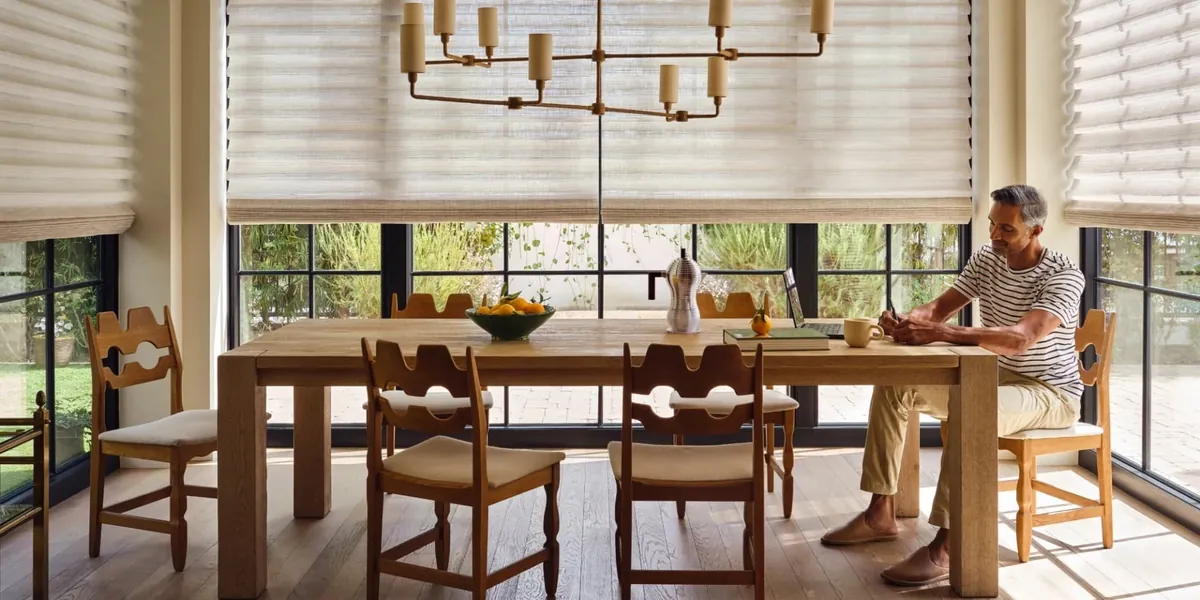
Plenty of Norwood houses have a small room that has become an office, often a back bedroom or a former sewing room with one or two windows. The needs are simple and specific: daylight without glare on the screen, privacy for video calls, and nothing fussy to adjust during the day.
Light-filtering roller and screen shades handle glare neatly, and a top-down, bottom-up honeycomb lets in light above the monitor while the lower glass stays covered. In an office that doubles as a guest room, a room-darkening fabric makes sense. A Hunter Douglas dealer in Norwood can also add PowerView, so the office shades lower at a set time each afternoon when the sun reaches that side of the house.
Bathrooms and kitchens
In Norwood’s older houses, kitchens and bathrooms have often been updated at different times from the rest of the house, and their windows can be smaller or a different shape from the tall sash elsewhere. In the newer houses, they are usually standard.
Either way, these rooms need materials that cope with moisture. Palm Beach polysatin shutters and EverWood faux wood blinds both handle steam and wipe clean. A Designer roller with a moisture-friendly fabric suits a small window over a tub. Over a kitchen sink, cordless or motorized operation saves stretching across the counter.
Cordless operation and PowerView
Cordless is now the standard choice on most Norwood windows, and on a tall Victorian sash it has a practical benefit beyond safety: there is no long cord coiled on the sill or wrapped around a cleat beside the trim. The shade simply rises and falls by its bottom rail, and on the tallest windows an extended handle or a motor saves reaching up to the top. In the older two-families, where the upper floor may have small children and the lower floor a pet, it keeps both households happy with the same choice. Without a cord, nothing dangles at the side of the window, and children and pets are safer. You just lift or lower the bottom rail.
PowerView suits the tall sash in the older houses particularly well, since the top of a Victorian window can be a stretch to reach. It also suits busy households on the newer streets: shades that close at dusk, rise in the morning and lower against the afternoon sun without anyone remembering. We plan the simplest way to power each motor in an older house where nobody wants to open plaster. Our motorized blinds in Norwood page covers it in more depth.
Choosing color for an old or a newer house
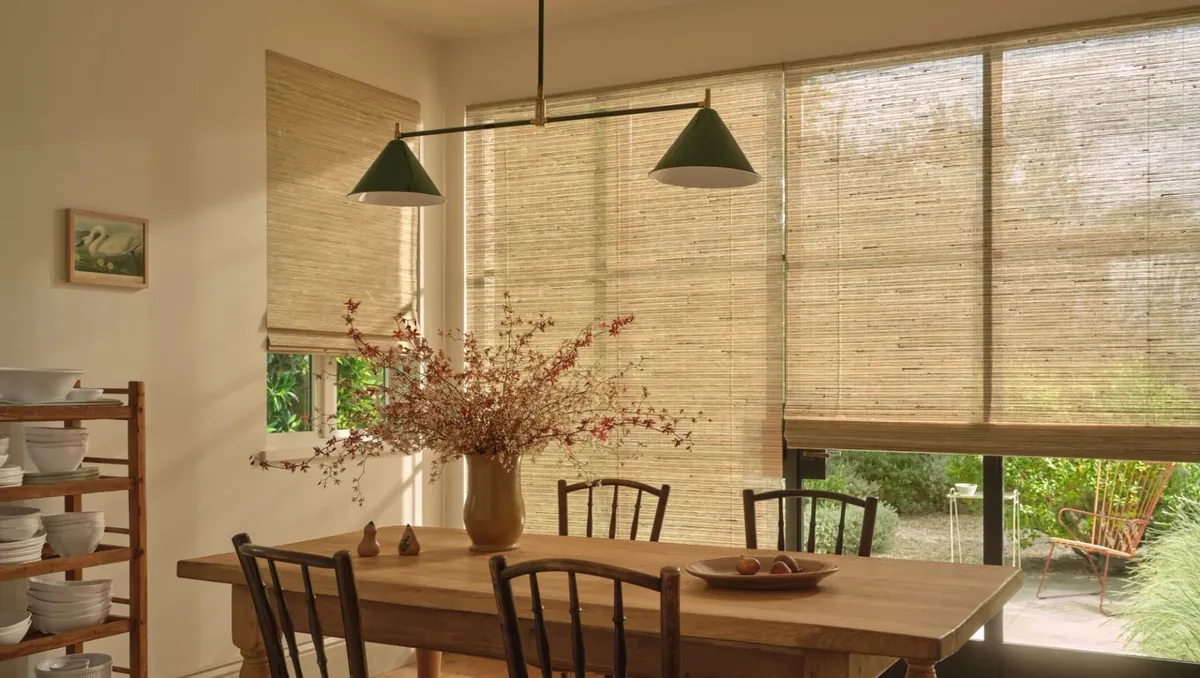
The older houses near the center often have painted trim, plaster walls and wood floors. Light fabrics and painted shutters let those features lead, and a stained wood blind can pick up the floor. On the outer streets, plainer rooms can take more color and texture, from woven woods in a dining room to a patterned roller in a child’s room.
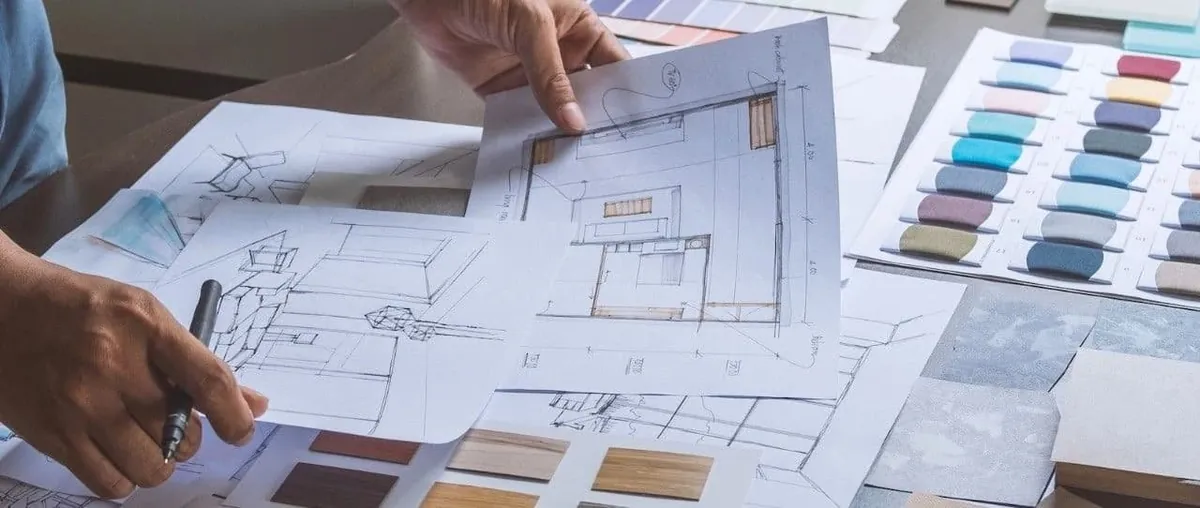
In both cases, a consistent outside face on the street-facing windows keeps the house tidy from the sidewalk. If you would like a broader eye on color and layering, our interior design consultations can be part of the visit.
A Gallery dealer for Norwood
Blinds & Designs is a Hunter Douglas Gallery dealer. Honeycomb, sheer, roller, Roman, woven and vertical shades, wood, faux wood, metal and fabric blinds, three shutter lines, drapery and PowerView are all available through us.
Hunter Douglas certifies our installers, so made-to-order products go up the way the maker intends. When something you already have stops working, ask about our blind and shade repair in Norwood.
Read more about our dealer work on the main Hunter Douglas page, and browse colors and lines in the Hunter Douglas catalog before we visit.
Consultations at home in Norwood
Norwood is served from our Canton territory, and the consultation comes to you. We bring the samples, walk the rooms with you and measure at your windows.
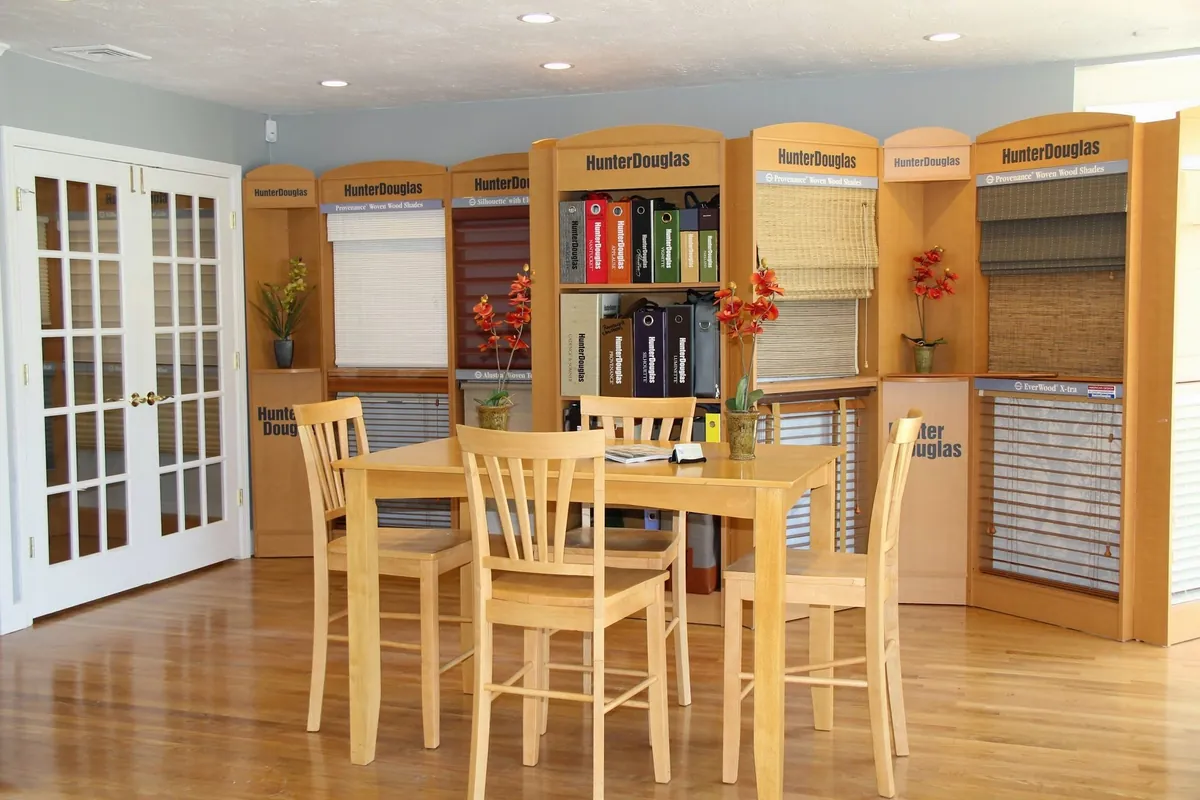
If you would like to look at products before a home visit, our nearest showroom is Franklin; the Franklin showroom page has the details.
Everything we offer in town is on our Norwood page, with its own pages for roman shades, roller shades, custom blinds, cellular shades, plantation shutters and custom drapery.
Questions from Norwood
My side windows face the next house a few feet away. How do I keep the light?
Sheers and pale light-filtering fabrics let daylight through while blurring the view across the gap. A top-down, bottom-up shade adds light from above the neighboring roof while the lower glass stays covered.
Which covering leaves the most glass clear on a tall narrow sash?
Honeycomb shades and fine metal blinds have the slimmest stacks, so a raised shade covers very little of the window. Roman shades stack deeper but look generous on a tall opening.
Do you fit two-families?
Yes. We can fit one floor or both, keeping the street side consistent and choosing what suits each floor inside.
What about the dormers in my cape?
An inside-mounted honeycomb shade usually suits a dormer best, often in a room-darkening fabric. We check the recess depth and the slope during the visit.
Is there a charge for the estimate?
No. The estimate for products and installation is free.
When you are ready to start
A good Hunter Douglas dealer in Norwood will show you the options at your own windows and fit them with care. Ask for a consultation and the range comes to your house; we measure and you keep a free estimate to think over. Prefer a quick conversation first? The call button connects you with the Canton line.