
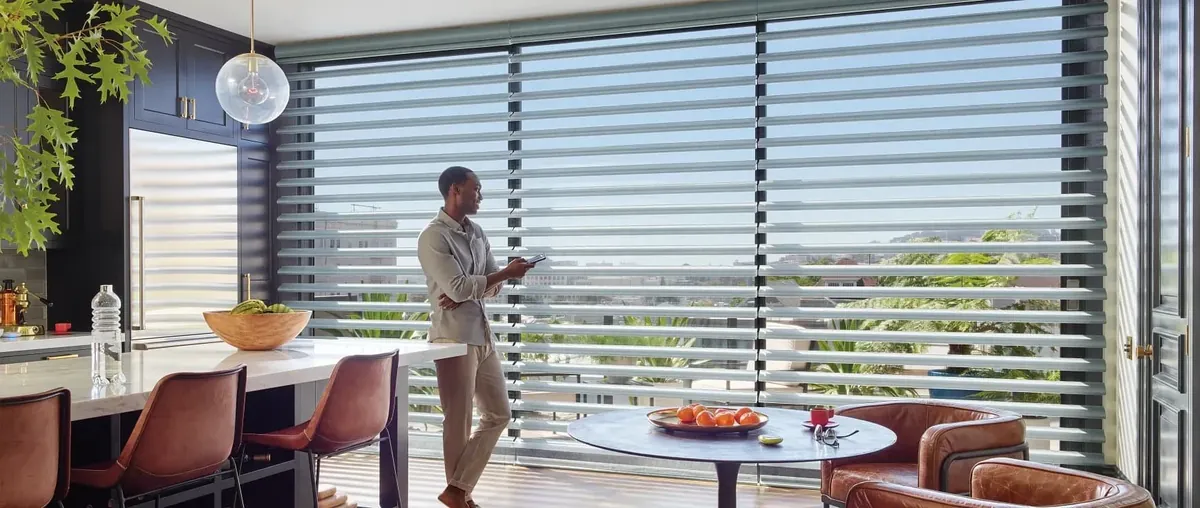
Small sash and old glass in Sandwich
The historic village around the Grist Mill holds some of the oldest houses on the Cape. Antique capes sit low to the ground with small windows tucked under the eaves, and the Federal houses nearby have taller sash but still very modest panes by modern standards. In the oldest of these houses the original sash is tiny, set into thick frames and often out of square after centuries of settling. Away from the village, along Route 6A and out toward Forestdale, the housing changes to post-war ranches and newer colonials with larger, standard windows.
Motorized blinds in Sandwich, MA, have to work across that whole range. In the village they need to respect the historic district’s expectations and fit very small openings neatly. Out on the newer streets they handle the bigger glass and the high windows of a modern colonial. Hunter Douglas PowerView does both, because the motor hides inside the headrail and the shade is made to each opening’s own measurements.
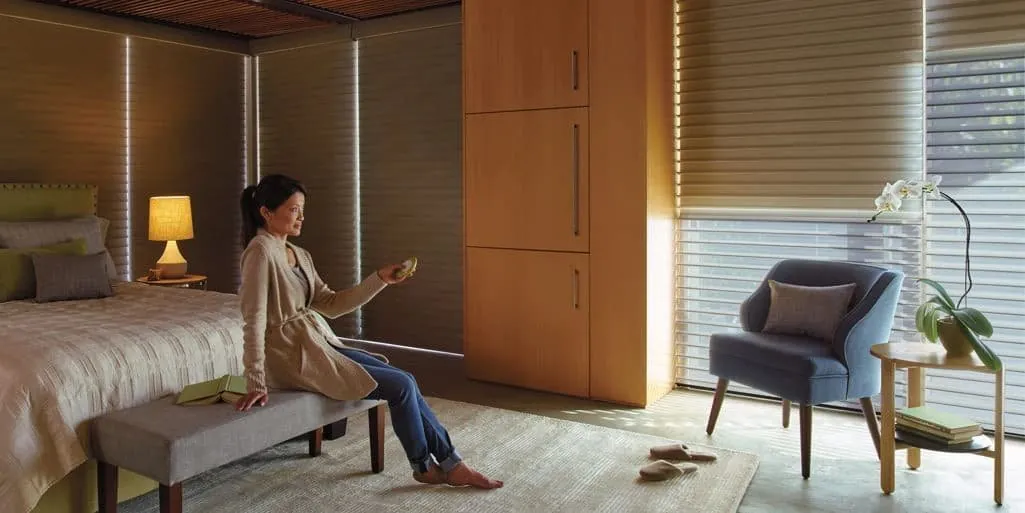
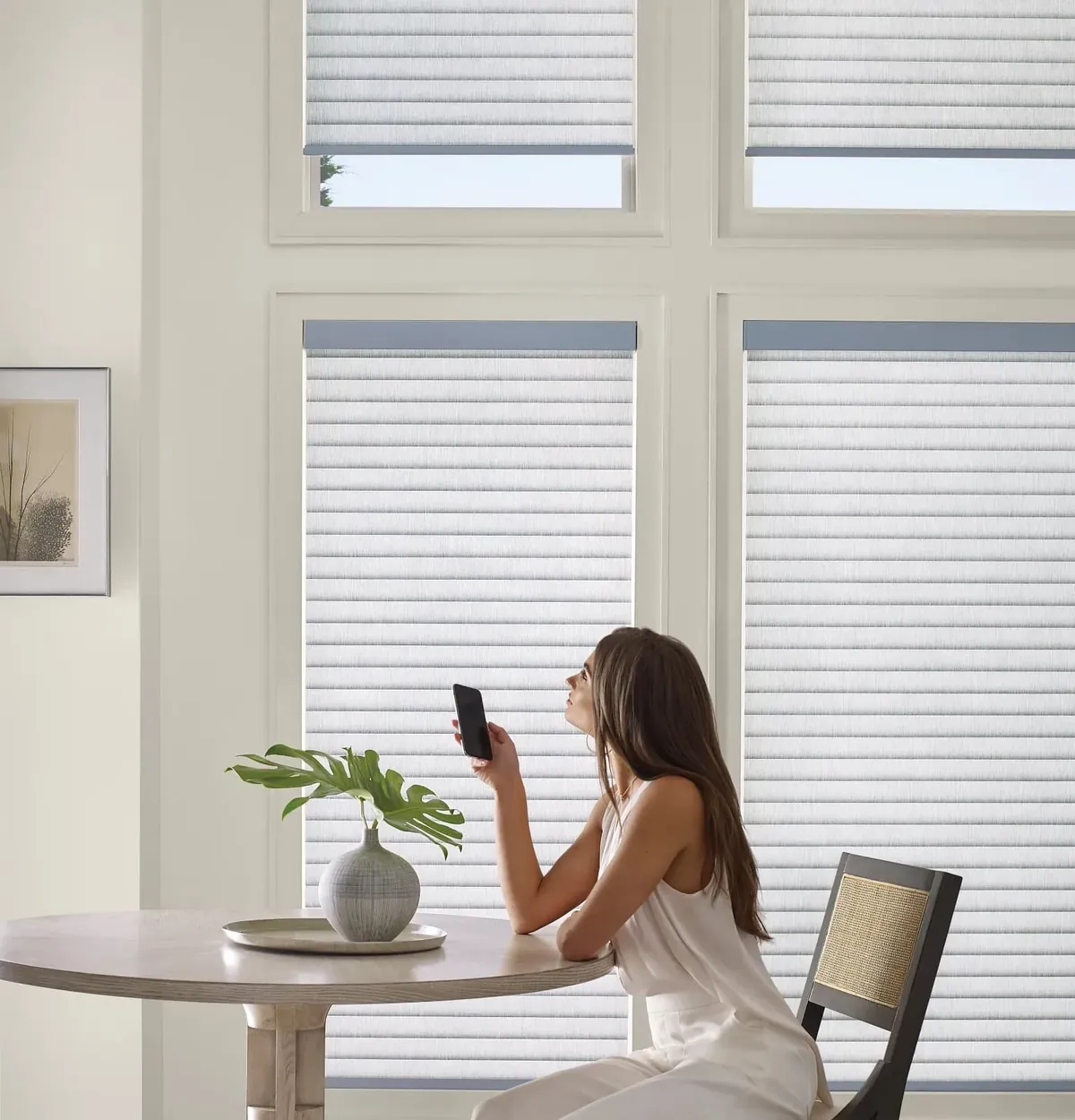
You control the shades from a remote, from the PowerView app on a phone or tablet, or with schedules that move them on their own. There are no cords at the glass, which keeps an old window looking uncluttered.
Three ways to motorize an old house
Every one of these can be ordered with a PowerView motor. They are the choices that suit Sandwich’s older windows best.
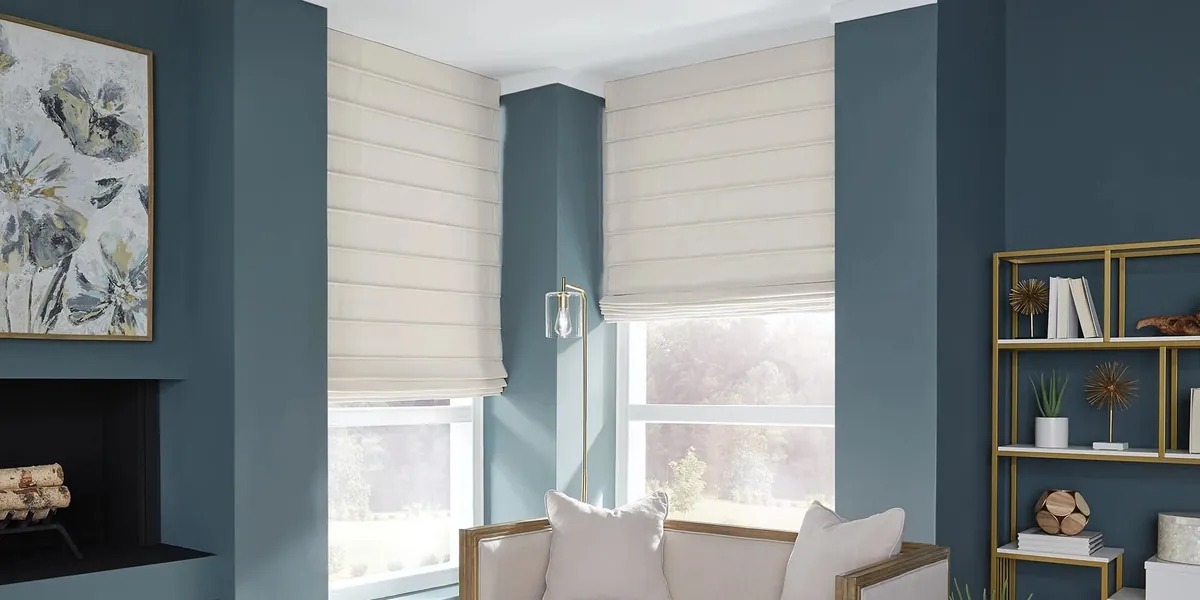
Vignette Roman shades
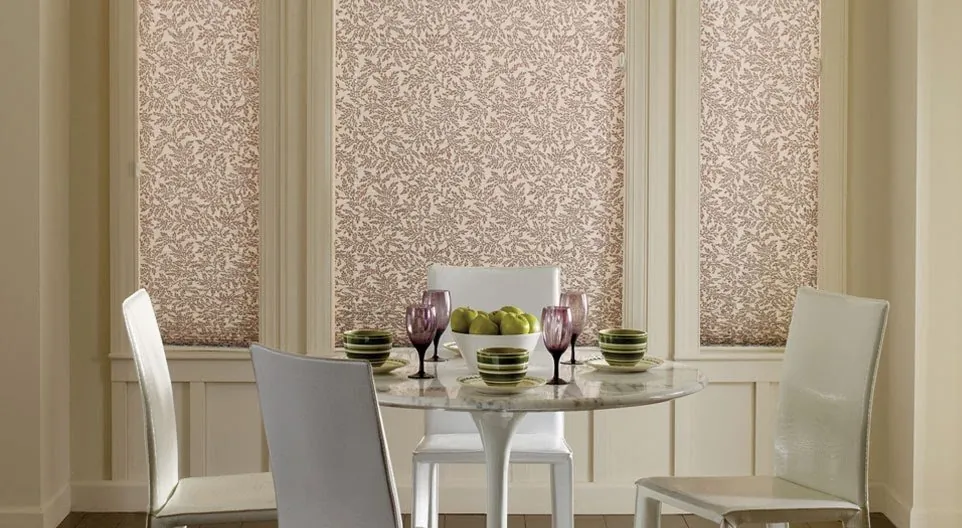
Soft, flat folds of fabric that suit a period room. A motor keeps the folds even, which matters on a small window where any unevenness shows.
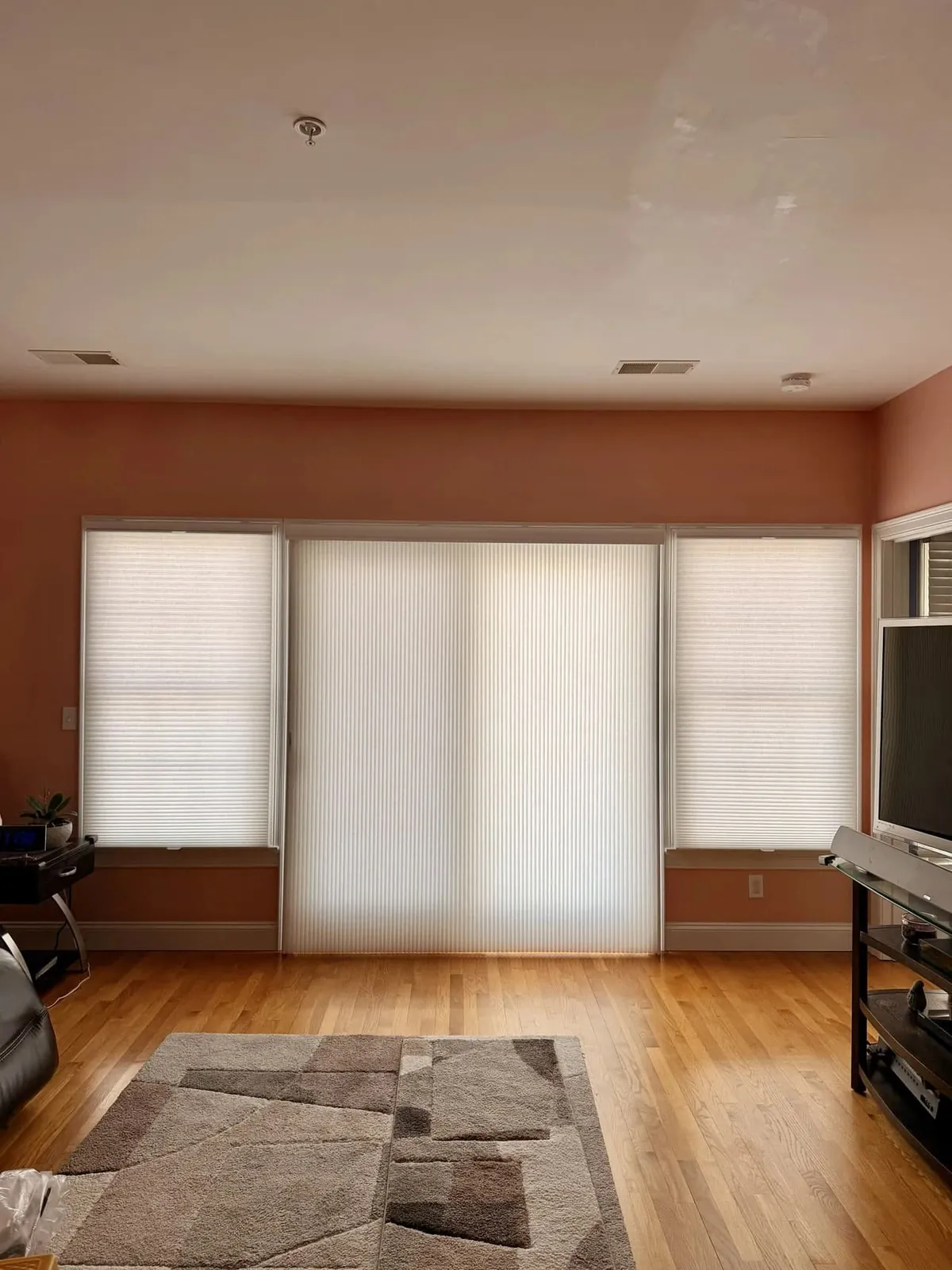
Honeycomb shades
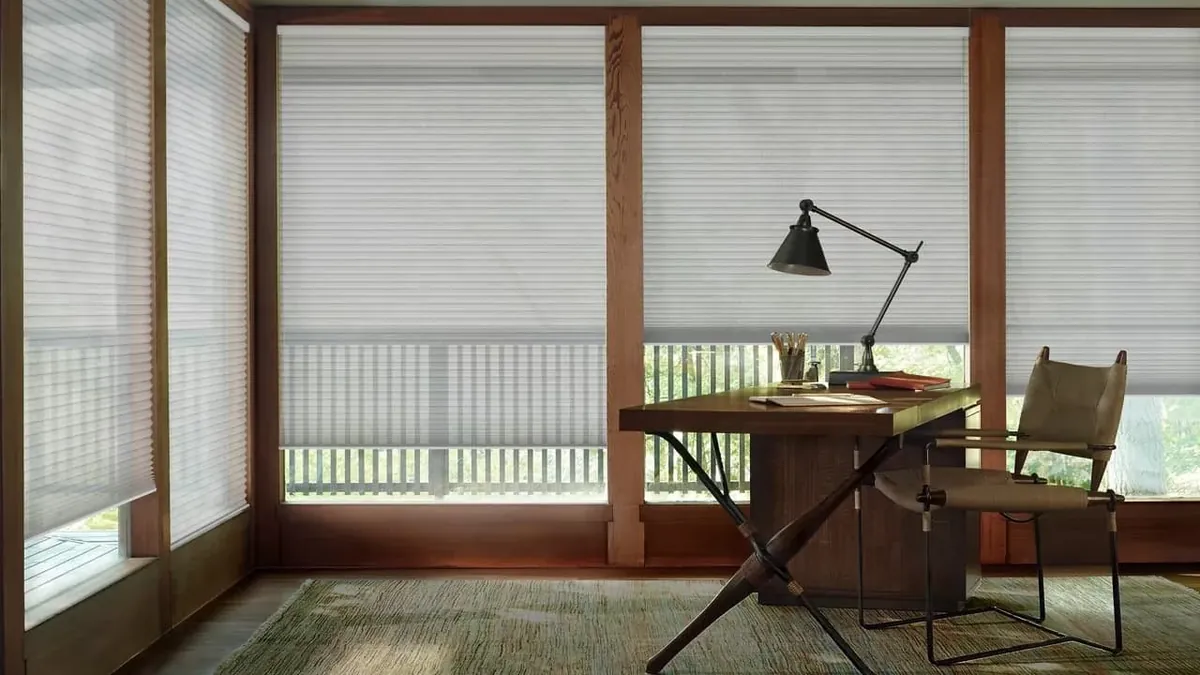
One of our own installs. Honeycomb fabric folds up very tight when raised, so a tiny sash keeps nearly all its glass open.
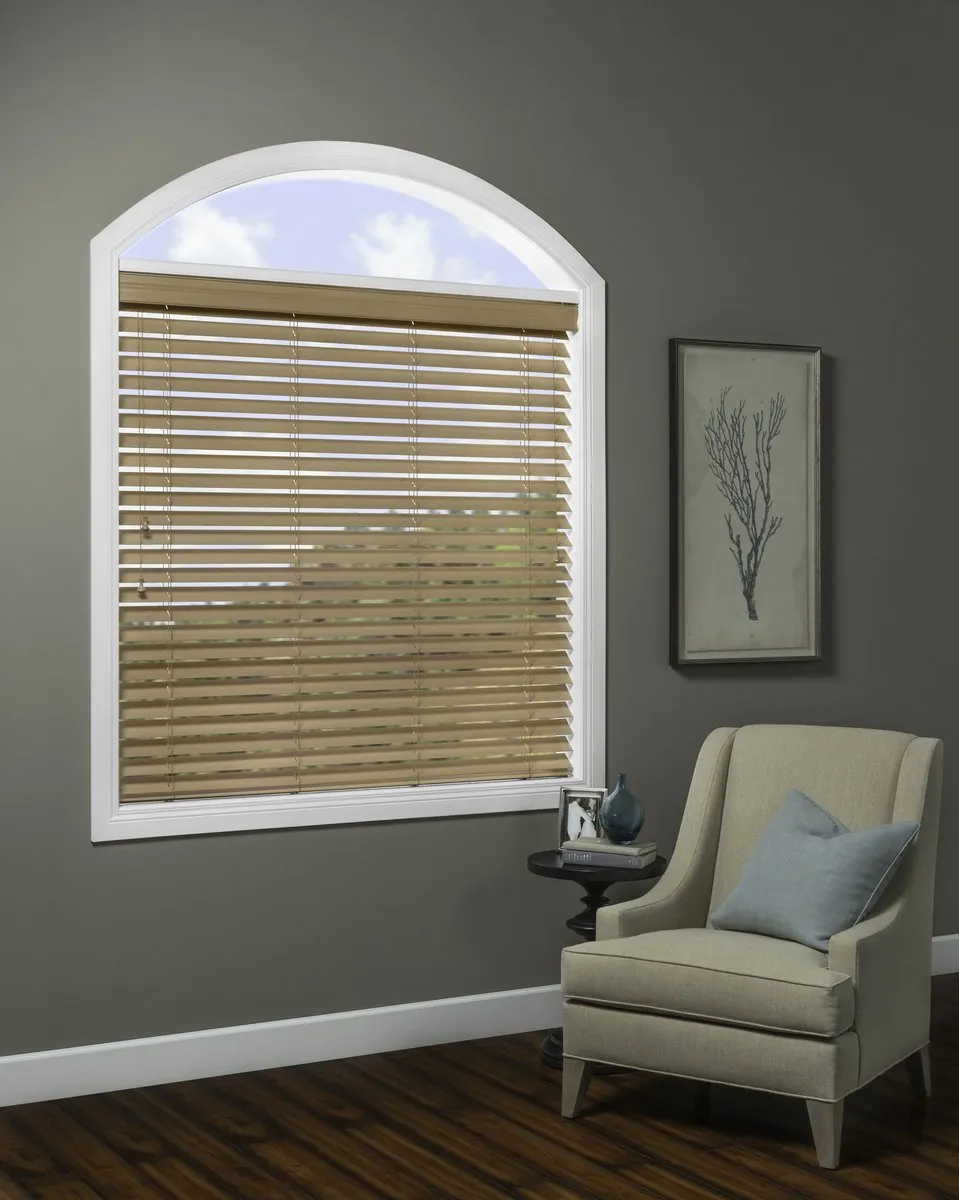
Wood blinds
Warm wood slats for antique interiors. Whether a given window can take a motorized blind is something we check at the visit, size by size.
Antique capes near the Grist Mill
The capes in the old village were built low and compact, with a central chimney, small rooms and windows sized for a time when glass was precious. Upstairs, the bedrooms sit under a steep roof, and the windows are often small, low in the gable walls or set into dormers. Downstairs, the windows are modest and set into thick frames with deep sills.
These windows are not hard to reach because they are high. They are hard to reach because they are small, deep and often behind something: a bed tucked under the slope of the roof, a chest under a gable window, a deep sill lined with plants. Raising a shade by hand means leaning in over all of it.
A motorized shade solves that neatly. The remote sits on the nightstand or by the door, and the shade moves without anyone reaching in. In a cape where every room has a couple of these windows, motorizing just the bedrooms and the window over the kitchen sink often makes the biggest difference.
Federal houses in the village
The Federal houses along the village streets are a step up in scale: two full stories, symmetrical fronts, taller sash and fine interior trim. Their windows are larger than a cape’s but still small panes by modern standards, and the trim around them is usually the feature of the room.
Here the goal is to keep that trim in view. Fitted inside the frame, the shade leaves the casing bare, and its motorized headrail tucks up out of sight at the head of the opening. When the shade is raised, the window and its casing look almost untouched. When it is lowered, the fabric fills the opening edge to edge, framed by the woodwork.
Because there is no cord, nothing hangs across the casing or loops over the sill. A Federal parlor with three or four street windows can run every shade off one button, all stopping level, which reads as neat from the road as it does from the armchair.
What the historic district expects from a window
Around the Grist Mill, the look of a house from the road carries weight. Old glass, painted sash and simple trim are the picture, and a window treatment that shouts from outside spoils it. Shades stopped at five different heights, cords swinging behind the panes, a bright pattern facing the street: those are what catch the eye.
A motor quietly removes most of that. Front windows grouped together rise and fall in step, so a cape’s or a Federal’s face stays orderly whatever time of day it is. With the lifting gear in the headrail, the panes show only fabric. For the side facing the road, we usually suggest a white or pale neutral lining on every shade, whatever the room side looks like.
Part of our visit happens on the sidewalk. We step outside, look back at the windows and talk about how each fabric will read from there. If the pattern you love for the parlor is too loud from the road, a pale lining behind it settles the question, and you see the lining sample before you choose.
Very small sash: sizing and mounting
The oldest houses in the village have sash so small that sizing becomes the whole job. A shade that is a fraction too wide catches on the frame. One a fraction too narrow leaves light gaps down both sides, which show far more on a small window than on a large one. And a frame that has settled for centuries is rarely square, so the width at the top may differ from the width at the bottom.
We measure every opening at several points across its width and height, and check the depth of the frame at more than one place. For an inside mount, the narrowest width governs. Hunter Douglas then makes each shade to those exact figures.
Tiny frames are also shallow frames, and a motorized headrail needs somewhere to sit. When it will not tuck inside cleanly, we fix a slim shade to the face of the casing instead, which on a very small window often covers the light gaps better than an inside fit could. Headrail sizes differ from one shade family to the next, too, so a Roman shade that is too deep for a frame may be replaced by a roller that slips in.
Route 6A ranches
Along Route 6A and the streets off it, the post-war ranches bring the familiar layout: a living room picture window, a kitchen window over the sink, a slider to the back and bedrooms along a hall. The picture window is the big piece of glass, usually made up of several sections.
Motorizing that window means its shades can move as one, lining up perfectly whether up, down or stopped halfway. On a schedule, the shades on the sunny side can lower through the afternoon and rise again in the evening. In winter, honeycomb shades closed at dusk help the room hold its warmth, because the air in each cell sits between the room and the cold glass.
For the slider, a vertical honeycomb shade travels side to side, so you can still get out to the yard. Whether that one carries a motor depends on how often the door is used, and we talk it through rather than assuming.
Newer colonials toward Forestdale
Out toward Forestdale, the newer colonials have bigger, standard-sized windows and often a two-story foyer or a family room with windows high above a fireplace. Those high windows are where most inland customers start, because nothing else reaches them comfortably.
With PowerView, the high windows join the same remote and the same schedules as everything below. A family room’s tall windows can lower together through the afternoon sun and rise in the evening, and the foyer window can close at dusk with the rest of the front of the house.
Roller shades and banded shades suit these bigger, modern openings, and they tuck neatly into slim headrails. Honeycomb shades are a good choice for the bedrooms, where warmth and darkness matter, while sheer shades soften the light in a living room without dimming it.
How you will control them
Most households start with the remote, and many never need more. Keep it on the mantel or fix it to the wall beside the door; pick the window, or the room, and press. In a cape with a few motorized bedrooms, that may be all you ever use.
Then there is the PowerView app. Open it and the whole house is there: send the dormer shade upstairs halfway down, gather the parlor windows into one room, nudge a single shade by a hand’s width. In a Federal house with windows on two floors, it saves a lot of climbing.
Scenes and schedules finish the job. Think of a scene as a snapshot of where the shades should sit, all the street windows shut, say, and a schedule as the clock that calls it up. The front of a village house can close every evening on its own, keeping the facade consistent and the rooms private. For the plain-English version of all three, see how motorized shades are controlled; window covering automation goes deeper on timers and scenes.
Arch tops, fans and odd shapes
Older houses sometimes have a fanlight over the front door, an arched window in a gable or a half-round window on a stair. Shapes like these are usually treated differently from the rectangular windows around them. Often the arch is left open to the sky or given a fixed covering, while the rectangular sash below takes a shade that moves.
That way, the motorized shade does the daily work on the part of the window you actually use, and the shaped glass keeps its character. We look at each of these at the visit and suggest what will look right.
Motorized blinds in Sandwich or a shade
Choose slats where you want to direct the light, fabric where you want to soften it. Wood blinds tilt to send light up toward the ceiling, keep sun off a screen and still allow a view, and their warm finish suits antique interiors. Want motorized blinds in Sandwich for a study or a dining room? Tell us early: not every blind range takes a motor at every size, and we would rather check your actual windows than promise first.
Shades bring their own strengths. A Roman shade adds soft fabric folds to a period room, a honeycomb insulates an old window, a roller or banded shade suits a modern colonial, and a room-darkening fabric makes a bedroom properly dark. Many houses mix both, and every motorized shade and blind runs from the same app.
Keeping an old house warm
Antique capes and Federal houses were built before anyone thought about insulated glass, and many still have their original single-pane sash, sometimes with storm windows outside. On a winter night the cold comes off that glass into the room, and in a small cape bedroom the window is never far from the bed.
A honeycomb shade adds a pocket of still air in each cell between the glass and the room. The motor’s part is making sure the shades are down when it counts. A dusk schedule lowers them as the light goes, early in December and later as spring arrives, so the warmth stays in without anyone going round the house. On sunny winter mornings, the south-facing shades can lift to let the low sun into the rooms.
Plenty of older houses here are keeping their original sash rather than replacing it. Pairing it with motorized blinds in Sandwich or a motorized honeycomb shade is one way to make those windows more comfortable while leaving the old glass exactly as it is.
Cords, children and pets
A motorized shade has no lift cord and no loop, so there is nothing at the window for a child or a pet to catch. That is a strong reason to choose it for bedrooms and playrooms, and it suits an antique house too, where a cord hanging across fine trim always looks out of place.
The motor lifts both sides of the shade evenly, so the fabric stays straight and the bottom rail stays level. On a small, old window, where any unevenness is easy to see, that matters.
How a project runs
- You book a visit through Request a Consultation or the call button.
- A van full of samples arrives at your door, so fabrics are judged in your rooms.
- Room by room, and once from the sidewalk, we look at every window together.
- Each opening is measured with care, the oldest and smallest sash most of all.
- You decide which windows get a motor and how they group, and a free estimate follows for you to consider at leisure.
- Hunter Douglas builds each shade to those measurements.
- Our Hunter Douglas certified installer hangs the shades, sets where each one stops, links them to the remote and app, and programs your schedules.
The guide to what happens at an in-home consultation has more on that first visit.

A Gallery dealer for period houses
Blinds & Designs is a Hunter Douglas Gallery dealer, a designation Hunter Douglas reserves for dealers who meet its standards. That breadth is useful in a town where one street has antique capes and the next has modern colonials. PowerView runs across honeycomb, Roman, sheer, roller and banded shades as well as blinds, so we can choose the right product for each window.
Hunter Douglas certifies our installers, who handle the motor programming as part of the fitting. Interior design consultations help when a whole room is being rethought, and shades you already own can come to us for blind and shade repair in Sandwich.
More for the town: roman shades in Sandwich, plantation shutters in Sandwich and the Sandwich page. Everything PowerView can run is on our motorized blinds and shades page.
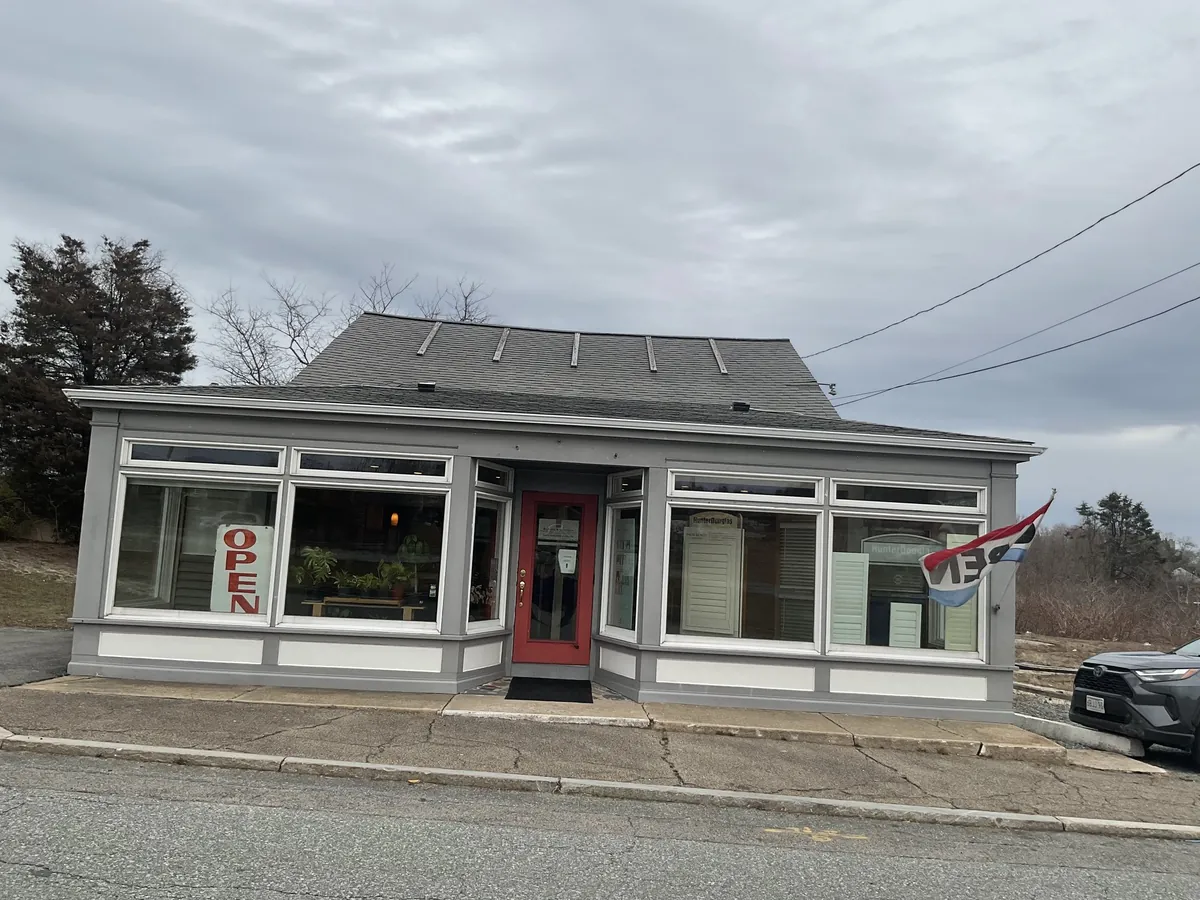
Sagamore is our nearest showroom
The Sagamore showroom is the closest of our locations to Sandwich, a short drive west. Stop in to talk through your windows, or book a visit at home and we will bring samples to you.
For an antique house, a home visit is usually the best start, since the size and depth of the oldest sash decide so much. It is the surest way to plan motorized blinds in Sandwich around windows that were never built for them.
Questions from Sandwich
Can a motorized shade fit the tiny windows in my antique cape?
Usually, yes. Shades are made to each window’s own measurements. The question is frame depth: where a motorized headrail will not sit inside a very small, shallow frame, we recommend a slim outside mount, which often gives better coverage anyway.
My house is in the historic village. Will motorized shades look out of place?
Quite the opposite in most cases. The street-side windows move in step and only fabric shows through the panes. We suggest a pale lining for the side facing the road so the shades sit quietly behind the old glass.
What about the arched window over my front door?
Shaped windows are usually left open or given a fixed covering, while the rectangular windows around them take a shade that moves. We look at each one and suggest what will look right.
Can the high windows in my newer colonial be motorized?
Yes. High foyer and family room windows are one of the most common reasons to choose PowerView. They run from the same remote and schedules as the windows below.
Do you charge for the estimate?
There is no charge. We measure in person and the estimate that follows is free, covering every shade and motor we discussed.
Let us see the windows
Every old house has its own quirks, so the best next step is a visit. Ask for a consultation and we will come with samples, measure the smallest sash with care and leave a free estimate behind. Prefer a conversation first? The call button reaches us, and the Sagamore showroom is just up the road.