
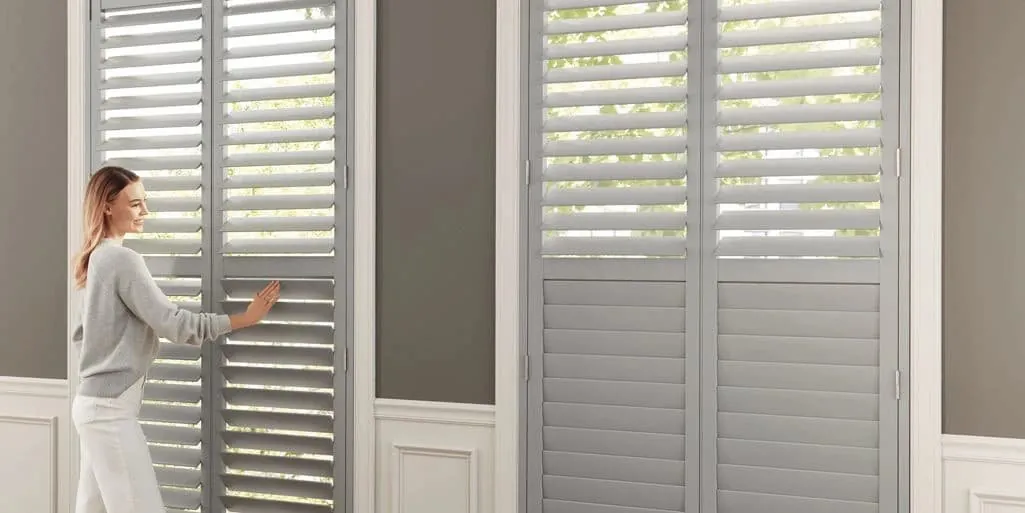
Stacked floors, narrow sash, neighbors close by
Walk any block in Wollaston or North Quincy and you pass two- and three-families standing shoulder to shoulder, each floor its own home, each with tall, narrow sash looking out at the street and across at the building next door. Those windows are the heart of most requests we get for plantation shutters in Quincy, MA. They are handsome openings, and they are exposed ones: a side window here can sit an arm’s length from the neighbor’s.
We start every Quincy job with an in-home consultation. The van carries samples from all three Hunter Douglas shutter collections, and we climb the stairs to whichever floor is yours. On a third floor with a view over the rooftops, the brief is different from a first floor that faces the sidewalk, and the only way to see that is to stand in the room.
The rest of the city brings its own mix: condominium conversions near the center, and shingled houses out on Squantum and toward Houghs Neck that face the water and take the weather head on.
Plantation shutters in Quincy, MA, by neighborhood
Three kinds of home account for most of our shutter work in the city. Each points toward a slightly different plan.
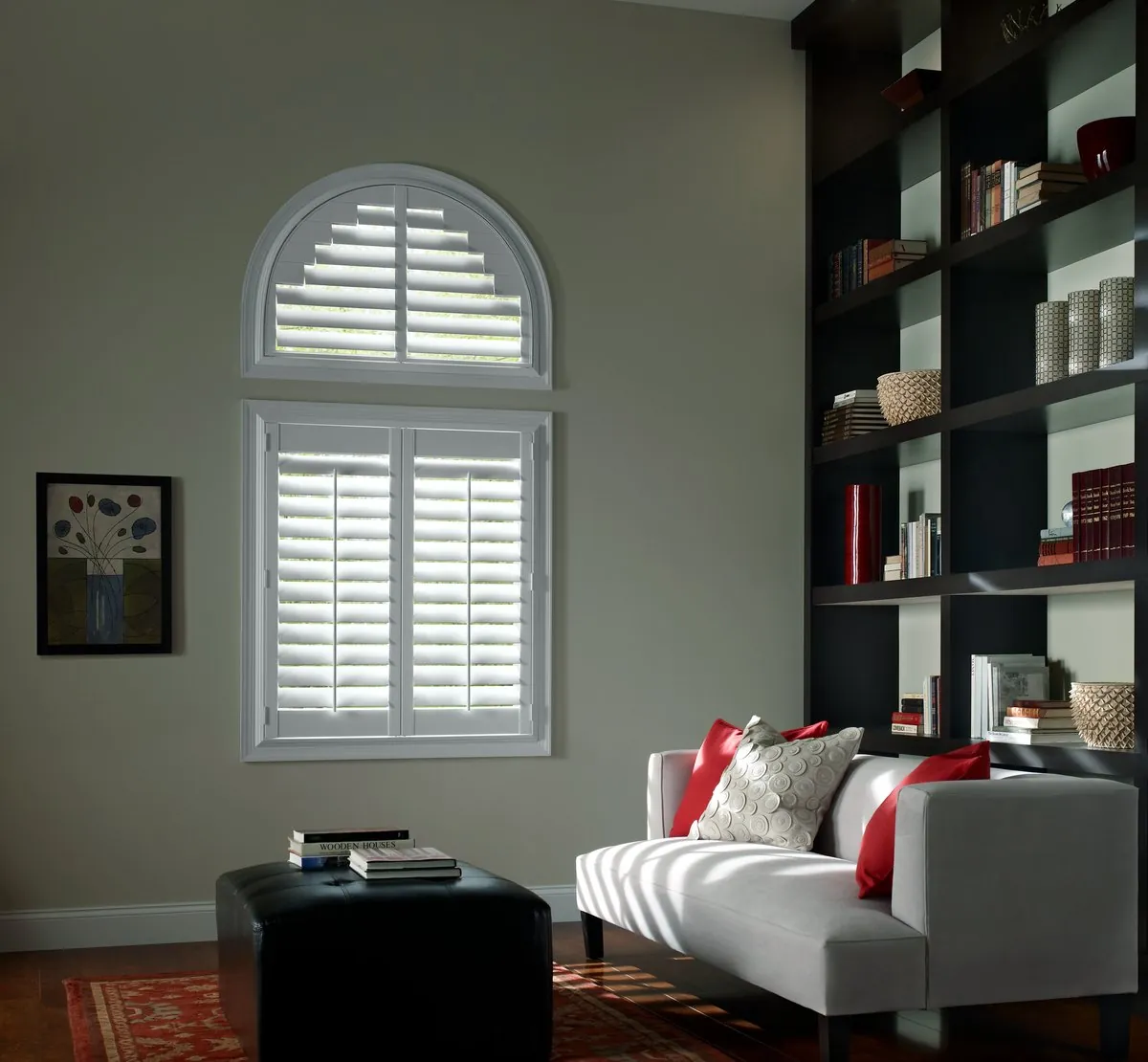
Wollaston and North Quincy flats
Tall, slim sash on every floor, with side windows facing the next building. Louvers sized to the narrow glass and tilted for privacy.
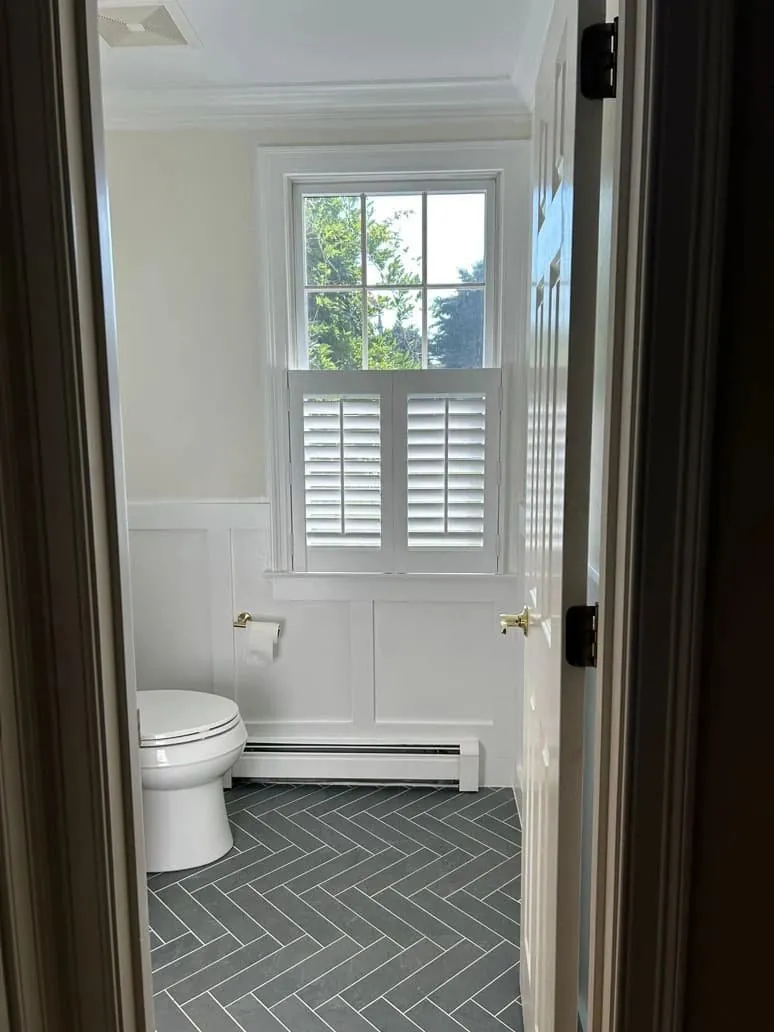
Condos near the center
Converted units with a mix of old and new openings. A clean, consistent look in every room, planned around how the space is used now.
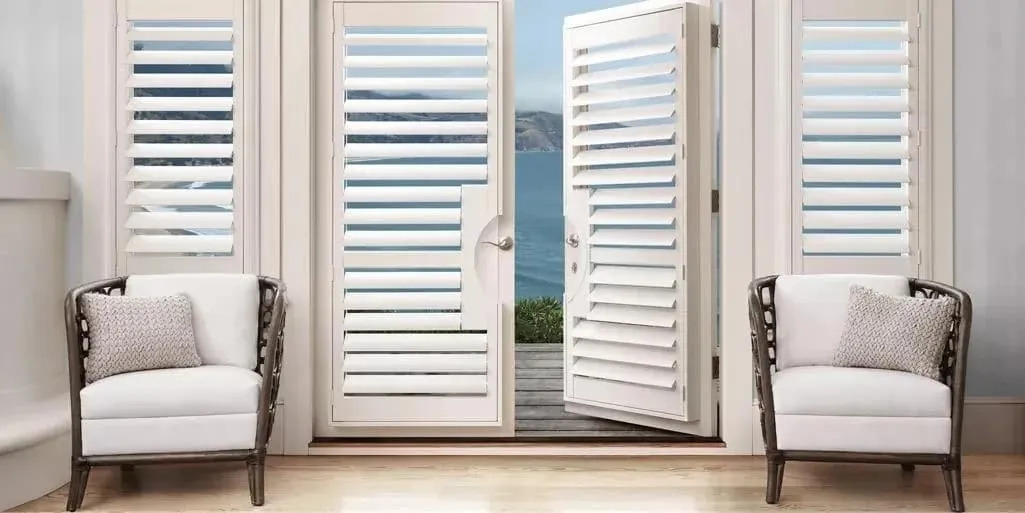
Squantum and Houghs Neck
Shingled houses facing open water and bright reflected light. Louvers that tame the glare and fold away to give back the view.
Your floor, your windows, our samples
Quincy belongs to the area we serve on a shop-at-home basis from Canton. There is no Canton storefront to visit; the whole idea is that we come to you instead, with a van full of samples, so you can see shutters against your own sash before deciding anything. You can read how it works on the Canton shop-at-home page. We like to call it bringing the showroom to you.
In a multi-family city, that is not just convenient. A unit on the second floor of a three-decker has a particular set of windows: two or three tall ones at the front, a side window or two by the kitchen, and one at the back over the porch. How a louver looks against that narrow sash, how much the side window needs to hide, how the panels swing in a small bedroom where the bed sits close to the wall: all of it is decided in your rooms.
What to expect on the day:
- Send a Request a Consultation form or tap the call button, and choose a time.
- A consultant comes up to your floor with samples from Palm Beach, NewStyle and Heritance.
- We start at the front windows and work back through the unit, trying louver sizes against each opening.
- You point out which windows face a neighbor and which have a view worth keeping.
- We measure everything on your list.
- You receive a free estimate and decide in your own time.
More about the visit is in what happens at an in-home consultation.

Tall, narrow sash on every floor
The two- and three-families of Wollaston and North Quincy were built with windows that are tall for their width. They let in plenty of light on a crowded street, and they suit a shutter well, as long as the shutter respects their shape.
The first decision is the louver. A slim window carries a smaller louver more gracefully: enough blades run up the panel to look balanced, and the shutter keeps the window’s upright line. A big louver on a narrow sash can look sparse, with only a few blades on a long panel.
The second is the layout. A tall window can take one panel or a pair, and either can be split partway up into upper and lower sections. That split is the most useful feature in a flat that faces the street: close the lower louvers against the sidewalk and the windows across the road, and open the upper ones to the sky. On the third floor, where you look over the rooftops, the reverse can be true, and you might keep the whole panel open most of the day.
Side windows and the building next door
On a tight Quincy lot, the side of one building faces the side of another, and the windows on that wall can look straight across a narrow driveway into the neighbor’s kitchen or stairwell. It is the window most people want covered first.
A shutter handles it neatly. Angle the louvers upward and daylight bounces off your ceiling and into the room, while anyone looking across sees the slats rather than the room behind them. Close them fully at night. Unlike a shade, which is either down and dark or up and exposed, the shutter gives you light and privacy at the same time.
Kitchens and bathrooms often have these side windows. A cafe-style shutter, covering just the lower glass, keeps you private at the counter or the tub and leaves the top open for light. That is one of the simplest and most useful ways to fit plantation shutters in Quincy, MA, in a multi-family building.
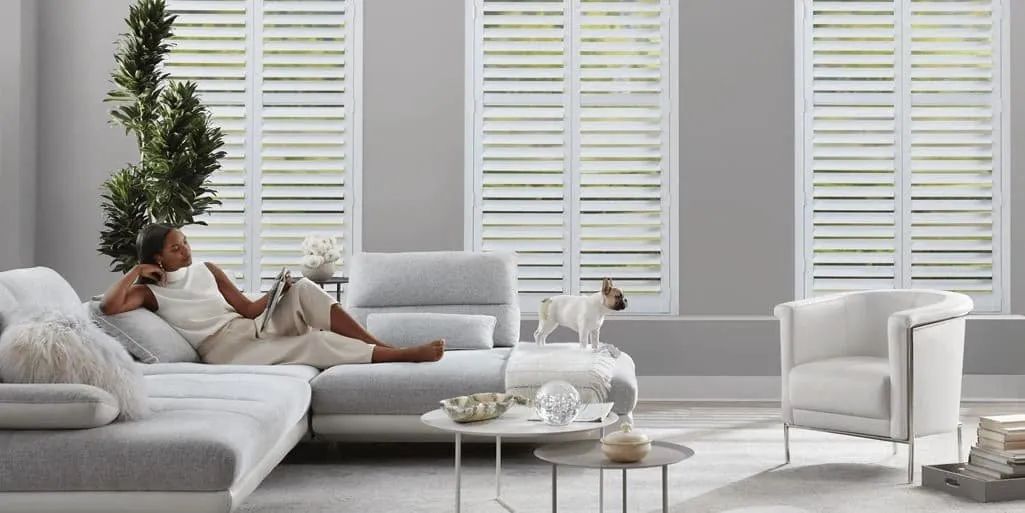
Small rooms and swing space
Flats in the older two- and three-families tend to have compact bedrooms, a kitchen at the back and a front parlor that serves as the living room. In rooms that size, where furniture ends up close to the windows, the way a shutter opens matters as much as how it looks.
Where a radiator sits under a window, or a bed or dresser stands close to the glass, we look at how far each panel swings and where it will rest when folded back. On a narrow sash, a single panel hinged to one side may clear the furniture better than a pair. On a wider window, several slim panels that fold against each other take up less room than two broad ones. If nothing will fit the swing, the louvers alone may do the job: plenty of compact flats rarely see their panels opened at all, and simply tilt the blades through the day.
These are the kinds of details that make plantation shutters in Quincy, MA, work in real city rooms, and they are exactly what the home visit is for.
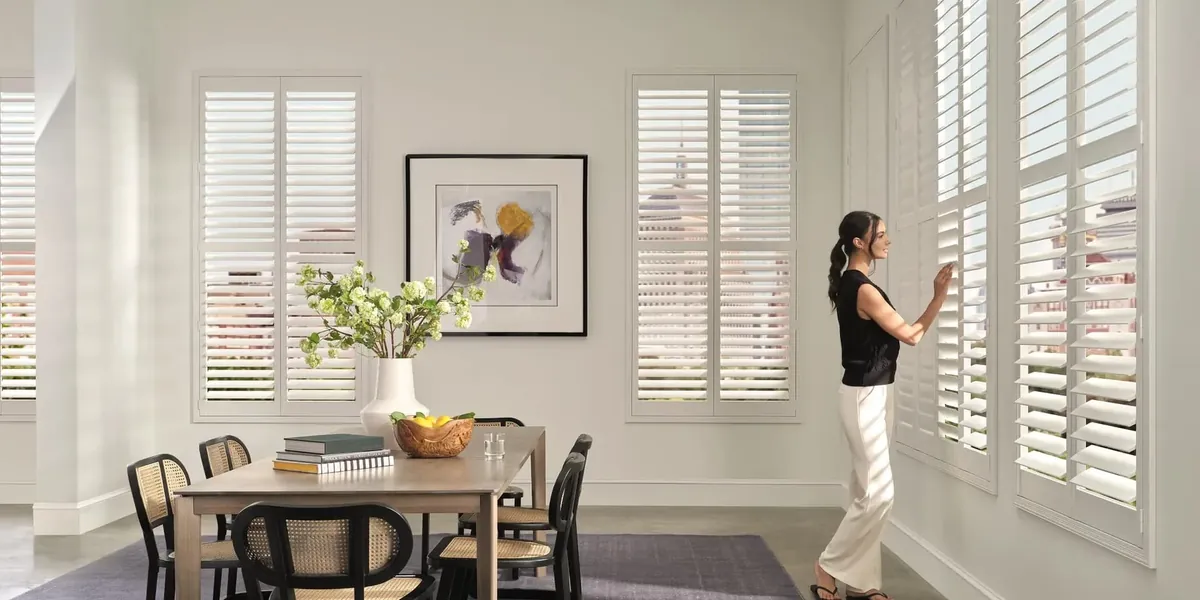
Stairwells, back halls and the odd openings
Multi-family buildings have windows that single-family houses do not: a tall window lighting a shared front stair, a small one in a back hall by the porch door, a window in a pantry that faces a light well or the next building’s wall. They are easy to forget when planning a unit, and they are often the ones that look most neglected from outside.
If they belong to your unit, we plan them in the same visit, in the same color and a louver to suit their size, so every window you own looks finished. A narrow back hall window can take a single slim panel. A pantry window that faces a blank wall may only need a cafe style for a little privacy. For a shared stair window, check with the other owners or your association first, since it shows from the street and serves more than one household.
One building, several households
Owners of a two- or three-family often think about the building as a whole. From the street, a three-decker with shutters on one floor, blinds on another and bare glass on the third looks unsettled. Matching shutters on every front window make it look cared for and calm.
If you own the building, we can plan every unit in one visit: one louver size and one color across all the street-facing windows, with each unit’s side and back windows planned for its own needs. If you live on one floor and rent the others, a simple white shutter is an easy, neutral choice for the tenants’ units as well. And if you only own your own floor, we can choose a color that looks right beside whatever is on the floors above and below.
Stacked porches are common on these buildings, with doors and windows opening onto them at the back. A shutter suits the windows there; for the doors, we will suggest something that moves out of the way rather than swinging into your path.
Condominium conversions near the center
Near Quincy Center, many older buildings have been converted into condominiums. Inside, a unit can be a mix of old and new: original tall windows on one wall and a newer, wider opening where a wall was moved or a room added. The challenge is making that mix look like one home.
Shutters help because they can be adapted to each opening while keeping one look. A tall original window takes a narrower louver and a slim panel; a wider newer window takes more panels, or a slightly larger louver, in the same color. Step back and the rooms read as a set.
Condo living also brings practical questions. Your building may have rules about what shows from the street, so it is worth checking with your association before choosing a color for front windows. Inside, space is often tight, and we check that each panel can open fully without hitting a radiator, a counter or the end of a bed.
Shingled houses on Squantum
Out on Squantum the housing changes completely. Shingled houses sit on a peninsula surrounded by water, with windows turned toward the views. Here the light is the main event: bright, reflected off the water and often strong for much of the day.
Shutters are a natural fit. With the panels folded back, the glass is clear and the view is uninterrupted. With the louvers tilted, the glare off the water softens into a calm, even light across the room. At night, the panels close and the room is private even with the lamps on, which matters on a house that can be seen from the water.
A larger louver often suits these windows. It gives a broader view between the blades when they are tilted flat, so even partly closed, the shutters keep the water in sight. Plantation shutters in Quincy, MA, on the Squantum side are often about protecting a view as much as covering a window.
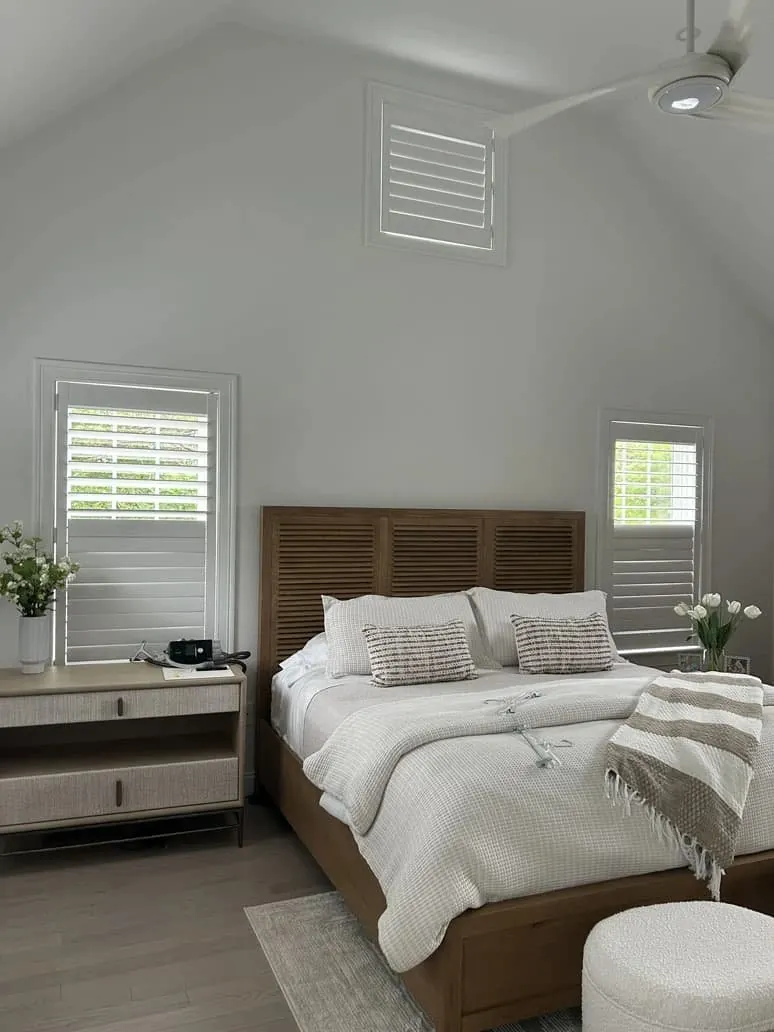
The Houghs Neck side
Houghs Neck has a similar exposure, with houses near the water on three sides and wind and sun coming off the bay. Rooms facing the water take the brightest light; rooms facing inland can be calmer.
On a house like this, we often plan the water side and the inland side differently. The water-facing living room and bedrooms take a louver chosen for the view and glare. The inland rooms, often closer to neighbors, are planned for privacy first. Keeping one color throughout ties the two sides together. Where a shore house has an enclosed porch facing the bay, with a long row of windows on three walls, a run of matching panels lined up from corner to corner keeps the room feeling open and orderly, and lets you close just the side that catches the afternoon sun.
Upstairs bedrooms on the water side can be very bright early in the morning. Shutters with the louvers closed make the room much calmer, though some light still comes around the edges. If one bedroom needs to be truly dark, we will say so and suggest a shade for that room alongside the shutters elsewhere.
Louver size, frame style and three collections
The three Hunter Douglas collections, Palm Beach, NewStyle and Heritance, all come with us to every Quincy visit. We would rather show you each one against your sash than describe them in a list.
Two choices shape the look in any of them:
- Louver size. Smaller louvers suit the tall, narrow sash of a Wollaston flat. Larger louvers suit wide windows facing the water and give the broadest view when tilted open.
- Frame style. The frame is where the shutter meets the trim. On old casings in a two-family, a quiet frame lets the original woodwork show; on a plain opening in a condo, a frame with more presence can finish the window.
The main plantation shutters page has more on the collections.
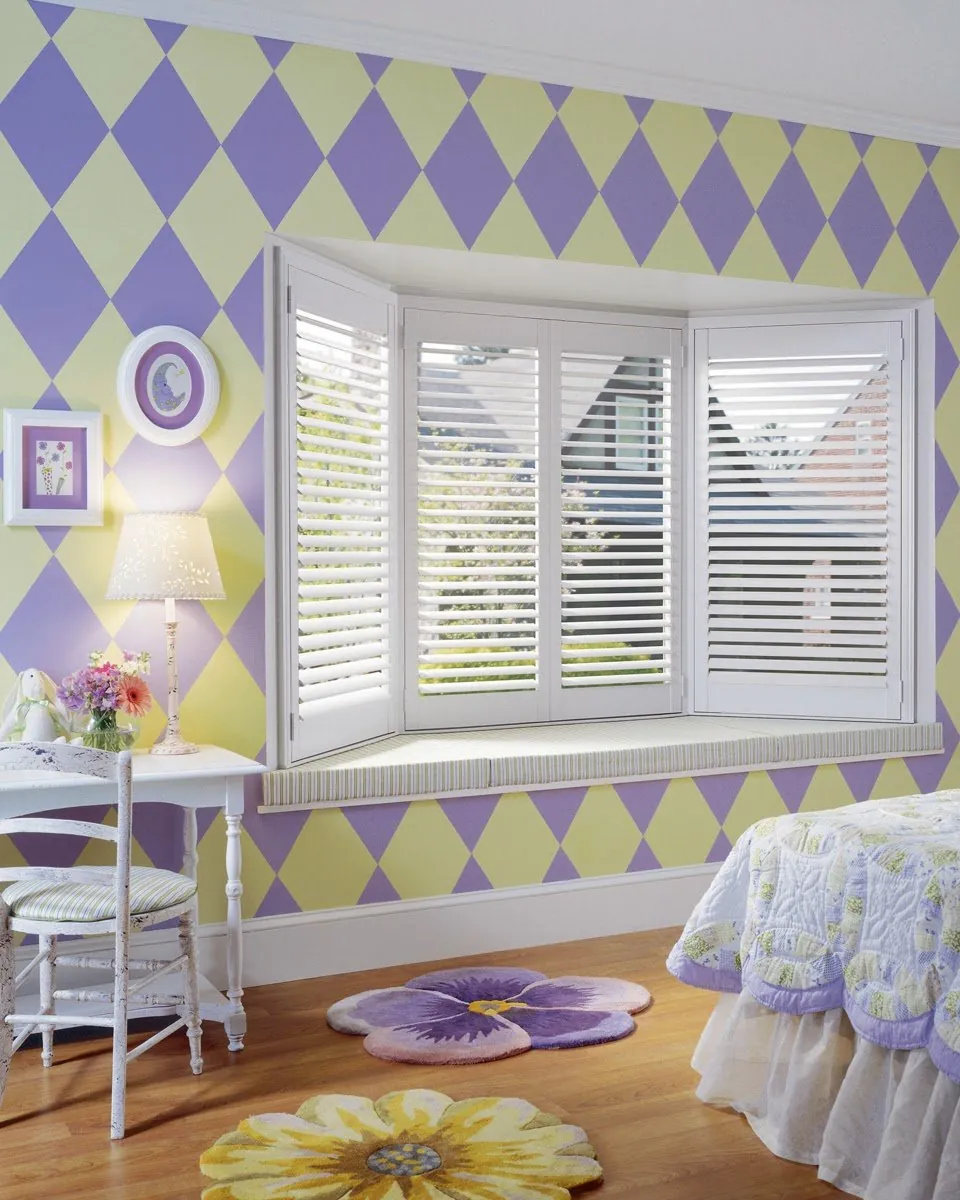
Color in a city flat
Most Quincy flats are planned around a white or a soft white. A pale shutter keeps a narrow room feeling brighter, because it reflects the daylight from a tall window back into the space. Against the warm, aged paint on old casings, a softer white usually blends better than a bright one; in a newly renovated condo with crisp white trim, a crisp white matches cleanly.
A room with a strong wall color or dark furniture can carry something else, such as a gray or a taupe. We look at colors in your own light, which on a third floor can be very different from the first, and suggest settling the main color first so every room follows it.

A showroom, if you want one
For Quincy, the real work happens in your unit, at your sash. If you would like to see a showroom as well, the nearest is our Franklin showroom.
Blinds & Designs is a Hunter Douglas Gallery dealer, and our installers are certified by Hunter Douglas, so the shutters chosen in your rooms are fitted to the same standard, panel by panel. We also offer interior design consultations, automation for hard-to-reach windows and repairs on coverings you already own.
More for Quincy homes
Shutters are not right for every opening. A back porch door, a bedroom that needs real darkness or a high stair window may suit cellular shades in Quincy, roller shades or motorized blinds and shades. The Quincy page lists all our services in the city.
Questions from Quincy
My side window faces the building next door. Can shutters help?
Yes. Tilt the louvers upward and light comes in off the ceiling while the view from next door is blocked. Close them fully at night.
Will shutters suit tall, narrow sash?
Very well. A smaller louver keeps the panel in proportion, and a split panel lets you close the lower half and open the top.
I own a three-family. Can you plan the whole building?
Yes. We can match every street-facing window across all floors and plan each unit’s side and back windows on their own terms.
Do shutters work on a house facing the water?
They do. Tilted louvers soften the glare off the water, and folded-back panels leave the view completely clear.
Is the estimate free?
Yes. We measure the windows you want covered and give you a free estimate.
Let us come to you
Pick a time, tell us which floor you are on and which windows bother you most, and we will bring shutter samples up the stairs, measure every opening and leave a free estimate. If you own the whole building and want every unit looked at, say so when you book and we will allow time to go floor by floor. Or reach us through the call button with any questions first.