
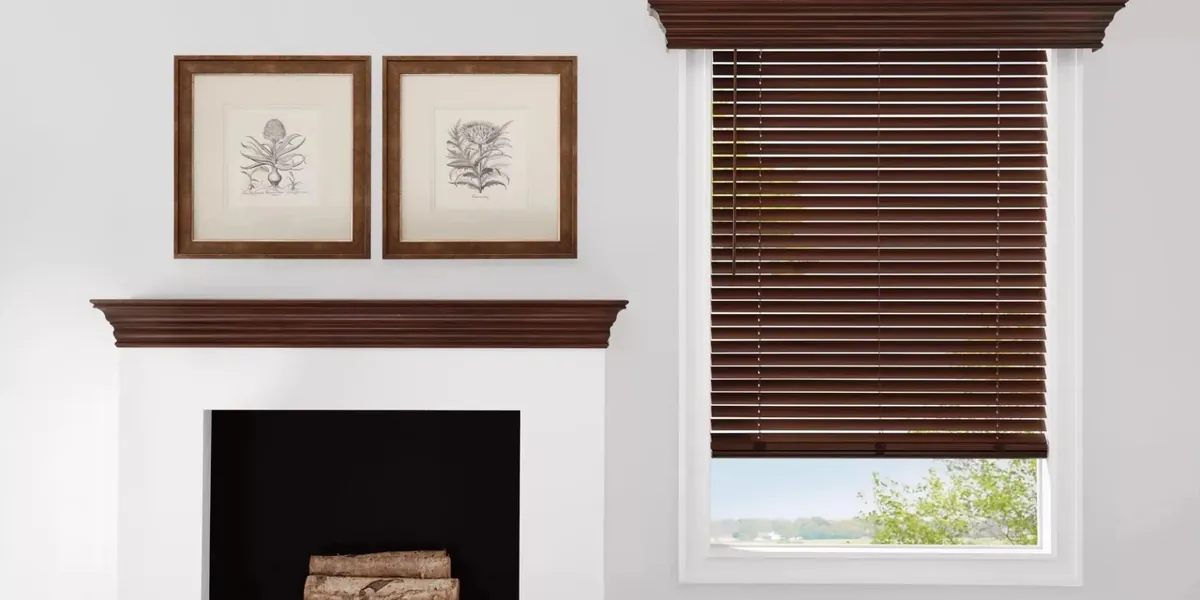
Small old openings need blinds made to measure
Drive Main Street from the village toward the river and the houses tell a long story. Farmhouses with clapboard ells sit beside capes with steep roofs and a single dormer, and the lots between them filled in later with post-war ranches. Much of that housing is old and low to the ground, and a lot of the original window openings are small. That is the first thing we plan around when we make custom blinds in Acushnet, MA.
A small window is less forgiving than a big one. A store blind that is a little narrow leaves a bright stripe down each side of a pane that was only modest to begin with. One that is a little wide will not fit inside the frame at all. A blind made to the opening, to the eighth of an inch, sits flush in the frame and covers the glass edge to edge.
The other thing about older Acushnet houses is that no two windows quite match. A farmhouse that has been added to over the years can have three or four sizes of sash on one side of the house, and a cape’s upstairs dormers are rarely the same as the windows below them. Ordering by the window, not by a standard size, is the only way to get every one right.
Four kinds of blind, each built to its window
When we plan custom blinds in Acushnet, the Hunter Douglas range covers every material a house like yours might want. Here is how each one fits the houses along the river and around the village, and we bring samples of all of them when we visit.
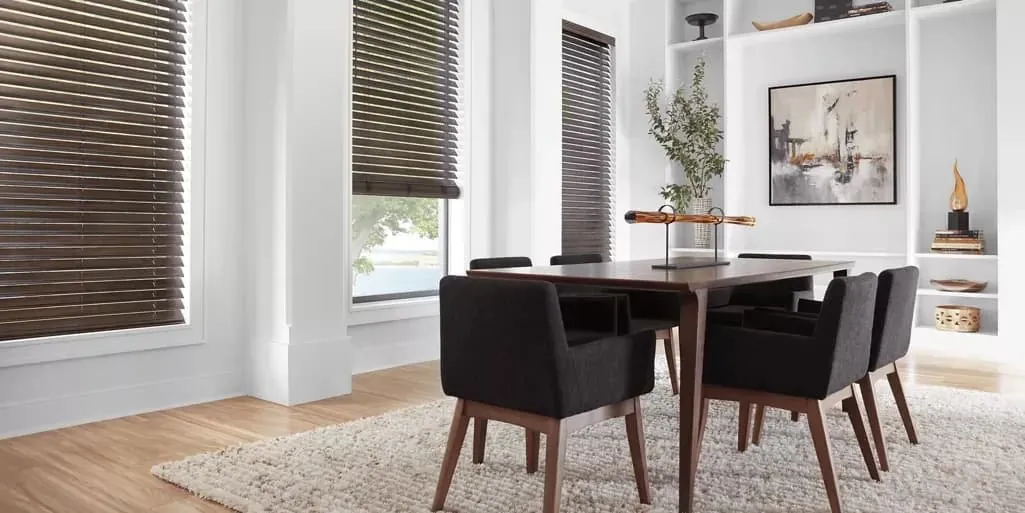
Real wood blinds
Warm grain and solid slats for a farmhouse dining room or a cape’s front room. Parkland is the Hunter Douglas wood line, with stains and painted finishes to match old trim.
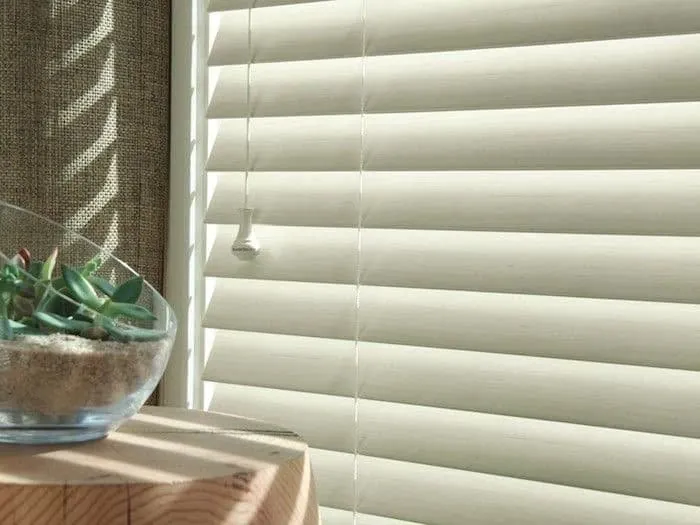
Faux wood blinds
The look of painted wood in a slat that shrugs off damp. EverWood is the line we suggest for kitchens, baths and the ranch laundry off the garage.
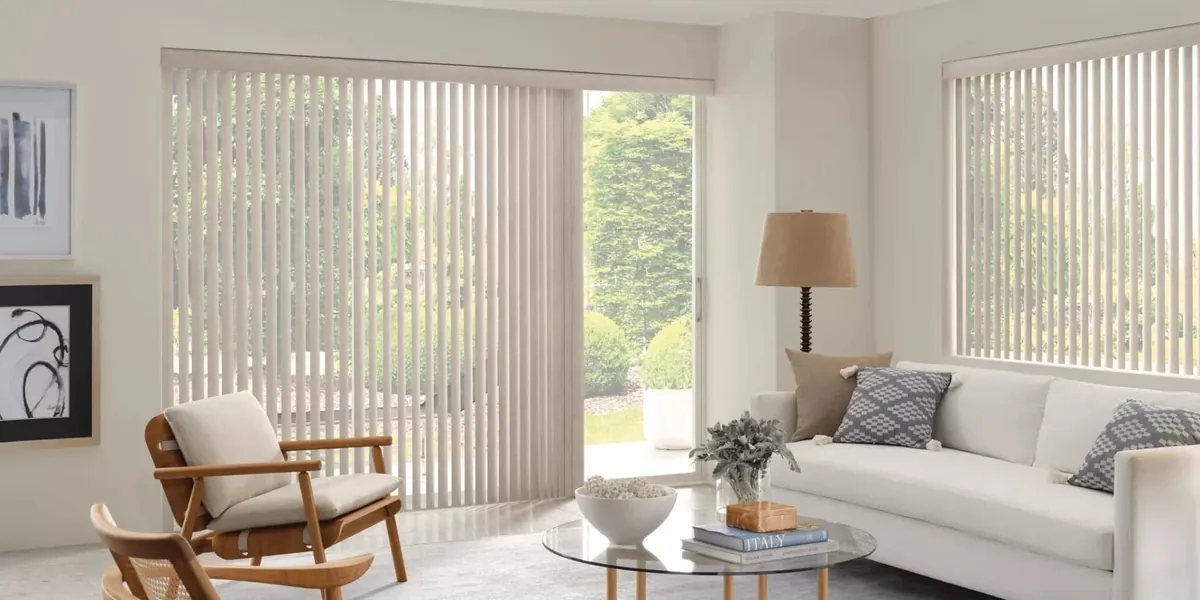
Metal and vertical blinds
Slim aluminum slats for a small window that needs a light touch, and vertical blinds for the slider out to a ranch’s back deck or patio.
Why farmhouse windows are rarely square
A house that has stood through many New England winters has moved. Frost heaves the sills, the frame settles, and the window opening that was square when it was built can be a quarter inch out from top to bottom. On a large modern window you might never notice. On a small farmhouse sash, a twisted frame can stop an inside mount blind from sitting straight.
That is why we never measure a window once. We take the width at the top, middle and bottom of each opening and the height at both sides and the center, and we check how deep the frame is where the headrail will sit. Old sash often has a narrow stop bead and a shallow frame, and a headrail needs a certain depth to sit inside it without pushing the slats against the glass.
If an opening is too shallow or too far out of square for an inside mount, an outside mount is the honest choice. The blind fixes to the trim above the window and overlaps the frame on each side, which also stops light leaking around a crooked edge. On a cape with handsome old casings, we will talk through whether you would rather see the trim or close the gaps, and show you both.
Capes along the river and their upstairs rooms
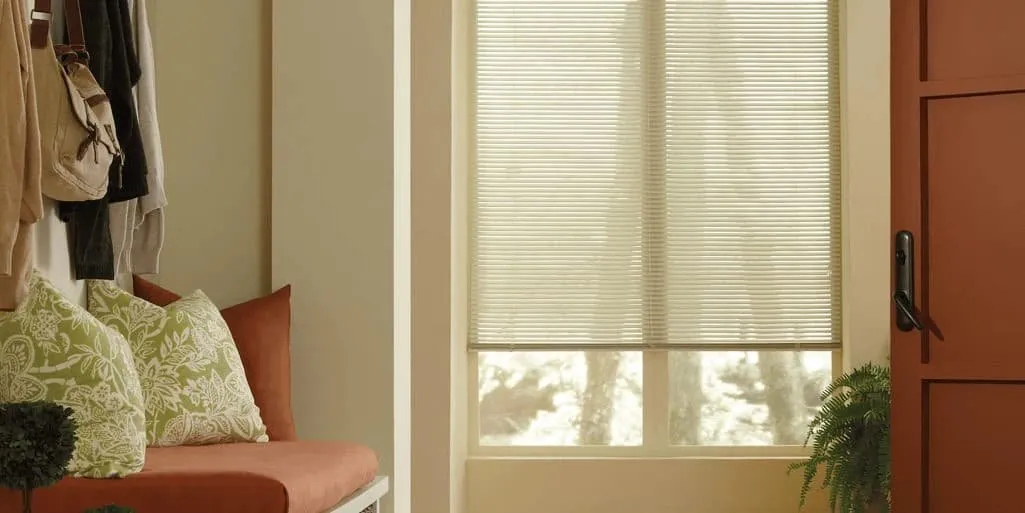
The capes near the Acushnet River share a layout that brings its own window problems. The upstairs rooms sit under the slope of the roof, lit by dormers that are small and set deep into the roofline. The light that comes through them is direct and lands right on the bed or the desk, and the window is often within reach of a sloped ceiling that leaves little room above the frame.
A compact headrail matters there. Wood and faux wood blinds both come in slat sizes that keep the raised stack short, so when you pull the blind up it does not hide half of an already small pane. A smaller slat looks better on a small window too, because the proportions stay right.
Downstairs, the front rooms of an older cape tend to have pairs of double-hung windows facing the road. Those are the windows people walk past, so privacy and the look from outside both count. A matching set of custom blinds in Acushnet front rooms, all tilted the same way, gives the house a tidy face to the street while letting daylight in through the slats.
Ranches between the old houses
The post-war ranches that fill the lots between the farmhouses have different windows altogether. They are wider and lower, often a picture window in the living room with narrower windows either side, a kitchen window over the sink and a slider or a back door with glass onto a patio or deck.
Wide windows suit a blind well, but a very wide single blind is heavy to lift. We often split a picture window into two or three blinds on separate headrails, so you can raise the middle and leave the sides down, or the other way round. The slats line up across all three when they are down, so from the street it reads as one window.
Sliders get vertical blinds. The vanes run top to bottom and draw to one side to clear the door, and they rotate to cut the late sun without opening the door at all. In a ranch kitchen or family room that opens onto the yard, it is the most practical covering for that glass.
Ranches also tend to have their bedrooms in a row along one side, each with a single wide window set high in the wall. Those windows usually face a neighbor’s yard across the open lot, so the blinds there work hardest at night, closed flat for privacy. A routeless slat or a cloth tape helps the blind close tight, and a slightly wider slat keeps the stack small on a window that is wider than it is tall. In the bathroom along the same hall, faux wood carries the same look through in a material that copes with the shower.
Wood or faux wood, room by room
Most customers we visit end up with both materials in the same house, and the line between them is usually water.
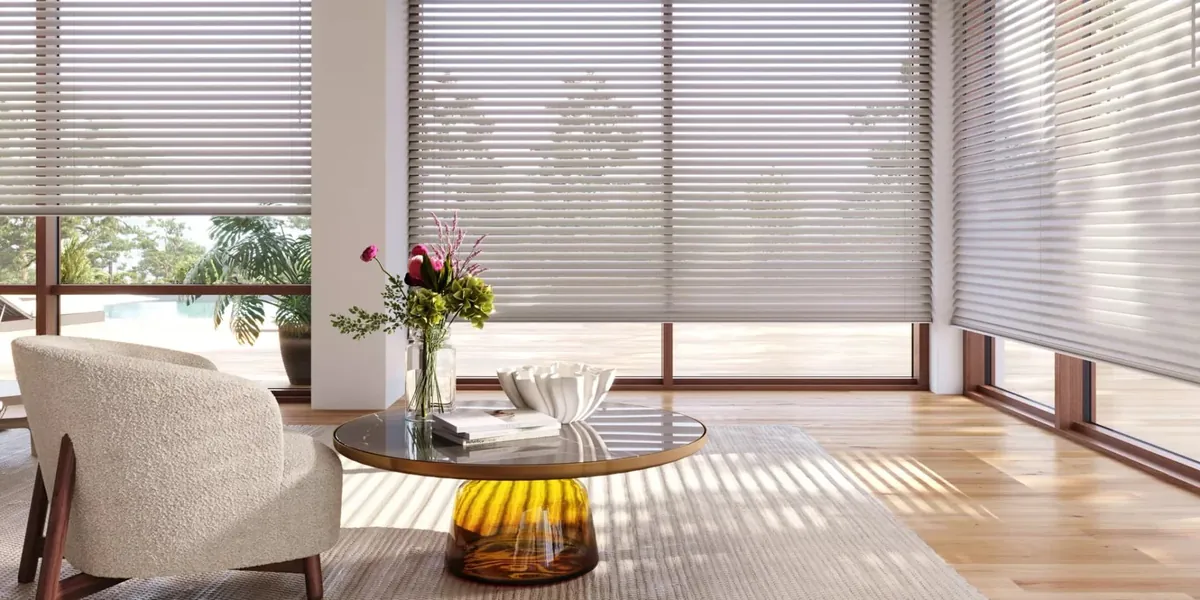
Real wood is lighter than it looks, which helps on a wider window, and it takes a stain that brings out the grain. In a farmhouse with original woodwork, a wood blind stained to sit close to the trim color can look as though it came with the house. It belongs in rooms that stay dry: living rooms, dining rooms, bedrooms and a study.
Faux wood is the choice wherever there is steam or splashing. A bathroom with a shower, a kitchen window over the sink, a mudroom off the back door or a laundry that runs warm and damp in winter. It holds its shape, keeps its finish and wipes clean. Painted white, it is hard to tell from wood across a room.
We will walk through the house with you and suggest which rooms suit each, then you hold both sample slats up to the windows and decide.
Slat sizes, colors and old trim
Once the material is settled, two choices shape how a blind looks in the room: the width of the slat and its color.
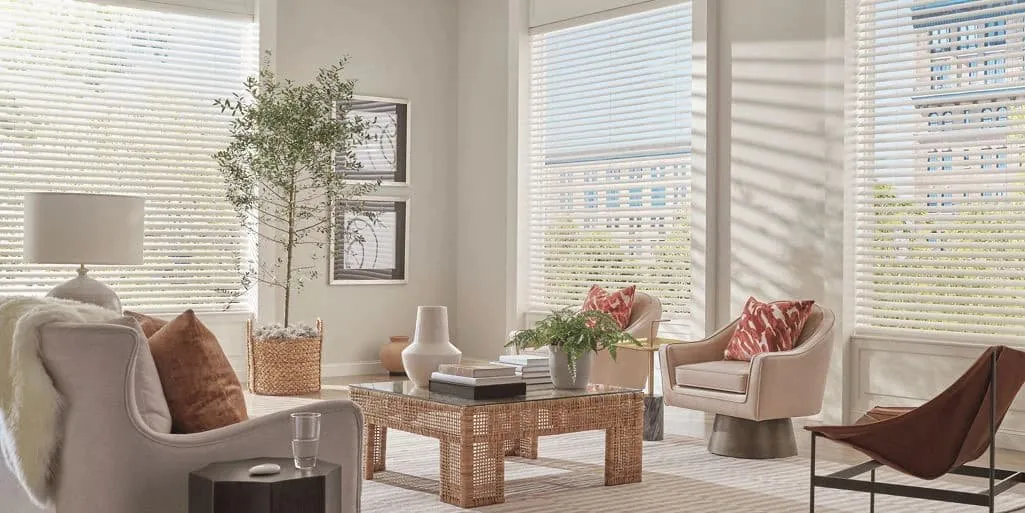
Slat width is about proportion. On a small cape window, a narrow slat looks neat and keeps the raised stack short. On a tall farmhouse window or a wide ranch picture window, a wider slat looks more substantial and gives a clearer view between the slats when they are open, because there are fewer of them. Many houses take two widths: a smaller slat upstairs in the dormers and a wider one in the main rooms downstairs.
Color is about the trim and the floor. Old farmhouses along Main Street often still have stained or painted woodwork that has been kept through many owners, and a blind can either match it or sit quietly against it. A white or off-white slat on white trim almost disappears and lets the window read as part of the wall. A stained wood slat set against painted trim makes the blind a feature in its own right, which suits a dining room or a front parlor with a fireplace.
A few points worth knowing before the visit:
- Cloth tapes, which run down the front of the slats in place of the thin cords, add color and hide the small holes the lift cords pass through. They suit a formal room and help block light at those holes.
- A valance across the top hides the headrail on an outside mount, which matters on a window where the blind sits on the trim.
- Routeless slats, with no holes at all, close more tightly for a bedroom that needs to stay dark.
We bring slat samples in several widths and finishes, so you can see all of this against your own woodwork. Choosing custom blinds in Acushnet this way, at the window and not from a chart, is the surest route to a result you are glad of every time you walk into the room.
Metal blinds for small and awkward windows
Not every window in an older house is a standard double-hung. There are narrow pantry windows, little windows beside a chimney, a half-window over a stair landing and the small square window in a bathroom. Metal blinds suit these well. The slats are thin, so the blind takes up very little room, and the headrail is slim enough to fit a shallow frame where a wood blind would not.
Aluminum blinds also suit a cellar workshop, a garage window or a sunny back porch, because they are light and tough. They come in a wide choice of colors, from soft whites that disappear against the trim to darker shades that cut glare on a bright window.
Lift, tilt and keeping cords out of the way
How a blind works matters as much as what it is made of, especially if you have children or pets in the house.
Cordless lift is the option most people choose now. You raise or lower the blind by lifting the bottom rail, and there are no cords hanging beside the window. Tilt is done with a wand. On a small window that sits behind a sofa or a bed, it is much tidier.
For windows that are hard to reach, such as a high window above a stair or a dormer at the back of a deep sill, PowerView motorization lets you tilt and lift the blinds from your phone or a remote, or set them on a schedule. You can see what that involves on our motorized blinds in Acushnet page.
Bringing the samples to the house
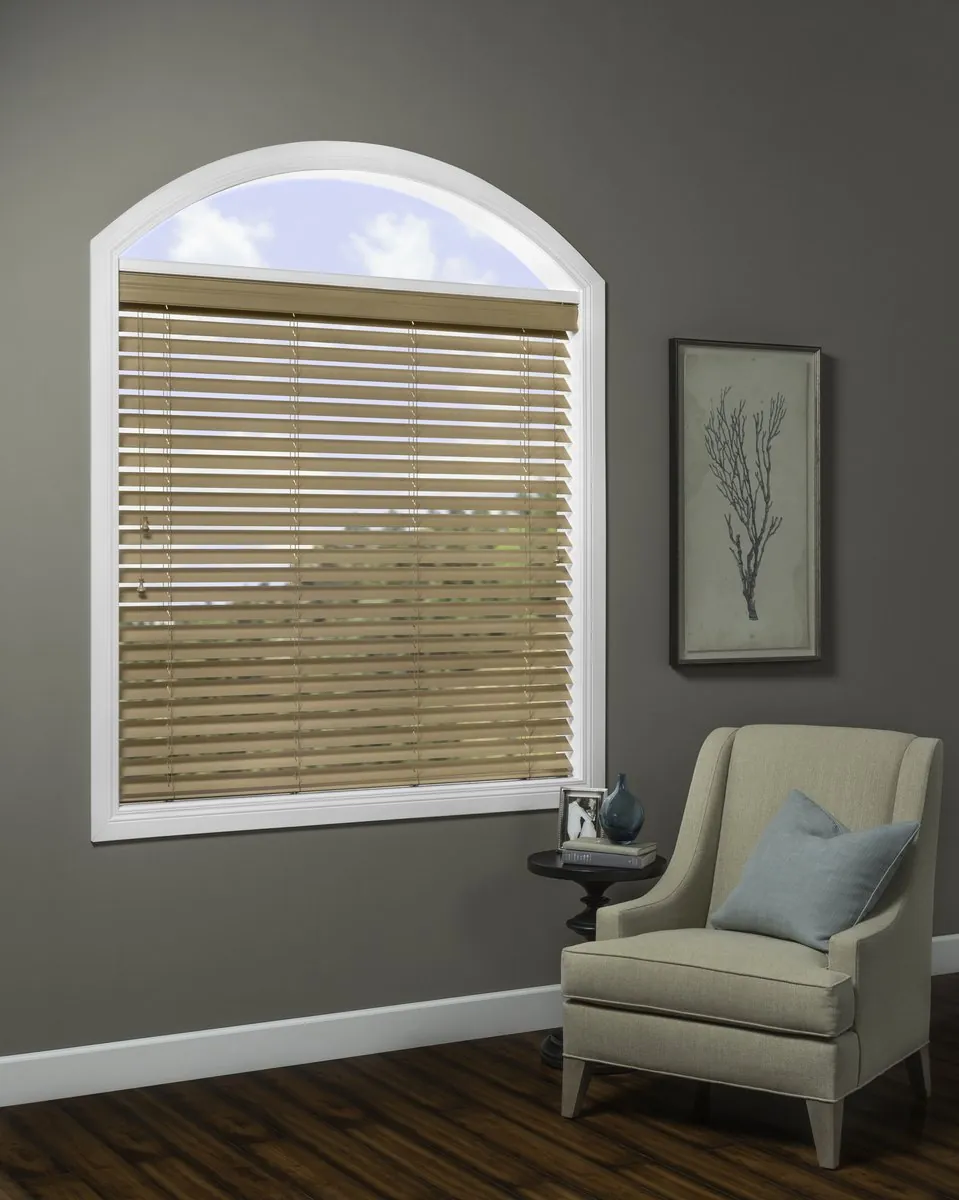
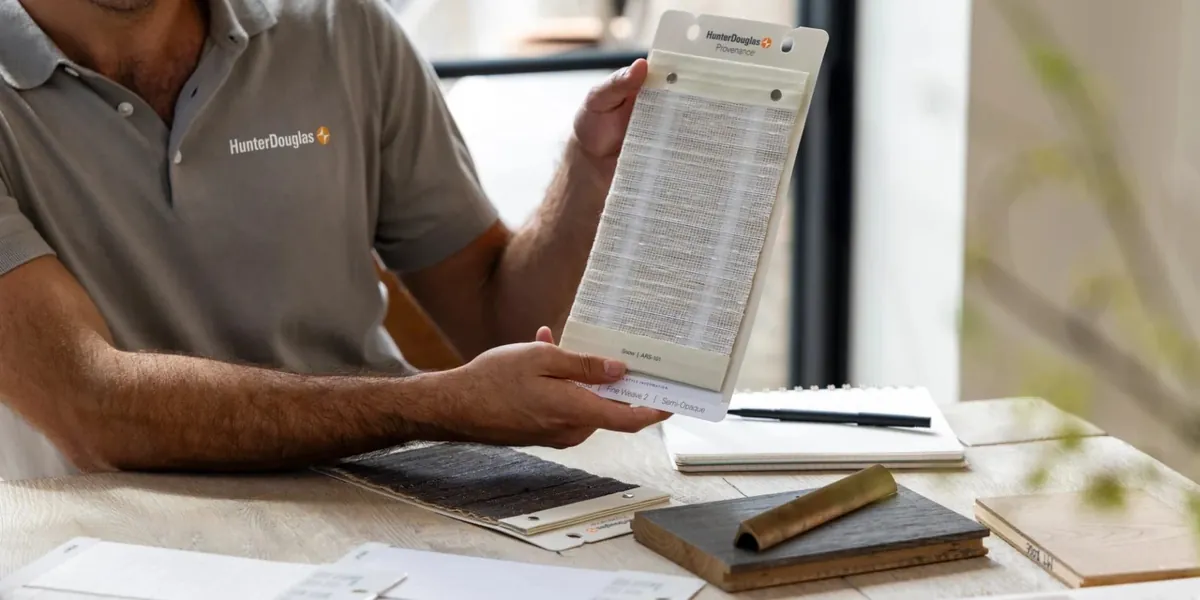
Choosing a slat color from a chip in a catalog is guesswork. Holding the actual slat against your own trim, in your own light, takes the guessing out. That is why most of our work begins at home. Our vans carry samples, so we can bring the showroom to you.
- Request a consultation online or with the call button, and we will arrange a time that works for you.
- We arrive with wood, faux wood, metal and vertical samples and the lift and tilt options.
- We walk the house with you room by room, looking at which way each window faces and how you use the room.
- You try the samples against your windows and trim and narrow down the choices.
- We measure each opening several times over and check the frame depth for an inside mount.
- You receive a free estimate for the blinds you have chosen, with time to think it over.
If you are planning more than blinds, ask about our interior design consultations at the same visit. The guide to what happens at an in-home consultation explains more.
Fitting day
When the blinds arrive, our certified Hunter Douglas installers fit them. On an old farmhouse that means finding solid wood behind the plaster for every bracket, so the headrail stays level on a frame that may not be. Each blind is checked for level, tilted and lifted through its full range, and you are shown how it works before we leave. It is the part of the job where a made-to-measure blind shows its worth: it sits in the opening as though the window was built around it.
What a Gallery dealer means for an Acushnet house
Blinds & Designs is a Hunter Douglas Gallery dealer. That designation means you can see and order across the full Hunter Douglas blind range from one place: Parkland wood, EverWood faux wood, metal blinds and vertical blinds, with the lift systems and PowerView automation that go with them.
Our installers are certified by Hunter Douglas. The same company measures your windows, orders the blinds and fits them, so there is one point of contact from the first visit to the last bracket. If a blind ever needs attention later, we handle blind and shade repairs as well.
You can see the whole range on our Hunter Douglas blinds page, with more on wood blinds and vertical blinds. For other rooms, look at cellular shades in Acushnet for warmth or plantation shutters in Acushnet, or see every service in town on our Acushnet page.
Questions from Acushnet
My farmhouse windows are all slightly different sizes. Is that a problem?
Not at all. Every blind is made to its own opening, so each window gets a blind that fits it. We measure each one separately, at several points, and note which way it is out of square before anything is ordered.
Can a blind fit inside a shallow old window frame?
Often it can, especially with a metal blind or a compact wood headrail. Where the frame is too shallow or too crooked, we mount the blind on the trim instead, overlapping the edges so no light gets past.
Which blind is right for the bathroom in an older cape?
Faux wood. It looks like painted wood but does not warp or swell in steam, and it wipes clean. Real wood is better kept for dry rooms.
What goes on the sliding door off the back of a ranch?
Vertical blinds are the usual choice. They draw to the side to clear the door and turn to block low sun. A vertical shade is another option we can show you at the visit.
Do you charge for the estimate?
No. Once we have measured, the estimate for your blinds is free. Request a consultation and we will bring the samples to you.
Plan your blinds with us
The quickest way to see what custom blinds in Acushnet, MA, will look like in your house is to try the samples at your own windows. Request a consultation and we will come to you, measure every opening and leave you with a free estimate. If you would rather see the range in person first, the North Dartmouth showroom is the closest to Acushnet, or you can use the call button to talk it through.