
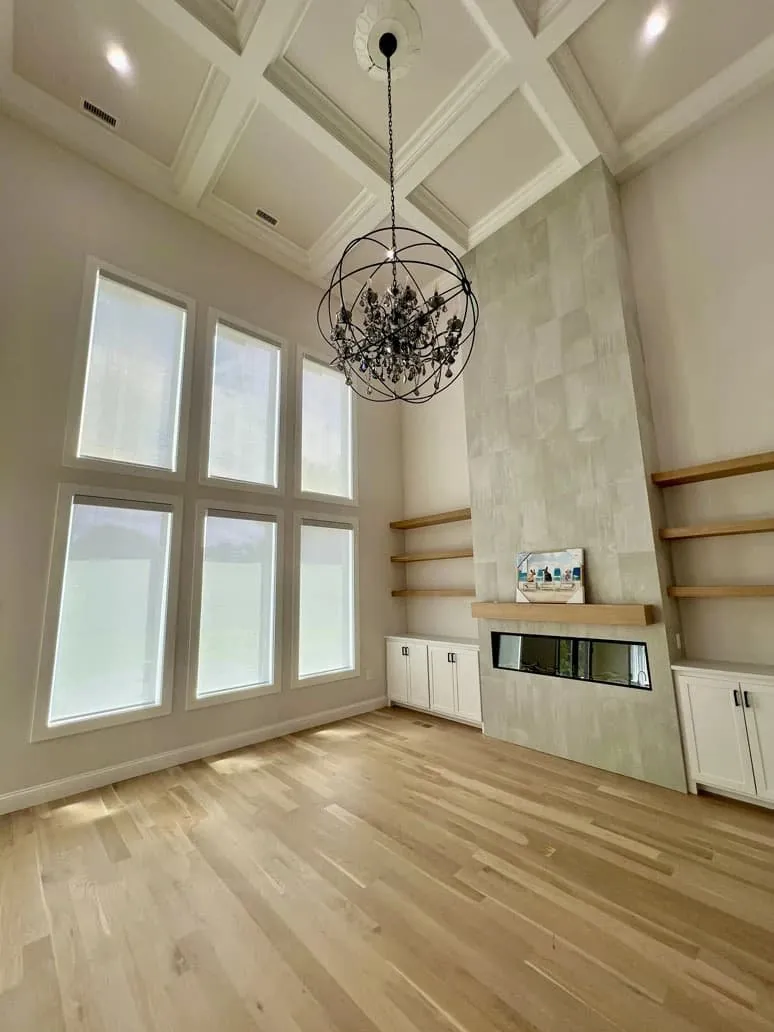
Close-set houses and deep old openings near the center
The blocks closest to the middle of town were built when the jewelry shops were running, and the housing shows it. Victorians and two-family houses stand shoulder to shoulder, the side windows of one looking almost straight into the side windows of the next. Their front rooms have tall sash, and many of the smaller openings on the sides and at the back sit deep in thick old walls. That mix of tall glass, small deep openings and very little space between houses is where most of our thinking goes when we plan roller shades in North Attleborough, MA.
Move out from the center and the picture changes. Post-war ranches line the side streets, and newer colonials fill the later subdivisions, with larger windows, a slider to the yard and more room between neighbors. A shade that suits a narrow pantry window in a two-family will not be the right answer for a wide colonial family room, so we look at each house on its own terms.
A roller shade is a good fit for both ends of town. It is a single flat panel of fabric that comes down over the glass and rolls away out of sight when you want the window clear, which keeps a small deep opening tidy and lets a big window stay open to the light. The cloth is what changes from room to room, from a see-through screen to a full blackout.
Roller shades in North Attleborough, MA: the lines we bring
These are the Hunter Douglas choices that come up again and again in town, and every one of them travels in our sample vans so you can see it against your own trim.
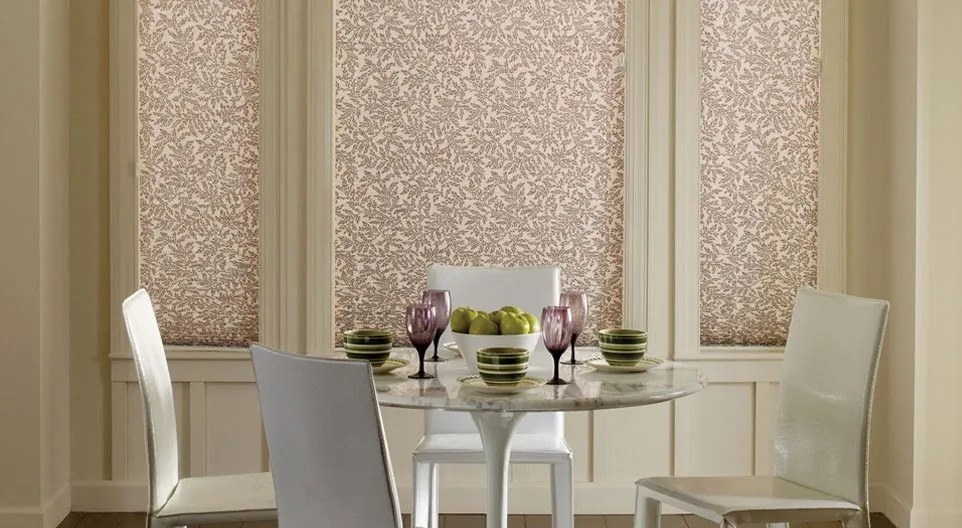
Designer Roller
The everyday roller, in solids, textures and patterns, with fabrics that run from light filtering to blackout. A natural choice for a Victorian parlor or a ranch bedroom.
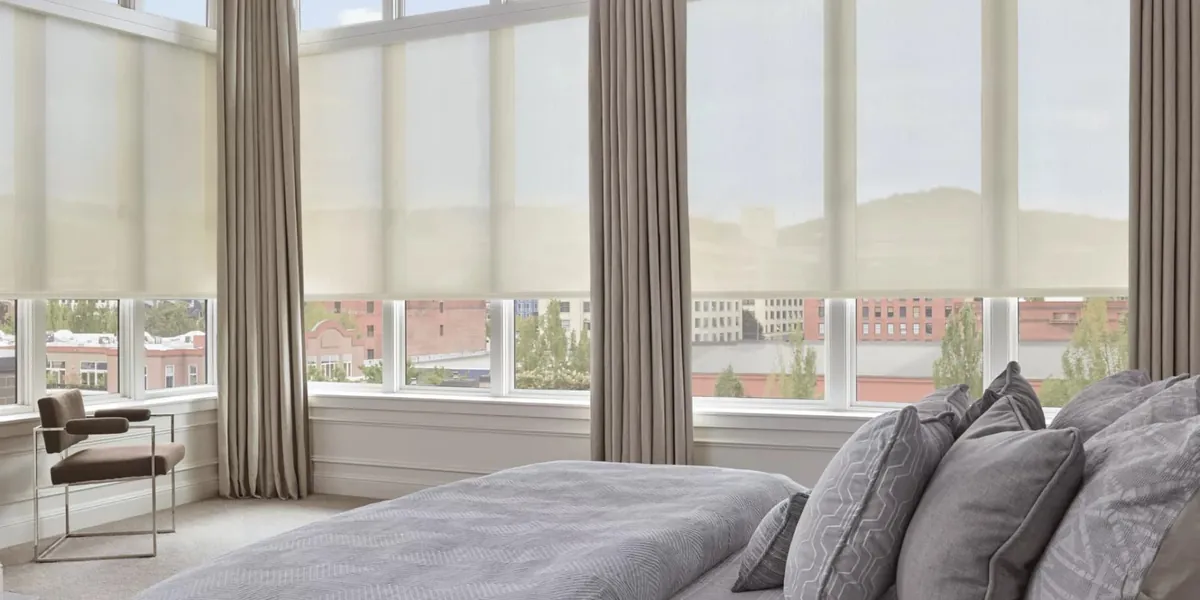
Designer Screen
An open-weave solar screen that cuts glare while you still see out. Suited to the sunny side of a newer colonial and to a slider facing the yard.
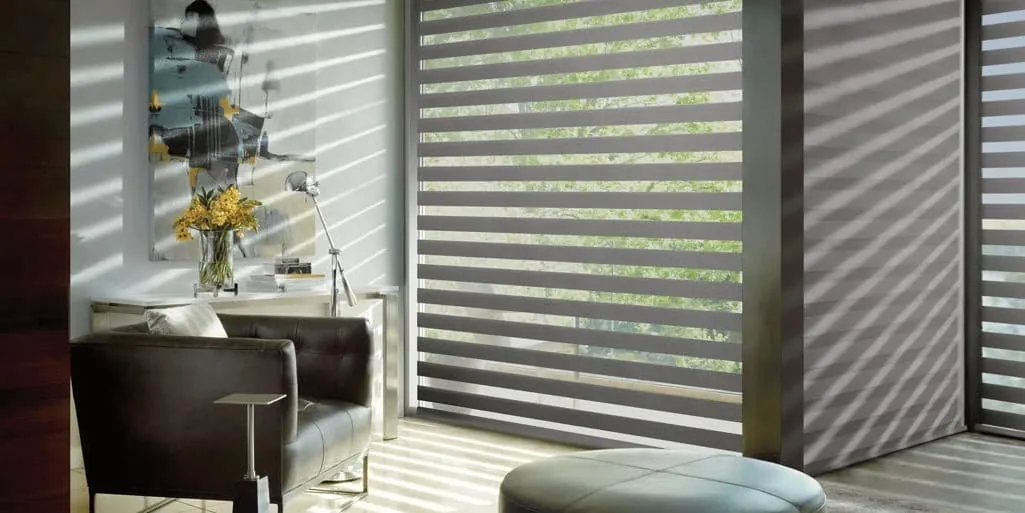
Designer Banded
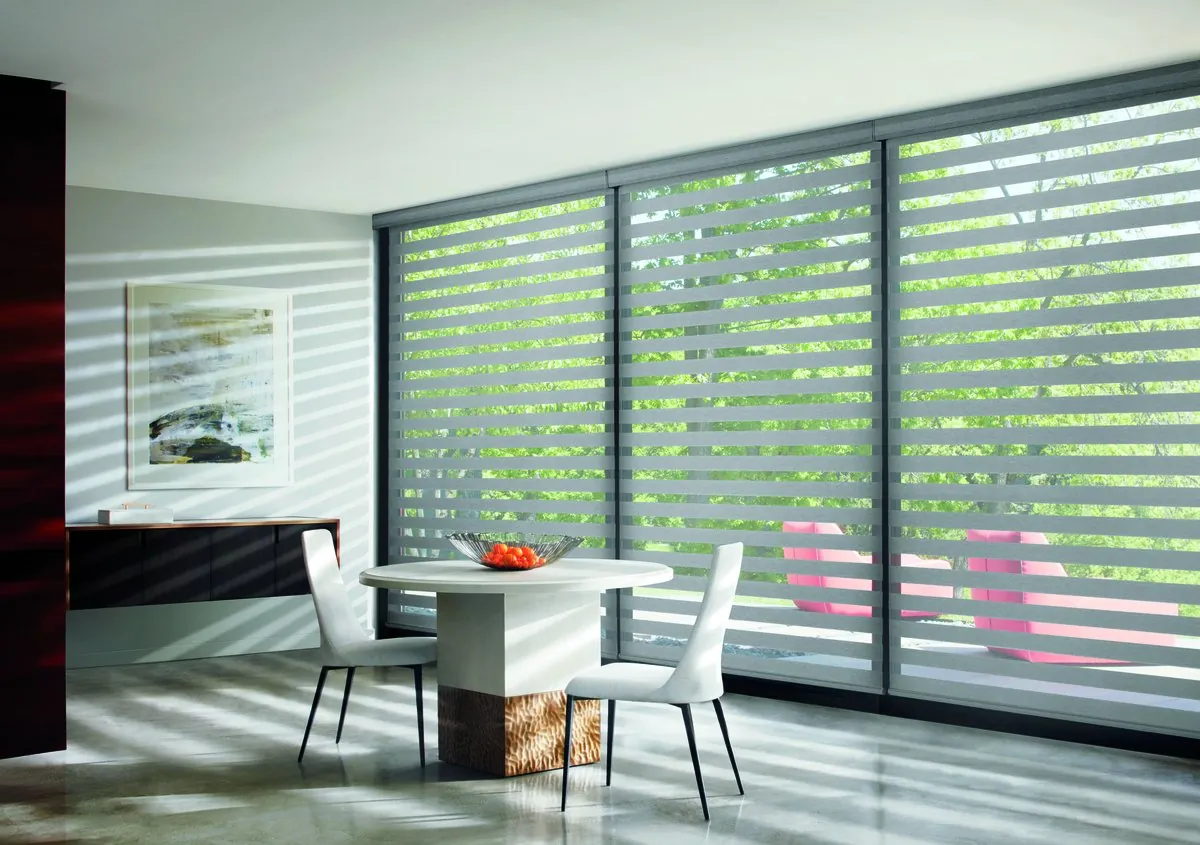
Alternating sheer and solid stripes that line up to let light through or offset to close the view. Handy for the side windows of a close-set two-family.
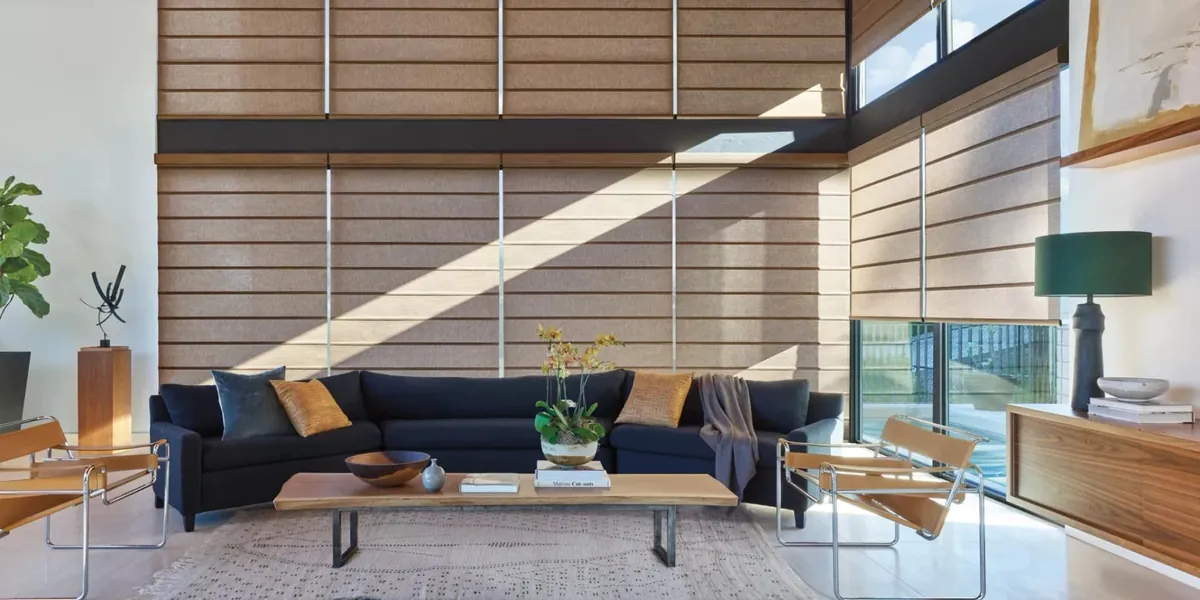
Alustra Architectural
The premium end of the Hunter Douglas roller range, with its own collection of fabrics. Often picked for the main living space of a larger house.
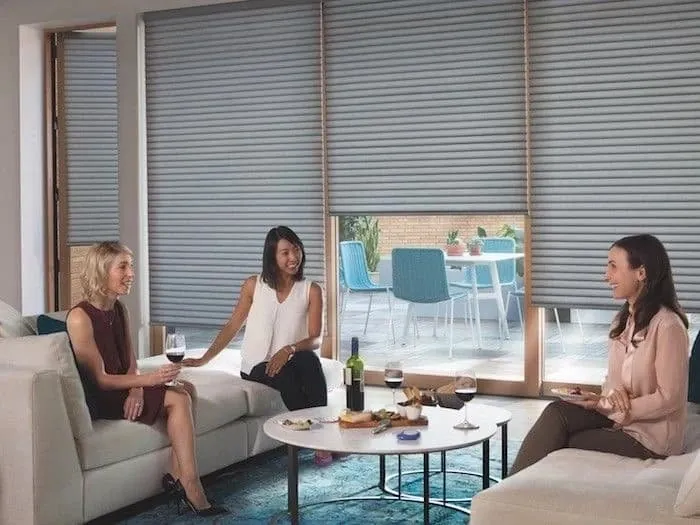
Sonnette Cellular
A roller shade built from a honeycomb fabric, for a room where you want the clean roller look with a softer, layered cloth.
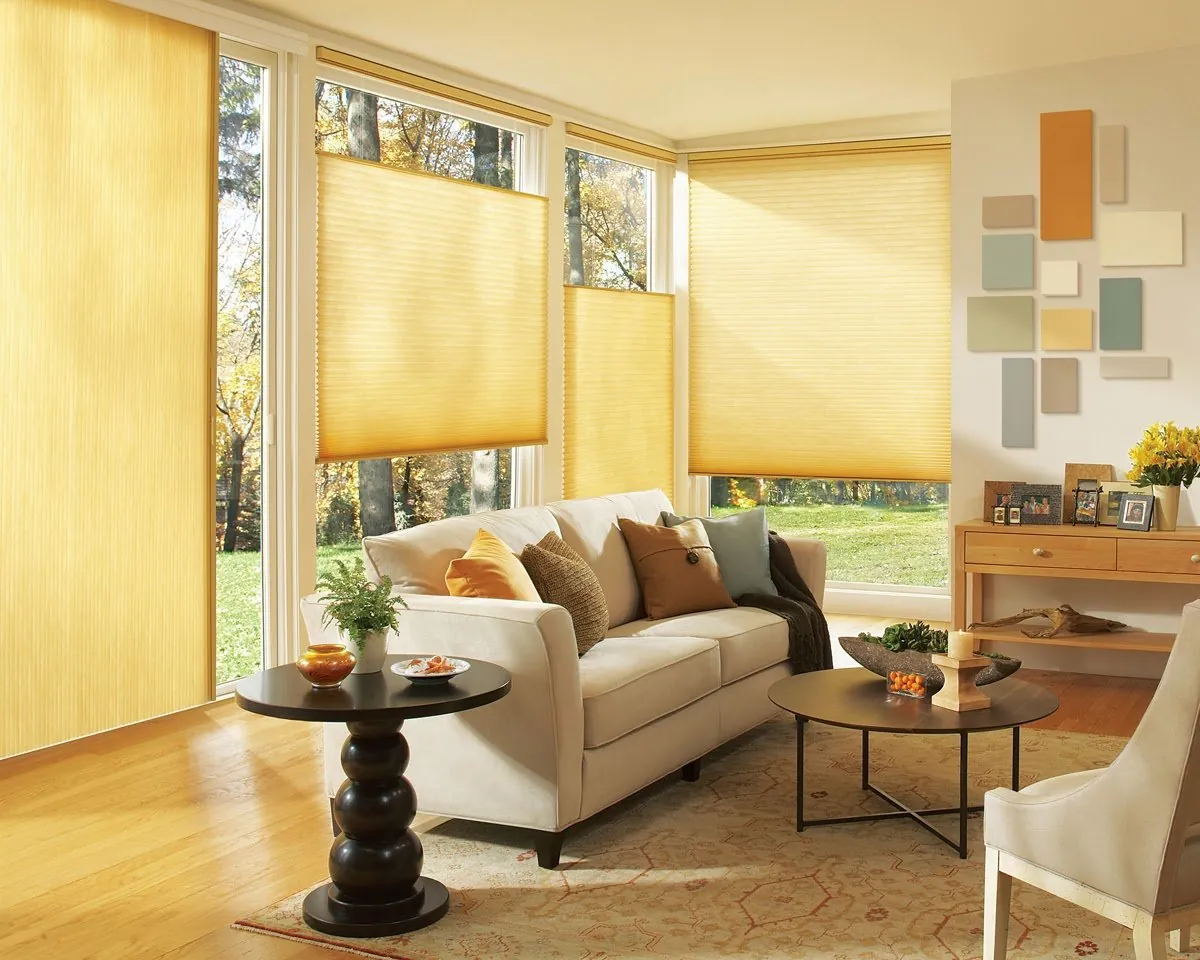
Cellular Shades in North Attleborough
If a cold front room matters more than a flat look, a pleated honeycomb shade may suit it better. We compare both at the visit.
Tall sash in the two-families
A two-family near the center usually repeats the same tall double-hung windows on both floors, front to back. They were made to let daylight deep into rooms that had little glass on the sides, and they still do that job well. The difficulty is that they are tall, often taller than anything a stock shade is cut for, and they rarely match each other to the quarter inch after a century of paint and settling.
That is why every shade we fit is made for its own opening. We measure the width in several places and the height on both sides, then use those figures for that window alone. A shade made to measure hangs straight in a frame that is slightly out of true, and it covers the glass from edge to edge without a stripe of light down one side.
Tall sash also give you a choice about how far the shade travels. Many owners keep the shade partly down through the day, covering the lower panes where the street can see in and leaving the upper panes open to the sky. A roller makes that easy, because it stops wherever you leave it, and a light-filtering cloth keeps the covered half bright rather than dim.
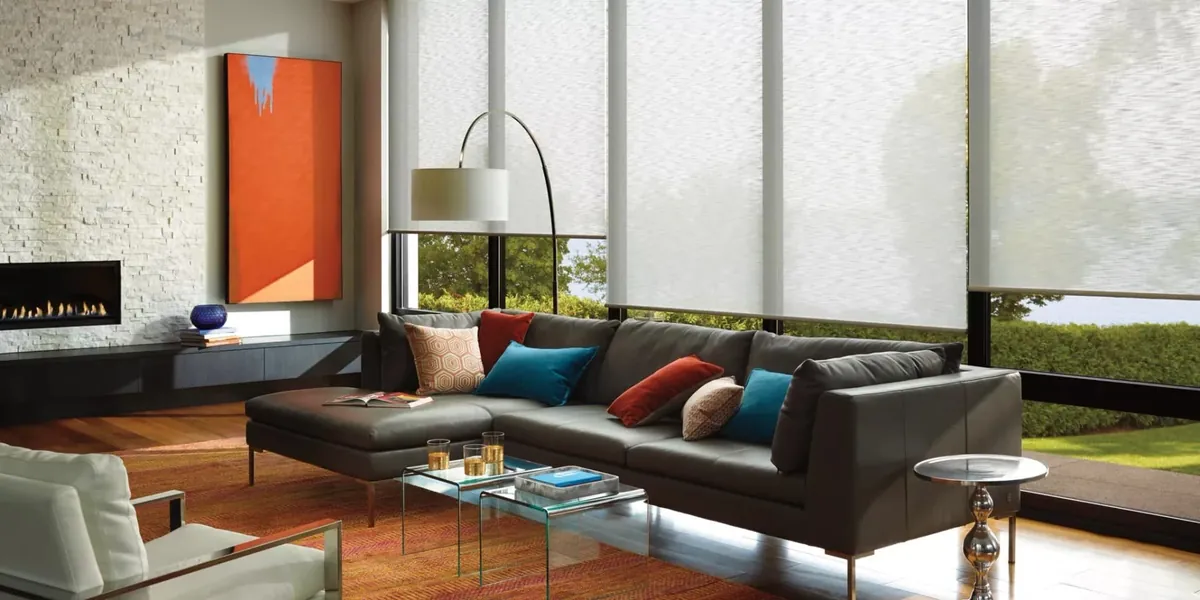
Small openings in thick walls
The jewelry-era houses have a lot of small windows: over a stair landing, beside a chimney, in a back hall or a bathroom tucked under the eaves. Many of them are set deep, with a wide sill and a reveal you could stand a plant in. Those openings suit an inside mount very well, where the shade sits within the frame and the wood trim around it stays fully on show.
A deep reveal is not always a square one, though. Old frames twist slightly, and a sash stop or a bit of old hardware can sit right where the top of a shade wants to go. We check the depth at more than one point before we suggest a mount. When an inside mount would leave the shade fighting the frame, we say so, and fit it on the face of the trim instead.
For the very smallest openings, a roller is one of the neatest coverings you can choose. There are no slats to stack up and nothing bulky to hide, so even a narrow landing window looks finished.
Two units, one street face
A two-family has two sets of the same windows, one above the other, and from the sidewalk they read as a single front. When both floors are being fitted, we keep that in mind. Choosing the same fabric color, or at least the same family of color, for the front windows on both levels keeps the house looking orderly from outside, even if each floor picks a different opacity for its own rooms behind.
When only one floor is being done, we look at what is already hanging in the other. A pale roller on the lower front windows sits comfortably under almost anything, so it is a safe choice where the upper floor has its own coverings. Inside, each unit can then go its own way: a screen in one kitchen, a blackout cloth in the other unit’s back bedroom.
Living close to the neighbors
In the older blocks a side window can face the house next door at a distance of a few steps. Privacy on those sides is not a nice extra; it is the main reason the window needs a covering at all. At the same time, closing a full blackout cloth all day leaves a room feeling shut in.
There are a few ways to handle it with roller fabrics. A light-filtering cloth hides the room from outside during the day while letting soft light through. Designer Banded lets you shift between a sheer view and a solid block with the same shade, so you can open it when the neighbor’s side is quiet and close it in a moment when it is not. And for a bedroom where the next house has a porch light, a room-darkening or blackout cloth is the plain answer.
We bring the fabrics in all three groups to your door, because the right choice depends on how far away the next house really is and which way the light falls between the two.
Ranches and newer colonials further out
Away from the center, the housing is younger and the windows are bigger. A post-war ranch tends to have a wide living room window at the front, bedrooms with broad horizontal windows, and a kitchen at the back. A newer colonial adds a slider or French doors to the yard, a family room with a run of windows, and often a bonus room over the garage that takes the afternoon sun.
These rooms are where solar screen fabrics earn their place, and where most requests for roller shades in North Attleborough come from once you leave the older blocks. The openness of a screen, meaning how much of the weave is open, decides how much you see through it and how much glare it takes off the glass. A more open weave keeps the yard clearly in view and softens the brightness; a tighter weave cuts more glare and gives more daytime privacy, at the cost of some of the view. At the visit we hold two or three openness levels against the same window so you can see the trade for yourself.
Wide windows can be split across more than one shade, each sized to its own section, so you can lower one end against the sun and leave the other open. A slider usually takes a shade sized to the full door, or two shades side by side, depending on the frame.
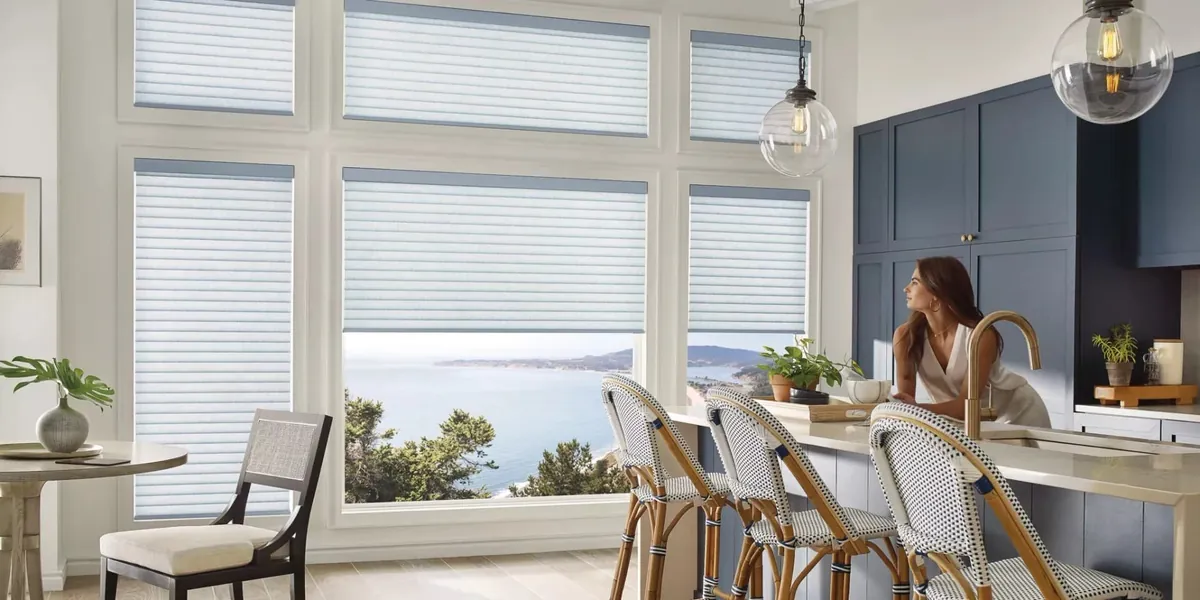
Ranch bedrooms at ground level
In a single-story ranch the bedrooms sit at the same height as the lawn, the driveway and the sidewalk. A broad bedroom window at that height is easy to see into after dark, and in summer it lets the early light in long before anyone wants to be up. Two things usually help. A room-darkening or blackout cloth covers the night-time privacy and the early sun at once. And sizing the shade a little past the glass on an outside mount closes the thin gaps at the edges where light tends to creep in. If you prefer the trim to show, an inside mount works too, and we will show you how much edge light to expect before you choose.
Choosing a cloth, room by room
Most houses we see in town end up with more than one fabric, and that is usually the right call. A short guide to how the choice tends to go:
- Front rooms on a busy street: light filtering, so the room stays bright and hidden by day.
- Kitchens and family rooms facing the yard: a solar screen, chosen for the view you want to keep.
- Bedrooms, nurseries and a room used for screens: room darkening or blackout.
- A home office with glare on a monitor: a tighter screen, or a light-filtering cloth on the worst window.
Color matters more than people expect. A dark screen fabric tends to be easier to see through than a pale one, while a pale cloth reads softer against white trim in an old house. Bringing the samples to your rooms is the only fair way to judge that.
Motorizing the windows you cannot reach
Two kinds of window in town make a good case for PowerView motorization. One is the tall sash at the top of a two-family stair, where the shade sits high above the landing. The other is the large glass in a newer colonial’s family room or bonus room, where several shades side by side are a chore to set by hand every morning.
With PowerView, the shades move from a remote or the app on your phone, and you can set them on a schedule, for example lowering the west-facing shades as the afternoon sun arrives and raising the bedroom shades at a set time each morning. We plan how each motor is powered at the visit, window by window, so you know what to expect before anything is ordered. Our motorized blinds in North Attleborough page covers it in more detail.
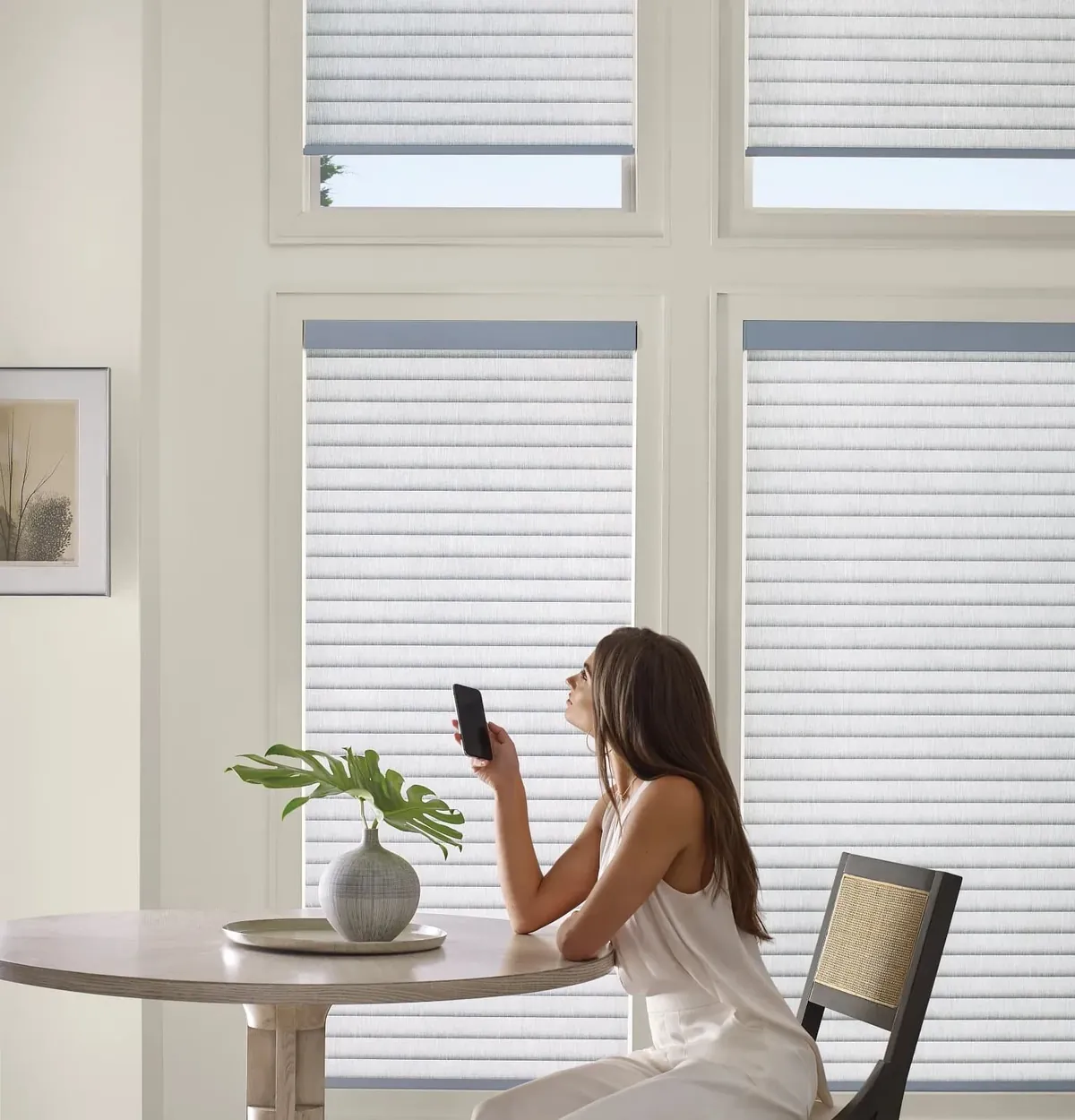
How a visit to your house goes
Seeing a roller fabric on a small swatch in bright overhead light tells you little about how it will behave on a north window in February. So we bring the samples to you. Our vans carry them, and we can bring the showroom to you.
- You ask for a time through Request a Consultation or the call button.
- We come to the house with roller, screen and banded fabrics, in light filtering, room darkening and blackout.
- We start with the rooms that bother you most, whether that is glare, privacy or a bedroom that is never dark enough.
- You hold the fabrics against your own windows and decide how open or solid each room should be.
- We measure every opening and check the depth for an inside mount, noting any old frame that needs special care.
- You receive a free estimate for the shades you are considering and take your time deciding.
If you want help with color and fabric across a whole floor, ask for an interior design consultation at the same visit. You can also read what happens at an in-home consultation before we arrive.

What a Gallery dealer brings to your windows
Blinds & Designs is a Hunter Douglas Gallery dealer. For roller shades in North Attleborough, that means the whole roller family is open to you from one source: Designer Roller, Designer Screen, Designer Banded, Sonnette and Alustra, along with PowerView.
The shades are fitted by certified Hunter Douglas installers, so each one goes up level and works the way the maker intends. We also offer blind and shade repairs on window coverings you already own, and we handle commercial blinds and shades if you have a shop or office as well as a house.
When one room needs something other than a roller, we can cover that too. See our roman shades in North Attleborough or plantation shutters in North Attleborough, or everything we do locally on our North Attleborough page. The full roller range is on our main roller shades page.
Fitting day
Once the shades arrive, our installers come back to fit them. They set each bracket into solid wood, level every shade, run it up and down to check it stops cleanly, and show you how to work it. On an older frame they take the same care with the trim that we took when measuring, so a well-kept casing stays that way. If you want to know more first, read what happens on installation day.
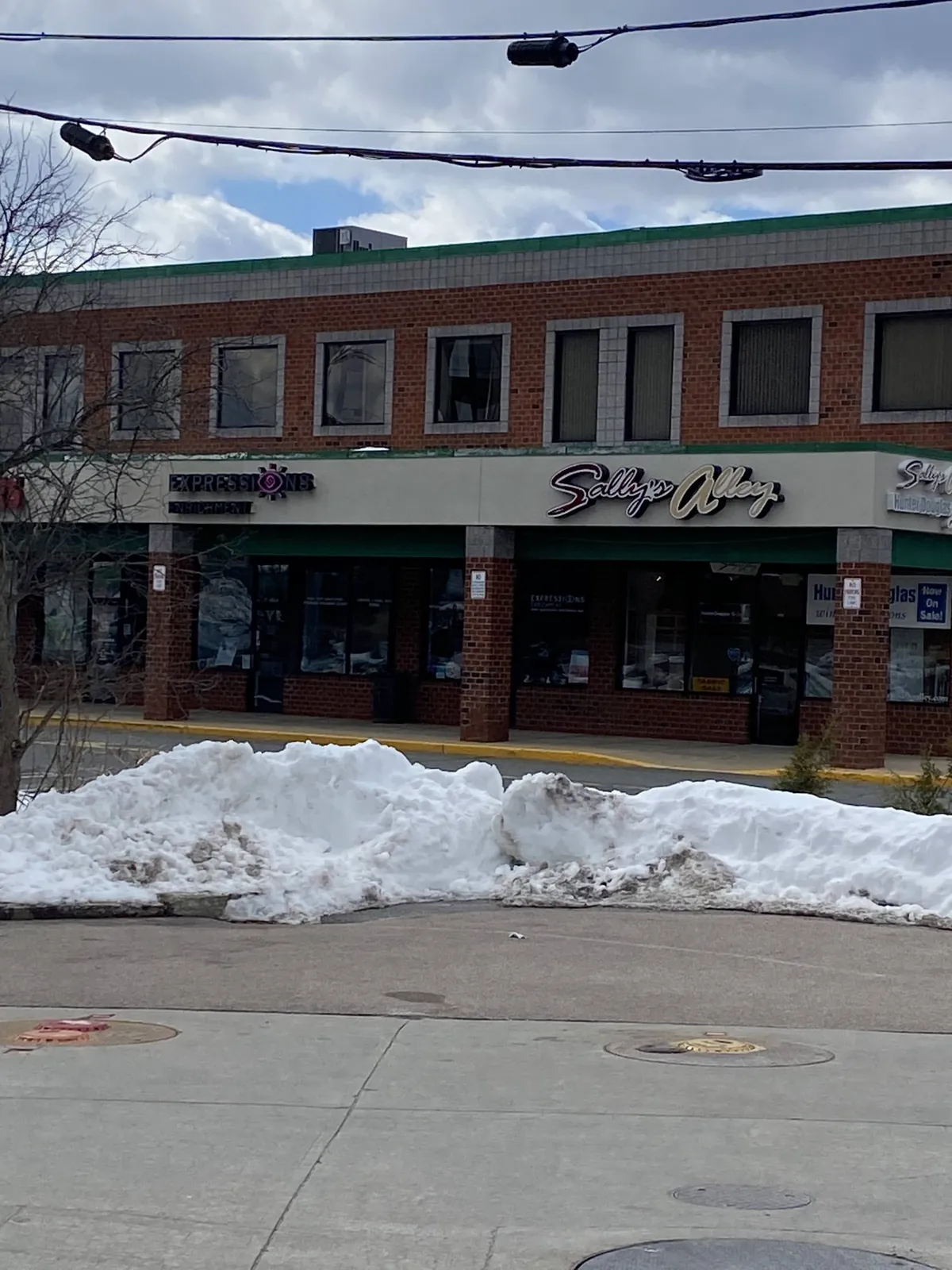
The Franklin showroom, if you would rather see shades first
Our nearest showroom to town is in Franklin. Some people like to look there before a visit to the house, and that works well: you get a sense of the roller family, then we bring the fabrics you liked to your own windows.
Either order is fine. Many customers simply start at home, since that is where the light and the trim are.
Questions from North Attleborough
My side windows face the house next door. What fabric works?
A light-filtering cloth hides the room by day and still lets light in. If you want to switch between open and private, Designer Banded does both with one shade. For a bedroom facing a neighbor’s lights, choose room darkening or blackout.
Can a roller fit the small, deep windows in an older house?
Usually, yes, and it often looks best inside the frame with the trim left showing. We check the depth in more than one place, because old frames are rarely square, and recommend an outside mount where an inside one would be tight.
How do I choose the openness of a solar screen?
Think about what matters more on that window, the view or the glare. A more open weave keeps the yard clear and softens brightness; a tighter one cuts more glare and adds daytime privacy. We show you more than one openness on the same window.
Can the high shades on a stair landing be motorized?
Yes. PowerView lets you run them from a remote or your phone, or on a schedule. We work out how each motor is powered at the visit.
Is the estimate really free?
It is. After we measure, you get a free estimate for the shades you are thinking about, with no obligation to go ahead.
Where to go from here
The quickest way to see which roller shades in North Attleborough suit your rooms is to try the fabrics at your own glass. Request a consultation and we will bring samples to the house, measure every window and give you a free estimate. You can also use the call button to talk it through, or call in at our Franklin showroom.