
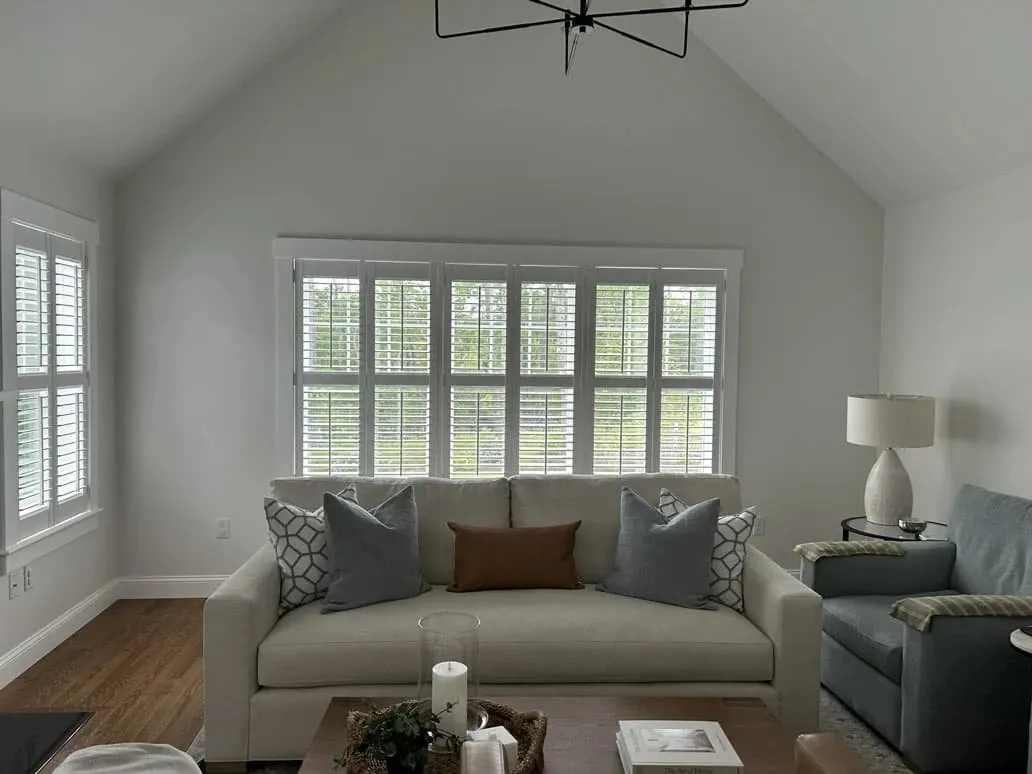
Capes, ranches and colonials on wooded lots
Drive out from the Four Corners and the houses tell a clear story. The post-war capes come first, steep roofs with dormers poking through, then single-story ranches with a long picture window at the front. Off Washington Street the newer colonials take over, taller and squarer, with matched windows marching across two floors. Nearly all of them sit on wooded lots with a real setback from the road. That mix makes plantation shutters in Hanover, MA, a fairly straightforward job in a good way: the openings are modern and regular, so the effort goes into choosing the right shutter for each room rather than fighting the window.
Regular openings are good news. A shutter frame fits a square, plumb opening cleanly, panels line up from window to window, and a colonial with matching sash on both floors looks orderly from the street when every shutter shares one louver width.
What changes from house to house is the shape of the rooms behind those windows. A cape bedroom tucked under a sloped ceiling, a ranch kitchen facing the back yard, a colonial family room with a slider to the deck: each one asks something different of a shutter.
A shutter for each room in the house
These are the rooms we are asked about most in Hanover houses. Each card links to the collection that usually suits it.
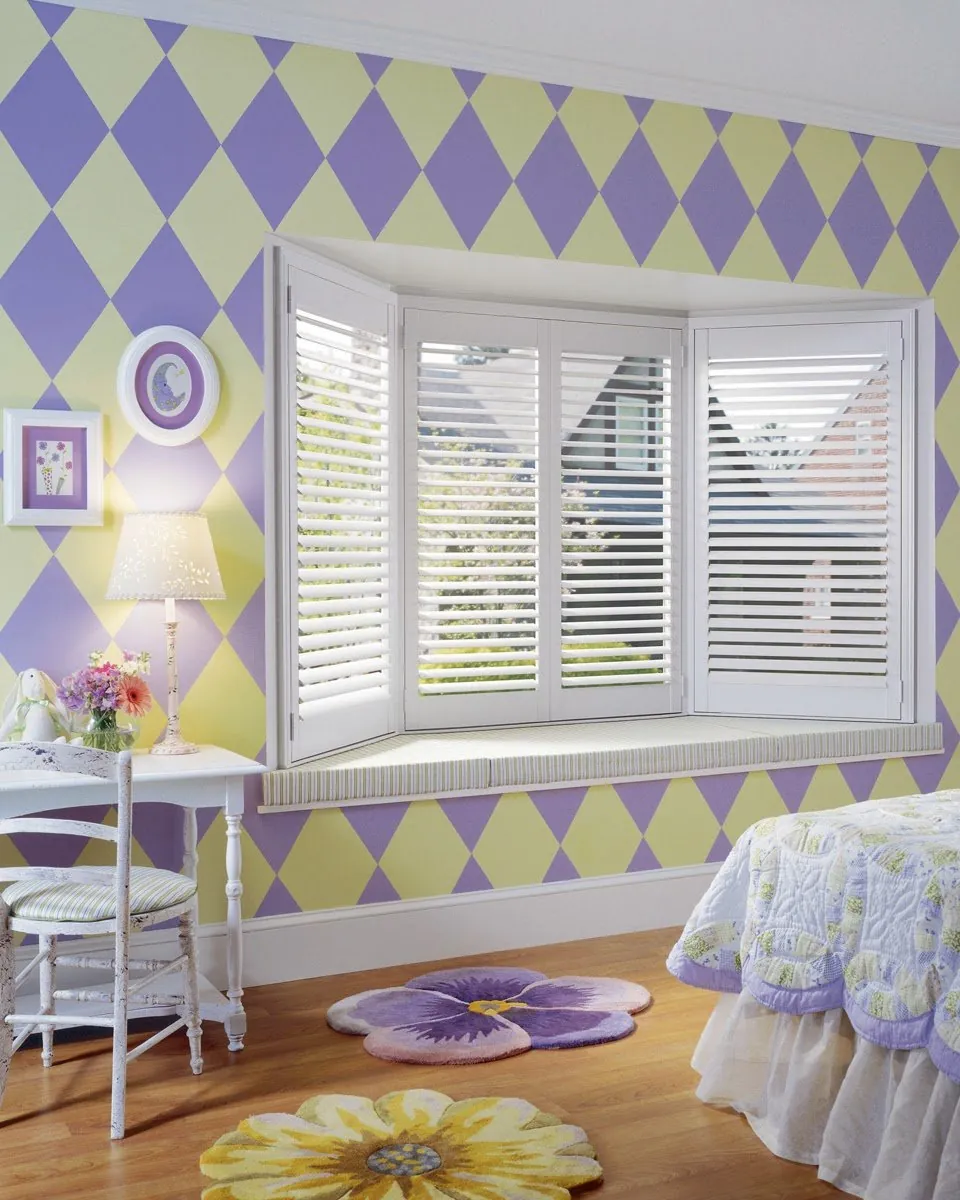
Dormer bedrooms in a cape
Short dormer windows set deep in the roof take a single panel or a pair with medium louvers. NewStyle handles the warm air that gathers upstairs.
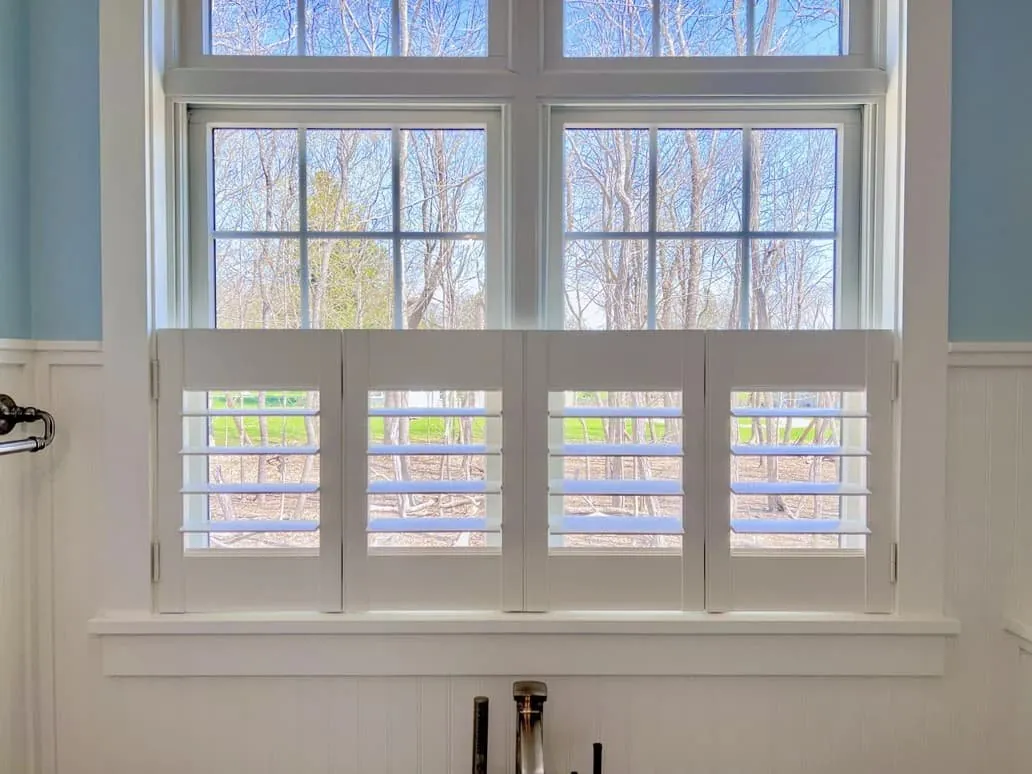
Kitchen over the sink
Cafe-style panels on the lower sash screen the counter and keep the view of the trees above. Splashes call for polysatin.
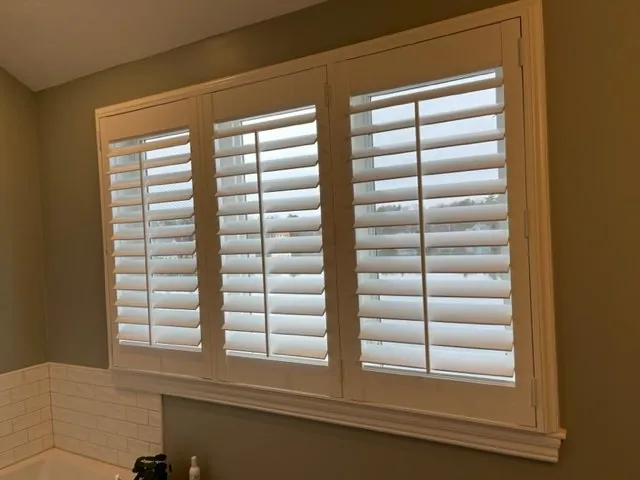
Baths and the laundry
Palm Beach has no wood inside it at all, so daily steam in a small cape bath or a laundry by the garage does it no harm.
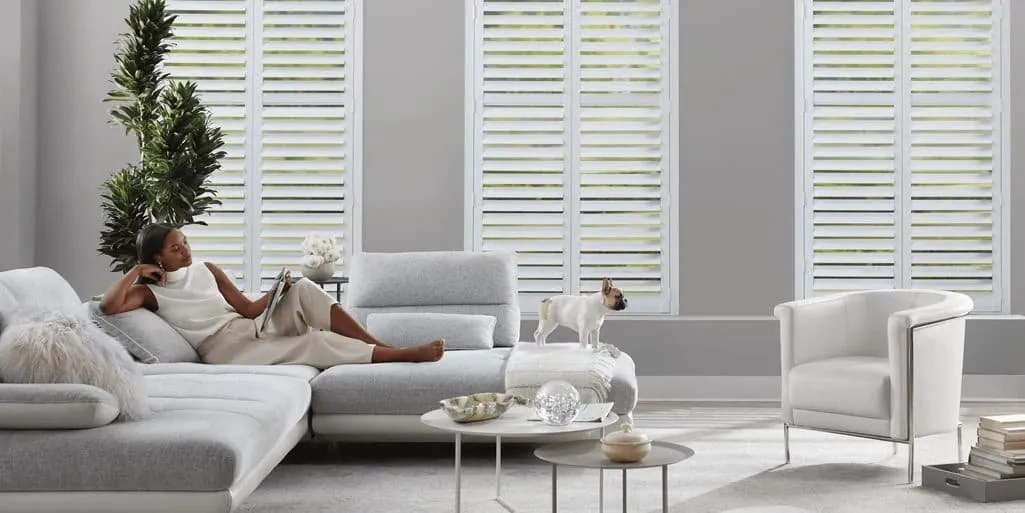
The ranch picture window
A wide front window is split into several panels on one frame. Wide louvers keep the outlook clear when they are open.
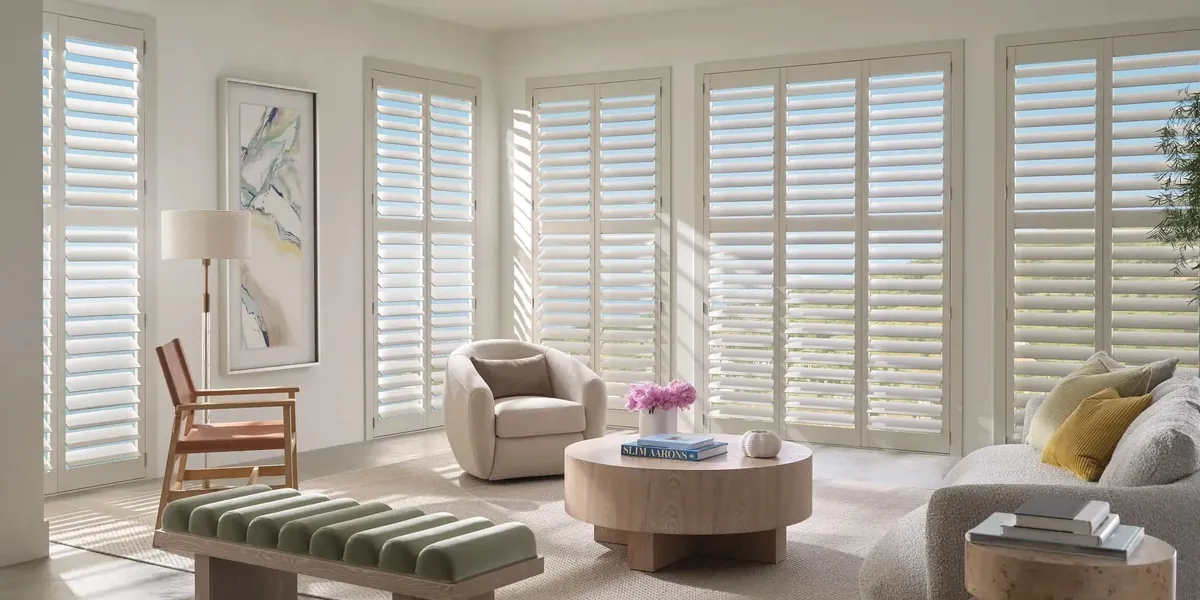
Colonial dining rooms
A front dining room with good trim is where real hardwood earns its place, painted to match or stained to suit the floor.
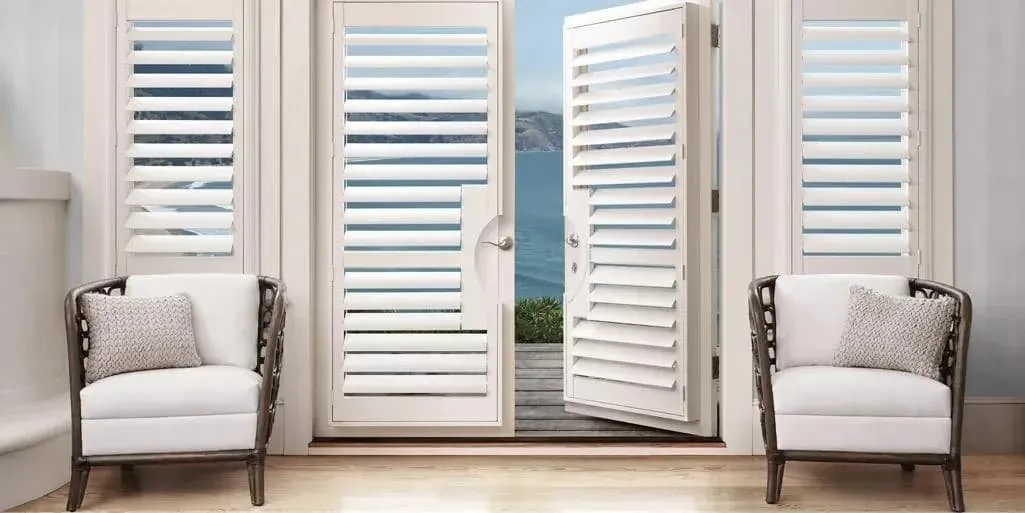
French doors to the deck
Panels mounted on each door move with it, so the doors open fully and the louvers still tilt when they are closed.
What a modern opening makes possible
Because most Hanover windows are standard modern sizes, you get the full range of options with very few compromises. Inside mounts work in nearly every opening, since modern jambs are usually deep enough for the louvers to clear the glass. Hidden tilt works as well as a front rod. Divider rails can sit exactly at the meeting rail of a double-hung sash, so the line across the shutter matches the line across the window.
Regular openings also mean a whole-house order looks uniform. If the front of a colonial has eight matching windows across two floors, eight matching shutters with the same frame, louver and color make the elevation calm and tidy from the road. Mixed coverings in those same windows tend to look busy, even when each one is fine on its own.
That said, standard is not the same as identical. Two windows that were ordered at the same size can still differ slightly once trim and drywall have gone in around them, so we still measure every opening on its own. A shutter that is made to a measured opening closes with an even gap all round, which is a large part of why it looks built in.
Capes and the rooms under the roof
The upstairs of a cape is a particular kind of space. The ceiling slopes down to knee walls, the windows sit in dormers set back into the roof, and the rooms are often smaller than the ones below. Light comes in through a short, deep opening rather than a tall one.
A dormer window suits a shutter well, because the depth of the dormer gives the frame plenty of room and the panels can fold back against the dormer walls when open. Medium louvers usually look best here; slim ones can feel fussy in a small window, and wide ones leave only a few blades across a short opening.
Upstairs rooms also run warm in summer, because heat rises and collects under the roof. Closing the louvers during the hottest part of the afternoon keeps direct sun off the floor and helps the room stay comfortable. In a child’s room or a guest room under the eaves, closed louvers also make the room dark enough for an early bedtime.
The first floor of a cape tends to have wider, more standard windows. Many owners pick one louver width for the whole house so the two floors match, then let the panel layout change to suit each window.
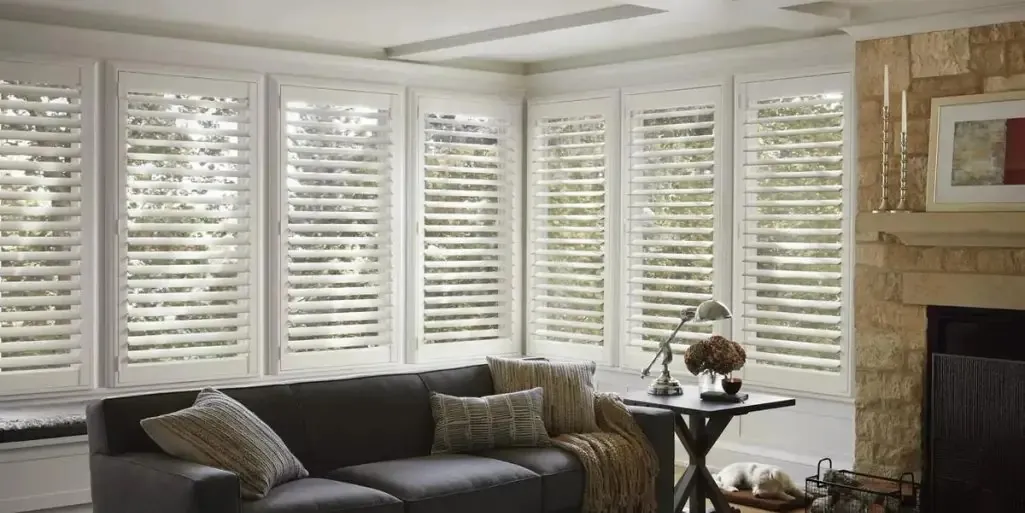
Ranches and their long front windows
A post-war ranch puts much of its life on one level, with the living room facing the street through a broad picture window and the bedrooms along a hall at one end. The picture window is the feature, and it is usually the first one owners ask about.
On a window that wide, we divide the shutter into several panels that hang from one frame, often with a fixed center section and hinged panels to either side, or a run of bifolding panels that stack back toward the wall. The panel count follows the mullions in the window where there are any, so the frame lines up with the glass divisions. Wide louvers keep the view to the front lawn open when they are tilted flat.
On a wooded Hanover lot a ranch may sit well back from the road, so street privacy at the front is often modest. The bedrooms are a different matter. They are usually on the same level as the yard and close to it, and closed louvers give them the privacy and darkness that a ground-floor bedroom needs.
Plantation shutters in Hanover, MA, for newer colonials
The colonials off Washington Street are generally the largest houses on this list, and they have the most windows. A typical one has a formal front room and dining room, a family room at the back with a slider or French doors, a kitchen with a window over the sink, and four or five bedrooms upstairs with matching double-hung sash.
The practical approach is to settle the front of the house first. The windows that face the street are the ones that set the look from outside, so their louver width, frame and color become the standard for the rest. Then we work through the back rooms, where the choices can be more relaxed: a family room might take wider louvers for the view to the woods, a bath goes to Palm Beach, and an office might take hidden tilt for a cleaner face.
Colonials also tend to have a window on the stair landing. A pair of panels with a divider rail is the usual answer there, lower louvers closed so the stairs are not on show at night, upper louvers open for light.
Houses nearer the Four Corners
Not every Hanover house sits deep in the trees. Around the Four Corners and along the busier stretches of Washington Street, some capes and older colonials are closer to the road, with front rooms that face passing traffic and headlights after dark. On those houses the front windows need real privacy as well as light.
A divider rail is the simplest tool for that. Close the lower louvers and the room is screened from the sidewalk, open the upper ones and daylight still reaches the back of the room. For a front room used mostly in the evening, fully closed louvers block headlights sweeping across the ceiling. Cafe panels on the lower sash are another option for a kitchen or a dining room at the front, leaving the top of the window bare.
When we plan plantation shutters in Hanover for a house like this, the front elevation still sets the standard. The rooms at the back, facing the yard, can then take the same shutter with the louvers left open most of the day.
Inside the in-home consultation
Our vans carry samples of all three collections, every louver width and a wide spread of colors and stains, so we can bring the showroom to you. A typical Hanover visit runs like this:
- You book through the Request a Consultation form or the call button, at a time that works for you.
- We start in the room you care about most, often the family room or the front of the house.
- You hold sample panels against your windows and tilt the louvers to see how each width handles your light and view.
- We talk through which collection suits each room, with Palm Beach for the baths and laundry.
- We measure every opening, note its depth and check that it is square.
- You receive a free estimate, with no need to decide while we are there.
More detail is on our in-home consultations page.
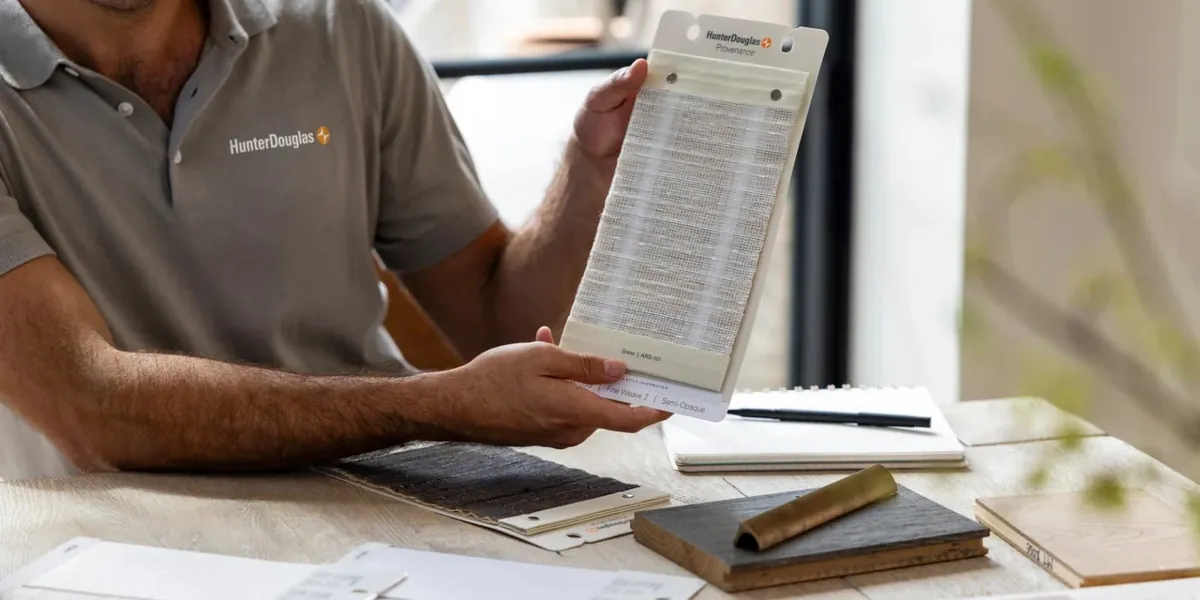
Choosing color for a whole house
White is the most common shutter color for good reason. It matches most trim, it brightens a room, and it looks consistent from the street. But “white” covers a wide range. A crisp, cool white suits a newer colonial with bright white trim. A softer, warmer white often sits better in a cape where the trim has been painted many times and gone slightly creamy.
Off-whites and soft grays suit rooms with darker walls or a more modern style, and stains bring the warmth of wood into a dining room or study. Heritance offers the broadest stain range; NewStyle and Palm Beach are painted finishes.
Light in a wooded lot is greener and dimmer than in an open neighborhood, especially in summer, and that changes how colors look. So we always compare samples in your own rooms, on the window itself, in daylight. A finish that looks right in one setting can look quite different under a canopy of oaks.
Louvers, rails and the way they tilt
Three details shape the shutter more than anything else.
Louver width. Medium for dormer and bedroom windows, wide for picture windows and family rooms where you want the view, and the same width across the front of the house so it looks orderly from the road.
Divider rail. A rail across a tall panel splits it into two sections that tilt on their own. On a double-hung window we line it up with the meeting rail of the sash.
Tilt style. A front tilt rod is the classic look and moves all the louvers in a section at once. Hidden tilt leaves a clean face and suits rooms where the view matters most.
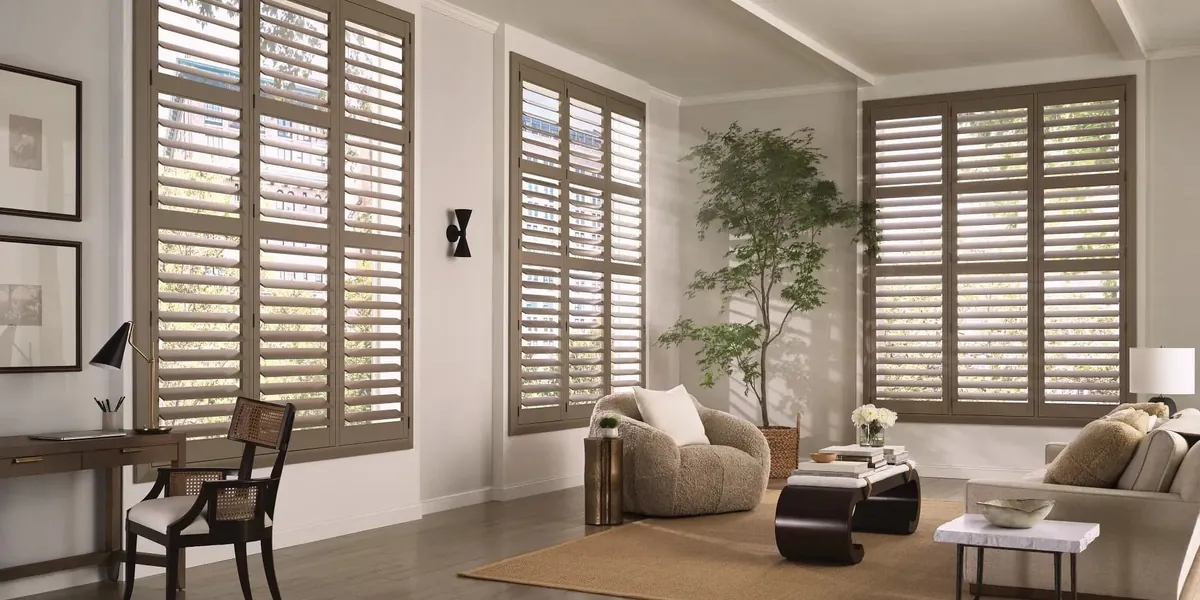
Light under a wooded canopy
A real setback and tall trees around the house give Hanover lots a particular kind of light. The canopy softens the sun through the summer and drops away in winter, so a room that felt shaded in July can be flooded with low sun by December. Shutters handle that change better than most coverings, because the louvers can be aimed rather than simply raised or lowered.
On a bright winter morning, tilting the louvers slightly upward bounces sunlight onto the ceiling, so the room is lit without glare on the screen or the table. In high summer you can open them flat to catch what light filters through the leaves. And because shutters are cleaned with a duster or a damp cloth, the pollen and leaf dust that come with a wooded lot are easy to deal with. Owners choosing plantation shutters in Hanover, MA, for rooms on the sunny side of the house often find this the feature they use most.
Sliders, decks and back doors
Many Hanover houses open onto a deck or patio through a slider or a pair of French doors at the back. Those doors need a covering that does not get in the way when you step outside.
French doors are simple: shutter panels mount on each door and swing with it. A slider is different, because the door moves sideways. Shutter panels on a track that slide past one another are one answer, and they keep the whole back wall in the same style as the windows beside it. Where that does not suit, a vertical shade or a sheer on the slider can be matched in color to the shutters. We look at the door, the space to either side and how you use it before suggesting either. If you are weighing shades for that door, see our page on roller shades in Hanover.
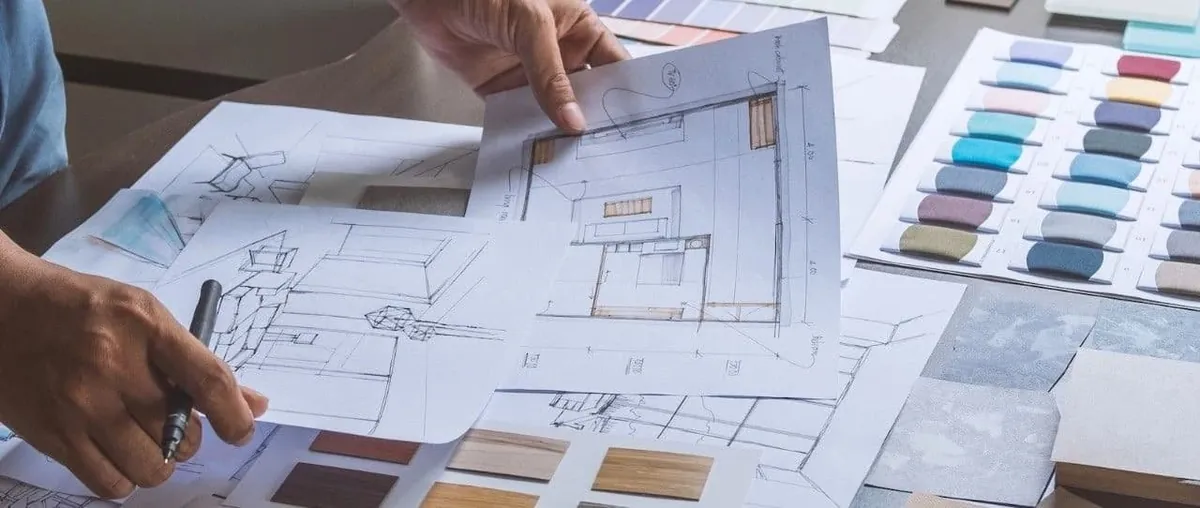
What a Gallery dealer brings to the job
Hunter Douglas names dealers who meet its standards Gallery dealers, and Blinds & Designs is one. In practical terms you see the complete shutter line, Palm Beach, NewStyle and Heritance, in every louver width and finish, with advice from people who fit them week in and week out.
The shutters go up with certified Hunter Douglas installation, so frames sit square and panels swing true. If a room needs more than a window covering, we offer interior design consultations, and we repair window coverings you already own.
Shades, blinds and drapery are part of what we do as well, so the whole house can come from one plan. Our Hanover page lists every service in town, and our Hunter Douglas dealer in Hanover page explains more about the brand.
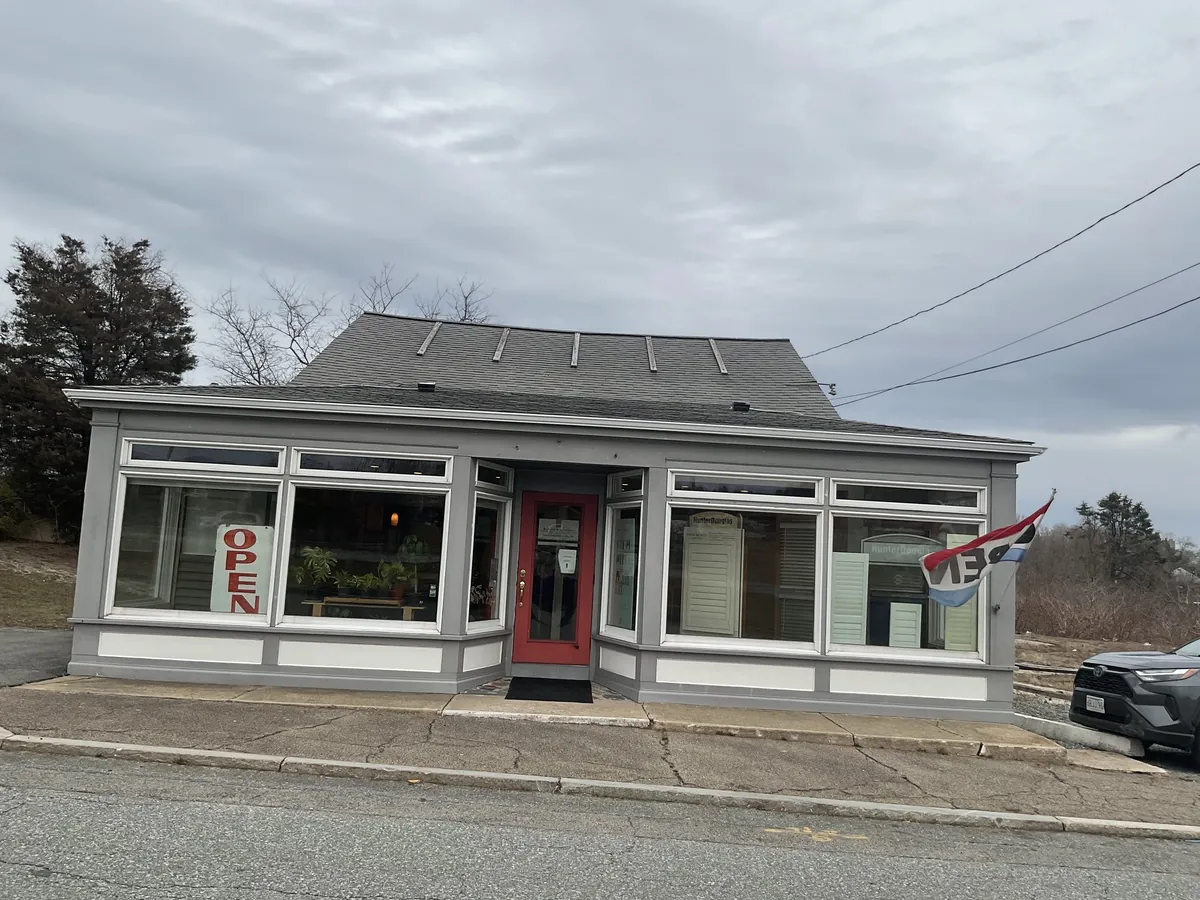
The Sagamore showroom and the van
Most customers choose shutters at home, because that is where the real light and the real trim are. The van carries the samples, so the choosing happens at your windows.
If you would rather see shutters before we come, the Sagamore showroom is the nearest one to Hanover. Wherever you start, the measuring and the fitting happen at your house.
Questions from Hanover
Do standard modern windows need custom shutters?
Yes. Even standard openings vary slightly once trim and drywall are in place, and a shutter only looks built in when its frame is made to the opening. We measure each window on its own, so every panel closes with an even gap.
What suits the dormer windows in a cape?
A single panel or a pair with medium louvers, set inside the dormer so the panels fold back against its walls. Closing the louvers on a hot afternoon keeps direct sun off the floor of an upstairs room.
Can one louver width work across the whole house?
Usually, yes, and it makes the front of a colonial look orderly from the road. Some owners choose a wider louver for a family room facing the woods. As long as the color matches, the house still reads as one set.
What do you suggest for a slider to the deck?
Shutter panels on a sliding track keep the back wall in one style. If that does not suit the space, a vertical or sheer shade in a matching color is another option. We look at the door and how you use it before recommending either.
Is there a charge for the estimate?
No. After we measure, you receive a free estimate for the shutters you are considering. Request a consultation and we will bring samples of all three collections to your house.
Start with a visit
Seeing real panels at your own windows is the surest way to settle on plantation shutters in Hanover, MA. Request a consultation and we will measure every opening, help you choose collection, louver and color for each room, and leave you with a free estimate. Prefer to talk first? Use the call button, or come to the Sagamore showroom.