
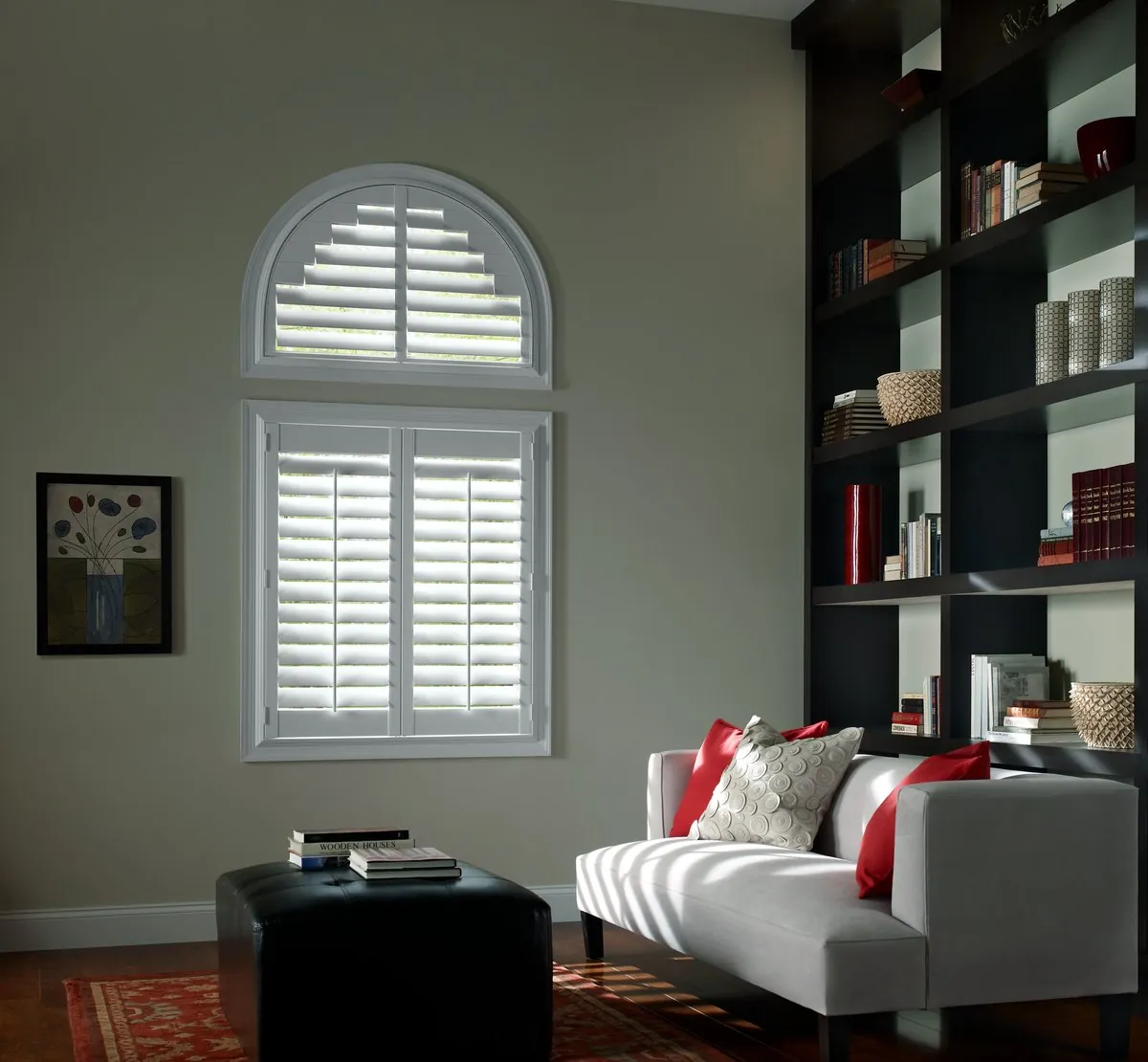
Old sash, close to the sidewalk
Every shutter plan in this town starts with an in-home consultation. We load the van with samples and come to the house, because the windows that matter most here are ones you cannot carry to a store. In Dedham Village and Oakdale, antique colonials and Victorians still hold tall, narrow sash inside casings that owners have kept through coat after coat of paint, and those windows set the terms for plantation shutters in Dedham, MA.
Two things stand out on those streets. The first is proportion: a sash that is much taller than it is wide needs a louver and a panel layout that look natural on it, not squeezed. The second is closeness. Many village houses sit only a few steps back from the sidewalk, so the front parlor and the dining room look straight out at foot traffic, and anyone passing can look straight in.
Toward Riverdale the picture changes. Post-war capes and ranches bring wider, simpler openings and rooms built for everyday family life. A good plan treats both kinds of house on their own terms.
Plantation shutters in Dedham, MA, for three kinds of window
The same three Hunter Douglas collections cover every house in town. What changes is how we size the louvers and choose the frame for the window in front of us.
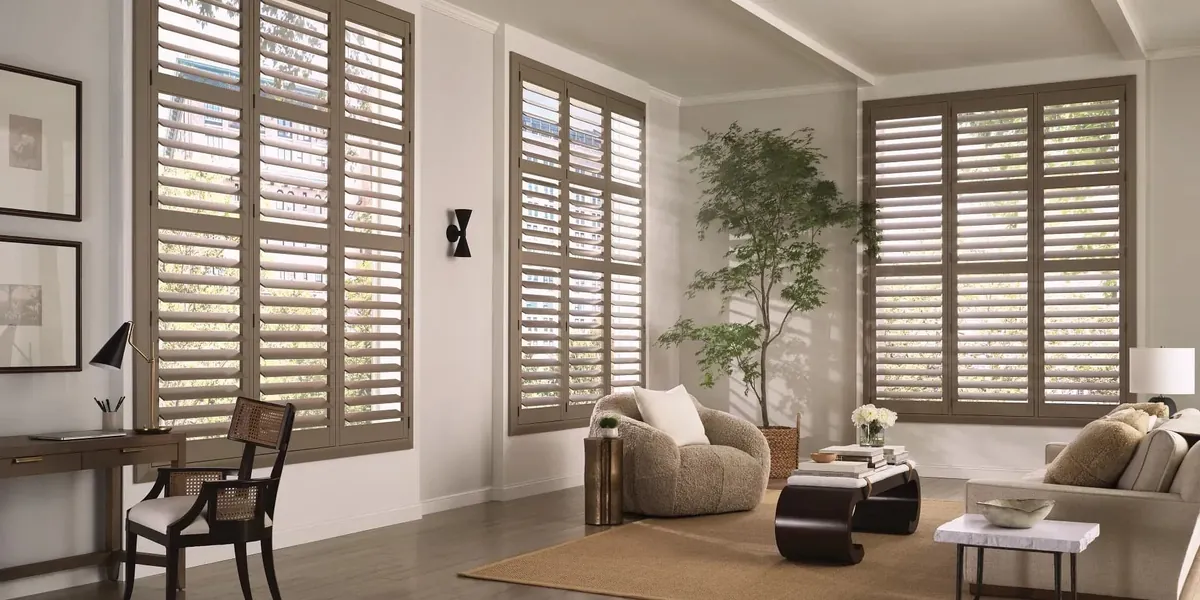
Tall, slender village sash
Narrow openings in the older colonials call for a louver in scale with the glass, and panels that keep the long, upright line of the window intact.
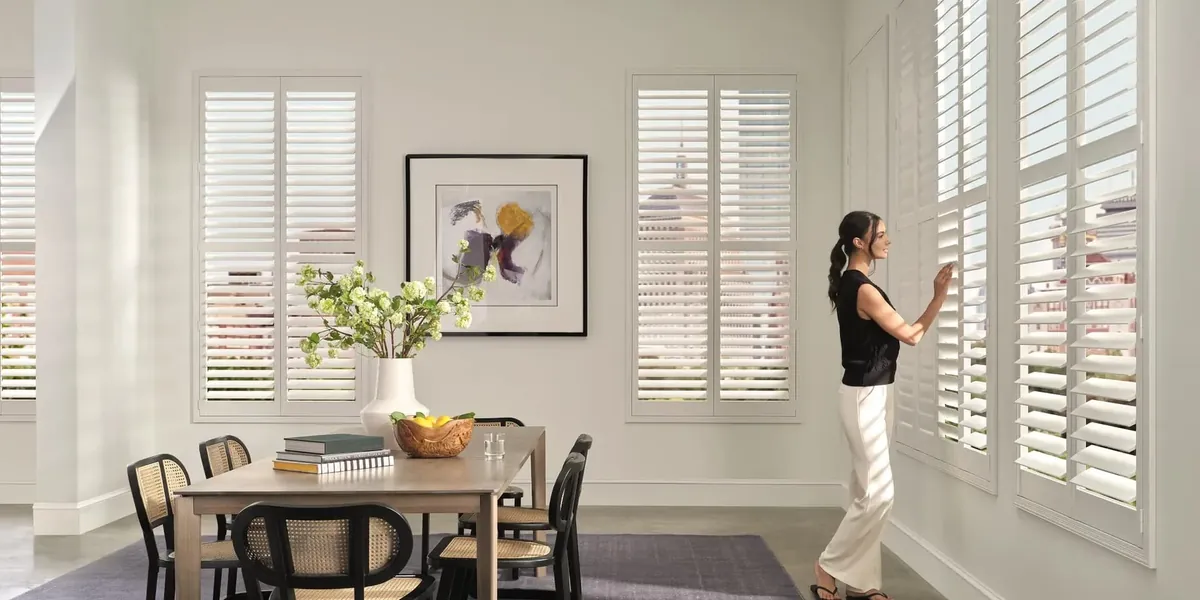
Rooms that face the sidewalk
Where a house sits near the street, tilting the louvers lets daylight in at an angle while the view from the pavement stays blocked.
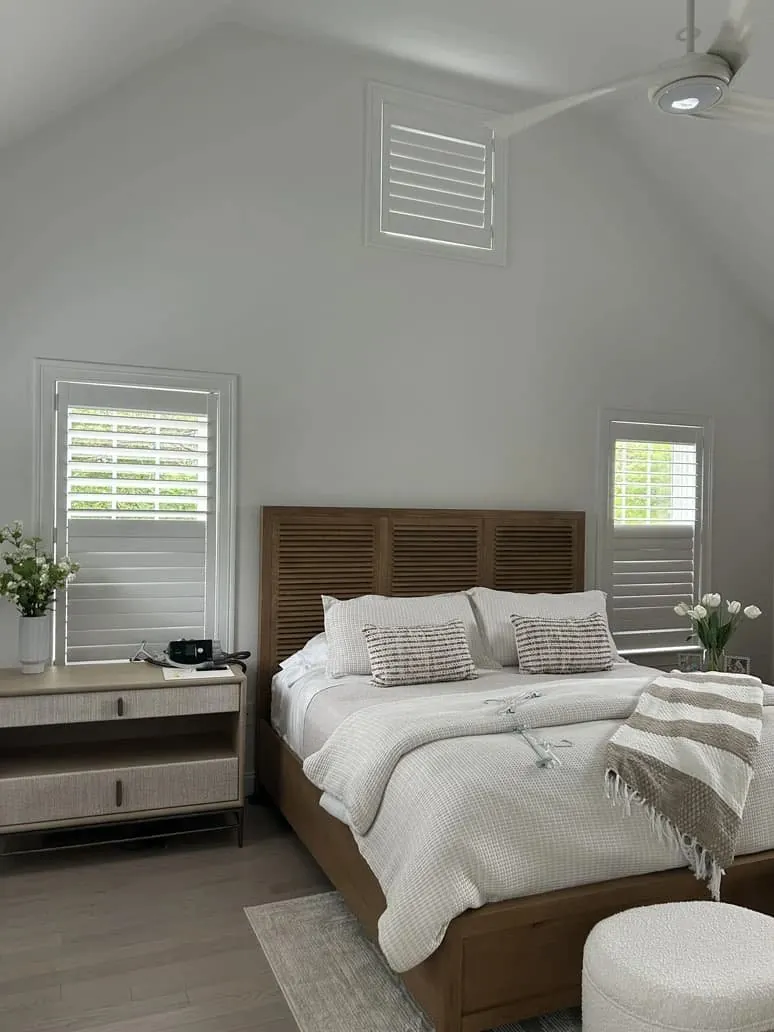
Capes and ranches near Riverdale
Dormers, picture windows and bedroom pairs in post-war houses suit one consistent louver and color carried from room to room.
Why a visit at home comes first
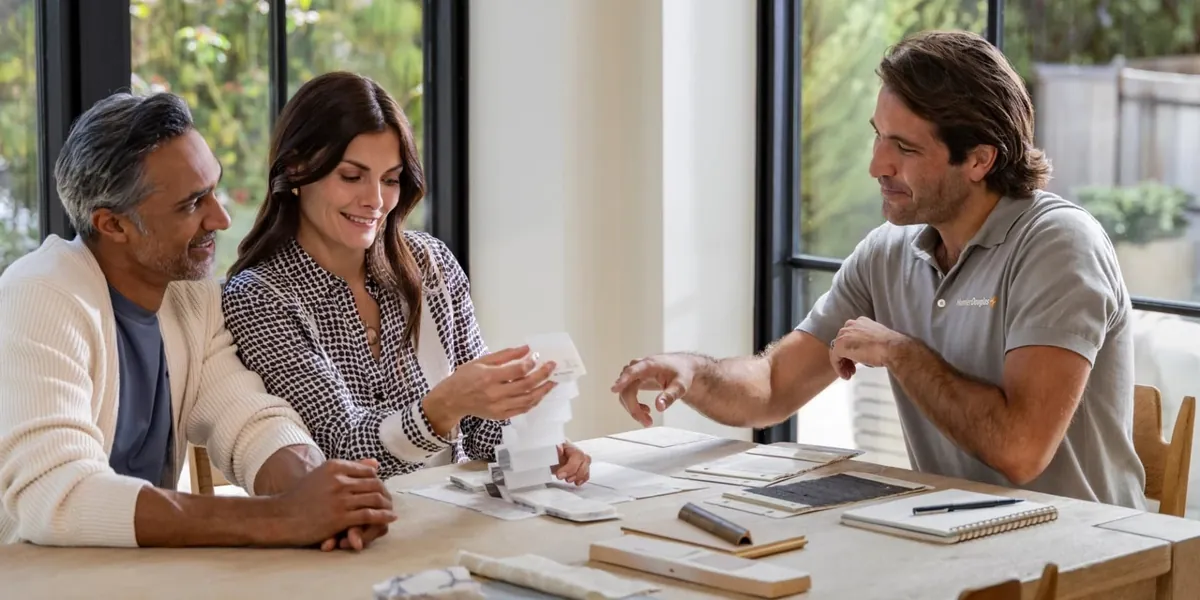
Dedham sits inside the area we serve from our Canton shop-at-home base. There is no storefront to drive to in Canton; instead, a consultant arrives with a van full of samples. We like to say we bring the showroom to you, and for shutters that is the most useful way to shop.
Shutters are fixed to the window. They become part of the room in a way a fabric shade does not, so the decisions are about how they sit against your trim, how they open in your space and how they look from the street. Each of those can only be judged on site. A louver that seems right in a photograph can feel heavy on a slim antique sash. A white that looks clean under bright lights can look harsh next to a century of cream paint on the casing.
A typical visit goes like this:
- You request a consultation online or use the call button, and we set a time that works for you.
- A consultant arrives with shutter samples in all three Hunter Douglas collections.
- We hold samples up to your own windows so you see louver sizes and frame styles against your actual trim.
- We talk through each room: which windows need privacy, which need light, which simply need to look finished.
- Every opening on your list is measured.
- You receive a free estimate, with no pressure to decide on the spot.
There is more about the visit on our page explaining what happens at an in-home consultation. If you would like help pulling a whole room together, our interior design consultations can be part of the same appointment.
Respecting a historic house
A lot of the older homes in Dedham Village carry expectations that go beyond personal taste. The street has a character, the house has a history, and the windows are a big part of both. Interior shutters are one of the few window coverings that read as period-appropriate from outside: from the sidewalk, a row of closed louvers behind old glass looks right on a colonial or a Victorian in a way that a modern shade often does not.
That is a good reason to keep the plan simple and consistent on the front of the house. We usually suggest one louver size and one color across every street-facing window, upstairs and down, so the facade reads as a single, settled composition. Rooms at the back can be treated more freely, because nobody sees them from the road.
Inside, the goal is to let the original woodwork stay the star. Many of these houses have deep casings, wide stools and molded aprons that have been stripped, repainted and cared for over a long time. Frame style is where that matters. The frame is the part of the shutter that meets your trim, and choosing its profile decides whether the old casing stays fully in view or the shutter brings an outline of its own. We look at that window by window during the visit.
Proportion on a tall, narrow window
Tall sash is beautiful, and it is also the hardest shape to get right. Put a wide louver on a slim window and you end up with only a handful of blades running up a long panel, which can look out of scale. Go too narrow on a big window and the shutter starts to look busy.
On the antique sash in Oakdale and around the village center, we usually start with a mid-sized or smaller louver and adjust from there with samples on the window. The panel layout matters as much as the blade. A tall window might take a single panel, a pair that opens from the middle, or panels split into an upper and lower section so you can tilt each part on its own. That last option is handy in a front room close to the street: keep the lower louvers closed against the sidewalk and open the top ones to the sky.
We also look at how the shutter lines up with the window itself. When the horizontal break in a panel sits level with the meeting rail of the sash, the two read as one design rather than competing lines.
Privacy without closing up the house
Living close to the sidewalk has its trade-offs. You want the front rooms bright, but you do not want to feel on show every time someone walks a dog past the window. Curtains drawn all day make a room dim; a shade pulled halfway leaves an awkward band.
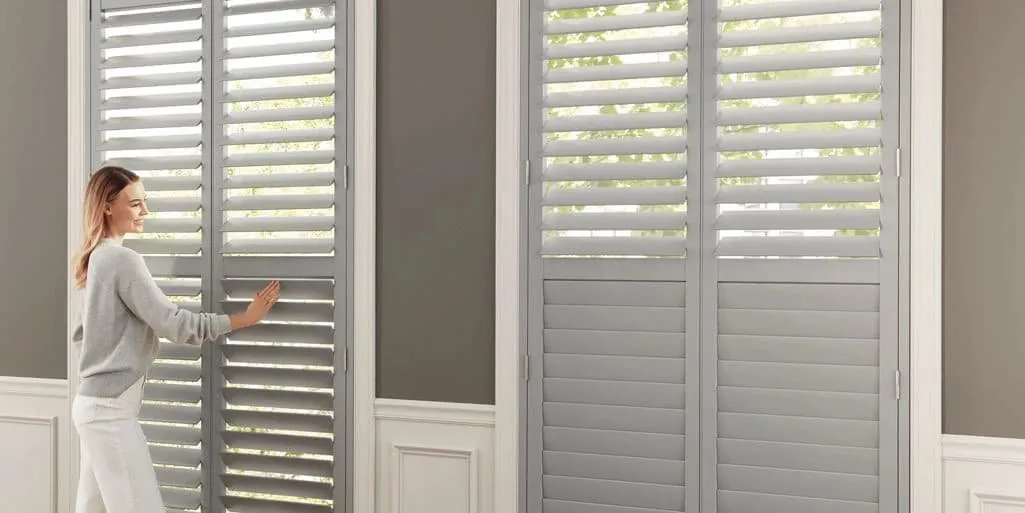
Shutters give finer control than either. With the louvers angled upward, light bounces off the ceiling and fills the room, while someone on the pavement looks up at the slats and sees very little. In the evening, close them flat and the room is private. In the morning, swing the panels back and the window is completely clear.
That is the everyday case for plantation shutters in Dedham, MA, in the village. It suits rooms you live in all day: a front study, a parlor used as a family room, a dining room right on the street.
The post-war houses toward Riverdale
Head toward Riverdale and the housing shifts to capes and ranches built after the war. Their windows are more standard: double-hung pairs in the bedrooms, a picture window in the living room, dormers upstairs in the capes, and often a kitchen window over the sink. They are friendlier openings for shutters, and the main challenge is a different one: treating a whole house so it feels finished and calm.
For these homes we often suggest a single louver size and color throughout. It is a simple approach and it works, because a cape or a ranch reads as one connected space, and matching shutters tie the rooms together. A slightly larger louver can suit the wider openings and let more of the yard show through when the blades are open.
Dormers deserve their own mention. Their windows are often small and set into a sloping ceiling, and a shutter is one of the neatest ways to cover them. Because it sits within the window and does not hang down, nothing gets in the way of the knee walls or the bed that tends to sit under a dormer.
The ranches have their own pattern. Most of the living happens on one level, so the living room picture window, the kitchen and the bedrooms all sit at the same height above the yard. A ranch on a corner lot or a busy road can feel exposed on two sides at once. Shutters on those windows let you open the house to the yard in the daytime and close it neatly at night, without a jumble of different coverings on the same floor. For many families choosing plantation shutters in Dedham, MA, this is the house they are working with, and it is a straightforward one to plan.
Planning a village house floor by floor
An antique colonial rarely has two rooms alike. The front parlor might have four tall windows facing the street, the dining room a pair on the side yard, the kitchen at the back a mix of older and newer openings from a later addition, and the bedrooms upstairs a set of smaller sash under the eaves. Walking the house with you, one floor at a time, is how we keep a plan like that coherent.
On the ground floor, the street side gets the most thought: privacy, how the front looks from the sidewalk, and how the shutters sit against the best of the old woodwork. The side and back rooms are often about light, especially where a neighboring house stands close. Upstairs, bedrooms tend to want privacy first and a dim room in the early morning second, and we talk honestly about where a shutter is enough and where another product would serve better.
By the end of the walk-through you have a list, window by window, of louver size, panel layout and frame style, all in one consistent color. That list is what your free estimate is built from, so you can see exactly what each room includes.
Kitchens, baths and the smaller windows
Every house has a few windows that do not fit the pattern: the little one in the powder room, the one over the kitchen sink, the narrow light beside the back door. These are often the windows where shutters prove their worth.
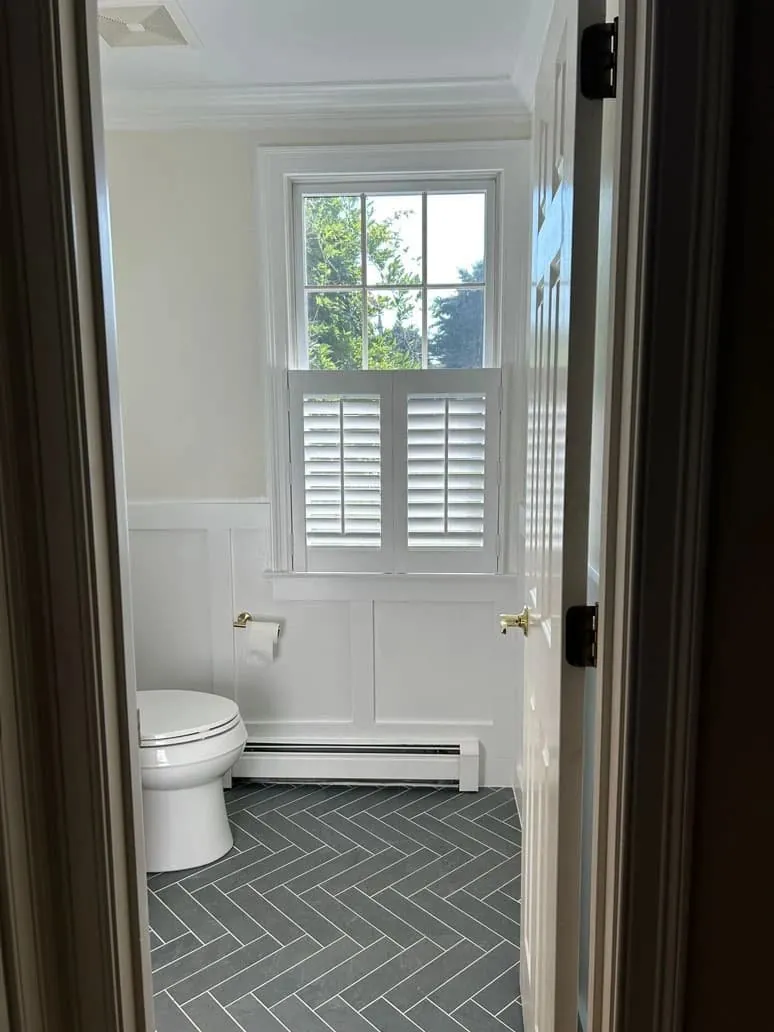
A cafe-style shutter, covering only the lower part of the glass, is a common choice for a bathroom or a kitchen. It keeps the room private at eye level and leaves the top of the window open for daylight. In an older village house where the bathroom was carved out of a bedroom at some point, it can also hide a window that does not quite line up with anything else.
We plan these smaller windows in the same visit, using the same collection and color as the rest of the house, so even the odd openings look like they belong.
Louver size, frame style and the three collections
Hunter Douglas makes three shutter collections, and we bring all three to every consultation: Palm Beach, NewStyle and Heritance. Rather than describing them from a brochure, we would rather put them side by side on your window and let you compare how each looks and feels in your own light.
The two decisions that shape the finished look most are louver size and frame style.
- Louver size controls how many lines run across the window and how much view you get when the blades are open. Smaller louvers suit slim antique sash and give a traditional look. Larger ones suit wide modern openings and leave a broader view between the blades.
- Frame style decides how the shutter meets the trim. On a historic casing you may want it understated; on plain builder trim in a ranch it can give the window more presence.
Our main plantation shutters page explains the collections in more detail, and our guide to shutters for older windows is worth reading if your house has original sash.
Color against old paint and new walls
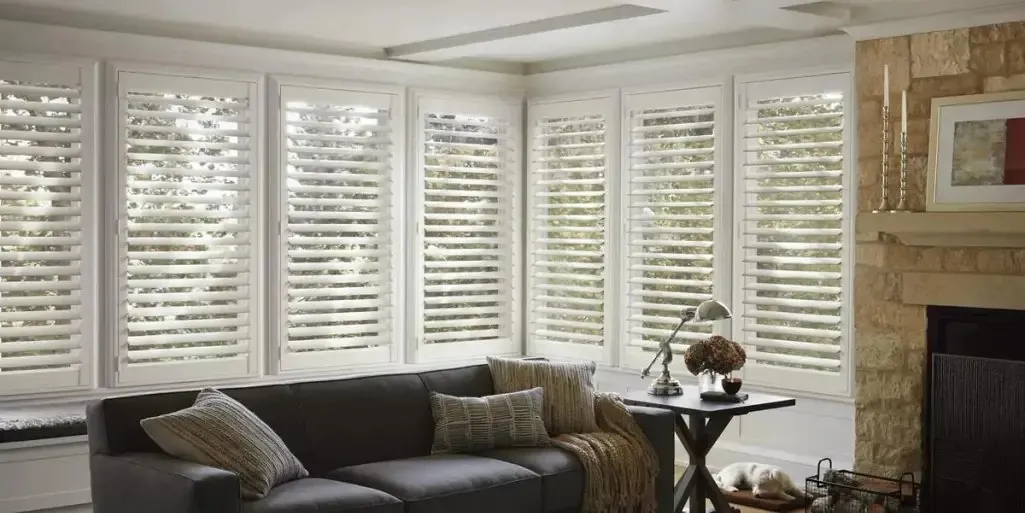
Most people choose a white, but whites vary a great deal. Beside the aged cream of an antique casing, a bright white can look stark and a warmer white tends to blend. In a post-war cape with fresh, cool-toned walls, a crisp white often looks cleaner. We bring a range so you can compare them against the woodwork itself, in morning light and in the dimmer light of the afternoon.
Some rooms suit a color other than white. A deep-toned study or a dining room with painted paneling can carry a gray or a soft taupe shutter that looks deliberate rather than plain. Whatever you choose, we suggest settling the color in the main living space first and carrying it through, so the house reads consistently from the street. On a historic facade, where every front window is visible from the sidewalk, that consistency is what makes plantation shutters in Dedham, MA, look as though they have always been there.
Who fits your shutters
Blinds & Designs is a Hunter Douglas Gallery dealer, and our installers are certified by Hunter Douglas. That matters on any shutter, and especially on an old window that has settled over time. A shutter is a precise, fixed piece, and the quality of the fitting is what makes the panels hang true and the louvers close evenly.
You can read about the day itself on our page about what happens on installation day. And if a shutter, blind or shade in the house ever needs attention later, we handle repairs as well.
Prefer to look around first
The visit at home is where the real choosing happens for Dedham houses. If you would also like to walk into a showroom before anyone comes out, the closest one is our Franklin showroom.
Whichever you start with, the measuring and the final decisions still happen at your windows, because that is where the trim, the light and the street are.
Other choices for Dedham homes
Shutters are not the right answer for every room. A bedroom that needs real darkness might be better with cellular shades in Dedham, and a high or hard-to-reach window could suit motorized blinds and shades. For wood or faux wood slats, see custom blinds, or browse everything we offer in town on the Dedham page.
Questions from Dedham
Will shutters suit an antique colonial in the village?
Usually very well. From the street, closed louvers behind old glass look at home on a colonial or a Victorian. We size the louver and pick a frame style to suit the narrow sash and the original casing.
My house is close to the sidewalk. How do shutters help?
Tilt the louvers upward and light reaches the ceiling while passers-by see only slats. Close them fully at night, and fold the panels back when you want a clear view.
Do I need to go to a store to choose?
No. Dedham is served from our Canton shop-at-home area, so a consultant comes to the house with samples. If you want to see a showroom too, the nearest is in Franklin.
Can one plan cover a cape near Riverdale and the older rooms too?
Yes. We can carry one louver size and color through the whole house, or vary the louver from room to room while keeping the color consistent.
How do I get a figure for the job?
We measure every window you want covered during the visit and give you a free estimate. You decide in your own time.
Your next step
Tell us which rooms you are thinking about and when suits you, and a consultant will bring shutter samples to your Dedham house, measure each window and leave you with a free estimate. Prefer to talk first? The call button at the top of the page reaches us.