
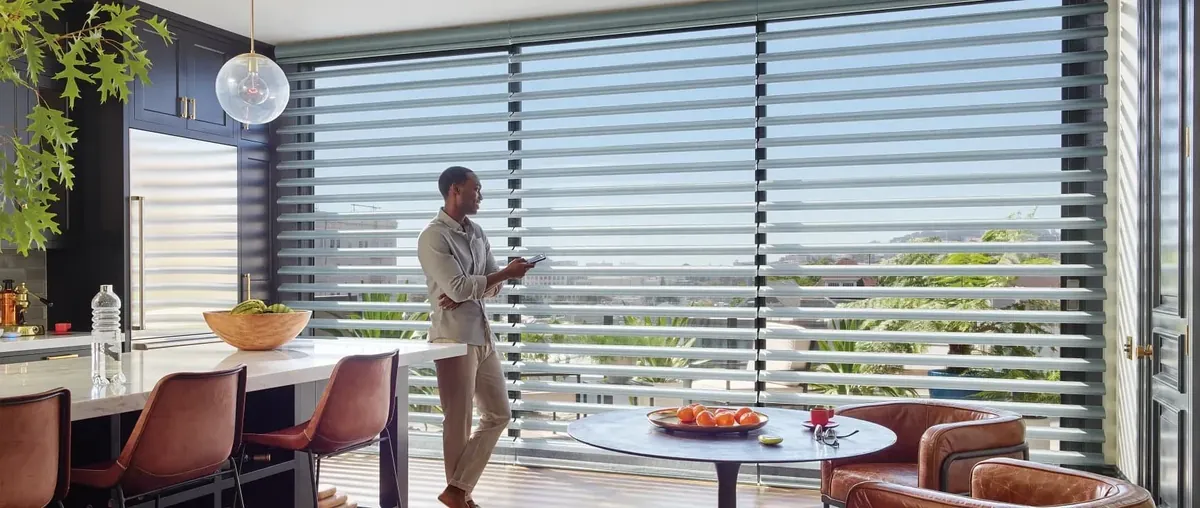
River houses below, hillside capes above
Blackstone is a town of two levels. Down along the river, the mill-era houses stand close together with the original narrow openings they were built with. Up the hillsides, post-war capes and ranches line streets that climb steeply from the valley. Both kinds of house raise their own questions when we talk about motorized blinds in Blackstone, MA, and the slope connects them: on a steep street, the windows of one house often look straight down into the next.
In the river housing, the narrow openings come several to a wall, and the houses sit so close that a side window may face a neighbor’s wall across a strip of yard. Keeping all of those windows at the right height for privacy and light by hand is the sort of chore that slips, and shades stay half down for weeks.
On the hillsides, capes bring dormer windows and short upstairs rooms, and ranches bring a broad living room window and a row of bedrooms down one side. PowerView handles all of it: one button, the app or a schedule for every shade in the house, and not a cord anywhere.
The shades that go on a Blackstone motor
PowerView is offered on a wide part of the Hunter Douglas range, so we choose the fabric or slat for each window and add the motor to it. These three cover most of what Blackstone houses need. The buttons take you to each product’s page for the town.
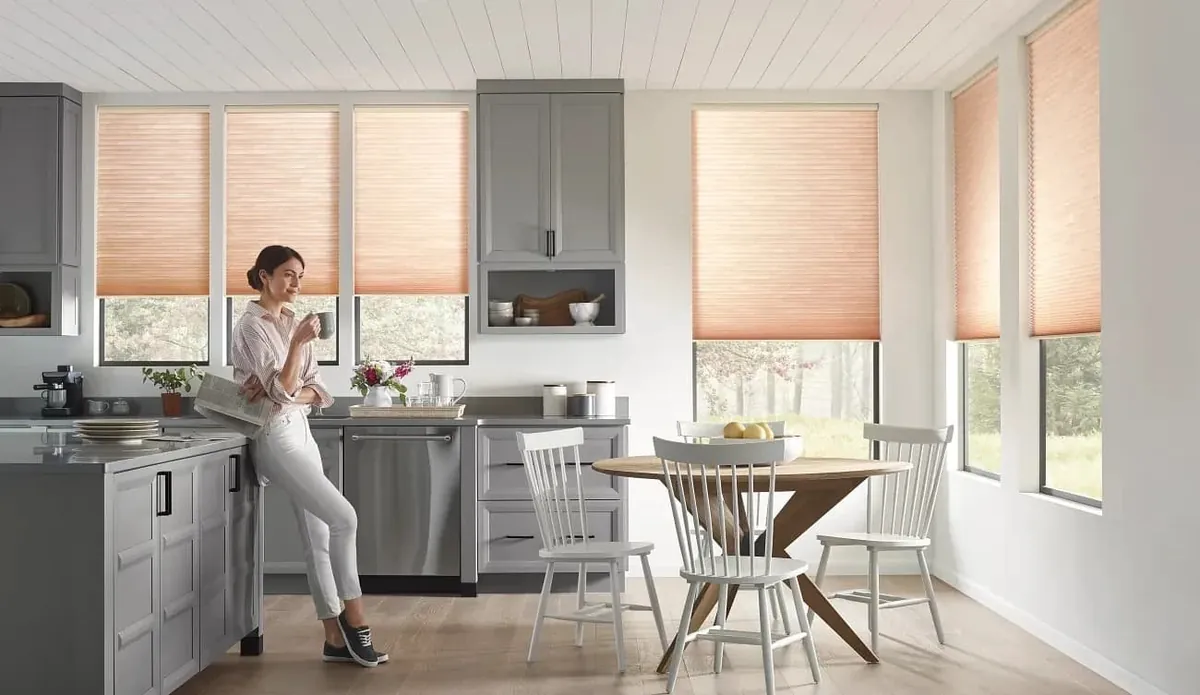
Cellular Shades in Blackstone
Honeycomb fabric stacks tightly at the top of a narrow mill-house opening and filters the light while blurring the view in from next door.
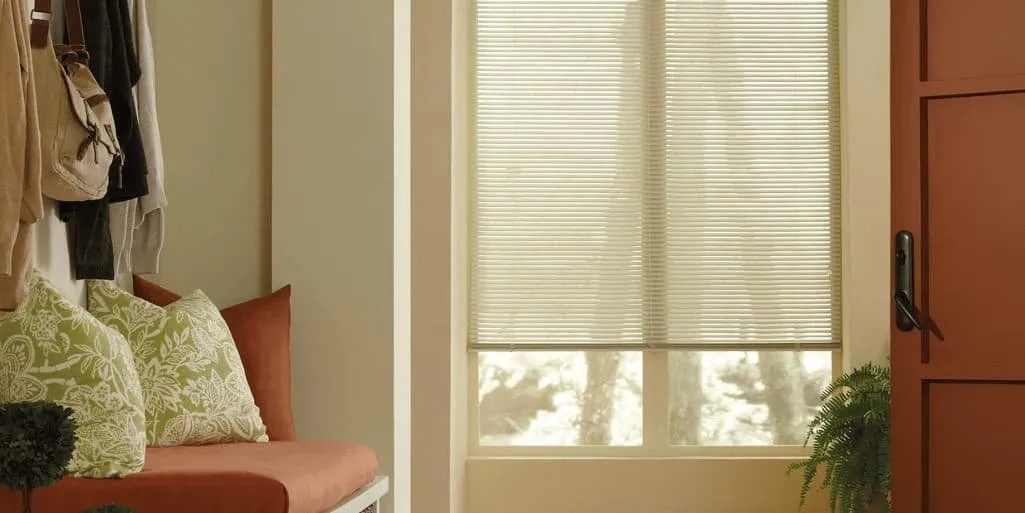
Custom Blinds in Blackstone
Slats can tilt to block a view from above or below on a sloping street while still letting daylight reach the room.
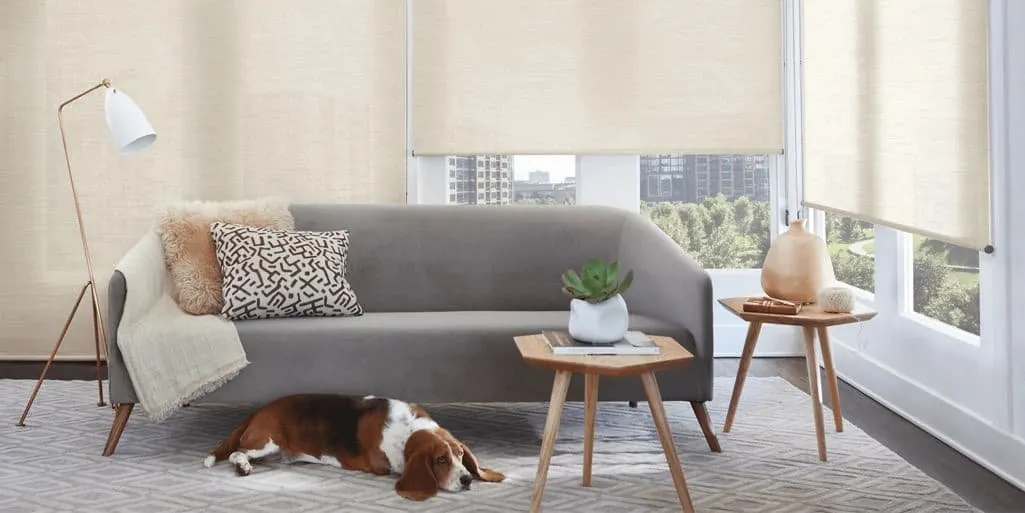
Roller Shades in Blackstone
A clean roller suits the wide living room window of a hillside ranch and rolls up almost out of sight.
Steep streets and the view from above
On flat ground, privacy is mostly about the sidewalk and the house next door. On Blackstone’s steep streets there is a third direction. A house uphill can look down into the rooms of the house below, and a house downhill can have its first-floor windows at eye level with the yard or driveway of the house above it.
That makes the angle of a treatment matter. A shade stopped part way down cuts the glare from a low sun over the valley while the lower glass keeps the view. Blinds add another option, because tilting the slats one way or the other blocks a view from a chosen angle while light still comes in between them. Light-filtering fabric, lowered fully, screens a window from every direction at once and keeps the room bright.
A motor makes these partial positions practical. Setting four narrow windows to exactly the same height, or every blind in a room to the same tilt, is fiddly by hand. With PowerView you set the height once, save it, and return to it with one press or on a schedule. We look at the slope around your house during the visit, because which windows need screening, and from which direction, depends on exactly where the house sits on the hill.
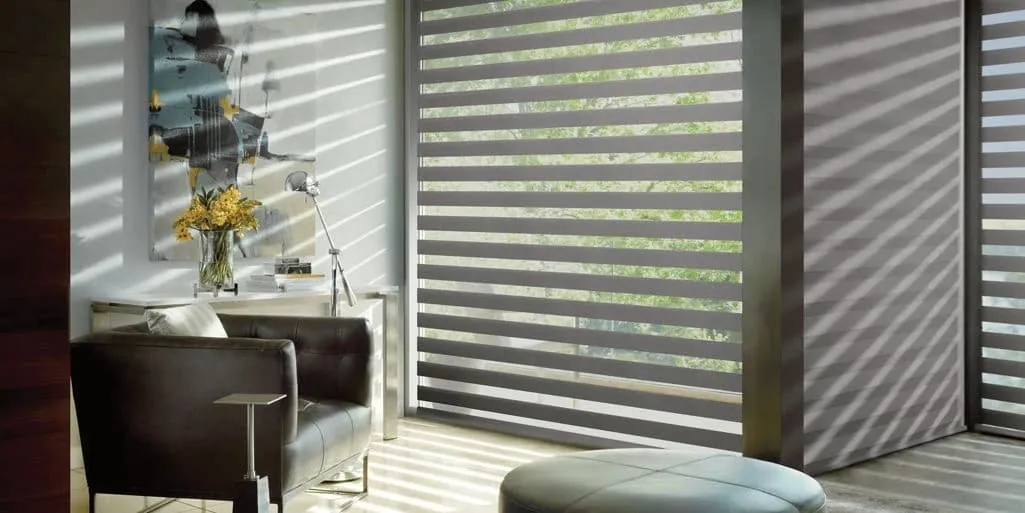
Original narrow openings in the mill housing
The houses along the river were built for the mill era, and many keep their original narrow window openings. They are tall for their width, they often come in groups, and after so many years their frames rarely measure the same at the top as at the bottom.
That is why every opening gets its own measurements. We check the width in three places, the height in three places and the depth of the frame, then decide the mount. A frame with enough depth takes an inside mount, which leaves the trim in view and lets the raised shade sit neatly in the head of the window. A shallow or crooked frame is better covered with a mount on the casing, which hides the gaps an uneven opening would otherwise leave down the sides.
On a narrow window, the stack of a raised shade matters too. A bulky stack can take a fair share of the glass. Honeycomb and roller fabrics fold or roll away compactly, which is why they come up so often for the river houses; roman folds are kept for windows where a softer look is worth a deeper stack.
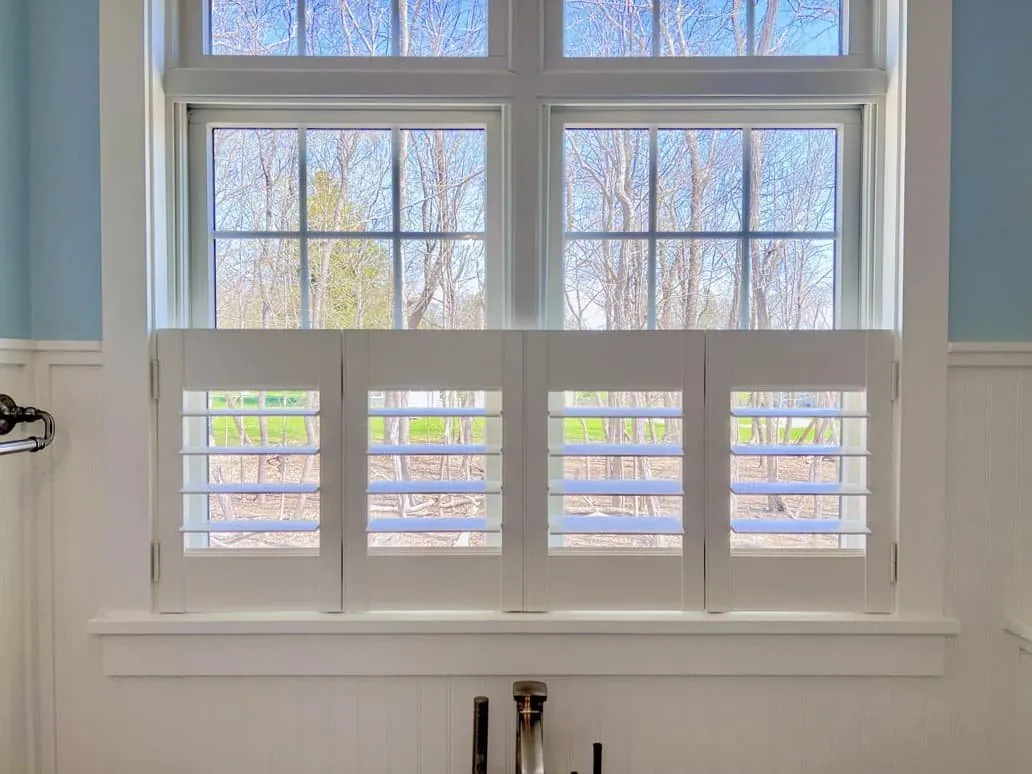
Close-set village rooms
In the village stock, houses stand near one another and near the street. Side windows look across a narrow yard to the next house; front rooms are only a short way back from passers-by. Every window has a privacy job, and the job changes through the day.
Light-filtering fabric covers the daytime. It lets daylight in and turns the view from outside into a soft blur, so a room facing the house next door can keep its shade down and still feel bright. After dark, with the lamps on, any open window becomes a lit picture for the street. A schedule closes chosen shades at the same hour every evening, so the front rooms are never left showing because someone forgot. Moving that hour as the seasons change takes seconds in the app.
Dormers and short rooms in the hillside capes
The post-war capes on the hillsides usually have their bedrooms upstairs under the roof, lit by dormer windows. Dormers sit in a recess, sometimes behind a bed or a chest, and the rooms can be low under the eaves. Reaching into a dormer to work a cord is an awkward stretch, which is why dormer shades so often stay in one position.
A motor removes the stretch. The dormer shades can close with the other bedrooms at night and open together in the morning, from a handset by the door or a schedule. Room-darkening fabric made to the size of each dormer window keeps the light out at the edges, which matters on a sloped site where a street lamp or a car turning uphill can shine into an upstairs room.
Downstairs in a cape, the front windows face the street and the side windows often face a neighbor across a driveway. Grouping each side lets you open the back of the house to the light while the street side stays as it is.
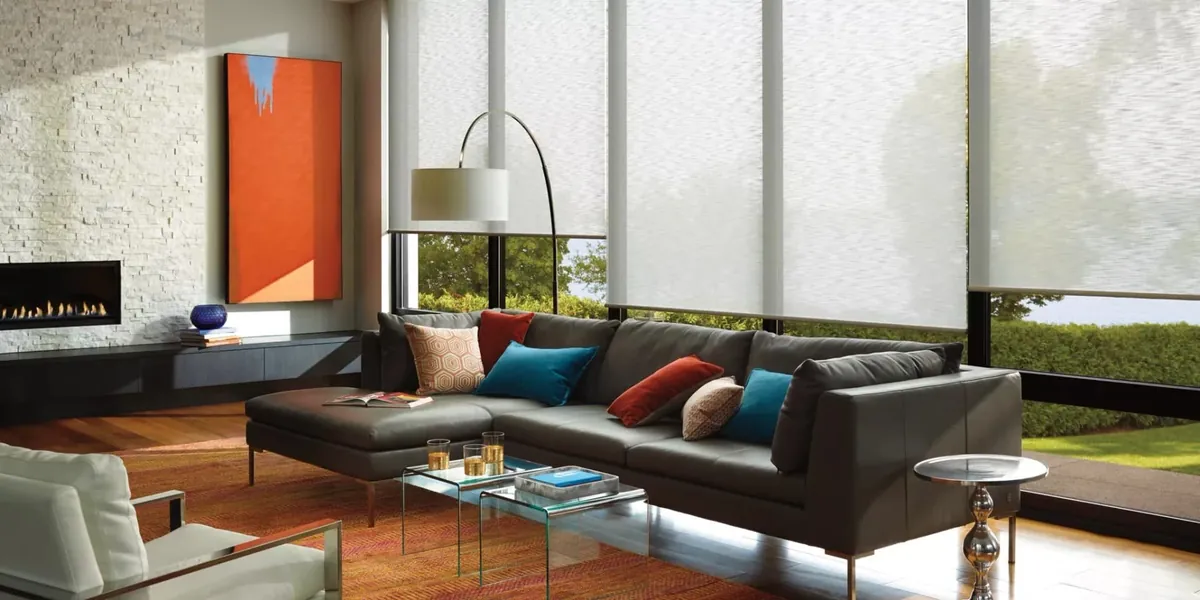
Ranches and their broad front windows
Ranches on the hillsides bring a different window: a broad living room window across the front, often with a run of bedroom windows down one side of the house. On a steep street, that front window may look out over the valley, or straight across at the house on the other side of the road.
A roller or honeycomb shade on that big window, motorized, moves as one piece and stops wherever you set it. Matching bedroom windows down the side group easily, so they all close at one height. The kitchen window over the sink, which is awkward to reach across a counter, is a favorite for a motor in a ranch, since it can open with the morning and close at night without anyone leaning over the worktop.
When you look into motorized blinds in Blackstone, MA for a ranch, think about the whole floor. Because everything is on one level, one handset or one schedule can run every room, and the house can open and close as a single unit.
A weekday on schedules
Here is how one set of schedules might run in a close-set river house. Yours will differ, and it is set up with you at the fitting.
- First thing, the kitchen and the back room open fully, while the street-side front room rises only part way.
- Mid-morning, the front room opens further once the street is quiet.
- Through the afternoon, a side window that faces a neighbor drops to half height, keeping the room bright but screened.
- In the evening, at the time you set, every street-facing shade closes, and the bedrooms follow at the hour you usually turn in.
- Weekends run on their own times, with everything opening a little later.
Any step can be changed in the app, and the handset overrides a schedule whenever you want something different. Our guide to how motorized shades are controlled explains schedules, groups and handsets plainly.
What happens when we visit
A Blackstone house is best judged from inside, where you can see the slope, the neighbors and the light, so most projects begin at home. Our vans bring the samples to you.
Booking
Use Request a Consultation, or the call button, and tell us which rooms are on your mind. If the problem is a view from the house above, say so; it helps us bring the right samples.
Looking and choosing
We go room by room. Samples are held against your windows so you can see the light each fabric lets through and how much of the room it hides, from inside and from the street or the hill. Then we settle on groups and on how you want to control them: handsets, the app, schedules or all three.
Measuring and planning power
Each opening is measured separately, with the frame depth and any lean noted. We plan how each motor is powered at the visit, window by window.
The estimate and the fitting
A free estimate follows for the shades and the installation. A certified Hunter Douglas installer then hangs every shade, sets its stopping points, pairs it with your handsets and the app, and sets the first schedules with you. The in-home consultations page has more on the first visit.
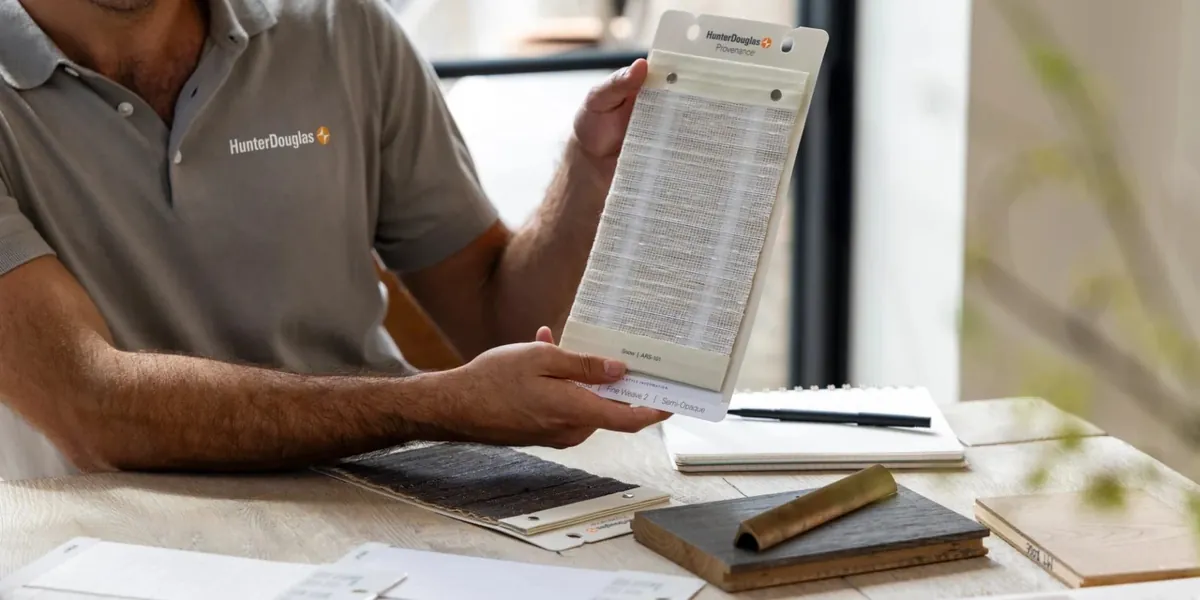
Why a motor suits motorized blinds in Blackstone, MA on a hill
A steep lot changes how often a shade needs moving. When the house across the street sits higher than yours, the right position for a front window in the morning, with the sun low over the valley, is rarely the right one in the evening, with lamps on inside and the uphill neighbors home. By hand, most people pick one compromise height and leave it there. On a motor, the window can hold a different saved position for each part of the day, and getting there costs nothing but a press or a schedule. That is the real difference a motor makes on a sloping street: the shades end up where they should be, not where they were last left.
Kitchens and back rooms on a slope
On a sloping lot, the back of a house is often at a different level from the front. A river house might have a kitchen that looks out onto a bank behind, close to the next property, while a hillside ranch might have back windows high above the yard with a long view down the valley.
Each needs its own approach. The kitchen against a bank is about privacy at close range, and a light-filtering shade or a blind tilted against the view works well there. The back of a hillside house is about light and outlook, and a shade that drops part way for the brightest hours, then lifts to give the view back, suits it. On PowerView, front and back can be grouped separately and follow their own schedules.
Bedrooms and sleep
Bedrooms in the close-set river houses deal with street lamps, neighbors’ porch lights and early sun. On the hillsides, headlights sweeping up a steep street can cross an upstairs ceiling. Room-darkening fabric, made to the exact size of each opening, keeps out as much of that as a shade can, especially in an inside mount where the edges sit close to the frame.
With a motor, the bedroom shades close together at night and open at the time you pick, so nobody fumbles with cords in a dark room. In a child’s bedroom, the lack of any cord is a good reason on its own.
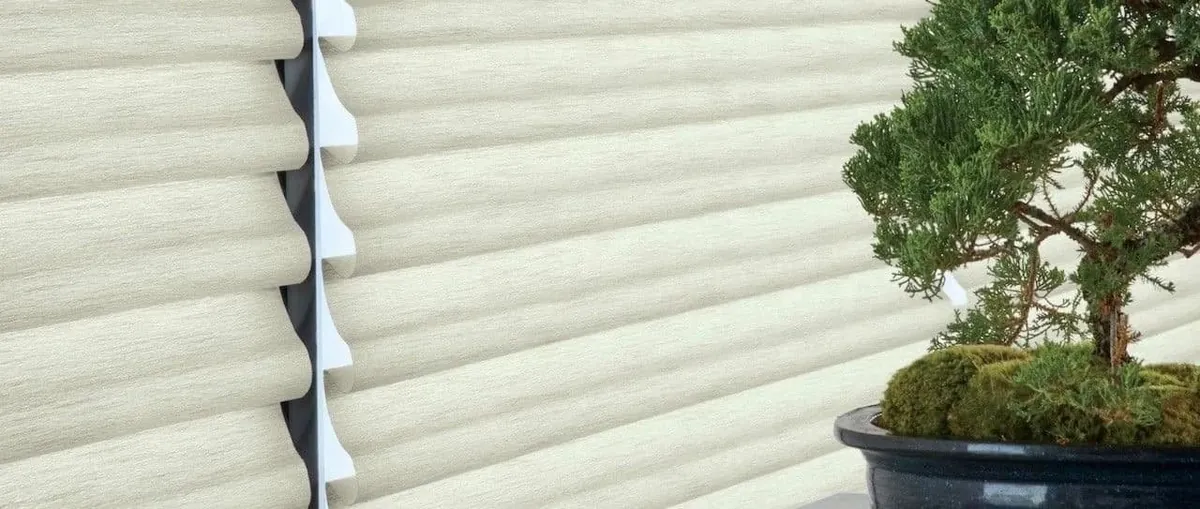
Sheer shades for rooms that need both
Some rooms want daylight and privacy at the same moment, all day: a front room in the river village, or a hillside living room that faces the house across the street. Sheer shades, with soft fabric vanes on a sheer backing, are a good answer. They let you keep a sense of the outdoors while softening the view in, and the room stays gently lit.
On a motor, a sheer shade joins the same groups and schedules as the rest of the house. We bring sheer samples along with the honeycomb, roller and roman options so you can compare them against the same window.
Starting small and adding on
Plenty of Blackstone projects start with one room: the street-side front room in a village house, or the dormer bedrooms in a cape. Every shade added later joins the same PowerView app, takes the same handsets and slots into your groups and schedules, so a first room never needs redoing. Planning motorized blinds in Blackstone, MA in stages also gives you a season to see how the first fabric behaves before choosing the next.
For everything else we offer in town, see our Blackstone window treatments page, and for folded fabric options see roman shades in Blackstone.
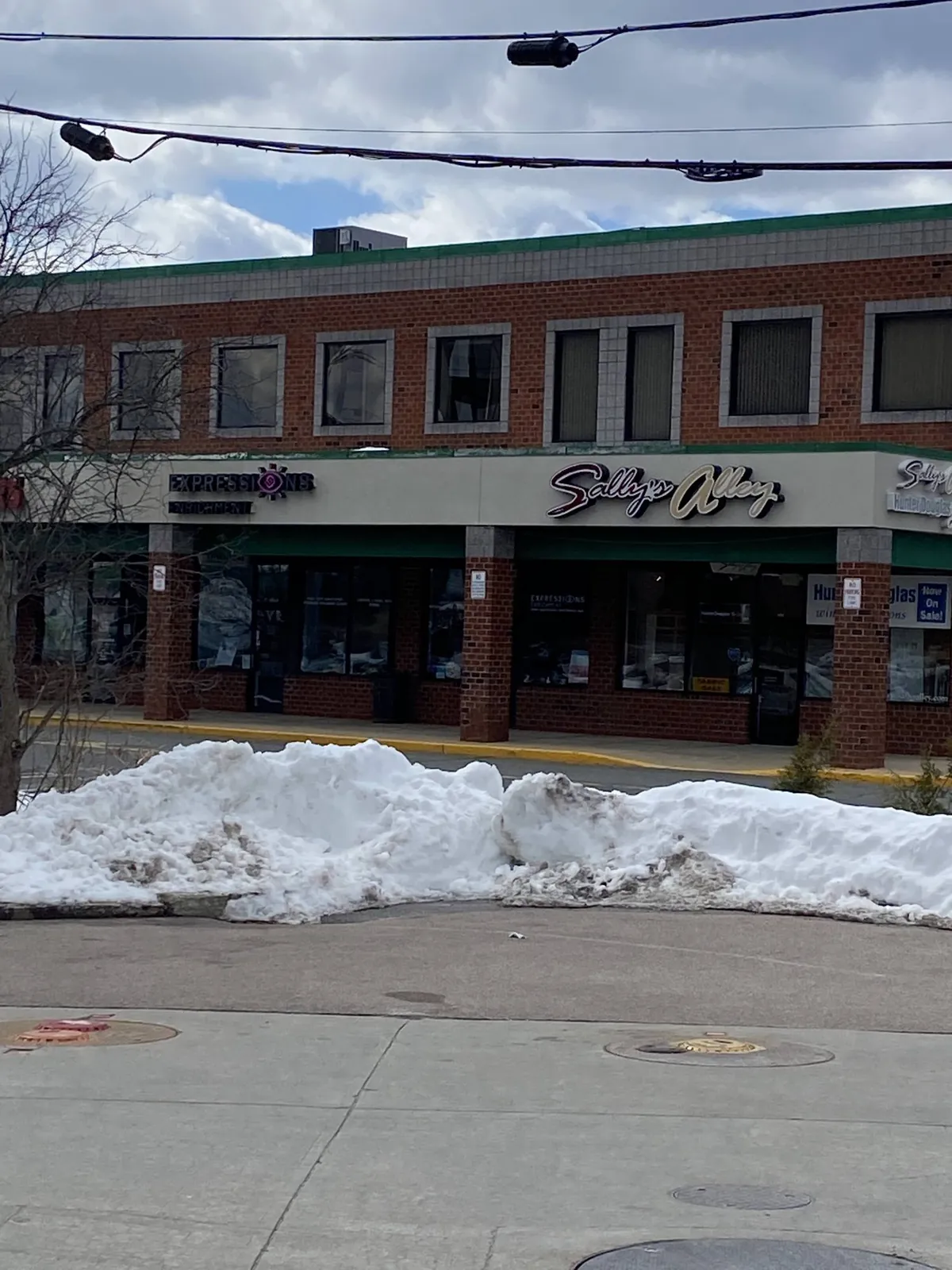
Franklin, the closest showroom to Blackstone
Our Franklin showroom is the nearest to Blackstone. You can call in there, or ask for the sample van to come to the house.
The measuring always happens at your windows, since the narrow river-house frames and the angles of a hillside lot have to be seen where they are.
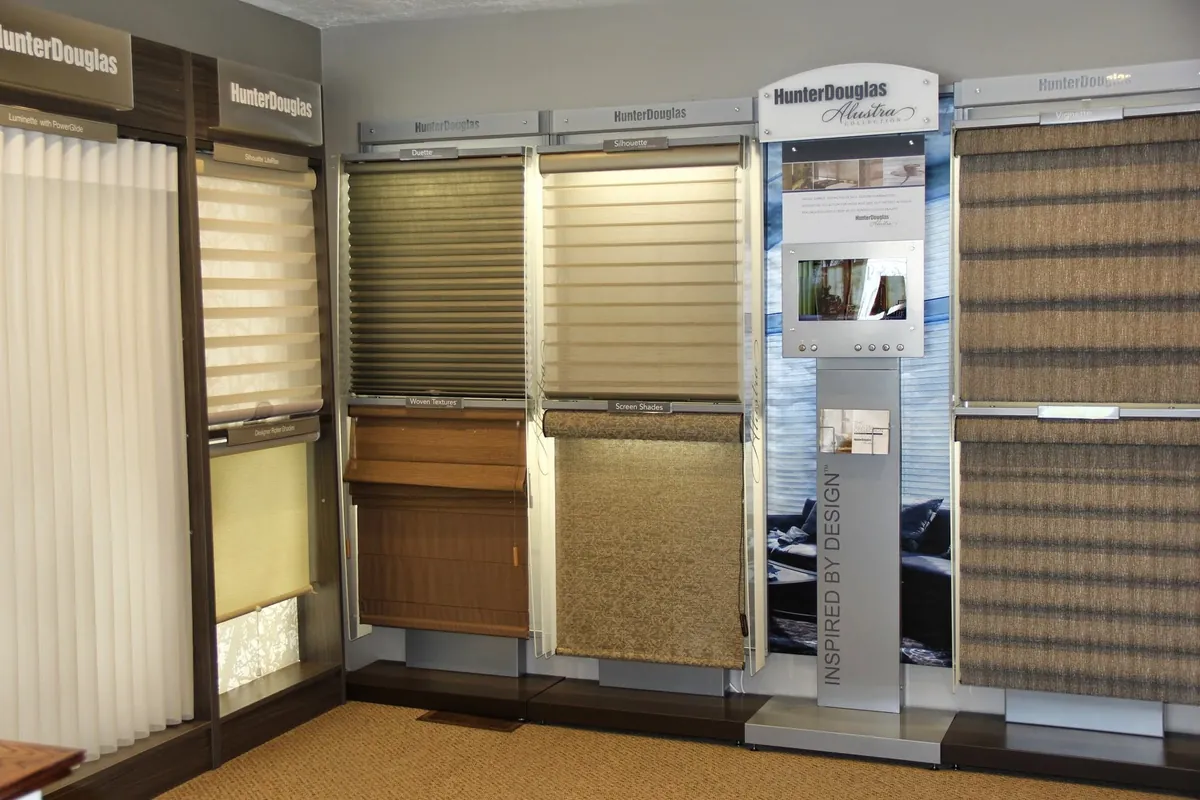
Why it helps to buy from a Gallery dealer
Blinds & Designs is a Hunter Douglas Gallery dealer, and our installers are certified by Hunter Douglas. For a motorized house that means one dealer for every kind of window, river house or ranch: honeycomb, roller, roman and sheer shades, and blinds, all able to run on PowerView in one app.
Estimates are free. Interior design consultations are offered when you want a hand with color and fabric, and blind and shade repairs are there if an existing shade needs work. See our Hunter Douglas dealer in Blackstone page and the motorized blinds and shades page for more.
Blackstone questions, answered
Our house is downhill from the neighbors. How do we stop them seeing in?
Blinds tilted against the slope block a view from above while light still comes in, and light-filtering fabric screens the window from every side. On a motor, those exact positions are saved and repeated.
The mill-house windows are narrow and uneven. Can they be motorized?
Yes. We measure each opening at several points and choose an inside or casing mount so the shade fits cleanly.
Can dormer shades in a cape be motorized?
Yes. Dormers are among the first windows people motorize, because they are hard to reach. They can be grouped with the other bedrooms.
Do we have to use the app?
No. Handsets raise and lower the shades without a phone, and schedules run on their own once set.
Is the estimate free?
Yes. Estimates cost nothing and cover the shades and the installation for the windows we measure.
Pick a room and book
Whether it is a row of narrow windows by the river or a dormer bedroom up the hill, start with the room that bothers you most. Mention it when you book and we will bring samples to suit, measure each window and show you how motorized blinds in Blackstone, MA behave on your glass. If you want to ask something first, the call button reaches our Franklin showroom.