
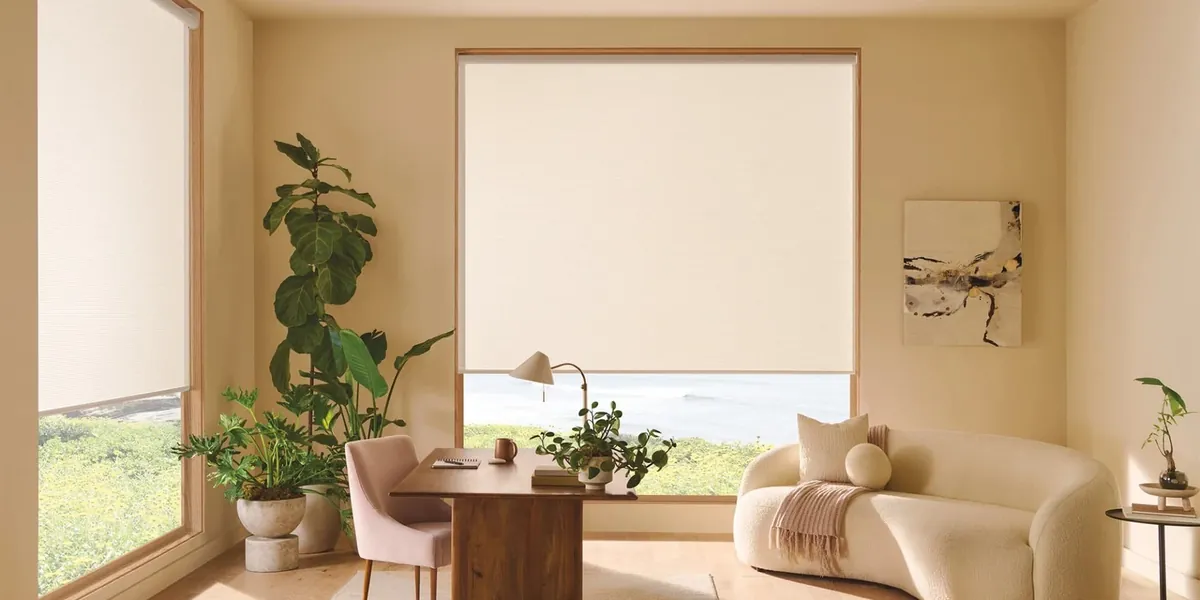
When you like a roller but want more from the fabric
Sonnette cellular shades are for the houses where a flat roller looks right but feels a little thin. Around North Dartmouth, we suggest them most where modern and old meet.
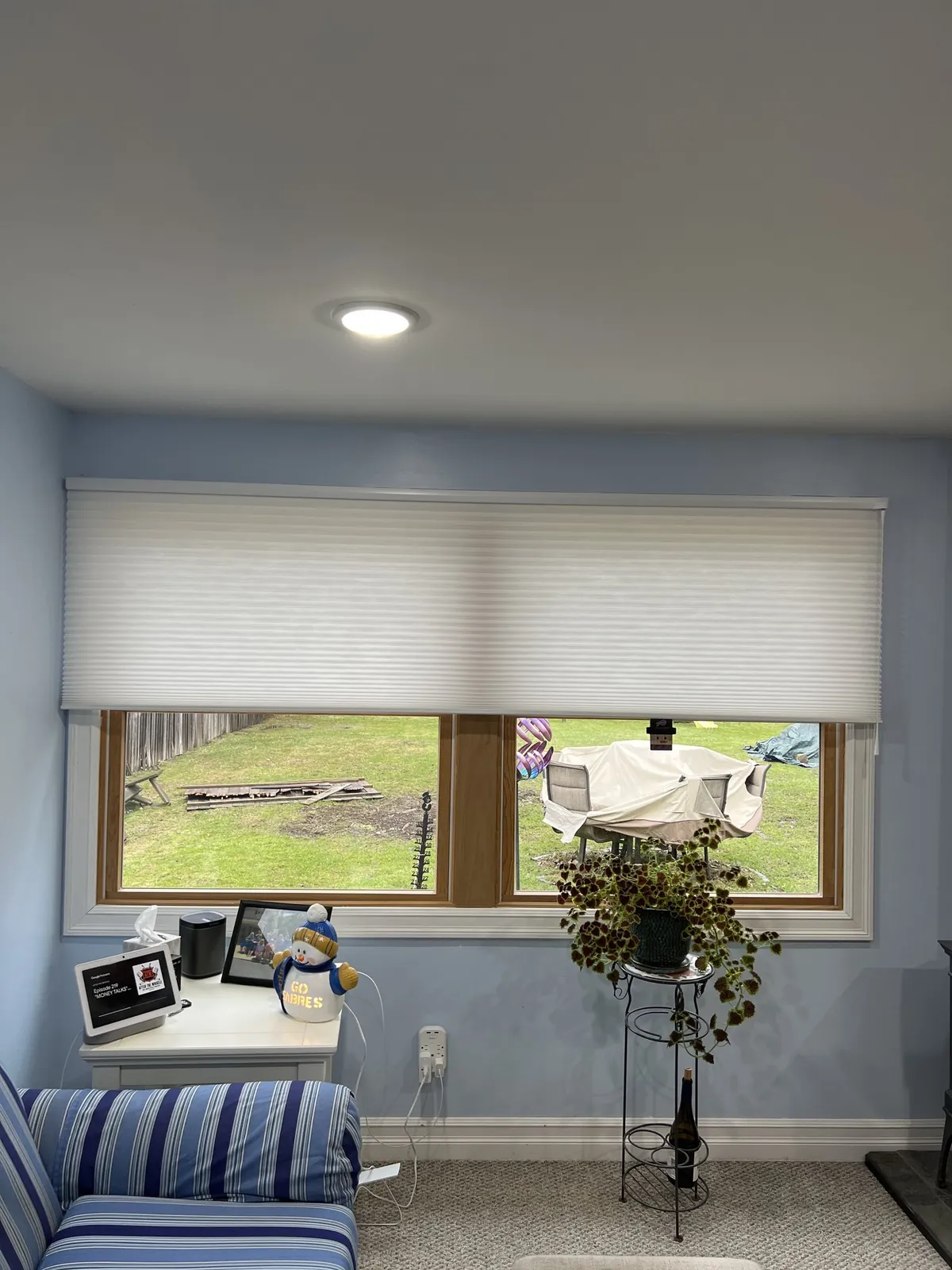
A mid-century ranch off Faunce Corner Road or Slocum Road usually wants a simple, flat look across its picture windows, and a pleated shade can feel too busy there. A Padanaram cape, on the other hand, has small rooms that lose warmth at the glass. Sonnette sits between the two: it rolls up like a roller, but its fabric forms a gentle curved cell that holds a layer of air and softens the light.
In South Dartmouth’s water-facing rooms, where afternoon glare comes off Apponagansett Bay, that soft double layer turns hard light into an even glow instead of bright patches on the floor.
What makes Sonnette different
Two shade ideas, combined. Here is what each brings.

The roller look
A smooth face with no pleats, rolled up neatly at the top. It suits clean, simple rooms and wide glass.
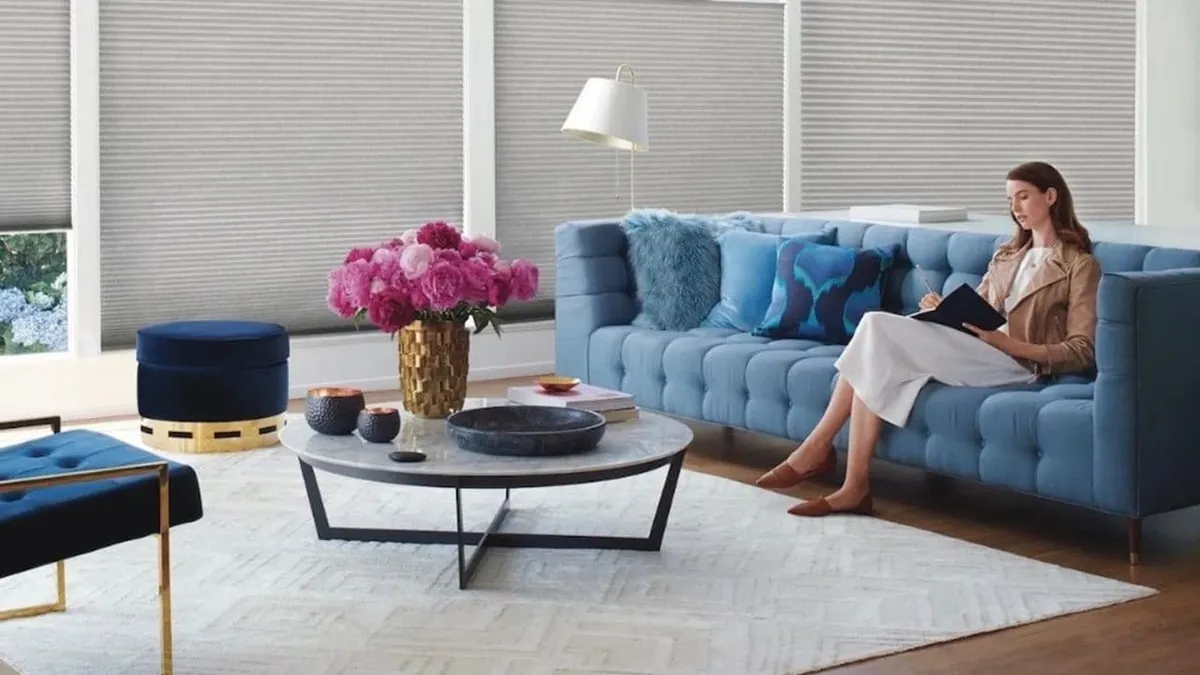
The cellular comfort
Two layers of fabric form a curved pocket of air, like a pleated honeycomb shade does, so the room feels more comfortable at the window.
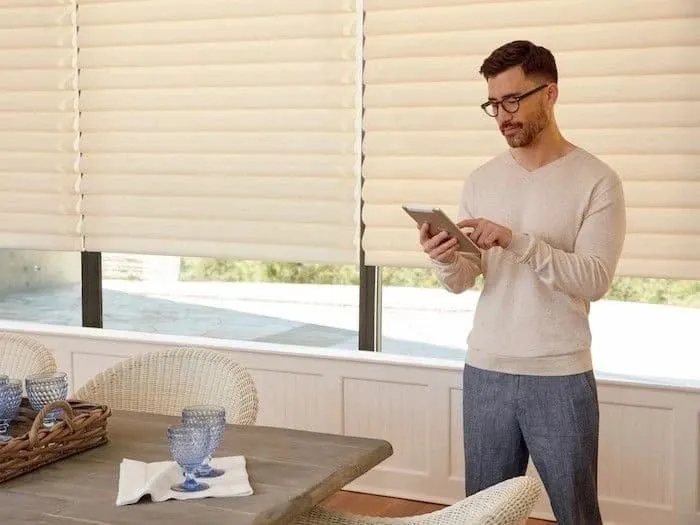
Easy to automate
Like other Hunter Douglas rollers, Sonnette can be fitted with PowerView, for app, remote and scheduled control.
The glow, and why it happens
Light passing through a single layer of fabric shows every bright spot behind it. Light passing through two layers with air between them spreads out. That is the soft, even glow you see on Sonnette cellular shades when the sun is on them, and it is the reason people who see one in person often choose it over a flat roller.
The curve of the cell also gives the shade a bit of depth when it is down, so it looks less like a flat sheet and more like a tailored fabric panel. From the street, a row of them reads as calm and consistent.
There are light-filtering fabrics for living spaces and room-darkening ones for bedrooms, so the same look can run through the whole house while each room gets the light it needs.
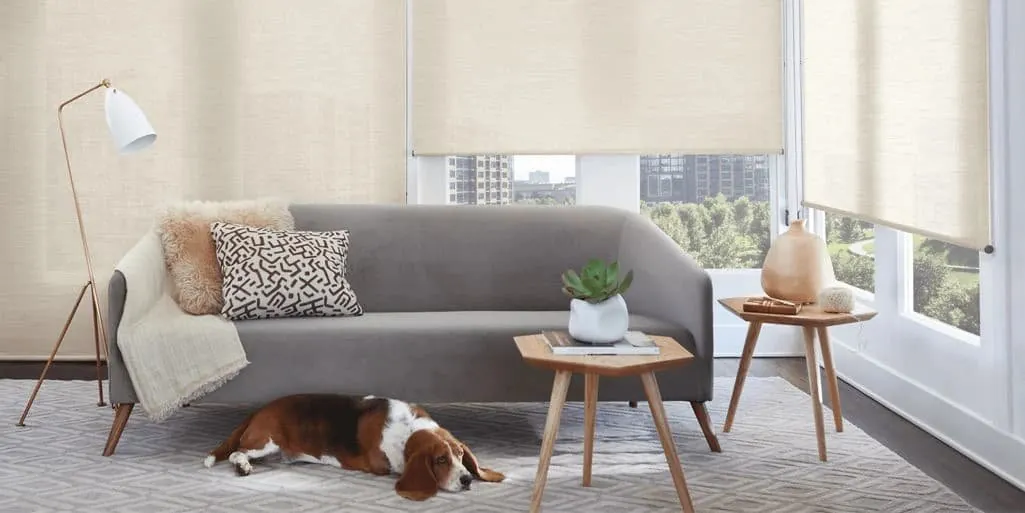
Sonnette or a pleated honeycomb
This is the comparison we make most often. Both use a cell of air to make a room more comfortable. The difference is the look and how the shade stacks.
- Sonnette rolls up into a compact roll at the top. Its face is smooth. It suits contemporary rooms and wide openings.
- A pleated honeycomb such as Duette folds into a slim stack. Its pleats suit traditional rooms, and it offers features such as top-down, bottom-up.
- For the coldest rooms in a drafty older house, a pleated honeycomb usually does more. For a room where looks and soft light matter most, Sonnette often wins.
We bring both to the consultation, so you can compare them on the same window.
Windows old and new
Out toward Russells Mills, the farm properties have deep-set nineteenth-century sash, and the depth usually leaves room to mount Sonnette cellular shades inside the frame, so the fabric sits close to the glass where the cell does the most good. We measure every opening separately, because old frames are rarely square and a roller shows any taper.
On a wide ranch window, one Sonnette shade can often cover the run on its own, or several can share a head rail so their hems line up.
Getting Sonnette into your home
- Book a consultation through the form or the call button.
- We bring the fabrics to you, so you see the glow in your own light, not ours.
- Every window is measured, with the frame depth checked for an inside mount.
- You get a free estimate for the fabrics and controls you chose.
- Certified Hunter Douglas installation completes the job, and every shade is tested before we leave.
The full range is in the Hunter Douglas Sonnette catalog if you want to browse before the visit.

Bought from a Hunter Douglas Gallery dealer
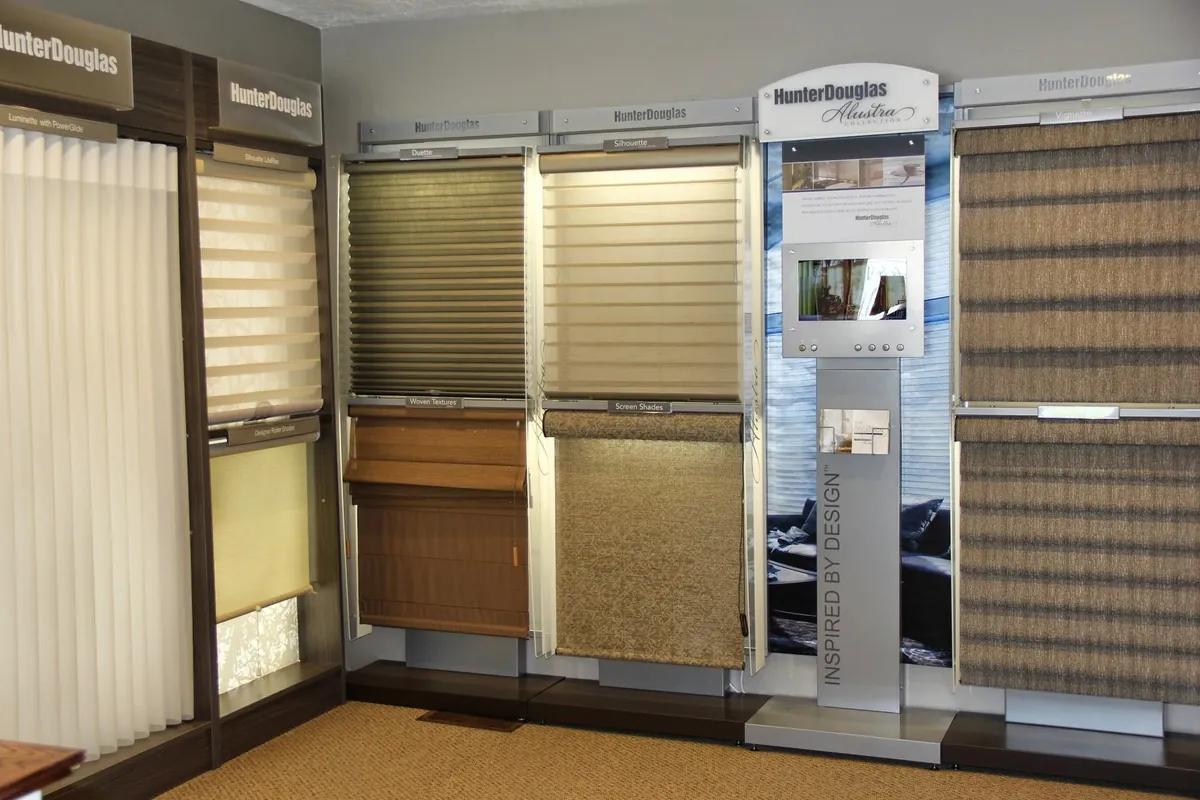
Blinds & Designs is a Hunter Douglas Gallery dealer. We sell, measure and install Sonnette cellular shades ourselves, with certified Hunter Douglas installation on every order.
We offer in-home consultations with sample vans, free estimates and interior design consultations, and we repair the window coverings you already own through our blind and shade repair service.
Sonnette questions
Is Sonnette a roller or a cellular shade?
Both. It rolls up like a roller, but its fabric is two layers that form a curved cell, which is what makes it a cellular shade.
Will Sonnette cellular shades make a room warmer?
The cell holds air against the glass, which helps. For the very coldest rooms, a pleated honeycomb usually does more. We do not quote energy figures. See cellular shades and winter heat.
Can Sonnette darken a bedroom?
Yes, with a room-darkening fabric. An outside mount that overlaps the frame reduces the light at the edges.
Does it work on a sliding door?
Sonnette lifts rather than slides, so on a door it has to be raised to walk through. For a slider we usually suggest a vertical honeycomb or another side-traveling shade.
Can it be motorized?
Yes, with PowerView. Tell us at the consultation so we can plan the controls. See motorized blinds and shades.
Do you repair Sonnette shades?
Yes. We welcome repairs on Hunter Douglas window coverings you already own.
See the glow for yourself
Sonnette makes the most sense once you see the light coming through it. Request a consultation and we will bring the samples, measure and give you a free estimate, or visit the North Dartmouth showroom. All our roller shades are on one page.
Every Hunter Douglas line we carry is on our Hunter Douglas Gallery dealer page.