
Why the words matter
When we stand at a window with a tape measure, a handful of words come up again and again. They are not jargon for its own sake; each one names a decision that changes how the finished shade, blind or shutter looks and works. Knowing these window measuring terms helps you follow the conversation and ask the right questions.
You never need to measure anything yourself. Measuring is our job, done for the specific product you choose, because a shade mounted inside the frame and a shutter on the face of the trim need different numbers. But understanding the language makes the choices clearer, and it makes it easier to tell us what you want.
The parts of a window
Before mounting comes up, it helps to know what we are naming when we point at the frame.
- Casing or trim. The decorative molding around the window, on the wall side.
- Jamb. The inside faces of the opening, the surfaces you see when you look into the recess from the side.
- Reveal or depth. How far back the glass sits from the face of the trim. Deep reveals are common in older, thick-walled houses.
- Head. The top of the opening.
- Sill and stool. The ledge at the bottom. Strictly, the sill is outside and the stool is the interior shelf, but most people call the inside ledge a sill.
- Sash. The frame that holds the glass, and the part that moves on a window that opens.
- Mullion. A vertical post between two windows set side by side.
Inside mount and outside mount
These two window measuring terms come up more than any others, because they decide where the product sits.
Inside mount
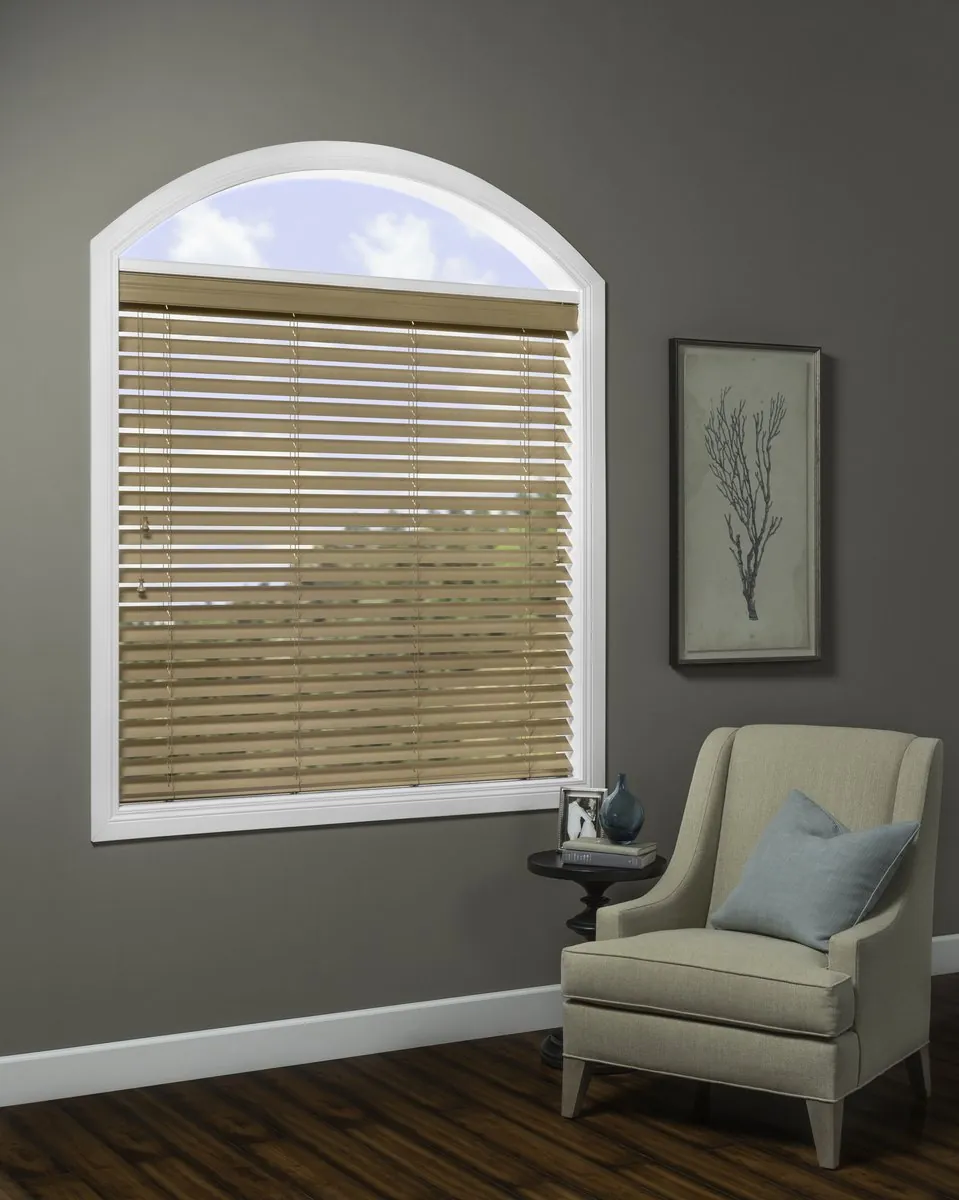
An inside mount fits within the opening, against the jamb. It shows off the trim, gives a clean, built-in look and keeps the window flush with the wall. It needs enough depth in the reveal to hold the product, and an opening that is reasonably square, so we check both carefully.
Outside mount
An outside mount sits on the trim or the wall above and around the opening. It is the answer when the reveal is too shallow, when the opening is badly out of square, or when you want the window to look larger. It also covers more of the glass edge, which matters for darkness.
Light gap
A light gap is the thin strip of light that shows at the sides of an inside-mounted shade, between the fabric and the jamb. Every inside mount has some, because the product needs room to move. In a living room nobody notices; in a bedroom that needs to be dark, it can matter, and an outside mount that overlaps the opening is often the better answer.
Other words you may hear
Out of square
An opening that is not a perfect rectangle. Older houses settle, so the width at the top may differ from the width at the bottom, which is why an older window is measured in more than one place.
Obstruction
Anything that gets in the way of a product: a window lock, a crank handle, an alarm sensor, a radiator below, a deep stool. Obstructions decide mount type more often than people expect.
Stack
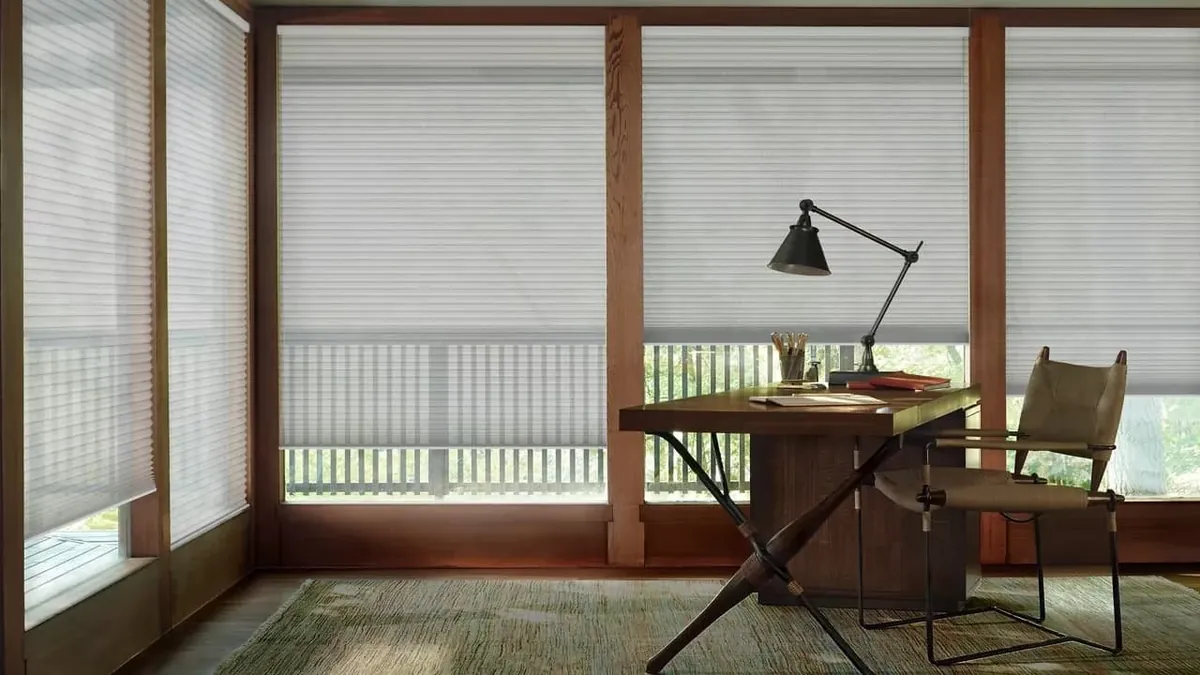
The space a raised shade or blind takes up at the top of the window, or that an open vertical product takes at the side. A large stack can block part of the view when the product is up, which can affect whether it should sit inside or outside the opening.
Headrail
The top bar of a shade or blind that holds its working parts. On an inside mount it sits inside the head of the opening; on an outside mount it sits above it.
Top-down, bottom-up
A shade that can lower from the top as well as rise from the bottom, so you can cover the lower glass and leave the sky open.
Terms for bays, doors and tall glass
Some windows bring their own vocabulary, and these window measuring terms come up whenever a room has more than plain rectangles.
Bay and bow windows
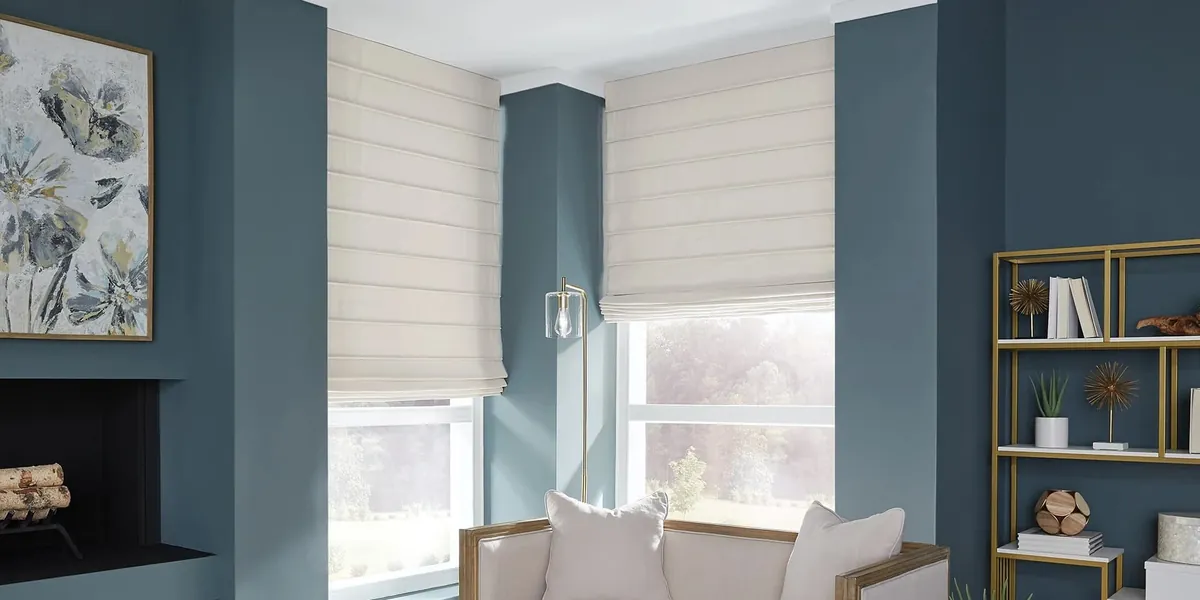
A bay is a group of windows set at angles, projecting out from the wall; a bow is the curved version. Each section is usually measured as its own window, and the corners where two shades meet are planned so they do not knock into each other or leave a wide gap.
Overlap
On an outside mount, overlap is how far the product extends past the opening on each side and above it. More overlap means less light around the edges and a window that looks wider; less overlap keeps more of the wall on show.
Projection
How far a product stands out from the wall or the glass. It matters near door handles, window cranks and furniture, and on a door that needs to swing freely.
Sliders and French doors
A sliding door needs a product that moves out of the way of the handle and the traffic, often one that draws to the side. A French door may need each leaf covered on its own, so the shade travels with the door rather than blocking it.
How the terms play out in local houses
Window measuring terms are easier to picture with real windows in mind, and the houses across our territories give plenty of examples.
Antique capes
Along Route 6A and in Sandwich and Hingham, antique capes have small sash in deep reveals, often out of square. The depth usually allows an inside mount, which keeps original trim on view, but the out-of-square opening is checked closely first.
Mill-era triple-deckers
The tall, narrow windows of the triple-deckers in New Bedford, Fall River and Woonsocket often have old locks, radiators below and rows of windows separated by mullions. Obstructions and stack height come up at nearly every window.
Water-facing rooms
In Osterville, Chatham and Marion, big water-facing windows bring up stack: a shade that piles up at the top can eat into the view, so mount type and product choice are weighed together.
Newer colonials
In Franklin, Medway and Needham, larger colonials are usually square and deep enough for inside mounts on most windows. The tall foyer glass raises different questions: reach, and how the upper and lower shades will line up.
Products and how they mount
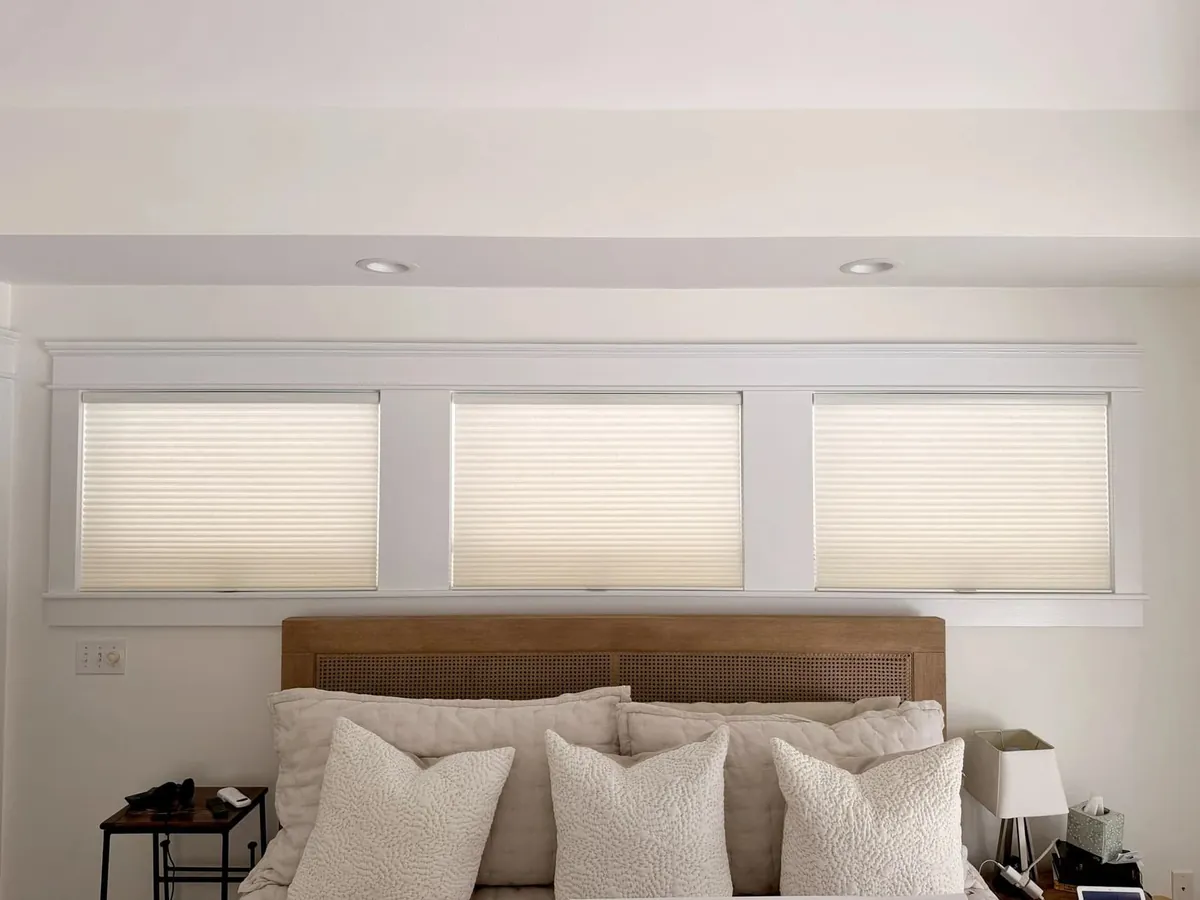
Cellular shades
Honeycomb shades, often inside mounted to keep trim on view.
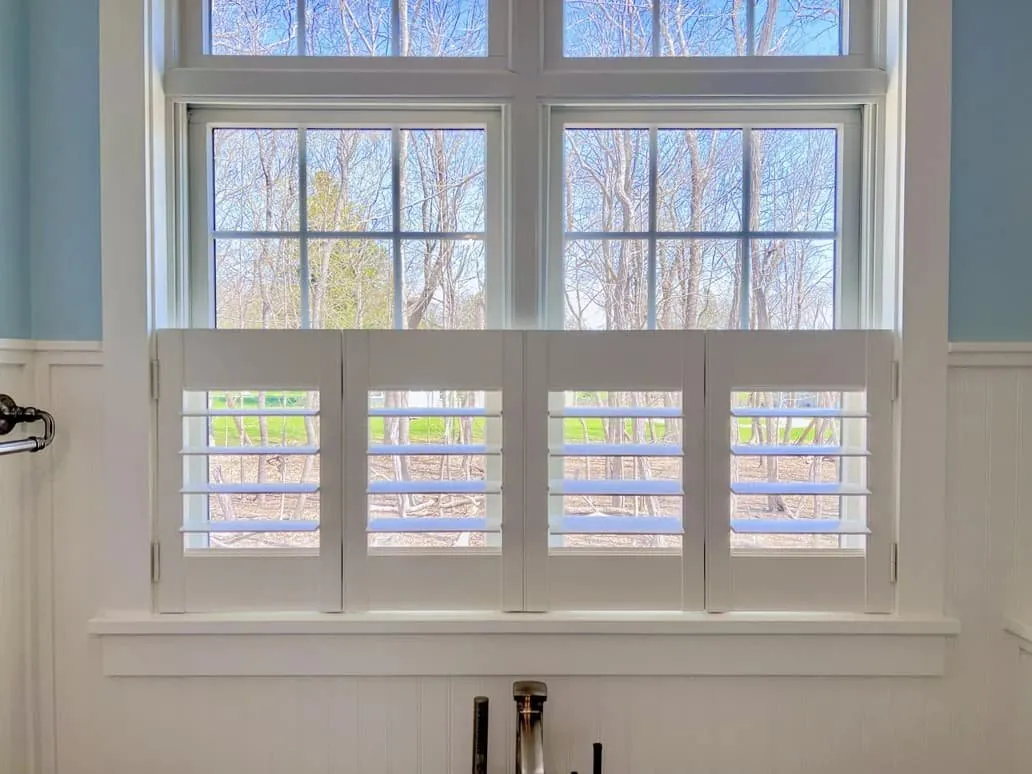
Plantation shutters
Made to the opening, with a frame chosen to suit it.
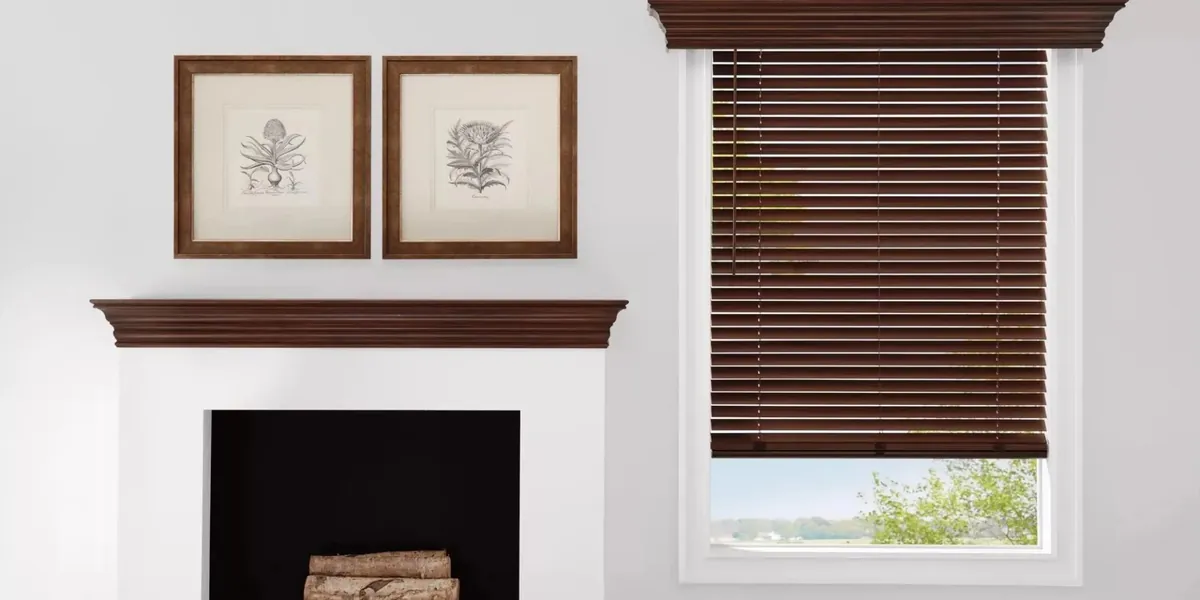
Custom blinds
Wood, faux wood, metal and vertical blinds, inside or outside.
Questions about measuring
Should I measure my windows before you come?
No need. We measure for the specific product you choose, so anything measured beforehand would usually be measured again.
Which is better, inside or outside mount?
It depends on the window. Inside mounts show off trim and look built in; outside mounts suit shallow or uneven openings and give more darkness. We show you both at the window.
Why does my shade have a gap at the sides?
That is the light gap on an inside mount. The product needs room to move. If it bothers you in a bedroom, an outside mount reduces it.
My windows are crooked. Is that a problem?
Not usually. Out-of-square openings are common in older houses and are part of why we measure carefully and choose the mount to suit. See shutters for older windows.
Where can I learn more about the visit?
Our guide to what happens at an in-home consultation walks through it step by step.
Put the words to work
Request a consultation and we will measure your windows for the products you choose, explaining each window measuring term as it comes up, and give you a free estimate. As a Hunter Douglas Gallery dealer, we bring samples from across the range, and certified Hunter Douglas installation fits the finished order. You can also visit the North Dartmouth showroom, or use the call button at the top of the page.