
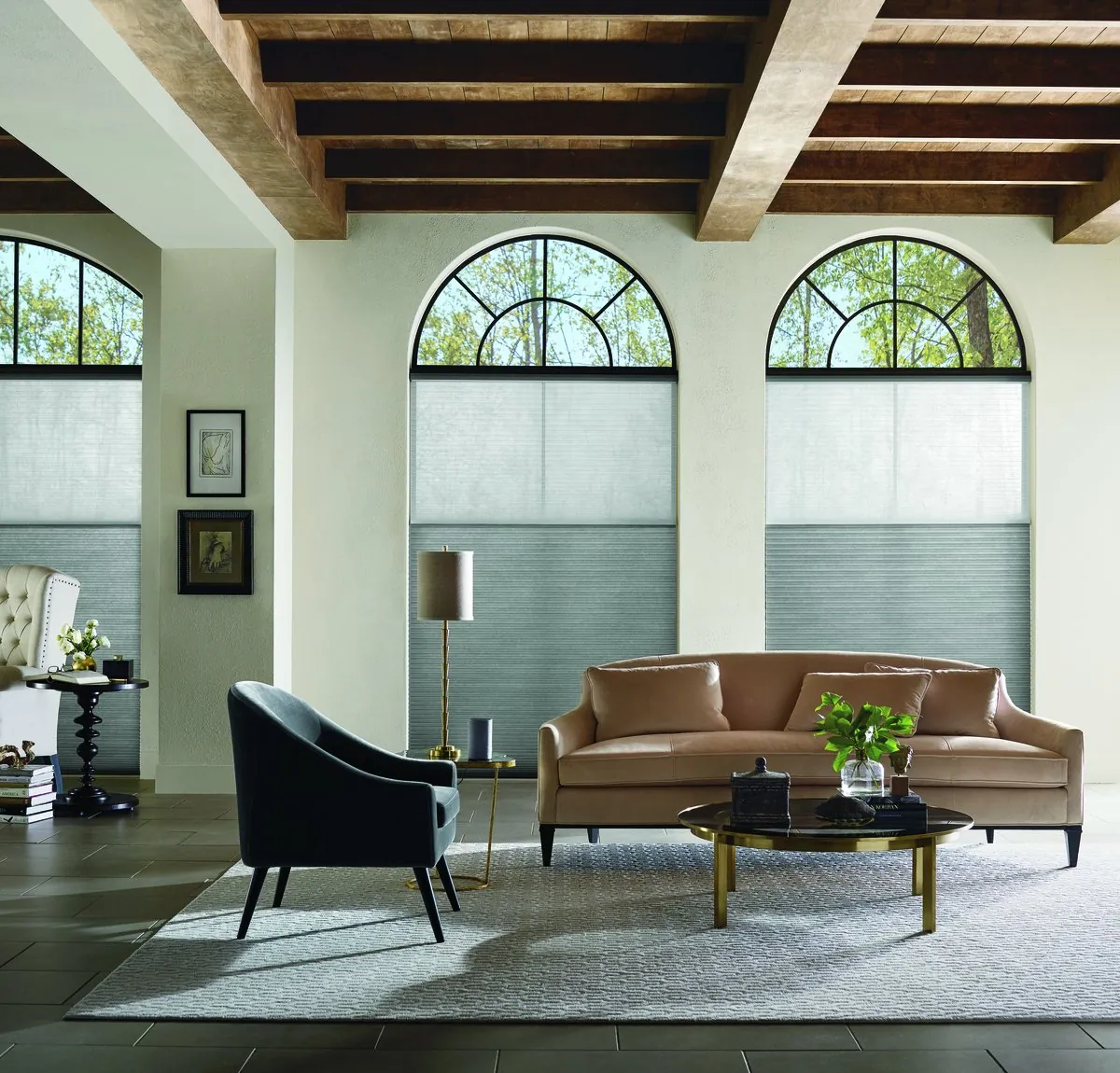
Water on three sides, a view in every best room
Chatham sits on the elbow of the Cape with open water on three sides, and its houses are built to face it. Shingled captains’ houses line the village streets, cottages crowd along Shore Road, and out toward Morris Island the houses turn almost entirely toward the water. In most of them, the rooms you care about most were arranged around a view. That shapes every recommendation we make for cellular shades in Chatham: whatever goes on the window has to give that view back the moment you want it.
The same position brings two problems. Salt air reaches every window, all year, because there is no side of town sheltered from the sea. And because the water surrounds the town, the sun comes in from a different side at every hour: low over the ocean in the morning, high over the sound at midday, and long across the water toward evening.
A honeycomb shade handles both better than most window coverings. Its working parts sit sealed in the headrail, and its fabric can soften glare without hiding the water.
Honeycomb options for Chatham houses
We bring every option here as a sample, because each one behaves differently depending on which side of the elbow a room faces. These are the choices we suggest most often.
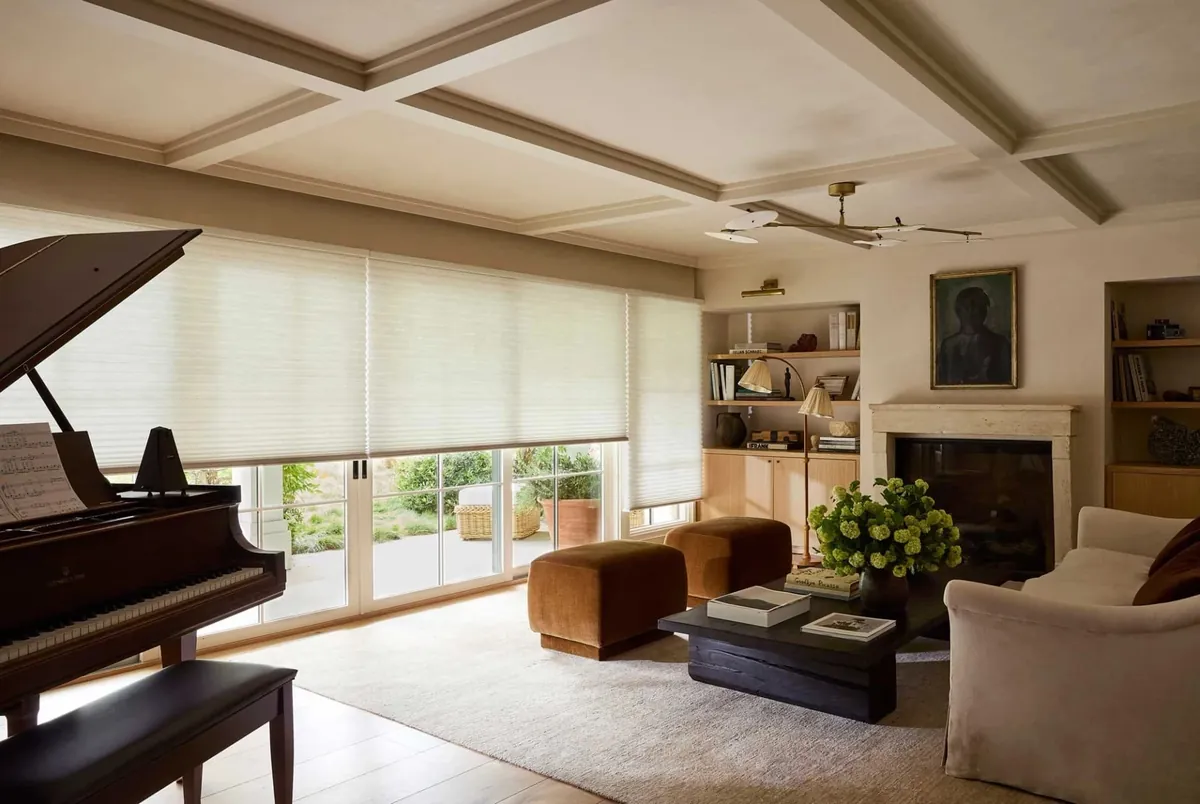
Top-down shades for the view
Open from the top, close from the bottom, or both. Cut the sun high in the sky and keep the water in sight below it.
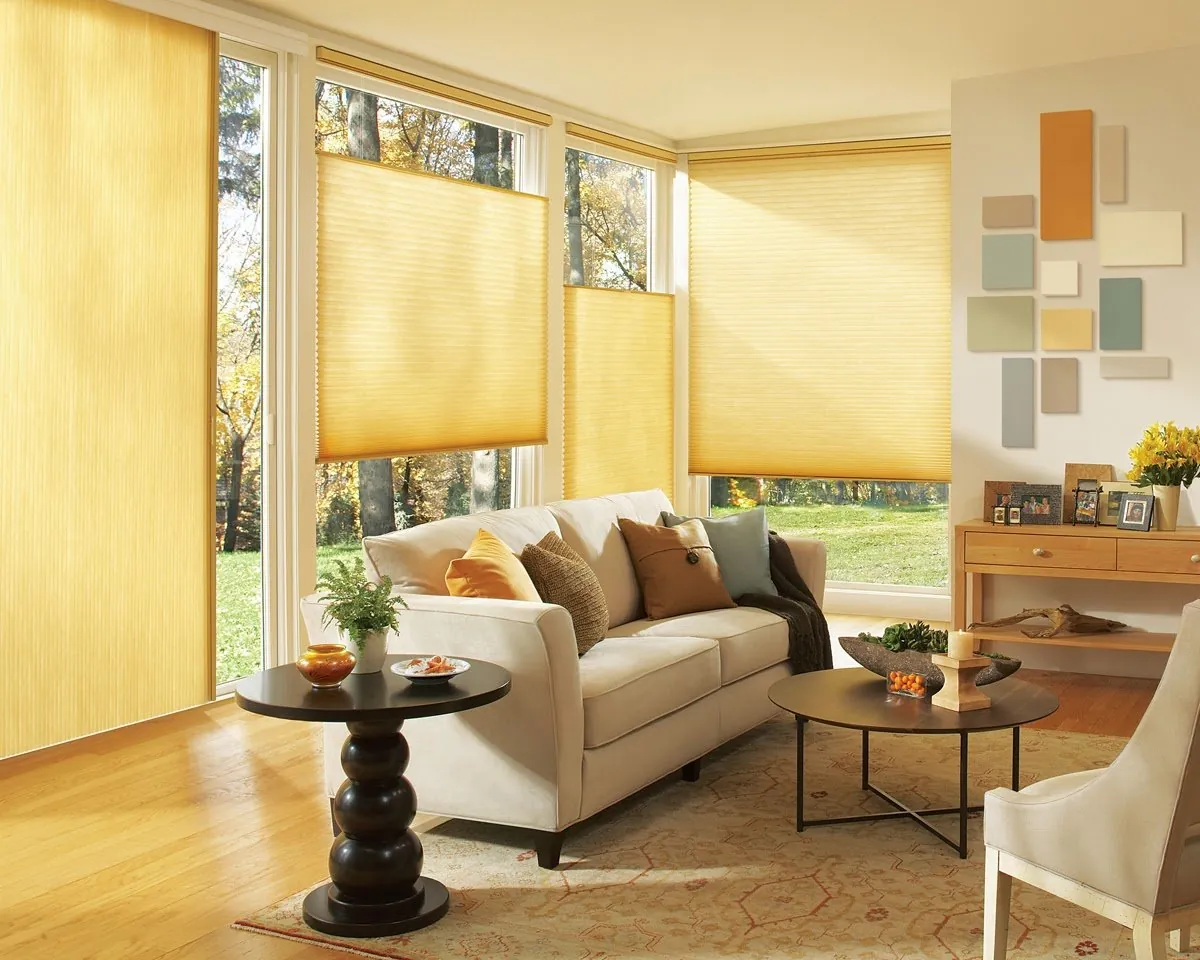
Light-filtering fabric
A fabric that glows in the sun, softening the reflected light without turning the room dim.
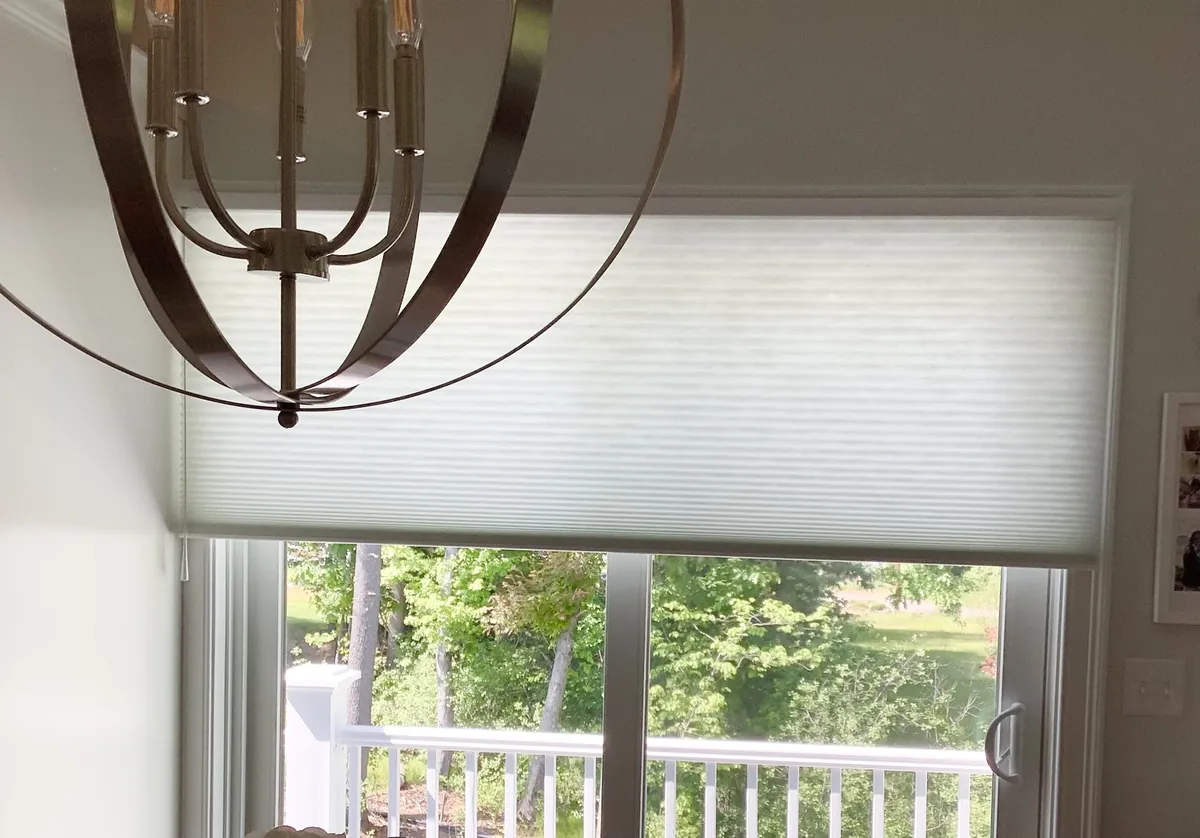
Sliders to the deck
A honeycomb shade on a slider, so the door to the deck matches the windows and still opens easily.
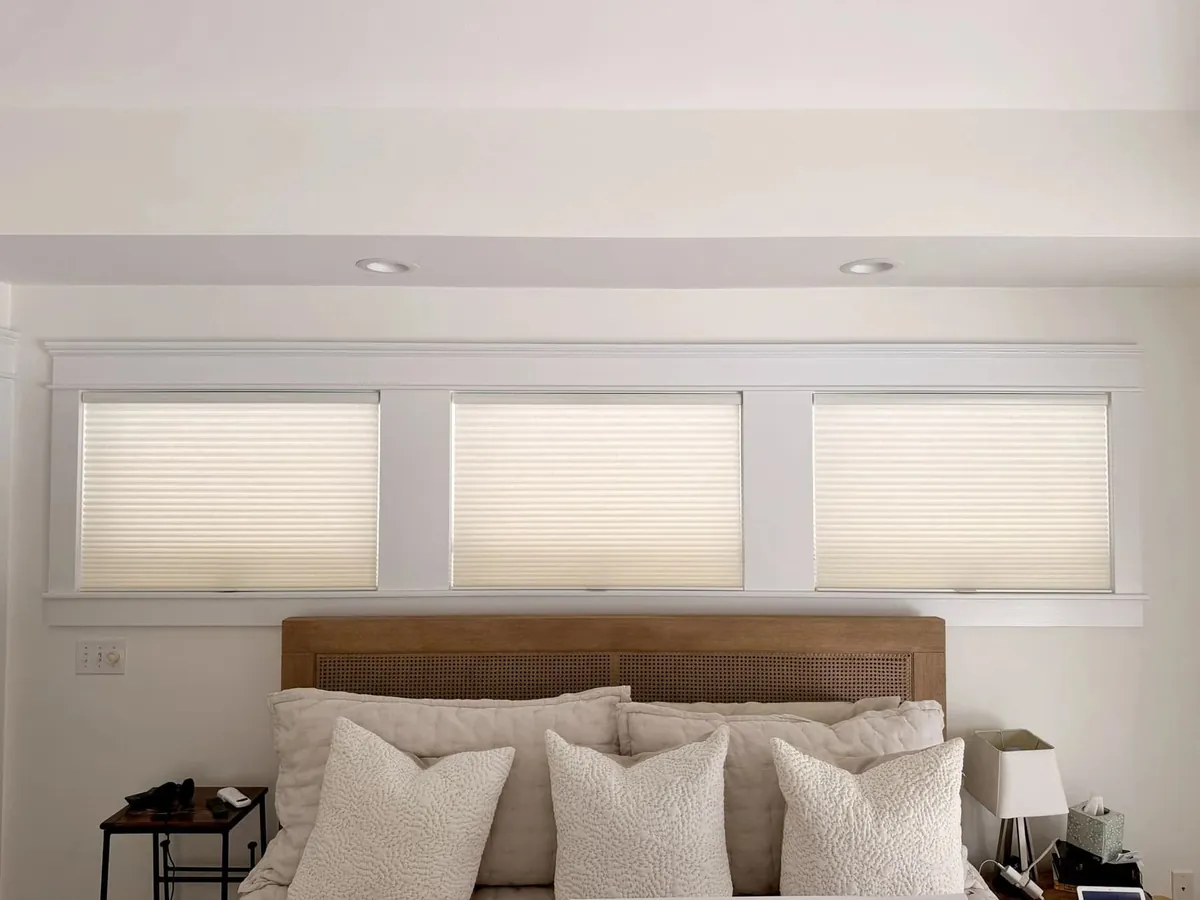
Darkening for guest rooms
For the bedrooms that face east toward the ocean, where first light arrives well before anyone wants it.
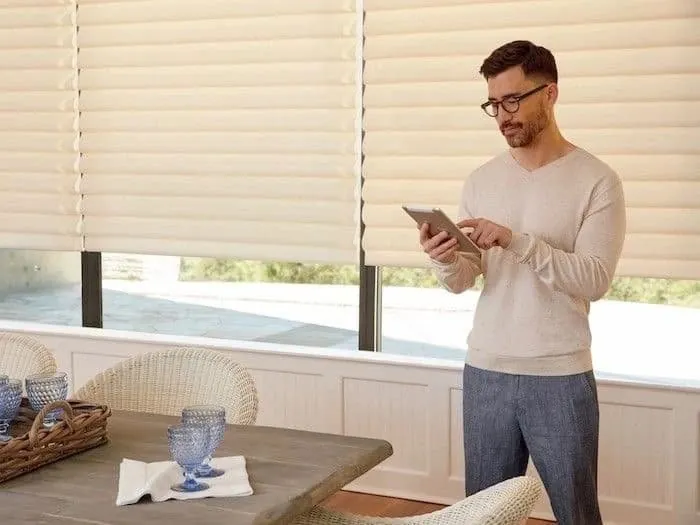
PowerView on a timetable
Shades that follow the sun around the house on a schedule you set from the app, side by side, room by room.

Choosing with samples
We bring the fabric books to your table so you can match them to your rooms and your trim.
A shade that disappears when you want the view
In a Chatham living room the shade should be out of the way most of the time. The test we use is simple: raise it fully and see how much of the window it still covers.
A honeycomb shade does well on that test. The fabric folds into a tight stack at the top of the window, so very little glass is lost even on a short cottage sash. Mounted inside the frame, the raised shade tucks up behind the head casing and almost vanishes. On the big windows in a room built around the water, that slim stack is the difference between a view and a view with a band of fabric across the top of it.
When you do want some cover, the top-down, bottom-up option does the work. Lower the top rail on a bright afternoon to block the sun high in the sky, and the lower half of the window stays open to the harbor or the beach. We bring this option on every visit in Chatham, because it is the one most people end up choosing for their water-side rooms.
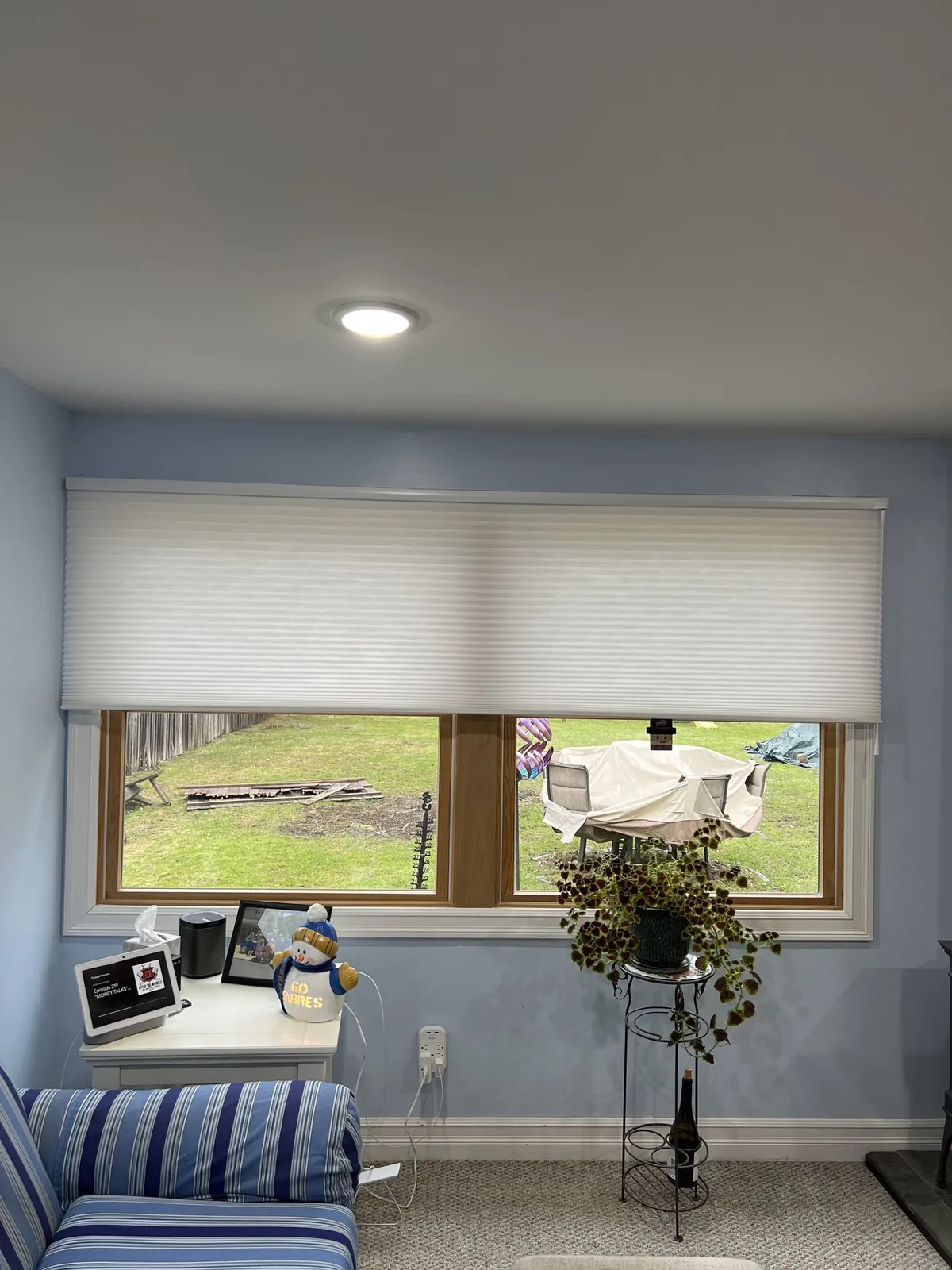
Salt air on every side of town
In most coastal towns there is a sheltered side, a street or two back from the water where salt is less of a problem. Chatham has very little of that. On an elbow of coast exposed on three sides, the wind brings salt in whichever way it blows, and anything metal near an open window feels it sooner or later.
That is a good reason to choose a honeycomb shade over older corded blinds. The lift mechanism sits inside the headrail. With a cordless lift there is no cord lock or long cord hanging at the side to stiffen or tangle. With PowerView motorization there is nothing to pull at all, and we plan how each motor is powered, window by window, at the visit.
How the shade is mounted matters too. Our certified Hunter Douglas installers fix each bracket into solid wood so the shade stays level on a window that will be opened through every warm week of the year.
Captains’ houses in the village
The old captains’ houses along Main Street and the village lanes are some of the most carefully kept in the region. Their windows are tall double-hung sash with deep casings, often original, often restored by hand. The goal is a shade that sits quietly inside that frame and never competes with it.
An inside mount usually does that best, with the headrail set within the opening so the casing stays fully visible. These frames have moved over the years, though, and the depth can change from one side to the other. We measure each window at several points before deciding, and where an old frame is too shallow or too far out of square, we suggest a slim mount on the casing and tell you why.
From the street, a captain’s house reads as a row of identical windows. We usually suggest one color facing out across the front, and the rooms behind can vary in opacity without changing the look from the road.
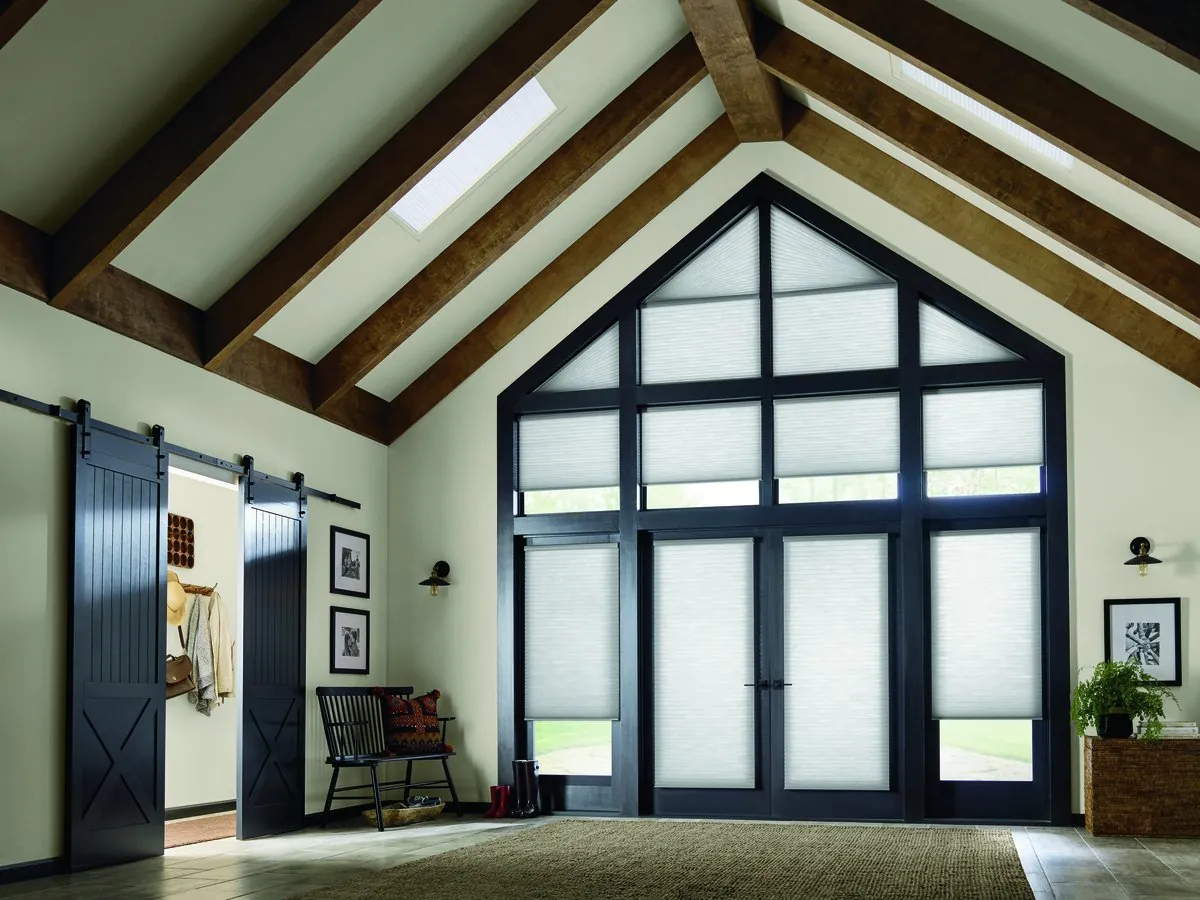
Cottages along Shore Road
Shore Road’s cottages are smaller, closer together and closer to the water. Many have been extended and updated, so one room may have a tiny original window and a big new picture window side by side. A bedroom may sit right beside the road, with walkers and cyclists passing all summer.
Here the needs are privacy and warmth at the same time. A light-filtering honeycomb fabric keeps a front room bright while showing nothing of the inside, and a top-down, bottom-up shade lets light in over the top while the part of the window at eye level stays covered. Because every shade is made to measure, a small original sash and a wide modern window can share the same fabric and line up at the same height.
Morris Island and the houses at the edge
Out toward Morris Island the houses are newer and more open, with big panes and glass walls facing the water and the dunes. These are rooms where the sun is strong from early morning, the wind is constant, and the glass is the main event.
They need shades that work at a larger size: wide shades on a single headrail, several shades on one rail that move together, and vertical honeycomb shades on sliders. PowerView motorization is often the sensible choice here, because a long run of glass is easier to control from a remote or the app than by hand.
A house this exposed also feels the cold. In winter, lowering honeycomb shades at dusk keeps the warmth from draining out through all that glass. Ordering cellular shades in Chatham for one of these houses is often as much about keeping the main room comfortable in January as about the summer sun.
Enclosed porches and sun rooms
Plenty of Chatham cottages and captains’ houses have a porch that was glassed in at some point, turning a summer space into a room that can be used most of the year. These rooms are lovely in spring and fall and difficult at the extremes, because they are mostly windows, often on three sides, with little wall between them.
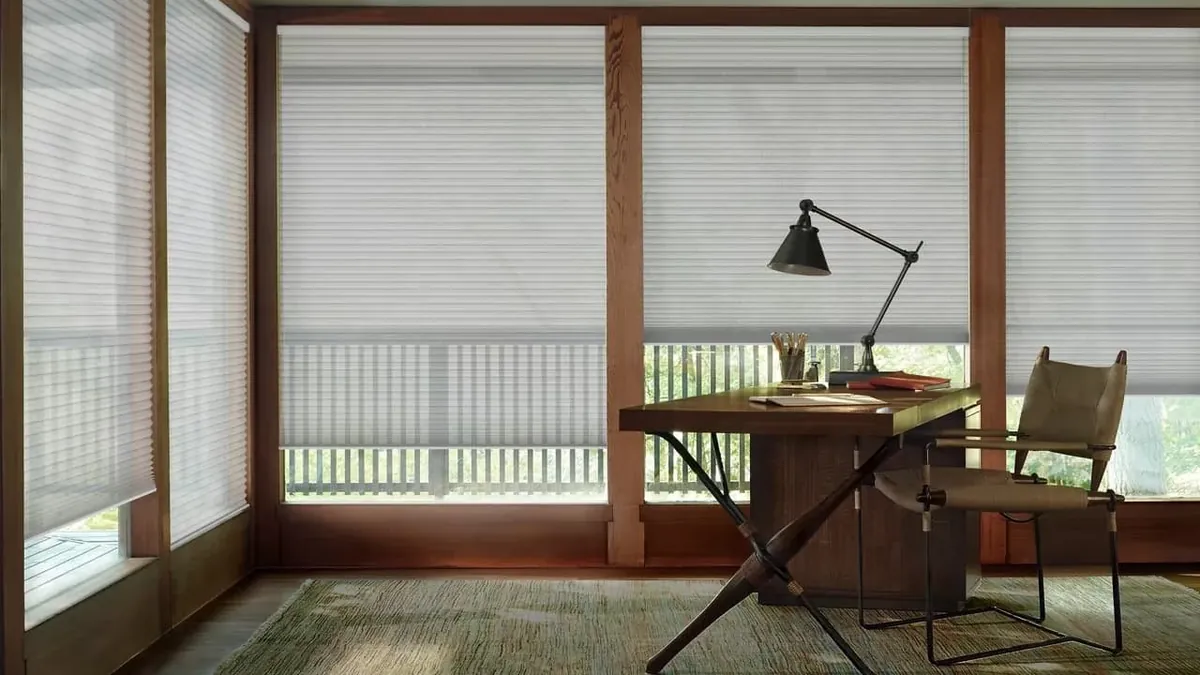
Honeycomb shades suit a glassed-in porch well. Each window gets its own made-to-measure shade, so a long row of narrow casements lines up neatly from end to end. In summer, lowering the shades on the sunny side keeps the room usable through the middle of the day. In the colder months, the cells slow the heat loss through all that glass, so the porch stays a room rather than a cold corridor between the house and the yard.
Many porch windows were fitted with whatever was available at the time, and the sizes can vary from one window to the next. We measure each one on its own. Where the frames are too shallow for an inside mount, we mount the shades on the face of the trim and set them all at the same height, so the room still looks finished. This is one of the rooms where cellular shades in Chatham change how often a space gets used.
Following the sun around the elbow
Because Chatham is surrounded by water, the sun works its way round the house over the course of a day, and every side takes its turn.
- Morning. The east-facing rooms take the sunrise straight off the ocean. Bedrooms here usually need room-darkening fabric.
- Midday. The south side takes high sun off the sound. A light-filtering fabric softens it in kitchens and living rooms.
- Late afternoon. The west side catches the low, long light that fades fabric and floors. Top-down shades help most here.
- Evening. The light softens and most shades can come up for the view, then go down again for warmth and privacy after dark.
PowerView can follow that pattern for you on a schedule, lowering each side of the house as the sun reaches it and raising it again when the light passes. You set and change the schedule from the app on your phone.
Why the cells keep a sea-facing room warm
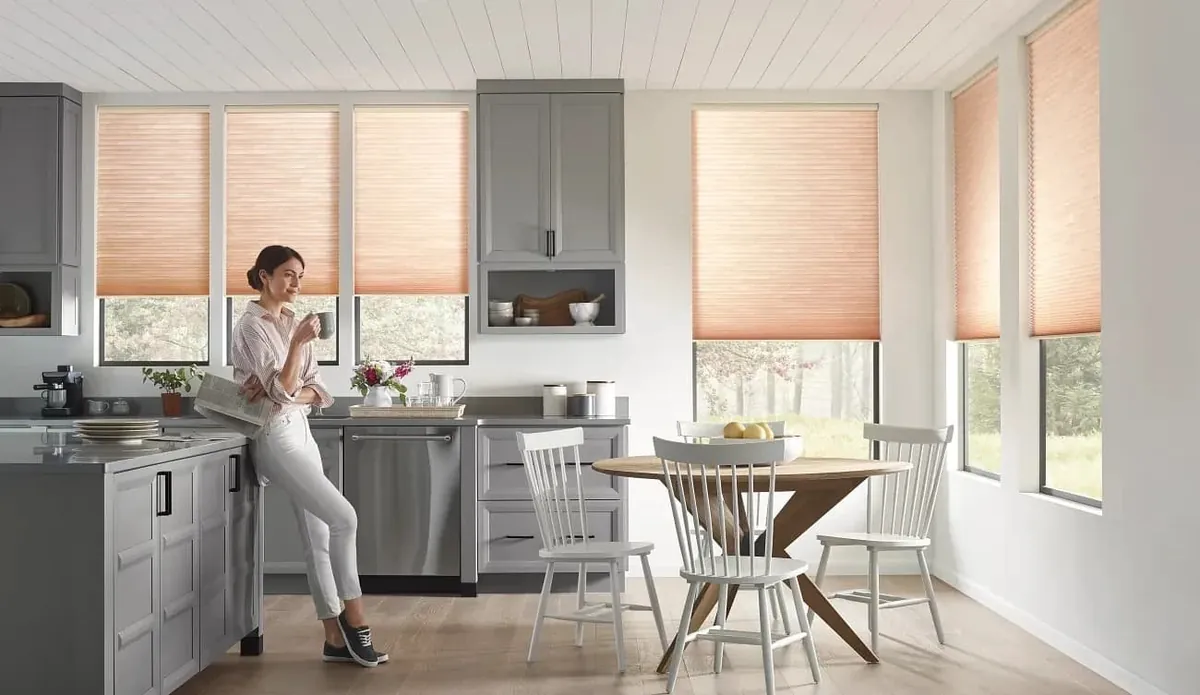
A honeycomb shade is made of rows of hollow cells running across the window. When it is lowered, each cell holds a pocket of air that barely moves. That still air is a poor conductor, so it slows the cold coming off the glass and the heat leaving the room.
On a winter night in a house surrounded by water, the effect is very noticeable. The chair by the window stops feeling like the coldest place in the room. Double-cell fabrics add a second row of pockets, and we bring both kinds so you can compare them at your own window. The guide on cellular shades and winter heat explains this in more detail.
Color and fabric in strong coastal light
Every shade on a Chatham window takes a lot of sun. The light off the water is bright and arrives from more than one direction, so the fabric works harder here than in most places.
- Lighter, neutral colors keep their color longer on windows that take direct sun.
- A light-filtering fabric gives privacy and softens glare without making the room dark.
- A room-darkening fabric belongs in bedrooms on the ocean side.
- One color facing out across the front keeps a captain’s house looking orderly from the street.
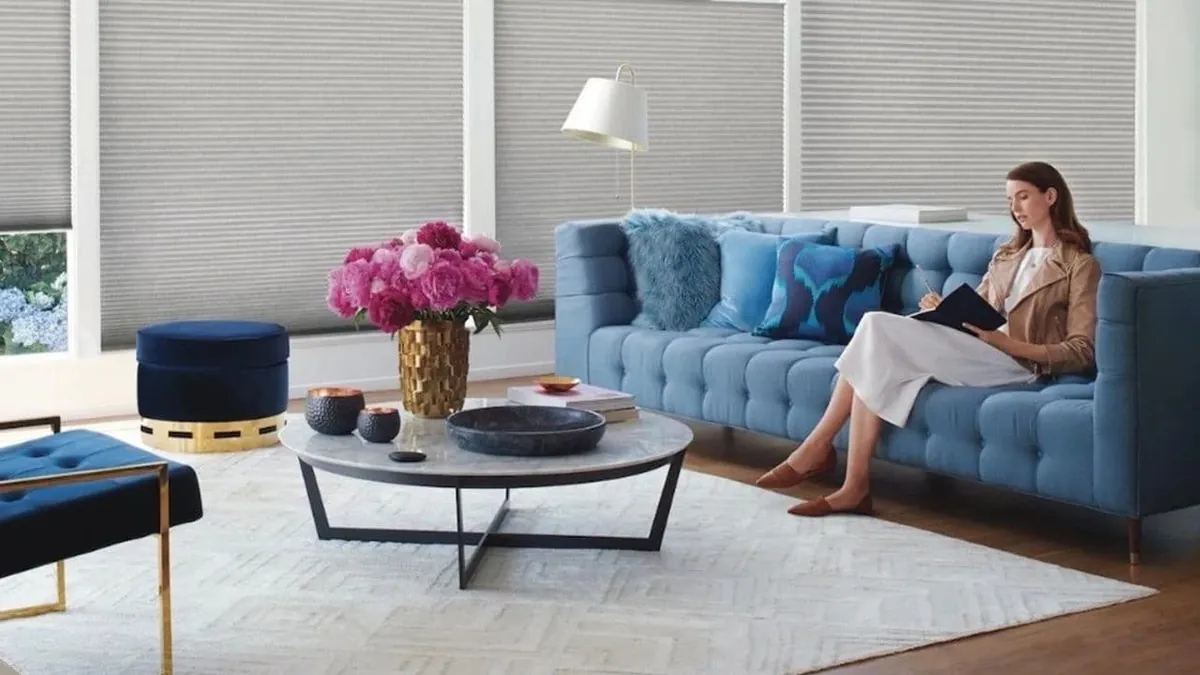
We put samples up at your windows during the consultation, morning side and afternoon side, so you can see how each one looks in the light it will actually live in.
Your consultation in Chatham
A consultation at home is the best way to choose shades for a house this tied to its light. Our vans carry the samples, so we can bring the showroom to you.
- You request a consultation and we agree a time.
- We arrive with the honeycomb range: fabrics, colors, opacities and lift options.
- We start with the rooms built around the view and talk through what you want from each.
- You hold the samples up to your own glass and see how each fabric handles the light.
- We measure every window, check the depth and note anything in the way.
- You receive a free estimate, with no pressure to decide on the day.
If you are also refurnishing, our interior design consultations can cover fabric and color across the room at the same visit.
Measuring and installing on an exposed house
A house that takes weather from three sides needs shades that are fitted with care. Here is how we go about it.
- We measure each opening at the top, middle and bottom for width, and on both sides and the center for height.
- We check the depth where the headrail will sit, and note locks, cranks and storm window hardware.
- We agree an inside or outside mount for each window with you, and which windows will be motorized.
- Once the shades arrive, our certified Hunter Douglas installers fix each bracket into solid framing and level every headrail.
- They test each lift, pair any PowerView shades to your phone or remote, and show you how everything works.
Shades made to these measurements fill the opening closely, which helps the cells hold warmth and keeps light from leaking round the edges on the bright side of the house. Getting this right is a large part of why cellular shades in Chatham look built in rather than added on.
Duette, Applause and choosing between them
Both are true honeycomb shades from Hunter Douglas, and both trap air in their cells. Duette has the broader range: more fabrics and textures, very wide and specialty shapes, and the vertical shade for sliders. Applause has its own palette and suits many standard windows.
A captain’s house in the village might take Duette in the front rooms and Applause in the bedrooms. A newer house near Morris Island might lean on Duette for its big glass. When we put together cellular shades in Chatham, we lay both lines out at the window so you can choose room by room. See our Duette and Applause pages, or the main cellular shades page for the whole range.

What being a Gallery dealer means here
Hunter Douglas gives the title of Gallery dealer to dealers who meet its standards, and Blinds & Designs holds it. For a Chatham house, that means one dealer for every honeycomb fabric, size and lift, from a tiny cottage sash to a wall of glass.
Our installers carry Hunter Douglas certification, so every shade goes up the way the maker intends, and if anything needs attention later we repair blinds and shades too.
If other rooms call for something different, we also carry Hunter Douglas shutters, blinds, roller and roman shades. See our plantation shutters in Chatham, roller shades in Chatham, or everything we offer on our Chatham page. To see shades in person before the visit, our Sagamore showroom is the closest to Chatham.
Questions from Chatham
How do I keep the water view and still block the afternoon sun?
A top-down, bottom-up honeycomb shade. Lower the top rail far enough to cut the sun, and the lower part of the window stays open to the water. A light-filtering fabric softens the glare even when the shade is fully down.
Will the salt air shorten the life of the shades?
The working parts of a honeycomb shade sit inside the headrail, so far less is exposed than with corded blinds. Choosing a cordless lift or PowerView motorization removes the hanging cord altogether.
Can shades fit the tall, old sash in a captain’s house?
Yes. Honeycomb shades are made to each opening. We check the depth of each old frame before choosing between an inside mount and a mount on the casing.
Can my shades follow the sun around the house?
With PowerView motorization they can. You set a schedule in the app so each side of the house lowers as the sun reaches it and raises again afterwards.
Is the estimate free?
Yes. We measure the windows you are considering and give you a free estimate.
Bring the samples to the water
The easiest way to choose is to stand in your own room with the water outside and hold the fabrics up to the glass. Request a consultation and we will bring the honeycomb range to Chatham, measure every window and leave you with a free estimate. To talk first, use the call button, or visit the Sagamore showroom.