
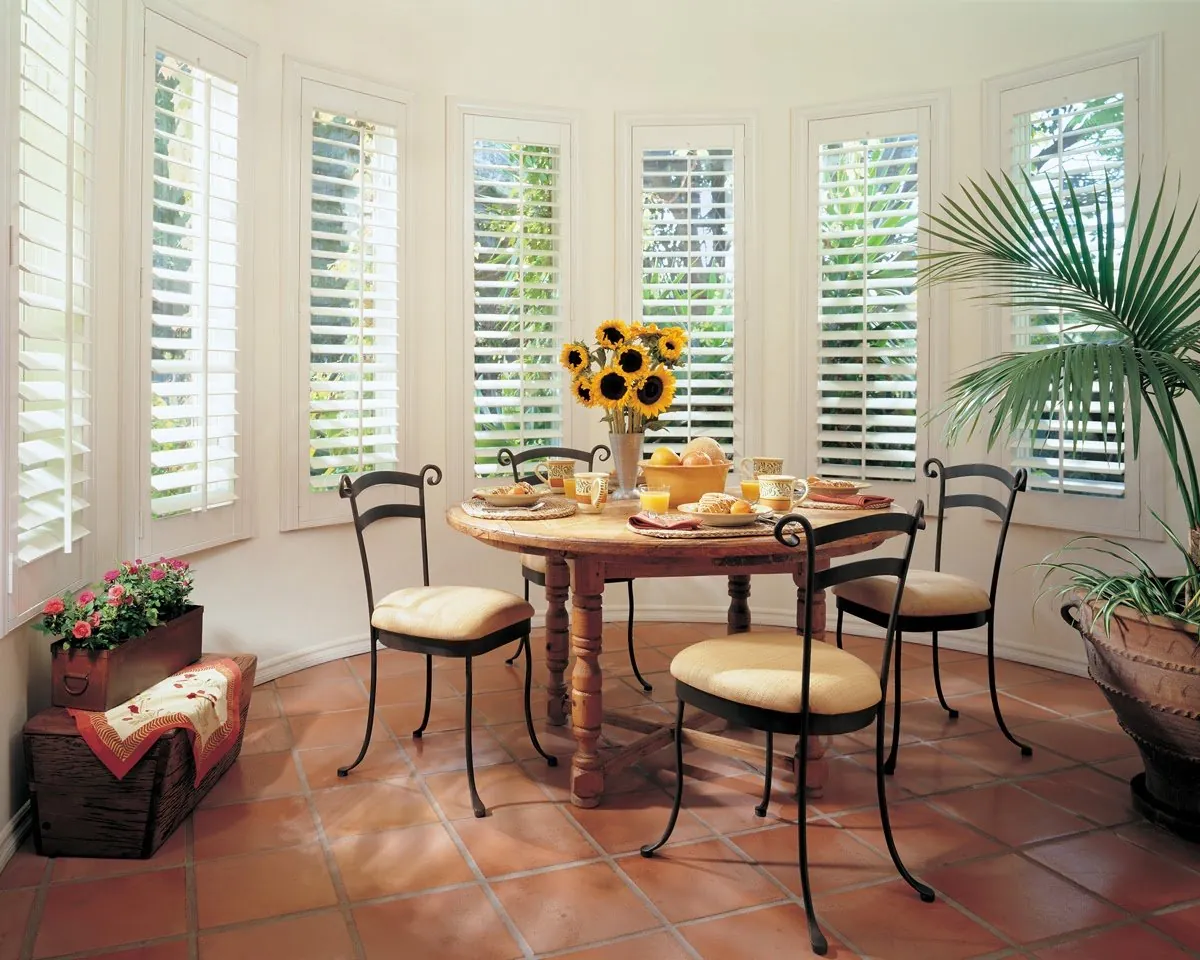
The center and the subdivisions need different shutters
Middleborough covers a very large stretch of ground, and its houses change a great deal from the center outward. Around the town center are Victorians and Federal houses with tall, narrow sash, high ceilings and deep interior trim. Out across the rest of town, spread over farmland, woods and new roads, are post-war ranches and newer colonials with modern, standard-sized windows. Plantation shutters in Middleborough, MA, are not one product but two quite different jobs.
In the center the challenge is an old window: tall, slender, often out of square, set in a casing worth keeping. In the outer subdivisions the windows are square and predictable, so the questions are about material, louver width and keeping a whole house consistent.
Hunter Douglas gives us the range to handle both, with three collections, several louver widths and a wide choice of frames. We bring them to your house and match them to your windows one by one.
Frames and features for plantation shutters in Middleborough, MA
The frame and the way the panels work matter as much as the shutter itself. These are the options that come up most in Middleborough, and we bring examples of each.
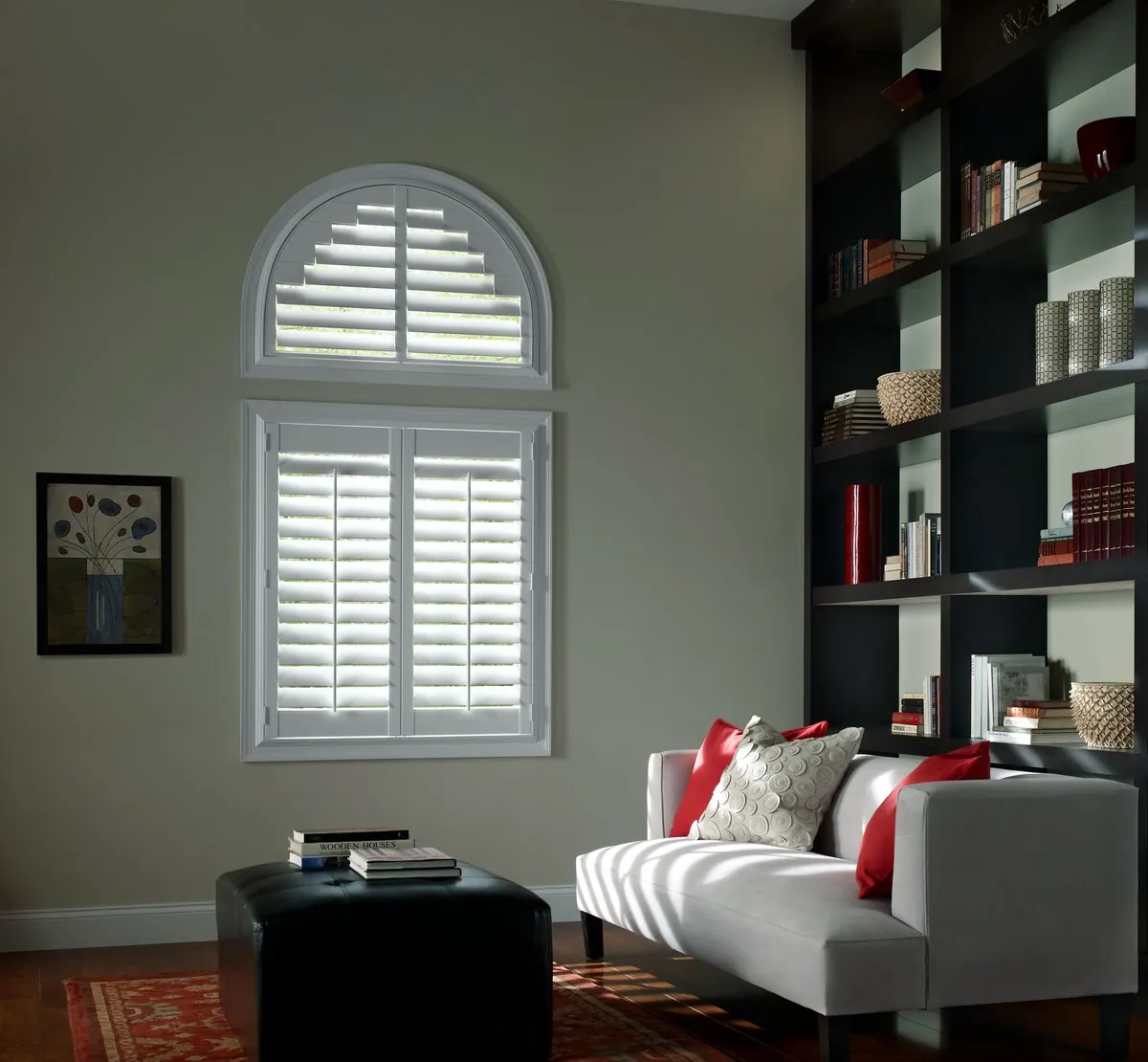
Arched and shaped tops
Some Victorian windows carry an arch or a shaped head. A shutter can be built to that outline so the whole opening is covered in one style.
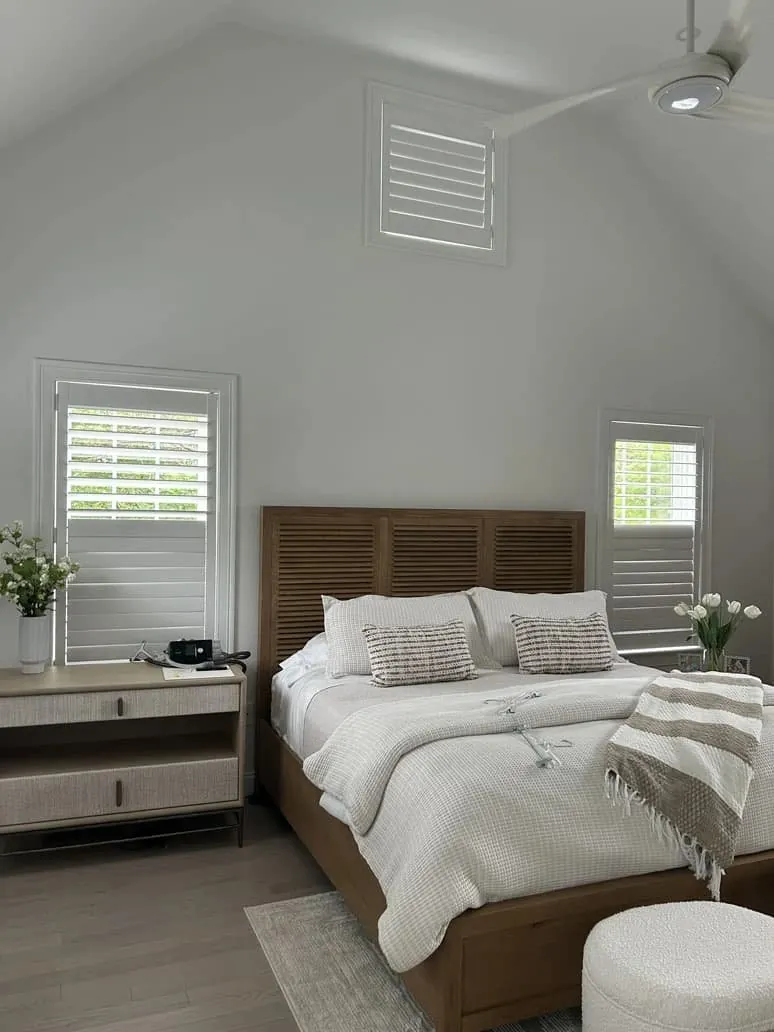
Slim inside frames
Set within the window opening, a slim frame leaves the old casing in full view and hides as little of the narrow glass as possible.
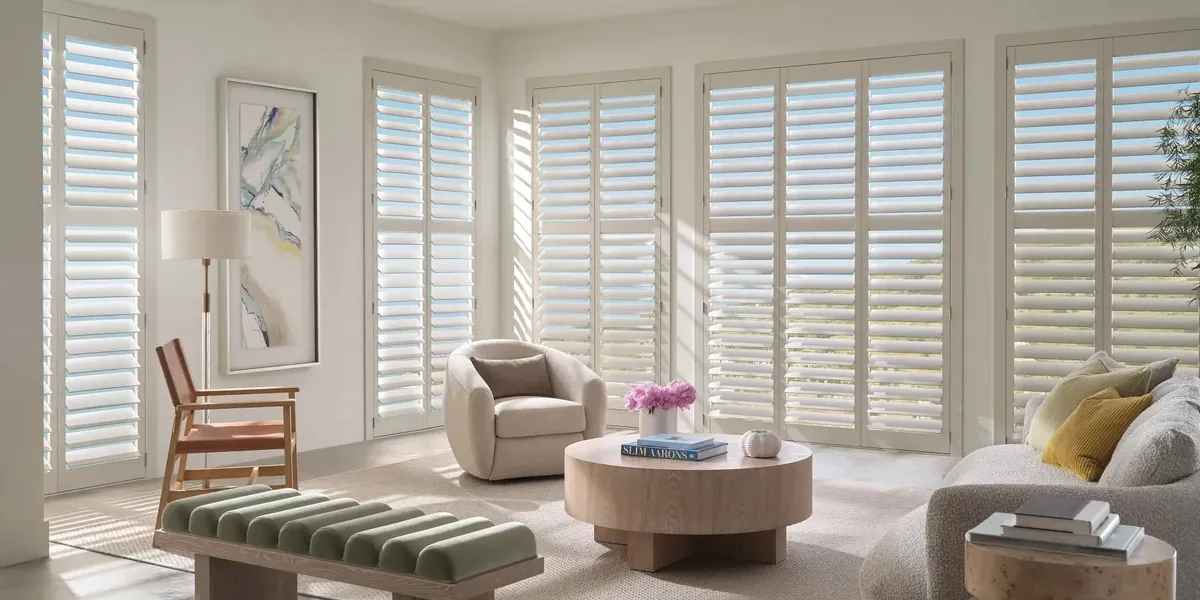
Moulded outside frames
Fixed to the wall around the window, a moulded frame can square up an opening that has moved, or stand in for trim a newer window never had.
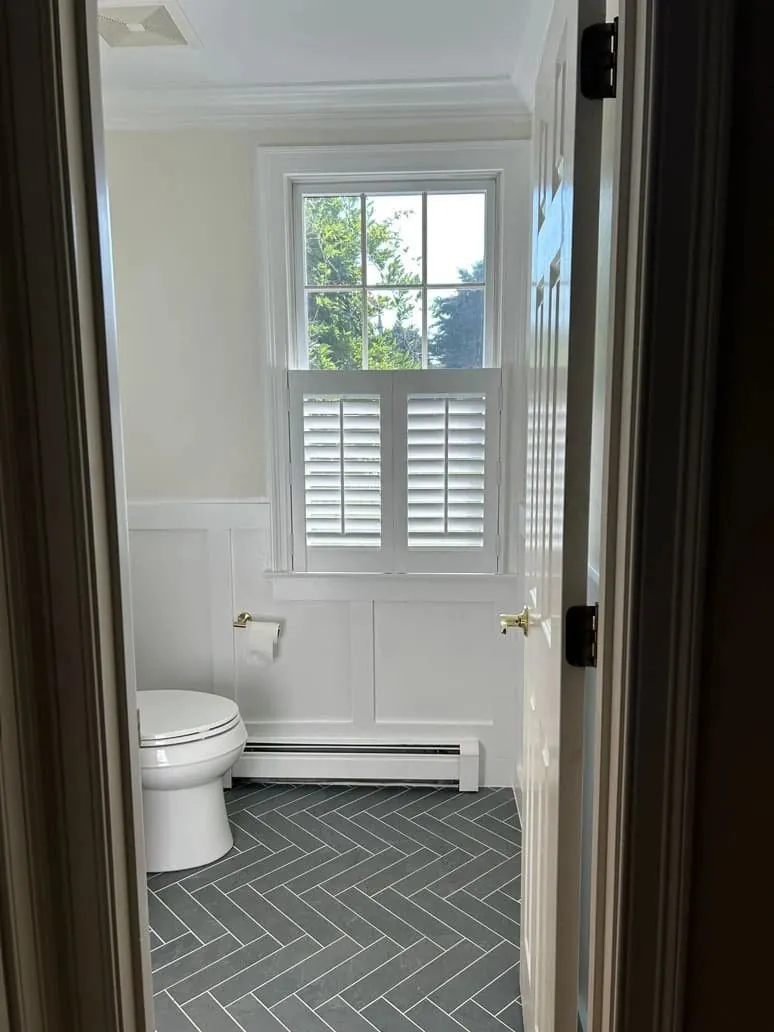
Cafe-style panels
Lower-half panels for privacy at eye level, with the top of the window left open for daylight. Handy on a powder room or a street-side window.
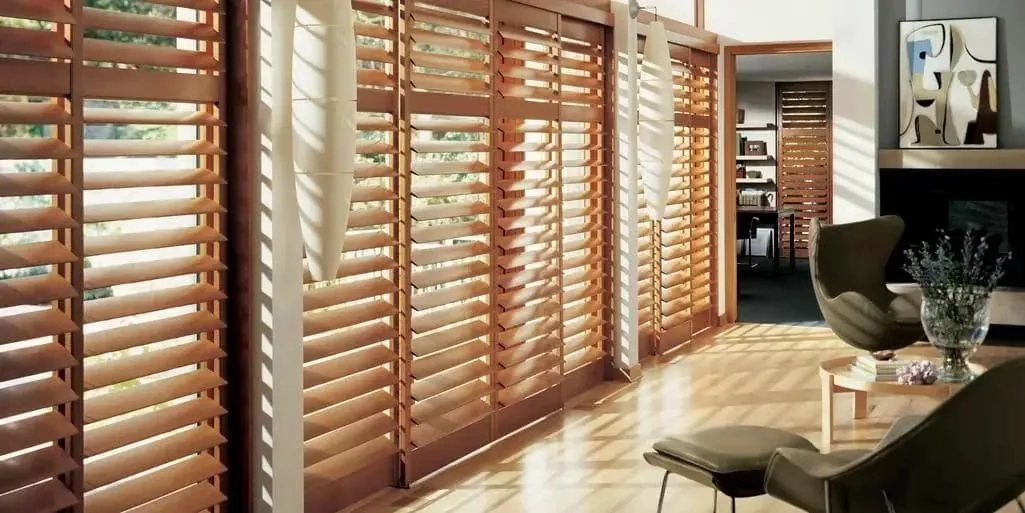
Hidden tilt
The louvers move from inside the panel edge, with no rod down the front, so the face of the shutter stays plain and the blades close tightly.
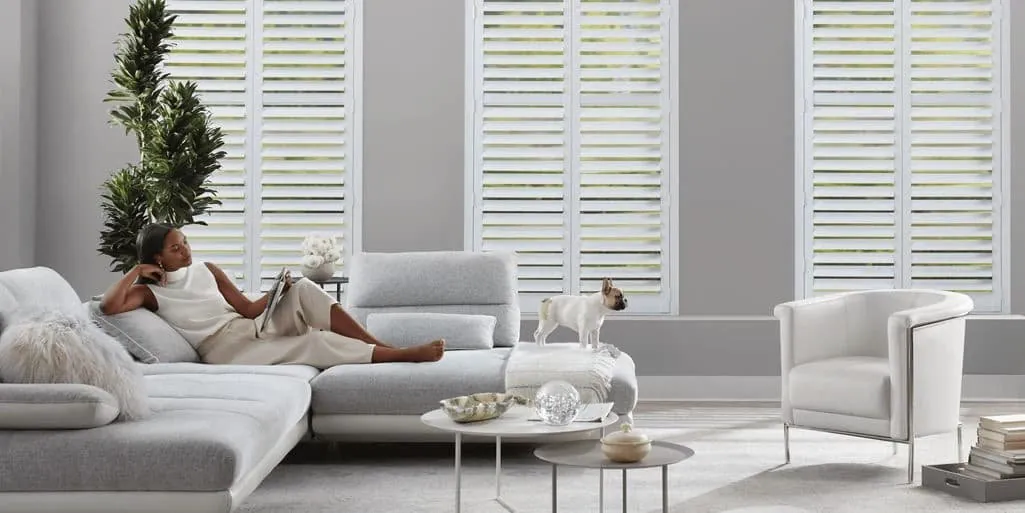
Divider rails on tall panels
A rail across a tall panel lets the upper and lower louvers move independently, a natural match for tall Victorian sash.
Tall narrow sash in the Victorians
The Victorians near the center were built with tall windows to pull light deep into rooms with high ceilings. The sash is narrow for its height, sometimes very narrow, and the casings around it are often wide and decorated. A shutter that ignores those proportions looks wrong immediately.
On a window like this we lean toward a louver that is in scale with the narrow width. A blade that is too wide for a slim opening ends up looking chunky and leaves an awkward gap at the top or bottom. The panel layout matters too. On a narrow window a single panel, or a pair of slim panels, keeps the center of the glass clear, while too many panels crowd it.
A divider rail is almost always worth considering. Set at the meeting rail of the sash, it lets you close the bottom louvers for privacy and leave the top tilted open to the sky. It also follows the line of the window behind it, so the shutter looks as if it belongs.
Victorian bays are common here as well, with three or more tall windows set at angles. Each window in the bay gets its own shutter, and we measure every angle so the panels sit tight and line up across the bay when they are closed.
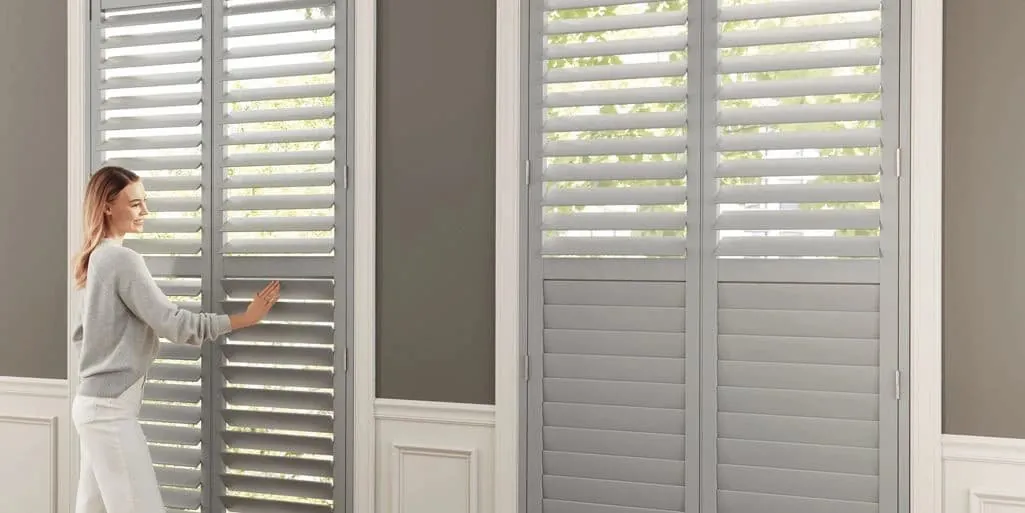
Federal houses and older casings
The Federal houses around the center are a little plainer and more symmetrical than the Victorians, with evenly spaced double-hung windows and often the original interior trim. In many of them, the window opening has had a long time to settle. It might be a little wider at the top than the bottom, or out of plumb on one side.
That is why we measure an old window in several places: width at the top, middle and bottom, height at both sides and the center, and depth at the points where a frame would sit. If the opening is close to square and deep enough, an inside mount keeps the casing on show. If it has moved, a frame mounted on the casing or the wall around it gives the panels a true line to close against, even though the window behind is not quite straight. Sash locks, old pulleys and stops can also get in the way of an inside frame, and we look for them before we recommend one.
For these rooms, Heritance is often the right collection. It is real hardwood, so it can be painted to match the trim or stained to suit restored wood floors and doors. Our guide to shutters for older windows goes through this in more depth.
Ranches across the outer roads
Away from the center, Middleborough’s ranches sit on generous lots along long roads and in post-war neighborhoods. A ranch usually has one big living room window, a kitchen window over the sink, a slider at the back and a row of bedroom windows. The openings are standard and square, so fit is rarely a struggle.
What matters more is how the shutters work day to day. A wide living room window is usually split into several panels hinged in pairs so they fold back neatly. A wider louver suits it, because it keeps the yard and the road in view when the blades are open. The slider can take panels that run on a track. Bedrooms get panels with a close-fitting frame so the room darkens well when they are closed.
Because a ranch has so many windows that repeat, a whole-house order in one finish gives a tidy look from the street, and it means every room is controlled the same way.
Newer colonials in the subdivisions
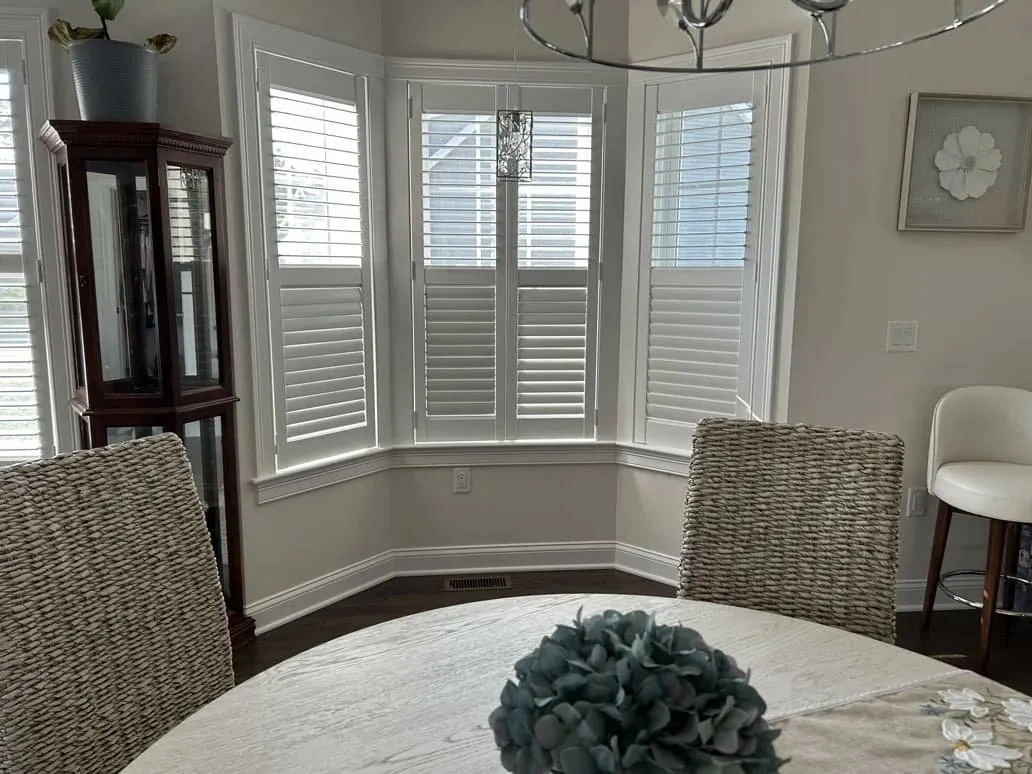
The newer colonials in Middleborough’s subdivisions are larger and taller, with matching windows across two floors at the front and bigger openings at the back. A family room may have a pair of French doors, a wide window looking at the woods, or a transom above.
The key here is consistency. One louver width and one color across the front windows keeps the house looking even from the road. Inside, the material can change by room. NewStyle is a composite with the look of painted wood that suits living rooms and bedrooms. Palm Beach polysatin handles kitchens, bathrooms and laundry rooms, where humidity would trouble wood. Because they share a color and a louver, the switch from one to the other is invisible from outside.
French doors take panels on the doors themselves, set so the louvers clear the handle. Transoms above a big window can take a fixed shutter or stay open, depending on how much light you want.
Light across open land
A lot of Middleborough is open: fields, cranberry bogs, wide lots with few trees close to the house. Without shade from neighbors or woods, sun reaches the windows directly for much of the day. Rooms on the south and west sides can heat up in the afternoon and take glare across a television or a table.
Shutters handle this kind of light simply. Tilt the louvers to throw the sun up onto the ceiling and the room stays bright without the hard patch of light on the floor. Close them fully in the late afternoon and the room calms down. Since there is no fabric, there is nothing to fade from that daily sun.
For the center’s older houses, where the street is closer, light is less of an issue than privacy. A divider rail or cafe panels on a ground-floor window keep the lower half closed while the top stays open, and that difference between the two halves of town is one more reason plantation shutters in Middleborough, MA, get decided house by house.
Picking a louver width
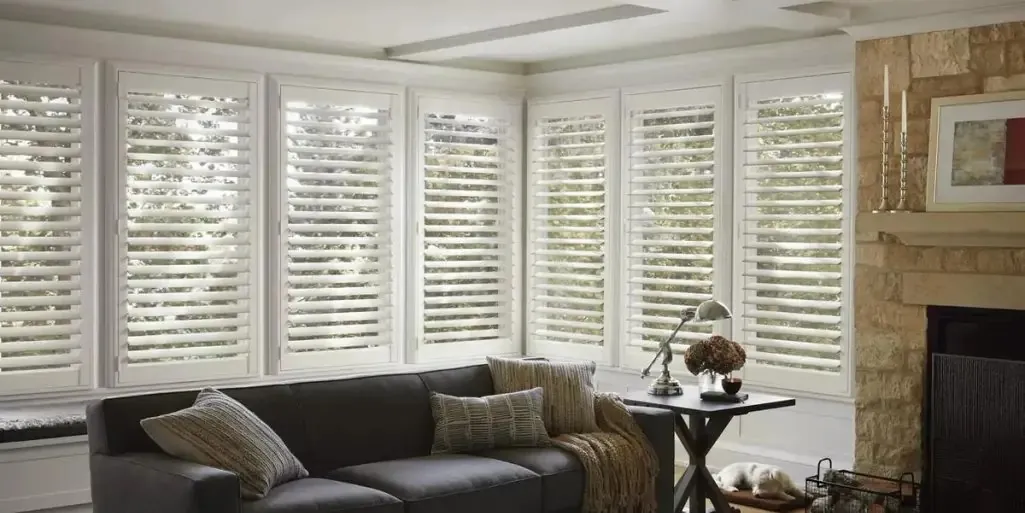
Louver width is worth deciding before almost anything else, because it sets the look of every window in the house. Narrow blades read as more traditional and suit tall, slim openings like the sash in the center’s older houses. Wide blades read as more open and modern, and they give a clearer view through the glass, which is why they suit the larger windows in the ranches and colonials.
Some houses use both: a narrower blade on a few very slim windows and a wider blade elsewhere. If the finish stays the same, the difference is hard to notice from the street. We bring samples of each width so you can hold them up to your own windows and compare how much of the view each one leaves.
How the house looks from the road
A shutter is seen from both sides. From inside it shapes the light; from outside it shows in every window as a band of louvers behind the glass. On a Victorian with a decorated front, that band should be quiet and even, so the trim and the porch stay the focus. On a newer colonial with a long, symmetrical front, it helps the house look finished and orderly.
That is why we often suggest keeping the street-facing windows in one color, usually a white or off-white that suits the exterior trim, even where a room inside uses a stained finish on the back windows. Louver width and the height of any divider rail can also be matched across the front so each window lines up with its neighbors.
Mixing collections in one house
Many of the houses we visit end up with more than one collection. A Victorian might take Heritance in the parlor and dining room, where the woodwork is on show, NewStyle in the bedrooms upstairs and Palm Beach in the bathroom and kitchen. A newer colonial might be NewStyle throughout, with Palm Beach only in the wet rooms.
The trick is to keep the color and louver consistent so the house looks unified. We plan the whole house together, even if you install one floor now and another later, so every window matches.
Front parlors near the street
In the center, many of the older houses stand close to the sidewalk, and the front parlor window looks straight out at passing cars and neighbors on foot. Tall sash makes that worse, because the glass runs from near the floor to well above eye level. A shutter gives these rooms back some calm without turning them dark.
The simplest layout is a tall panel with a divider rail. Keep the lower louvers closed and the room is private from the street, while the upper louvers stay open for daylight. Another option is a two-tier arrangement, where the upper and lower panels swing open separately, so you can fold back the top on a bright morning and leave the bottom in place. Both work well with the high ceilings of a Victorian parlor, and both look orderly from the sidewalk. Plantation shutters in Middleborough, MA, parlors are often painted to match the casing, which makes the shutter look like a piece of the original woodwork.
Kitchens, baths and back entries
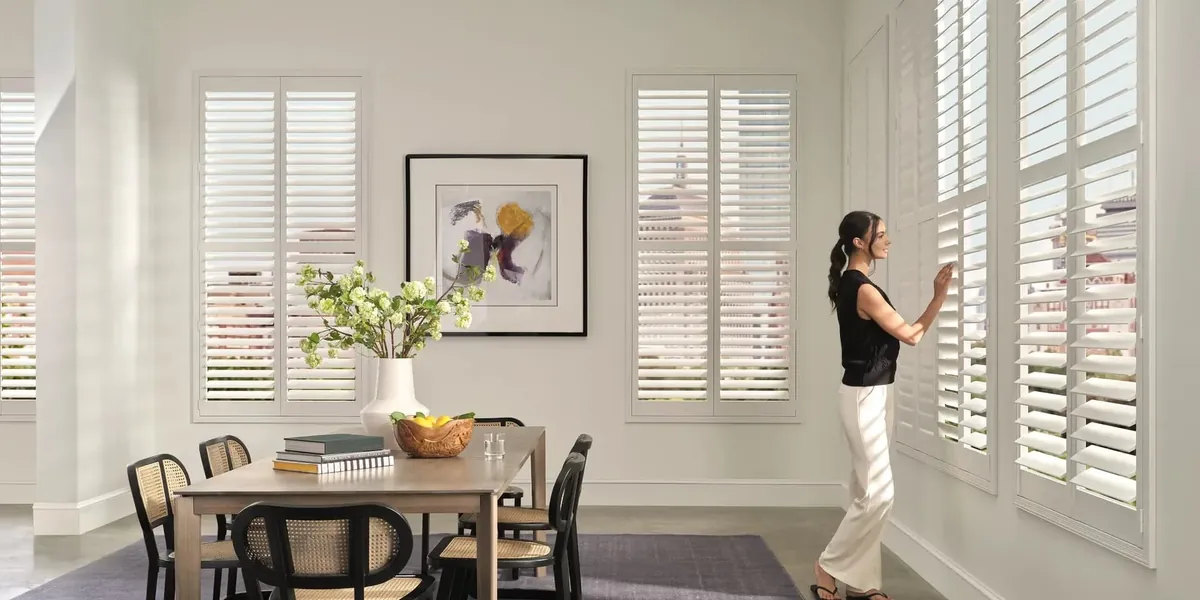
The working rooms in both halves of town share one need: a covering that handles moisture and gets cleaned often. A Victorian kitchen at the back of the house, a ranch bathroom off the hall, a laundry room beside the garage of a newer colonial, all take steam, splashes and wet hands.
Palm Beach is the collection for these rooms. Its polysatin material holds its shape in humid air and wipes down easily. Over a kitchen sink, cafe-style panels on the lower half give privacy at the counter with plenty of light above. In a bathroom, full-height panels with the louvers tilted up let in daylight while keeping the room private. Fitted in the same color and louver as the rest of the house, plantation shutters in Middleborough, MA, kitchens and baths look no different from the front rooms when you see the house from outside.
A visit, step by step
Whether the house is one of the center’s Victorians or a large newer colonial, most customers want to see the shutters at home first. Our vans carry samples, so we bring the showroom to you.
- Request a consultation online or with the call button, and choose a time that works.
- We go room by room and talk about what each window needs: privacy, darkness, glare control, or simply a better look.
- You compare the three collections and the louver widths against your own trim and walls.
- We pick frames and panel layouts for each window, paying close attention to old openings.
- We measure every window carefully, and you receive a free estimate with no pressure to decide on the spot.
- Certified Hunter Douglas installers fit the shutters, align each panel and check every louver.
If you want a hand with the rest of the room, our interior design consultations can be part of the same visit.

A Gallery dealer with certified installers
Blinds & Designs is a Hunter Douglas Gallery dealer. That gives you access to all three shutter collections, every finish and the full range of frames in one place, which matters in a town where one house may need hardwood on old sash and the next a composite on new windows.
All of our shutters are installed by Hunter Douglas certified installers. On a settled Victorian opening, that care is what lets the panels close square. We also repair blinds and shades you already own, and we carry Hunter Douglas shades, blinds and automation for the rooms where a shutter is not the right choice.
For other rooms, see cellular shades in Middleborough or motorized blinds in Middleborough, or every service on our Middleborough page. The main plantation shutters page covers the full range.
Visit Sagamore or let us come to you
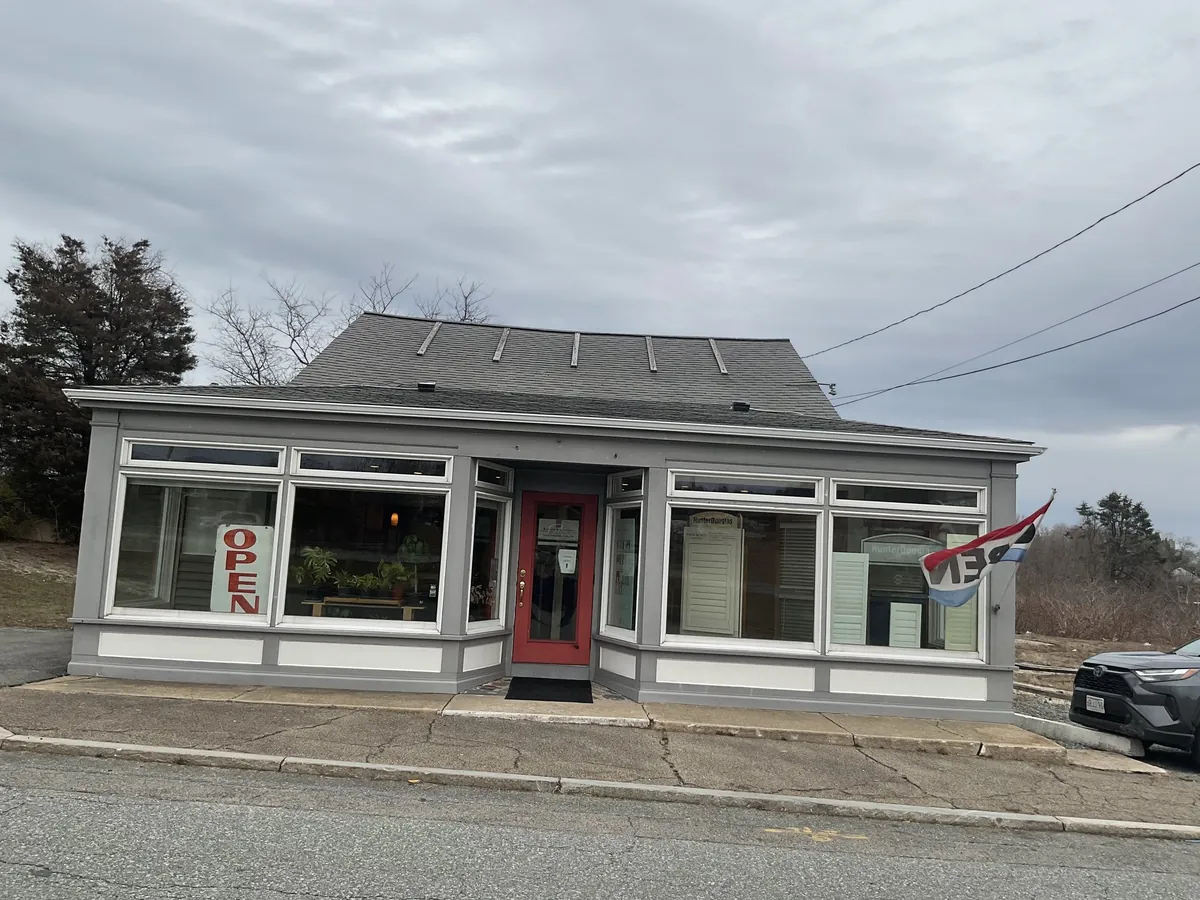
The Sagamore showroom is our nearest location to Middleborough. Stop in if you would like to start a conversation about shutters before we visit.
Many Middleborough customers start at home instead. Shutters depend on the window, and the only way to see how a frame meets your casing or how a louver width suits your room is to try it there.
Questions from Middleborough
Can shutters fit the tall narrow windows in a Victorian?
Yes. We choose a louver and panel layout in proportion with the narrow width, and a divider rail lets the top and bottom work separately. We also check for sash hardware that could affect an inside mount.
My old window is out of square. Is that a problem?
Not usually. If the opening has moved too much for an inside frame, a frame mounted on the casing gives the panels a straight line to close against. We measure in several places before deciding.
Which collection suits a newer colonial?
NewStyle is a common choice for living rooms and bedrooms, with Palm Beach in the kitchen and bathrooms. Kept in one color and one louver width, the house looks uniform from the street.
Do shutters fade in strong sun?
There is no fabric to fade, and the louvers let you control the sun through the day. That makes them a good fit for rooms on open land that take direct light.
Is the estimate free?
Yes. After measuring, you receive a free estimate for the shutters you are considering.
See them at your windows
The easiest way to decide is to see the samples in your own rooms. Request a consultation and we will bring all three Hunter Douglas shutter collections to you, measure each window and give you a free estimate. You can also use the call button, or stop in at our Sagamore showroom.