
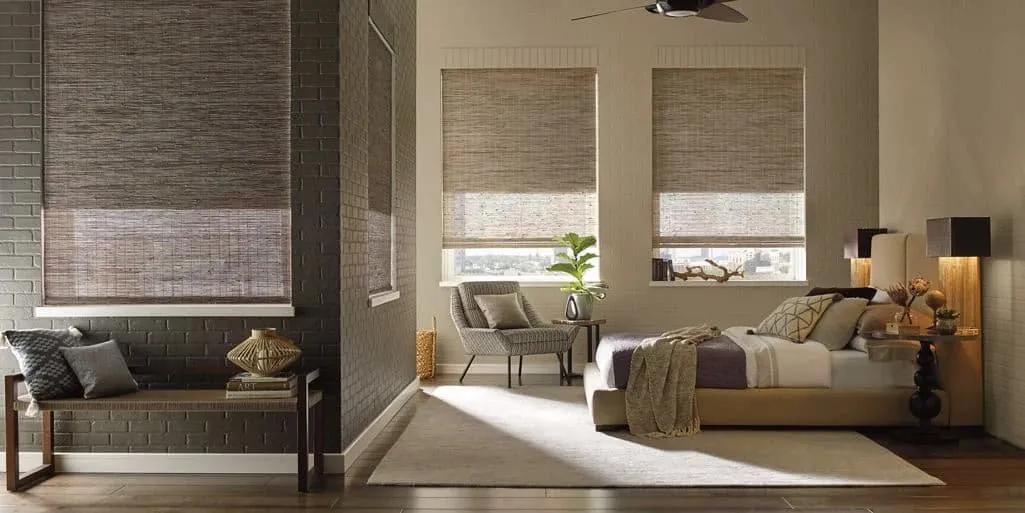
Standard windows, so the fabric does the talking
Most Hanson houses were built with standard window sizes. The post-war capes and ranches on their generous lots have regular double-hungs and picture windows, and the newer colonials off Main Street and around Maquan Pond have modern, square, well-made frames. Fitting a shade to those openings is rarely the hard part. What decides whether you love the result is the material and the way it operates.
That changes the conversation about roman shades in Hanson, MA. Instead of spending the visit on awkward measurements, we spend it on the things you will notice every day: how the fabric looks in the morning and at dusk, how it feels to raise, how much light it lets through, how it stacks, and whether it suits the way each room is used.
It is a good position to be in. With standard openings, almost every Hunter Douglas folded shade option is available to you, and the choice comes down to taste and daily life rather than what will physically fit.
Six decisions that shape a roman shade
These are the choices that make the biggest difference to how a shade looks and works. We bring a sample of each to your house.
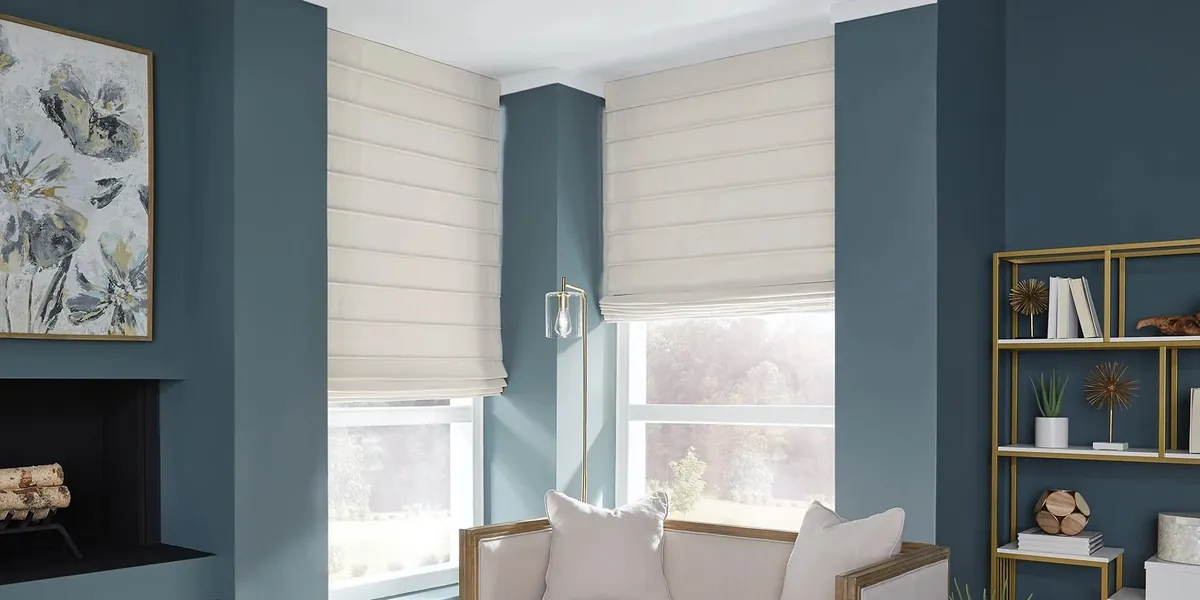
Flat fold
Smooth, overlapping tiers and a crisp, tailored look. Stacks neatly and suits both traditional and modern rooms.
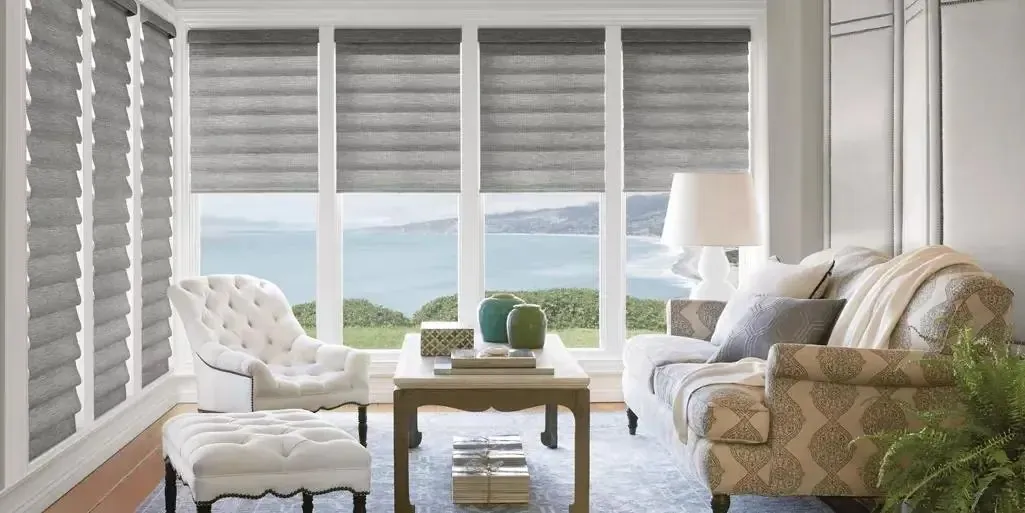
Soft fold
Gentle loops of fabric at each tier, even when the shade is lowered. Adds softness and texture to a plain room.
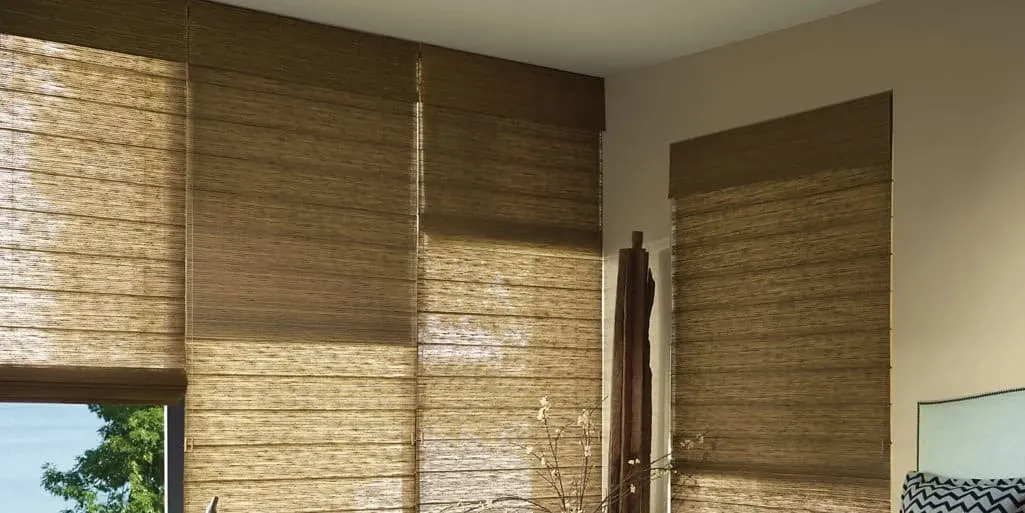
Vignette
Hunter Douglas’s engineered folded shade, with even rounded folds, no cords on the back and a fabric that rolls up into the headrail.
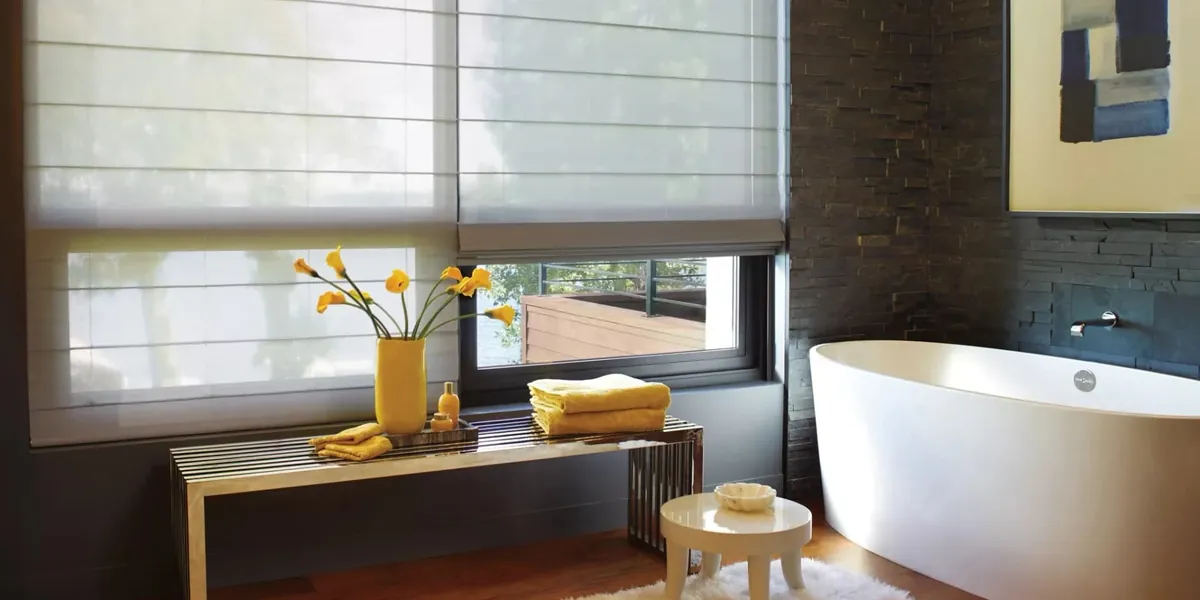
Fabric weight
Sheer, light-filtering or room-darkening. The weight and the lining decide how bright the room is and how private.
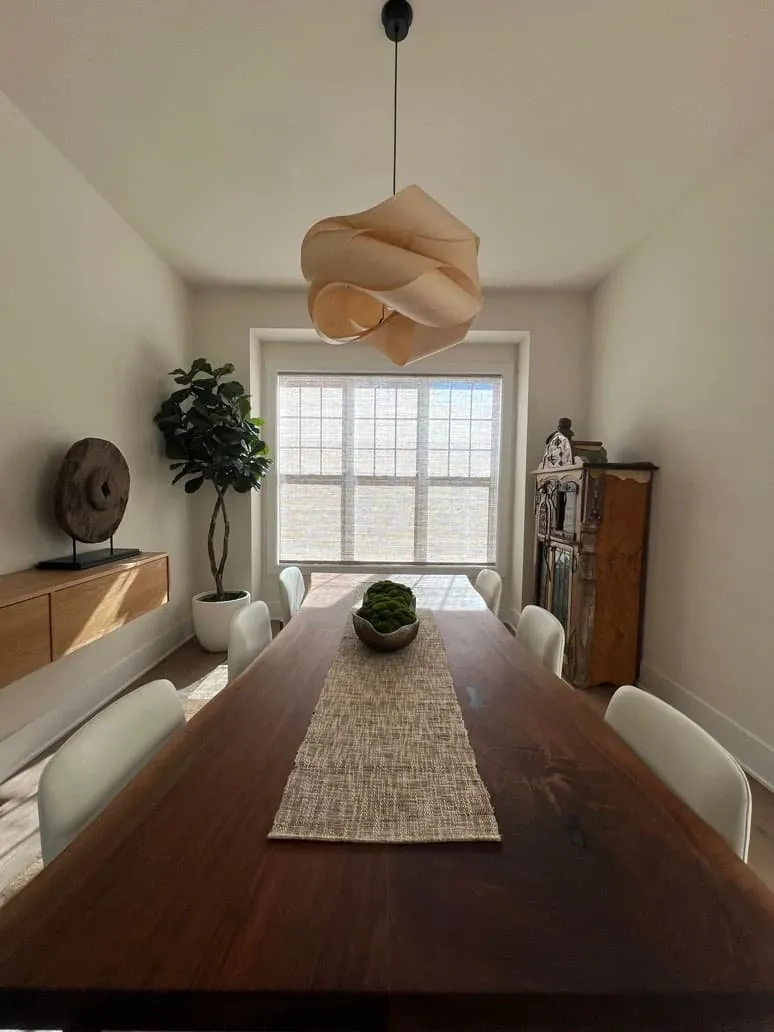
Cordless lift
Push the bottom rail up, pull it down. No cords at the side, which keeps the window tidy.
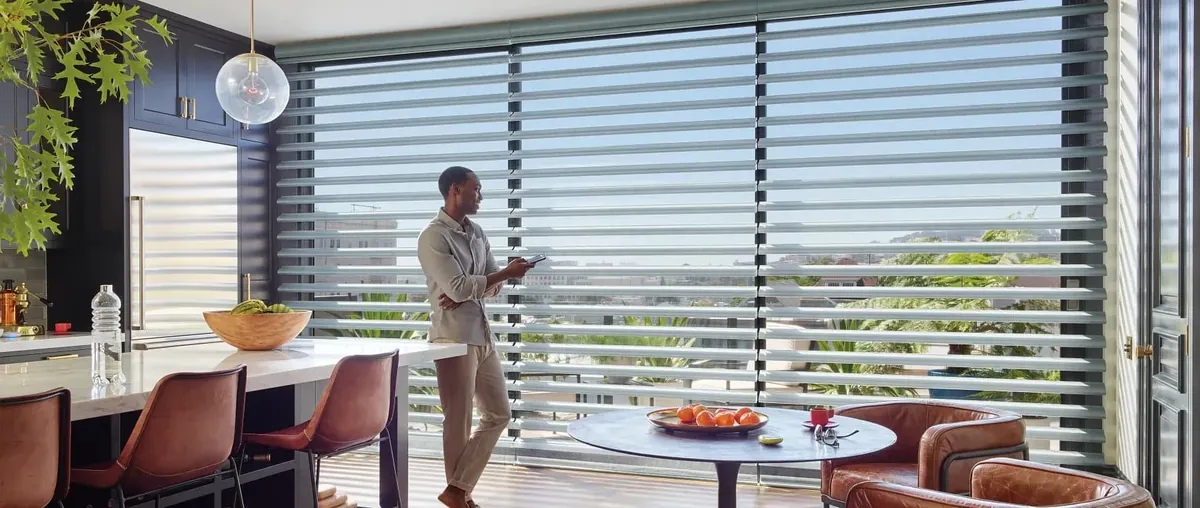
PowerView
Motorized shades moved from a remote, an app or a schedule, singly or by room.
Post-war capes on generous lots
Hanson’s capes are simple, well-proportioned houses with a pair of double-hung windows either side of the front door, a kitchen and dining area at the back, and bedrooms upstairs with dormer windows. On a generous lot, they often have side windows too, so many rooms get light from more than one direction.
The downstairs windows of a cape are ideal for a flat-fold roman shade mounted inside the frame. It leaves the trim clear, lines up evenly across the front of the house and looks at home in a traditional room. In the dining room, a patterned Carole Fabrics shade adds color; in the living room, a plain linen or a textured weave keeps things calm.
Upstairs, dormers sit back in their little alcoves with sloped ceilings either side. There the stack height matters, so we lean toward a flat fold or Vignette, and add a blackout-style lining if the room is a bedroom that wakes early.
Ranches spread across their lots
The ranches have every main room on one floor: a living room with a picture window, a kitchen and dining room, and bedrooms with wide windows set high on the wall. Because the windows are standard, inside mounts are straightforward almost everywhere.
The picture window is the one that needs the most thought. One shade across all that glass would be heavy and all-or-nothing, so we usually divide it into sections that share a top line and fold spacing. From the room it still reads as one window, yet each panel rises and falls by itself. Bedroom windows suit a folded shade well, with the stack sitting above eye level when raised.
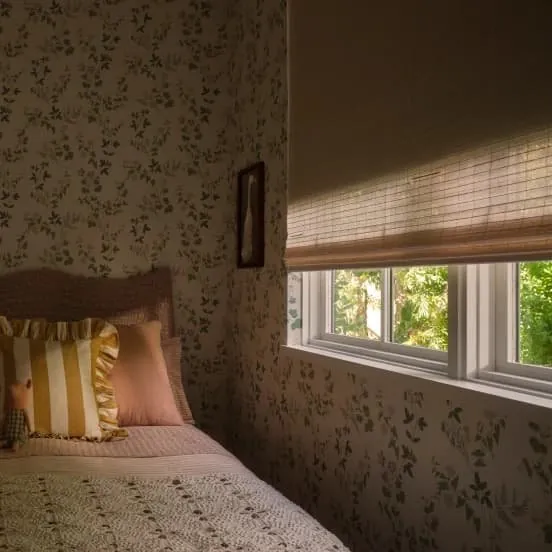
Newer colonials off Main Street
Off Main Street the colonials are newer and larger, with paired double-hungs in the front rooms, a bank of glass in the family room, a slider from the kitchen and plenty of bedroom windows upstairs. Frames are crisp and modern, so fit takes care of itself.
What these houses ask for is a plan that works across many rooms. The dining room might carry a printed Carole Fabrics cloth, the family room a line of identical Vignette shades stopping at one height, and each bedroom a color of its own. Keeping one lining color on every window that faces the street makes the front of the house look tidy from outside.
If there are high windows in a two-story entry or family room, PowerView brings them within reach from a remote, an app or a schedule. Read about it on motorized blinds and shades; motor power gets planned with you on site.
Around Maquan Pond
The houses around Maquan Pond have the same standard windows as the rest of town, but the rooms facing the water have a different job. They are built around the view, and the light in them includes the sun reflected off the pond as well as the sky.
For those rooms, roman shades in Hanson houses need to be easy to raise fully, so the view is clear, and gentle when lowered, so the glare is softened without darkening the room. A light-filtering fabric does that well. Strong, repeated sun is hard on fabric color, so on the pond side lighter neutrals and a lining keep the shade looking good for longer.
Operation matters most on this side of the house. A pond room’s shades may go up at breakfast, half down at lunch, fully down for an hour in the late afternoon and up again for the evening light on the water. That is a lot of handling for a cord, so we usually suggest a smooth cordless lift or PowerView for these windows. A schedule can follow the sun across the pond for you, and a single button raises the whole wall when you want the view back. When we plan roman shades in Hanson, MA, waterside rooms, we treat the lift as seriously as the fabric, because it is the part you touch every day.
A whole-house order, room by room
Because standard windows make every option possible, a whole-house order in Hanson is a chance to give each room exactly what it needs while keeping the house consistent. Here is how a typical plan comes together.
The living room usually gets the most considered fabric, often a linen or a textured weave in a soft fold, with a light-filtering lining so the room stays bright but private from the road. The dining room, used mostly in the evening, can carry a bolder pattern, since you see it with lamps lit as much as by daylight. The kitchen favours Vignette or a cordless sewn shade in a hard-wearing, textured cloth. Bedrooms take a room-darkening lining, with each room free to have its own color. Bathrooms get a sheer face with a privacy lining.
What ties it all together is a short list of shared choices: one lining color on the street-facing windows, one fold style through any open-plan space, and fabrics drawn from a single color family. For roman shades in Hanson colonials with a dozen or more windows, we lay the plan out room by room at the visit so you can see the whole house at once before deciding.
Standard does not mean ordinary
It is easy to assume that a house with standard windows will end up with standard-looking shades. It need not. Because nothing has to be squeezed or adapted, you have more freedom than you would in an antique house with awkward openings.
You can choose an outside mount on a small window to make it look bigger, carrying the shade wider and higher than the frame. You can pair roman shades with drapery panels in a formal room. You can mix a patterned shade in one room with a plain one in the next, or run a single fabric through the whole ground floor. The windows give you a clean canvas, and the fabric and fold do the rest.
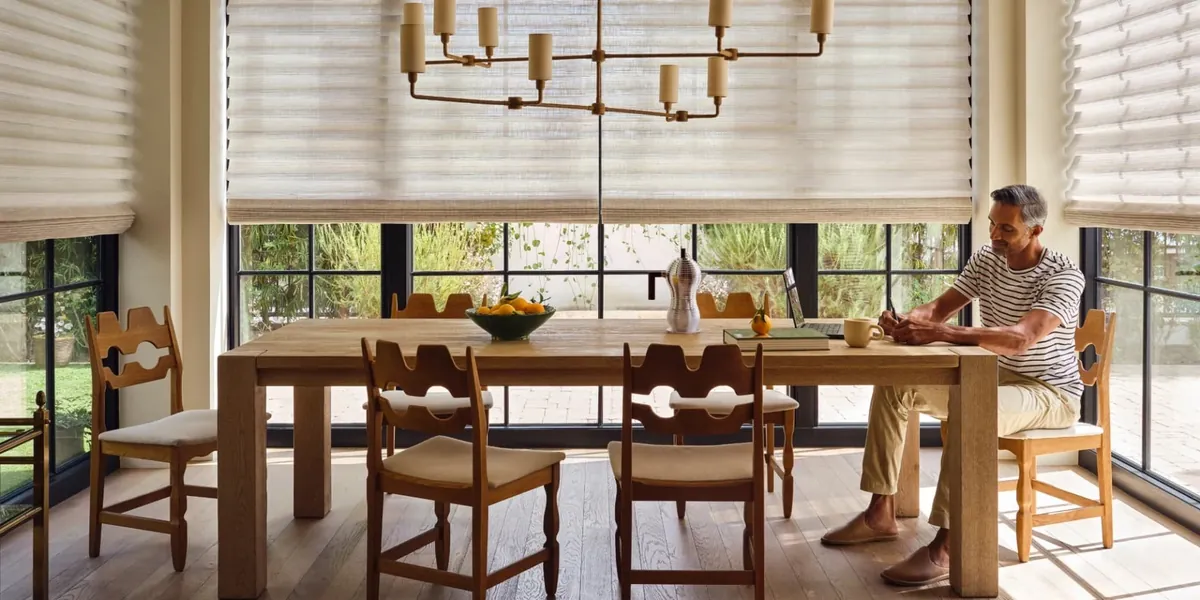
Fabric: cotton, linen, sheers and woven textures
With fit settled, fabric is where the most enjoyable decisions are made. Each type of material has its own look and its own strengths.
- Cotton and cotton blends: smooth and crisp, with clean folds. They take color and print well, so they suit patterned shades in dining rooms and bedrooms.
- Linen and linen looks: a natural slub and a relaxed drape. Lovely in living rooms, especially in a soft fold, where the texture shows in every tier.
- Sheers: fine, open fabrics that let light glow through. Good where privacy is not a worry and you want the softest light.
- Woven textures: natural materials that bring warmth and an informal, outdoorsy feel. They suit family rooms and kitchens.
Texture matters more than people expect. A fabric with a little weave hides small marks and wear better than a flat, pale plain, which is worth knowing for kitchens and rooms with children.

Operation: how often will it move?
The right lift depends on how often you will raise and lower a shade, and how easily you can reach it.
A bedroom shade that goes down at night and up in the morning needs nothing more than a cordless lift. A living room shade that moves several times a day, following the sun, is more pleasant with a lift that runs smoothly and stops exactly where you want it. A kitchen shade over the sink should be operable from the bottom rail or by motor, so nobody leans across the counter for a cord. A shade on a window above a staircase, or one behind a sofa, is the classic case for PowerView.
We bring working samples of each lift, so you can try them at your own window. Many houses end up with a mix: cordless in most rooms, a motor where reach or frequency calls for one.
Children, pets and cords
In a house with young children or pets, dangling cords are something to avoid. A cordless lift has no cord at the side at all, so there is nothing to pull or tangle. Vignette has no lift cords running down the back of the shade, and PowerView removes hand operation altogether.
We point out the cordless and motorized options at the consultation and can make sure every shade in a child’s room or play area is one of them. It is a simple choice that also makes windows look cleaner.
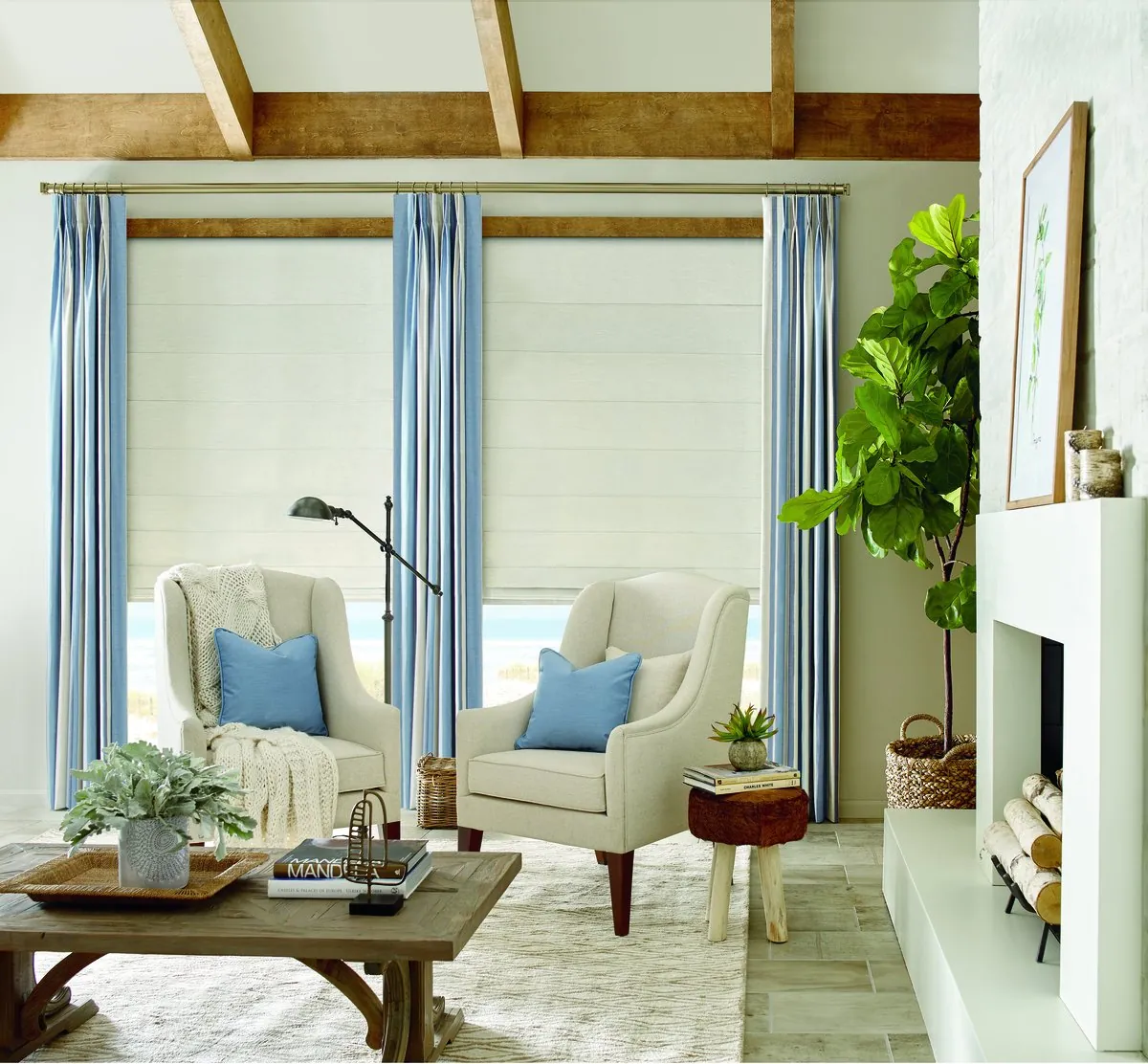
Living with the shades: everyday care
Fabric shades are easy to look after. Regular light dusting, or a gentle pass with a soft brush attachment on a vacuum, keeps them fresh. Leaving shades partly raised from time to time lets air move behind them, which helps on cold windows where condensation can form. On the pond side, choosing lighter colors and a lining keeps sun damage to a minimum.
If a shade ever needs attention later, we offer blind and shade repairs on window coverings you already own, so a worn cord or a stiff lift does not have to mean a new shade.
Vignette and Carole Fabrics: built versus sewn
Both are Hunter Douglas roman shades. The difference is in how they are made.
Vignette is built. Its folds are formed into the fabric, so each tier is the same depth from top to bottom, and it rolls up into the headrail on a hidden roller. There are no lift cords on the back, and the raised stack is compact. It suits kitchens, family rooms, children’s rooms and anywhere the shade moves a lot or is motorized.
Carole Fabrics shades are sewn. Each one is made to order from a fabric you choose out of a large decorator library, in a flat or soft fold, with the lining you need. That gives the widest choice of pattern, color and texture, and lets the shades match drapery or upholstery. They suit living rooms, dining rooms and anywhere the shade is part of the decoration.
In Hanson, with standard windows throughout, both lines fit easily, so the choice is truly about look and use. See the Vignette and Carole Fabrics roman shades pages for details, or the main roman shades page for the whole family.
The consultation at your house
Standard windows mean the appointment is spent choosing rather than puzzling over odd openings, and since the vans are loaded with samples, the showroom travels to you.
- Request a consultation online or with the call button.
- We bring working samples of flat folds, soft folds and Vignette, the full range of fabric weights, and every lift.
- We go room by room with you and talk about how often each shade will move and who will use it.
- You try the lifts yourself and see each fabric at your own windows.
- We measure every window and confirm the mount, fabric and lift for each shade.
- Next comes a free estimate for the windows on your list, and the decision waits until you are ready.
Want a second eye on color for the whole house? Add one of our interior design consultations to the same appointment. Later, Hunter Douglas certified installers hang the finished shades, try every lift and leave you confident with the controls.
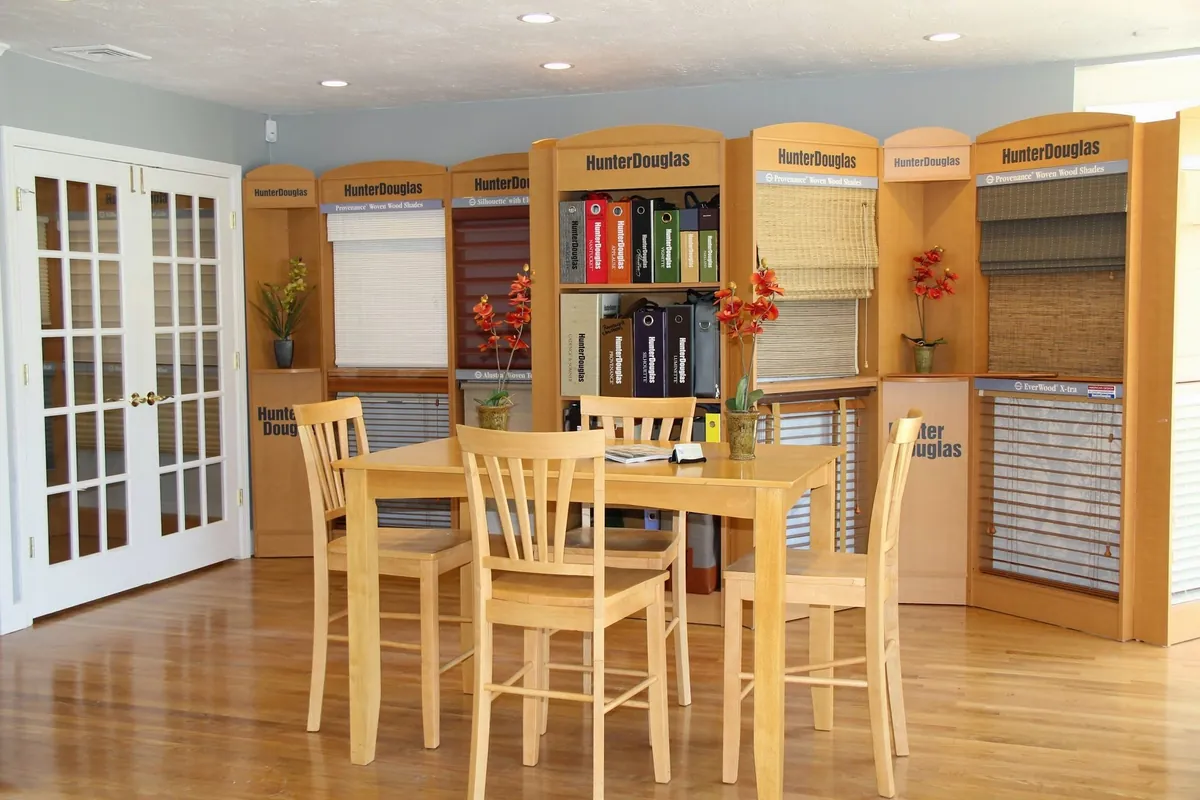
A Gallery dealer’s full range
Blinds & Designs is a Hunter Douglas Gallery dealer, the status Hunter Douglas gives dealers who meet its standards. With standard windows, you can choose from the whole folded shade range: every Vignette fabric, the Carole Fabrics library, each fold, lining and lift, and PowerView.
Our installers are certified by Hunter Douglas, we offer interior design consultations, and we repair existing blinds and shades. For other rooms, see custom blinds in Hanson, cellular shades in Hanson, or everything we offer on our Hanson page.
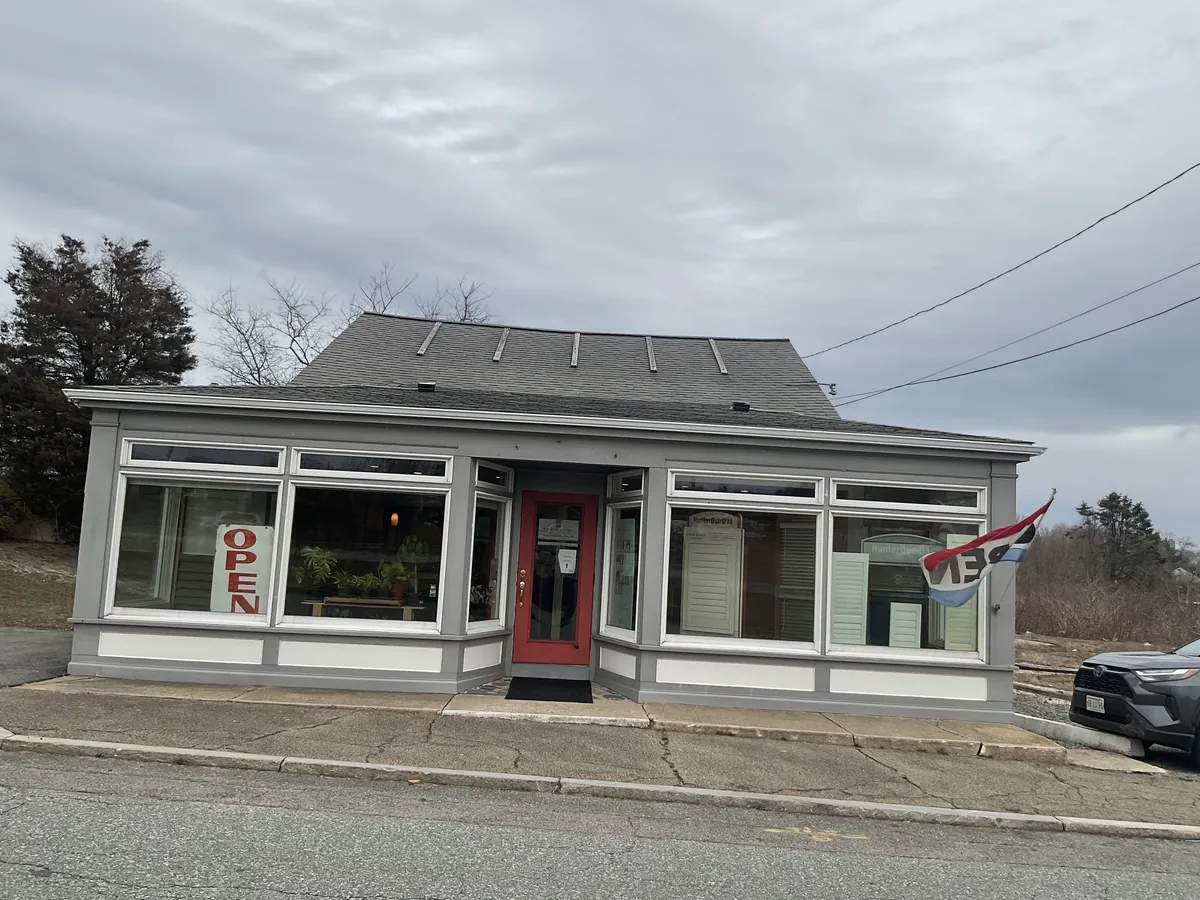
Our Sagamore showroom
The Sagamore showroom is the nearest of our locations to Hanson, and you are welcome to come and try the lifts and fabrics there.
Or we can bring them to you, which lets you see each fabric in your own rooms and light.
Questions from Hanson
Our windows are all standard sizes. Does that limit our choices?
The opposite. Standard openings fit almost every Hunter Douglas folded shade option, so you can choose purely on look, fabric and how you want the shade to operate.
What is the best lift for a house with young children?
A cordless lift has no cord at the side, Vignette has no lift cords on the back, and PowerView removes hand operation entirely. We can make sure every shade in a child’s room is one of these.
Flat fold or soft fold?
Flat folds look neat and stack small; soft folds hang in relaxed loops and bring texture. We bring both so you can see them at your own window.
How do we keep the pond-side shades from fading?
Choose a lighter neutral or a natural tone, and add a lining to protect the face fabric. Raising the shade when the sun is off that side also helps.
Is there a charge for the estimate?
No. After measuring, we give you a free estimate for the shades you are considering.
Your next step
Choosing roman shades in Hanson, MA, is mostly about fabric and how each shade will work, and both are easiest to judge at your own windows. Request a consultation and we will bring working samples, measure every window and follow up with a free estimate. You can also use the call button, or visit our Sagamore showroom.